Audemars Piguet Inaugurates The Arc — A New Site In Le Brassus Bringing Different Watchmaking Crafts Under One Roof

Although its 150th anniversary technically ended in 2025, Audemars Piguet inaugurates the Arc manufacture to celebrate the brand’s one-and-a-half-century existence. This 23,700m² facility brings local production teams together under one roof, and it is a clear indication that AP is proud to be from the Vallée de Joux and wants the region to thrive and flourish for decades to come. The Arc has a design that has flexibility, efficiency, comfort, and sustainability in mind. Regarding the latter, the large building bears the Minergie-ECO label, which reflects AP’s long-term vision and philosophy.
Before the Arc’s official inauguration, Audemars Piguet staged the first round of novelties celebrating its 150th anniversary in the new building. It’s impressive from the inside and the outside. The 321m-long, curved facade of the Arc is grandiose but not too imposing. After all, the building stands in Le Brassus, not NYC, so it must harmonize with the village and the nature of the Vallée de Joux. Designed by de Giuli & Portier and completed in three years, the 23,700m² site reflects Industry 4.0 principles, offering a flexible, spacious, and light-filled working environment for up to 700 employees. The Arc is a hub that centralizes technical expertise previously spread across the watchmaking valley, cultivating collaboration and exchange.
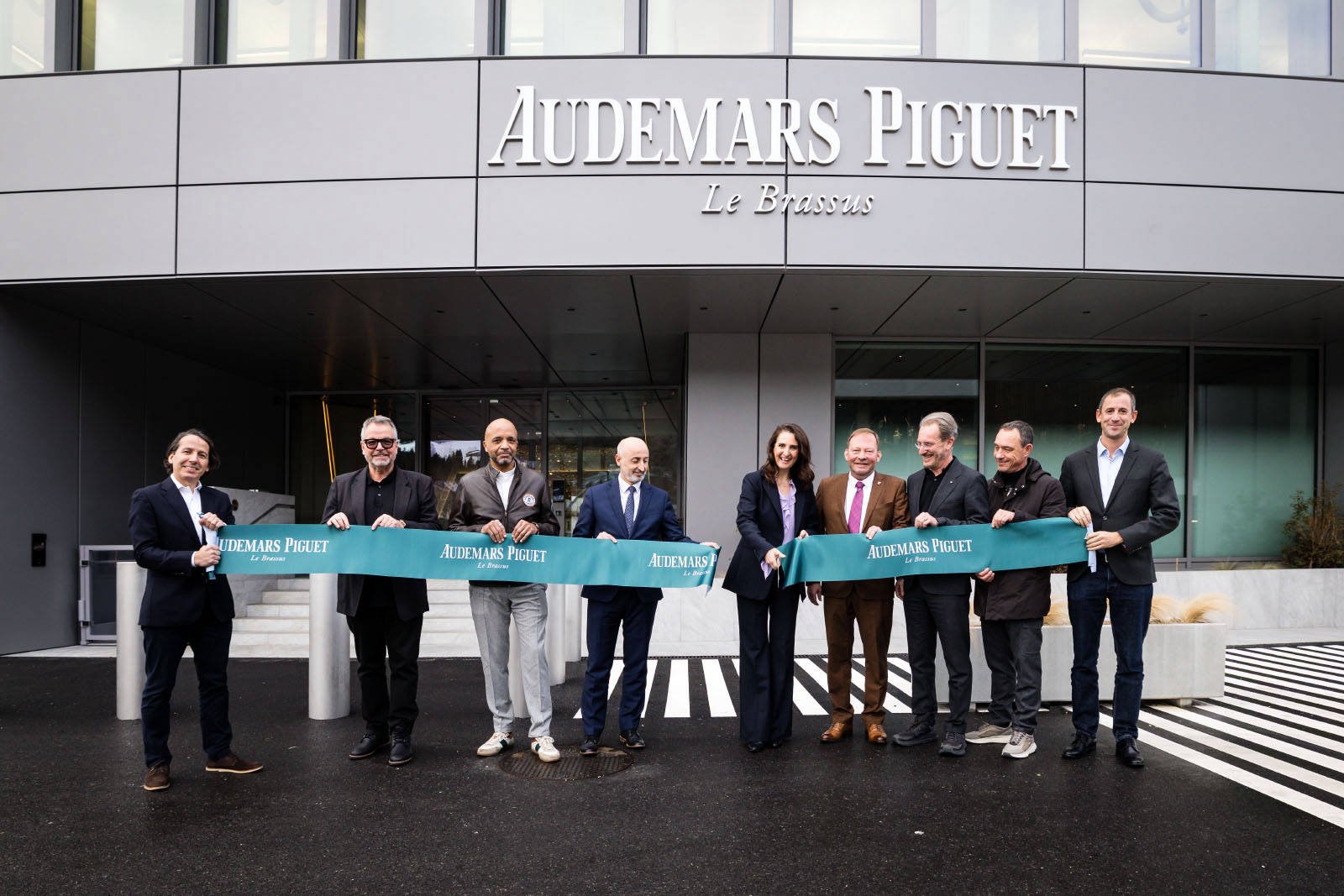
Audemars Piguet inaugurates the Arc, a new state-of-the-art production site
To understand the new site is to understand the age-old établissage system. This is a traditional Swiss watchmaking production method. The term derives from établi, meaning “workbench,” where watches are assembled from components sourced from various specialized suppliers. Often, the suppliers were farmers. They shifted from herding cows to making components once the harsh winter enclosed them in the valleys where their farms were. An établisseur coordinated the process. This decentralized system, dominant until the late 19th century, relied on independent specialists. They produced specific parts, such as cases, dials, hands, and movements. It was the établisseur who ordered, inspected, and assembled them into finished timepieces.


This practice was especially common in the Jura Mountains. Today, the term refers to companies that assemble watches from purchased, finished components. The opposite is operating as a manufacture, which produces most parts in-house. Audemars Piguet fosters collaboration while nurturing individual expertise. Guided by this philosophy, the new manufacture brings together technical specialties previously spread across the Vallée de Joux.
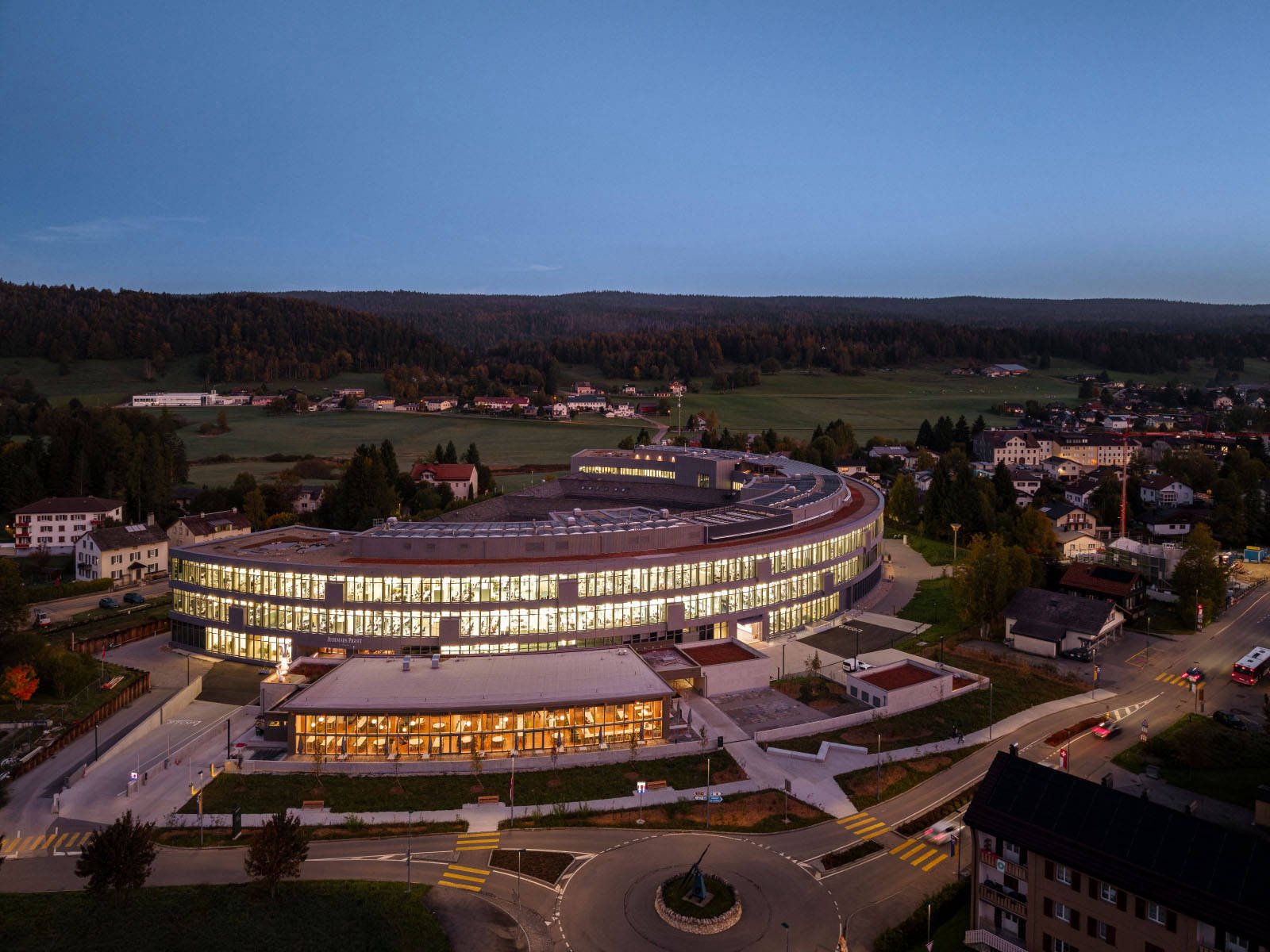
A future-ready facility
The Arc was built to last for many years and was conceived to support long-term growth. Therefore, the centralized production site features optimized workflows, advanced automation, and a high-tech storage system that enhances efficiency. The advanced methods still allow artisans to focus on high-value skills, which is crucial to uphold AP’s high-horology name and reputation.
Furthermore, the Arc is a building with a Minergie-ECO certification. It was developed with a strong environmental focus, integrating renewable energy sources, energy-efficient systems, and biodiversity-friendly design. The new building is a place where heritage and innovation merge. It allows Audemars Piguet to strengthen its roots in the Vallée de Joux while protecting its watchmaking knowledge and expertise for the future.