Going Yellow: Why I Bought A Doxa Sub 300T Divingstar

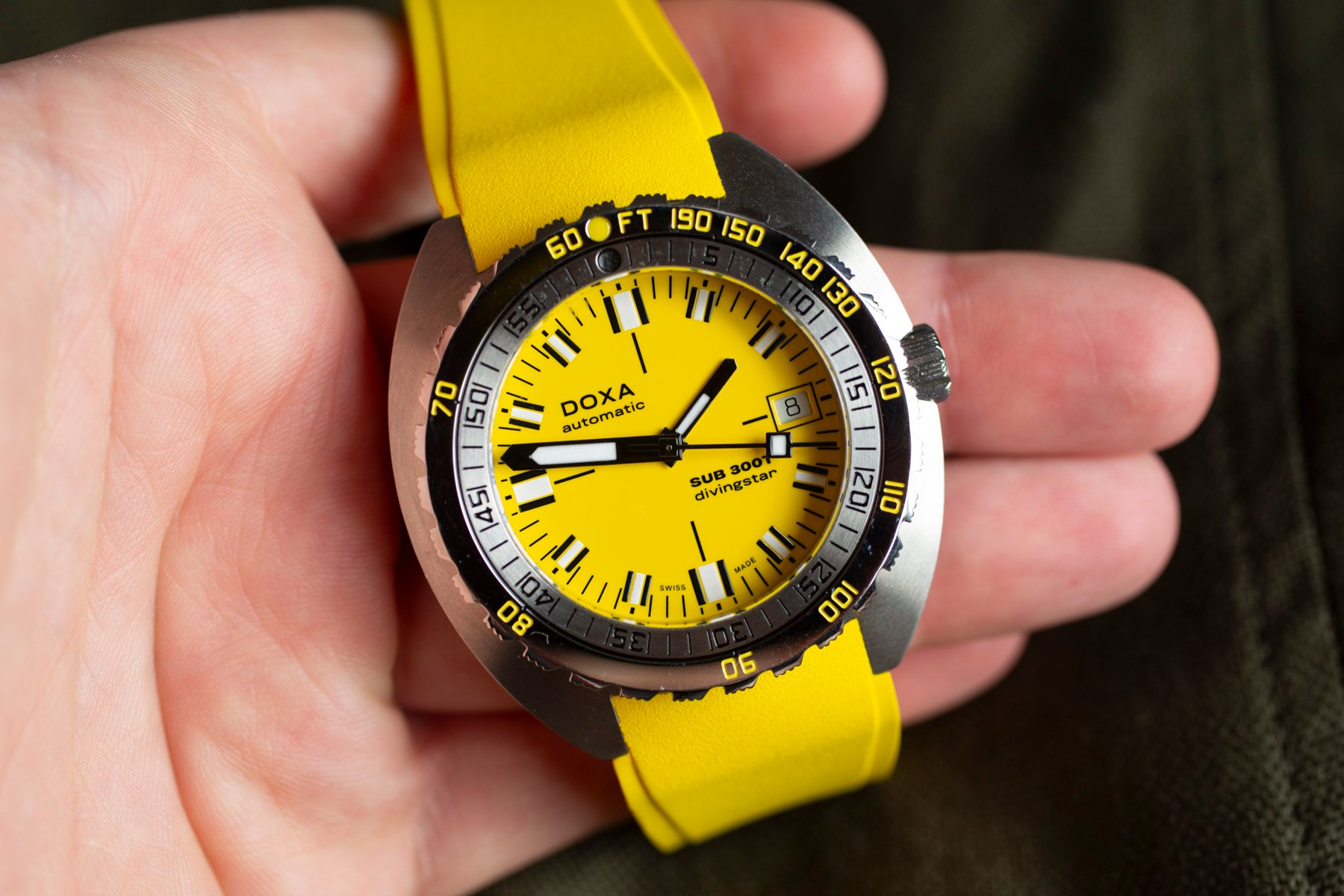
Buying a watch you already know is a very different experience from buying one you’re curious about. There’s no discovery phase, no anxious waiting for the honeymoon period to either validate or undermine the decision. Instead, it’s quieter, more deliberate. In many ways, that’s exactly how I felt when I purchased my Doxa Sub 300T Divingstar.
This wasn’t a leap into the unknown. It was a decision shaped by years of writing about Doxa, owning several of the brand’s watches, selling a few of them, and slowly figuring out what actually works for me. The Sub 300T Divingstar didn’t arrive as a surprise but, rather, as a conclusion. Let’s dive in.
A longstanding connection with Doxa
Doxa has been part of my watch journey longer than almost any other Swiss brand. In fact, my first brand-new Swiss watch was a Doxa Sub 200 Sharkhunter. That watch did a lot of heavy lifting for me. It showed me that a modern mechanical dive watch didn’t need to be highly expensive, precious, or overly refined to be satisfying. It just needed to be honest. I wrote about that experience on Fratello, and it still feels foundational to how I evaluate dive watches.
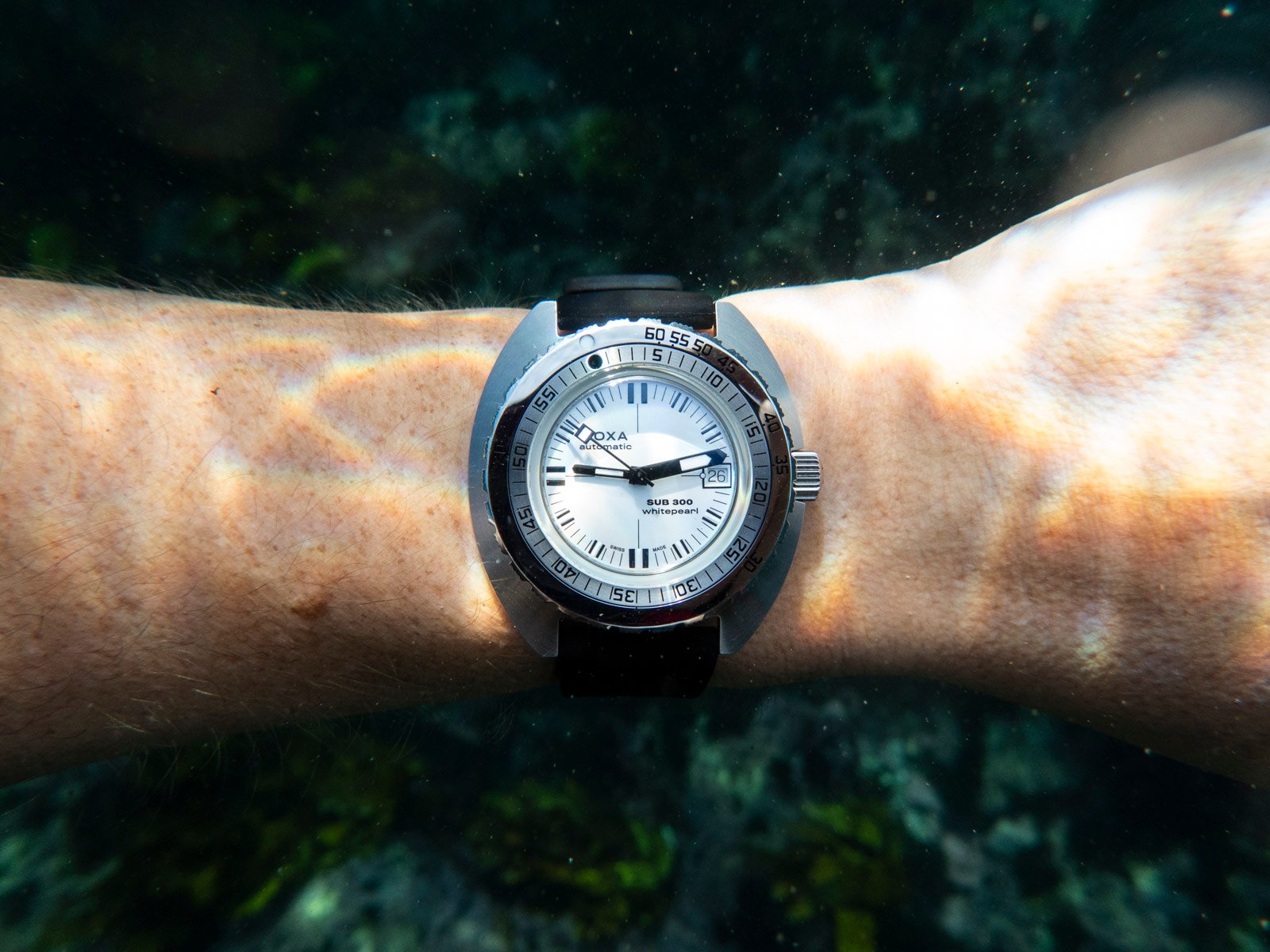
From there, my interest deepened, and so did my involvement with the brand as a writer. Over the last few years, I’ve written about Doxa extensively on Fratello, covering everything from the Sub 200 and Sub 250T GMT to more focused pieces on the Sub 300 Whitepearl and the Doxa Army. Those articles weren’t written from a distance. They came from spending real time with the watches, living with them, and forming opinions that went beyond press releases and spec sheets.
Toing and froing
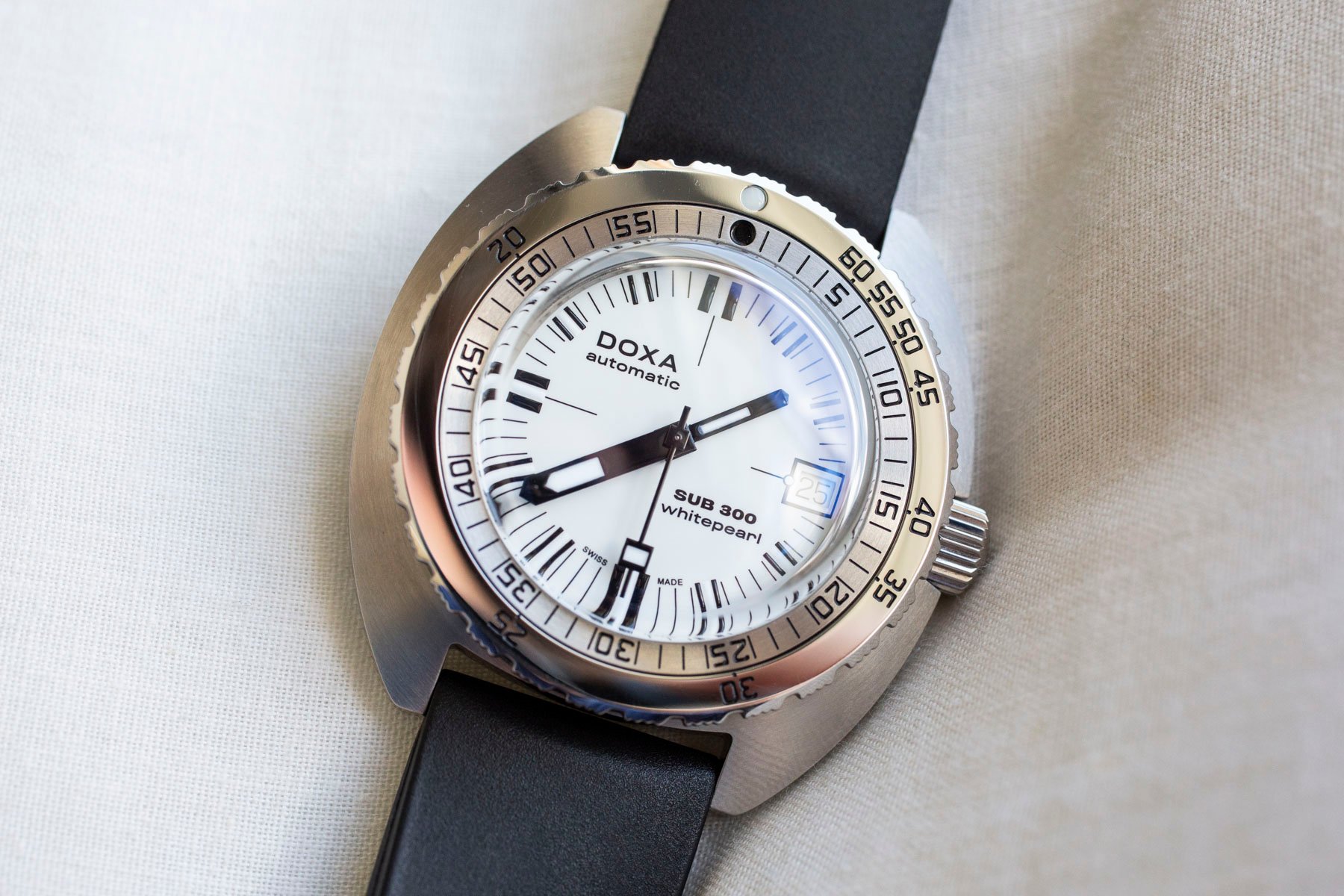
That closeness also made me more critical. I’ve owned Doxas that I genuinely admired but eventually sold, not because they were bad watches but because they weren’t quite right for me. The Sub 300 Whitepearl is a good example. I loved it aesthetically; the monochromatic white dial was cool, modern, and beautifully executed. Over time, though, I realized I wanted something closer to Doxa’s roots. I wanted an original colorway, something that unmistakably felt like Doxa in the historical sense.
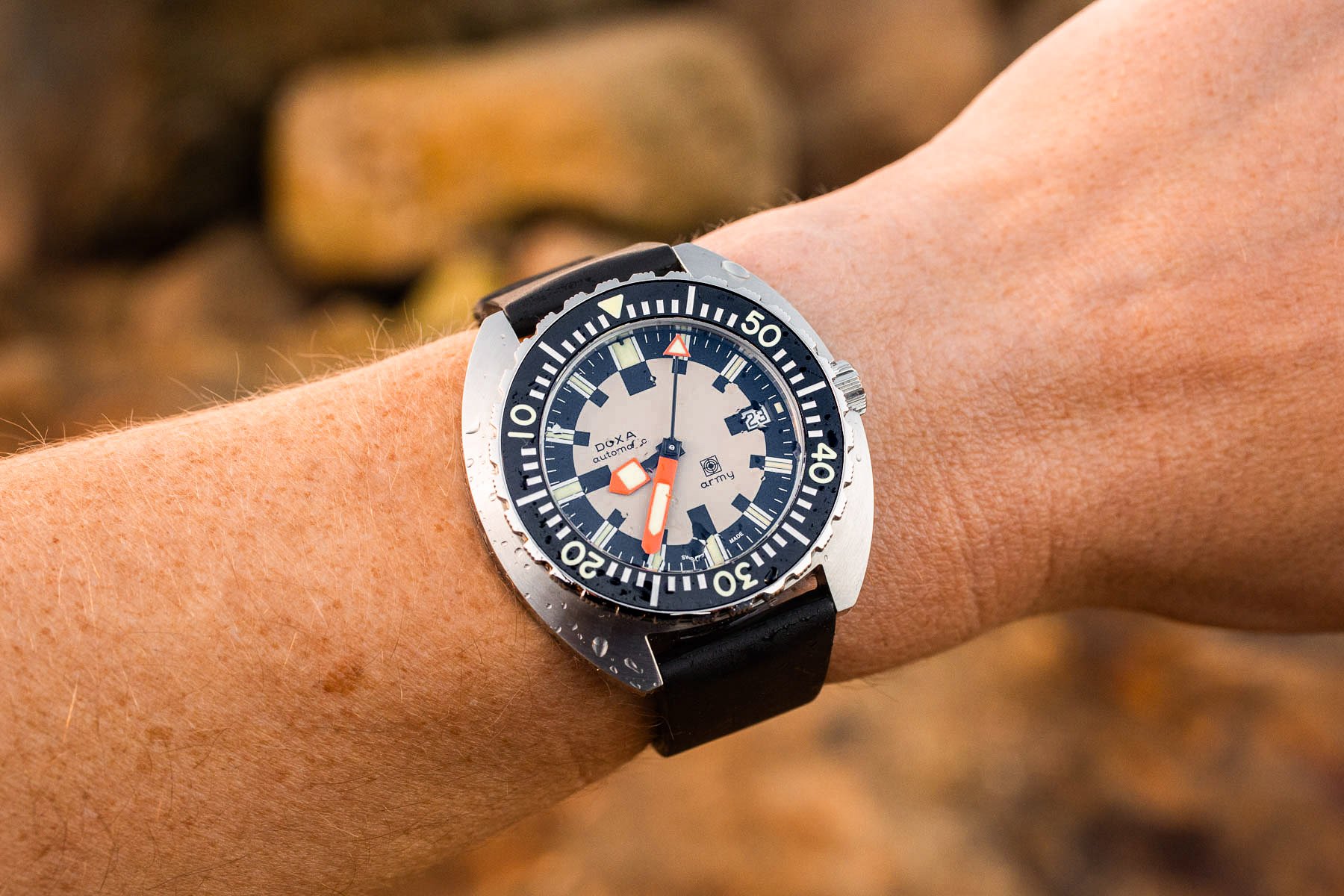
The Doxa Army followed a similar path. I found it fascinating, and I still think it’s one of the brand’s sleeper hits. But it didn’t earn enough wrist time to justify its place in my collection. The faux-aged lume, in particular, was something I never fully bonded with. It felt a little too forced and stylized for what I want from a dive watch. Each of those experiences clarified my tastes. By the time the Sub 300T Divingstar entered the picture, I knew exactly what I was looking for — and what I wasn’t.
Why yellow?
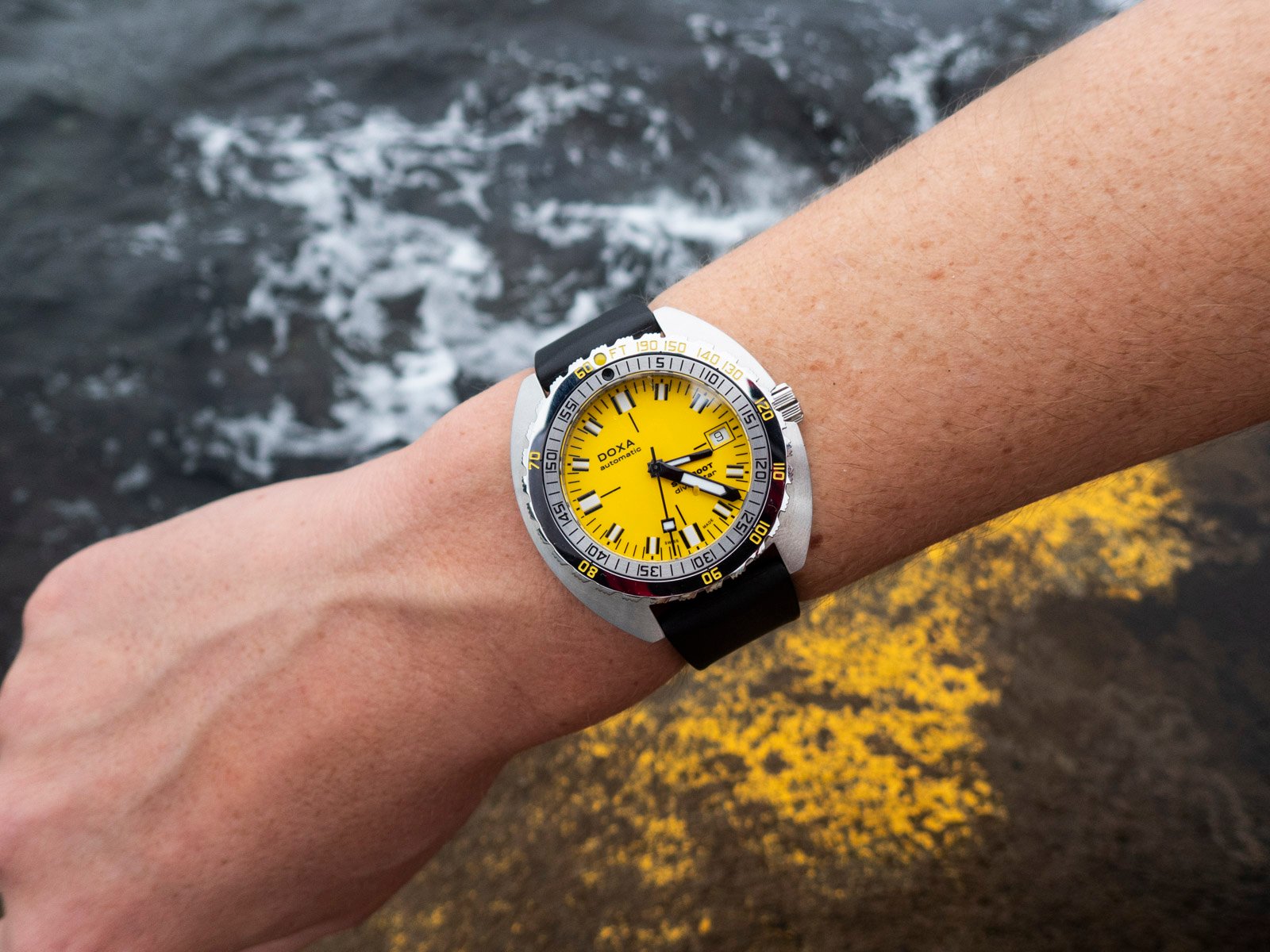
Yellow is not a color you arrive at accidentally. It’s bold, unapologetic, and impossible to ignore. For years, I’d had a quiet desire for a yellow-dial watch, something vibrant enough to feel joyful without tipping into novelty. At one point, that desire was aimed squarely at a yellow Rolex Oyster Perpetual 36. On paper, this simple, robust, and cheerful timepiece made perfect sense. In reality, it was unobtainable at retail and absurdly priced on the secondary market. The more I thought about it, the less it appealed, not because the watch wasn’t good but because the context around it felt wrong.
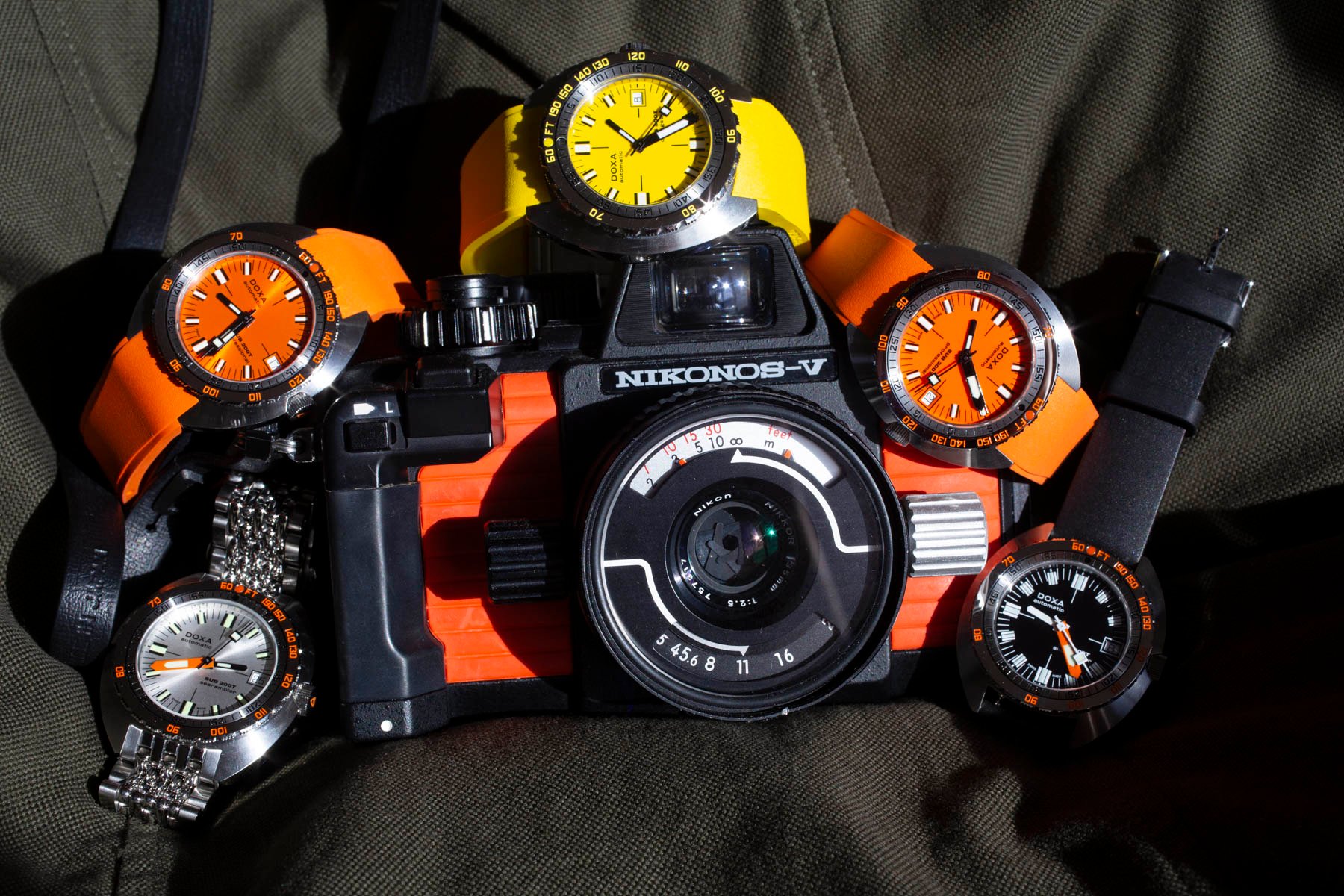
What I really wanted wasn’t a status symbol in yellow. I wanted a tool watch in yellow — a watch in which the color had a reason to exist. That’s where Doxa comes in. The Sub 300T Divingstar isn’t a modern reinterpretation of yellow for fashion’s sake. Yellow is one of Doxa’s original colorways, introduced alongside black (Sharkhunter), silver (Searambler), and the now-famous orange (Professional). It was chosen for visibility and legibility underwater, not for Instagram appeal. That matters to me. Color, in this context, feels earned.
Why the Sub 300T works for me
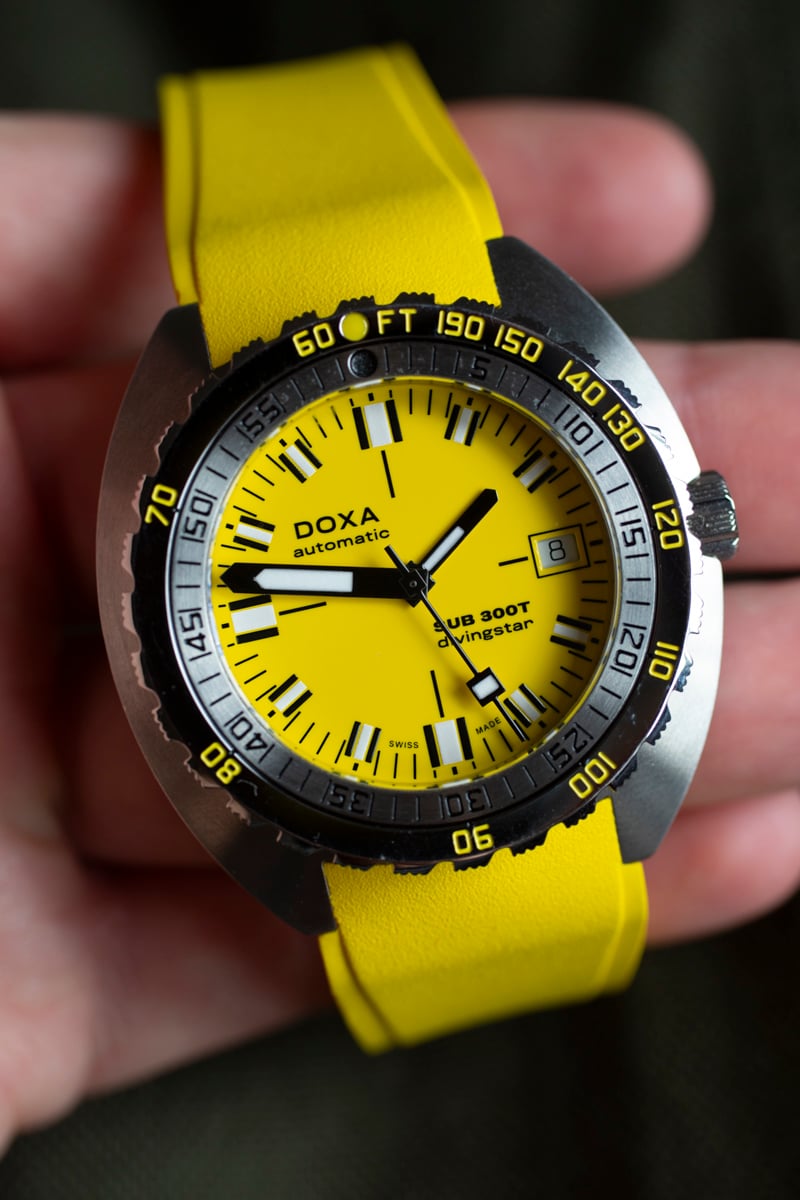
What really sealed the deal was how the Sub 300T is built. The watch has a robust 42.5mm case in high-grade 316L stainless steel that feels substantial without being unwieldy. Its flat, scratch-resistant, and AR-coated sapphire crystal keeps the dial looking crisp even in bright Australian sunshine. Additionally, the Sub 300T has a staggering 1,200m depth rating, something normally found on far more industrial-leaning instruments. It achieves this with a mix of smart engineering and real dive-ready hardware. Topping the case, the patented unidirectional bezel features an integrated no-decompression dive-time calculator, a respectful nod to the tool-watch DNA that Doxa has carried since the Conquistador era. Furthermore, the Super-LumiNova inserts on the hands ensure decent visibility when the Sun drops low or you’re beneath the surface. The level of lume won’t win awards, but it does the job.
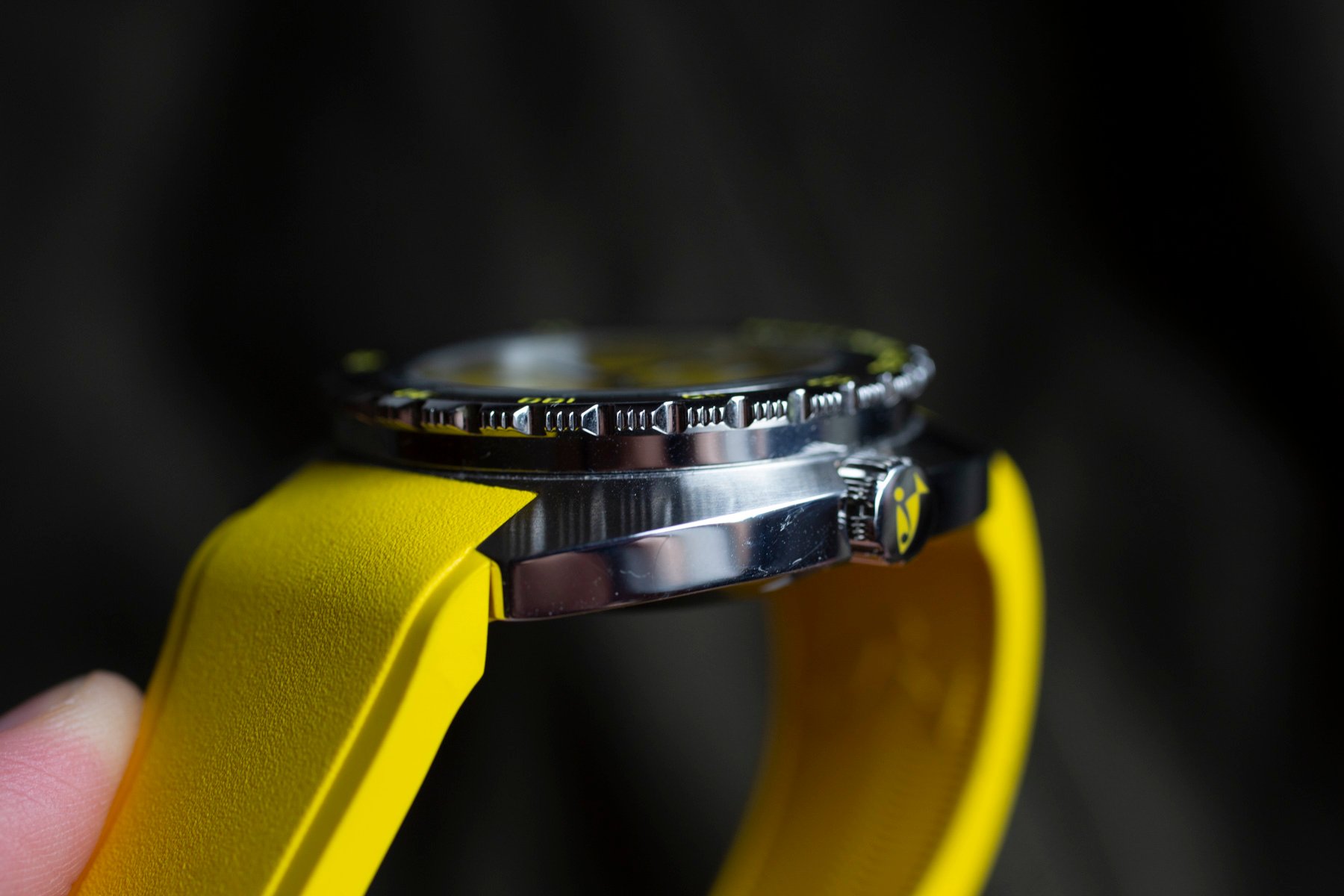
A helium release valve adds to the watch’s bona fide capability, so it’s not just theoretical toughness; this is a watch built to perform if you ever truly push its limits. All in all, the Sub 300T blends practical enhancements with thoughtful detail, making it both historically grounded and genuinely modern in execution. Powering the watch is a fairly bulletproof Sellita SW200-1 automatic movement that delivers around 38 hours of power reserve and runs at 28,800 vibrations per hour. It’s reliable, straightforward, and entirely in keeping with the no-nonsense character of the watch. You get hours, minutes, seconds, and a date display — nothing more than the necessities and nothing less.
Why the Sub 300T and not the Sub 300?
This is a question I’ve been asked more than once. The Sub 300 gets a lot of attention — and deservedly so. It’s slimmer and closer to the original 1960s proportions with a domed crystal and, in some executions, a chronometer-certified movement. But the Sub 300T suits my lifestyle better because it’s simply tougher.
The higher water resistance and the helium escape valve make it more capable as a modern dive watch. Its DNA traces back to the vintage Doxa Conquistador, one of the first commercially available dive watches to incorporate a helium escape valve, which gives it just as much design credibility as the Sub 300 but with practicality that better matches how I actually use it. There’s also the simple fact that the Sub 300T is less expensive new. That doesn’t make it better, but it does make it easier to wear without hesitation, and that’s the whole point of a dive tool.
Taking the Doxa Sub 300T where it belongs
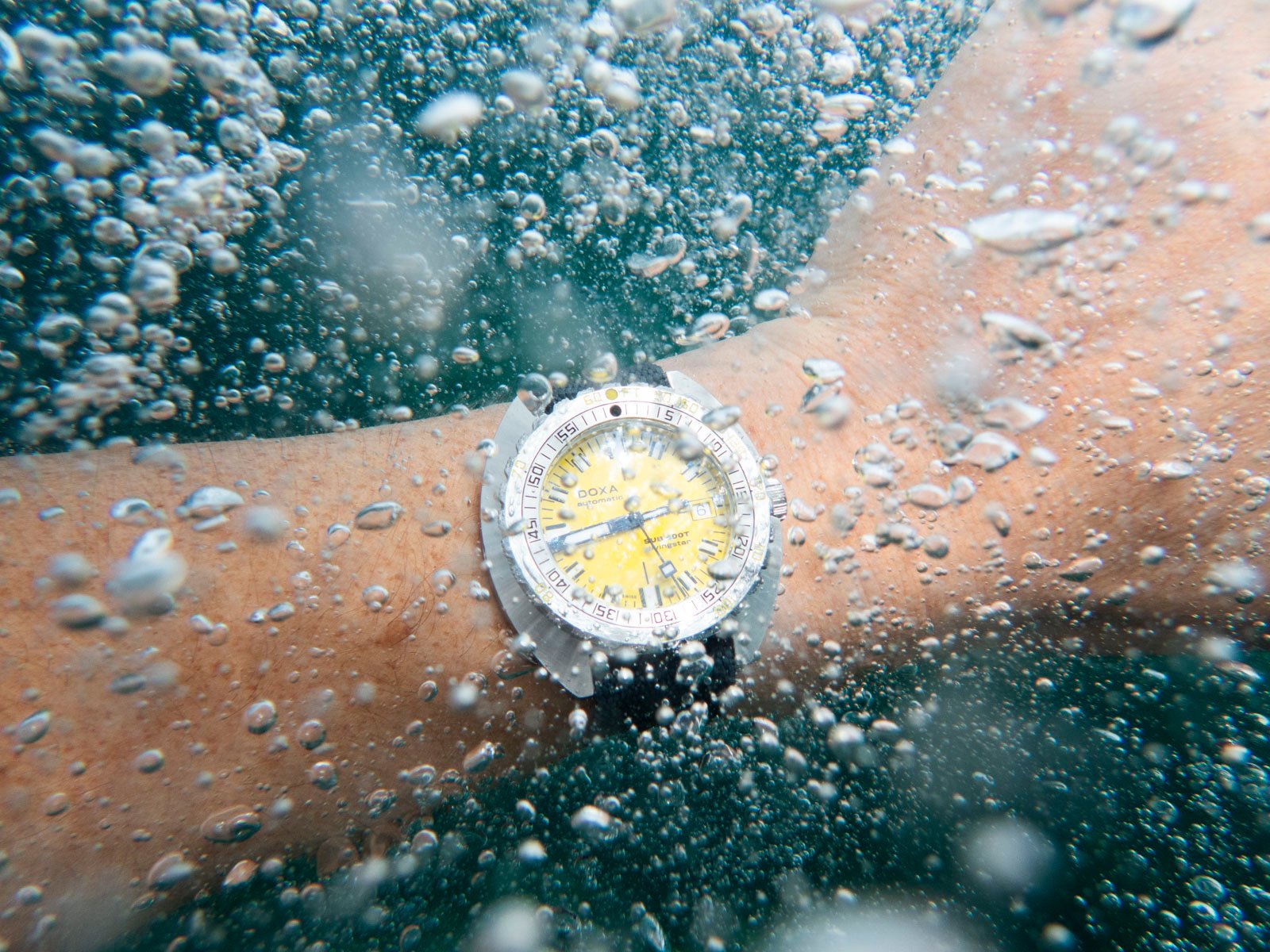
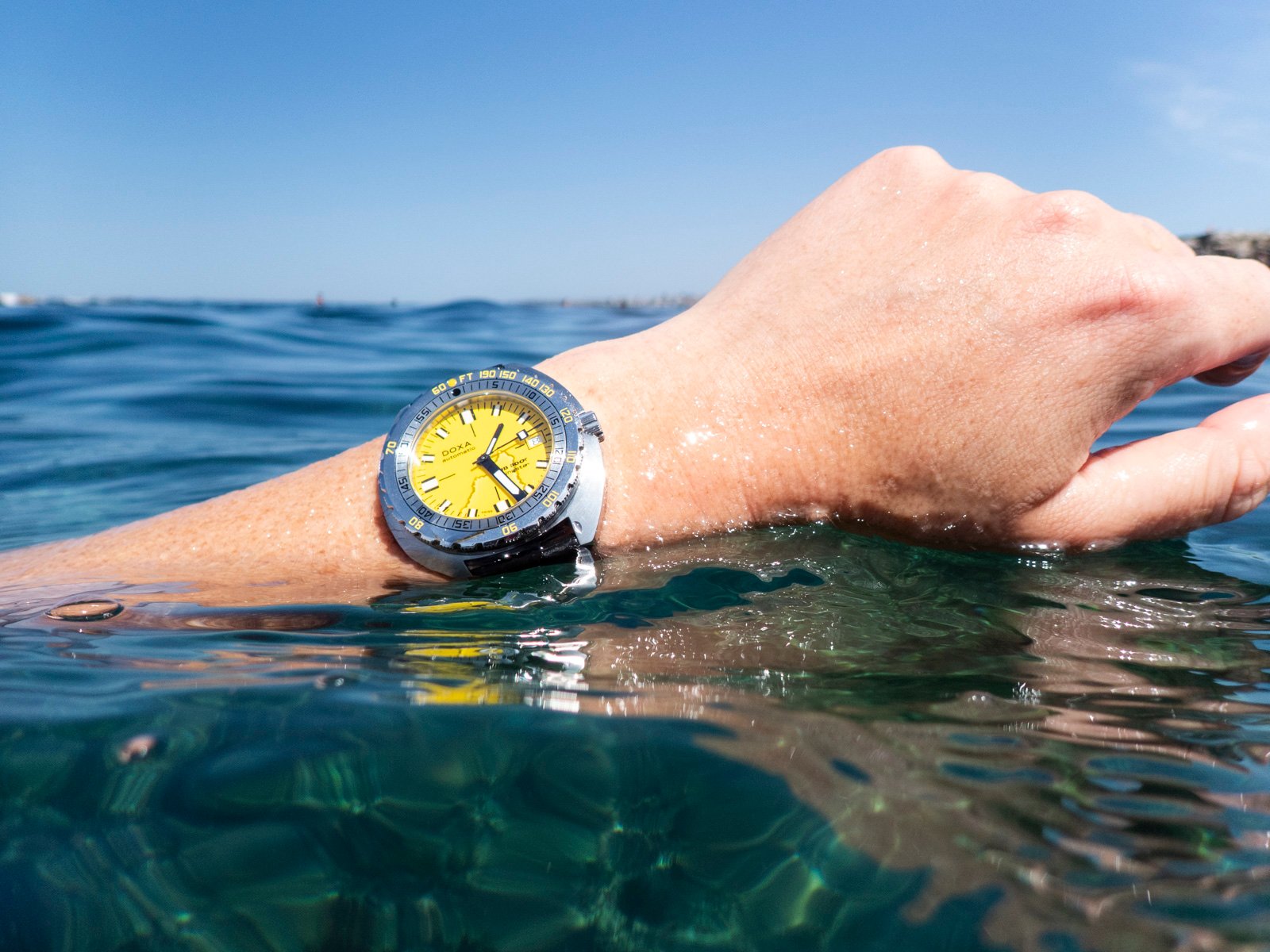
I live in Sydney, and that means the ocean is part of my daily rhythm rather than something reserved for the occasional weekend. If a watch claims to be a professional dive watch, I expect it to hold up in practice underwater, not just theoretically. My Sub 300T Divingstar has been diving with me and regularly accompanies me on ocean swims along the Pacific coast. In that environment, the watch makes complete sense.
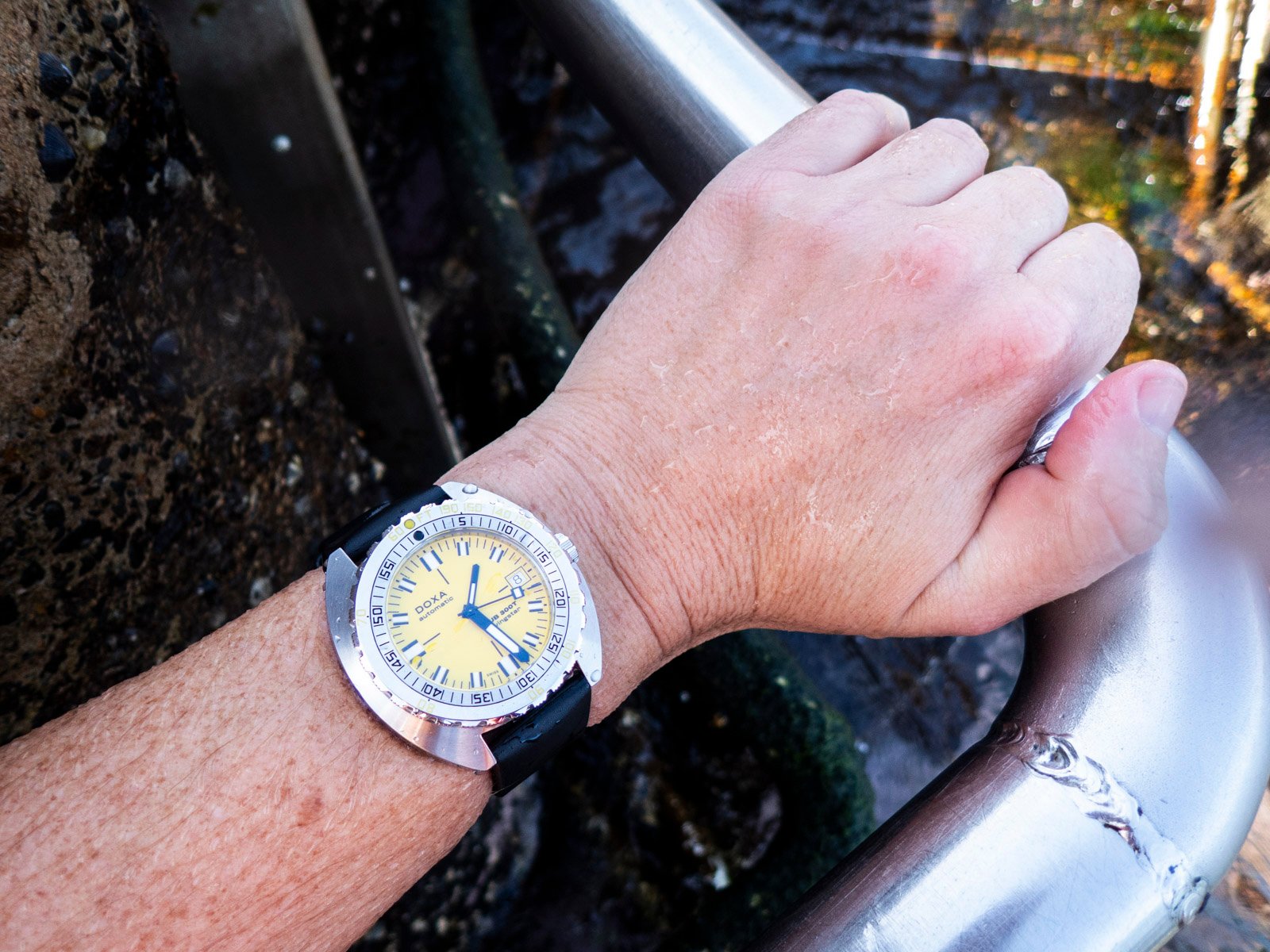
The yellow dial is highly legible in bright sunlight and underwater, and the case feels reassuringly solid without being cumbersome. This is where the Sub 300T earns its keep. It doesn’t feel like a vintage throwback that needs careful handling. It feels like a modern tool built on vintage principles.
Losing the bracelet
One of the first things I did was remove the factory beads-of-rice bracelet. This might be sacrilege to some, but for me it was an easy decision. While it’s a well-made bracelet with a historically correct design, it’s also shiny — perhaps a little too shiny. On my wrist, it pushed the watch into a territory that felt more ornamental than utilitarian. I wanted this watch to feel grounded, functional, and ready for saltwater abuse.
I replaced it with a gray NATO strap, and the change was immediate. The watch felt calmer and more balanced. The yellow dial still popped, but it did so against a neutral backdrop that suited its tool-watch nature. It also became far more practical for swimming and diving, which is how I actually use the watch. I’ve also thoroughly enjoyed the Sub 300T Divingstar on a black rubber strap, as you can see in the photos here.
Coming full circle
Looking at the Doxa Sub 300T Divingstar now, it feels like the culmination of a long process rather than a spontaneous purchase. My early experience with the Sub 200 Sharkhunter set the foundation. The Whitepearl taught me that originality matters to me. The Army clarified my feelings about faux patina and how much wear a watch needs to earn its place.
The Sub 300T Divingstar brings all of that together. It’s an original Doxa colorway. It’s robust, historically grounded, and genuinely useful. It scratches the itch I once had for a yellow dial without the baggage of hype or inflated pricing. Most importantly, it fits my life — in the ocean, on land, and everywhere in between. This isn’t a watch I’m trying to convince myself to love. It’s one I reach for instinctively. And after years of thinking, writing, buying, and selling, that feels like the clearest sign I made the right choice.