A Hands-On Introduction To The New Mozen GMT1

When it comes to modern production techniques, 3D printing is not a common choice in the watch industry just yet. With the new GMT1, the startup brand Mozen demonstrates that 3D printing enables the creation of creative case designs that do not break the bank. On top of that, the new Mozen GMT1 uses an original way to display the time in another part of the world. It’s time to find out more about this debut release.
New brand Mozen is the brainchild of Italian-born industrial designer Simone Mancini. About a decade ago, he traded sunny Italy for the United States. That’s where he found a fascination for American craftsmanship that he wanted to merge with his Italian design background. So Mancini set out to create a watch brand that utilizes modern 3D printing to craft watches featuring intricate details and diverse shapes. The result is the Mozen GMT1, which is available in four dial variations.
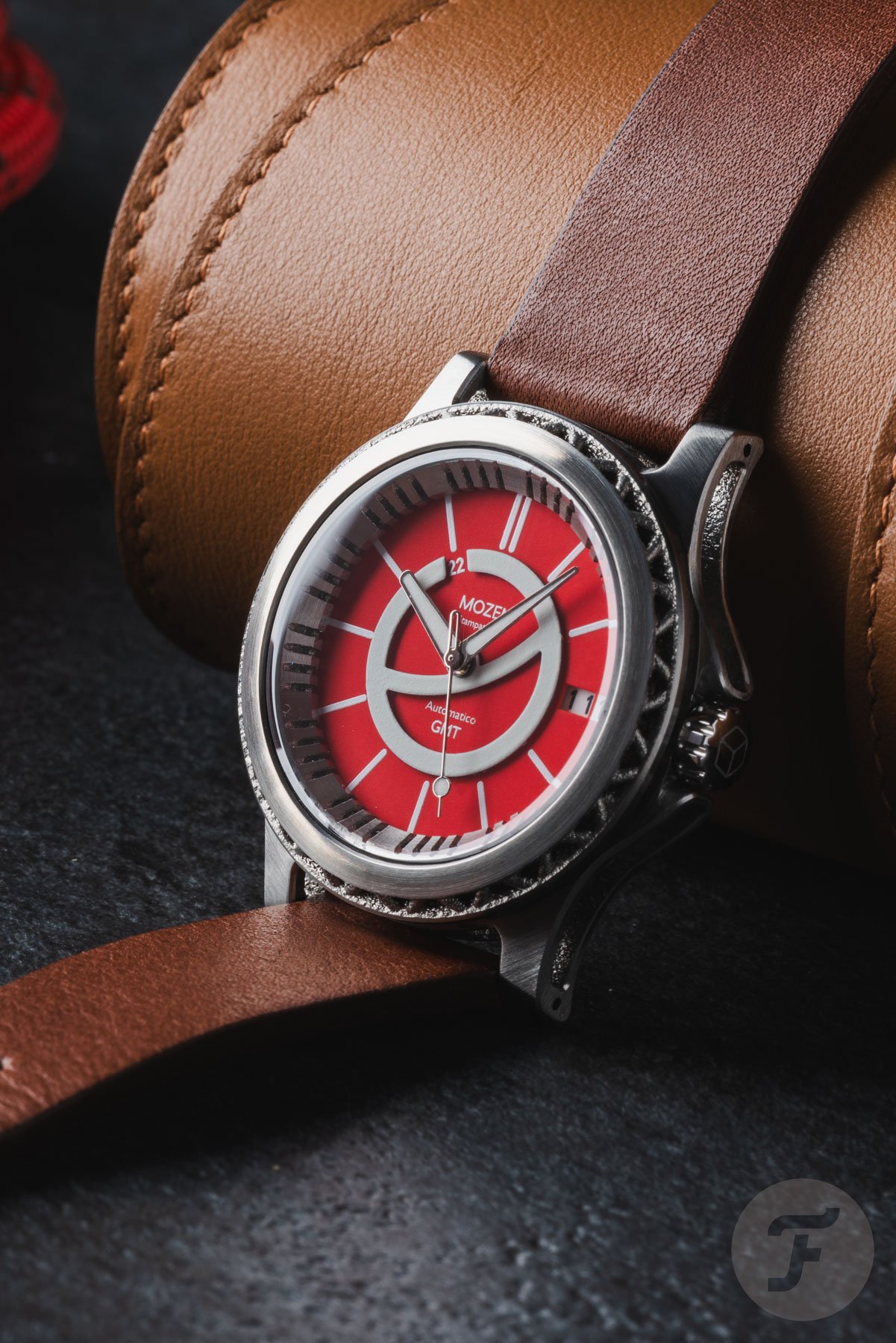
The details of the Mozen GMT1
Before we delve into the different versions, let’s first go over the specifications of the Mozen GMT1. The watch features a 40mm stainless steel case with a 47mm length, a 12mm thickness, and a 20mm lug spacing. Additionally, the classically shaped case is water resistant to 100 meters. So far, you might be thinking that it’s nothing spectacular. But take just one glance at the case, and you will understand that it’s not about the size and dimensions but, rather, the design.
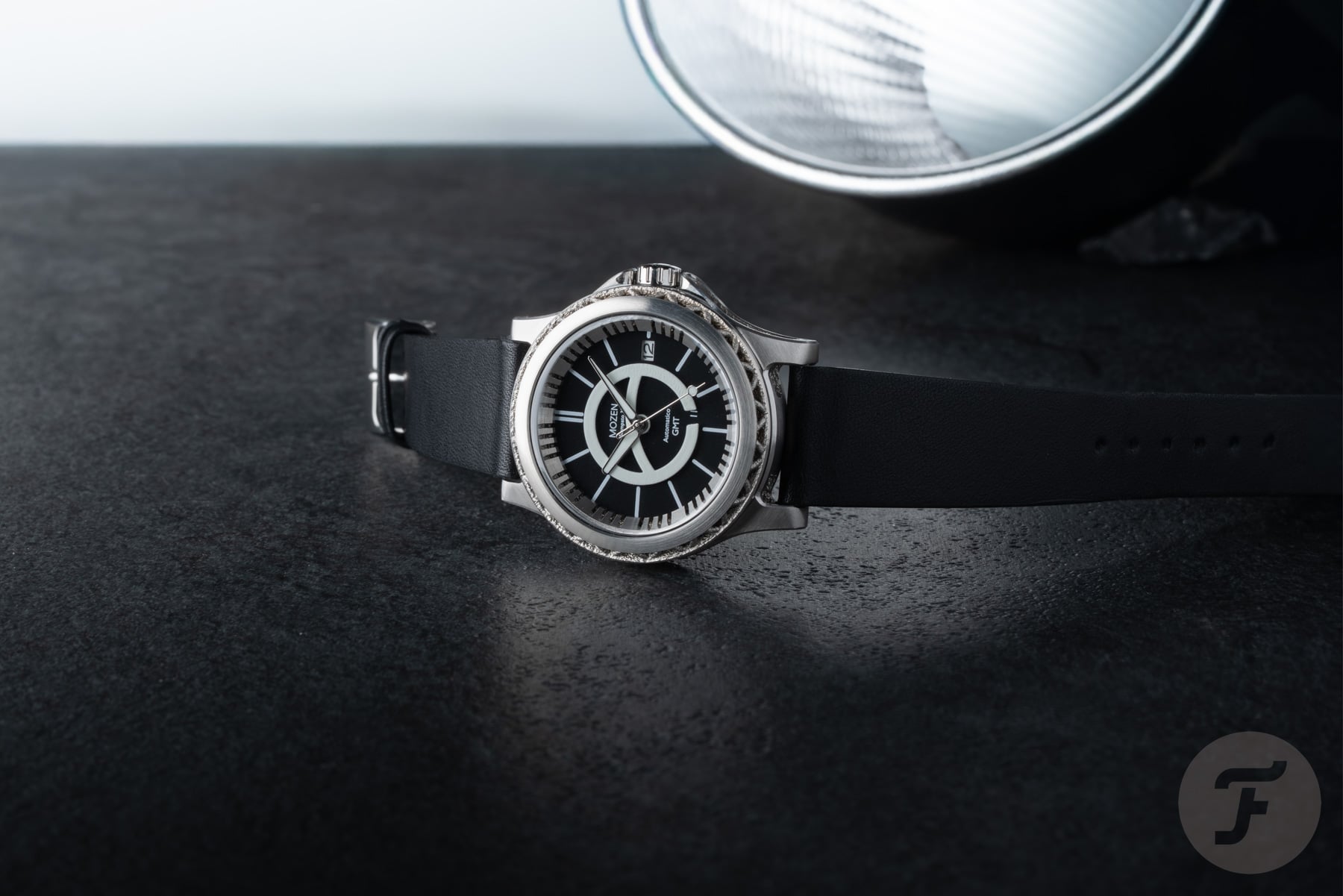
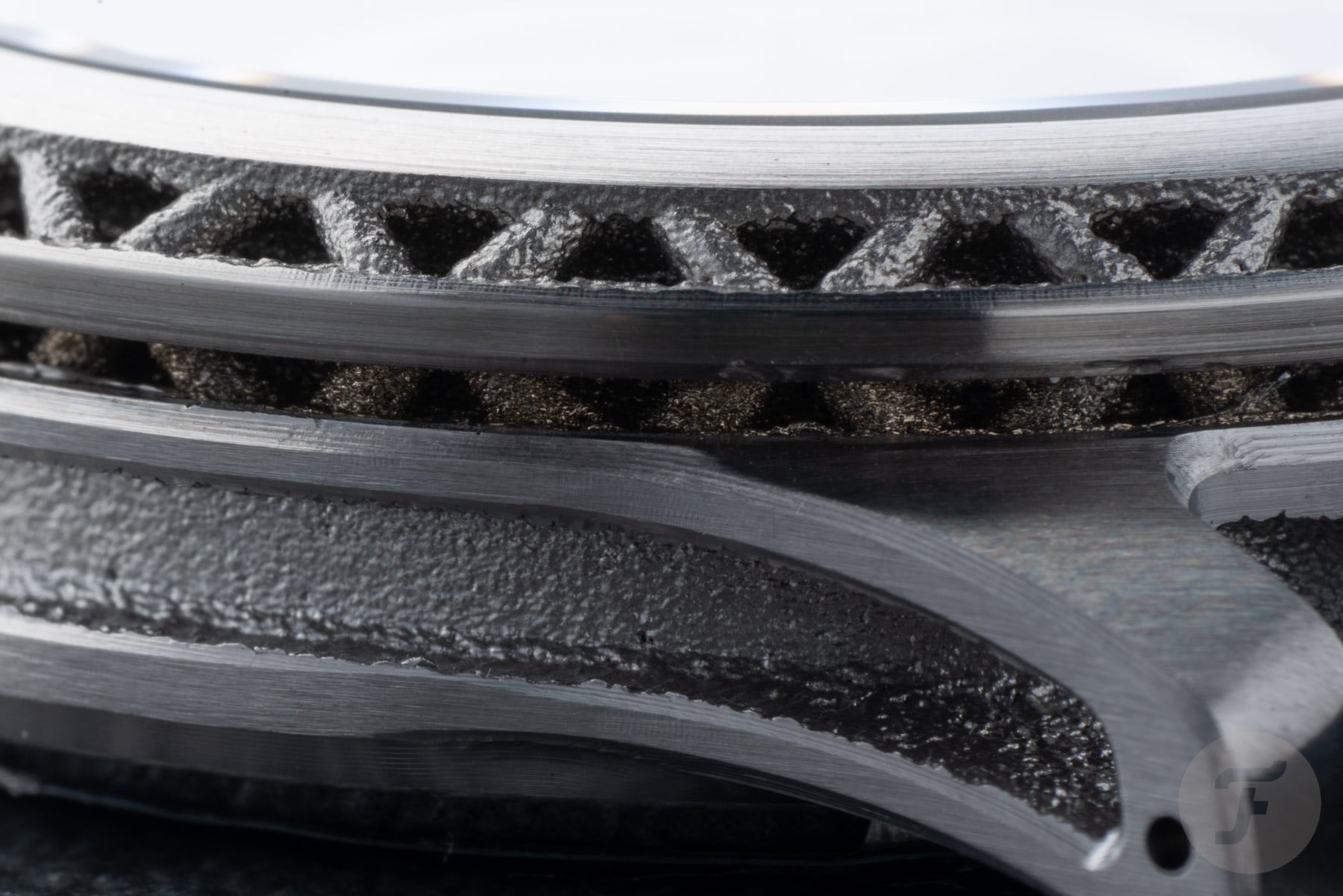
The Mozen GMT1 case is created using a combination of 3D printing and CNC machining. This results in a rather distinct profile characterized by an open bezel, open case sides, and open lugs. As you can see, the bezel features a textured, waffle-like structure. The lug design immediately reminded us of the Dutch brand Holthinrichs, which is a pioneer in the field of 3D printing for watches.
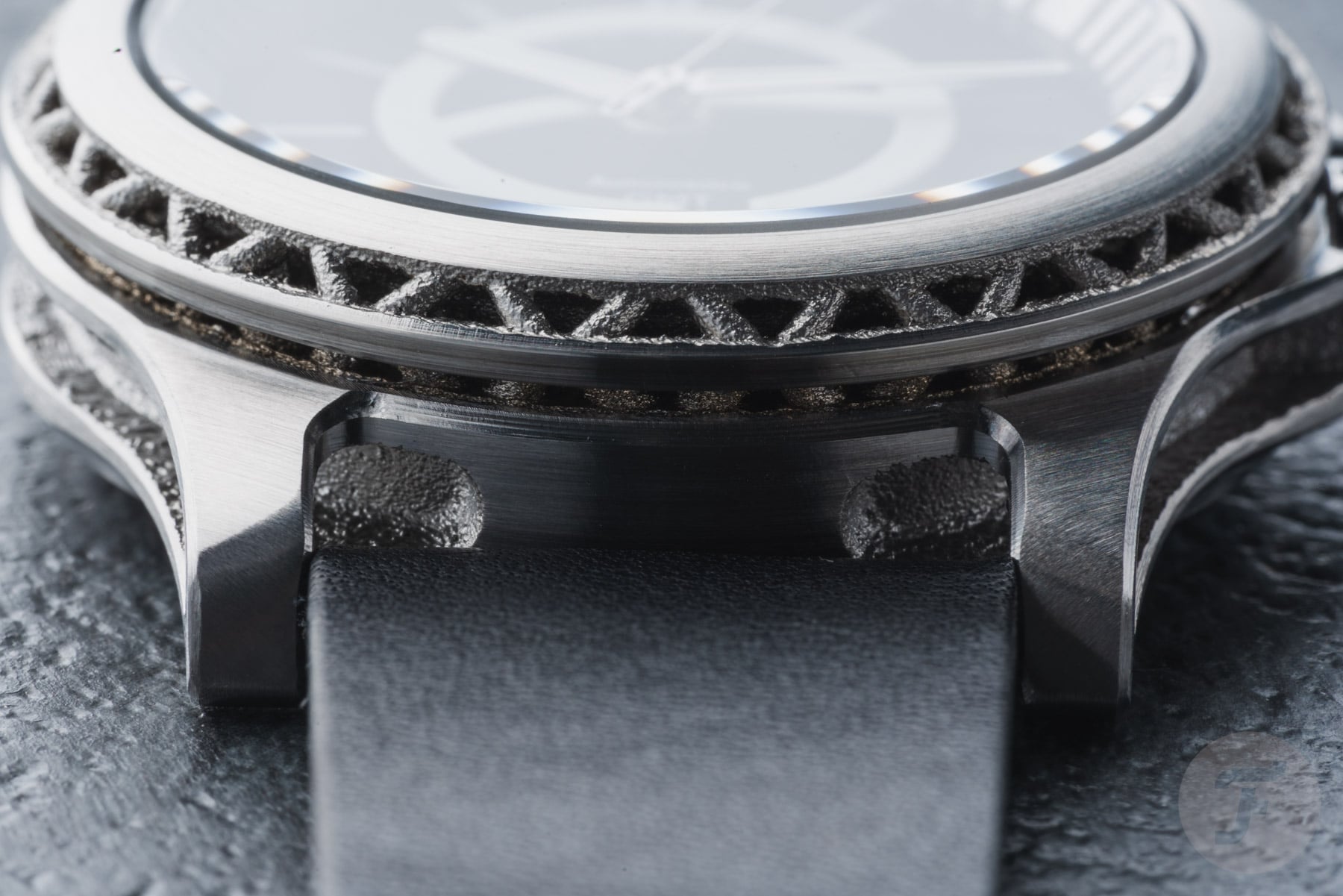
It’s interesting to see another brand using 3D printing, although I must admit that there is a notable difference in quality between the two. Holthinrichs has mastered the art of 3D printing, and since I’ve handled the brand’s watches, I could tell that Mozen can still make strides in terms of refinement and finishing. However, the case clearly demonstrates that 3D printing adds character to it. Especially from the side, it is rather dramatic and displays a lot of detail and texture.
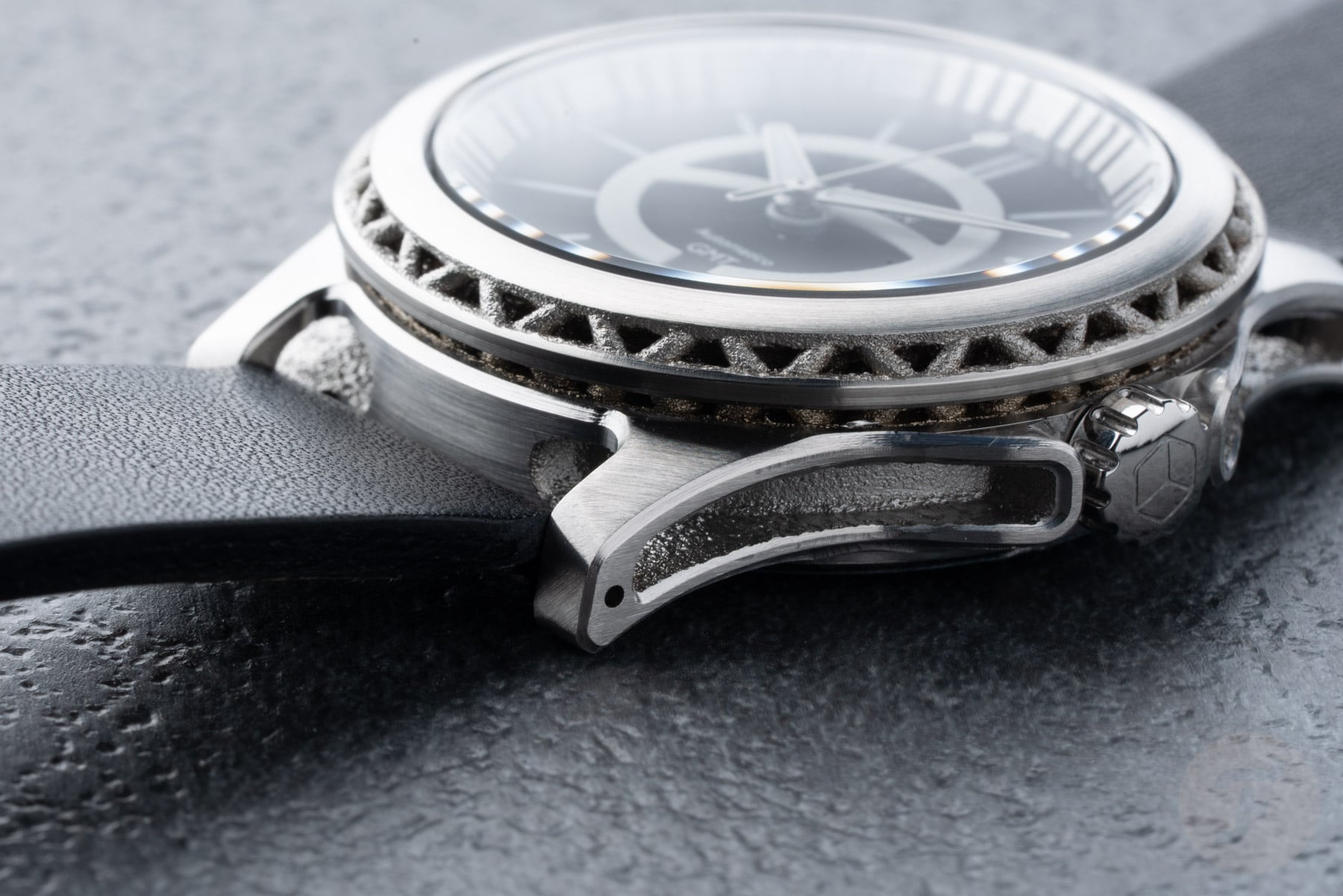
The unique integration of the GMT feature
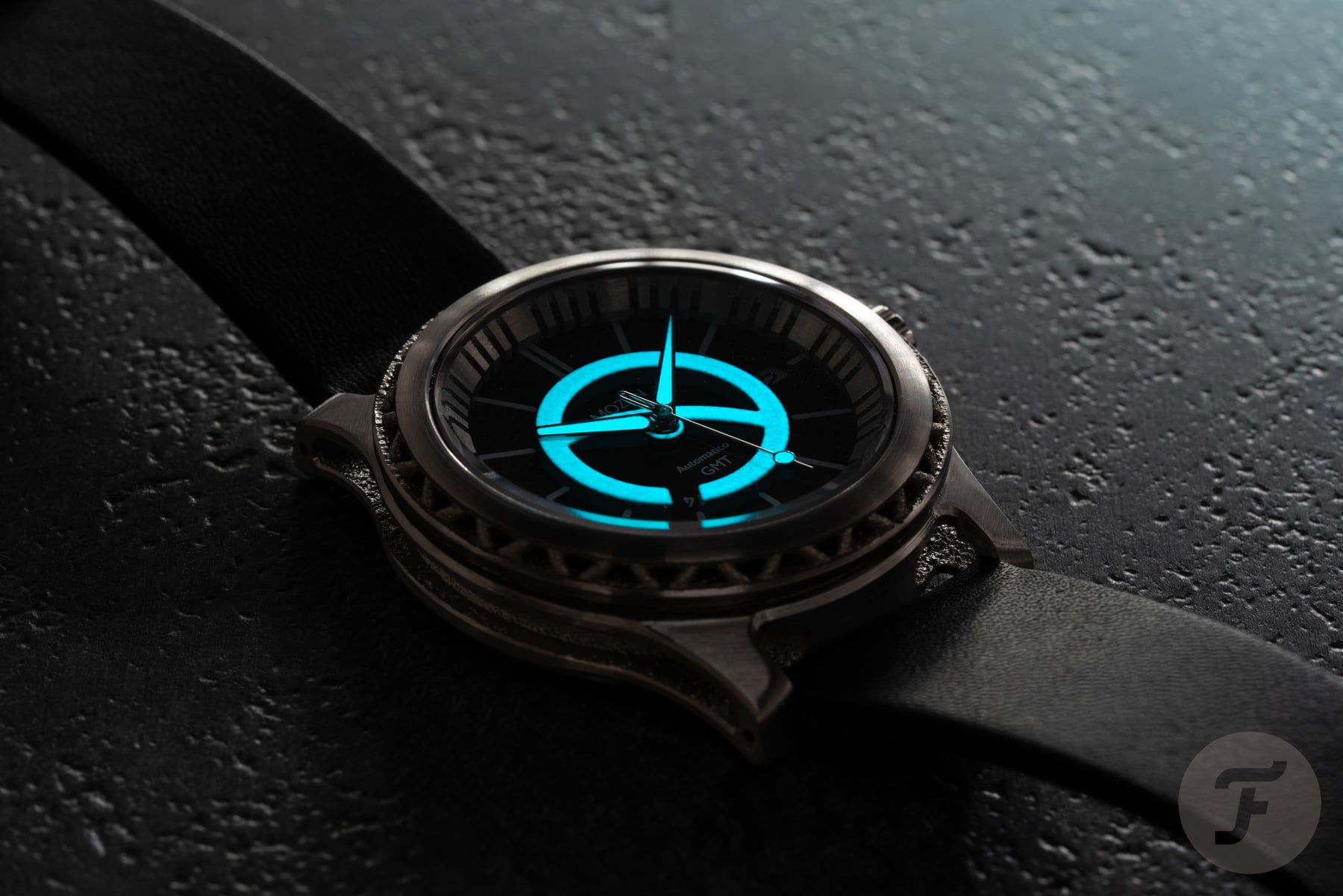
A glance at the dials reveals an interesting design. Each features large hour markers, and placed on the inside is a large ring that serves as the GMT indicator. The small gap in the ring reveals a number indicating the hour in the second time zone. The ring is connected to the central hour and minute hands, so it rotates gradually in sync with local time. But what you will quickly find out is that in the rotation, there is some time that the ring does not display an actual number when it’s half past the hour.
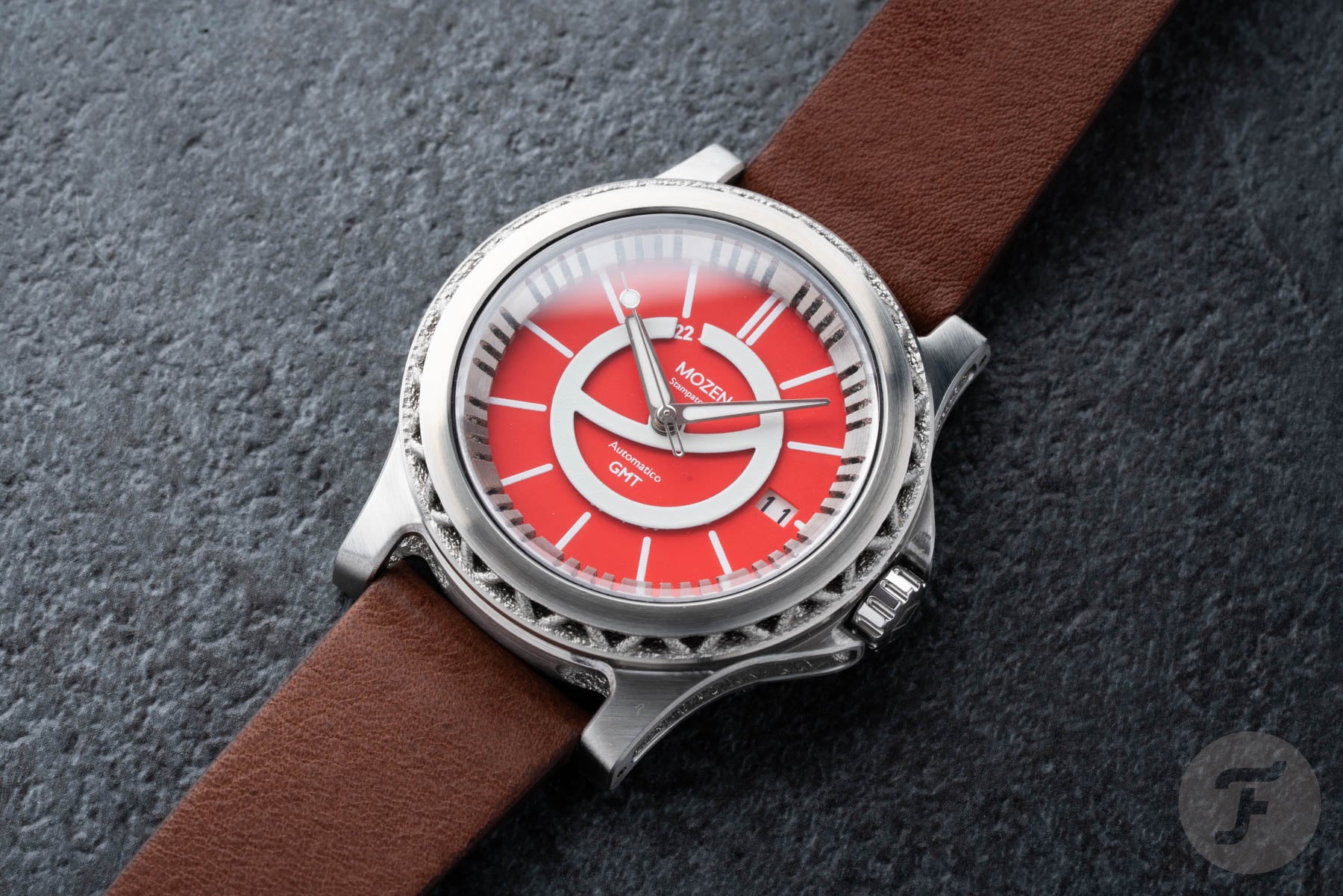
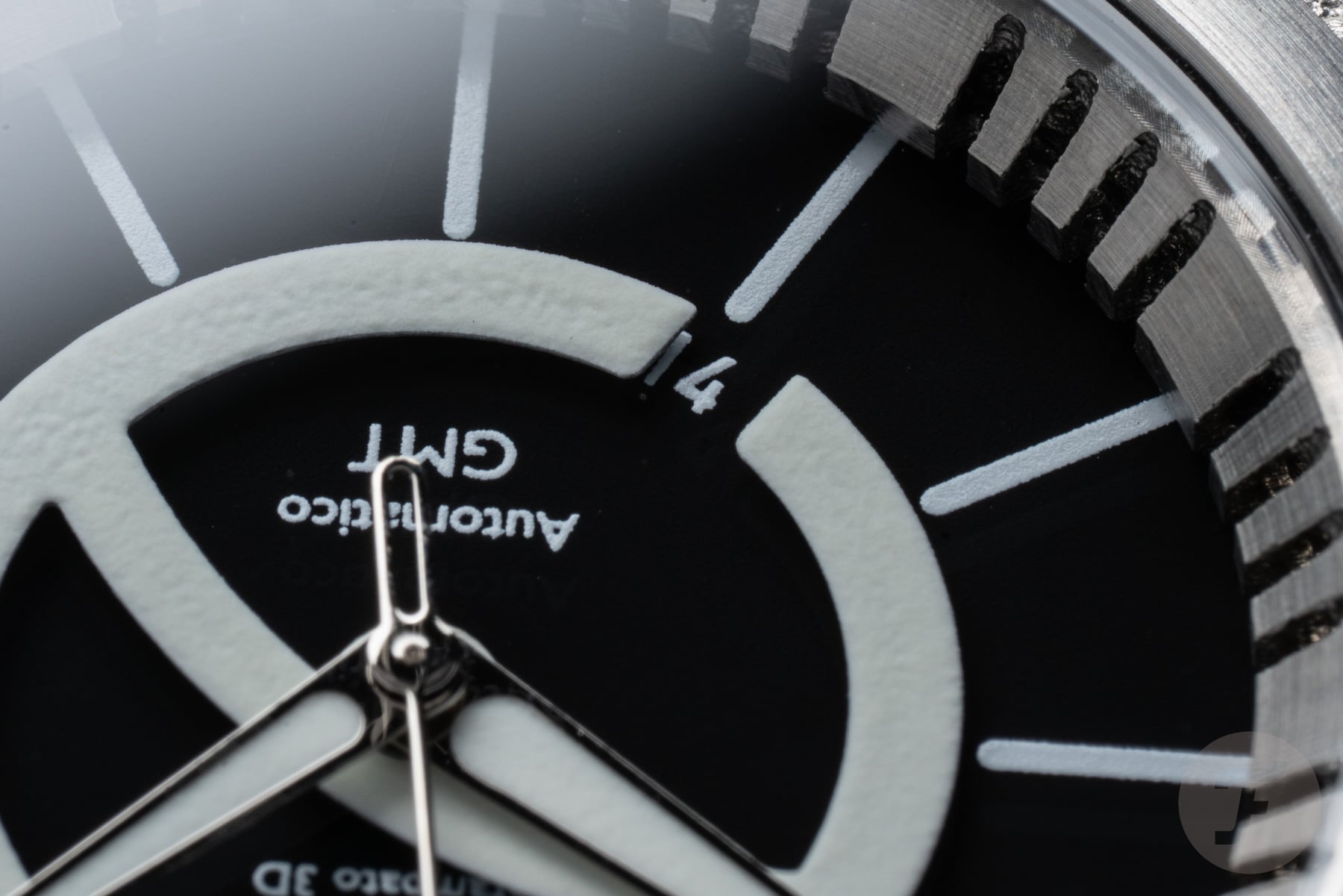
Another detail that stood out is that the odd numbers of the 24-hour ring are placed vertically, while the even numbers are placed radially. It’s a little design trick that had me wondering for a minute what was going on. But once you rotate the luminous ring, you quickly find out. Another thing that threw me off slightly is that the central hands cover the 24-hour numerals multiple times per day.
Interesting design choices
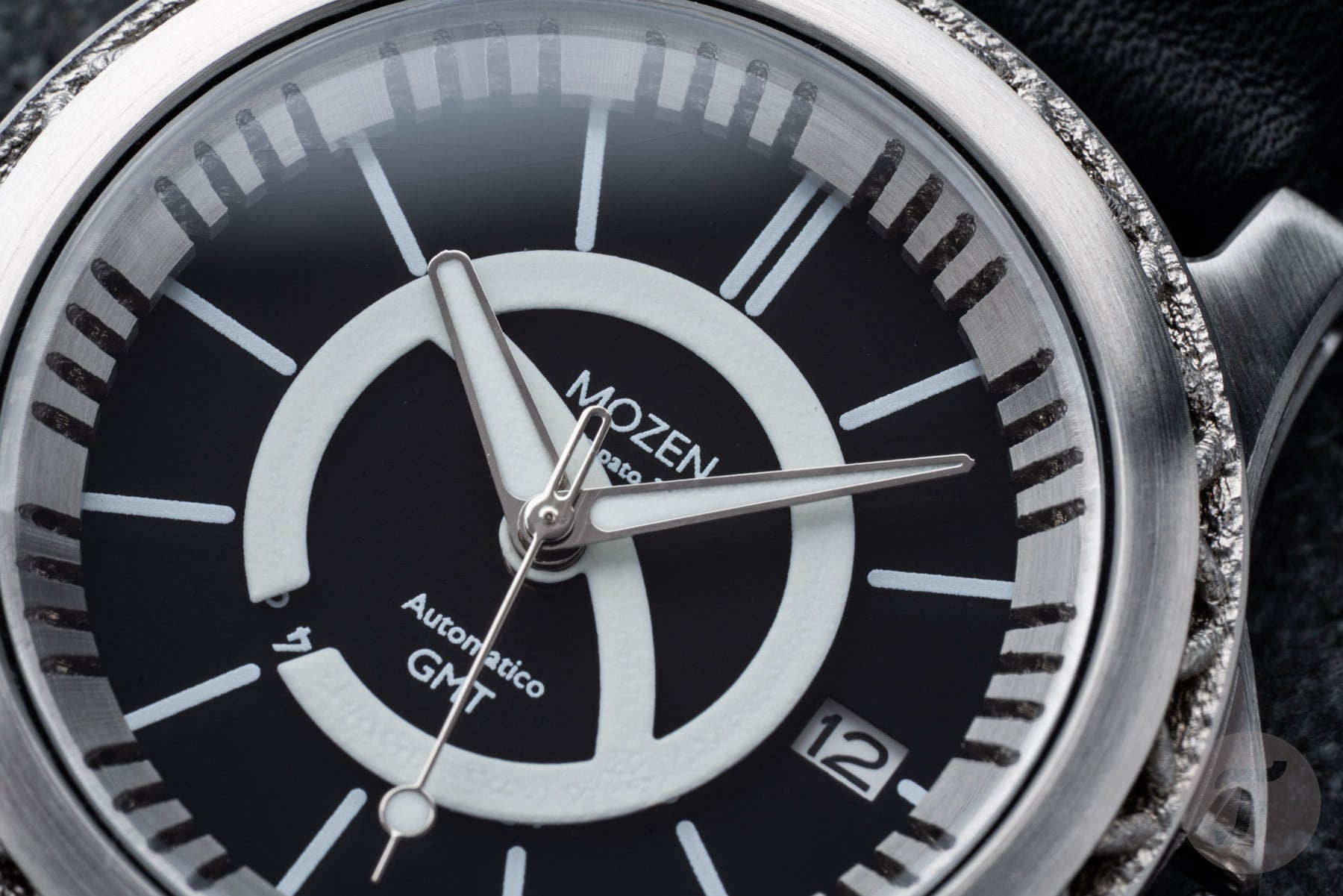
The central hour hand will do that every 12 hours, while the central minutes hand will do so every hour. For the initial prototypes, Mancini used skeletonized hands. These allowed the wearer to always see the current hour in the second time zone. However, the two prototypes that we received had lumed hands that covered the numbers. The solution would be for the hands to have skeletonized tips. That way, the hands could still have lume but wouldn’t obstruct the 24-hour display. I think that would solve this practical issue quite nicely.
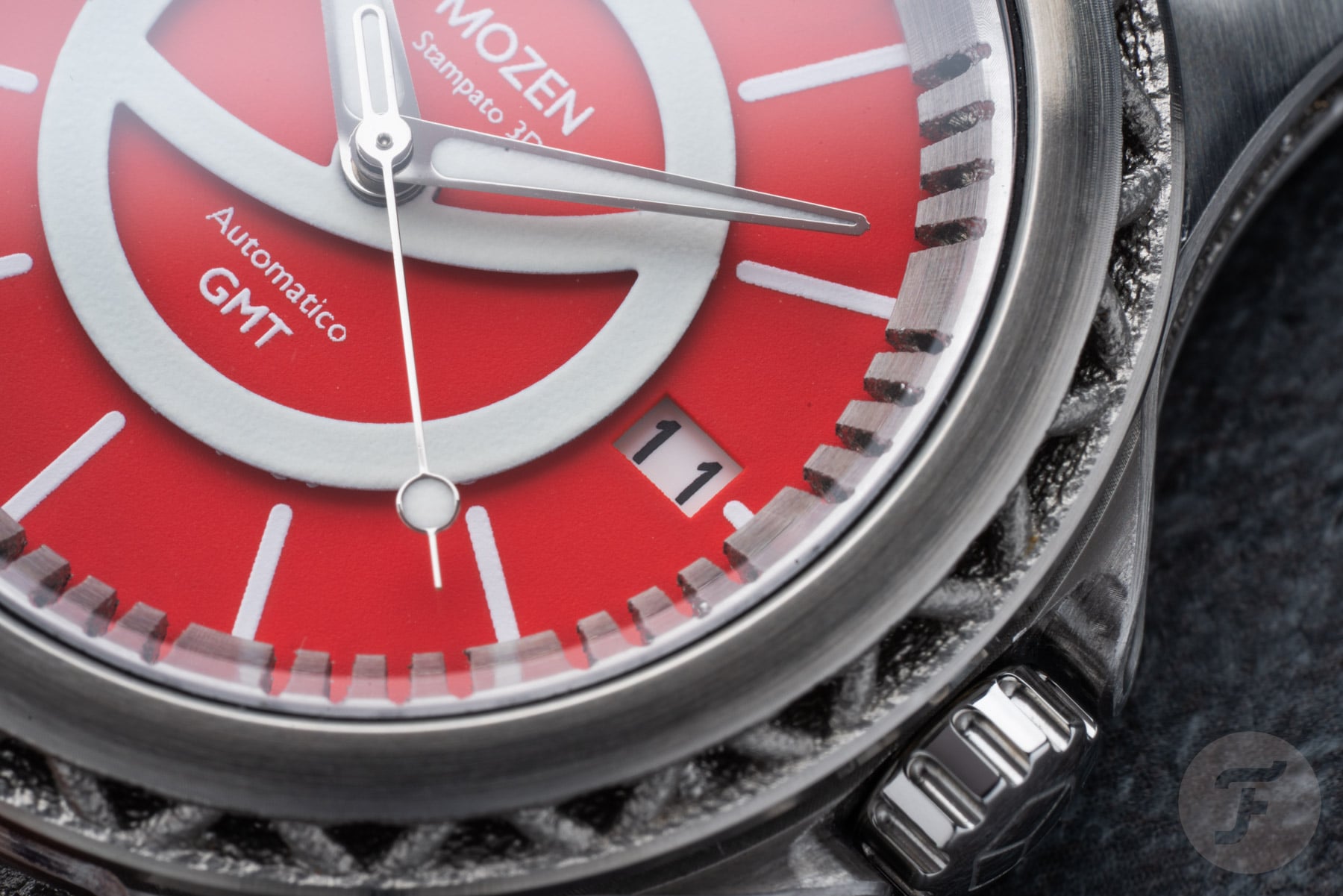
Another remarkable detail is the seconds scale. The cut-outs on the rehaut, along with the hour markers, form a full 60-second scale. These cut-outs are another standout design choice that adds character to the watch.
The dials and movement inside the GMT1
The Mozen GMT1 is available in four variations. The two we received were the black-dial Nero and the red-dial Rosso. The third variant is the green-dial Olive Green, and lastly, there is the blue-dial Deep Blue. All of them have the same white hour markers and luminous GMT ring. The Nero features a black leather strap, whereas the Rosso comes equipped with a brown one.
The caliber Mancini chose to power his GMT1 is the Seiko NH34. This automatic movement operates at 21,600 vibrations per hour and offers a 41-hour power reserve. The specific version that powers the Mozen GMT1 is regulated to run within ±10 seconds per day. This caller-style GMT caliber is a go-to choice for many affordable watches in this genre. Operating it is easy. In the first or standard position, it allows you to wind the watch. If you pull out the crown to the second position, you can adjust the 24-hour ring by turning the crown clockwise and the date by turning it counterclockwise. Pulling the crown out to the third position allows you to set the main time by changing the central hour and minute hands.
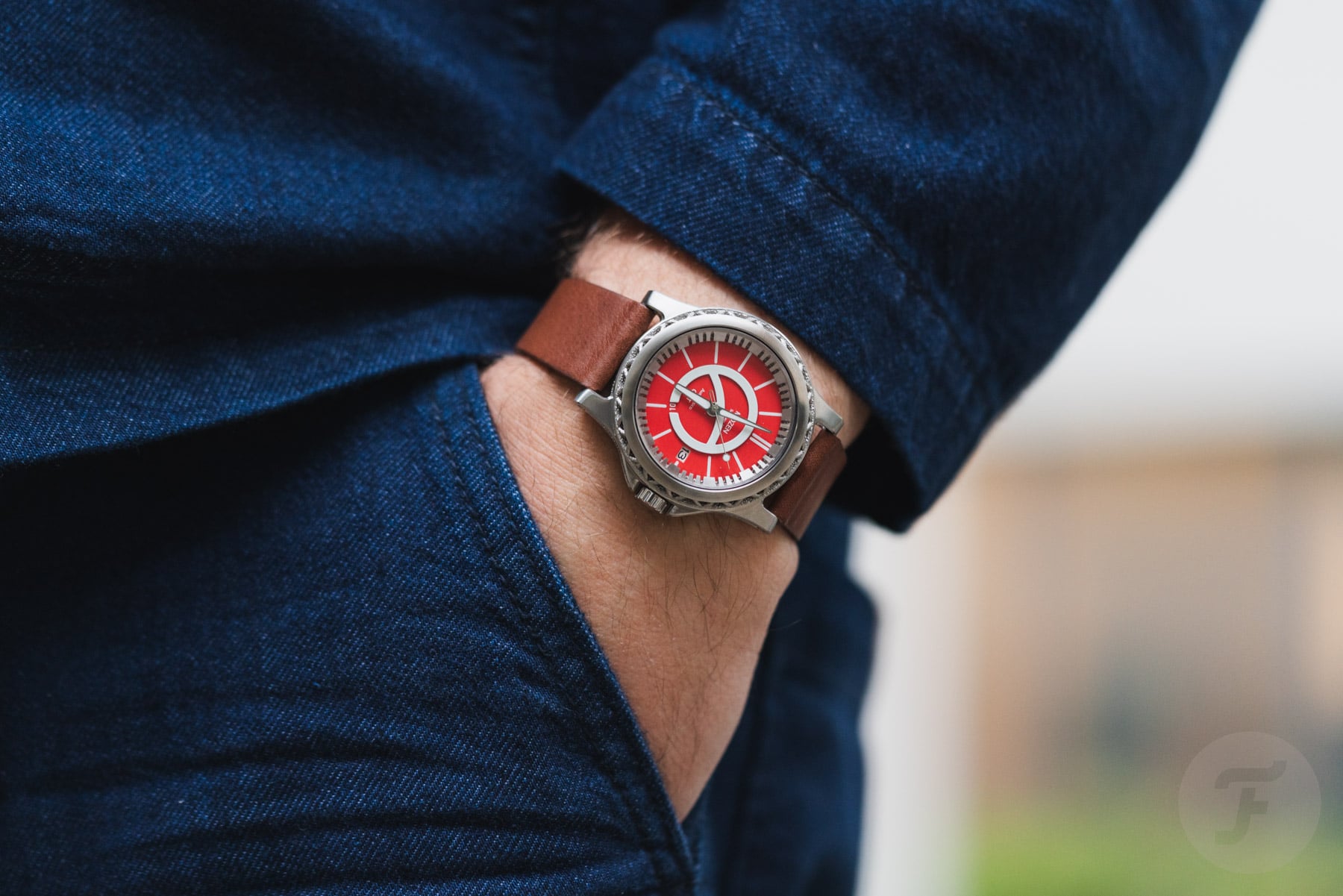
Wearing the two Mozen GMT1 watches
On the wrist, these watches feel hefty and solid. That is good because, with 3D-printed cases, a noticeably solid construction gives you the impression that you bought a qualitative watch. That’s most certainly the case with this Mozen GMT1. Importantly, the diameter and the overall proportions also make it comfortable to wear.
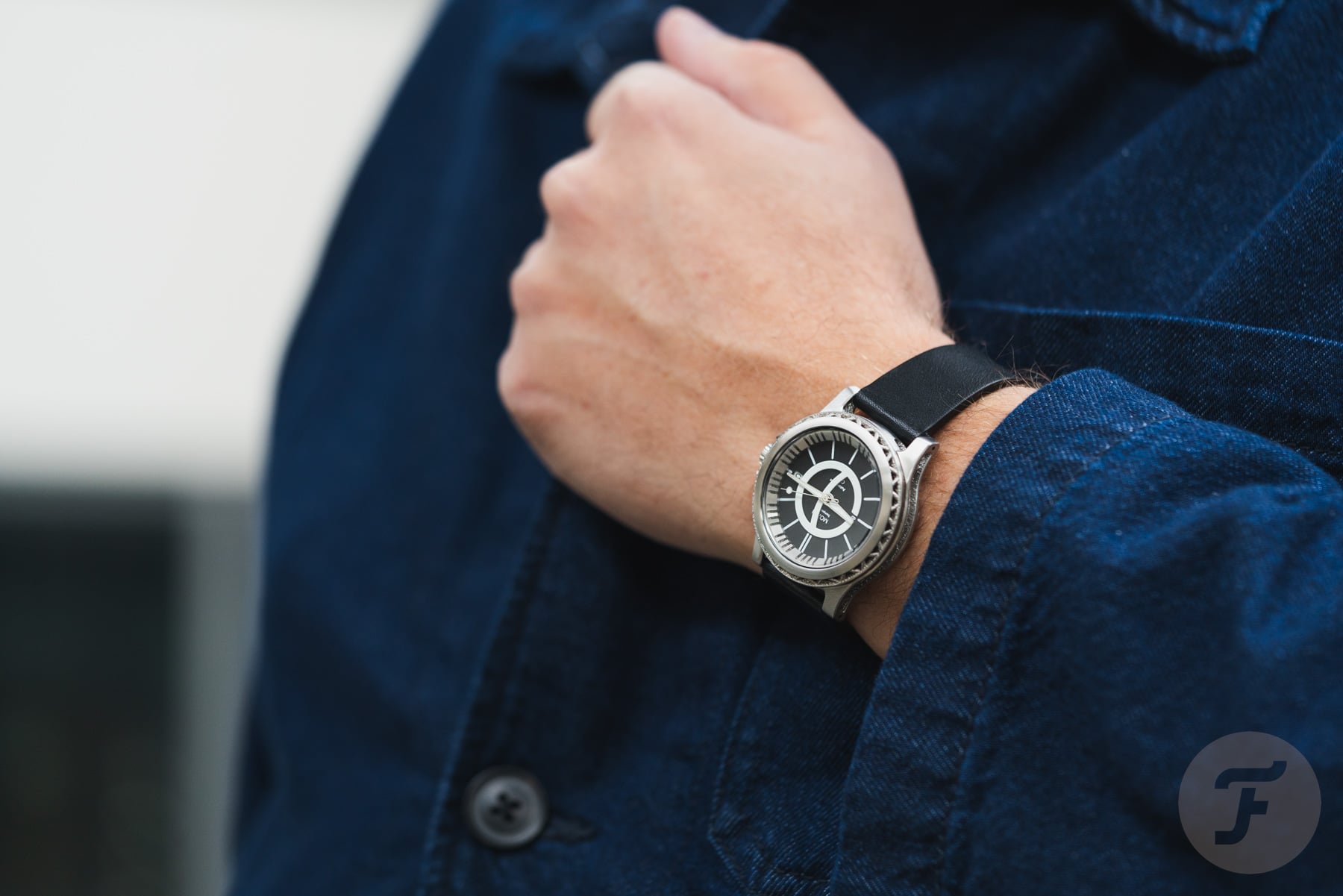
Once the watch is on the wrist, you can also get an idea of the case’s layering. It almost looks like a Roman colosseum from the side. It immediately made me think of the 2021 Louis Moinet The Colosseum, a watch that I adore. While the two watches are worlds apart in terms of materials and execution, seeing the layered construction of the Mozen GMT1 was a good reason to lust over the Louis Moinet again.
Final thoughts on the Mozen GMT1
Overall, the concept and the design of the Mozen GMT1 are interesting. Having said that, the execution is not without flaws. My two main points of criticism in regards to this are the case finishing and the display of the GMT function.
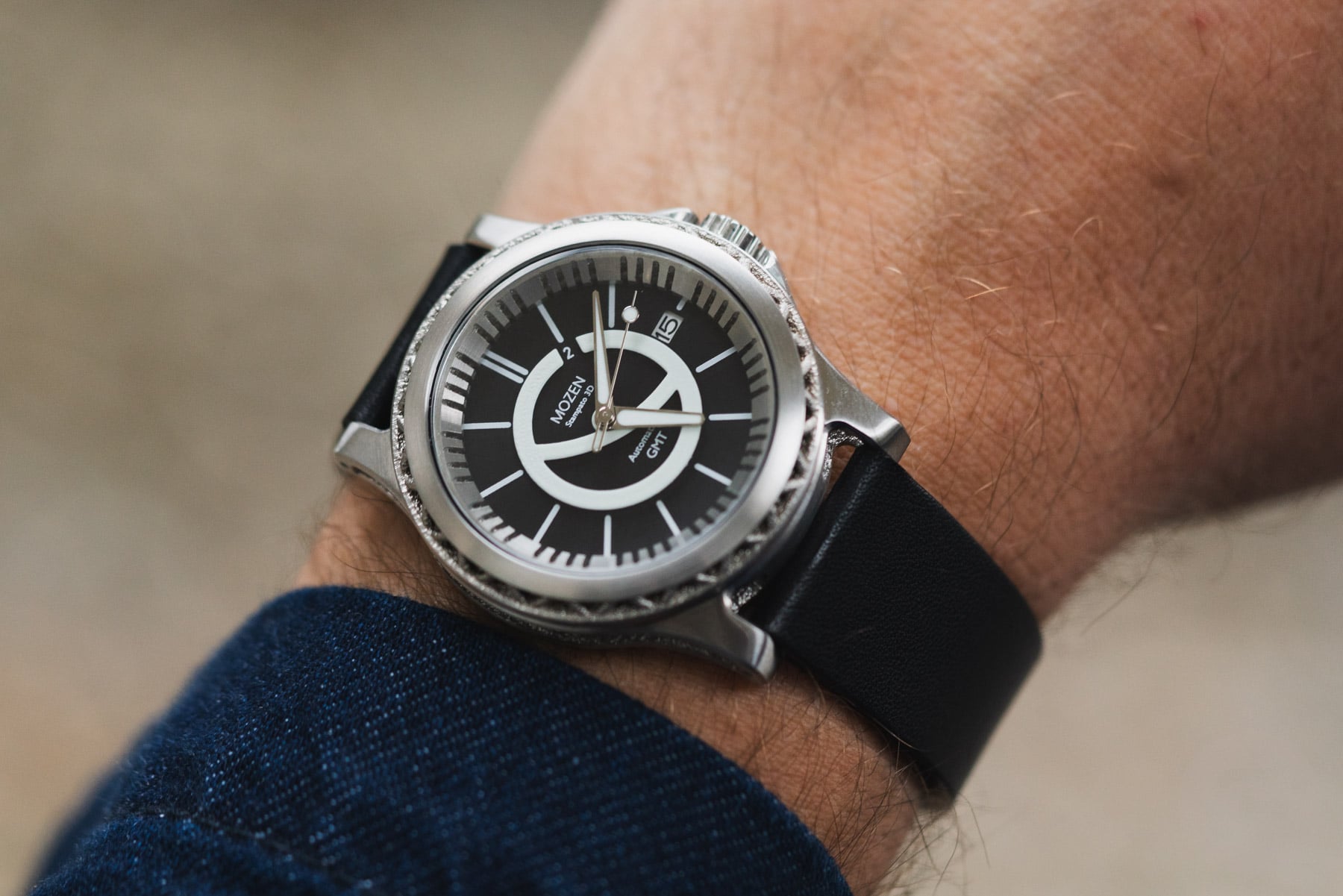
To start, the layered construction, which displays different textures, is visually intriguing. However, to ensure it is also impressive, it needs top-notch finishing. Not only would it make a nice visual contrast, but it would also add the visual brilliance that comes with wearing a nice watch. The waffle-like structure appears a bit rough in some areas, and the brushing of the case side could be better.
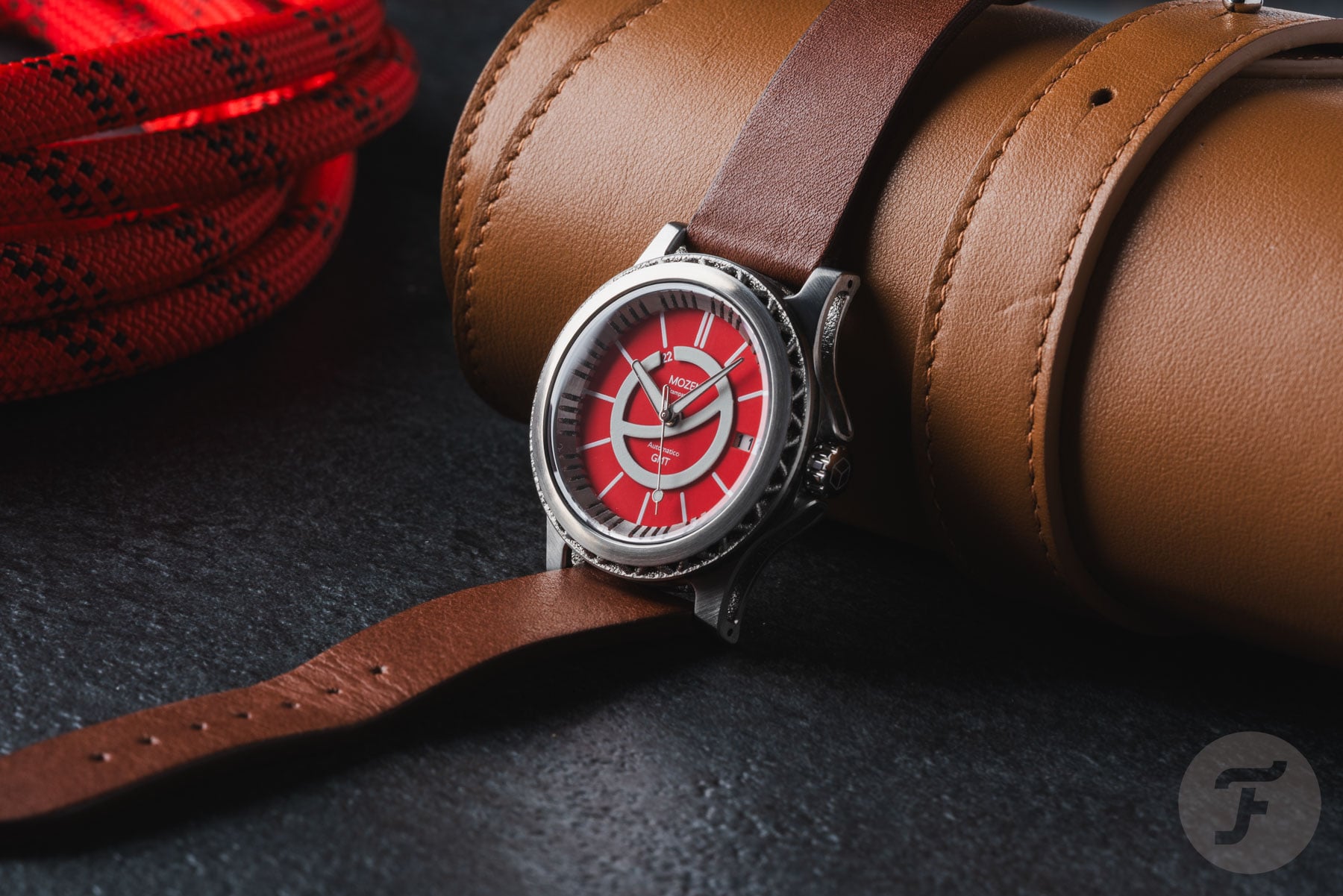
Additionally, the GMT display could use some improvement. As already mentioned, a quick win would be to use skeletonized tips for the hands, ensuring the legibility of the current 24-hour indication at all times.

Currently, the hour and minute hands obscure it too often, but that doesn’t have to be the case. What is harder to solve is that the numerals are not always visible when time passes. There is a notable amount of time when the gap sits between two numerals. While the concept is appealing, the execution could also benefit from some optimization for improved legibility.

Other than that, I give Mancini a compliment for creating a series of watches that are nicely proportioned and sit well on the wrist. Using 3D printing is a bold step that will hopefully lead to improved results, allowing us to see more from Mozen.
For now, the new Mozen GMT1 is available for pre-order on the brand’s website for US$900.
This is a partnership post. Learn more.