Back To Basics: Making Sense Of Ébauche Time-Only And Time-And-Date Movements

Welcome back to another instalment of Back to Basics, our series aimed at newcomers to our lovely watch hobby. This time, we will look into ébauche movements. “What is an ébauche movement?” might be your first question. Well, this is the term used for third-party watch movements used by multiple watch brands. As a result, you will come across the same movements over and over as you browse watches from different companies. Today, I want to help you get some clarity on the most popular options and how they differ.
This is the first of a three-part series. I limit myself to time-only and time-and-date movements here. Next time, we’ll dive into chronograph movements and, finally, into GMT calibers. And yes, you will come across the terms “movement” and “caliber,” both referencing the time-keeping heart of the watch. Although the two terms have different origins and technically different, though overlapping, meanings, it is common practice to use them as synonyms. All right, let’s dive in!
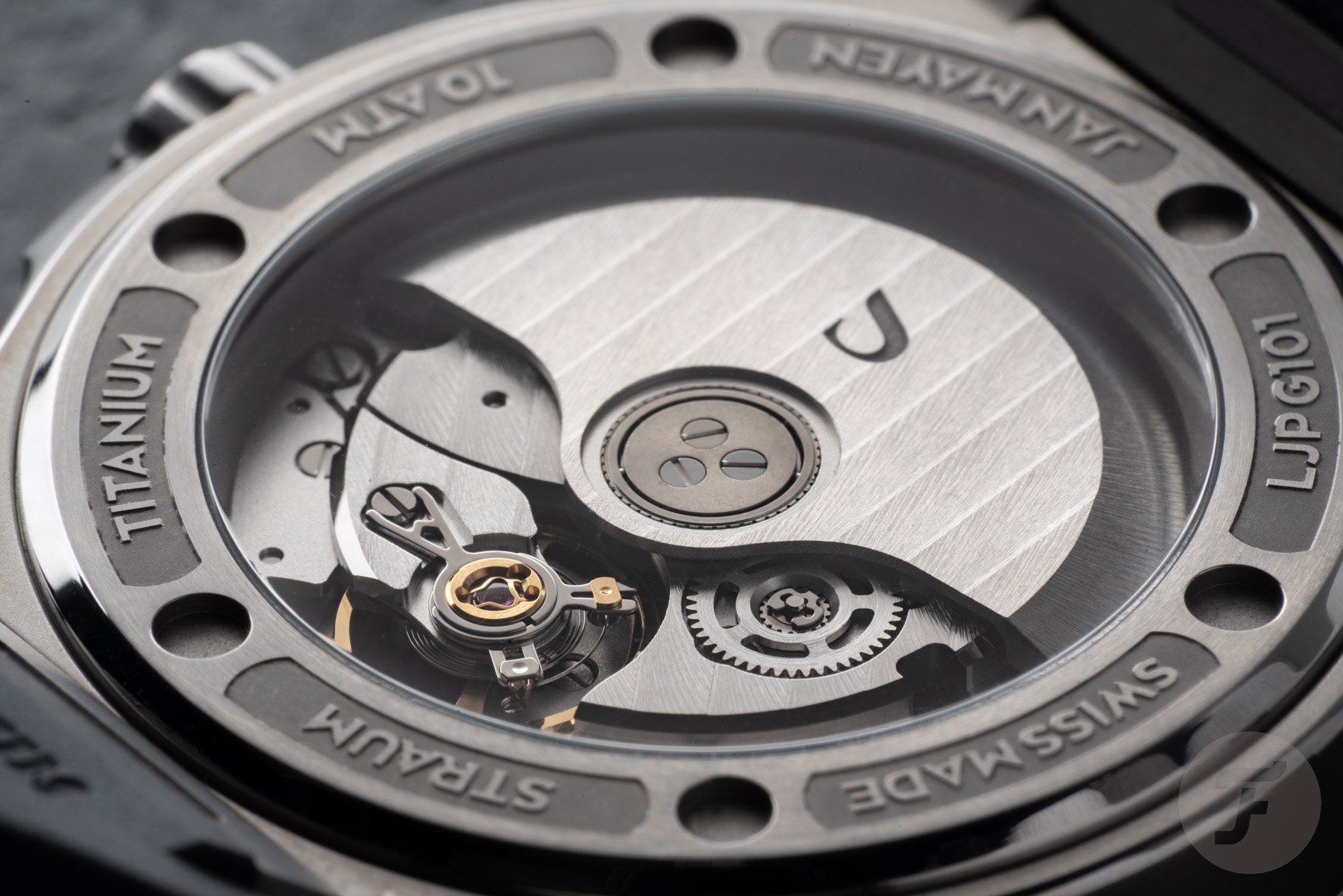
The La Joux-Perret caliber in a Straum Jan Mayen
Japanese and Swiss ébauche movements
While you will probably find hundreds of different movements and manufacturers in countries all over the world, the most popular options are Japanese and Swiss. In fact, you are most likely to run into offerings from only a handful of manufacturers.
On the Japanese side, the most common suppliers are Seiko and Miyota. These manufacturers share a specific philosophy, focused on efficiency, mass production, and consistency. As a result, these movements tend to be more affordable than Swiss alternatives. And, as a result of that, you tend to find them in more affordable watches.

The Miyota factory
The most common Swiss names are ETA and Sellita. ETA is traditionally the biggest name in ébauche movements. However, its owners at the Swatch Group decided to focus on in-group brands. As a result, ETA gradually stopped supplying movements outside the group during the 2010s. If you want the full backstory on this development, have a look at this earlier Fratello article. This shift paved the way for others. Today, you are most likely to come across Sellita calibers, followed by La Joux-Perret, Soprod, STP, and several others. There are Swiss ébauche movement manufacturers in the haute-horlogerie segment, too, but we won’t go into those here.
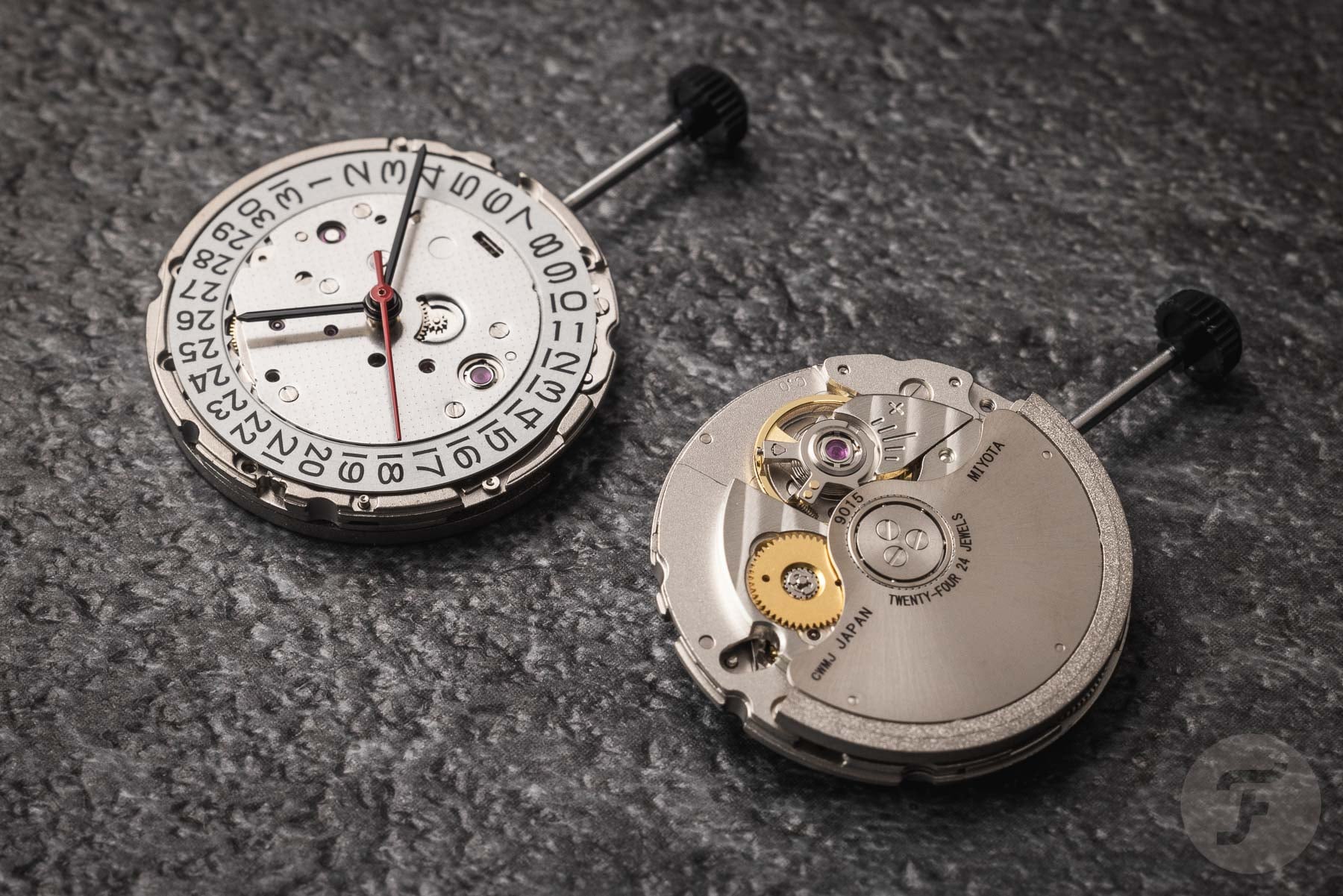
Miyota 8xxx and 9xxx series ébauche movements
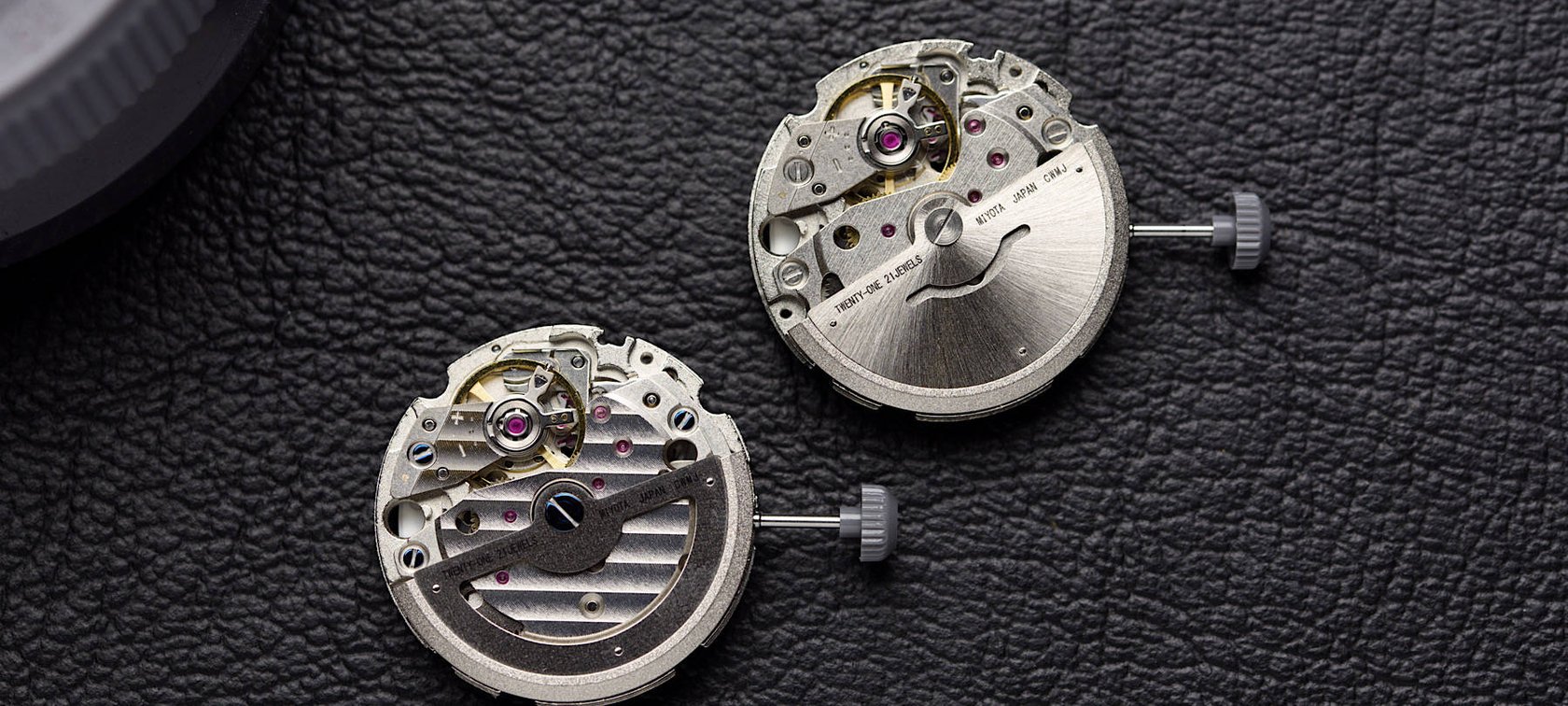
Let’s start with Miyota. As part of the Citizen Group, this Japanese manufacturer is an absolute powerhouse in the more affordable segments. I wrote a more expansive profile earlier, which you can find here. For now, let’s focus on the most popular calibers.
On the most affordable end, you will find the 8xxx series. Several versions exist, with and without a date complication. They share a frequency of 21,600 vibrations per hour, a 42-hour power reserve, and a 5.7mm thickness. These calibers are about as spartan as can be. While the current versions have optional manual winding and hacking/stop seconds, before roughly 2019, the latter feature was absent.
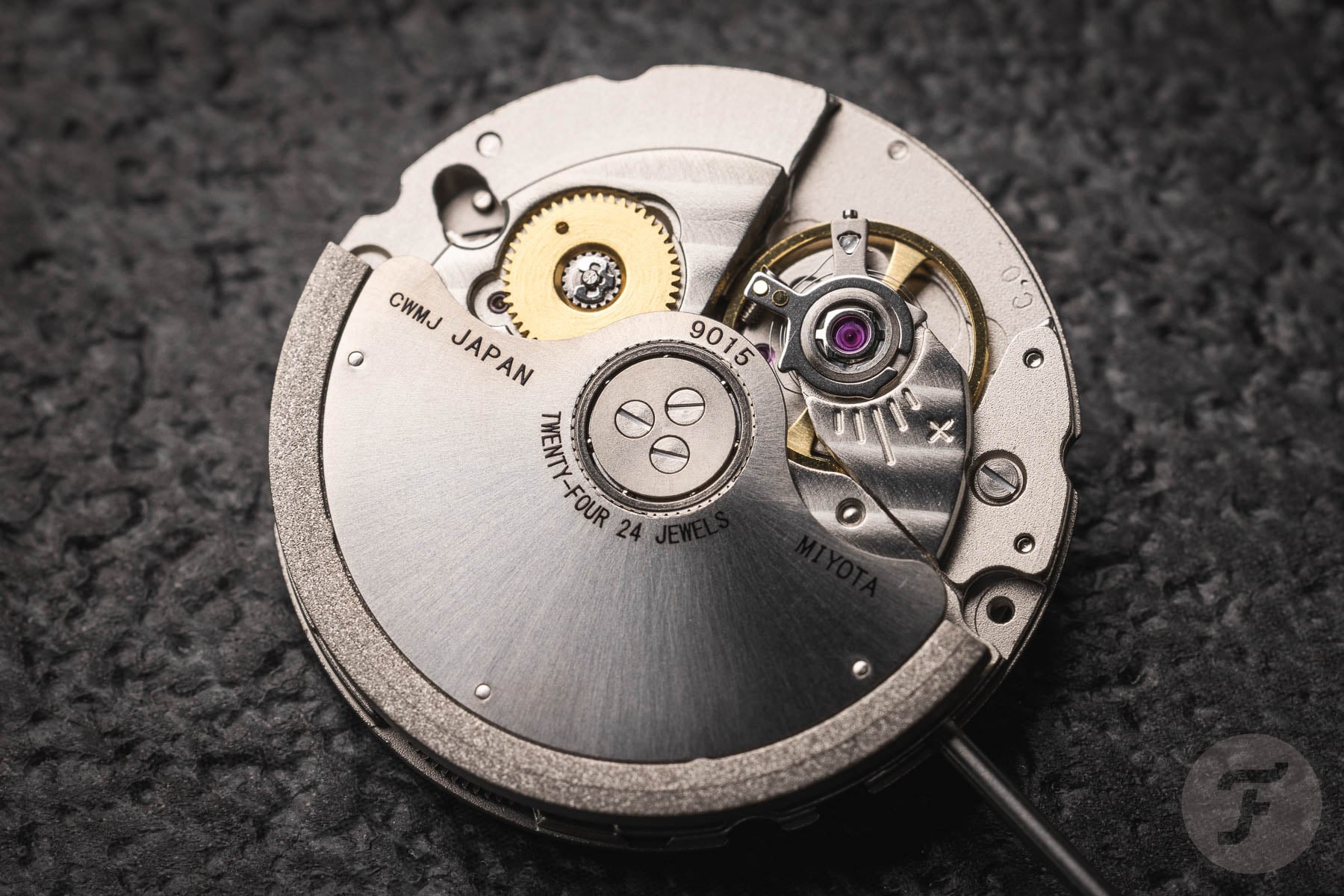
The 9xxx movements — most prominently, the time-only 905S and 9039 and time-and-date 9015 — share a 3.9mm thickness and increase the beat rate to 28,800 vph. Caliber 905S features an open-worked section around the balance wheel, allowing brands to make it visible through the dial (known as an “open heart”). The 9xxx movements have always featured hacking and hand-winding capabilities.
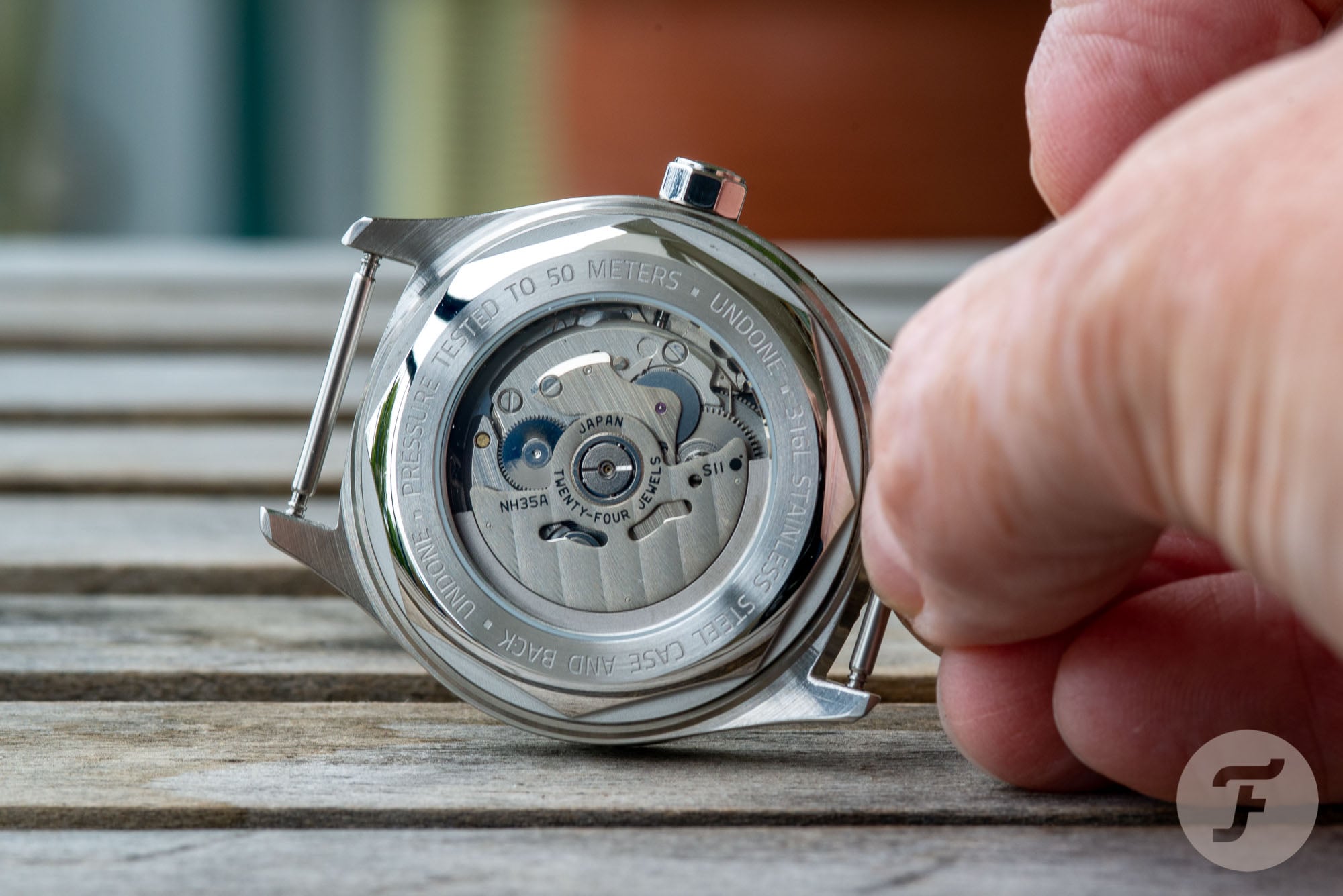
A display case back showing the SII caliber NH35a
Seiko NH35
Speaking of spartan workhorse movements, I would be remiss to skip the SII (Seiko Instruments Inc.) NH35. Seiko uses the same caliber under the name 4R35 in its watches and supplies it to external parties as NH35. Its dependability and affordability made it a massive hit among entry-level microbrands.
This automatic movement ticks at a lower rate of 21,600 vph and offers a 41-hour power reserve. Out of the box, it presents an underwhelming accuracy range of +40/-20 seconds per day. However, in practice, it can be regulated to perform much better. It also offers the full functionality of hacking seconds and manual winding. Caliber NH35 has a 27.4mm diameter and a 5.3mm thickness.
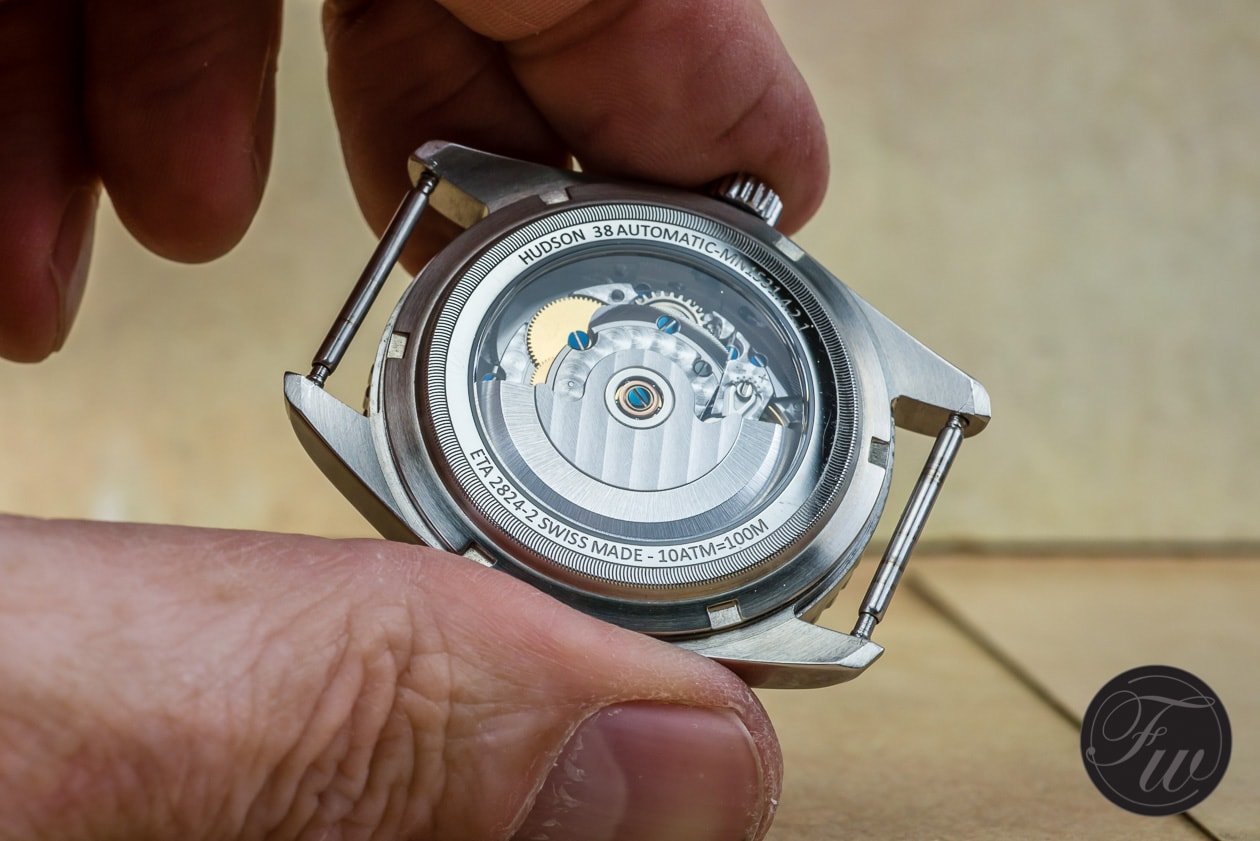
ETA 2824, Powermatic 80, and ETA 2892
You can consider the ETA 2824 the daddy of all ébauche movements. Introduced in 1971, this automatic movement is lovingly referred to as a “workhorse”. If properly maintained, it will serve you for life. The movement underwent small updates over time, resulting in calibers 2824-1 and 2824-2. This 25.6mm by 4.6mm movement runs at 28,800 vph and offers a power reserve between 38 and 42 hours. It comes in different so-called “grades.” The grade describes the quality of components, finishes, and accuracy.
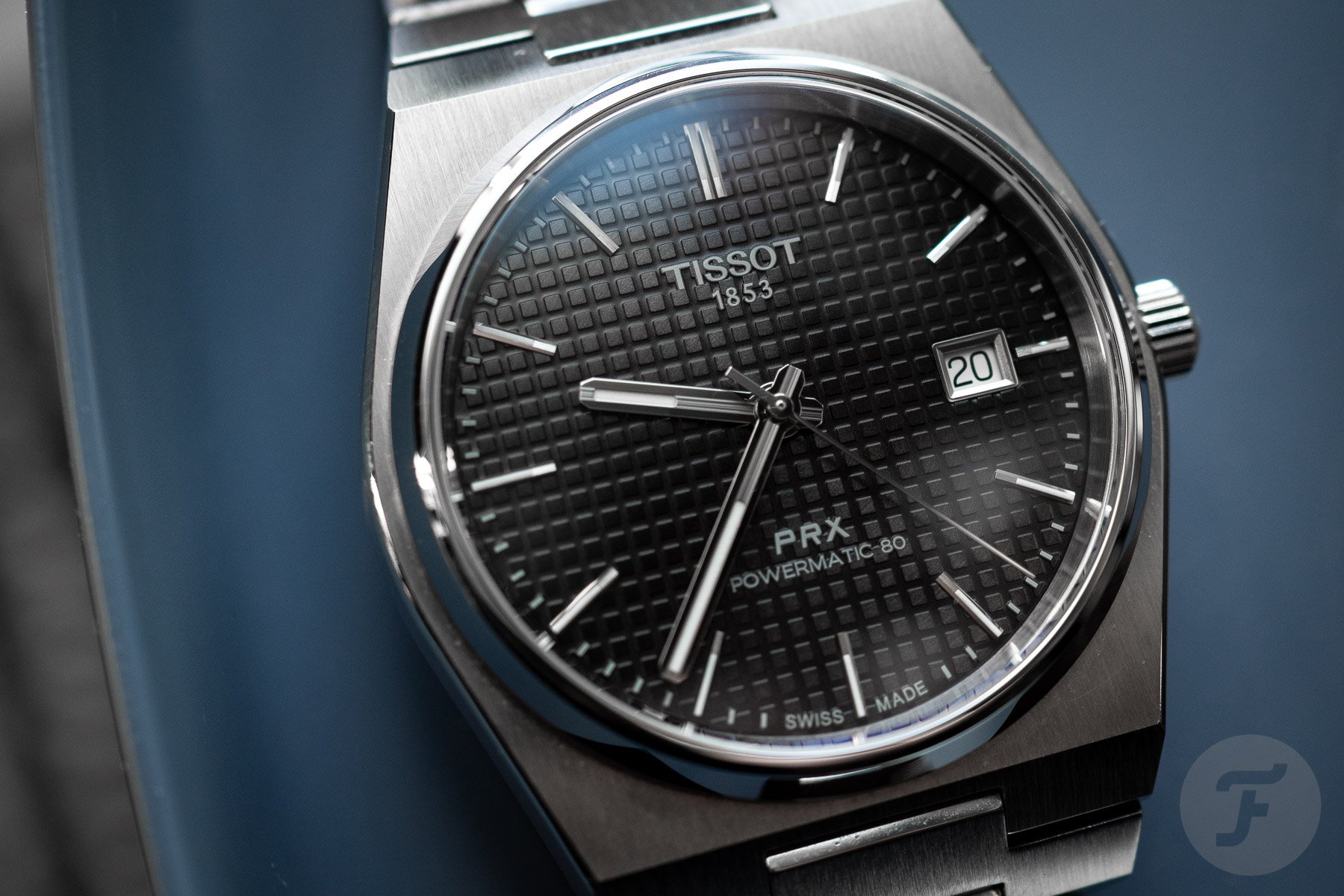
The Swatch Group introduced an evolution of the ETA 2824, called the Powermatic 80, in 2013. This caliber took the 2824’s architecture and stretched the power reserve to 80 hours. To achieve this impressive spec, the beat rate was lowered to 21,600 vph, and the mainspring was lengthened. The lower beat rate and an optimized gear train enabled longer service intervals. Some versions even feature a silicon hairspring. You will find Powermatic 80 in watches from Swatch Group brands, such as Hamilton and Tissot.
ETA introduced the 2892 in 1975. This caliber was an evolution of earlier movements, and it distinguished itself from 2824 with a larger diameter, smaller balance wheel, and thinner 3.6mm profile. It featured hacking seconds and a quick-set date, which were rather fancy for the time. Later versions got downsized to the industry-standard 25.6mm diameter. Over time, this movement became the standard for thin automatic watches. The 2892 also saw use in modular applications, where, for instance, a chronograph module would be mounted on top.
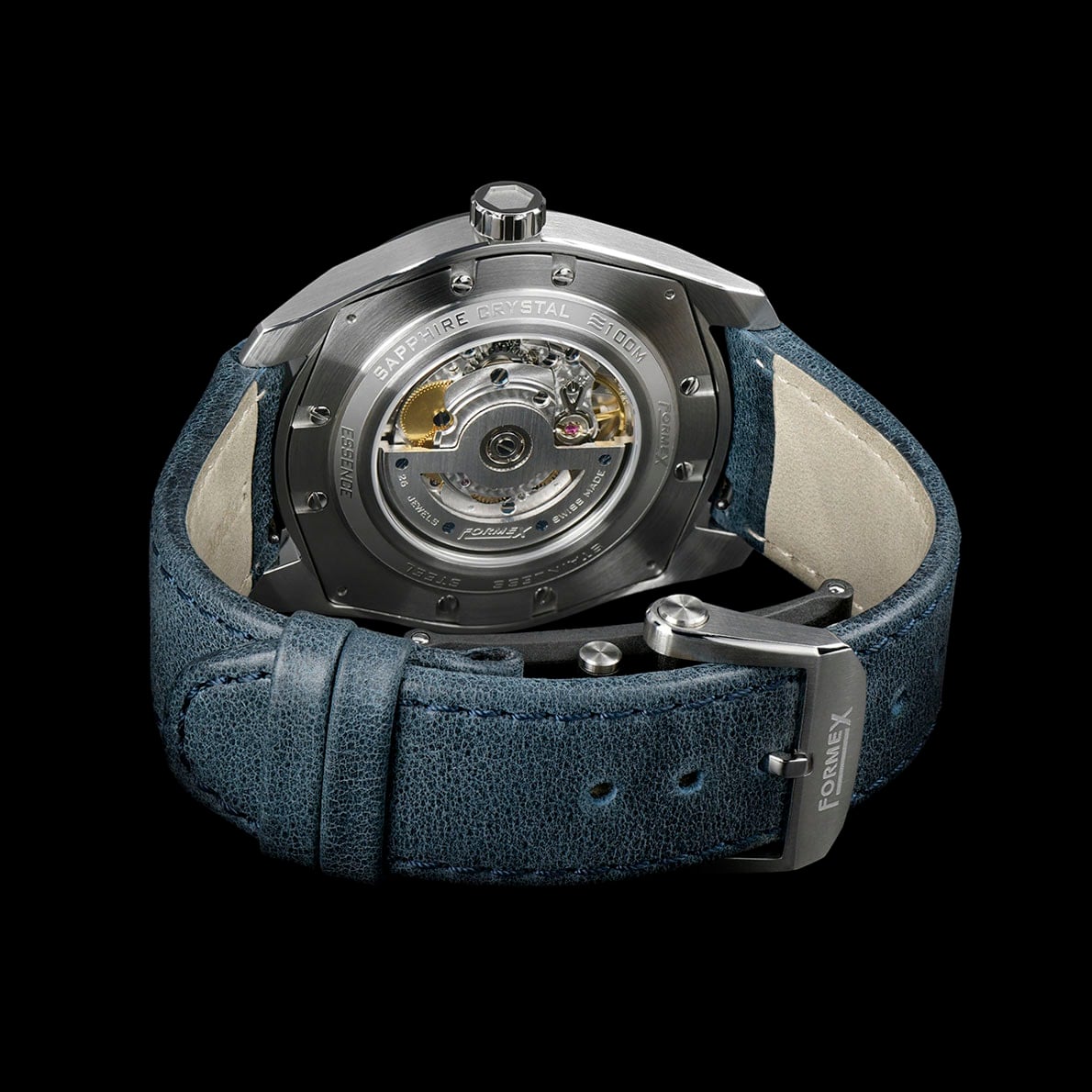
COSC-certified and fully decorated Sellita SW200-1 automatic movement with a custom skeletonized rotor
Sellita SW200 and SW300 families of ébauche movements
As ETA movements became increasingly unavailable to external brands, Sellita stepped in. The company took the designs of calibers 2824 and 2892, whose patents had expired, and created the SW200 and SW300 families of calibers on their architecture. As a result, they share the same dimensions and broad feature sets. Recently, Sellita introduced the SW200-2 Power +, featuring an upgraded power reserve of 65 hours.

Sellita’s factory
Sellita has produced tons of variations, automatic and hand-winding, date and no-date, and with several complications built on the base calibers. Crucially, you can have your pick of several finishing levels. D2 offers sandblasted surfaces, nickel plating, and potentially visible toolmarks. Specific parts will feature snailing. D3 adds circular graining on the bridges and Geneva striping on the automatic’s rotor. D4 extends the circular graining to the mainplate and the edge of the rotor. Blued screws, rhodium plating, gold plating, and engravings are optional.
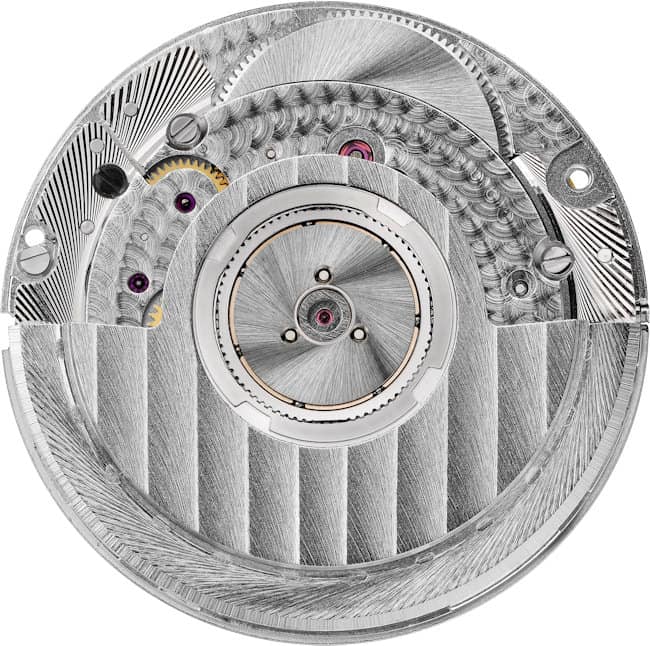
Sellita SW300 in D4 finishing
In addition, three levels of regulation exist. Elaboré allows for a maximum deviation of 20 seconds per day, while Top reduces it to 15 seconds. Finally, the Chronometer standard brings accuracy to within COSC parameters (-4/+6 seconds per day), optionally certified by COSC. Naturally, you will find a significant price gap between D2 Elaboré and D4 Chronometer-rated movements.
La Joux-Perret, Soprod, STP
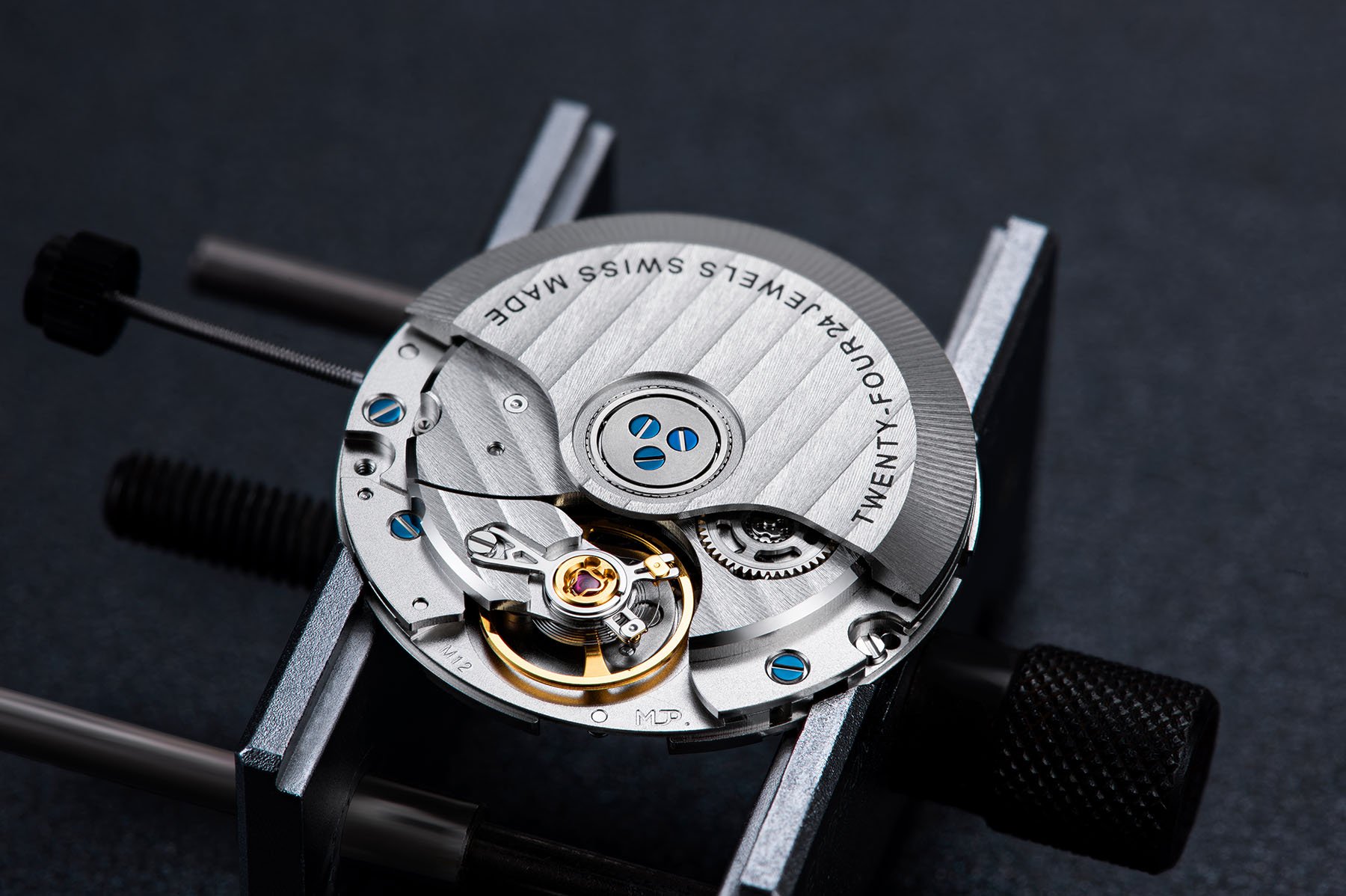
La Joux-Perret is Miyota’s Swiss brother under the Citizen umbrella. Its most popular ébauche movement is the automatic caliber G100. This movement uses the base architecture of the Miyota 9039 in a completely overhauled, Swiss-made execution. Note that building a caliber on the same base architecture is different from making the same movement in Switzerland. The latter wouldn’t do justice to LJP’s extensive work on the G100 movement. This 25.6mm by 4.5mm caliber comes in several grades. They run at 28,800 vph and offer a royal 65-hour power reserve.
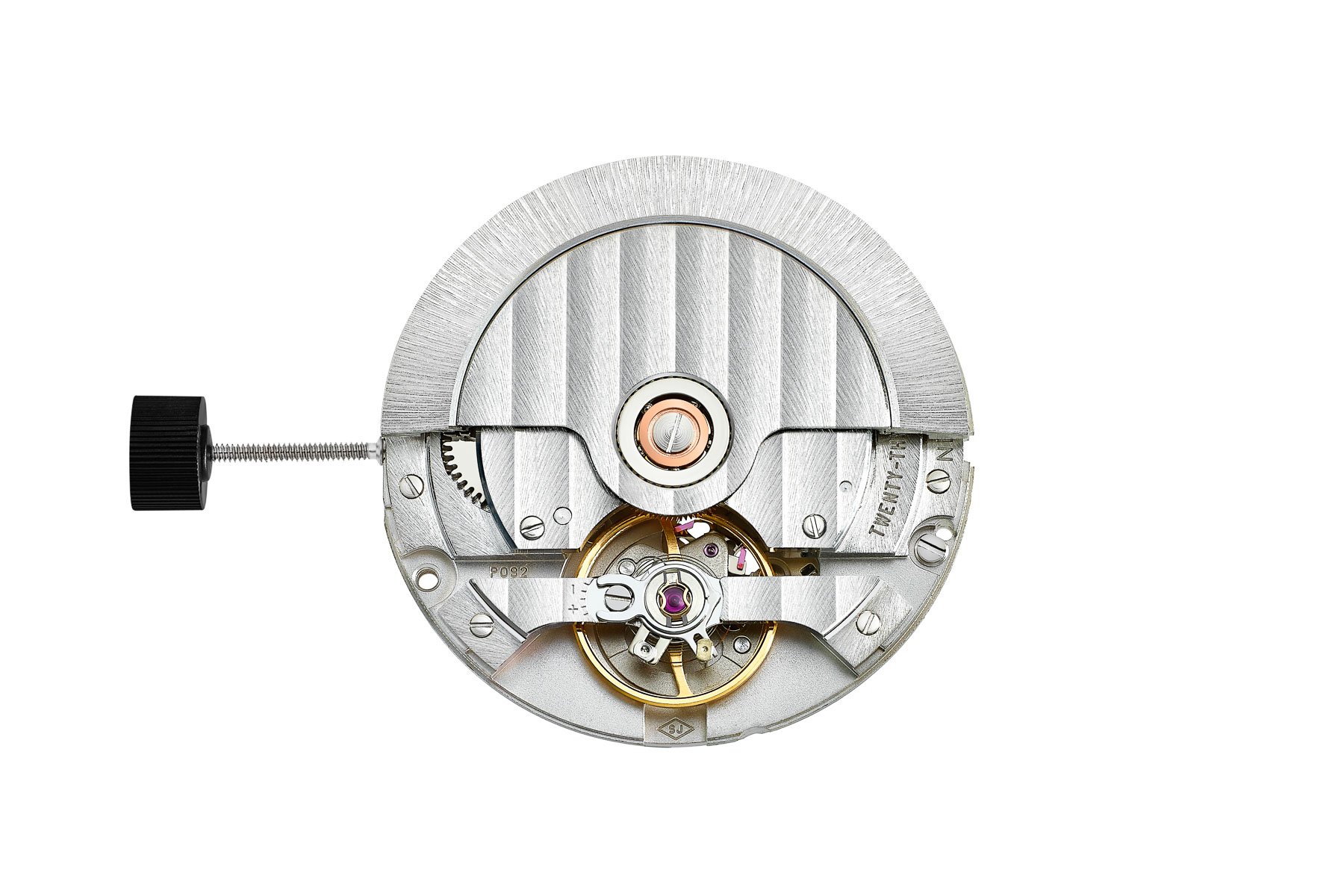
Soprod’s Newton caliber
Finally, we should mention Soprod and STP. Both produce ébauche movements in ETA-standard sizes, based on ETA architecture. To call them pure clones wouldn’t entirely do them justice, though, as they offer several variants with different levels of changes to, for instance, the jewel count, power reserve, and regulating organs.
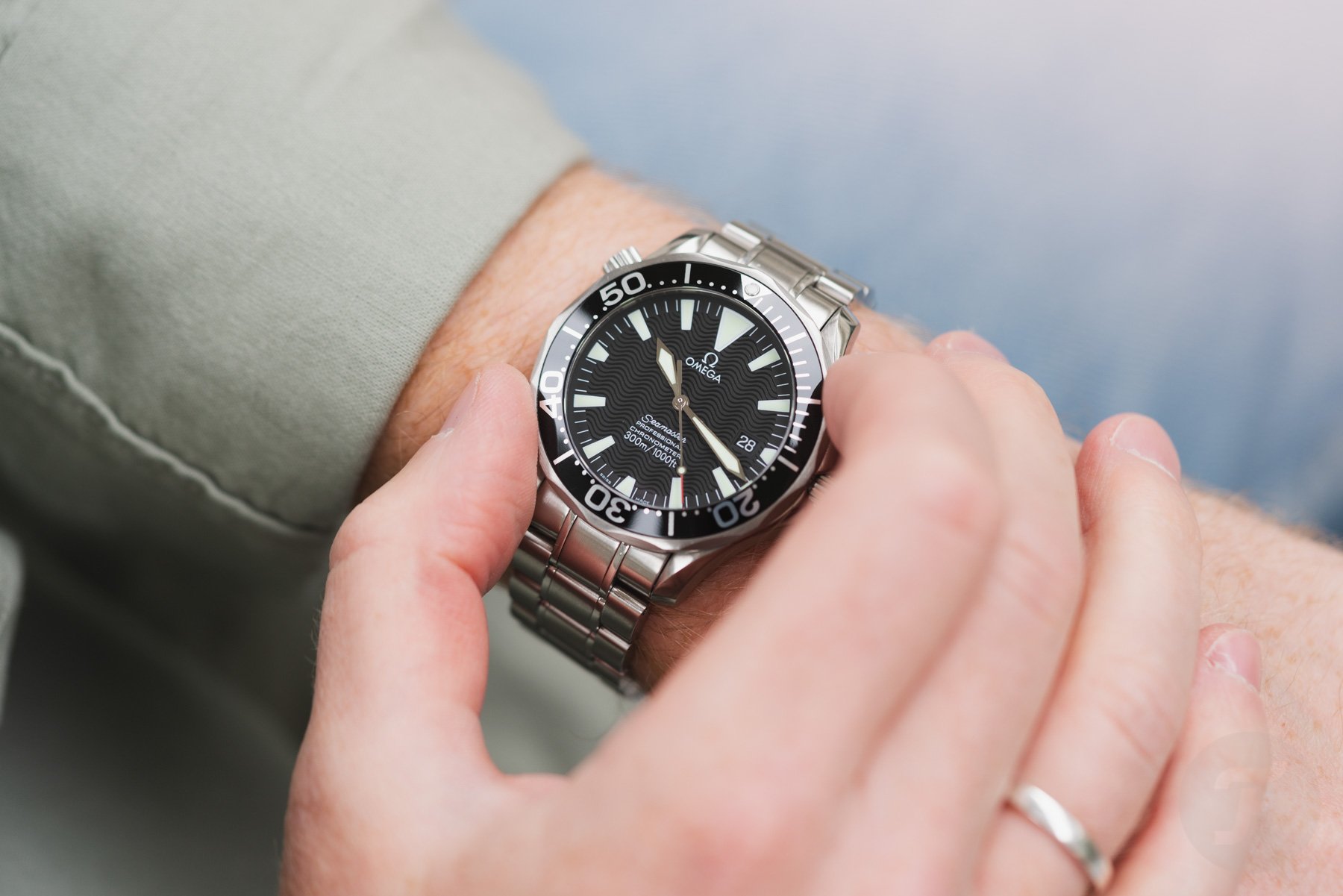
A Seamaster 300M from the days when Omega still used modified ETA calibers
Closing thoughts
There you have it — a brief overview of the most commonly used ébauche movements. As you may have gathered, quality-wise, directly comparing them is nearly impossible. For starters, they follow wholly different philosophies. A Seiko NH35 is a very different animal from a Sellita SW300. And then, even within the same movement, the grades and finishing levels make a world of difference.
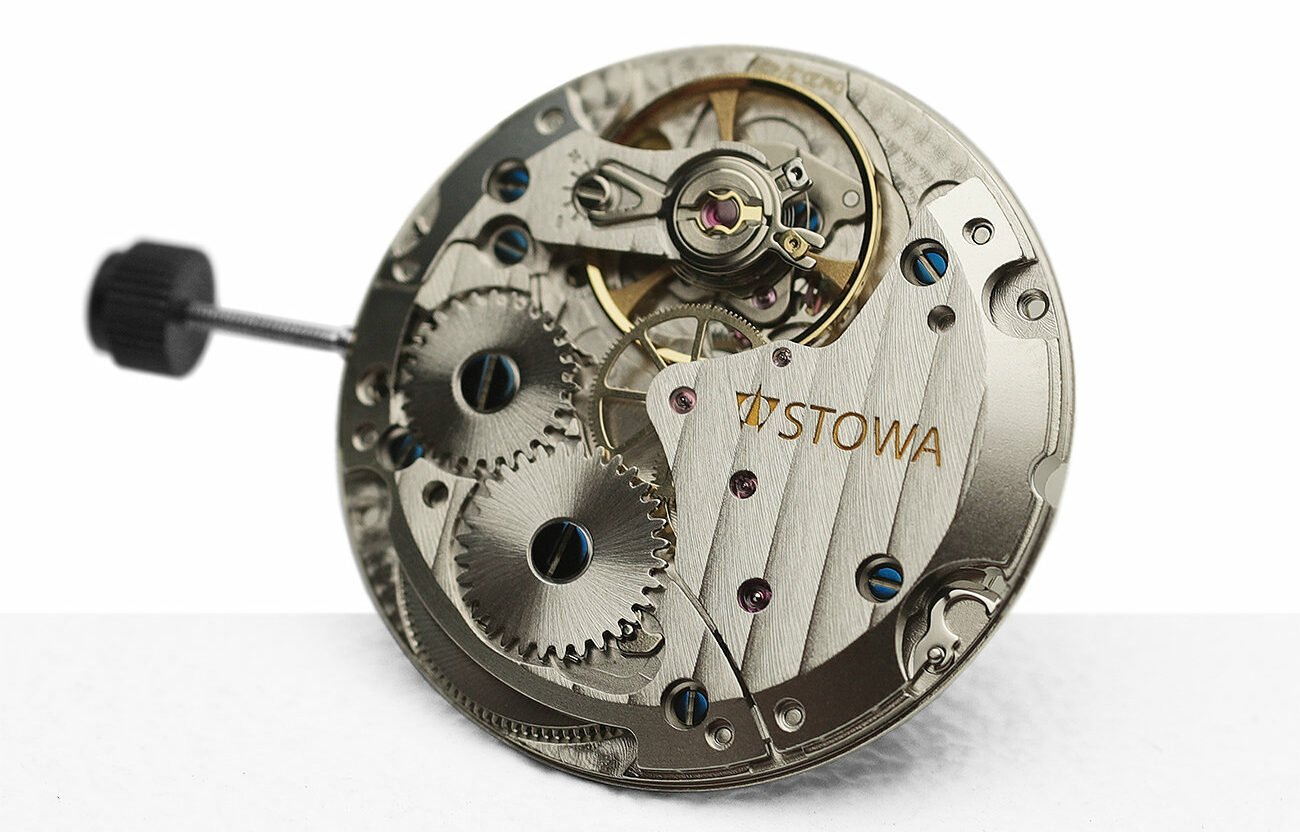
A hand-wound Sellita SW215-1 — Image: Stowa
One thing that may or may not matter to you is serviceability. Some of the more affordable calibers mentioned are cheaper to replace than to service. For me, that somewhat ruins the experience, pushing me towards the higher-end stuff. Then again, some are so simple that the more ambitious tinkerers among you don’t shy away from working on them yourselves. One final thing to note is that not all manufacturers are forthcoming in their choice of calibers. They might rename them to obscure which is used or simply describe them as “Swiss ébauche movements.” This might leave you guessing as to which caliber is used, whether it is customized, and, if so, to what degree.
This list is by no means exhaustive. As always with Back to Basics, I would like to invite our more experienced readers to share their knowledge. Which other ébauche calibers do you know, and how do they compare to the ones above? Let us know in the comments section below!