Introducing: The Chopard × Zagato Lab One Concept Watch — Experimental, Outspoken, And Just 43.2 Grams

Chopard working with Zagato is a bold move. Of all the famous Italian coachbuilders, Zagato is the most outspoken. The marque dates back to 1919, and its automotive legacy started in 1928, when a Zagato-bodied Alfa Romeo 1750 claimed victory at the Mille Miglia. The bulbous forms and flowing shapes recall Ugo Zagato’s expertise in the aviation industry, where he built lightweight aluminum aircraft panels. Apart from the absence of straight lines, a Zagato design is defined by eliminating anything that might add weight. Although form follows function, a Zagato-designed car is a piece of automotive art. How about the Chopard × Zagato Lab One Concept watch? Is it also an unconventional mix of form and function?
The Chopard × Zagato Lab One Concept marks the third collaboration between these two parties. The first one debuted in 2013 and the second in 2019. Both were relatively conventional-looking Mille Miglia chronographs with a few subtle Zagato references. The third watch is radically different from its predecessors. Like the Zagato-designed automobiles, the watch has a unique design, and saving weight is a priority. The result is the lightest Chopard watch ever, weighing just 43.2 grams, including the strap. Without the strap, the 42mm ceramicized titanium timepiece weighs 36.5 grams. There aren’t a lot of Swiss watchmakers with offerings in the sub-40g category, making the Chopard × Zagato Lab One Concept an exclusive watch. Adding to that is the price of CHF 130,000 and the fact that it’s a limited edition of 19 pieces, only available through Chopard.

Lancia Flaminia Sport Zagato
Zagato designs
Before looking at the Chopard × Zagato Lab One Concept watch a bit more, allow me to introduce you to an old and a new Zagato-designed car. Zagato’s outspoken designs are a bit of an acquired taste. I like the “taste” of the long, flowing lines and often voluptuous shapes. The designs look heavier than they are, and bulbous forms give them presence, while the endless, non-straight lines provide elegance. The first example is the #346 Lancia Flaminia Sport Zagato driven by Piero Frescobaldi in the 1962 Trieste-Opicina race.

Capricorn 01 Zagato
The second is the 2025 Capricorn 01 Zagato. Limited to just 19 examples, it was created by Zagato and German engineering firm Capricorn. The analog hypercar with a 5-speed manual gearbox is powered by a 5.2-liter supercharged Ford V8 producing ~887–900 hp. A dry weight of less than 1,200 kg (approx. 2,645 lbs.) promises a spectacular performance. Clearly, the Capricorn 01 stays true to the vision of founder Ugo Zagato.
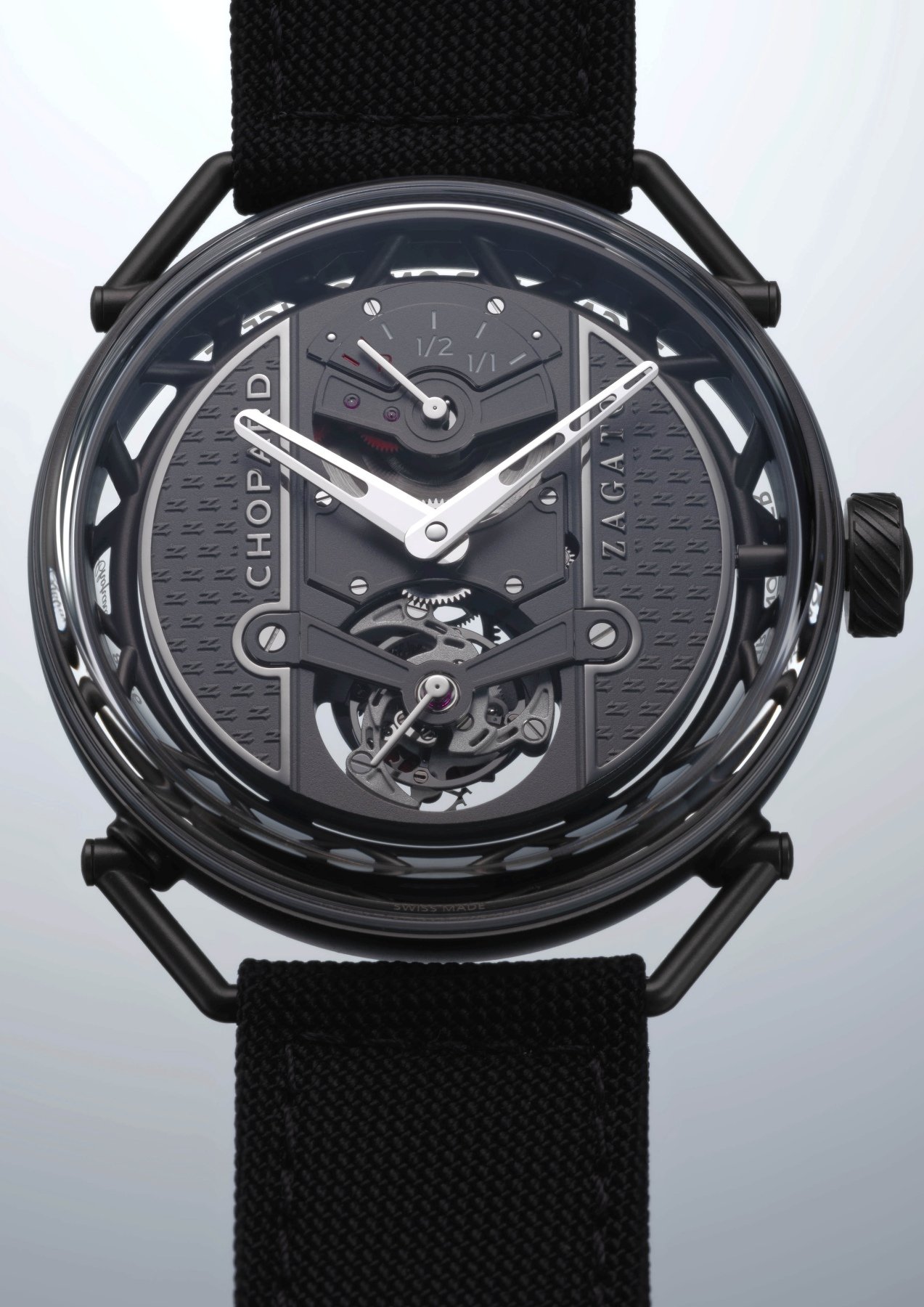
The Chopard × Zagato Lab One Concept watch
While the Capricorn 01 uses a lot of carbon fiber to keep the weight down, the Chopard × Zagato Lab One Concept watch favors ceramicized titanium. The watch is another example of Chopard’s passion for automobiles. The watch’s tubular construction is eye-catching, to say the least. The watch’s design draws on concept-car cues while respecting watchmaking design and proportions. It is the brainchild of car collector Karl-Friedrich Scheufele (Chopard co-president), the Chopard design team, Andrea Michele Zagato (Zagato president), and Norihiko Harada (Zagato chief designer).
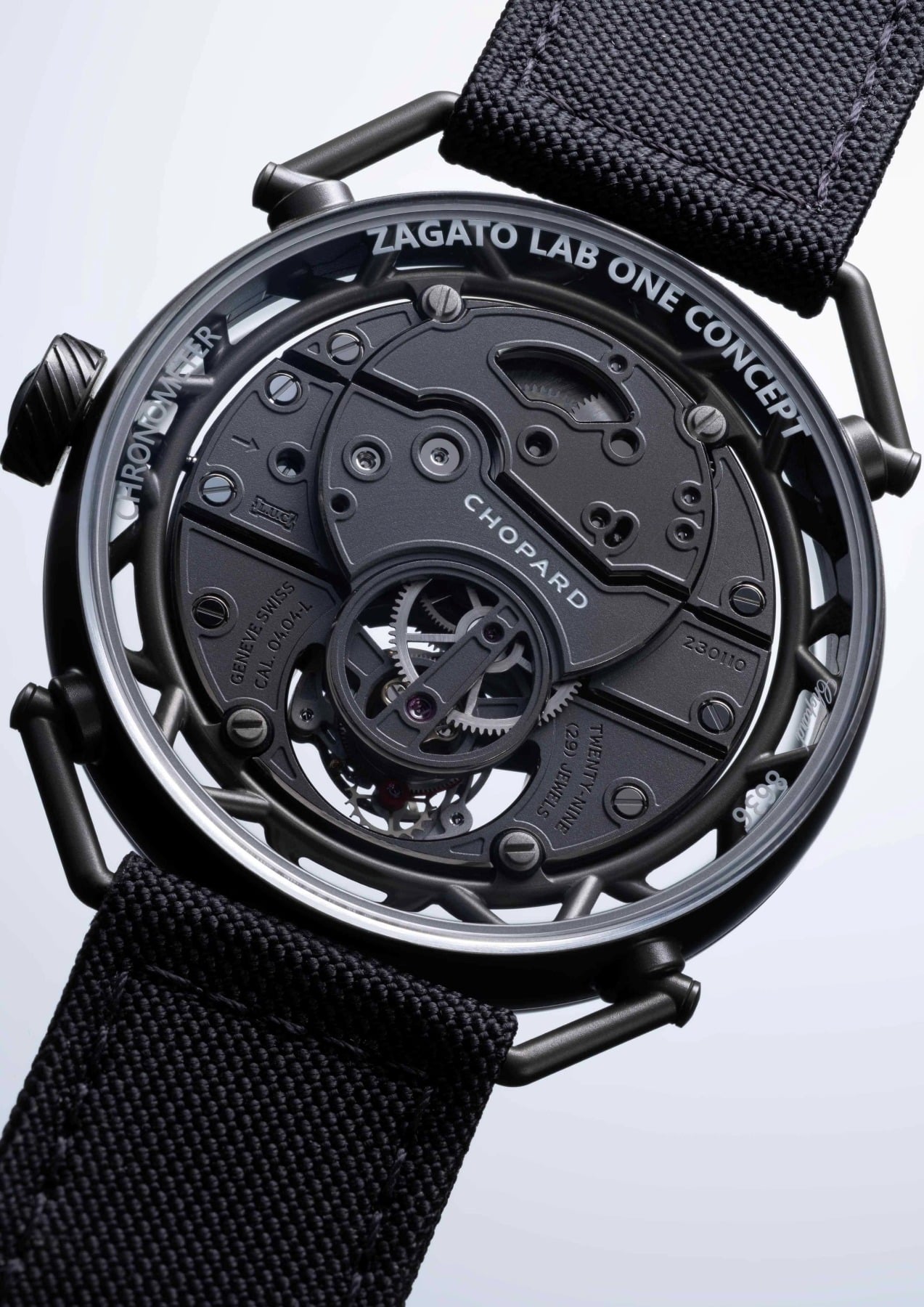
Absorption and rigidity
The power source of the Chopard × Zagato Lab One Concept watch is the L.U.C 04.04-L movement. This COSC-certified chronometer features ceramicized titanium bridges, and the mainplate is also crafted from this cutting-edge material. The caliber integrates a shock-absorbing system based on silent blocks, specifically developed for this model. These elastomer elements reduce vibrational energy and absorb mechanical shocks. It works similarly to the operating engine-mount isolation in automotive engineering. Four structural lever arms anchored within the case band secure the movement. The construction ensures precise positioning, improved rigidity, and improved protection against external impacts.
At the center of the movement, a 60-second tourbillon with integrated small seconds features a specialized, free-sprung Variner (variable-inertia) balance wheel. Also, the hairspring inside it has a Phillips terminal curve for optimal isochronism and rate stability. The regulating organ sits in an aluminum tourbillon carriage. Its low weight reduces inertial mass, contributing to the Zagato Lab One Concept’s overall lightness. This selection of materials is in the spirit of high-performance motor racing and Zagato.
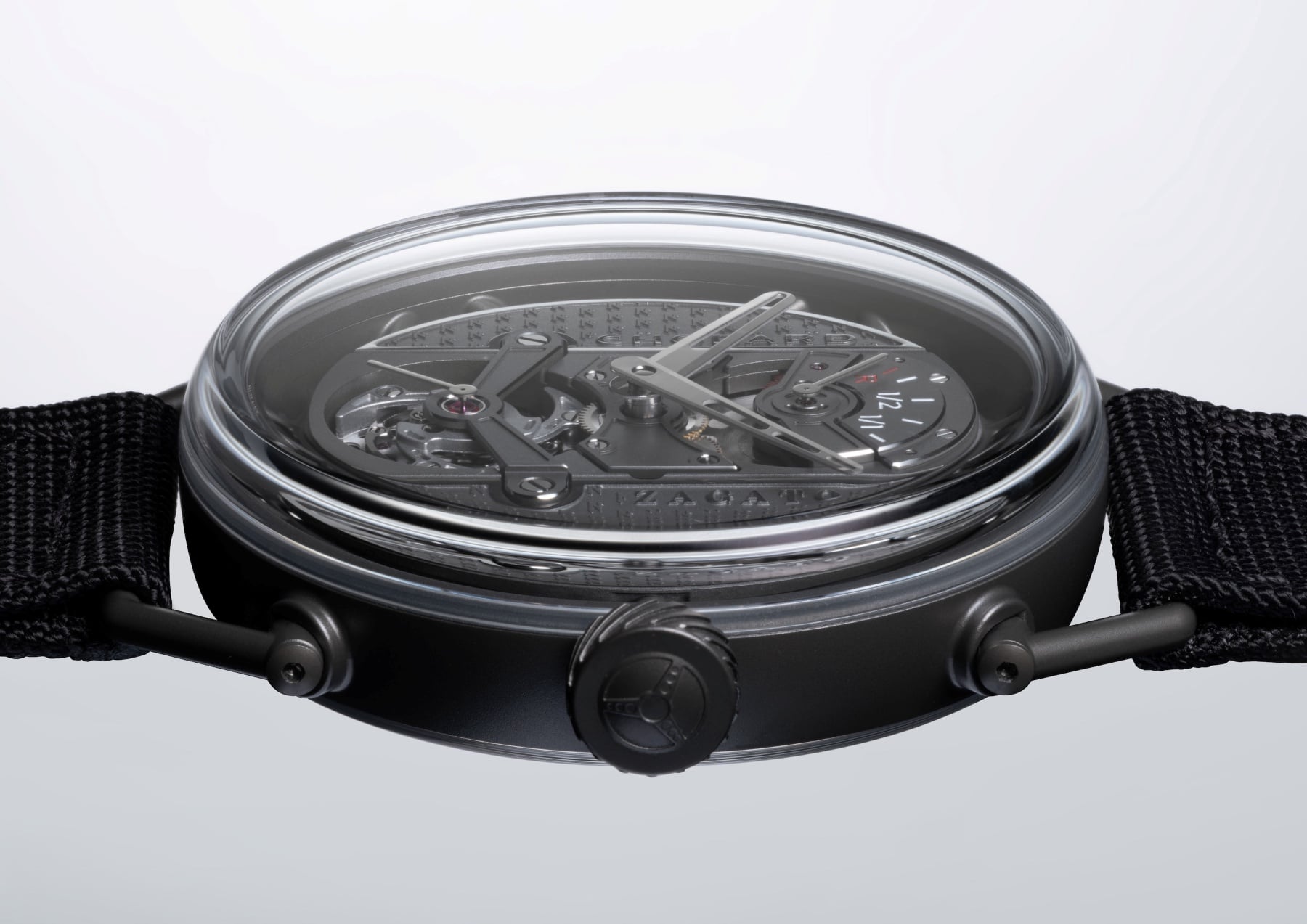
The special Z-look
The movement architecture is based on a tubular spaceframe derived from motorsport chassis design, using structural tubes to maximize stiffness while minimizing mass. This marks the first time Chopard has applied racing-derived structural principles to movement support. Open tubular loops replace conventional lugs and integrate a pivot system with approximately ±45 degrees of angular travel. This will help the 42 × 11.15mm case fit wrists of many sizes.
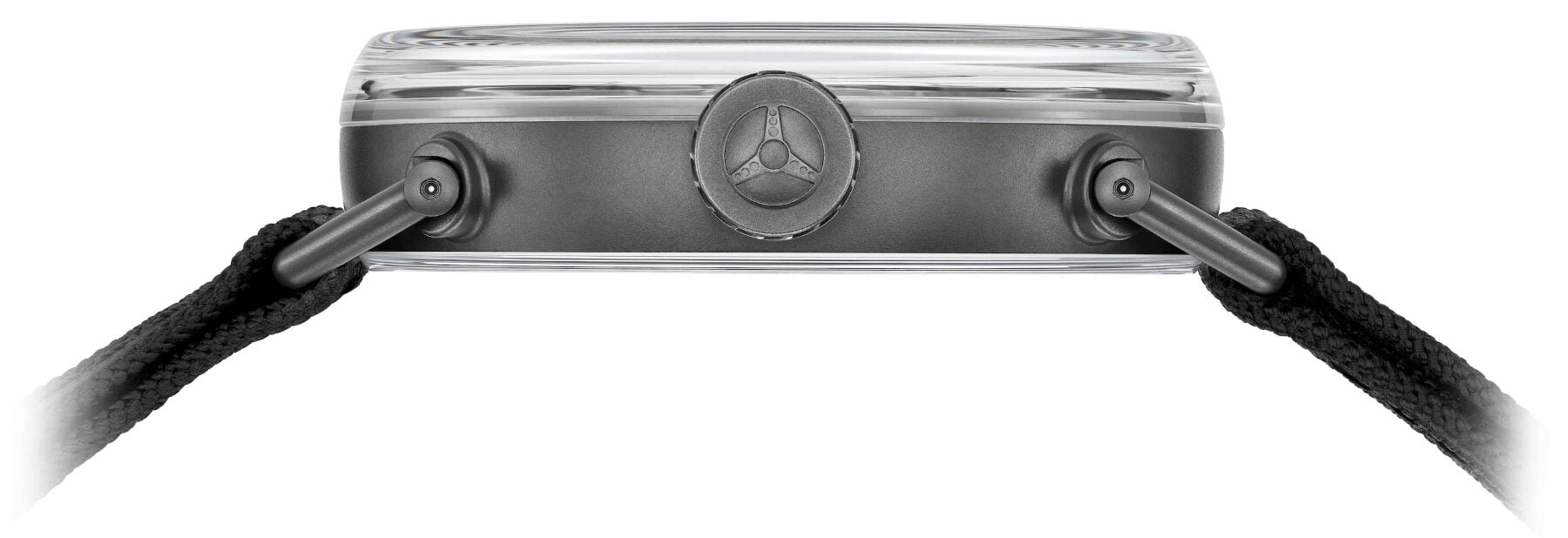
The watch also includes many visual car references. For instance, the crown evokes automotive differential gearing and features an engraved steering wheel characteristic of Chopard’s Classic Racing line. And the movement’s mainplate, which doubles as the dial, is machined with Zagato’s “Z” motif. It shows chamfered surfaces finished in rhodium plating. Applied rhodium-plated Chopard and Zagato logos ensure you get the collaborating brands right, and a box-type sapphire crystal, flush with the case band, ensures legibility. The case back mirrors this construction, extending the case band and providing full visibility of the movement.
What do you think? Does the Chopard × Zagato Lab One Concept watch resonate with you? Do you think the characteristic Zagato weight and design philosophy works in a Chopard watch? One thing I’m sure of is that this watch will have you form an opinion as fast as the Capricorn 01 Zagato goes from 0 to 60 mph. That’s in 2.9 seconds.