Hands-On With The Remarkable Leica ZM 1 And ZM 2

The name Leica often comes up in the Fratello office. Usually, it’s in reference to its famous cameras, but ever since the German brand introduced its first mechanical watches, we’ve also begun associating it with horology. This shows how closely connected mechanical watchmaking and photography are. In both, high-precision instruments are vital, and Leica certainly knows a thing or two about those. I had a chance to try out the Leica ZM 1 and ZM 2. These two remarkable watches cleverly integrate links to the brand’s cameras. Let me explain.
When I had the opportunity to work with Fratello’s Thomas van Straaten on the strategy for his brand, VPC Watch Co., I brought up Leica Camera AG as a reference. As some of you might know, four independent companies carry the Leica name, with Leica Camera AG being the most famous. Leica perfectly understands its position in the world of optics, and its tremendously focused strategy has inspired many other brands.
Leica’s venture into watches
Knowing that, you could debate the brand’s exploration of the watch world. Admittedly, I strongly believe that brands should focus on one field of expertise and master it. Through its cameras, sports optics, and home-cinema products, Leica exudes excellence for consumers worldwide. Due to this focused expertise, you will probably understand that I was hesitant to see Leica explore the world of watches. I simply do not associate Leica with timepieces, and I am not sure if I ever will.
But after reading about Leica’s history in watches, I quickly found some justification for the existence of the ZM 1 and ZM 2. Ernst Leitz had actually trained as a watchmaker in Switzerland in the 1850s before starting his brand of microscopes, which later became Leica. Additionally, Leica’s foray into watches is not as new as some may believe. In the 1980s and ’90s, the brand released a series of Valjoux 7750-powered chronographs. Leica also worked with Valbray on the Valbray EL1 Chronograph Leica Limited Edition. Furthermore, the ZM 1 and ZM 2 were first introduced as prototypes back in 2018, so the wheels had been in motion for quite a while.
The story of the Leica ZM 1 and ZM 2
After I started reading about the ZM 1 and ZM 2, I quickly understood more about the intention behind them. As it turns out, Leica wanted to stay close to its photography roots with these watches. Consequently, they are niche products that embody the same commitment to precision and craftsmanship as the brand’s M cameras, making them easy for Leica fans to appreciate.
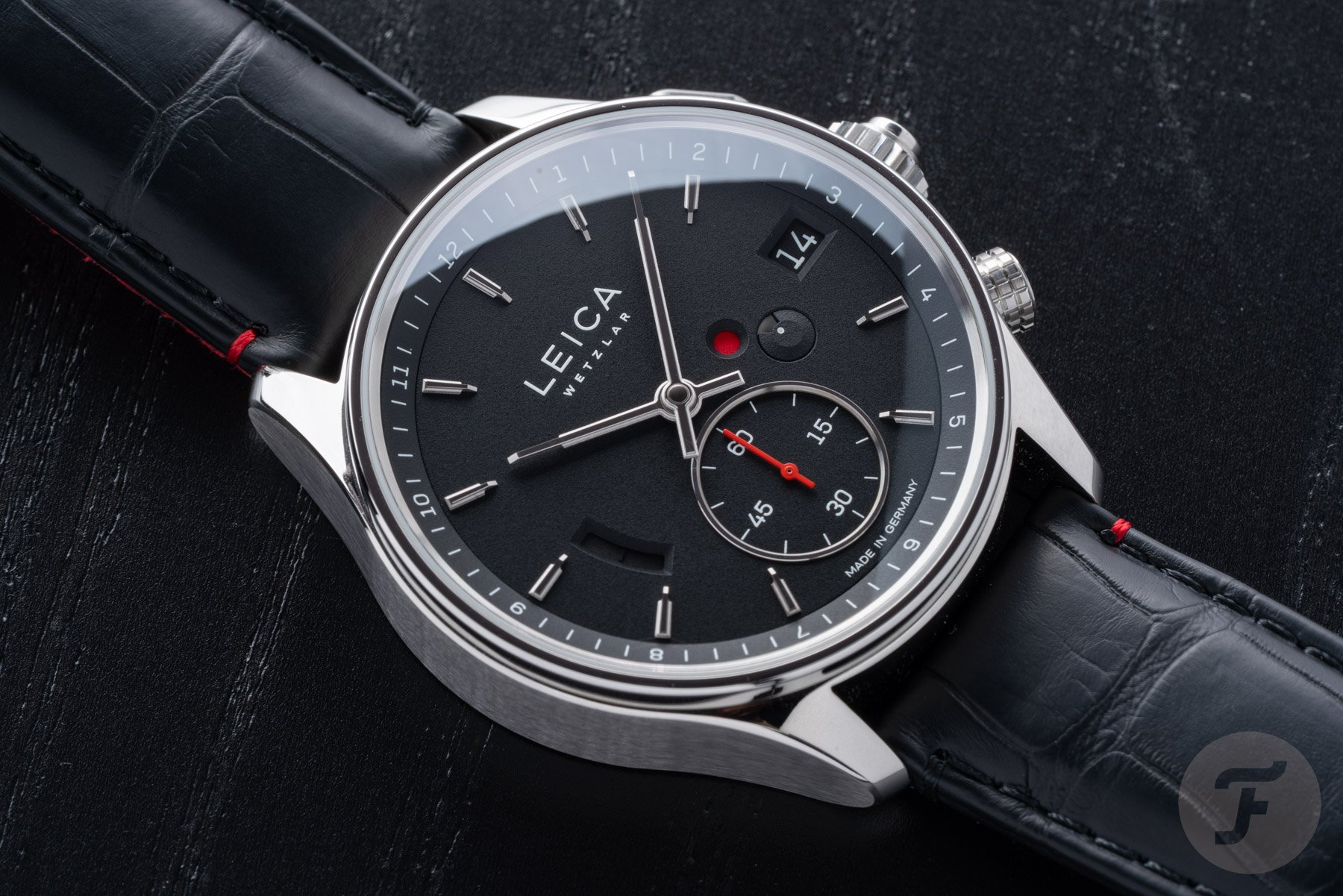
The ZM 1 and ZM 2 combine a distinct design aesthetic rooted in a focus on the essential with unconventional solutions to classic timekeeping. A simpler way to describe the design would be to call it rather minimalist, devoid of any grand embellishment. We know this approach from other German brands, such as Junghans and Nomos. With the ZM 1 and ZM 2, we see a design defined by clever details and impressive mechanical solutions. Both watches feature a 41mm stainless steel case with a 14.5mm thickness and a 48mm lug-to-lug.
The details that make the watches special
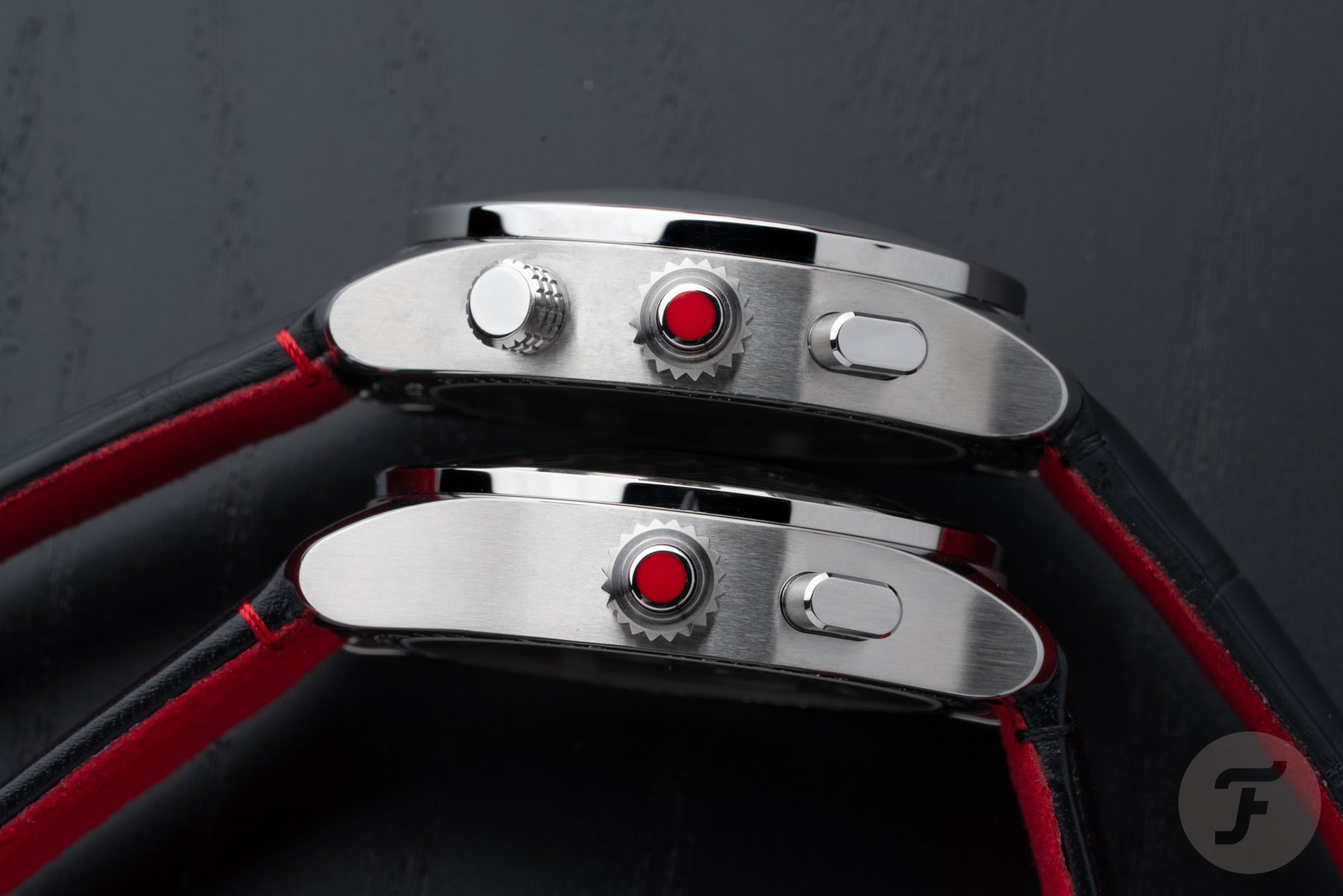
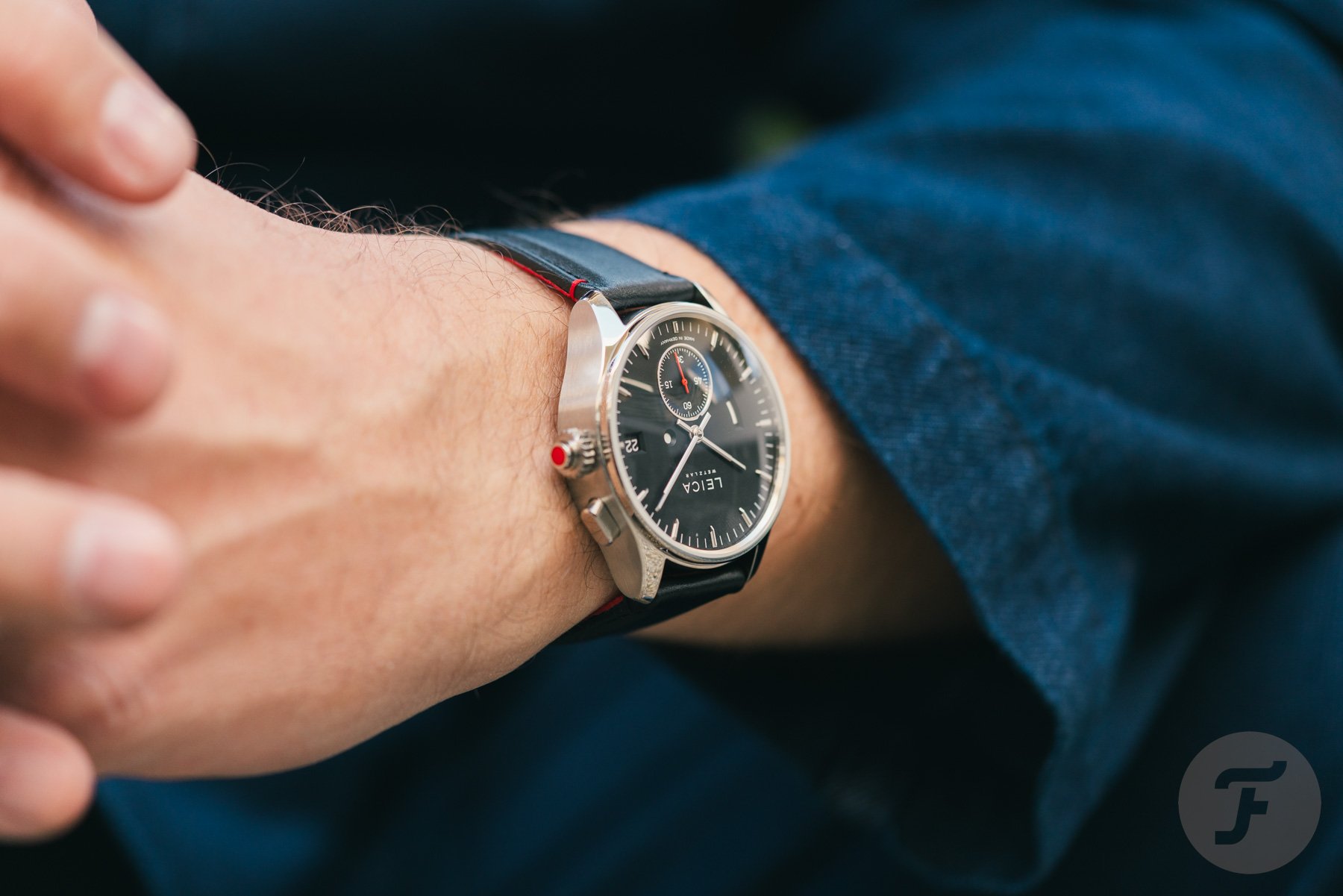
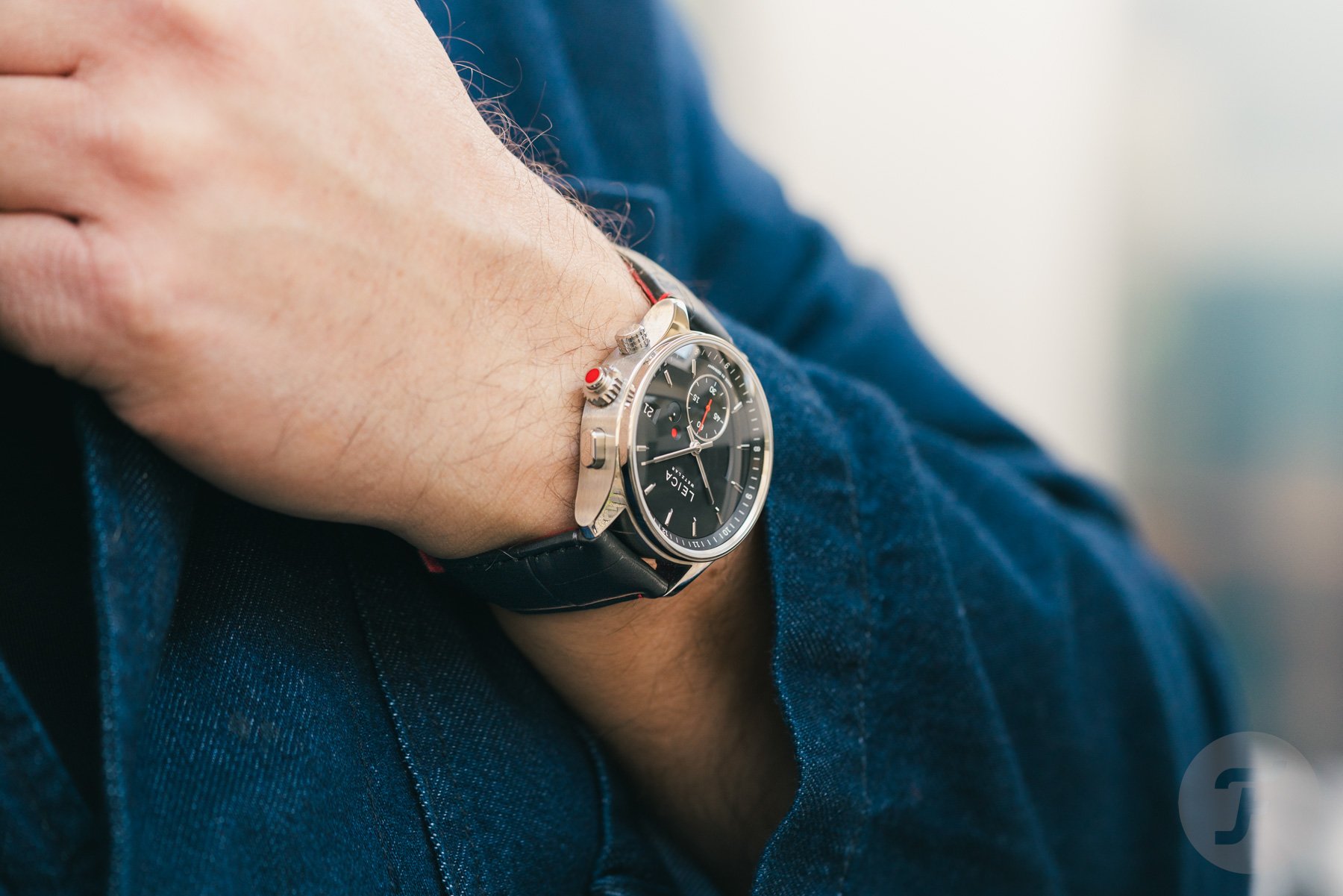
While far from small, the case is very wearable thanks to its great proportions and downward-sloping lugs. This clever design came from the mind of Achim Heine, Professor of Product Design at the University of the Arts Berlin. He designed a string of other Leica products and was the right man for this job. As a fun detail, the side views of the ZM 1 and ZM 2 resemble the top plate of a Leica M camera. This is largely thanks to the heavily domed sapphire crystal, which looks like a lens.
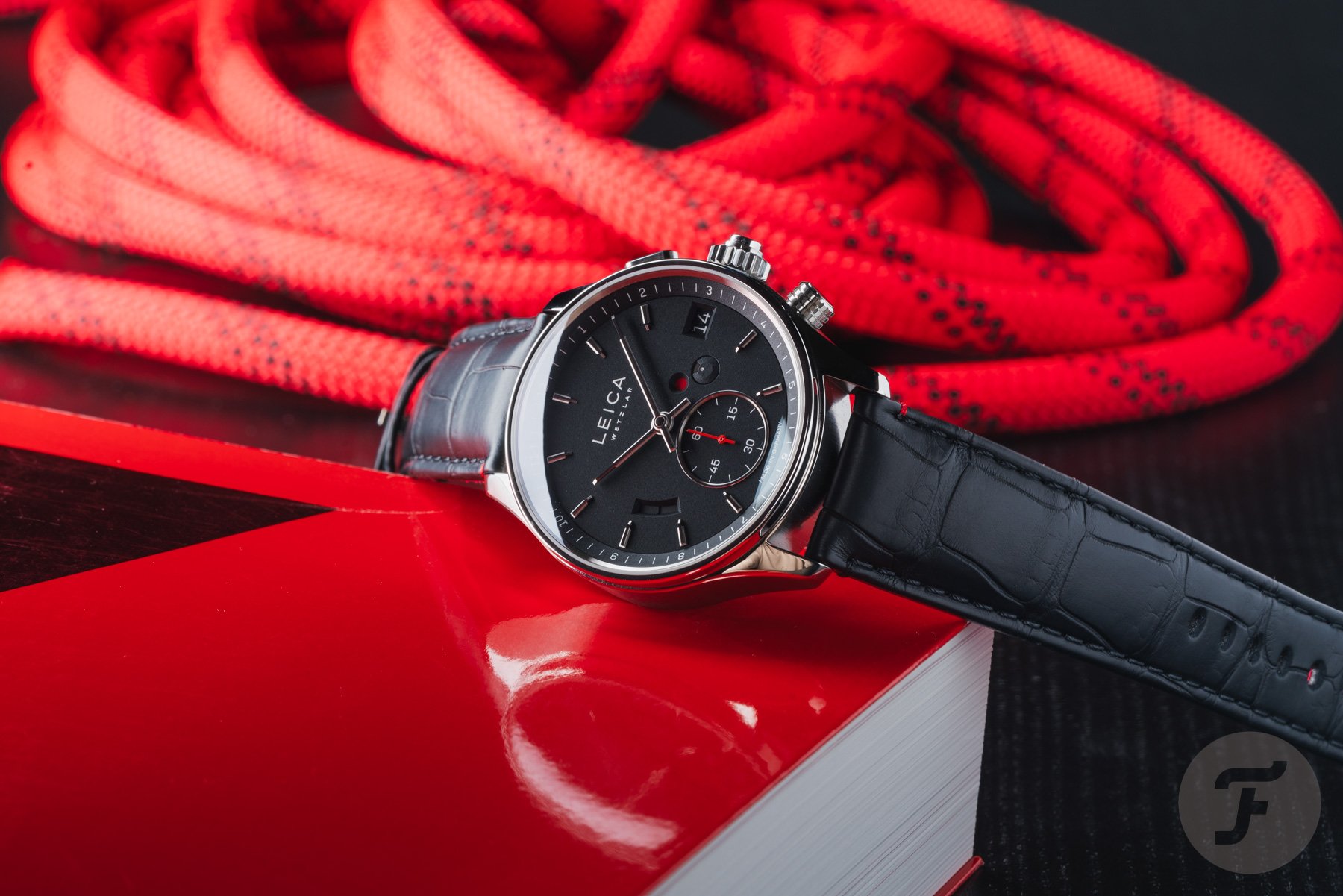
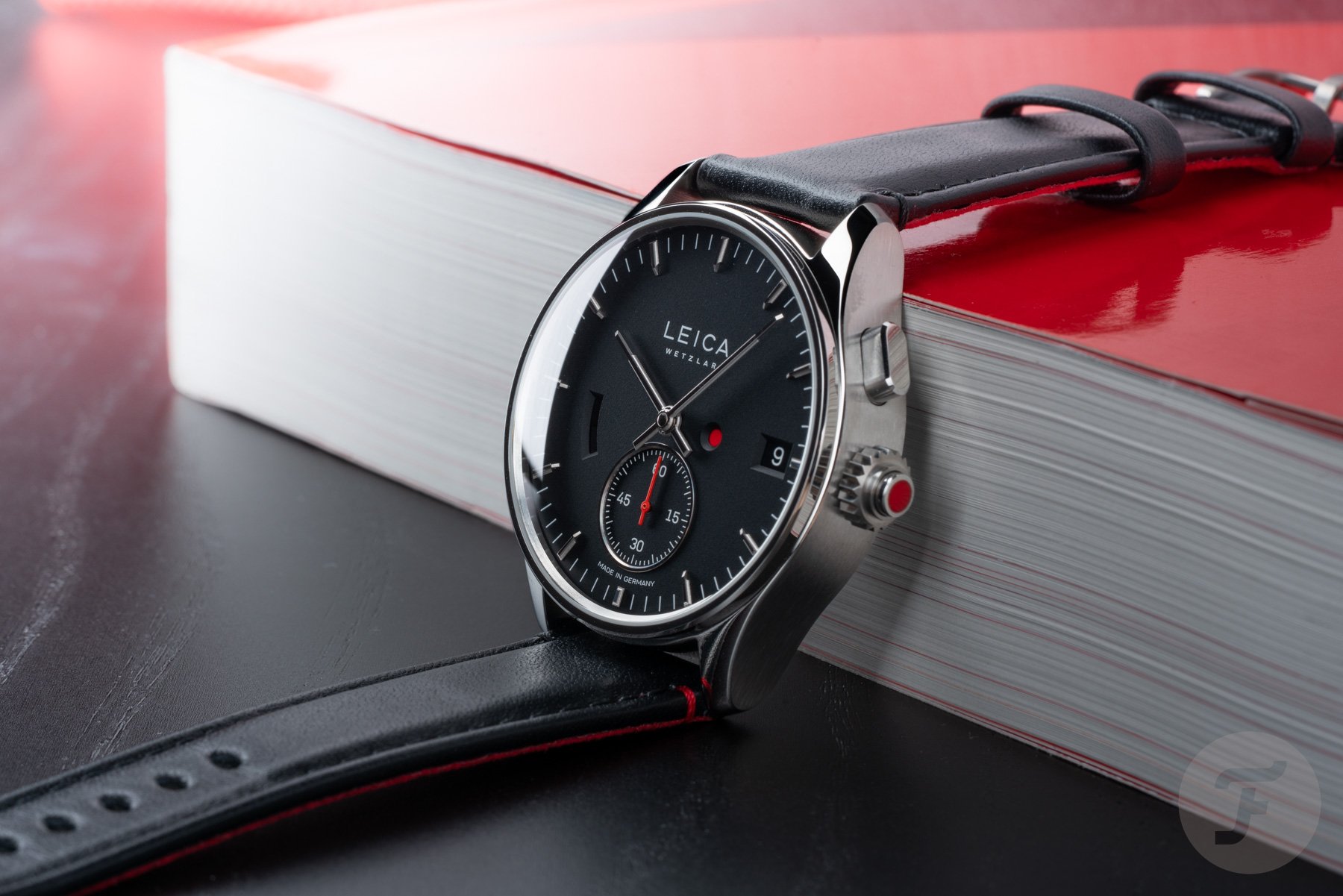
But the similarities to Leica cameras are not just aesthetic. The case finishing also creates a tactile experience reminiscent of Leica cameras. The case features a mix of sandblasted, brushed, and polished finishes that add visual and textural brilliance. On the right side of the two cases, you will find a pusher at 2 o’clock for setting the date. The patented push-button crowns at 3 o’clock take after the shutter release buttons on Leica cameras. They each feature an eye-catching ceramic inlay in Leica’s signature red. Lastly, the ZM 2 has an extra crown at 4 o’clock that controls the inner GMT bezel.
Dials evoking the famous Leica cameras
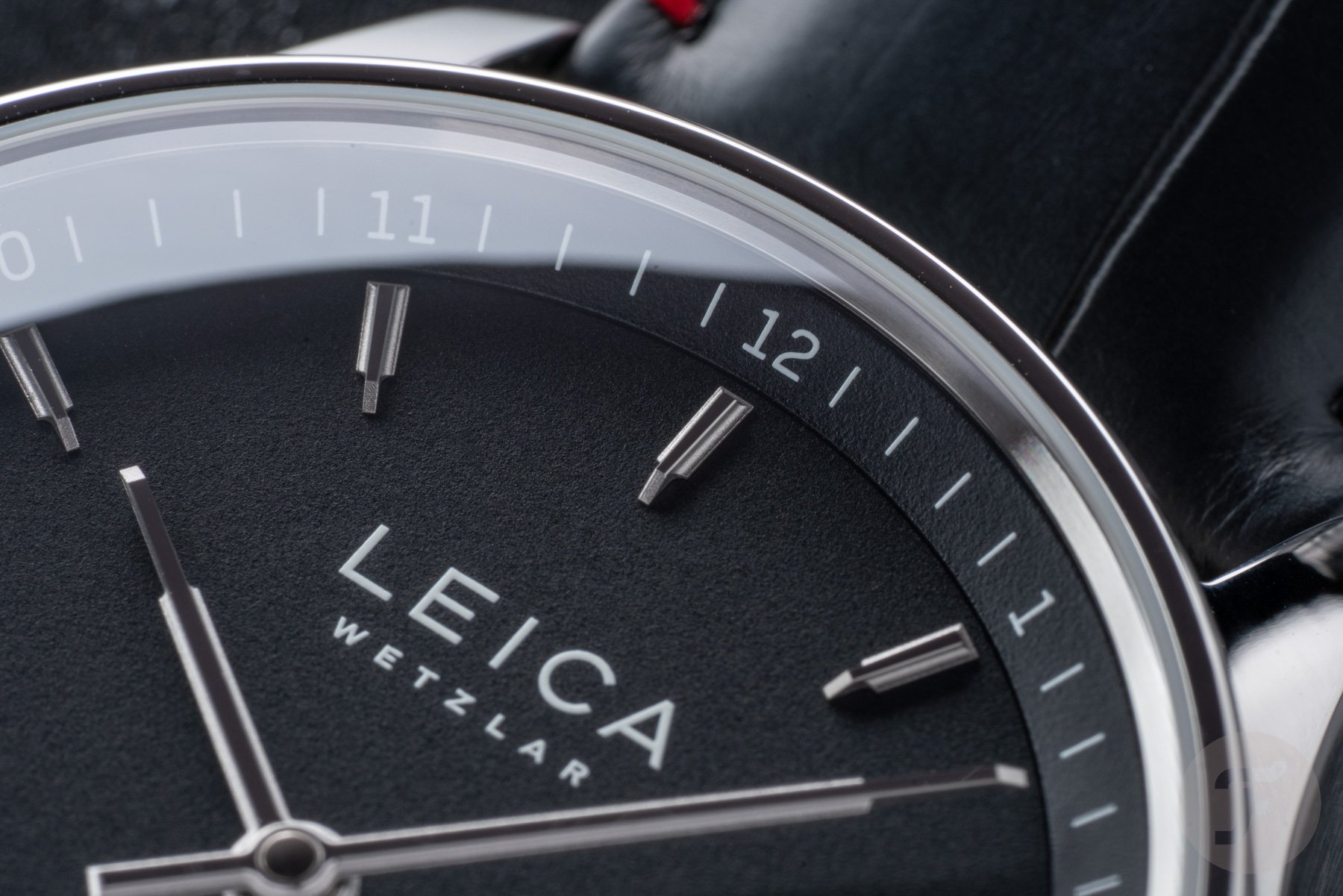
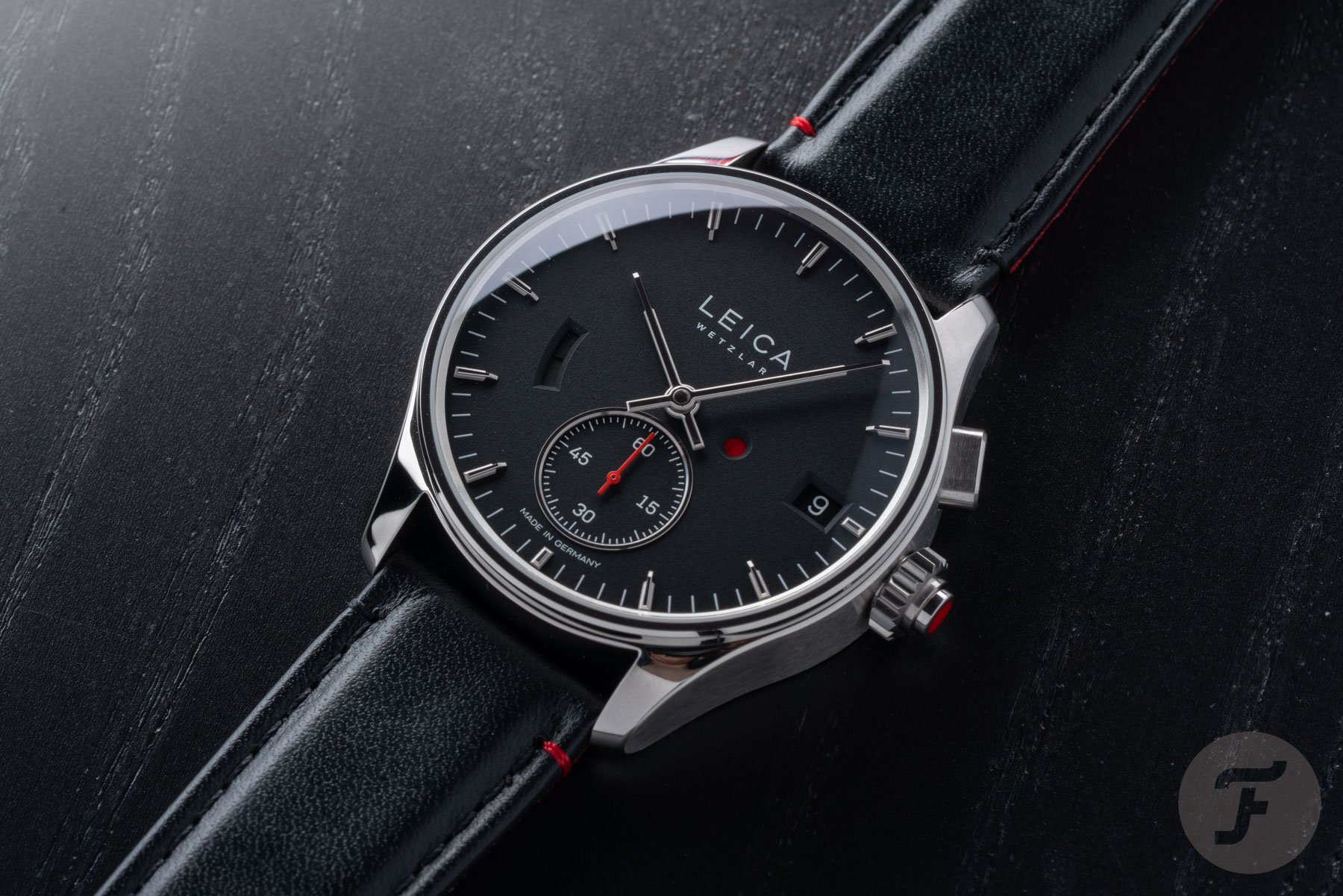
Both watches feature matte black dials cut from a solid block of aluminum. But as soon as you zoom in, you will spot some differences. The minute track on the ZM 1’s dial also contains the applied hour markers. The ZM 2, however, features a rotatable inner bezel with the minute track and an integrated 12-hour GMT scale. The applied hour indexes for the local time sit on the dial itself, with no additional markings between them.
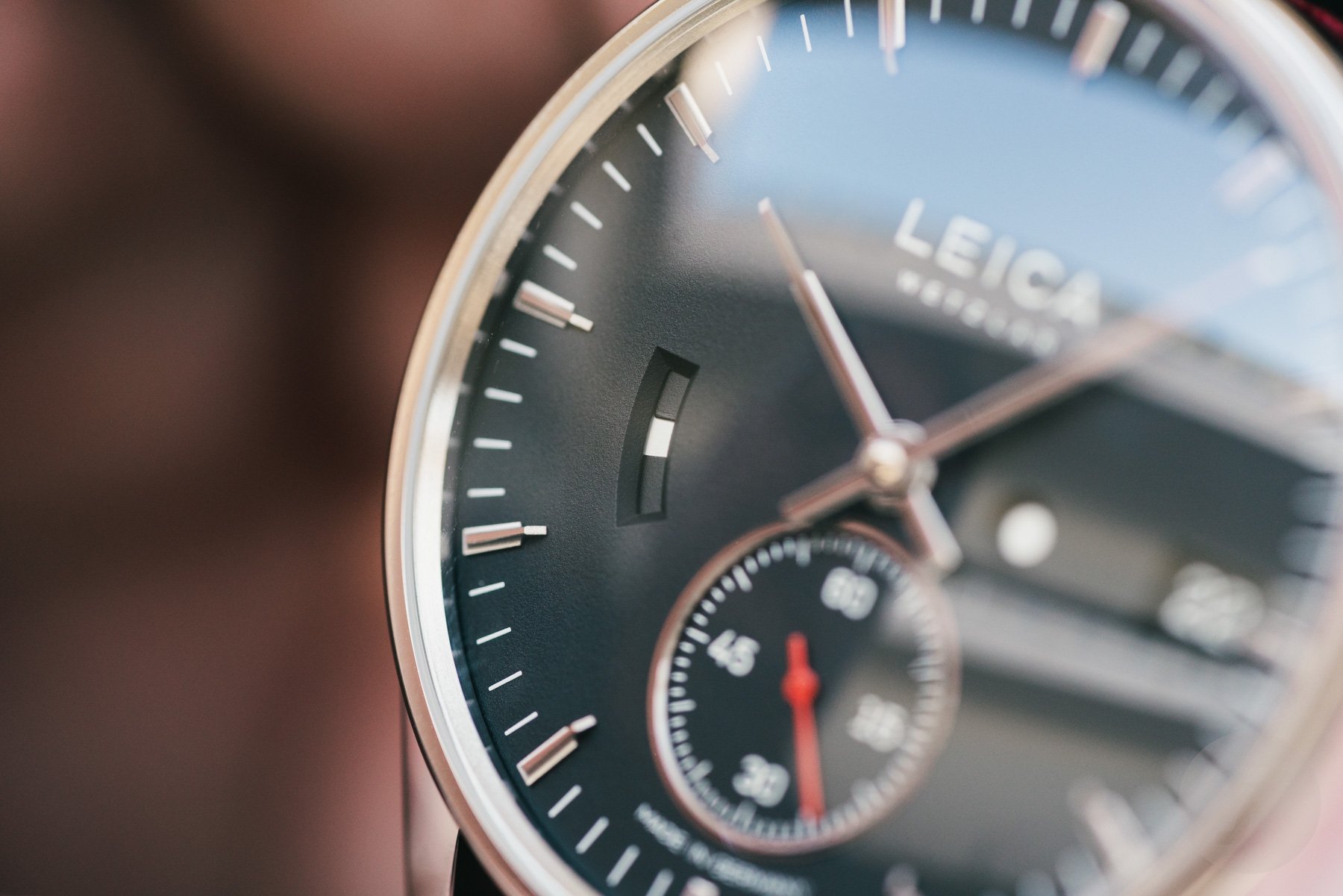
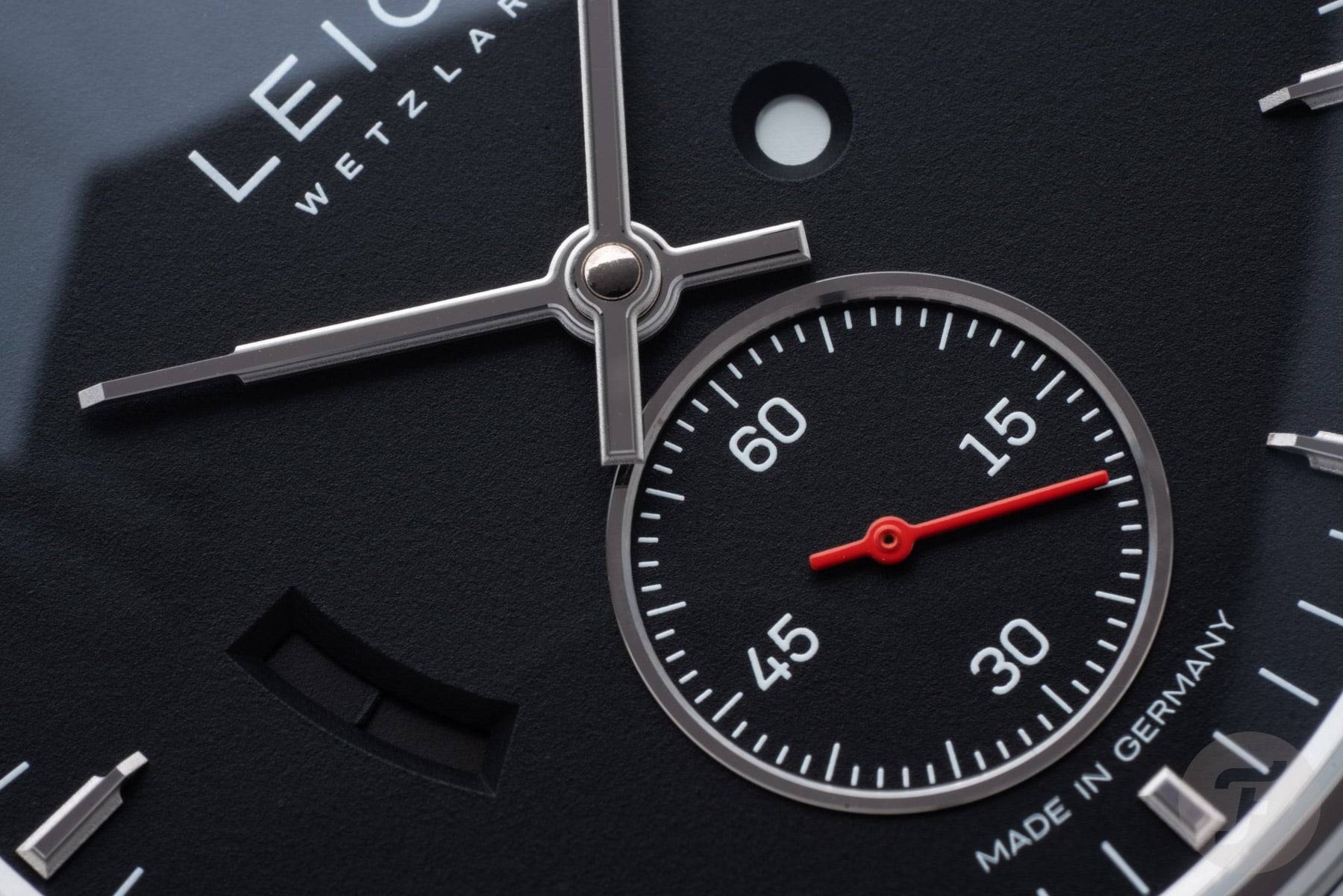
Both watches feature a sub-seconds register at 6 o’clock and a power reserve indicator at 9 o’clock. The latter was modeled after the shutter of Leica cameras. If you start winding the caliber, the white part appears from the middle and grows larger the more you wind it. To the left of the date window, you will find a small indicator. This indicates that the movement is running when it’s white and stopped when it’s red.
Starting and stopping with the click of a button
You can switch between modes by clicking the integrated pusher in the crown. If the watch is running and you click the pusher, the small seconds hand will return to 60, and the movement will stop. This allows you to set the time perfectly. The great thing is that you don’t have to unscrew or pull out the crown. After depressing the pusher, you can immediately set the time by turning the crown. And if the watch is running, turning the crown will wind the movement.
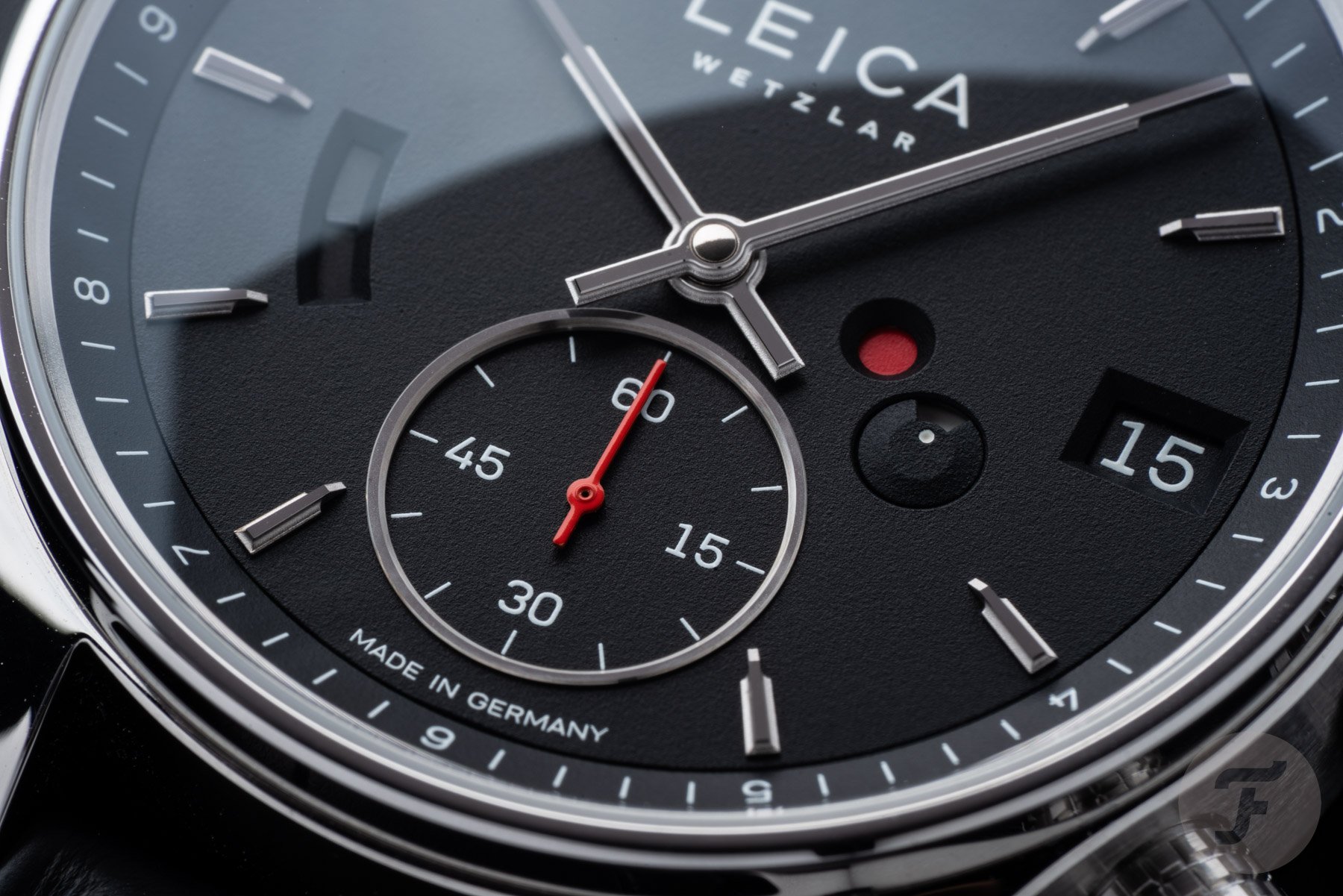
The ZM 2 also has an extra indicator on the bottom right. This is a day/night indicator for the GMT function. As mentioned, the inner bezel features a 12-hour scale that indicates the time in another part of the world. Hovering over the dial are the diamond-cut baton-style hour and minute hands, which match the indexes nicely.
The manual-winding LH-10 and LH-20 movements
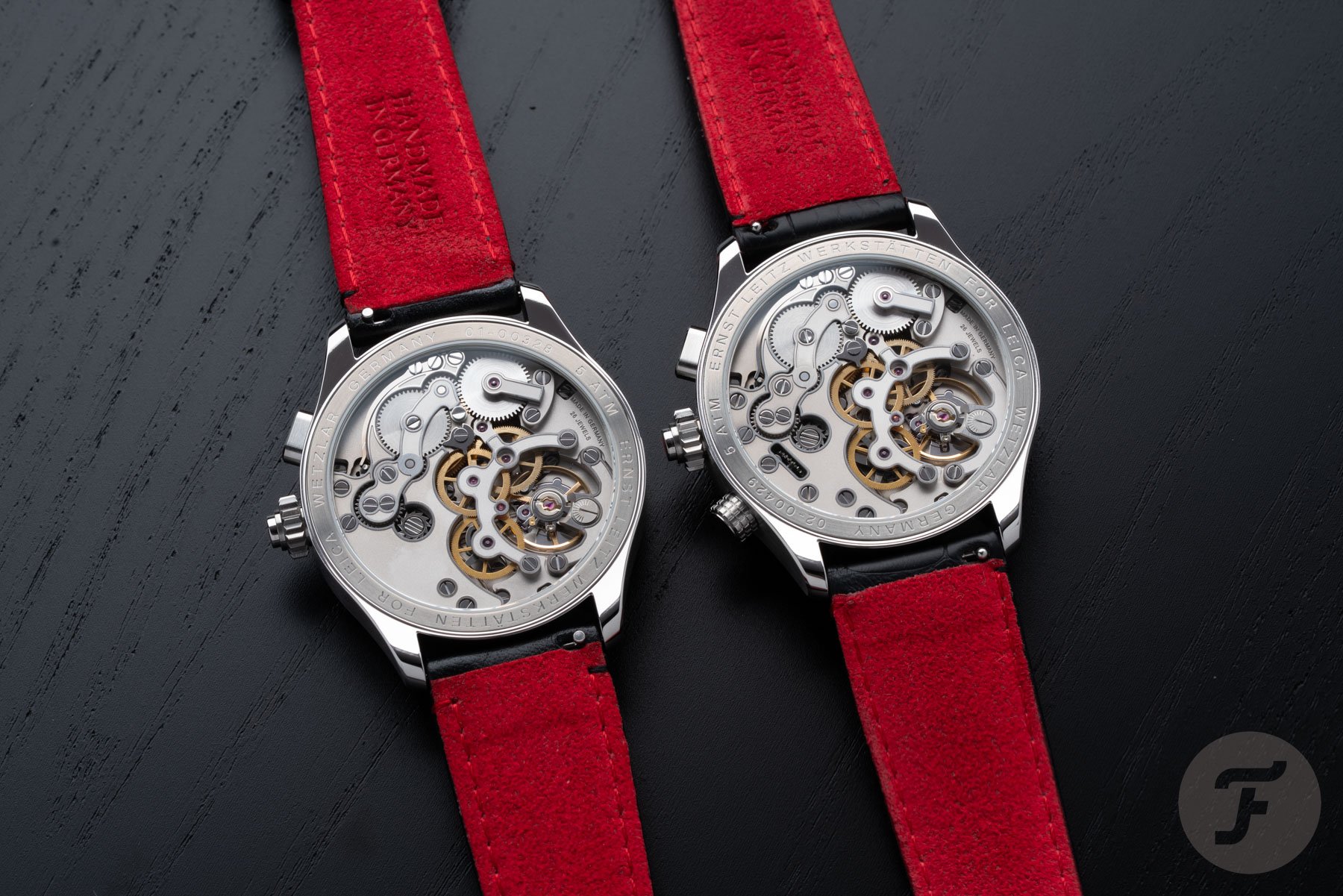
If you turn the watches around, you are greeted by two impressive calibers. Reinhard Meis, the former head of development at A. Lange & Söhne, worked with independent watchmaker Andreas Strehler to develop these movements, and Lehmann Präzision in Germany produces them. The calibers look beautifully detailed and wonderfully finished.
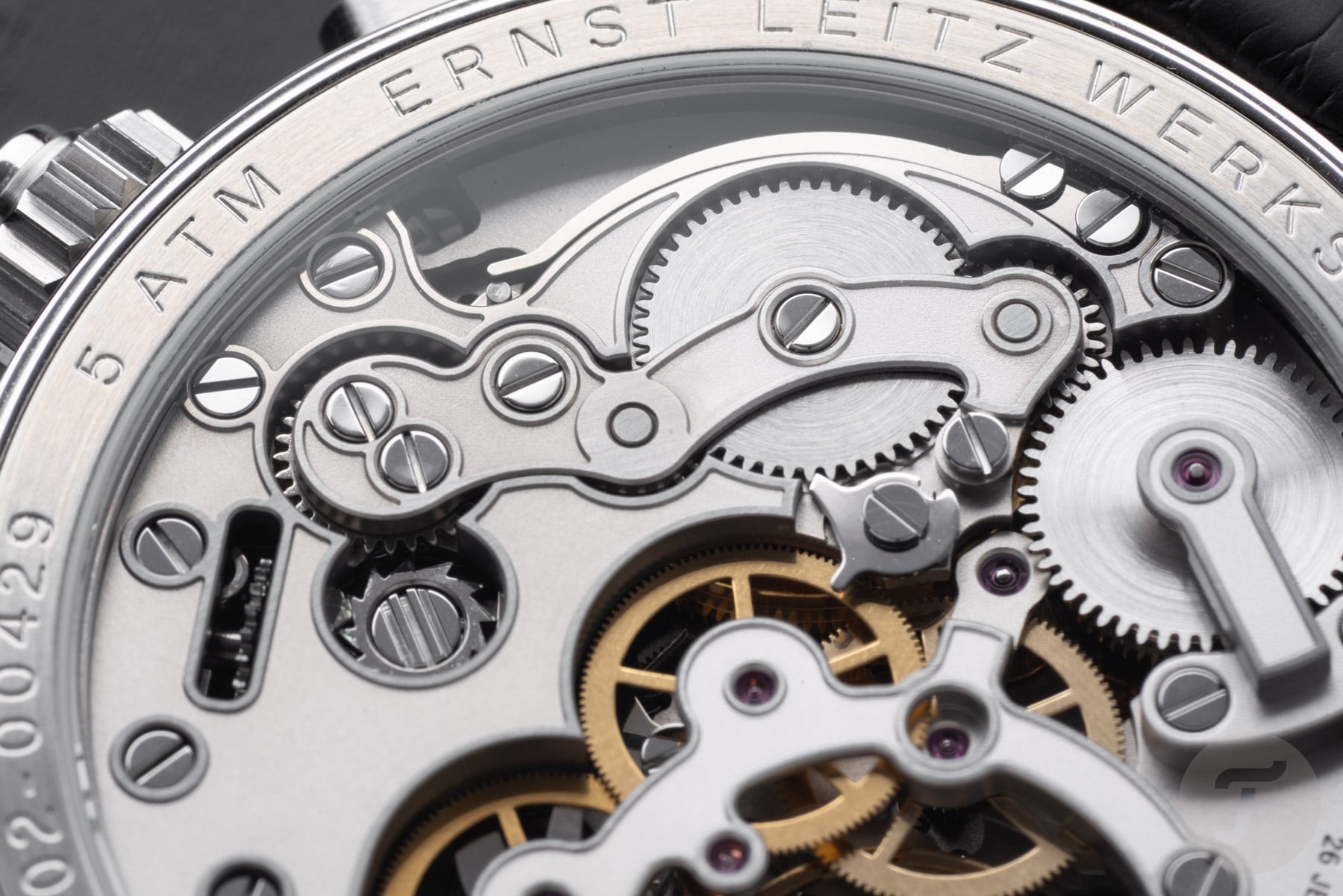
Without a doubt, the biggest achievement is the patented push-crown system that starts and stops the balance. This is achieved through a locking differential and a column wheel, which resemble the mechanics of a chronograph rather than the traditional time-setting systems. Both calibers operate at 28,800 vibrations per hour, have 26 jewels, and offer a 60-hour power reserve. Additionally, they are regulated in five positions.
Wearing the Leica ZM 1 and ZM 2
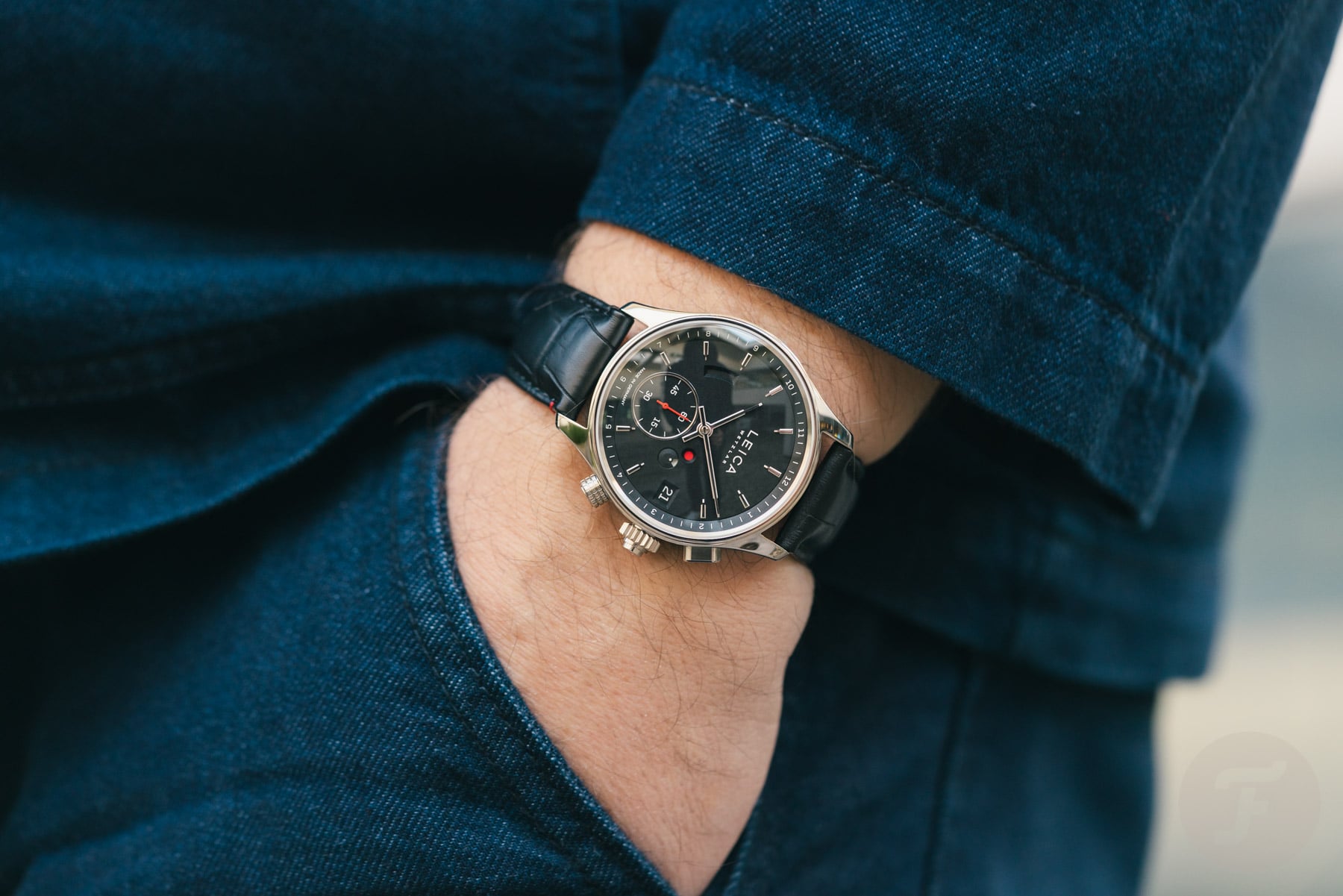
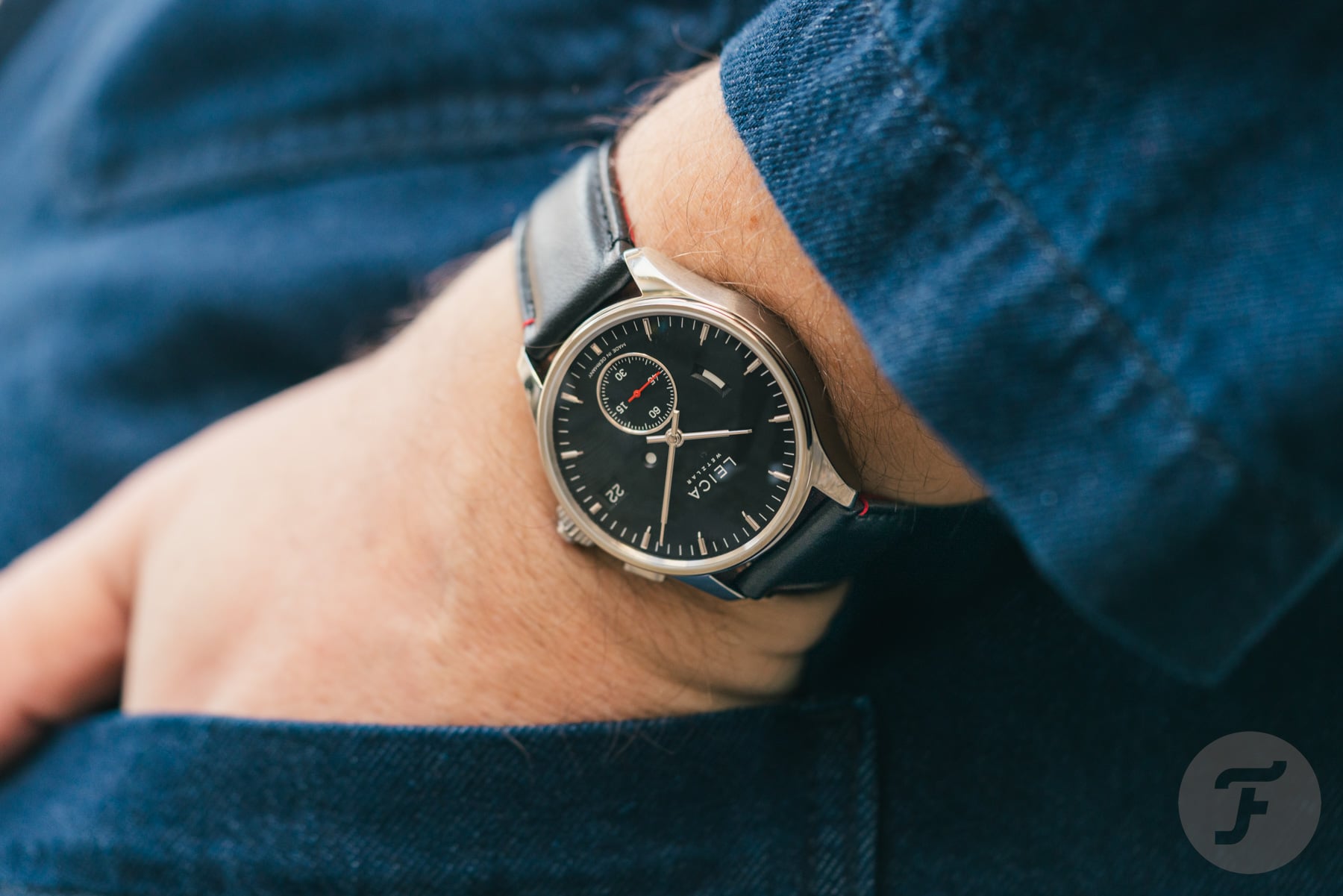
Both watches come with a black leather strap with one contrasting red stitch on each piece, a red suede lining, and a branded steel pin buckle. I have to admit, it’s a bit too red and black for my tastes. I understand the link to the signature Leica red color, but I would have preferred a more toned-down ensemble. Once on the wrist, though, the two watches are very comfortable. Considering the dimensions, the ZM 1 and ZM 2 are not for small-wristed Leica fans. However, as a result of the case profile, both watches felt right at home on my 18.5cm (7.3″) wrist.
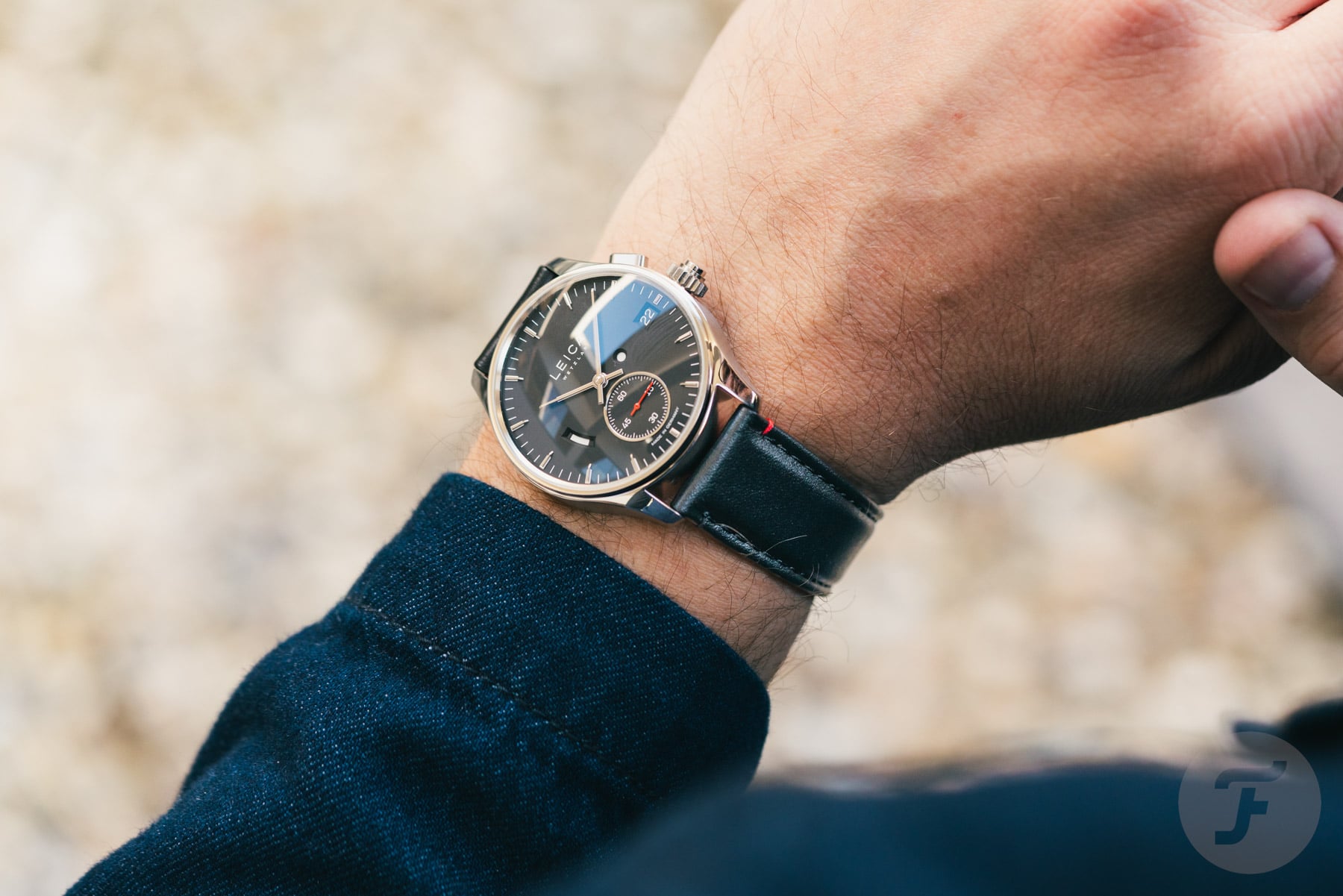
What immediately stood out is how expertly made these watches are. I would not expect anything else from Leica, but it was nice to get that confirmation when wearing the watches. It was also fun to explore the start/stop function by pressing the integrated red button in the crown. It is a practical function to set the time, but I can tell you that it’s more than that. It’s also fascinating that you can stop the movement with a simple push of a button. Another great detail is the pusher at 2 o’clock that lets you adjust the date. The smooth action of this pusher and the sight of the date changing are highly satisfying.
Final thoughts on the Leica ZM 1 and ZM 2
Despite my initial reservations about these two watches, the ZM 1 and ZM 2 quickly changed my opinion. Leica has created two timepieces that stay very close to the company’s core principles. In terms of design, functionality, and quality, these are clearly Leica products. On top of that, there are plenty of little design cues that link the watches to the cameras. From the design of the power reserve indicator to the typography derived from the Leica M6, there is simply a lot to like if you are a Leica fan.
Did my hands-on experience answer the question of why Leica would venture into watches? Well, I can now clearly see what the brand has tried to achieve here, and it works. By staying close to Leica’s core philosophy, these are so much more than just a pair of watches with the brand’s name on them.
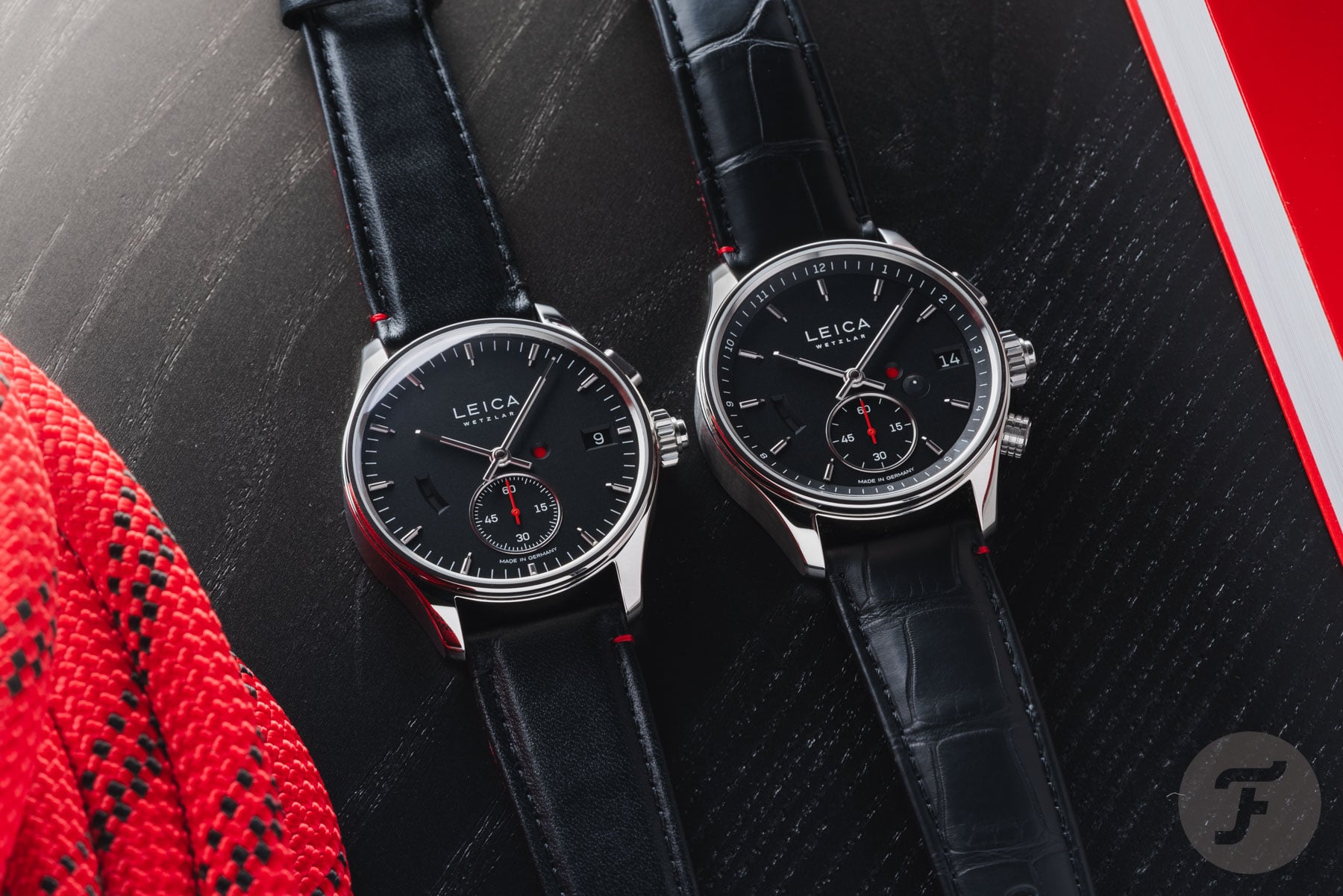
At €9,950 for the ZM 1 and €13,750 for the ZM 2, these two watches don’t come cheap. Then again, neither do Leica’s cameras. Considering that, the prices make more sense. These two watches are niche products created for Leica lovers. Owning one or multiple Leica cameras will certainly help people appreciate these two timepieces, and I think the brand will find its customers in its dedicated community of Leica camera fans. With a very limited production of roughly 20–50 pieces per month, that seems right for the brand. While these watches might not be for me, they haven’t affected my strong love for Leica and its products. They also perfectly fit the brand’s strategy, which I adore, so I’d say this is another job very well done.
The ZM 1 and ZM 2 are exclusively available through Leica boutiques and selected retailers. If you want to find out more about these two watches, visit the official Leica website.
This is a partnership post. Learn more.