Introducing: Three 38mm Audemars Piguet Royal Oak Selfwinding Chronographs With A New In-House Movement

After using a relatively common Frederic Piguet movement for almost 30 years, Audemars Piguet now introduces the 6401, an in-house automatic chronograph caliber. It offers higher accuracy, greater reliability, and a more refined appearance. The brand’s 38mm Royal Oak is the first model to feature the new movement. You can choose between a stainless steel model with the iconic blue Grande Tapisserie dial and two 18K rose gold models. One of them has a dark gray reverse-panda dial, while the other swaps the gray base for sand gold and adds a diamond-set bezel. All three models now also feature a sapphire-equipped display case back.
Next year, Audemars Piguet will celebrate 30 years of Royal Oak chronographs. Apparently, the brand couldn’t wait to introduce its new 6401 automatic chronograph movement until next year. The outgoing caliber 2385 was made by Frederic Piguet and wasn’t exclusive to AP. Brands like Chopard, Blancpain, and Vacheron Constantin also used it in their chronographs. Let’s take a look at what Audemars Piguet has developed here.


The new 38mm Audemars Piguet Royal Oak Selfwinding Chronograph
Of course, the real novelty here is the newly developed self-winding chronograph movement inside these Royal Oaks. However, let’s first go over the slight changes noticeable on the exterior. In terms of dimensions, the watches still have a 38mm diameter. The 11.1mm thickness shows a negligible 0.1mm increase, likely due to the introduction of the display case back. However, with a 5.7mm profile, the new movement is also 0.2mm thicker than the previous one. The case has a 50m water resistance rating.

Also, when you compare the outgoing and new models side by side, you can see that the new movement has influenced the positions of the pushers, sub-dials, and date window. First of all, the chronograph pushers are slightly farther apart than before.

Then, on the dial, the changes are marginal but noticeable. First of all, the minute and hour counters have switched places, resulting in a more logical layout. In previous models, the sub-dials at 3 and 9 o’clock were larger than the running seconds sub-dial at 6 o’clock. Now, it looks like all three sub-dials are the same size, and the sub-seconds register has numerals on it too.
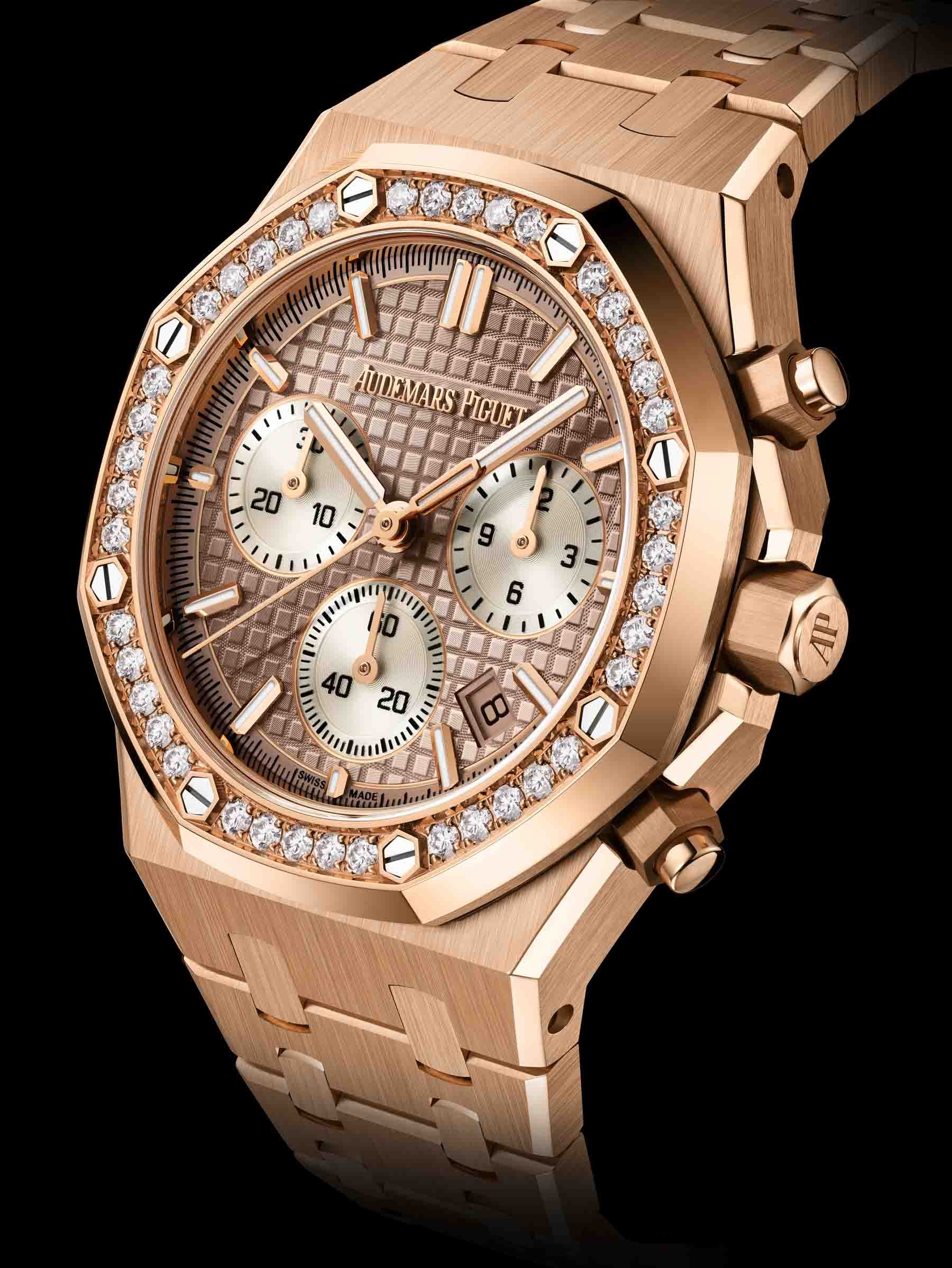
Finally, the positions of the minute and hour totalizers and the date window also changed. The center pinions of the upper sub-dials are now slightly above the center pinion of the hour, minute, and chronograph seconds hands, similar to those on the Rolex Cosmograph Daytona. The upward shift of those sub-dials means there’s now room to place the cutout for the date window exactly between the 4 and 5 o’clock indexes.
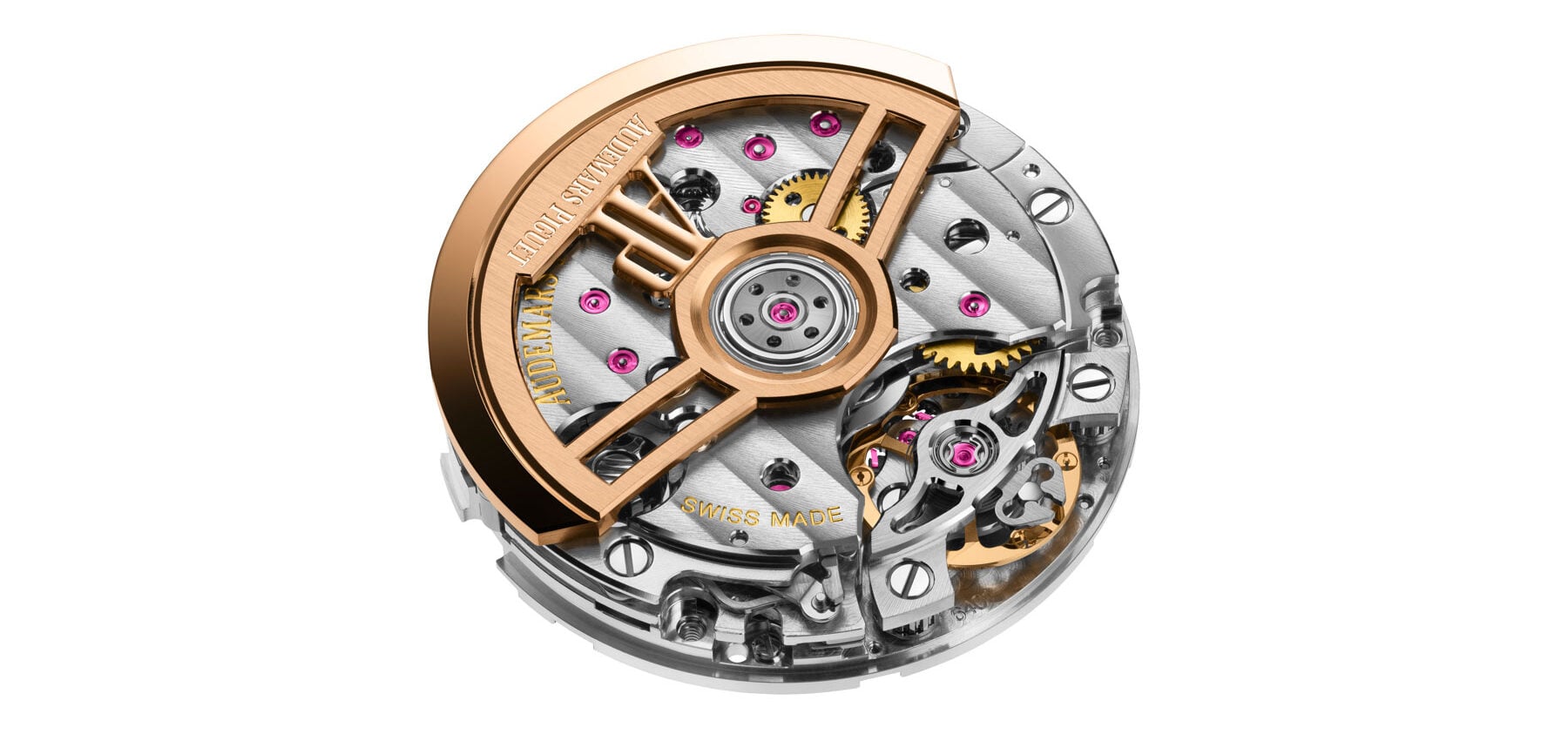
The in-house-developed Audemars Piguet automatic chronograph caliber 6401
With the visual changes out of the way, let’s now take a look at the new movement inside. It took the folks at Audemars Piguet about five years to develop this new automatic-winding, fully integrated chronograph caliber. Including a column wheel and a vertical clutch, it consists of 348 parts (up from 304), features 44 jewels (up from 37), runs at 28,800 vibrations per hour (up from 21,600), and has a 55-hour power reserve (up from 40).

The increased frequency is probably why the brand communicates a higher level of accuracy. The press release also mentions that activating the pushers requires less force. This is something we also saw on the recently introduced Royal Oak “Jumbo” Extra-Thin Selfwinding Flying Tourbillon Chronograph RD#5. As mentioned, you can see the new caliber 6401 through the case back’s sapphire display, which is a first for the 38mm Royal Oak Selfwinding Chronograph. There, you can see the skeletonized rotor, the Geneva waves, and polished chamfers.


Available in three flavors
Audemars Piguet launches its new caliber 6401 in three versions of the 38mm Royal Oak Selfwinding Chronograph. The first option is the stainless steel one with a blue Grande Tapisserie dial. Then, there are two models in 18K rose gold. One has a dark gray Grande Tapisserie dial and ivory sub-dials. The other also has ivory sub-dials, but the Grande Tapisserie main dial is sand gold. That last version also features a bezel set with 40 brilliant-cut diamonds weighing 0.92 carats. The next step is to also equip the Royal Oak Offshore with this new automatic chronograph movement.

Initial impressions
We haven’t seen the new 6401-powered 38mm Audemars Piguet Selfwinding Chronographs in person yet. However, based on the press release and the provided pictures, these new models certainly look a bit more refined. The extra space between the pushers helps balance the case, and while the sub-dials at 3 and 9 o’clock are not centered, I do like that all three sub-dials are the same size. I could’ve done without the date window at 4:30, but at least it’s nicely centered between the hour markers now.

On the technical side, it’s admirable that Audemars Piguet didn’t just copy the specs of the previous Frederic Piguet caliber 2385. The new in-house movement is a real improvement on many fronts. It’s more accurate, has a greater power reserve, and is also said to be more reliable, which is something we’ll have to see in the future, of course. The new stainless steel 38mm Royal Oak Selfwinding Chronograph costs €39,200, the version in rose gold can be yours for €77,000, and if you’d like the diamond-set version, you’ll have to pay €83,500.
Let me know what you think of the new 38mm Audemars Piguet Royal Oak Selfwinding Chronograph models in the comments below.