Introducing: The Sleek New Audemars Piguet Neo Frame Jumping Hour

Audemars Piguet is releasing a host of new models today, which we’re covering here on Fratello. I was quite happy to see this specific release article appear in my schedule. Among several rather impressive releases, this one leans most heavily on design, which is my jam. Meet the Audemars Piguet Neo Frame Jumping Hour.
This new model harks back to Audemars Piguet’s past. It is a modern reinterpretation of the jump-hour watches AP made in the 1920s. Join me for a closer look!
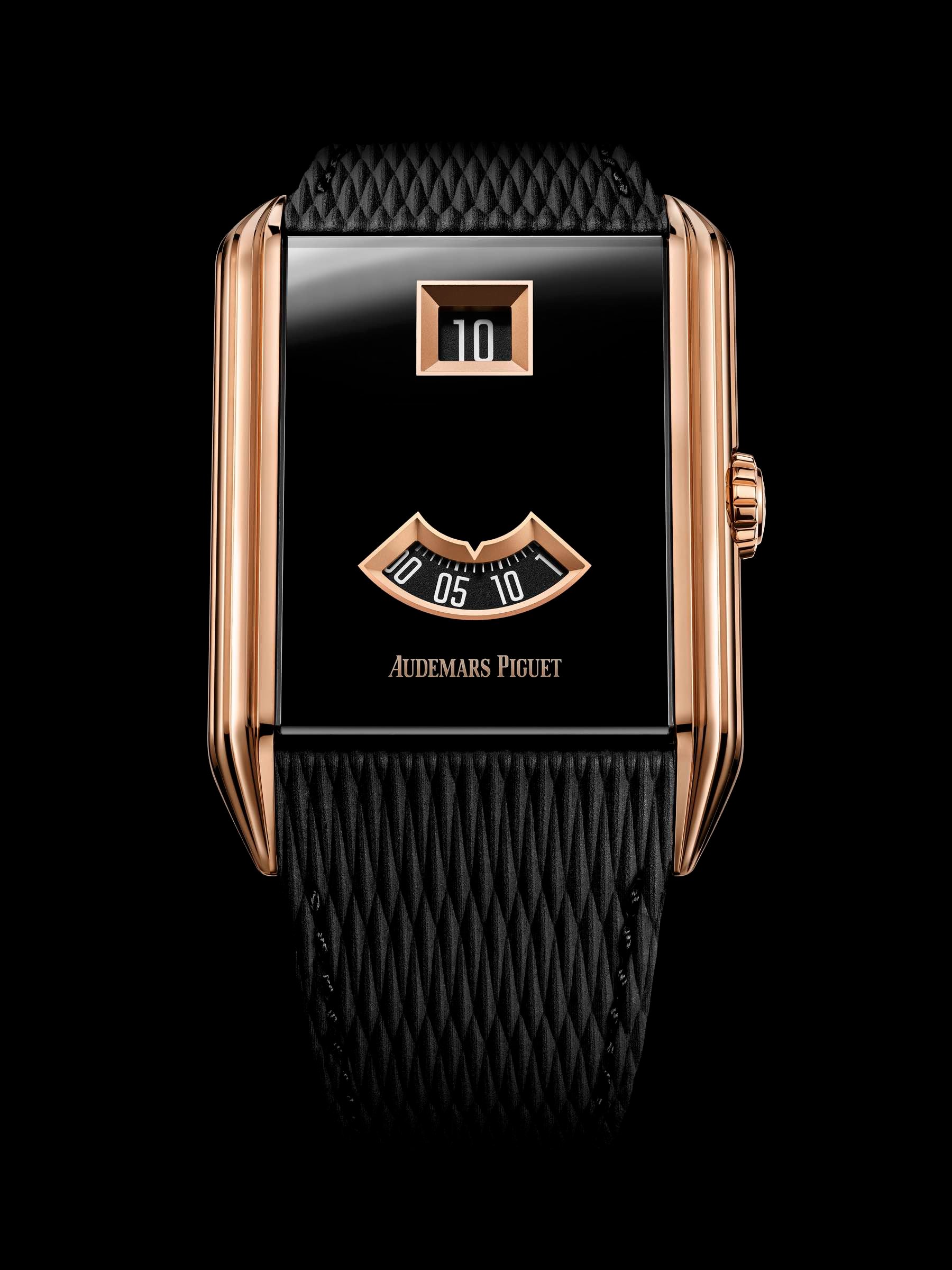
The new Audemars Piguet Neo Frame Jumping Hour
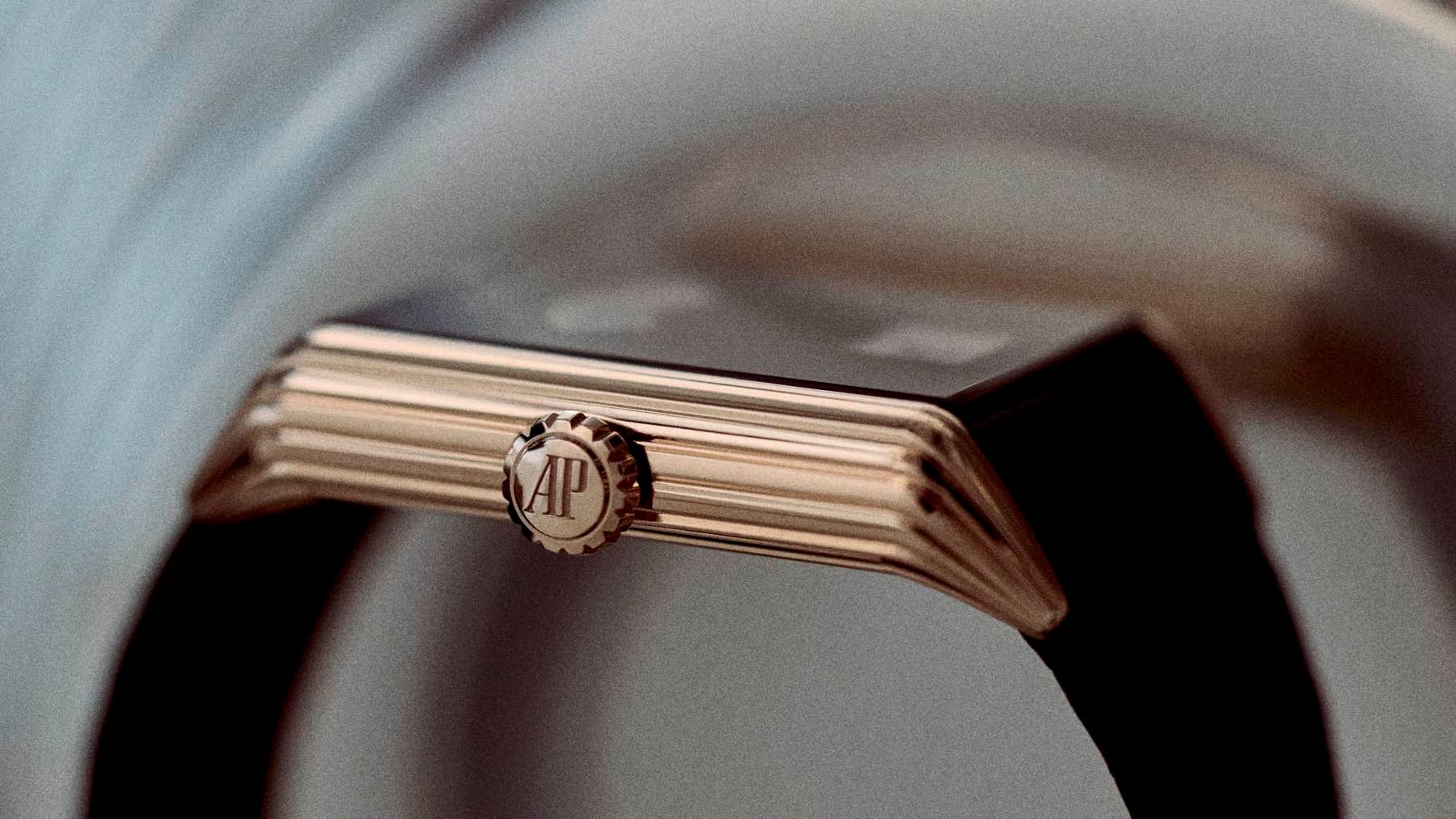
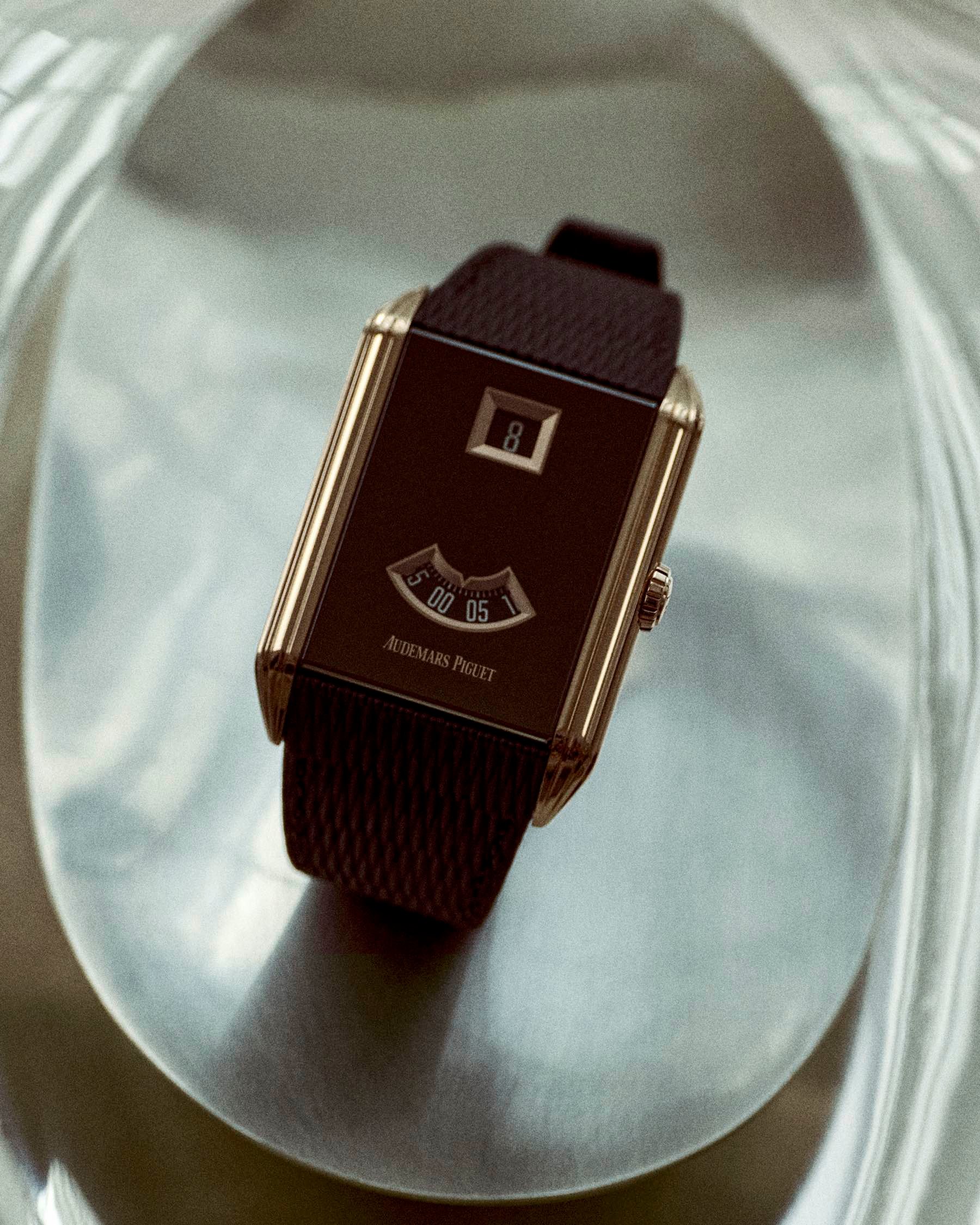
Let’s start with the basics. What we have here is an 18K pink gold case with a 32.6mm width, a 34mm length, and an 8.8mm thickness. The eye immediately travels to the crazy gadroons on either side of the blacked-out dial. These are inspired by the Streamline Moderne movement, also known as style pacquebot or “ocean liner style.” Whatever you call it, this kind of design dates back to the late Art Deco period, as you can probably tell.
The Audemars Piguet Neo Frame Jumping Hour features a time display à guichets, or “with windows.” It shows jumping hours at the usual 12 o’clock position and trailing minutes at 6, with the Audemars Piguet wordmark sitting below the latter aperture. The dial consists of a black PVD-treated sapphire panel with rose-tone aperture frames revealing the black discs beneath. The sapphire runs off the case edges at 12 and 6, providing a neatly integrated aesthetic with the black patterned-calfskin strap. This design requires the sapphire to be bonded to the plate below, enabling a 20m water resistance rating.
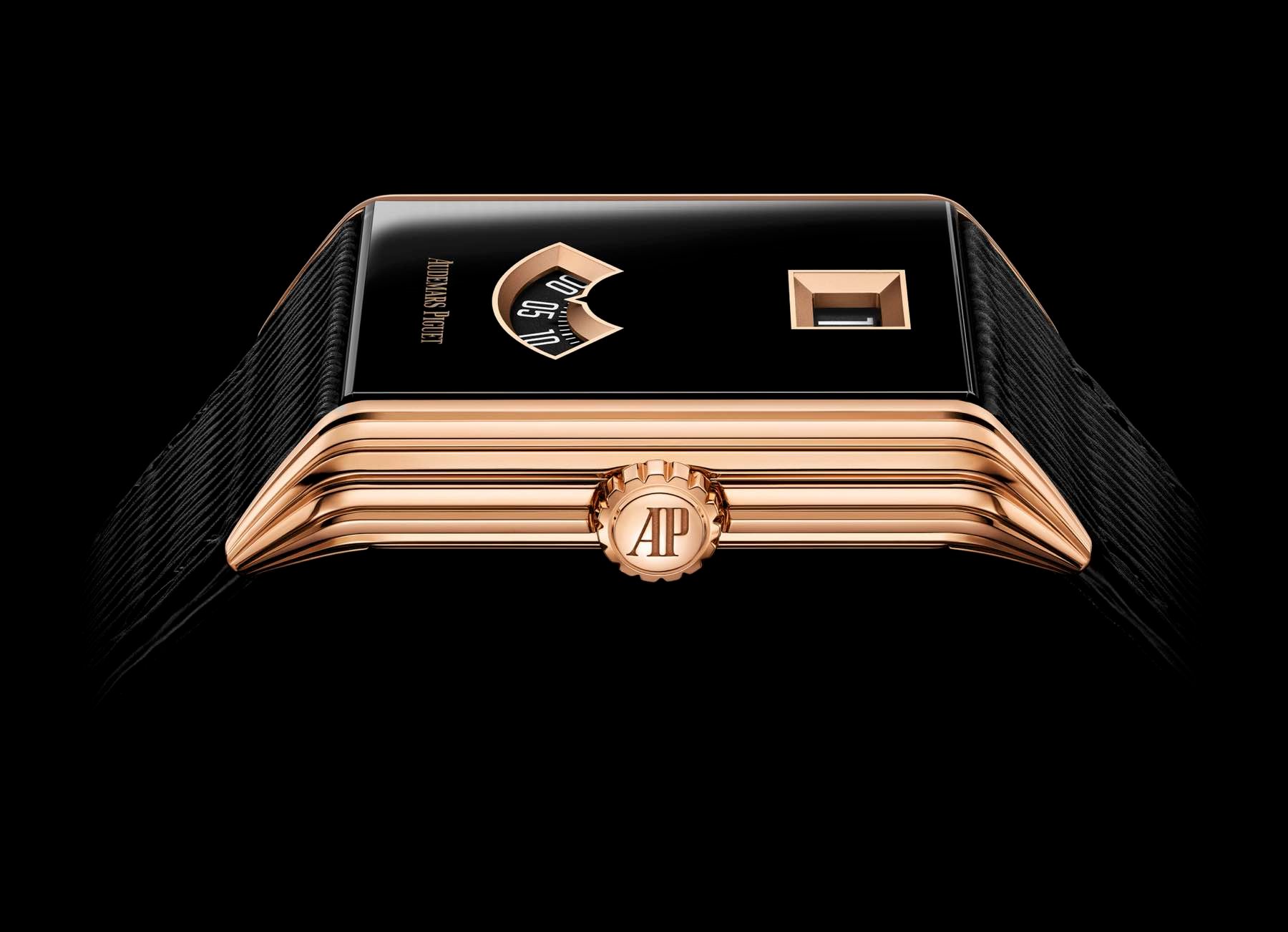
The new caliber 7122
Inside ticks the Audemars Piguet caliber 7122. At its heart, this is a modified 7121, as known from the Royal Oak Jumbo models. This variant brings jumping hours, trailing minutes, and an à guichets layout to the original architecture.
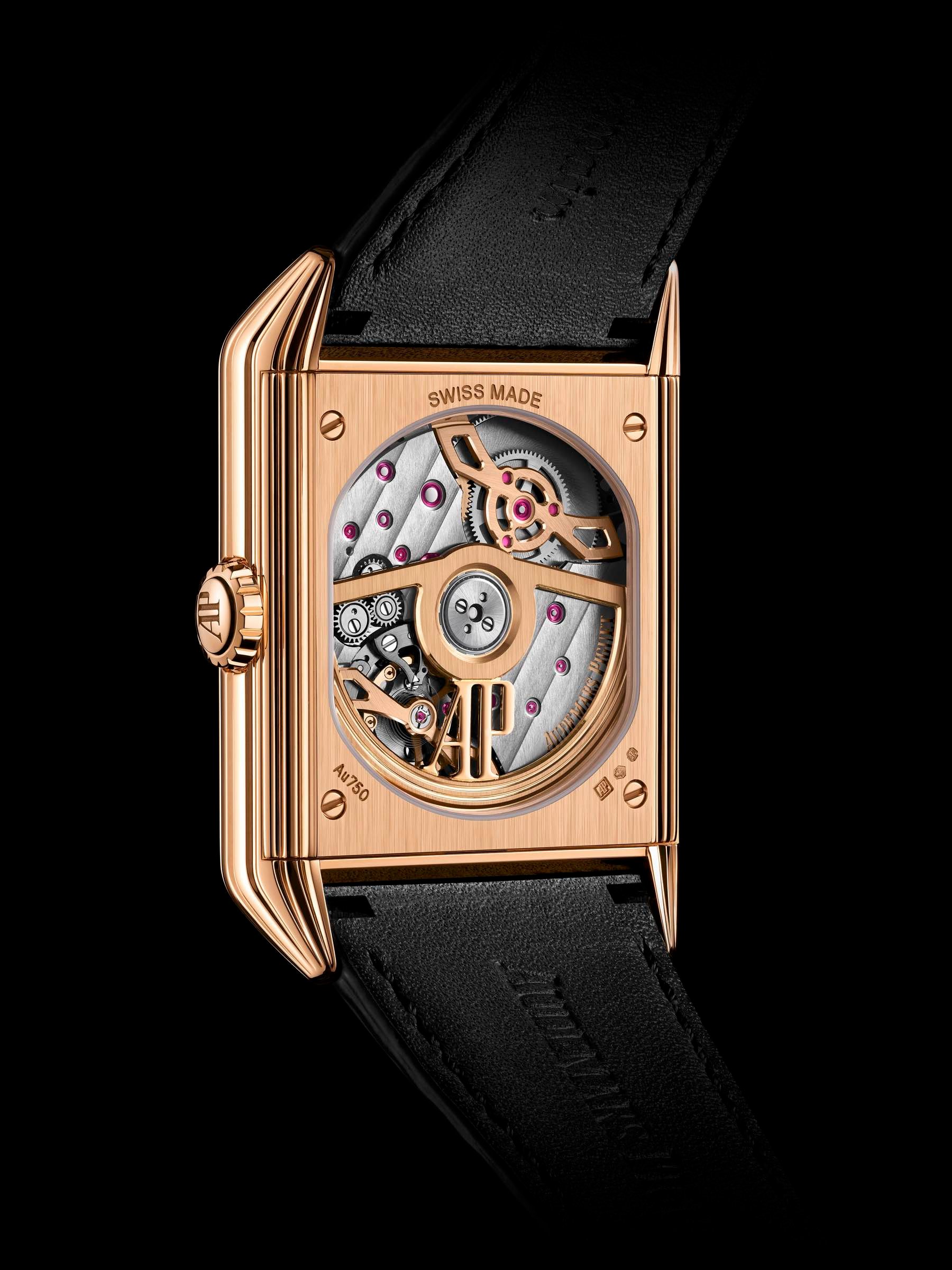
The round, 29.6mm-wide automatic movement offers a 52-hour power reserve while ticking at 28,800 vibrations per hour. In this new guise, it features 293 parts, two of which are the discs displaying the hours and minutes. Interestingly, AP fashions the hour disc from titanium and the minutes disc from aluminum. The press materials state shock protection as the reason for choosing these specific metals. I can only assume the low weight of these discs reduces the force on the movement when the watch receives a shock.
The Neo Frame Jumping Hour harks back to AP’s past
I mentioned that the Audemars Piguet Neo Frame Jumping Hour leans on some of the brand’s historic references. More specifically, this model takes us back to the 1920s. Audemars Piguet introduced the first jump-hour wristwatch in 1921 alongside a pocket watch with the same complication.
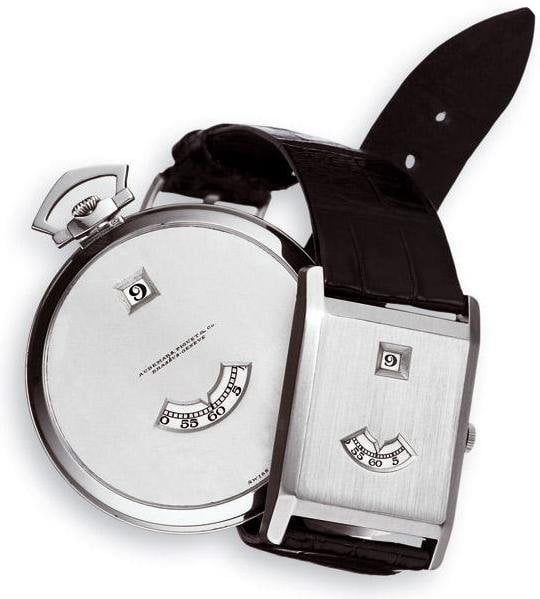
The world’s first jump-hour watches
This layout had a non-trivial function back in the day. The two tiny apertures behind mineral glass sat below the metal top surface of the watch, making the entire thing much more durable. Between 1924 and 1951, Audemars Piguet sold 347 jump-hour watches, and 135 of them featured double apertures, like today’s reinterpretation.
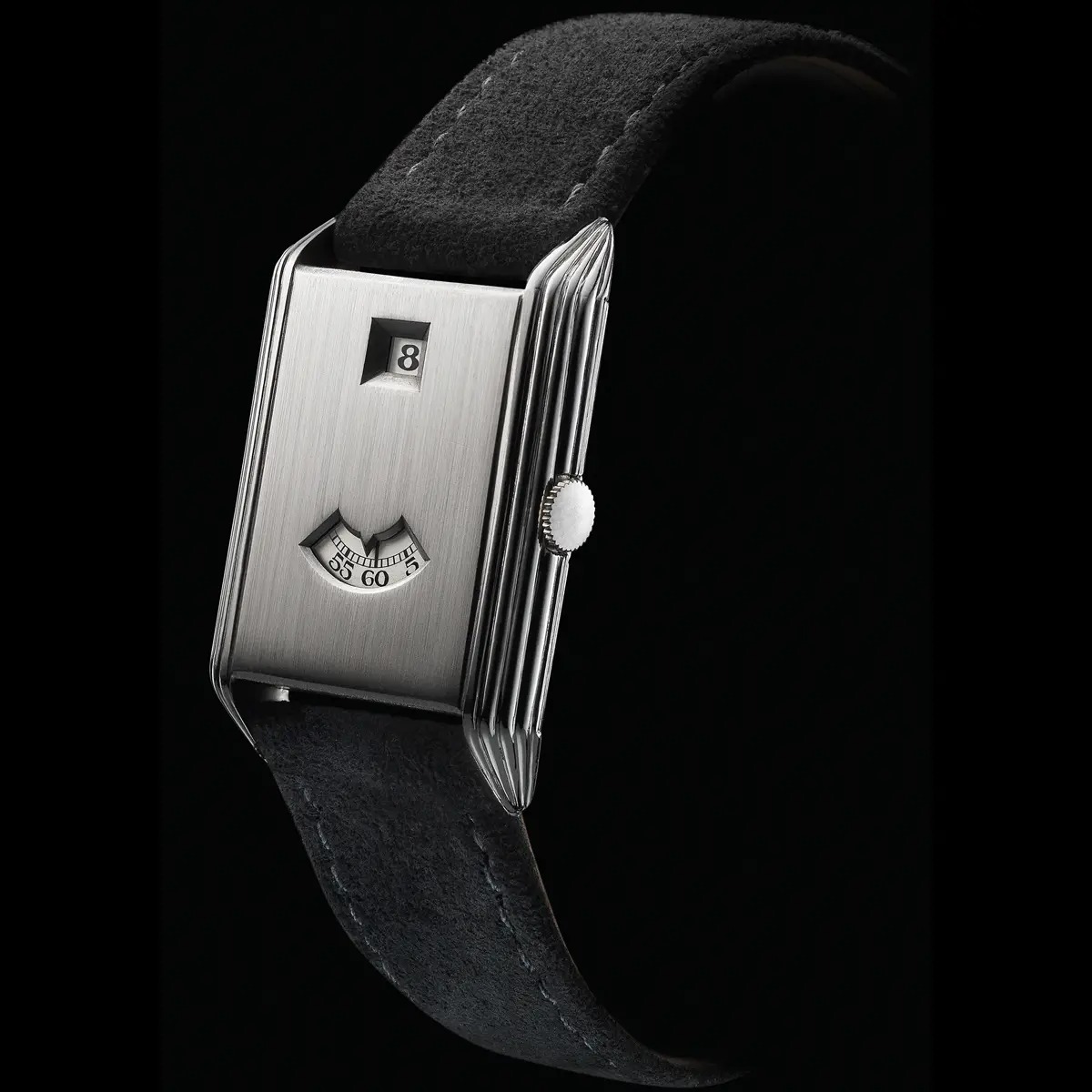
A white gold Audemars Piguet jump-hour watch from 1929
The new Audemars Piguet Neo Frame Jumping Hour takes the original recipe and reimagines it. While the radical case flanks reflect the style of the late 1920s, the full-sapphire front panel brings it into the 21st century. Furthermore, the blacked-out theme and uniquely patterned strap confirm that this is a thoroughly modern reinterpretation of the original concept.

Closing thoughts
It is always good to see the traditional houses reinterpret their historic models with modern artistic liberty. A straight-up reissue can feel stale and irrelevant. A modern approach to a classic concept, on the other hand, provides something fresh, anchored by deep roots. To me, the Audemars Piguet Neo Frame Jumping Hour is a prime example.
The Audemars Piguet Neo Frame Jumping Hour costs €64,900 (including VAT).
What do you think of this new jump-hour watch from Audemars Piguet? Let us know in the comments section below!