Breaking News: Breguet Creates The First Contact-Free Escapement By Using Magnets

Breguet continues to surprise us in its 250th year. In the spirit of the brand’s name-giver, it now presents a world first. Breguet has utilized magnets to create the first 10Hz tourbillon with a magnetic escapement, which delivers constant force to the balance, and has incorporated it into the Expérimentale 1. This fast-beating tourbillon in a Breguet gold Marine case is the inaugural watch in a line of experimental R&D-focused watches to come. Future Expérimantale timepieces will also honor the spirit of the greatest watchmaker of the past, Abraham-Louis Breguet.
Among several inventions, Abraham-Louis Breguet gave us the tourbillon, the natural escapement, and the constant-force escapement. Now, 250 years after the watchmaker set up shop in Paris, the modern brand Breguet, with CEO Gregory Kissling at the helm, presents a world-first in watchmaking — a high-frequency (10Hz) tourbillon with a magnetic escapement, which delivers constant force to the balance. Just as the watchmaker of the past experimented with ideas, concepts, and constructions, the brand today launches a parallel collection called Expérimentale. It all starts with the fast-beating tourbillon, and more timepieces will eventually follow, showcasing the brand’s latest technical and aesthetic developments. It offers a glimpse of what Breguet watchmaking will look like in the future.
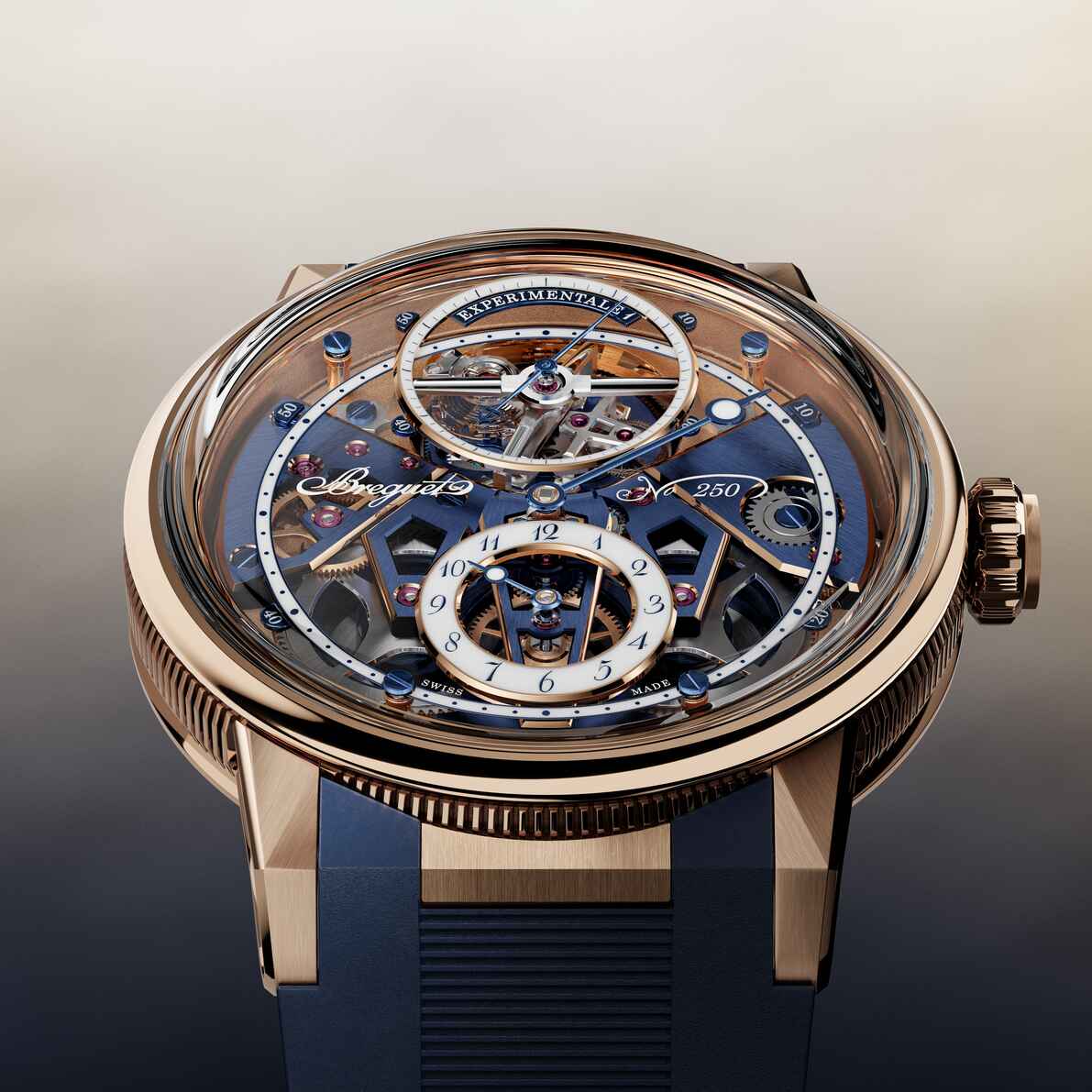
Breguet creates the first contact-free escapement in a watch with historical references
To kick off the promising Expérimentale parallel collection, Breguet presents a watch with two key objectives. The first foundational one is to achieve the greatest precision possible, and the second is to forge a meaningful link between heritage and the future. The Expérimentale 1 is both contemporary and traditional. The sporty 43.5mm Breguet gold Marine case, with its closely set central lugs, an interchangeable rubber strap (a first for the line), and attention to legibility — heightened here by fully luminescent indications — is a contemporary creation.
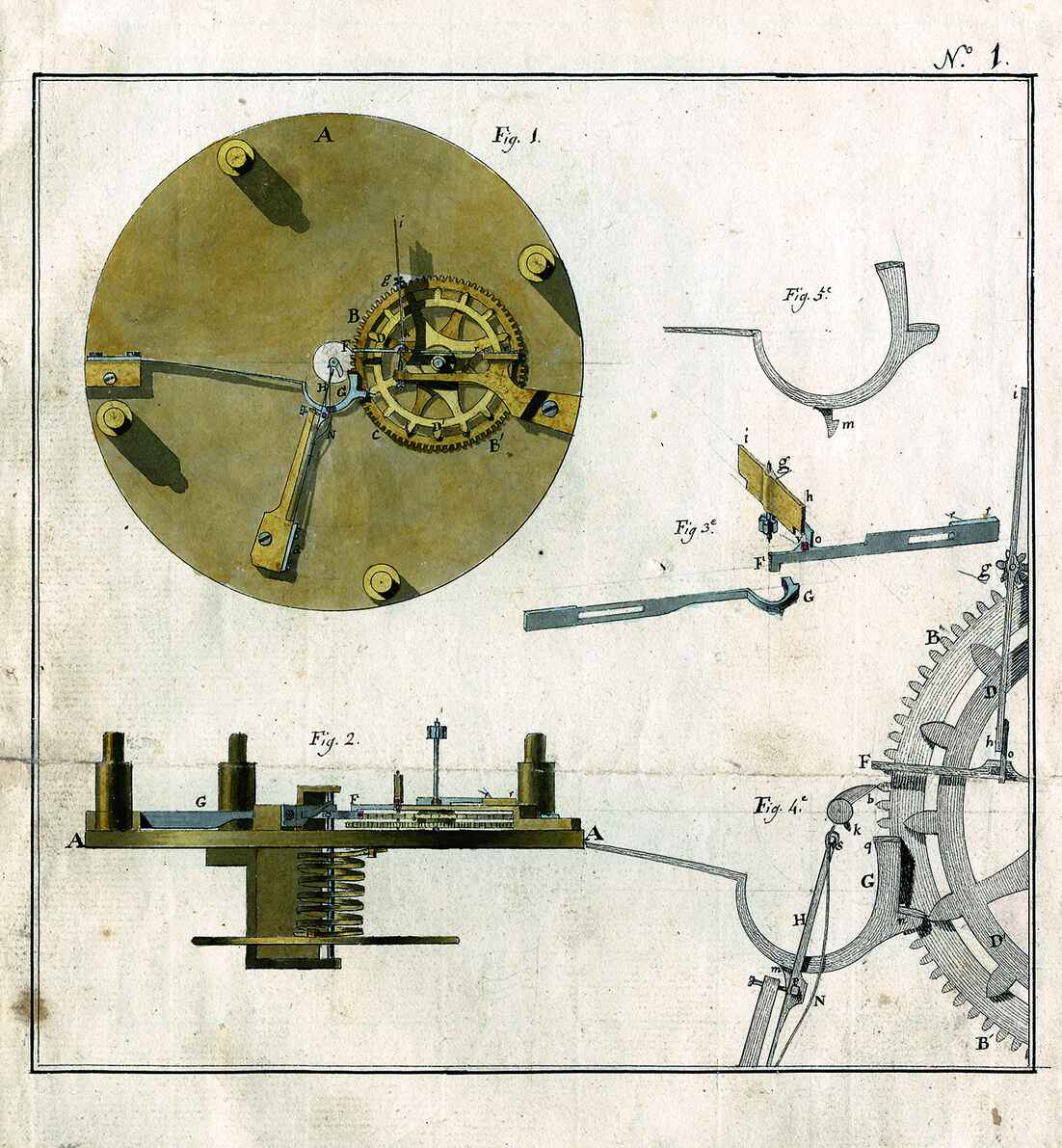
An old Breguet constant-force escapement
However, the watch echoes the design language of Breguet’s No. 3448 pocket watch, particularly in its dial layout and movement architecture. The watch also tracks back to Abraham-Louis Breguet’s original Marine Chronometer No. 104. At the time of its creation, the master watchmaker was living in exile from a France engulfed in revolution, working from a temporary workshop he had established in Le Locle.
No. 104 stands as Breguet’s earliest known marine chronometer — just as the Expérimentale 1 marks the brand’s first dedicated R&D model. It was also the first Breguet timepiece to feature Arabic numerals, a rarity for that era and a detail that the Expérimentale 1 shares.
The quest for precision
To reach ultimate precision, three challenges face the watchmaker. The first is maintaining consistent balance amplitude. The balance depends on the torque that naturally diminishes as the power reserve winds down. As a result, achieving constant amplitude becomes inherently difficult when the supplied energy fluctuates. The second variable is the influence of Earth’s gravity, which affects the entire regulating organ, the balance and hairspring, and thereby alters its performance. The third factor is shock resistance. Every shock and abrupt motion disrupts the watch’s rate, ultimately compromising its precision.
Breguet has one solution to the three challenges — a 10Hz tourbillon paired with a magnetic constant-force escapement. It’s easier said than done, but it already sounds plausible. Magnetism ensures a stable impulse to the balance across the entire power reserve. At the same time, it decouples the impulse function from the rotation of the escape wheel, the tourbillon cage, and the rest of the gear train. A high frequency allows the balance to recover its normal amplitude more quickly after any shock or disturbance. Meanwhile, the tourbillon completes a full rotation every 60 seconds, naturally averaging out the rate variations caused by gravity.
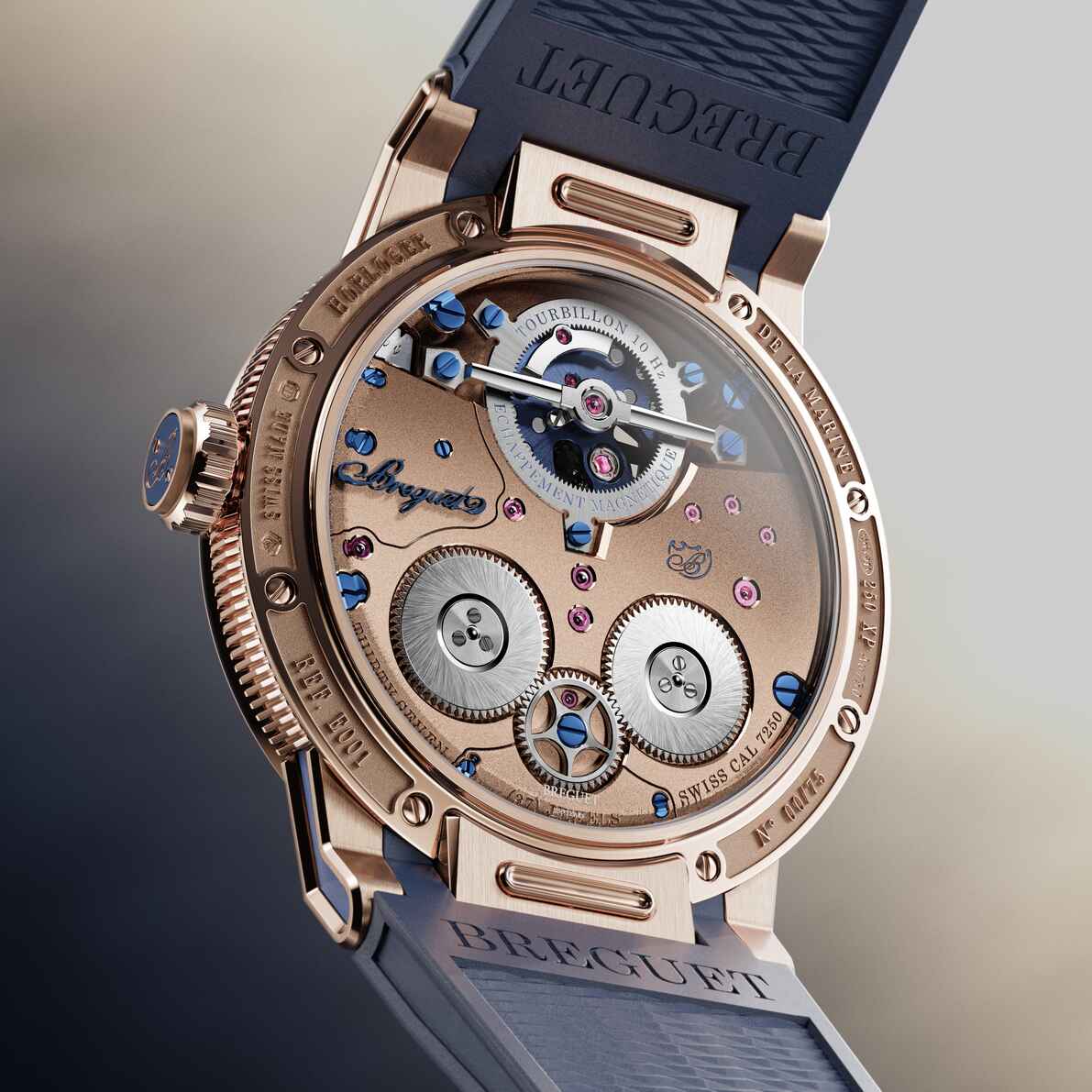
Magnetism in a mechanical watch?!
Magnets and mechanical movements don’t mix well; it’s basic knowledge. Still, Breguet has dabbled with magnetism before. Since the early 2010s, in fact, the brand has been actively exploring the use of magnetic fields in a movement. The goal was, and still is, to generate a precisely controlled magnetic field and carefully calibrated interactions. The recently released Classique 7225 features the manual-winding caliber 74SC, which operates at a 10Hz frequency (72,000 vph) and has an accuracy of ±1 second per day. It utilizes a magnetic pivot for the balance staff to minimize friction and achieve a higher frequency.
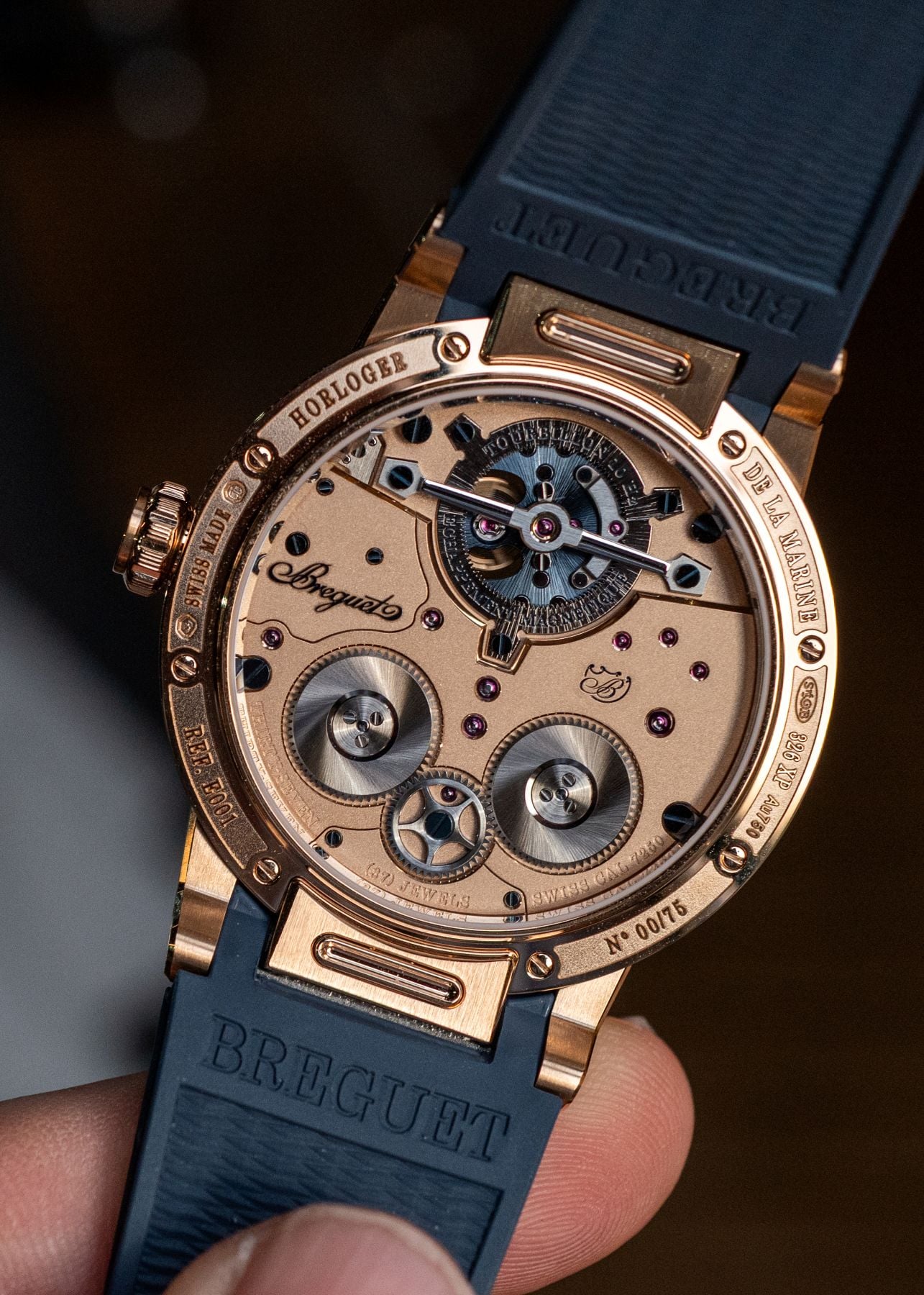
In the new Expérimentale 1, there are two escape wheels, each fitted with a magnetic track, working with a lever with magnetized pallets. The concept draws inspiration from constant-force escapements. When torque falls below a certain threshold, the tourbillon stops almost immediately. And when it exceeds that threshold, the balance oscillates at full amplitude.
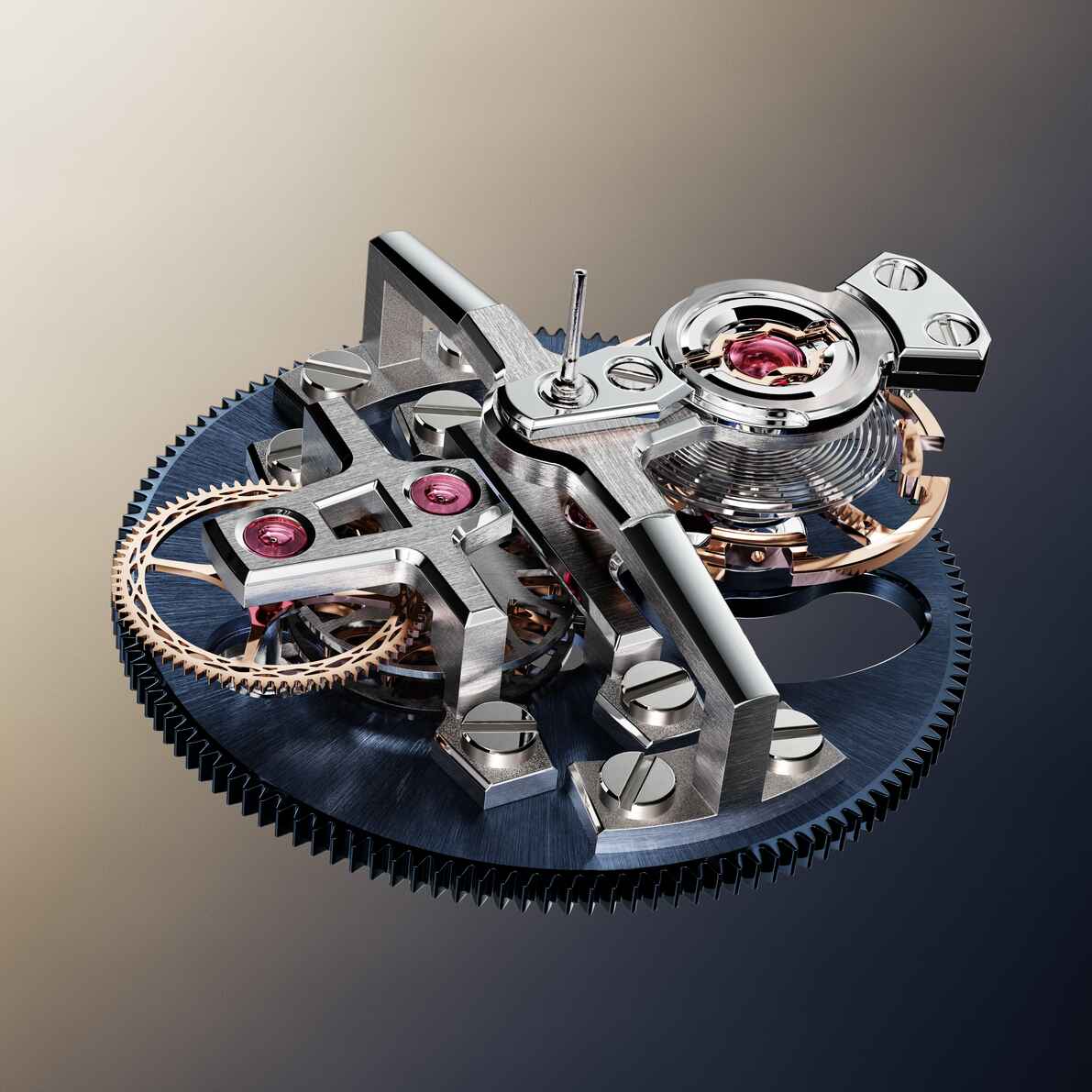
Large but fast
Because of the new escapement architecture, the impulses delivered to the balance are fully decoupled from the escape wheel’s rotation and, therefore, from the entire gear train. Unlike in a Swiss lever system, the inertia of the tourbillon cage has virtually no effect. By separating these functions, Breguet has successfully created an unusually large 10Hz tourbillon. And at the same time, it opens the door to new design possibilities — such as offsetting the balance from the cage’s central axis. Breguet claims that the 10Hz tourbillon with magnetic escapement is more stable and precise than the majority of contemporary wristwatches. Very sure of itself, the brand certifies the Expérimentale 1 under the Breguet hallmark in the “Scientific” category, guaranteeing an accuracy of ±1 second over 24 hours.
A closer examination of the escapement inside the hand-winding caliber 7250 reveals a distinct design. Positioned between the two escape wheels — each featuring a magnetic track — an intermediate stop wheel prevents any unintended jumps. Most of the tourbillon’s components are made from non-magnetic materials to avoid disruptive interactions. The balance spring is crafted from silicon, the fixed fourth wheel from LIGA (NiP12), and the remaining components from titanium or Nivagauss.
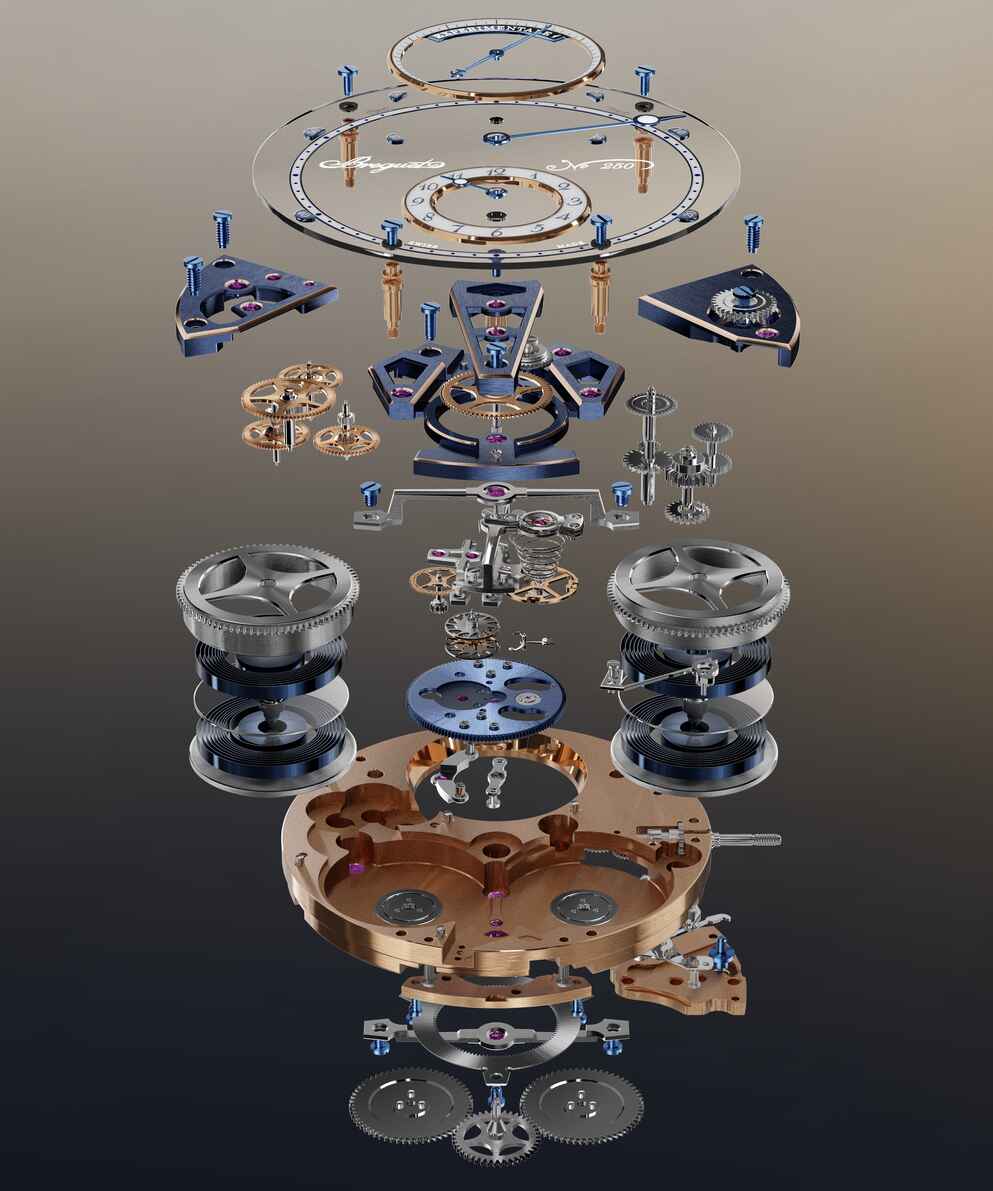
Price and details of the Breguet Expérimetale 1
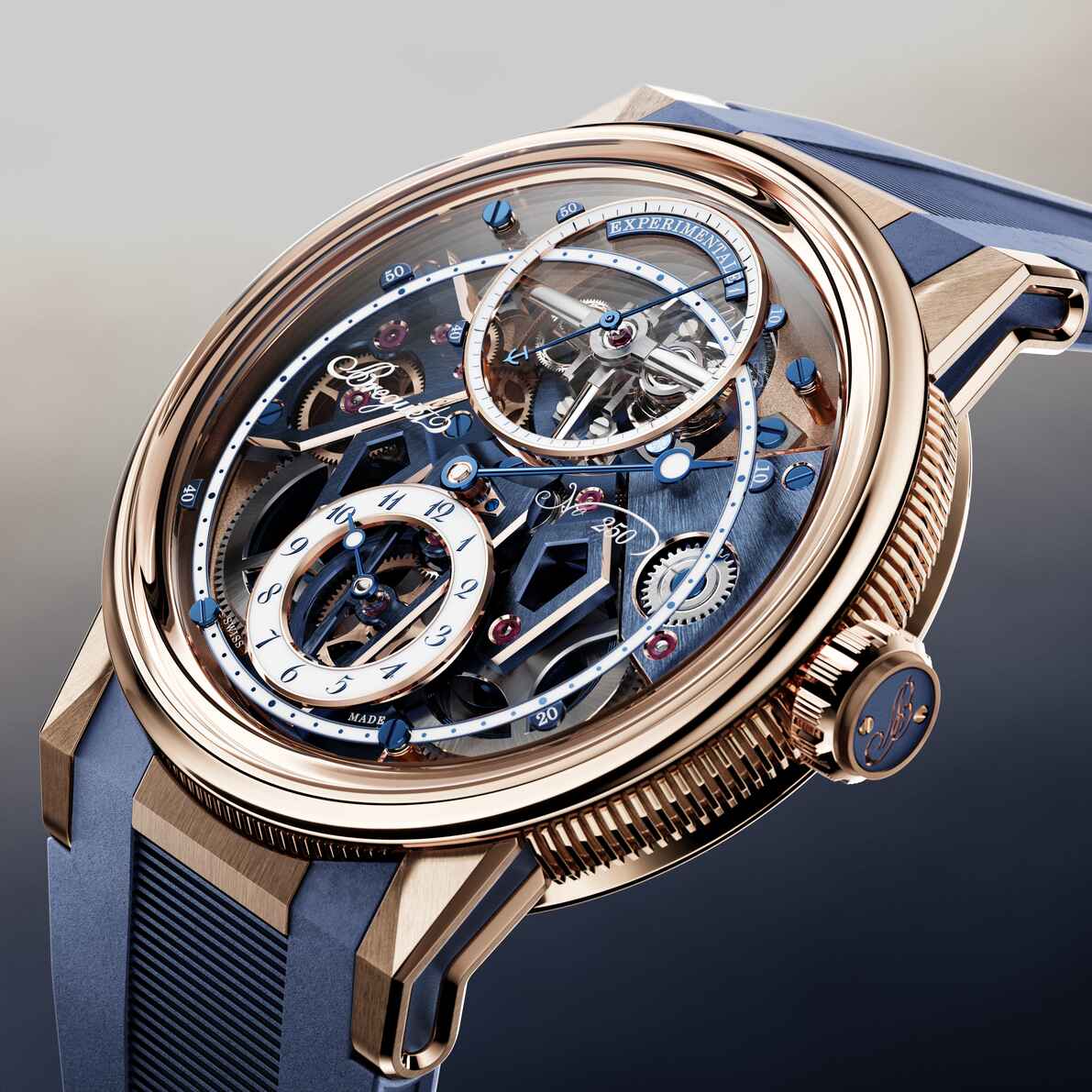
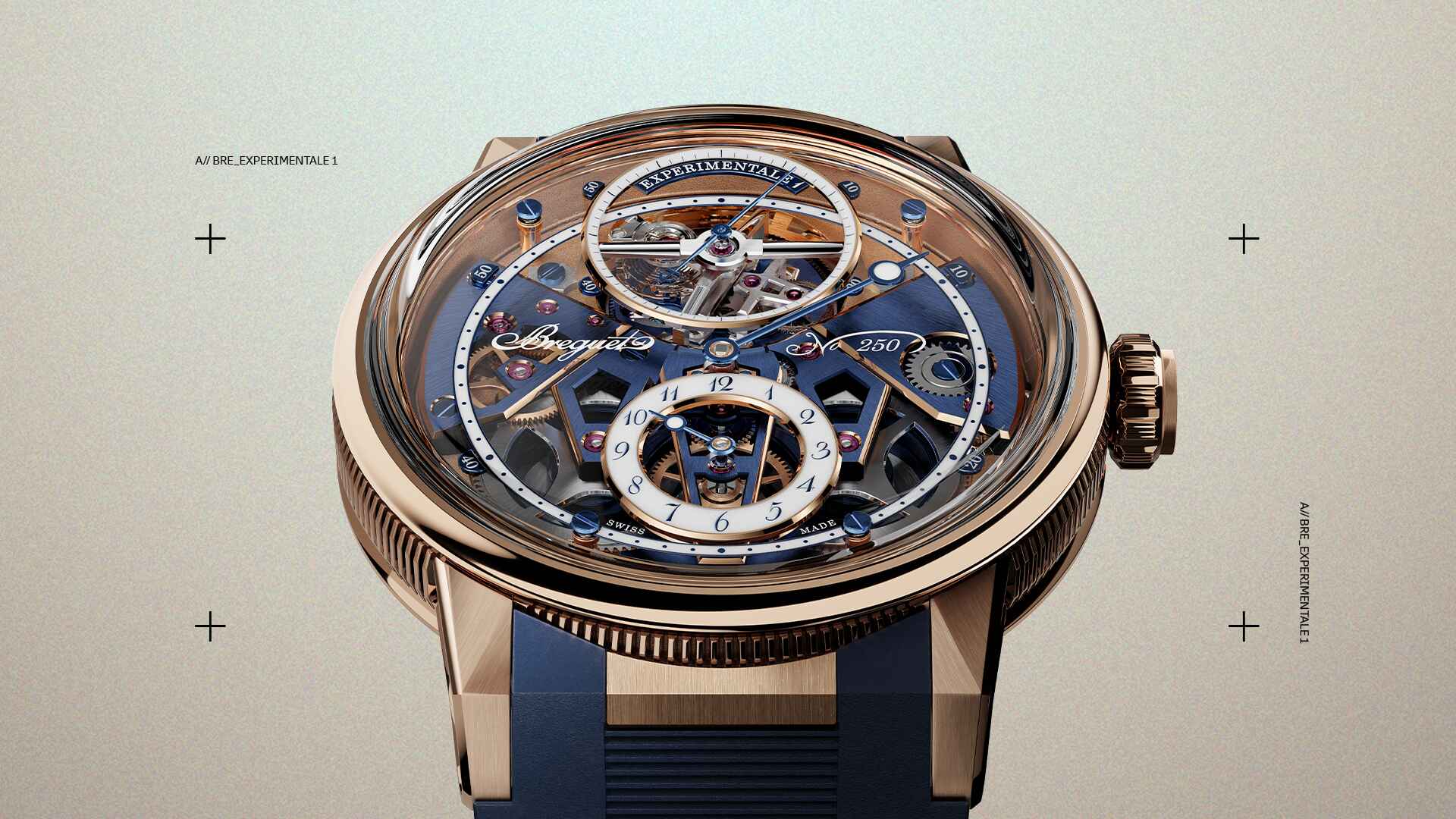
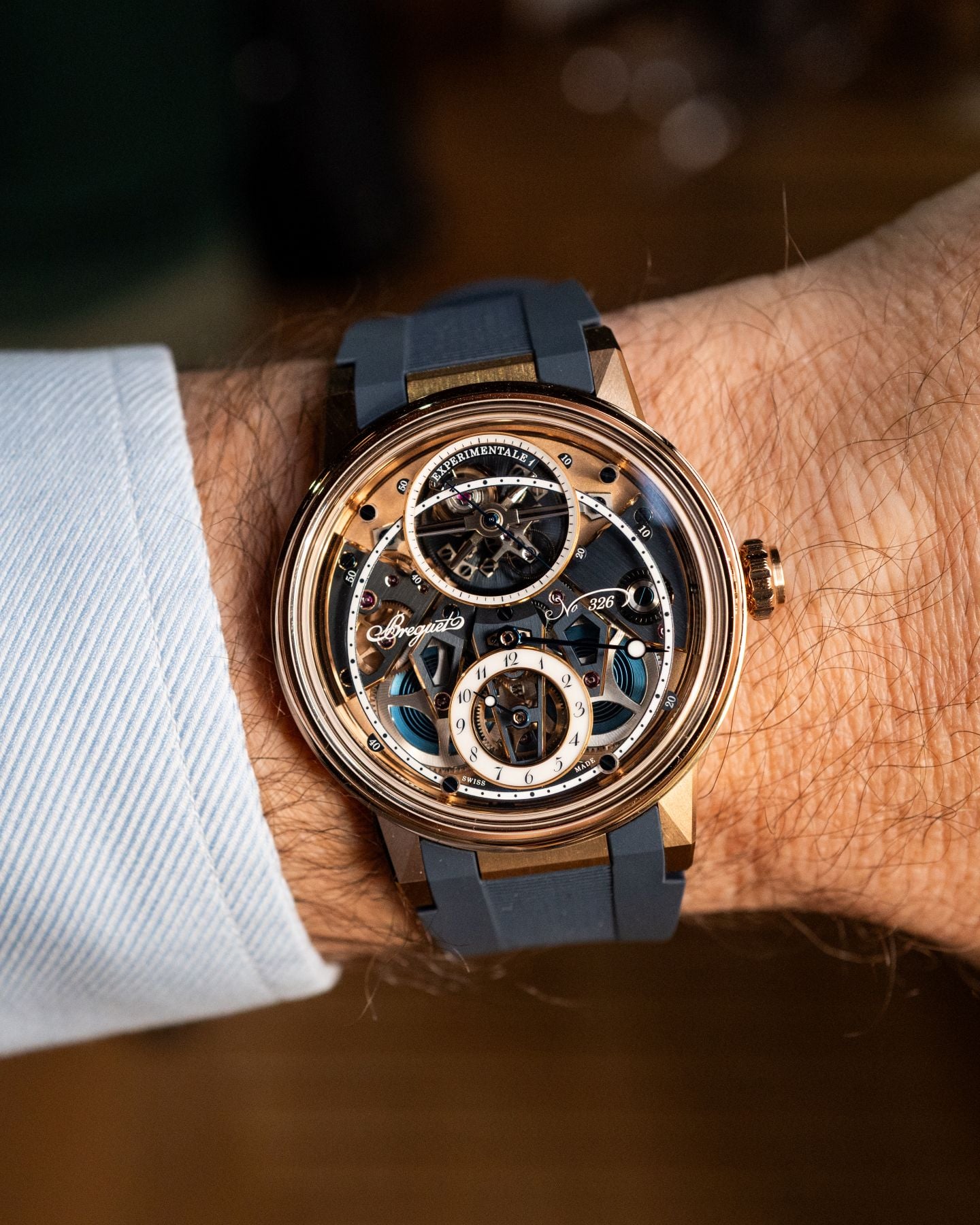
If you want to own this piece of watchmaking innovation and history, you’ll need to be willing to pay CHF 320,000, including taxes. Apart from the watch’s breakthrough technology, you also get an exuberant creation for your money. The Expérimentale 1 features a 43.5 × 13.3mm Breguet gold Marine case. The reinterpreted regulator-style display and symmetrical movement visually pop thanks to a modern, fully open construction. A sapphire dial reveals the entire movement, which displays the hours at 6 o’clock, the minutes around the perimeter with a slightly offset hand, and the seconds integrated into the tourbillon at 12 o’clock. This is a layout that Abraham-Louis Breguet favored for its clarity and precision.
The watch features a patented twin-barrel system with two series-coupled levels. Each is composed of a double spring separated by a sapphire spacer. They appear on either side of the hour sub-dial. This setup optimizes both space and energy delivery.
Very Breguet
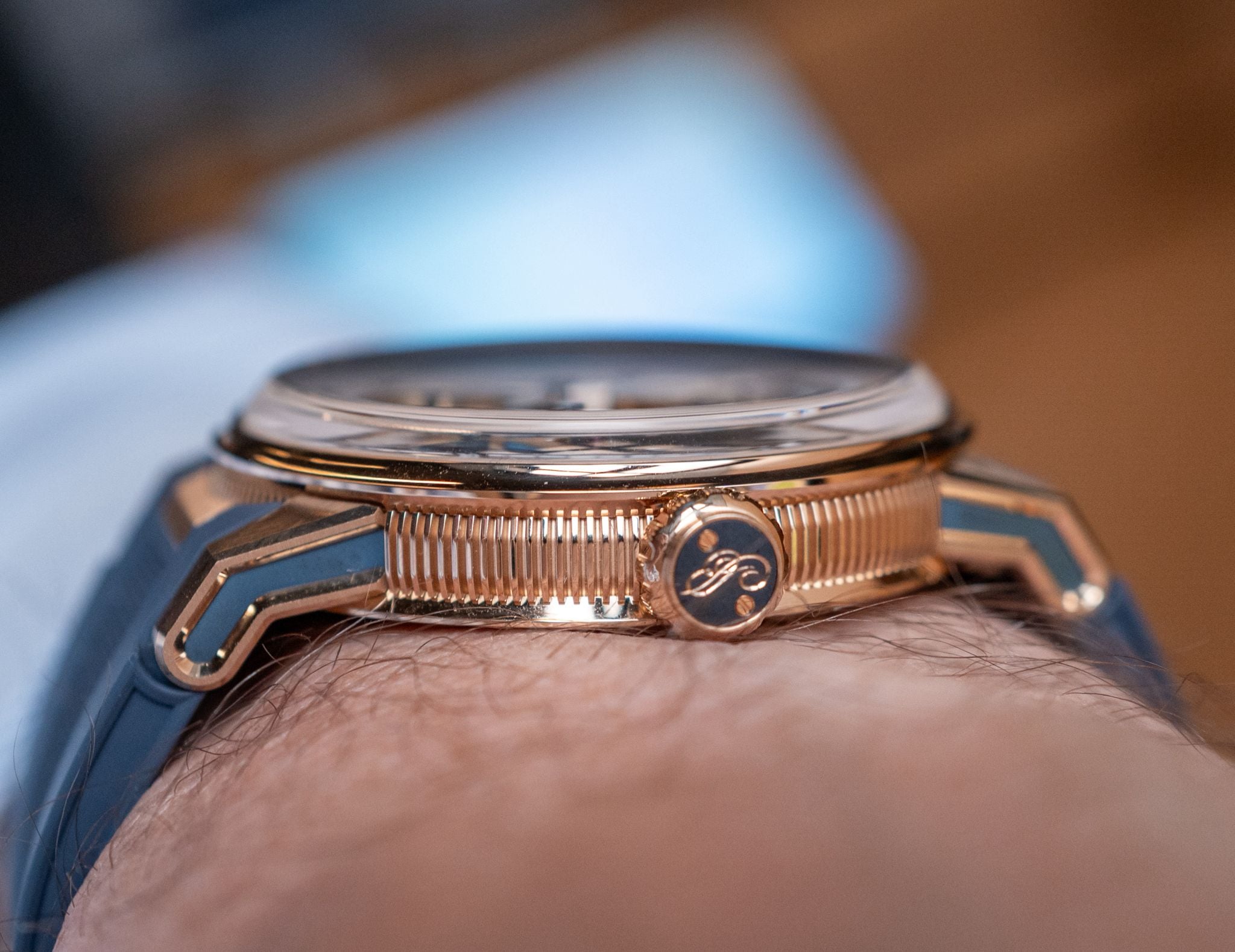
Traditional Breguet signatures remain, including the double-stepped fluted case band, six close-set lugs with alternating finishes, ALD-treated blue gold inlays, blue open-tipped hands with Super-LumiNova, a secret signature on the sapphire dial, and Breguet numerals. However, the aesthetic language is new. The solid-gold bridges feature sharp lines, satin-brushed surfaces, and polished angles. The bridges’ distinctive dark blue coating adds contrast. The sapphire dial sits on four gold pillars and displays the time via three linked, luminescent circles. A large peripheral minute track frames the lower half of the dial, while the tourbillon turns at 12 o’clock, straddling the minute scale.
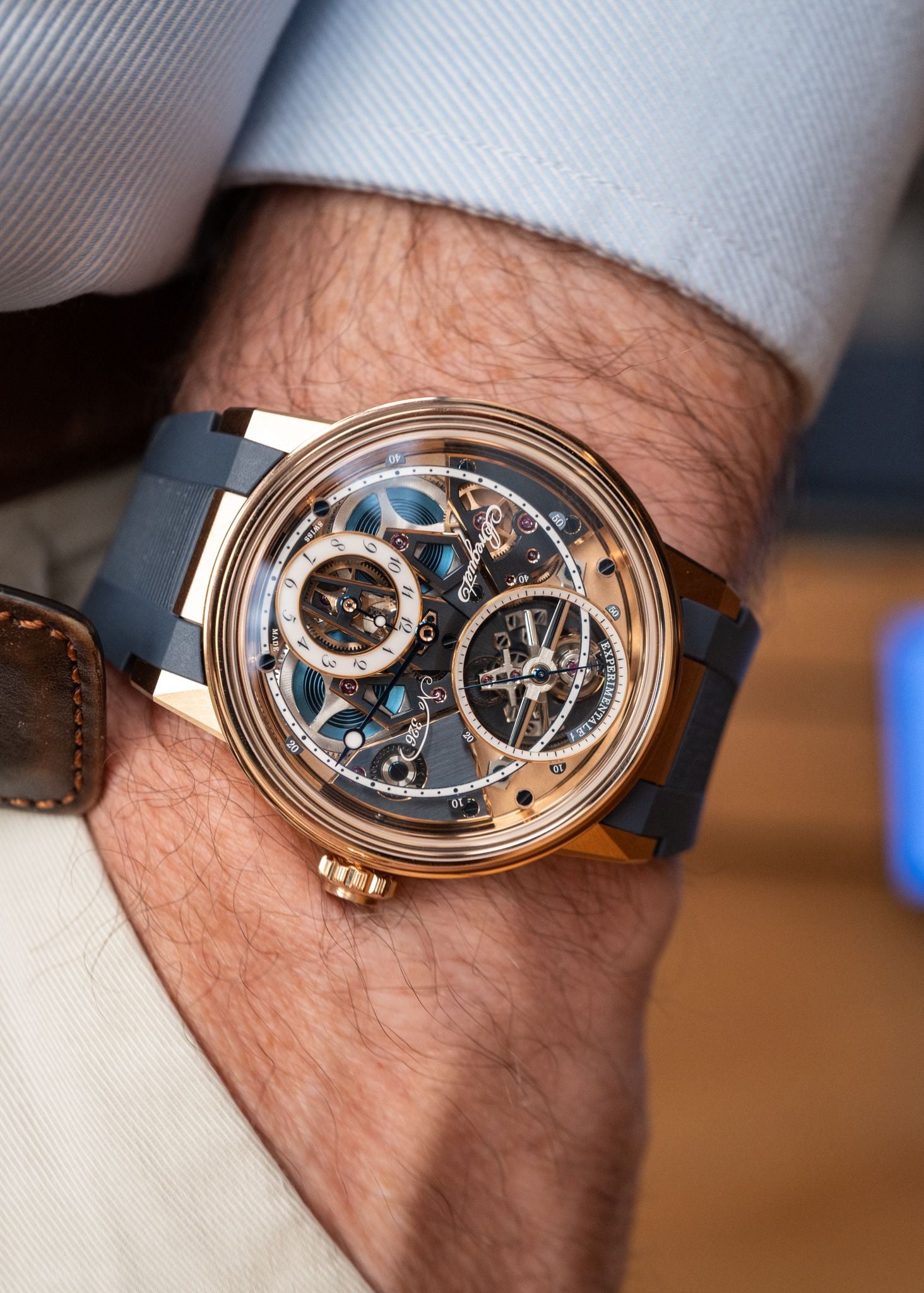
Positioned just above the Breguet gold mainplate, the “Expérimentale 1” designation crowns the entire composition. It draws attention to this watch’s technical centerpiece, its 10Hz tourbillon with a magnetic constant-force escapement.
Now, tell me, are you not impressed? I know I am. The magnetic constant-force escapement is an invention that deserves universal praise. You can argue about the watch’s appearance, but the technology takes its rightful place in watchmaking history.