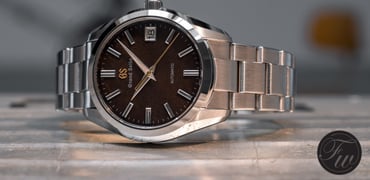
Five Tuxedo-Dial Watches To Bring That 20th-Century Charm Back

There’s something about a tuxedo dial that always gets under my skin. That high-contrast, black-and-white look — usually a dark perimeter surrounding a lighter center — evokes more than legibility; it conjures an entire era of design. Think black-tie parties, cocktail hours, and the sort of aesthetic self-assurance only true contrast can deliver. In the 20th century, this wasn’t just a dial design; it was a visual shorthand for elegance itself.
I’m starting to see it everywhere again, from classic dress watches to surprisingly versatile tool watches. That resurgence feels meaningful rather than nostalgic, so I wanted to spend some time with five modern interpretations of the tuxedo dial and reflect on why this particular design language is finding its way back onto wrists.
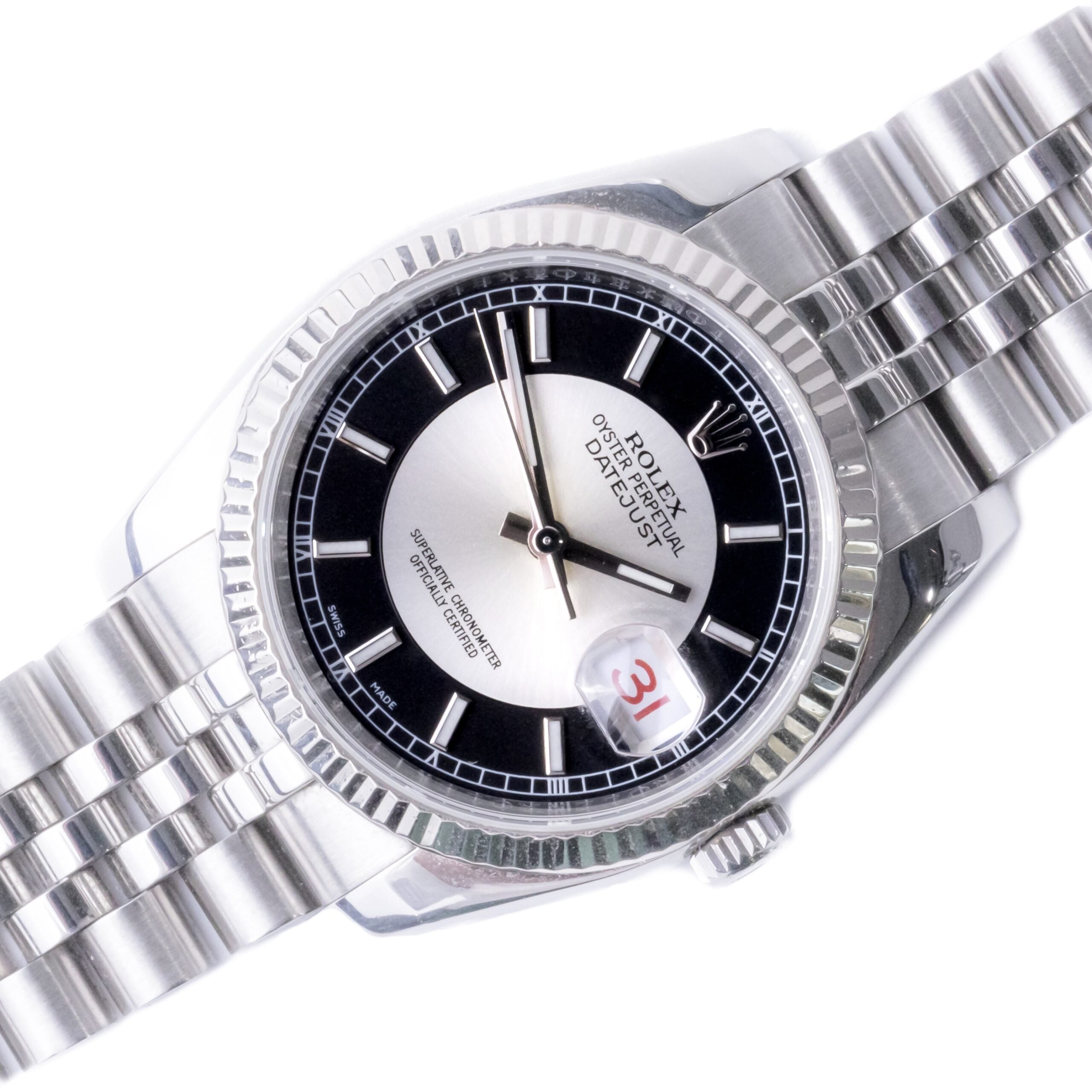
Image: Langedyk Vintage Watches
The Rolex Datejust with a tuxedo dial
I’ll start with a watch that has quietly become a cult favorite among collectors, the Rolex Datejust with a tuxedo dial. On paper, the Datejust is one of the most familiar watches in existence. It’s reliable, versatile, and almost universally recognized. But introduce a tuxedo dial — typically a silver or light center with a black outer ring — and the watch suddenly takes on an entirely different character. The contrast gives the dial depth and rhythm, making the hour markers and hands pop in a way a standard monochrome Datejust never quite does.
What I love most about this configuration is its dual personality. It’s unmistakably a Rolex Datejust, but it feels more playful, almost mischievous, as if it’s bending the rules of a very established formula. On the wrist, it works just as well with a suit as it does with jeans and a jumper, which is perhaps why these dials have developed such a devoted following. They’re no longer in regular production, and that scarcity has only amplified their appeal. This is classic Rolex design but with a wink.
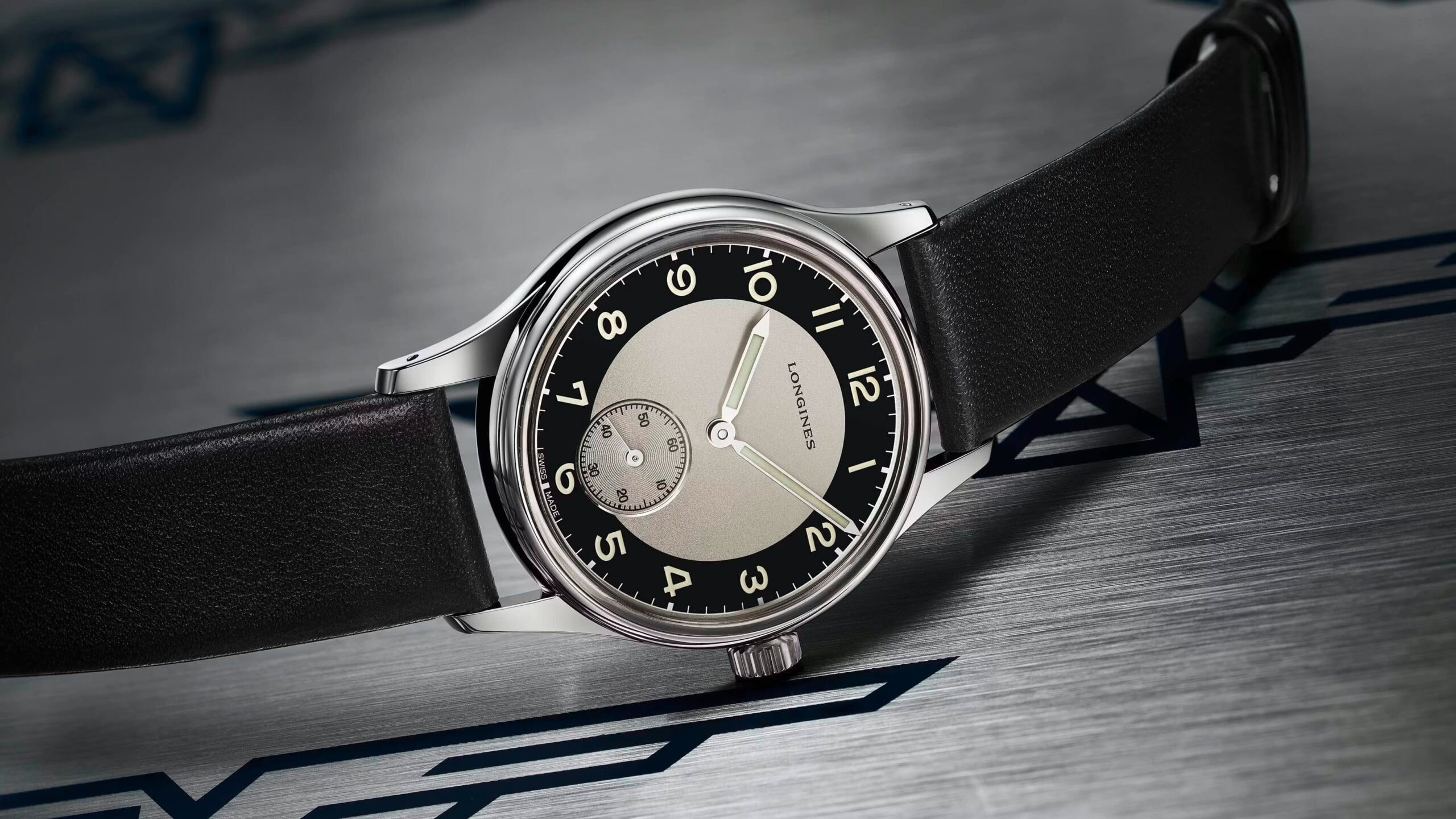
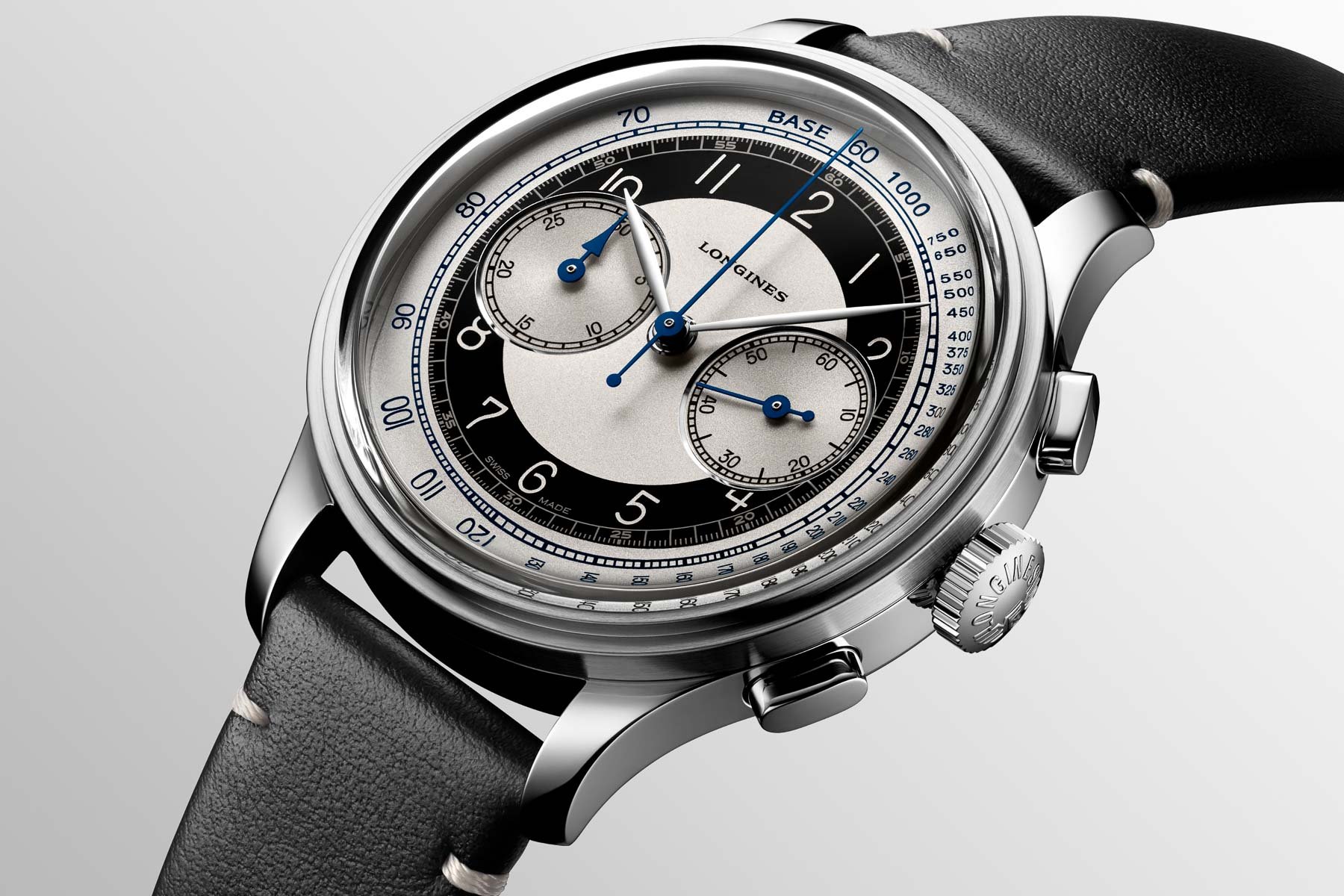
The Longines Heritage Classic “Tuxedo”
If the Rolex represents tuxedo dials as a subtle rebellion, the Longines Heritage Classic “Tuxedo” feels like an act of reverence. Longines has been mining its archives with increasing confidence over the past few years, and this watch is one of the strongest results. The design draws directly from mid-20th-century pieces, when contrast dials weren’t stylistic flourishes but practical solutions for legibility. I once owned the sector-dial Longines Heritage Classic and can personally attest to the brand’s attention to detail with this vintage reissue.
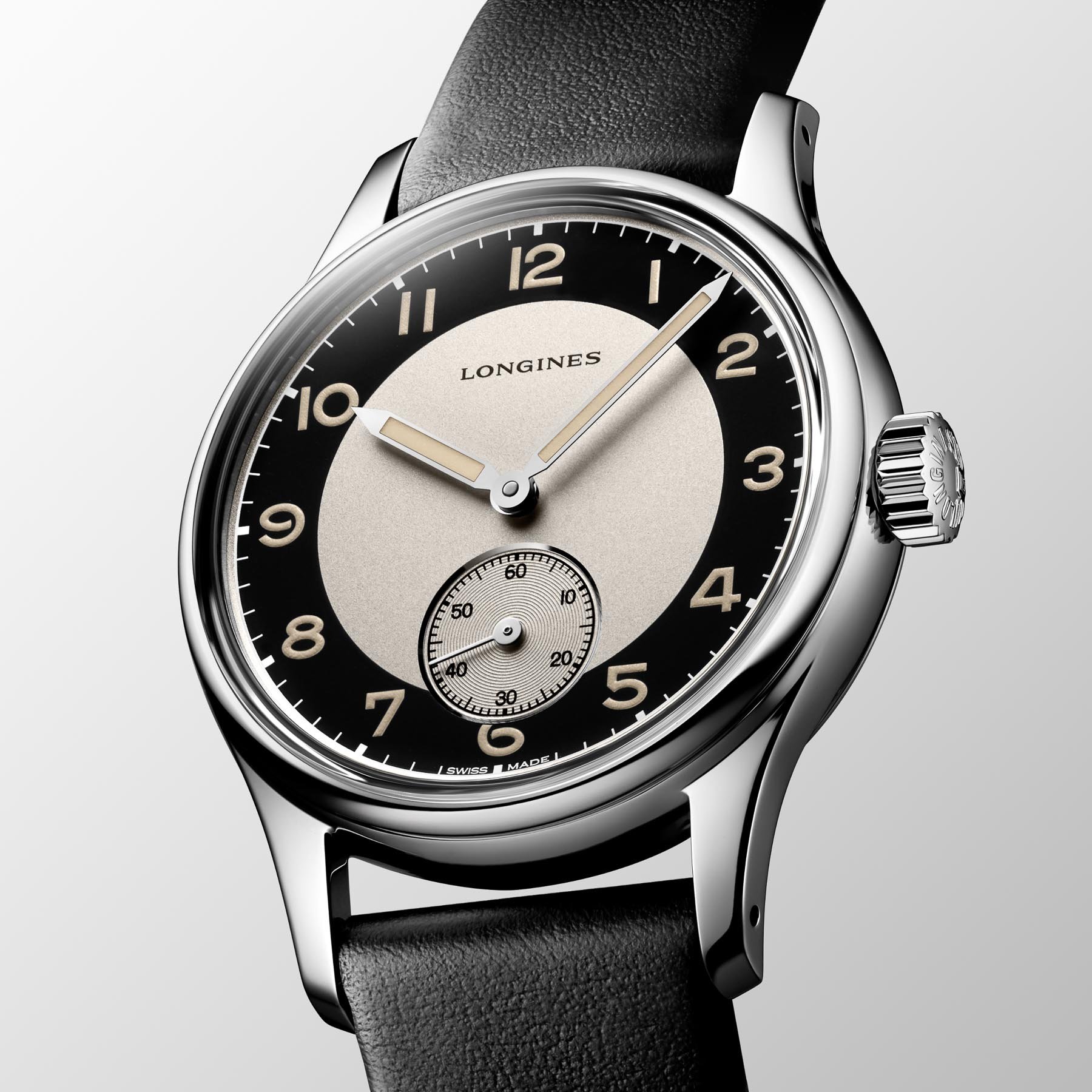
Here, the silver opaline center is framed by a deep black outer ring with vintage-style Arabic numerals and a sub-seconds register at 6 o’clock. The proportions are calm and deliberate, and everything feels as though it belongs exactly where it is. There’s no unnecessary drama, just balance. On the wrist, the watch feels unmistakably vintage yet not like a costume. Modern manufacturing and a contemporary automatic movement keep it firmly grounded in the present. What this Longines does so well is remind us that tuxedo dials were once the norm rather than the exception. They existed because they worked and looked good doing so. In revisiting that formula, Longines hasn’t simply recreated an old watch; the brand has reintroduced a design philosophy that prioritizes clarity and elegance in equal measure.
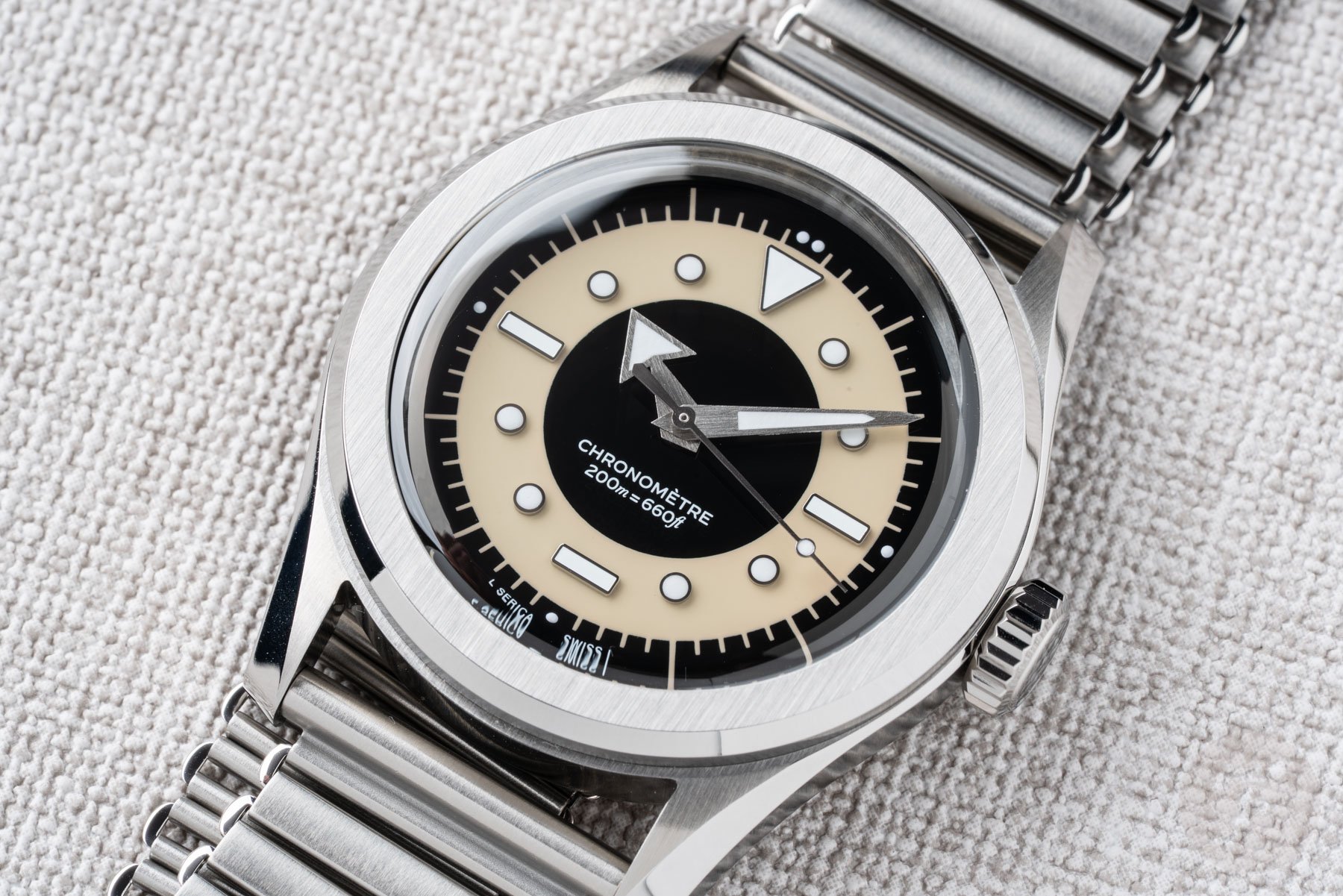
The Serica 6190 TXD
Serica approaches the tuxedo dial from an entirely different angle. The 6190 TXD is, at heart, a field watch — compact, robust, and driven by precision. With this version, however, Serica has layered on a level of refinement that feels unexpected but completely natural. The glossy black center and lighter ring for the hour markers give the dial a sense of depth that you don’t often see in this category, while still retaining excellent legibility.
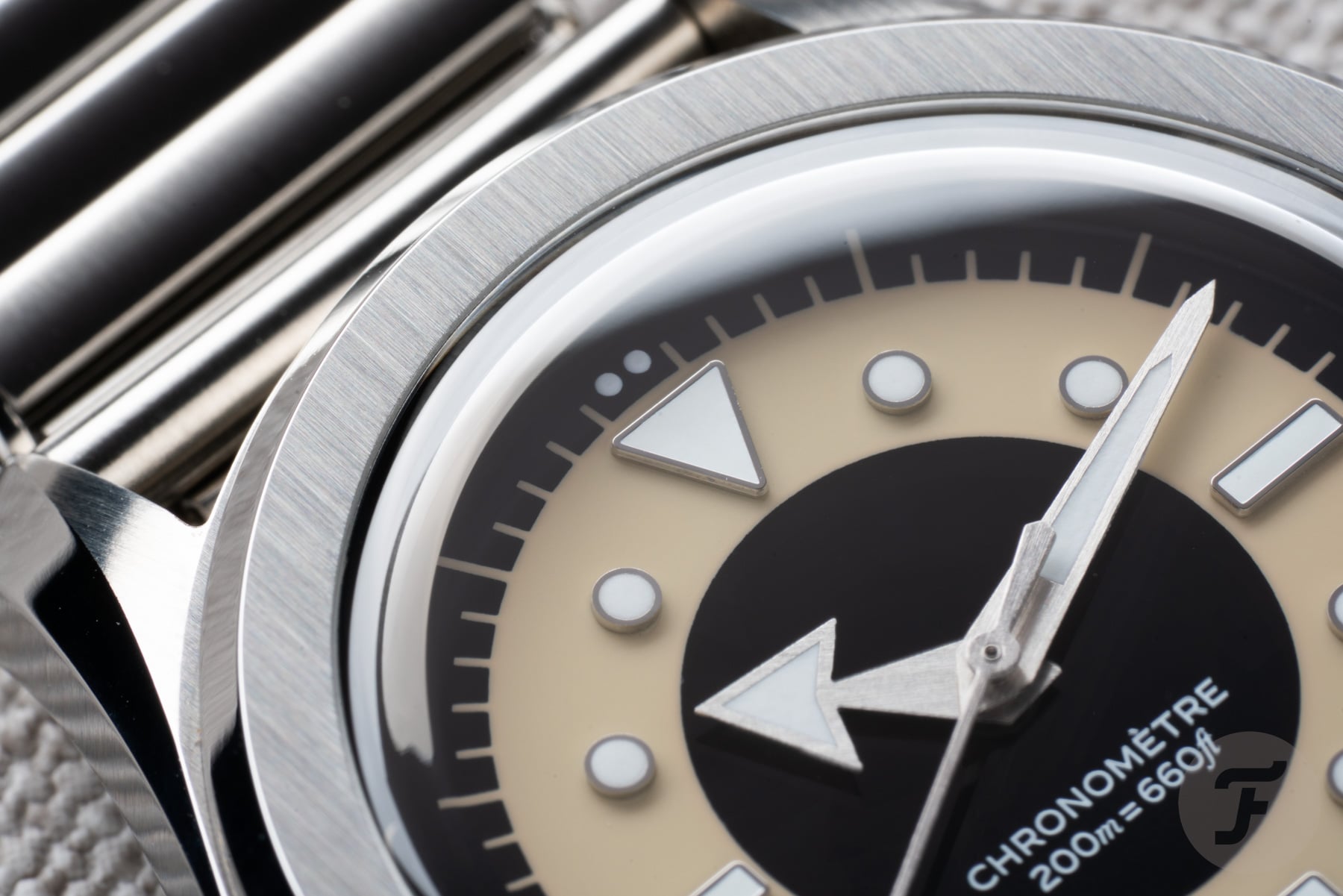
What fascinates me about the Serica is how confidently it blurs boundaries. Despite the dressier dial treatment, the 6190 TXD remains a genuinely capable watch, with strong water resistance and a chronometer-certified movement. It doesn’t feel like a dress watch pretending to be sporty or vice versa. Instead, it feels like a modern interpretation of what a watch can be when aesthetics and function aren’t treated as opposing forces. In many ways, this watch captures the current moment in watchmaking. Enthusiasts want versatility, but they also want personality. The tuxedo dial gives this offering from Serica that personality, adding a layer of charm and elegance to a watch that would otherwise be purely utilitarian.
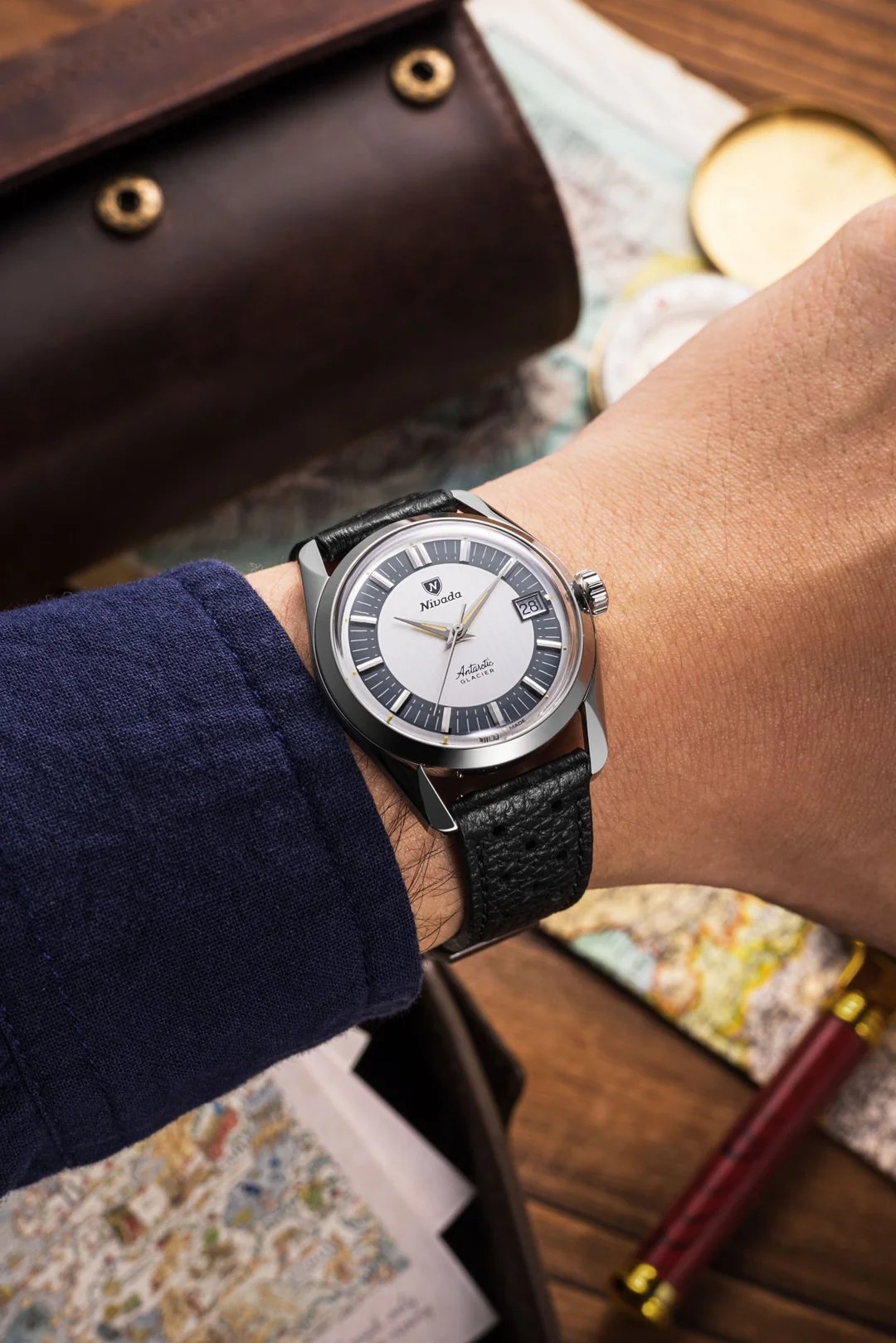
The Nivada Grenchen Antarctic Glacier 35mm
The Antarctic Glacier from Nivada Grenchen brings yet another dimension to the conversation. This watch draws its inspiration from exploration and endurance, yet the tuxedo dial introduces a surprising sense of refinement. In the 35mm case, the vertically brushed silver center contrasts beautifully with the darker outer ring, creating a dial that feels both restrained and expressive.
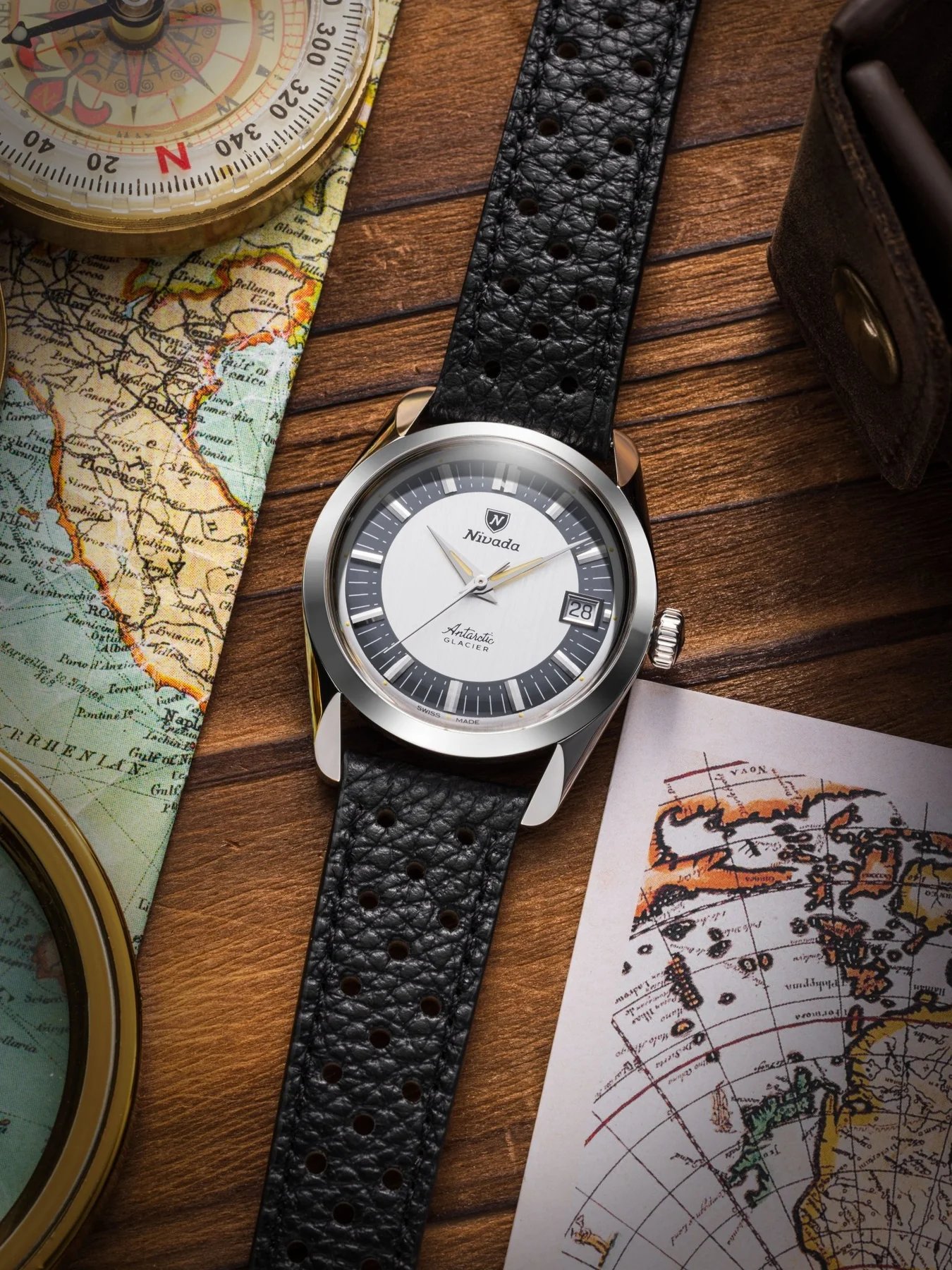
There’s a quiet confidence to this design. It doesn’t shout for attention, but it rewards closer inspection. The size feels true to its mid-century roots, and the manual-winding movement reinforces that sense of connection to an earlier era. Despite its polar-inspired backstory, the Antarctic Glacier 35mm doesn’t feel out of place in everyday settings. In fact, the tuxedo dial may be what makes it so adaptable, elevating the watch beyond its tool-watch origins. This piece reminds me that tuxedo dials were never limited to formal watches. Historically, they appeared across chronographs, sports watches, and even early exploration pieces. Seeing that tradition revived here feels authentic rather than contrived.
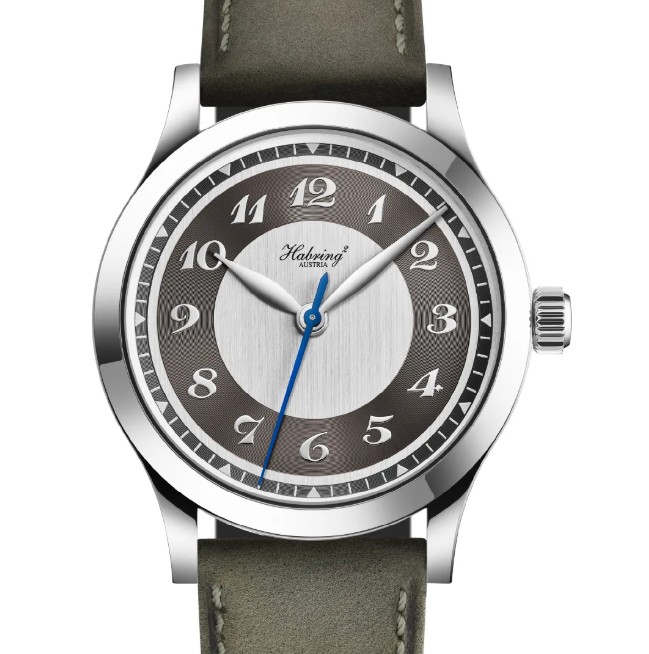
The Habring² Erwin with a tuxedo dial
Finally, there’s this tuxedo-dial Habring² Erwin, the watch that represents the most artisanal expression of this design language among the five. Habring² is known for its no-nonsense approach to independent watchmaking, focusing on mechanical integrity and thoughtful design rather than flashy aesthetics. The tuxedo dial inside the Erwin fits perfectly within that philosophy.
The contrast here is more subdued, playing with shades of silver and gray rather than stark black and white. Matched with Breguet numerals and leaf-shaped hands, the dial feels classical without drifting into pastiche. What truly elevates the watch, though, is the movement inside. A hand-wound caliber with a deadbeat seconds gives the Habring² Erwin a tactile, engaging quality that’s becoming increasingly rare.
This is a watch that rewards patience and attention. It doesn’t rely on brand recognition or bold styling. Instead, it leans on proportion, craftsmanship, and the enduring appeal of a well-executed contrast dial. For me, it’s one of the most convincing modern arguments for why tuxedo dials still matter.
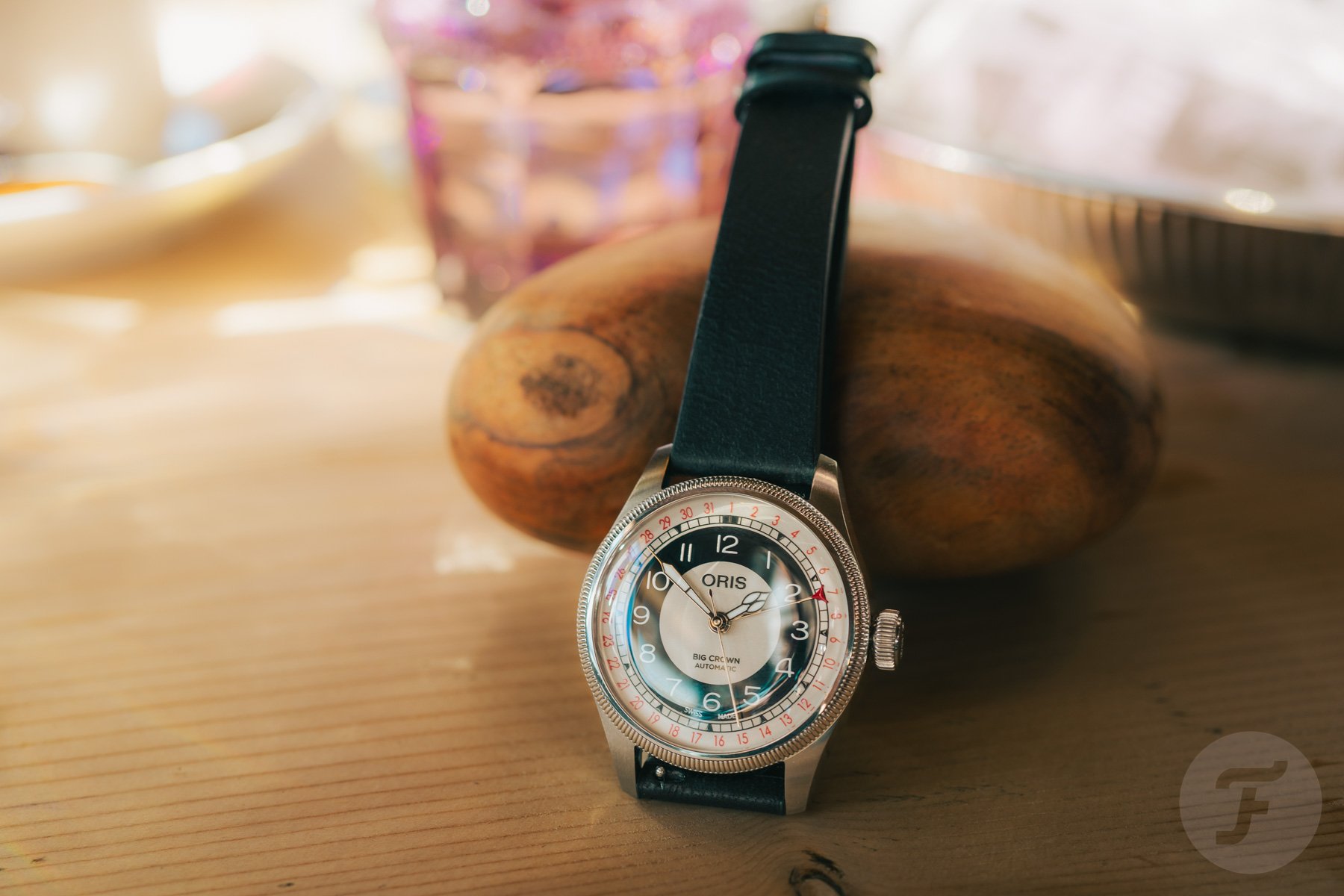
A bonus: the Oris Big Crown Pointer Date Bullseye
An interesting addendum to the tuxedo-dial conversation is the latest Big Crown Point Date from Oris. The brand has revived a striking historic motif with its new Bullseye model. This watch reintroduces a two-tone, target-like dial design that long-time fans may recognize from the brand’s past but that hasn’t been in the catalog for decades. While Oris refers to it as a “bullseye” rather than a “tuxedo,” the visual language is closely related. High-contrast concentric zones and a strong sense of graphic balance place it firmly in the same design family.
The 38mm stainless steel case is classic Big Crown fare, with an oversized fluted crown designed for easy operation and a domed sapphire crystal that adds warmth and distortion at the edges. The dial is where the magic happens. Multiple concentric rings create a layered effect — a light outer ring with a red date scale, a fine railroad minute track, a bold black chapter ring with crisp white Arabic numerals, and a lighter central section that completes the bullseye effect.
The result is a dial that feels both playful and purposeful, with excellent legibility from every angle. Cathedral-style hands filled with luminous material reinforce the watch’s vintage pilot roots while adding visual weight to the center of the dial. The red-tipped date pointer sweeps around the perimeter, injecting a flash of color that keeps the design from becoming too formal. It’s a reminder that contrast doesn’t have to be limited to black and white to be effective.
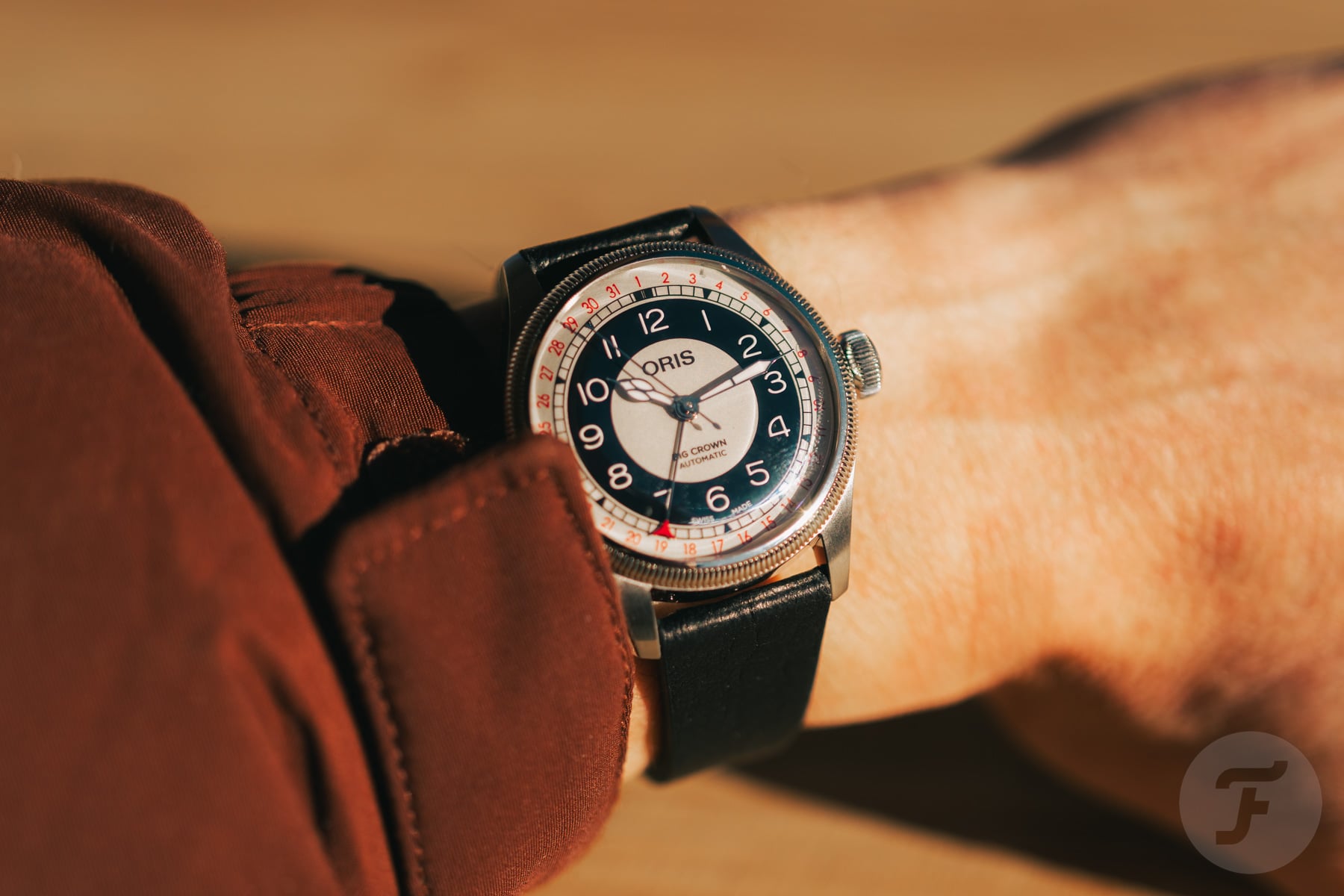
An attractive tuxedo-like dial design from Oris
Inside, the watch is powered by Oris’s caliber 754, an automatic movement with a central pointer date complication and a 41-hour power reserve. It’s a proven, robust caliber that suits the everyday nature of the watch perfectly. The case back’s sapphire display reveals Oris’s signature red rotor, a small but welcome touch of brand identity.
On the wrist, the Bullseye sits in a sweet spot between dressy and casual. It isn’t a formal watch in the traditional sense, but the strong contrast and structured dial give it an elegance that elevates it above a standard pilot’s watch. Paired with a simple black leather strap, it feels refined; swap to something more casual, and it leans effortlessly into its tool-watch heritage.
The Oris Big Crown Pointer Date Bullseye makes a compelling case for how the tuxedo-dial ethos continues to evolve. It shows that the appeal of high-contrast, carefully segmented dials isn’t limited to classic dress watches. Instead, it’s a design principle that can be adapted, reinterpreted, and refreshed, all while remaining instantly recognizable and deeply satisfying to wear.
Why tuxedo-dial watches are back
So, why are tuxedo dials making a comeback now? I think part of it comes down to fatigue. We’ve spent years immersed in monochrome sports watches, integrated bracelets, and subtle variations on familiar themes. Tuxedo dials offer contrast without excess. They’re visually interesting but not loud, distinctive without being divisive.
There’s also a renewed appreciation for design fundamentals. Collectors are paying closer attention to balance, legibility, and negative space. Tuxedo dials excel in all three areas. They guide the eye naturally, frame information clearly, and give a dial structure. In a market crowded with texture, color, and complication, that clarity feels refreshing. Finally, there’s an emotional component. Tuxedo dials connect us to a period when watches were tools, accessories, and expressions of taste all at once. They evoke cinema, travel, and a certain effortless elegance that transcends trends. Wearing one feels like tapping into that lineage, even if the watch itself is brand new.
Looking at these five (plus one) watches together, I’m convinced that the tuxedo dial isn’t just enjoying a moment. It’s reclaiming its place as one of watchmaking’s most enduring design codes. Whether executed by a major brand, a heritage revival, or an independent atelier, the appeal remains the same. Strong contrast, thoughtful proportion, and a sense of quiet confidence. For those of us who care as much about how a watch feels as how it functions, that combination is hard to resist.