Fratello’s Top 5 Watches Released In March 2026

Another Friday, another list! This week, we take a break from our lists of alternatives to focus on the best new watches from March 2026. The list is part of our series highlighting the best releases of this year. Technically, the first Friday of the next month was last week, but amid all the pre-Watches and Wonders craziness, we didn’t find the time to compile our list for March. That’s why we present it to you this week.
Before we jump into it, though, let’s look back for a moment. January started 2026 with a bang, but February was a little slower. Of course, it’s also a shorter month, but there weren’t many new watches that blew us away. March, however, was packed with releases from many brands. The variety was rather striking, as you will see reflected in our Top 5. To be clear, we didn’t just pick personal favorites but also watches that had an immediate impact on fans. That’s enough talk, though. Let’s find out what our five picks are.

Longines Hydroconquest
One of the biggest March releases was the Longines Hydroconquest. The third generation of Longines’s modern-looking dive watch saw several welcome updates that fans appreciated. Thomas did a hands-on introduction to the series and tried both the smaller and larger versions. The former has a 39 × 48.1 × 11.7mm case, while the latter features 42 × 51.2 × 11.7mm dimensions. Both watches have a 300m depth rating.
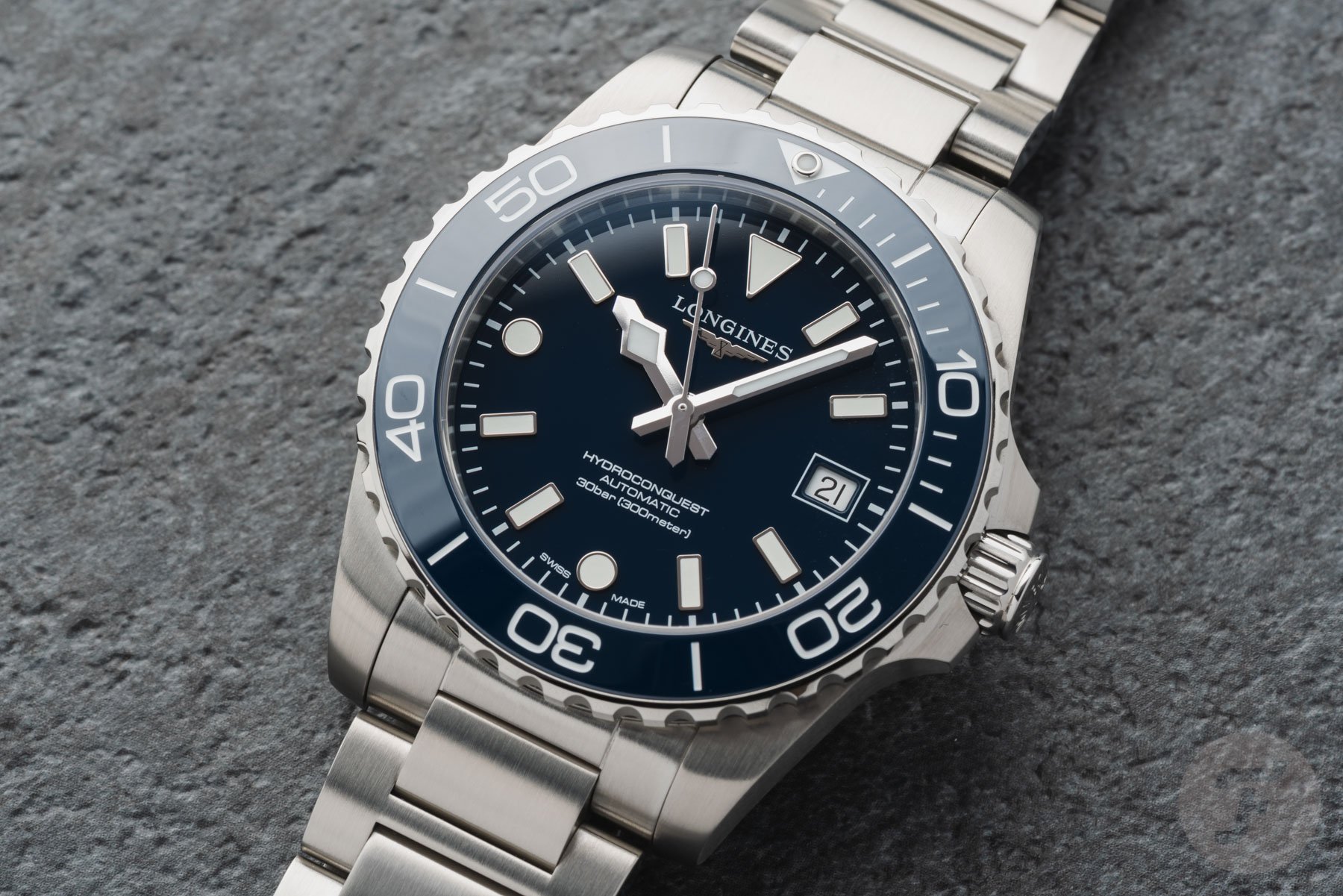
Longines released six dial colors and made the watches available on an H-link bracelet and a new mesh bracelet. The dial design is the biggest visual update, though. The new dials follow the design of the Hydroconquest GMT that has been in the Longines catalog for a few years. As Thomas remarked, the mix of rectangular and dotted markers looks a bit strange at first, but it’s rooted in the brand’s history. Longines used the same dial design for its Admiral divers in the 1990s, so there is a precedent for it.
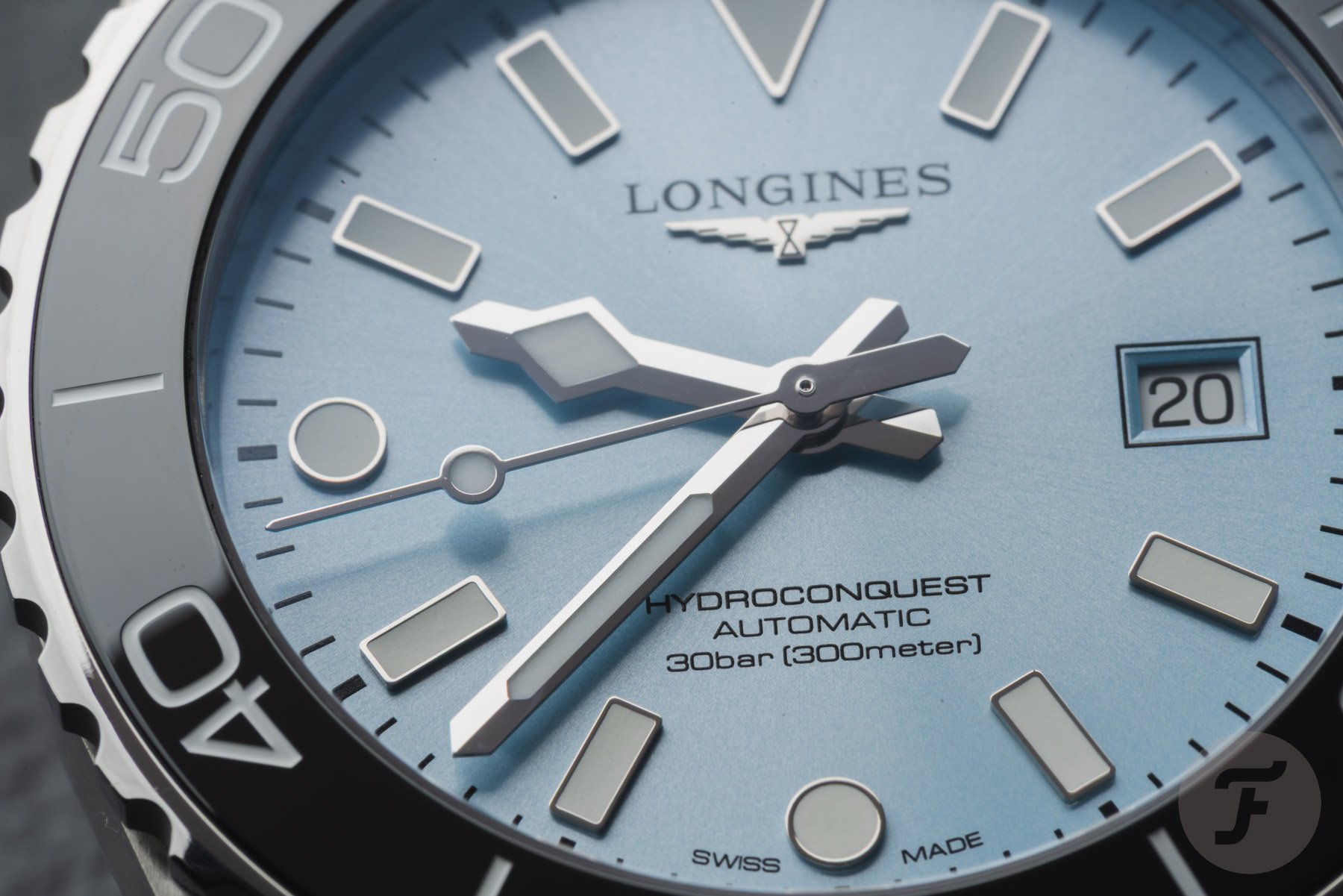
A great, modern, and affordable dive watch from Longines
Regardless of case size, inside lies the Longines L888.2. This automatic movement operates at 25,200 vibrations per hour and provides a 72-hour power reserve. Unlike the Zulu series, the calibers in Longines Hydroconquest watches are not COSC-certified chronometers, which helps keep the watches relatively affordable. On the H-link bracelet, they retail for €2,200, and if you prefer the mesh bracelet, the price is €2,300.
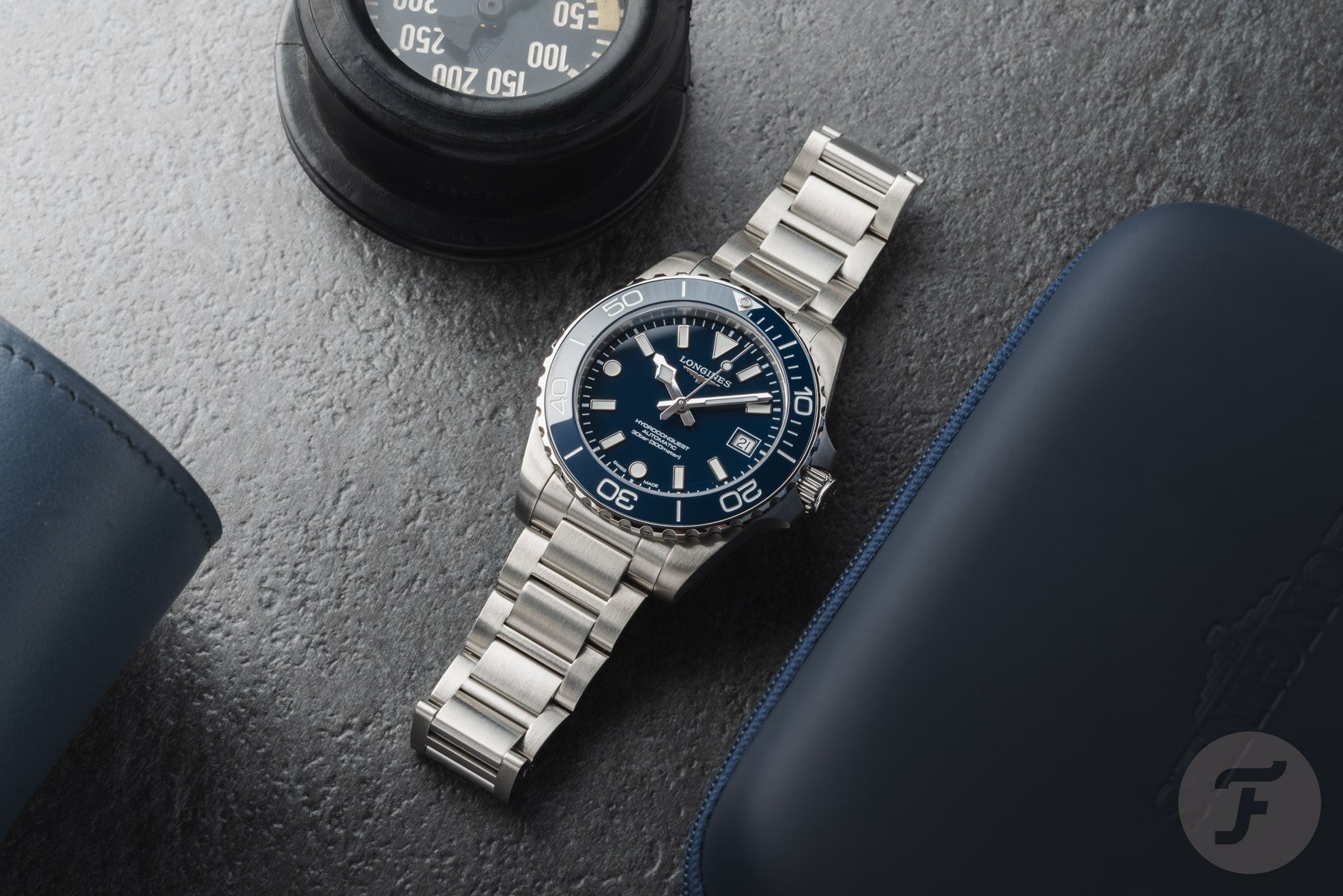
For the money, you get a great, well-made, modern dive watch that can easily compete with the many competitors at a similar price point. Watch enthusiasts received the updated Hydroconquest quite well, and we are pretty sure it will be a new commercial success for Longines.
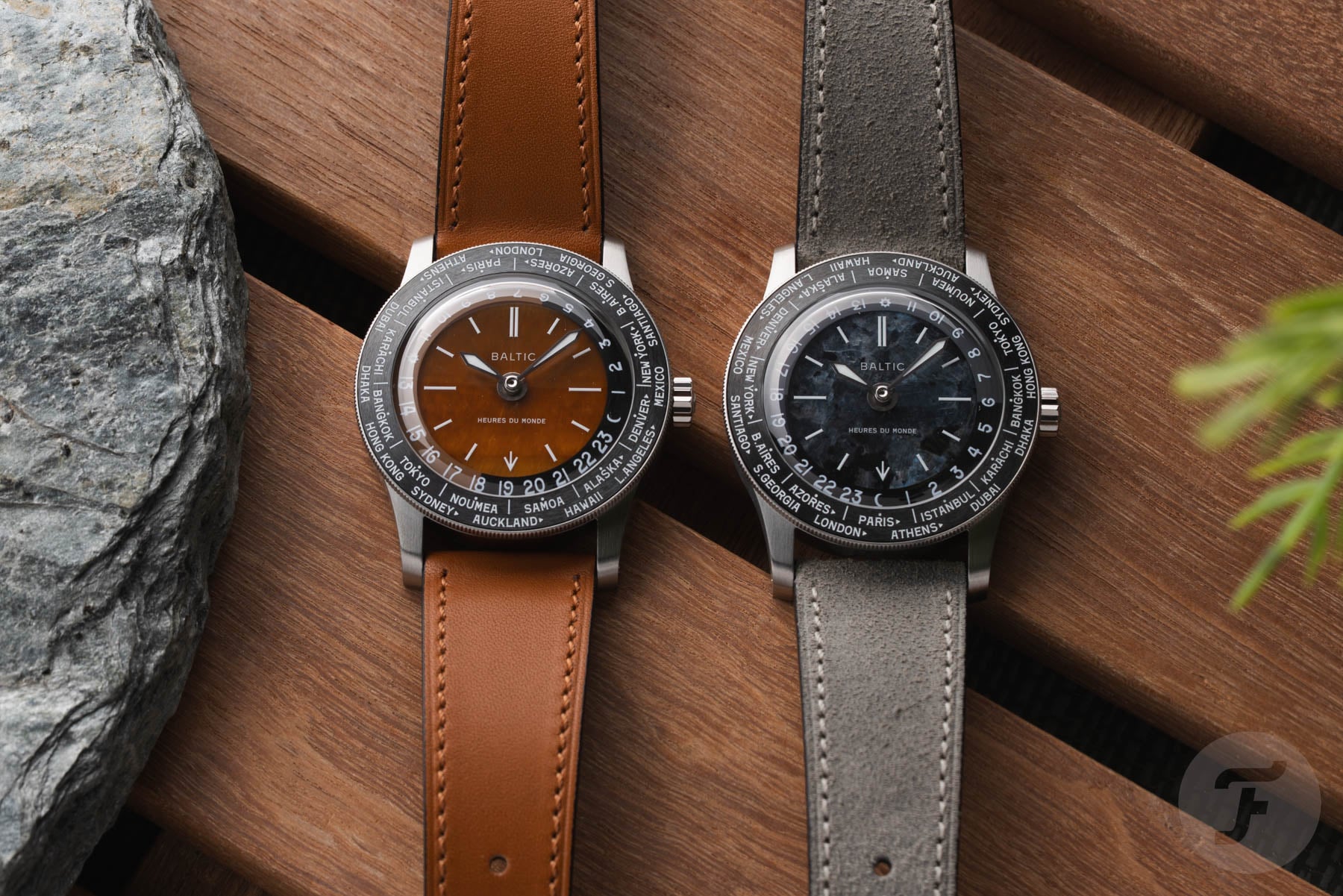
Baltic Heures du Monde
One release we immediately loved was the Heures du Monde series from Baltic. We had two of the three watches in for review, and they immediately captivated us. They have plenty of retro charm and combine it with stone dials and modern materials to make a great trio of travel watches. All three models have a 36mm steel case with a 37mm bezel, an 11.3mm thickness, and a 45mm lug-to-lug, meaning they’ll fit wrists of a variety of sizes very well.
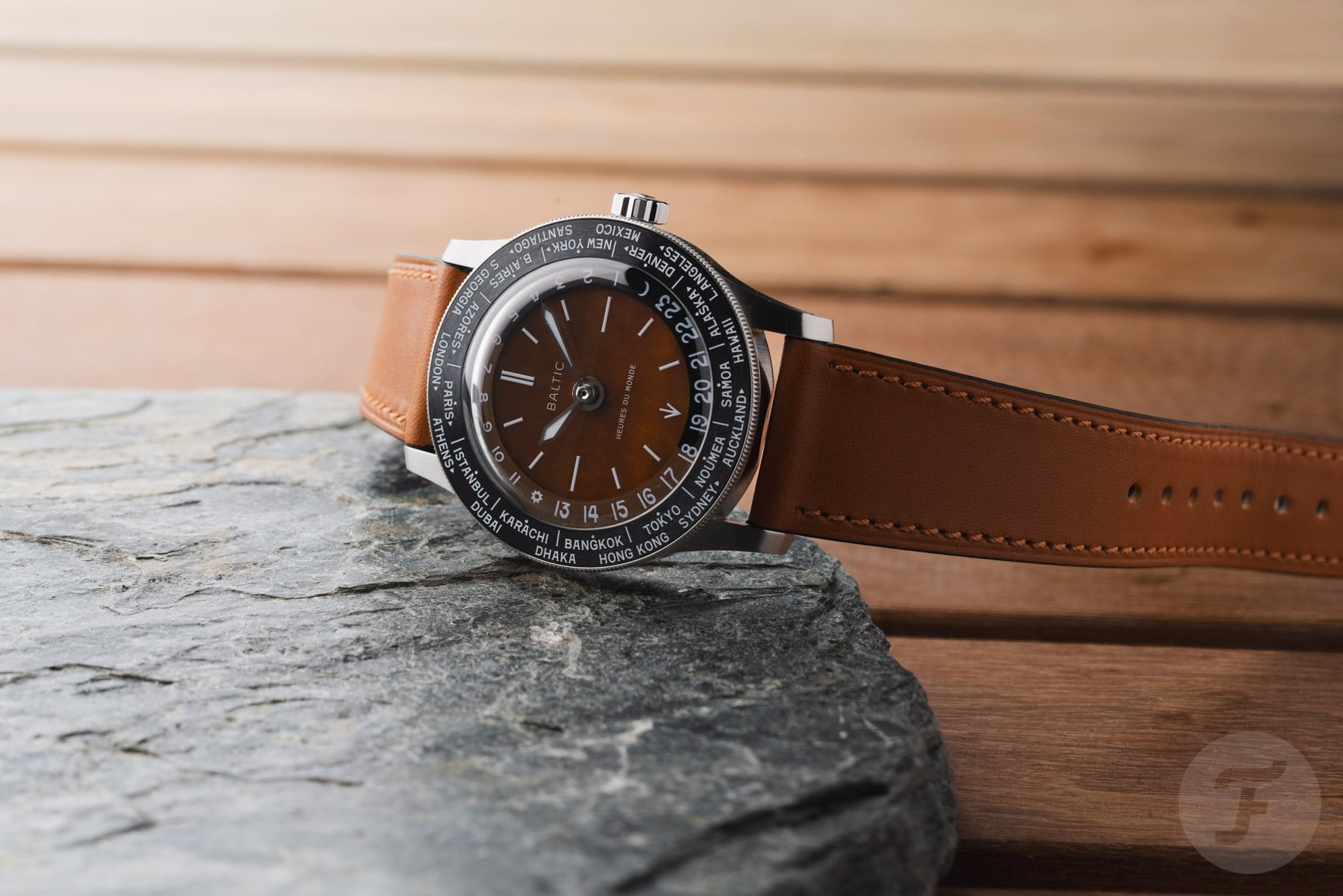
Inside the case lies a dial made of labradorite, tiger eye, or sodalite stone, featuring printed indexes and a two-tone 24-hour ring. While the stone itself may influence your preference, most people will likely choose one for its color. In the pictures, you will see the tiger eye (brown) and the labradorite (gray) dials. The sodalite dial is a beautiful blue that nicely rounds out the trio.

The vintage charm is off the charts
All three watches have a wide bezel marked with 24 city names, signifying different time zones. At 6 o’clock, there’s an arrow that indicates the city corresponding to the time on the dial. As Daan explained, surrounding each stone dial is a bidirectional 24-hour ring that helps indicate whether it’s night or day in other parts of the world. The daytime color is carefully matched to the stone dial. A fun detail is that all the info on the bezel and dial, except for the brand and model names, is printed in white Super-LumiNova that glows blue in the dark.
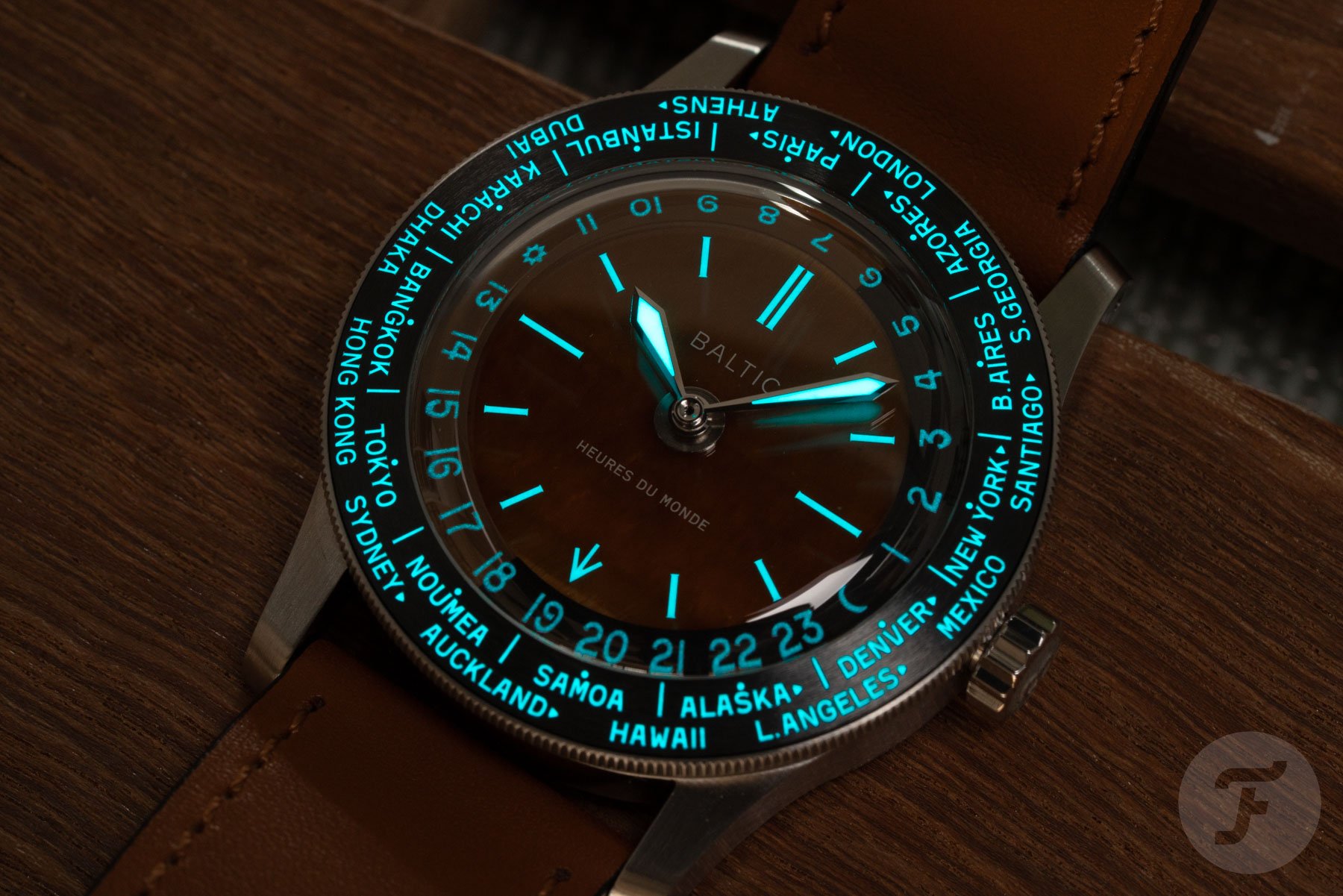
Inside the case, you will find the Soprod C125. This automatic movement operates at 28,800 vibrations per hour, features 25 jewels, and has a 42-hour power reserve. It is a caller-style GMT caliber, though that is less relevant given the 24-hour ring setup. The watches do not feature a date, which is a feature that some will miss on a travel watch.
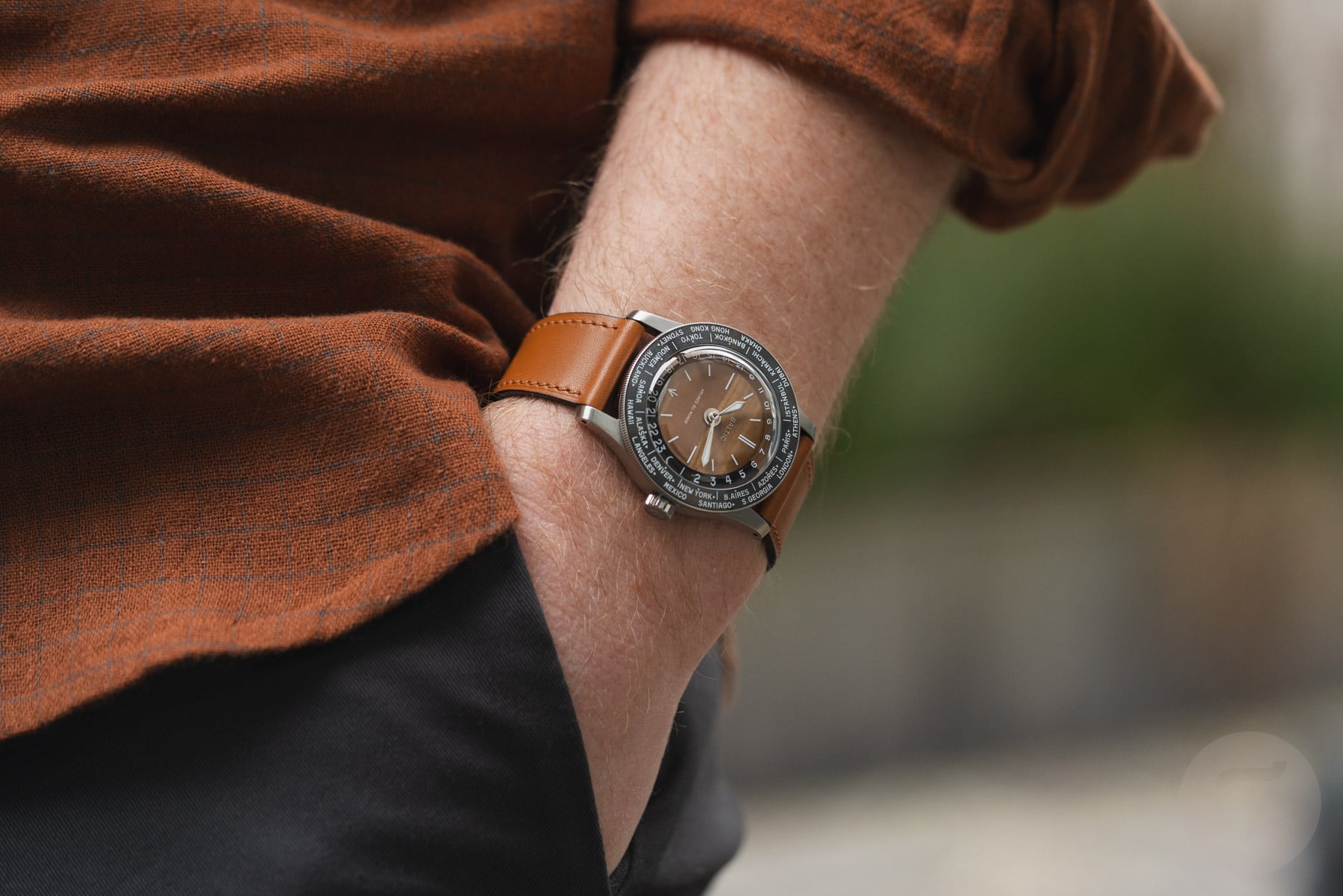
While we understand the practical issues that may arise from that, we love the clean look of the Baltic Heures du Monde. On top of that, the watches wear like a charm, and with pre-tax prices of €1,300 on a leather strap and €1,360 on a bracelet, they’re affordable too. The Baltic Heures du Monde was most definitely one of our favorite releases of March 2026.
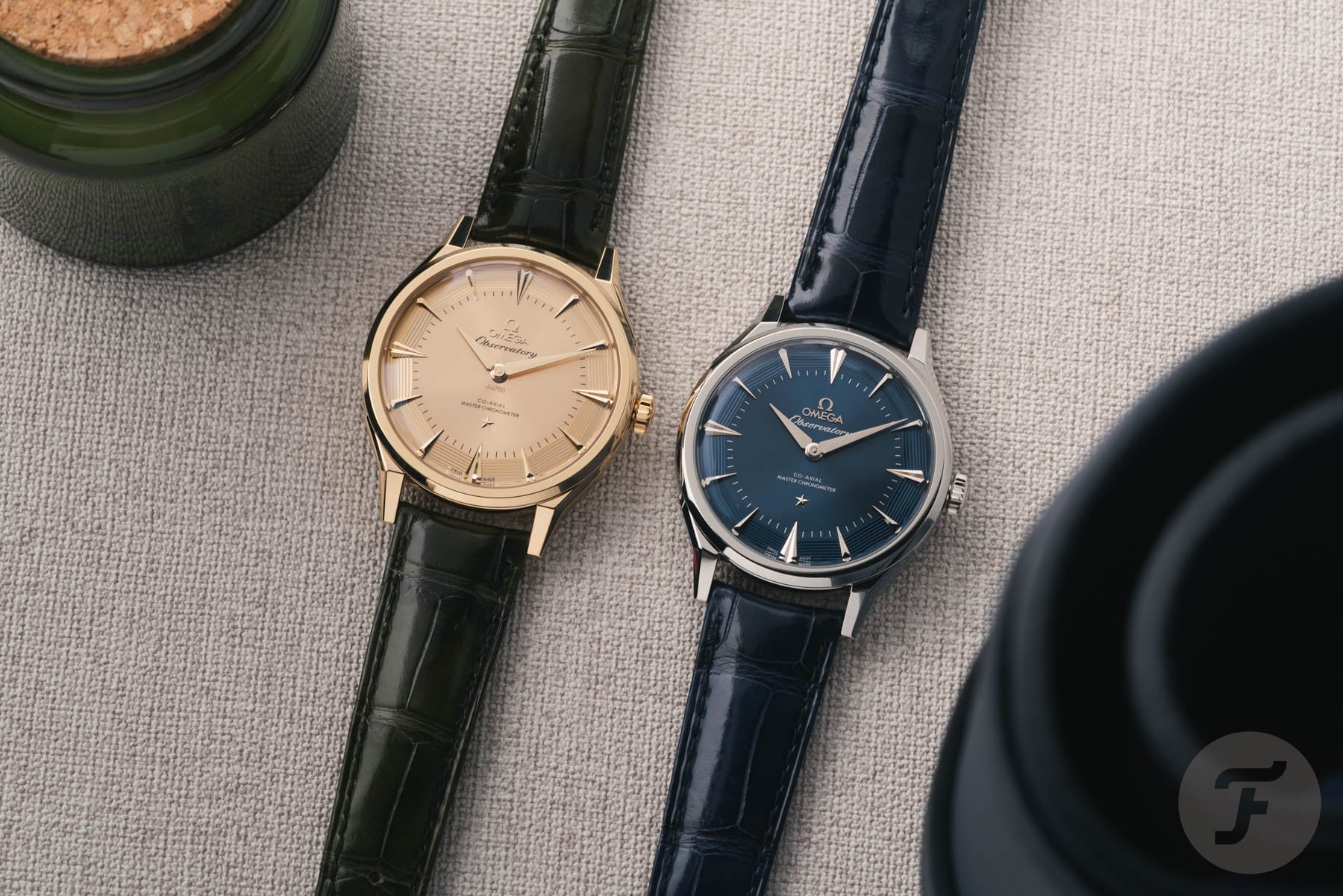
Omega Constellation Observatory
Without a doubt, the most talked-about March release was the new Omega Constellation Observatory series. So far, we’ve seen a whopping 191 comments on Robert-Jan’s introduction article discussing the watches’ different aspects. These reveal two main issues that people have with them. The first is the 39.4mm case size, which some deem too large.
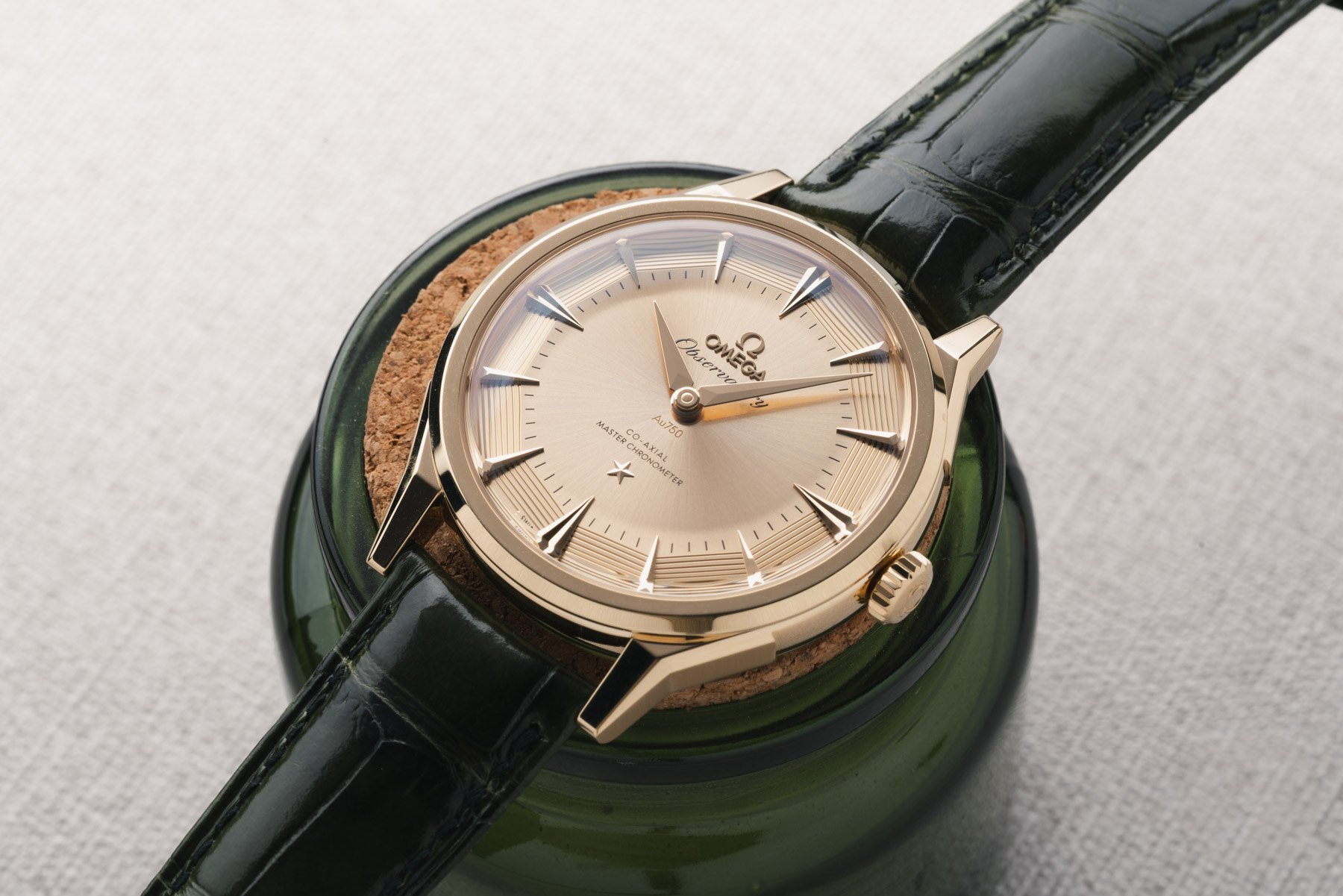
The bigger issue, though, is the pricing of the nine new Constellation references. It is indeed hard to deny that the prices are steep, even for the four variants in stainless steel. Alongside those are two in Moonshine Gold, one in Sedna Gold, one in Canopus Gold, and one in platinum-gold.
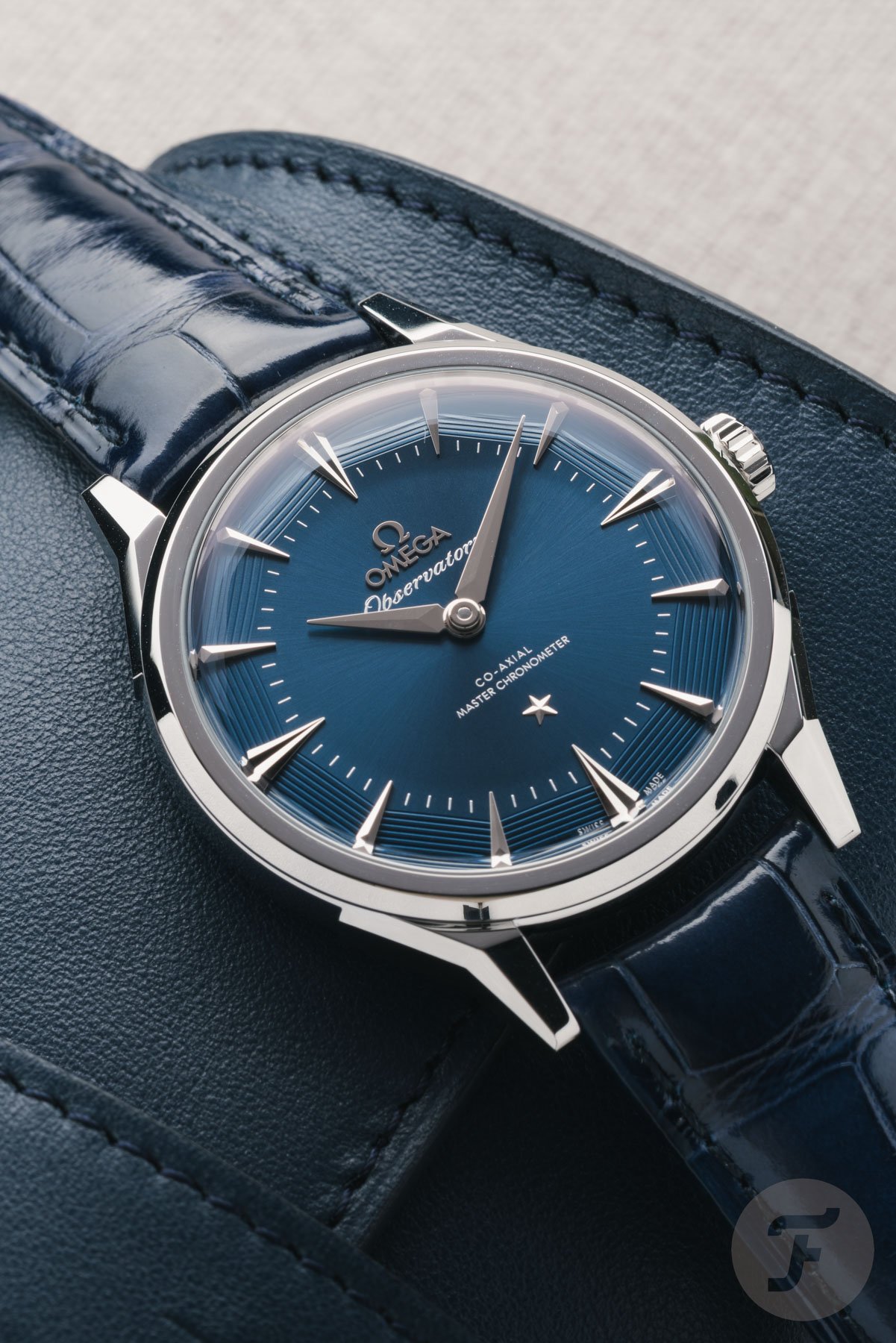
The new Constellations feature classic pie-pan dials
All the watches have a 39.4mm case with a 12.23mm total thickness and a 47.2mm lug-to-lug. The case is paired with a stunning pie-pan-style dial featuring 12 facets and several applied elements, including kite-shaped indexes, the Omega logo, and the Constellation star.
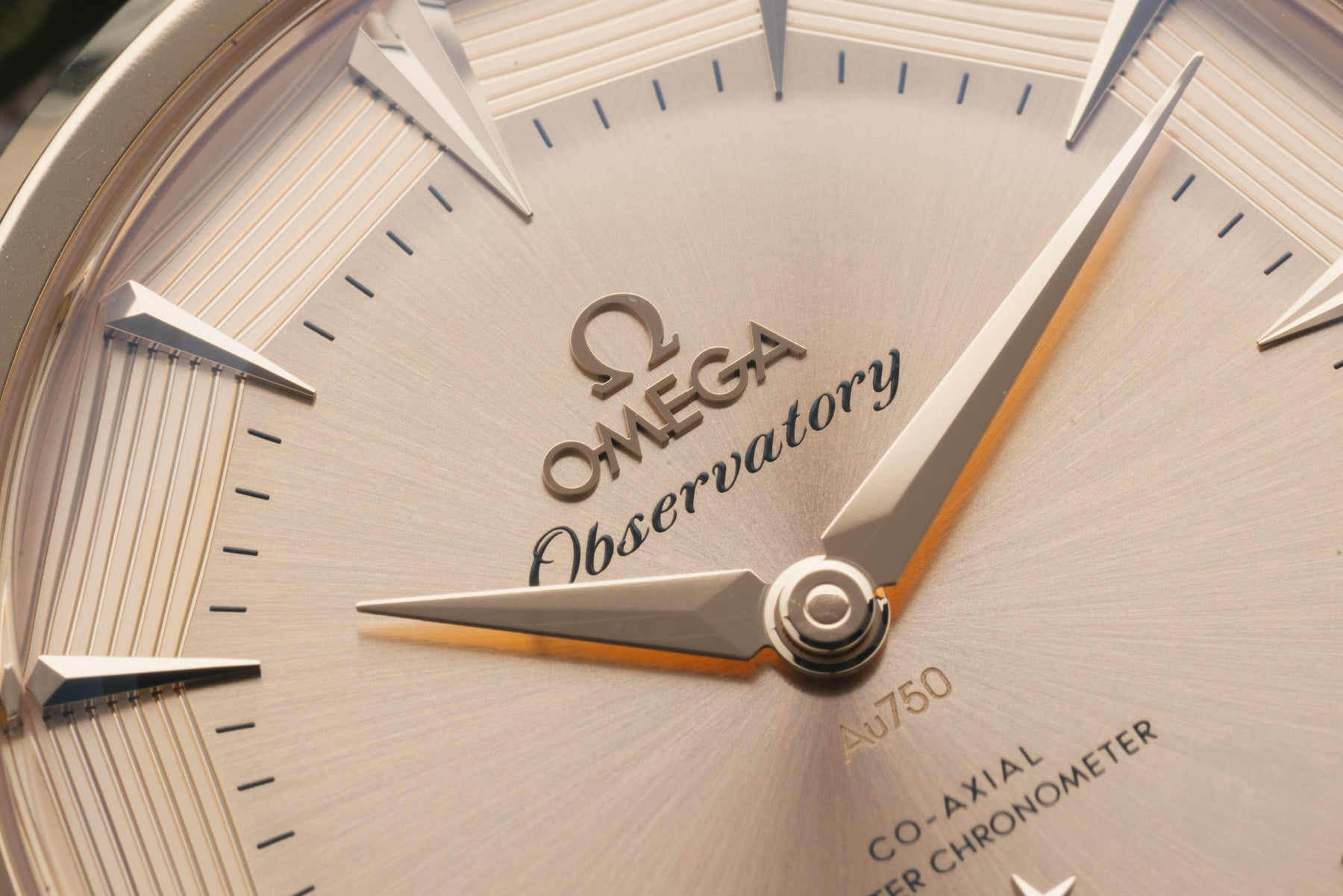
For the steel versions, the dials are stamped, but the gold and platinum models feature hand-guilloché grooves on their dials. Additionally, the steel and platinum variants feature dials with a PVD coating, while the remaining Constellation Observatory references each feature a case-matching gold dial. It’s great to see the series pay tribute to the brilliant Omega Constellation watches from the 1950s.
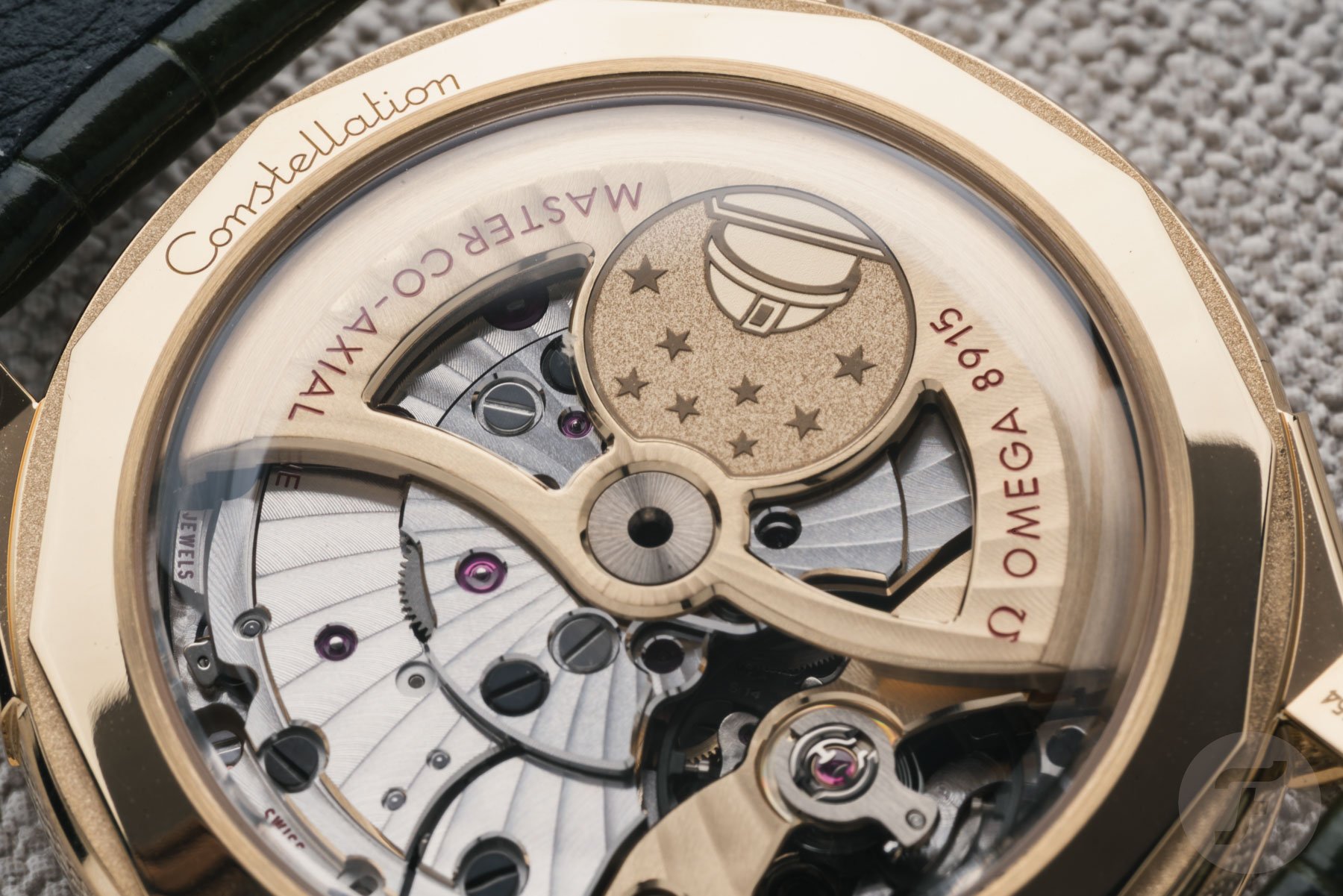
Powering the watches are Omega’s automatic calibers 8914 (steel models) and 8915 (gold and platinum variants). Essentially, these are similar, with the 8915 using precious metals to become a more luxurious version of the 8914. Both are two-handers, which makes chronometer testing a challenge since the traditional process uses photographs of the seconds hand’s position, as Robert-Jan explained. But Omega can test the movements thanks to Dual Metric Technology, resulting in Master Chronometers with an average daily deviation of 0 to +5 seconds.

All in all, the new Omega Constellation Observatory series is nothing short of impressive. The watches beautifully celebrate the classic style of the 1950s Constellations and are powered by impressive new calibers. But, as already stated, the prices are steep. The steel versions come in at €10,700, while the Moonshine Gold version on a leather strap costs €37,300. My favorite is the Moonshine Gold Constellation on the new brick-style gold mesh bracelet, which tops them all at €58,200. Still, for a variety of reasons, the new Constellation Observatory series deserves a spot on this list of the top five releases from March.
Breguet Tradition Seconde Rétrograde 7037
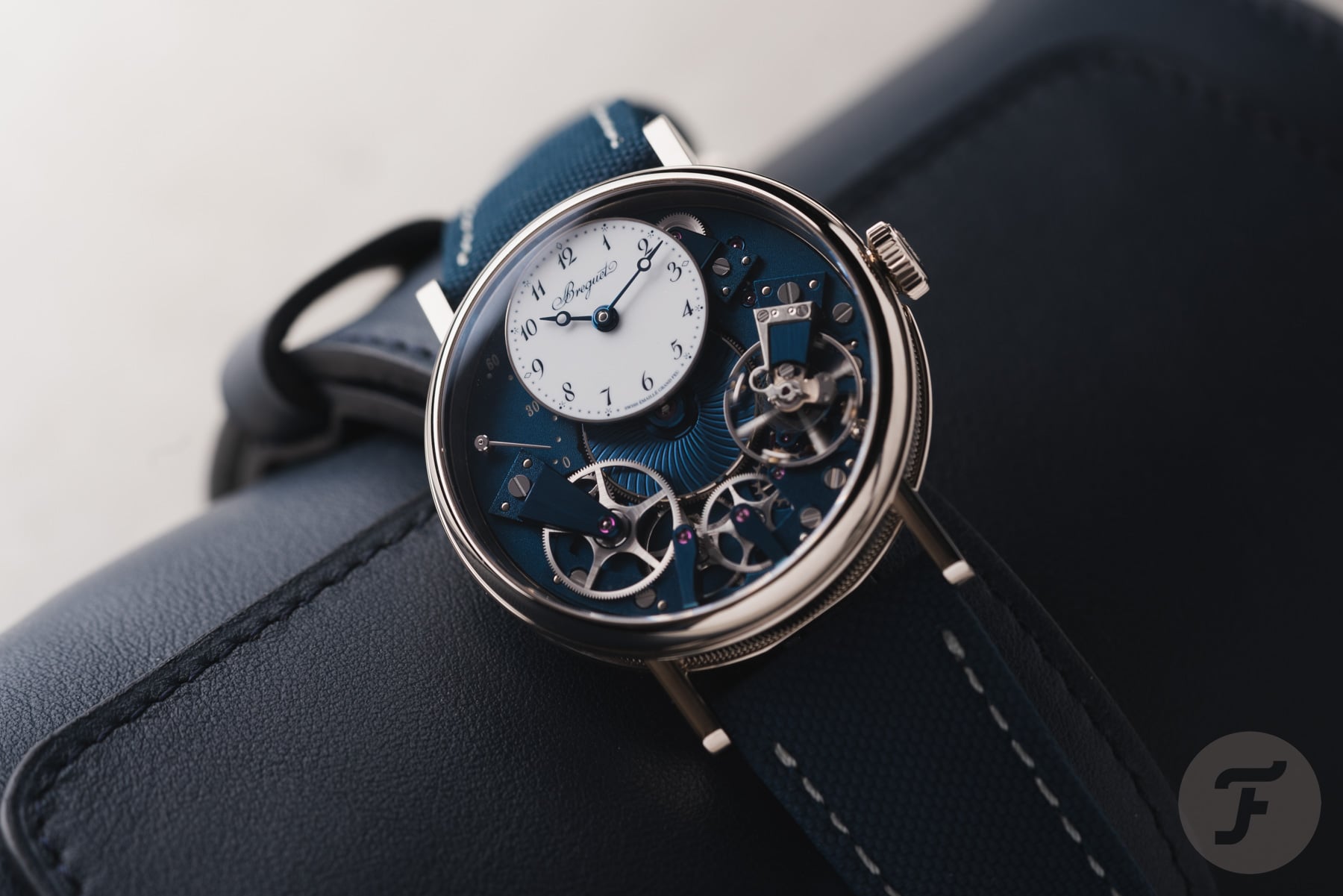
Sometimes, watches pass through our office and leave us completely in awe. The Breguet Tradition Seconde Rétrograde 7037 was one such timepiece. The watch is one of six new Tradition references that show the first signs of the overhaul of the regular Breguet collection. As Robert-Jan explained, last year was Breguet’s 250th anniversary, which the brand celebrated with a string of exclusive limited editions.
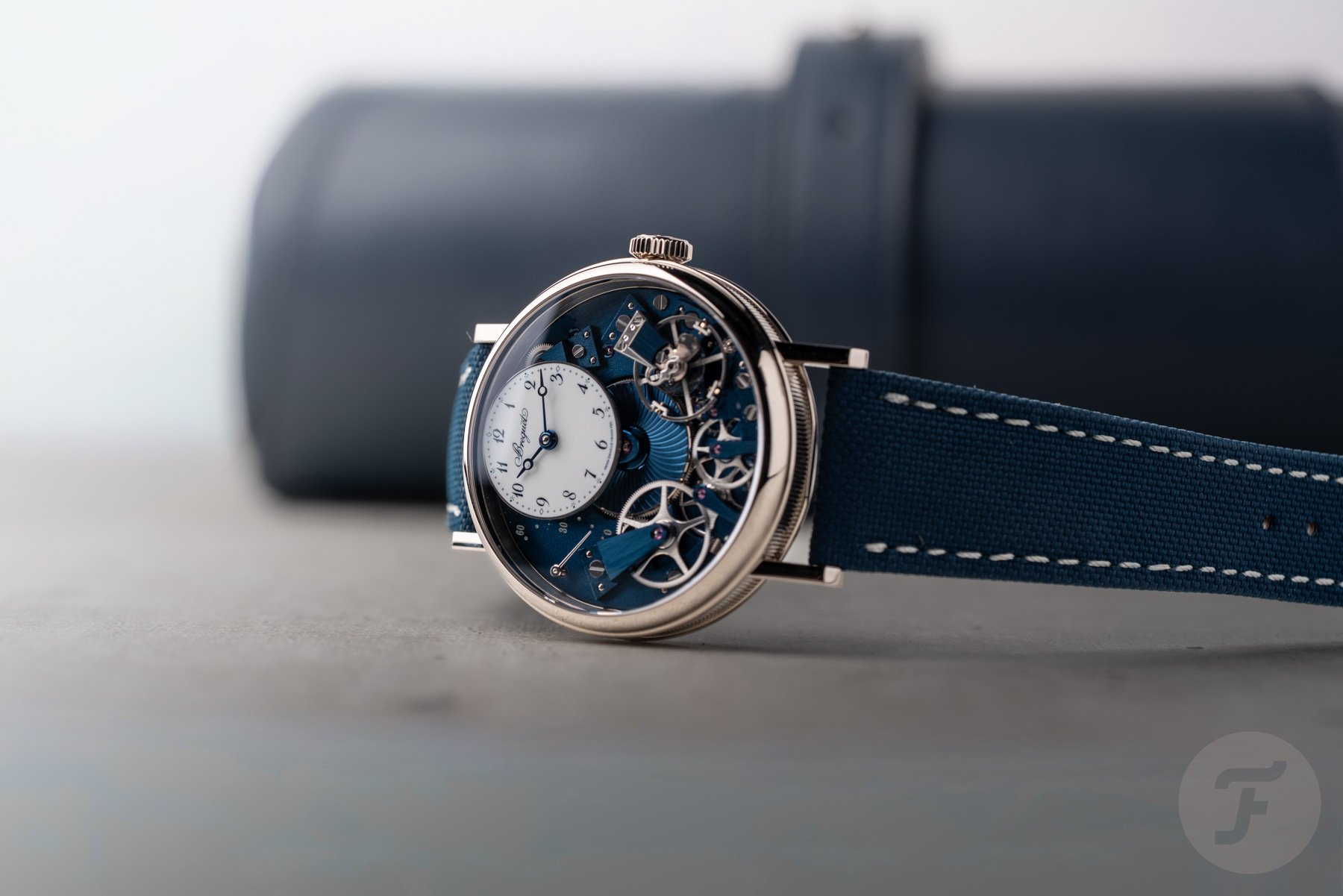
The Tradition Seconde Rétrograde 7037 is not an all-new watch. In fact, the 7037 debuted in 2006 as the first self-winding variant in the Tradition collection. For the revamped version, Breguet kept the original 38mm diameter and gave it a 46.1mm lug-to-lug length and 12.7mm thickness. The model we received has a white gold case and a small, offset dial finished in white Grand Feu enamel with blue Breguet Arabic numerals. It perfectly complements the marine-blue parts of the movement.
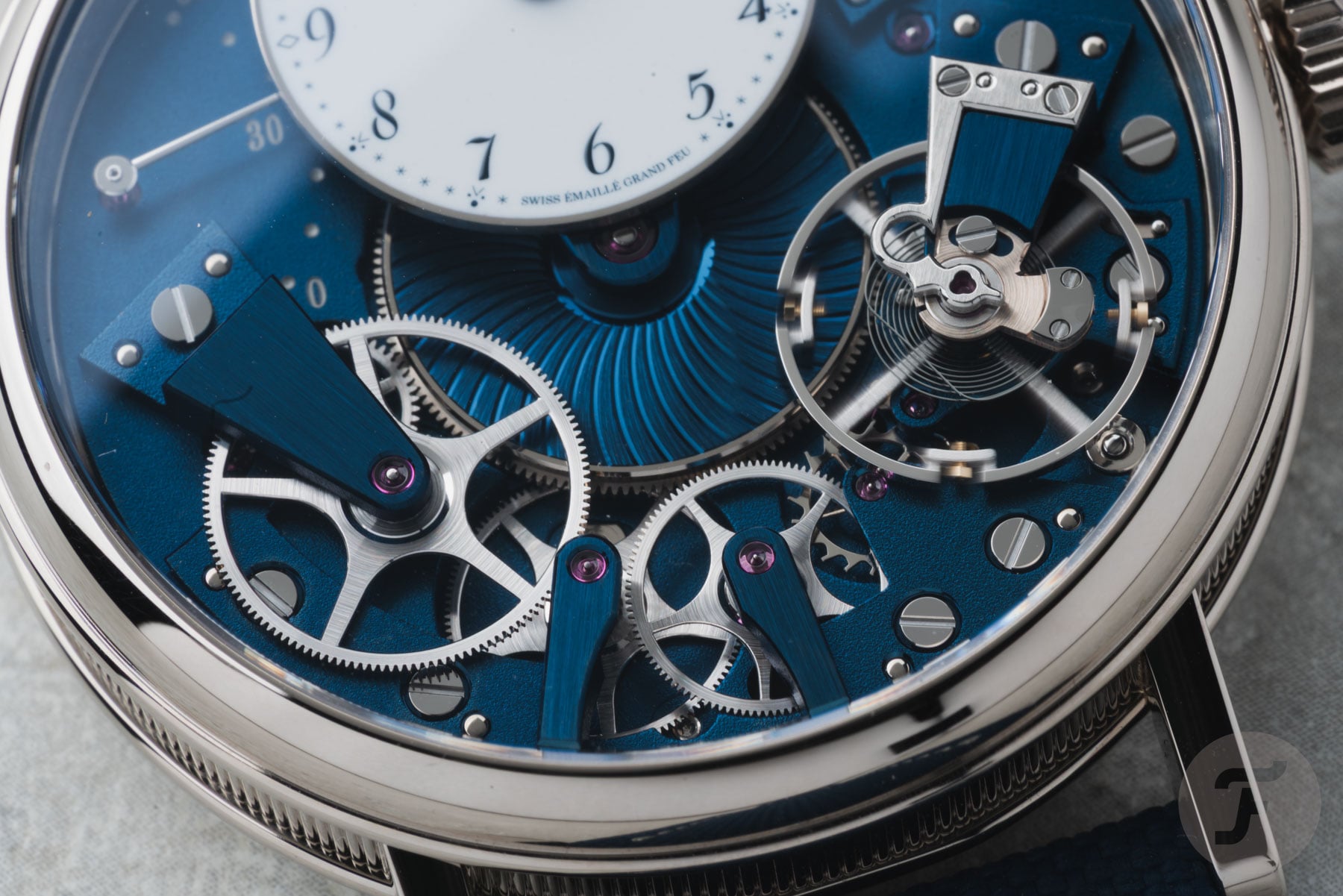
The beautifully executed caliber
This shade of blue is absolutely wonderful, and it’s what I would expect if I heard “marine blue.” Additionally, the 7037 has an 18K white gold retrograde seconds hand at 11 o’clock. The watch is powered by the Breguet 505 SR.
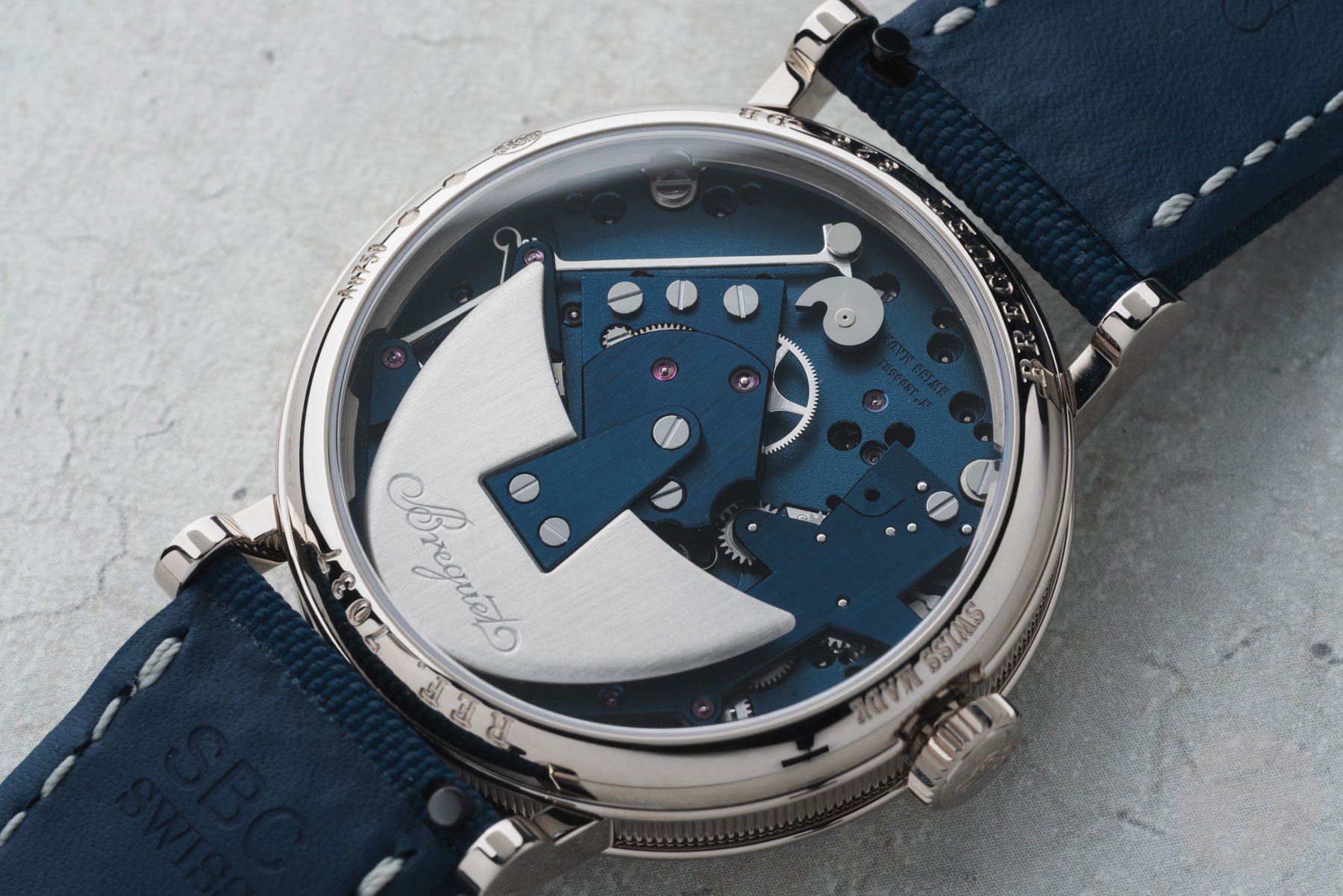
This automatic movement operates at 21,600 vibrations per hour and offers a 50-hour power reserve. It features a silicon Breguet balance spring, blue ALD-treated bridges and mainplate, and a snailed barrel cover. If you turn the watch around, you will find the wonderful platinum rotor, which is a lot of fun to observe as it makes its rounds.
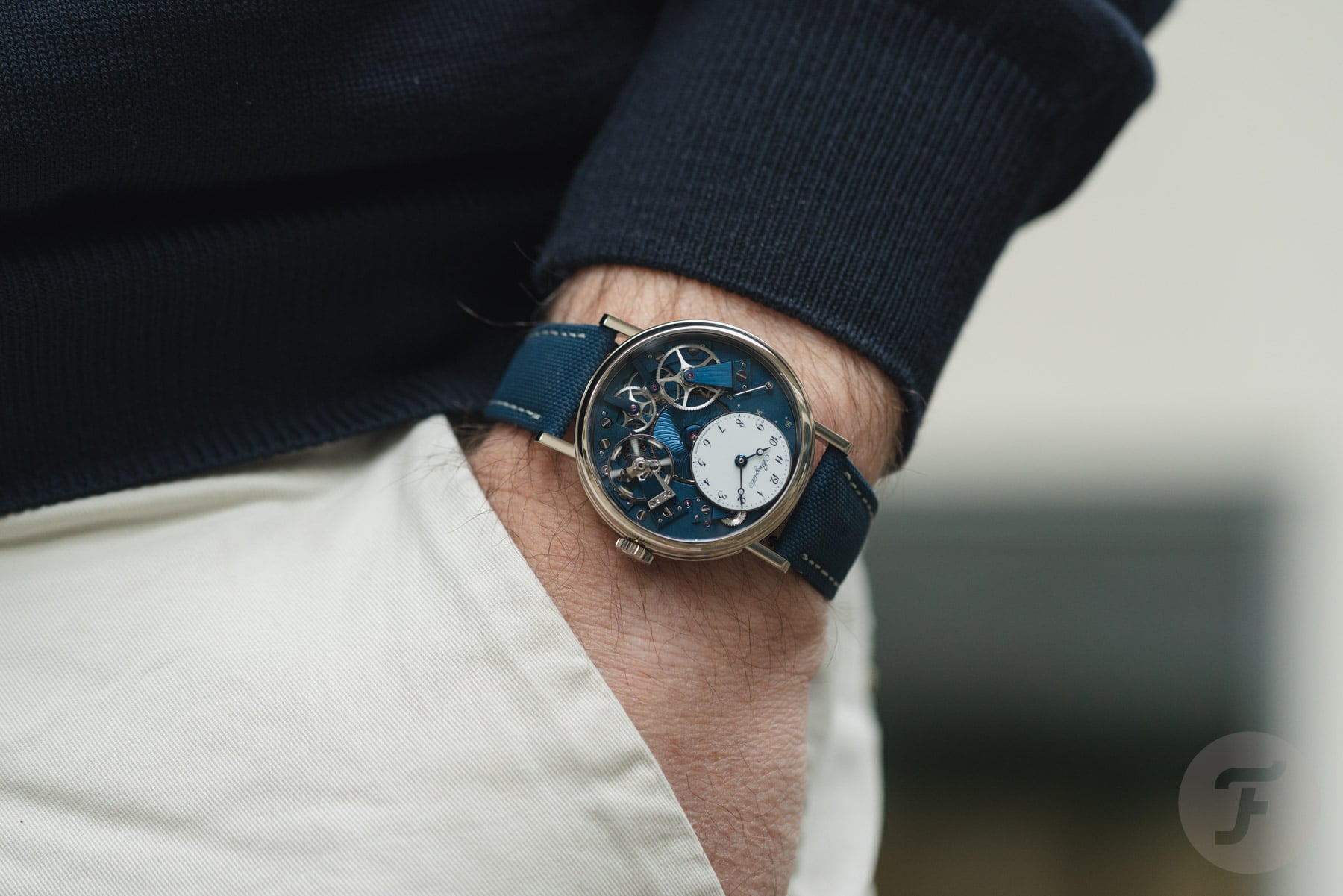
On the wrist, the new Breguet Tradition Seconde Rétrograde 7037 truly shines. The combination of rhodinized and blue movement components with the white gold case and white dial creates a stunning composition. Usually, I am not the biggest fan of the Tradition’s completely open architecture, but this new Tradition Seconde Rétrograde 7037 is a stunner. The marine-blue strap stylishly completes one of the most impressive releases we have seen since the start of the year. This watch costs CHF 45,200 (ex. VAT).

Singer Reimagined Caballero Titanium
We’ll close out this list of the best March releases with two watches we can’t wait to see in the metal — especially since the Singer Remagined Caballero now comes in a different alloy! Last year, I had the pleasure of doing the hands-on review of the stainless steel Caballero, and I quickly fell in love with the series. For 2026, Singer Reimagined has created two Grade 5 titanium versions of the watch. As Thomas stated, the lightweight material might even suit the watches better than stainless steel.
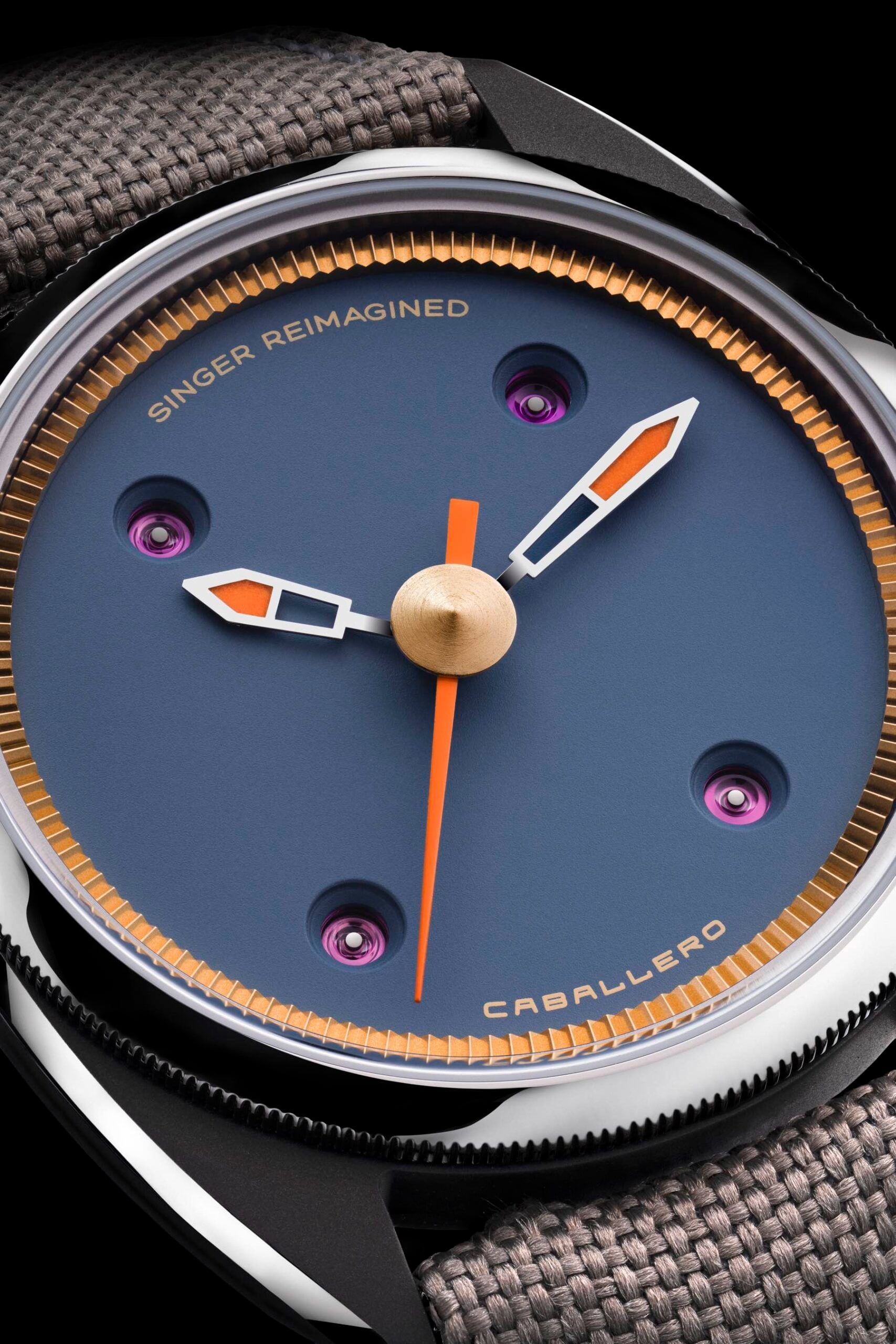
However, the same case design has remained, including the 39mm diameter and 10.5mm thickness. The watch features either an Avio Blue Velvet or a Cocoa Brown Velvet dial, both with a matte-lacquered finish. The defining signature elements on the dials are the four inset rubies along with the applied gold-tone fluted flange. While the composition looks rather minimal overall, there is a lot of detail to explore once you zoom in.
The impressive Calibre-4 Solotempo
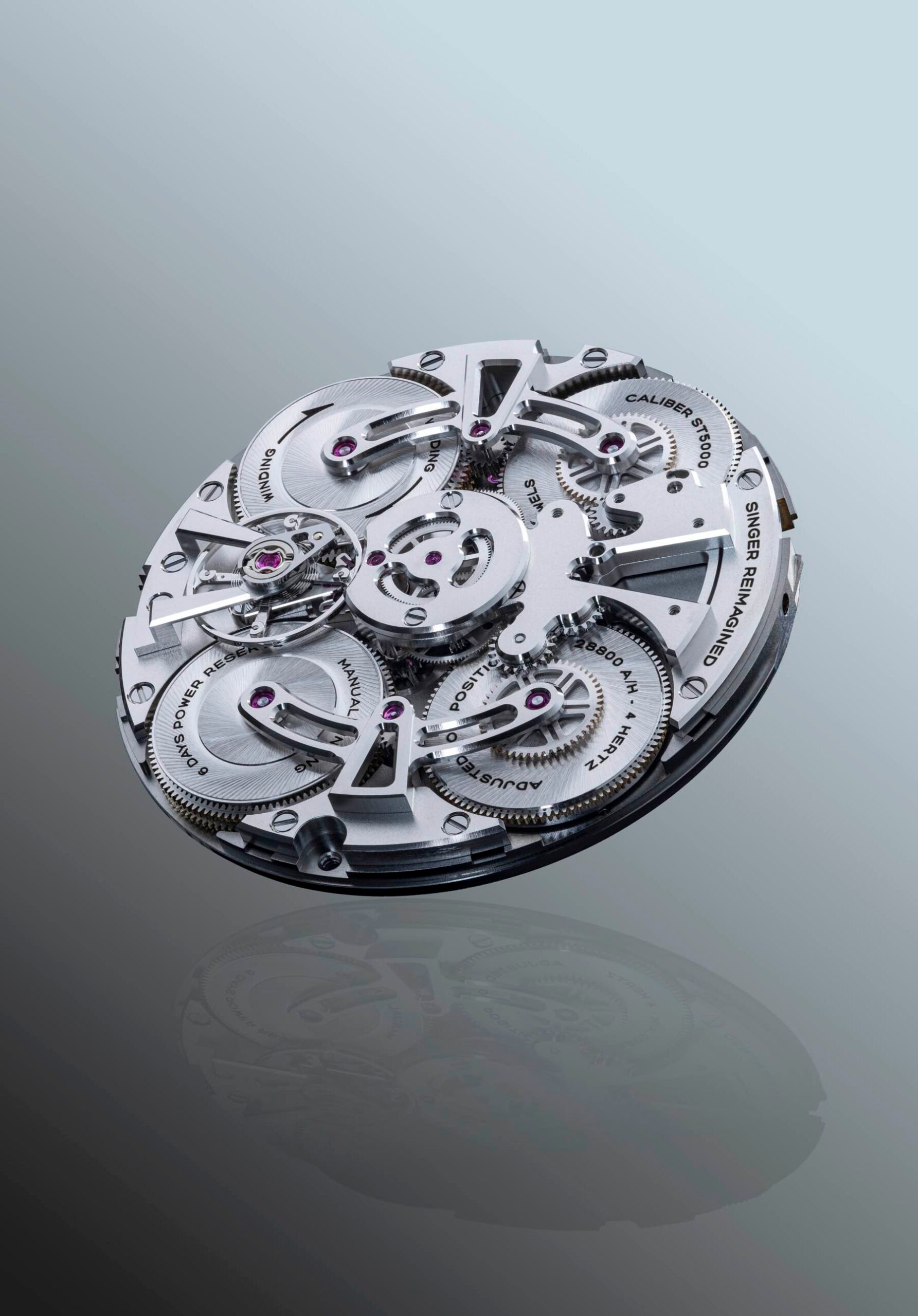
If you turn the watch around, you will see the Singer Reimagined Calibre-4 Solotempo (ST5000). This manual-winding movement operates at 28,800 vibrations per hour and boasts a six-day power reserve. This is possible thanks to the two pairs of twin barrels running in parallel. Additionally, it offers an accuracy rating of -4/+6 seconds per day, which is great for a lightweight daily wearer like the Caballero.
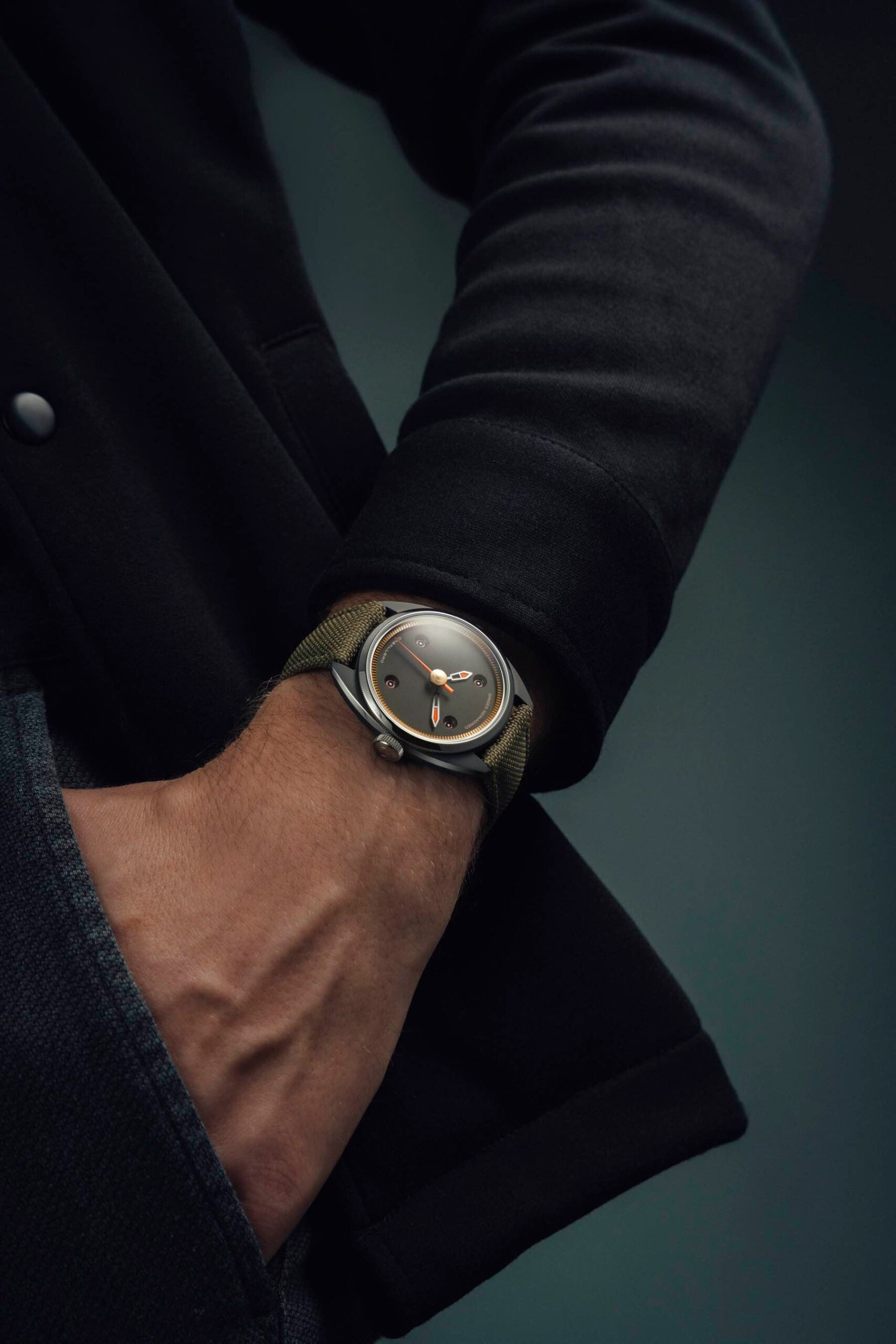
On the wrist, these new Singer Reimagined pieces should wear even more easily than the stainless steel versions. I vividly remember how much I liked wearing last year’s Caballero. The case is nicely proportioned, and I already found the steel version fairly lightweight.
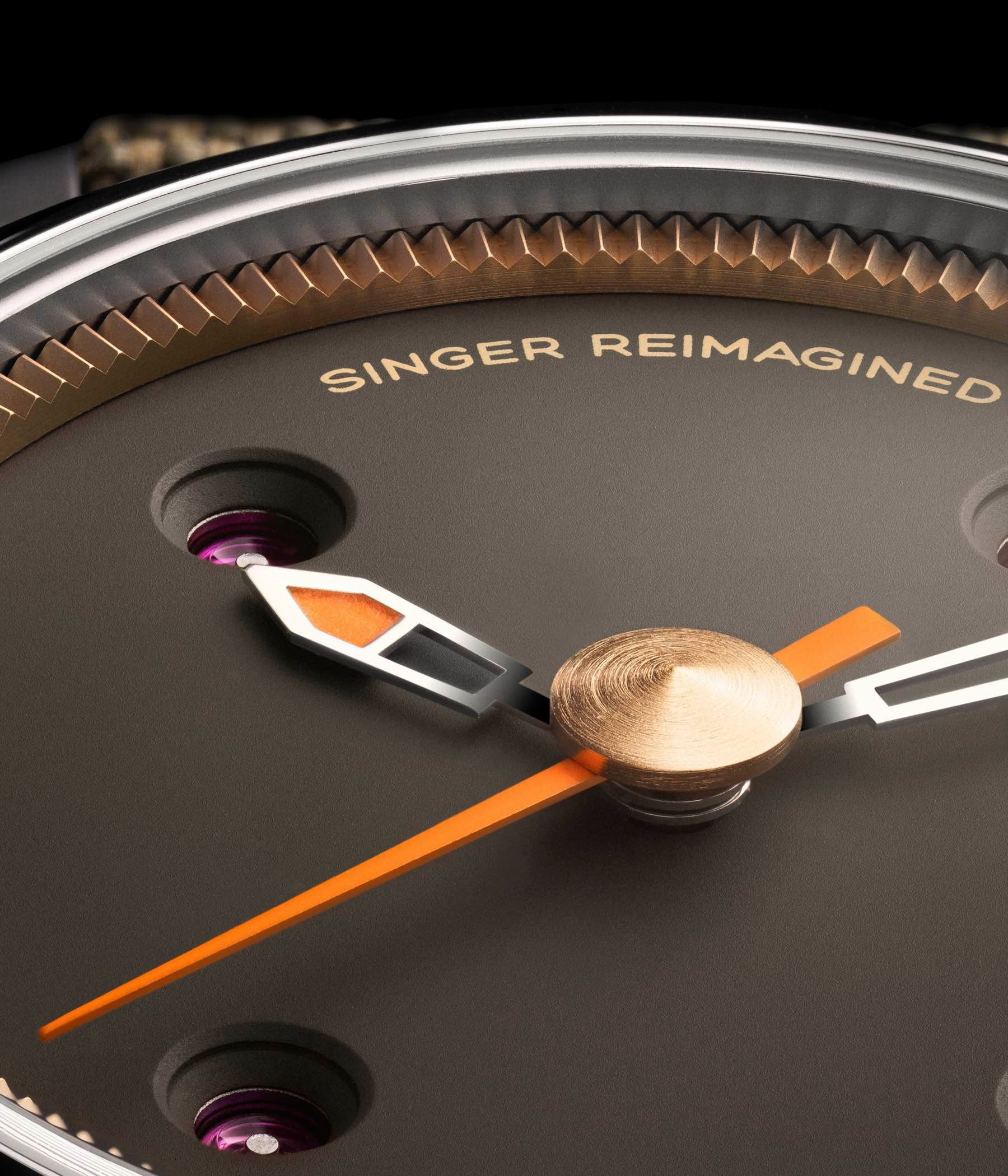
I can imagine this new titanium Singer Reimagined Caballero in titanium will be even more impressive. Combine the lightness with the beautiful dark brown dial, and this might just be another one of my favorite watches from the first quarter of 2026. The two new Caballeros retail for CHF 18,500 (ex. taxes) and are our fifth and final pick for this list of March favorites.
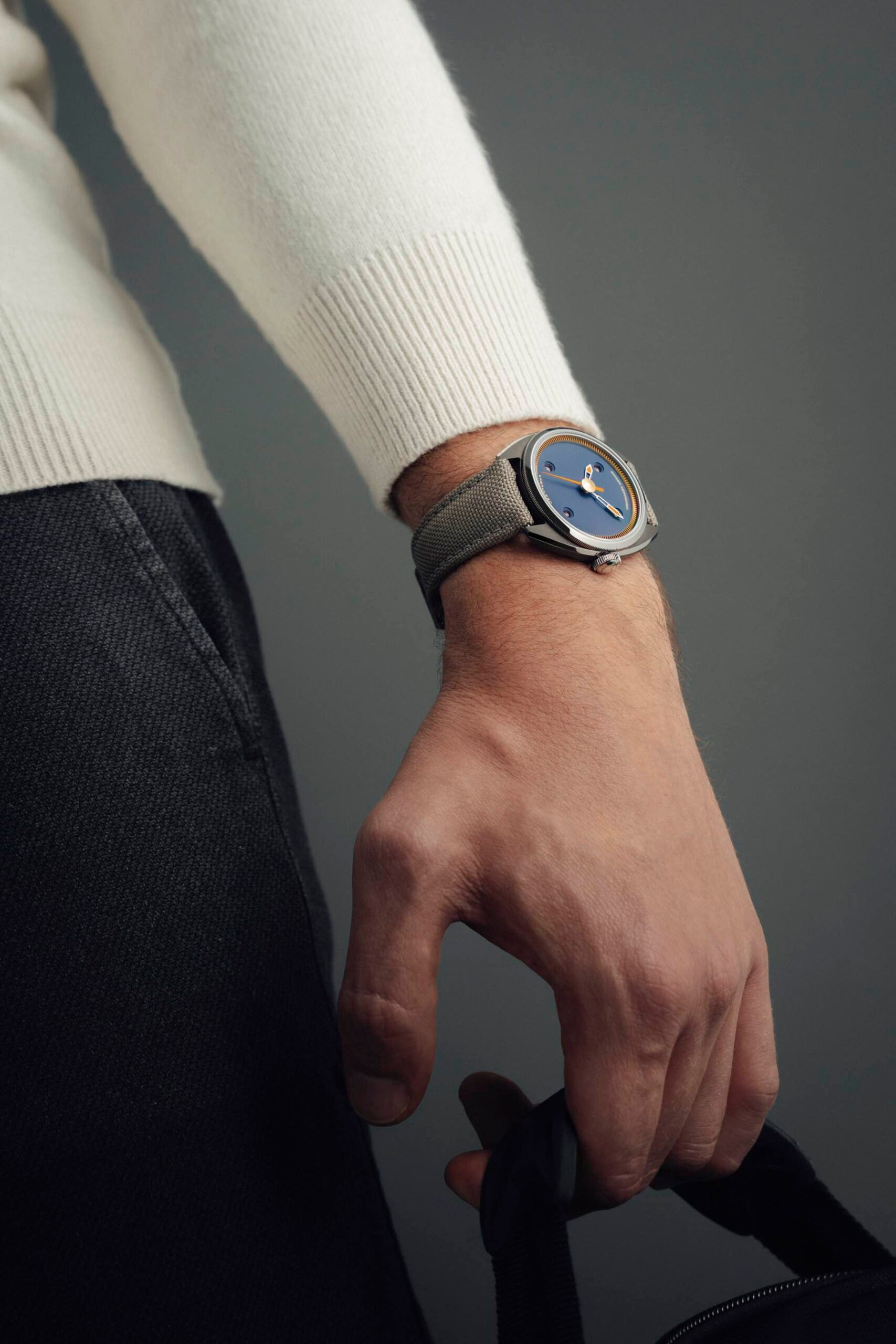
Final thoughts on the top five watches released in March 2026
There you have it — our five favorite new watches from March 2026. It was another month full of great releases, and it closes out an exciting first quarter of the year. As always, many more options could have been on this list. That’s why I want to turn the question over to you. What are some of your highlights from March 2026? Let us know in the comments section, and we will see you again next week for another list!