Hands-on With Doxa’s Sub 250T GMT Sharkhunter Vintage

Certain watches feel immediately familiar the moment you strap them on — not because you’ve worn them before but, rather, because their story has been written so clearly over the decades that slipping one on is like stepping into a well-loved pair of boots. That’s the sensation I had when the Doxa Sub 250T GMT Sharkhunter Vintage arrived on my desk.
The Doxa Sub 250T GMT is a watch that we have written about at Fratello before. My colleague Mike went into it here. Today’s feature is a little different, focusing on just the Sharkhunter Vintage model and my impressions of it after using it in the ocean. Let’s dive in.
A functional and interesting design
This is a watch that folds half a century of Doxa DNA into a compact, travel-ready diver, merging the utilitarian spirit of the original Sub 300 with a complication absent from the lineup for far too long. As ever, Doxa’s relationship with divers and explorers is woven tightly into its identity.
This GMT brings something different to the table — a sense of mobility beyond the ocean. It acknowledges that today’s diver might hop between hemispheres as often as he or she hops off the back of a dive boat. And in this review, I wanted to see whether Doxa’s newest dual-time diver truly holds up — not just in the hand but also in the wild waters of the Pacific off Sydney.
A brief return to Doxa’s roots
It’s impossible to talk about the Sub 250T GMT without revisiting the origin story. Doxa made its name not through luxury ambitions but through pure function. In the late 1960s, the brand produced a professional dive watch with unusual priorities — legibility, safety, and affordability. The “no-deco” bezel, the cushion case, and the now-famous bright dials were born from collaboration with professional divers rather than marketing departments.
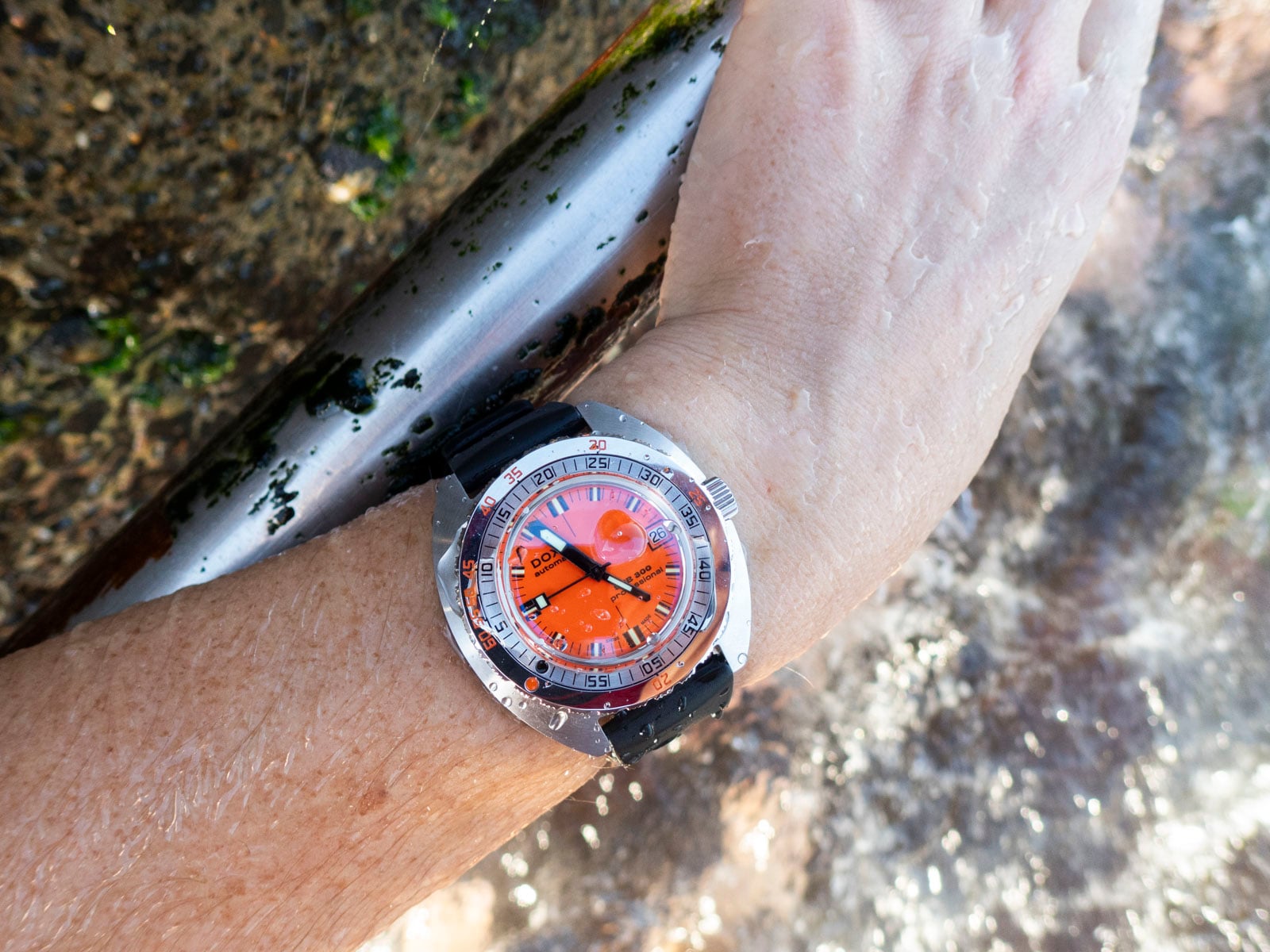
A Doxa Sub 300 with no-deco bezel
Over time, Doxa expanded, contracted, re-formed, and reimagined the Sub family, but the core ideals never drifted. What did drift, however, was the GMT function. While the Sub 750T GMT once filled that niche, Doxa’s modern catalog has lacked a travel-capable diver — until now. This makes the Sub 250T GMT more than just another color option or line extension; it’s a return to a capability Doxa had shelved for nearly 20 years. For a brand steeped in adventure, that absence felt increasingly conspicuous.
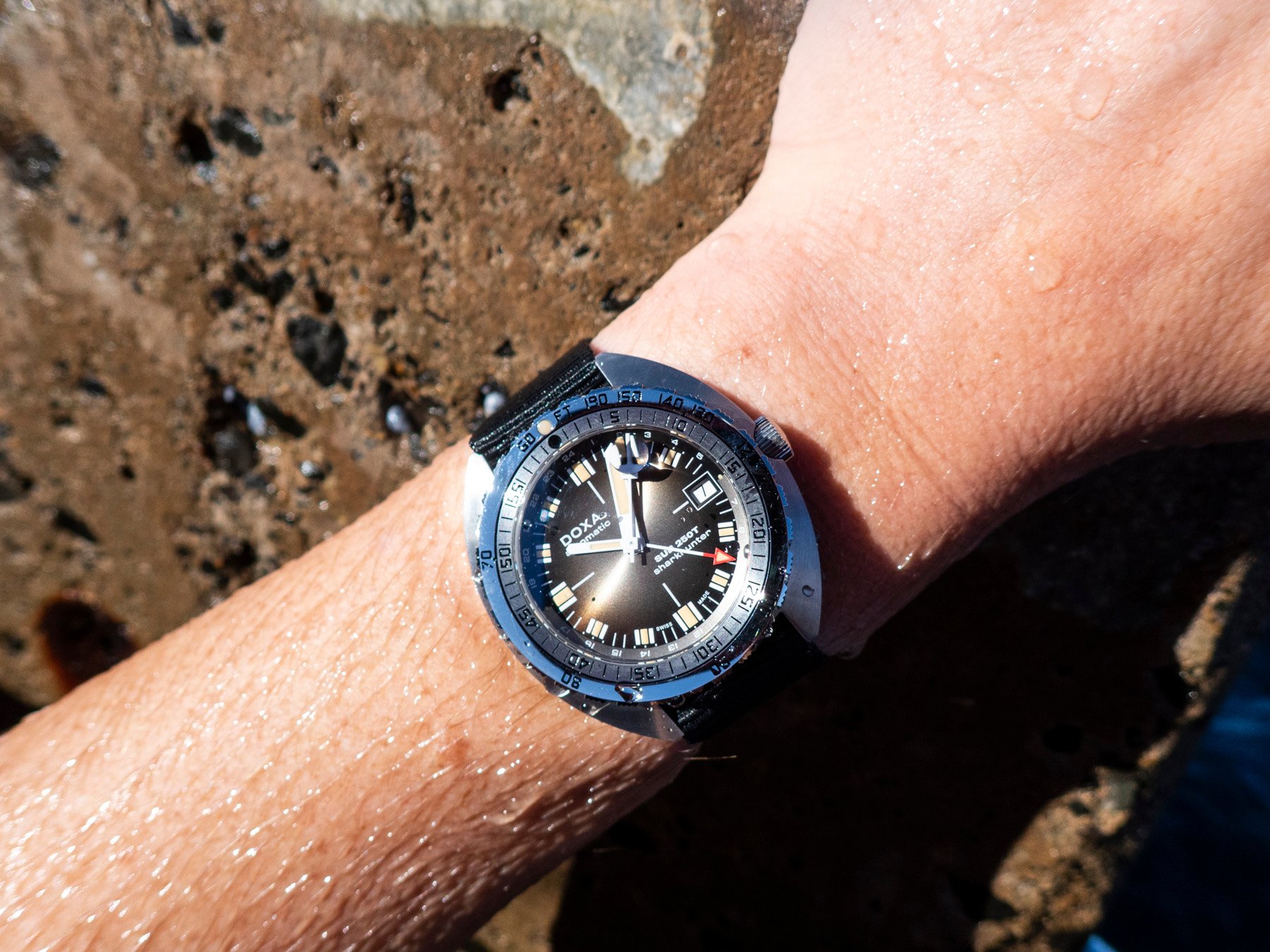
The Sharkhunter Vintage — A dial with soul
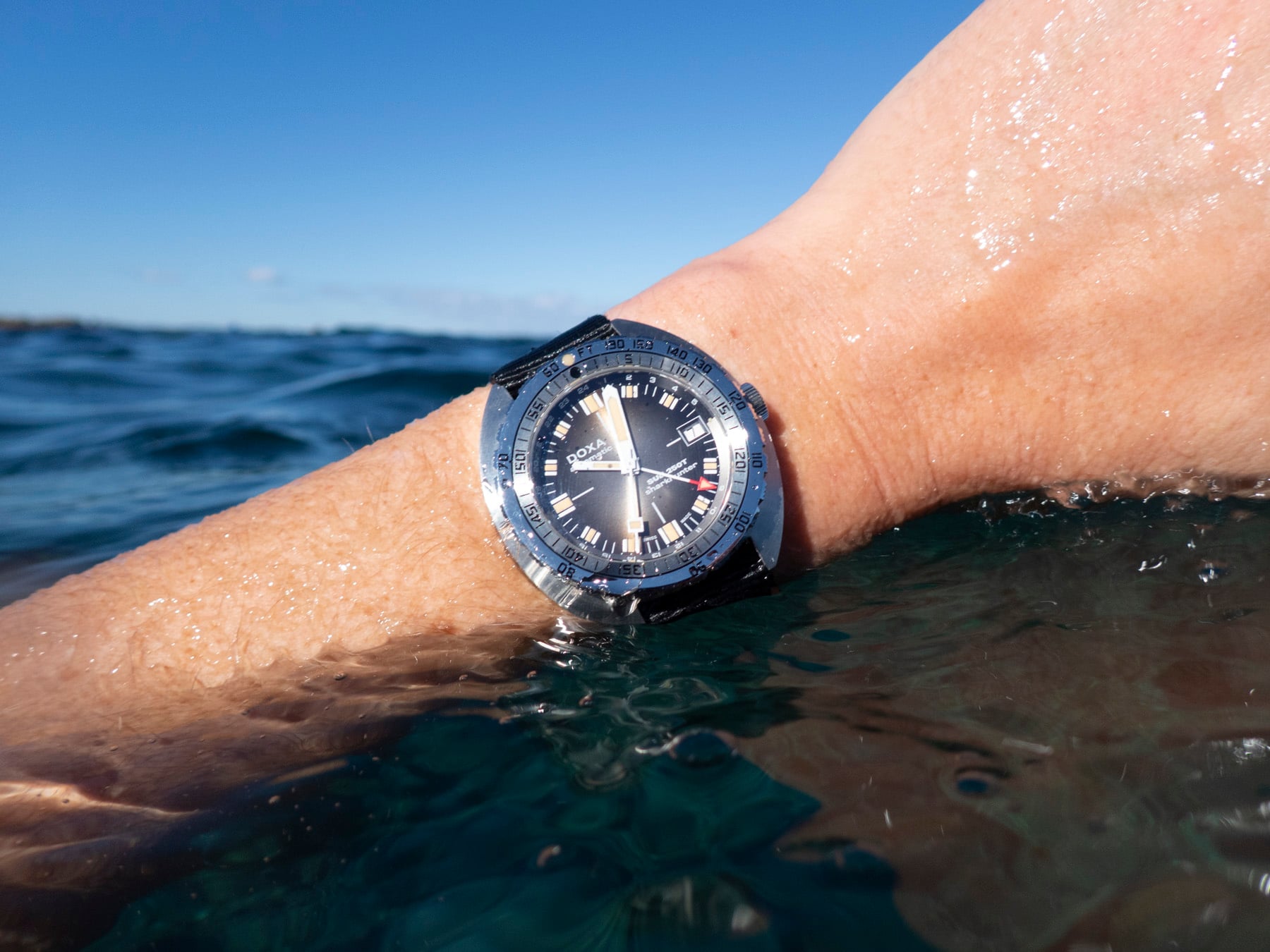
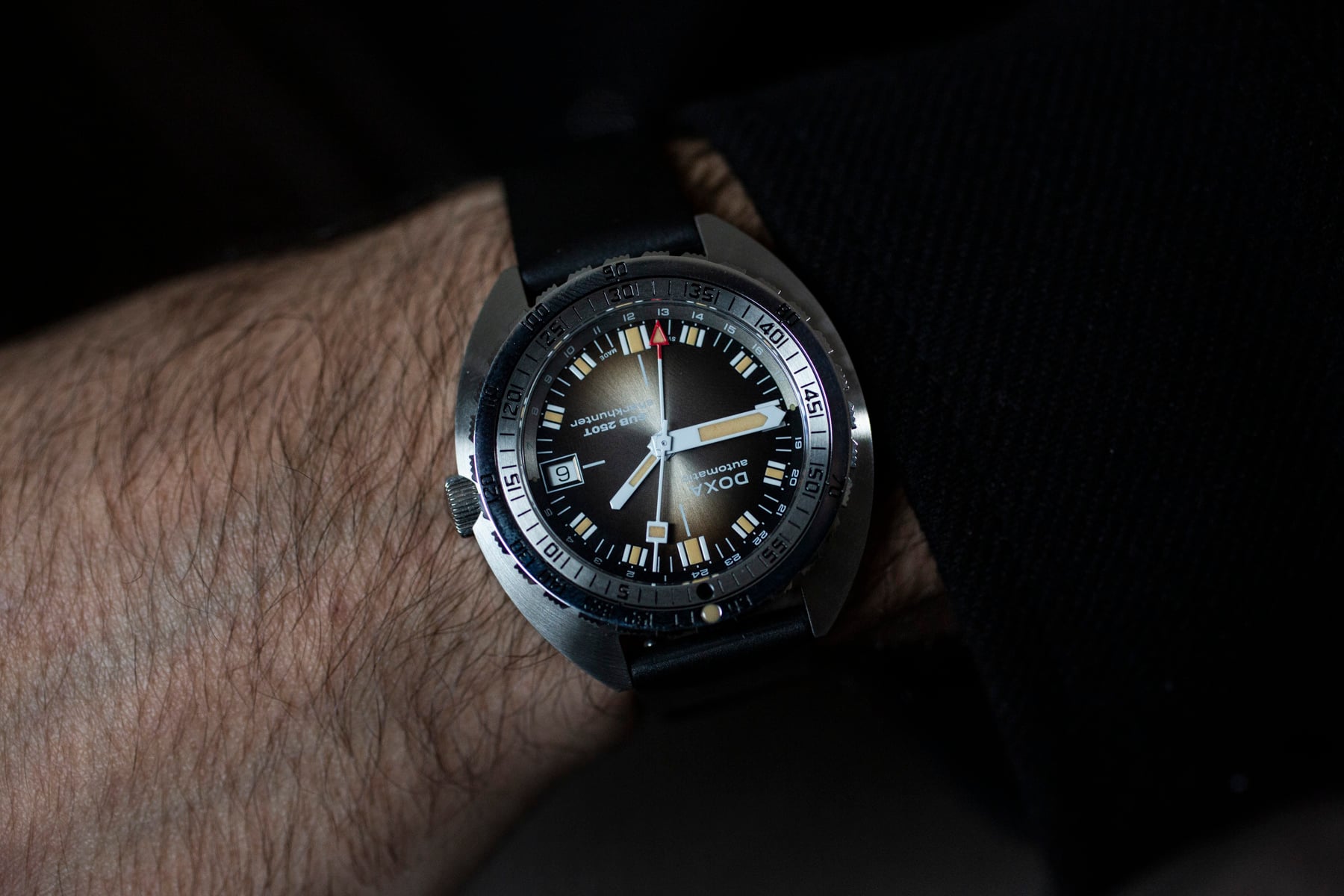
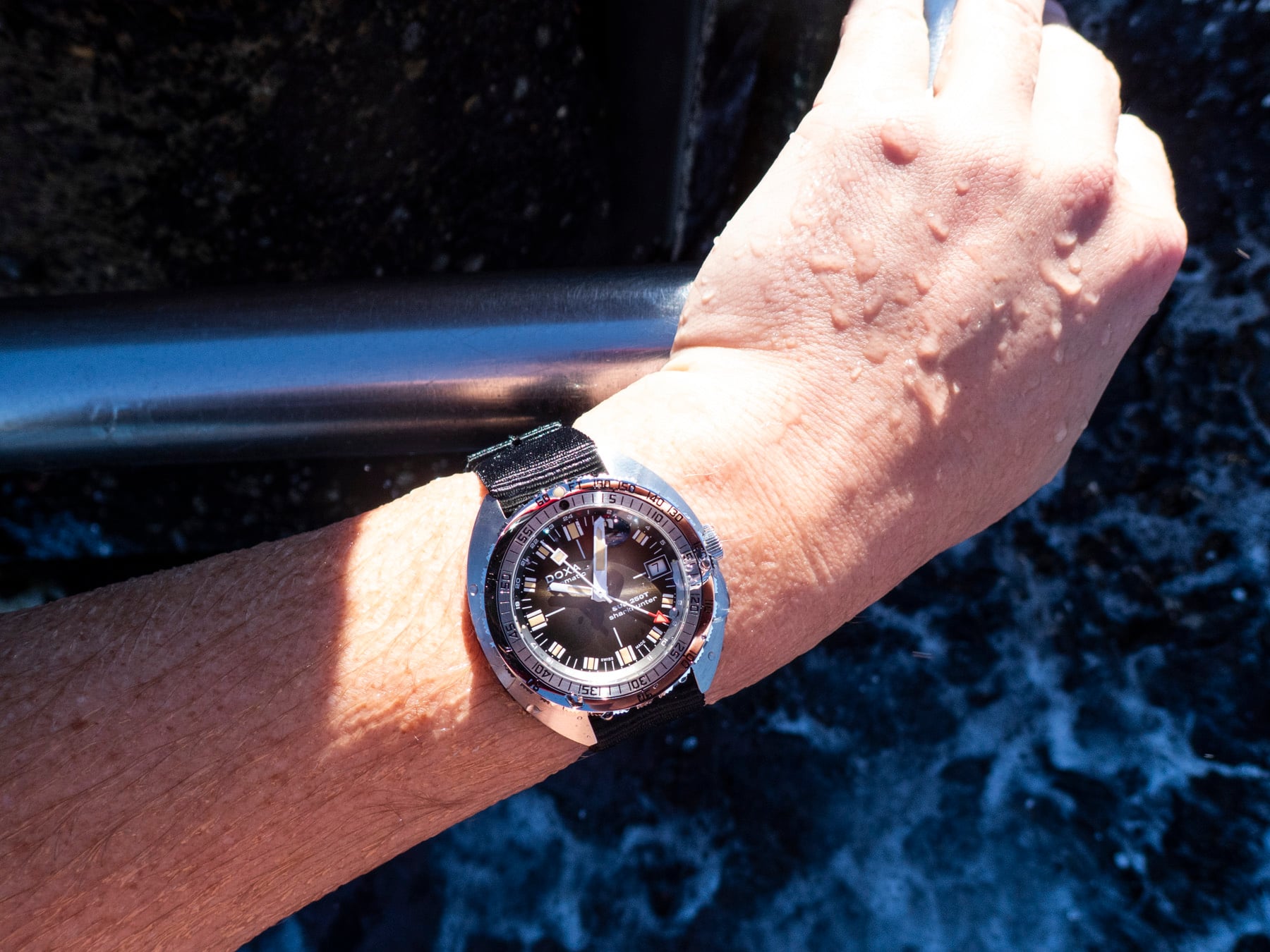
The standout feature of this particular model — and the one that had me immediately reaching for a loupe — is the dial. Doxa calls it “Vintage,” though that word is often abused in the watch world. Here, it earns its place. The fumé gradient moves from a soft charcoal in the center to a deep midnight at the edges. It’s subtle, almost reluctant to reveal itself indoors, but outdoors, particularly in the Australian sunshine, it gives the watch an atmospheric depth uncommon in tool divers. The lume is a beige tone but thankfully not “forced patina” in the kitschy sense; it simply softens the starkness of the indexes and hands, grounding them in a more analog aesthetic.
The all-white handset, another callback to early Sharkhunter models, pops beautifully against the gradient. The skeletonized GMT hand is legible but non-intrusive, gliding quietly along its 24-hour track without disturbing the dial’s balance. Legibility, even at awkward angles, is instant — and that, more than anything, is what separates a true tool watch from a nostalgic design exercise.
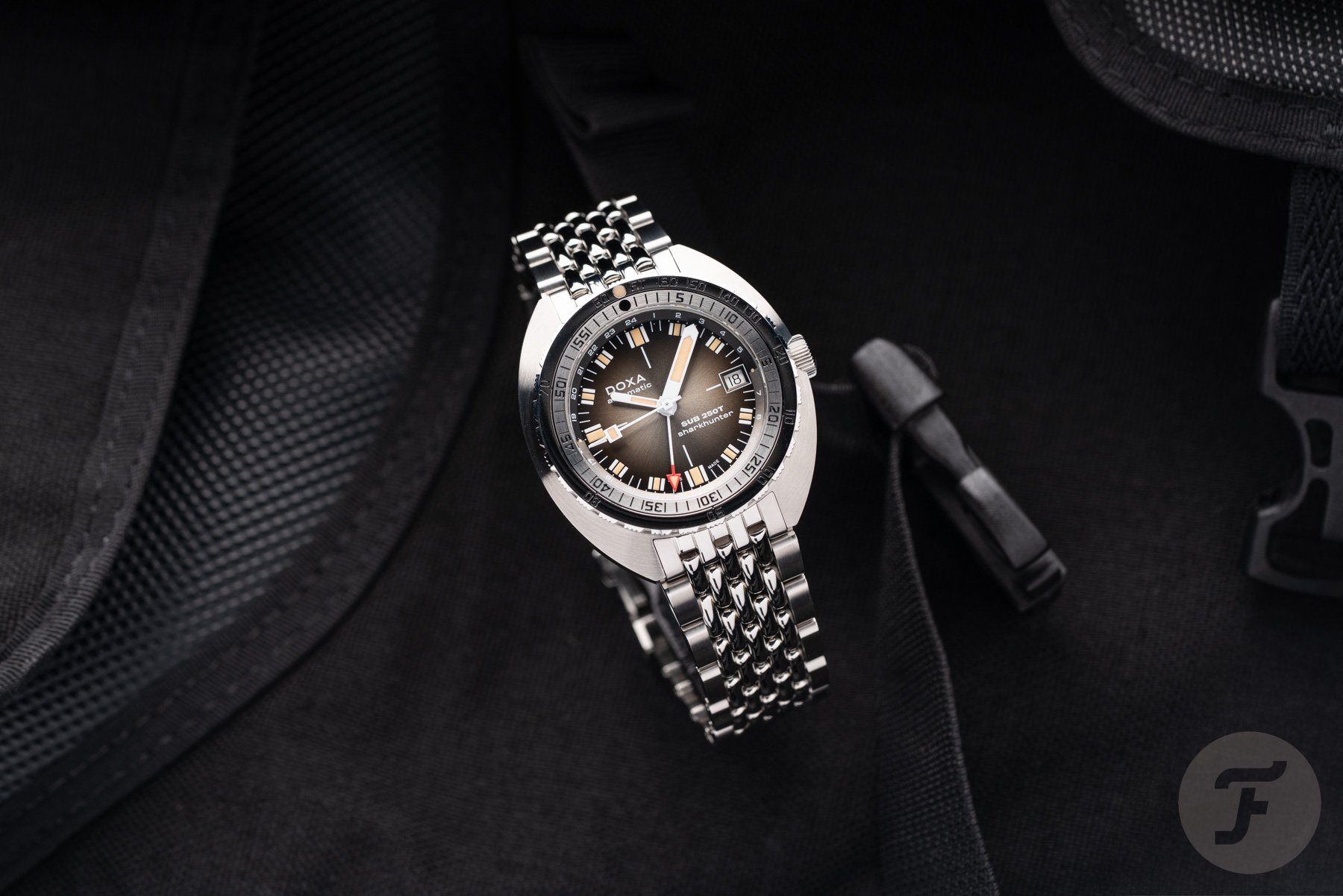
The case that defined a generation, now in a 40mm size
The 40mm cushion case of the Sub 250T GMT is pure Doxa through and through. Anyone who’s worn a Sub 300 or 300T will recognise the broad shoulders, the short lugs, and the flat stance on the wrist. But the 250T pares things back slightly — less bulk, more glide, and a wrist presence that walks the fine line between vintage proportions and modern expectations. Thickness is controlled and well distributed. The case back curves gently, nestling naturally into the wrist. The domed sapphire, complete with antireflective treatment, adds a hint of distortion around the dial’s edge, playing wonderfully with the gradient. It’s a small reminder of earlier dive watches but without the compromises of acrylic.
The unidirectional bezel clicks with that familiar Doxa rasp — slightly grainy, distinctly mechanical, and extremely satisfying. The “no-deco” scale remains a hallmark of the brand, and while many recreational divers today rely on computers, something is reassuring about a bezel that prioritizes decompression information over colorful inserts or ornamental flourishes.
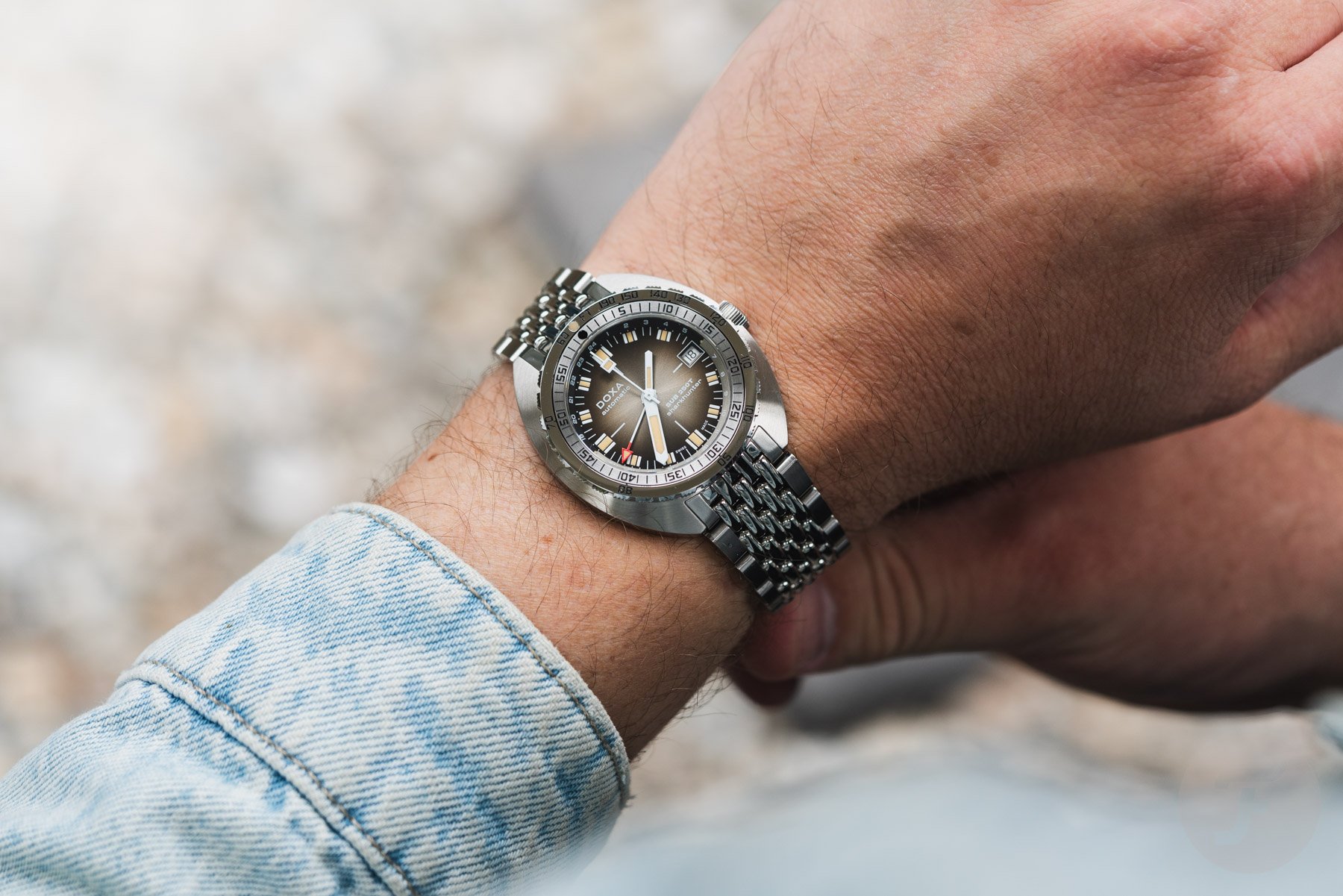
A GMT diver — More useful than you think
The GMT hand, in this context, is more than a nod to the traveling diver; it’s a recognition of how we live now. Very few of us dive daily, but many of us communicate, coordinate, or connect across different time zones during the week — whether for work, for family, or for the simple pleasure of knowing what time it is in a place that tugs at our imagination.
For sailors, photographers, long-haul travelers, and anyone who spends real time on the water, a dual-time diver makes intuitive sense. It adds utility without interfering with the core diving functionality. And in the Sub 250T GMT, the execution is seamless. The 24-hour scale on the dial’s perimeter keeps things neat, avoiding the visual real estate battles that plague GMT bezels. This is a traveler’s diver done correctly — quiet, unobtrusive, and always ready.
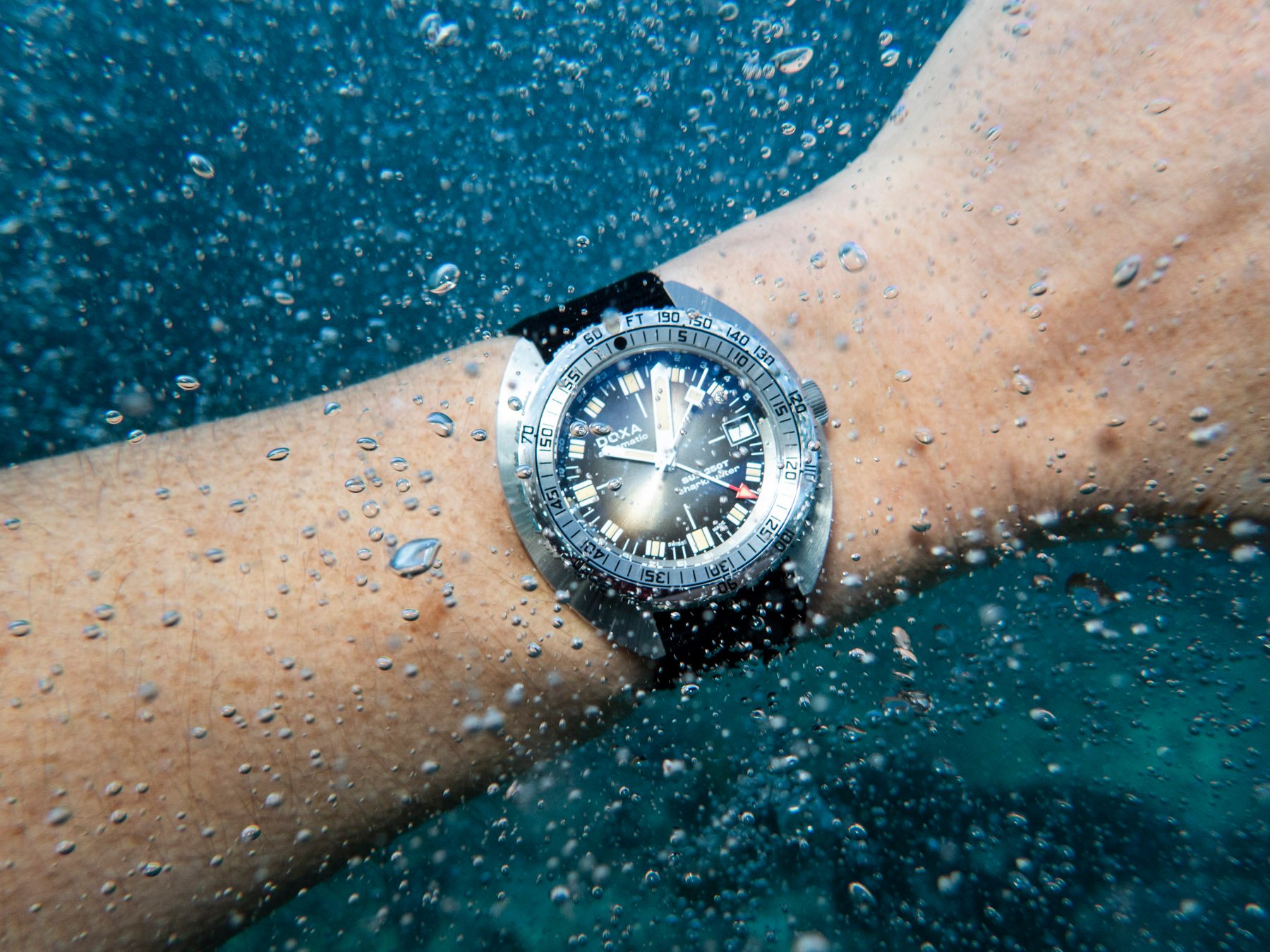
Into the Pacific — How the Doxa Sub 250T GMT Sharkhunter Vintage performs underwater
A week after the watch arrived, I took it out to the Pacific off Sydney’s eastern beaches — the kind of shifting coastline where sandstone shelves drop to kelp forests, and the swell can go from placid to punishing in an hour. On the stainless steel beads-of-rice bracelet, the watch hugged the wrist comfortably under a wetsuit. Doxa’s modern bracelet design remains one of the most wearable in its class, with polished “rice” beads catching glints of water and sun.
Underwater, the lume ignited quickly, glowing as the late-afternoon light. The fumé dial darkened elegantly at depth, but the indexes and hands remained razor-easy to read. Legibility and a unique design language are where Doxa earns its reputation, and the Sub 250T GMT does nothing to tarnish that legacy. The bezel — operated with pruney fingers after a long snorkel — never slipped or hesitated. The crown, recessed just enough to avoid snagging, screwed securely with zero wobble before and after immersion.
Concluding thoughts
What makes the Sub 250T GMT Sharkhunter Vintage compelling isn’t one feature but the cohesion of all its parts. The gradient dial, the cushion case, the GMT complication, the lume, the proportions — they don’t compete. They support one another.
This is a diver’s watch with a traveler’s soul. It is a modern tool with the temperament of something older, wiser, and more analog. And it manages to feel new without straying from the identity that divers and collectors have cherished for decades.