Hands-On With The Tudor Ranger 39mm And 36mm In Beige And Black

When we were offered the opportunity to go hands-on with almost the entire current line of Tudor Ranger models, I immediately volunteered. GADA (go anywhere, do anything) field watches are my favorite category, and I hold Tudor in very high regard. Naturally, I was very curious to experience Tudor’s take on the genre. As it turns out, though, I am not completely sold on these. Allow me to elaborate.
Before I do, let’s cover some of the basics. I spent time with the beige-dial Ranger in both sizes (36mm and 39mm) and the smaller black-dial version. The 36mm models on the stainless steel bracelet cost €3,520, while the 39mm one on the fabric strap costs €3,290. While this is the entry level for Tudor watches with manufacture movements, it is enough to warrant a critical review. Let’s get into it!
Tudor Ranger specifications
At heart, these are steel GADA/field watches in the spirit of the Rolex Explorer. As you may know, Tudor has a long history in this department, and these new watches lean heavily on historic references, like the Ranger ref. 7995. The current Ranger comes in 36mm and 39mm sizes. The newer 36mm version has a 44mm length, an 11mm profile, and a 19mm lug spacing. The 39mm model features a 47mm lug-to-lug and 12mm thickness. The 1mm increase in the latter measurement comes primarily from a more heavily domed sapphire crystal. This model also has a more standard 20mm lug spacing. Tudor gives both versions an ample 100m water resistance rating.


Inside the 36mm model ticks the manufacture (Kenissi) caliber MT5400. The 39mm version houses caliber MT5402, which is identical except that it is proportioned for use in slightly larger cases. Functionally, both offer the same frequency of 28,800 vibrations per hour, a 70-hour power reserve, daily accuracy of -2/+4 seconds, and a non-magnetic balance spring. Both come with COSC chronometer certification.
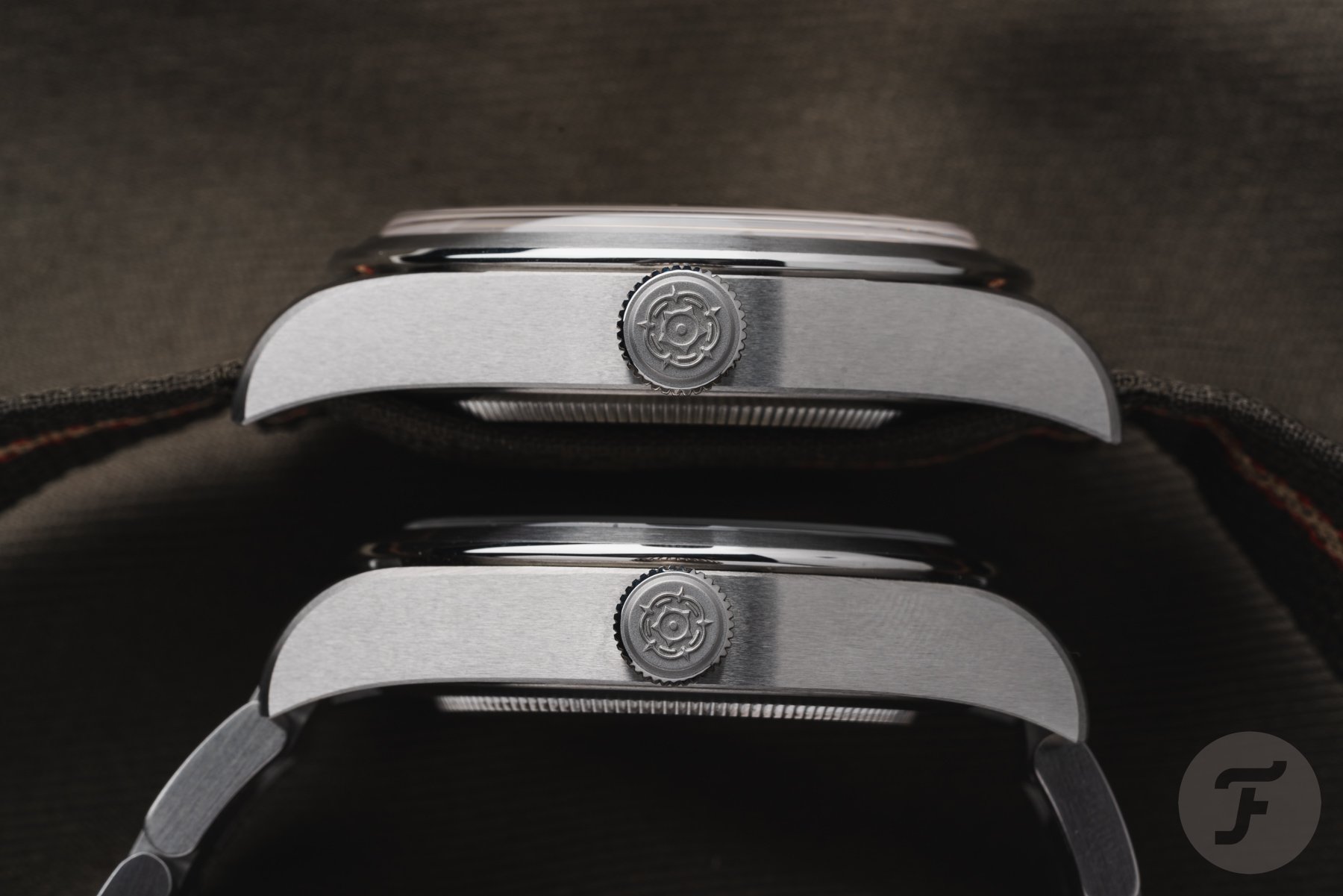
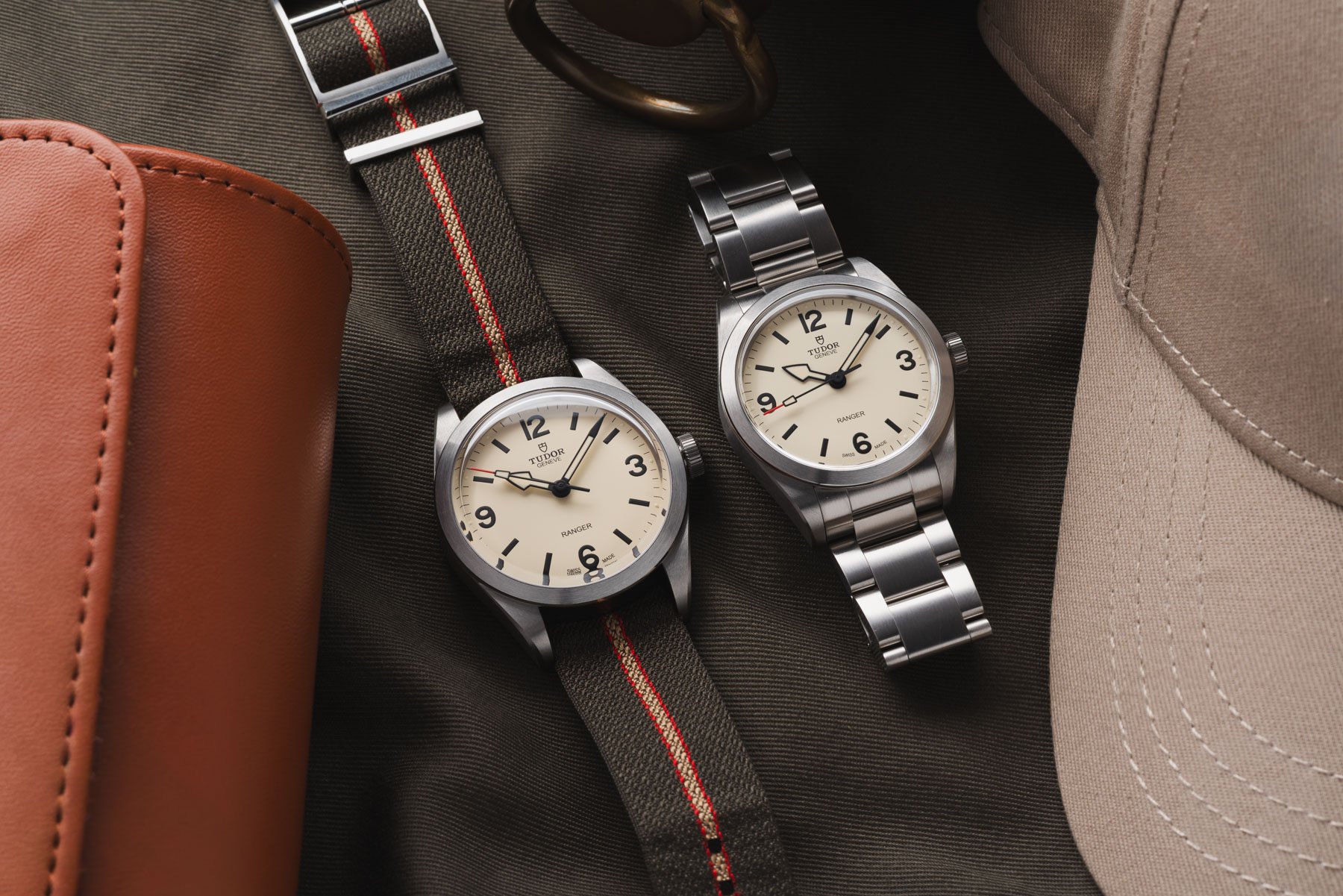
The watches come with your choice of a stainless steel bracelet or a green woven strap with a striking pinstripe down the middle. The bracelet features Tudor’s T-fit clasp with spring-loaded micro-adjustment but no quick-release mechanism.
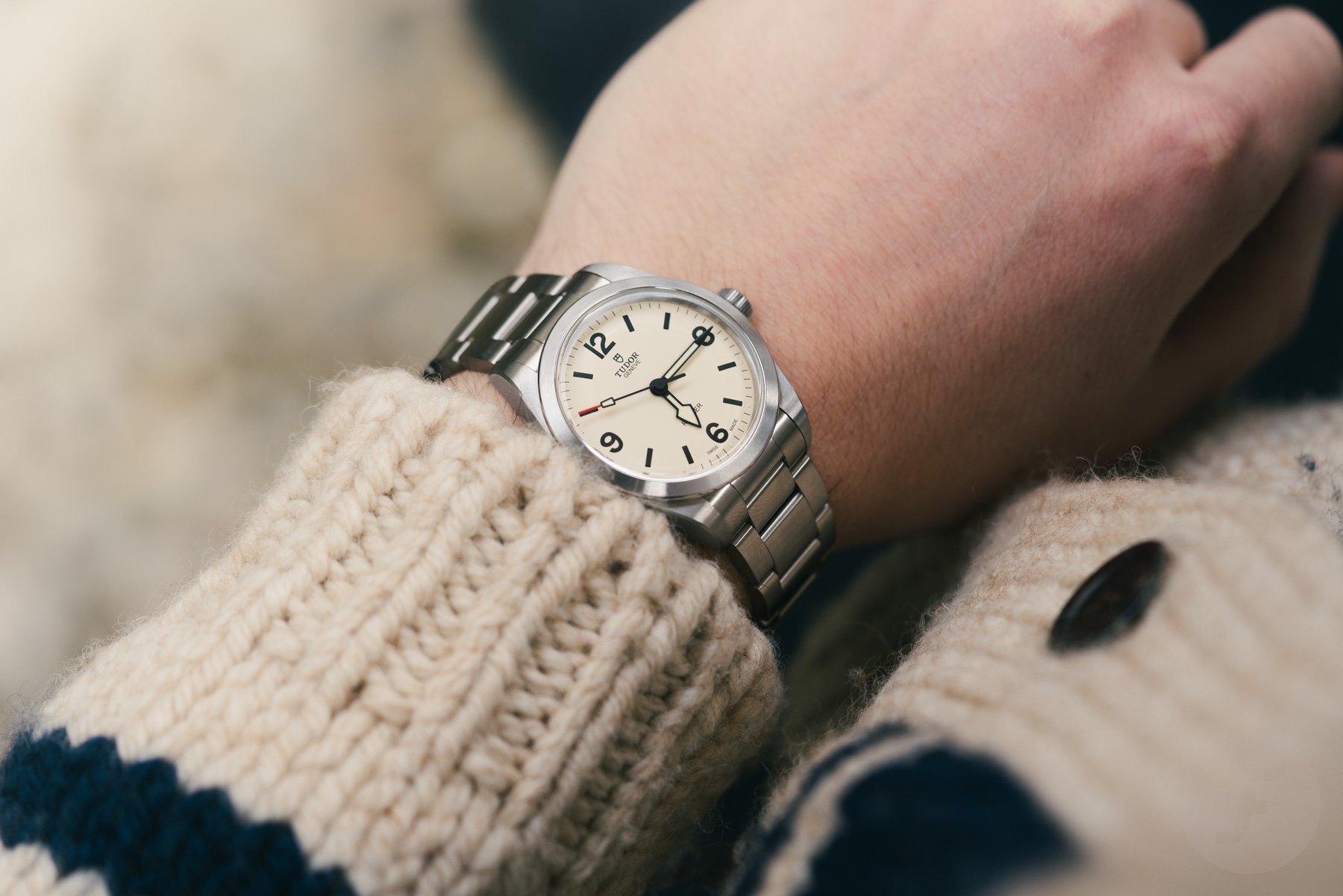
The 36mm Rangeron my 18cm wrist
The Tudor Ranger’s two sizes
While the Tudor Ranger’s 39mm size was already a bit of a crowd pleaser, the brand recently added a 36mm version. This makes it feel closer to a classic Rolex Explorer. Note that the original Tudor Rangers were even a tad smaller, with 34mm Oyster cases. Still, I think Tudor did well to release a 36mm model instead.
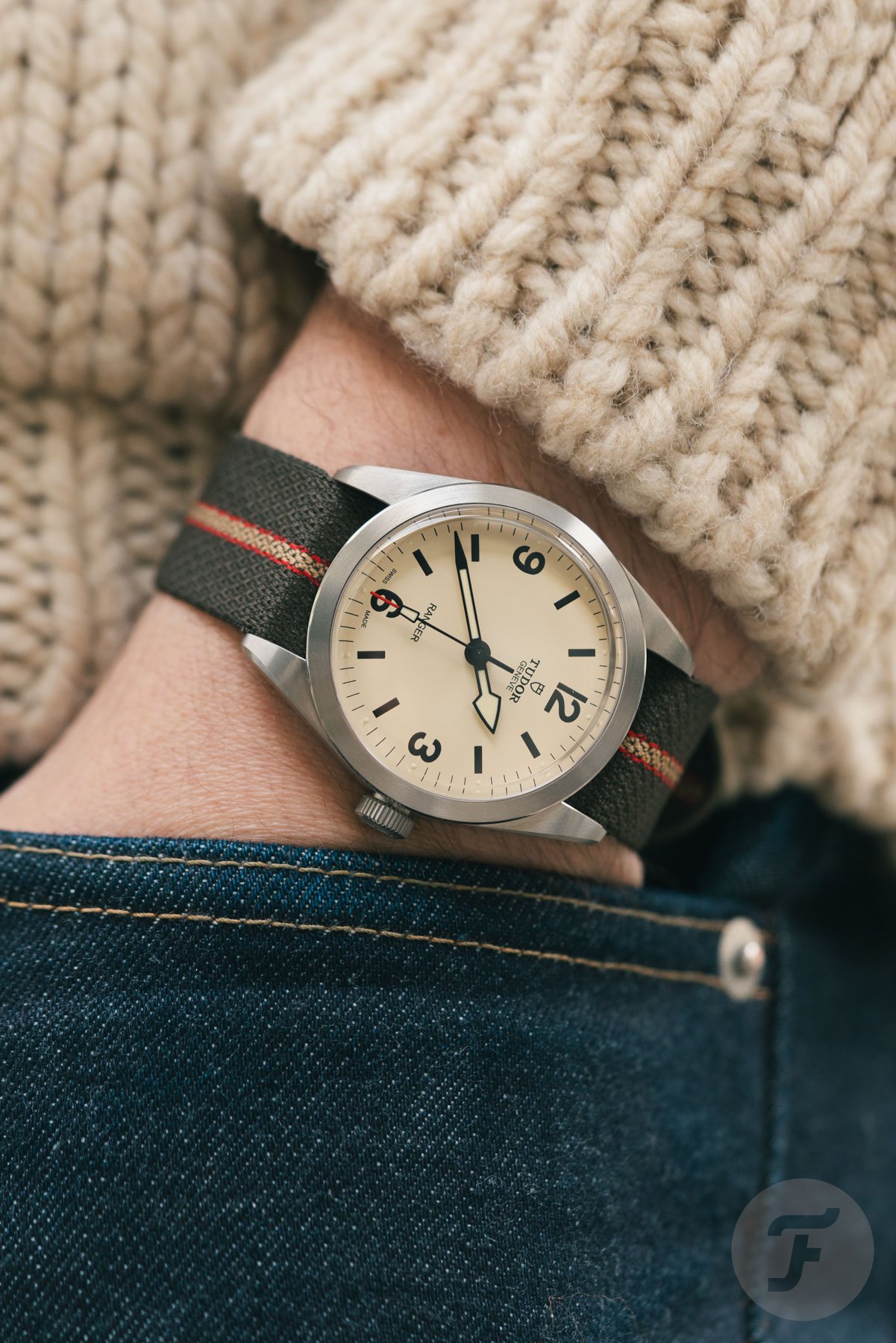
The 39mm Ranger on my 18cm wrist
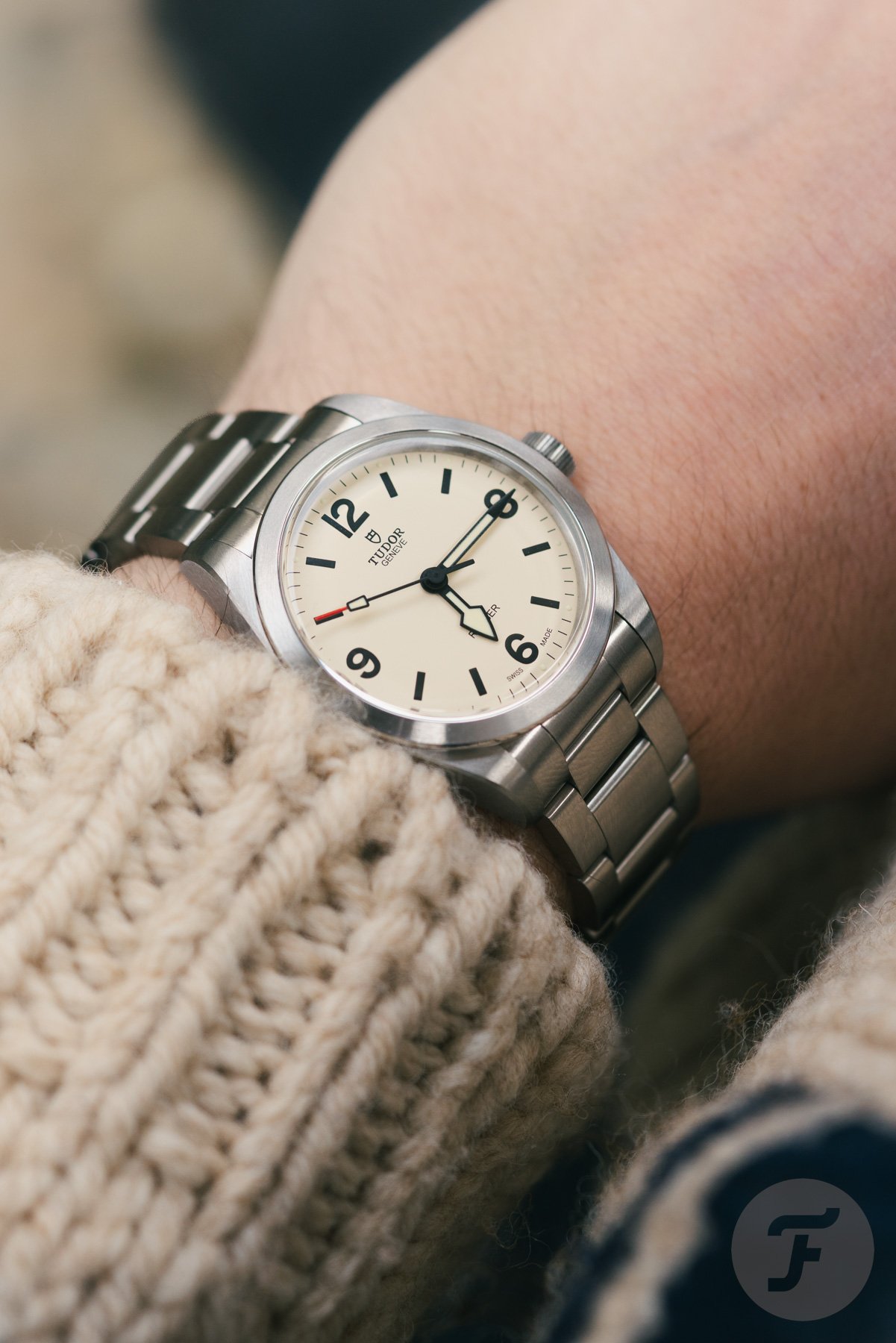
I have an 18cm (7.1″) wrist, and both size options fit me like a glove. Seeing these Rangers get passed around the different wrists in our headquarters, I’d say that almost anybody could probably pull off either size, except for those with exceptionally small or large forearms. The difference, however, is in feel.
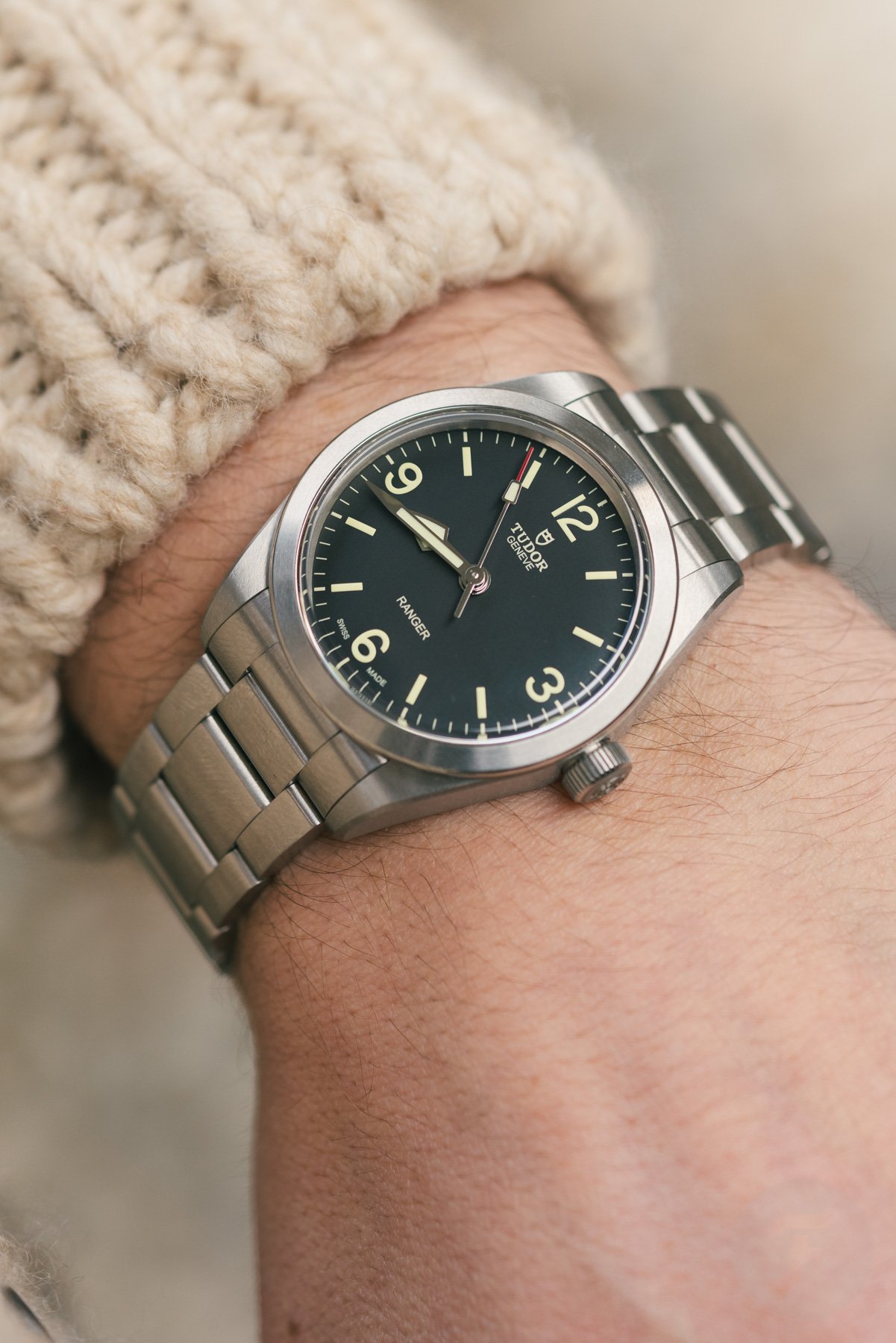
The 36mm Ranger on my 18cm wrist
The 36mm version evokes much more of that classical Ranger/Explorer vibe. The 39mm Ranger, meanwhile, looks and feels more like a modern sports watch. I cannot tell you which to get, but I suspect you will have a natural inclination to one over the other.
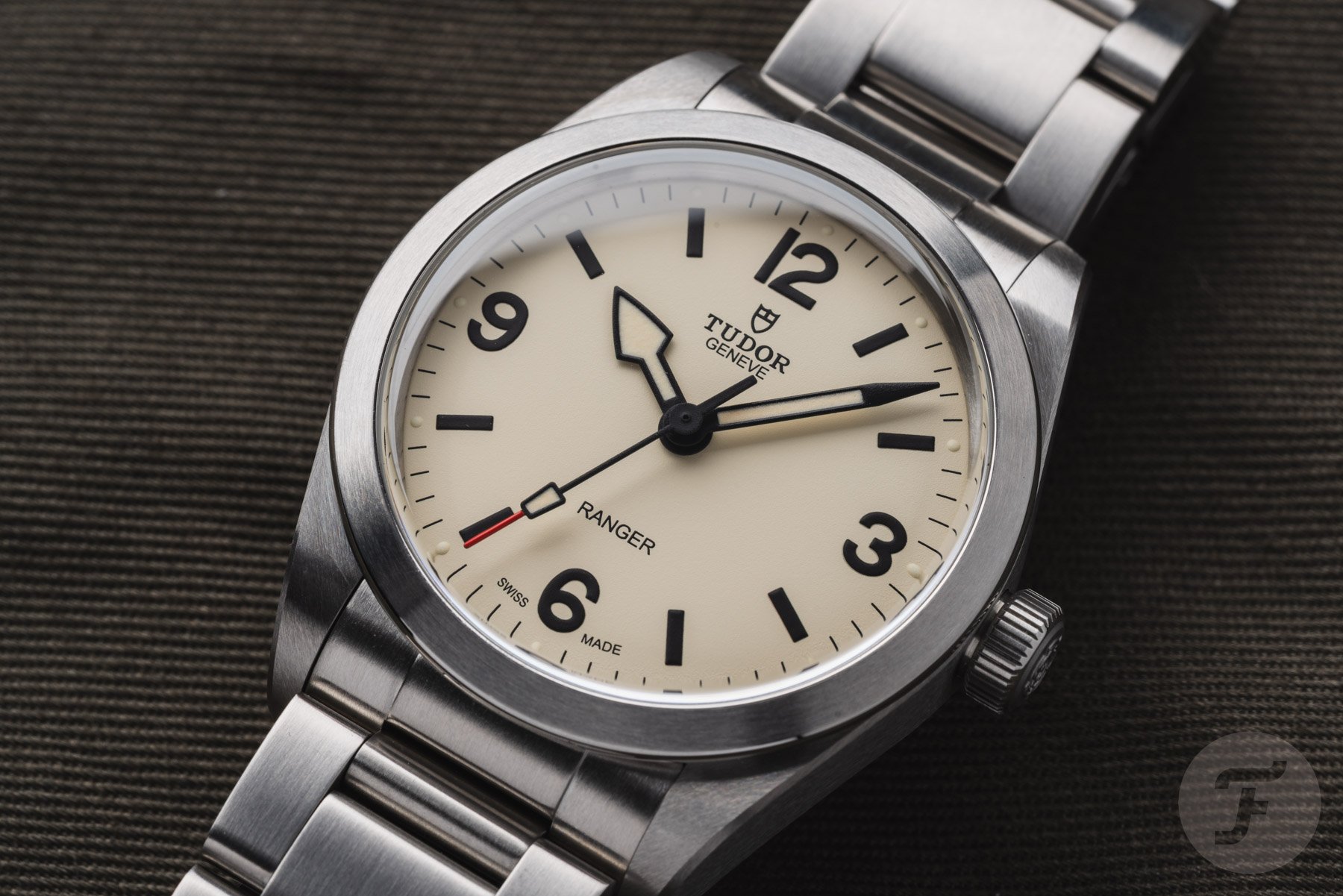
Construction and finishing
I always love the feel of a modern Tudor watch in hand. The build is solid and on the heavy side, inspiring confidence. This extends to the feel of operating the crown and, particularly, to the bracelet. Tudor bracelets aren’t exactly at Rolex’s exalted level, but they have some of that heft and supreme smoothness. This makes them feel luxurious and dependable.
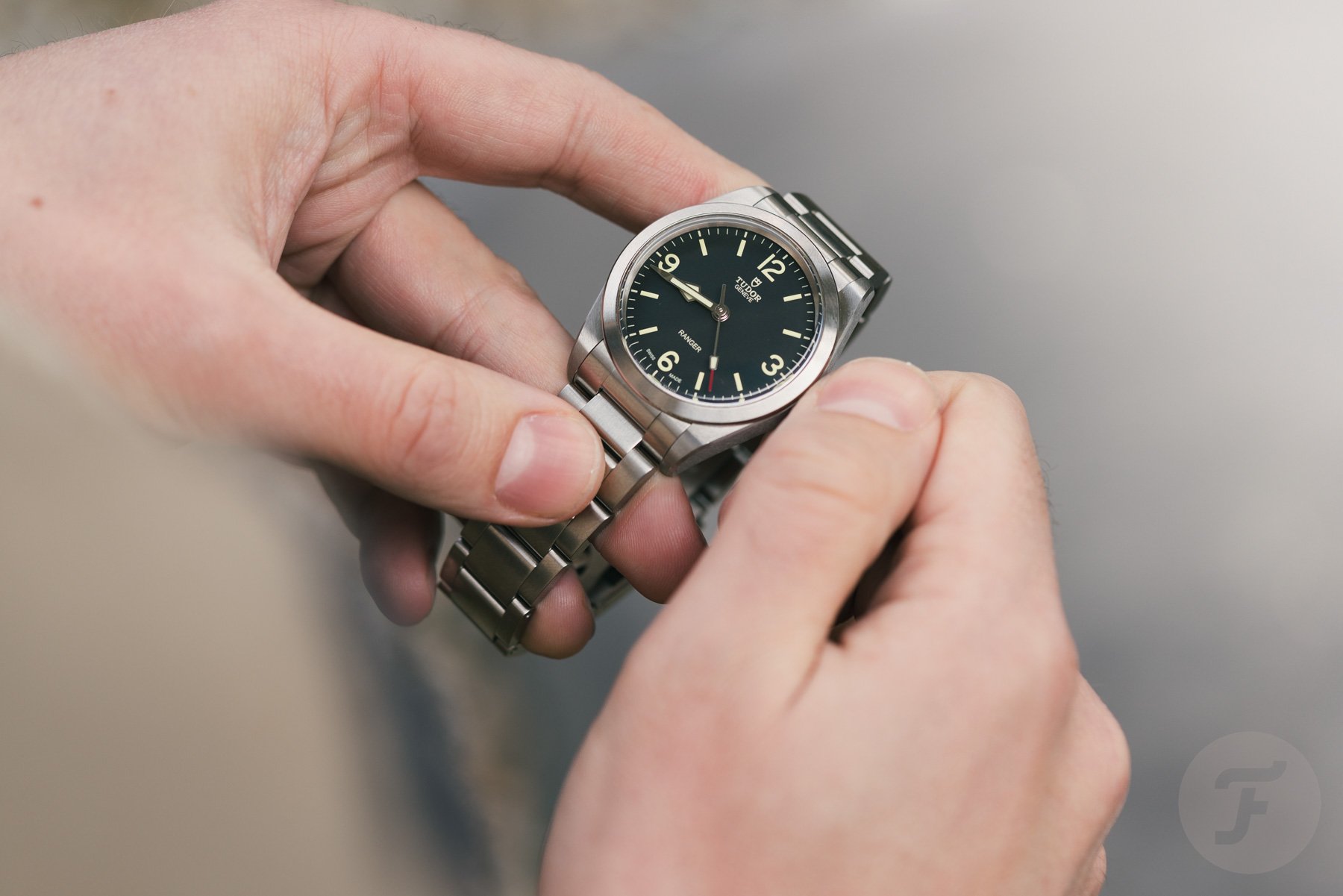
This brings us to the finishing of the Tudor Ranger’s exterior, and this is where I start to lose some of my positivity. While the brushing looks and feels nice and textured, appearing deep and clear, it also has a crude quality. The edges are, frankly, unacceptably sharp. The same goes for the clasp. You can easily cut yourself if you aren’t careful. While you could argue that a spartan tool watch like the Tudor Ranger shouldn’t be finished to a luxury standard, I do expect more.
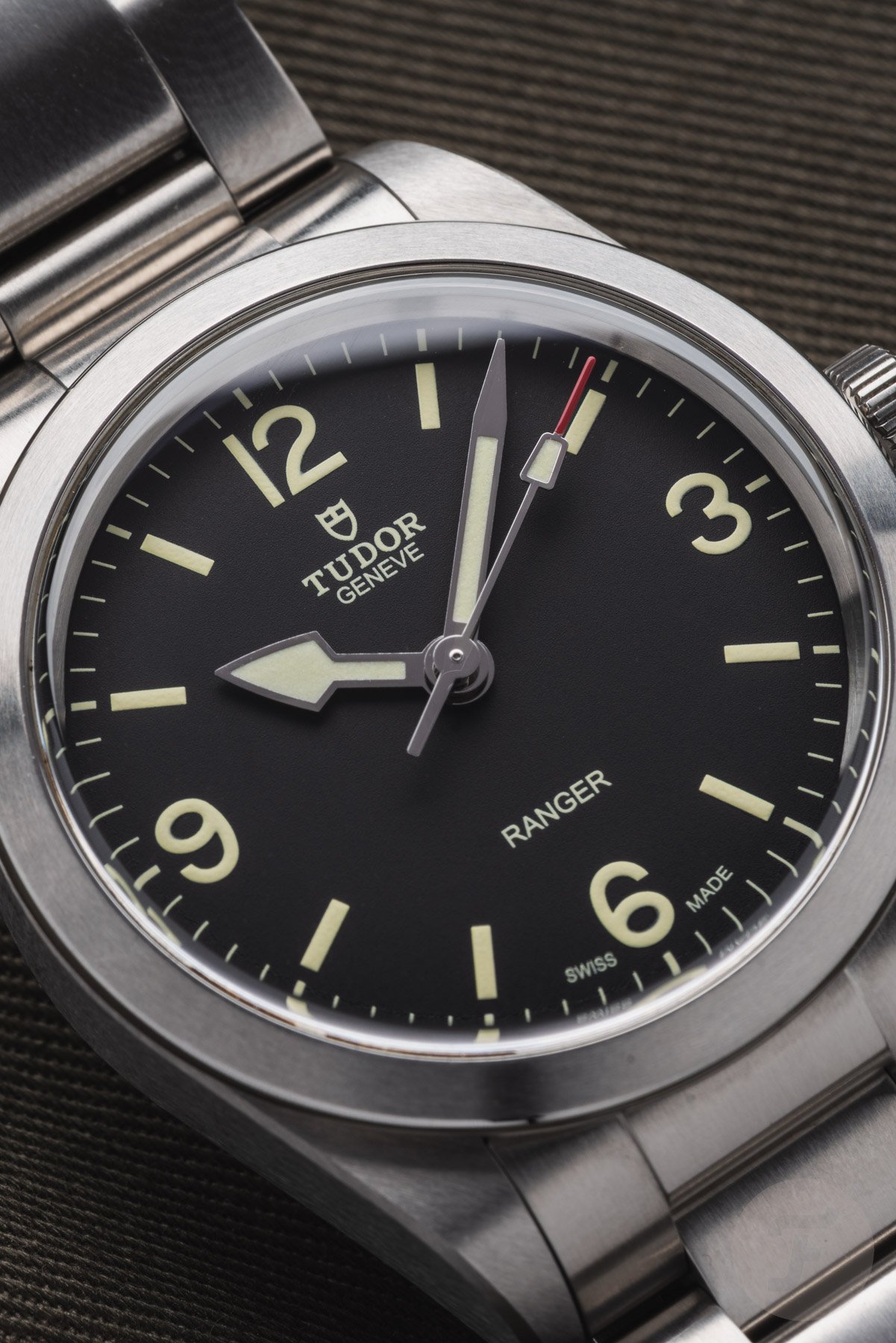
Tudor, we have a bone to pick about dial typography
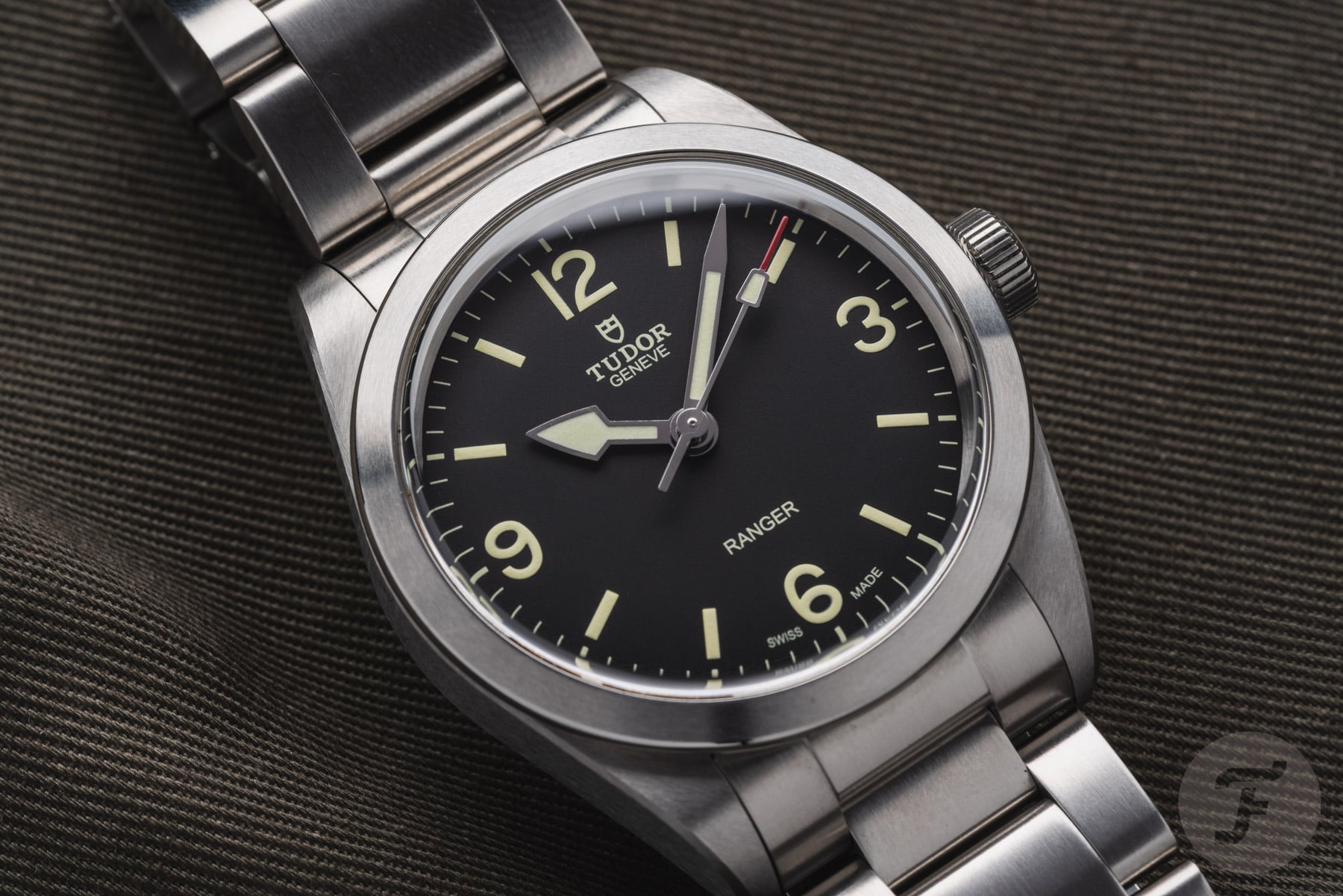
But that’s not my biggest point of contention with the Tudor Ranger line. The moment I first saw the modern Ranger, I felt something was off. The dial didn’t look right to me. While I love a good 3-6-9 dial on an Explorer or even on vintage Tudors, this one felt wrong. I decided to ask Samuel Baker, an expert on watch typography, for his thoughts, and his reply was quite enlightening.
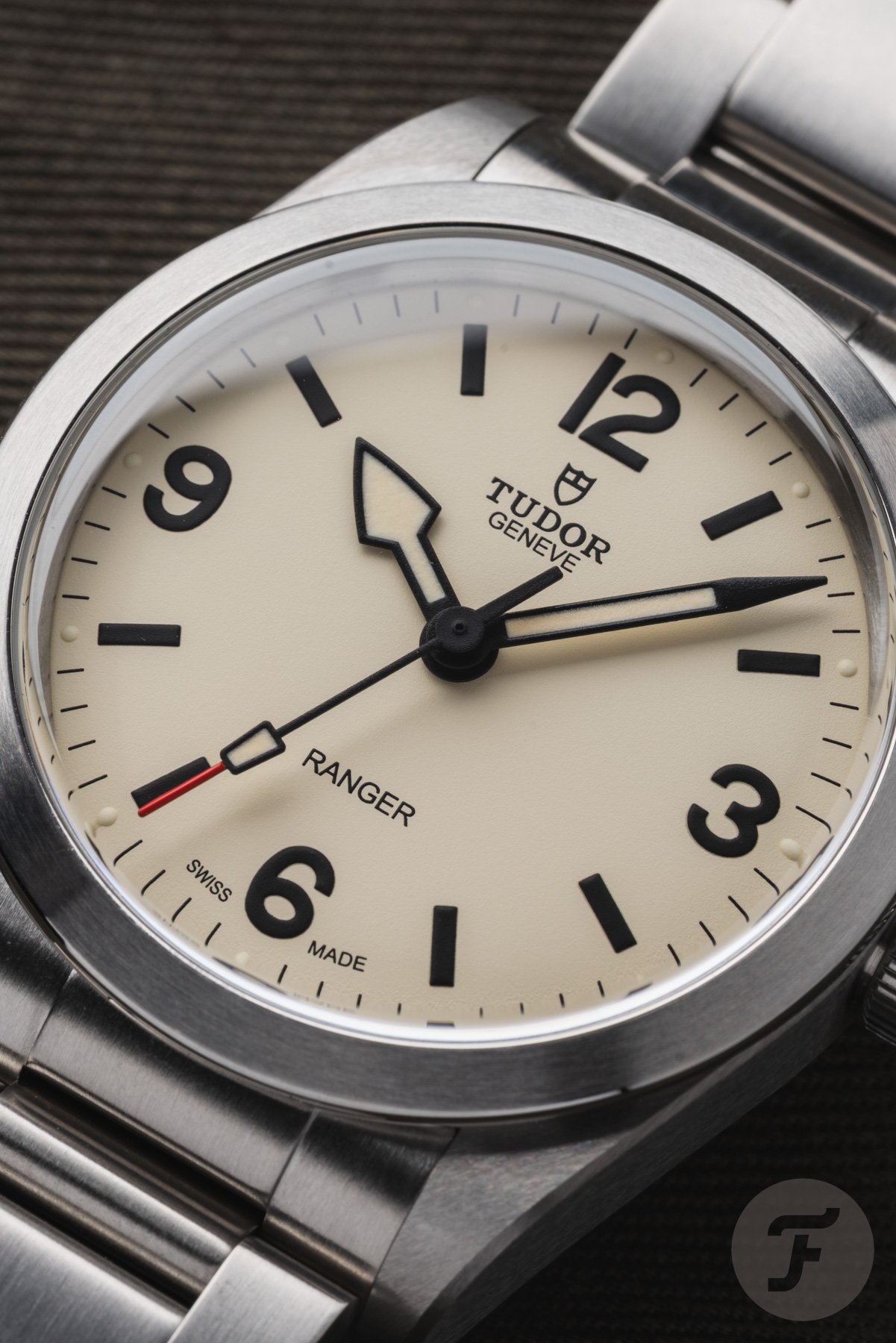
Samuel told me that he suspects engineers drew the dial to make it look like a vintage Ranger dial. However, they did so using geometric drawing tools to curve the numerals. This results in a fragmented aesthetic, where the curves feel clumsy and unnatural. Looking at the 6 and 9, you see they are almost egg-shaped, with overly narrow open sides and wide loops. The 3 is symmetrical top to bottom, rather than having a slightly wider base and narrower top, making it feel unbalanced. The 12, similarly, ignores some of the standard typographer’s rulebook. Characters with curved tops/bottoms usually extend beyond straight characters, to make them appear the same height, optically. Here, as a result of ignoring that rule, the 1 appears longer than the 2, creating even more imbalance.


Adding insult to injury, the “Geneve” and “Ranger” lines are in basic Arial. Compare this to the lovely hand-rendered typography on the original Ranger ref. 7995, and it doesn’t feel like progress is necessarily the same as improvement.
Closing thoughts
I feel details such as finishing and typography matter even more on spartan watches. These are the details that lift it from basic to special. While you might argue that this is “only” an entry-level Tudor, I still think it warrants a little more refinement in these respects. Knowing that deeply passionate watch enthusiasts work at Tudor, I am sure someone, at some point, raised a finger to ask about the imbalanced dial. I wish that person had been heard.
That said, the Tudor Ranger feels solid and dependable. It comes in two well-coordinated sizes that give off two distinct vibes. Both are a pleasure to wear, aided by the excellent bracelet. The issues I have with the dial surely won’t bother most potential Tudor Ranger buyers. Fratello is a publication for enthusiasts, though, so if there is a place to discuss it, it’s here.
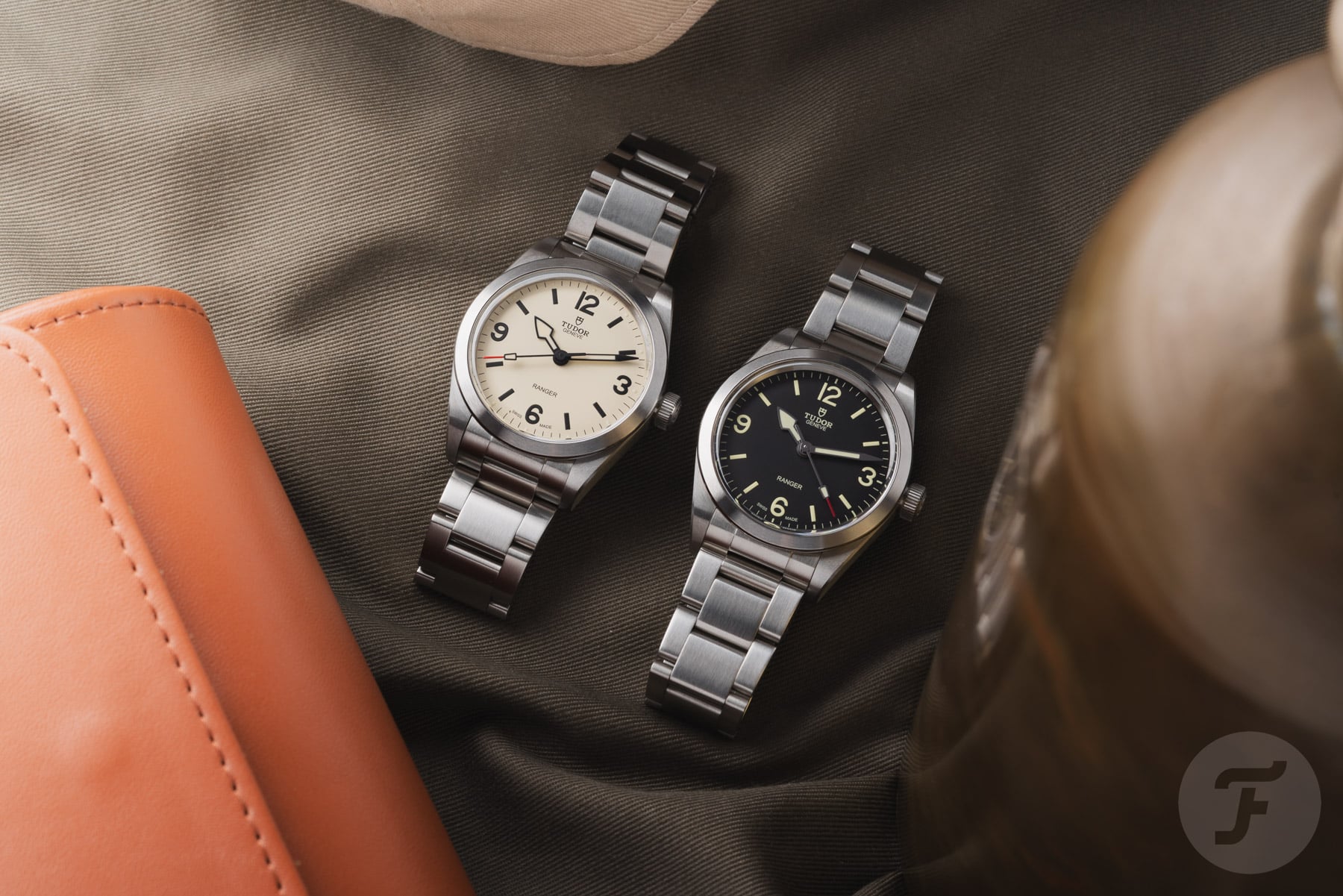
So, while I am left a bit unfulfilled, I still believe the Tudor Ranger is a rather good watch. What do you think? Let us know in the comments section below.