Here Is What’s New In Timekeeping For The Winter Olympic Games 2026

The incredible wins of Jutta Leerdam (left in the header image) and Jordan Stolz (on the right) probably did not go unnoticed if you watched the Olympic Games Milano Cortina 2026. Or what about the silver medal for the Italian biathlete Dorothea Wierer (center)? You also might have witnessed Lindsey Vonn’s crash on the slope. The Winter Games are in full effect, so it’s time for us to have a look at the new timekeeping equipment that Omega brought in.
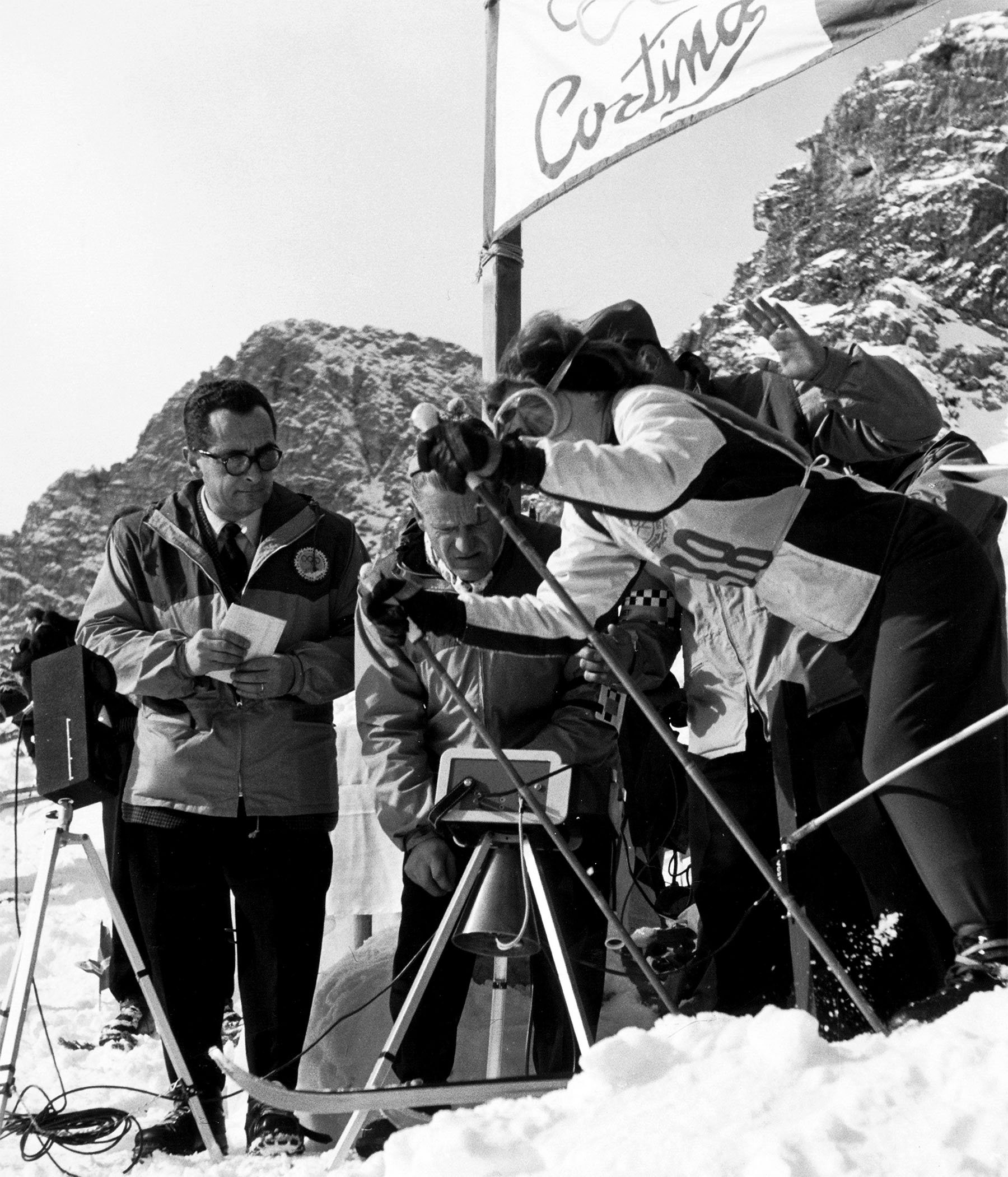
Olympic Games 1956 in Cortina, Italy
Timekeeping at the Olympic Games 2026
What also probably didn’t go unnoticed during any of the games are the bright red Omega signs and logos everywhere in Milan and Cortina. For the 32nd time, Omega is the official timekeeper of the Olympic Games. Since 1932, Omega has been tracking times and records during the Olympic Games as an official timekeeper. Whereas Omega provided mechanical stopwatches during the first timekeeping events, the brand now uses state-of-the-art technology to track every result.
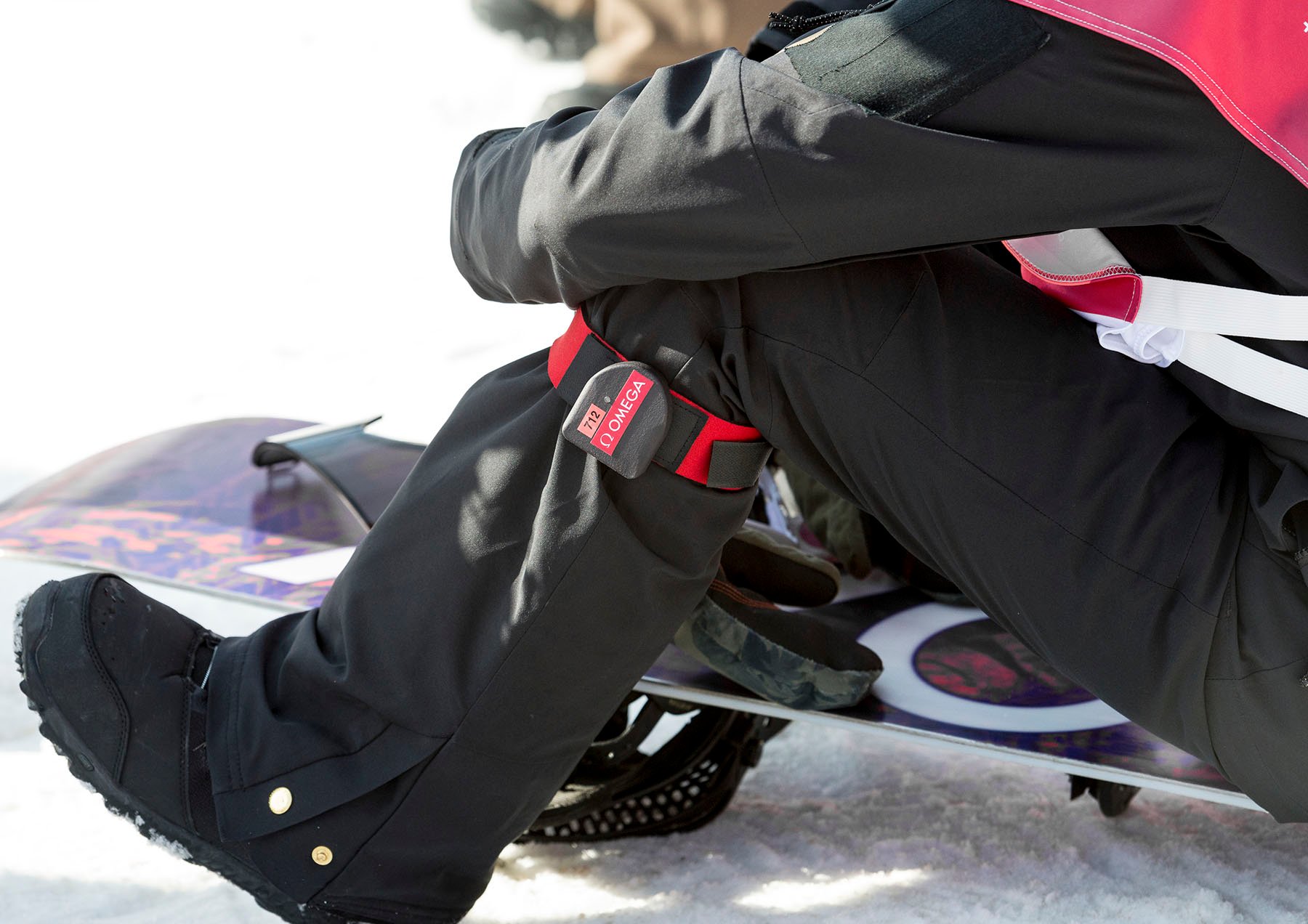
Motion sensor on one of the PyeongChang 2018 athletes
We gave a rundown of the Omega timekeeping technology used for the Tokyo 2020 Olympic Games, which took place in 2021. But for the Milano Cortina Winter Games, featuring eight sports categories and 116 events in total, Omega introduced new solutions for several Olympic disciplines.
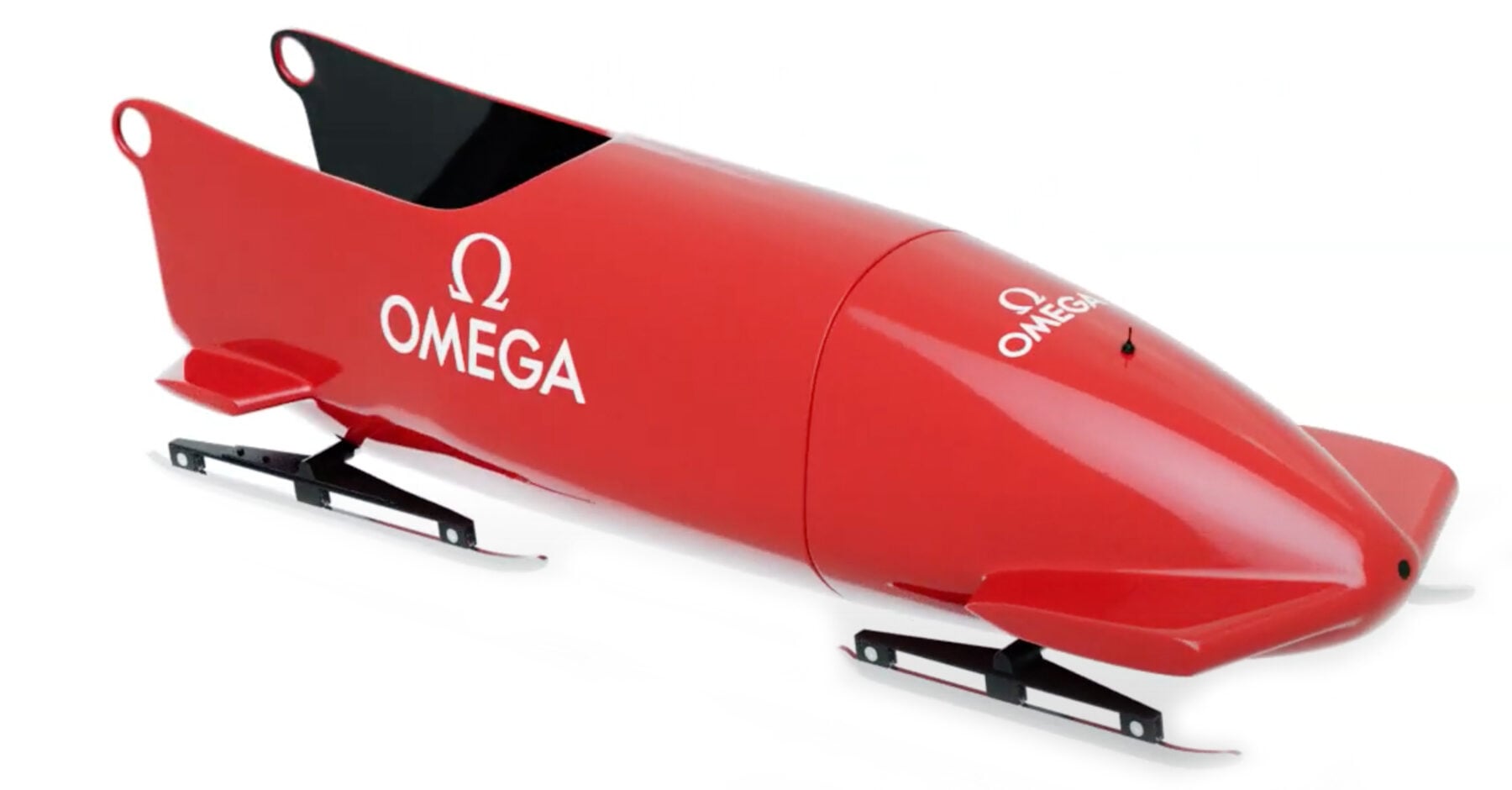
Bobsleighing
One of these new timekeeping innovations is the Bobsleigh Virtual Photofinish. Omega will now be able to visually compare the times of each team crossing the finish line with a virtual photo-finish overview. Each run will produce a separate image, which officials can then compare with the other finishes. Using sensors inside the bobsled and eight antennas all over the track, the system will measure speed and roll angle and transmit this data in real time to the control center.
The photocell technology captures precise times along the track and creates an overview of the finish of all teams. This means there will be one picture with all the individual race finishing times and images of the bobsleds for comparison. It’s a visual way for commentators and spectators to get a proper understanding of each event.
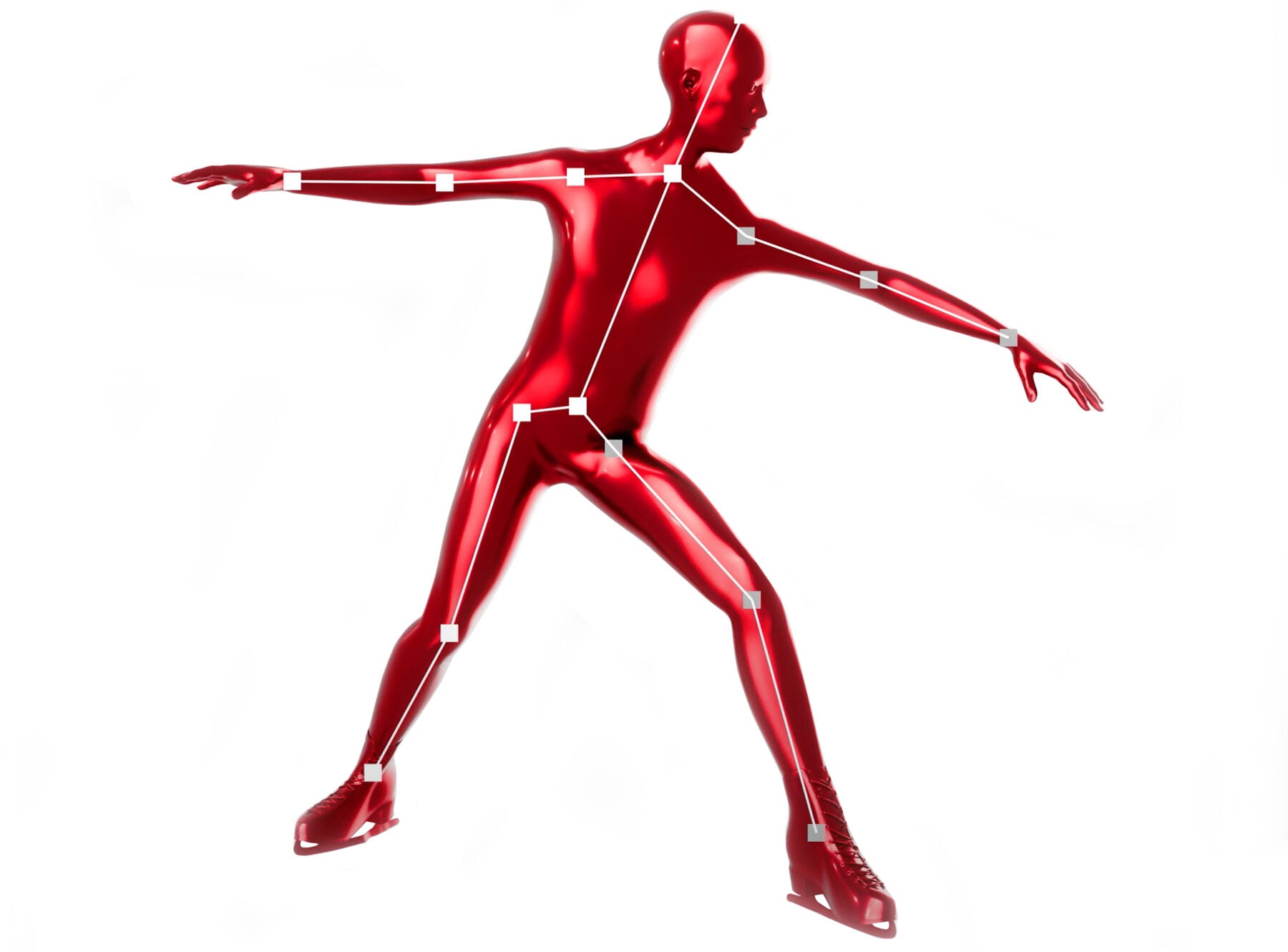
Figure skating
Omega’s Computer Vision technology isn’t new. In fact, it debuted at the PyeongChang 2018 Games. It’s a system of image-tracking cameras that follow athletes and objects (like balls). By interacting with other cameras on a track or field and with AI software, it tracks live data on movements, positions, speeds, distance, acceleration, etc. This system can provide incredibly precise views that the human eye can’t detect.
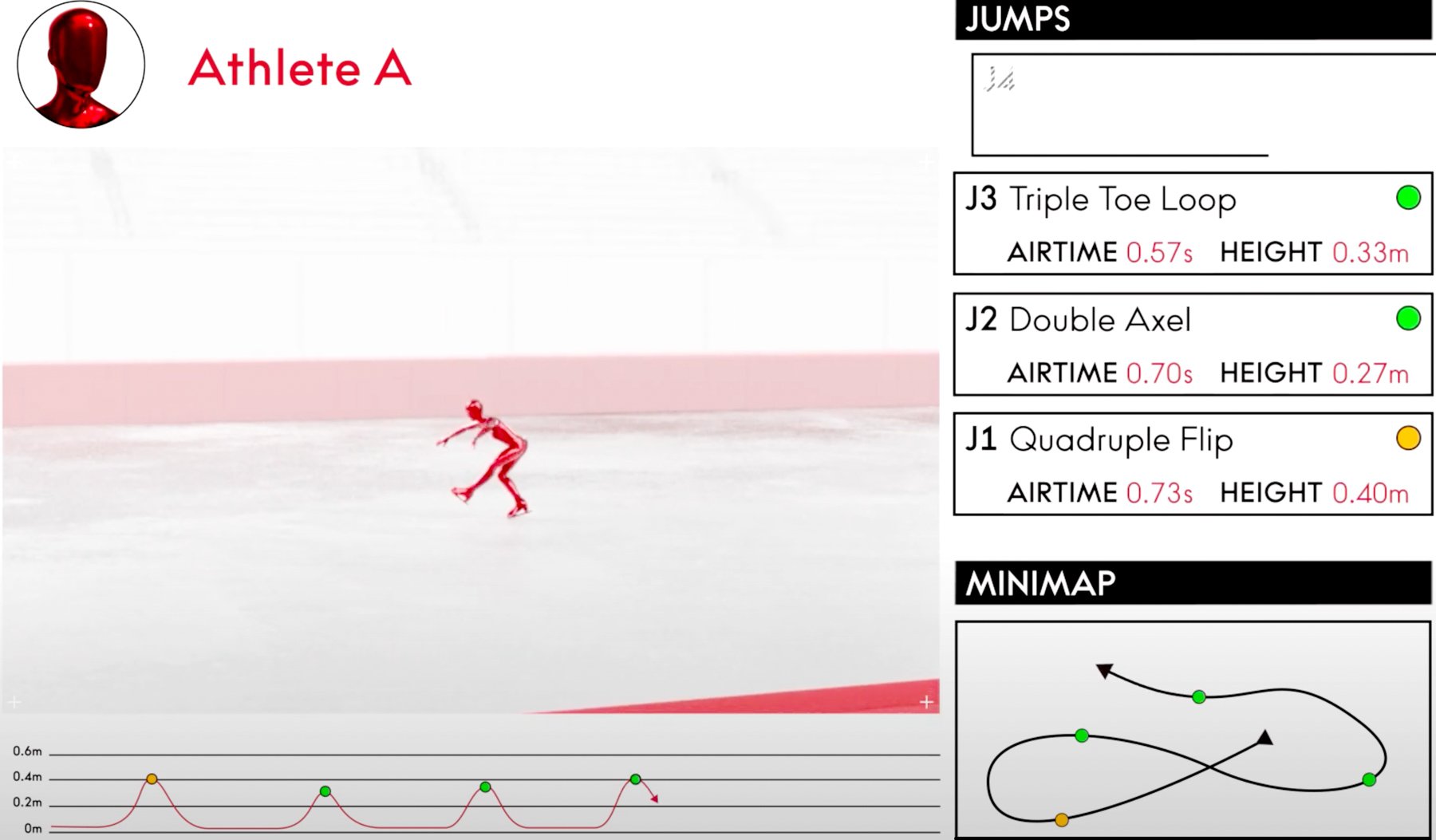
For the Milano Cortina 2026 Games, Omega is also using Computer Vision for figure skating. It can track the angle of each athlete’s blade in this discipline. Additionally, it provides data points (jump heights, flips, number of rotations, landing speeds, etc.) that show when replaying the skaters’ performances. Judges can now instantly use data on the execution of certain skating routines and jumps to inform their scoring.

Ski jumping
Omega’s Computer Vision technology also comes in handy in ski jumping. Here, it analyzes jump performances by monitoring athletes’ body positions at every moment of the take-off process.
The ski jumpers wear sensors, and there are three to four high-speed cameras to measure their speed, knee angle, angle of attack, height above the ground, effects of wind speed, and final distance. The technology generates an overview with stroboscopic images for the judges and commentators, along with accompanying data on the aforementioned.
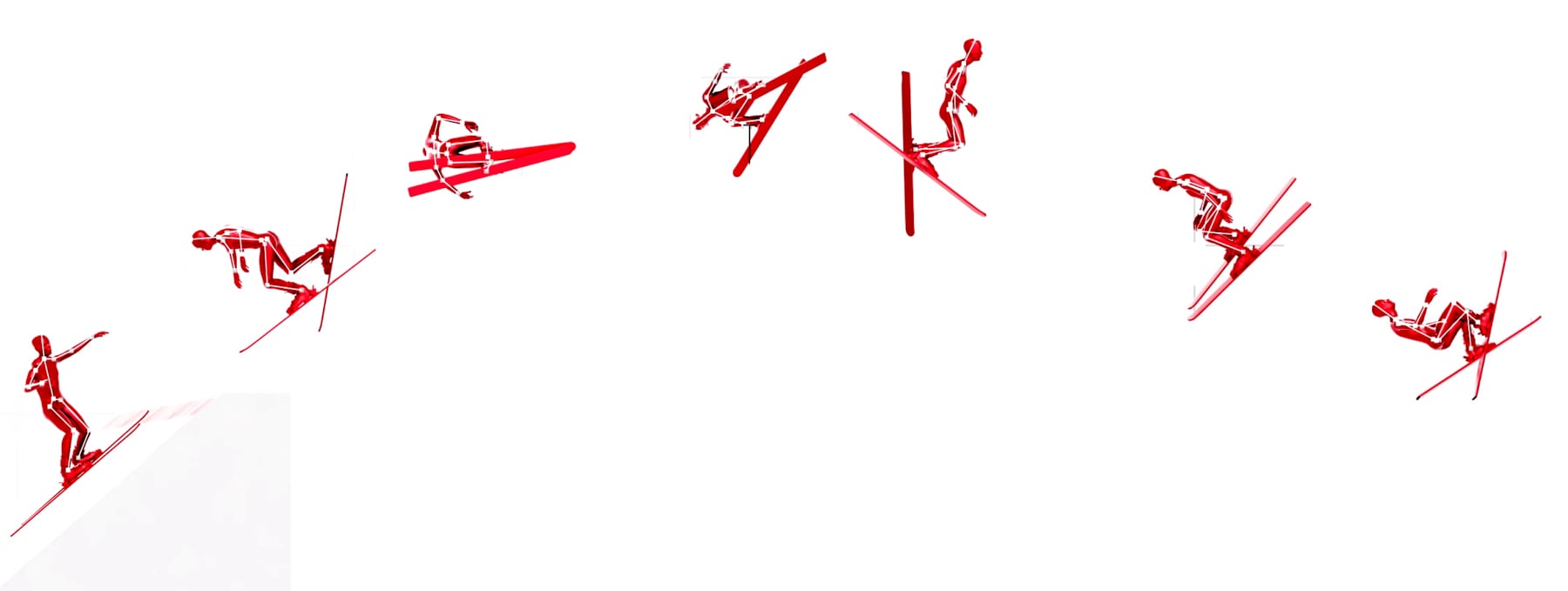
For the Big Air discipline in skiing and snowboarding, Omega’s Computer Vision technology relies only on high-speed cameras. The athletes are no longer equipped with motion sensors; they are instead meticulously tracked by four to six cameras. These cameras help analyze all data on the athletes’ speed, rotations, height, 3D body positions, and jump trajectories. Here, too, the system can generate a stroboscopic image showing the full jump routine, accompanied by all the important data.
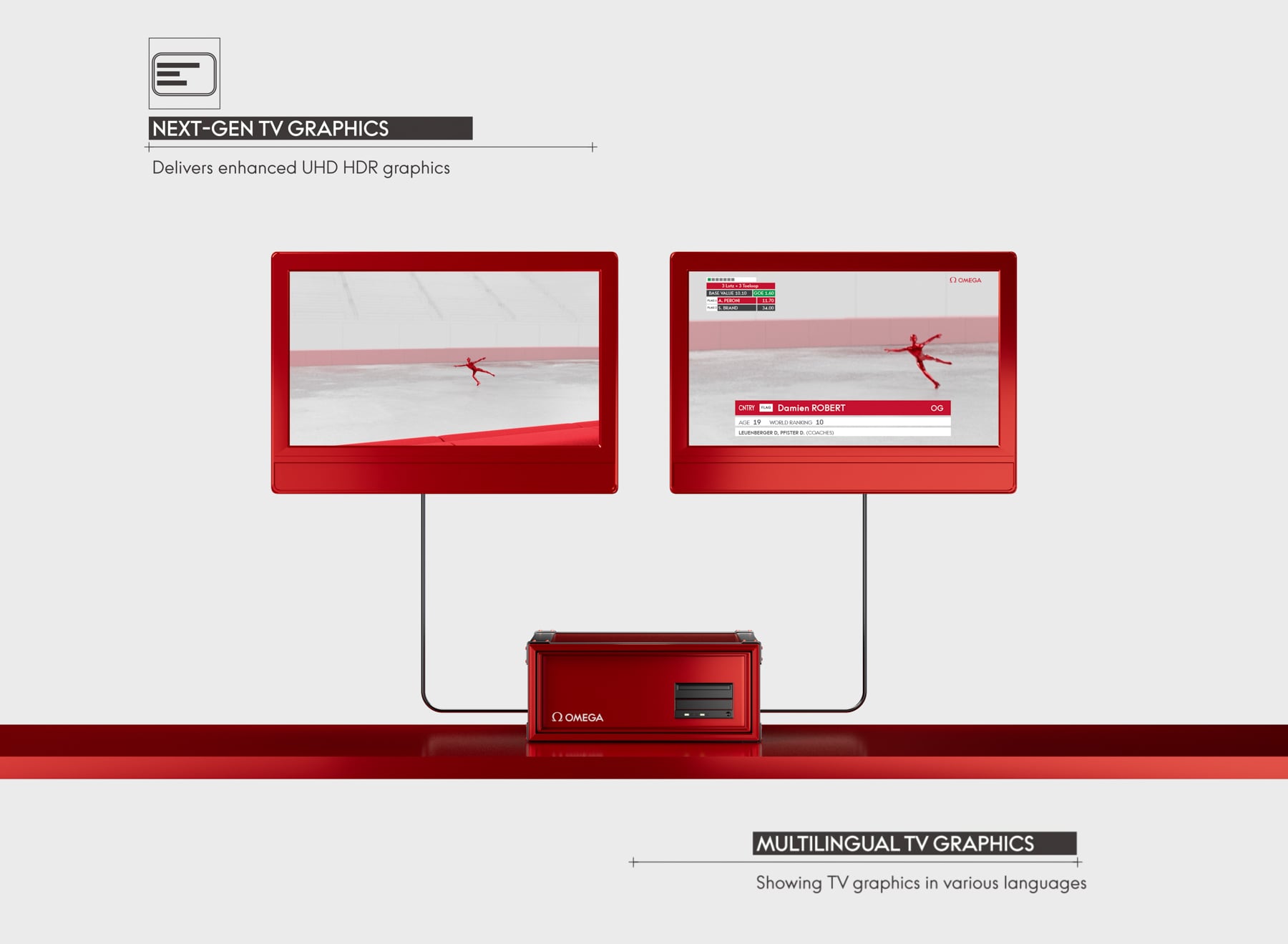
Infographics
Omega’s new Vionardo Graphics Technology takes care of displaying all the live timing and scoring via infographics. It’s capable of showing graphics in 4K UHD, both for local display at the sports venues and for the broadcasting channels.
Together with Omega’s subsidiary Swiss Timing, the timekeeping for Milano Cortina 2026 comprises 300 timekeepers and on-site professionals, 250 trained volunteers, 130 tonnes of equipment, 65 sport-specific scoreboards, 20 public scoreboards, and more than 100 kilometers of cables and optical fiber.
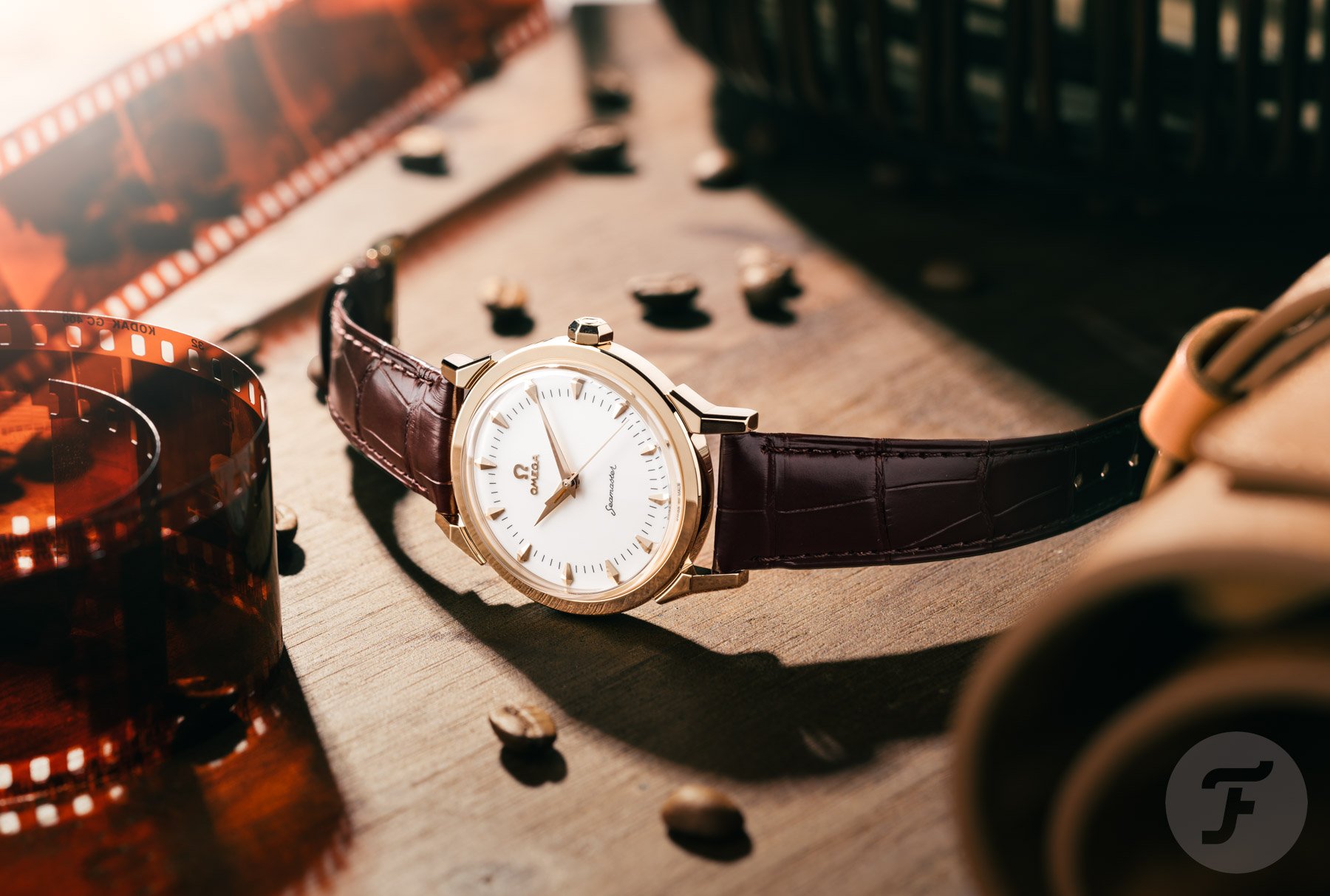
The Olympic watches
Last year, we showed you the Olympic editions from Omega. Our favorite was the Seamaster Milano Cortina edition in gold! However, Omega also introduced a Speedmaster Milano Cortina edition and recently added a Seamaster Diver 300M model as well.
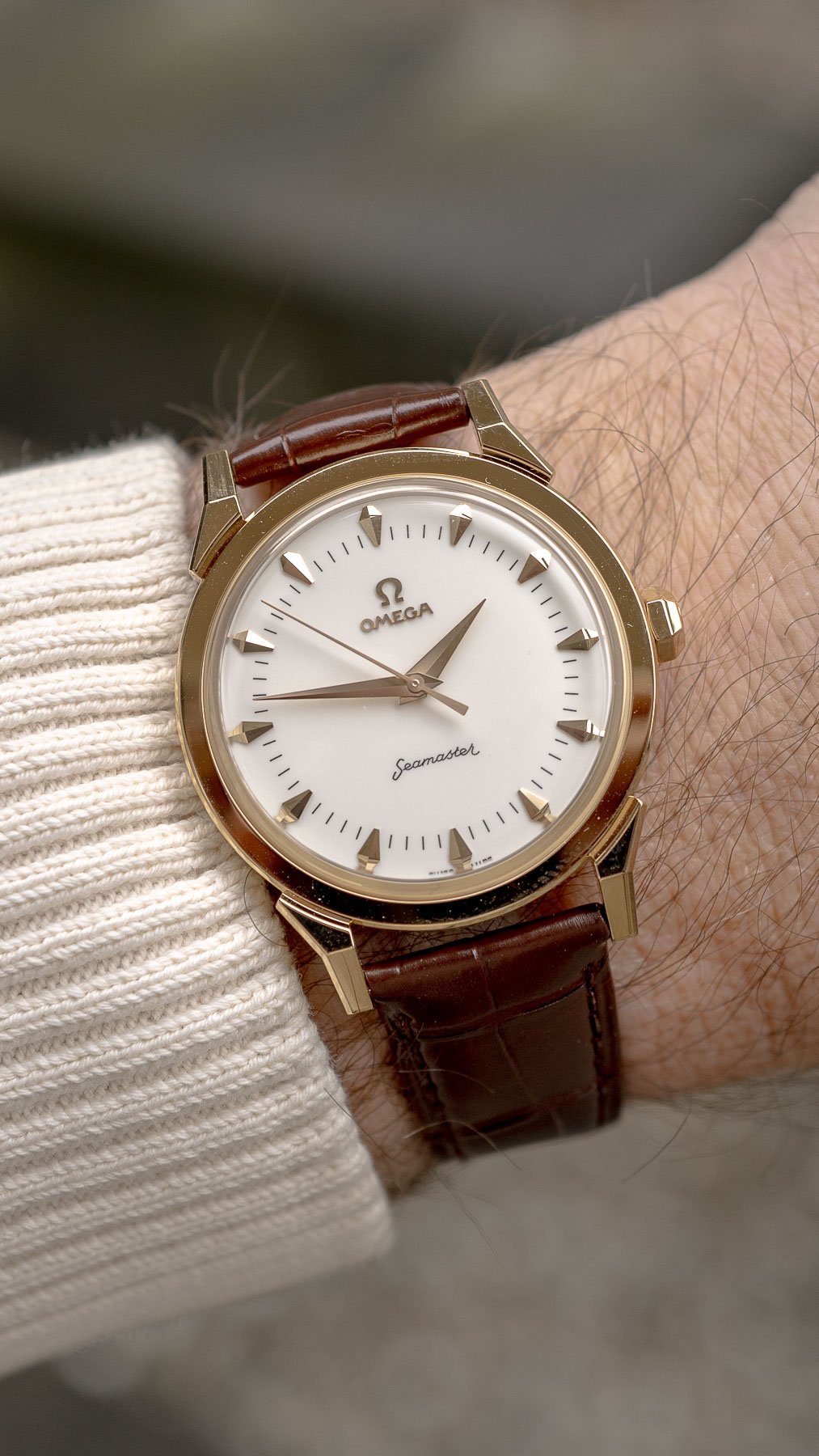
Seamaster 37mm
Inspired by the 1956 Seamaster Olympic edition, here’s a new 37mm Seamaster watch in 18K gold. It has beautiful dog-leg lugs, as seen on vintage Seamaster and Constellation models, along with arrow-shaped applied hour markers, dauphine hands, and a hexagonal crown. The Grand Feu enamel dial looks crisp and works perfectly with all the gold elements on it.
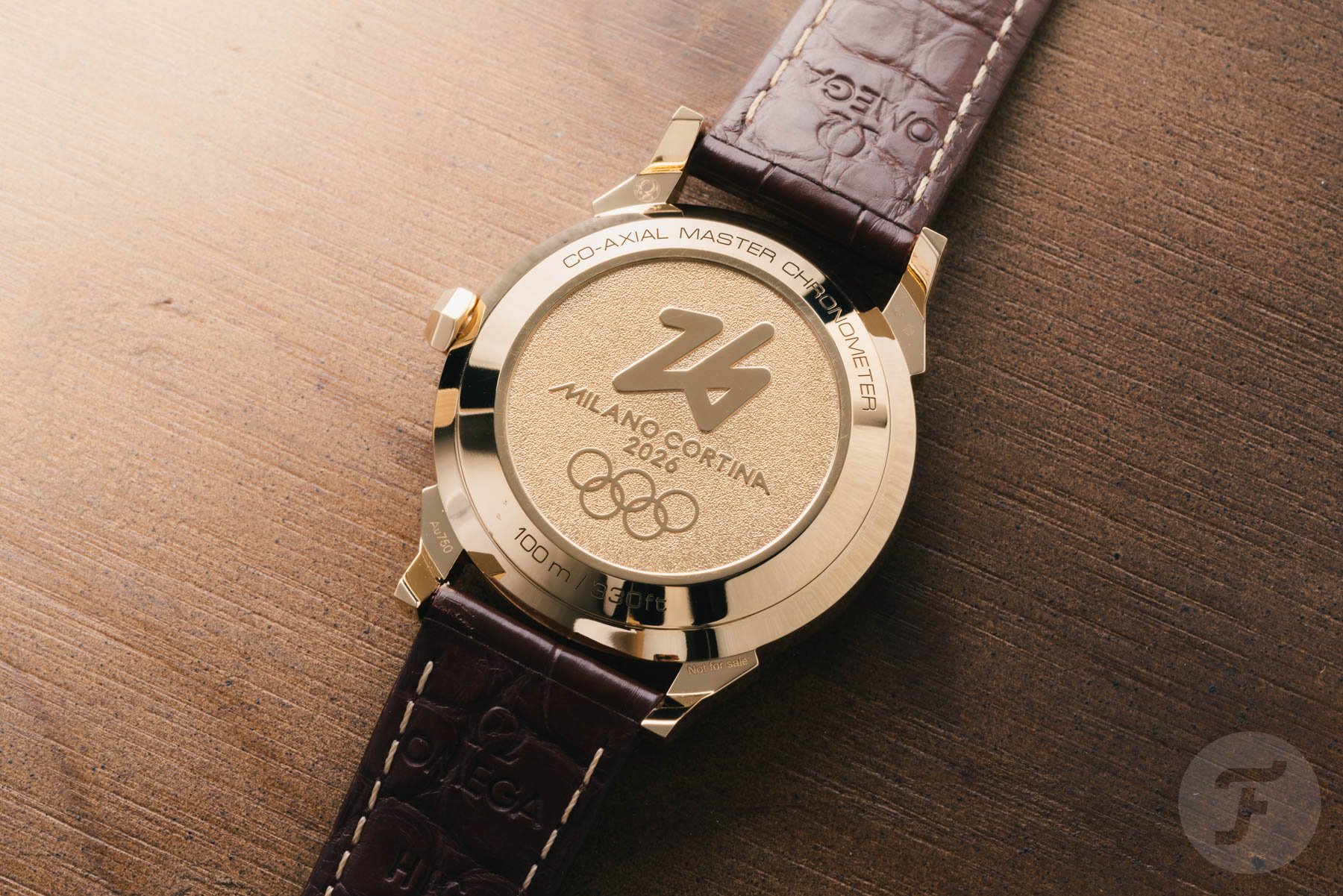
On the backside, you’ll find the reference to the Milano Cortina games on a commemorative medallion. Inside, but not visible, is Omega’s caliber 8807. This Master Chronometer-certified movement with a Co-Axial escapement ensures accurate timekeeping.
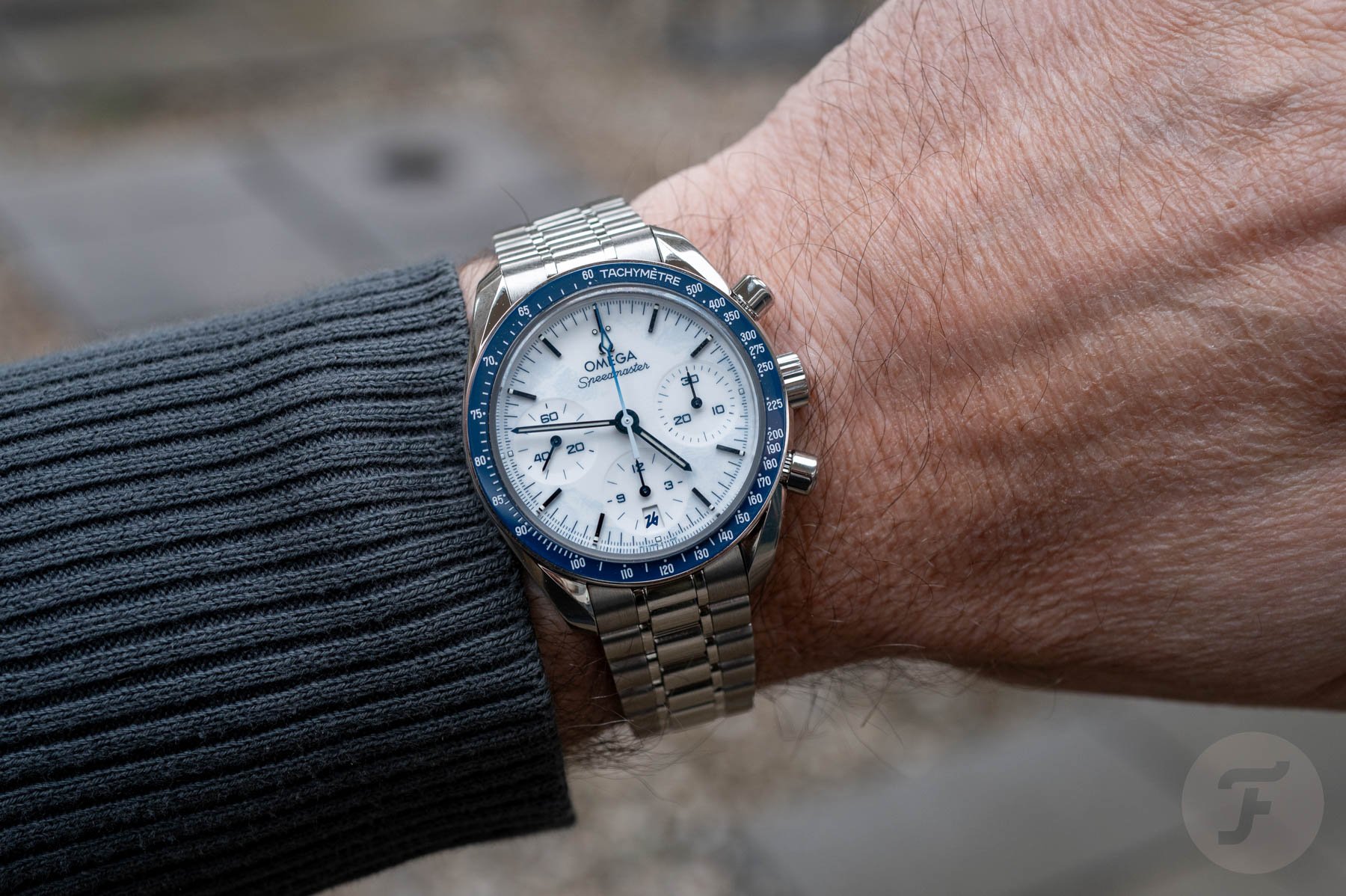
Speedmaster 38
This 38mm Speedmaster Milano Cortina edition came out at the end of last year. It’s based on the Speedmaster 38 collection, which features smaller Speedmasters with automatic movements. The dial is white with some blue mountain tops/glacier-inspired effects, perfectly matching the blue hands and bezel. You’ll also find the Milano Cortina medallion on this watch’s case back.
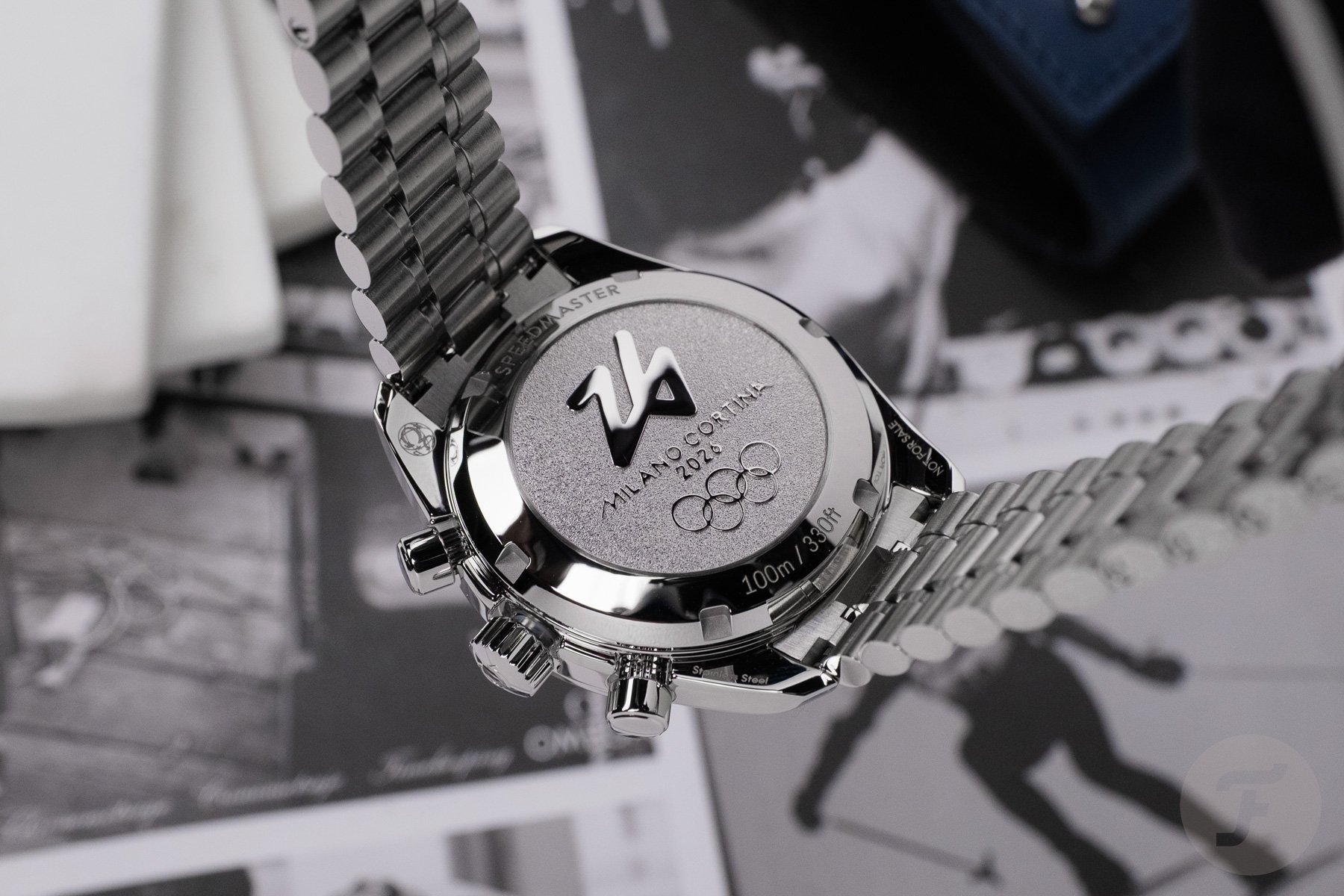
The Speedmaster 38 Milano Cortina houses Omega’s caliber 3330 and offers water resistance to 100 meters.

Seamaster Diver 300M
Last but certainly not least is this Seamaster Diver 300M in white ceramic. This 43.5mm watch comes on a white rubber strap, perfectly matching the snow-white dial with “26” signature and white ceramic bezel insert. The case is a combination of Grade 5 titanium and white ceramic.
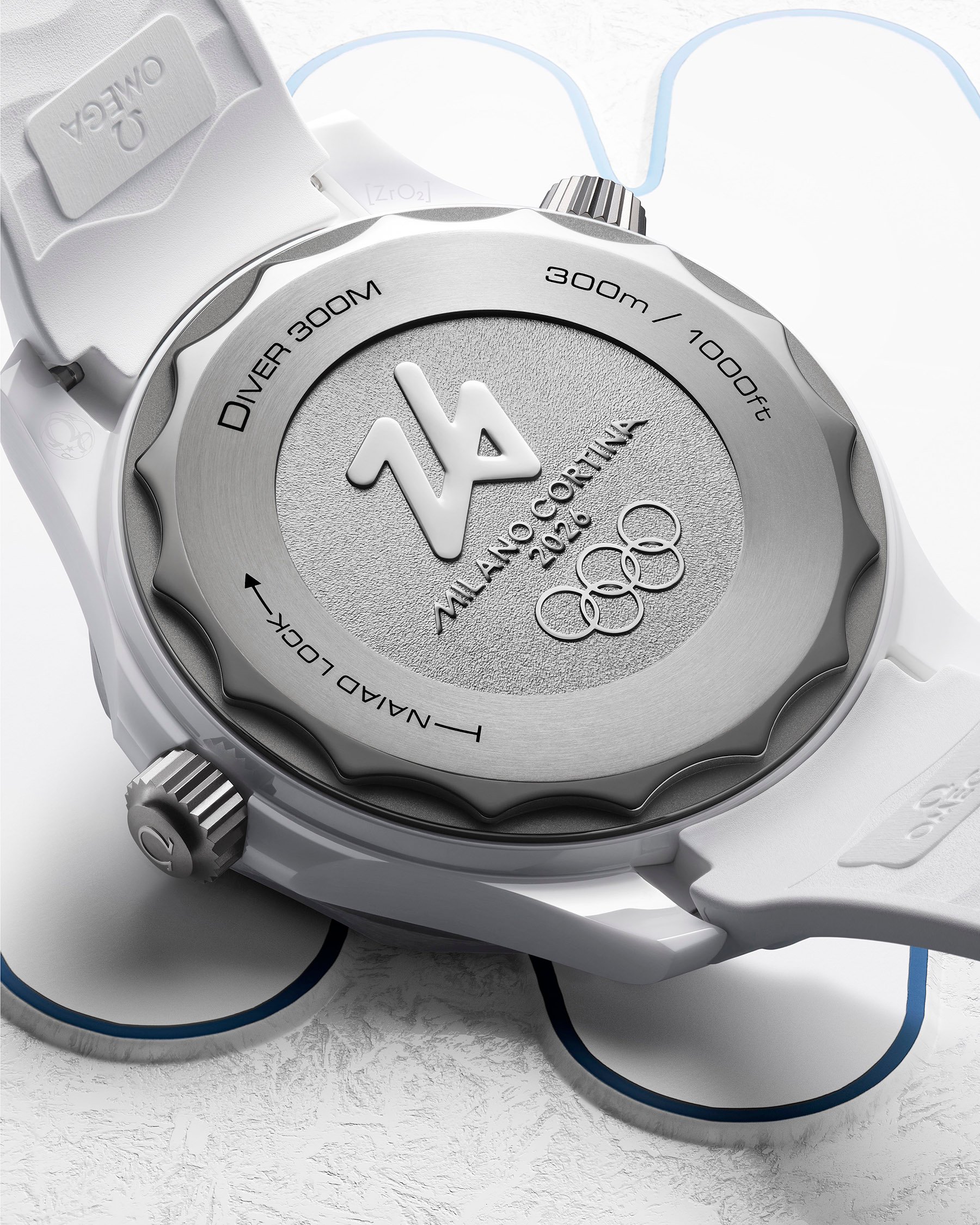
The crowns, bezel, and case back are all titanium. On the dial, you will find some blue elements, like the minute track and the printing, as well as the gradient-blue seconds hand. Just like the gold Seamaster 37mm, this 300M runs on Omega’s caliber 8806.
You can find more information on the timekeeping for the Olympic Games here.
Are you watching the Games this year? If so, share your favorite moments or sports in the comments below.