Introducing: Two New Meteorite-Dial Variants Of The Gerald Charles Maestro 2.0

The Gerald Charles Maestro line expands with two new Maestro 2.0 Meteorite models, both featuring dials cut from Muonionalusta meteorite. For the first time, the brand combines this material with a small-seconds display inside the familiar asymmetric Maestro case.
The project began modestly, driven by the idea of placing a meteorite dial inside the Maestro case, but it quickly grew beyond that. The team shifted its focus toward letting the material tell a story, and it certainly does. Let’s take a closer look.
Muonionalusta meteorite
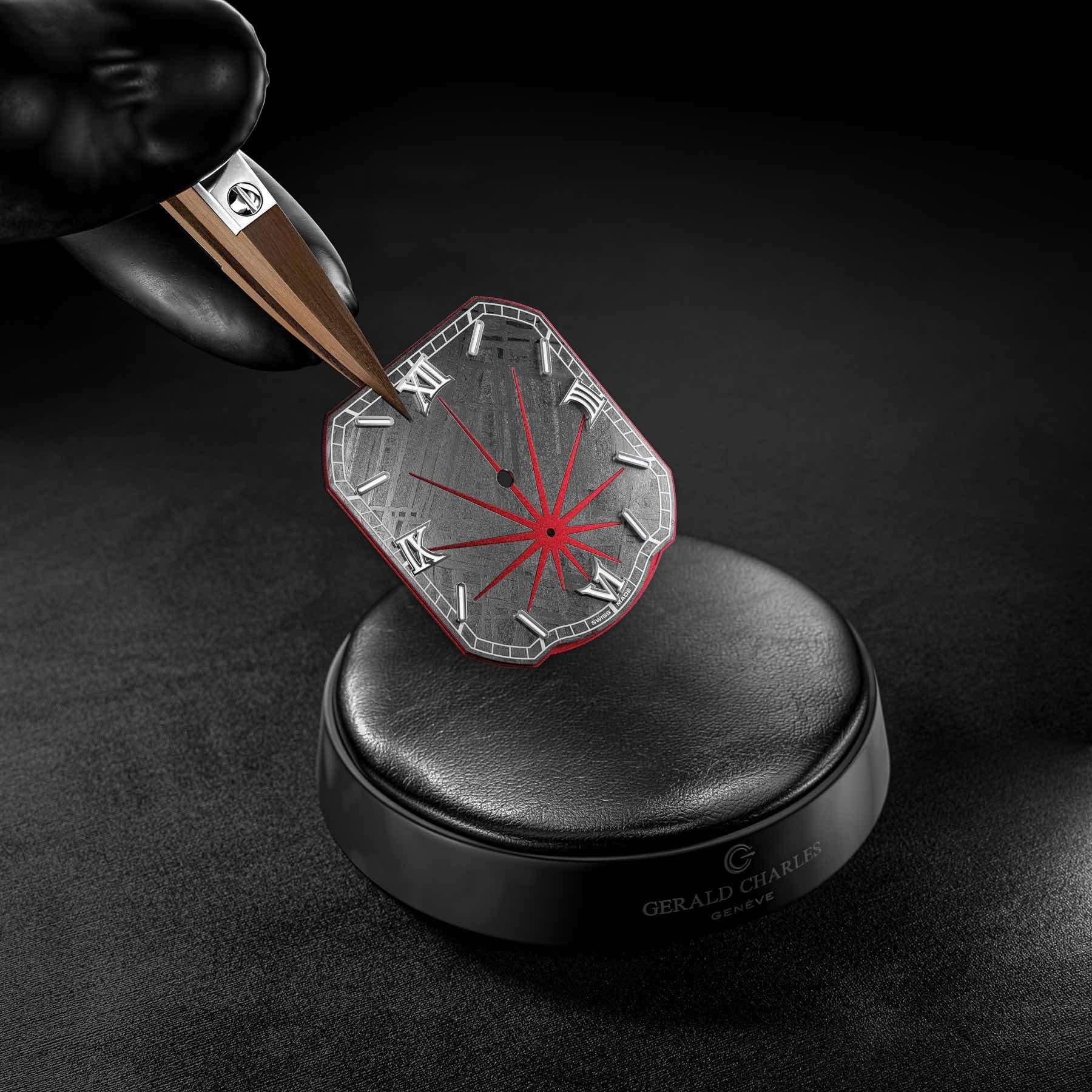
Gerald Charles sources the dial material from the Muonionalusta meteorite, discovered in northern Sweden. This iron meteorite dates back more than 4.5 billion years. Immense timescales shaped its crystalline structure naturally, which makes artificial replication impossible.
For the dials, Gerald Charles uses extremely thin slices of meteorite. The material contains a high iron content and oxidizes easily, so machinists keep it submerged in a protective liquid throughout production. Conventional cutting techniques fail here, which is why the team relies on electroerosion to shape the meteorite precisely to the Maestro dial outline.
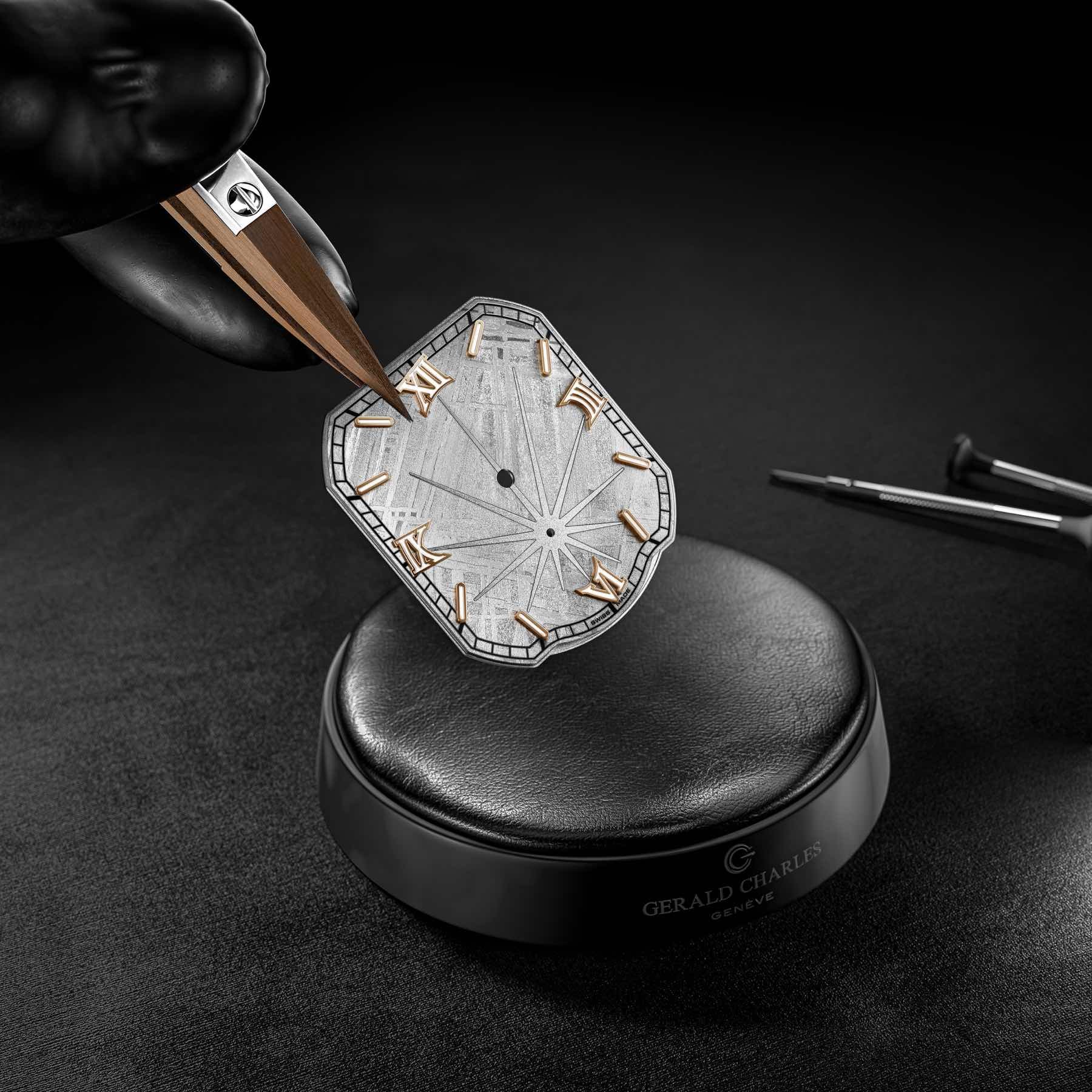
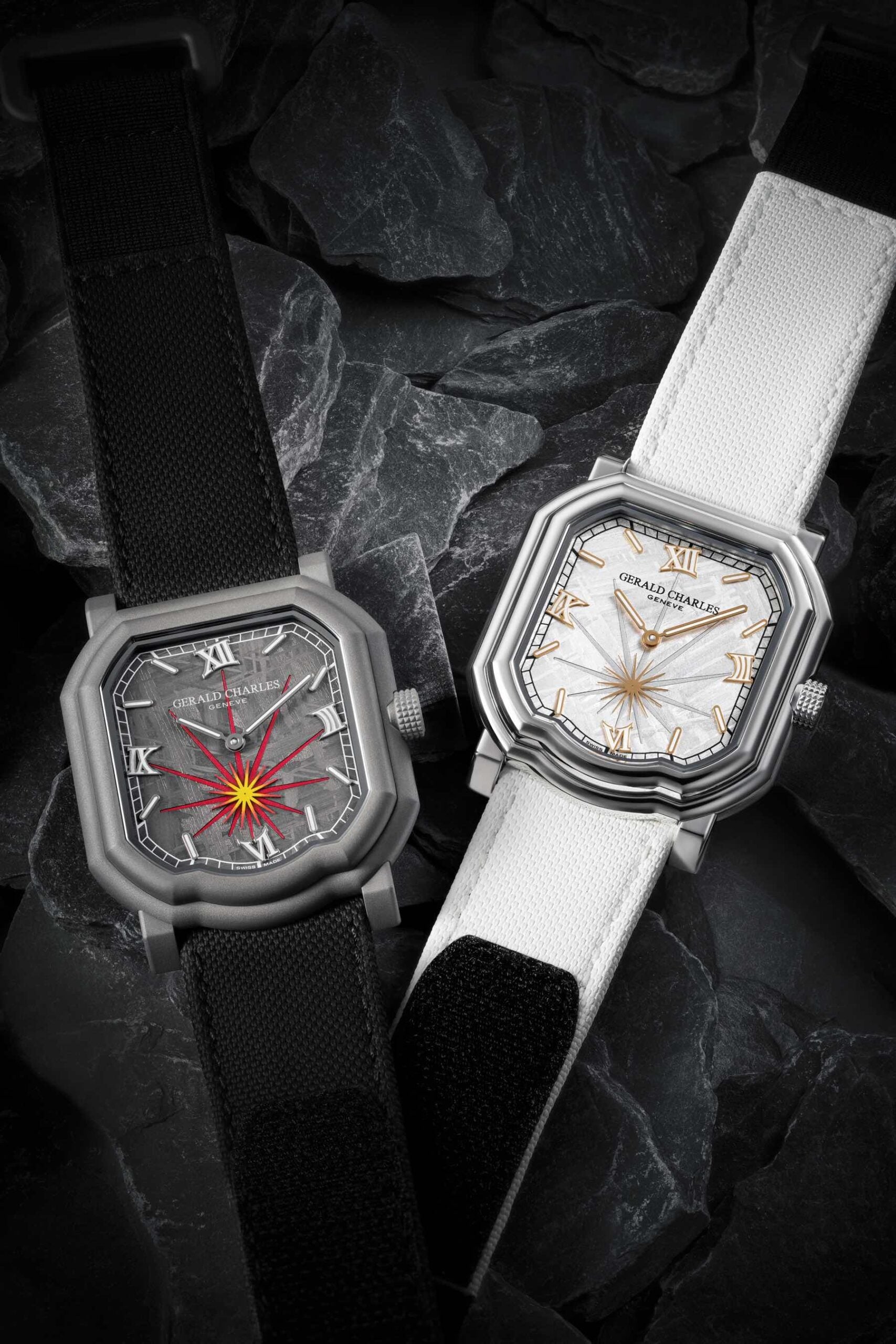
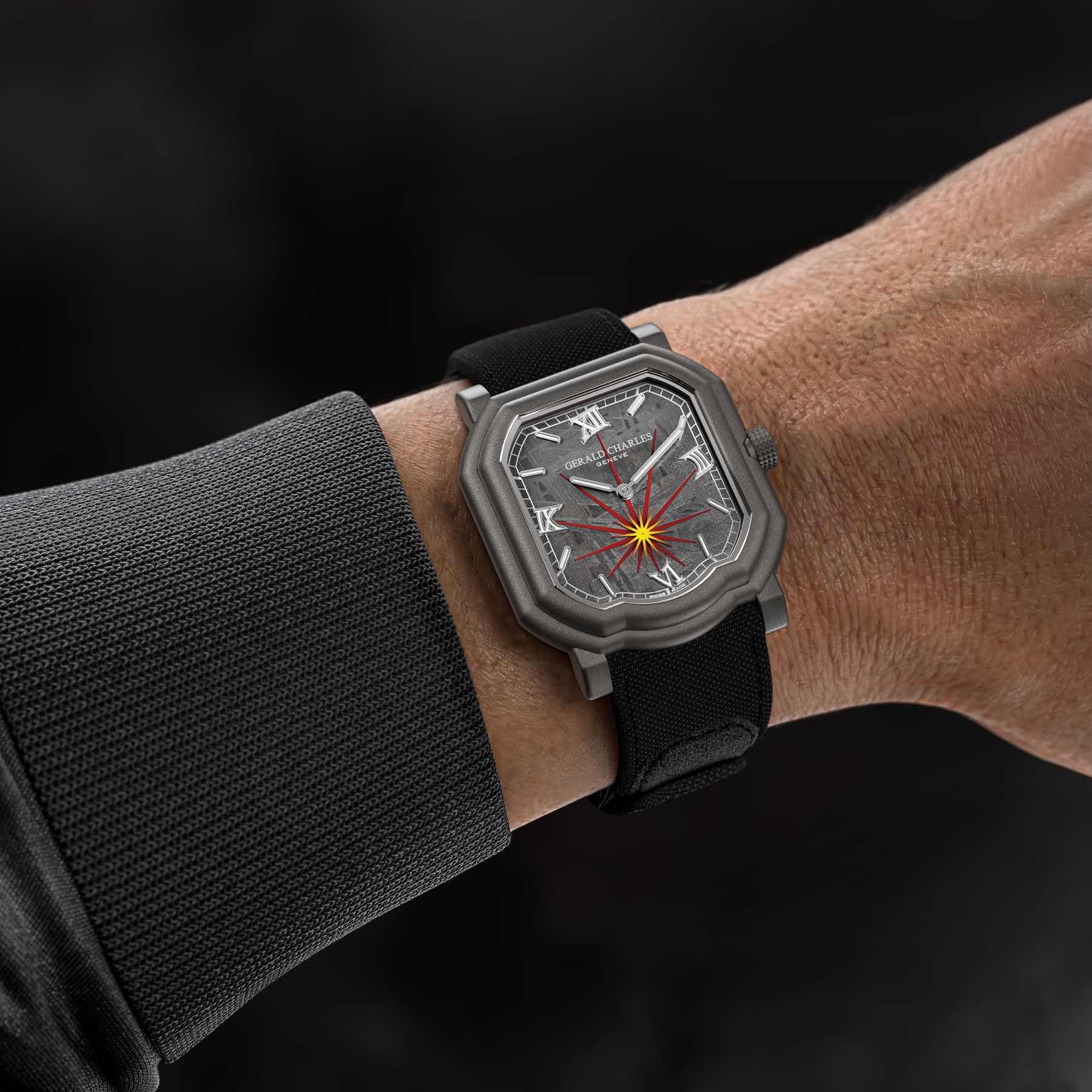
The dial construction consists of two layers. A thin meteorite plate sits atop an anodized aluminum base. On the black model, Gerald Charles pairs a red base plate with dark meteorite. On the silver version, an opaline rhodiated aluminum base supports a lighter meteorite surface. Radial openings cut into the meteorite expose the colored base beneath, adding depth without applied decoration. The small-seconds display at 6 o’clock integrates seamlessly into the layout and symbolizes a meteorite striking Earth. The dark model evokes the violence of impact, while the light version suggests the calm that follows.
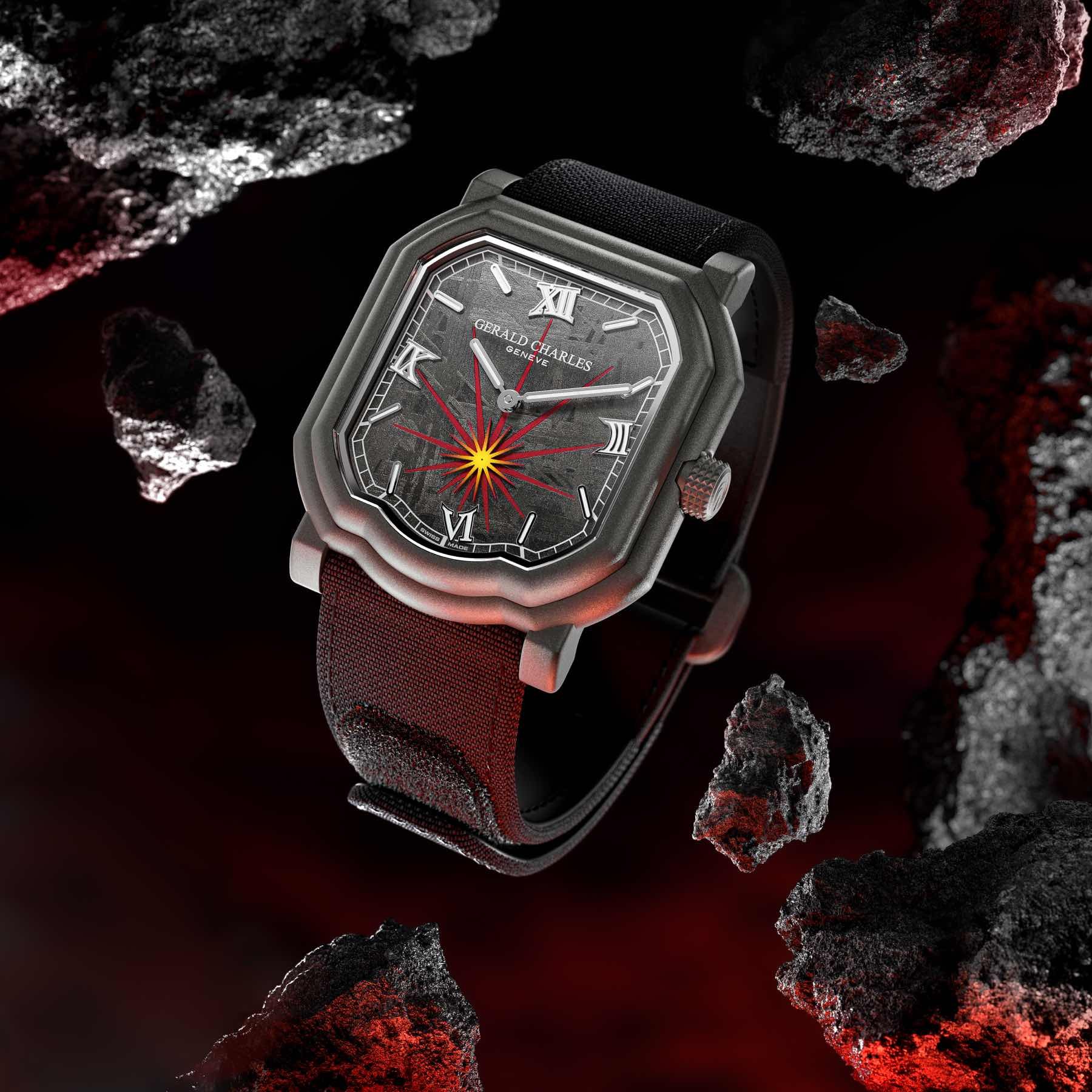
Gerald Charles Maestro 2.0 specs
The Gerald Charles Maestro 2.0 Meteorite comes in a 39 × 41mm stainless steel case. One version features a Darkblast finish, while the other opts for full polish. GC constructs each case from 35 individual components and rates water resistance at 10 atm, or 100 meters. The watch has a slim 9mm profile and weighs a modest 80 grams. Gerald Charles delivers each piece with both a fabric strap with a Velcro closure and a natural rubber strap, both color-matched to the dial.
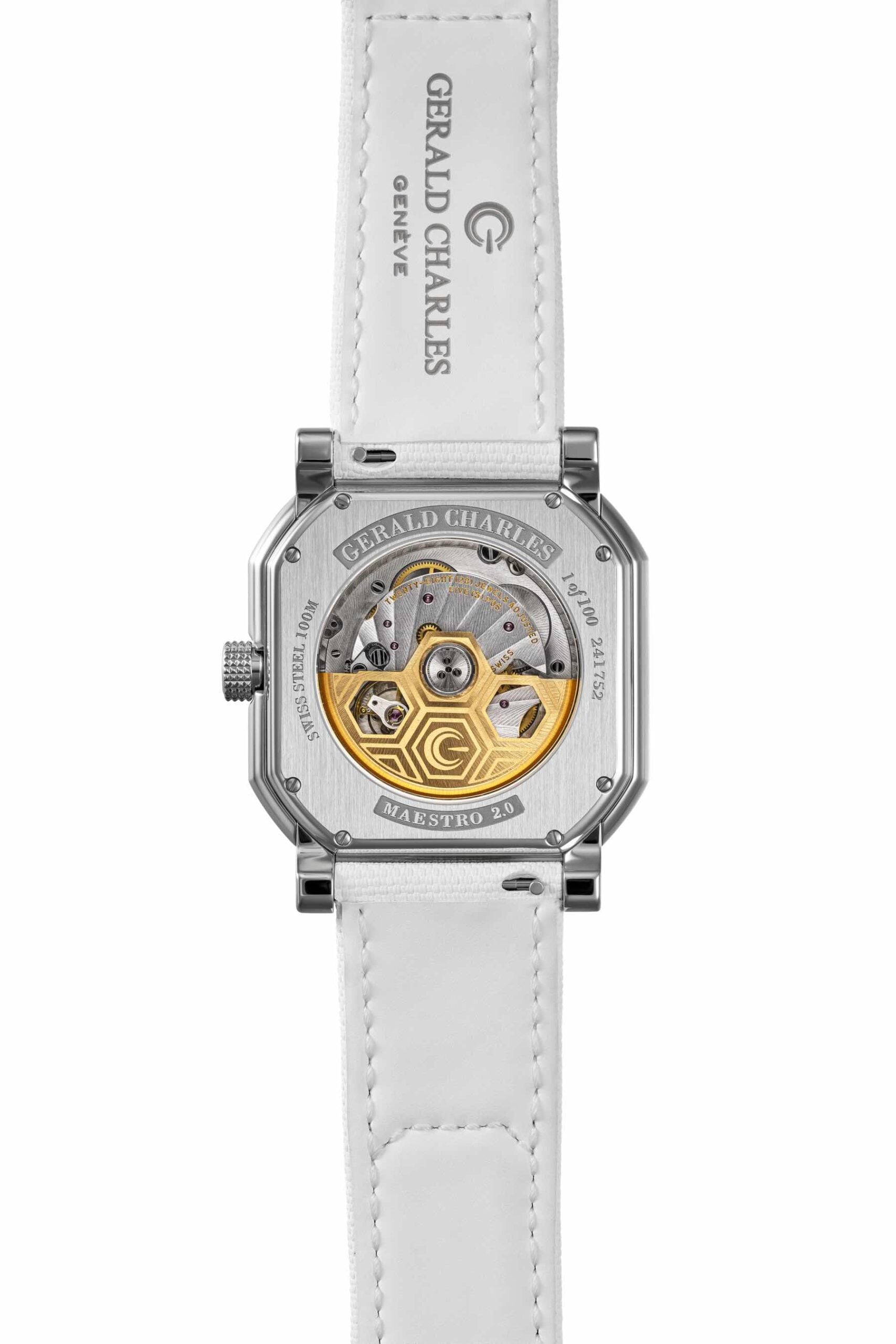
Inside beats the automatic Swiss manufacture caliber GCA2011. This 3.7mm-thick movement has a 4Hz beat frequency and delivers a 50-hour power reserve. It contains 28 jewels and 189 components. Decorative finishing includes colimaçon, Côtes de Genève, perlage, and gold-colored engravings. A golden oscillating weight bearing the Gerald Charles honeycomb motif tops the movement and supplies the winding energy.
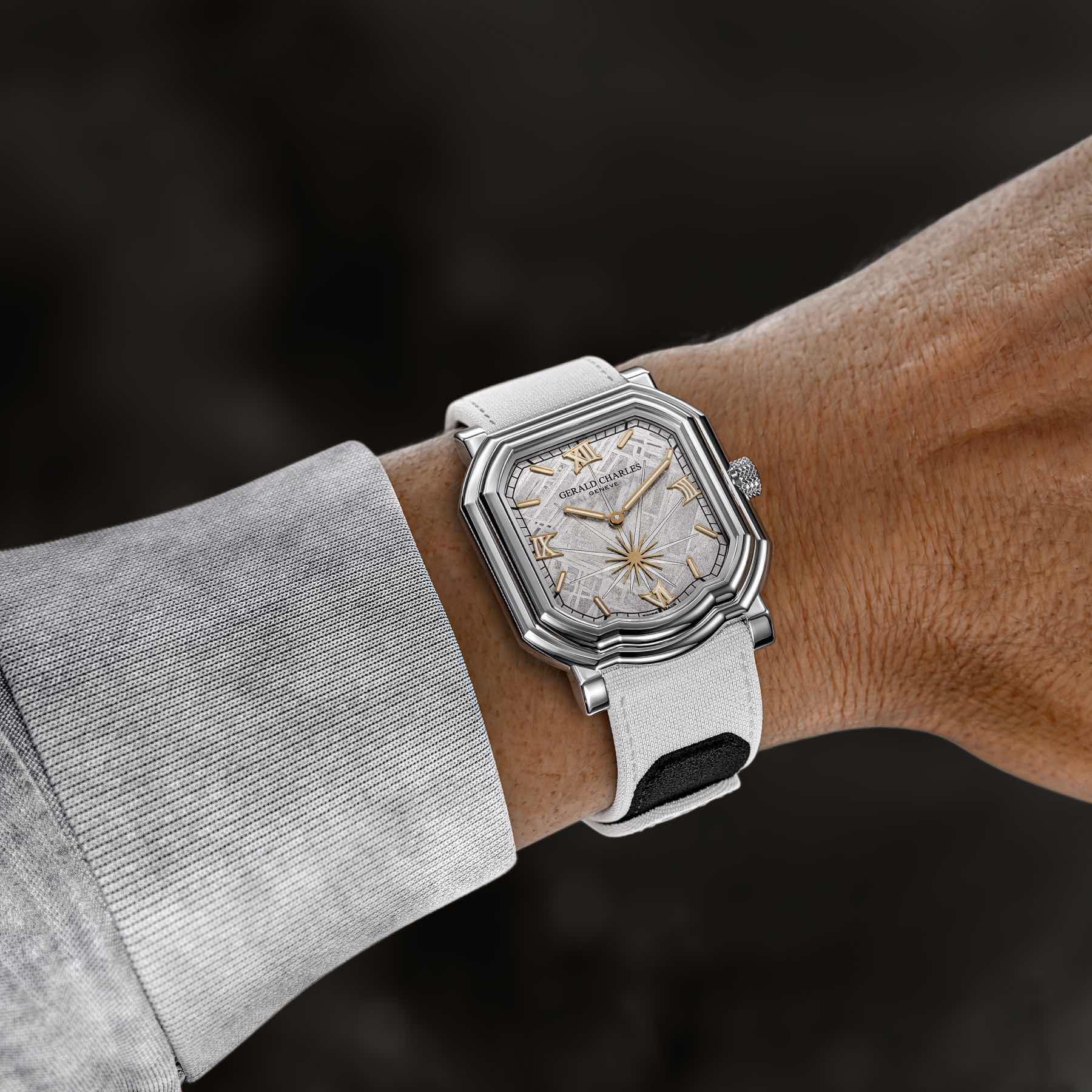
As noted earlier, the dial features a two-level construction, with Muonionalusta meteorite above an aluminum base plate. Deformed Roman numerals appear at 3, 6, 9, and 12, as if blasted outward by the meteorite’s impact. Gerald Charles fills each numeral and the remaining hour markers with white, green-glowing Super-LumiNova X1. The sub-seconds hand has a star-shaped design, but because all its tips look the same, it serves better as a running indicator.
Finally, Gerald Charles will produce 100 watches in each colorway, with the price on request.
Closing thoughts on the Gerald Charles Maestro
You have to give Gerald Charles credit; the brand took on an entertaining challenge here. The concept works beautifully, as a meteorite dial naturally invites storytelling. While the material looks striking on its own, its cosmic journey and vast age elevate it far beyond surface-level appeal. Gerald Charles smartly uses those qualities to inform both the concept and the design, adding meaningful context to the material itself.
That said, regardless of what you think of Gerald Charles, few would call the brand boring. This design-driven maison continues to push bold ideas and reinterpret its classics with confidence. That’s something we can only applaud here at Fratello.
What do you think of the new Gerald Charles Maestro 2.0 Meteorite? Let us know in the comments below.