Finding My Seiko UFO 6138: A Collector’s Lesson In Humility, Patience, And Rediscovery

Vintage Seiko chronographs have a way of pulling you in. They’re mechanically ambitious, unapologetically ’70s, and just rough enough around the edges to feel honest. Spend enough time around references powered by the 6138 and 6139 calibers, and you’ll understand why so many collectors fall hard for them. My journey started in 2019 while stationed at Osan Air Base in South Korea. It was there that I stumbled upon a watch that would follow me across continents — a Seiko 6138-001X, better known as the “UFO,” or, to some, the Yachtman.

Image: Chinh Le Duc via Unsplash
A chance discovery in Itaewon
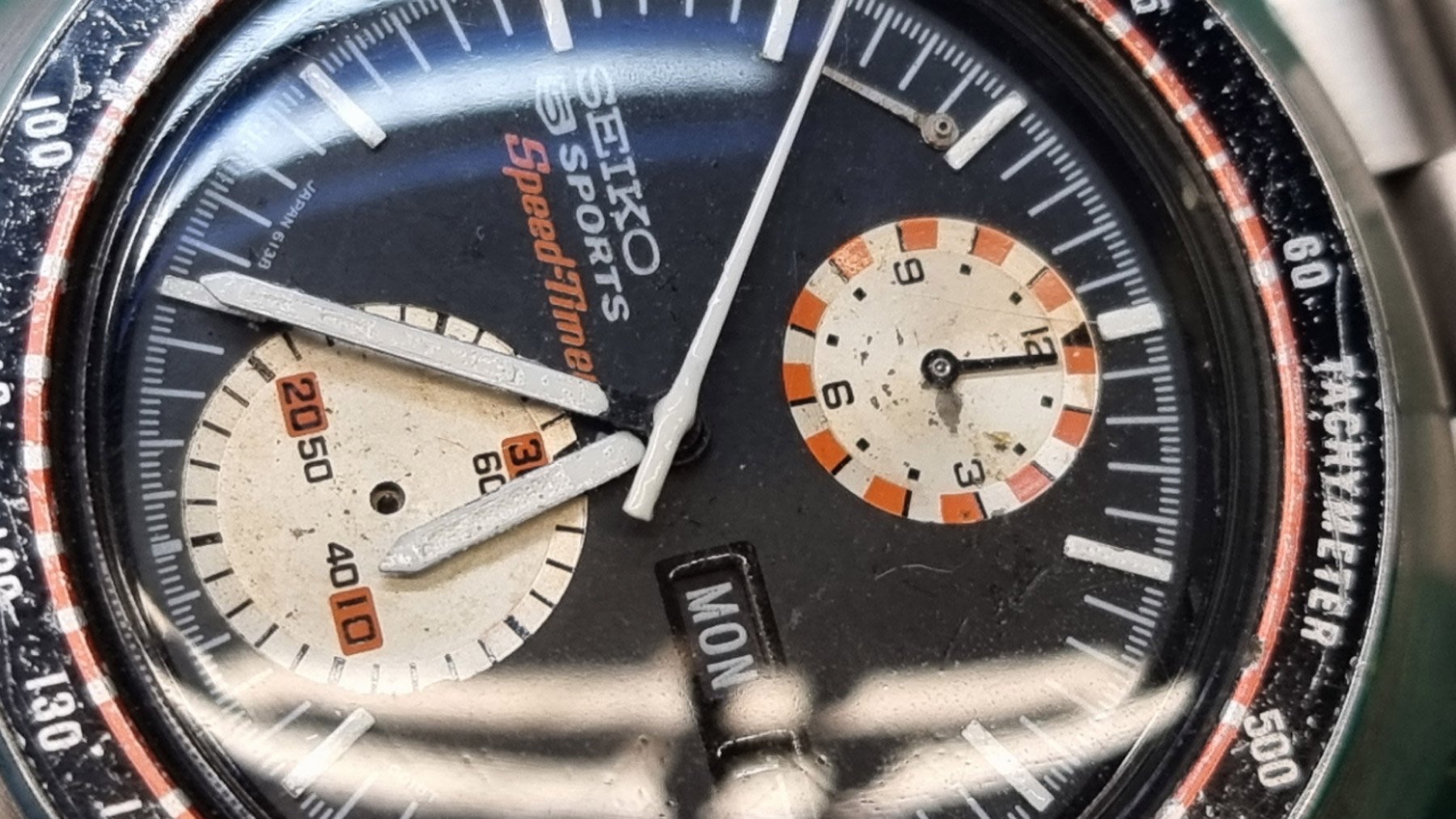
If you’ve ever hunted for watches abroad, you know the thrill. You step into a small shop, half expecting tourist trinkets, and instead find trays filled with 1970s Seikos — 6139 chronographs, weathered 6105 divers, obscure references that look like they’ve lived full lives. This particular shop sat in Itaewon, in Seoul’s Yongsan District. And there it was — the UFO, with its bowl-shaped case, broad bezel, and all the era-correct charm you could ask for.
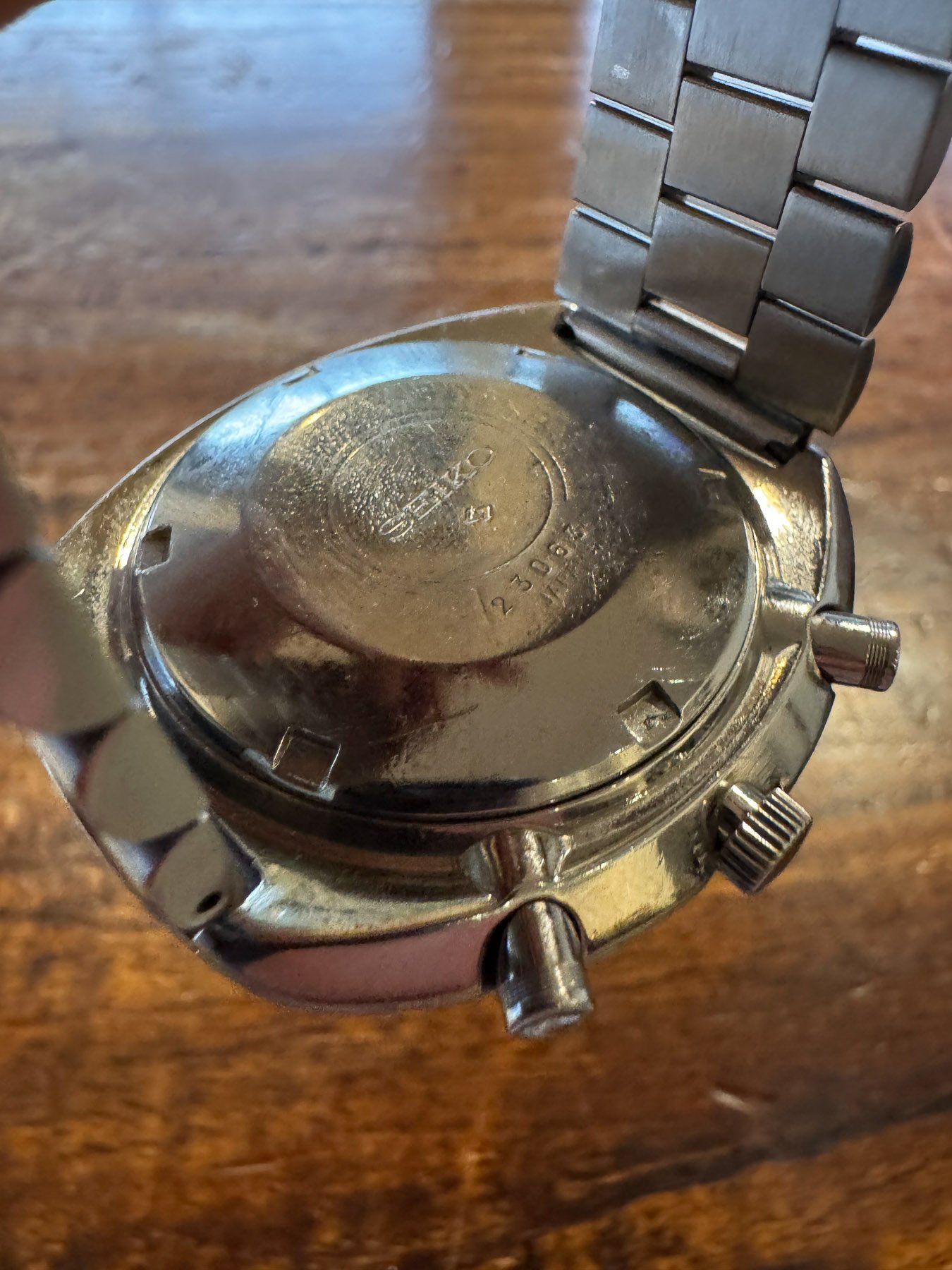
It wasn’t perfect. In fact, it was far from it, but it felt authentic. After a brief negotiation (which I’m fairly sure I didn’t win), I walked out into the Seoul evening convinced I had scored a great vintage find. As it turns out, the watch had other plans.
Lesson one: Enthusiasm isn’t expertise
Back home, under better lighting and with less adrenaline, the issues became clearer. The chronograph pushers were wrong. The bracelet was tired. Worse still, the movement shifted slightly inside the case — never a reassuring sign. Still, I was confident. I sourced correct pushers, a new movement ring, and an aftermarket bracelet that suited the reference. Then I made the classic vintage-collector mistake: I opened the case.
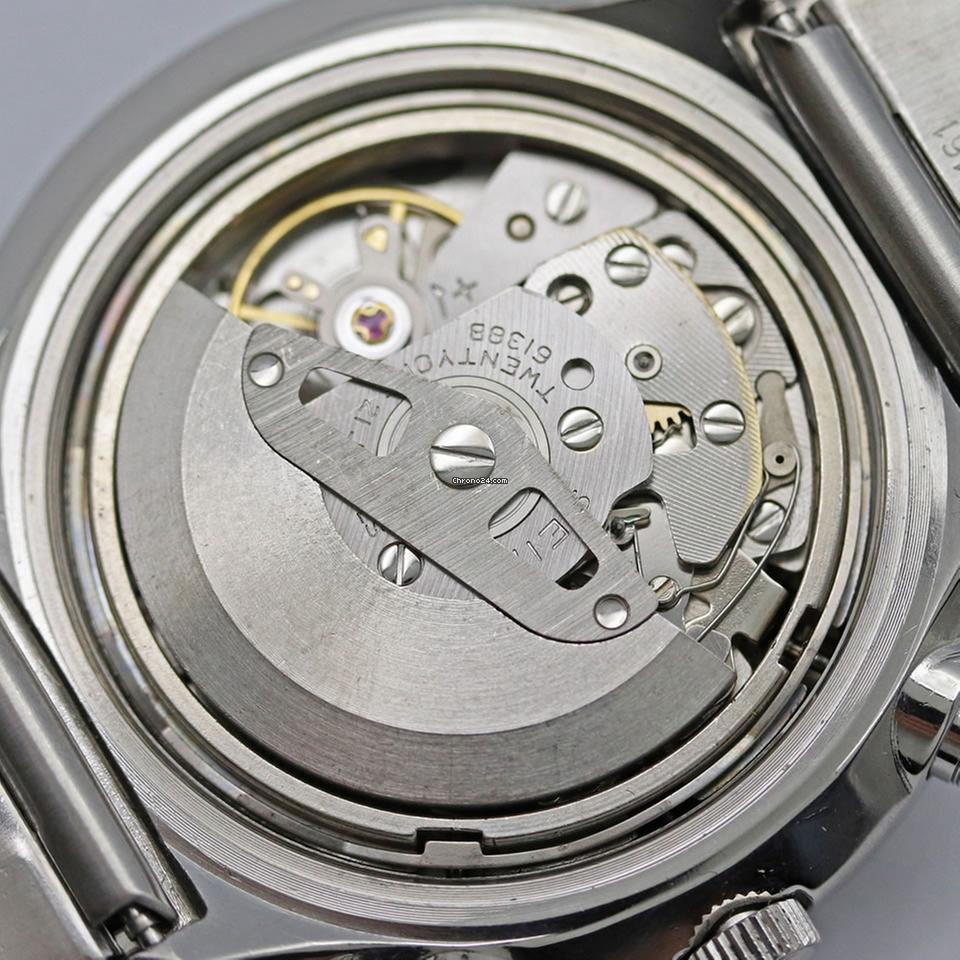
Seiko 6138 movement — Image: Kyotoya Co., Ltd via Chrono24
The 6138 is a wonderful movement — column wheel, vertical clutch, properly engineered. It’s also not forgiving. I managed to replace the movement ring and pushers successfully, which briefly inflated my confidence. Then, inevitably, a sub-dial hand launched itself into the void. The UFO went into a drawer. Not permanently, I told myself, just until I “had time.”
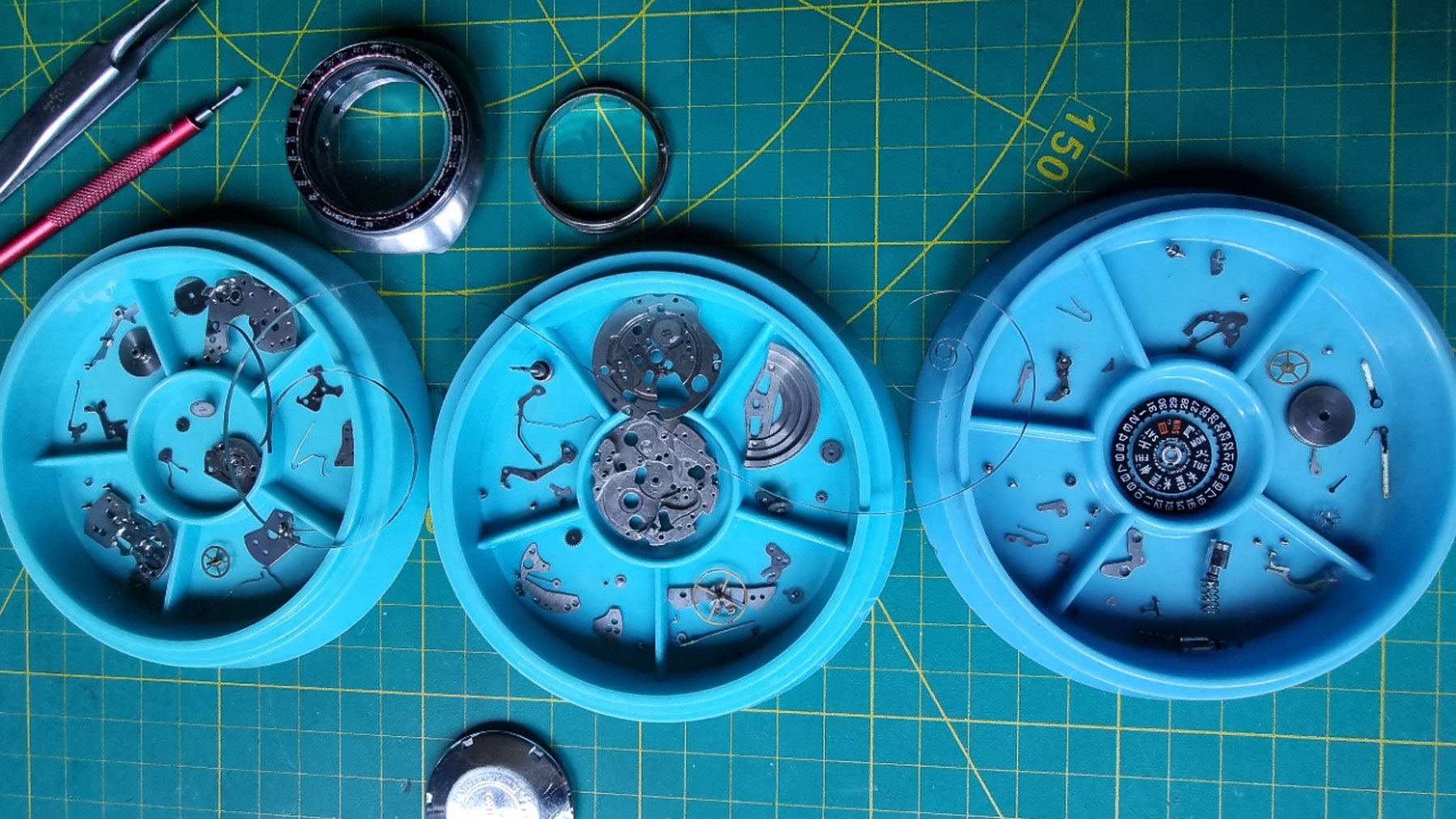
Lesson two: Know your limitations
Two years later, while stationed in Germany, I rediscovered the UFO while unpacking. This time, pride took a back seat to practicality. The watch needed a specialist. After some searching, I found a watchmaker in Netphen who focuses almost exclusively on Seiko 6138 and 6139 chronographs. That level of specificity was reassuring. This wasn’t just another service job — it was someone who understood the quirks of this particular era of Seiko engineering.
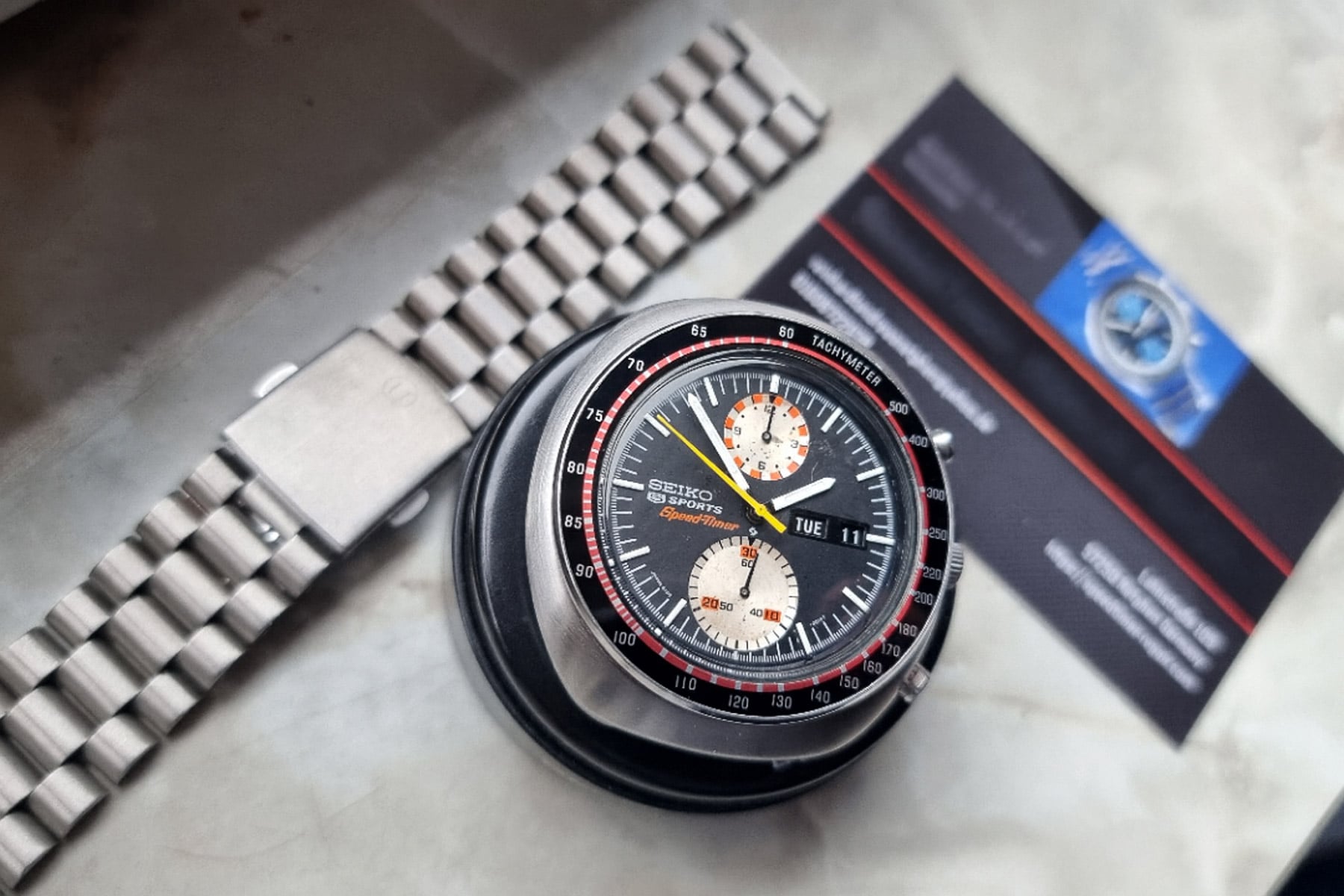
I sent it off and waited. Ten weeks later, a package arrived. Inside was a transformed UFO, with a serviced movement, crisp bezel, and refreshed lume. It looked fantastic. Naturally, I made another mistake. I put it back in the drawer.
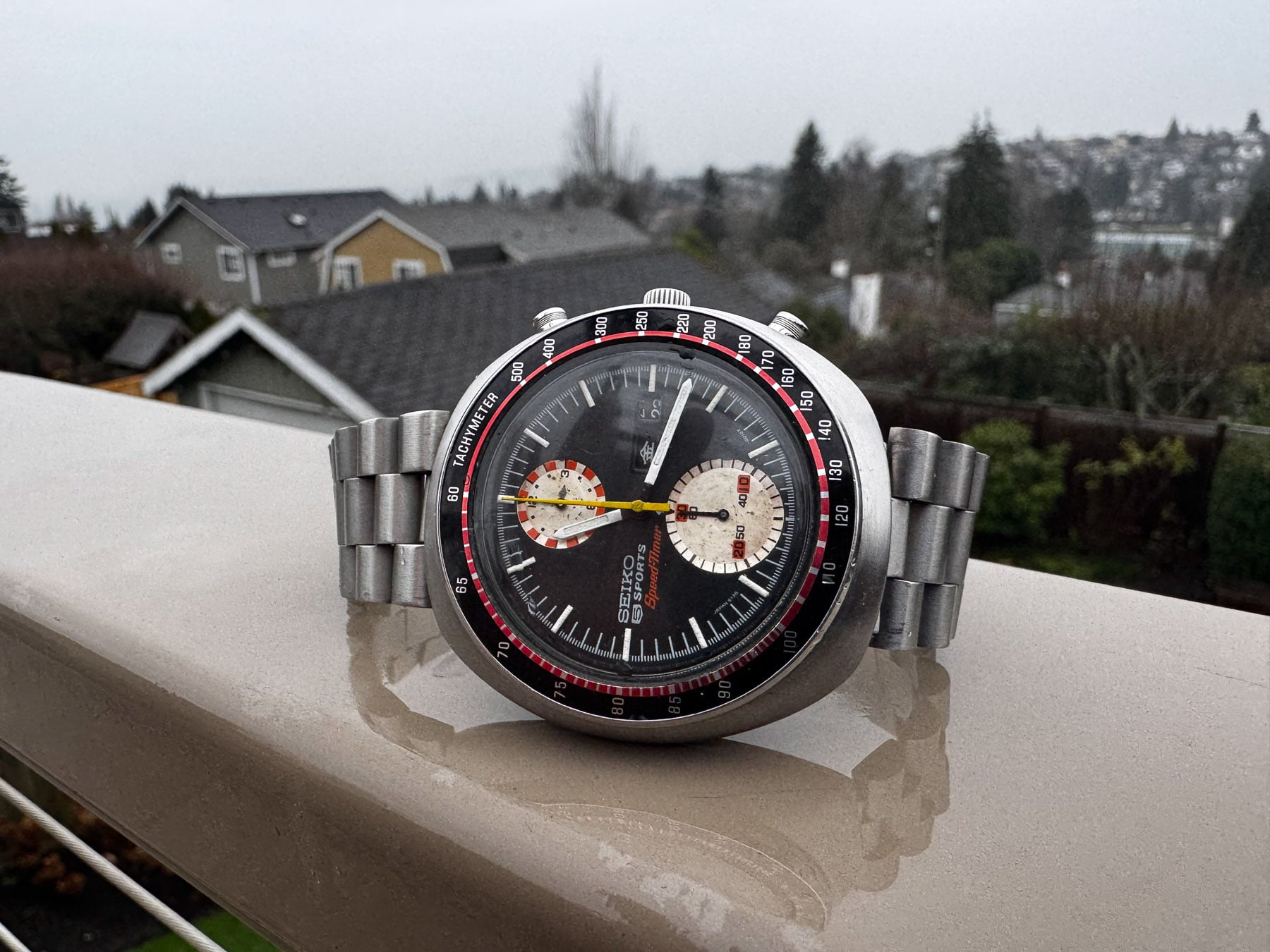
Lesson three: Watches are meant to be worn
For three months, the restored UFO sat untouched. Somewhere along the way, I had shifted from wanting a great vintage chronograph to wanting a “correct” one. I had forgotten the point. The 6138-001X isn’t subtle. The UFO nickname is well earned. On the wrist, it’s bold, heavy, and unmistakably ’70s. It was never meant to be a safe queen. It was built to be worn — to catch light on its brushed surfaces and to feel substantial against your wrist. So I finally strapped it back on. And that’s when it clicked.
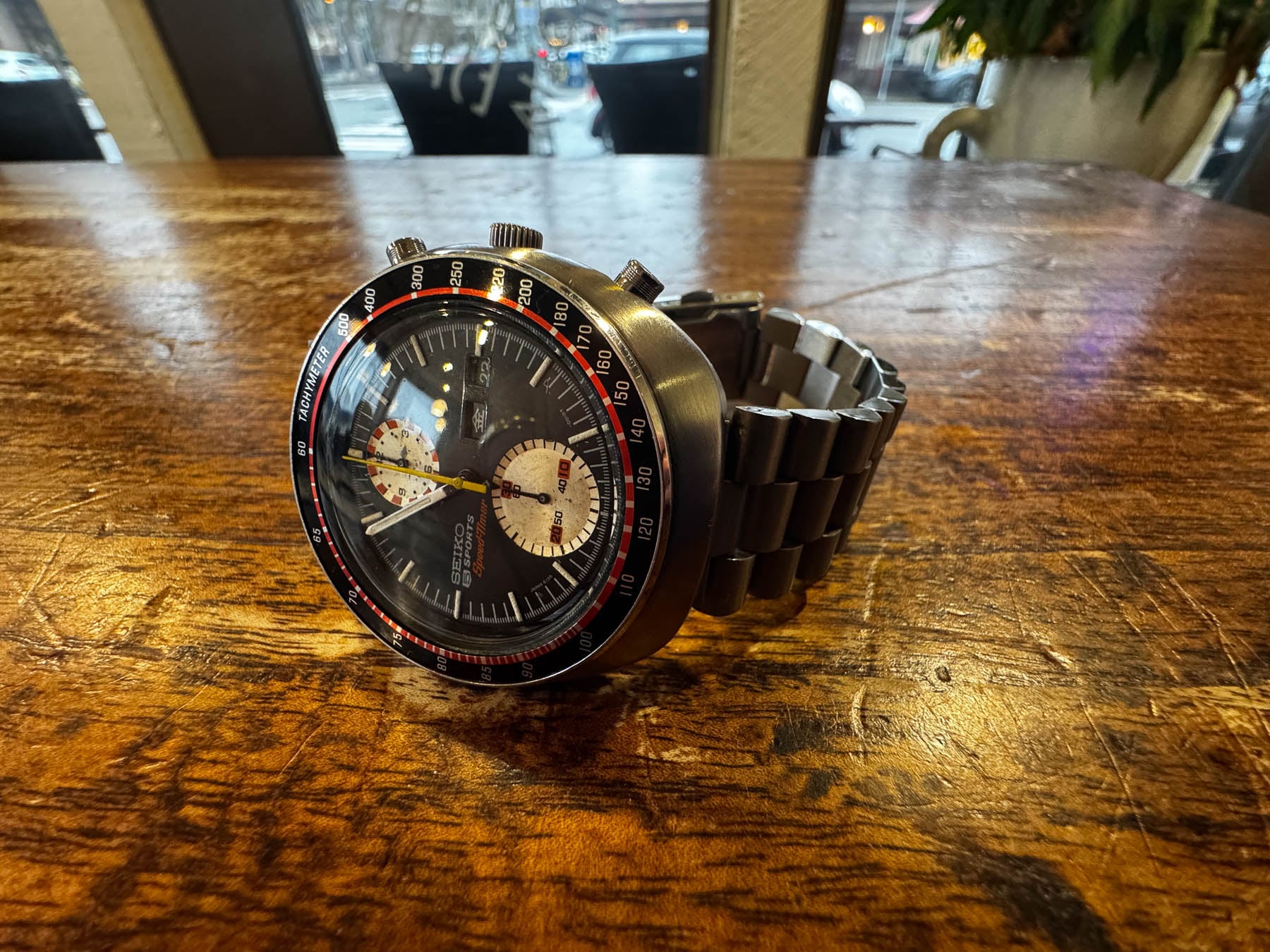
The UFO wasn’t a symbol of mistakes. It was a record of where I’d been — Korea, Germany, and everywhere in between. Its small imperfections weren’t flaws to eliminate; they were chapters.
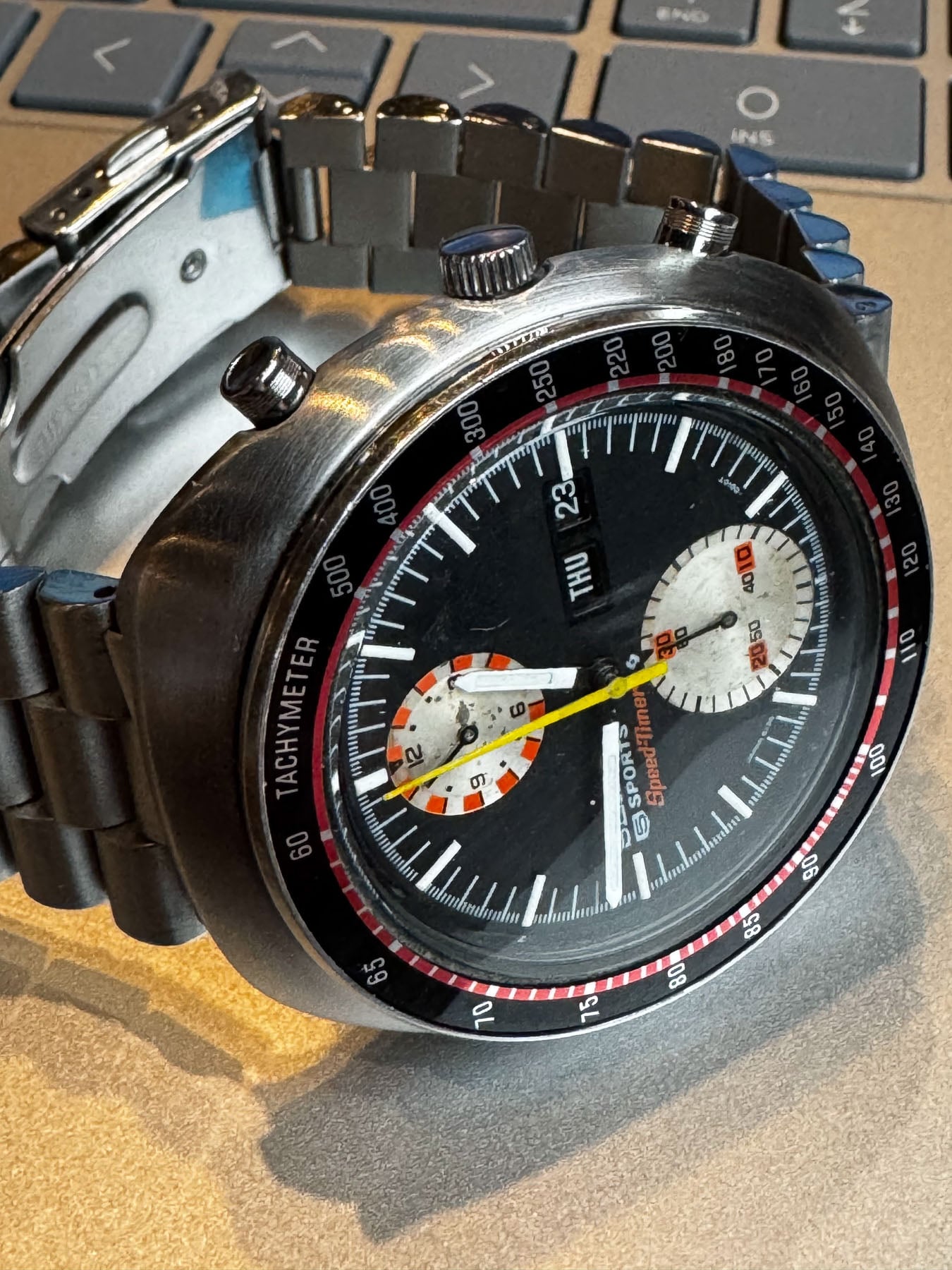
Back in rotation
Today, the UFO is part of my regular rotation. It still carries marks from its previous life, now joined by marks from mine. It reminds me of three simple lessons most collectors eventually learn:
- You’re not as smart as you think you are.
- Know your limitations — especially with a vintage chronograph.
- Watches are meant to be worn.
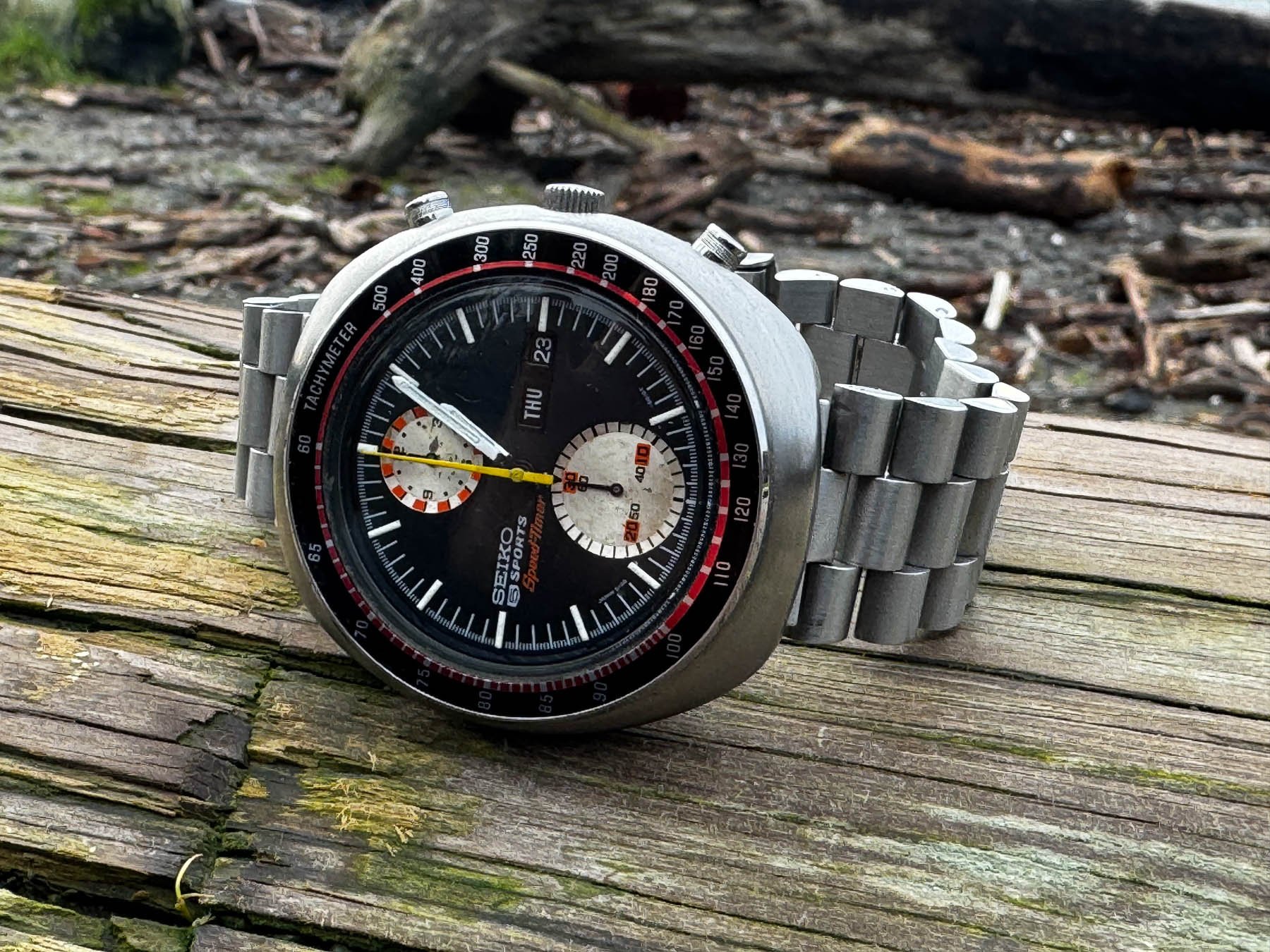
The Seiko UFO may not be the rarest or most expensive reference out there. But few watches have taught me more about collecting, patience, and the quiet joy of wearing something mechanical, imperfect, and alive. In the end, that’s what these vintage Seikos do best. They don’t just tell time; they also tell your story with it.
Managing editor’s note/author biography
First, I just wanted to thank Mark for this contribution. It has been a long time in the making, but it’s great to finally get the story out there. I always love to connect with fellow enthusiasts who take a similar thoughtful approach to their watches. Mark learned some lessons in a way that reminded me of my journey into mechanical watches. And though sometimes the “hard way” is the best for learning a lesson, getting Mark’s story out there as a cautionary tale and learning opportunity for others just felt right. Take his advice; you won’t regret it!

Mark Vitantonio is a global logistics and strategy executive with over 30 years of international leadership experience in the U.S. Air Force. He has had a deep interest in horology and the watch industry since 2017. Mark is based in Seattle, Washington.