The New Bianchet UltraFino Maserati — One Of The Better Car-Watch Collaborations I’ve Seen In A While

Honestly, I usually take car-watch collaborations with a pinch of salt. Too often, they feel like the easy and somewhat lazy option. Add a logo, pull in a color, mention “performance” a few times, and somehow, that’s meant to be a job well done. While that may be enough for the marketing side of things, it isn’t for people who truly care about watches — you know, us. That’s why the new Bianchet UltraFino Maserati caught me a little off guard. Against my usual instincts, I actually think this one works. Let me try to explain why…
This probably shouldn’t be too surprising. I’ve liked what Bianchet has been doing for a while now. The brand’s watches have always had a very clear point of view, and even when leaning hard into modern materials, openworked architecture, and visual drama, they still feel coherent. There’s a strong identity there, which is half the battle in my opinion. That also felt true with the recent Rotondo launch ahead of Watches and Wonders. Even though that watch took things in a slightly different direction (which I loved!), it still had the same sense of intent. So when I saw that Maserati was involved here, my first question wasn’t whether the watch would look good. Rather, it was whether the collaboration would feel natural or just drag the whole thing into gimmick territory. Thankfully, it seems to land on the correct side of that line.
Maserati without the usual clichés
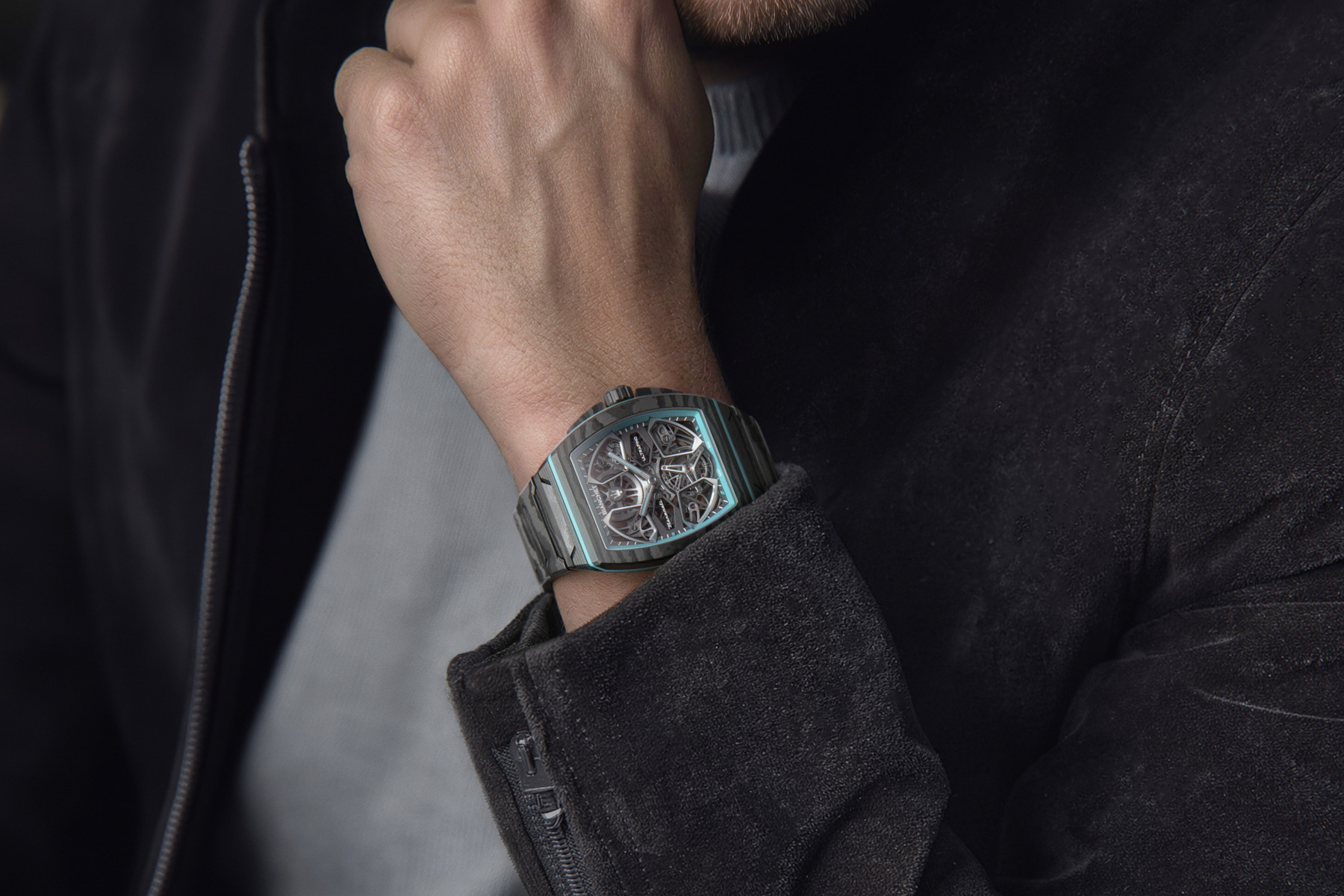
What helps here is that the Maserati connection doesn’t feel thrown on. This isn’t just a Bianchet with a trident logo thrown somewhere obvious and a few lines in the press release trying to justify it after the fact. There are actual design references in the watch that make the partnership feel thought through.
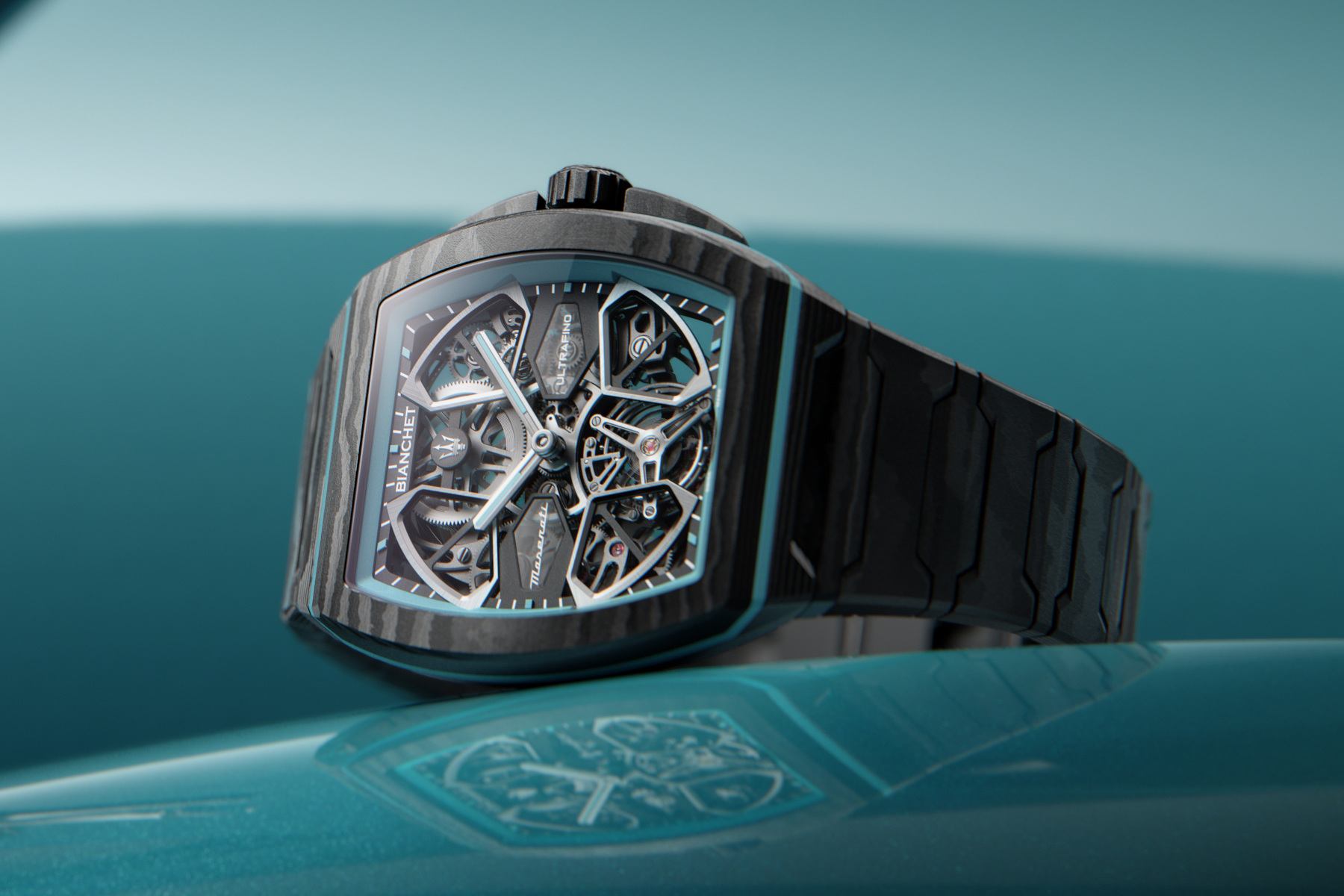
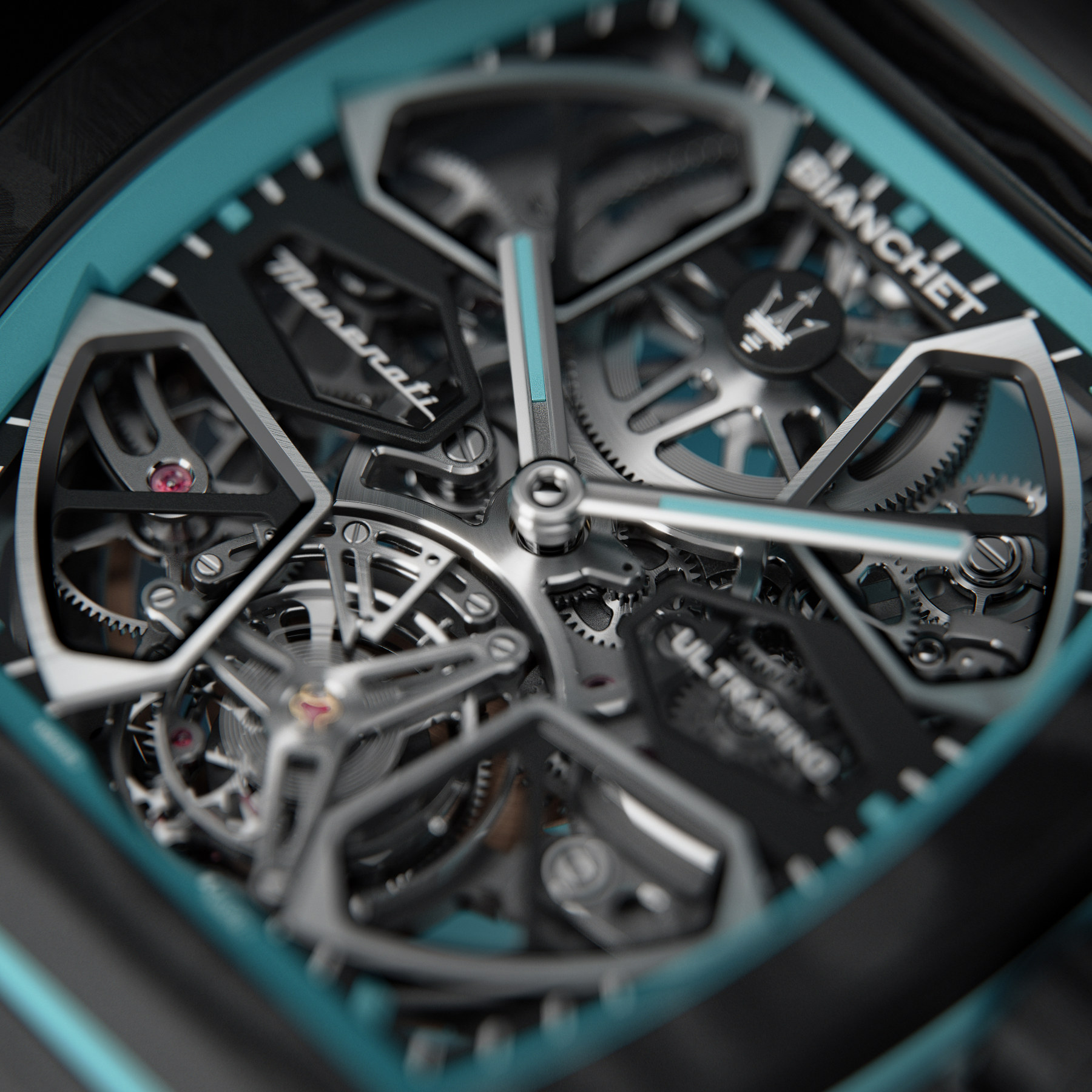
The main one is the dial, or, more accurately, the whole openworked front of the watch. Bianchet says the skeletonized architecture draws from the wheel design of the Maserati MCPURA, particularly its triple split-spoke layout. That’s the kind of reference I can actually get behind. It gives the watch a structure that feels tied to the car without becoming too literal or cheesy. It still looks like a proper watch, not a miniature dashboard prop. It’s an IYKYK reference. While technically obvious once you know, it’s one for the true petrolheads.
Then, there’s the color. The bright aqua-blue accents could’ve been overdone, but they work well against the darker carbon-heavy case and movement construction. They give the watch a punchier, slightly more playful edge than some of Bianchet’s other pieces, and in this context, that feels about right. It’s bold, but it doesn’t feel random.
Still unmistakably a Bianchet
That’s probably the biggest reason I like this watch. For all the Maserati references, it still looks unmistakably like a Bianchet. The brand’s signature tonneau shape is still there. The aggressive openworked movement layout is still there. A flying tourbillon still dominates the lower half of the dial. Even the mix of carbon, titanium, and visual lightness feels completely in line with what the brand already does well.
That makes a difference. After all, the best collaborations don’t feel like one side disappearing into the other. Instead, they feel like two identities meeting somewhere believable in the middle. That seems to be what has happened here. If the Maserati branding were covered, you’d still know this was a Bianchet. That’s a very good sign.
I also think the UltraFino format helps here. There’s something a little cleaner and sharper about this watch than some of the chunkier, more overtly aggressive high-performance tourbillon pieces out there. It has presence, of course, but it doesn’t feel clumsy or overengineered. On paper, a 9.9mm case thickness is genuinely impressive for something this visually layered and mechanically ambitious.
Why the UltraFino Maserati has real substance
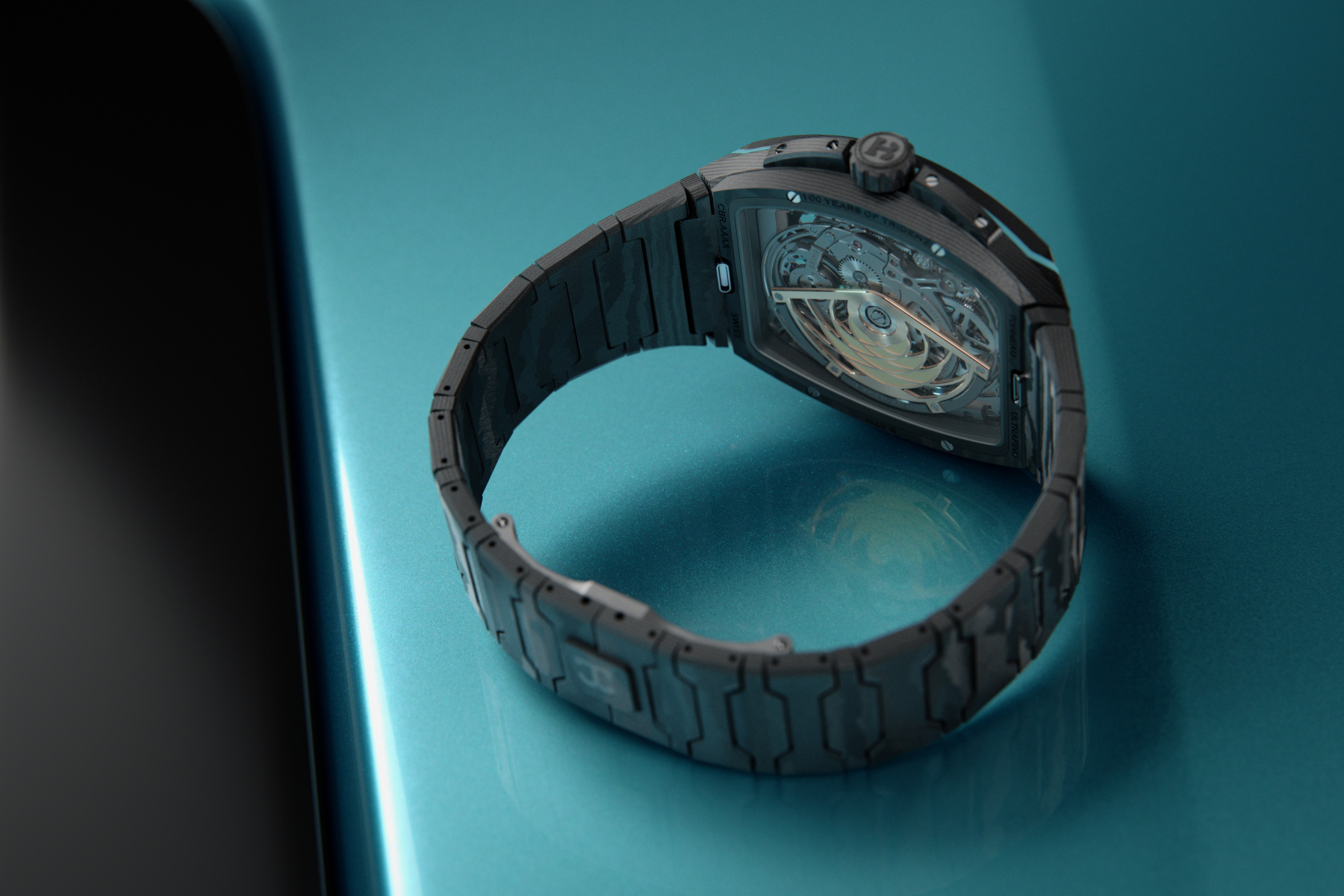
Under the surface, the watch has the substance to back up the styling. Inside is Bianchet’s UT01 flying tourbillon caliber, which boasts a mere 3.85mm profile and still manages to deliver a 60-hour power reserve. The movement uses 225 components, includes a 2.66mm tourbillon cage, and sits inside a case made of high-density carbon fiber with vulcanized rubber. It’s also rated to withstand shocks of up to 5,000 g, the sort of figure that sounds a bit wild in a watch this thin.
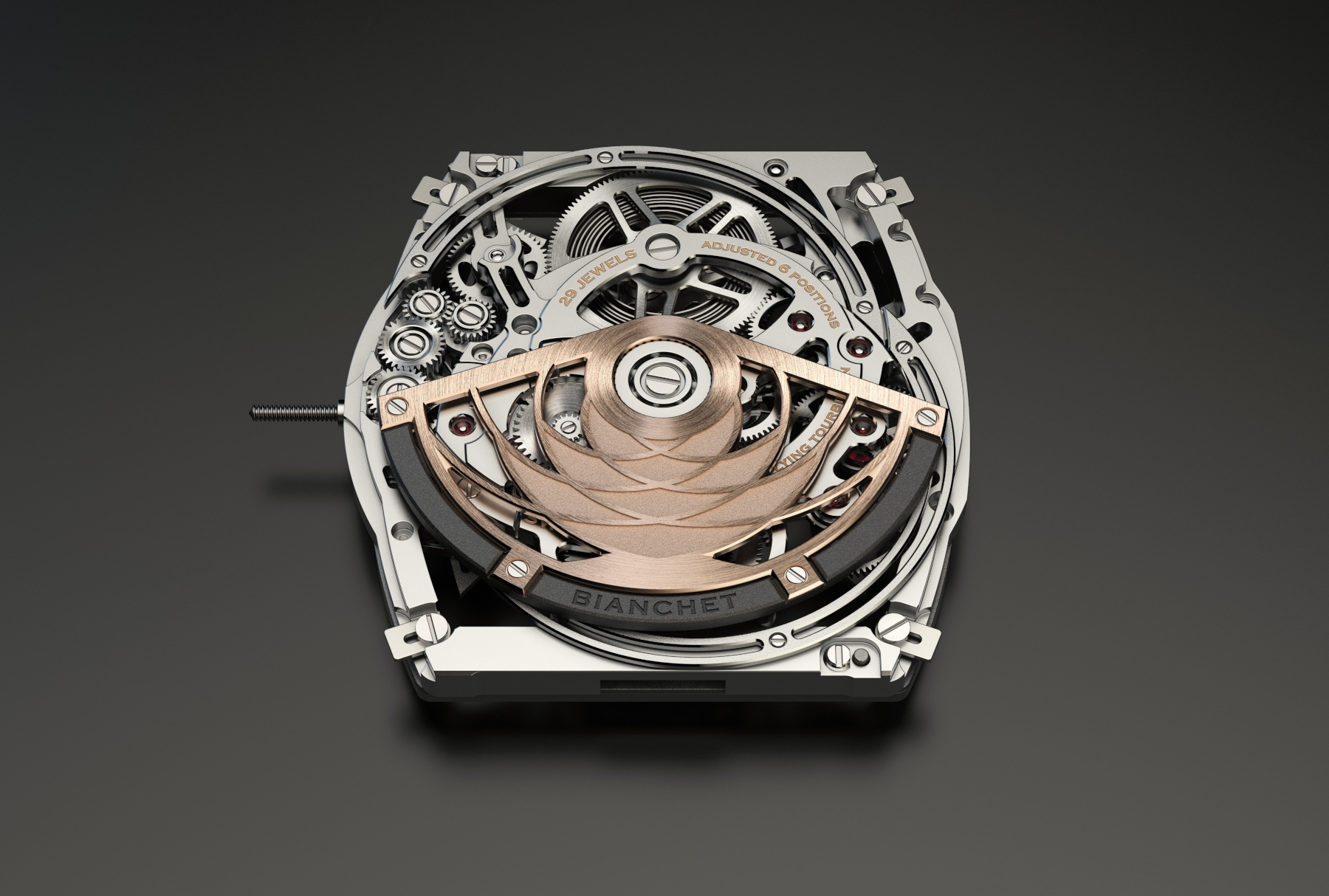
That’s the bit I find genuinely interesting. This isn’t some fragile design object pretending to be a performance-focused tool because it happens to share a name with a car brand. Bianchet clearly wanted the watch to carry real technical credibility. Even at 36 grams (without the strap), it sounds like the whole thing has been built around lightness and structural efficiency, not just visual effect.
And honestly, that allows the Maserati comparison to make the most sense — not in a lazy “inspired by speed” sort of way but, rather, in the idea of using advanced materials, a sleek exterior, and mechanical intent to make something feel both dramatic and resolved.

Bracelet or rubber?
The strap/bracelet options also do a lot for the watch. On the integrated carbon bracelet, the UltraFino Maserati looks darker, sleeker, and probably a bit more serious. That version feels the most futuristic to me, and maybe the most “Bianchet” in the purest sense.
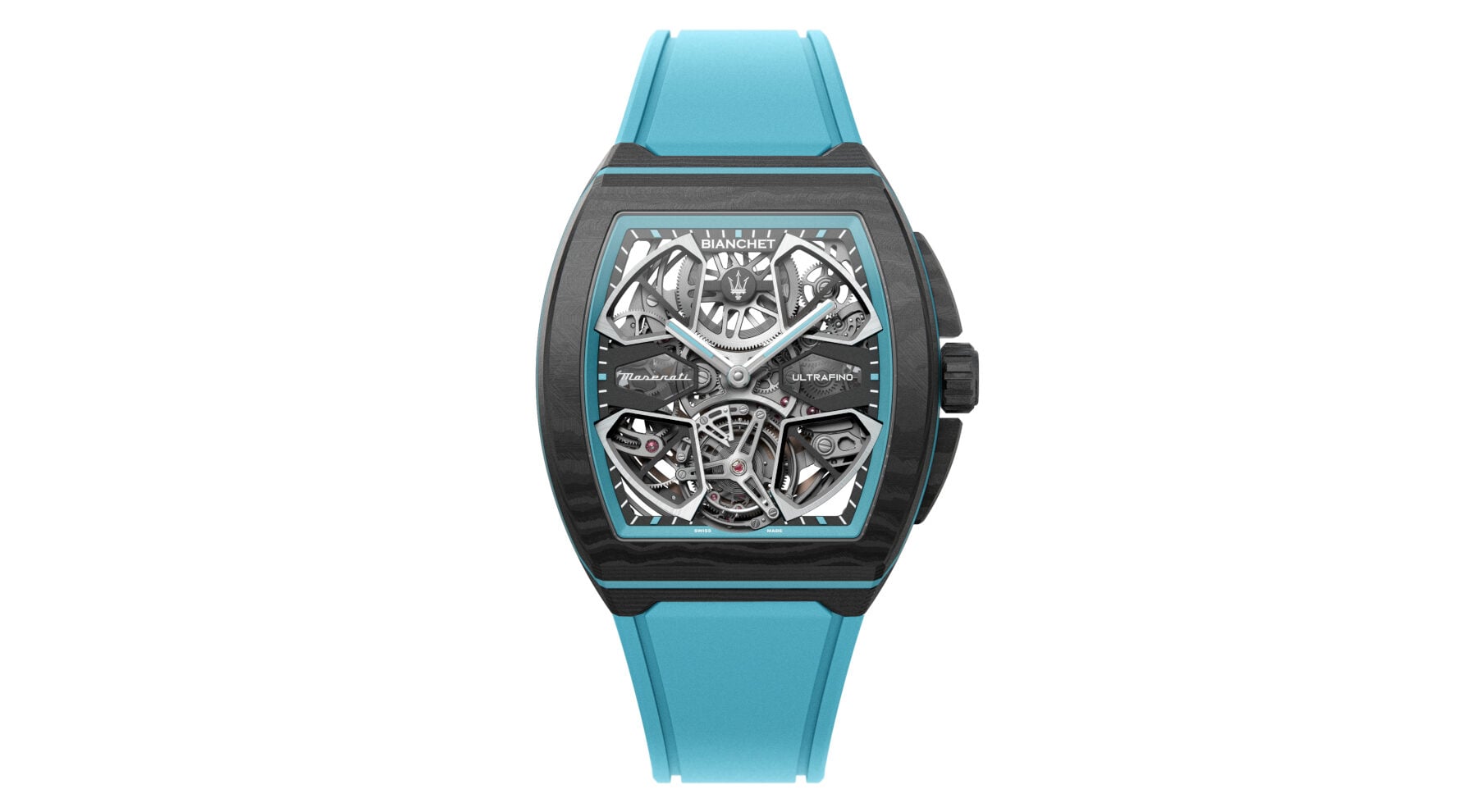
On the aqua rubber strap, though, the whole thing loosens up a little. It becomes louder, more summery, and more directly tied to the Maserati side of the story. Usually, I’d instinctively lean toward the bracelet, and I still think that’s the cleaner option overall, but I can’t deny that the rubber strap has more attitude. It’s the option that makes the collaboration feel more alive. I wear a lot of my watches on rubber straps, so having the option for the integrated fit is a welcome one.
Why Bianchet and Maserati have judged it well
The more I’ve looked at this watch, the more I’ve realized that the collaborators have done a good job. It’s got enough Maserati in the details to give it a reason to exist, but there’s not so much that it stops feeling like a Bianchet. That’s important because once one side starts overpowering the other, such collaborations usually fall apart for me.
Here, that hasn’t happened. It still feels sharp, technical, and properly considered, not like a watch trying too hard to sell the partnership. And at a time of the year when all brands in the watch world are fighting for attention, that honestly stands out. This is one of many watches I’m looking forward to seeing in real life next week at Watches and Wonders! Let me know in the comments what you make of this collab and if it hits home for you.
This is a partnership post. Learn more.