ArtyA’s Uber-Complex Complexity Debuts For Watches And Wonders

Some watches hit you with the spec sheet and leave you to make sense of the rest later. The new ArtyA Complexity doesn’t really feel like one of those. Yes, the headline is big, and yes, it was always going to grab attention at Watches and Wonders next week. Still, the thing that stood out to me straight away is that it doesn’t feel built around one dramatic talking point and then hot air. That’s pretty important, as a lot is going on here. ArtyA is opening Watches and Wonders 2026 with a watch featuring two inclined tourbillons linked by a differential and housed in a new sapphire case. It’s also limited to just nine pieces.
On paper, that sounds like the sort of watch that could easily feel overloaded. From the images so far, though, it looks much more controlled than that. There’s still plenty of visual impact, of course, but there also seems to be some discipline in the way it’s all been pulled together. For a watch like this, I think that makes a big difference.
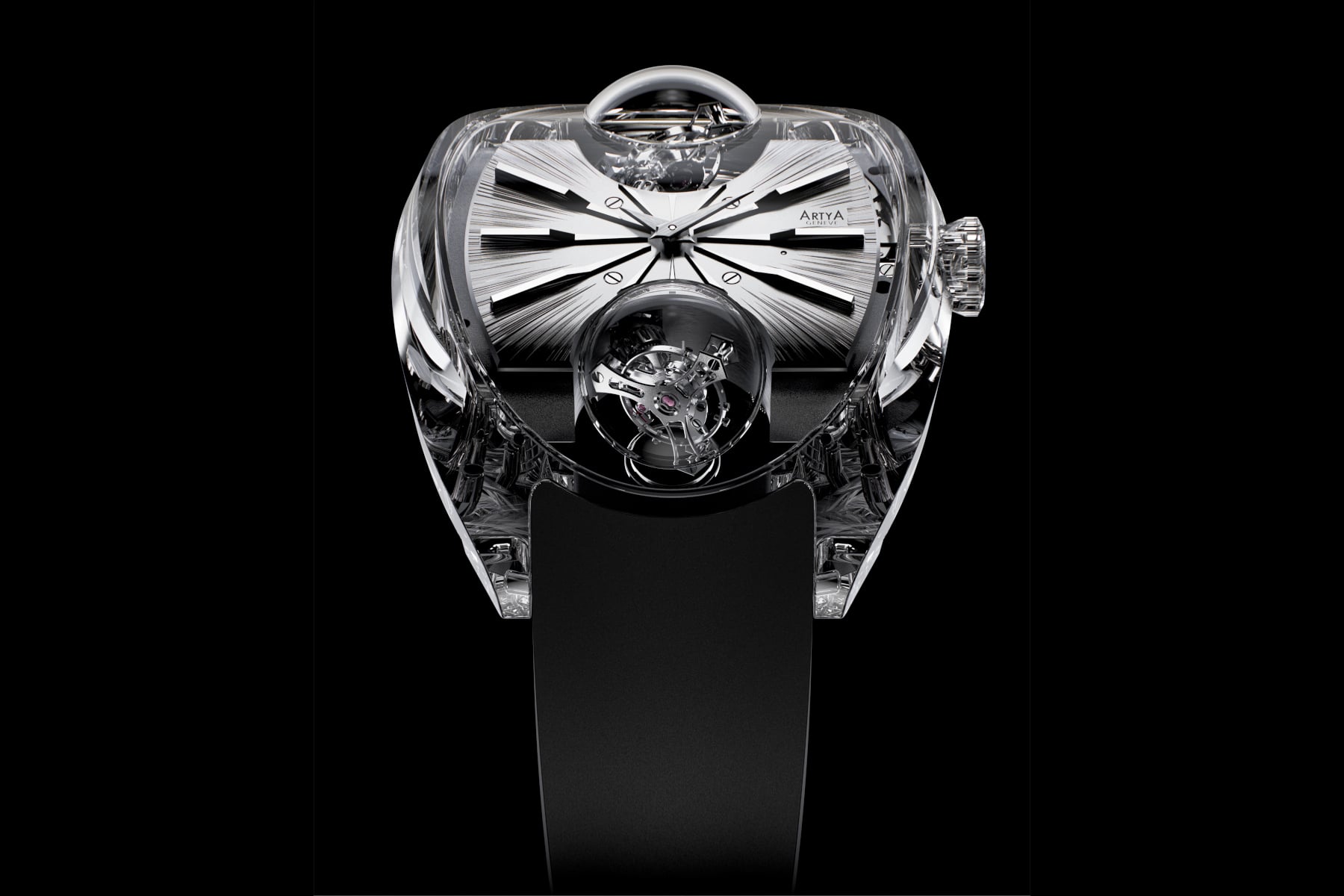
Two inclined tourbillons, but more than a numbers game
Before addressing the design side of it, it’s worth looking at what ArtyA is actually doing here. The brand uses the term “cônillon” for its inclined tourbillon system, and in the Complexity, there’s one at each end of the dial. Importantly, ArtyA hasn’t just placed two inclined tourbillons in the same watch and called it a day. They’re linked by a differential, balancing the distribution of energy between the two regulators. That’s what makes the watch more interesting to me. Plenty of high-complication pieces can feel like they exist mainly to prove a point. This seems to start from a clearer mechanical idea. The appeal lies not just in the two inclined tourbillons but also in the system’s design as a whole. Whether anyone is buying a watch at this level for pure chronometric gain is another matter, but the logic is still important. It gives the watch more substance.
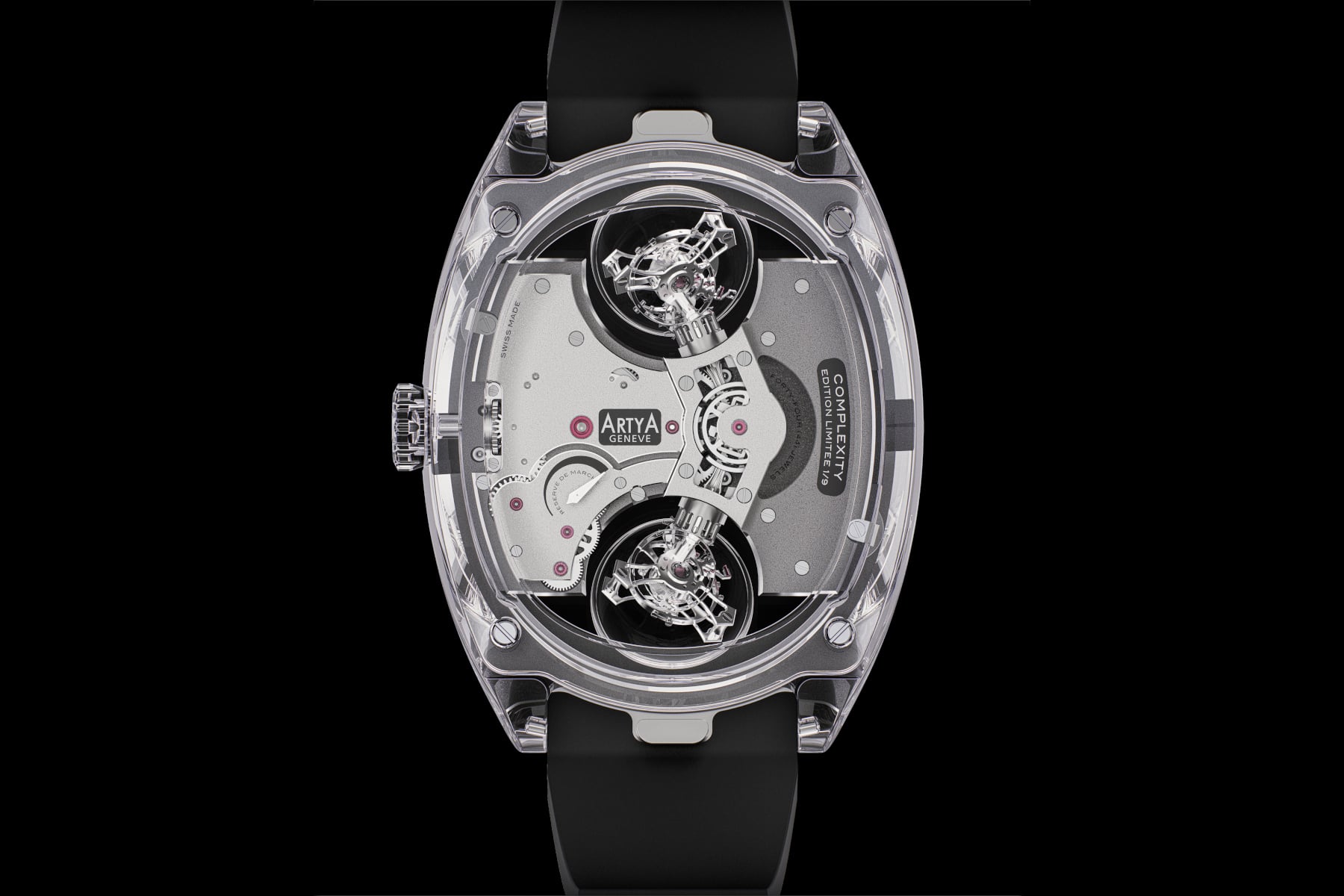
ArtyA’s manually wound Complexity-01 caliber has a 3Hz frequency, offers 50 hours of power reserve, and consists of 287 components, including 44 jewels. Each inclined tourbillon completes a rotation every 30 seconds, so there should be plenty of movement on the wrist, and not in a subtle way.
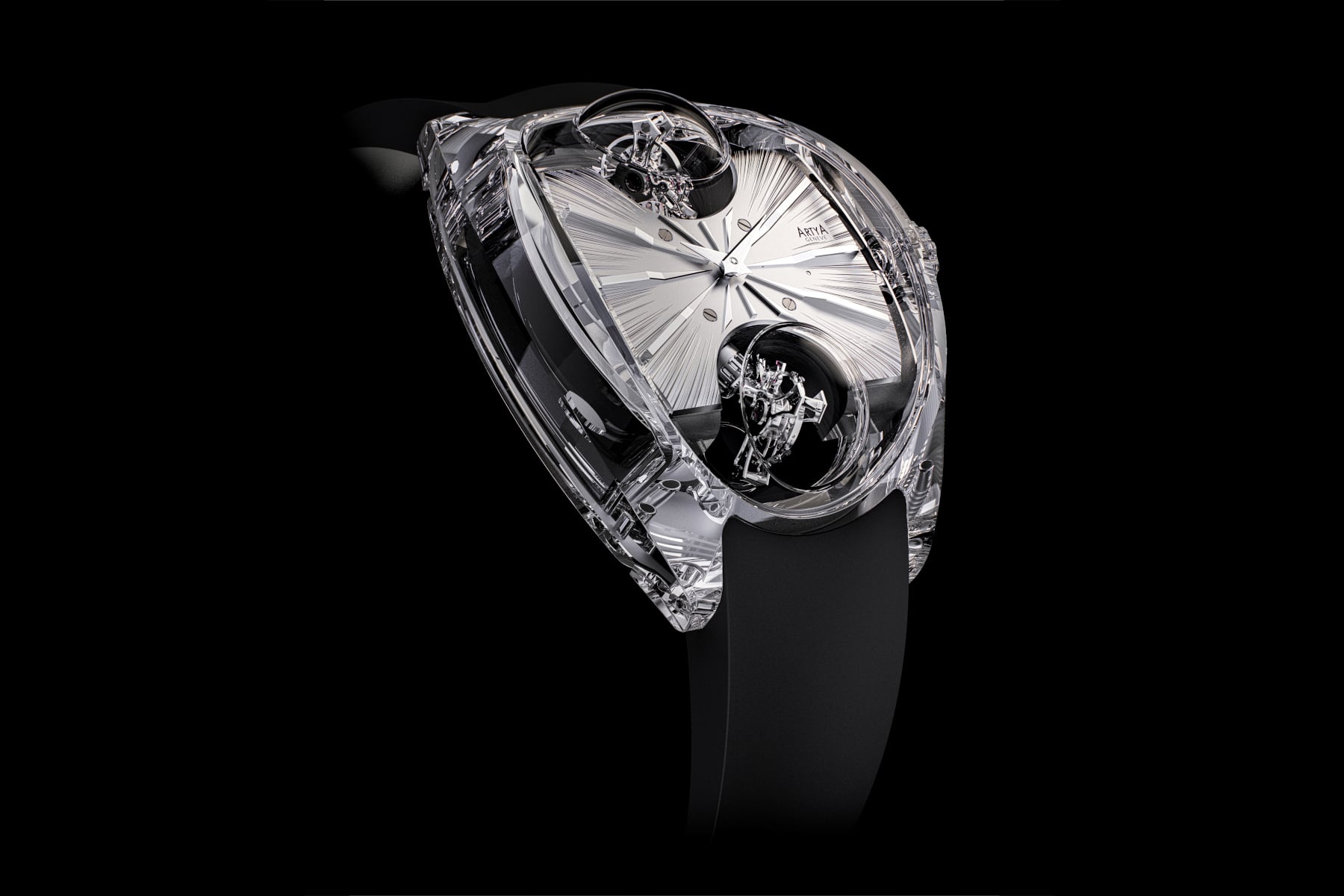
The case makes the Complexity click
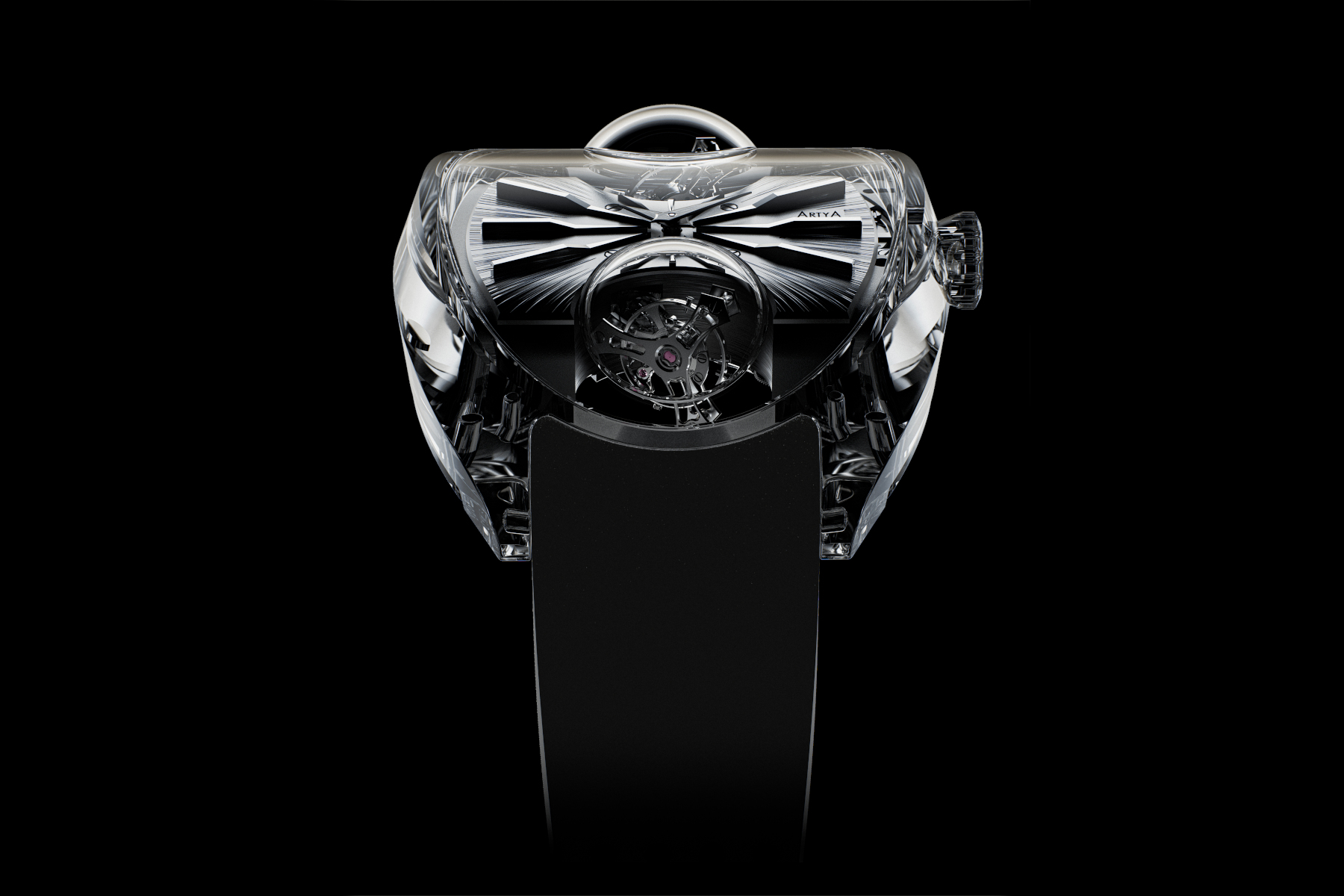
As technically incredible as the movement is, the case is probably what makes the watch land for me. ArtyA has devised a new sapphire form with a triple-concave middle and two domes, one at 12 and one at 6, sitting directly above the inclined tourbillons. That could have become too much very quickly. Instead, it seems to give those mechanical elements the space they need, and that’s possibly why it’s so cool. The case doesn’t come across as a transparent shell put around a super complex movement. This can be a lazy design concept when not executed with the assured confidence ArtyA displays here. Instead, the Complexity’s case looks like it was designed around the movement from the start. That’s exactly what a watch like this needs. Otherwise, all you’re left with is spectacle.
Here, the curved flanks, domed sapphire sections, and overall shape seem to work together to frame the movement properly. There’s still a lot to look at, but it doesn’t look confused, and that’s not always a given with watches in this territory. ArtyA lists the watch at 42mm wide by 48mm long and 13mm thick, which feels fairly disciplined considering what’s going on here. It still has presence, of course, but it doesn’t look awkward or top-heavy, which it easily could have.
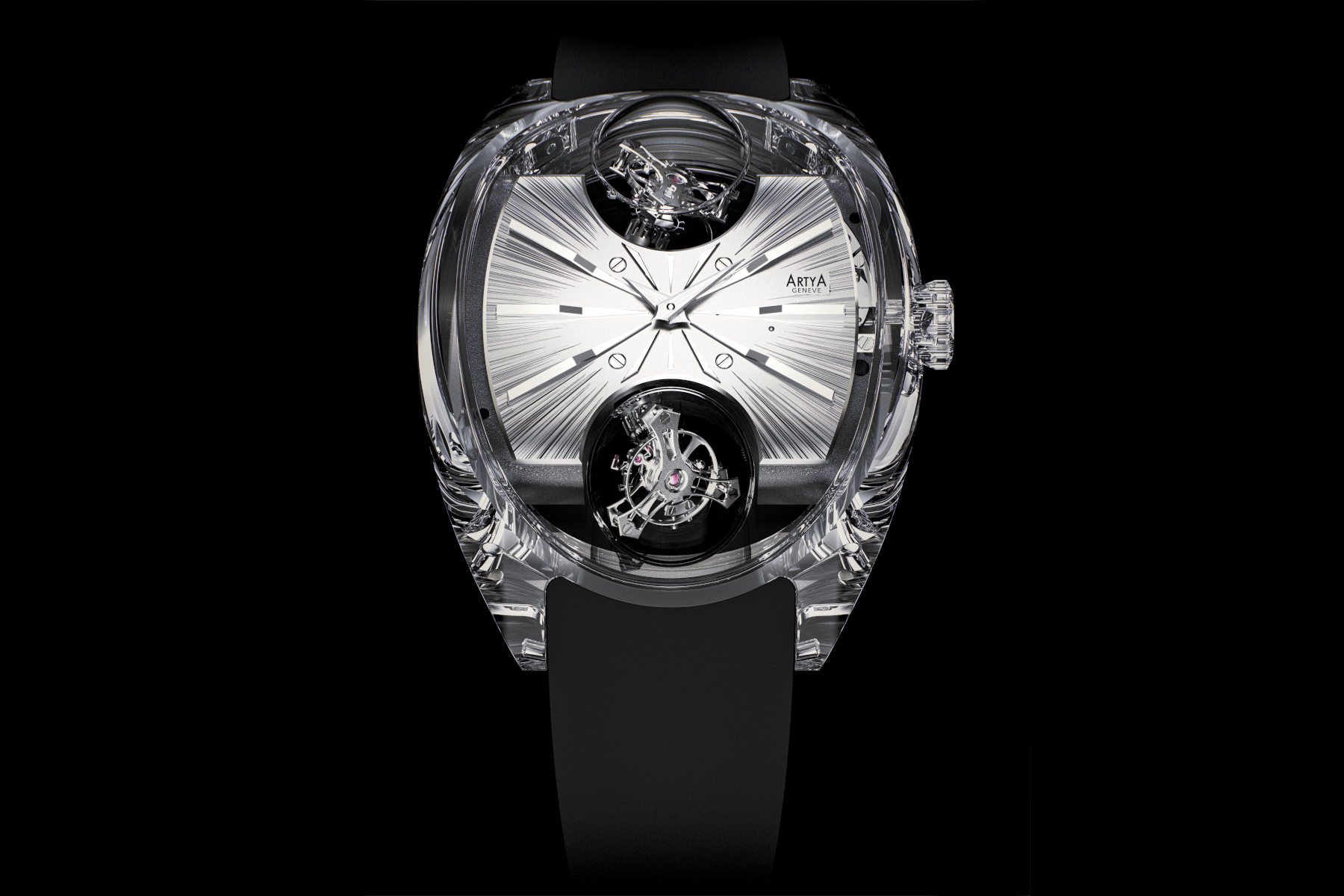
The dial holds it all together
The dial is also doing more work here than it might get credit for at first glance. With a movement like this, it would have been easy to open everything up as much as possible and let the mechanics dominate the whole front of the watch. ArtyA hasn’t done that. Instead, the dial gives the watch some structure, and I think that’s one of the main reasons it works visually. There are two dial styles. The Griffe dial uses a radiating engraved pattern, while the matte dial has a more even shotblasted finish. Both use polished applied indexes, and both seem designed to frame the openings for the inclined tourbillons rather than compete with them. I surprised myself by holding a slight preference for the Griffe dial. I usually prefer matte finishes, but the Griffe dial has something special that just seems to resonate with me a little more.
Overall, the dial’s design feels like the right decision. Without that dial architecture, the Complexity could easily have tipped into looking like all movement and no balance. Instead, there’s still a clear visual center to it. For me, the transparent sapphire case with the lighter silver dial is the cleanest version from the launch images. It lets the case’s shape and the mechanics do most of the talking. That said, I can also see the appeal of the Pigeon’s Blood ruby case for anyone who wants a bolder piece on the wrist.
Four versions, nine pieces of Complexity
ArtyA is offering the Complexity in either transparent sapphire or Pigeon’s Blood Ruby, paired with either the Griffe or Matte dial. The sapphire versions feature silver dials, while the ruby models feature anthracite dials. All four come on curved-end rubber straps with ArtyA deployant clasps. Production is limited to nine individually numbered pieces, regardless of configuration. Pricing starts at CHF 190,000 for the sapphire model and rises to CHF 220,000 for the ruby version. That’s exactly the kind of territory you’d expect for something this complicated, limited, and difficult to make.
I’ll save my final judgment until I see the Complexity in person, as a watch like this really needs that. Sapphire cases, unusual shapes, and constantly moving regulators can all appear very different in real life than they do in press images (often even better). But as a first look, this feels strong. What I like most is that it doesn’t seem to rely on one dramatic claim to carry the whole thing. The two inclined tourbillons are the obvious talking point, but the case, dial, and layout all seem to support that idea. That sounds basic, but it really isn’t. The Complexity still feels very much like an ArtyA watch. It’s expressive, technical, and unapologetically visual. But it also looks properly thought through, and that’s what makes this one stick. I am certainly looking forward to seeing this one in person during Watches and Wonders next week!
This is a partnership post. Learn more.