Hands-On With The Remarkable New Christopher Ward C63 Sealander True GMT

Christopher Ward is, without a doubt, one of the most active watch brands around today. It has consistently shown us how to push the envelope of what is possible in the realm of affordable watches. This has led to an extensive collection of watches that show great diversity. Simply compare the Bel Canto to the Twelve or the C63 Sealander series, and you’ll see what I mean. And Christopher Ward keeps adding to that already extensive collection almost weekly. The latest introduction is the C63 Sealander True GMT. It’s the brand’s first flyer-style GMT watch. But rather than styling it similarly to the Rolex GMT-Master, Christopher Ward decided to go a different route. I had a chance to go hands-on with the new C63 Sealander True GMT and find out more.
If you are a regular Fratello reader, you might know I have a thing for GMT watches. The combination of a practical complication and the look of a classic GMT simply appeals to me. But I am not necessarily bound to one aesthetic. While I deeply love the Rolex GMT-Master design, I also adore the Explorer II, which presents quite a different look. So it probably doesn’t surprise many that both the GMT-Master ref. 1675 and the Explorer II ref. 1655 are among my favorite Rolex models ever made. Knowing that, you will understand I was more than happy to find out what the Christopher Ward C63 Sealander True GMT is all about.
The story of the Christopher Ward C63 Sealander True GMT
I own a Christopher Ward C65 Dune GMT, which has been one of my go-to watches since I bought it in 2024. I have written about the watch and how special it is to me multiple times. As a design buff, I have a critical eye and tend to find aspects of Christopher Ward watches that I don’t like. That’s not to say I don’t like the brand’s watches, but it has often kept me from experiencing the special feeling I got when I put the C65 Dune GMT on my wrist. I’ve had a steady love affair with that watch ever since.
If there is one thing I would like to see changed about that watch, it would be the movement. Don’t get me wrong; the Sellita SW330-2 has proven to be a great, reliable caliber to power the watch. But it lacks the practicality of a flyer-style GMT caliber that allows you to set the local hour hand independently. While I don’t travel through time zones as regularly as I used to, a caller-style GMT is simply more impractical than most watch fans would like.
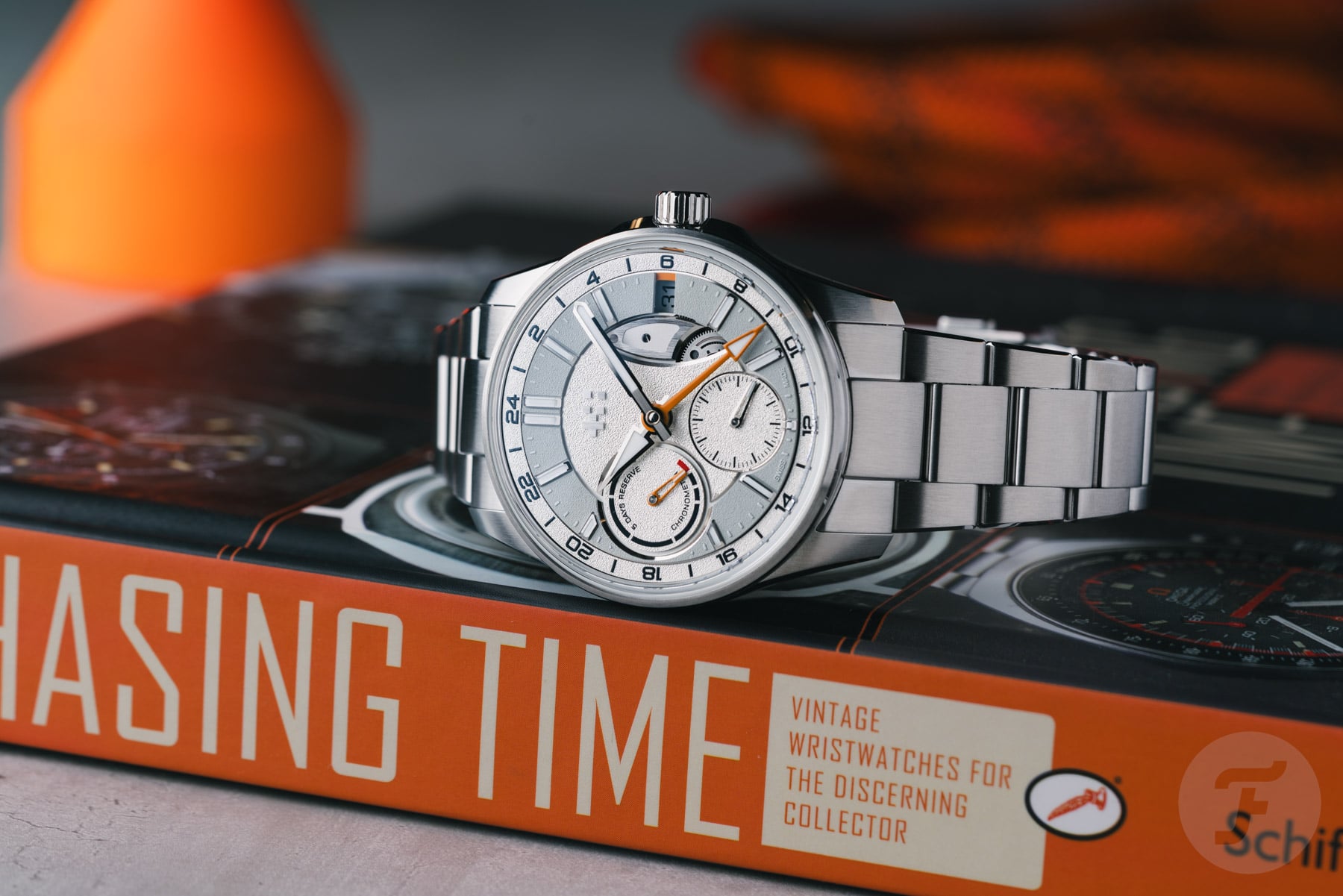
But movement supplier Sellita does not offer a flyer-style GMT — or “true GMT,” as many people like to call it. With today’s new version of the C63 Sealander, Christopher Ward offers its first watch with this complication. To make it happen, the brand created the new in-house CW-002 caliber. And instead of making the watch look overly familiar, Christopher Ward created a new design that takes a very different direction. Let me elaborate on that.
The details of the Christopher Ward C63 Sealander True GMT
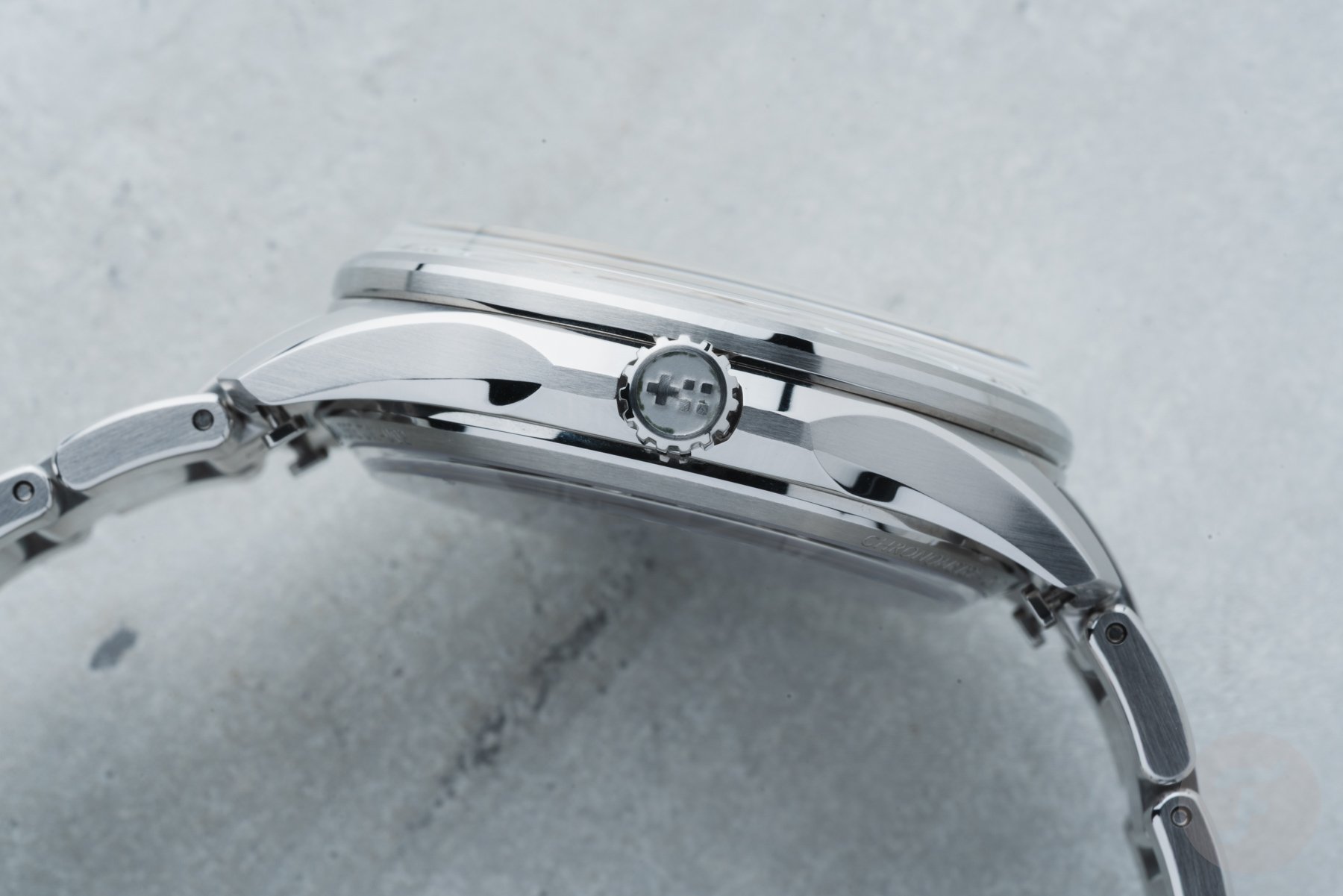
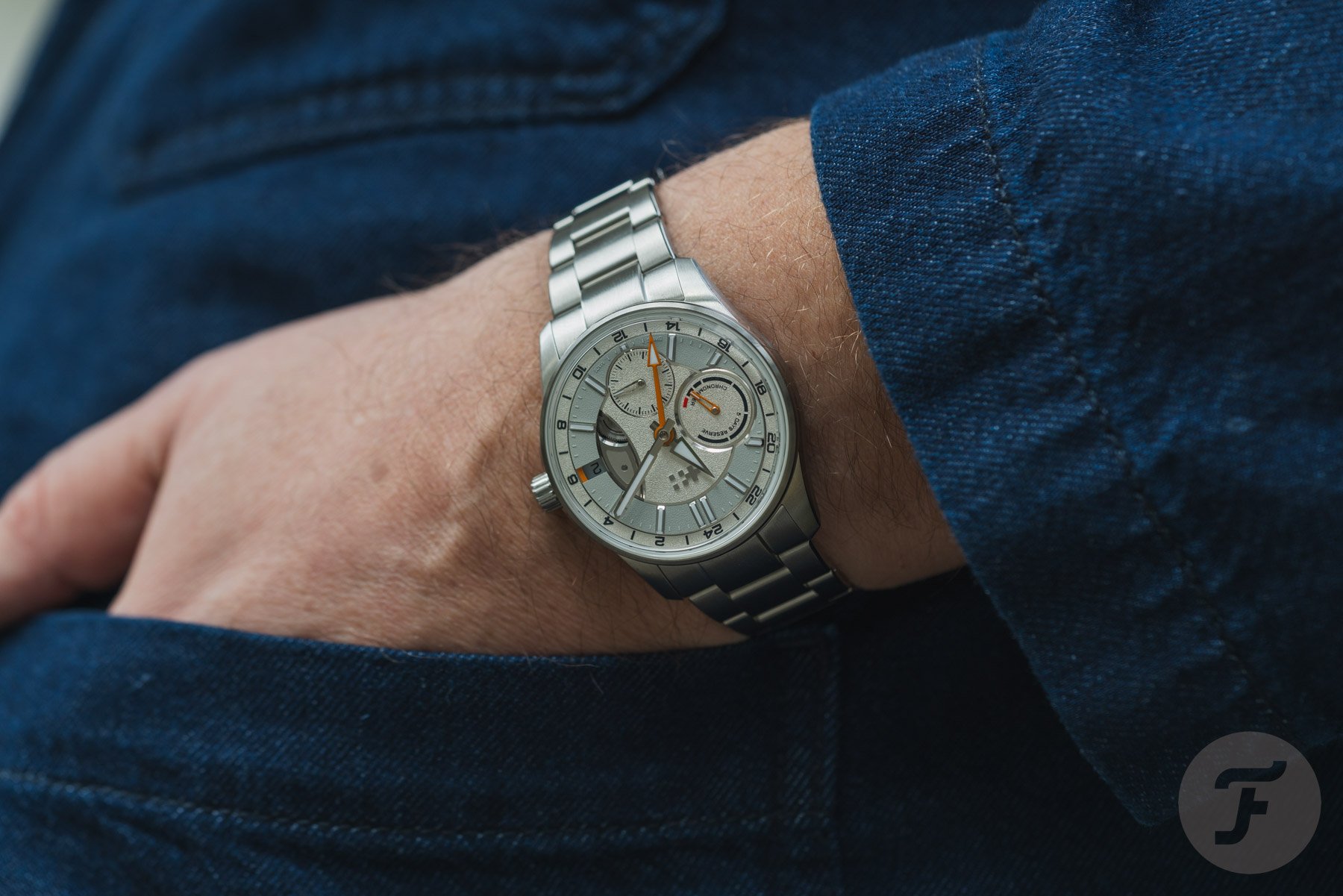
One glance at the new Christopher Ward C63 Sealander True GMT will tell you that this is not a “typical” GMT watch. While it does offer the dual-time functionality, it is easy to see there is more to the story. Let’s start with some specs. The new C63 Sealander True GMT has a 40.4mm stainless steel case with a total 14.15mm thickness, a 48mm length, and a 22mm lug spacing. The case is water resistant to 100 meters and features a predominantly brushed finish with polished chamfers for visual detail.
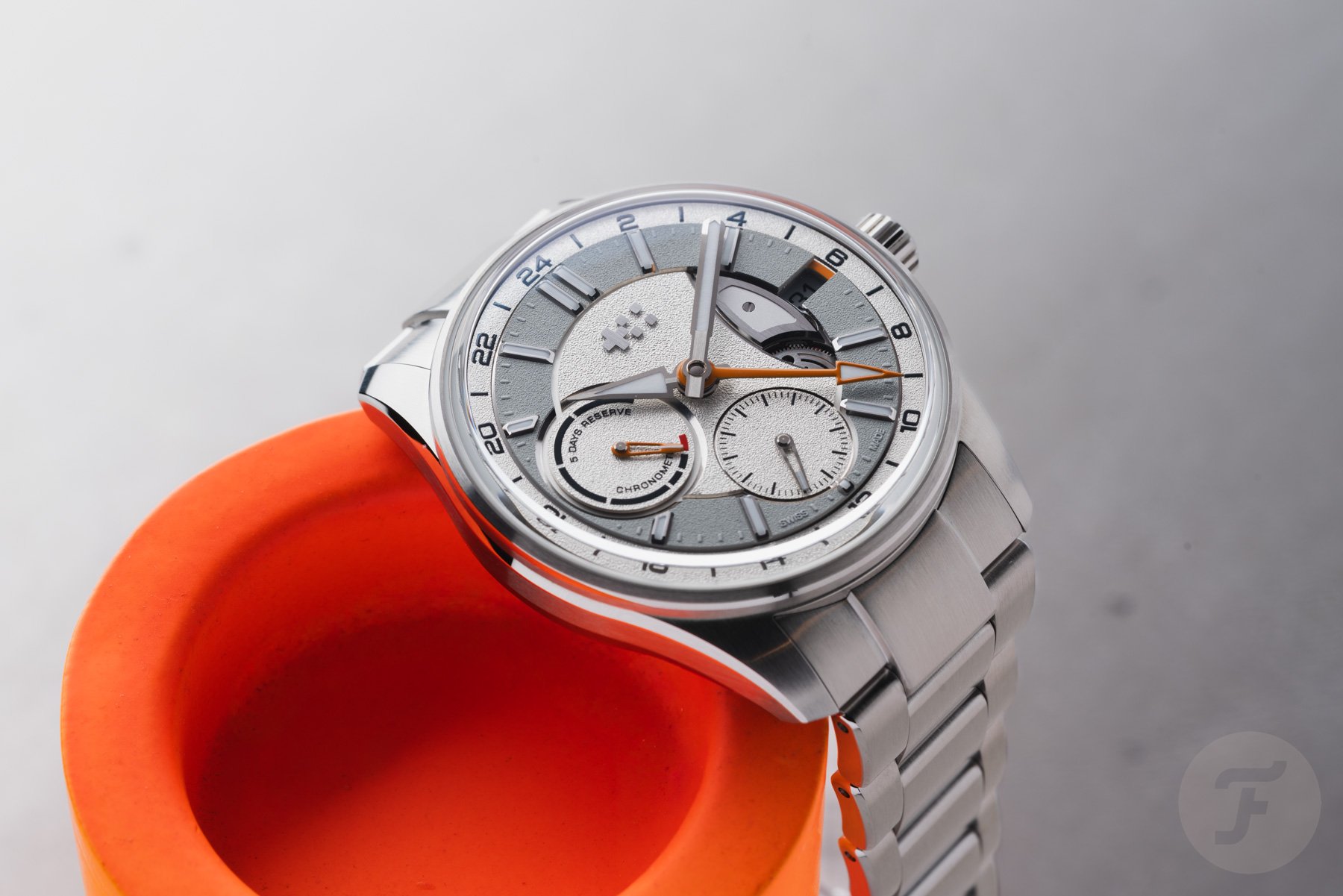
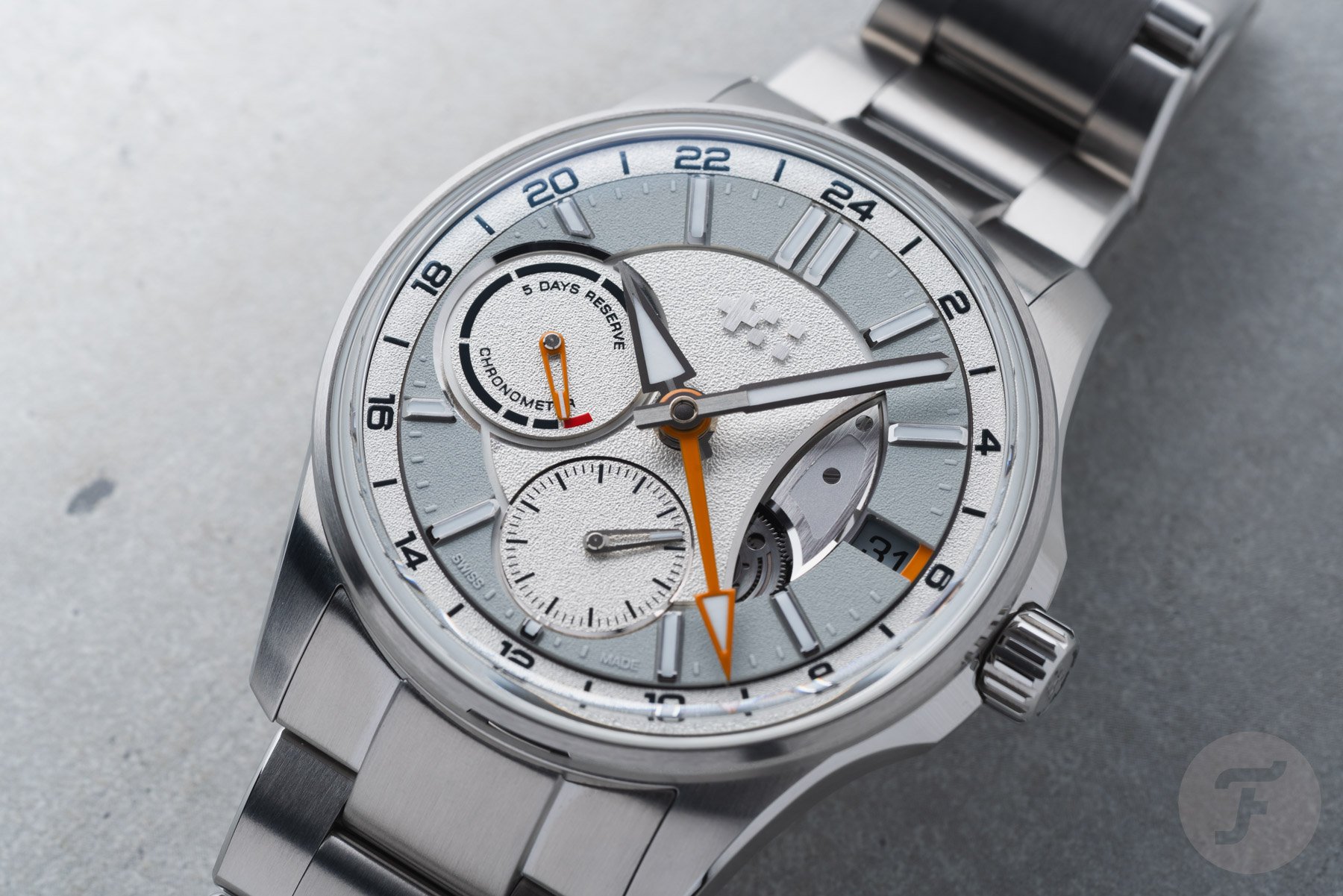
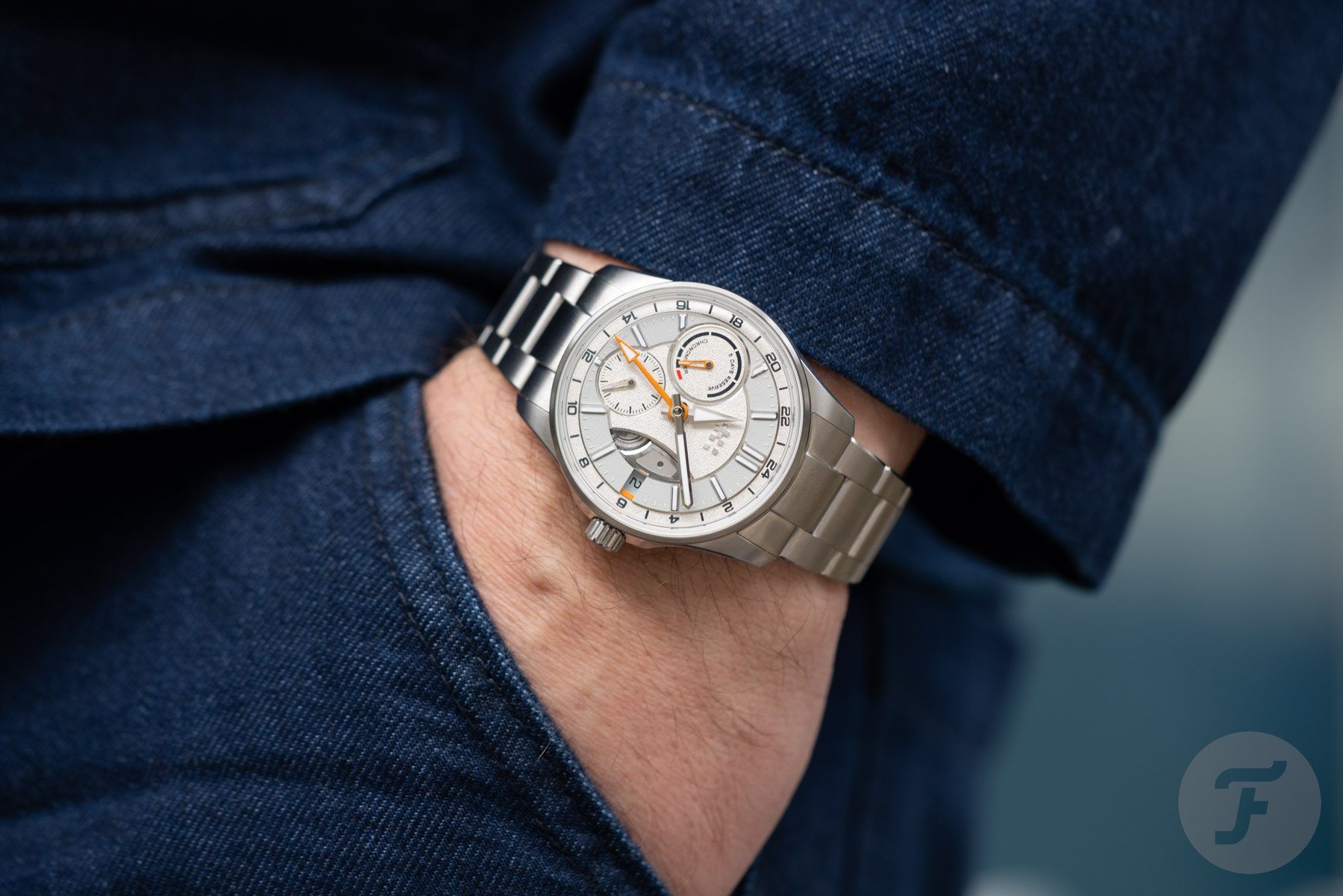
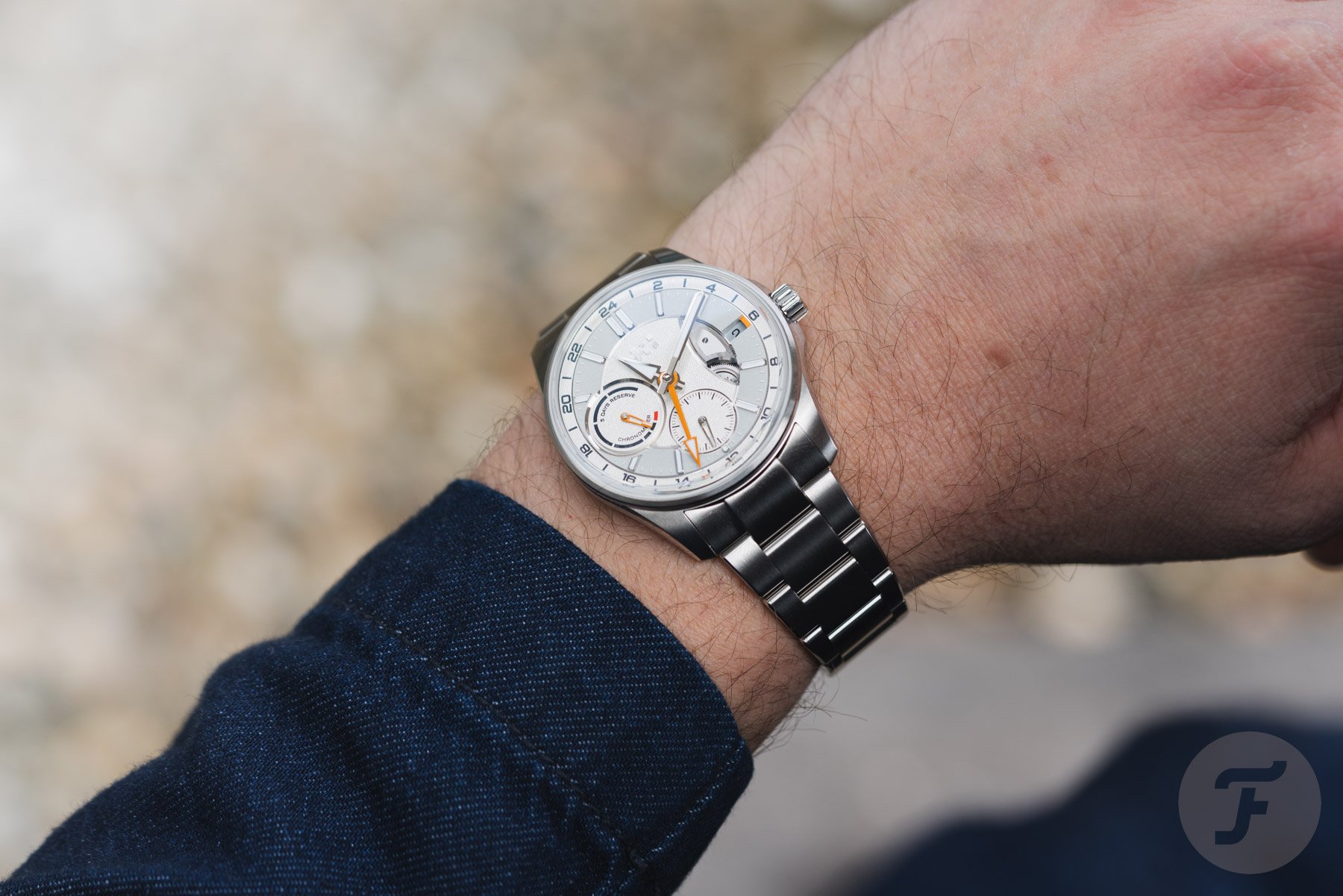
When your eyes hit the dial, you immediately realize how different this GMT watch is. The multipiece dial features a sub-seconds register at 6 o’clock, a power reserve indicator at 9 o’clock, and a date window at 3 o’clock. The brand offers two versions of this new C63 Sealander True GMT. The first has a black dial with light blue accents, while the second houses a silver dial with orange accents. As the latter is the model that we had in for review, we will focus on it for this review.
The dial design of the C63 Sealander True GMT
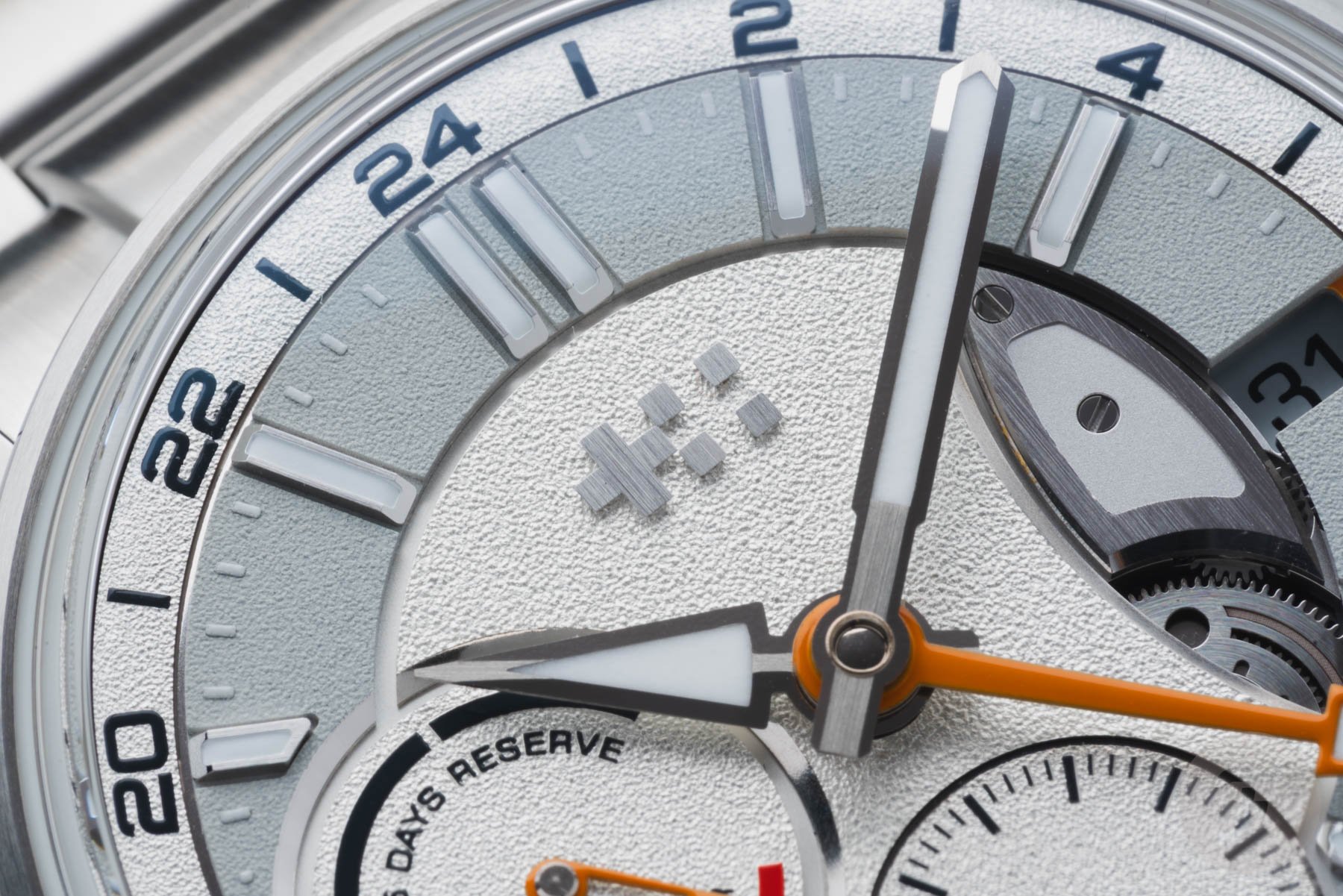
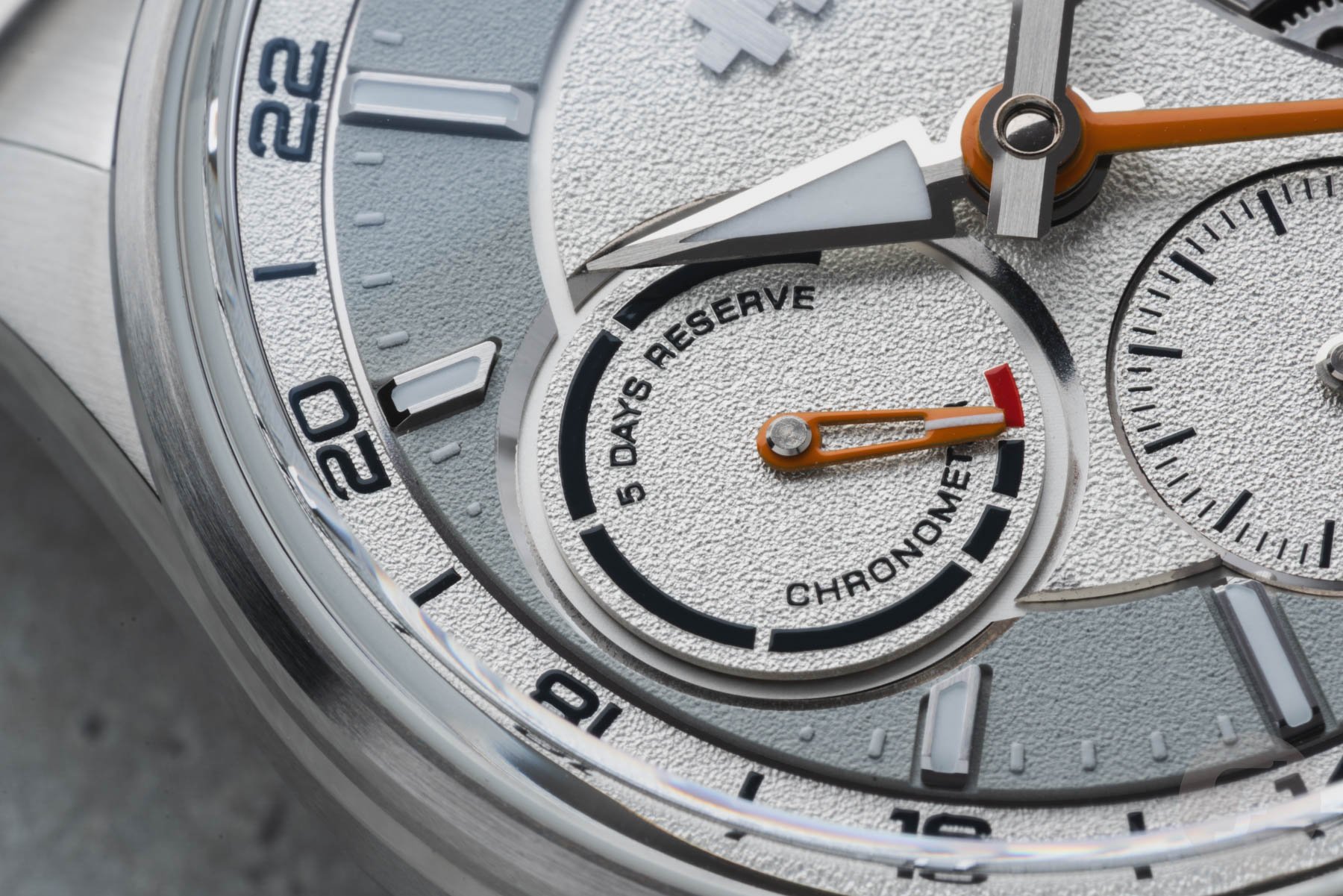
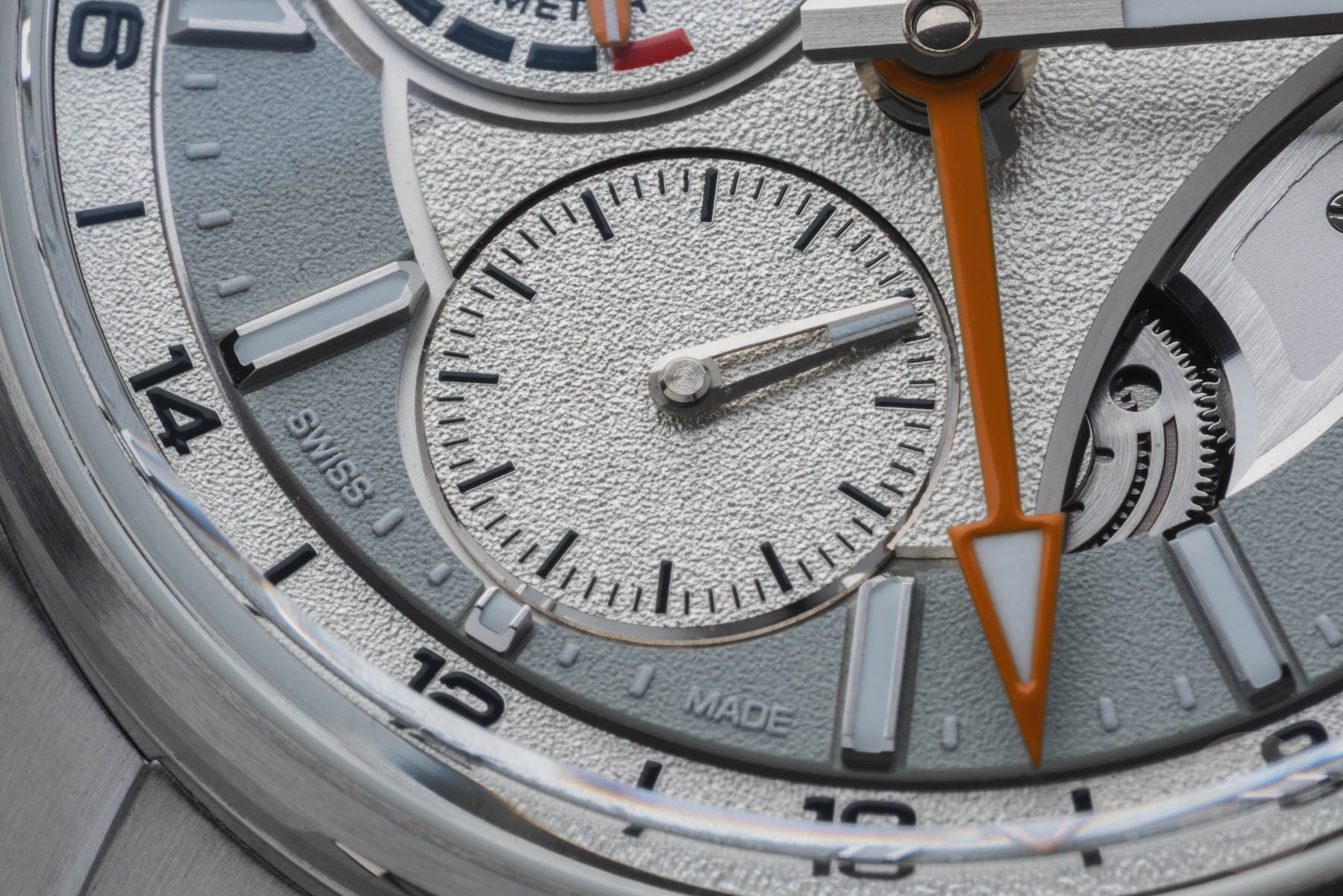
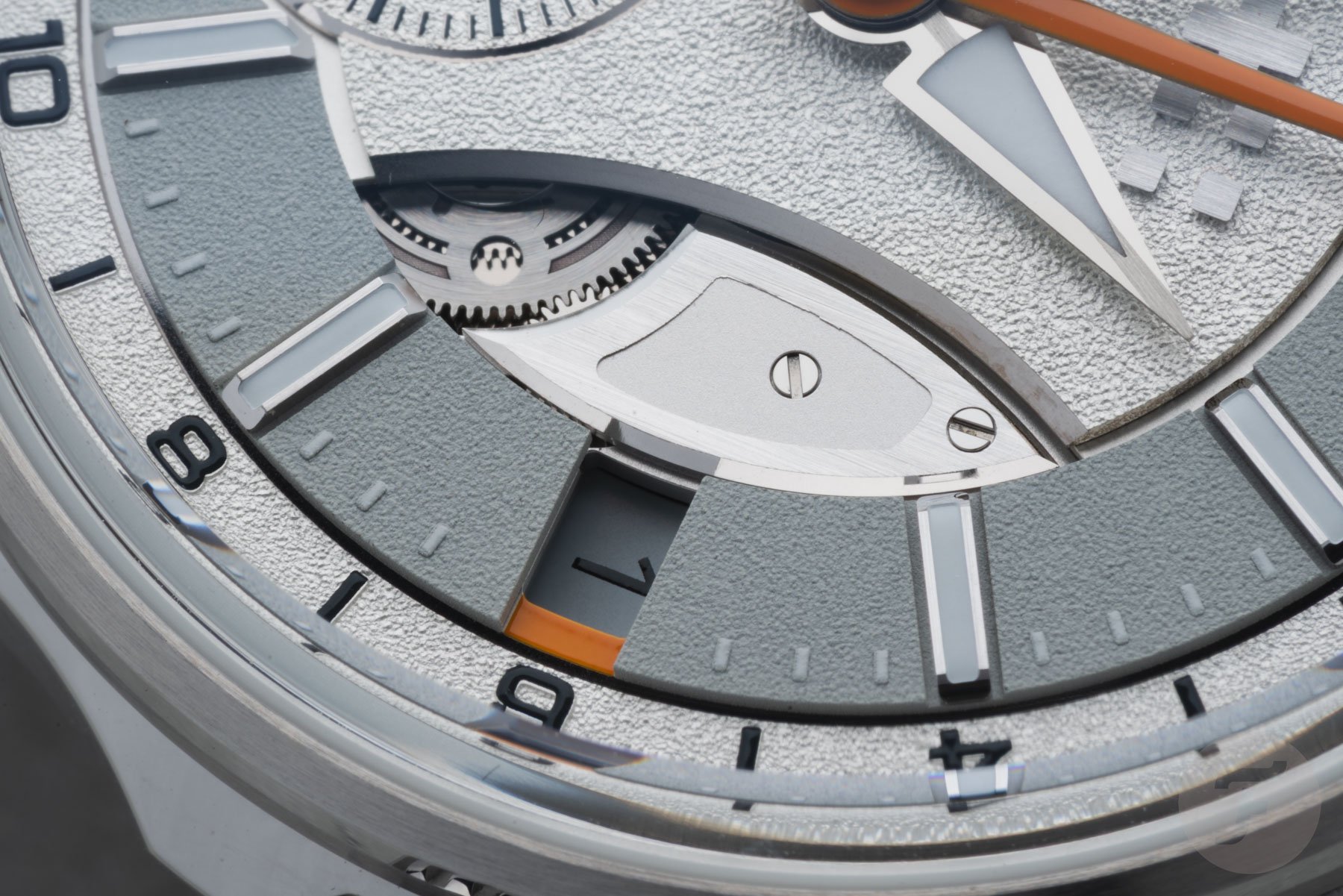
This watch’s stamped dial features a grained finish and, essentially, can be divided into three parts. The outer silver ring features the 24-hour scale with numerals for the even hours and lines for the uneven hours. On the inside of the GMT ring is a gray segment holding the applied Super-LumiNova X1-filled hour markers, as well as a white minute track. Lastly, the silver center features the Christopher Ward logo and has an opening at 3 o’clock, revealing the GMT bridge with linear brushing, sandblasting, and hand-polished facets, alongside a circular-brushed GMT wheel.
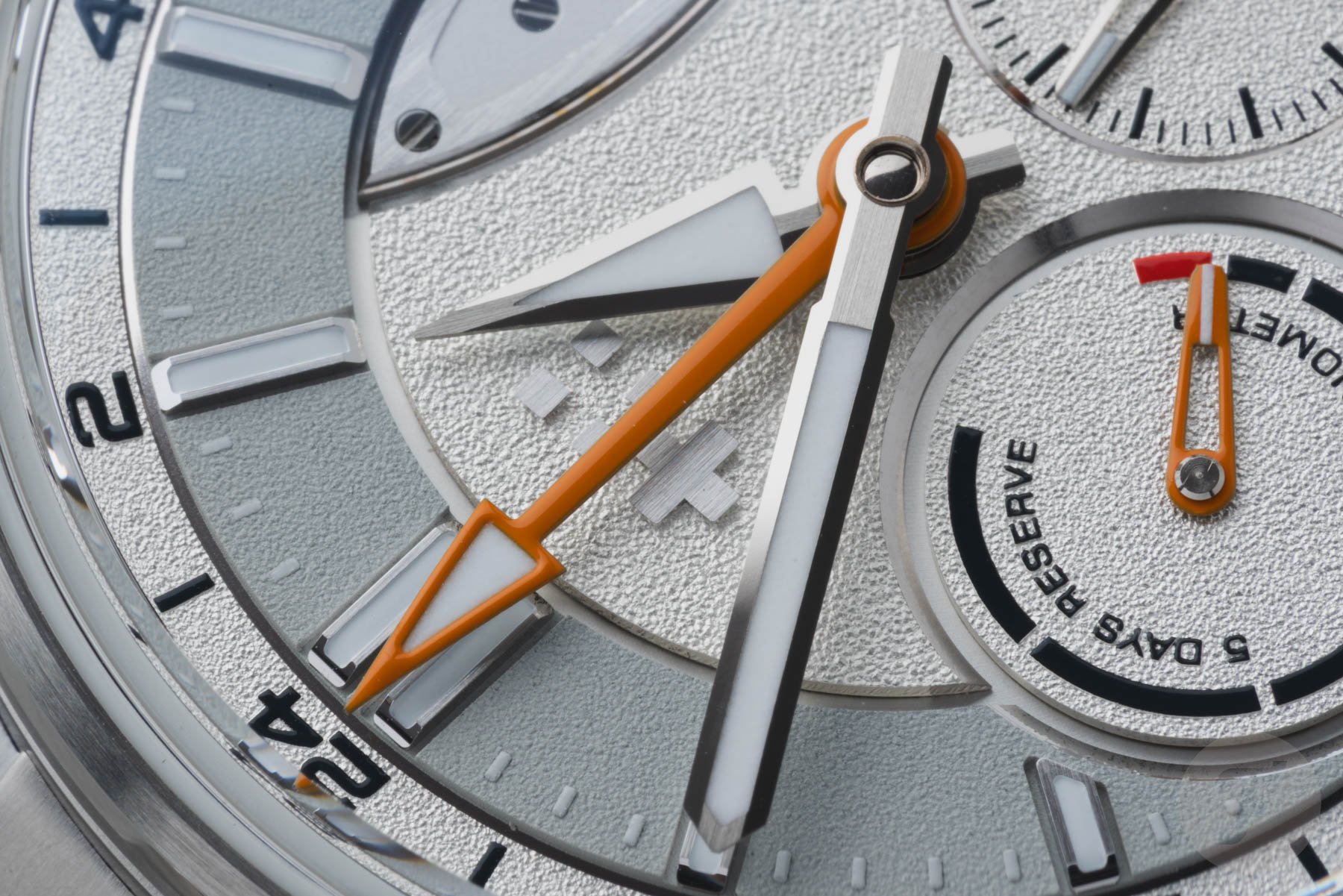
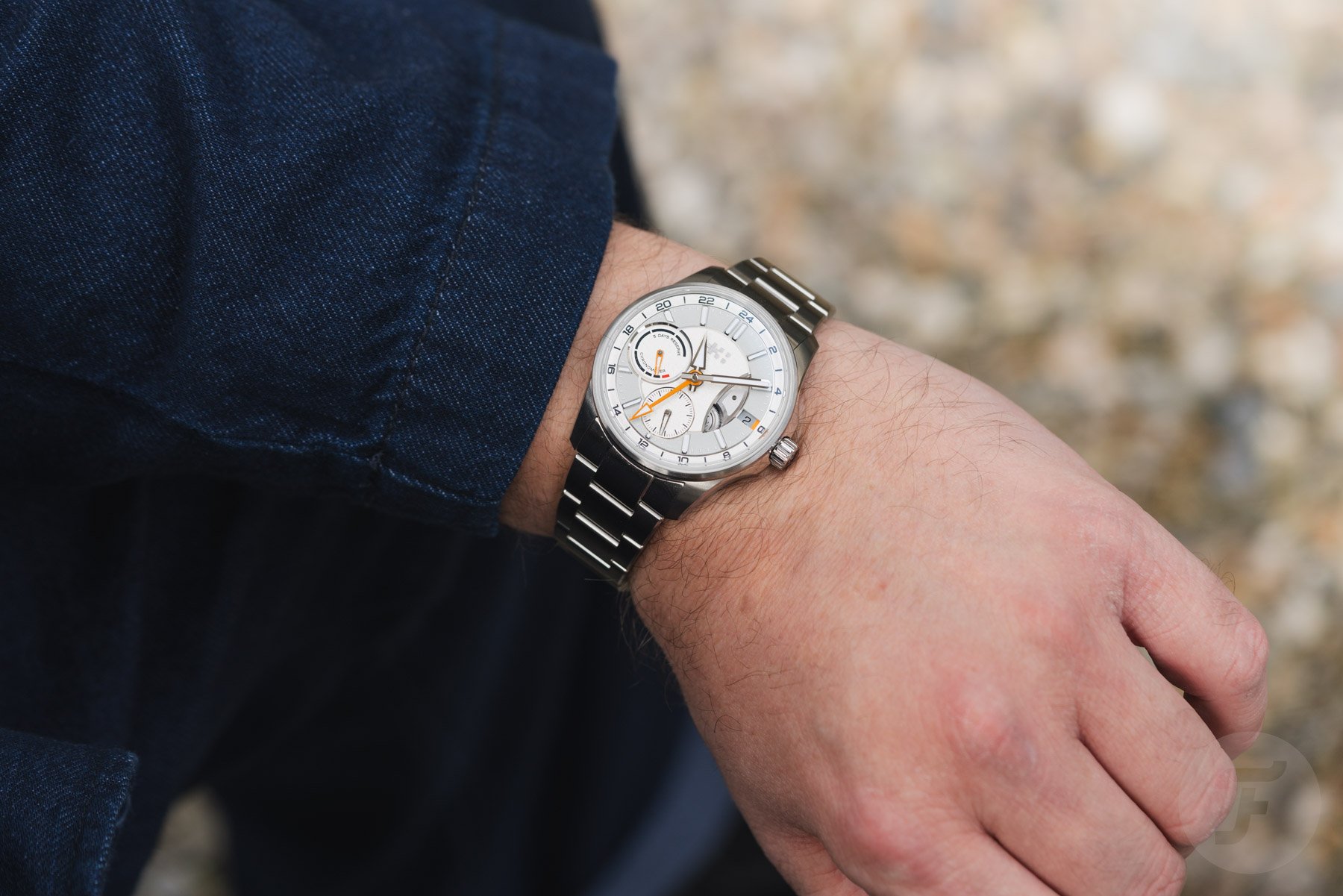
The two sub-dials are asymmetrical and feature different hands. While the power reserve indicator features a skeletonized orange hand with a lumed tip, the small seconds hand is rhodinized and matches the lume-filled central hour and minute hands. Lastly, the arrow-shaped orange GMT hand indicates the time in another time zone on the outer GMT ring. A nice detail is the hint of orange next to the date window. The date wheel matches the light gray ring on the dial, and the date is printed in black. Protecting the dial is a box-shaped sapphire crystal that increases the overall thickness but adds to the visual drama.
The in-house caliber CW-002
Looking at the design, it feels like Christopher Ward deliberately chose to create something aesthetically closer to the Bel Canto than to the standard C63 Sealander. While the watch has the brand’s signature Light-catcher case used for the C63 Sealander range, it looks more akin to the modern Bel Canto models. As a fan of classic GMTs, I had to get used to that when the watch landed on my desk. But the design choices are partly influenced by the new CW-002 movement.
It took Christopher Ward’s technical department three years to develop this new caliber. The biggest challenge was integrating the GMT mechanism into an existing caliber without increasing the thickness too much. Christopher Ward did the same thing with the FS-01 that powers the C1 Bel Canto, adding a chiming module to a Sellita SW-200-1 caliber. Additionally, the brand’s JJ01, which powers the recently introduced C1 Jump Hour Mk V, uses a similar construction.
A caliber three years in the making
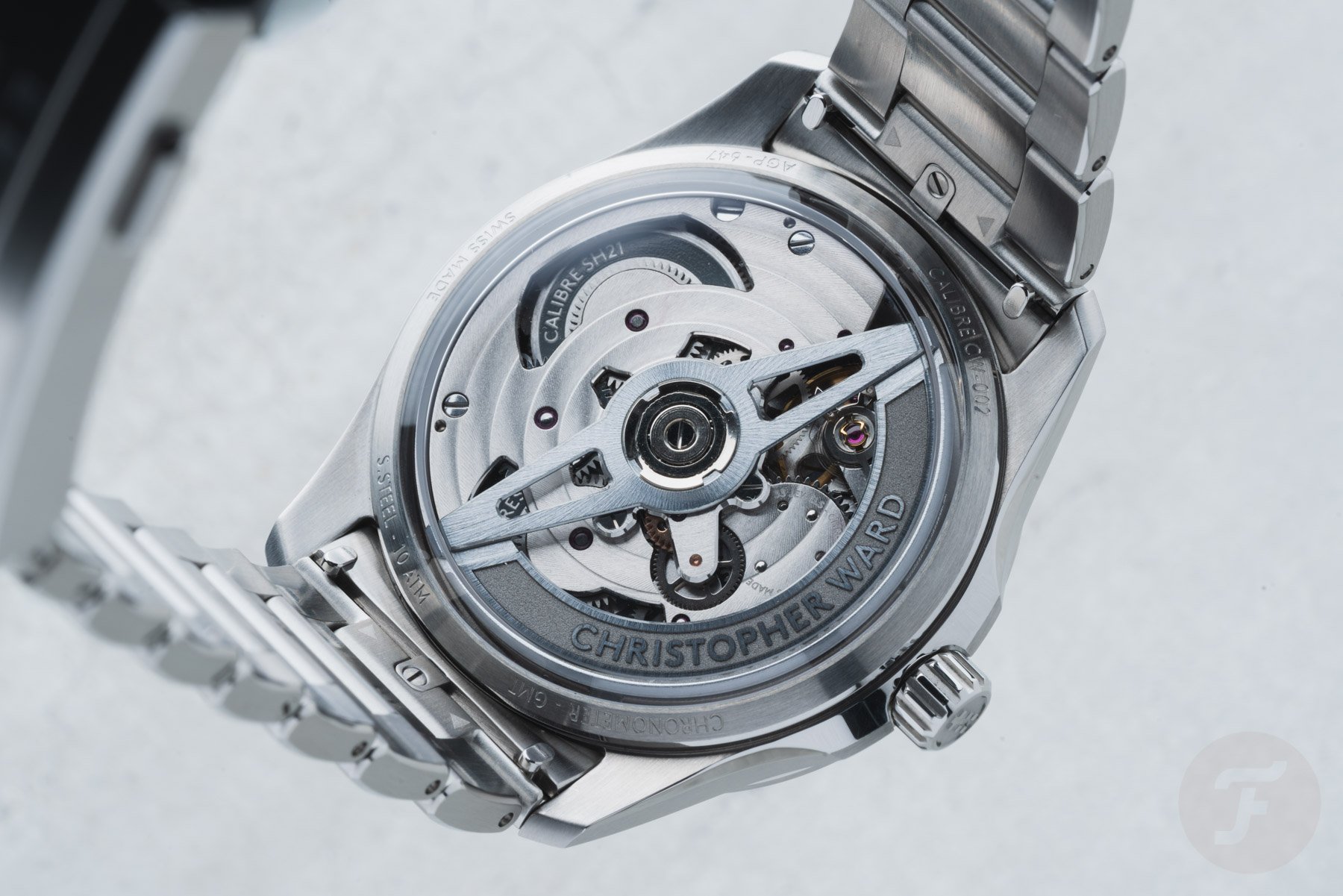
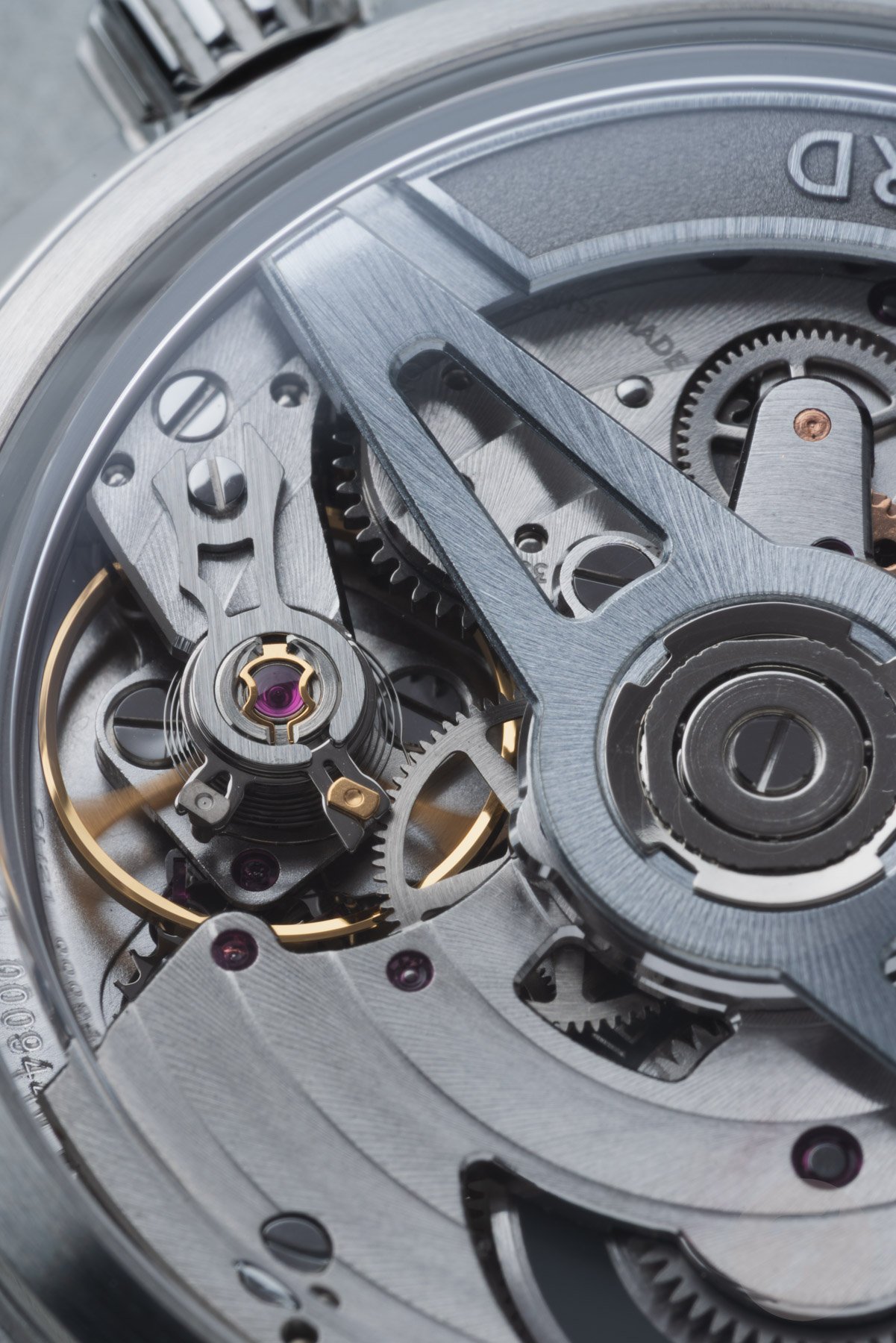
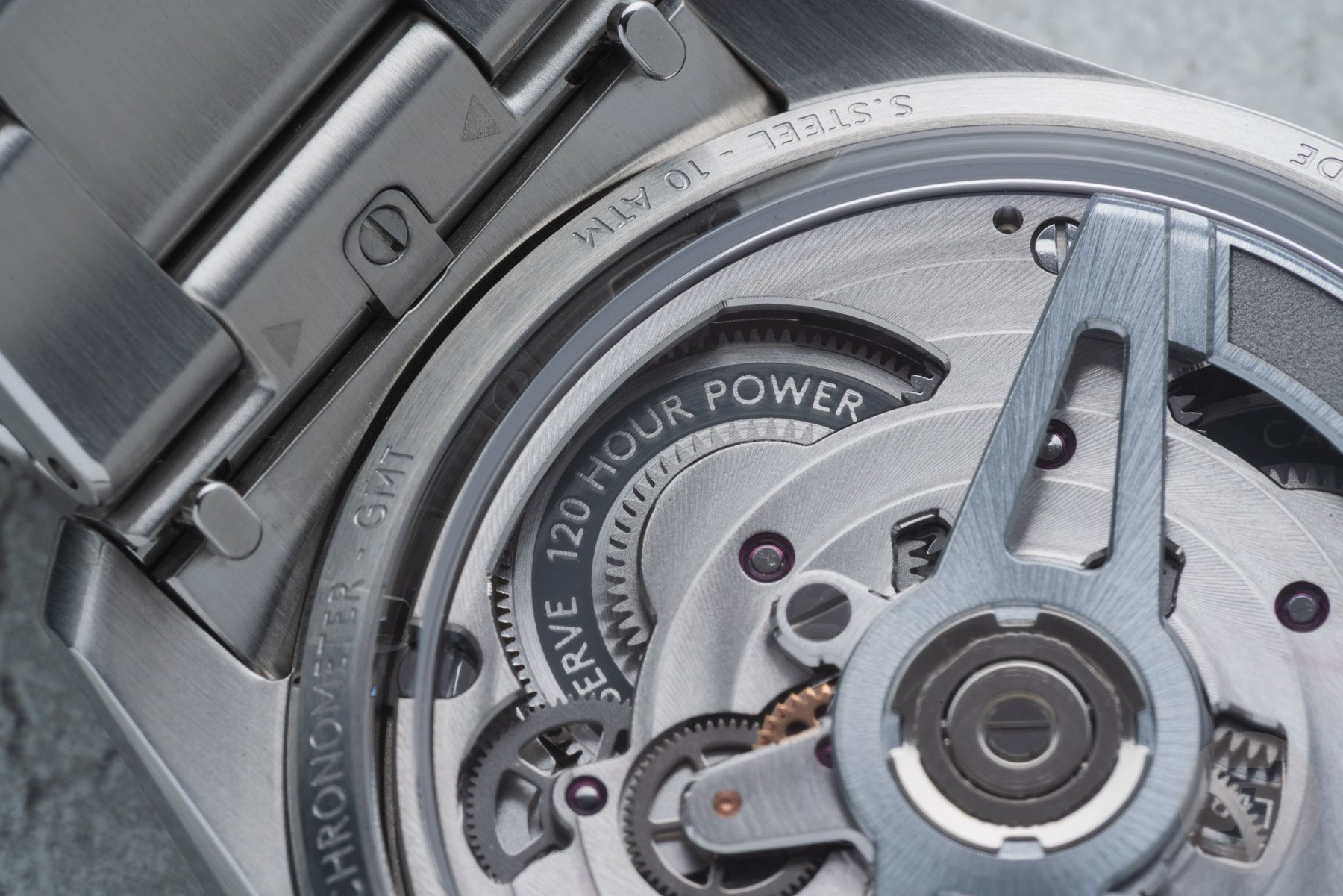
The handsome-looking new movement is visible through the case back’s sapphire display. A new base plate supports the GMT wheel and limits the thickness of the new components. A total of 23 parts were added to the caliber. Of these, 16 were newly designed, and seven were modified from existing CW-001 parts. The new CW-002 operates at 28,800 vibrations per hour and offers a majestic 120-hour power reserve. On top of that, it is a COSC-certified chronometer with an average accuracy of -4/+6 seconds per day.
The new CW-002 is another technical achievement that adds the functionality so many Christopher Ward fans have requested over the years. On top of that, the movement’s finishing is very attractive. It features circular Côtes de Genève and cut-outs revealing the twin barrels, balance wheel, and train bridge. The custom tungsten rotor features a mix of sunray-brushed and sandblasted surfaces to enhance the visual appeal. Overall, it is nice to see this new CW-002. It further extends the brand’s line of Atelier calibers and, more importantly, adds a very welcome complication to its lineup.
Wearing the new Christopher Ward C63 Sealander True GMT
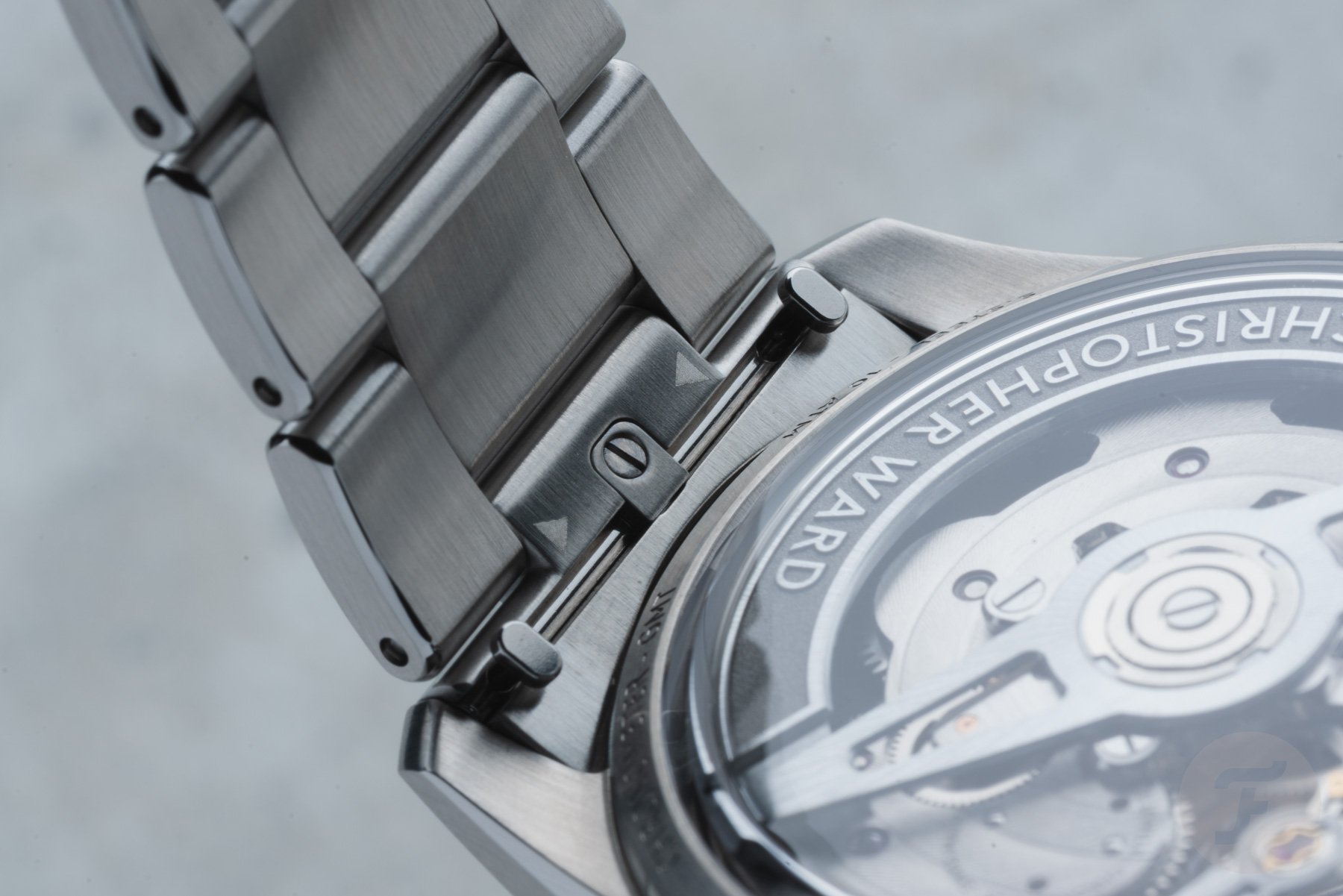
The two new models are available on the brand’s three-row Bader bracelet or a curved-end rubber strap that matches the color accents and features the deployant Bader buckle. Both taper nicely from 22mm at the case to 16mm at the clasp. Now, while the Bader bracelet is the same one I also have on my C65 Dune GMT, I can’t help but feel a slight difference in production quality. The bracelet of my watch is stellar. The production quality is better than that of similar bracelets on watches that cost double or triple the €1,600 price of my watch.
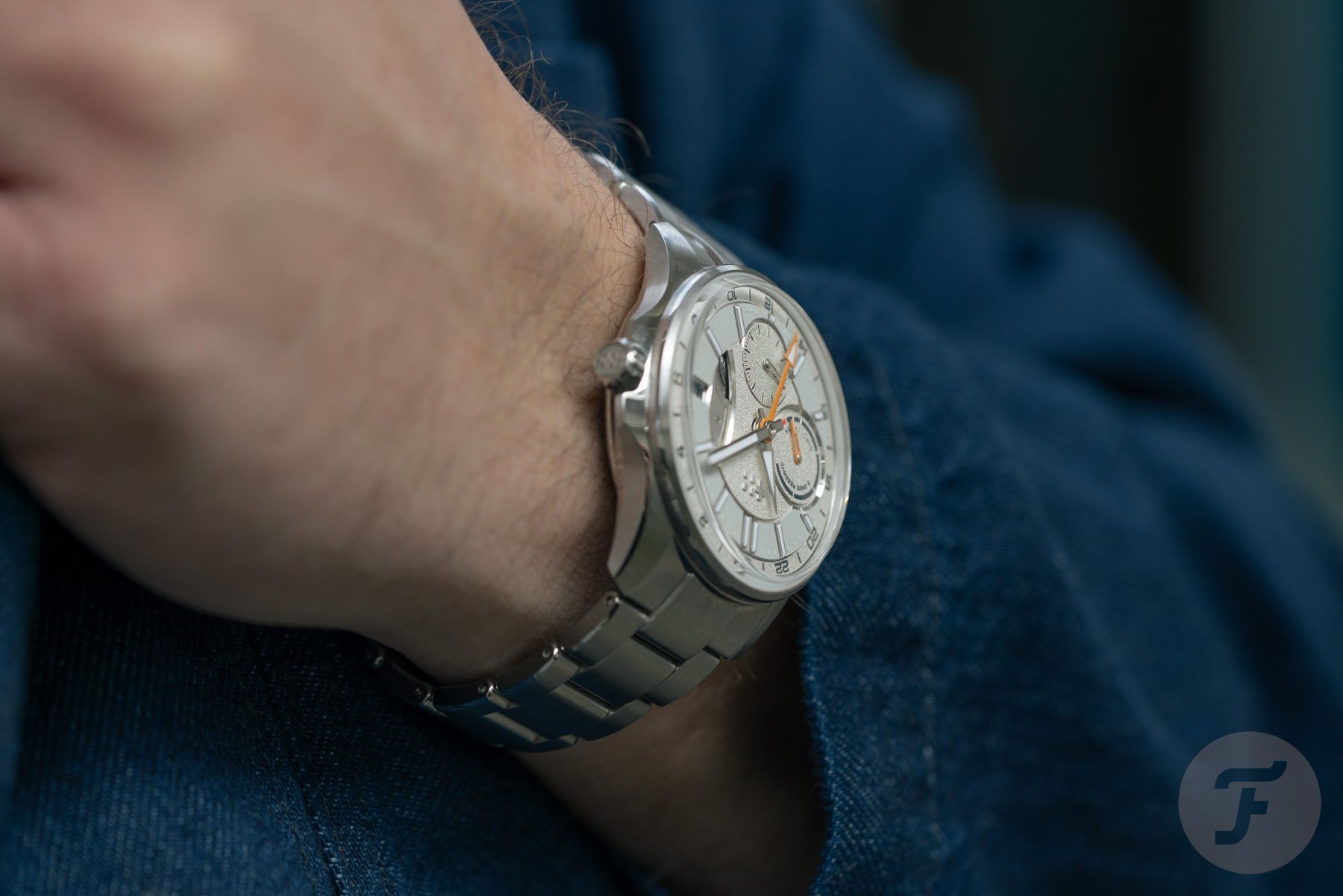
But when I felt the new Bader bracelet, I couldn’t help but notice a slight difference in the tolerances. While it still easily beats similar bracelets on the market, it feels different.
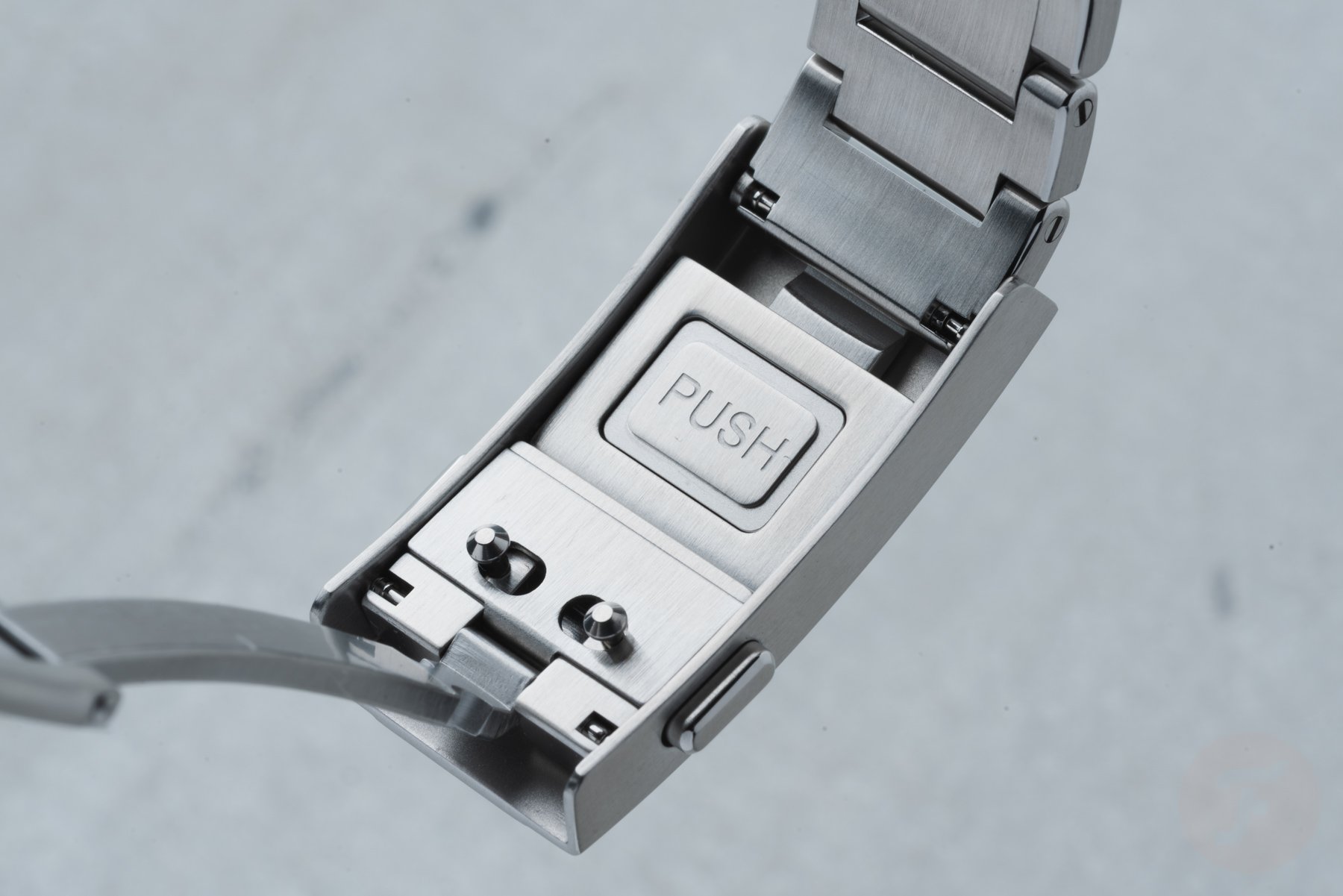
Having said that, this bracelet does feel solid and has screw-fastened links that are easy to remove. Additionally, it features a great clasp with a wonderful toolless micro-adjustment system, making it simple to size it perfectly for your wrist.
The user experience
On my wrist, the C63 Sealander True GMT felt nicely proportioned and comfortable. Due to the 14.15mm profile, you might think this is a rather chunky watch, but it’s not. The box-type sapphire crystal accounts for quite a bit of the overall thickness, while the steel case itself is nice and slender. On top of that, the case’s curved lugs make it an absolute joy to wear. I wasn’t very surprised, but it’s such a good, reassuring feeling when a watch lands comfortably on your wrist. In addition, wearing the watch for multiple days was a very pleasant experience.
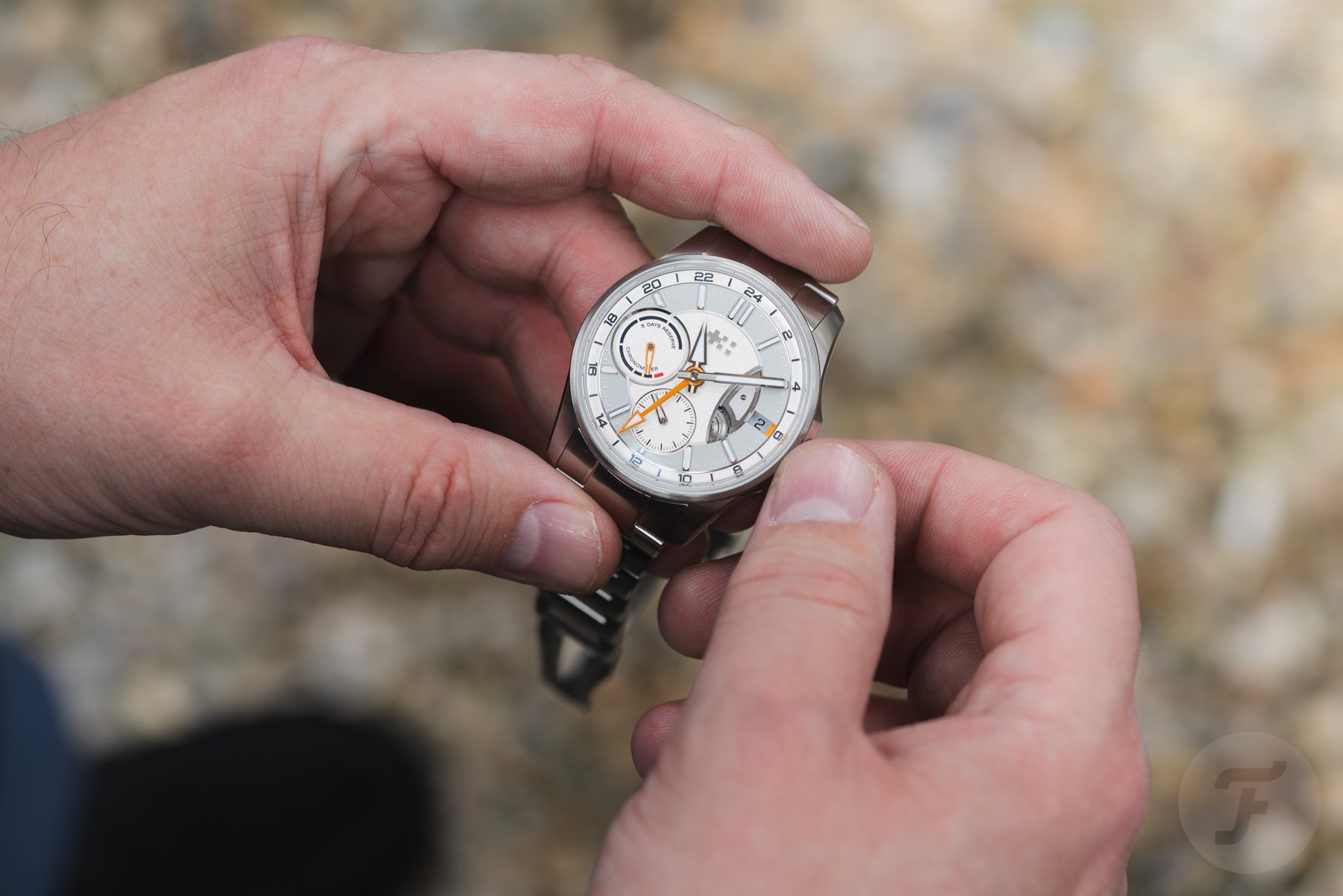
Operating the new caliber CW-002 was similar to any other flyer-style GMT movement. If you pull the crown to the first position, you can adjust the local time by adjusting the 12-hour hand in one-hour increments. Additionally, the date will also advance if you adjust the time past midnight. If you pull the crown out to the second position, it lets you set the exact local time and the home time with the 24-hour GMT hand. Now, regarding the date wheel, it sits far below the dial, which makes it somewhat difficult to read from some angles. Still, the caliber feels nice and sturdy to set. There is no play between the crown and the hands, making it easy to set the time and date perfectly.
A watch that raises questions…
This brings me to the design of the C63 Sealander True GMT. From the moment the watch landed on my desk, I wondered why Christopher Ward opted for this modern design rather than creating a more classic-looking GMT in the GMT-Master or Explorer II tradition. Somehow, I find it hard to believe that this is the “true GMT” that fans wanted to see from Christopher Ward. Maybe that is because I am one of them. I would love to see a traditionally styled GMT powered by this new caliber CW-002. For now, though, that’s not what we get.
And I understand that three years of in-house development and the technical challenges that come with it lead to a different watch than a C63 Sealander GMT or a C65 Dune GMT. It’s going to be more expensive, and as the top-of-the-line offering of the C63 Sealander series, it almost has to look different. So I can see why the brand wanted to make it stand out from its caller GMTs. Still, during a whole week of wearing the watch, that initial “why?” kept popping back into my head.
Final thoughts on the Christopher Ward C63 Sealander True GMT
In all fairness, I do think that Christopher Ward deserves a massive compliment for constantly pushing the envelope. By releasing the first of what will undoubtedly be a series of new True GMT models, the brand delivered a watch that many of its dedicated fans will love. That’s why I do not doubt that many will jump at the chance to buy a C63 Sealander True GMT. As mentioned, there are two dial variations to choose from, and each costs £2,895 / €3,775 / US$3,995 on the rubber strap or £2,995 / €3,905 / US$4,135 on the Bader bracelet. This money will buy you a watch that stands alongside the C1 Bel Canto, C1 Moonphase, and C1 Jump Hour Mk V models as one of the brand’s top offerings.
Having said that, I am curious to find out where Christopher Ward will take it next. As a fan of GMT watches and owner of one from Christopher Ward, I am excited to see whether the caliber will appear in the brand’s more classic-looking models. But with the new C63 Sealander True GMT and CW-002 movement, Christopher Ward has taken another impressive step into the future, confirming its prominent position in today’s watch landscape.