Hands-On: The New Orient Mako GMT — The Dive-Watch Classic Goes Dual-Time

Orient’s history with dive watches stretches back to the early 1960s. Yet today’s Mako GMT marks a first for the collection with a new 24-hour hand and bezel. Together, they allow the wearer to track a second time zone while retaining the Mako’s robust sporting character.
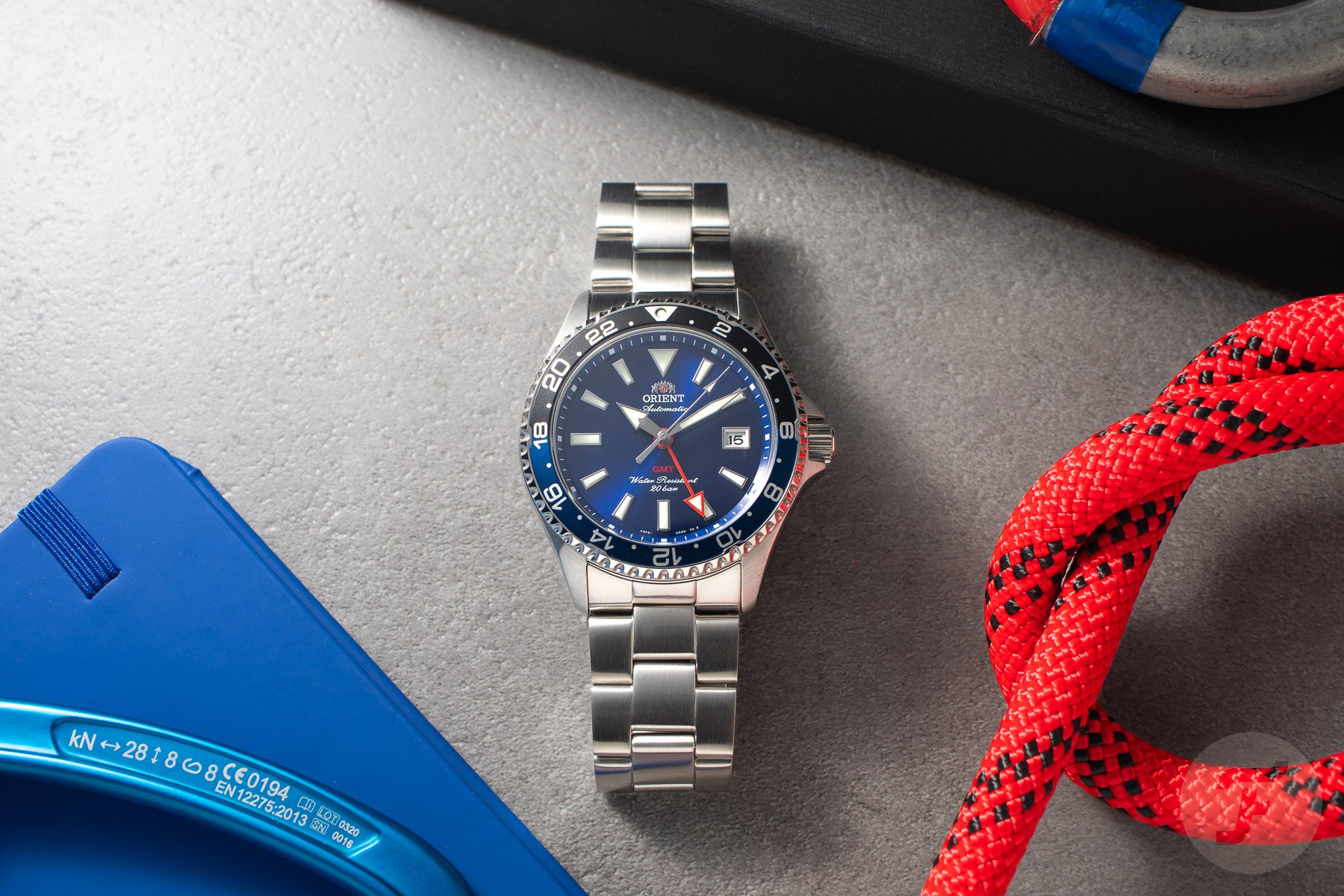
The Orient Mako GMT
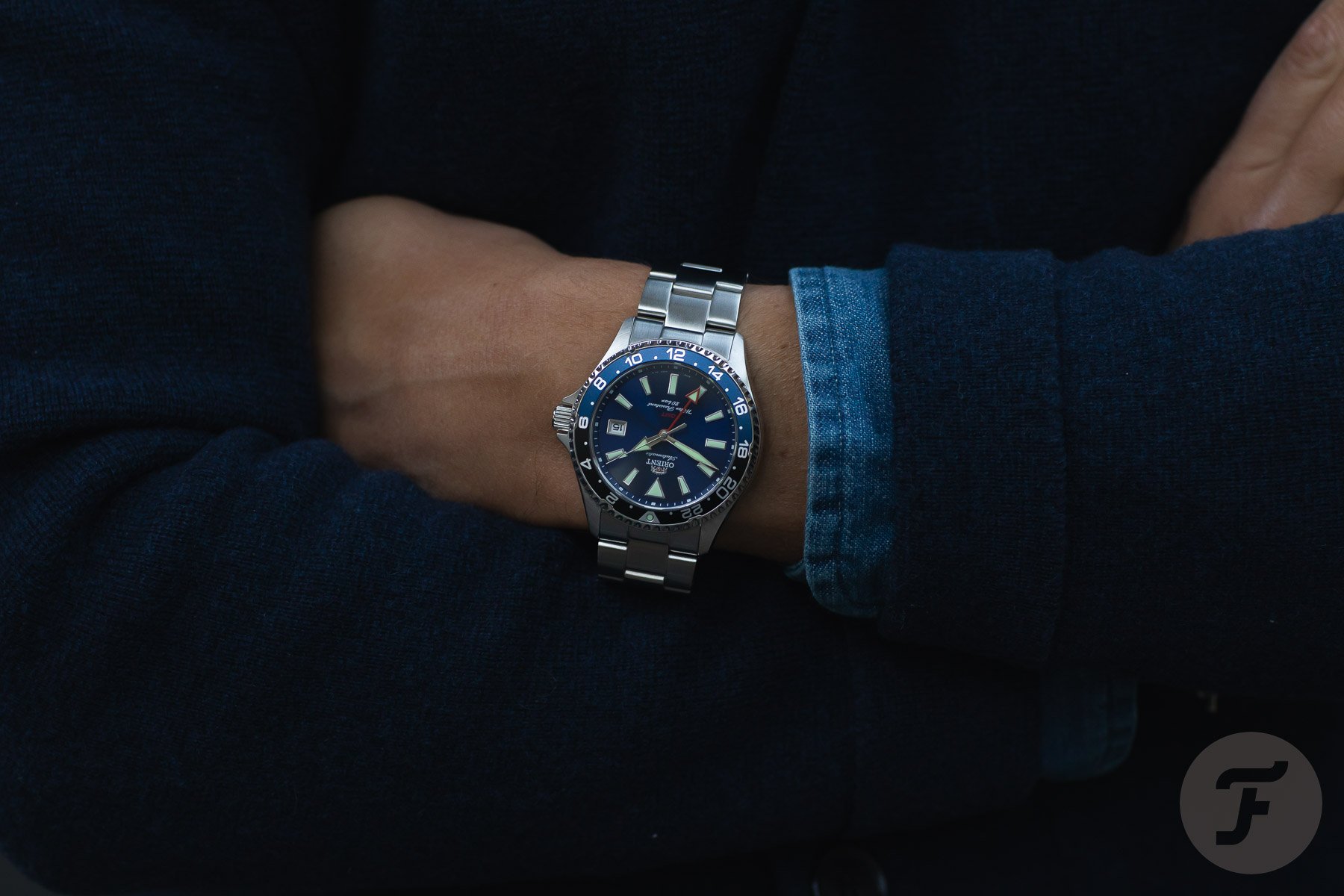
The example I spent time with features a rich sunburst navy-blue dial paired with a bright red GMT hand. The dial’s metallic sheen pushes this Mako GMT away from pure tool-watch territory. Even so, legibility remains a priority.
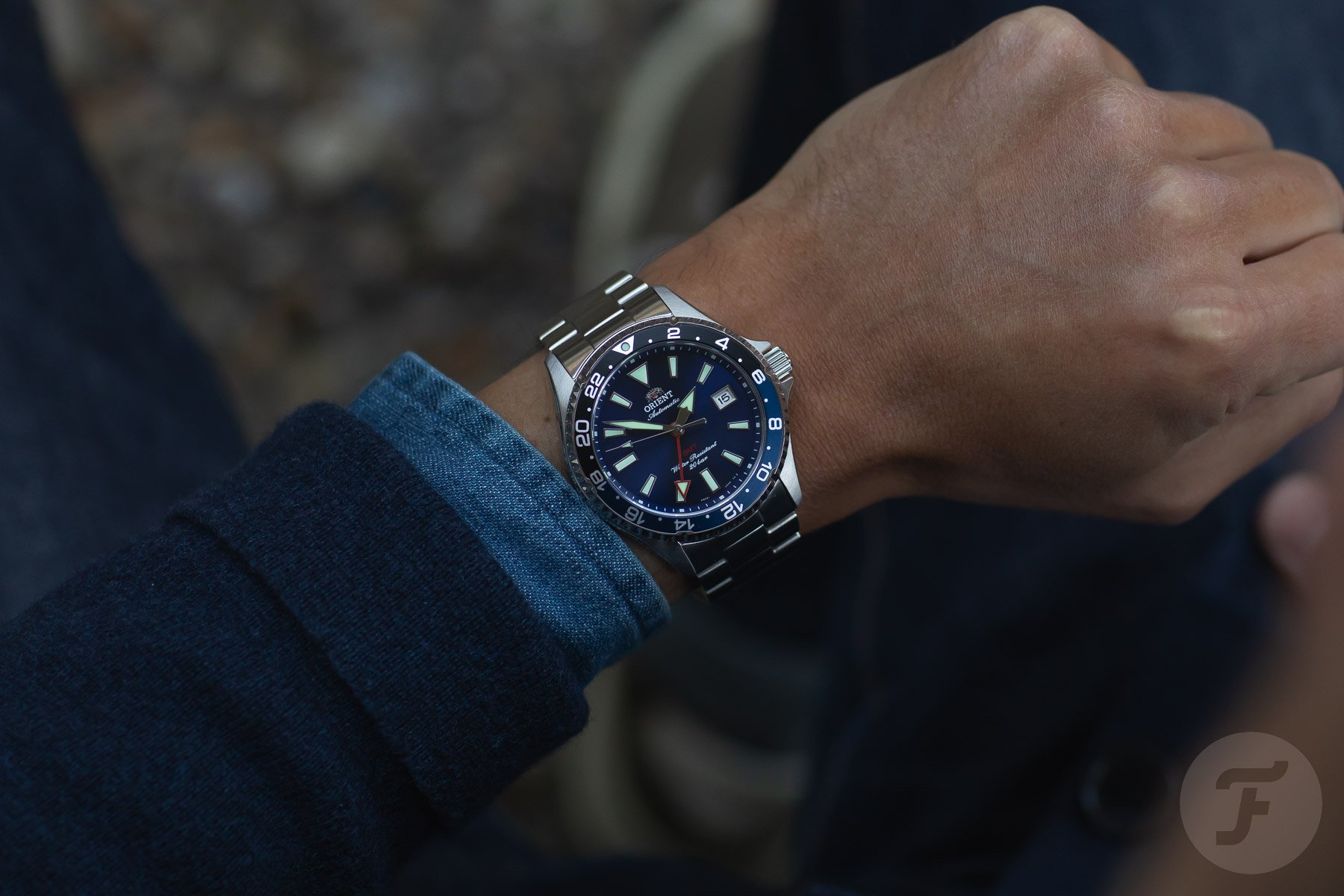
Orient is also careful not to position the watch as a dedicated diver. The GMT bezel replaces a traditional timing bezel, making ISO dive certification impractical. Instead, the Mako GMT occupies the space between dive watch and travel watch. With 200m water resistance and strong visibility, it can easily handle most everyday adventures.
Inside the 42.8 × 49.5 × 13.4mm stainless steel case sits Orient’s in-house F6P22 caliber. The movement features automatic winding with hand-winding capability and hacking seconds. Combined with the additional GMT function, it creates a compelling package among entry-level options.
Neither a flyer nor a caller
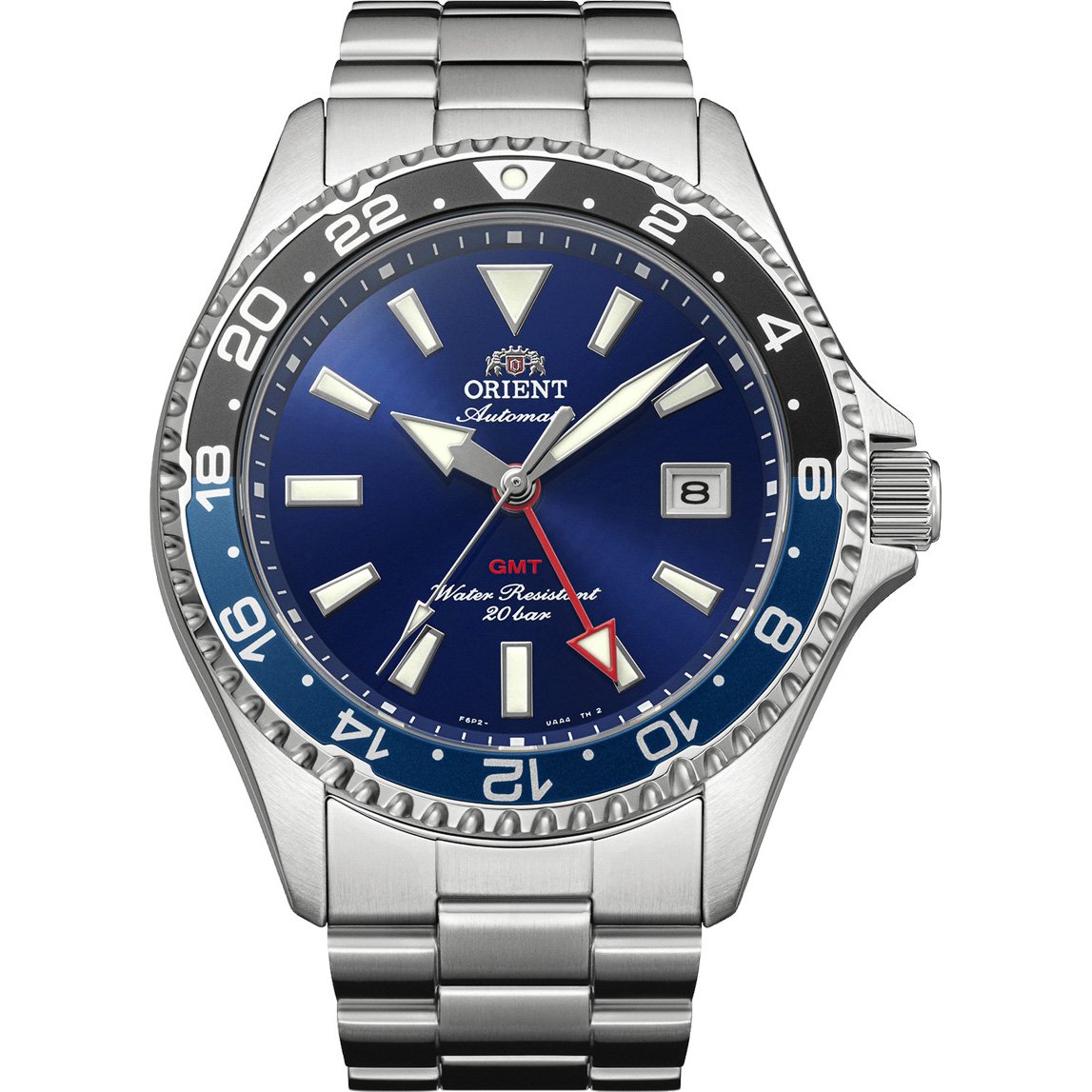
The first thing to understand is that this is not a so-called “true GMT” in the Rolex GMT-Master II sense. Purists could argue, however, that it is a true GMT in that it’s functionally similar to the original 1950s GMT-Master. Neither the 12-hour hand nor the GMT hand is independently adjustable. Instead, the hour, minute, and seconds hands display local time, while the enslaved GMT hand tracks a second time zone against the external 24-hour bezel.
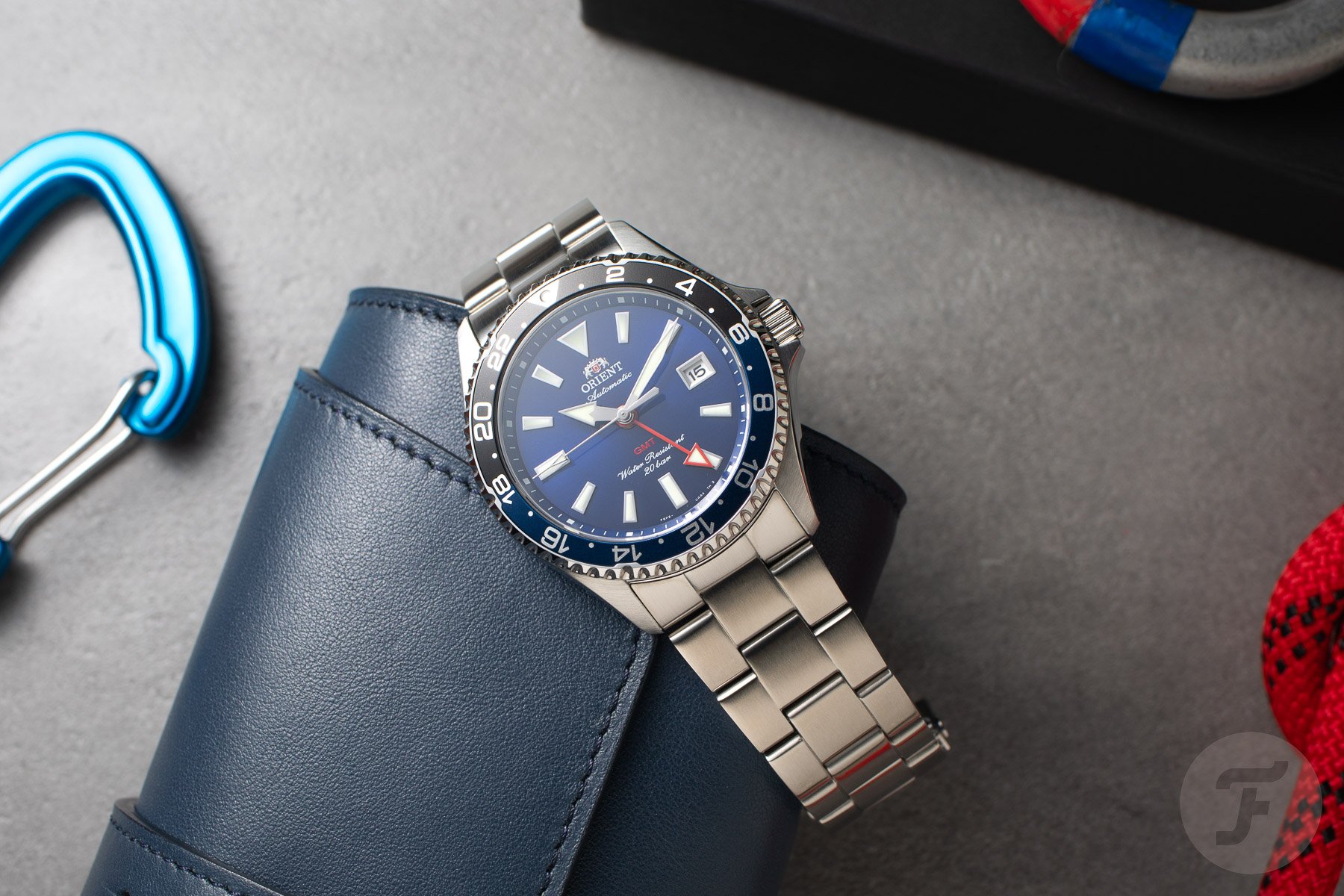
To read a different time zone, the wearer must rotate the bezel to the desired offset. For example, tracking a location one hour ahead requires aligning the bezel one hour counterclockwise. The GMT hand can then be read directly from the bezel.
The system works, but it isn’t the most elegant solution. Travelers who want to maintain a home-time reference will need to reset the bezel while abroad. Because the bezel rotates unidirectionally, any adjustment that overshoots its target requires nearly a full rotation to correct.
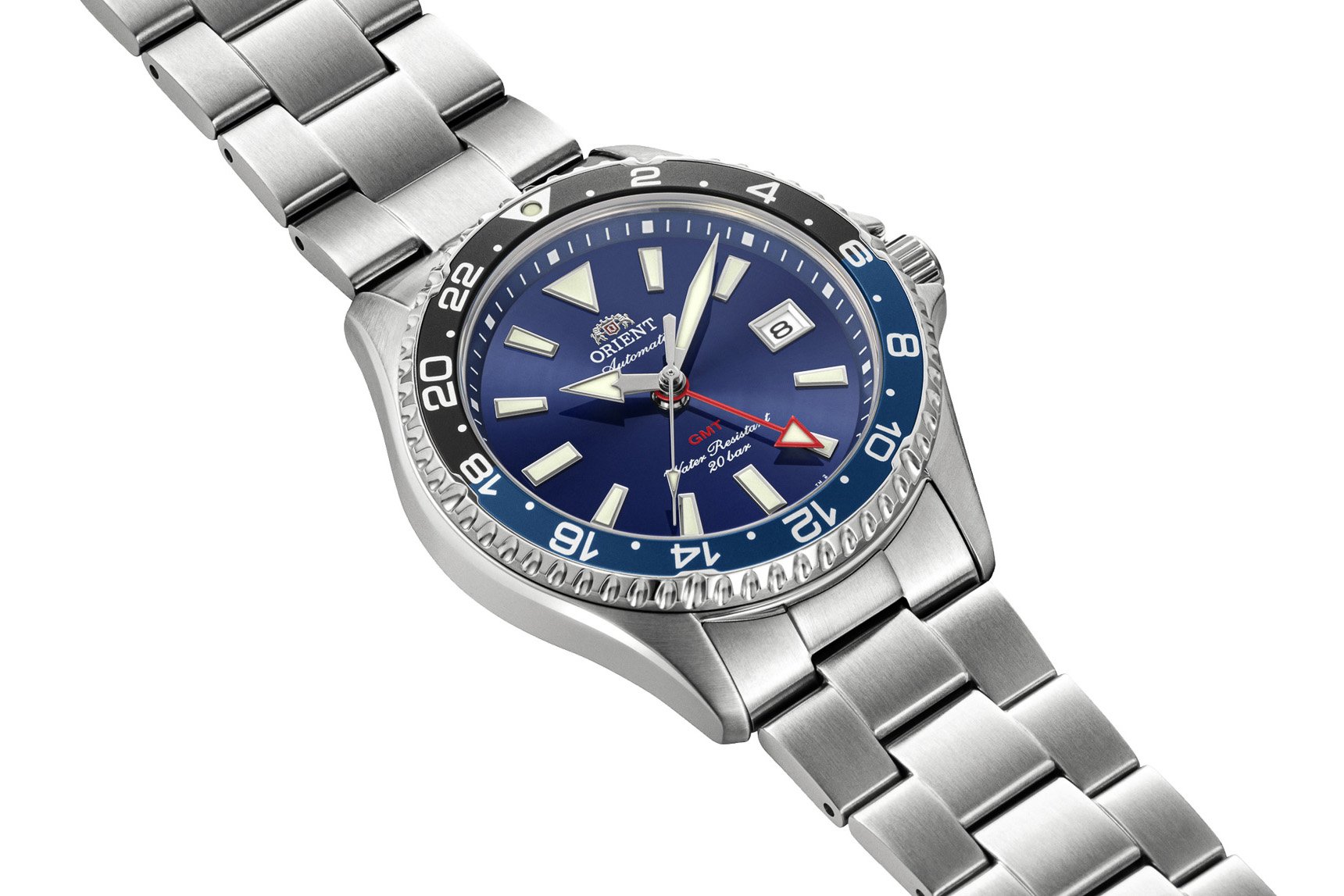
A bidirectional bezel, such as those found on the Rolex GMT-Master II or Tudor Black Bay GMT, would make the process much more intuitive. That said, Orient has clearly adapted the architecture of its existing dive-watch bezel rather than creating an entirely new system.
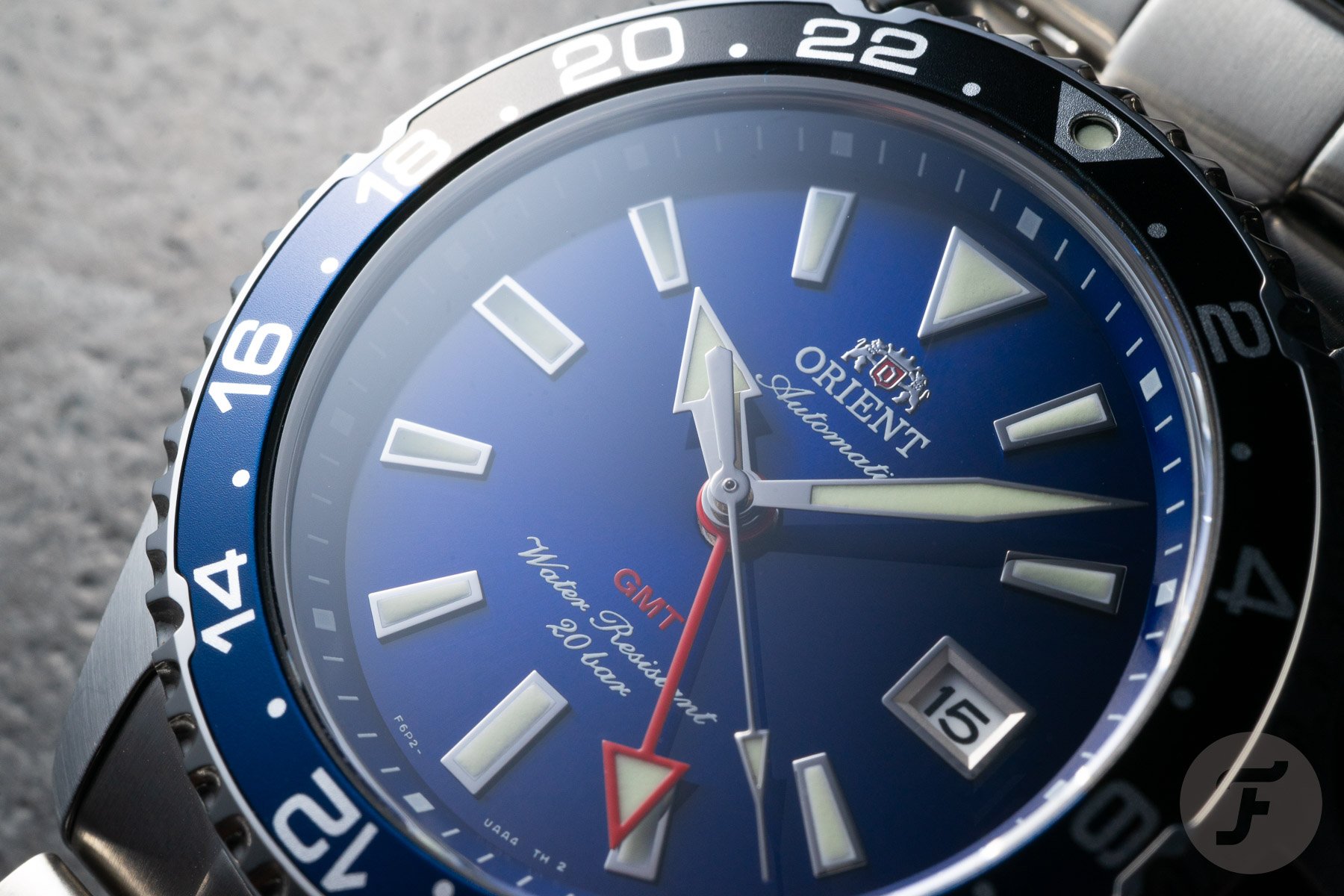
The positive trade-off is bezel quality. The 120-click action feels precise and reassuring, exactly as it should on a Mako. The bezel also retains the collection’s distinctive six-notch design around the knurled edge.
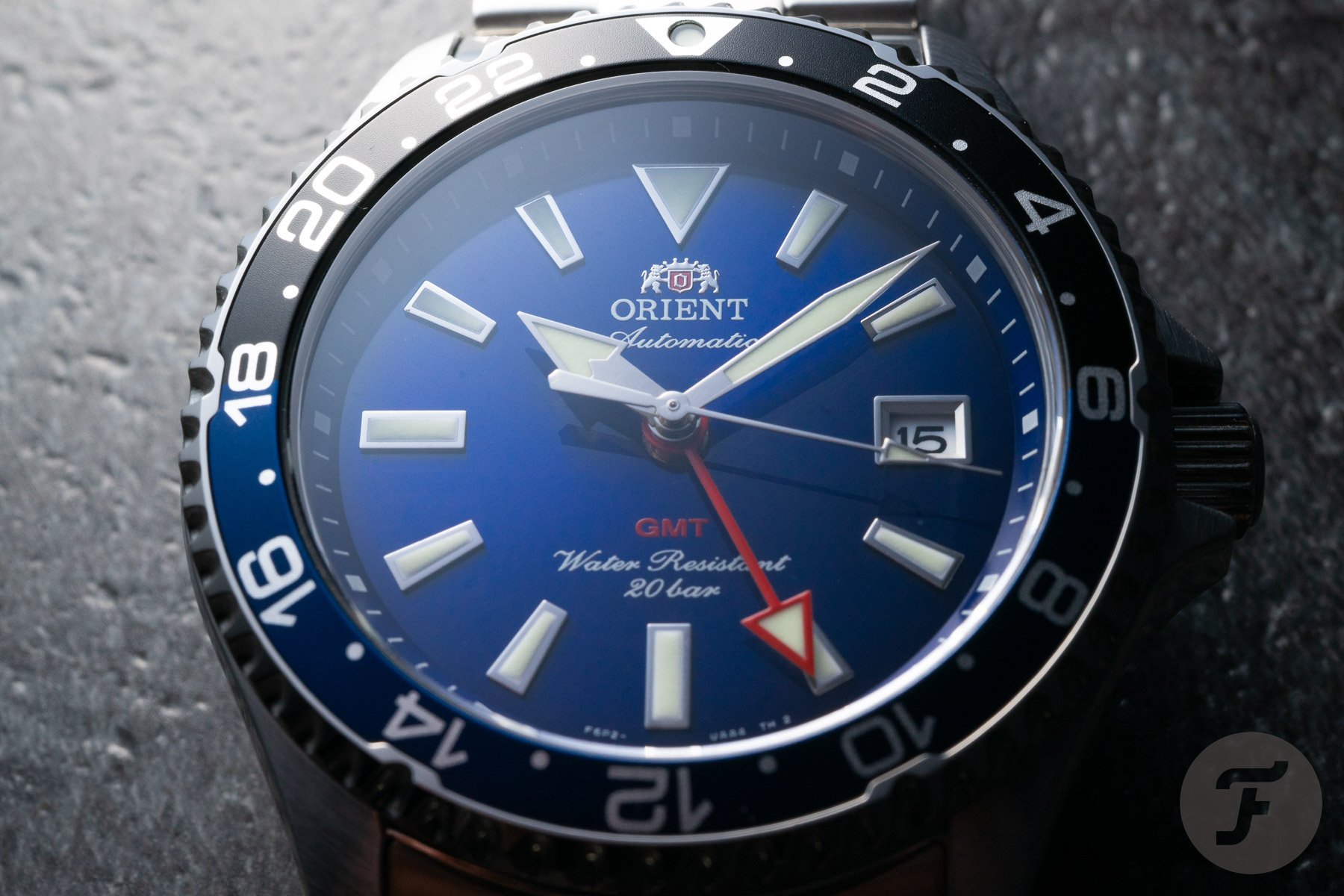
I particularly like the aluminum insert on reference RA-BC0003L. The blue-and-black color split works well visually while serving a practical purpose. Blue denotes daylight hours, while black represents nighttime.
On the wrist
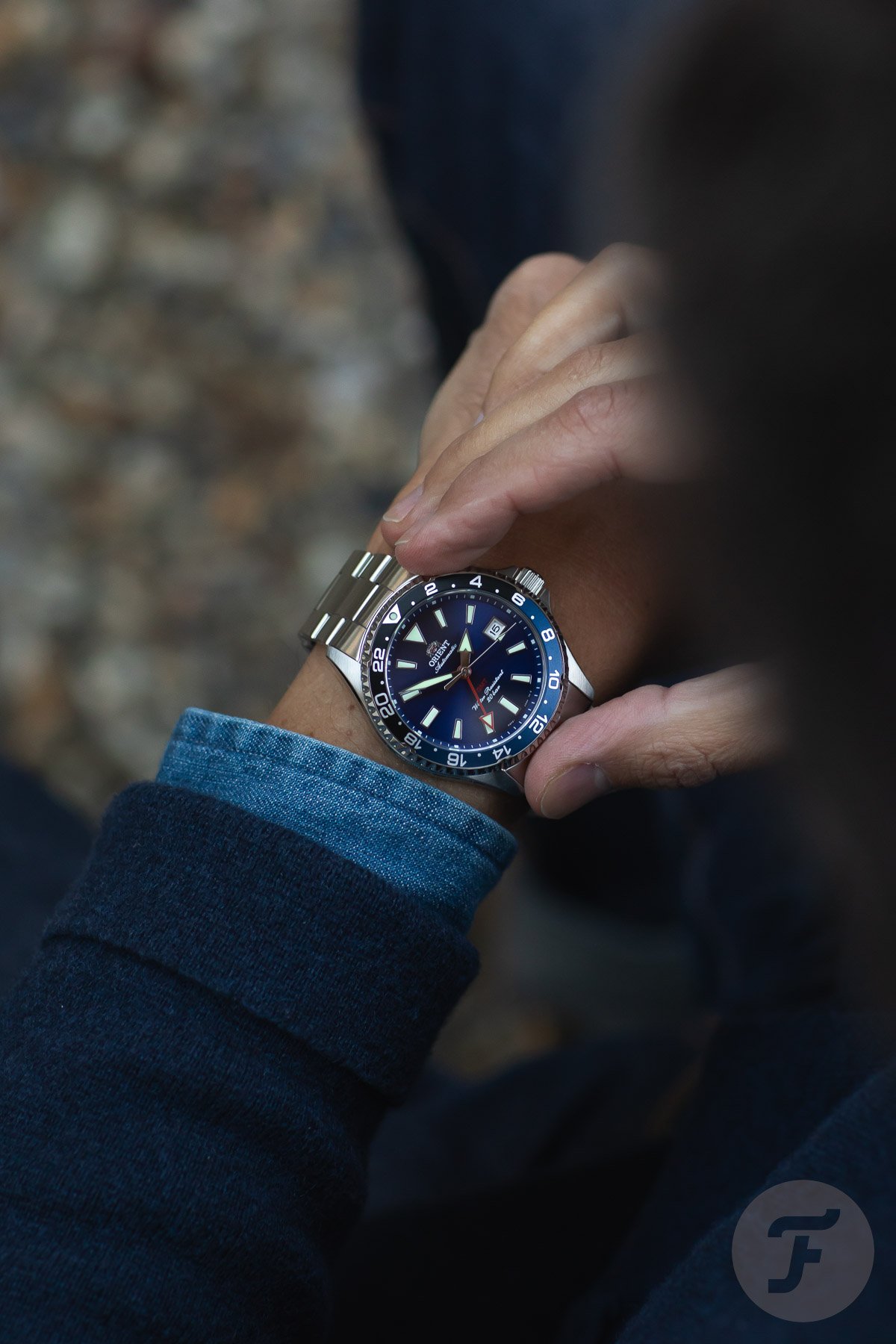
The Mako GMT grows by just 1mm over the standard Mako, increasing from 41.8mm to 42.8mm. On paper, the diameter sounds substantial. On the wrist, however, the watch remains very manageable. Despite the 13.4mm thickness, it wears comfortably and never feels top-heavy once sized correctly.
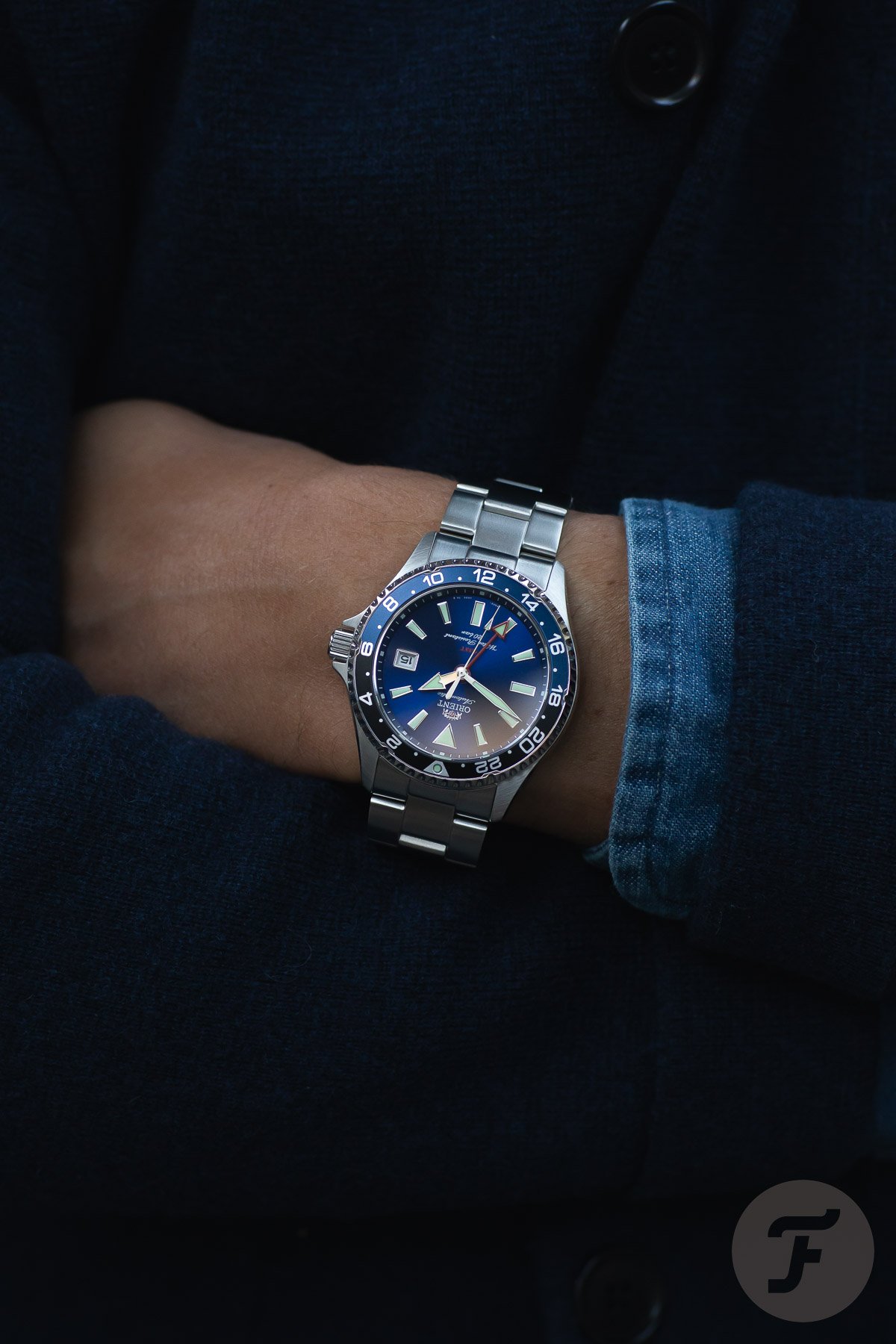
Two factors contribute to this. The first is the relatively compact 49.5mm lug-to-lug. The second is the use of solid female end links, which allow the bracelet to articulate immediately and wrap naturally around the wrist.
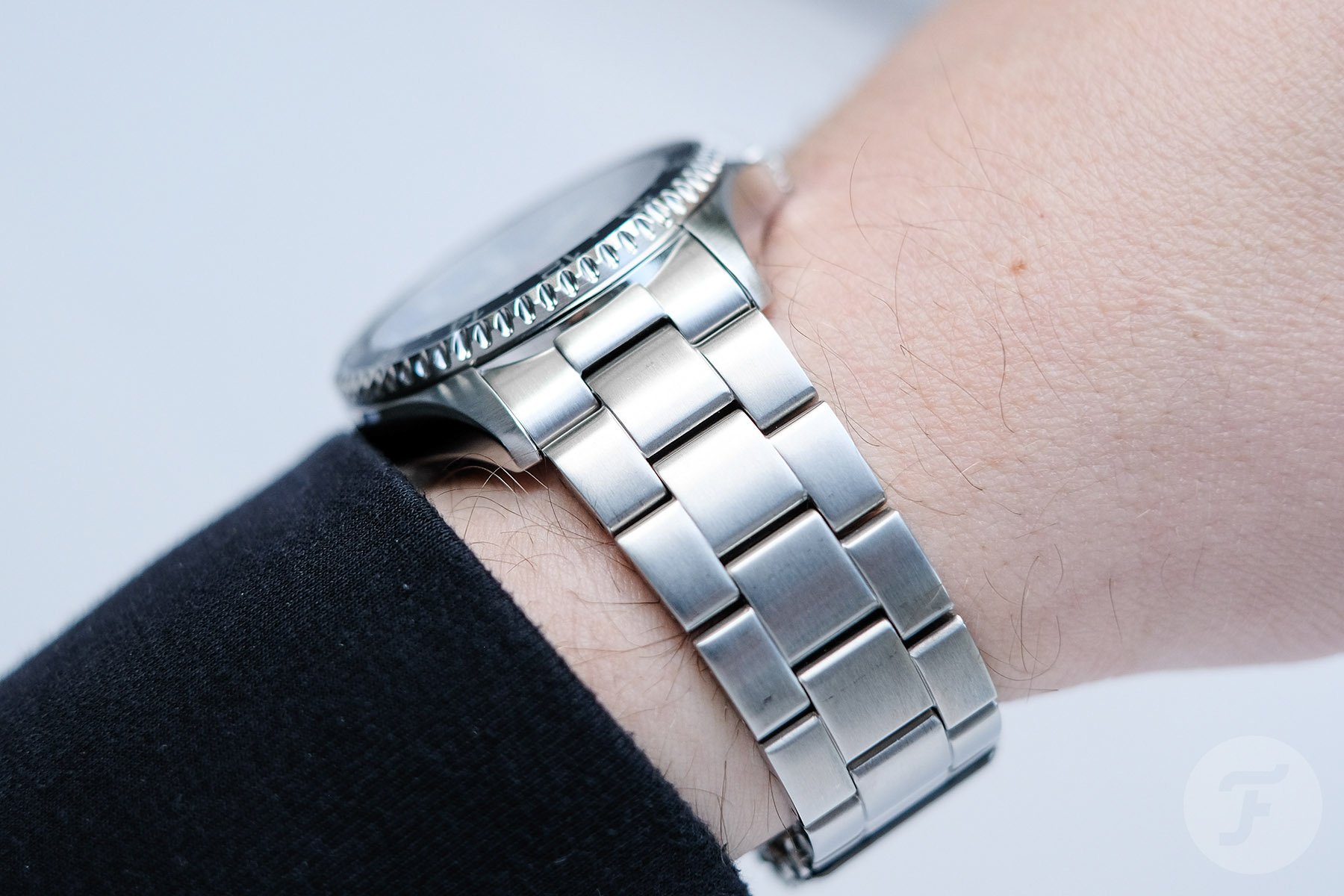
The three-row bracelet tapers from 22mm at the lugs to 20mm before the clasp. Brushed surfaces dominate, reinforcing the tool-watch aesthetic, while polished outer edges provide some contrast. Comfort was excellent throughout my time with the watch. I experienced no hair pulling, and there were no sharp edges to speak of.
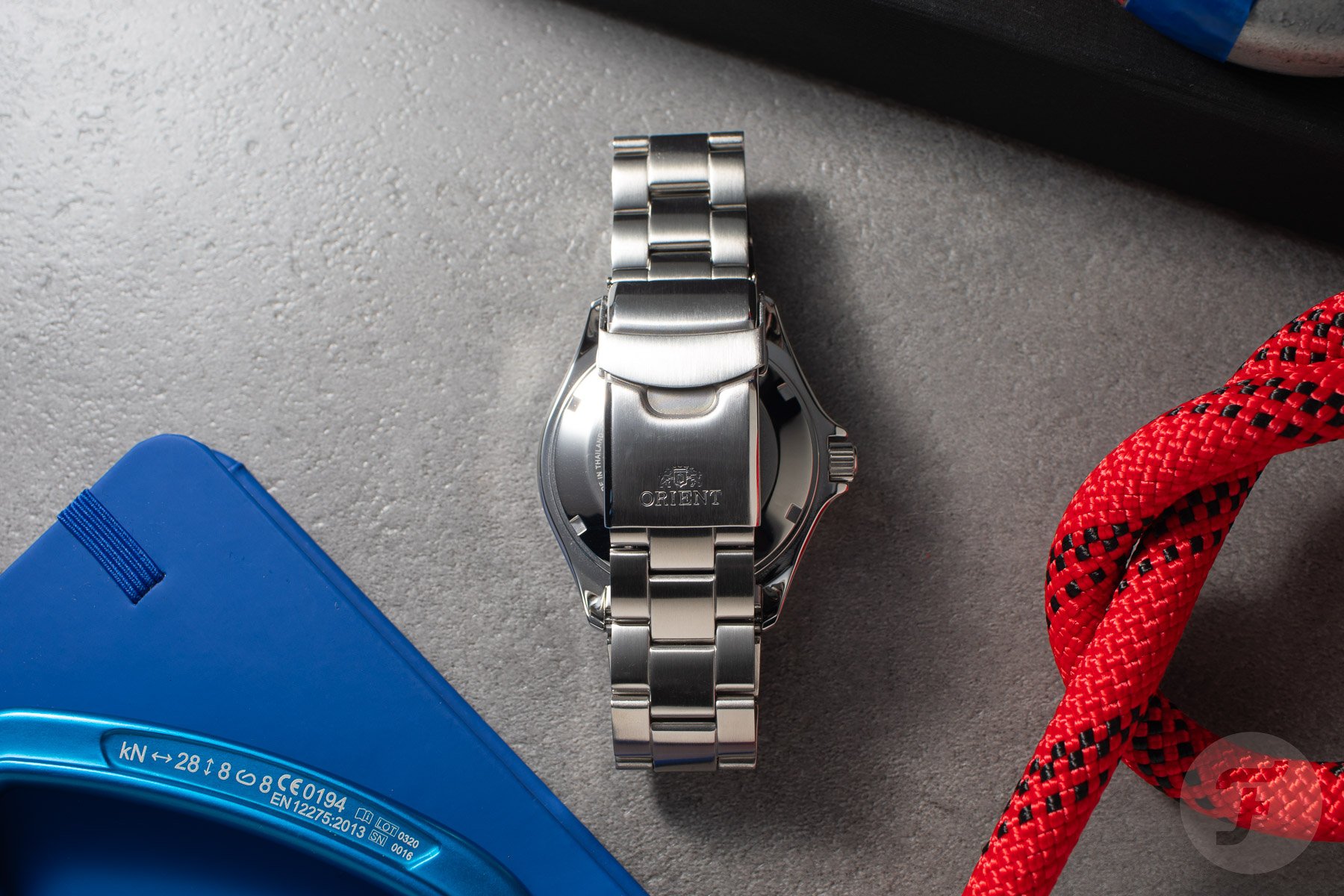
The clasp is an interesting design. Measuring 21.5mm wide, it features an Orient-signed cover, twin-push release, and a safety catch. While the additional security is welcome, the combination feels slightly redundant at times. It reminds me of wearing a belt with suspenders. One system would probably have been sufficient.
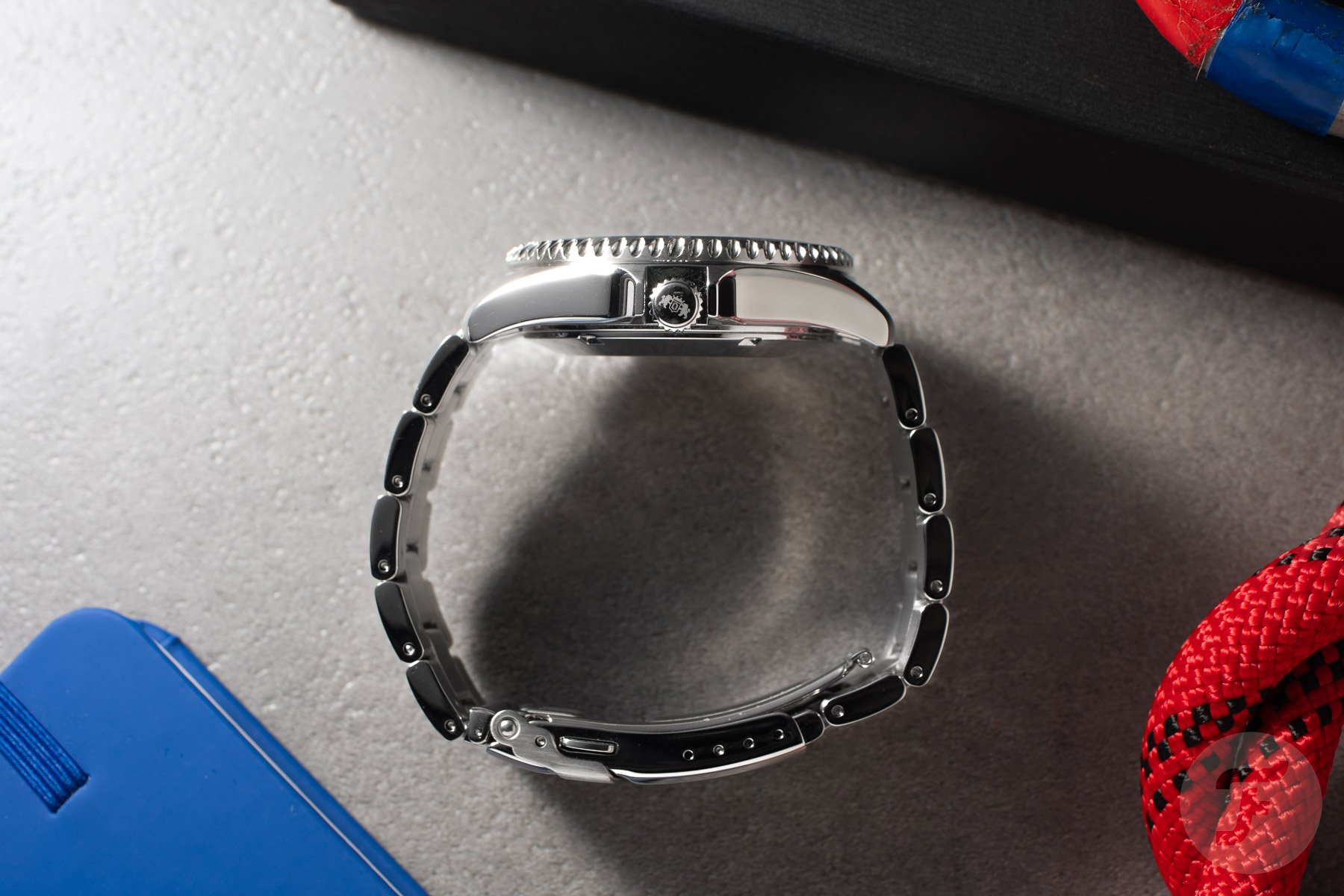
Sizing is straightforward thanks to the bracelet’s split-pin construction. Orient helpfully marks the removal direction with arrows on the links. Four micro-adjustment positions inside the clasp provide further fine-tuning.
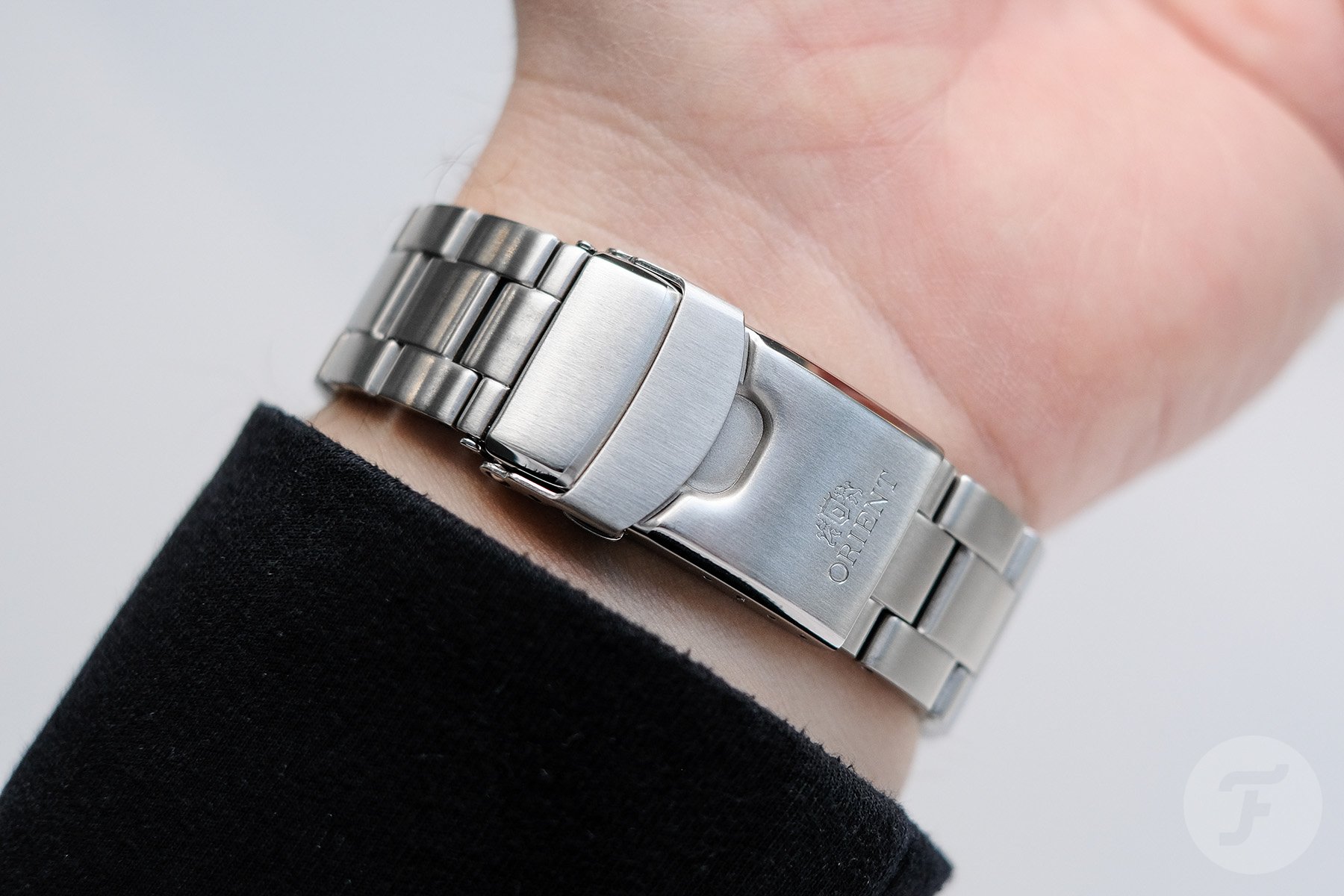
There is no on-the-fly adjustment system or diver’s extension, but I don’t think that’s a major omission here. The Mako GMT leans more toward everyday versatility than a pure professional dive watch. At roughly 7mm thick when closed, the clasp remains reasonably compact too.
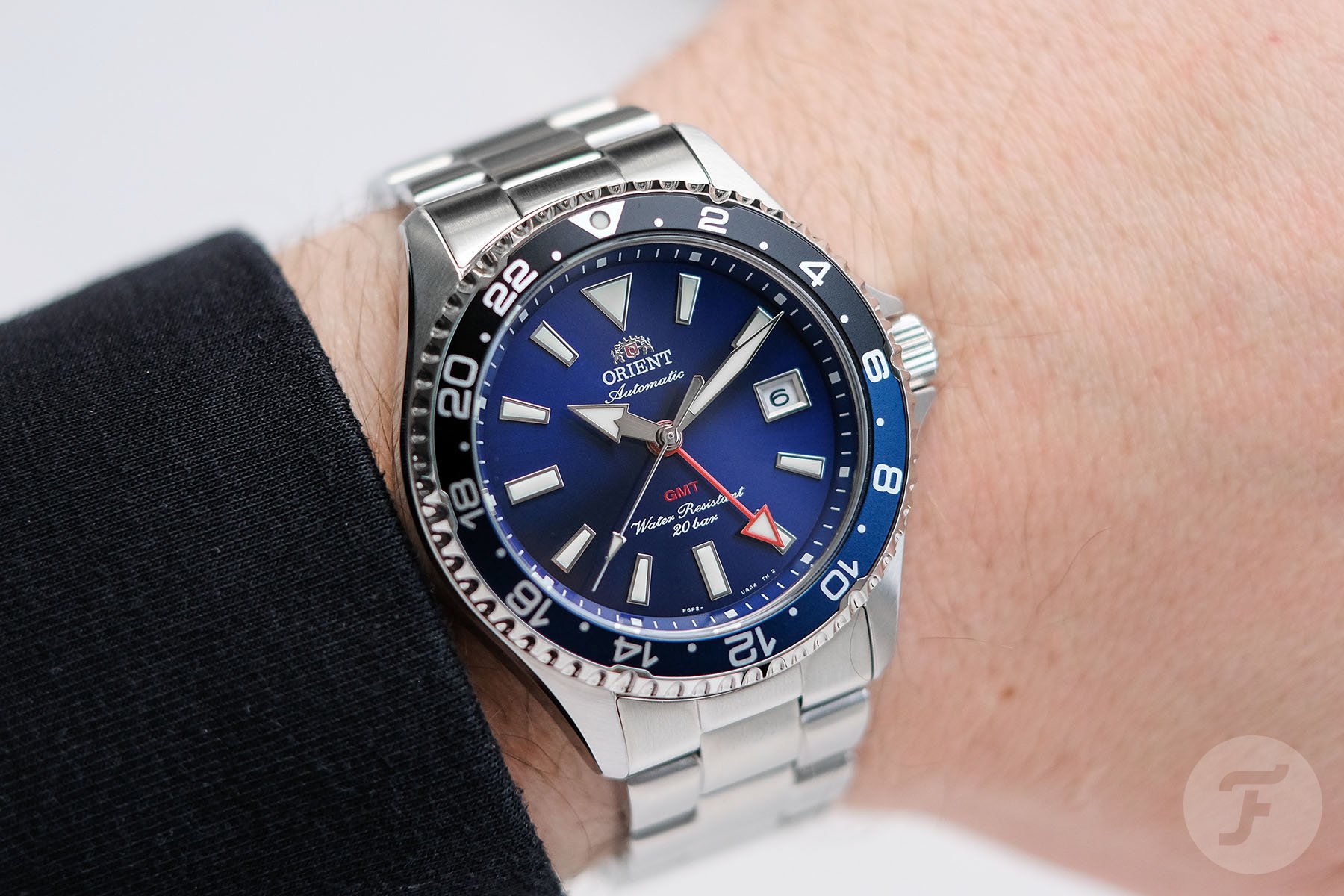
Sized for my wrist, the watch weighed 168 grams. That’s reassuring but not cumbersome and feels appropriate for a sub-43mm sports watch with a 200m depth rating.
Legibility
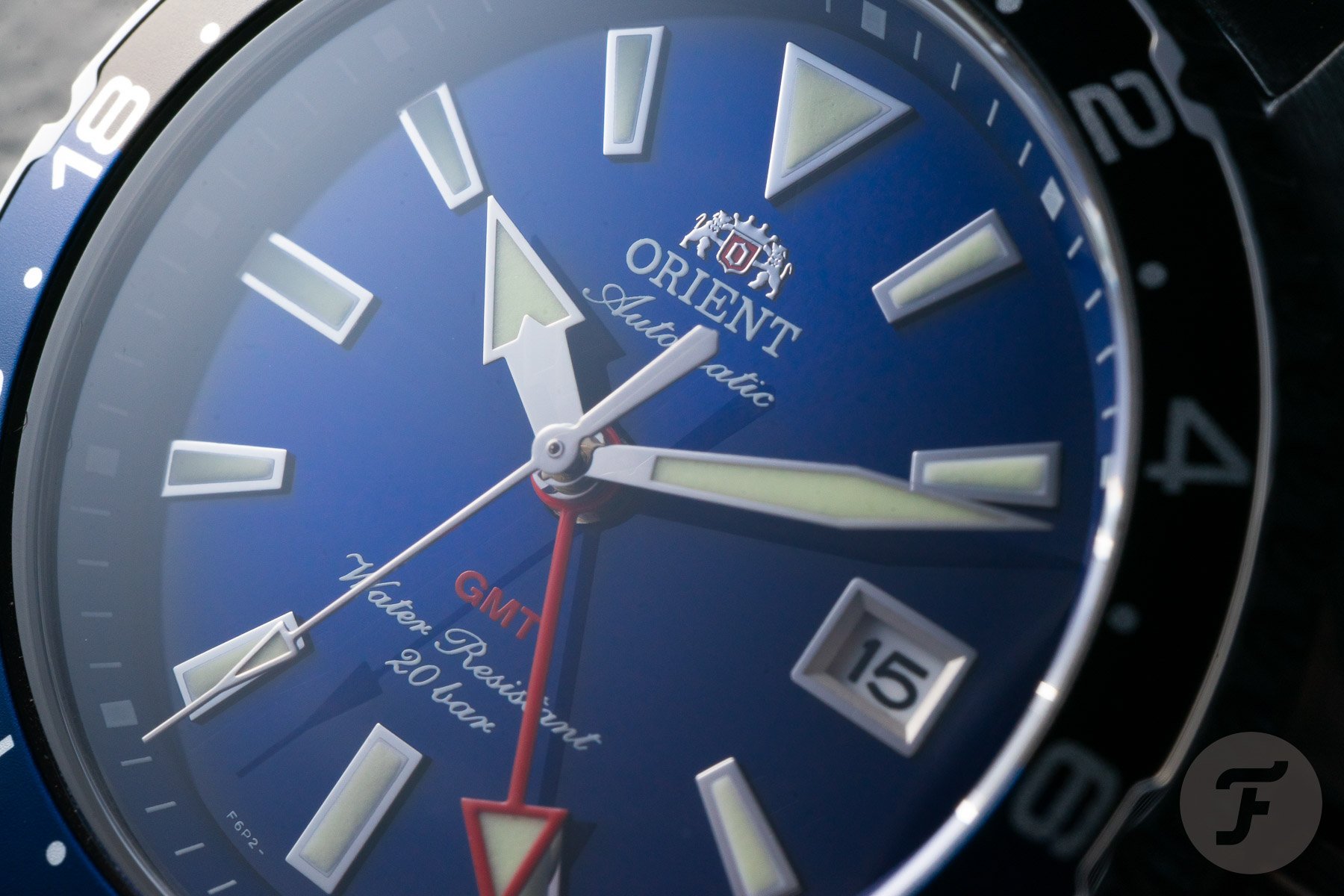
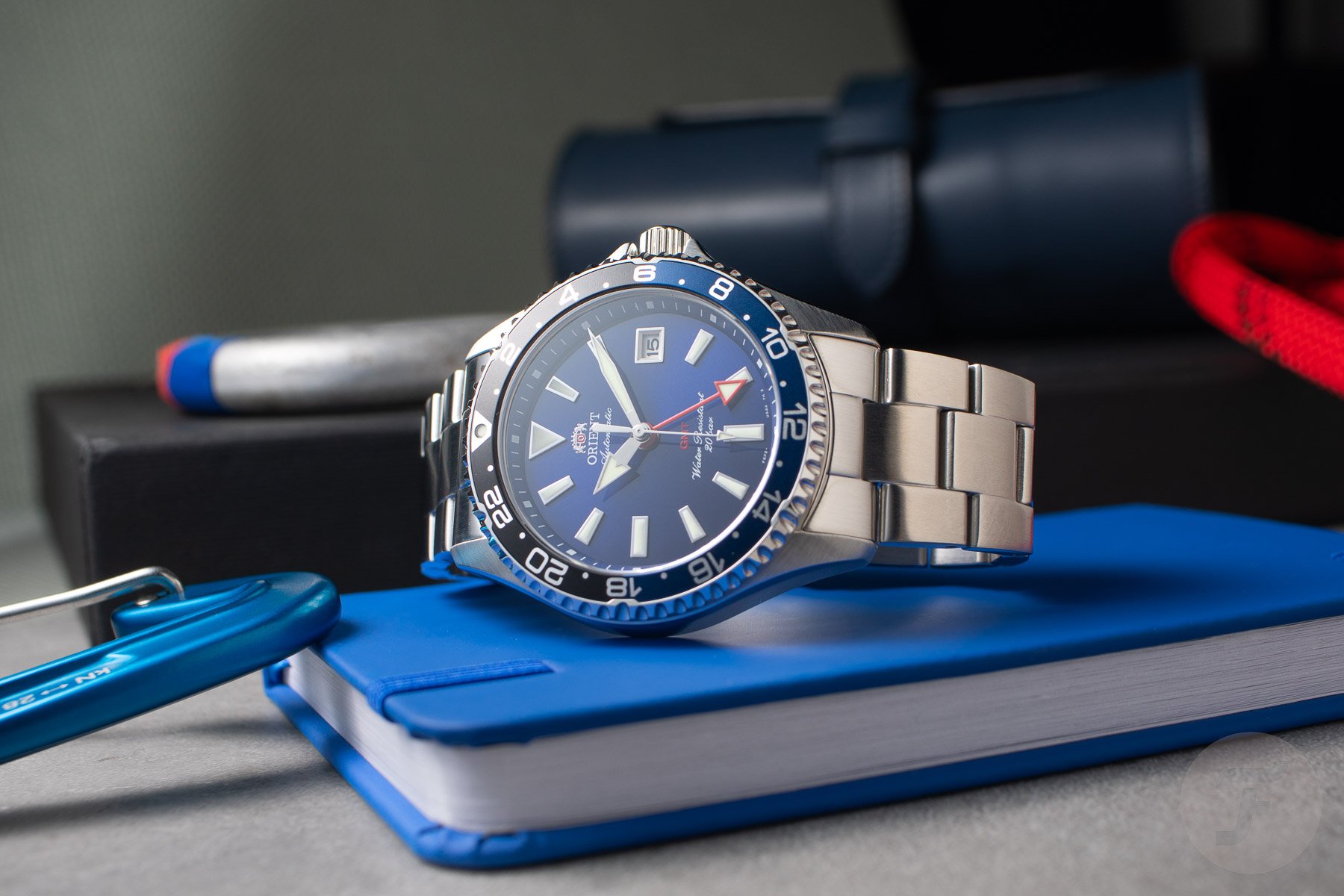
The dial prioritizes visual clarity above all else. Large sword-style minute and dagger-shaped hour hands stand out clearly against the dial. Broad applied bar indexes further aid visibility, particularly the oversized inverted triangle at 12 o’clock.
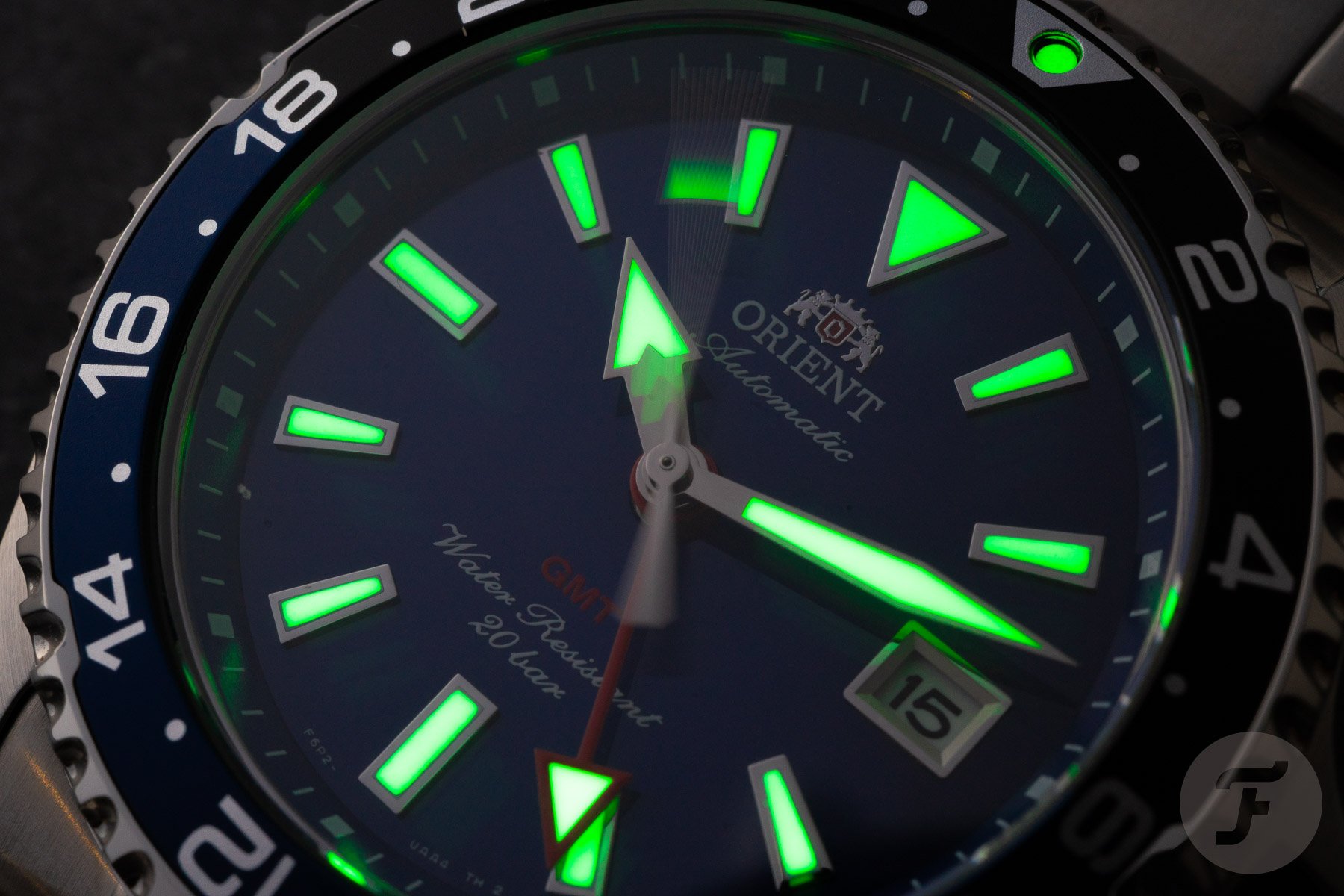
Orient’s Luminous Light application is also generous. The hands and indexes remained visible long after the lights went out. My one criticism concerns the seconds hand. The alpha-shaped design looks attractive, but the luminous area is quite small. Consequently, the glow fades noticeably earlier than the main handset. A slightly broader execution would improve nighttime visibility.
Using the GMT
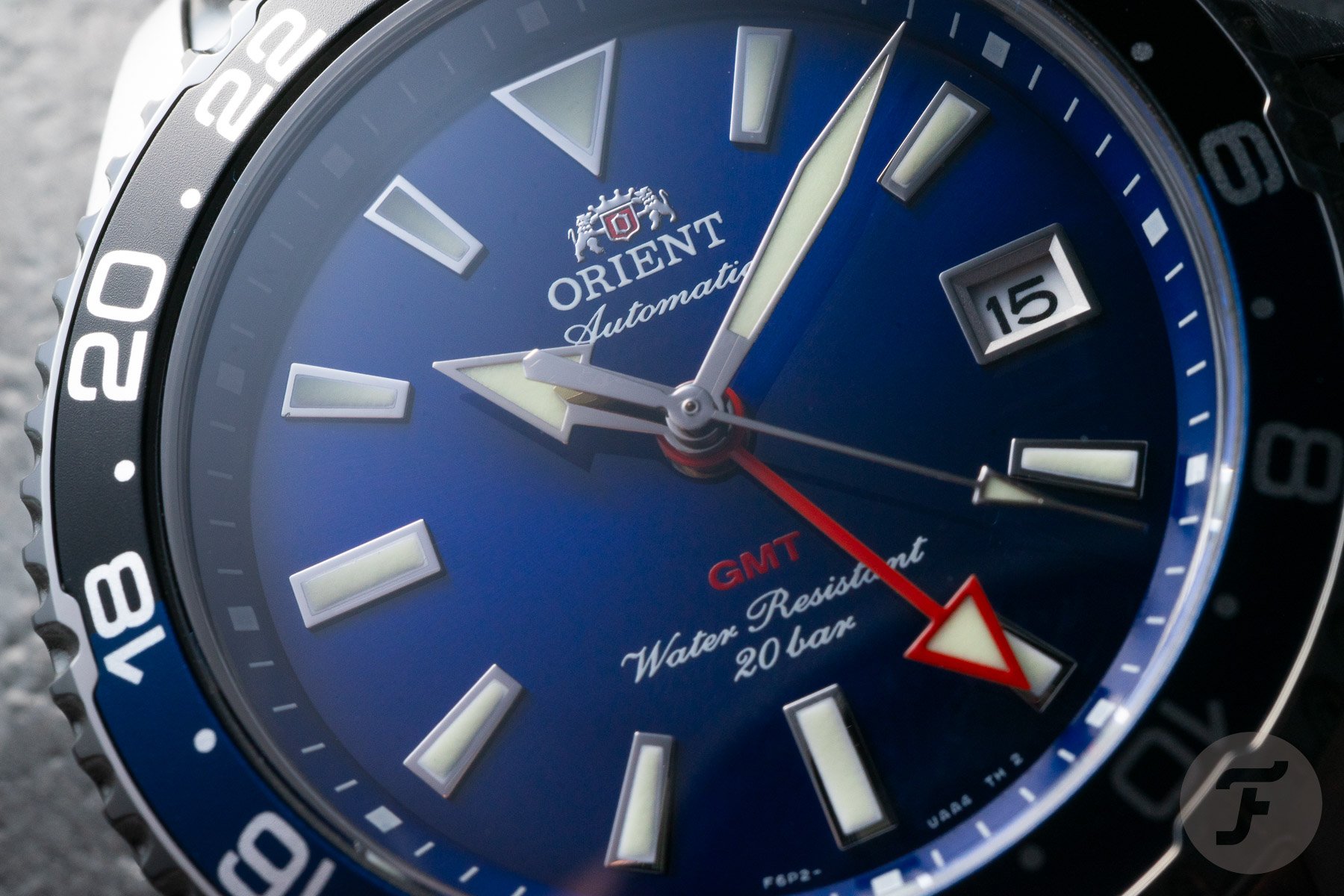
The GMT hand, however, does its job very well. Its bright color and broad shape make it easy to distinguish from the local-time hands, and reading a second time zone against the bezel requires little effort.
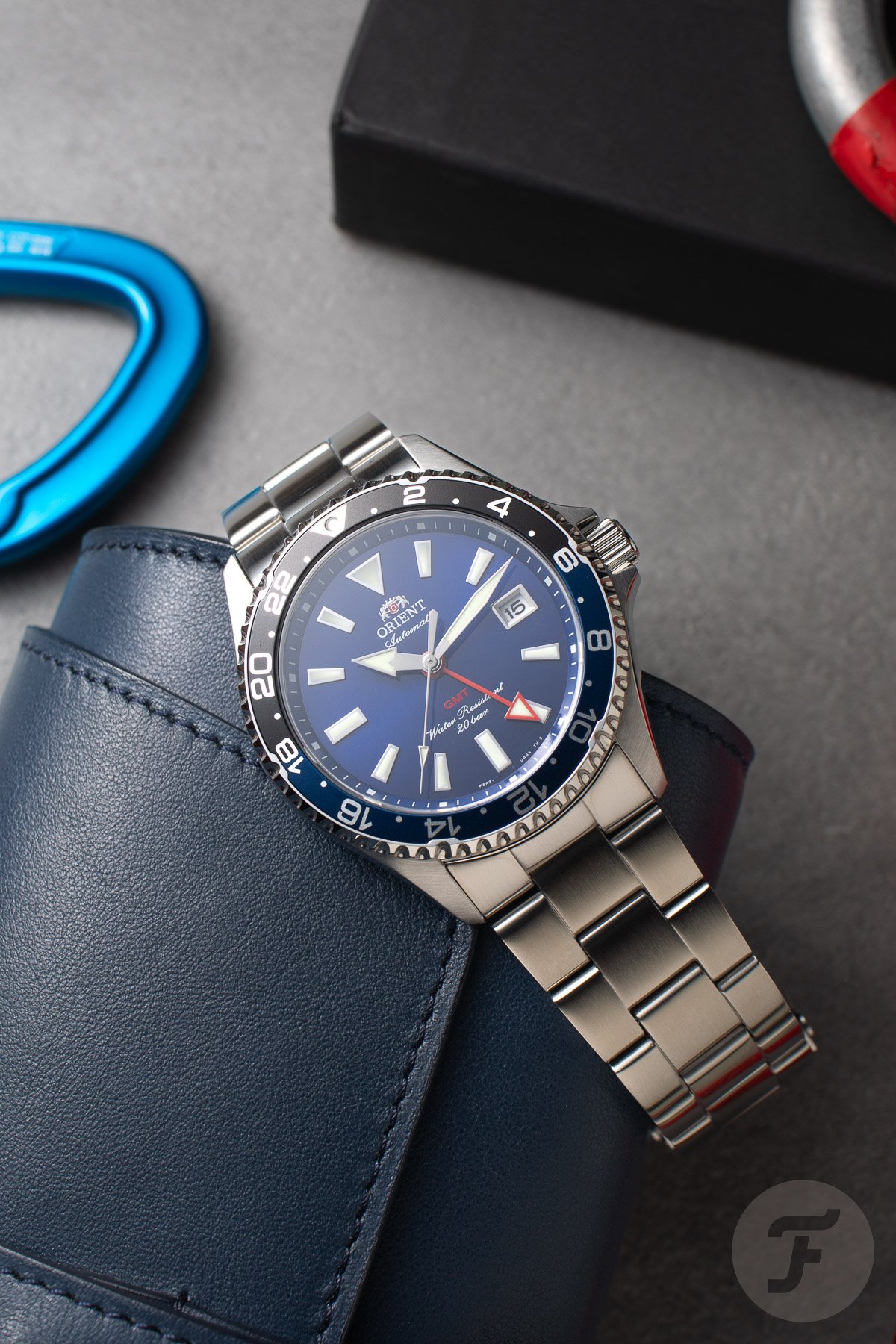
As discussed earlier, this GMT implementation is more rudimentary than the traveler GMTs many enthusiasts have become accustomed to. Nevertheless, it works well within the context of the Mako. Rather than competing with dedicated GMT watches, it feels like a useful secondary complication added to an already capable dive watch.
The framed date window is another nice touch. Dates begin changing gradually after 10:00 PM and end by 2:00 AM.
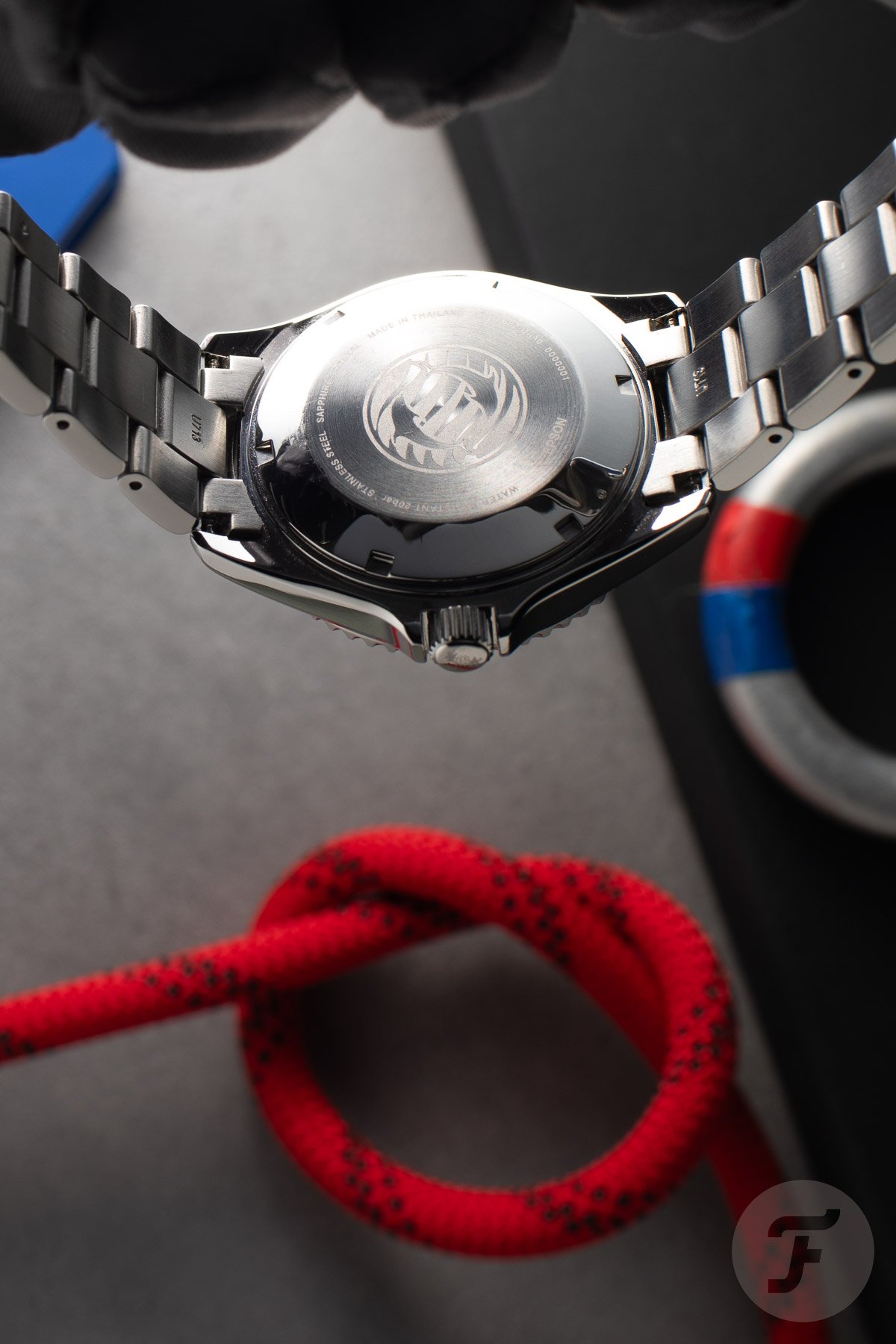
Power comes from Orient’s in-house F6P22 caliber. The movement offers a stated accuracy tolerance of +25/-15 seconds per day and a power reserve of approximately 40 hours. A steel screw-in case back conceals the movement and features the familiar dolphin engraving. Despite the collection being known as the Mako, the dolphin remains one of its most recognizable calling cards.


Final thoughts, specs, and pricing
The Orient Mako GMT successfully expands the collection without losing the character that made the dive watch popular in the first place. While the GMT implementation is more traditional than modern traveler GMT watches, it remains practical and easy to use once understood. More importantly, the additional function doesn’t detract from the Mako’s strengths as a robust, highly legible everyday sports watch.
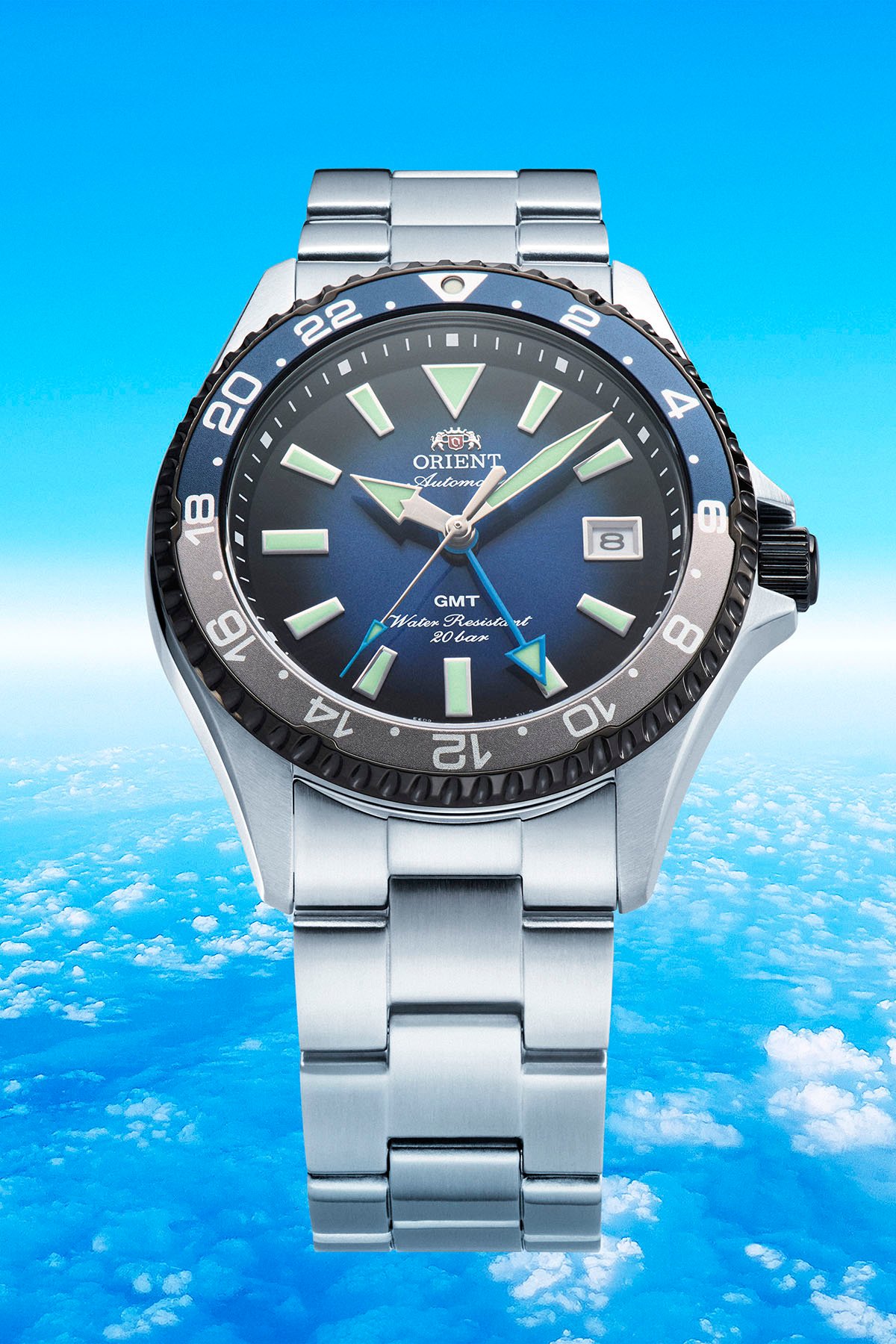
Orient Mako GMT Limited Edition ref. RA-BC0005L
The blue-dial version with its red GMT hand was my favorite in the range. The color combination perfectly balances dive-watch utility with everyday wearability. This reference forms part of the standard collection alongside black, green, and orange dial variants. The limited-edition reference RA-BC0005L is limited to 4,000 pieces and features a blue gradient dial. Its bezel alternates gray for daytime and blue for nighttime, paired with a matching blue GMT hand. All versions of the Mako GMT feature a screw-down crown and a sapphire crystal.
The standard collection, including the blue model reviewed here, retails for €569.99 / £499.99. The limited edition costs €599.99 / £529.99. You can learn more on the Orient website.