Introducing: The Omega Constellation Observatory

With the introduction of the new Omega Constellation Observatory, the watch manufacturer from Bienne returns to the roots of this collection, which began in 1952. These new watches are available in steel, yellow gold, rose gold, and platinum, and we got a chance to check out two of the nine options.

The predecessors of the Omega Constellation Observatory
The Constellation was Omega’s flagship collection and came to life after the great success of the limited-production Centenary models a few years earlier (in 1948), the brand’s first automatic chronometer watches.
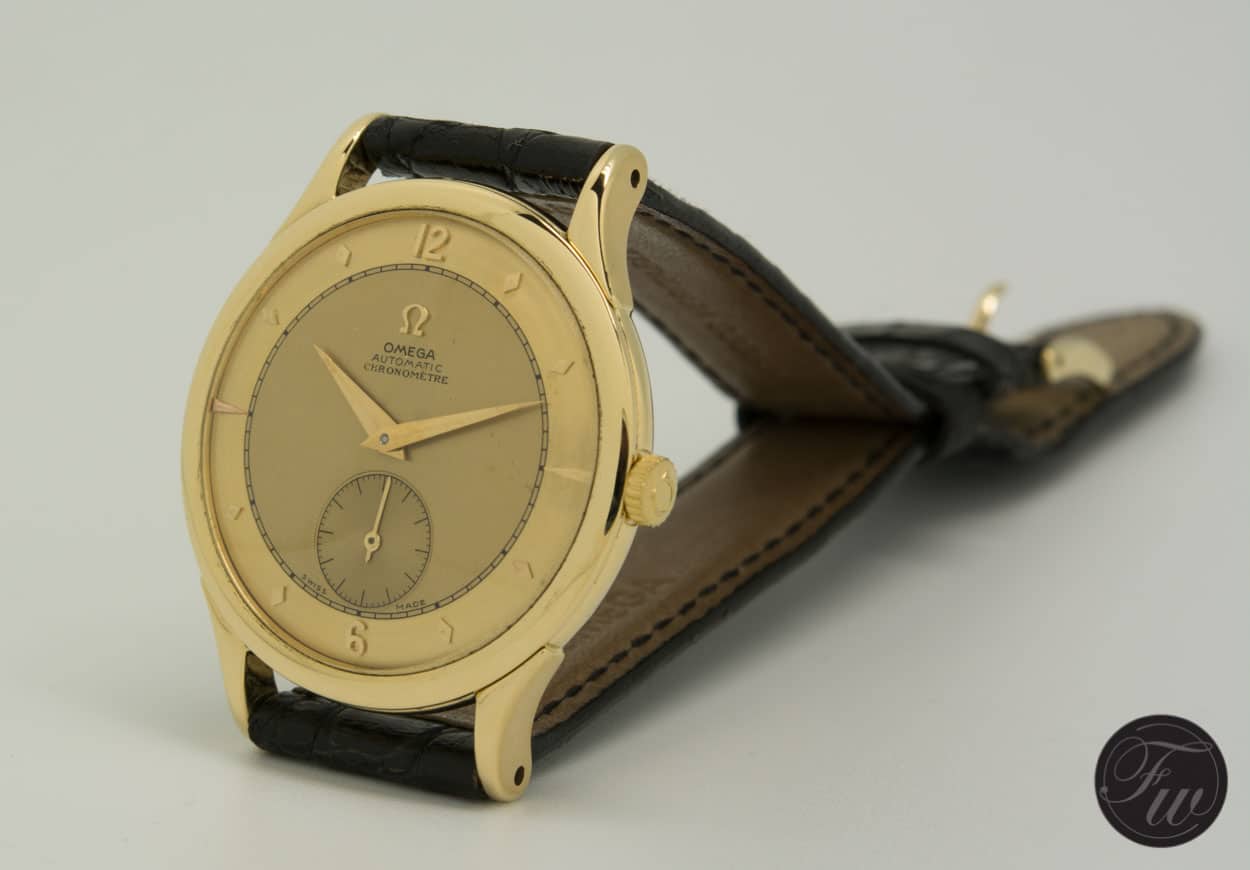
Omega Centenary from 1948
René Bannwart, who was head of the “creation” department back then, was not only responsible for the Centenary and Seamaster collections in 1948 but also for the Constellation in 1952. This new collection featured watches made in significant quantities, always featuring chronometer-certified movements.
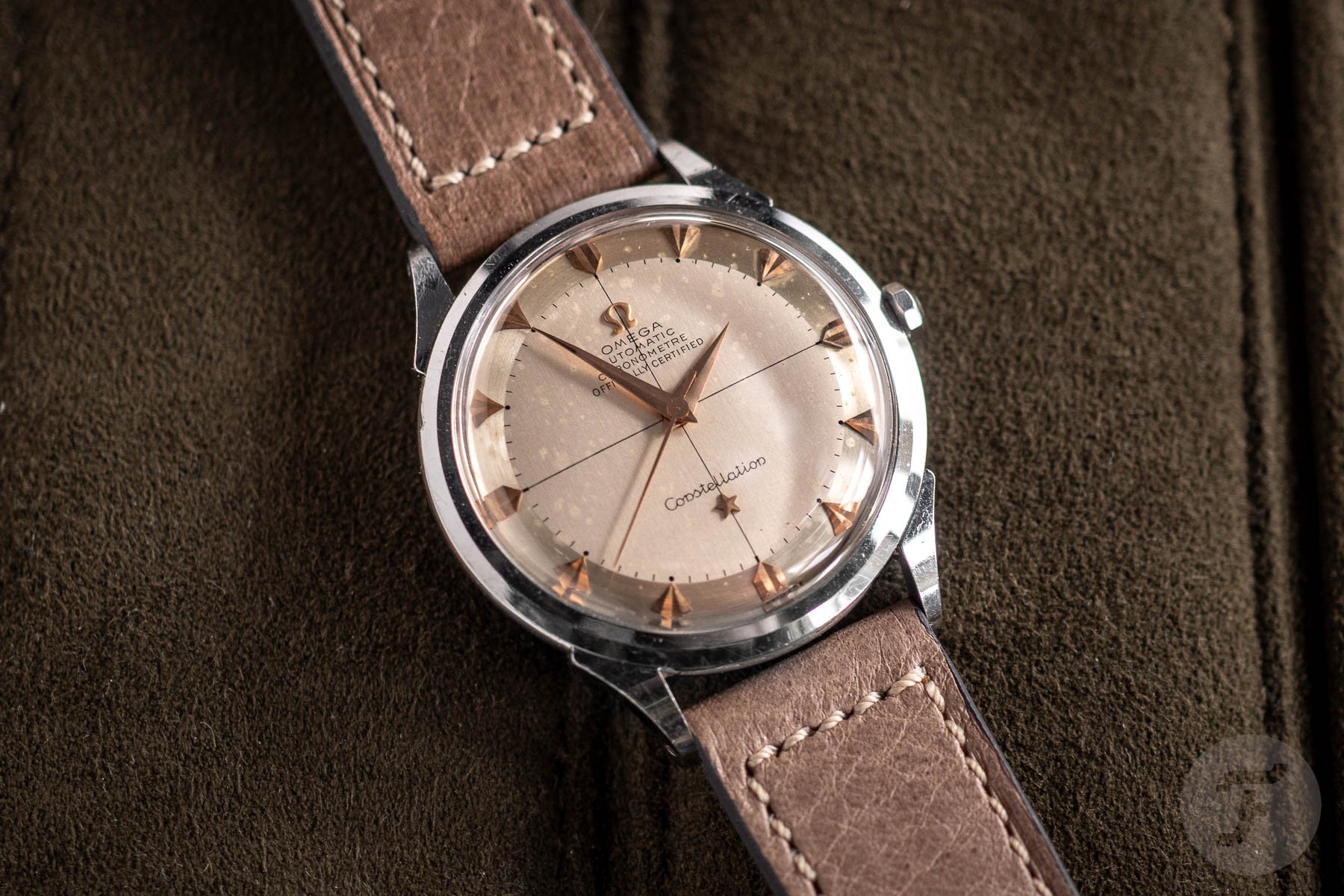
Constellation 2648-1 from 1952
At first, they used bumper-automatic calibers 352RG and 354. From 1955 onwards, however, the watches all featured a regular rotor-winding system, as we know it today. The design of the Constellation was similar to that of the early Seamaster models but often with a bit more luxurious aspects. As stated, the chronometer-certified movements were a requirement for this flagship collection.
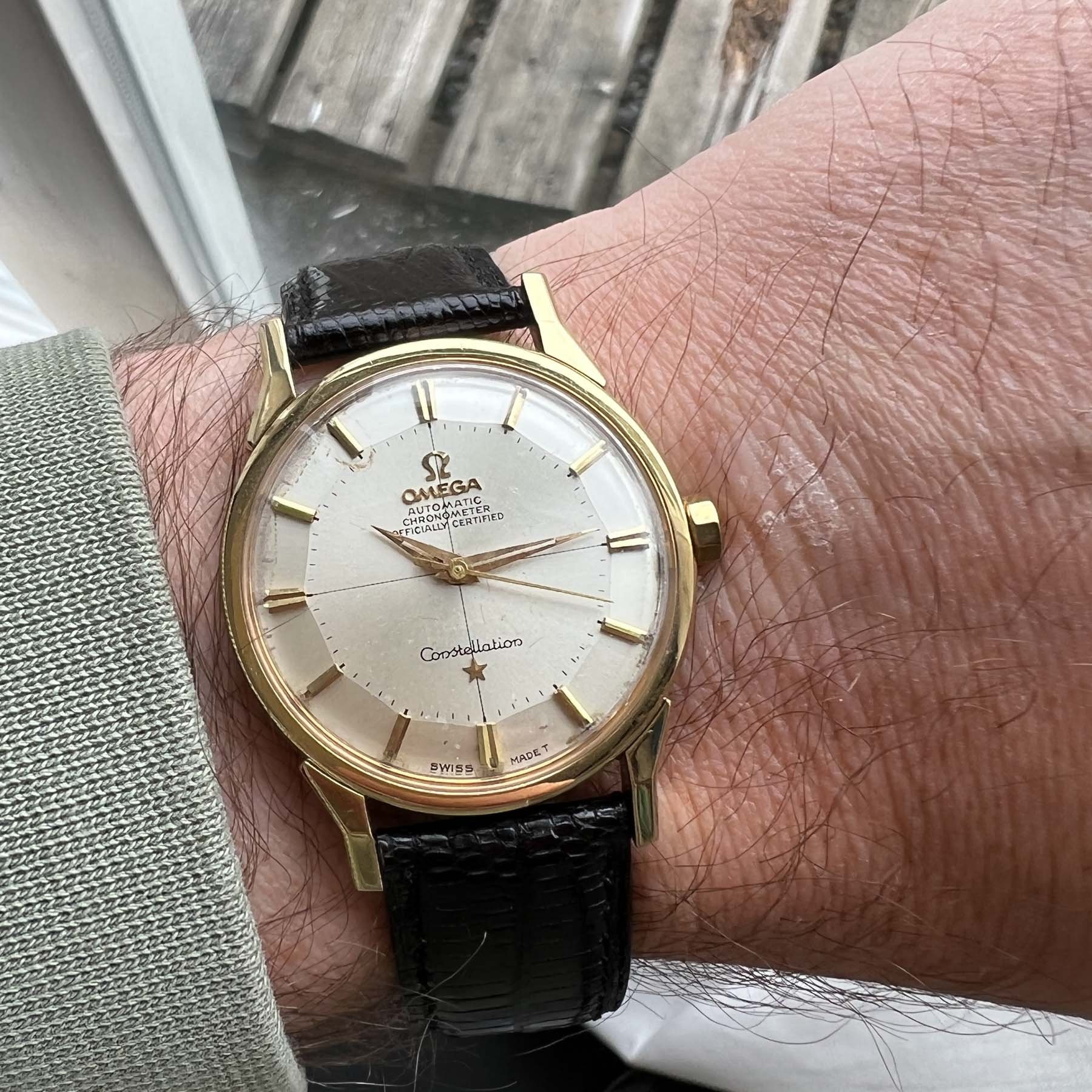
Constellation 167.005
The best-known vintage Omega Constellations from the 1950s and ’60s have convex-shaped (pie-pan) dials with 12 facets. Such dials remain highly desirable among collectors and enthusiasts.
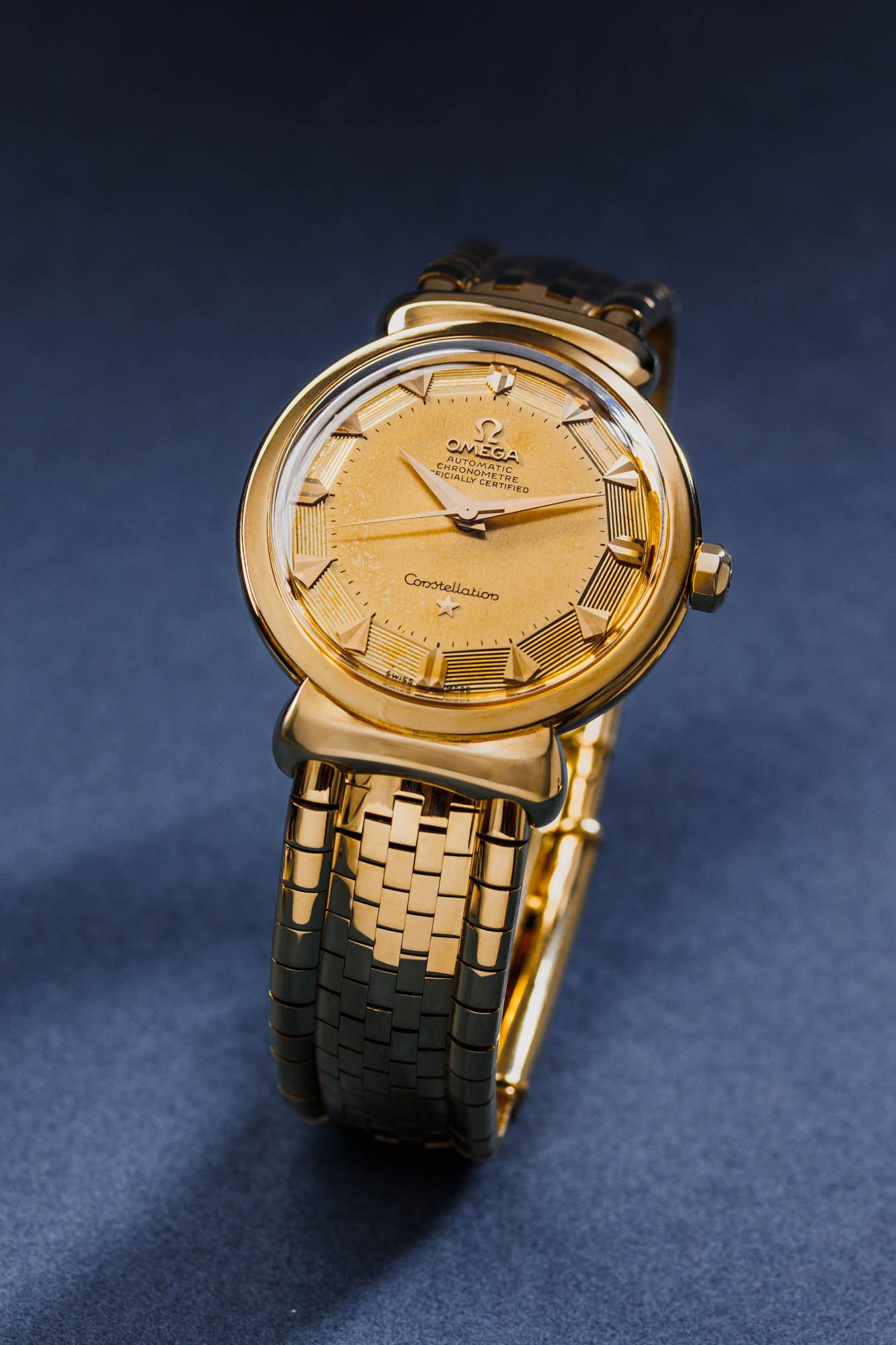
Image: Amsterdam Watch Company
Vintage-inspired elements
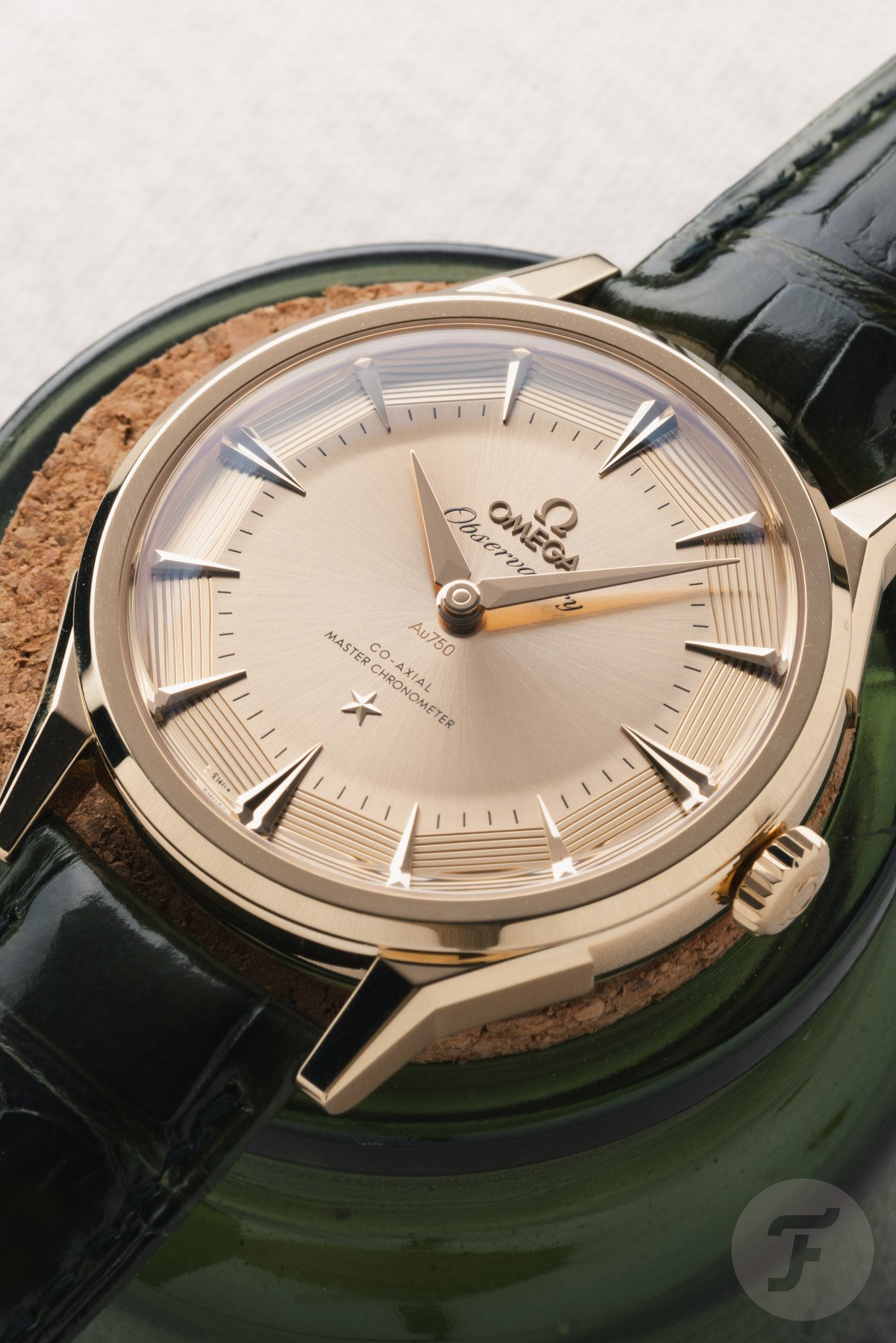
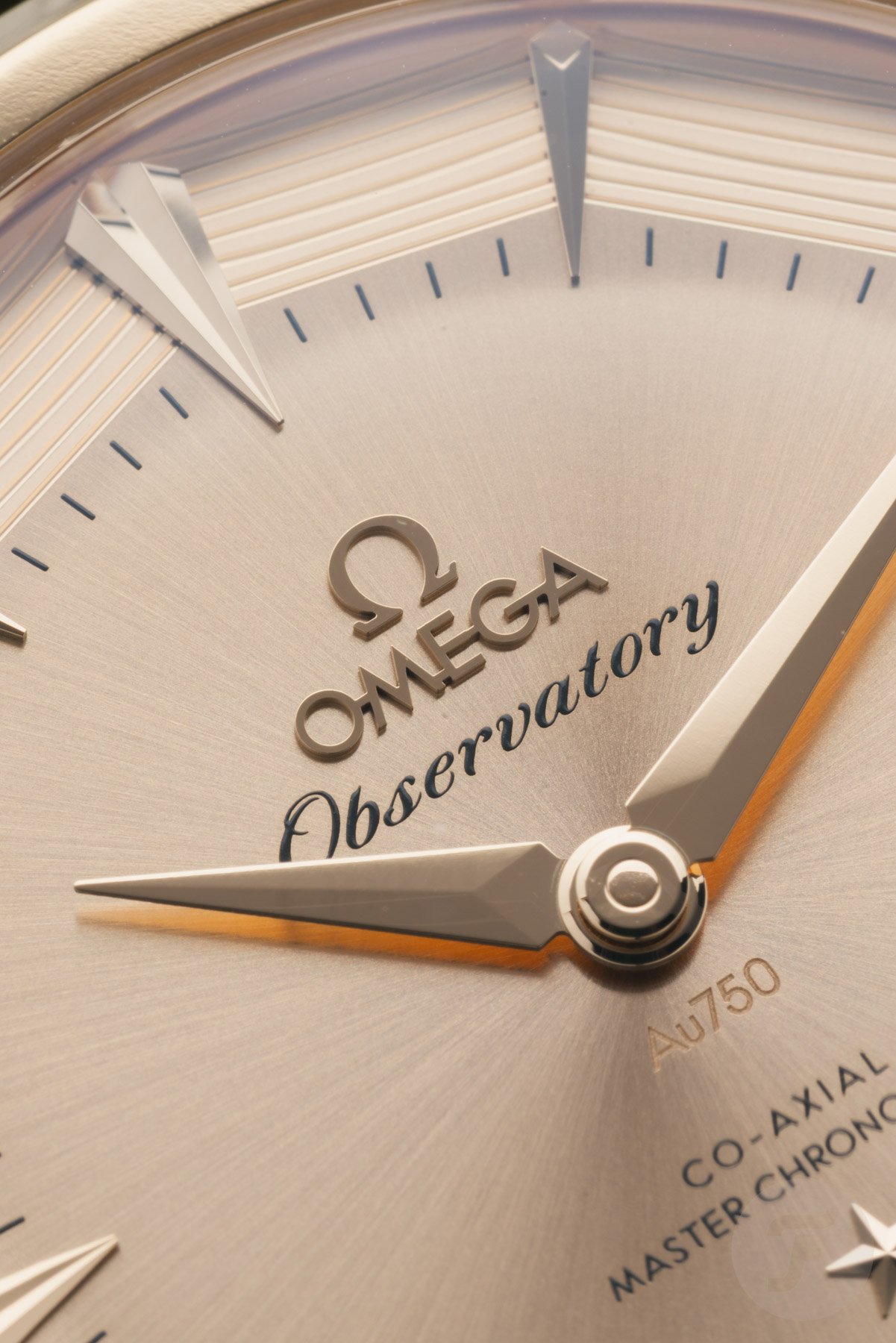
In this new Constellation Observatory, you will find several references to the first Constellation models from the 1950s. Not only does it have the famous pie-pan dial, but it also has the grooves on the 12 facets, just like the original 1954 Constellation Grand Luxe ref. 14355. Furthermore, the handset shows inspiration from the original dauphine hands of the 1950s Constellations, and the new model also has kite-shaped applied indexes. Then, of course, there’s the Constellation star on the dial. There are a few more elements with clear links to those elegant Omega Constellation from the ’50s, but let’s first discuss the model name, Constellation Observatory.
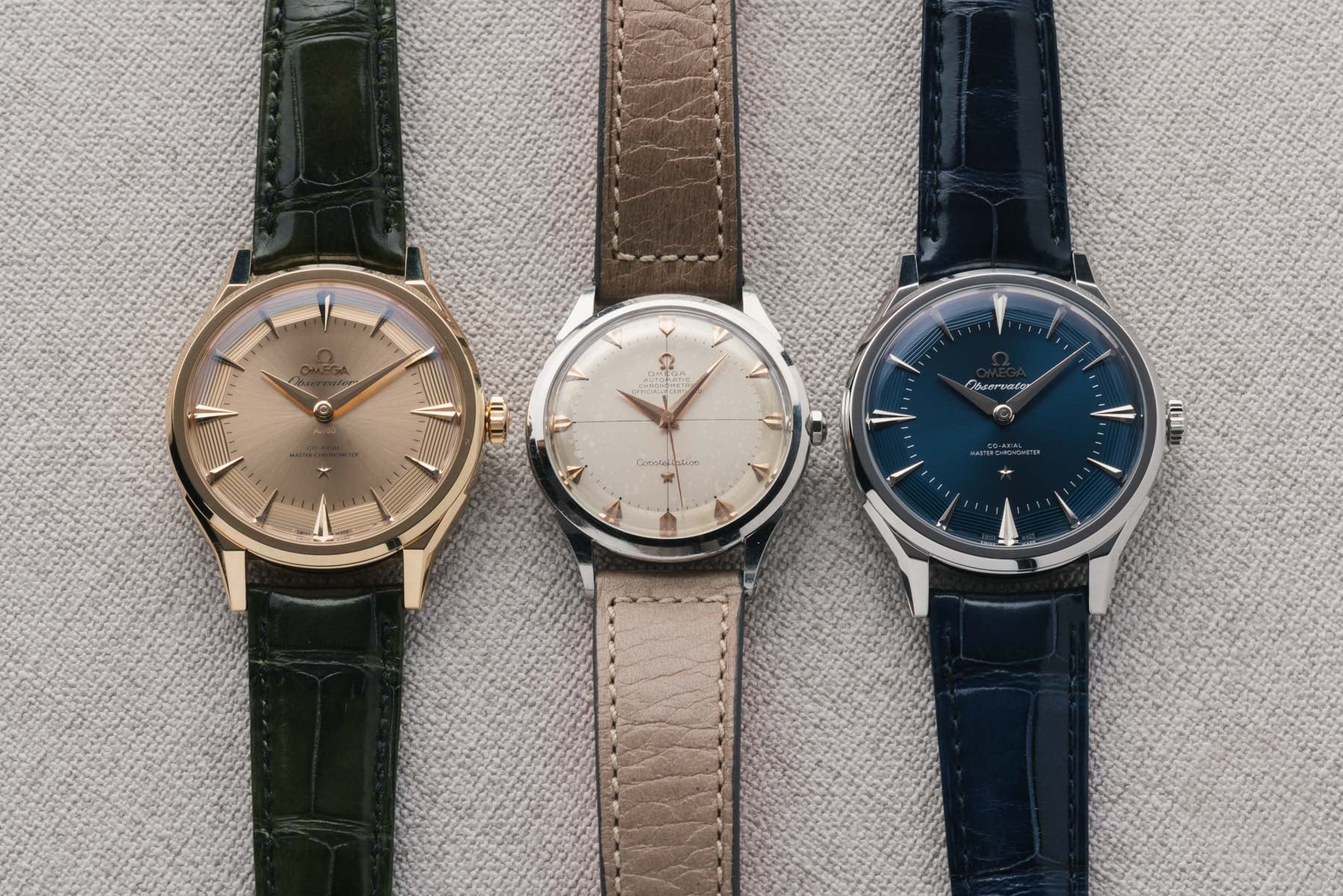
The Constellation CK2648 from 1952 between two new Observatory models
Paying tribute to the precision records set at the observatories
The name of this new Omega Constellation model refers to the precision contests held at the Neuchâtel and Geneva Observatories in the 20th century. These stopped when quartz movements took over in the late 1960s.
Before that, though, Omega won many of the precision contests held at those observatories, which led to the eight stars and observatory dome on the case back of each Constellation since 1952. With the Observatory name, the brand pays tribute to those precision contests. Omega also took the chronometer certification incredibly seriously outside of the competitions.
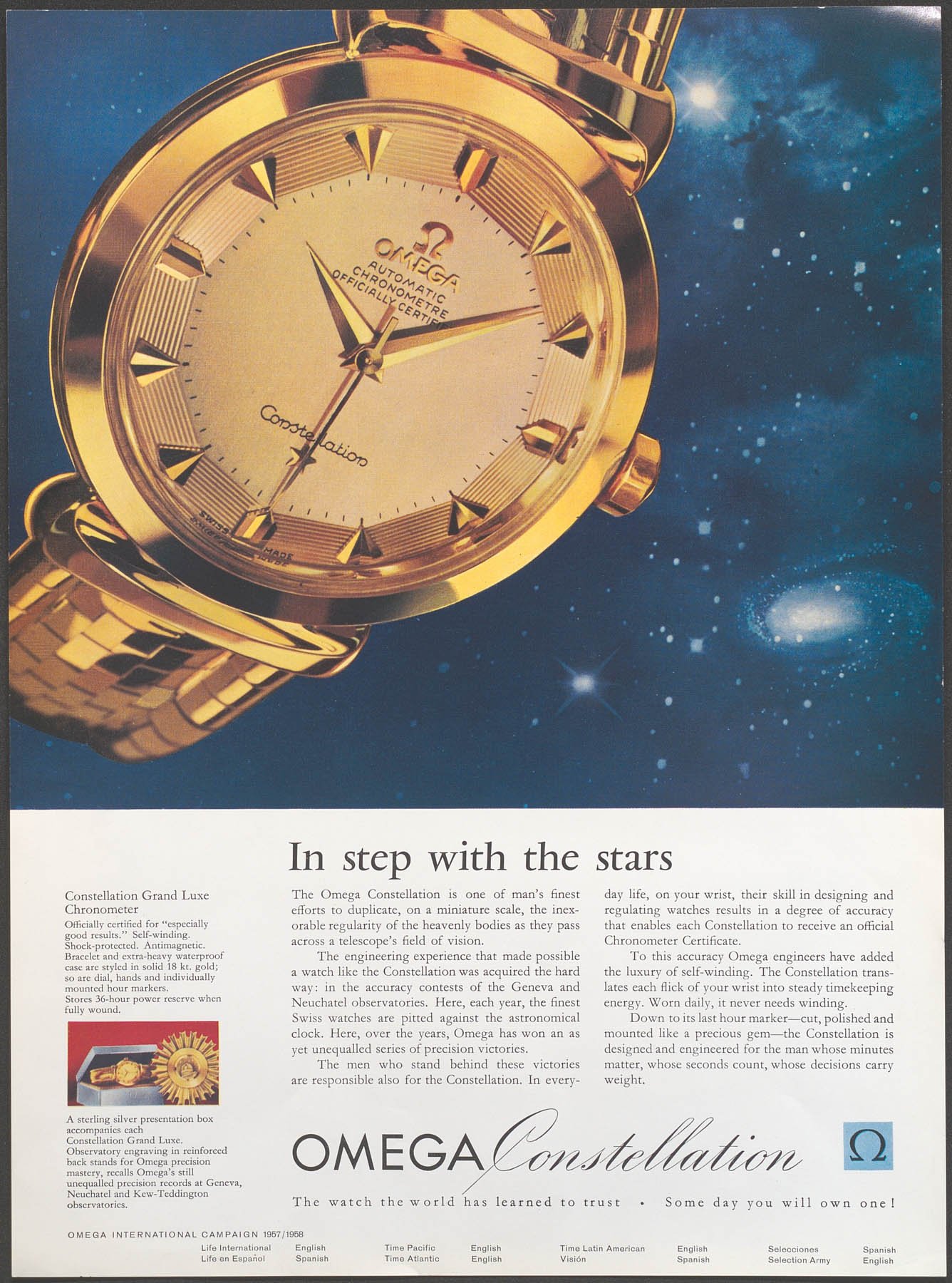
A 1950s advertisement for the Constellation Grand Luxe
For example, in 1964, Omega manufactured 63.2% of all chronometer-certified wristwatches. Until 1973, the “Bureaux Officiels de Contrôle de la marche des montres” (or “BO”) issued chronometer certifications. The accuracy standard for a chronometer was -3 to +12 seconds per day on average, and if a watch achieved an accuracy of -1 to +10 seconds per day, it would receive a “mention for especially good results” on the certificate. Since COSC’s establishment in 1973, the average daily rate of a chronometer movement has been between -4 and +6 seconds per day.
In today’s chronometer-certification process, each movement arrives at COSC headquarters with a (test) dial, handset, and winding crown. Then, during the test period, a new picture is taken of the position of the three hands (hour, minute, and seconds). The deviation in timekeeping is measured by comparing the position of the hands to the reference clock.
Certified in Omega’s Laboratoire de Précision
As you may have noticed, the new Omega Constellation Observatory has only two hands (for the hours and minutes). Therefore, the traditional chronometer tests, which use photographs of the seconds hand’s position, do not work here. Thus, Omega had to come up with a solution to test the watch with just an hour and a minute hand. Omega’s Laboratoire de Précision, opened in 2023, is accredited by the Swiss Accreditation Service to perform chronometer certification in accordance with ISO 3159. Furthermore, METAS certified the Laboratoire de Précision for the Master Chronometer standard. At this facility, Omega developed a wireless, self-contained testing unit that consolidates all the processes for the chronometer and Master Chronometer certifications into a single device.
What is Dual Metric Technology?
This device, the so-called Dual Metric Technology box (with room for 10 watch heads per box), continuously captures the sound of each “tick” and “tock” while also recording the parameters such as temperature, position, magnetic fields, and so on throughout the 25 days of testing. The device records data from the moment it begins “listening” to the watch. The acoustic signature can isolate irregularities, temperature and pressure sensitivities, the various positions, and fluctuations in the balance amplitude. Because it’s a continuous flow of data, the watch technicians can precisely identify when and where variations occur. This technology allows them to certify watches with or without a seconds hand as chronometers and Master Chronometers. As you know, the Master Chronometer standard for movements like the one in this Constellation Observatory has to have an average daily deviation of 0 to +5 seconds per day.
Omega continues to innovate in timekeeping and ensures its mechanical watches run as accurately as possible. You might call it over-engineering, but the brand has taken pride in its accurate, reliable movements since the days of the observatory contests until now, with the Laboratoire de Précision.
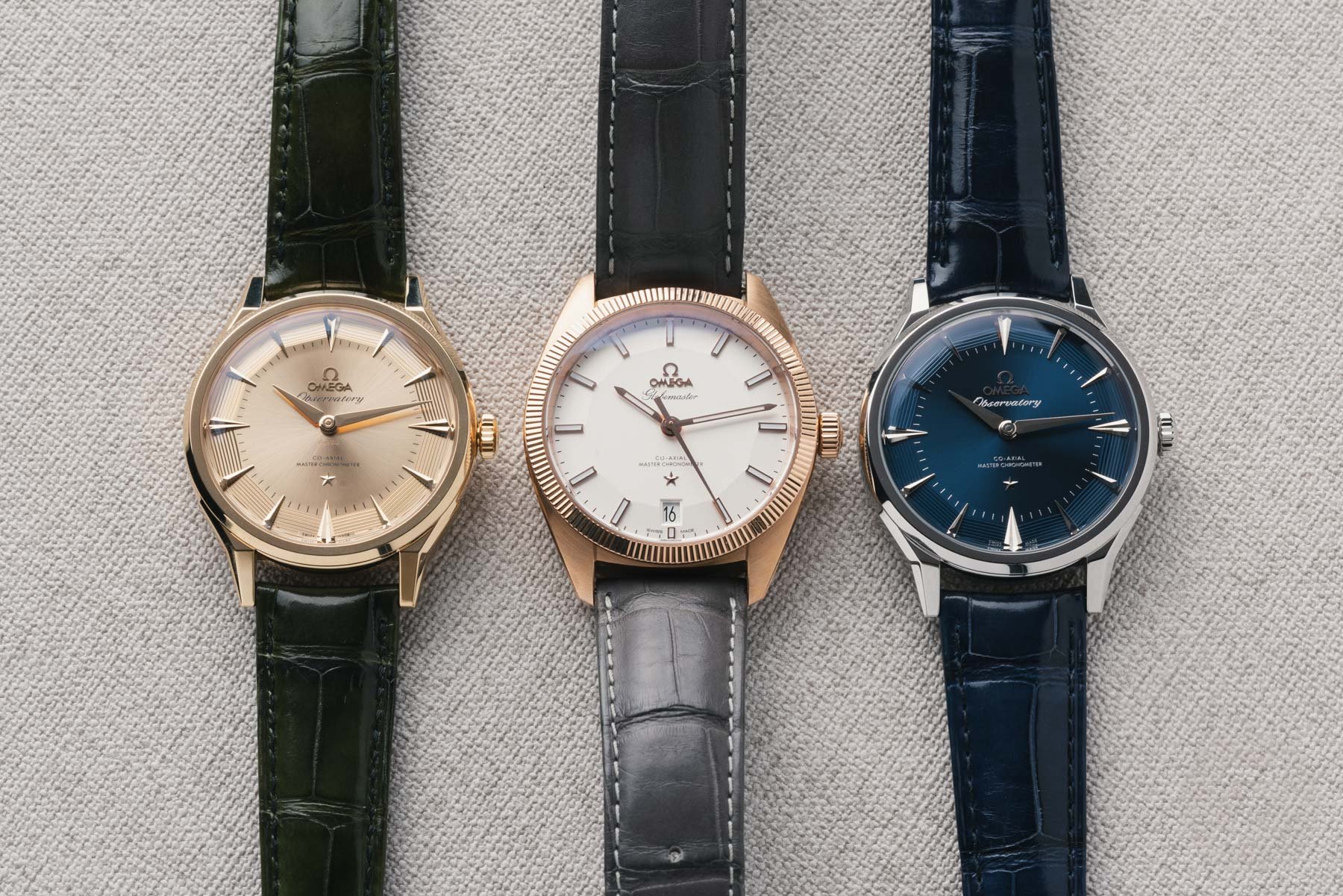
Omega Constellation Observatory and Globemaster
Back in 2015, Omega introduced the Master Chronometer certification with a new Constellation model, the Globemaster. That moniker referred to the name used for the early 1950s Constellation models for the US market. Another brand was already using “Constellation” (no, it had nothing to do with Lockheed’s aircraft name), so until that was resolved, Omega used “Globemaster” instead. Whereas the 2015 Constellation Globemaster had some vintage-inspired elements, such as the pie-pan dial, this new Constellation Observatory takes even more inspiration from the early days of Omega’s flagship model. Fun fact: since 2015, more than 3 million Omega watches have been Master Chronometer certified.
The new pie-pan dial with 12 facets
Let’s start with the pie-pan dials in this new Constellation Observatory collection. The last of the original pie-pan dials stayed in production until 1977 for the Constellation ref. 168.0065, a model for the Japanese market. However, Omega had discontinued all the other pie-pan-dial Constellations a while before that. Aside from a 50th-anniversary Constellation in 2012, this dial style returned to the regular catalog in 2015 with the Globemaster. And now, in 2026, in the new Omega Constellation Observatory, there’s a pie-pan dial as well. The 12 facets also have a series of grooves, just like the 1954 Constellation Grand Luxe model did. For the stainless steel models, the grooves are stamped; for the references with a gold or platinum case, the grooves are hand-guilloché.
Hour indexes on the Omega Constellation Observatory
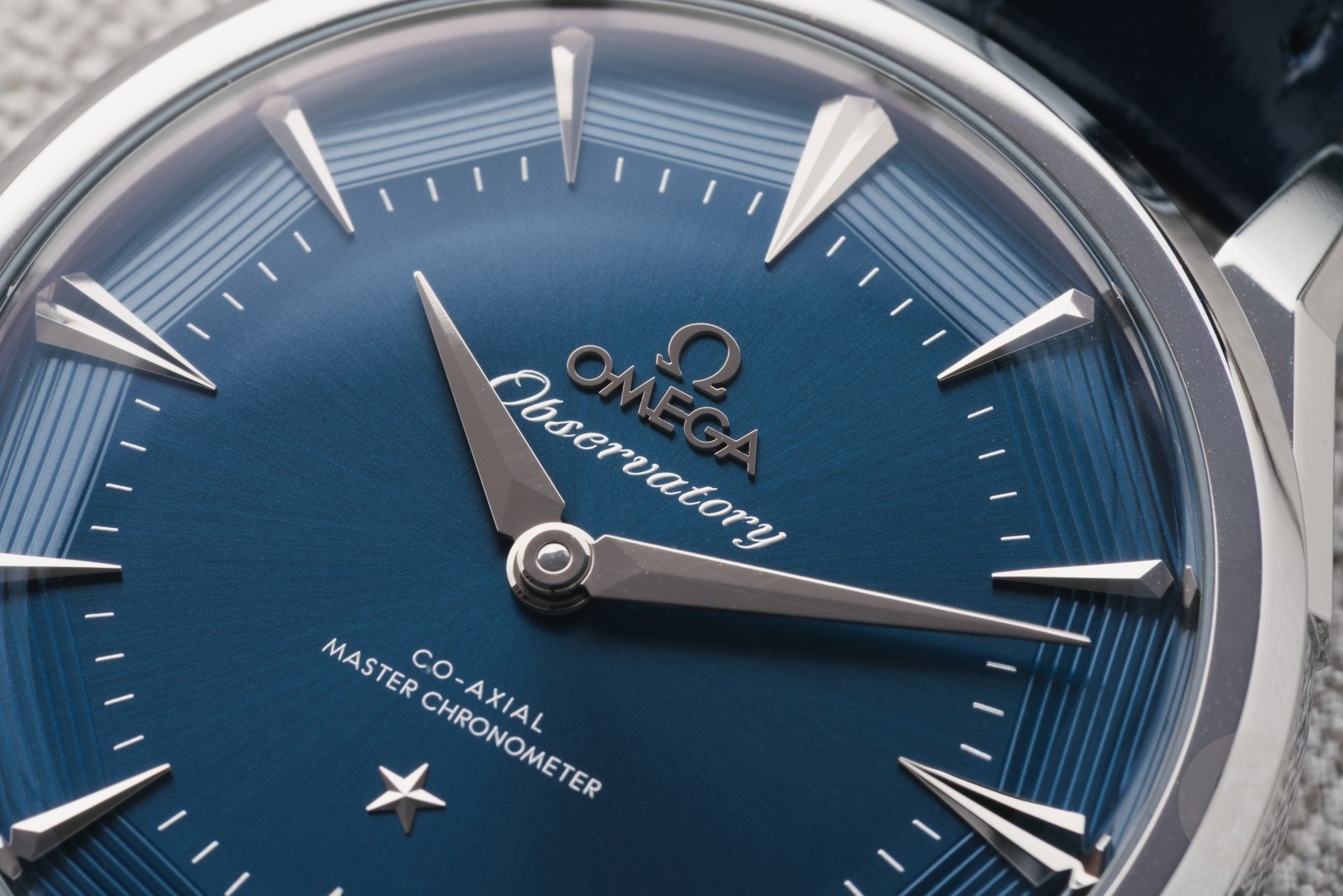
All the applied hour markers have a kite-like shape. Some of the vintage Constellations have shorter and wider indexes, often referred to as “arrowhead” markers. In my collection, I also have a Constellation (ref. 2853 from 1957) with kite-shaped indexes that are a bit longer and narrower than the arrowhead ones. The hour markers on the new Constellation Observatory are made of 18K gold or “platinum-gold,” Omega’s term for its Pt950 platinum alloy (since it also contains gold).
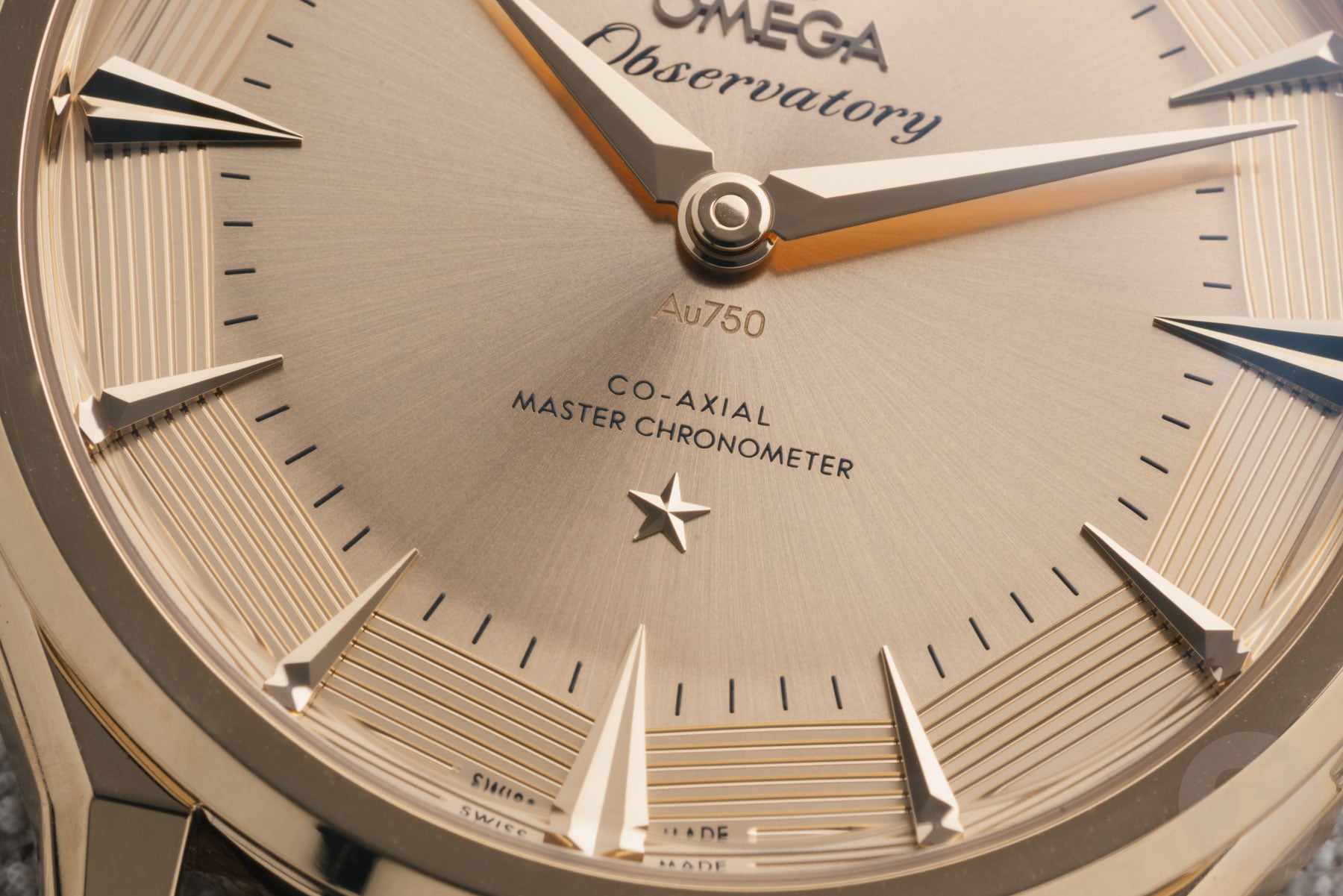
Then, as written above, we find the famous Constellation star on the dial at 6 o’clock. It’s basically the Constellation logo, and it has always represented the accuracy of these chronometer watches. The “Observatory” wordmark, in the same typeface found on the Globemaster dials, sits beneath the Omega logo and wordmark. Lastly, the hour and minute hands have a dauphine-like shape (albeit with no pointed tails) and are also 18K gold or Omega’s “platinum-gold.” I find the new pie-pan dial amazing and think it’s the definite eye-catcher of this watch.

For many years, I’ve had a crush on the Constellation Grand Luxe from the 1950s. The gold pie-pan dials with grooves on the 12 facets and beautiful hour markers are just stunning. Omega did a wonderful job creating the vintage-inspired dials for this new Constellation Observatory.
Dog-leg lugs
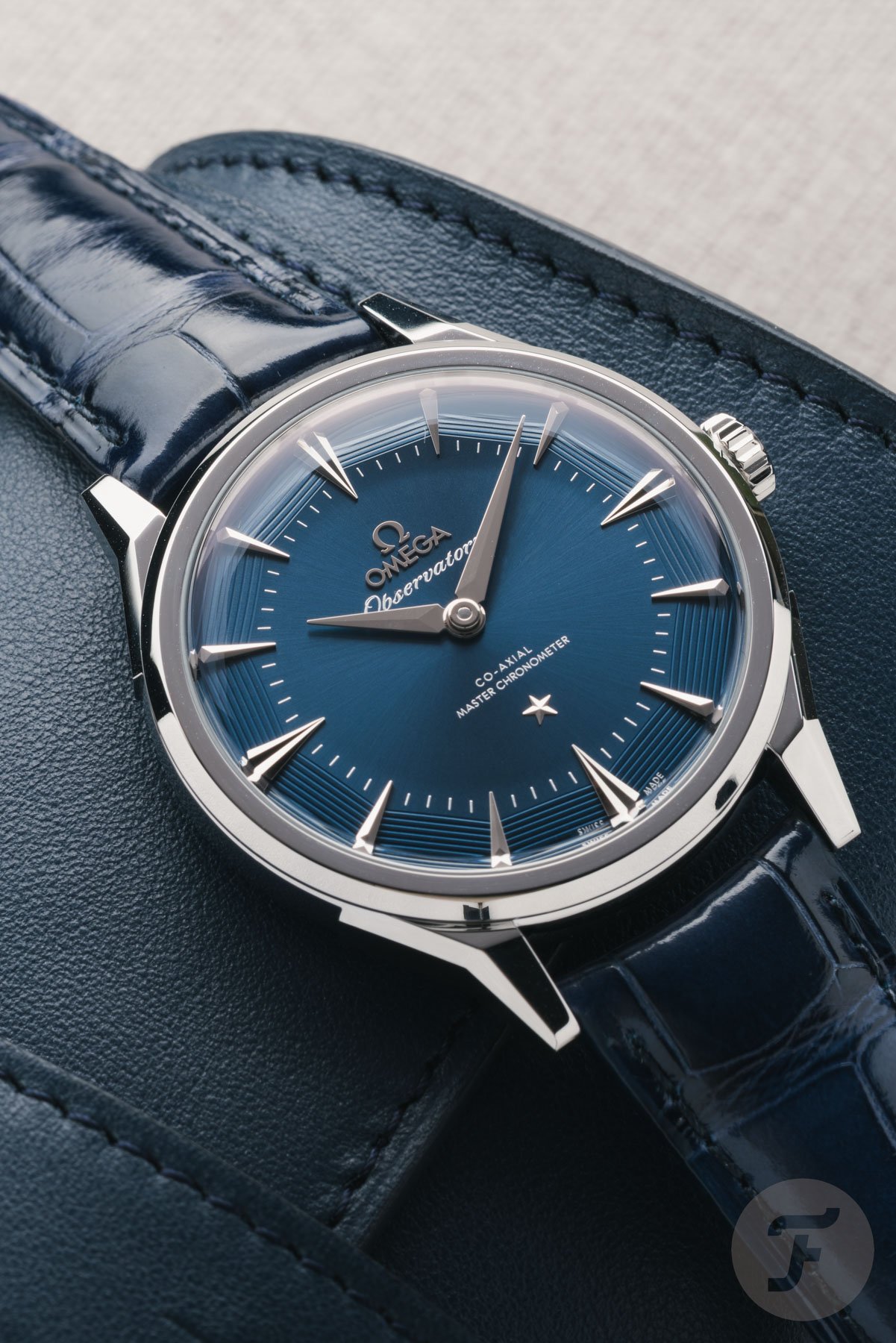
One of the most prominent design cues is the style of this watch’s lugs. These are the dog-leg lugs that Omega used on the Constellation in the early days. An idea from Gérald Genta, this style of lugs debuted in 1960 on the Omega Constellation ref. 14900 (and already before in the Seamaster collection). The dog-leg lugs on the Constellation Observatory have polished tops and vertically brushed sides.
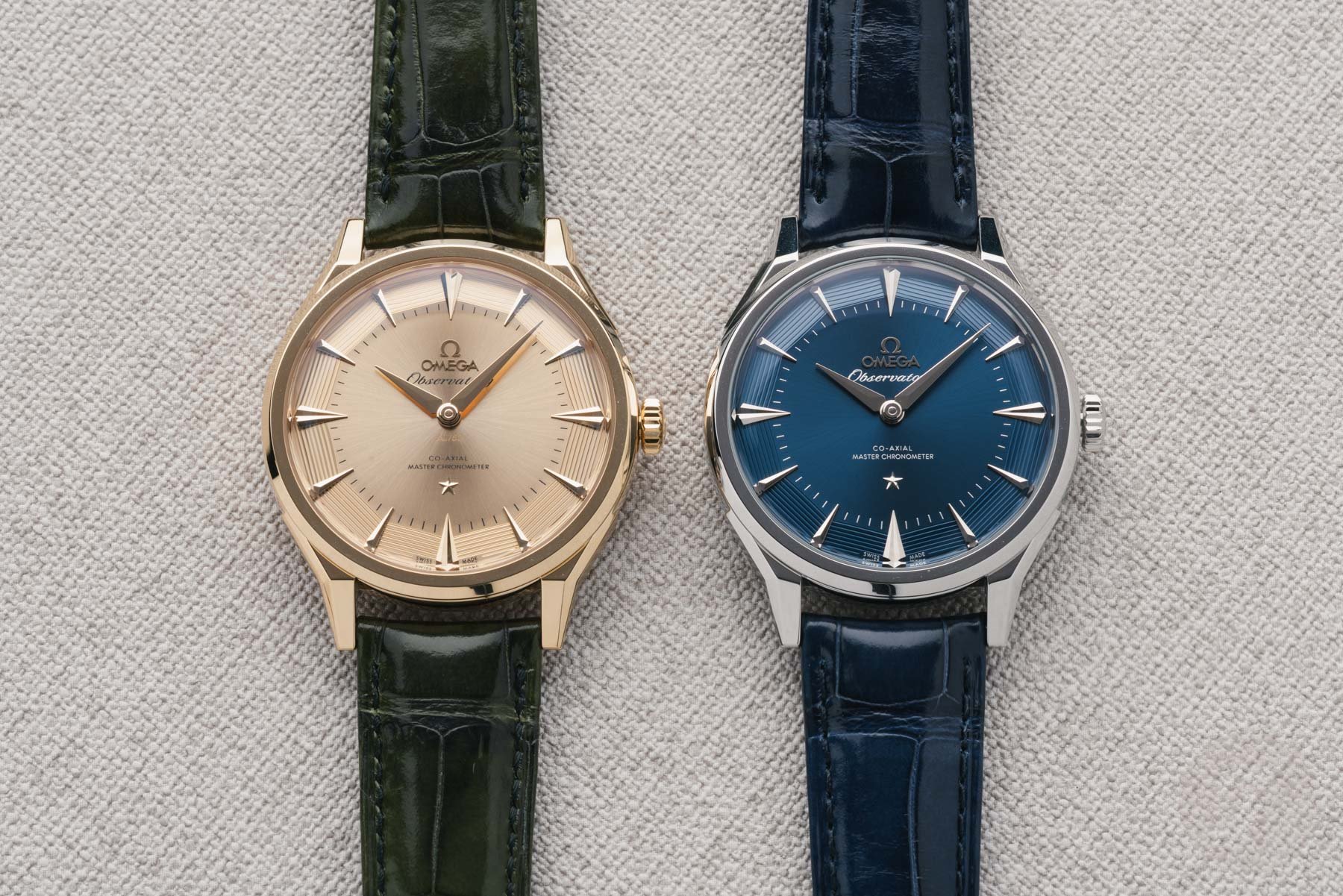
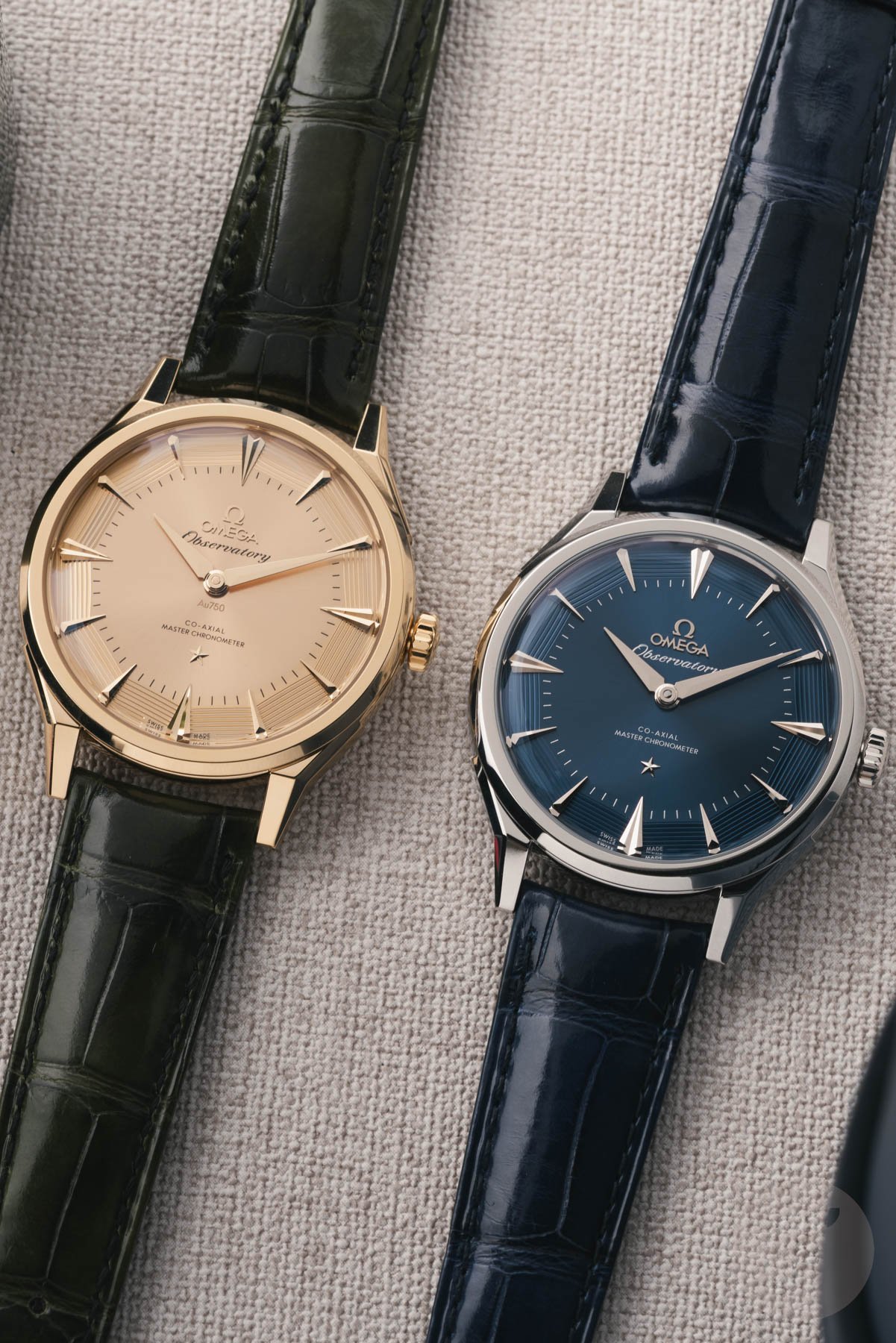
As mentioned, the case is available in different materials. We received the Moonshine Gold version and the blue-dial O-megasteel variant. Moonshine Gold needs no further explanation on this website, but this alloy achieves a paler color than other 18K gold alloys by using (more) silver and palladium rather than copper. O-megasteel debuted a few years ago, and it’s a harder steel, making it more resistant to scratches than regular 316L or 904L. It also appears a bit whiter.
Omega also offers other variations of this watch in Sedna Gold and platinum (more at the end of this article). There’s also a version in Moonshine Gold with a matching gold bracelet. This is a mesh bracelet but finished/decorated like the original Constellation Grand Luxe brick bracelet made by Reinhor.
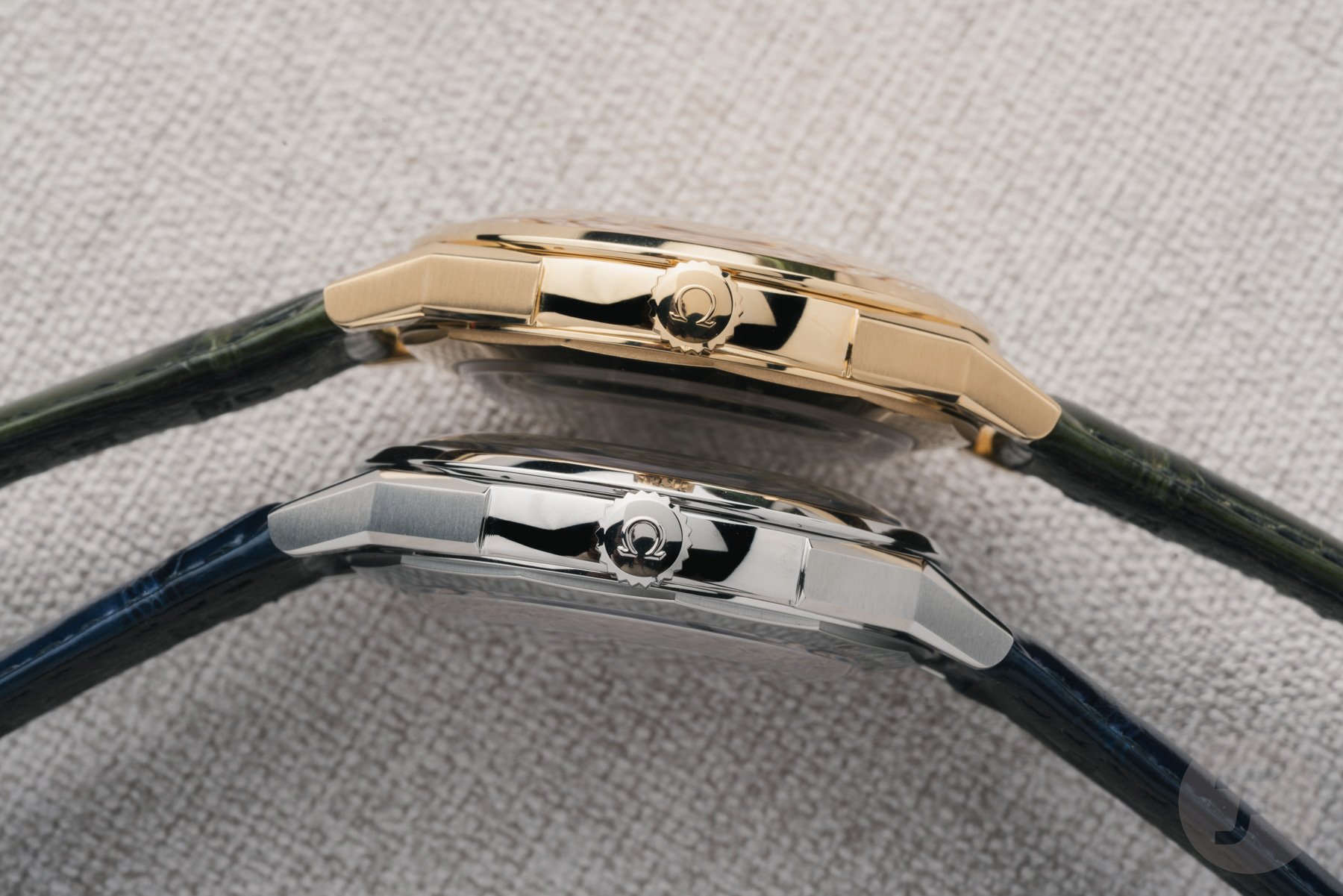
Then, there’s the crown of the new Constellation. I wonder whether Omega considered recreating the decagonal crown from the vintage Constellations. It would have completed the picture for me, but there might have been a good (technical) reason not to.
New movements in standard, Luxe, and Grand Luxe versions
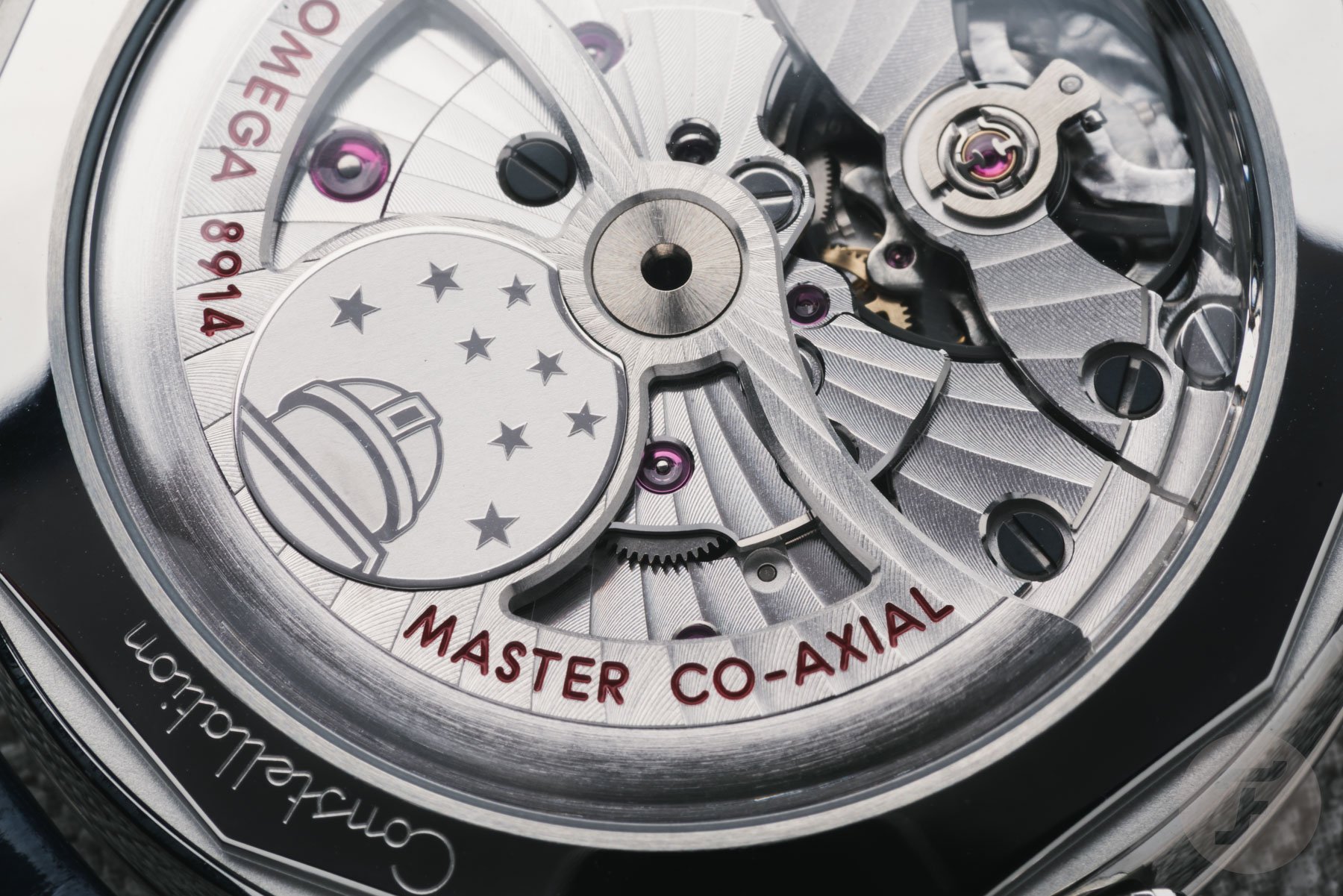
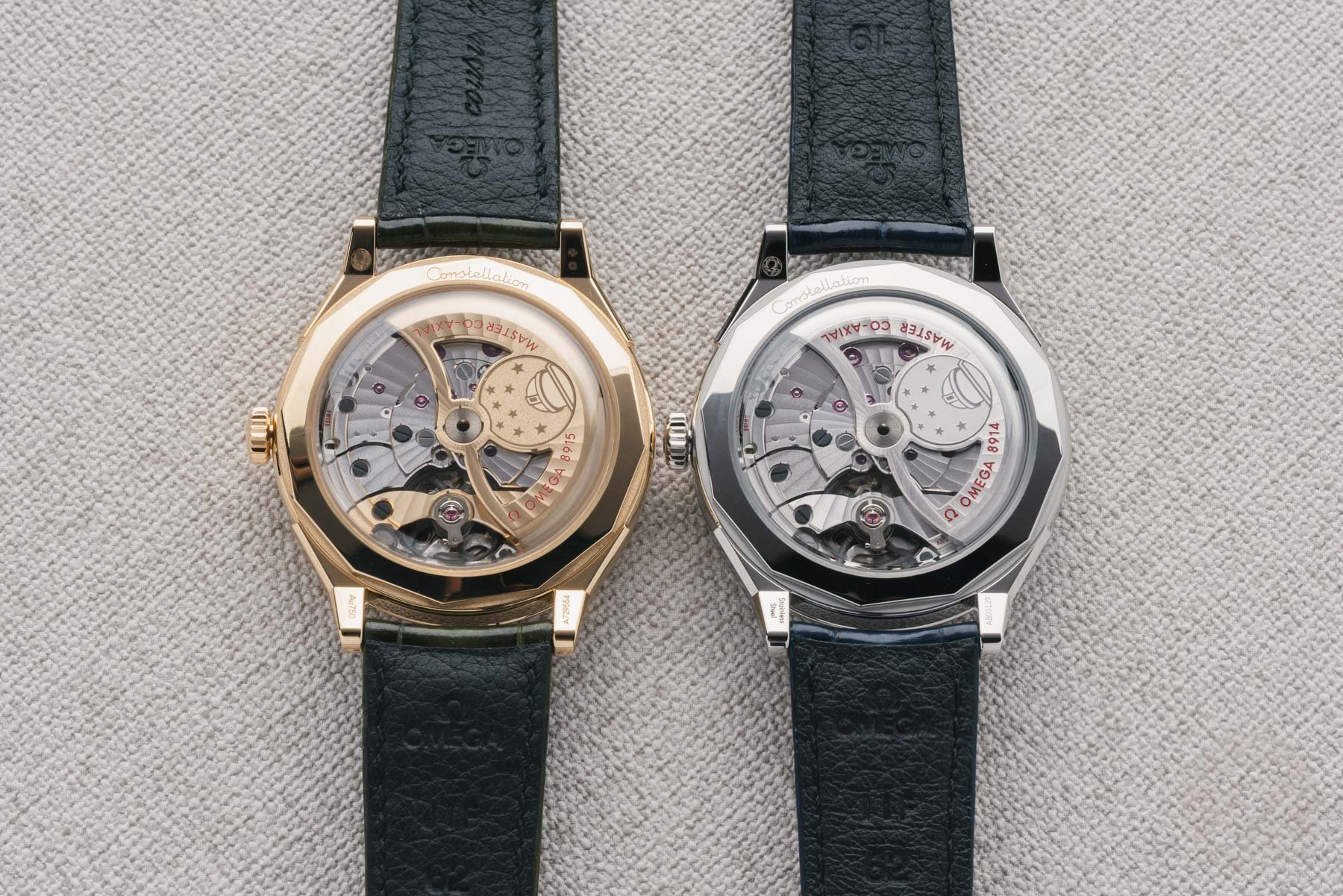
For this time-only watch, with just two hands, Omega uses caliber 8914 and 8915. The 8914 is for the stainless steel models, whereas the 8915 Luxe powers the gold versions, and the 8915 Grand Luxe beats inside the platinum ones. These movements, based on the 8900/8901, have a power reserve of 60 hours and have been tested and certified at the Laboratoire de Précision, as explained earlier.
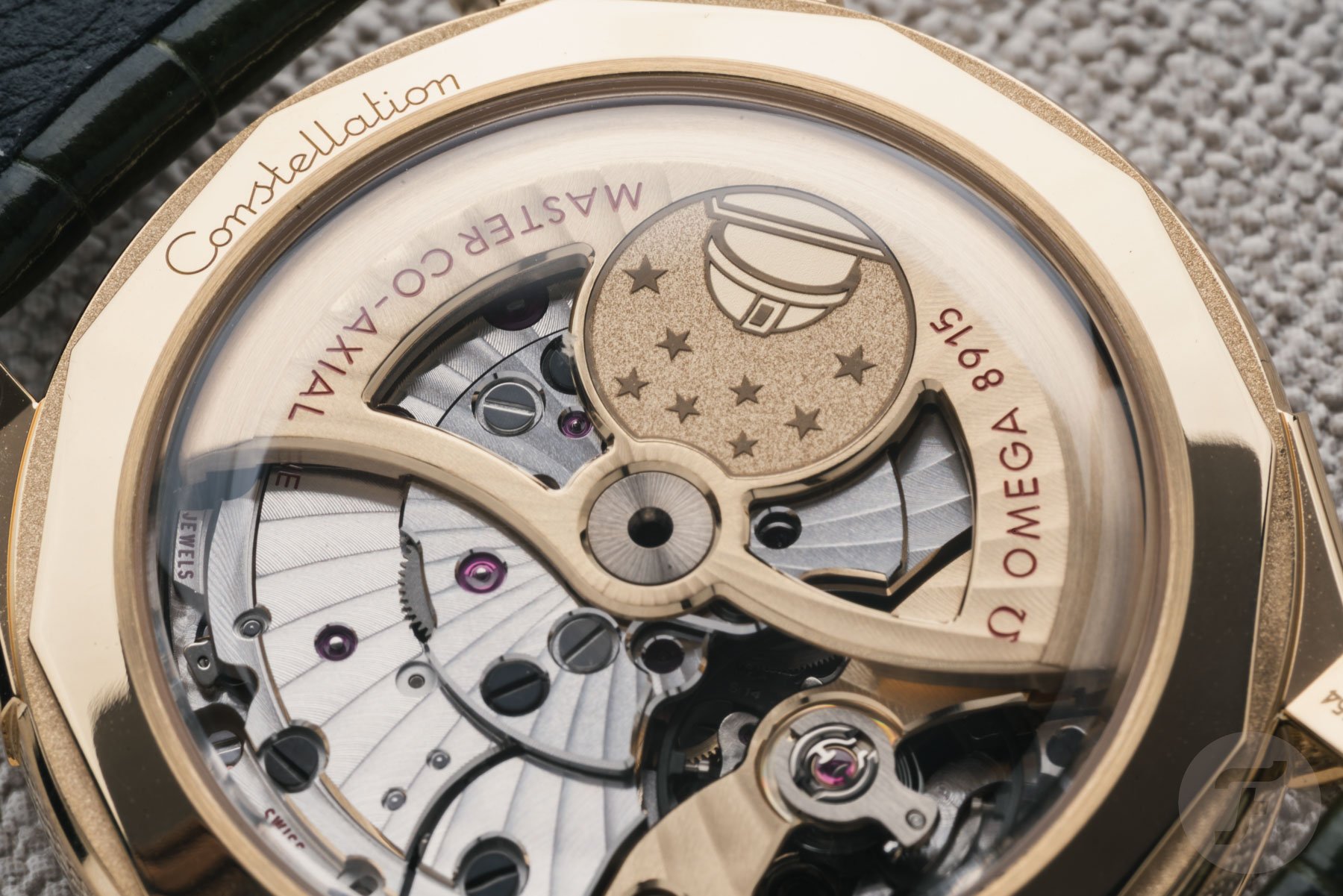
What I like about these movements is the shape of the rotor. It has a rounded outer zone that looks fantastic. You will find the observatory medallion on all the rotors in this Constellation Observatory collection. On the steel and gold versions, it is engraved or laser-ablated, and the 8915 Grand Luxe movement features a white-gold medallion filled with a dark-blue sky made of aventurine glass. The observatory dome is filled with translucent white opal enamel.

An overview of all new Constellation Observatory models
Both watches we have here come on an alligator leather strap with a pin buckle that matches the case material. Except for one Moonshine Gold model, all others are available only on a leather strap.

The all-Moonshine Gold Omega Constellation Observatory has a gold mesh bracelet with a “brick” motif, like the original Constellation Grand Luxe. You can see an overview of variants in the pictures above.

The strap and bracelet measure 19mm between the lugs and taper to 15mm at the buckle.

The new Constellation Observatory on the wrist
You might have noticed my enthusiasm for the Constellation. My first Omega watch was a Constellation, and owning watches from this line also runs in my family. I also have a modest collection of about a dozen, from the very first 1952 model, some later versions from the 1950s and ’60s, to the Constellation Globemaster introduced in 2015, with some Manhattan and Constellation ’95 models in between. Although I collect Speedmasters, the Constellation is also one of my weaknesses. I was very excited to see the new Omega Constellation Observatory and have the opportunity to give it some wrist time before the official release.

The aesthetics of the watch are very pleasing to me, especially the pie-pan dial, the grooves on the facets, the dog-leg lugs, etc. I had a small preference for the Moonshine Gold model on the green leather strap, but the same applies, of course, to the stainless steel version. On my 18cm wrist, the 39.4mm × 47.2mm × 12.23mm case works perfectly.

How does the Constellation Observatory wear on the wrist?
The weight of the Moonshine Gold Constellation Observatory is 96.4 grams (64.2 grams of which is gold), and it feels very comfortable. The steel model, at 70.4 grams, weighs noticeably less. That said, a few guys on the team here at Fratello have (much) smaller wrists, and some of them found it a bit too large. It’s definitely a case of giving it a try first to see if this size is for you. The gold Seamaster Milano Cortina from last year had a 37mm diameter, and I think that would be the sweet spot for many.
My favorite Constellation
As always, it’s about how a watch makes you feel. Does it make you smile when you look at it? I had a lot of fun wearing the new Constellation Observatory, and I enjoyed looking at the beautiful gold pie-pan dial, case shape, and so on. Also, I found myself focusing on the movement (especially the rotor) a bit more than I usually do. Of course, if money were no object, the full-gold version with a bracelet would be my pick. But the unfortunate reality is that money is an object, and I think I would end up with a stainless steel model. Although I liked the blue-dial version we had in the office, the black-dial variant has a coolness about it, and I think that would be my choice.
The prices of the new Constellation Observatory watches start at CHF 8,500 (excluding VAT) / €10,700 (including VAT) / US$10,900 (excluding sales tax) for the steel models with green, blue, and silver dials. The black-ceramic-dial version comes in at CHF 9,500 (excluding VAT) / €12,000 (including VAT) / US$12,200 (excluding sales tax).
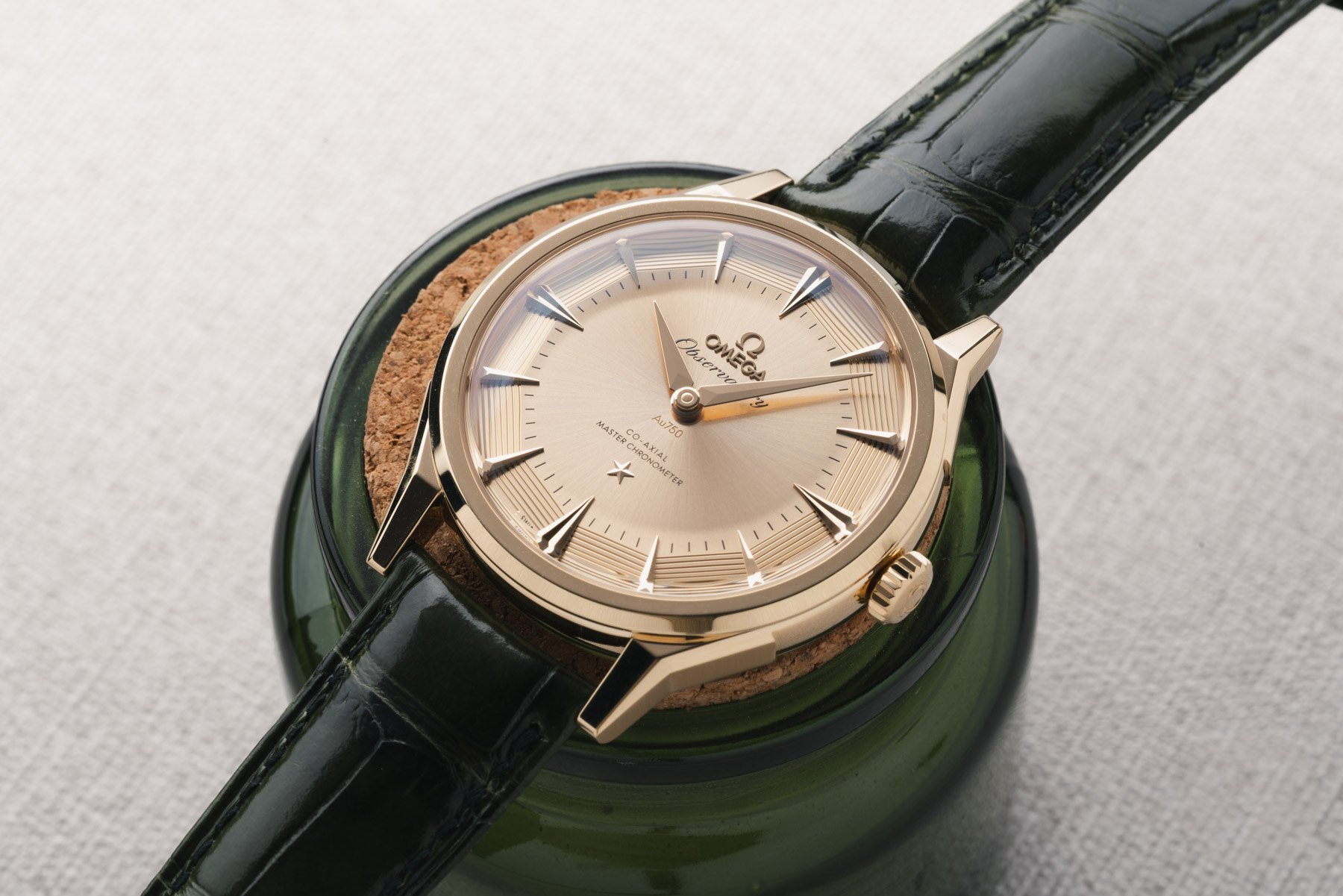
The Moonshine Gold version I tried has a retail price of CHF 29,500 (excluding VAT) / €37,300 (including VAT) / US$37,900 (excluding sales tax). All other prices are listed in the table below.
You can find more information on the official Omega website.