Making A Case For Desk Clocks In A World Obsessed With Watches

There’s something slightly ironic about spending most of your day surrounded by watches yet rarely checking the time on your wrist. I’m guilty of often checking my phone rather than my watch. But when you work at a desk, the object that quietly governs your day isn’t the watch you chose that morning. Rather, it’s the clock that never moves. It sits there, always visible, never asking for attention, marking time in a way that feels steadier and more permanent. A watch comes on and off. A desk clock becomes part of the furniture, part of the rhythm of a space.
Over time, you stop actively looking at it, yet you rely on it completely. That subtle shift is what makes desk clocks interesting. You don’t rotate, flip, or swap them out depending on your mood. Collecting watches often feels fast and transactional, but a desk clock asks for a different kind of relationship. There aren’t many modern mechanical desk clocks that truly feel considered, but a small handful stand out for very different reasons. These aren’t alternatives to watches; they’re companions to them. And they say as much about how we experience time as how we measure it. Here are some of my favorite desk clocks that I think would add something special to any working person’s desk.

The MB&F × L’Epée Sherman is pure mechanical fun
If there’s one modern desk clock that fully embraces emotion, it’s Sherman from MB&F, created in collaboration with L’Epée. The friendly little robot doesn’t attempt to blend into a room or quietly disappear into the background. Instead, it treats the desk clock as a legitimate canvas for mechanical playfulness. I love Sherman’s exposed balance-wheel “brain,” which lets you watch the little guy think as he goes about his animated yet inanimate life. It feels oddly reassuring, and a little bit joyful, in a way most clocks simply aren’t.
That sense of imagination is very much intentional. As Max Büsser puts it, “A long time ago in a galaxy far, far away, man’s best friend was his robot. As a ten-year-old fan of Star Wars, I knew that Luke Skywalker could never have prevailed had it not been for droids like R2-D2 – a loyal, resourceful, and brave robot. I was an only child, and I imagined having my own robot companion, and Sherman makes that childhood fantasy a reality.” Once you know that, Sherman makes even more sense. It feels like Büsser built the thing he genuinely once wished he had.

The Sherman desk clock costs CHF 15,530 before taxes. Production is limited, though not formally numbered, and availability depends largely on L’Epée’s production. Like many MB&F creations, it isn’t something you casually stumble across. You usually have to seek it out, and that feels appropriate here. I feel like Sherman’s whole purpose is to make you smile, and time-telling is purely a bonus. You can learn more about Sherman on the MB&F website.
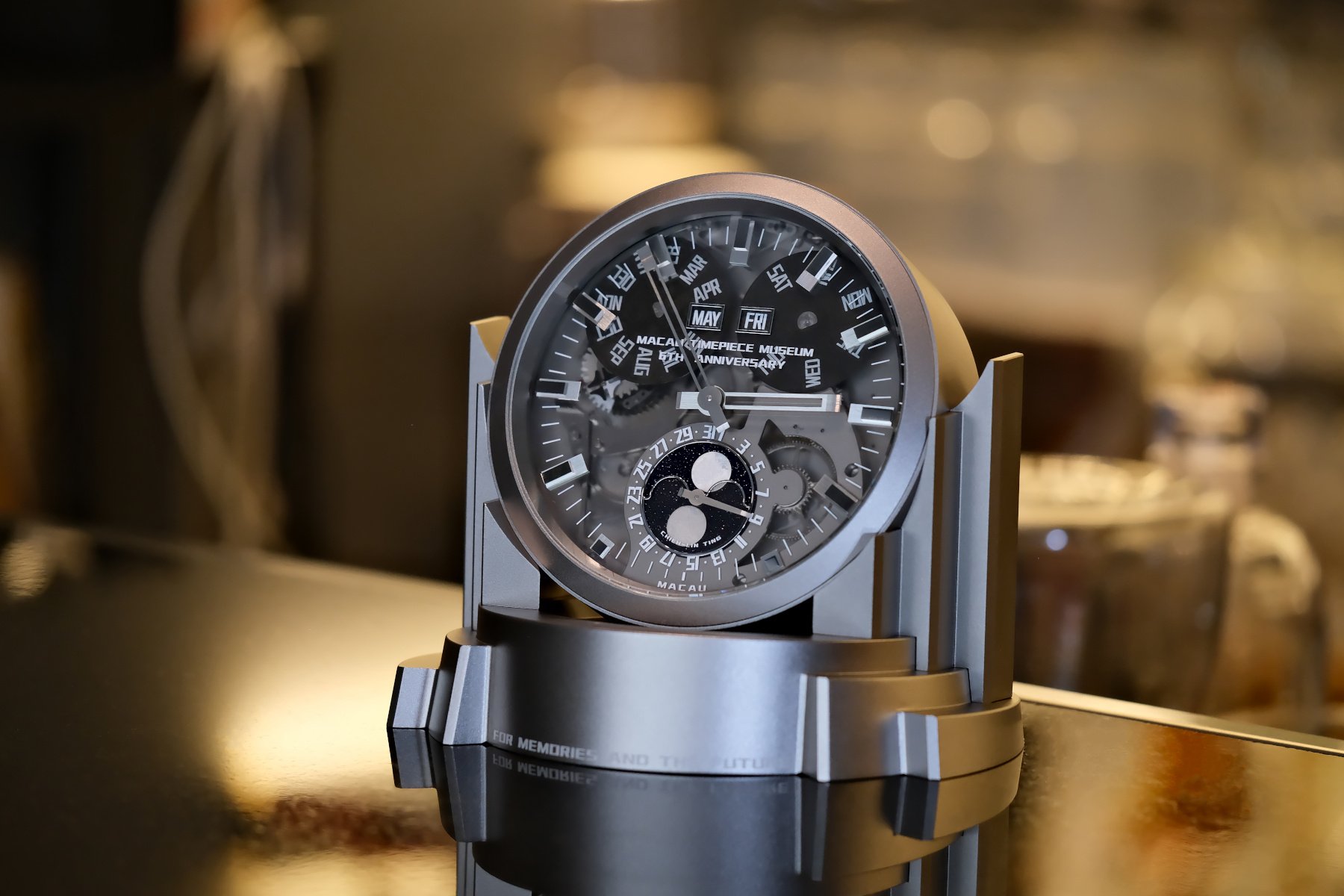
Kubernet and the secular perpetual calendar
At the other end of the spectrum sits the Secular Perpetual Calendar clock from Kubernet. I’ve written about the technical side of this clock, so I won’t rehash the details here. Instead, I recommend having a quick read about this impressive piece. What’s more interesting in the context of this article is why the idea makes so much sense as a desk clock rather than as something you’d wear on your wrist.
A secular perpetual calendar is, by definition, a long-term concept. It’s designed to stay accurate over centuries, quietly accounting for calendar quirks that most perpetual calendars simply ignore. In a wristwatch, that kind of ambition can feel a bit abstract. Very few watches are worn continuously for decades, let alone centuries. They’re serviced, rotated, and eventually moved on. A desk clock lives a very different life.

For a clock, the logic clicks almost immediately. This is an object meant to stay put, to become part of a room rather than part of a rotation. It’s something you live with for years, and maybe pass on, rather than trade out. In that setting, the complication stops feeling like a flex and becomes purposeful. It speaks of patience, continuity, and the quiet pleasure of something that just keeps doing its job in the background.
What really surprised me, though, is how approachable Kubernet has made all of this. The Eternal Day version, with its closed dial, costs US$6,800, while the Eternal Night version (my favorite), with its openworked sapphire dial, comes in at US$8,480. Both are made in small numbers and sold directly, which puts them in a slightly unusual middle ground. This is serious thinking applied to timekeeping, but it doesn’t feel locked away behind an intimidating price or an overly difficult ordering process.
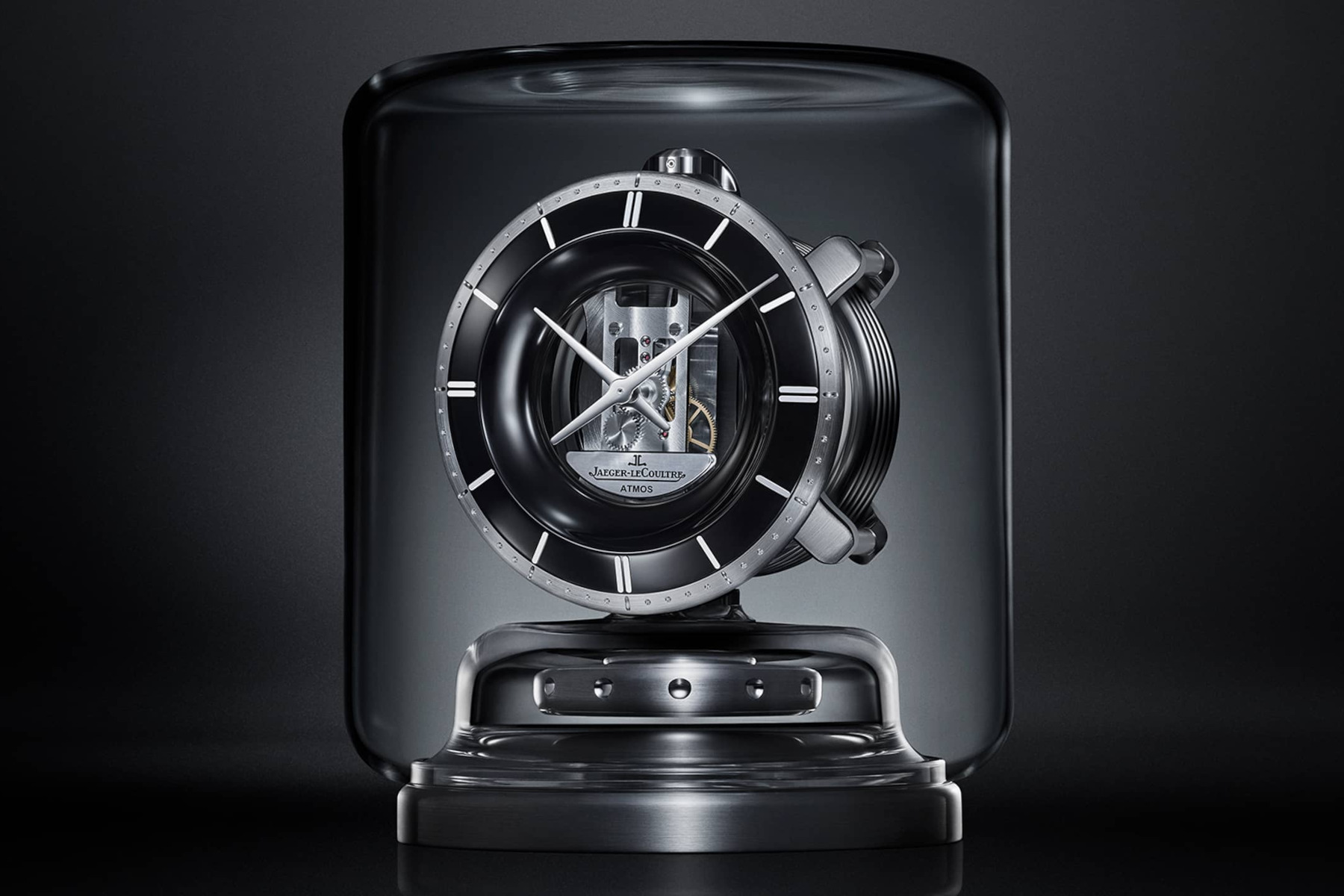
Jaeger-LeCoultre’s Atmos is the quiet benchmark
No conversation about desk clocks ever really feels finished without bringing up the Atmos from Jaeger-LeCoultre. It sits in a lane of its own and has done so for decades. While some clocks draw you in through personality or conceptual depth, the Atmos earns its place through quiet confidence. It isn’t trying to impress you in the moment. It’s happy to prove its point slowly. It is quite possibly the desk clock of desk clocks.
Part of that comes down to how it operates. Powered by tiny changes in air temperature, the Atmos almost feels removed from the usual rituals of mechanical ownership. Once it’s set, it just runs. You don’t wind it; in fact, you don’t really interact with it at all. You glance at it, trust it, and move on. Over time, that lack of drama becomes part of the appeal. It’s a clock that asks very little of you and gives consistency in return.
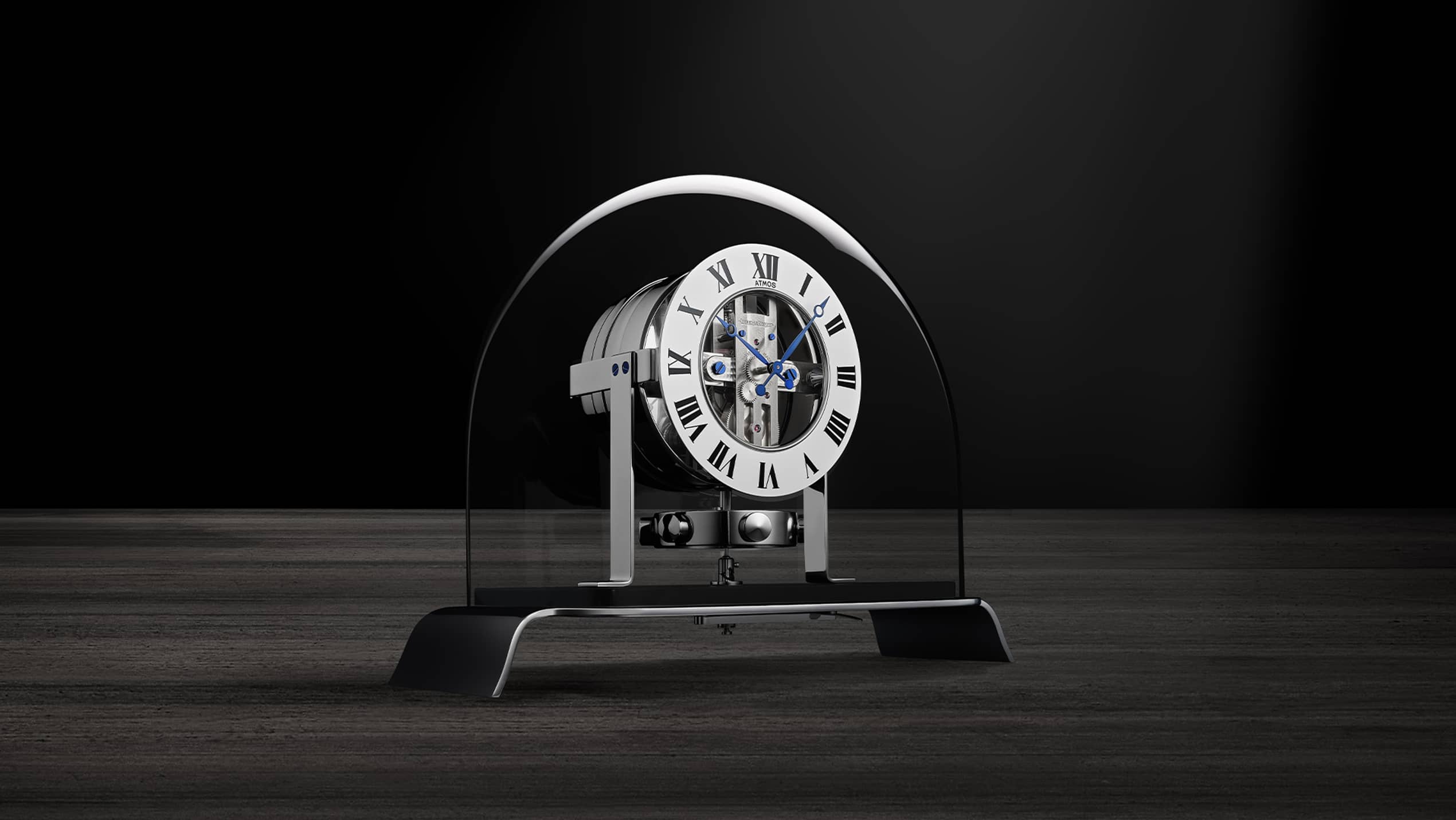
The Atmos Classic captures that idea perfectly. Starting at around €12,100, it delivers the core experience without fuss. In a price segment where desk clocks can quickly veer into extremes, the Classic feels calm and grounded. It’s serious watchmaking applied to a clock, but there’s no sense that you need to tiptoe around it or treat it like a museum piece.
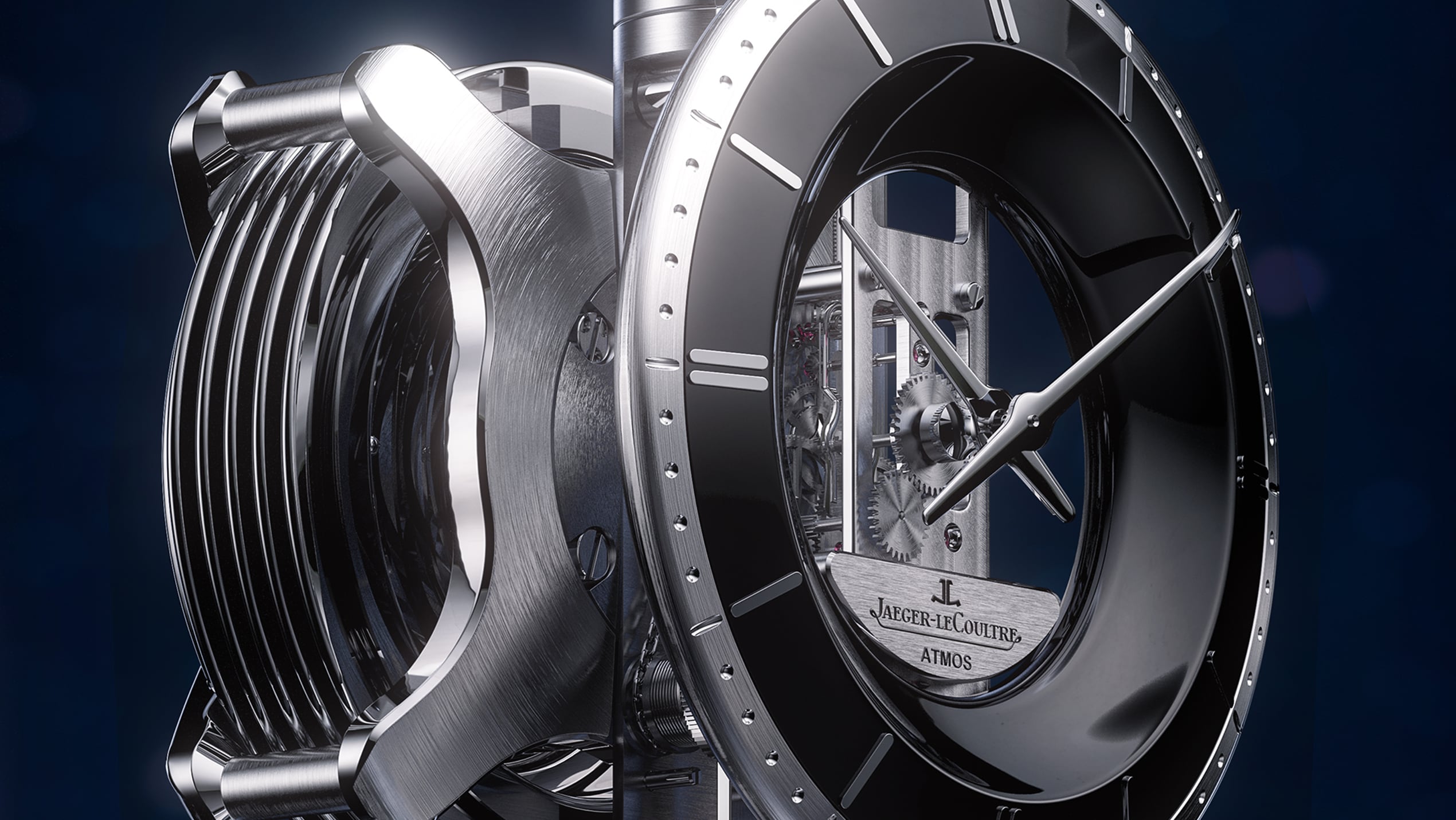
That said, the version I keep coming back to is the Atmos Infinite. It takes the same principle and gives it more presence, both visually and architecturally. The design feels cleaner and more contemporary, like something that belongs in a modern living space rather than a traditional study. At €21,800, it isn’t inexpensive, but it feels carefully judged. You’re not paying for complication in the usual sense. Instead, you’re paying for refinement, stability, and a kind of mechanical calm that very few timekeepers, wrist-worn or otherwise, manage to deliver.

Rolex does things in a different way
There’s something undeniably amusing about seeing one of the most recognizable dive watches in the world transformed into a desk clock. The Rolex Submariner Date Desk Clock ref. 909010LN takes the design language of the modern Submariner and scales it up to a size that feels almost theatrical. The dial, the bezel, the hands, even the Cyclops over the date, it’s all there — just bigger.
Unlike the other clocks in this article, this isn’t about rethinking timekeeping or exploring new mechanical territory. It’s about familiarity. If you’ve spent years looking at a Rolex Submariner on your wrist, there’s something strangely comforting about seeing that same layout staring back at you from across your desk. It feels less like a clock and more like an object that blurs the line between merchandise and horology.

That said, what’s less clear, at least right now, is how easily it can actually be seen in the wild. I haven’t spotted one in any boutique windows yet, not even in a “for exhibition only” setting, which only adds to the intrigue. It feels like one of those Rolex objects that exists in the catalog in an official sense but hasn’t quite made it into everyday visibility just yet.
Rolex’s desk clock is priced at €10,320, which is nearly as much as a Submariner Date ref. 126610LN. This places it closer to serious-collector territory than casual desk accessory. It’s not for everyone, and it doesn’t try to be. But for someone who already lives with a Submariner on the wrist, it’s an extension of that identity into the personal workspace. And in a collecting world where brand connection runs deep, that makes more sense than you might first assume.
Why desk clocks still earn their place
Desk clocks may never dominate the conversation in the way wristwatches do, but perhaps that’s exactly why they appeal. They aren’t about personal style or daily rotation. They’re about presence, permanence, and the way time is experienced in a fixed space.
Whether it’s the expressive mechanics of MB&F, the long-view precision of Kubernet, or the quiet confidence of the Jaeger-LeCoultre Atmos, each of these clocks makes a strong case for why the category still matters. In a collecting world that often feels like it’s moving too fast, desk clocks offer something increasingly rare. They stay put, they quietly do their job, and they ask you to slow down with them. Life already seems to move quickly enough. Slowing it down, even just a little, feels like no bad thing at all.
Do you have a desk clock gracing your work (or home) setup? Let me know in the comments if you do and what it is!