Omega Discontinued The Speedmaster X-33: What’s Next For This Space-Age Watch?

We mentioned it here a while ago, but the Omega Speedmaster X-33 Marstimer, a watch developed with the help of ESA engineers for missions on the Red Planet, has been quietly removed from the catalog. The Speedmaster X-33 was developed in the 1990s with the help of General Thomas Stafford, among others, and introduced to the public in March 1998. It has been an instrument for astronauts and cosmonauts for many years and still is, but it was also available to people like you and me.
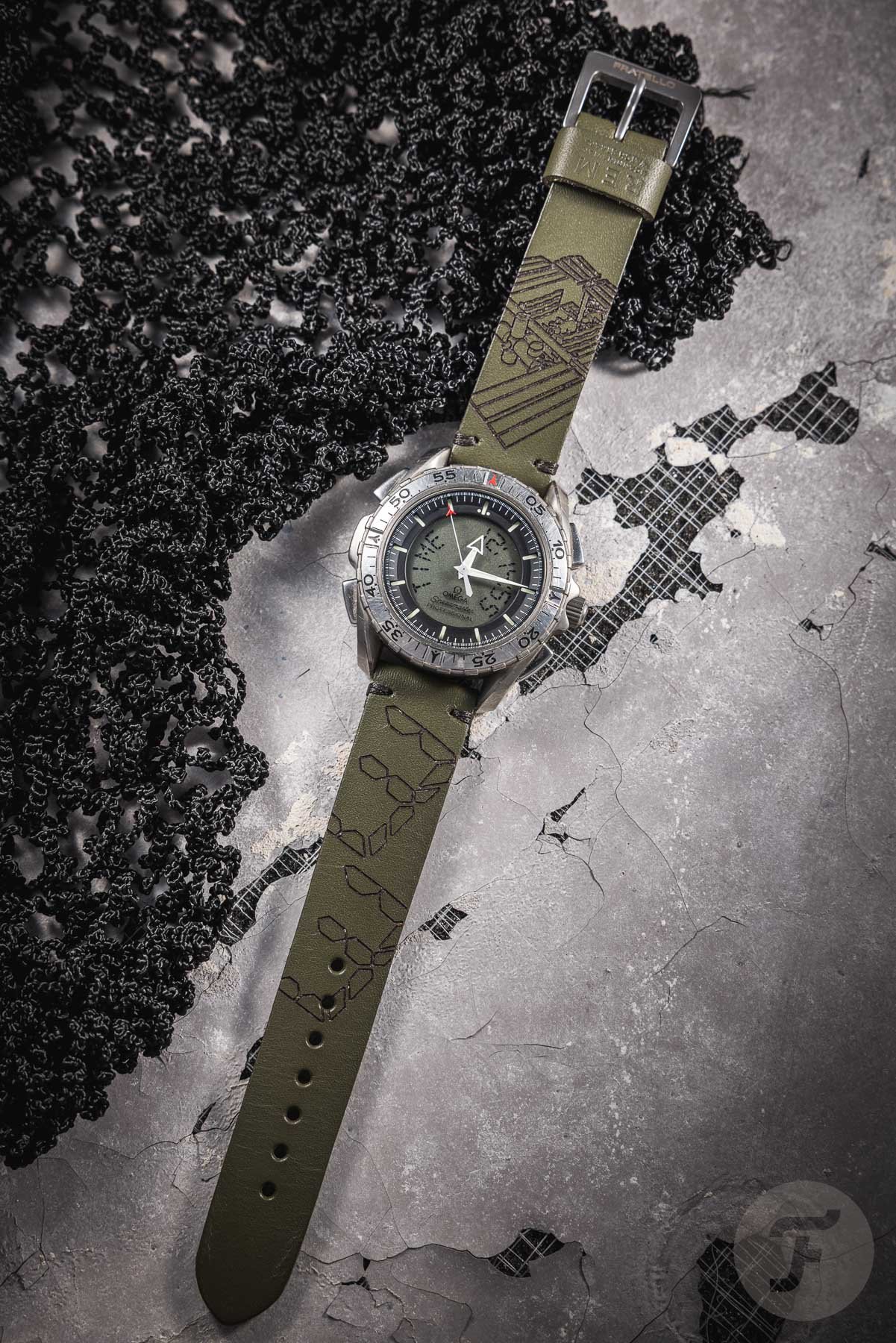
The first X-33 (1998), reference 3290.50
Omega Speedmaster X-33 silently discontinued
This means that Omega currently has no digital Speedmaster in its catalog. The Speedmaster X-33 Skywalker (Gen 3) disappeared from the collection a little longer ago. The only digital watch currently available is the brand’s Seamaster Regatta, introduced during the 37th America’s Cup in Barcelona in 2024. The Speedmaster X-33 Marstimer debuted in 2022 and was therefore a short-lived model in the collection.

CSA astronaut Jeremy Hansen wearing an X-33 Gen 2
NASA still uses the X-33 Gen 2
NASA currently uses only the Omega Speedmaster X-33 Gen 2 (not available to the public but still in production) for its astronauts. While the Moonwatch isn’t officially on NASA’s equipment list, many astronauts still use it. They seem to love the brand’s space history and the watch as much as we do. On NASA’s Artemis II mission, we saw all astronauts equipped with an Omega Speedmaster X-33, and astronaut Victor Glover also took his X-33 (on a bracelet). All the astronauts took several watches with them, as I reported here. But this is about the X-33, of course.
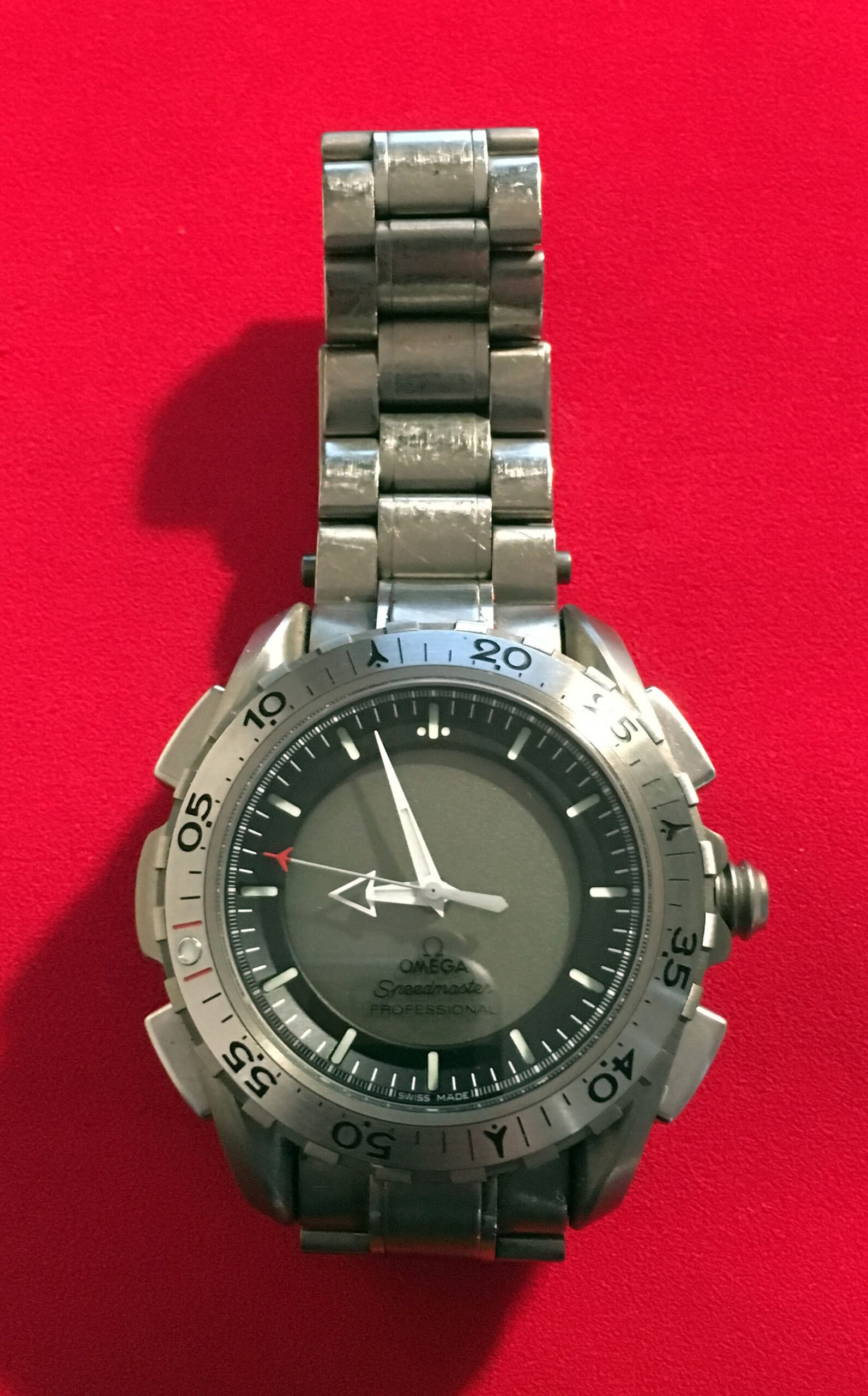
A space-flown X-33 — Image: Larry McGlynn
A space-flown X-33 Gen 2
Thanks to Larry McGlynn, a space enthusiast and friend of Fratello, we came across this Speedmaster X-33 Gen 2. Cosmonaut Anton Shkaplerov wore it aboard the International Space Station in 2011 and 2012. He launched from Baikonur Cosmodrome in Kazakhstan on November 14th, 2011, aboard the Soyuz TMA-22 (EXP29/30) to the ISS, arriving on November 16th. Shkaplerov remained aboard the ISS until April 27th, 2022. According to Larry’s information, his Speedmaster X-33 Gen 2 orbited Earth approximately 2,647 times during his 165 days in space. He also wore a Gen 2 aboard Soyuz TMA-15M (EXP 42/43) in 2014, and in 2017, he used the later X-33 Gen 3 “Skywalker” aboard Soyuz MS-07 (EXP 54/55).
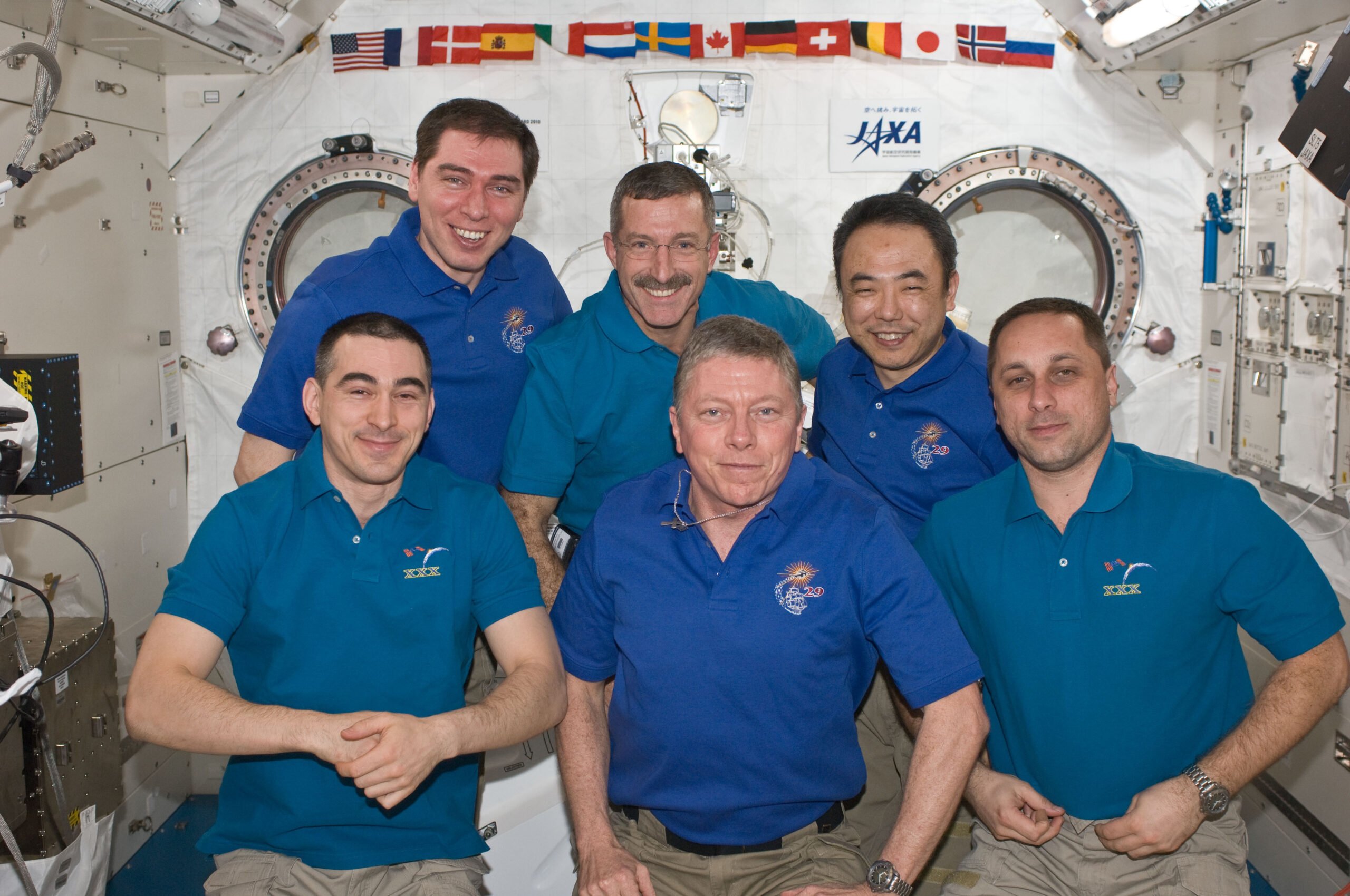
EXP30 crew aboard the ISS, including cosmonaut Anton Shkaplerov (front right) wearing his X-33
Although ESA and Roscosmos have used the Omega Speedmaster X-33 Gen 3 “Skywalker,” NASA sticks to the Gen 2 model. The X-33 Gen 1 and Gen 2 are very similar; there’s a small difference in the movement but mainly in aesthetics. The newer crown is slightly different, and the bezel and pushers have a brushed finish rather than a polished one. The X-33 Gen 1 and Gen 2 have the same functions, but the latter caliber 1666 uses a revised, improved integrated circuit. Often, Gen 1 models receive an update/movement replacement during service anyway. Omega introduced the Speedmaster X-33 Gen 2 three years after the Gen 1, and it became NASA’s go-to watch. Gen 2 also has the “Flight-qualified by NASA for space missions” engraving on its titanium case back.

X-33 Marstimer
All four generations of the Speedmaster X-33
As you can read in our Ultimate Omega Speedmaster X-33 Guide, in which I covered all four X-33 generations, Omega has added more functionality to the watch over the years. NASA and ESA astronauts requested these upgrades after working with the watch during missions.

Omega Speedmaster X-33 Skywalker
The latest edition was the X-33 Marstimer, which was based on the third-generation X-33 “Skywalker.” Omega developed this version with ESA engineers for the agency’s unmanned missions on Mars, which required calculations based on Mars time. A sidereal day on Mars is 24 hours, 37 minutes, and 22 seconds, while a solar day (sol) is 24 hours, 39 minutes, and 35 seconds. All Mars missions follow the local time on Mars.
ESA needed a watch that could display very specific information, such as local true solar time, coordinated Mars time, Mars time in different time zones, mission elapsed time in Martian days, solar longitude (Mars’s orbital position), and year-sol number (Mars date). ESA also needed the local time to properly calculate specific locations on Mars (for the vehicles they use there). So the X-33 Marstimer was not, as some people thought upon its debut, developed for use on the Red Planet. It was more for helping mission control on Earth.
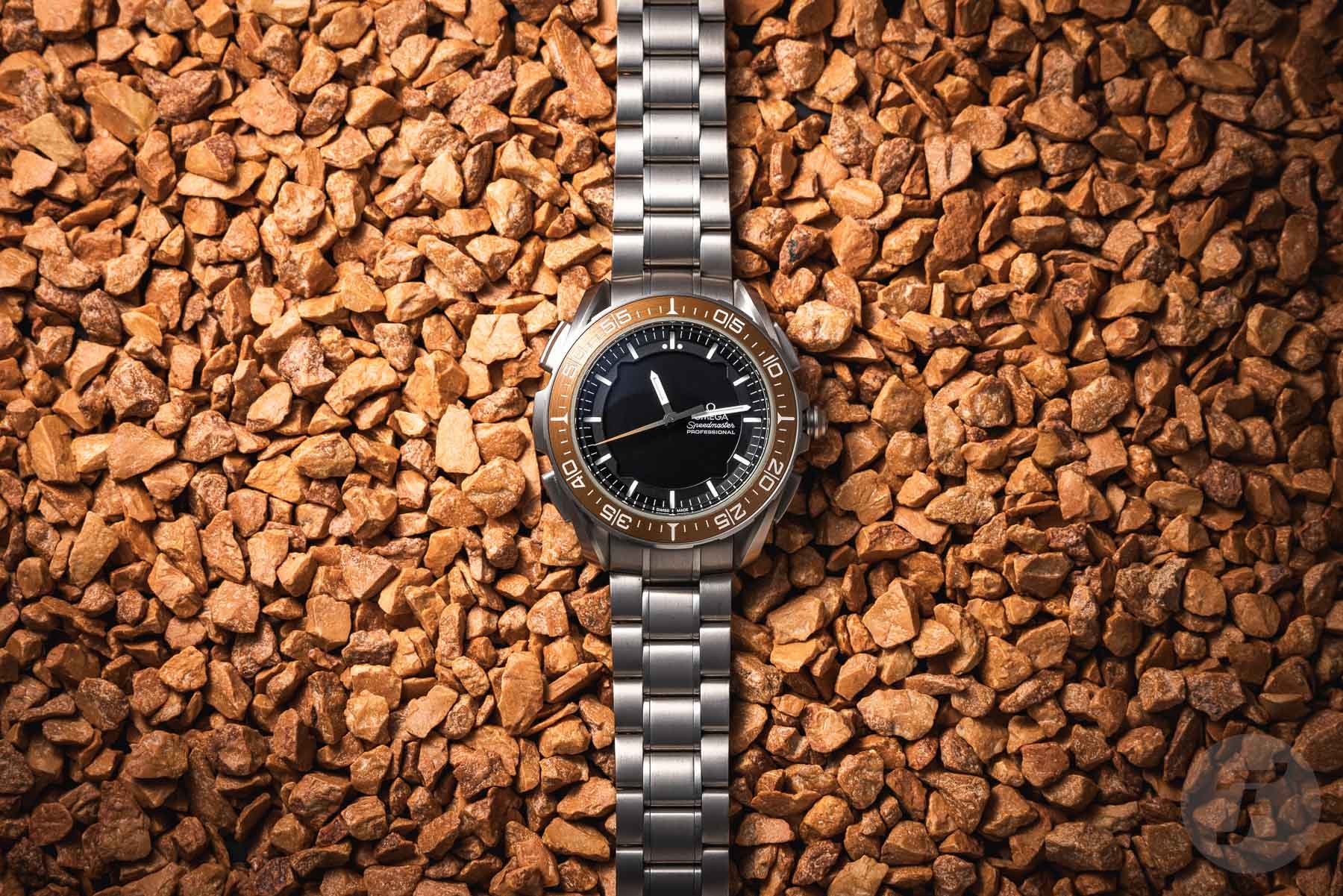
It was surprising to see that Omega removed not only the Speedmaster X-33 Marstimer but also the X-33 Skywalker from the catalog. I assume the X-33 Marstimer had a very short and small production run. In my opinion, though, it was one of the most interesting X-33 variations. To clarify, Omega still produces these watches (often under different reference numbers) on demand for NASA and ESA.
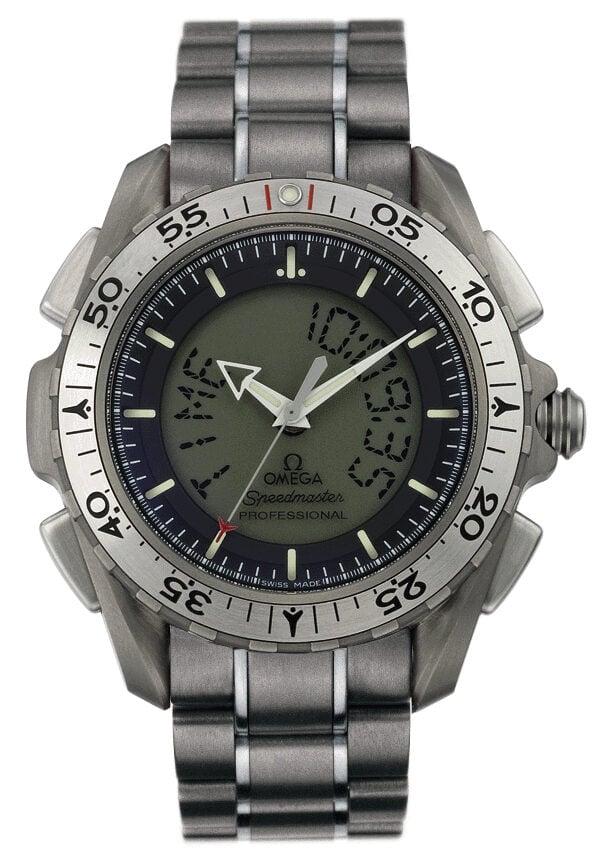
Speedmaster X-33 3291.50.00
The database with nearly all space-flown watches
The database “Watches used in space exploration,” maintained by space and watch enthusiasts, contains 388 references to the Omega Speedmaster X-33, from the X-33 prototypes used in space in 1996 to X-33s used in 2026.
An overview of all watches used in space is available here. Robert J. Jackson developed and organizes this extensive resource, and W. Craig Conrey is the primary researcher and cataloger. Philip Corneille, Lawrence L. McGlynn, Gilles Aurégan, and other members of the Space Watches Facebook group have made key contributions. Flight data is drawn from sources such as NASA, Wikipedia, and Spacefacts.

The Artemis II crew and their watches. Visible: Breitling Navitimer, X-33 on bracelet, X-33 on strap — Image: NASA
Artemis III and IV
With NASA’s upcoming Artemis III and IV missions, I’m curious to see whether astronauts will wear the Omega Speedmaster X-33. They seem keen to use these watches, and some have developed a strong attachment to them. I learned this firsthand during conversations with astronauts Nicole Stott, Jean-François Clervoy, and Terry Virts. But perhaps the future might demand different functions or uses for a watch in space. I imagine astronauts (and cosmonauts) would prefer to time and schedule things with a wrist-worn device rather than a laptop, but new functionality might also be necessary. Also, officially, the X-33 isn’t designed for use outside the spacecraft due to its screen (though some X-33s have been used outside the spacecraft and still functioned afterward).
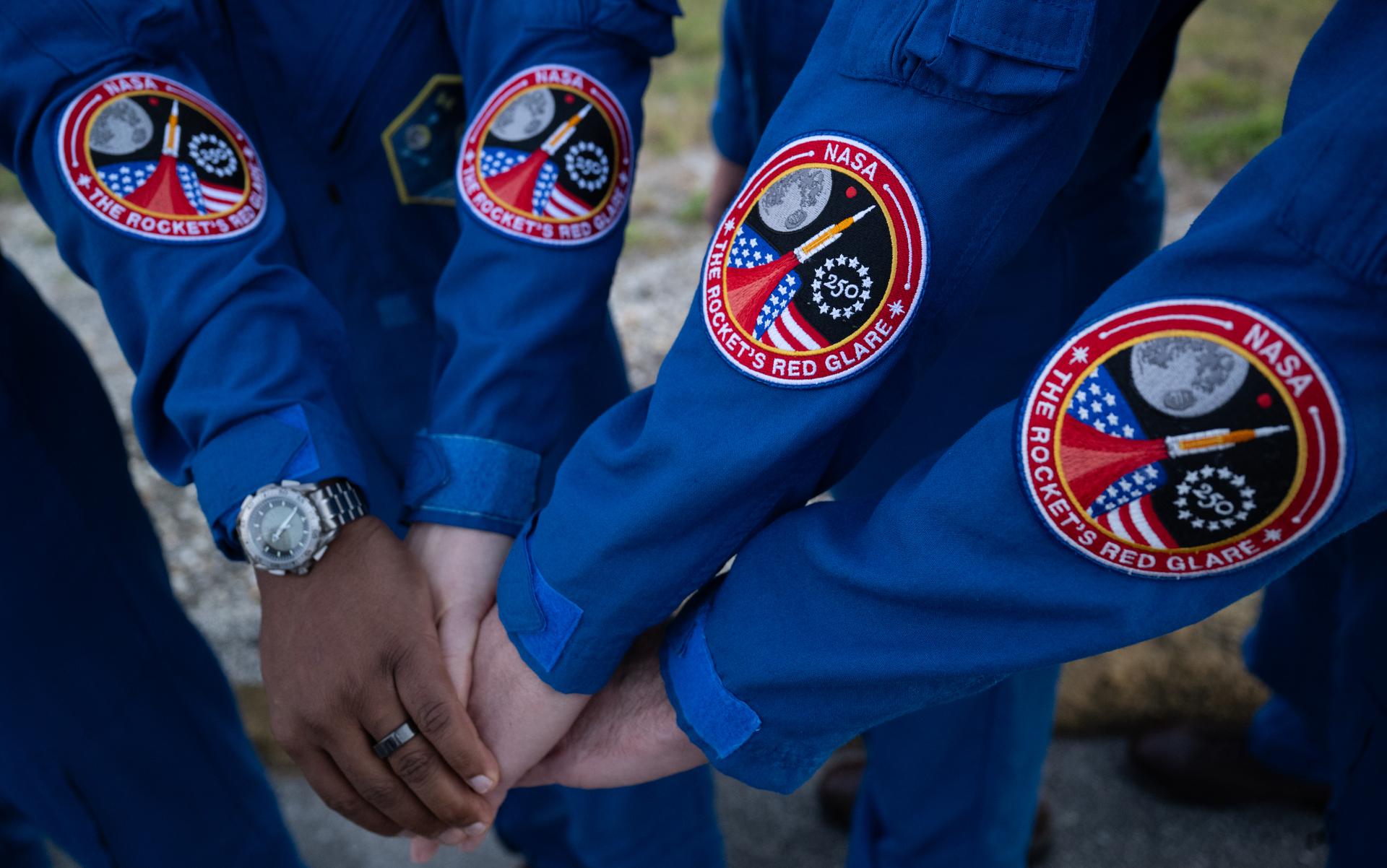
The four crew members of Artemis II — Image: NASA
Will there be a next-gen Speedmaster X-33?
I sincerely hope Omega will eventually introduce a new Speedmaster X-33. If possible, I’d also love for it to have a positive display. The Skywalker had a negative display for aesthetic reasons, as ESA astronaut Jean-François Clervoy told us. While perhaps more pleasing to the eye, it negatively affects readability. It would be nice to be able to connect the watch to a tablet or laptop to log and analyze data or preload schedules, which are perhaps easier to create on a larger device. Or will we see an X-33 that’s customizable for different space agencies or missions?

My X-33 Gen 1 from 1998 on a red nylon OEM strap
If Omega has abandoned the X-33 for good, which I find hard to believe, I can at least continue wearing my 1998 Omega Speedmaster X-33 with pride. It once belonged to my childhood space hero from the Netherlands.