Sunday Morning Showdown: Thomas’s Rolex Datejust Ref. 1601 Vs. Daan’s Cartier Santos Galbée XL

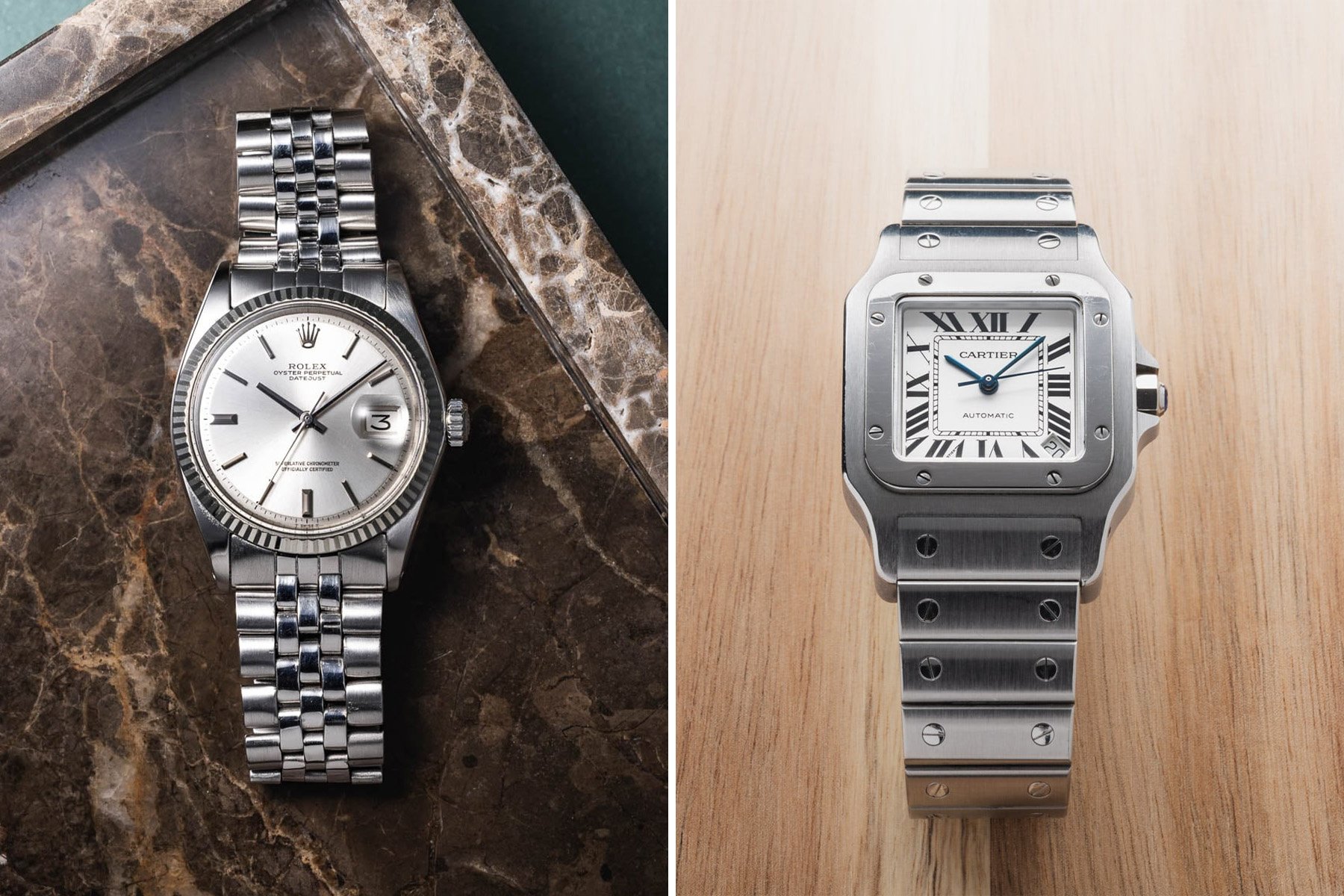
Welcome to another Sunday Morning Showdown, dear Fratelli! This week’s battle is a bit different. Our fearless leader, RJ, served up a provocative proposition during our last editorial meeting: “Why don’t we do a battle between two editors’ personal watches for a change?” Okay, RJ, we hear you. We’re ready and prepared. Let’s get personal! This is Thomas’s Rolex Datejust ref. 1601 versus Daan’s Cartier Santos Galbée XL.
These watches have more in common than you might initially suspect. Both serve the role of a versatile daily watch, leaning towards the dressier side with flair. Both exude a timeless vintage vibe, and very nice examples of them are available on the pre-owned market in the €5,000–6,000 range. And, finally, both are absolute classics. Interestingly, Daan even once wrote an article titled “My Cartier Santos Galbée XL — Exactly The Datejust I Was Looking For!” That’s all we need to push them into the ring this Sunday morning.
But first, last week’s Sunday Morning Showdown…
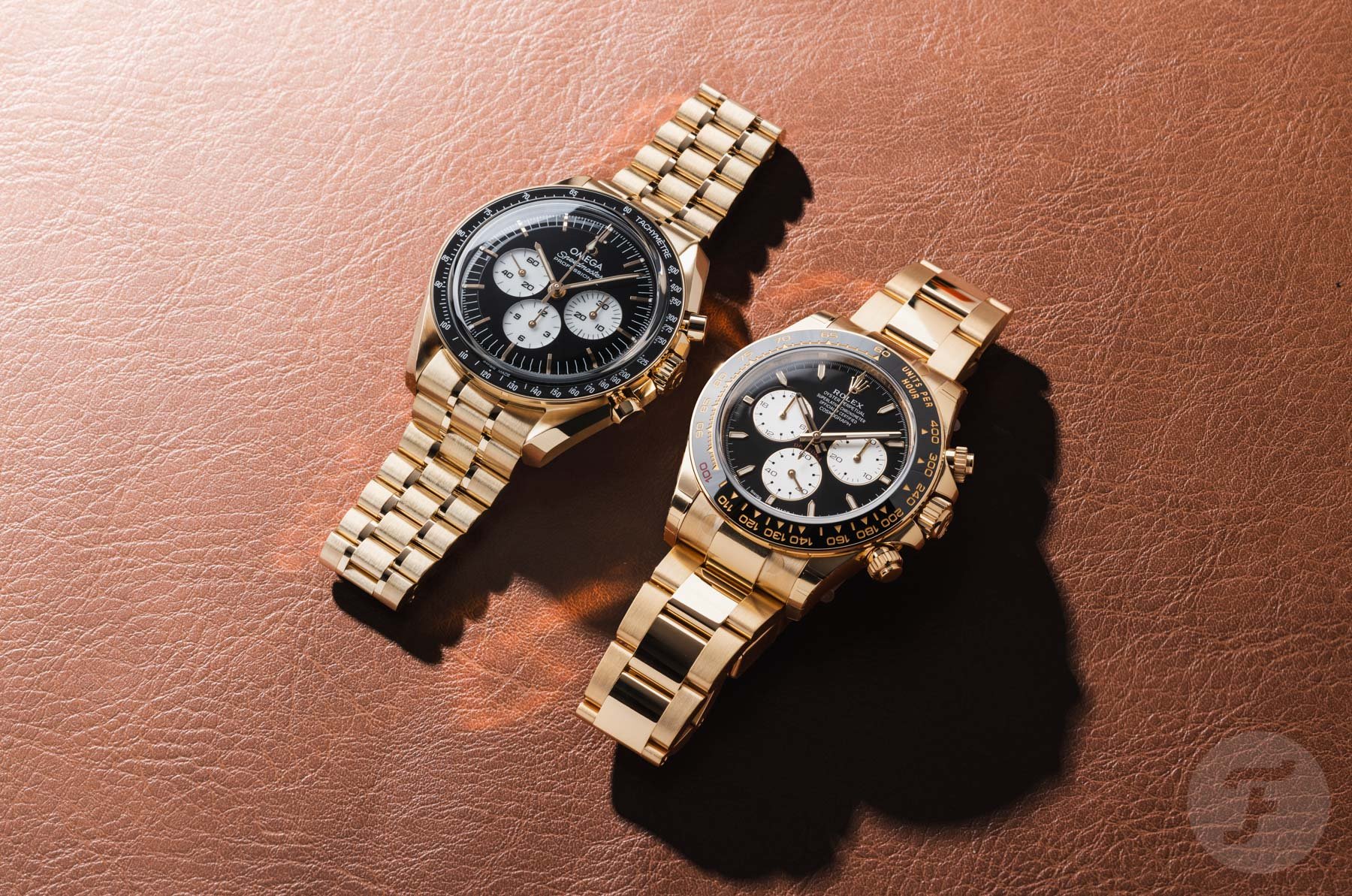
Before we get into all of this, we have to look at the previous showdown’s results. Last week’s pairing became inevitable once Omega introduced its full-gold Moonwatch with a reverse-panda dial. Jorg and Mike put the Omega Speedmaster Moonwatch “Reverse Panda” up against the Rolex Cosmograph Daytona “Le Mans.” Granted, Fratello tends to be a safe space for Speedmaster enthusiasts, but you never know what will happen when a Speedy goes up against a Rolex.
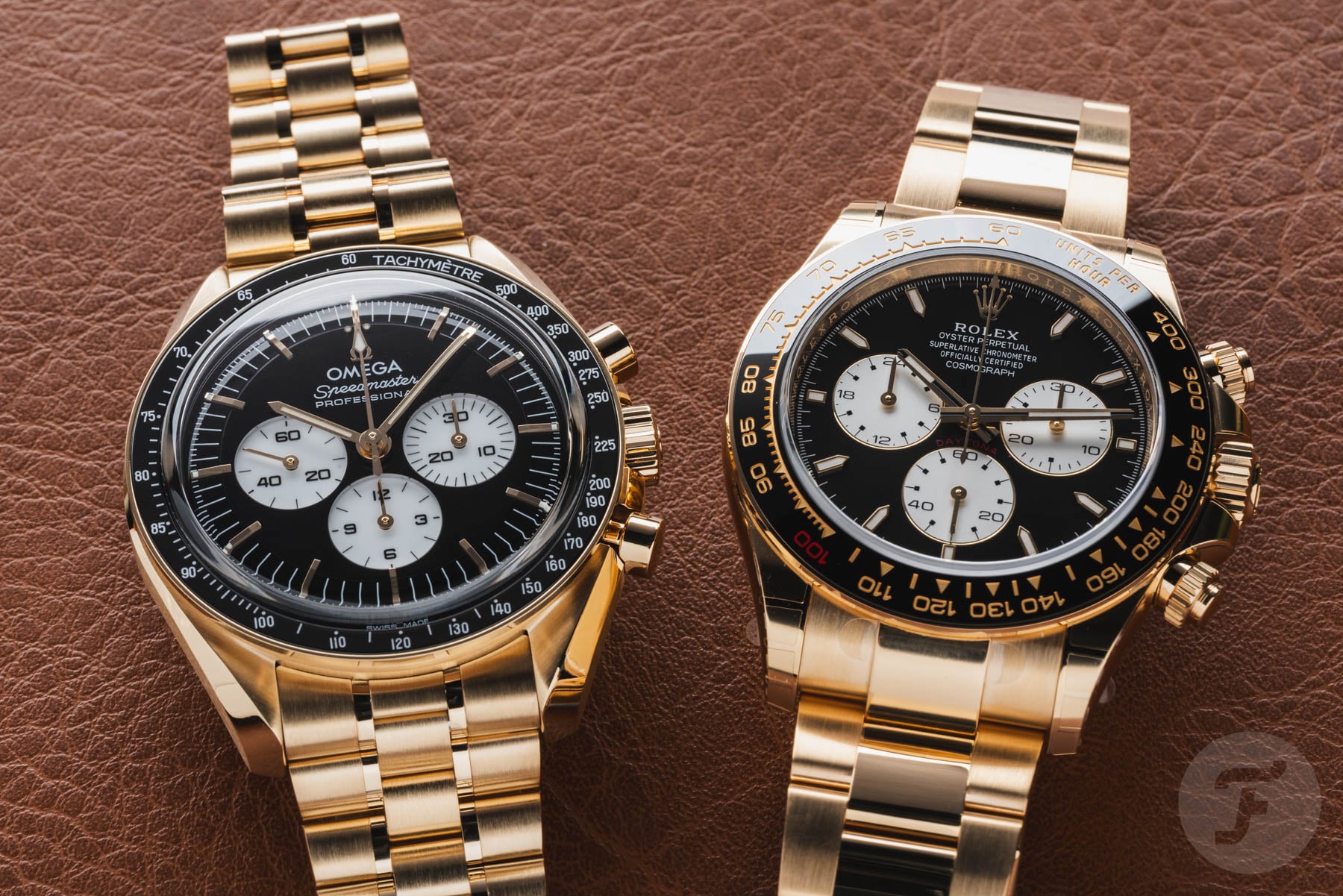
Still, the Fratelli favored the Omega, with it garnering 56% of the votes against 44% for the Rolex. The comments section revealed a wide variety of motivations, reflecting the relatively narrow margin between the two.
Some readers favored the cleaner look of the Daytona, stating it as a reason for the watch being so hard to obtain. Others held the scarce availability against it and voted for the Speedmaster for that exact reason. We even saw points deducted for screw-down pushers. Lastly, we also noticed some readers couldn’t see themselves with either of these, preferring the steel alternatives. Okay, with that out of the way, let’s get personal!
Thomas: 1967 Rolex Datejust ref. 1601 “Japan dial”
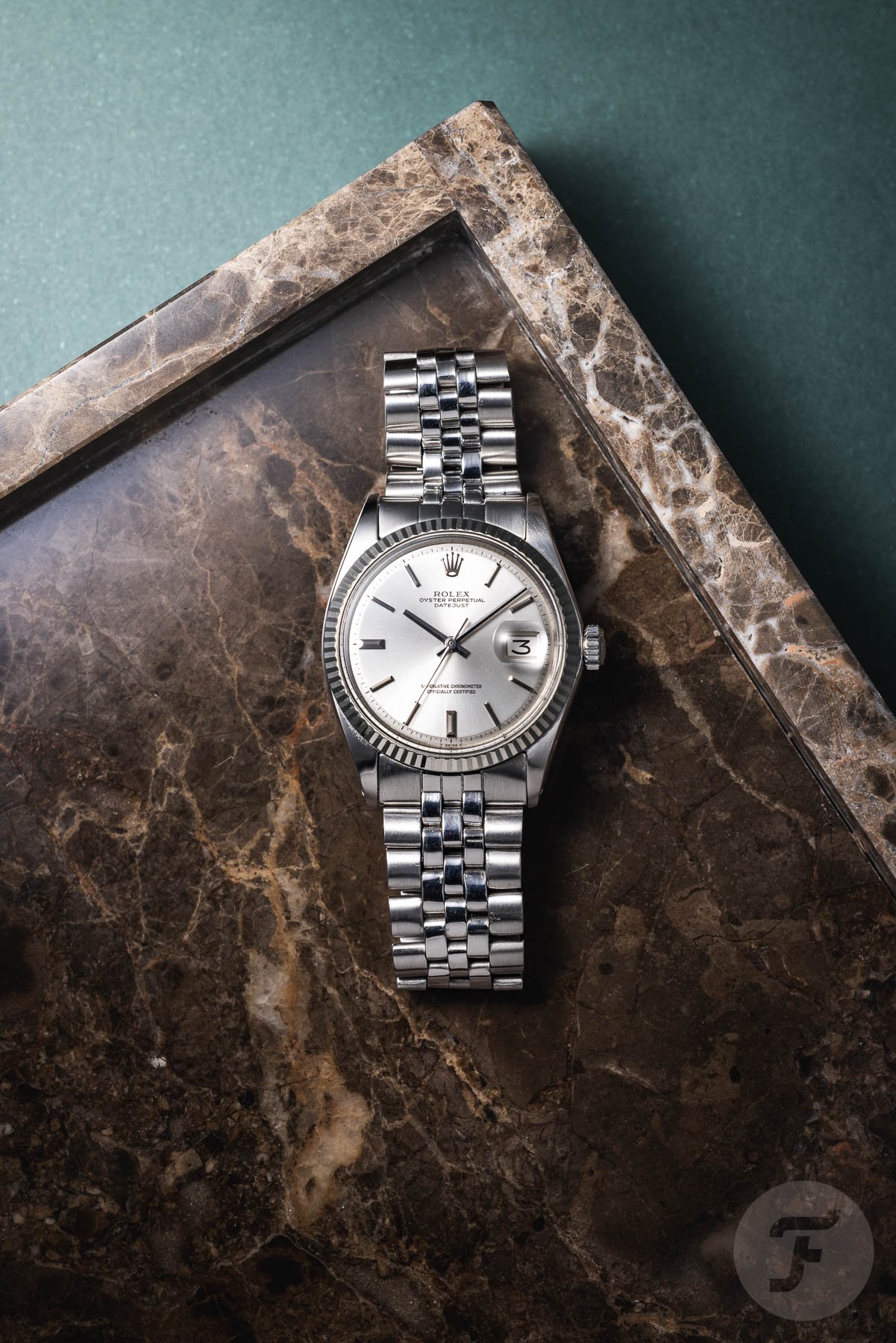
Good morning, Fratelli! And good morning, Daan! Okay, so today’s battle’s premise is to put two of our most beloved personal watches against each other. This doesn’t mean we’ll completely limit ourselves to our specific individual watches. We don’t want this to turn into a navel-gazing contest after all. While I will present the case for my specific 1967 Datejust ref. 1601 with its silver Japan dial, you can substitute any 1601/1603 from between roughly 1959 and 1977. Similarly, Daan’s points about his 2006 ref. 2823 can be extrapolated to any of the Galbée XL models from 2005 to 2016.
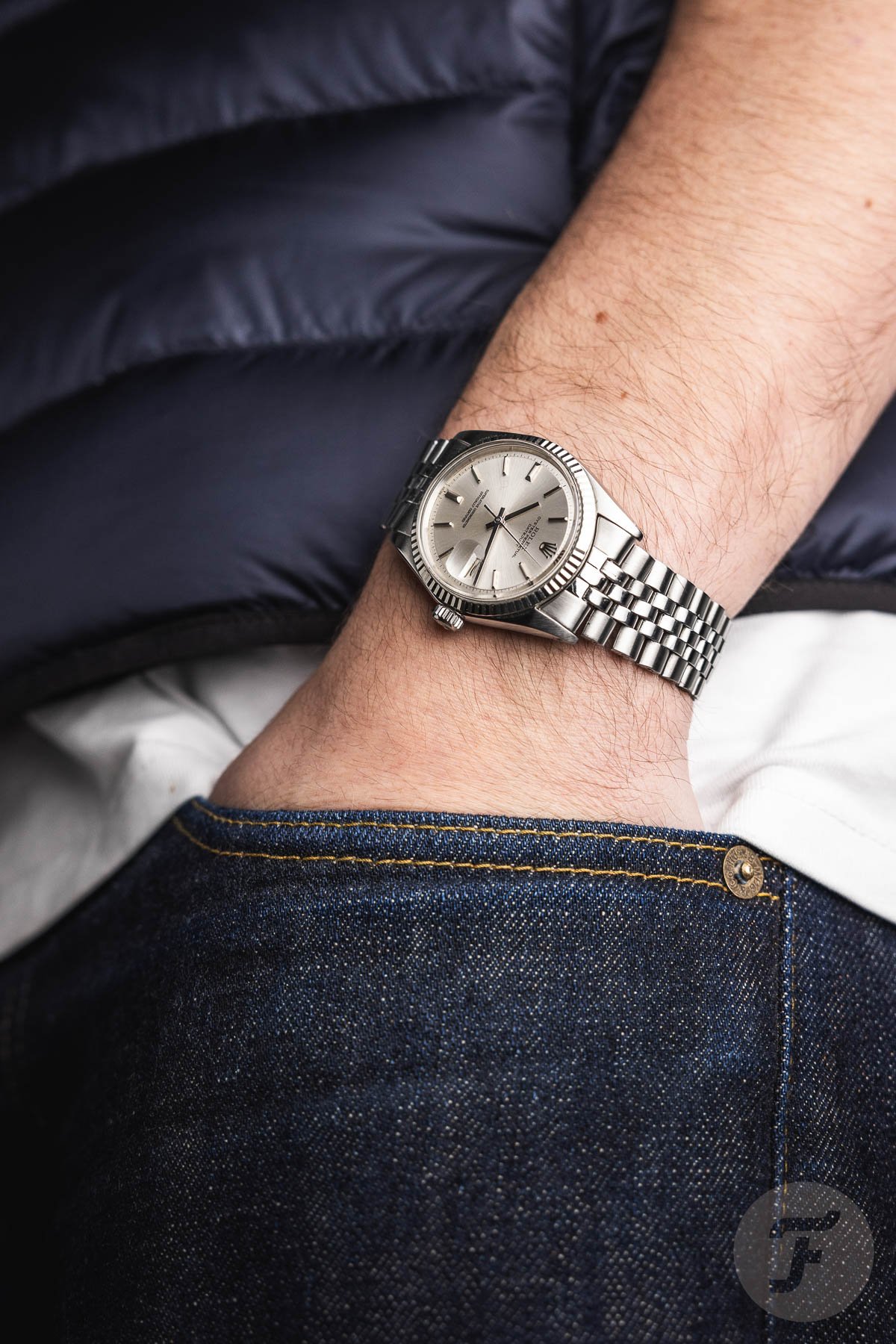
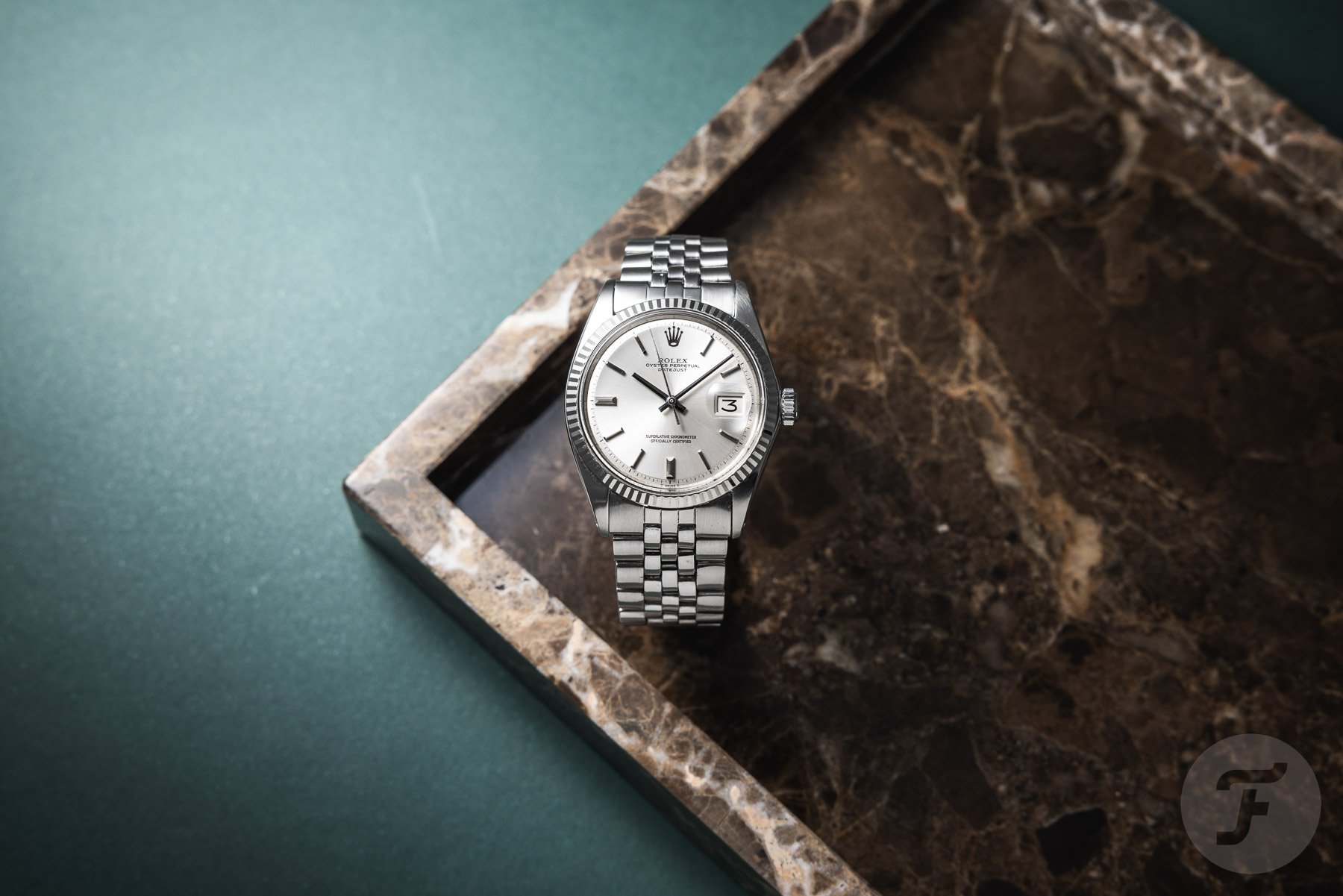
That said, allow me to introduce my specific watch. My Rolex Datejust dates from the four-digit era, which ran from 1945 to 1977. Starting with bubble backs, no Cyclops magnifier, and no “Datejust” on the dial, the model underwent a relatively quick succession of updates and changes in the first 15 years. By 1959, the Datejust took its now-iconic shape with the introduction of the 16xx references.
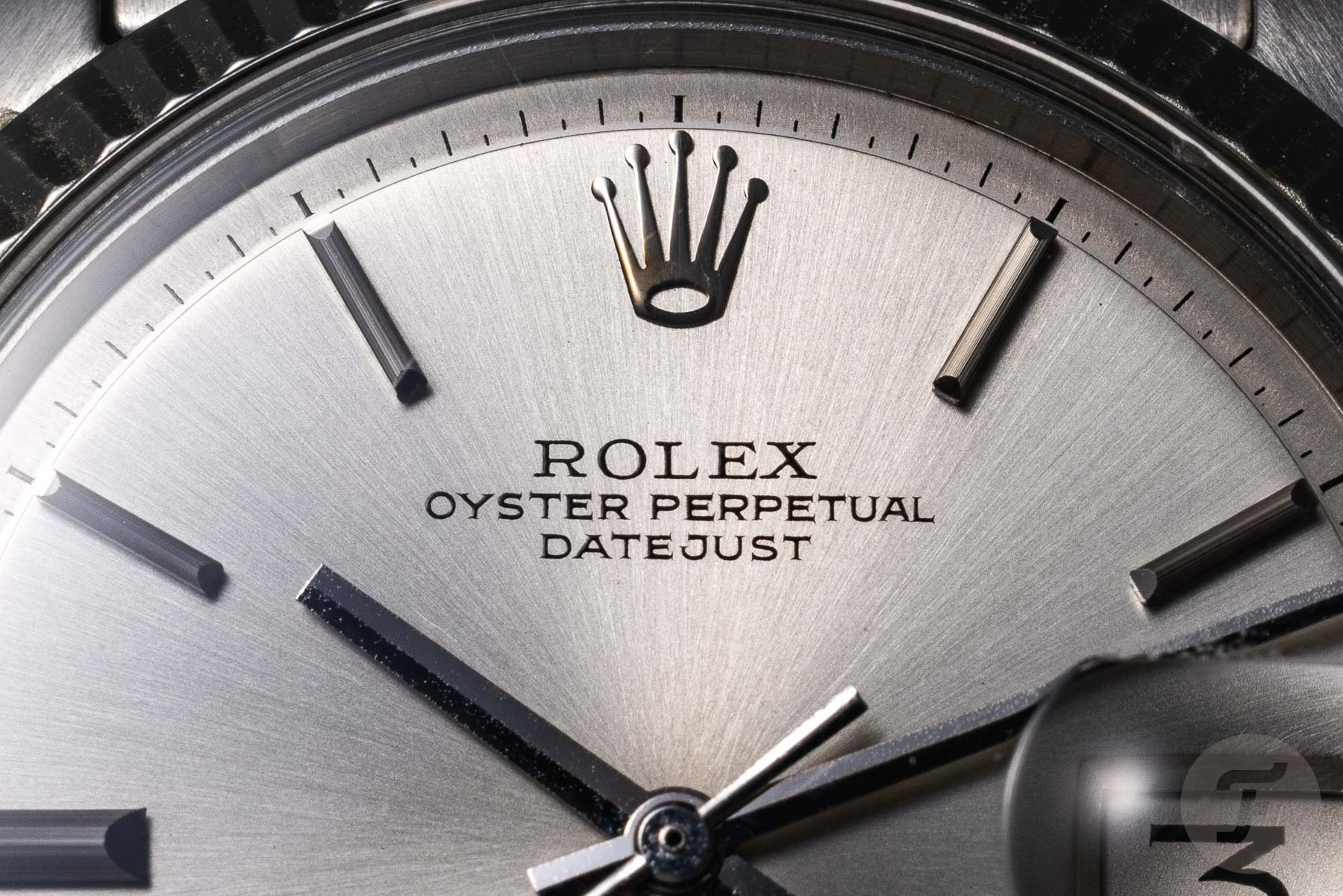
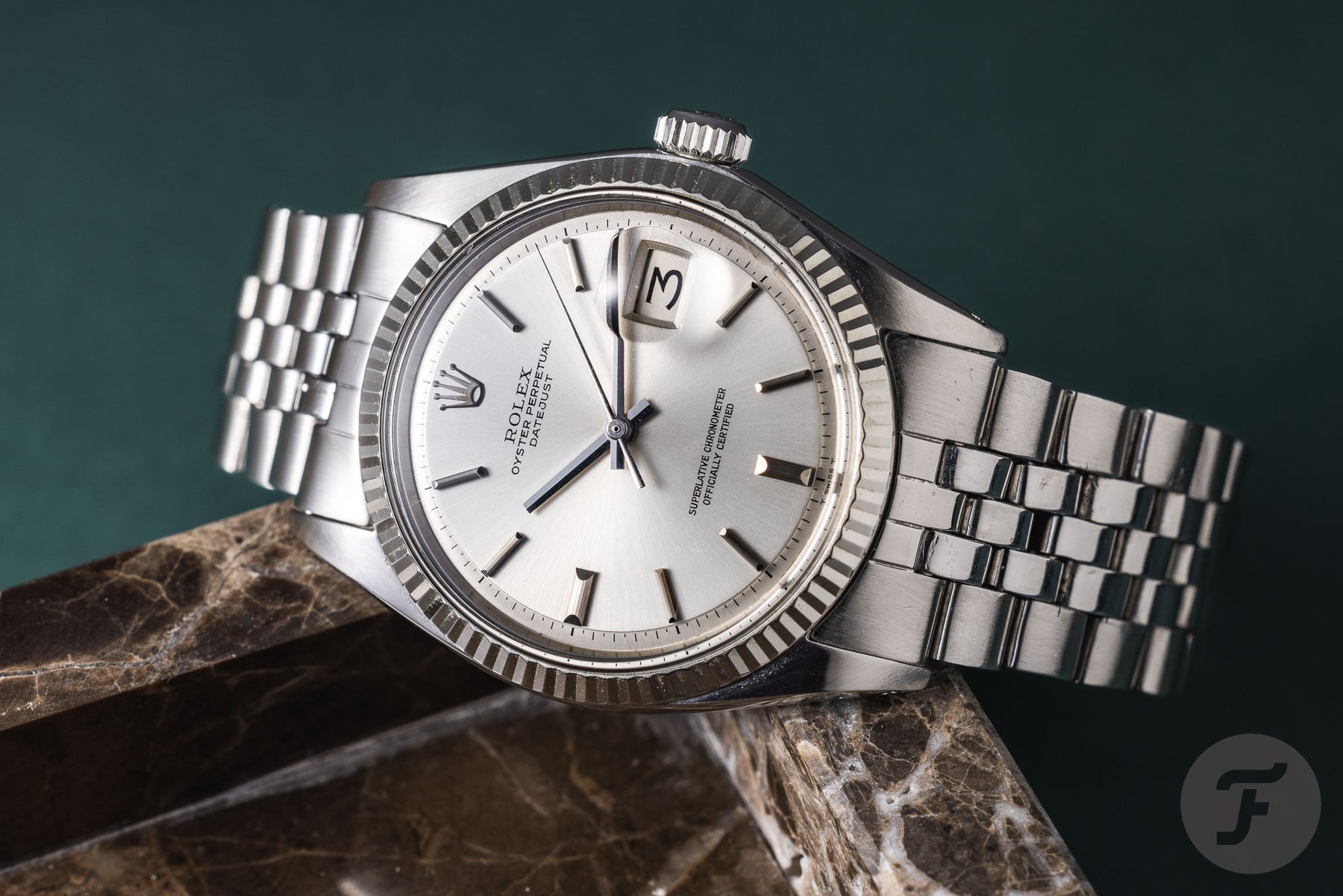
Mine dates back to 1967, and its standout feature is its so-called “Japan dial.” This means that even if the dial states “T Swiss T” at 6 o’clock, there’s no T (tritium) anywhere. You get a no-lume dial and a closed set of tapered baton hands. These models were intended for markets where the import of radioactive materials was banned. Japan was one of these, which led to the nickname. Mine comes on a period-correct but geographically incorrect folded Jubilee bracelet. The characteristic clasp with its overhanging crown tells us this was a bracelet for the American market.
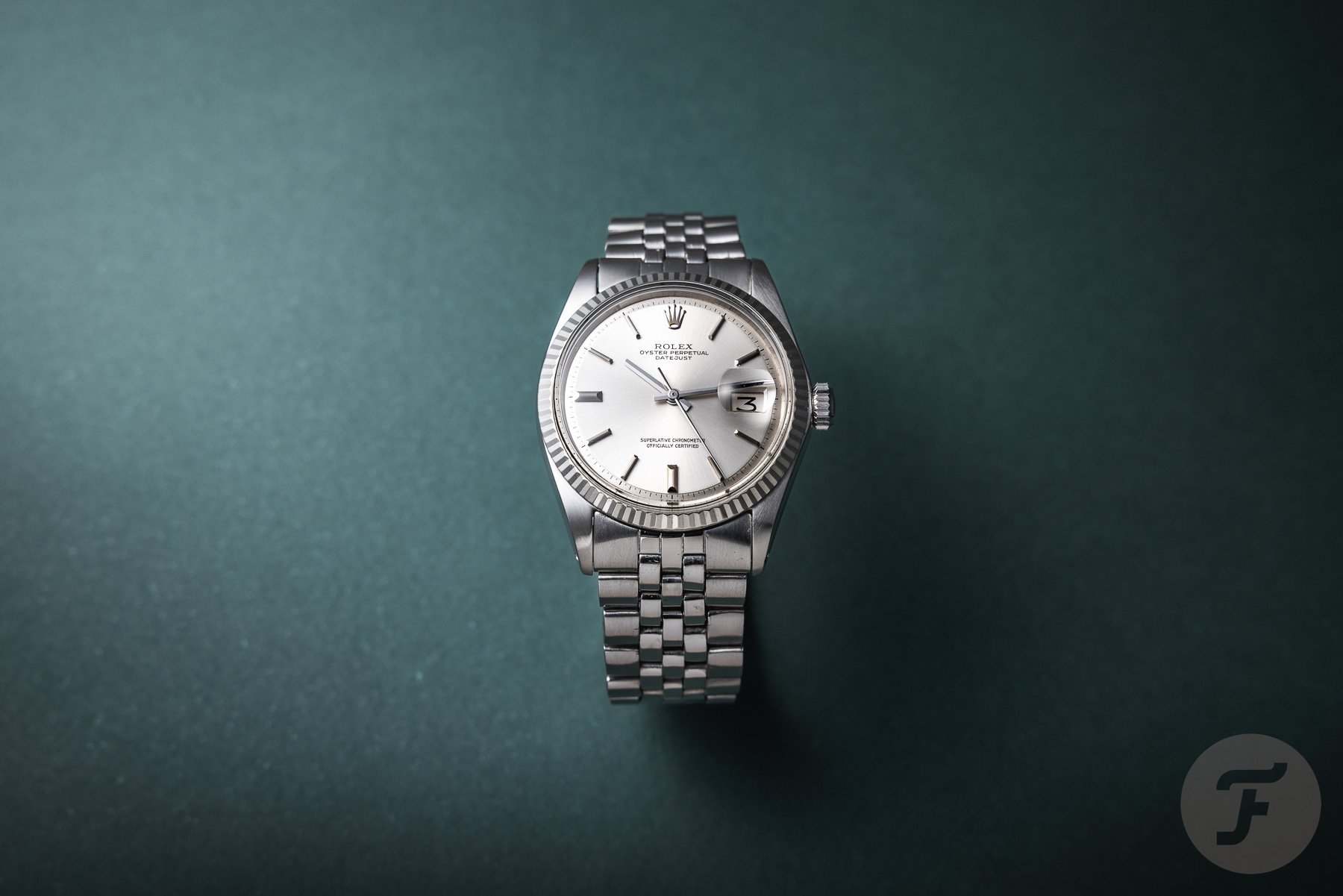
My Rolex Datejust ref. 1601
I purchased my Rolex Datejust ref. 1601 when I was a vintage dealer in Amsterdam. This one landed on my desk just as I was planning to write a book on vintage Rolex Datejusts. It was love at first sight. Why? Because this watch represents the archetypal vintage Datejust, with its fluted white gold bezel, Jubilee bracelet, and lovely pie-pan dial in silver. This is what I imagine when I think of a vintage Datejust. I had to make it mine.
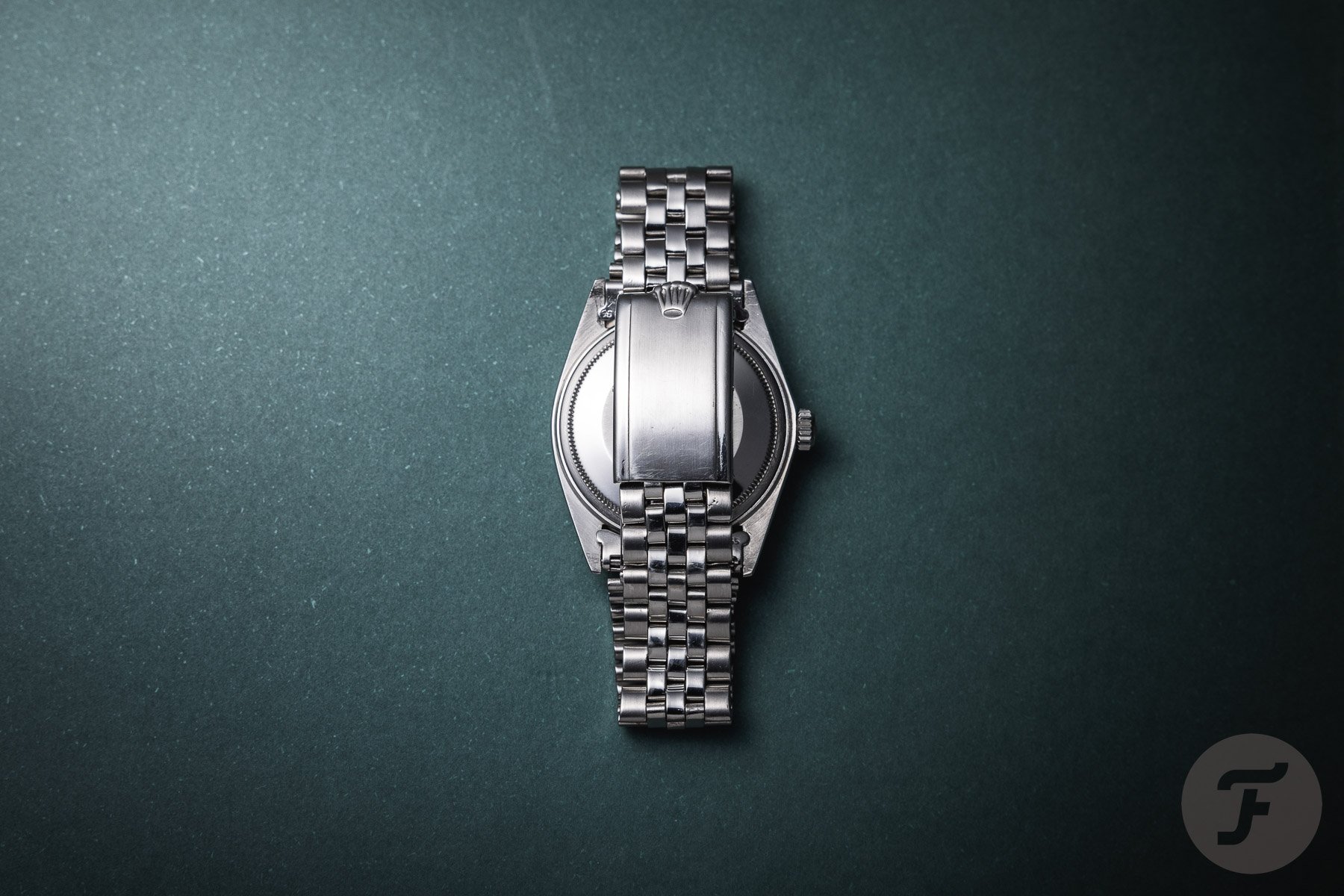
Sure, the case and bracelet show quite a bit of wear, and the lugs aren’t nearly as beefy as they once were. The watch and bracelet were structurally sound, though, and I loved the ultra-clean dial. Most Datejust dials from the era come with strong patina caused by the lume. The absence of it makes this one as clean as they come. Don’t get me wrong, I love a beautifully patinated dial, but this one hit different.
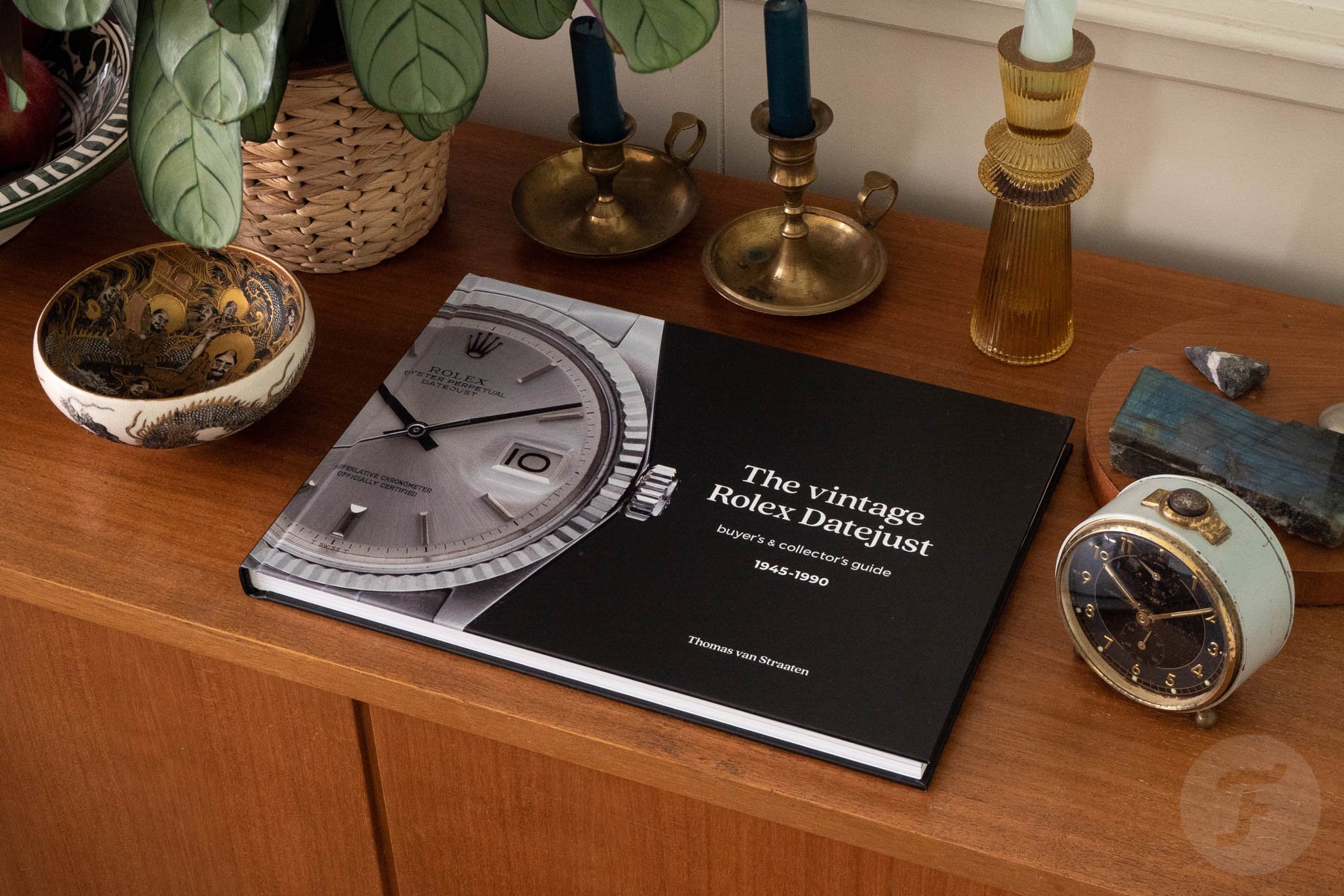
I did continue to write that book. This isn’t a plug, as I don’t sell it anymore, but it was a big milestone in my career. This milestone landed me an invitation to join Fratello, actually. I decided to put my then-new-to-me 1601 on the book’s cover, as it represents the genre so well. Obviously, that gives this watch special meaning to me.
Why you cannot go wrong with a Rolex Datejust ref. 1601
While the above explains my love of this watch, it probably does little to sway your vote. Allow me, then, to make a slightly more objective case for the Rolex Datejust ref. 1601. While you can surely argue for any vintage DJ, I think the 16xx generation is peak Datejust. Why? Well, if you look at older references, you still see Rolex searching for its unique aesthetic signature. The Rolex DNA clearly shows, but you also still see a lot of visual cues of the era that many other brands shared. That stops with the 16xx generation, when the watch finds its identity and no longer looks (or feels) like anything but a Rolex Datejust.
Similarly, the older references can be tougher to own due to their less reliable and harder-to-service movements. Caliber 1570 (or, more correctly, its date version, 1575) is basic but indestructible and easy to maintain. I wore my Rolex Datejust ref. 1601 daily for a long time without a single issue.
You can opt for later versions if you want more ease of use. The five-digit generation gives you a quick-set date, for instance. Even later versions add a sapphire crystal to the mix. The great thing is that these are all quite close in price, so you can pick whichever suits your priorities. For me, ref. 1601 is the one, thanks to its combination of a white gold fluted bezel and a pie-pan dial. Those dials provide a depth and dimensionality that got lost in later generations, which is why I consider it peak Datejust. Okay, Daan, tell us why the Cartier Santos Galbée is the better option nonetheless!

Daan: Cartier Santos de Cartier Galbée XL
Thanks, Thomas. You’re right; today’s Sunday Morning Showdown is personal. I also think a choice for either of these icons is a very personal one. In the end, it comes down to very subjective preferences. However, I’m very glad to go over the reasons I would choose — and chose — the Cartier Santos Galbée XL over the Rolex Datejust. In my case, it was a 1974 Datejust with a blue dial and beautifully patinated lume, ref. 1603. I went for that reference because I feel the engine-turned steel bezel looks a bit less formal and blingy than the polished and fluted white gold bezel.
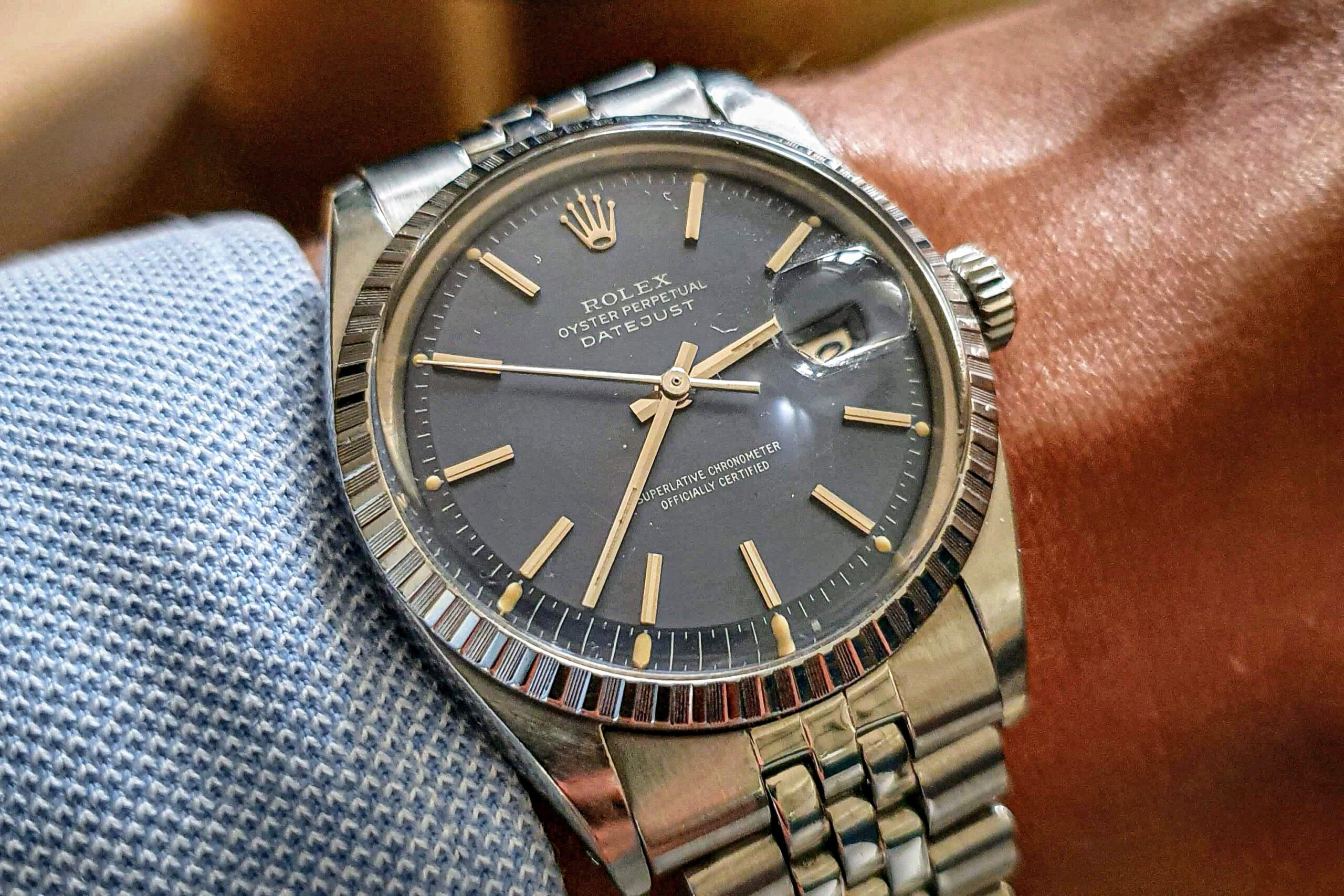
My old Rolex Datejust on its Jubilee
I imported the watch from the US after I bought it from Linden Lazarus, also known as Oliver & Clarke. I still remember I was a bit suspicious when I saw that last name on his PayPal account, but it all went well. The watch arrived, I wore it for a few months, and I even got the coffee-bean Jubilee bracelet restored. Unfortunately, it didn’t convince me. It felt a little fragile on my wrist, and its appearance didn’t wow me like I’d expected it to do, so I sold it and started looking for an alternative.
The perfect substitute
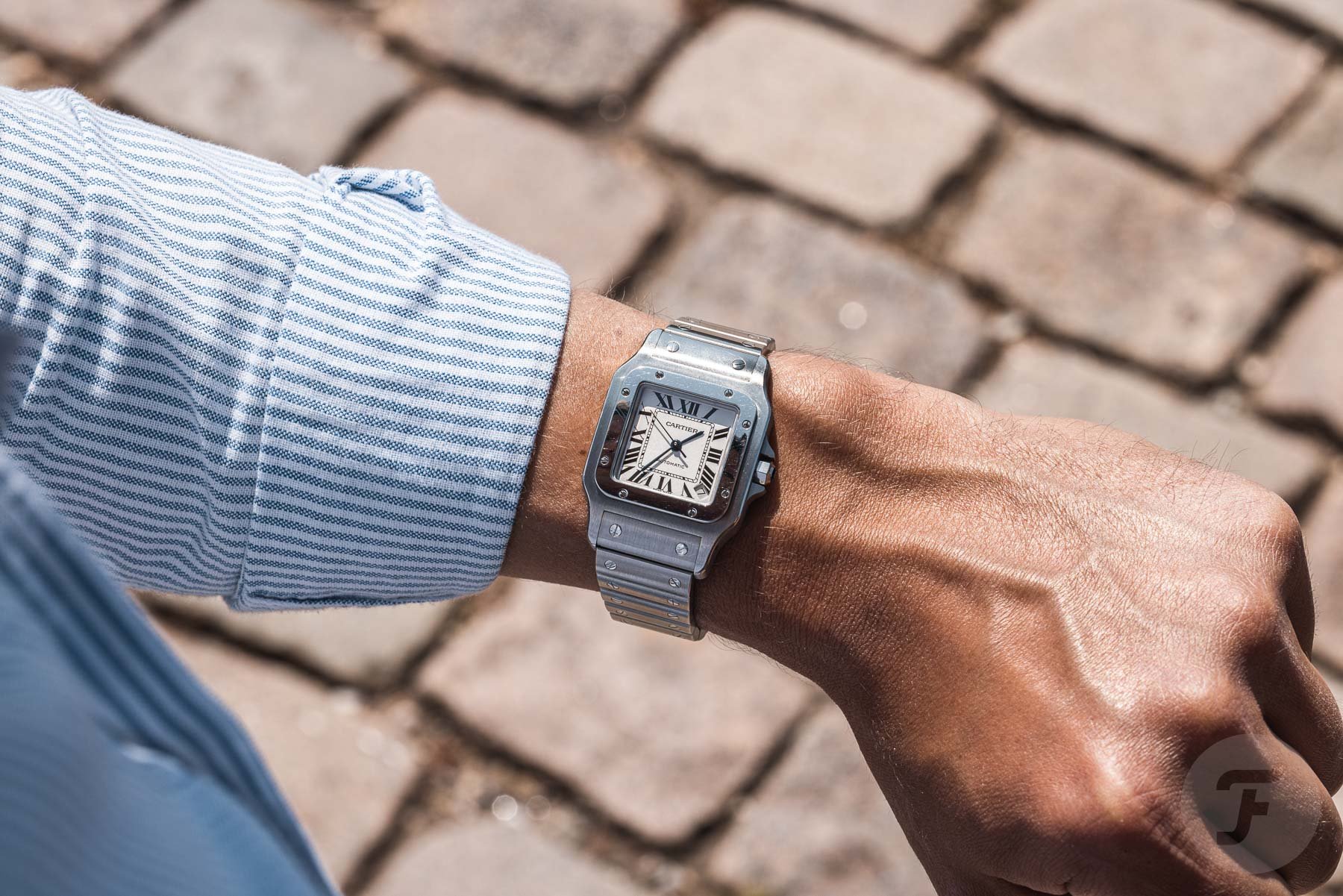
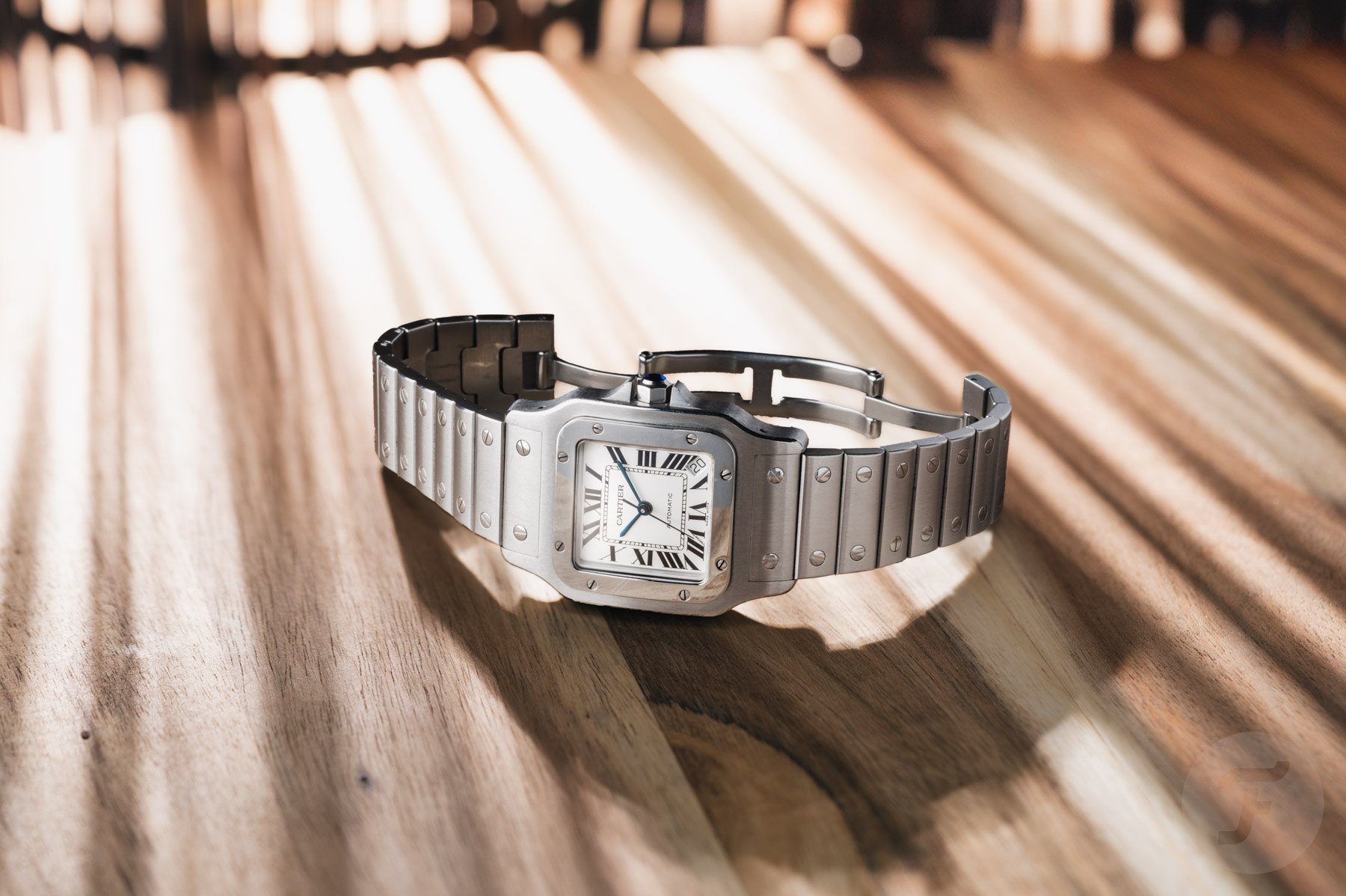
That’s when I stumbled upon the Cartier Santos Galbée XL. As the late George Cramer wrote, the “modern” Cartier Santos was introduced in 1978 as a sportier alternative to the dressier Santos Dumont. While it started as a two-tone only watch, later on, it also became available in full steel. The 29 x 41mm case was brushed, while the square bezel was polished. In 2005, Cartier introduced the bigger Santos Galbée XL ref. 2823. That’s the reference I picked up, as people were saying its 32mm square case felt more like a 36mm watch on the wrist.
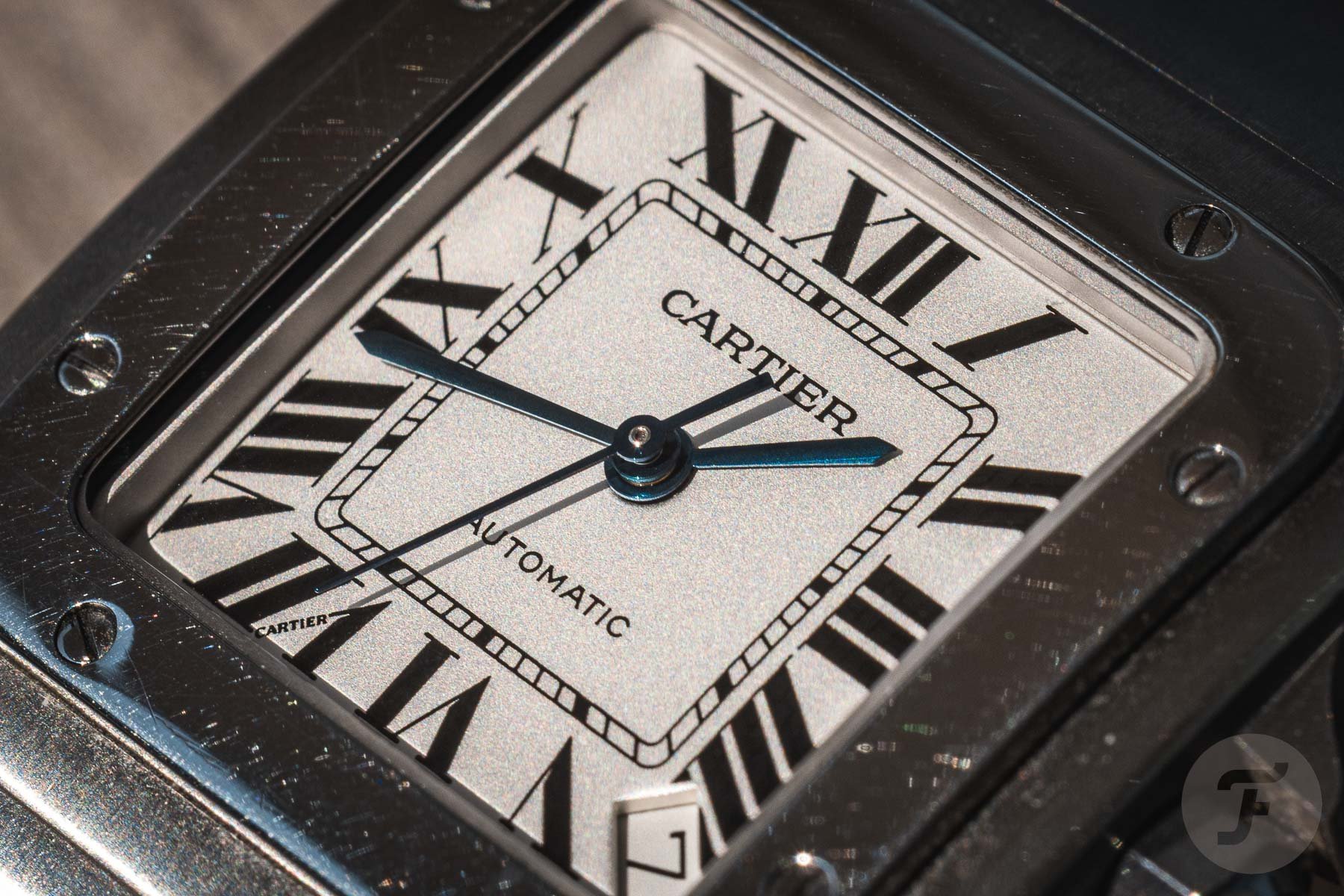
I’m not completely sure what struck me in the Santos’s design. However, the combination of the messy screws, square shape, sexy polished lines, and Cartier’s iconic Roman numerals certainly attracted me. It was difficult to find one, though, so I couldn’t try it out to see what it would look like on my wrist. I was a bit afraid because the side without the crown can appear quite thick in some pictures. In the end, though, I decided to take the risk and bought a 2006 model directly from another enthusiast. When it arrived, I saw it in its red box, and it looked bigger than I had expected. However, once it was on my wrist, all my doubts disappeared.

The perfect GADAE watch
It felt a lot less fragile than the 1974 Datejust it replaced, and in terms of looks, I loved it. The silvery-white dial with the black lacquered Roman numerals gives it a very sophisticated and elegant look. At the same time, the all-steel construction makes it look quite sporty. For me, the Santos hits the perfect balance between sportiness and elegance. It’s water resistant to at least 50 meters, its crown is protected well, and it’s very comfortable because it feels so slim on the wrist. But while being very capable, it’s also such a sexy thing to look at. I don’t think the Rolex Datejust can match that level of sex appeal.
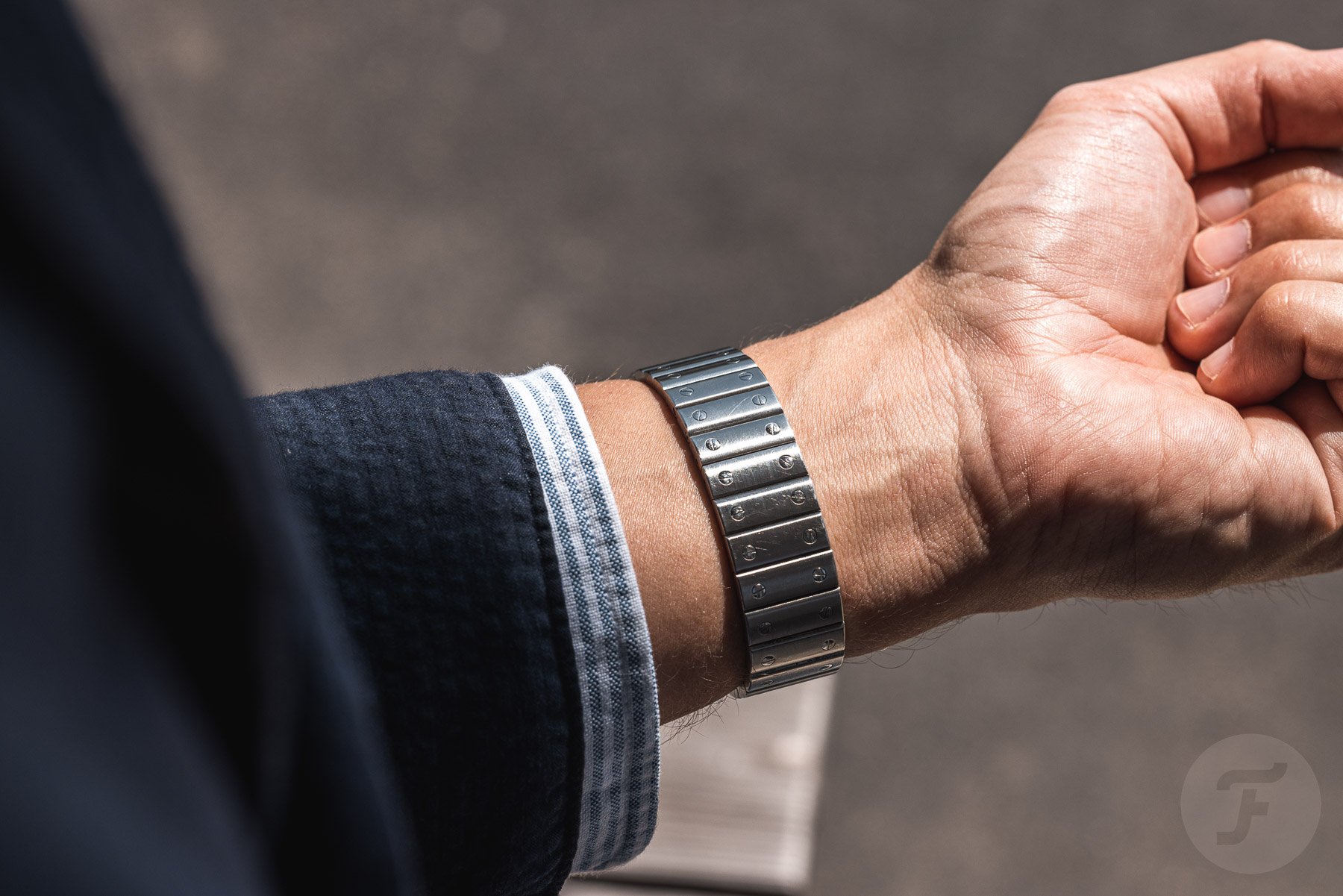
I already named my Santos Galbée XL my ideal GADA watch. However, I actually think it’s the perfect “go anywhere, do anything elegantly” (GADAE) watch. Sure, the polished bezel gets covered in scratches, but it wears those scratches with pride. On one hand, the bracelet could indeed use some kind of micro-adjustment system. On the other hand, though, I love its non-branded design and the pressure-based butterfly clasp. It simply always works, and I enjoy its uninterrupted design so much.
I didn’t, but I could write a book about the Santos
No, I didn’t write a book about the Cartier Santos, so you win there, Thomas. However, maybe I should write a book about my favorite watch in my collection. There have been many versions in various sizes and with a range of interesting complications. I’m not as fond of the current Cartier Santos design, with the bezel that flows into the bracelet. However, I still follow the Santos collection closely, and it would be fun to make some kind of overview, as Thomas did for the Rolex Datejust.
Cast your vote!
So, there you go — a very personal Sunday Morning Showdown with two iconic watches. Will you vote for Thomas’s Rolex Datejust ref. 1601, or will you support Daan’s Cartier Santos Galbée XL? It’s time to cast your vote and let us know the reasons behind it in the comments below. Make sure to tune in again next week for another Sunday Morning Showdown!