Why The Hublot Big Bang Meca-10 Deserves More Credit Than It Gets

I’m sitting here with the Hublot Big Bang Meca-10 42mm Titanium on my wrist, and I’ve been looking forward to spending some proper time with this watch for quite a while. I first noticed the smaller Meca-10 when Hublot introduced it in early 2025. At the time, I thought it was one of the brand’s more interesting releases in recent years.
I couldn’t attend Watches and Wonders that year due to my son’s birth, so I missed the chance to get hands-on with it. Finally, at Geneva Watch Days earlier this year, I saw one in person. Thankfully, everything that appealed to me in the photographs and seemed like a good idea on paper made just as much sense in the metal and rubber. Having spent an extended period with the titanium version, I’ve come away with an even greater appreciation for it. I think enthusiasts often overlook a couple of things about Hublot, and the Meca-10 is a particularly good example of both.
Smaller, but still very much a Big Bang
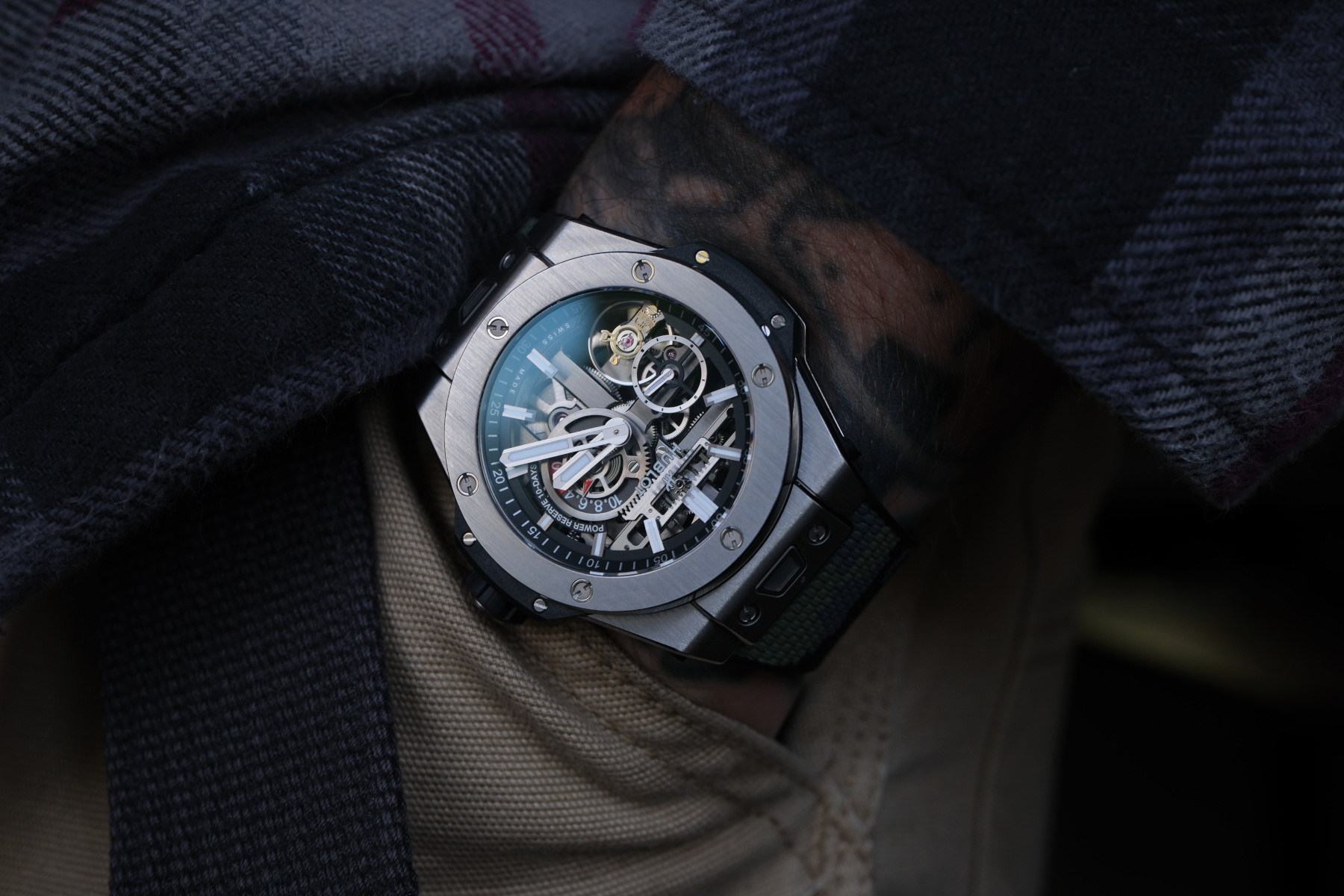
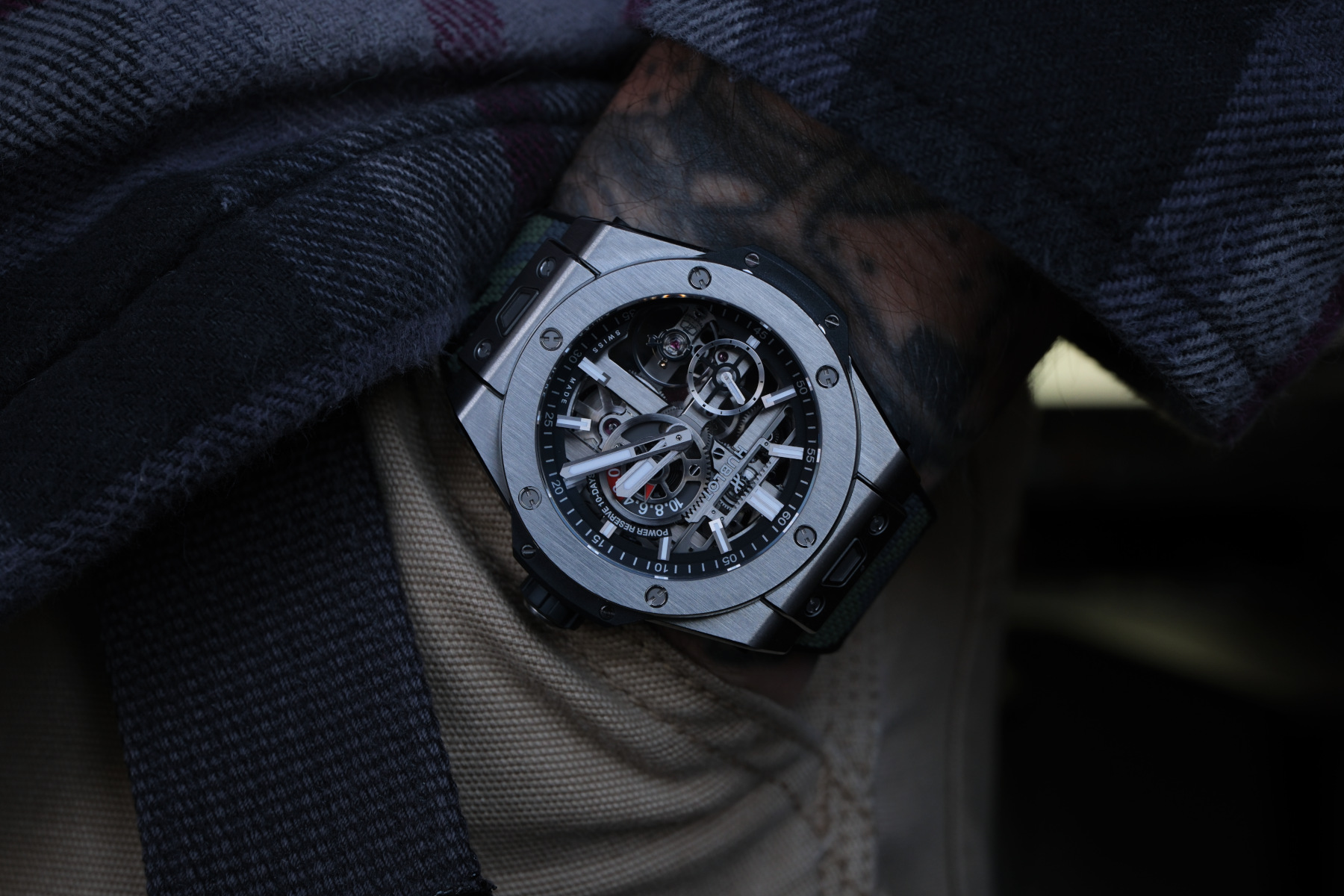
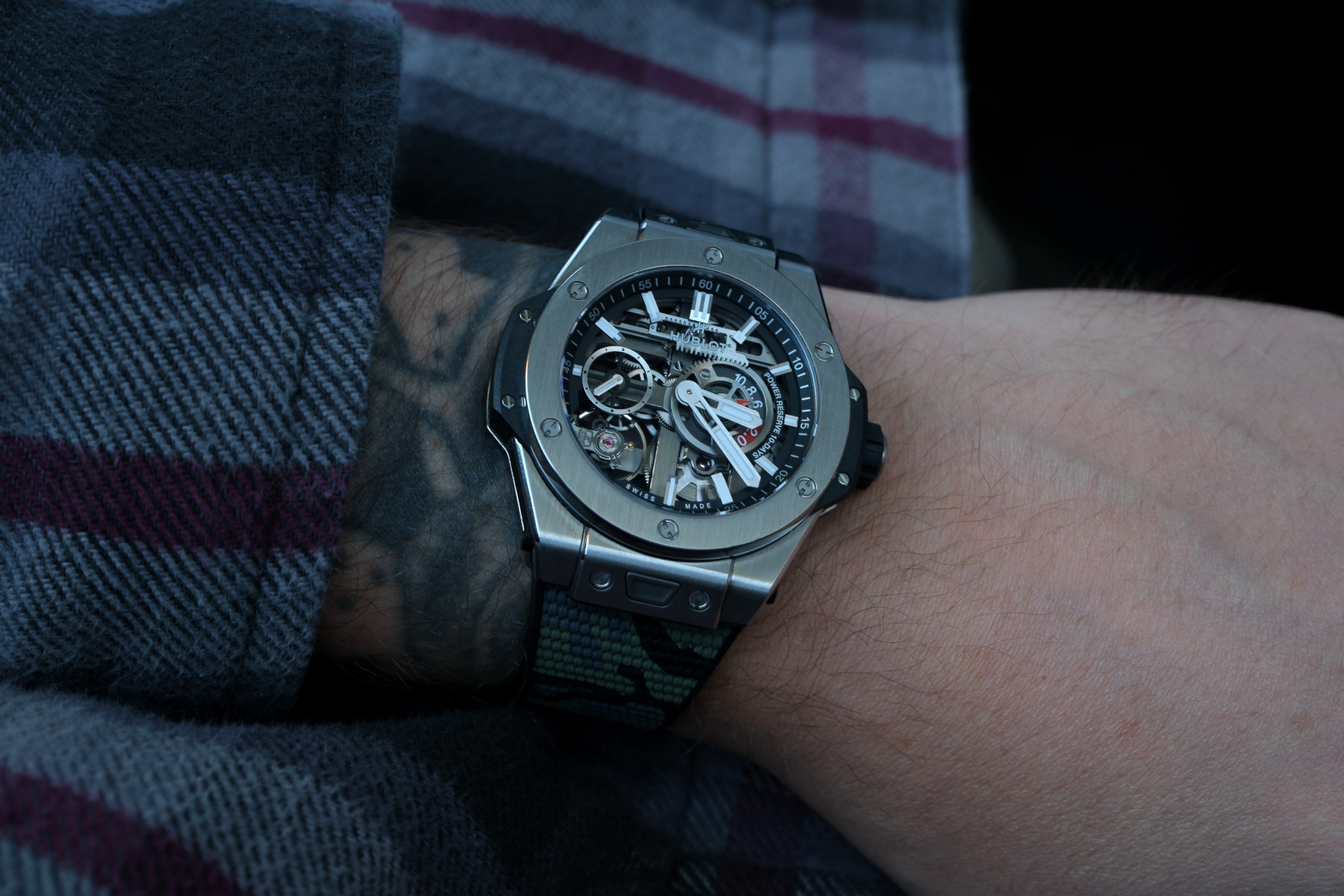
Let’s address the size first because, despite shrinking from 45 to 42mm, this is still a fairly substantial watch. Depending on exactly where you measure it, the length comes in at around 51mm. It’s certainly not small, and those expecting something particularly discreet probably aren’t looking in the right place. The recently launched Classic Fusion Tributo is likely more their thing — as it should be! However, I think Hublot has done a great job of refining the proportions without losing what makes the Big Bang recognizable. The reduced diameter makes the watch feel sleeker and more manageable, even though it remains a chunky, modern sports watch.
I’ve always advocated having at least one larger watch in a collection. I enjoy variety and sometimes want something with a little more physical presence on the wrist. I’m also particularly fond of skeletonized watches, so the Meca-10 ticks a couple of boxes straight away. More importantly, I think the move to 42mm shows that Hublot understands what many enthusiasts have been asking for. There’s still room for larger, more assertive watch designs, but making them a little more wearable certainly doesn’t hurt. In this case (pun partially intended), I think the change has made a considerable difference. The watch now fits normal people.
The case construction deserves more attention
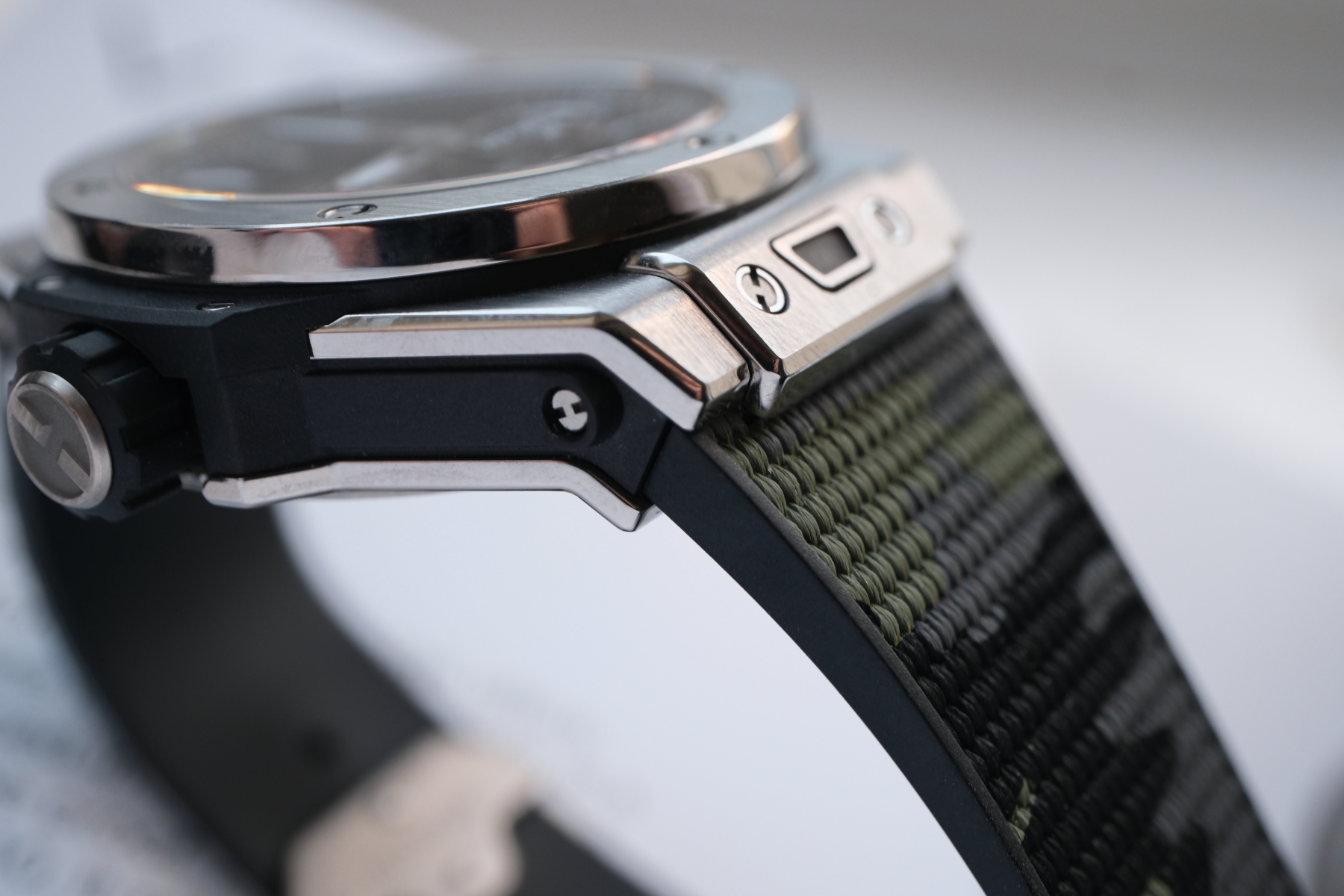
One thing I’ve come to appreciate about Hublot is just how much engineering goes into its cases. It’s easy to look at the Big Bang and recognize that familiar shape, but spend a little time examining how everything fits together, and you’ll notice there’s actually quite a lot going on.
The case construction is complex. There are multiple individual components, different surfaces and materials, and plenty of opportunities for tiny imperfections to become apparent. With this many pieces involved, maintaining consistently tight tolerances across the entire assembly can’t be particularly easy. That’s what impressed me here; everything fits together just perfectly. The transitions between components are precise, the finishing is excellent, and the overall construction feels incredibly well executed.
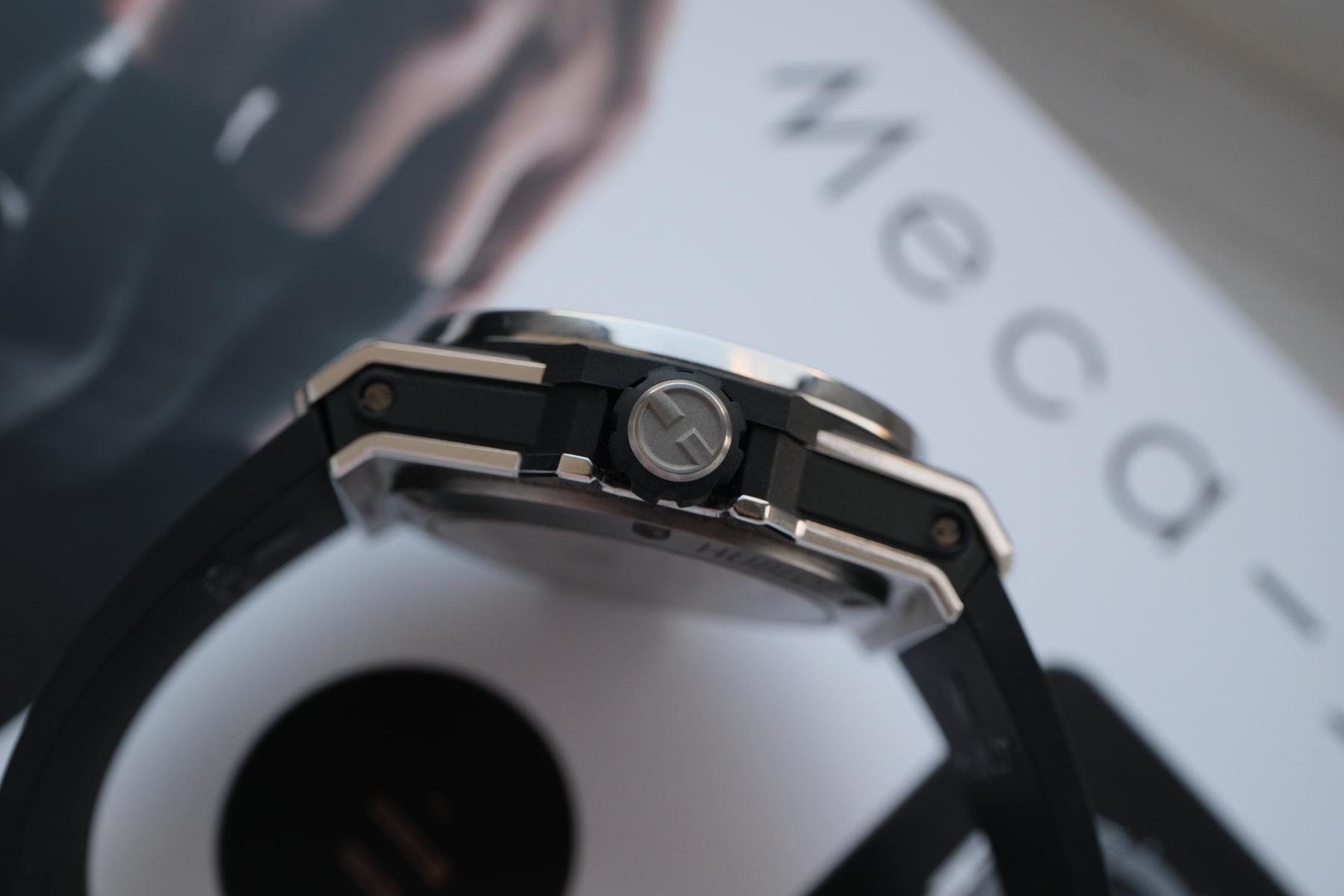
You could argue it’s over-engineered, and I’d probably agree. However, I mean that in a good way. I like seeing this level of attention paid to something that could definitely have been made more simply. The construction’s visual harmony also doesn’t always come across in photos. In person, the different components feel like parts of one cohesive design. That becomes much easier to appreciate once you actually have the watch in hand.
About those bezel screws
While we’re discussing the case, there’s something else worth mentioning. The visible screws on Hublot’s bezels have long been a point of contention among enthusiasts, particularly because they don’t all line up in the same direction. The obvious comparison is the Audemars Piguet Royal Oak, where they’re neatly aligned. I’ve seen people question why Hublot can’t just do the same thing. Well, there’s actually a fairly straightforward explanation.
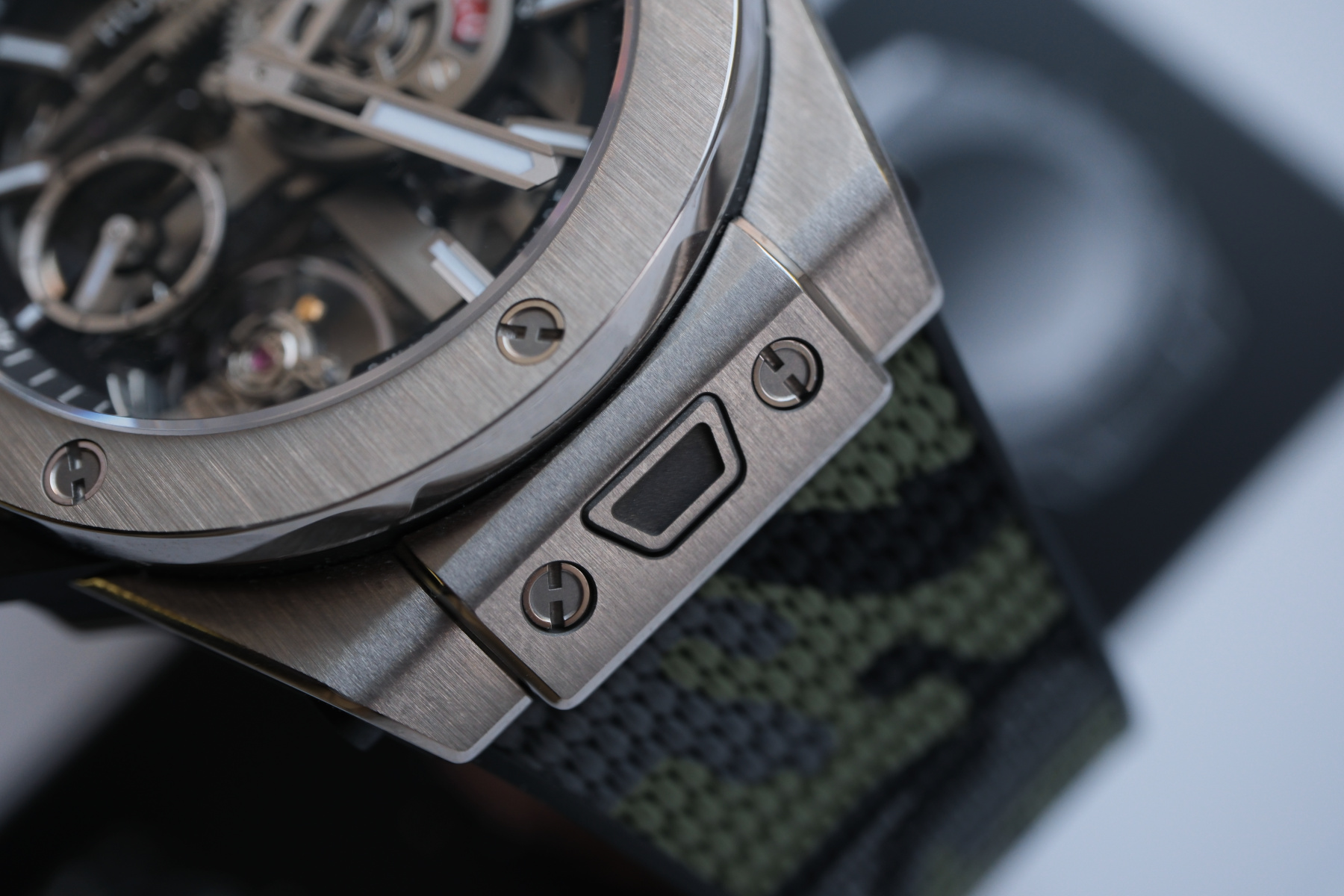
For Hublot, the bezel screws are functional screws adjusted from the top. You engage the visible screw head to tighten or loosen it. On the Royal Oak, the visible components are effectively bolts, secured from the other side. The two systems work differently, so the comparison isn’t particularly fair.
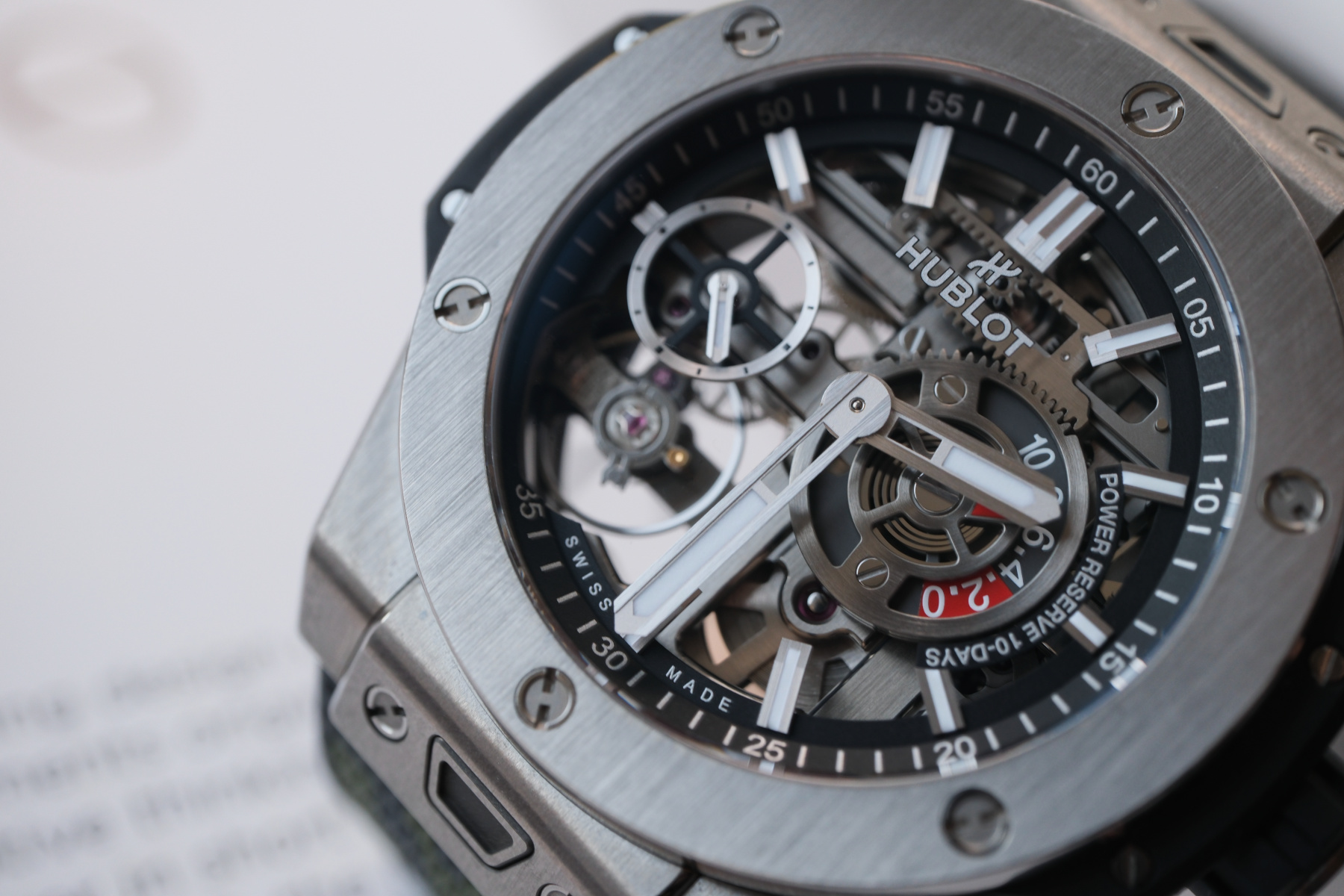
The lack of alignment doesn’t bother me. These are functional components, and I quite like that their appearance reflects how they’re actually used. Of course, I can understand why some people might prefer everything to line up perfectly. We all place different importance on these little details, and that’s absolutely fine. For me, though, it has never been an issue. This is a case of function-first design.
The movement is where things get really interesting
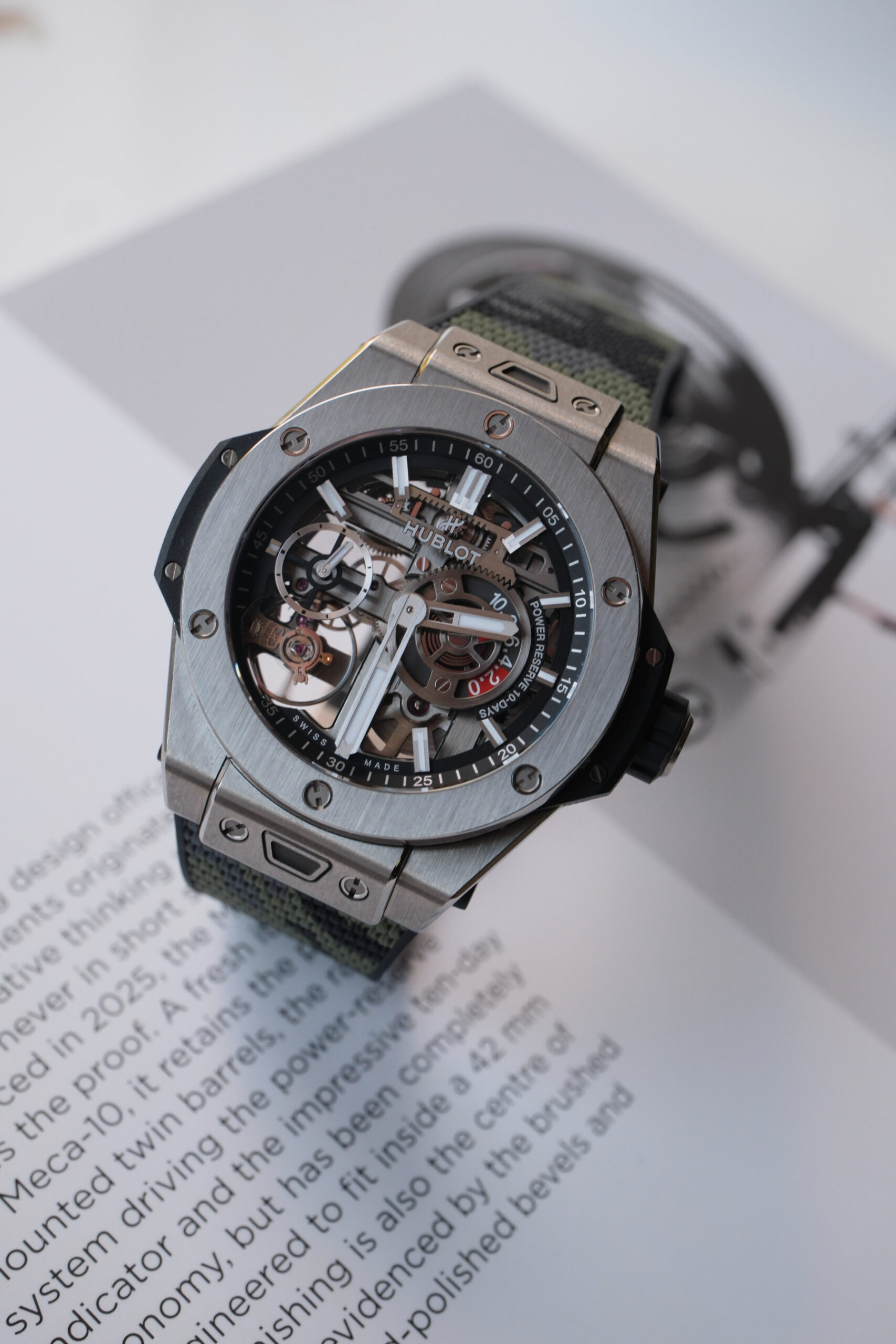
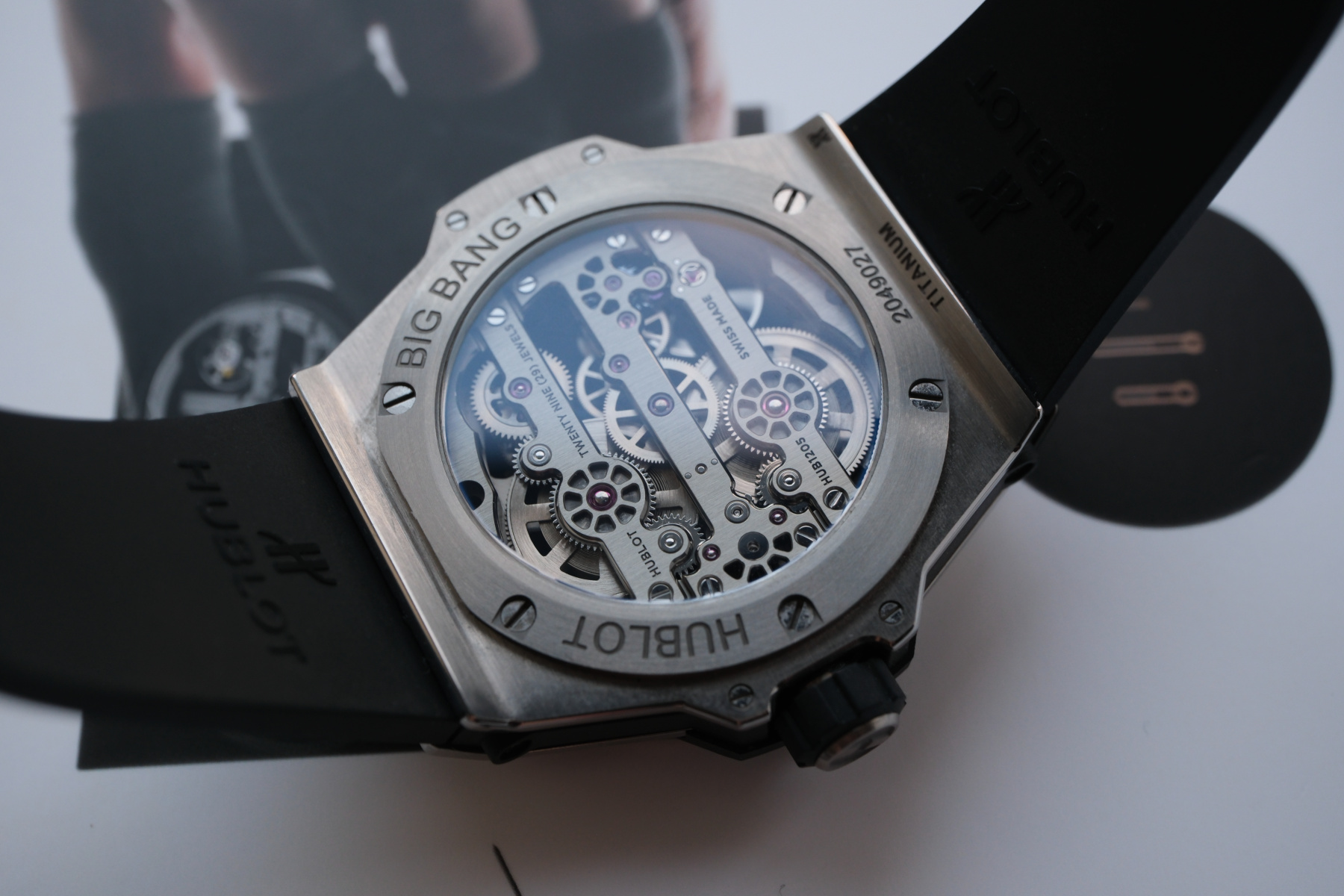
As much as I appreciate the case construction, the movement draws me to the Meca-10 the most. I’ve always liked skeletonized watches. I’ve made no secret of it to my friends and colleagues. They’re just my thing. Seeing the movement in action and understanding how it works is a large part of what makes mechanical watchmaking interesting to me. However, there’s a difference between simply exposing a movement and designing one whose architecture is genuinely worth looking at. The Meca-10 falls into the latter category.
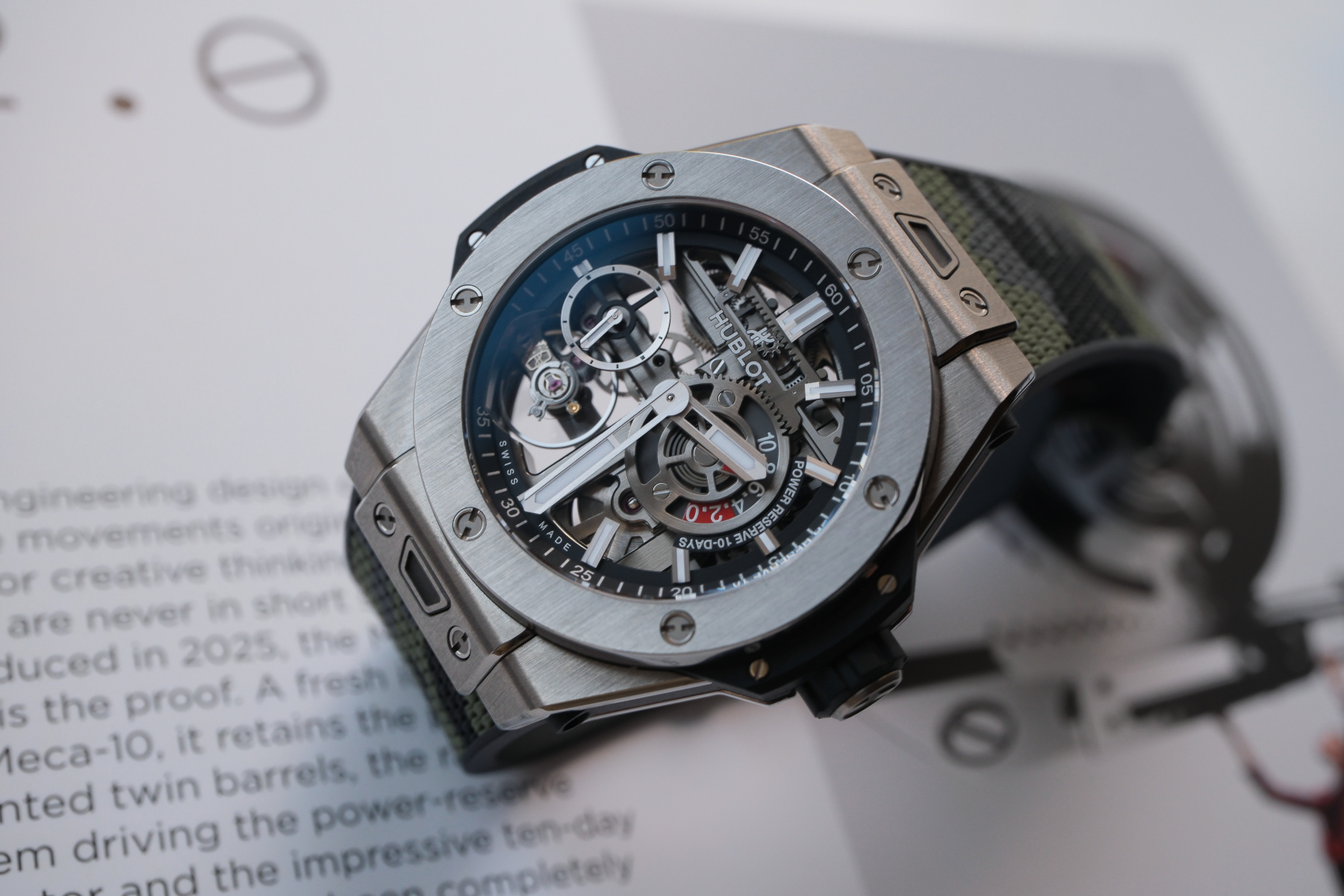
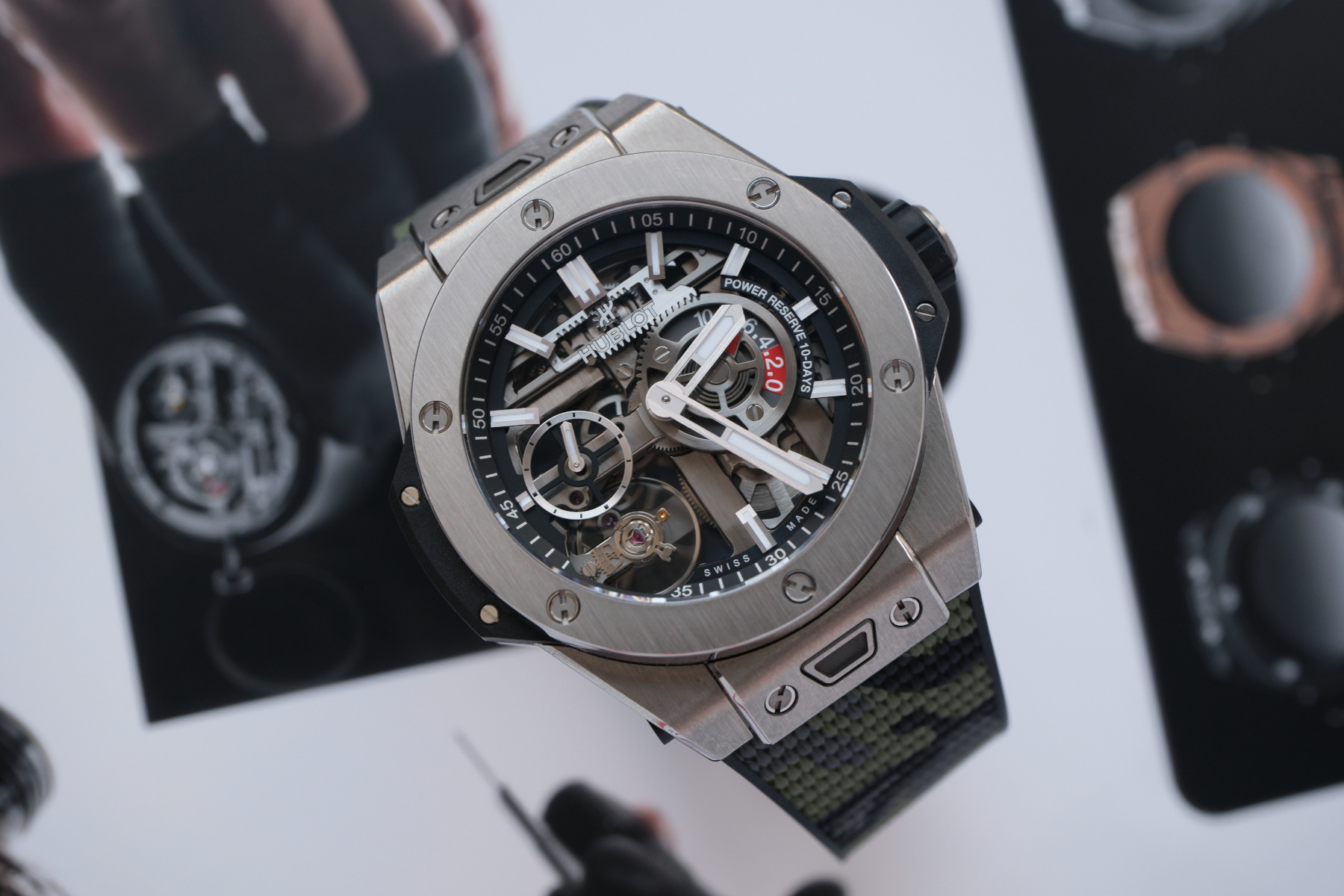
At its heart are two large mainspring barrels that provide an impressive 10-day power reserve. You can see them through the openworked construction at 1 and 5 o’clock. Turning the watch over reveals even more of the movement’s architecture. What’s particularly interesting is how much the finishing has improved compared with the older 45mm version. There’s now some proper hand-finishing work on the movement, and it’s a welcome upgrade. But I keep coming back to one element in particular, and it’s probably my favorite part of the entire watch.
Understanding the crémaillère power reserve
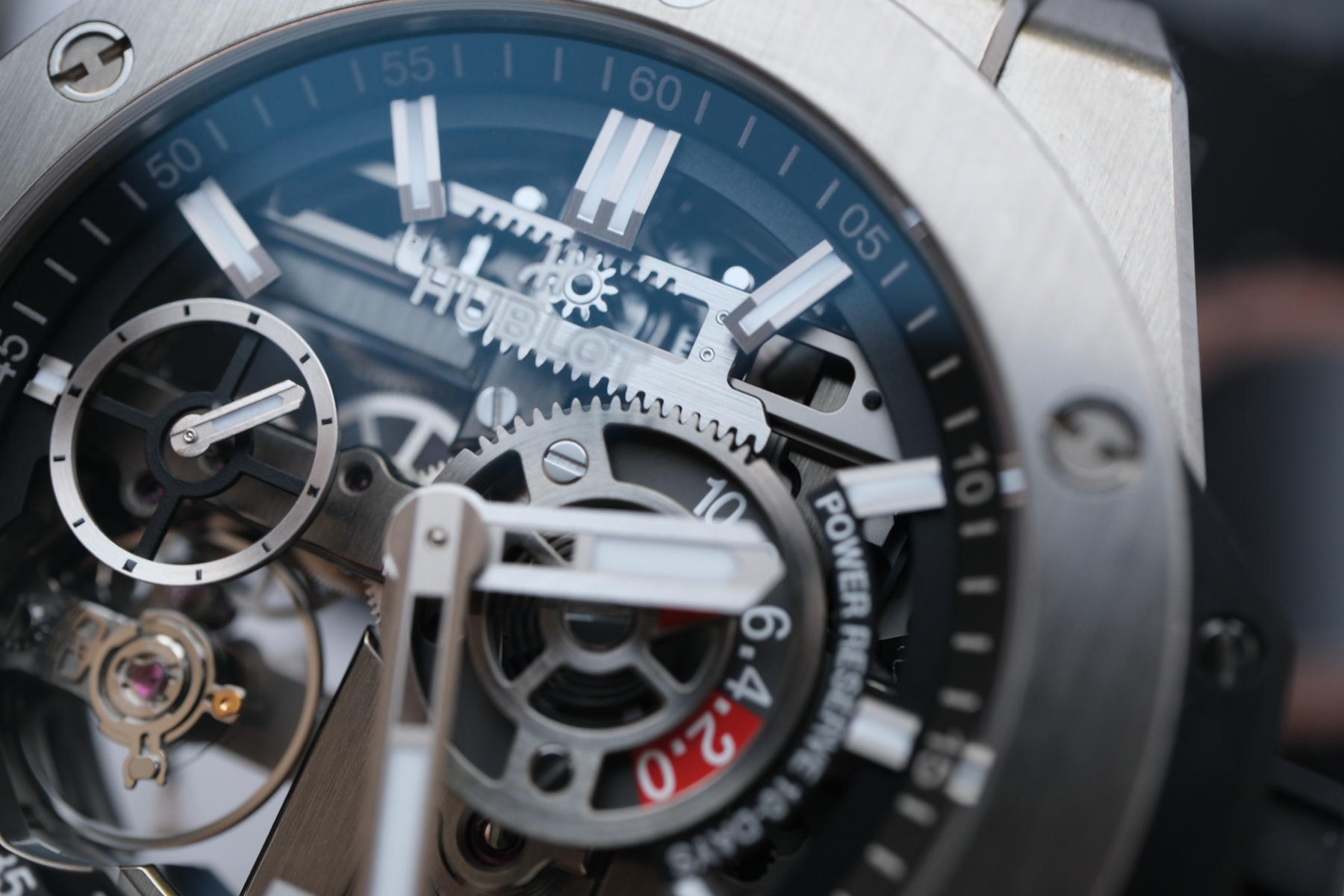
The Meca-10 uses a rack-and-pinion power reserve system, known as a crémaillère. It’s a novel approach, and the engineering involved is clever enough to warrant some explanation. This mechanism converts rotational motion into linear motion. The pinion is a small circular gear, while the rack is a straight component with teeth running along it. As the pinion rotates, its teeth engage with those on the rack, causing it to move in a straight line. It’s a relatively simple mechanical principle, but seeing it incorporated into a movement in this way is downright cool.
In the Meca-10, this arrangement forms part of the power reserve indicator. Rather than relying solely on a simple hand traveling across a scale, the movement makes the rack mechanism itself part of the visual experience. I particularly like that you can see the whole mechanism at work. Winding the watch becomes much more engaging when a visible mechanical system responds to your movements. With two barrels, winding from zero takes a considerable amount of time, and the rack moves slowly, but it’s still an impressive thing to see in action.
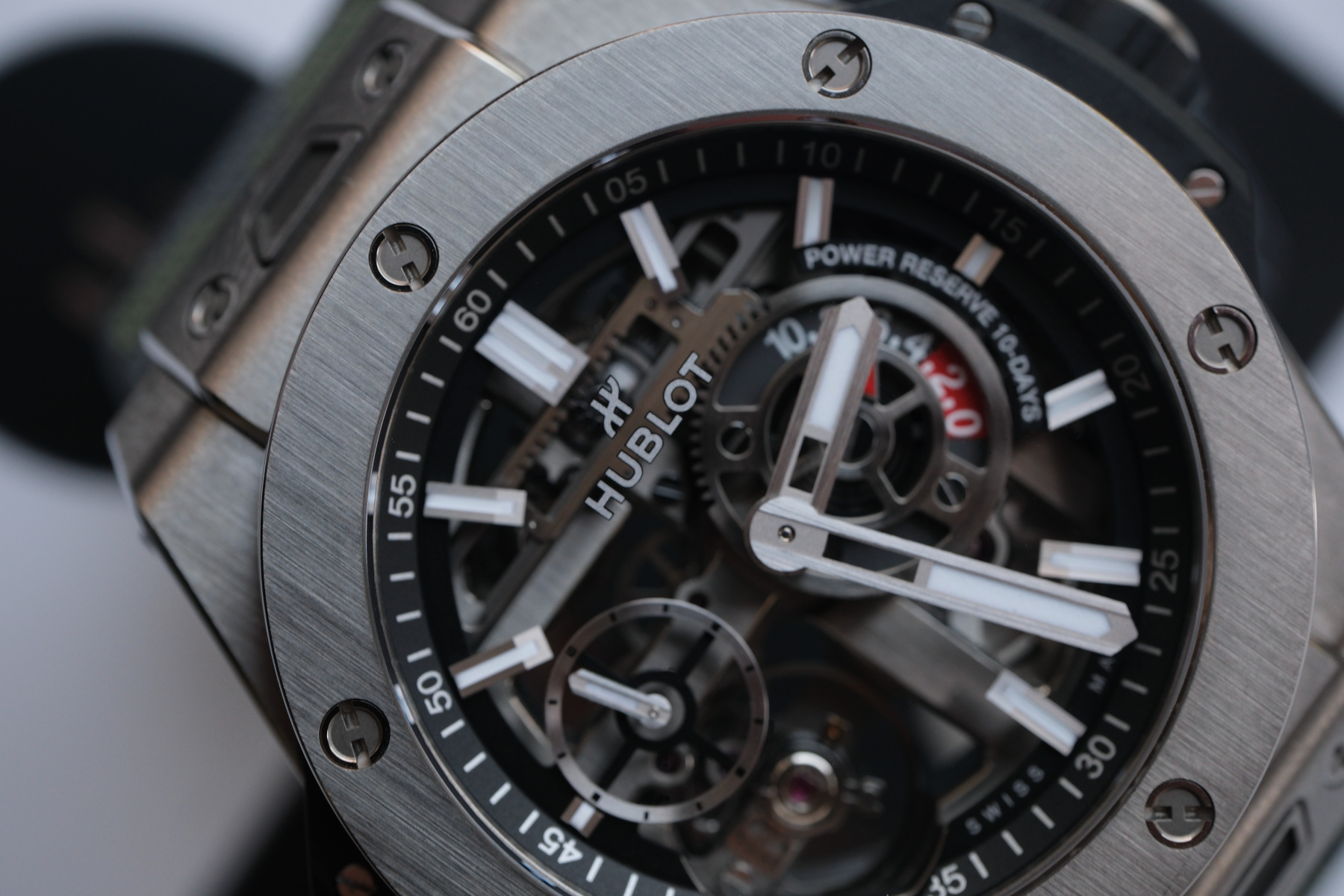
This is where photographs can struggle to convey what makes this watch interesting. You can appreciate the construction in a photograph, but holding the watch, winding it, and seeing how everything works is different. I genuinely can’t think of another watch that uses a rack-and-pinion mechanism exactly this way. If you know of one, please let me know in the comments, as I’d be interested in taking a look.
How does it wear?
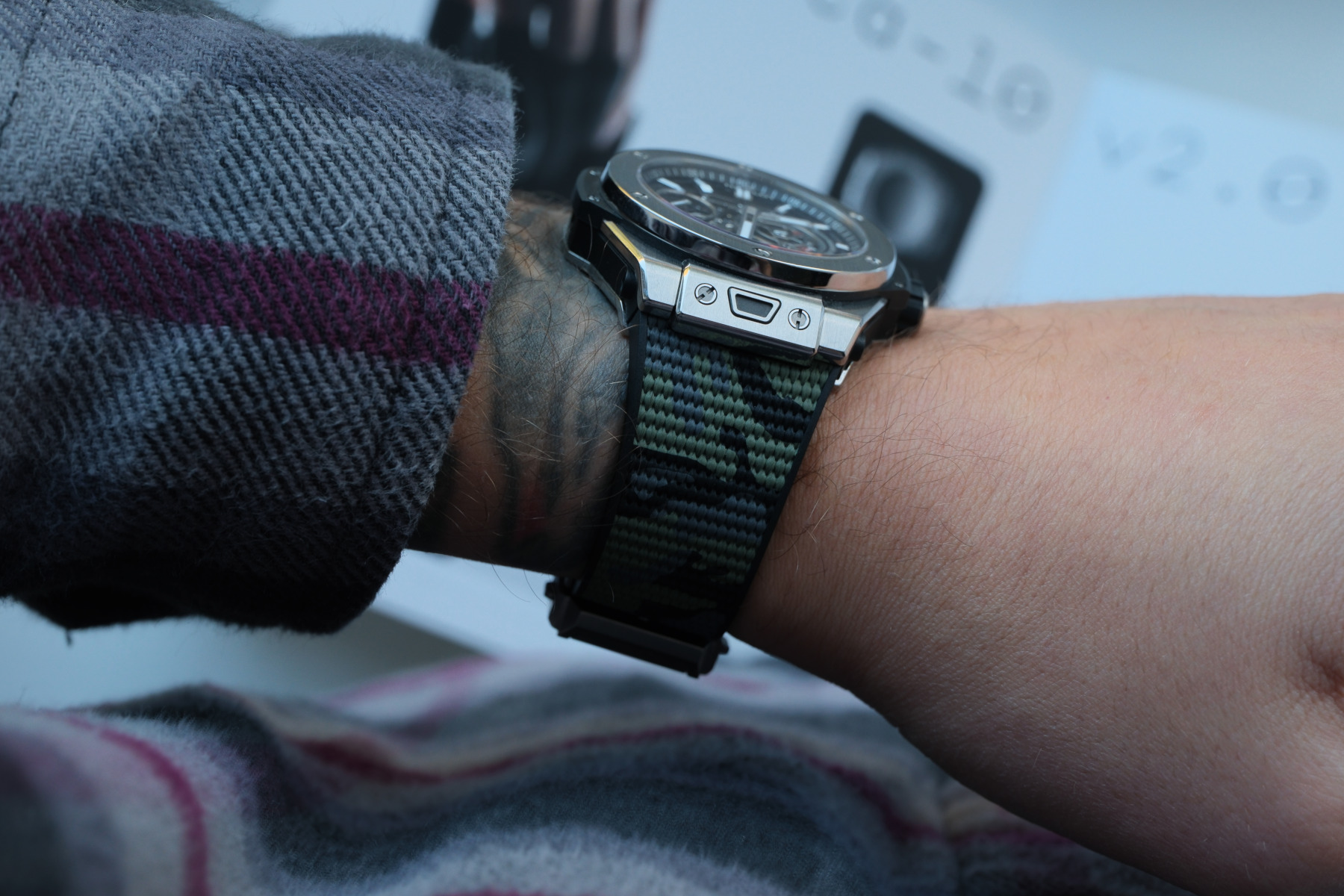
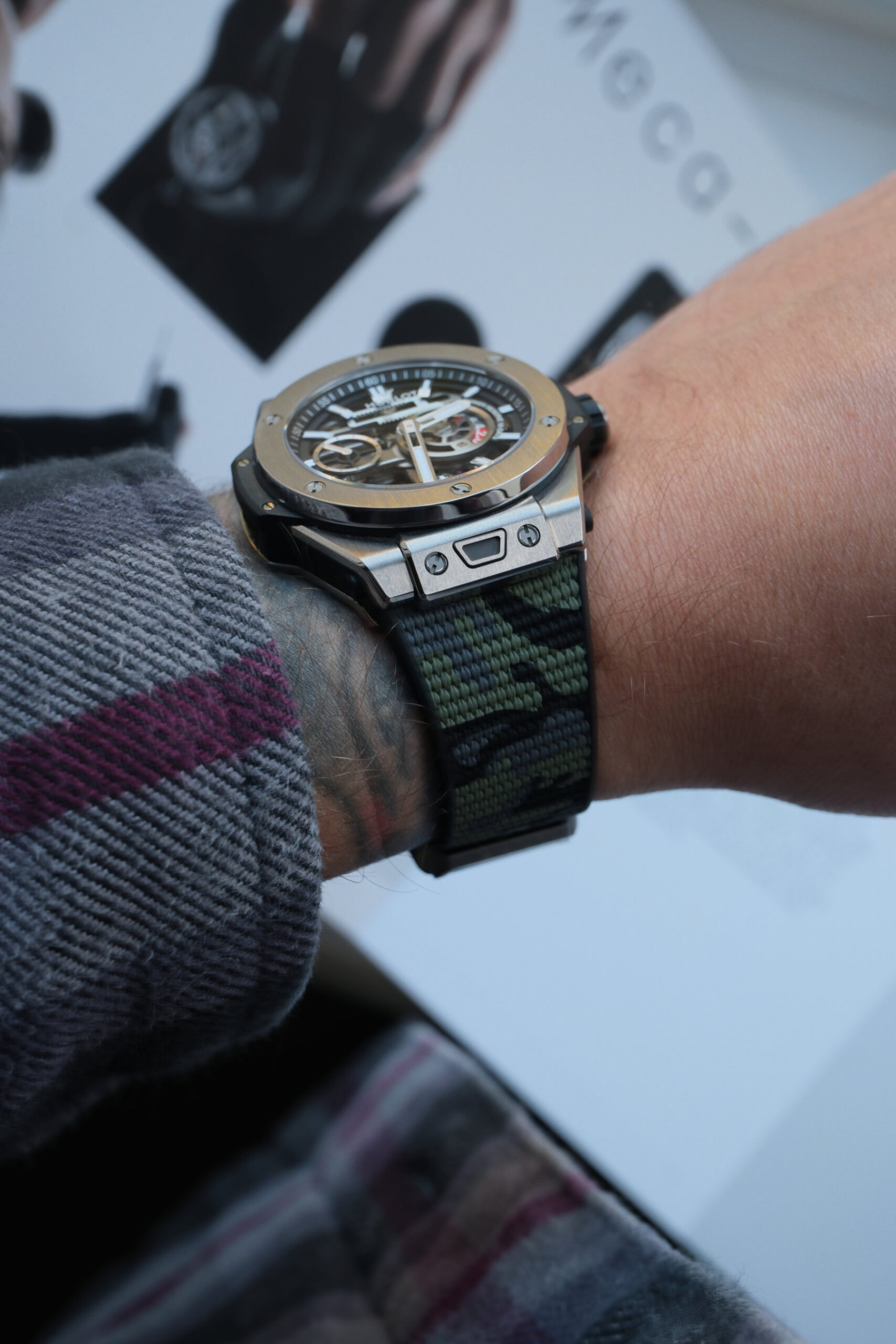
With its relatively substantial case and visibly complex movement, you might reasonably expect the Meca-10 to feel quite heavy on the wrist. Thankfully, that’s not true. Titanium obviously helps keep the weight down, though it’s worth noting that the entire watch isn’t made of titanium. Plenty of other components in both the case and movement contribute to the overall weight. Even so, I’ve found it remarkably comfortable.
Of course, the physical dimensions are still worth considering. At 42mm wide, 51mm long, and 14mm thick, it isn’t going to disappear under a cuff. Still, the proportions work for me. I like having something a little more substantial in the rotation, and the titanium construction makes this watch much easier to wear than its on-paper dimensions might suggest.
One Click is genuinely easy to use
Another surprising detail was Hublot’s One Click strap-changing system. I’ll admit that I’m usually a little skeptical of proprietary strap systems. Some are unnecessarily complex and essentially a ruse to tie people to OEM straps. Here, though, the operation is absolutely effortless. Changing the straps is quick and straightforward, and I haven’t encountered any issues with the system engaging accidentally.
I also like how it’s integrated into the case design. The release buttons are visible from the top, but they feel like a natural part of the overall construction. The straps themselves are excellent quality, and the folding clasp is nicely made and finished. It’s a fairly simple clasp, especially compared with some of the more elaborate engineering elsewhere on the watch, but it works exactly as you’d want. It also features a quick-release system for easy strap changes. I don’t have much to complain about here, other than the fact you’re limited to OEM straps, which aren’t cheap.
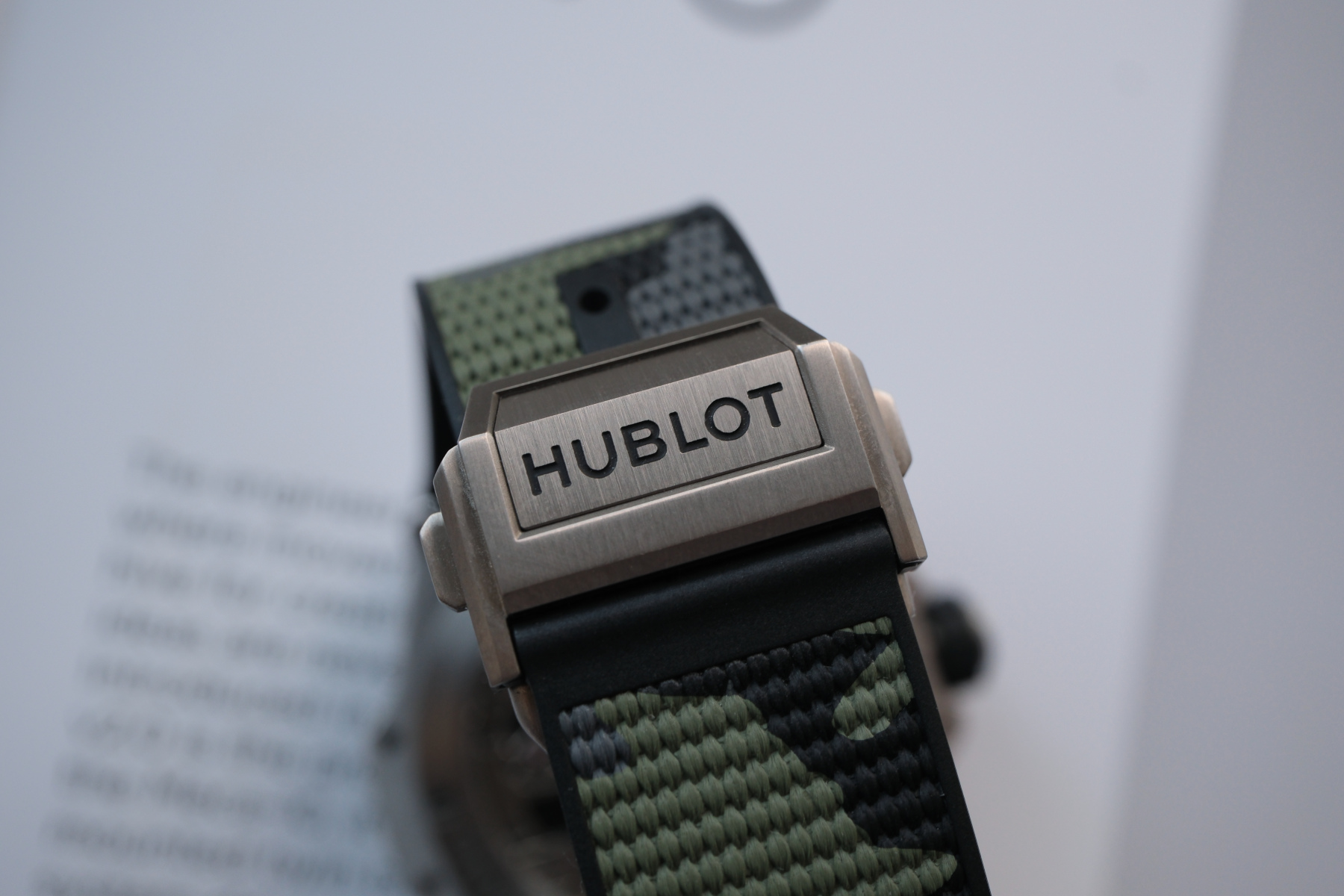
Would greater flexibility in strap changes be nice? Yes, of course, but it would significantly alter how this watch looks, which I believe would be a downside. So, on this occasion, I’m giving the brand a free pass.
Looking beyond Hublot’s reputation
My extended time with the Meca-10 has made me think a bit more about the brand’s perception among watch enthusiasts. There’s no avoiding the fact that Hublot has a fairly divisive reputation in certain collecting circles. Its prominent association with celebrities and mainstream sporting culture has helped establish a recognizable identity, but that image doesn’t necessarily speak to everyone interested in watchmaking. And that’s perfectly reasonable; there’s no requirement for every collector to like every brand.
What I find a little frustrating, though, is how often people criticize Hublot without much consideration of the actual watches. Sometimes it feels like it has become “cool” to dislike the brand, even among people who haven’t spent much time, if any, handling its watches. The recent Classic Fusion Tributo was an interesting moment in that respect. It earned a lot of positive attention, including from enthusiasts and commentators who might not usually give Hublot much thought. Perhaps that’s an early indication that more people are becoming willing to consider the watches on their merits alone.
The Meca-10 makes a decent argument for doing exactly that. Hublot has been developing increasingly sophisticated movements and exploring more demanding areas of watchmaking. Ultimately, though, collectors and enthusiasts must decide how seriously to take those efforts. For me, the Meca-10 provides plenty of evidence worth considering. You don’t have to like the Big Bang design. You might still find it too large, too visually complicated, or simply too far removed from your tastes. Those are all perfectly valid reasons not to buy one. But I’d encourage anyone who has dismissed Hublot without properly examining its watches to spend some time with a Meca-10. I suspect a few people might come away pleasantly surprised.
Final thoughts on the Big Bang Meca-10
I’ve thoroughly enjoyed my time with the Hublot Big Bang Meca-10 42mm Titanium so far. I liked it when I first saw the photographs back in 2025, and finally getting it on the wrist has only strengthened that opinion. It’s still a big, visually busy watch, and the design certainly won’t appeal to everyone. Nevertheless, the case construction, movement architecture, and sheer enjoyment of interacting with its unusual power reserve mechanism make it a genuinely interesting piece of watchmaking.
For someone who enjoys skeletonized watches and appreciates having something a little chunkier in the collection, it makes a lot of sense. I expected to enjoy the Meca-10 but didn’t anticipate how much I’d enjoy examining all the little details once I could spend proper time with it. I’m going to enjoy wearing this one for quite a while.
This is a preferred-position post. Learn more.