Video: Hands-On With The A. Lange & Söhne Saxonia Annual Calendar In White Gold

Today, we are revisiting the A. Lange & Söhne Saxonia Annual Calendar in white gold with an argenté dial. Several months have passed since its debut, yet it remains one of the releases that lingered in my mind long after Watches and Wonders concluded. The reason isn’t a groundbreaking complication or an extravagant design. Instead, it’s how Lange managed to package an annual calendar into a remarkably compact 36 × 9.8mm white gold case.
Unlike a perpetual calendar, an annual calendar requires a correction once per year, at the end of February. That practicality, combined with the restrained dimensions, gives the Saxonia Annual Calendar a compelling everyday character.
Cast your mind back to Watches and Wonders earlier this year, and there was no shortage of attention-grabbing releases. Some made an immediate impression, while others took time to reveal their strengths. Among A. Lange & Söhne’s novelties, the Saxonia Annual Calendar was overshadowed by the Lange 1 Tourbillon Perpetual Calendar “Lumen.”
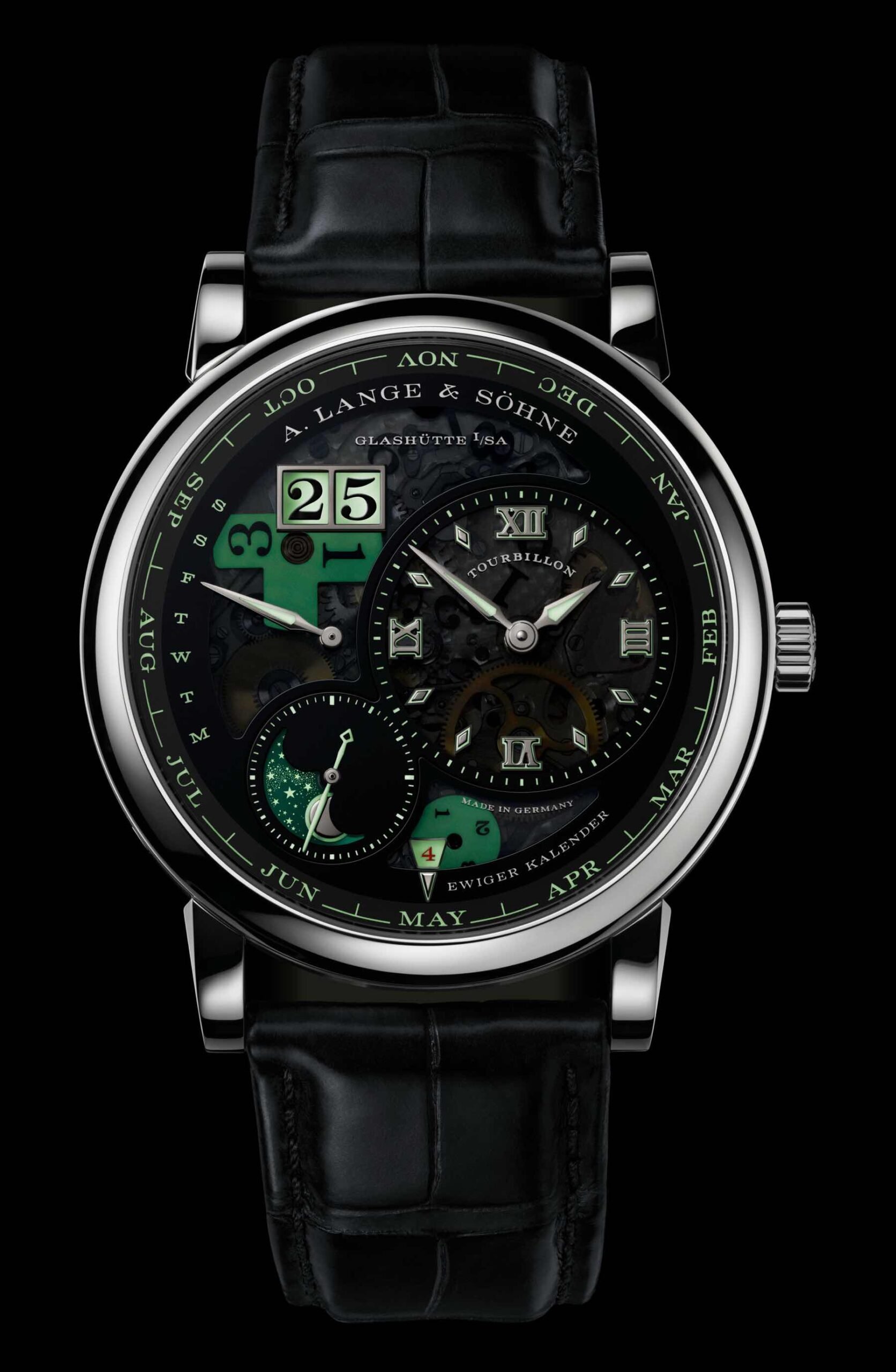
A. Lange & Söhne Lange 1 Tourbillon Perpetual Calendar “Lumen”
Later in the year, the Datograph Perpetual on a platinum bracelet arrived, another watch that naturally attracted headlines. Yet, I kept returning to the comparatively understated Saxonia Annual Calendar. The combination of a practical complication, elegant proportions, and exceptional legibility feels increasingly appealing the more time I spend with it.
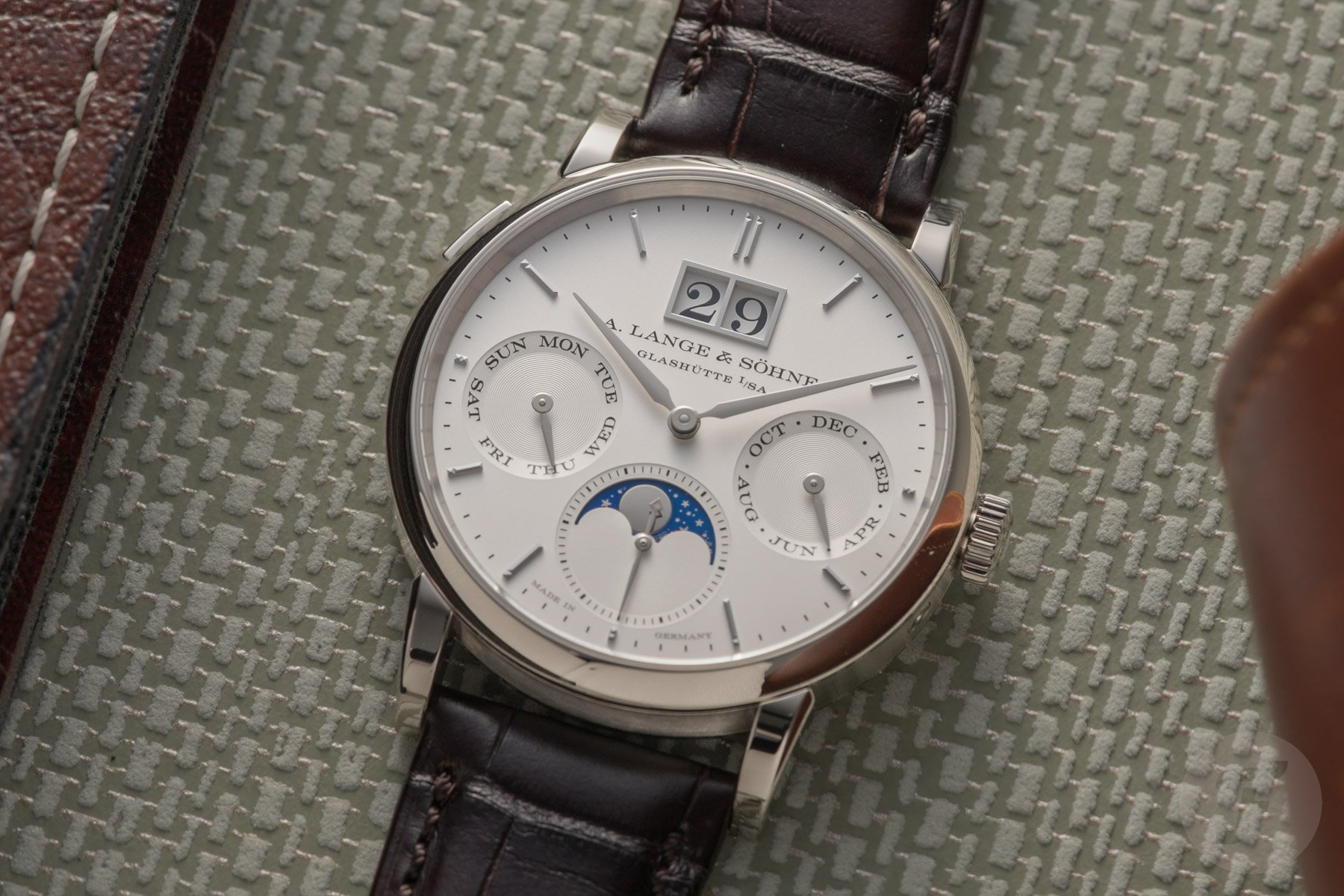
A. Lange & Söhne Saxonia Annual Calendar
There is something undeniably alluring about a small complicated watch. The Saxonia Annual Calendar immediately reminded me of the legendary Patek Philippe ref. 3970. That watch combined a perpetual calendar and chronograph within a modest 36mm case, proving that serious complications do not need uncompromising dimensions to command attention.
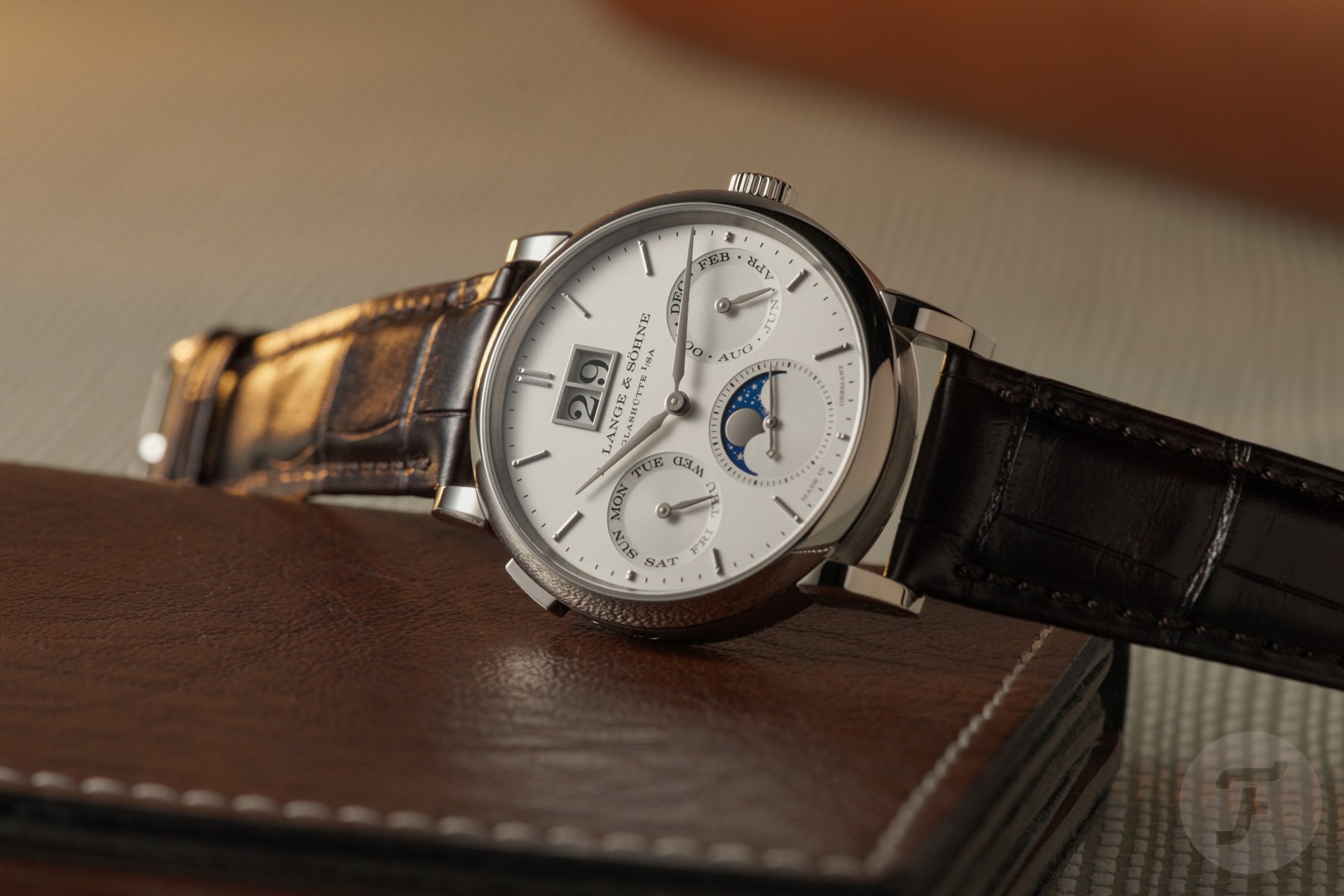
The Saxonia Annual Calendar follows a similar philosophy. Despite measuring just 36mm across, the watch never feels cramped or difficult to read. If anything, the compact case makes the layout feel even more impressive.
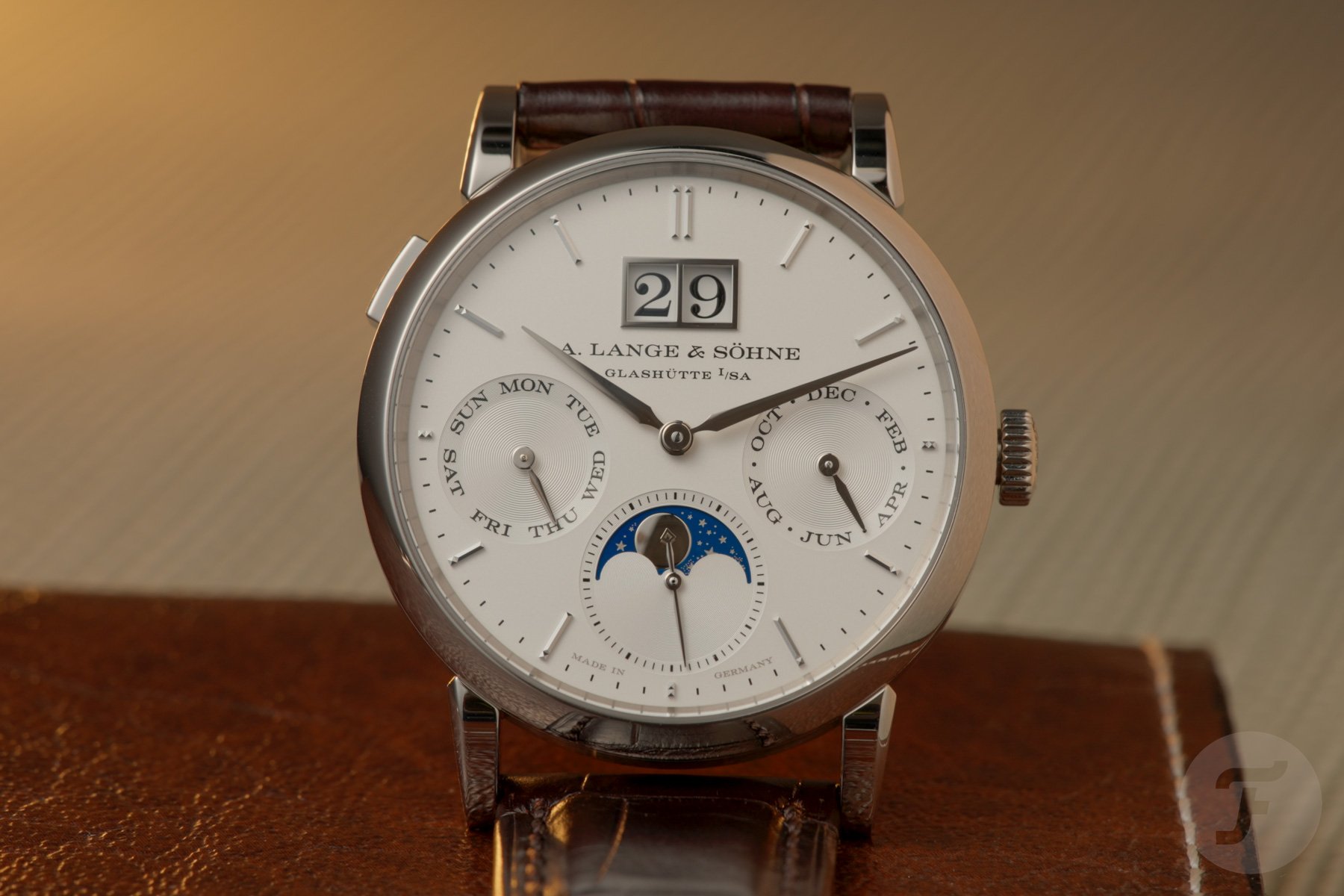
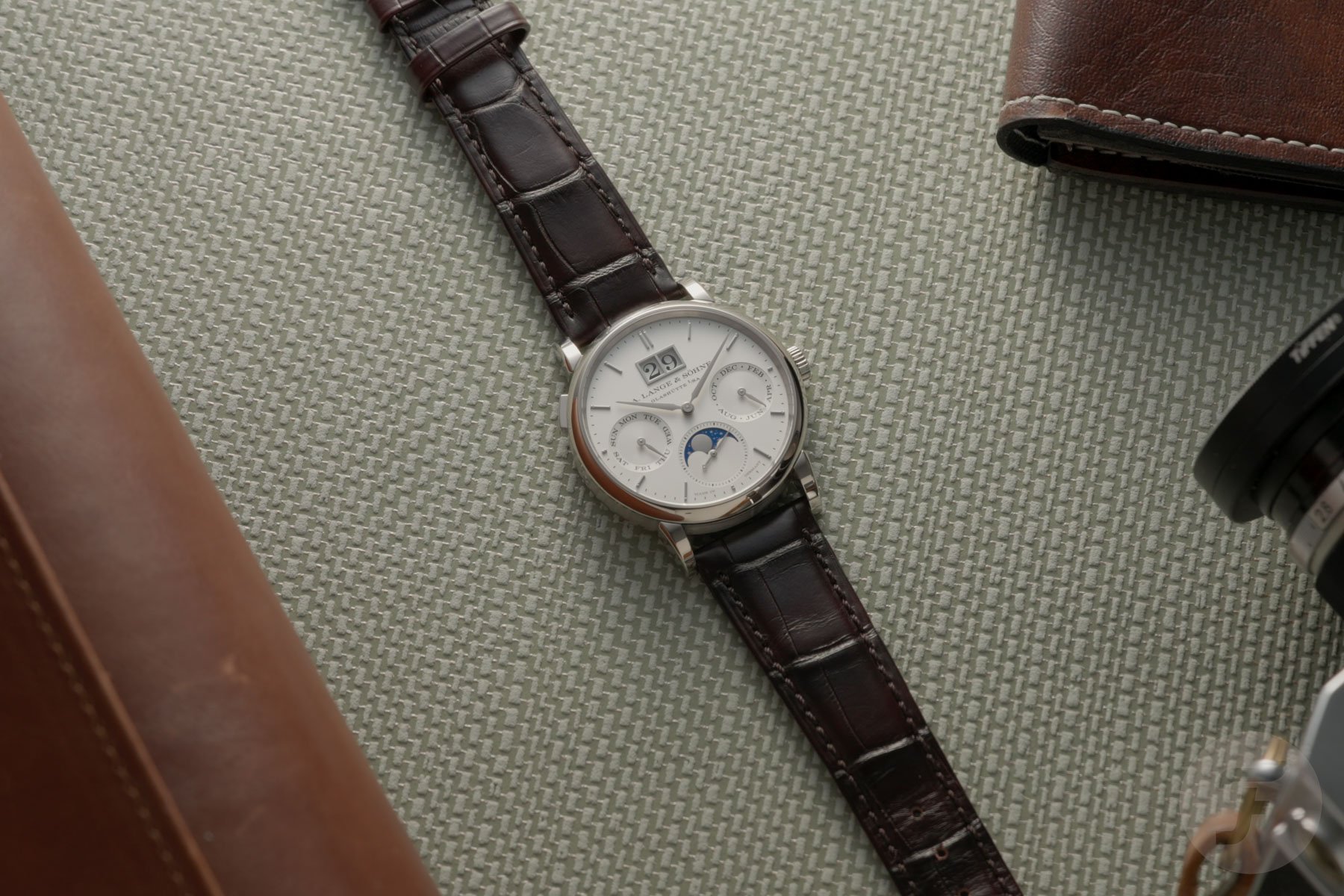
Naturally, the focal point is Lange’s outsize date beneath 12 o’clock. Using separate discs for each numeral, it remains one of the clearest date displays in watchmaking. That prominence makes sense because the date is usually the calendar indication we reference most often.
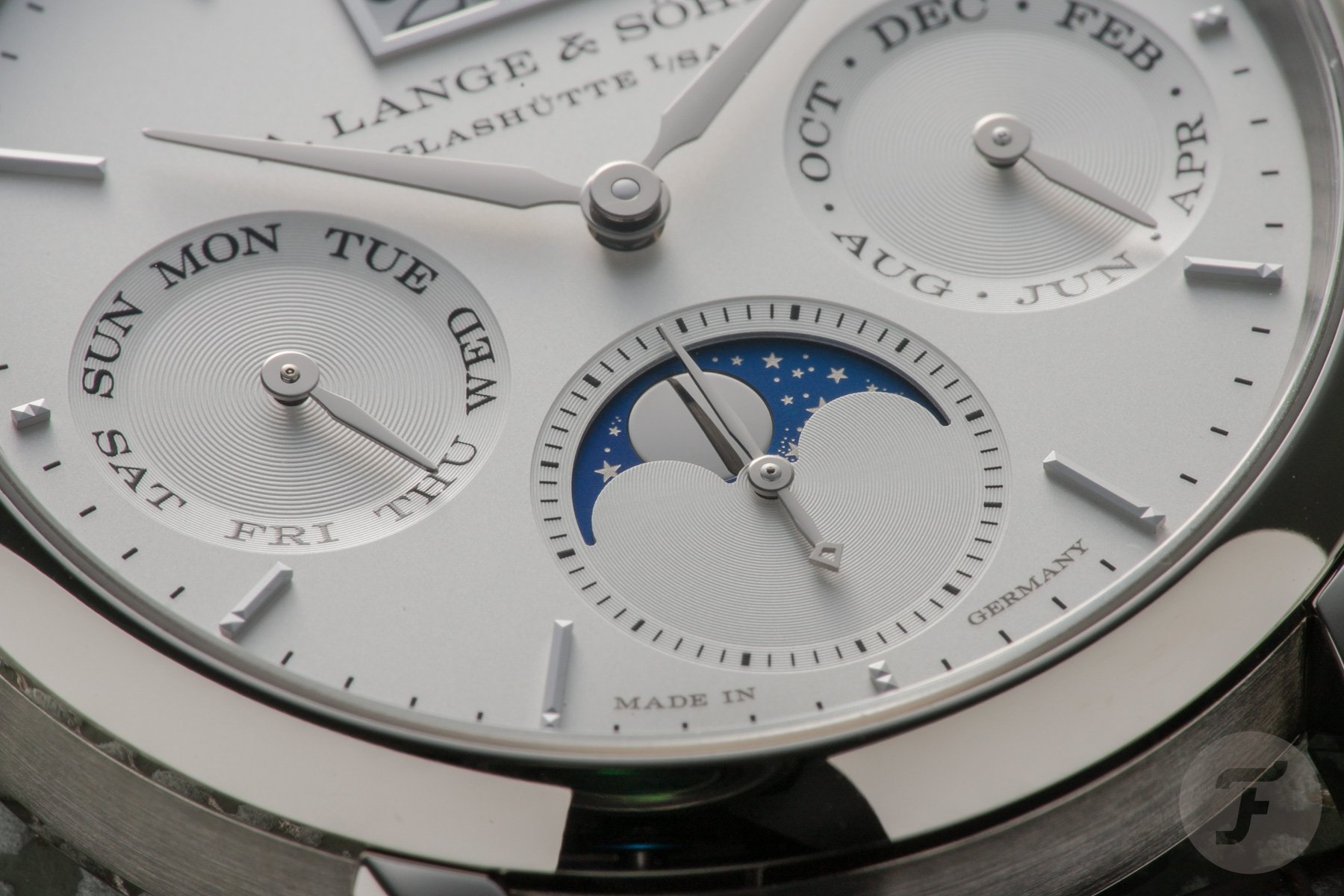
Flanking the dial are the day and month displays at 9 and 3 o’clock, respectively. By displaying only the first three letters of each indication, Lange maintains excellent legibility while preserving visual balance. These two sub-dials mirror one another almost perfectly, helping the dial feel orderly despite the amount of information presented.
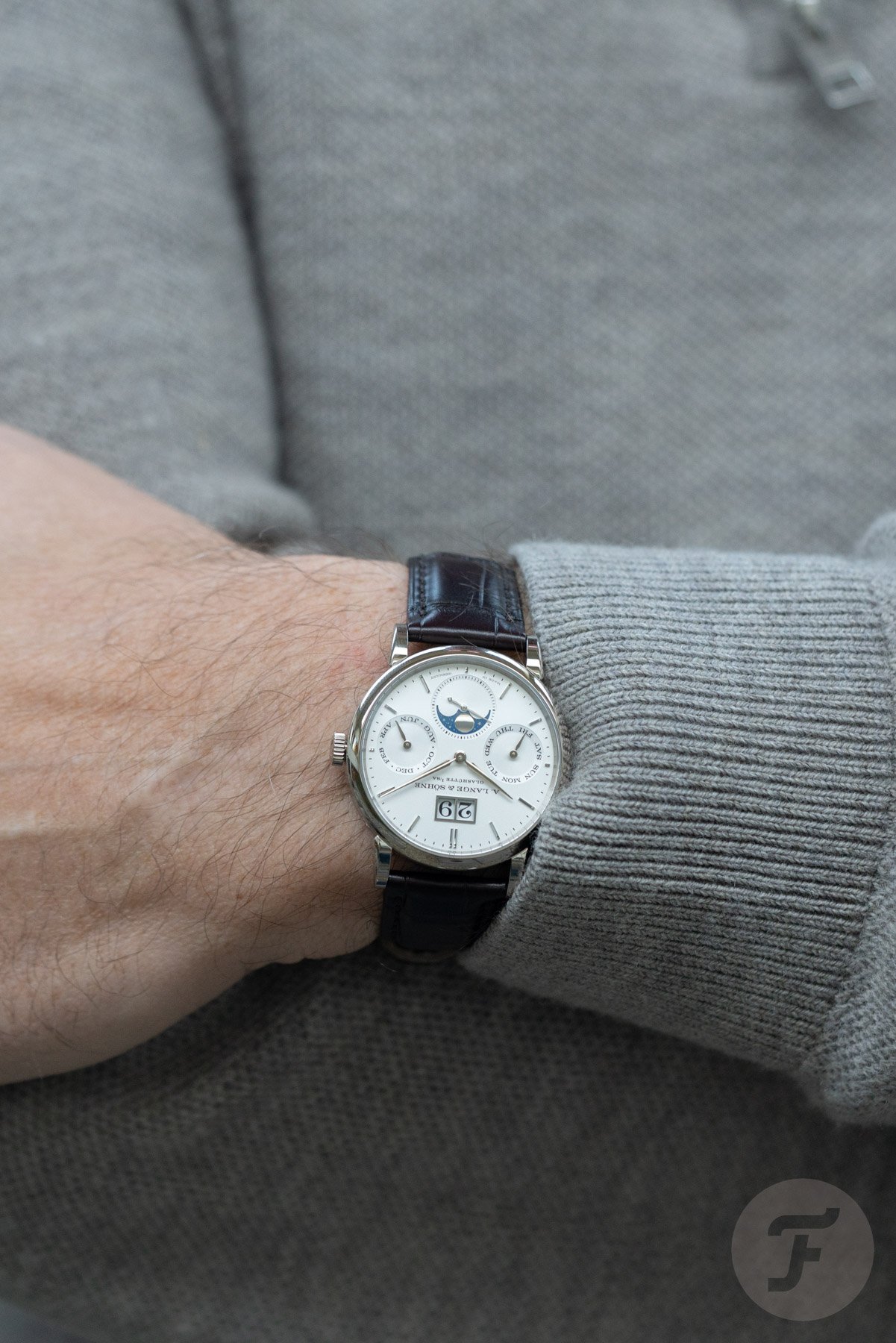
To preserve that symmetry, the month display only names six months directly. Small dot markers represent the months in between. This subtle solution demonstrates the care with which Lange approached the overall design.
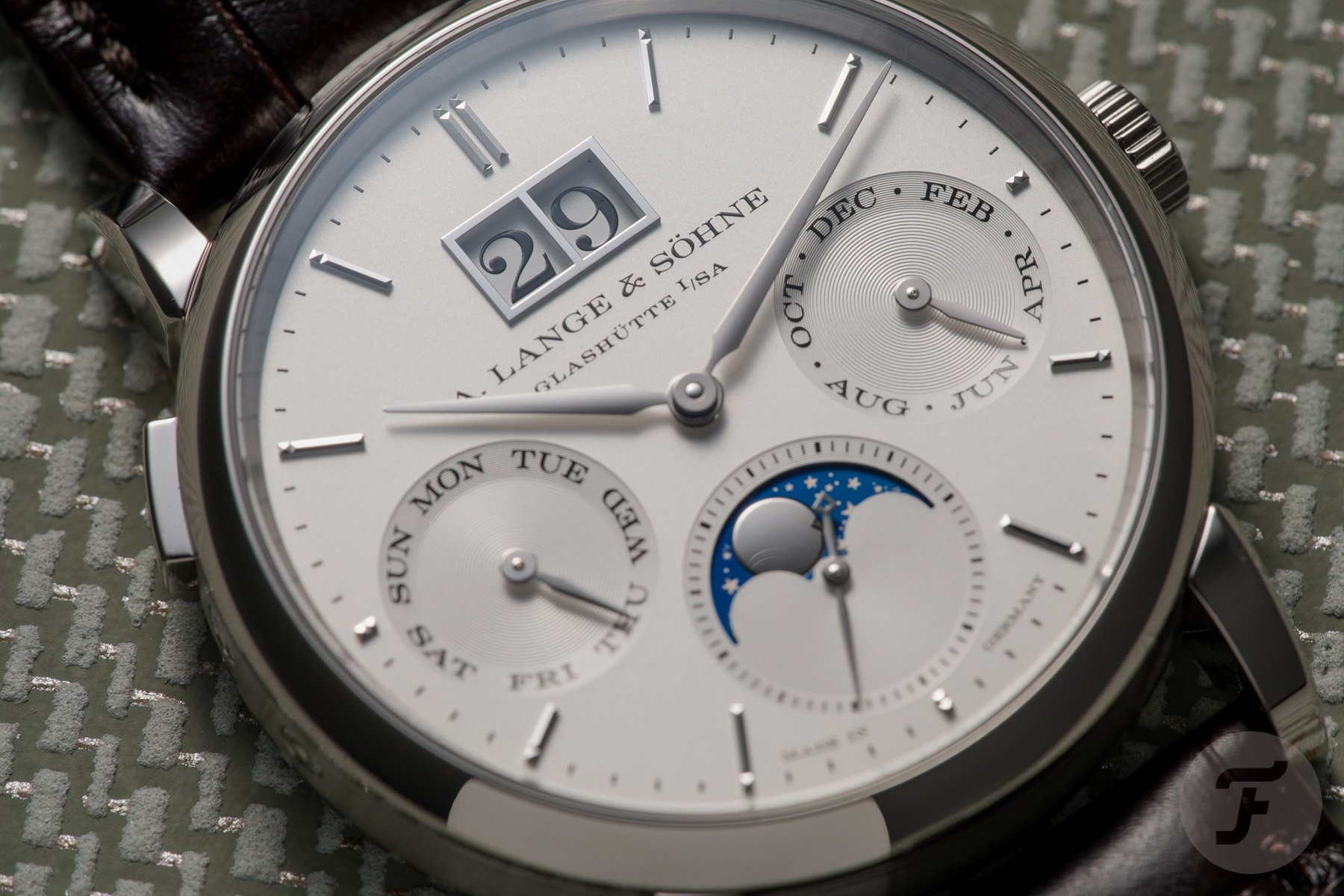
The moonphase display at 6 o’clock is where Lange allows itself a touch of embellishment. An outer running-seconds track maintains legibility, while the night-sky display showcases the brand’s artistry. Representing the Milky Way, the deep-blue disc features 428 stars and an 18K white gold moon. It provides a welcome flourish within an otherwise restrained, highly functional dial layout.
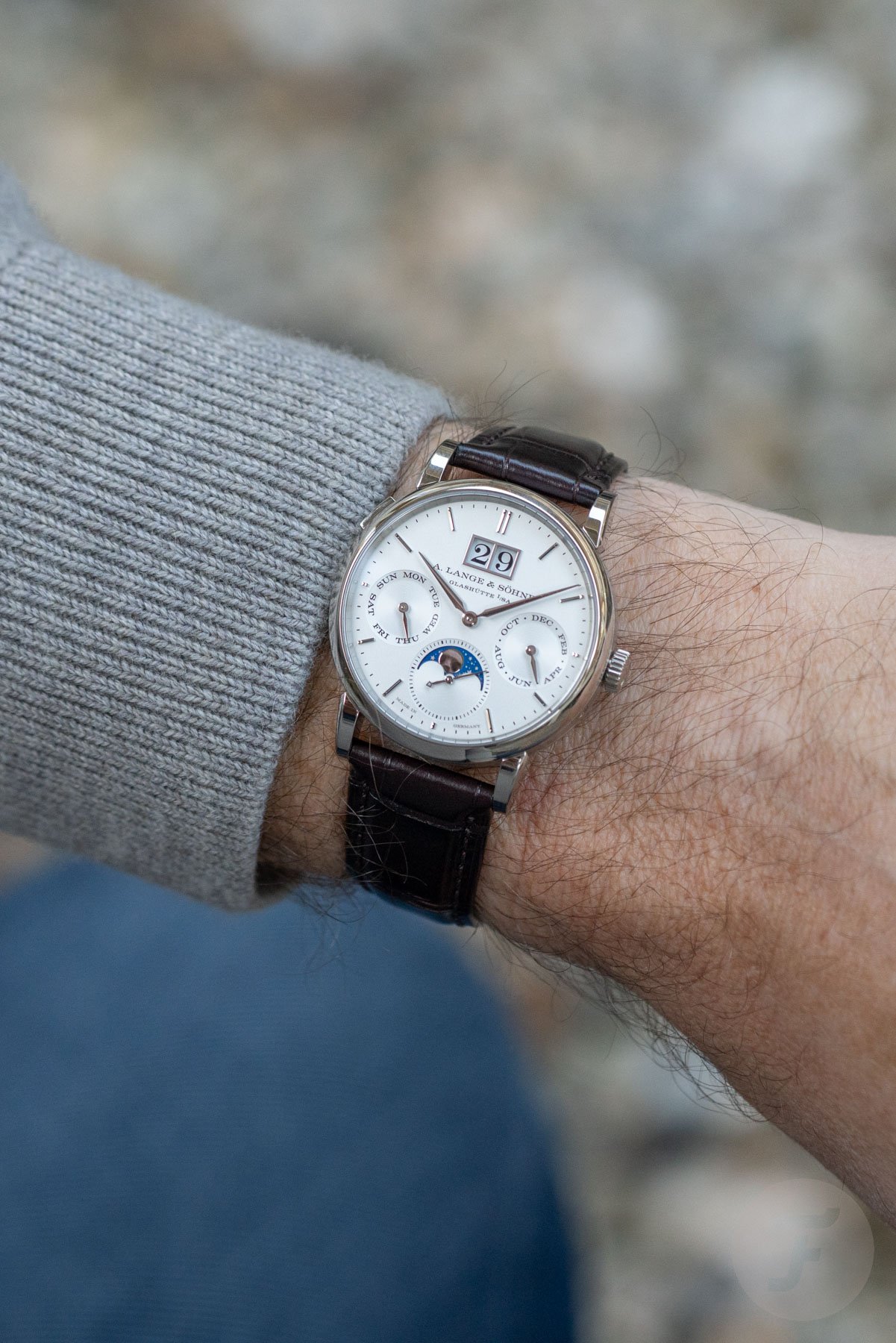
On the wrist
Lange has a knack for balancing visual weight. While wearing the Saxonia Annual Calendar, I kept imagining the dial without the moonphase display. Many dismiss this as a decorative complication with little practical use. I disagree. Beyond its relationship to tides and the night sky, it serves an important purpose here.
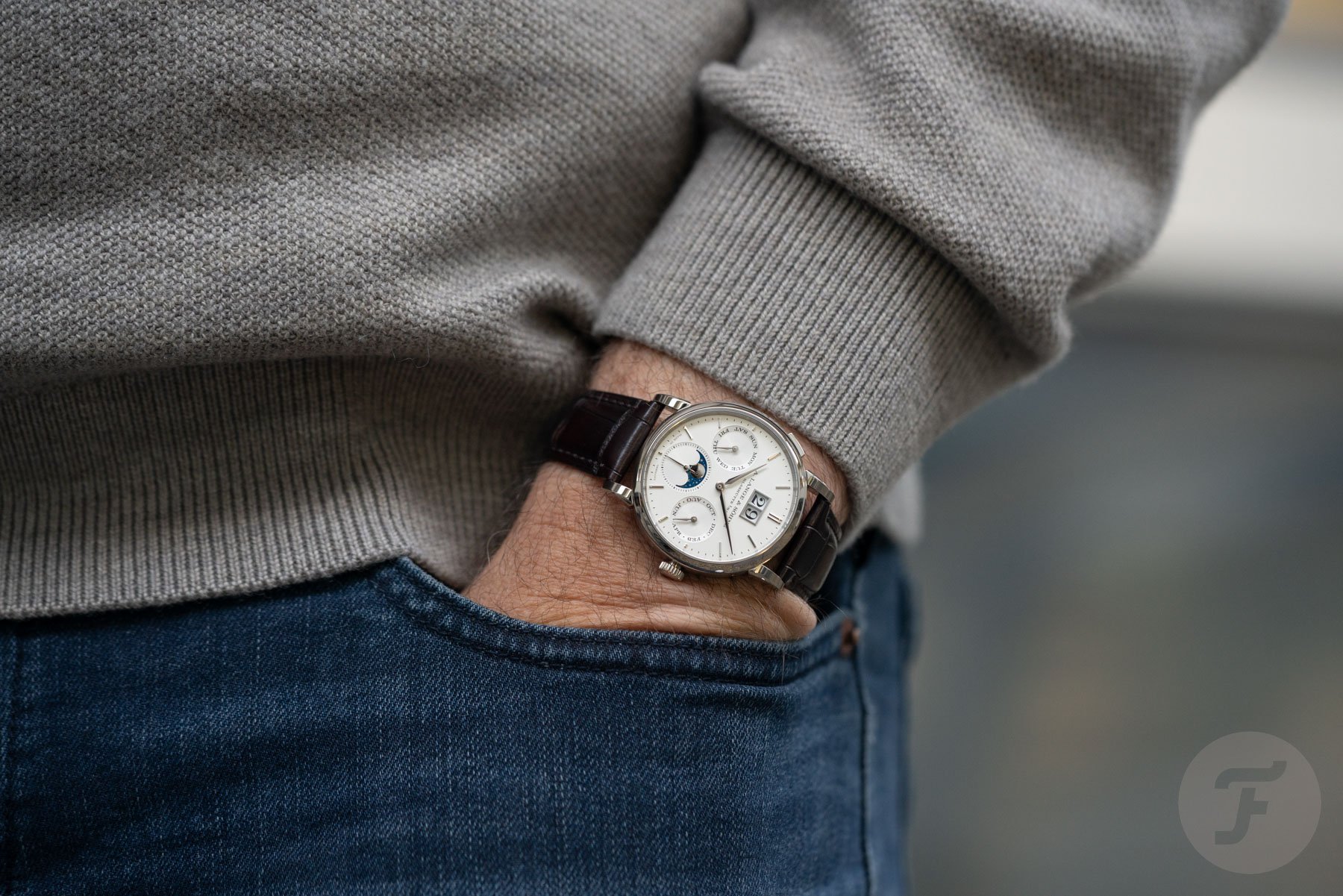
Without the moonphase display, the dial risks feeling overly clinical. Calendar indications are inherently functional. The deep blue moonphase disc introduces a welcome dose of character and artistry. It acts as a visual counterweight to the outsized date and A. Lange & Söhne logo. The result is a layout that feels balanced rather than calculated.
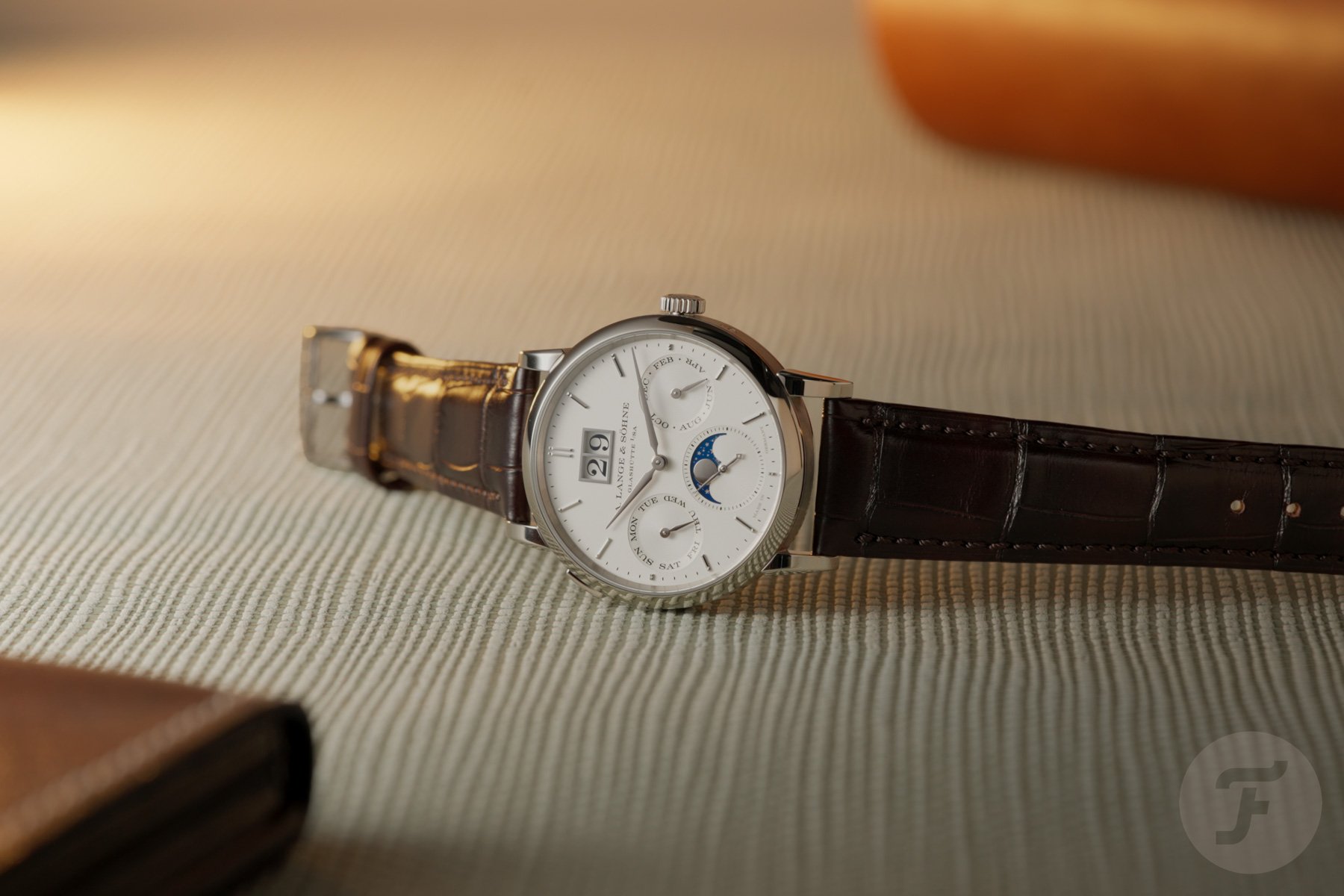
Not every high-end manufacturer achieves this so successfully. Some watches feel dictated by movement architecture, with the dial becoming secondary. Lange approaches the problem from the opposite direction. Legibility and visual harmony are equally important as mechanical execution.
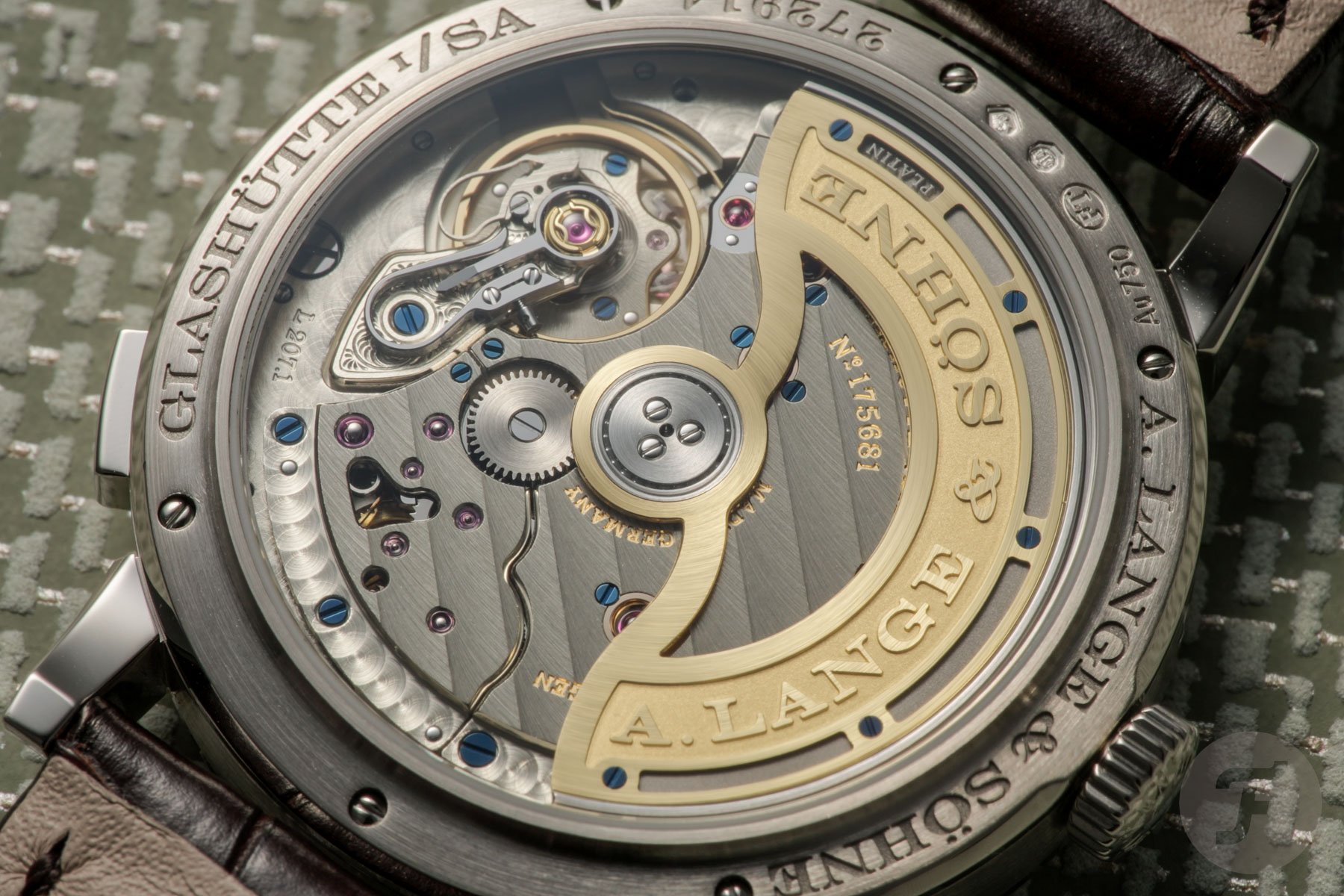
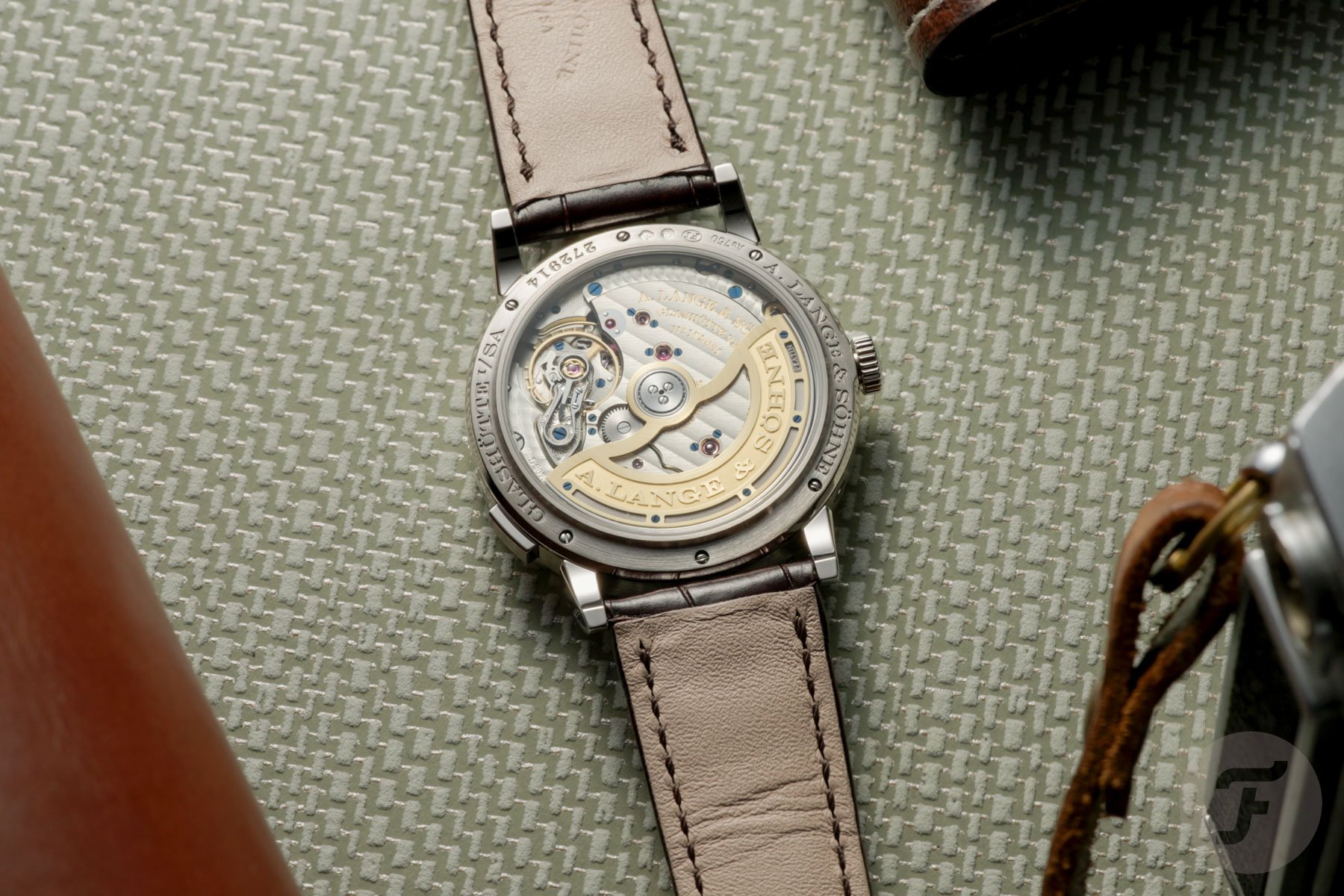
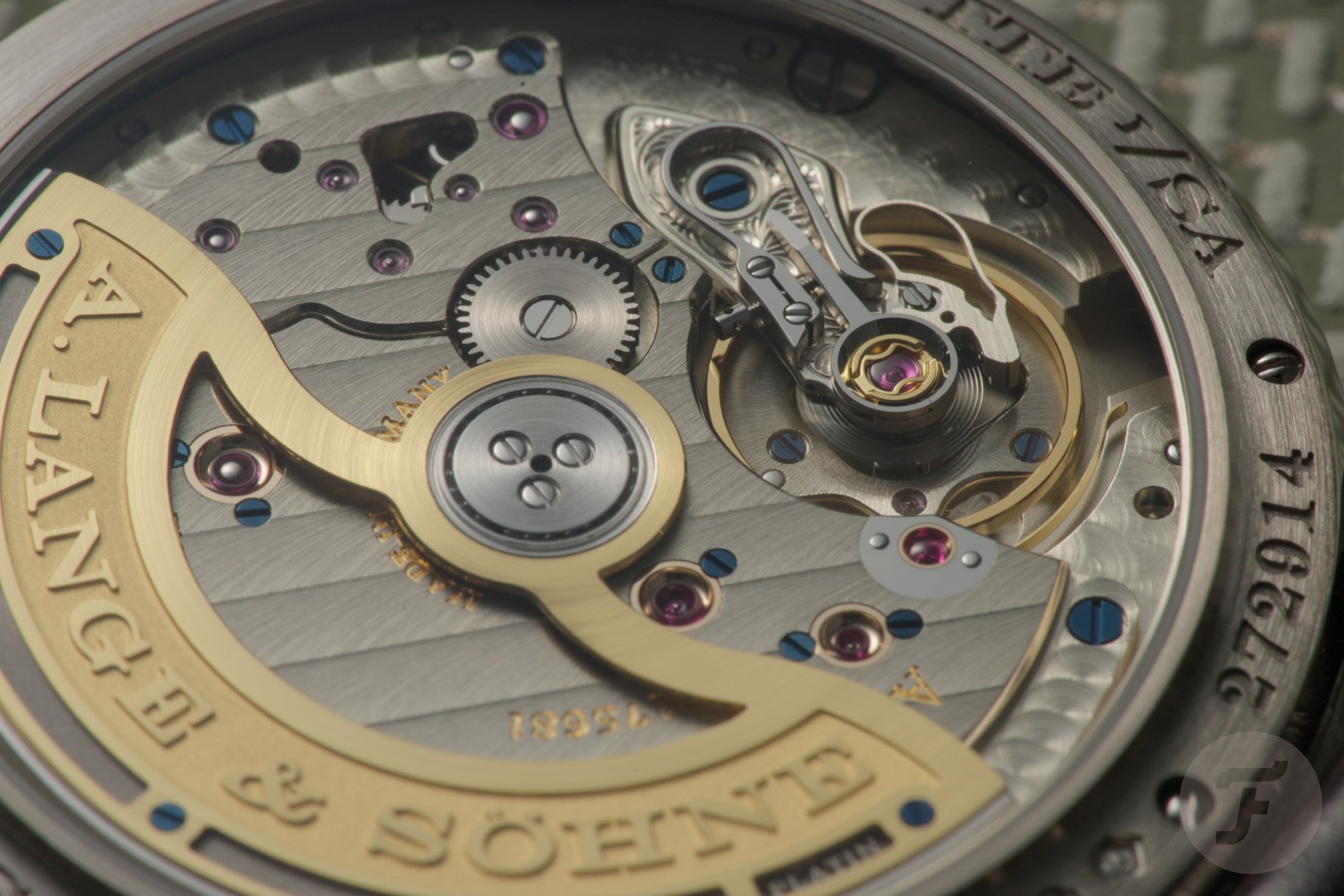
For the compact 36mm Saxonia Annual Calendar, Lange developed a new movement. The automatic caliber L207.1 operates at 21,600 vibrations per hour and delivers a 60-hour power reserve. A gold-finished rotor is the visual centerpiece, while a 950 platinum ring mounted beneath its outer edge provides additional weight.
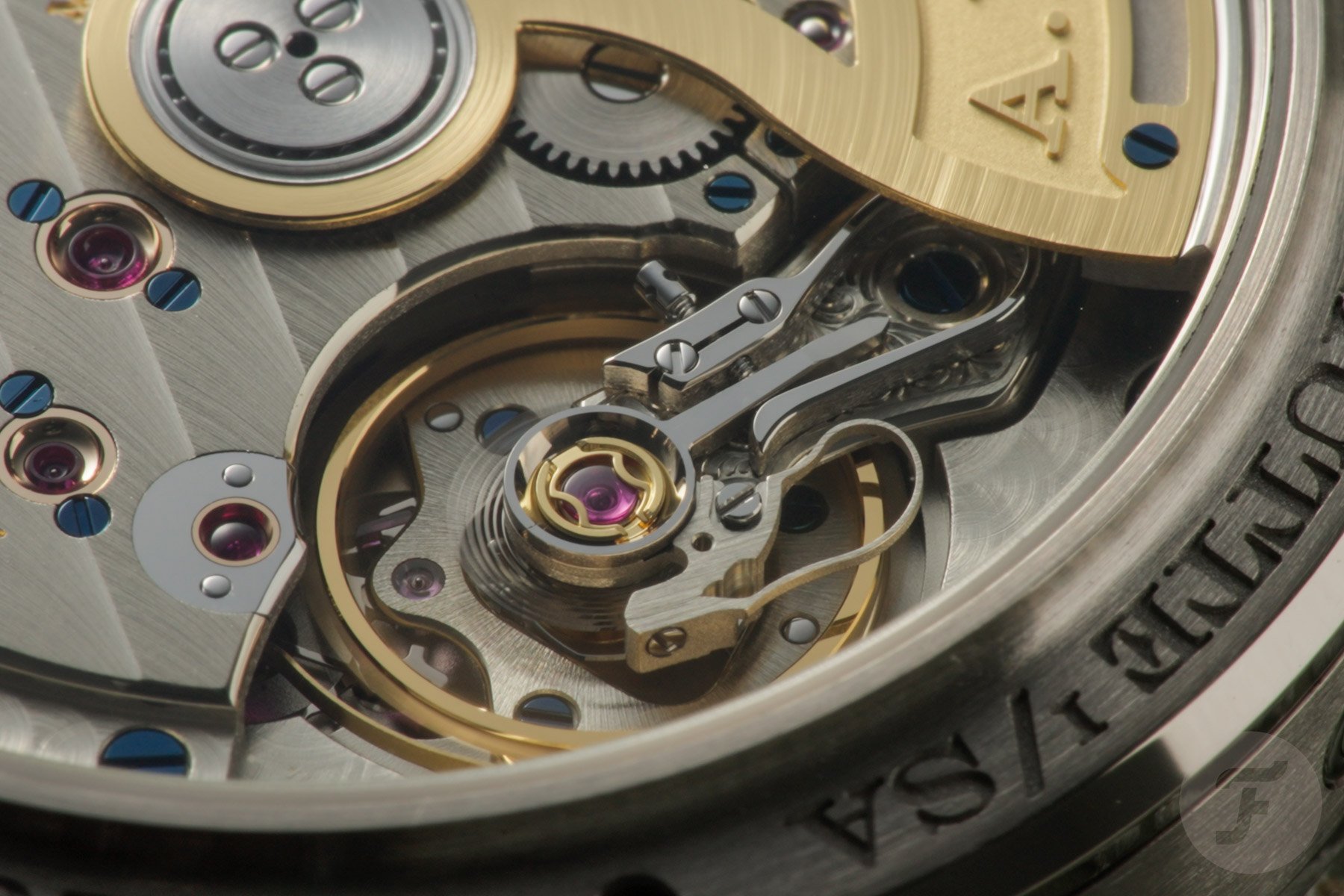
True to form, Lange hides much of that platinum component from view. The emphasis remains on the warmth of the gold, while the heavier platinum performs its task behind the scenes.
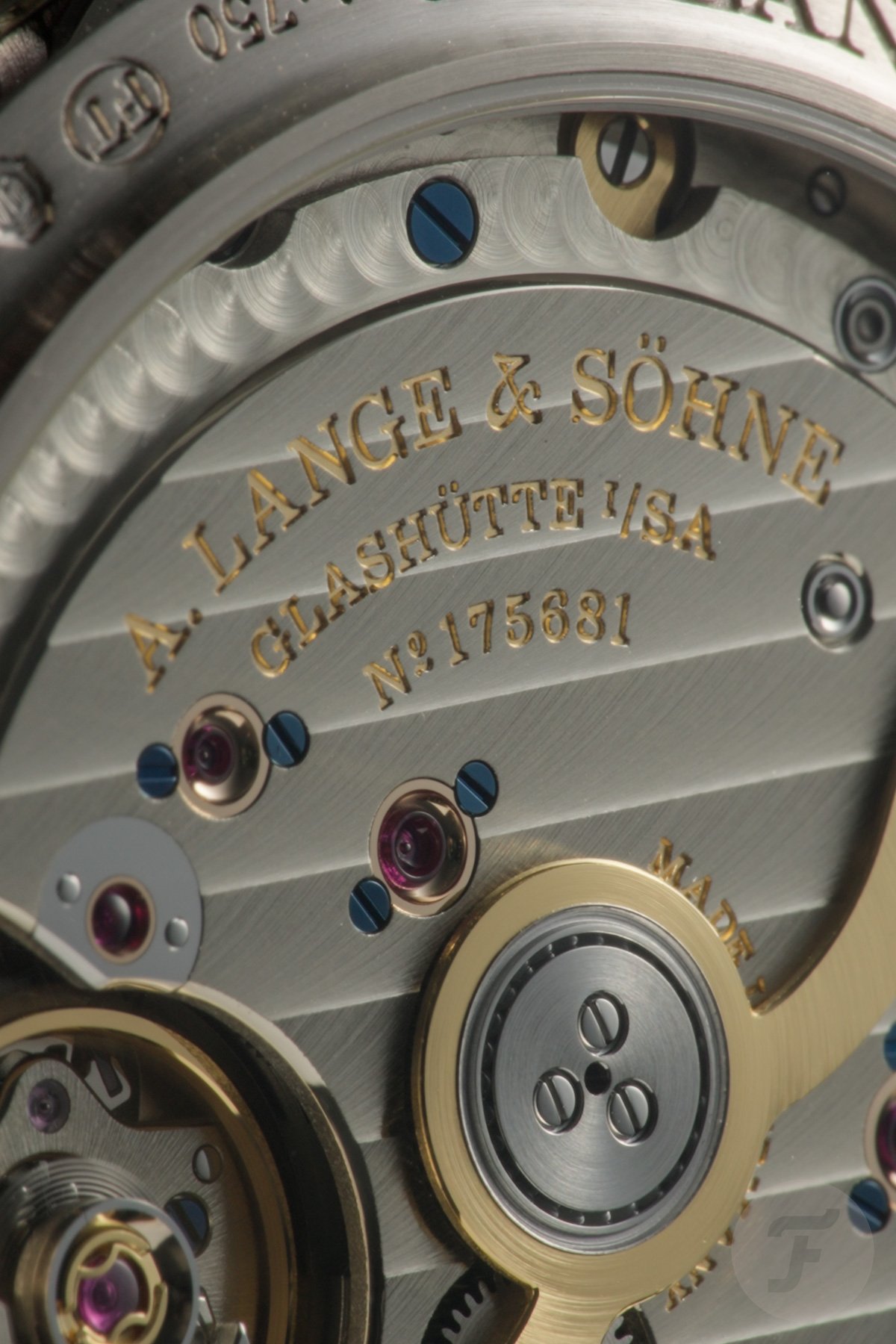
One detail I did notice on the wrist was the winding behavior. Because the rotor winds in one direction, it spins freely in the opposite one. It is nowhere near as dramatic as a Valjoux 7750. Still, I occasionally felt a little extra movement through the case.
Perfect dimensions
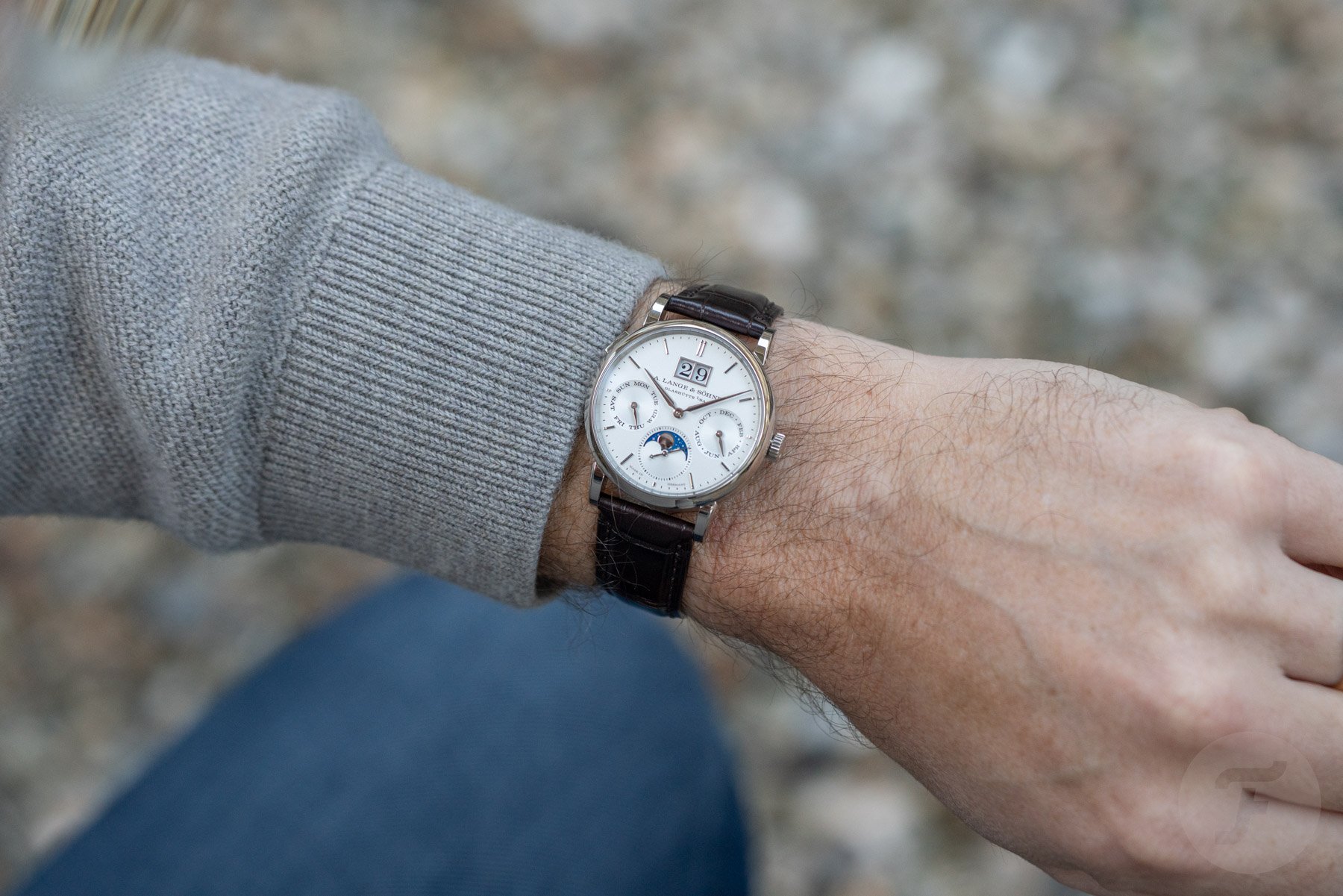
I am not part of the “36mm is the perfect size for every watch” camp. My collection ranges from 38mm to 44mm watches. For me, dimensions should suit the watch rather than follow a trend.

That said, 36mm feels exactly right here. The compact diameter keeps the annual calendar elegant, while the 9.8mm thickness makes it exceptionally comfortable. The watch slips under a cuff effortlessly and carries far less visual weight than its specification sheet might suggest.
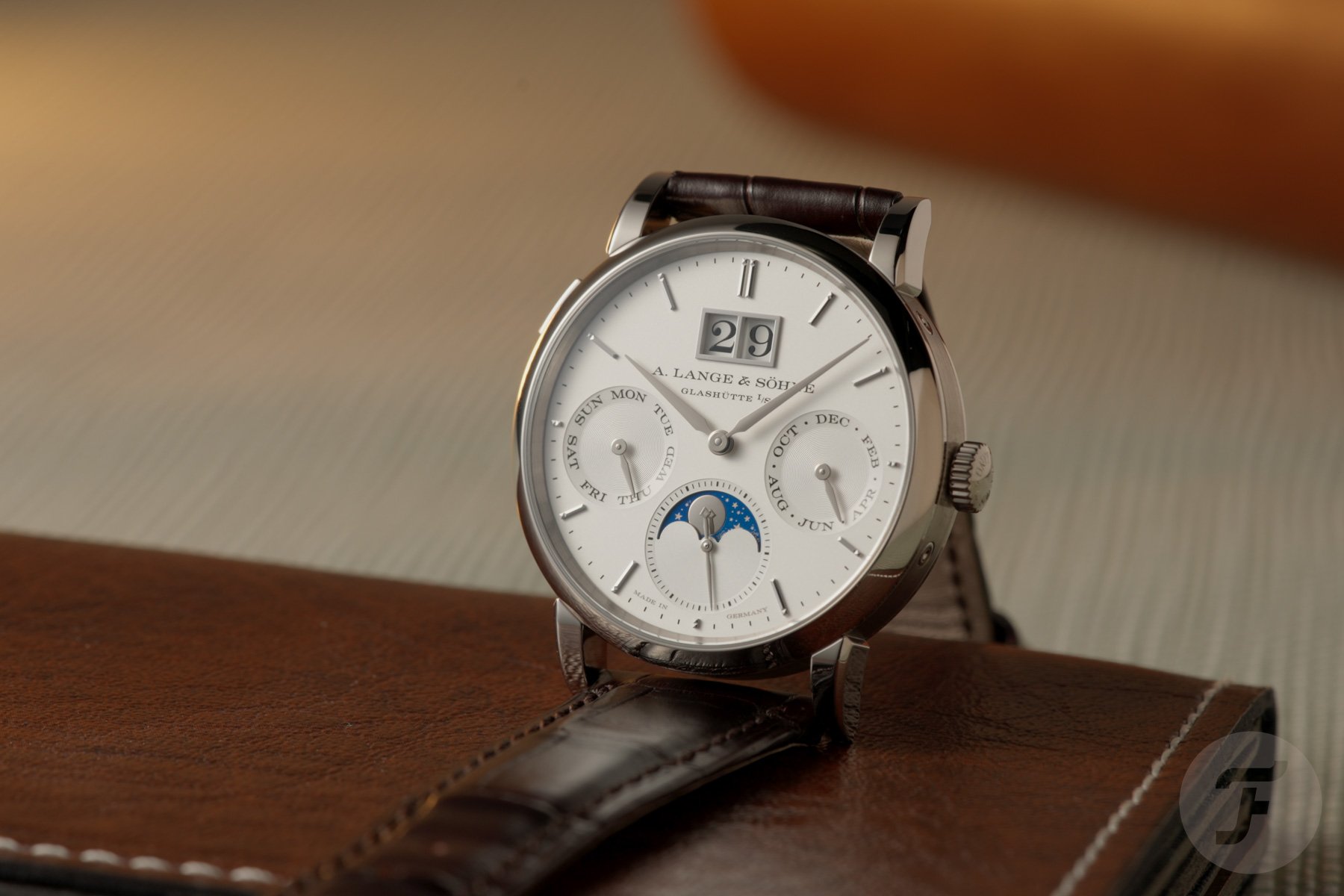
Handling the watch also reveals details that are easy to miss in photographs. Each baton marker terminates with a tiny hobnail, or Clous de Paris, detail. At 3, 6, and 9 o’clock, the motif doubles up. The indexes pair beautifully with Lange’s signature lancet hands.
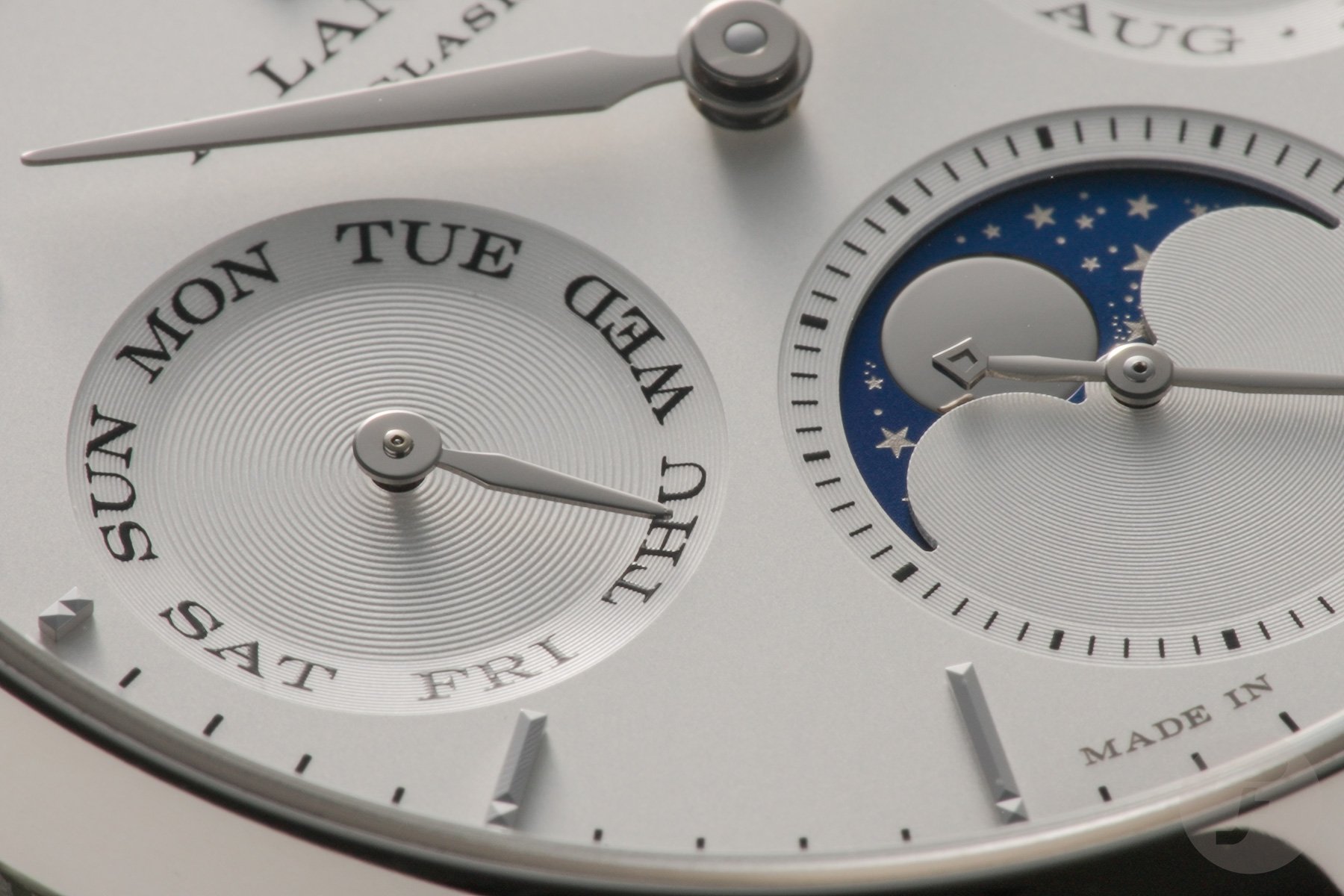
I also appreciate the concentric grooves, or azurage, within the 925 silver sub-dials. They appear to ripple outward from the central pinion, almost like a stone striking water. It’s a subtle detail that adds depth without increasing visual clutter.
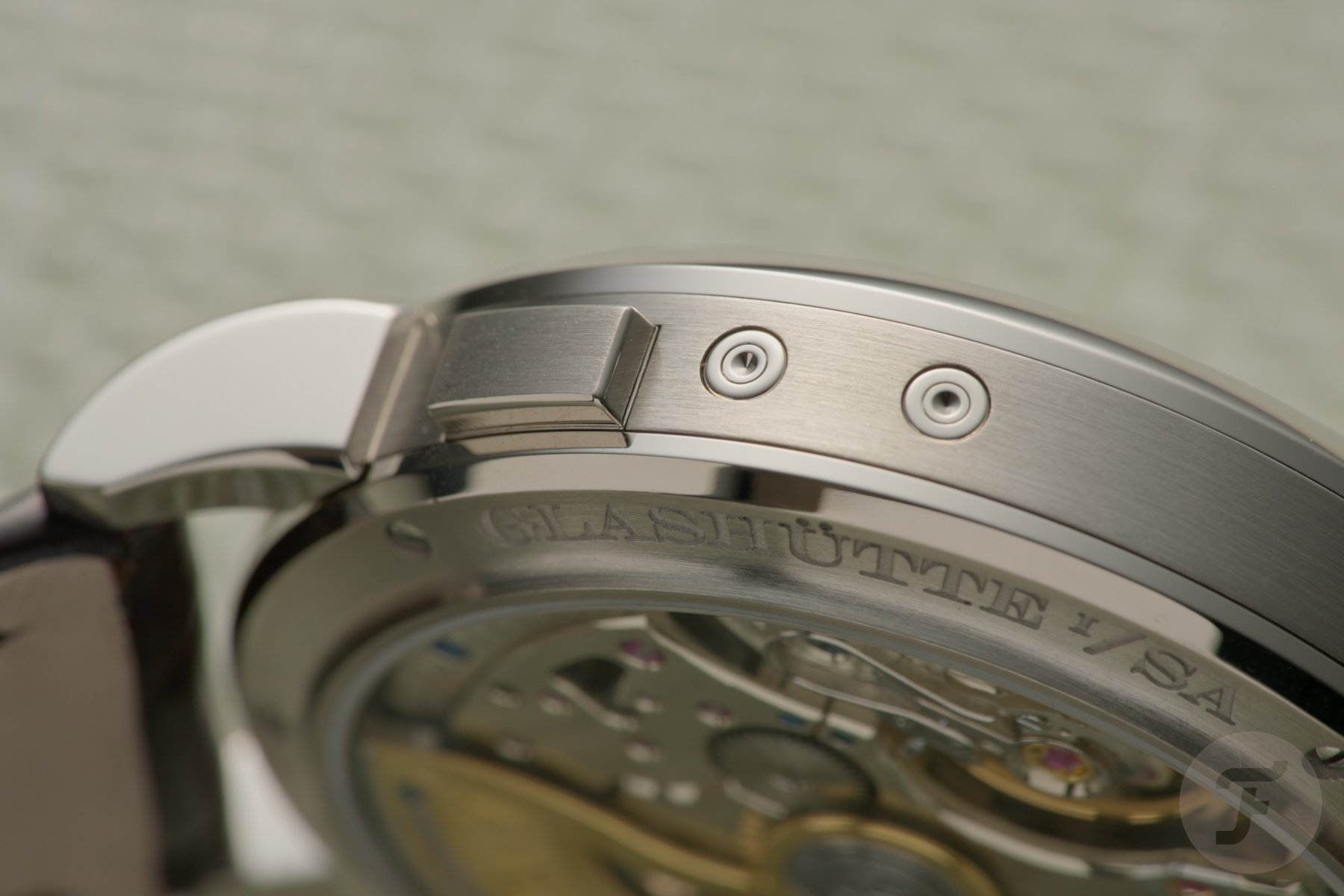
Lange has not overlooked practicality either. A corrector at 10 o’clock can advance all calendar indications simultaneously should the watch stop running. A safety mechanism requires the crown to be pulled out to avoid accidental advancements. It’s a thoughtful solution for a complication that many owners will wear in rotation.
Even adjusting for February is relatively straightforward. Individual correctors allow the date and month to be advanced independently, without affecting the day or moonphase indications.
Final thoughts, specs, and pricing
The A. Lange & Söhne Saxonia Annual Calendar comes fitted to a brown hand-stitched alligator strap with an 18K white gold tang buckle. My colleague Lex will also appreciate the tone-on-tone brown stitching, which avoids unnecessary contrast and keeps the watch looking refined.
What impresses me most about the Saxonia Annual Calendar is how little it feels compromised by its dimensions. Smaller, more complicated watches are rare these days, yet Lange proves that practical complications and compact sizes can still coexist beautifully.

The A. Lange & Söhne Saxonia Annual Calendar retails for €65,000 / US$63,000 and is a regular-production model. For me, it remains one of 2026’s most quietly compelling releases.
You can learn more on the brand’s website here.
This is a partnership post. Learn more.