A Breguet Pocket Watch Mystery: From Paris To New Zealand

On August 18th, 1853, a buyer recorded only as “Capitaine Denny” paid 700 francs for a gold Breguet hunter pocket watch in Paris. More than 170 years later, Breguet No. 2226 has surfaced and is up for auction at Webb’s in Auckland. Its journey from the Quai de l’Horloge to New Zealand remains a mystery, and today, we’ll follow the clues in search of the man behind the name. Those two words have led me down a fascinating provenance trail.
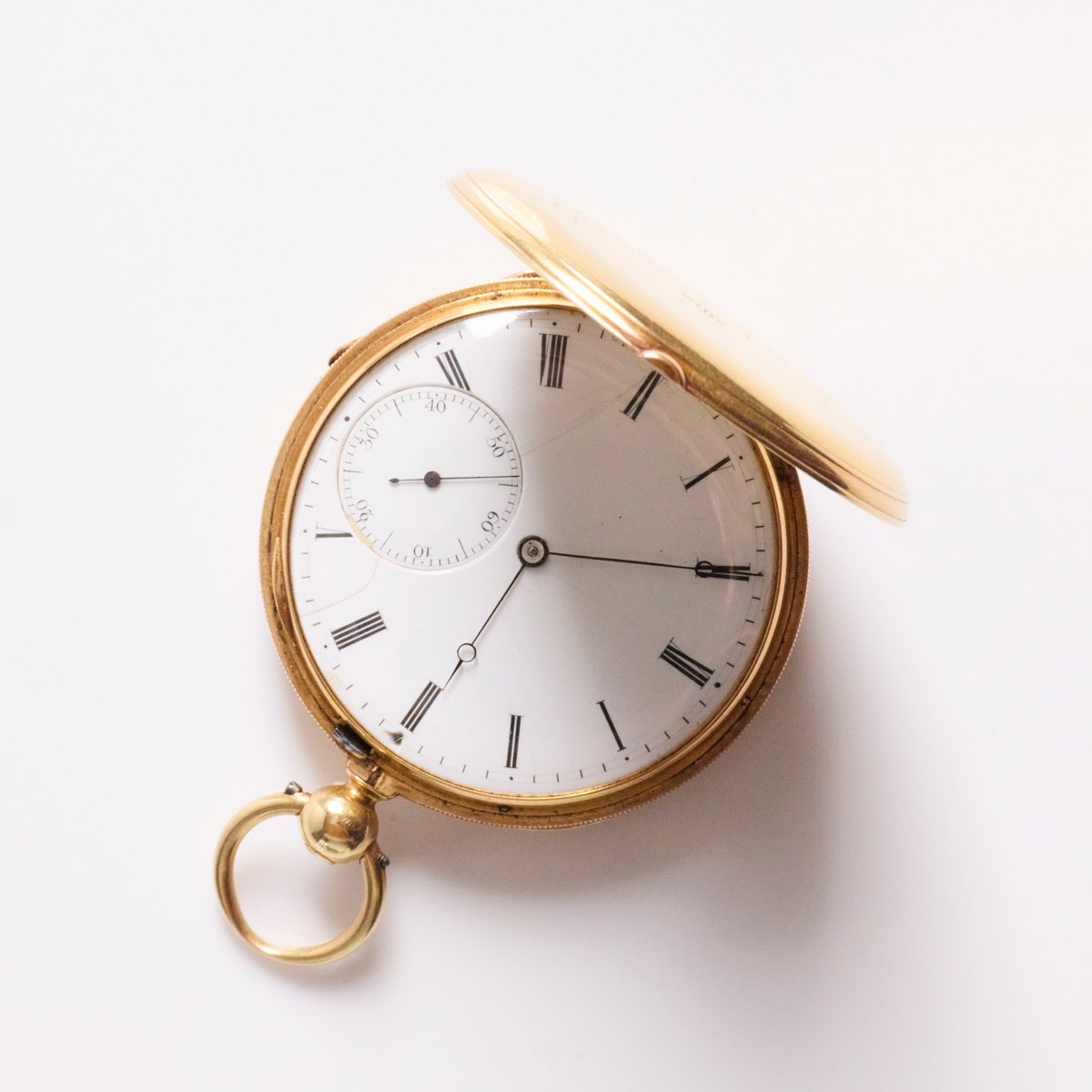
Image: Webb’s
No. 2226 in the Breguet archive
Breguet’s archive is one of watchmaking’s great historical resources. The maison has preserved its sales registers since the 18th century, often recording the original owner, purchase price, and subsequent servicing. The entry for No. 2226 describes a gold hunting-case watch with case No. 1507, an enamel dial with small seconds at 6 o’clock, a gold cuvette, a lever escapement, and a compensated balance. However, the Breguet heritage team found no further information about the buyer. The watch never returned to the manufacture for servicing, either. Its documented history therefore begins and ends with the 1853 sale.
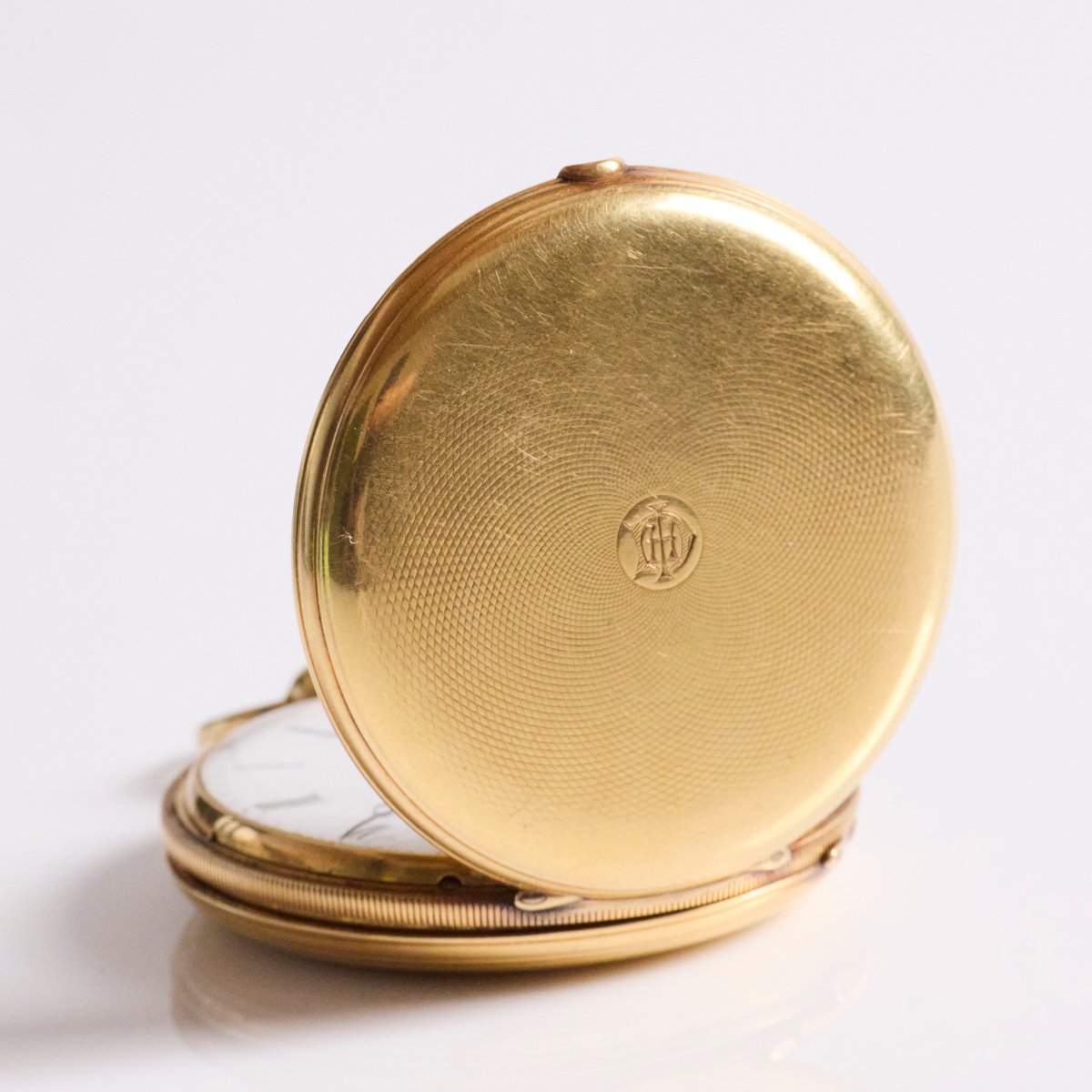
Image: Webb’s
In 1853, Breguet was still operating from its original premises. Abraham-Louis Breguet opened his workshop on the Quai de l’Horloge, beside the Pont-Neuf, in 1775. The business remained there until 1870. By the time Captain Denny visited, the founder’s grandson, Louis-Clément Breguet, was running the company. His interests extended beyond watchmaking to electricity and scientific instruments.
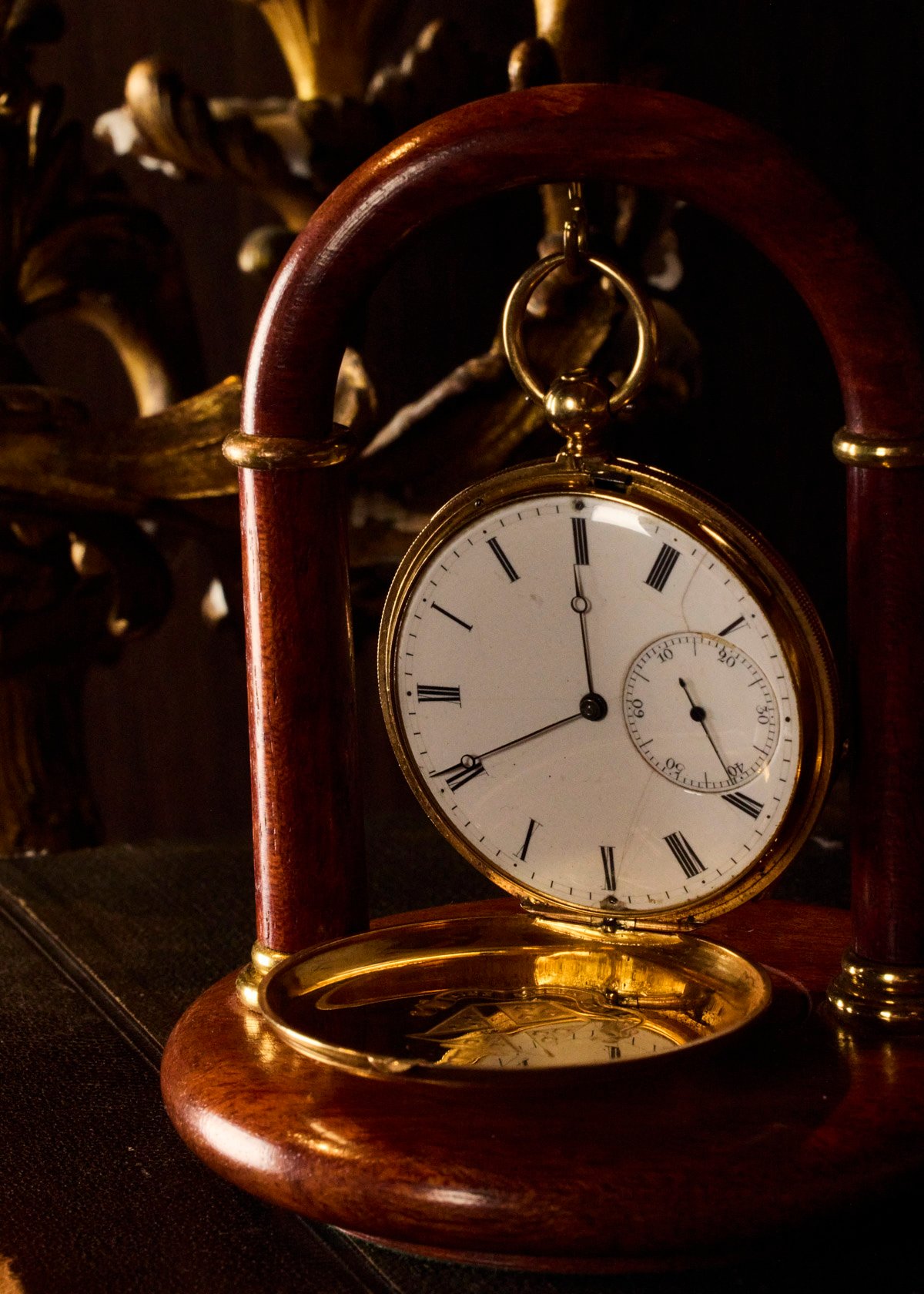
Image: Webb’s
At 700 francs, this wasn’t one of Breguet’s most expensive watches. In 1850, a gold quarter repeater sold for 2,800 francs. However, a skilled Parisian tradesman earned roughly 3.3–4.2 francs a day. At four francs per day, Denny’s purchase represented approximately 175 working days, or nearly seven months of six-day weeks. This was a significant purchase, suggesting a buyer with considerable means or social standing.
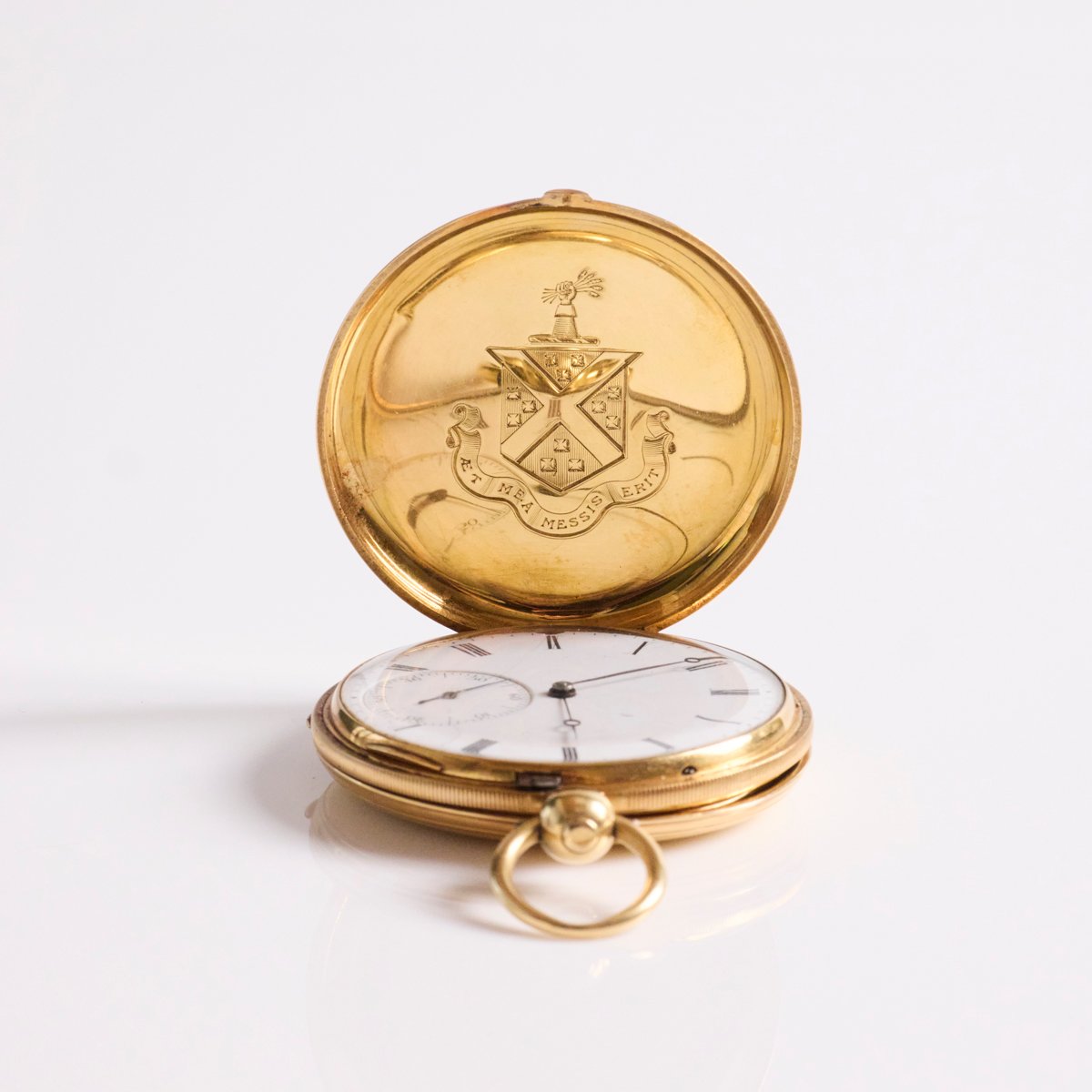
Image: Webb’s
The 18K gold Breguet pocket watch
I love this Breguet for its restraint. This 47mm 18K yellow gold pocket watch contains no complications. Beneath the hunter cover lies a white enamel dial with Roman numerals, Breguet hands, and small seconds. The movement features a lever escapement and compensated balance, and the watch even comes with its original winding key. Rather than an elaborate showpiece, it’s a practical gentleman’s watch.
The real clue lies inside the cover. Engraved there is a crest depicting an arm holding ears of wheat, accompanied by the motto æt mea messis erit. A loose translation is “and mine shall be the harvest.”
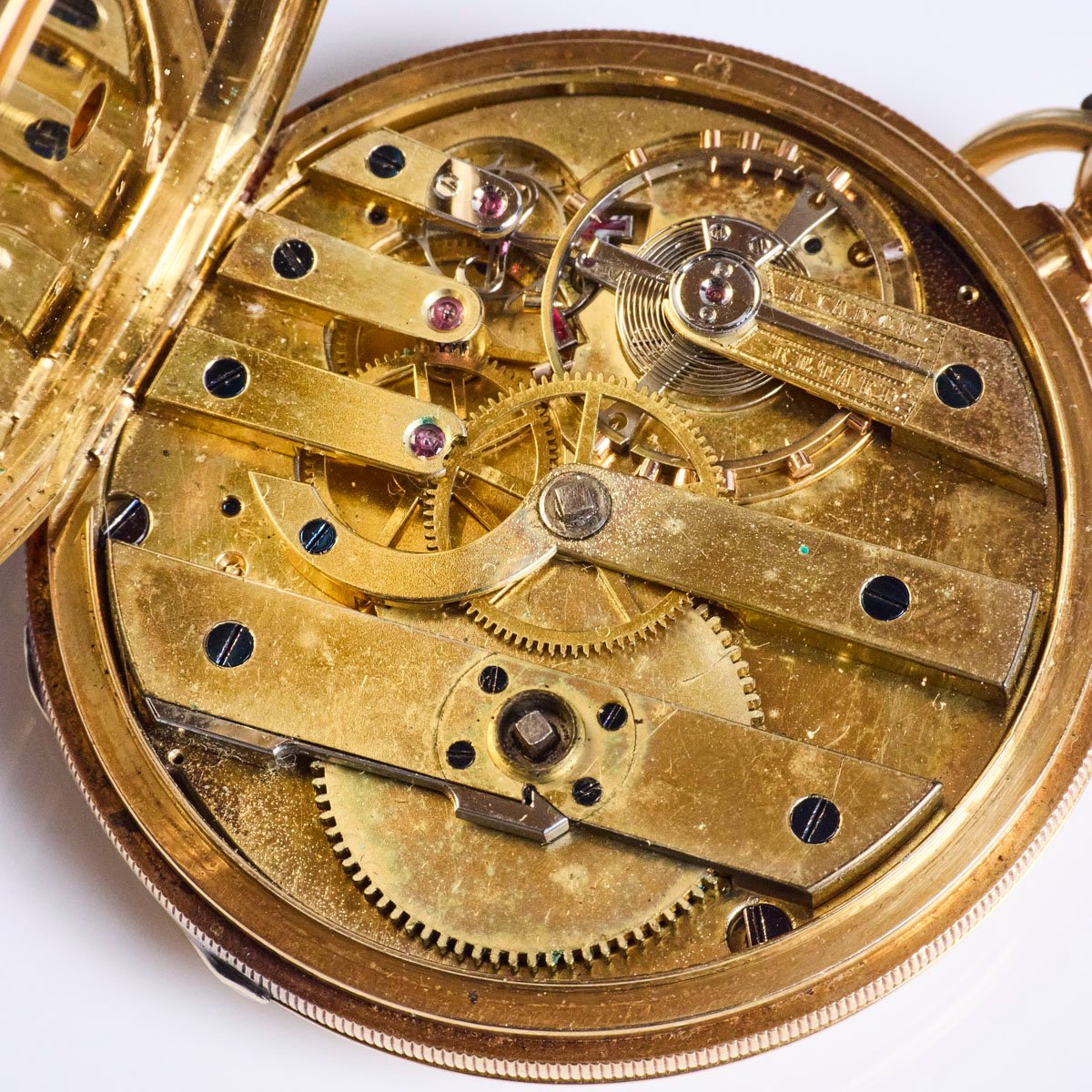
Image: Webb’s
The Denny crest leads to New Zealand
Searching for the Denny crest led to an unexpected discovery in Wellington. Te Papa holds a whale-tooth snuff mull dating to 1845. Its silver lid bears the same crest and motto, while the inscription inside reads “R. Denny 58th Bay of Islands, New Zealand August 1845.” The snuff mull belonged to Captain Richard Denny, who commanded the Light Company of the 58th Regiment during the Northern War. He later received a brevet majority.
For a moment, Richard Denny seemed like our man. However, he died in Quebec on June 4th, 1850, three years before Breguet sold the watch. His snuff mull nevertheless provides independent evidence that the crest on No. 2226 belongs to the military Denny family. This is no decorative coincidence.
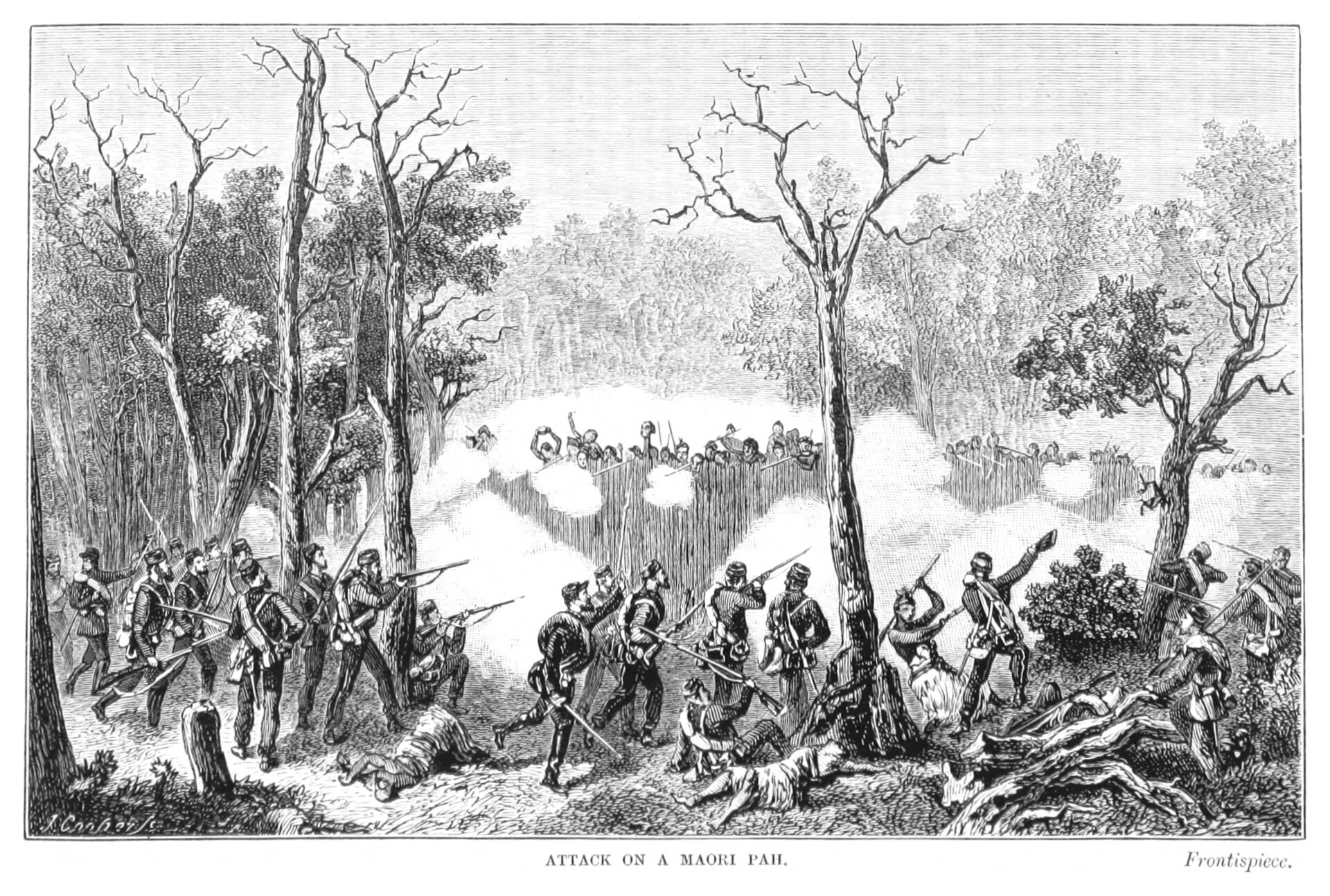
Attack on a Māori pā by Sir James Edward Alexander, Commander of the West Yorkshire Regiment — Image: Wikimedia Commons
The Northern War in New Zealand
The snuff mull’s inscription puts Richard Denny in the Bay of Islands in August 1845, in the middle of the Northern War. It was the first major conflict of the New Zealand Wars, and it is often called the Flagstaff War. It grew out of tensions in the north after the signing of the Treaty of Waitangi in 1840. To the Ngāpuhi leader Hōne Heke Pōkai, the British flagstaff on Maiki Hill above Kororāreka symbolized the authority his people were losing. He cut it down four times.
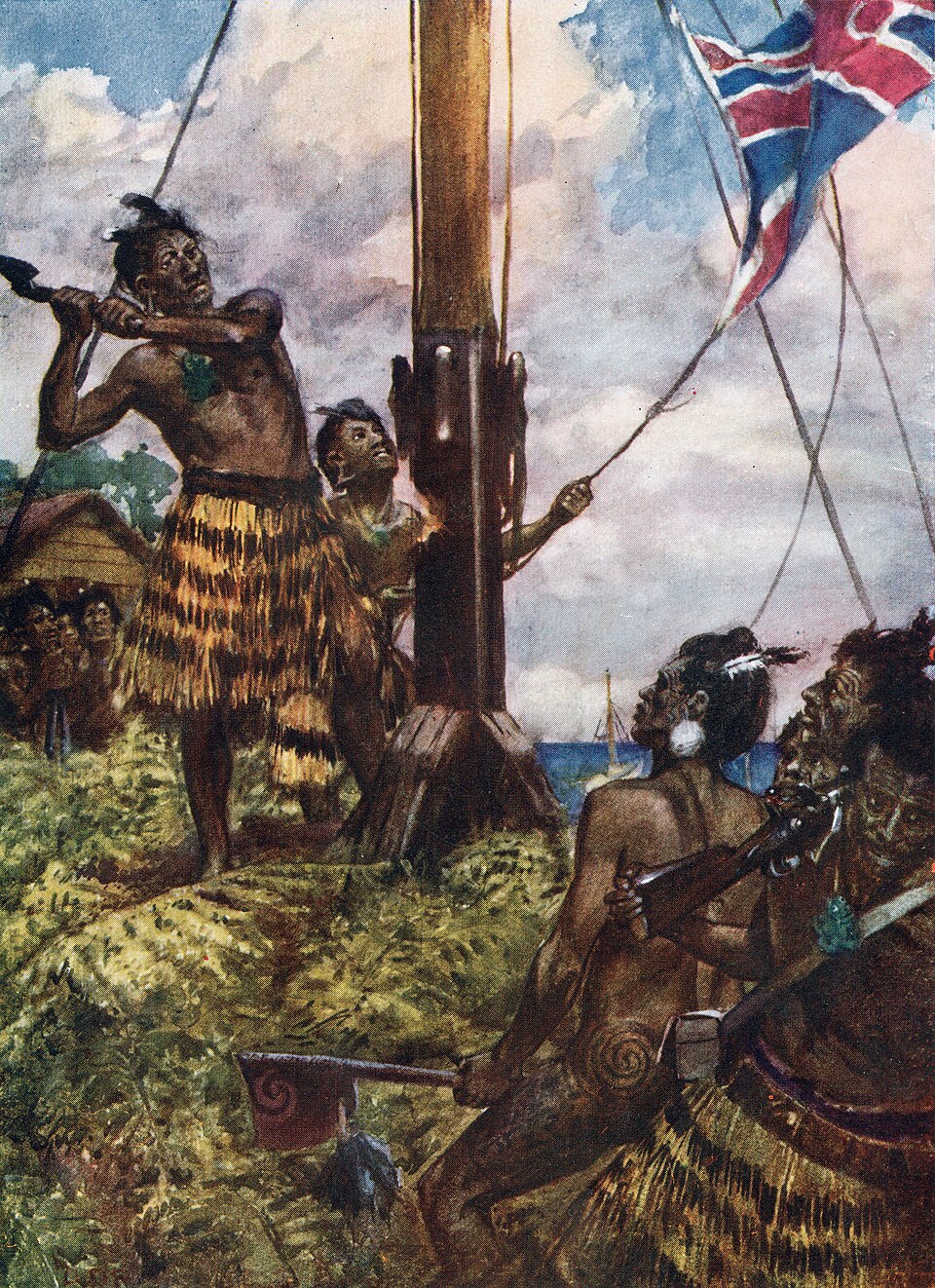
Hōne Heke cuts down the flagstaff on Flagstaff Hill at Kororāreka — Image: Wikimedia Commons
The last time came on March 11th, 1845. Te Ruki Kawiti’s men created a diversion while Heke’s warriors felled the flagstaff. That afternoon, the powder magazine at Polack’s stockade blew up. The troops withdrew to the ships and abandoned the town to looting. British reinforcements followed, among them men of the 58th Regiment, who reached Auckland later that month. Other Ngāpuhi hapū, led by Tāmati Wāka Nene, fought alongside the British.
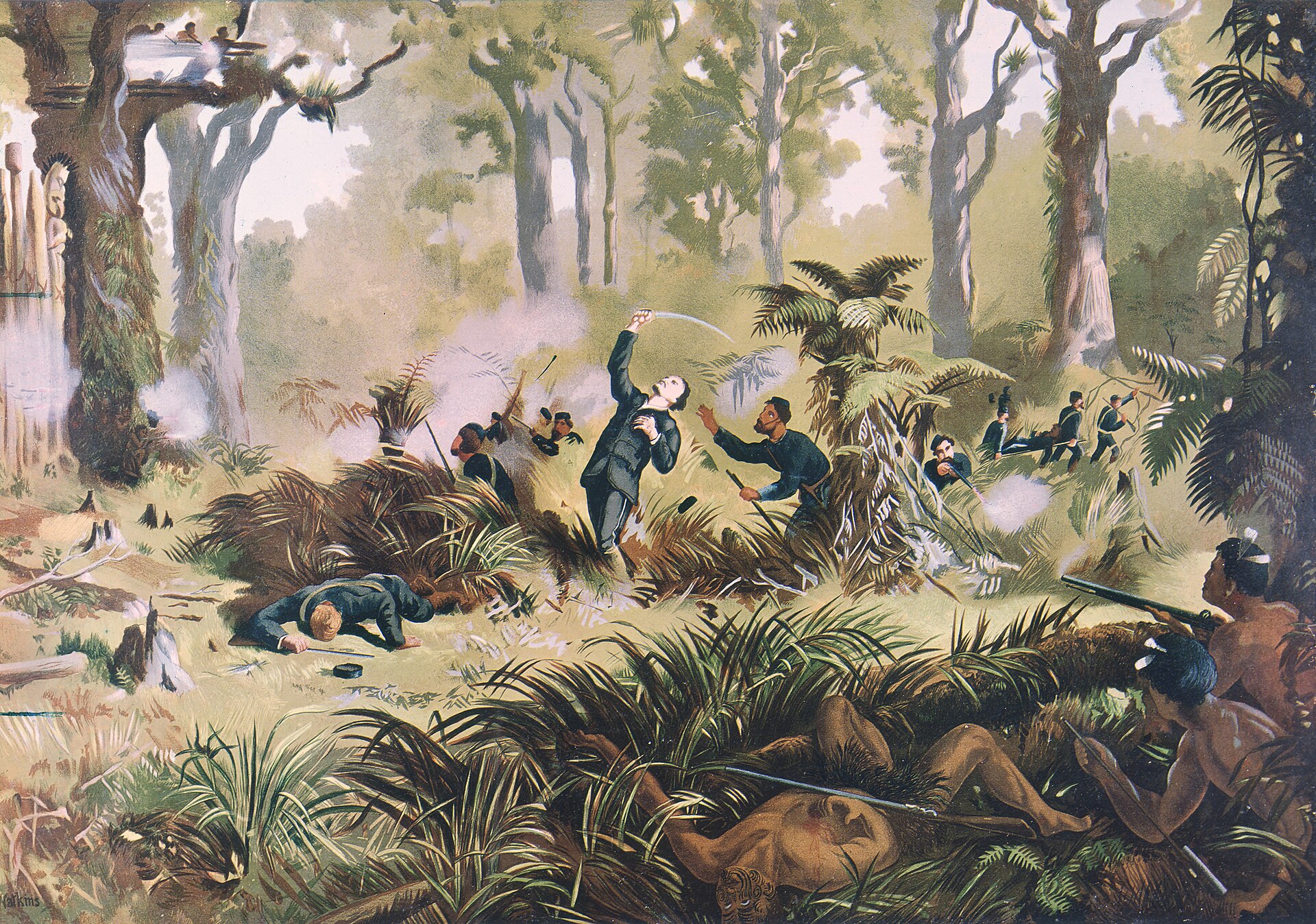
Armed constabulary ambushed by Tītokowaru’s forces at Te Ngutu o Te Manu — Image: Wikimedia Commons
A vicious conflict
The early fighting went badly for the Crown. At Ōhaeawai on July 1st, 1845, Kawiti’s defenders repelled an assault led by Colonel Henry Despard. British forces suffered heavy losses at the fortified pā. Denny’s snuff mull is dated August 1845, just weeks later. The war ended after British forces entered Ruapekapeka in January 1846. Kawiti and Heke subsequently agreed to peace terms with Wāka Nene, and the Crown confiscated no Ngāpuhi land.
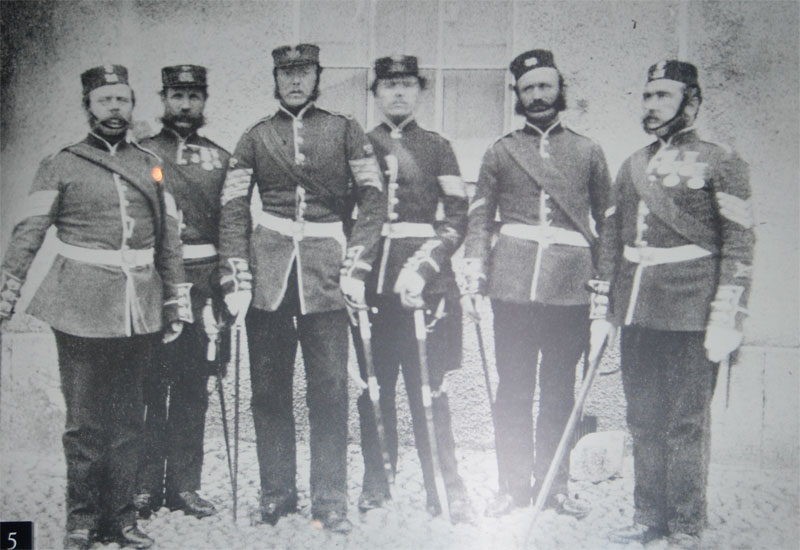
NCOs of the 58th Regiment of the Foot in New Zealand — Image: Wikimedia Commons
It’s a sobering backdrop to a watch story. The Denny crest on a snuff mull associated with a colonial war reappears eight years later inside a Parisian Breguet.
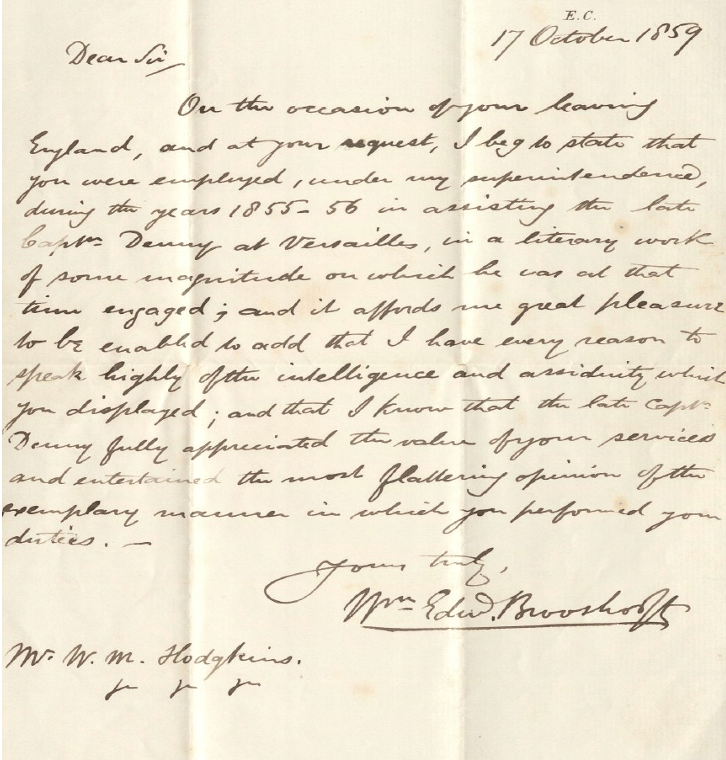
A testimonial from October 17th, 1859, with a key passage confirming Hodgkins’s work for “the late Capt. Denny at Versailles” in 1855–56 — Image: Alexander Turnbull Library
William Mathew Hodgkins and Captain Denny at Versailles
My next discovery came from an unexpected source. A 1978 Turnbull Library Record article about William Mathew Hodgkins mentions an obscure period in his youth. Hodgkins was a lawyer and painter who became an important figure in New Zealand art. He was also the father of Frances Hodgkins. By June 1855, he was in Paris, where he worked for a Captain Denny at Versailles on “a literary work of some magnitude.”
A “Capitaine Denny” buys a Breguet in Paris in 1853. Two years later, a Captain Denny just outside the city employs an educated young Englishman on a substantial literary project. The connection was too intriguing to ignore. Sam Shaw’s request to the Alexander Turnbull Library produced a copy of the original testimonial, dated October 17th, 1859. It confirms that Hodgkins spent 1855–56 “assisting the late Capt. Denny at Versailles.”
The Versailles Denny was therefore alive in 1855–56 but had died by October 1859. Later that year, Hodgkins sailed for Melbourne, and by 1862, he was living in Dunedin. His daughter Frances was born there in 1869. There is, however, no evidence that the Breguet itself ever passed through Hodgkins’s hands.
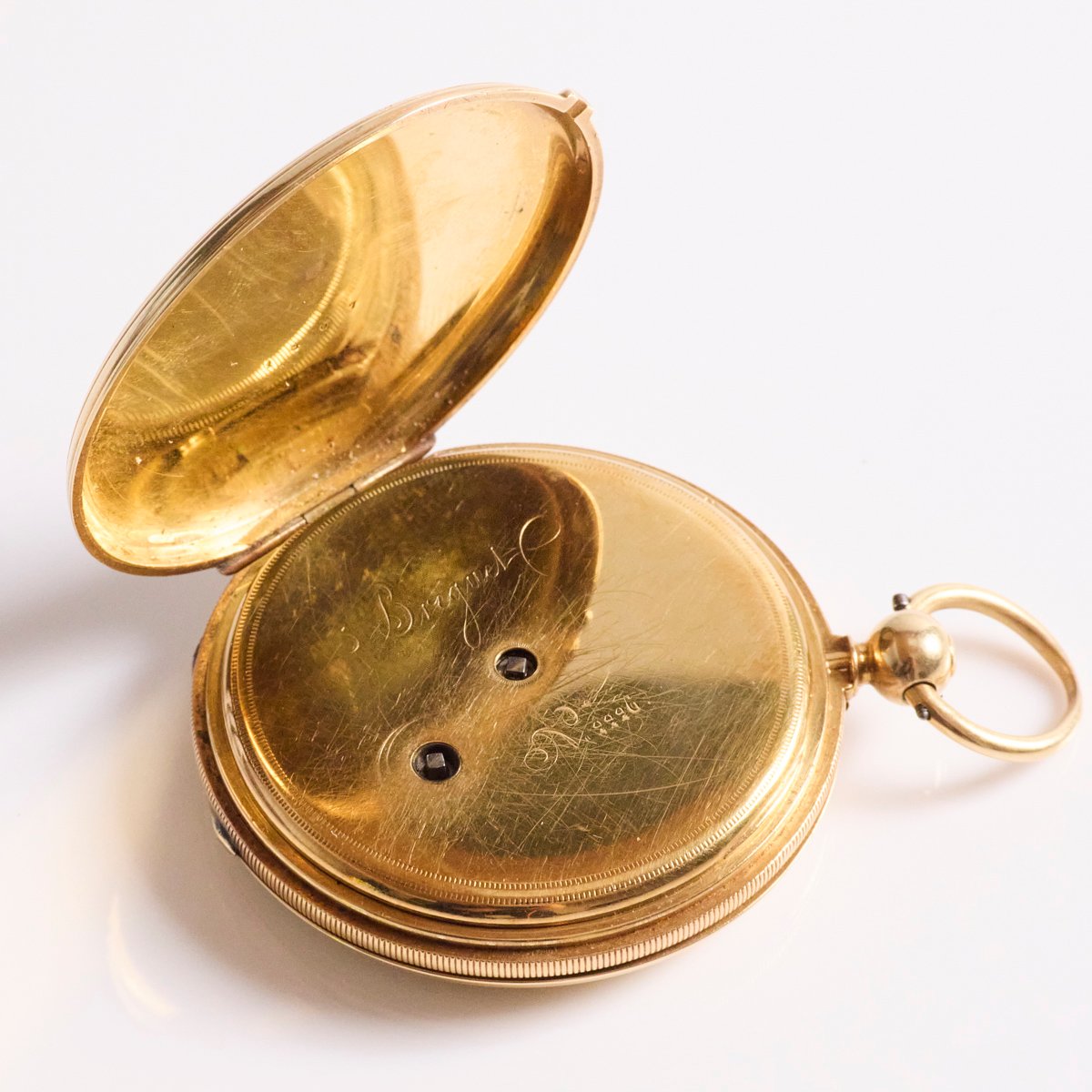
Image: Webb’s
Anthony Cuthbert Collingwood Denny: the man who almost fits
A search of death records from that period produced the strongest candidate so far — Anthony Cuthbert Collingwood Denny. Born in 1818, he died on September 22nd, 1857, aged 39. Through his father, he belonged to the Tralee Denny family, which used the wheat-ear crest. His mother, Mary Patience Collingwood, was a granddaughter of Admiral Lord Cuthbert Collingwood, Horatio Nelson’s second-in-command at Trafalgar. The family had already edited and published the admiral’s letters, making a substantial literary project a plausible undertaking.
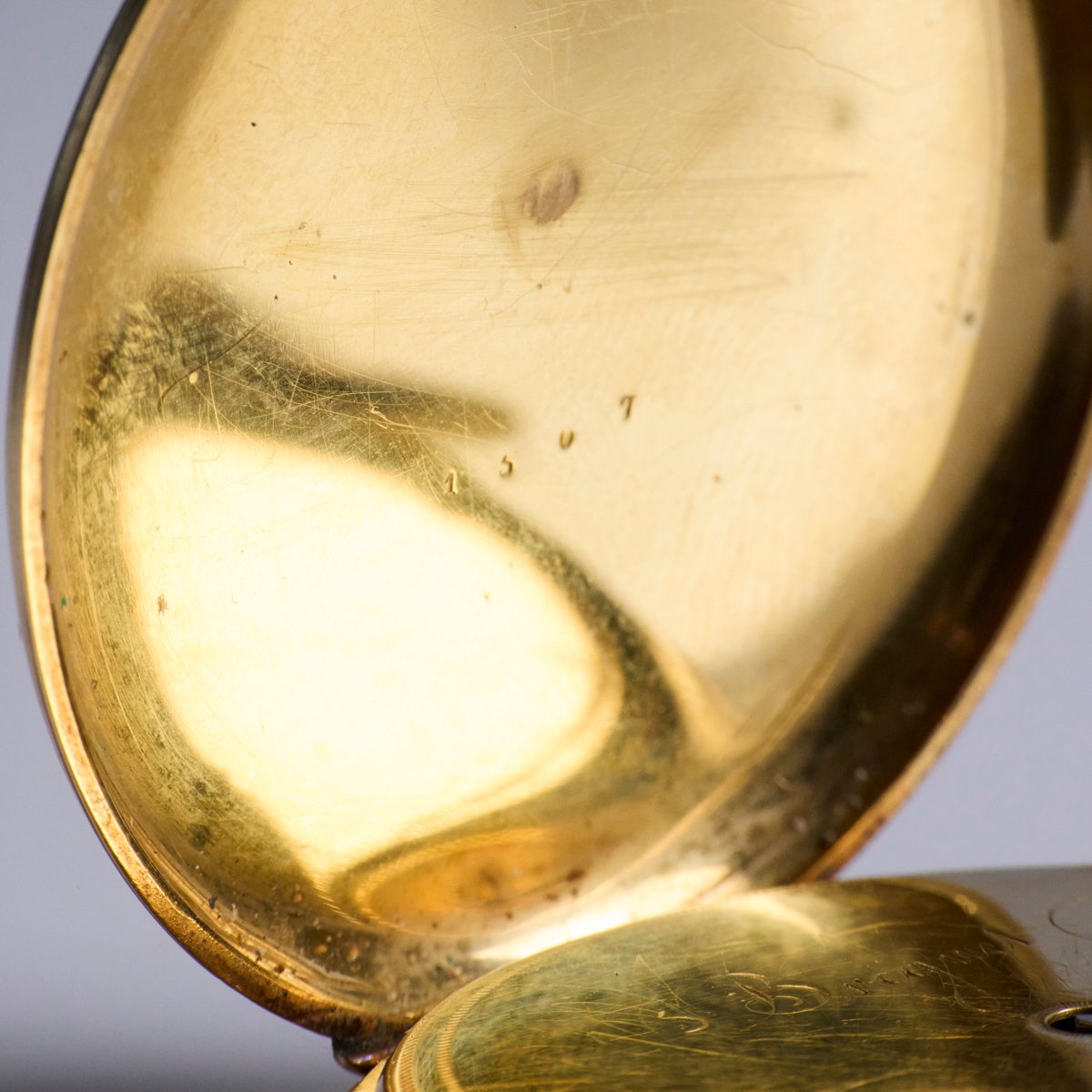
Image: Webb’s
Anthony joined the Royal Navy in 1831 and served aboard the ship Blenheim during the First Opium War. He became a lieutenant in October 1841 after serving at Canton, Amoy, and Chinghae. O’Byrne’s Naval Biographical Dictionary (1849) notes that he apparently did not serve at sea after that. By the mid-1850s, he was likely a naval officer living ashore rather than working aboard a ship.
However, the evidence doesn’t quite fit. Naval records identify him as a lieutenant, not a captain, and nothing discovered so far places him in Paris or Versailles. There was also another Captain Denny, a former East India Company officer associated with the London agents Denny, Clarke & Co. His identity remains unresolved. The 1978 article also cites a separate letter from Warwick Mitchell, dated October 8th. Perhaps another testimonial is waiting to be found.
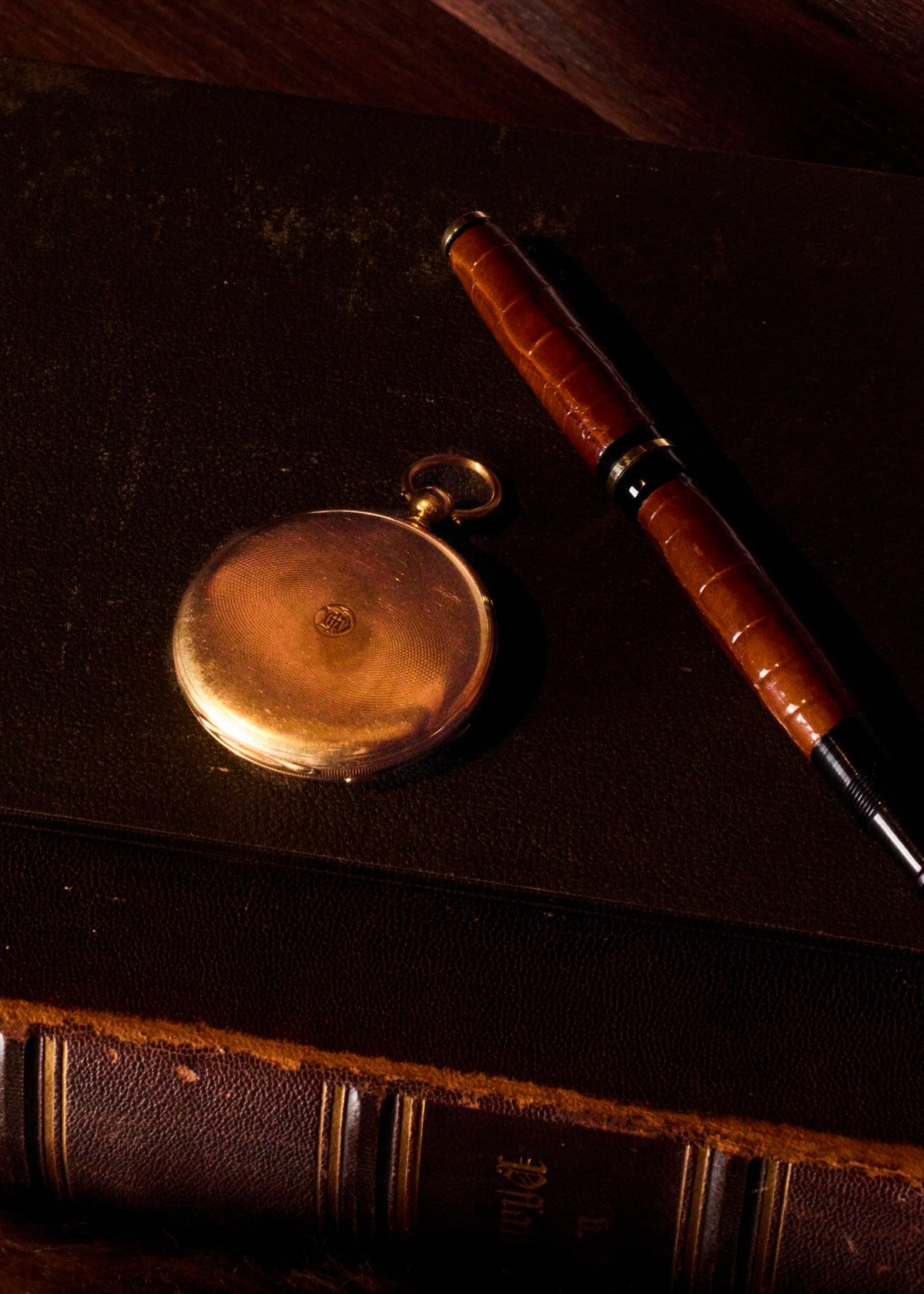
Image: Webb’s
Why this Breguet pocket watch matters
It would be tempting to call this “Anthony Collingwood Denny’s Breguet,” but the evidence doesn’t support that conclusion. What we know is interesting enough: Breguet No. 2226 was sold to a Captain Denny in Paris in 1853 and bears the Denny family crest. Its documented trail connects the Quai de l’Horloge, a whale-tooth snuff mull from the Northern War, and the young man whose daughter would become one of New Zealand’s greatest artists.
For a Kiwi collector, that’s a remarkable connection between one of watchmaking’s most important houses and New Zealand’s history. Regular readers may remember Cliff Tait’s Rolex GMT-Master, another watch with an extraordinary New Zealand story. The answer to this mystery may still lie in the indexed Versailles censuses for 1855 and 1856. Until someone checks them, Breguet No. 2226 will keep its secret. Do you have a lead on Captain Denny? Let me know in the comments!
Webb’s in New Zealand is auctioning this Breguet pocket watch. You can find the listing here.