Dressing Down Your Rolex: Why Taking It Off The Bracelet Can Be A Good Idea

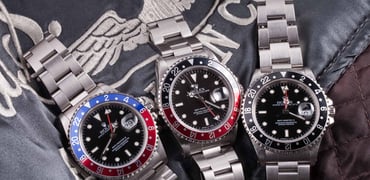
There’s a particular kind of tunnel vision that sets in around steel sports Rolexes. You picture a Submariner, and the mental image arrives fully assembled: black bezel, black dial, and, welded to it, as if it were cast in one piece, an Oyster bracelet. It’s the same with a GMT-Master, Datejust, Sea-Dweller… In fact, it’s easier to list the models this doesn’t apply to. The bracelet isn’t just the default option on these watches; over the decades, it has become part of their identity, to the point where most owners never seriously consider anything else.
Which raises a question worth sitting with: why not? Is it because the bracelet really is that good, comfortable, secure, perfectly integrated, impossible to improve on? Or is it something closer to inertia, a kind of learned assumption that “correct” Rolex ownership means keeping the metal on your wrist exactly as it left the factory? I suspect it’s a bit of both. But I also think that the second explanation does most of the heavy lifting, and it’s worth pushing back against. Because when you actually take a steel sports Rolex off its Jubilee or Oyster bracelet and put it on leather or a NATO, you don’t just change the way it sits on your wrist. You change what kind of watch it is.
Two watches, two very different transformations
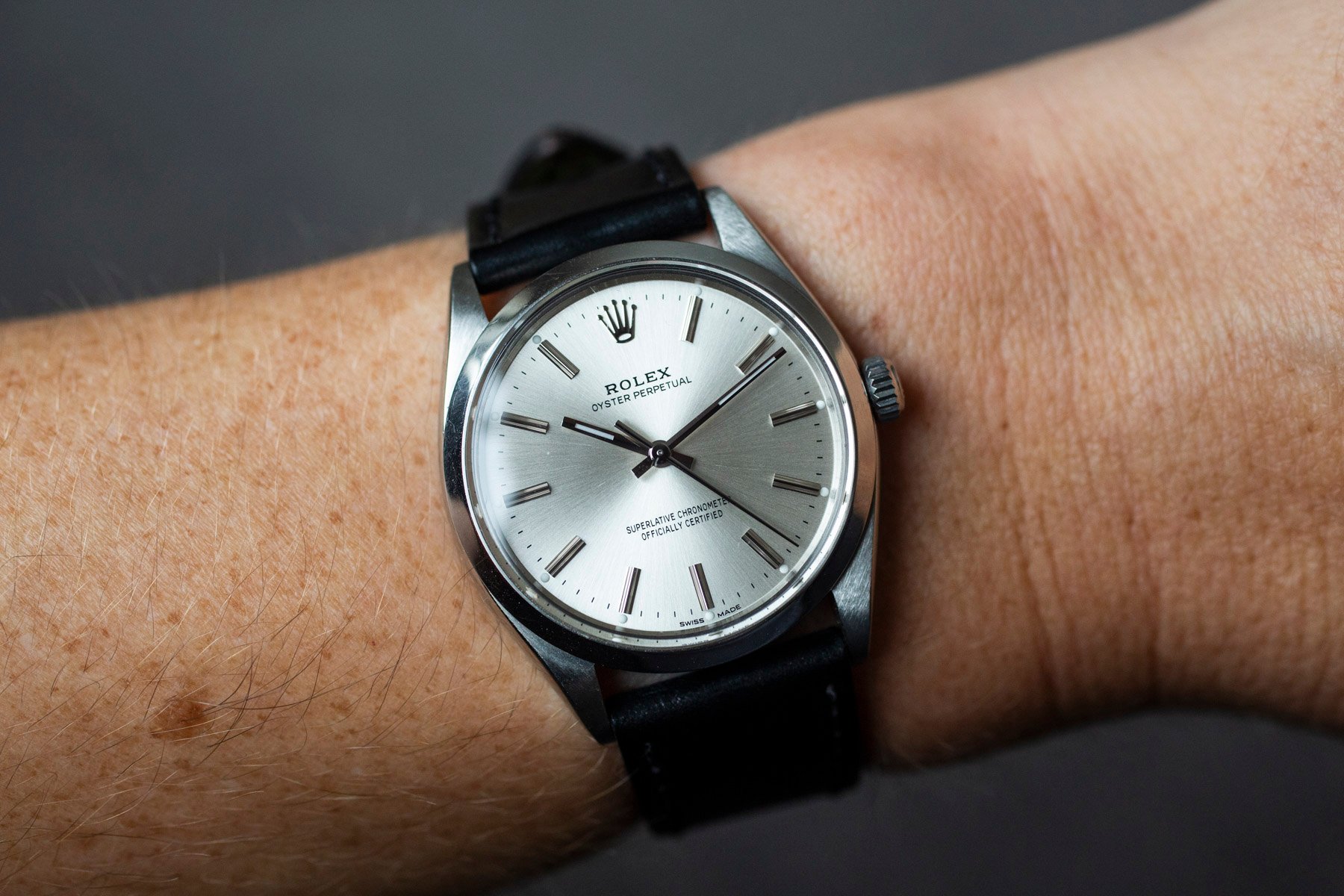
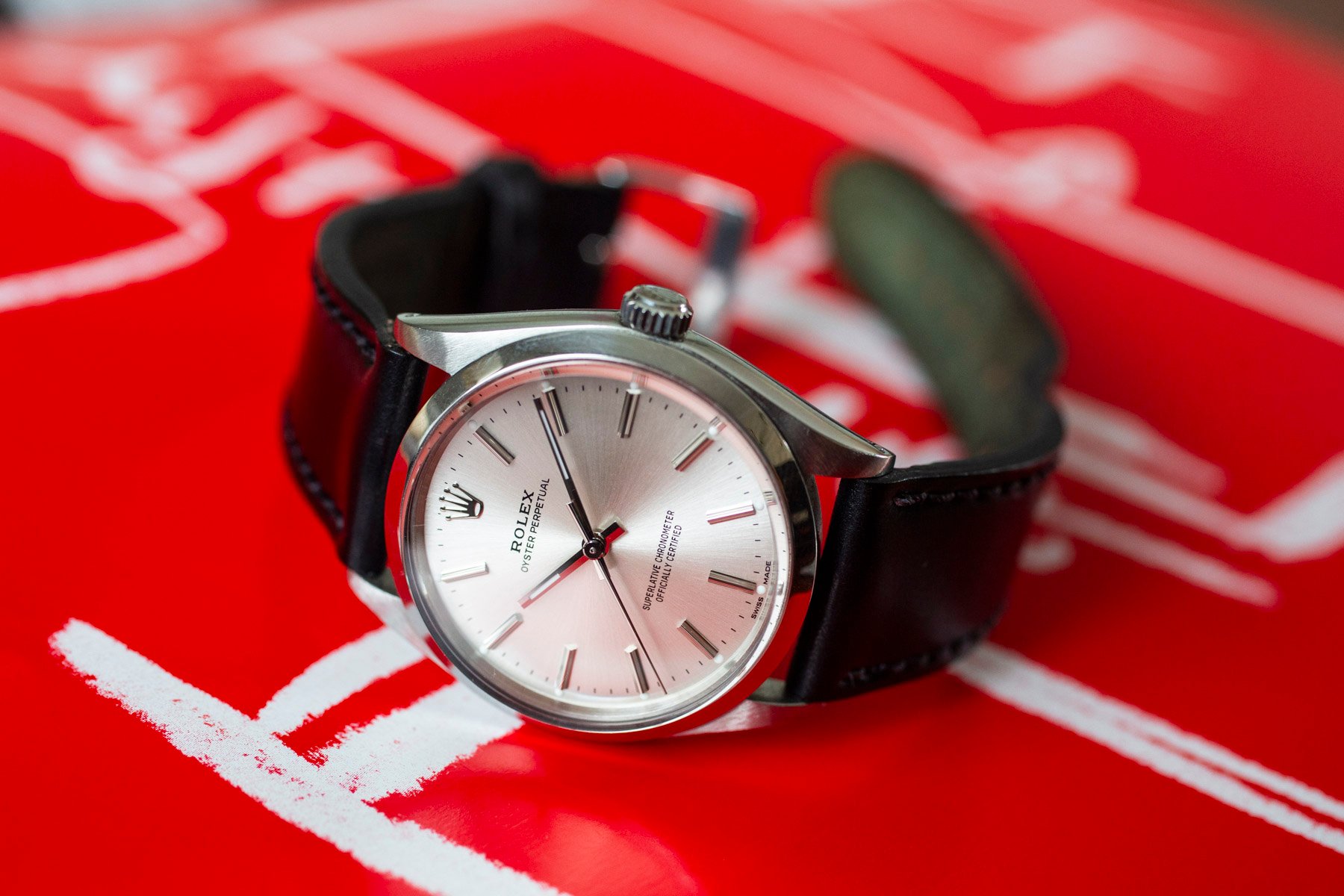
I’ve written before about the two Rolex watches I own, and I won’t rehash those stories in full here. But it’s worth revisiting them briefly, because the way I’ve chosen to wear each one turns out to be the whole point of this piece. The Oyster Perpetual ref. 1002 came to me from my mother. It’s a 1960s piece with a 34mm case, powered by the old 1560 caliber. It carries a Rolex service dial from back when she still wore it. I’ve described it before as close to the purest expression of Rolex DNA: a plain Oyster case with no frills. It does the job, and it does it well.
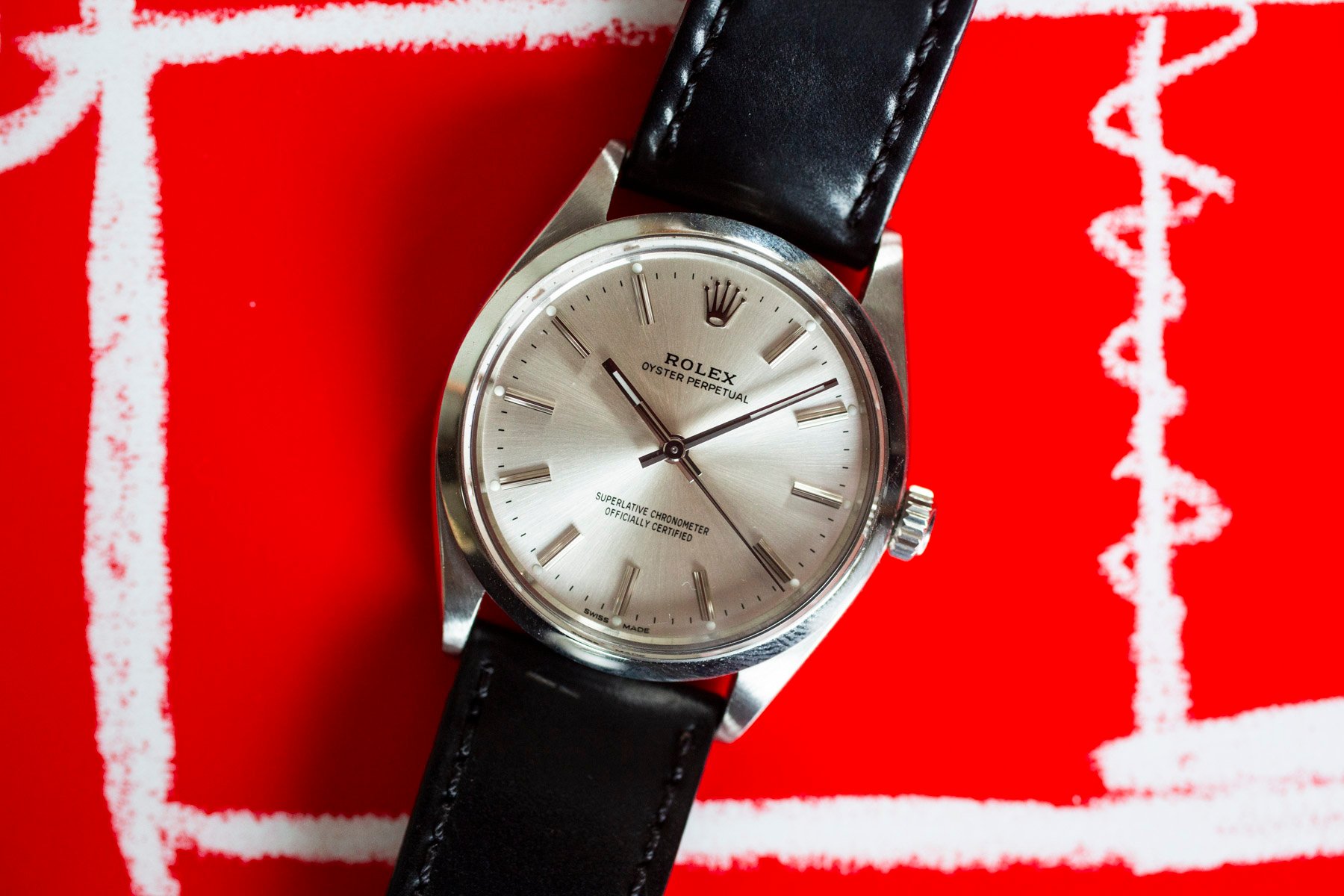
For years, it lived on its original Oyster bracelet, which is a lovely, quietly capable piece of engineering. But somewhere along the way, I moved it onto a leather strap, and it was only then that the watch really clicked into place for me. On the bracelet, a small vintage Oyster can read as slightly utilitarian, almost like an afterthought of a tool watch shrunk down. On leather, the same case and dial suddenly look considered, warm, and unmistakably dressy. Nothing about the watch changed. Only the strap did, and with it, the entire impression.
The neo-vintage Rolex Sea-Dweller
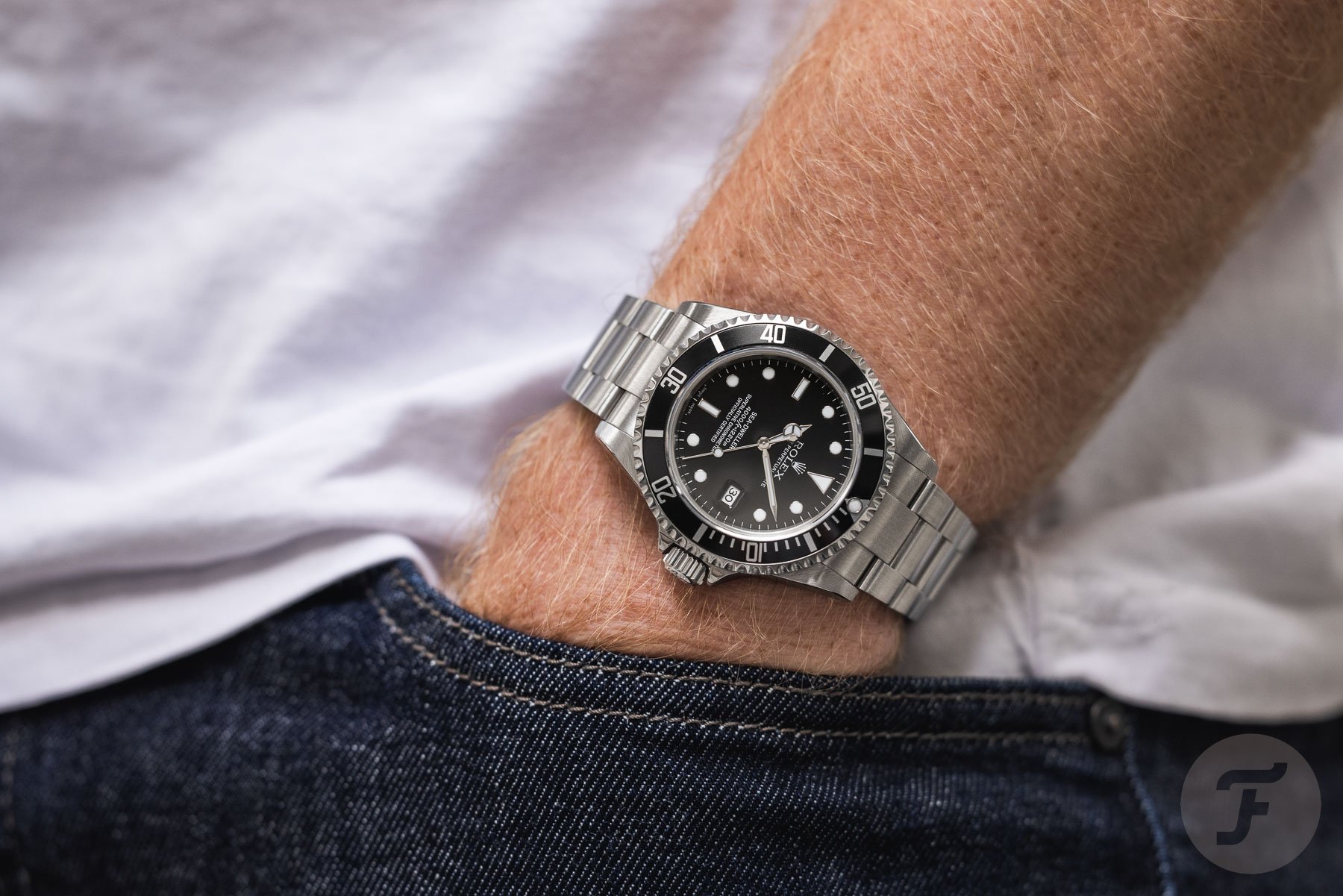
The Sea-Dweller ref. 16600 is the newer addition, bought last year from a vintage dealer after months of narrowing down exactly what I wanted from a neo-vintage Rolex diver. I picked the 16600 specifically for its aluminum bezel and its slightly relaxed, tool-watch character next to the ceramic-bezel watches that came after it, and I bought it, as it happens, on the same kind of family occasion that brought me the 1002, sharing the moment with my father rather than my mother.
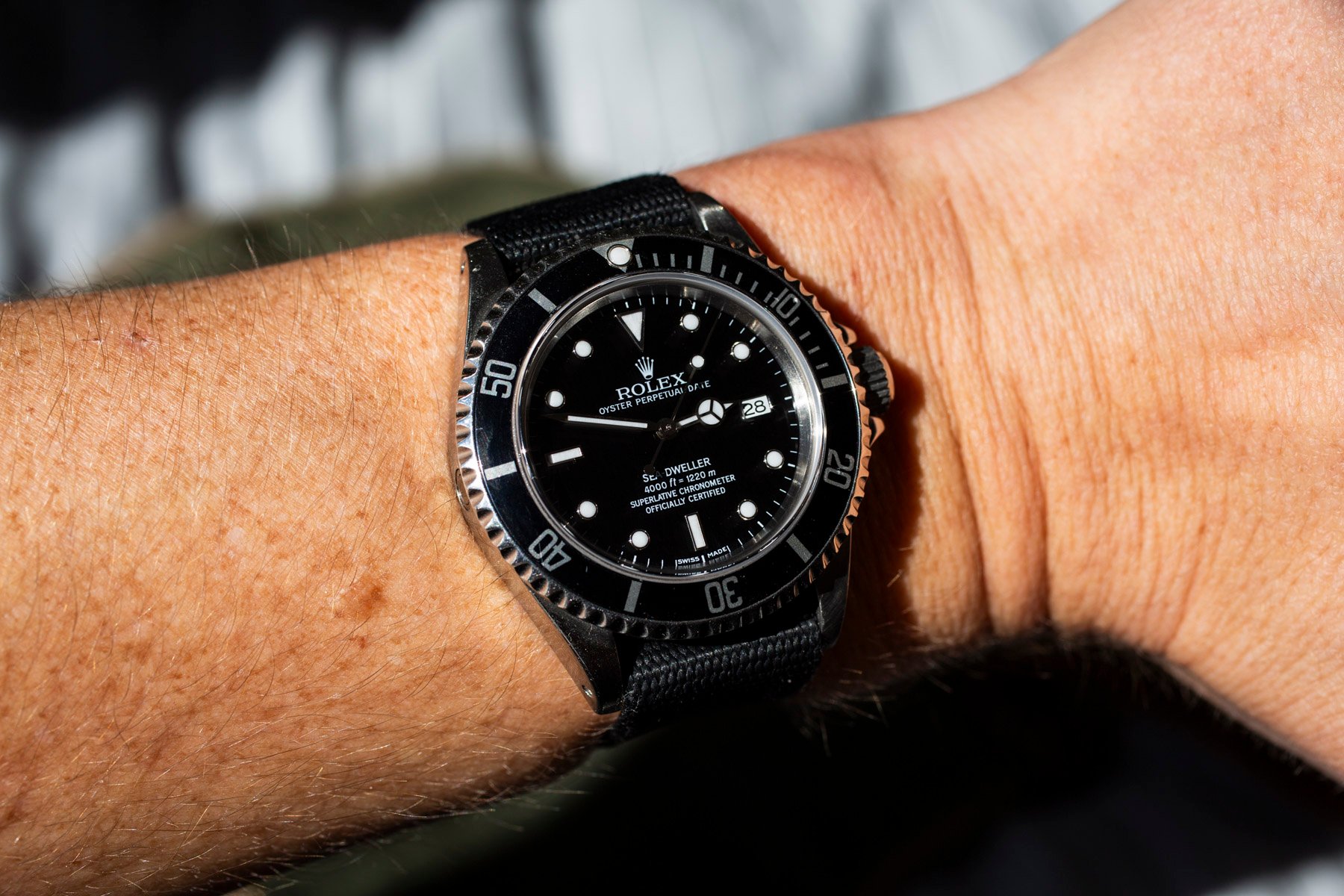
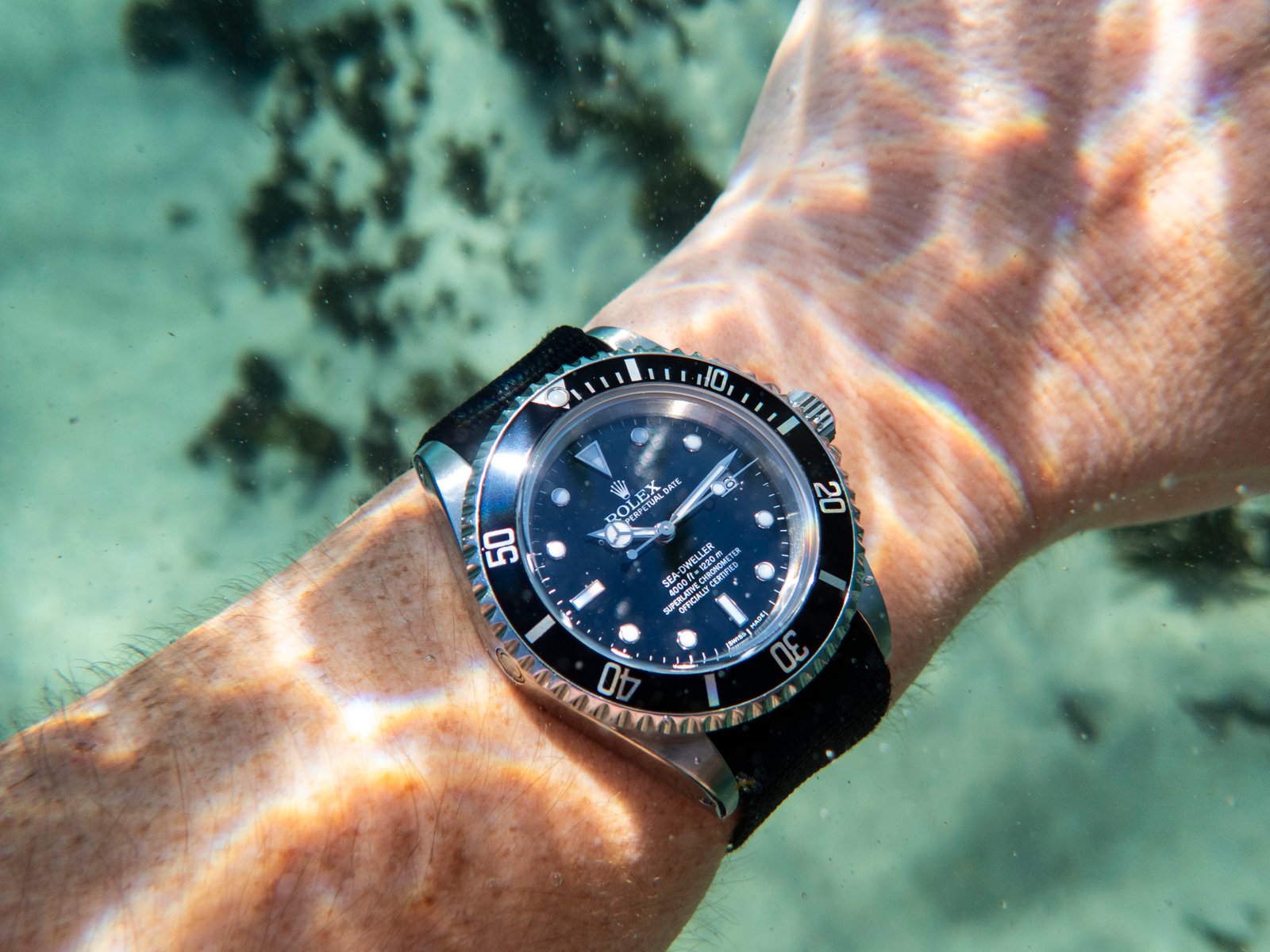
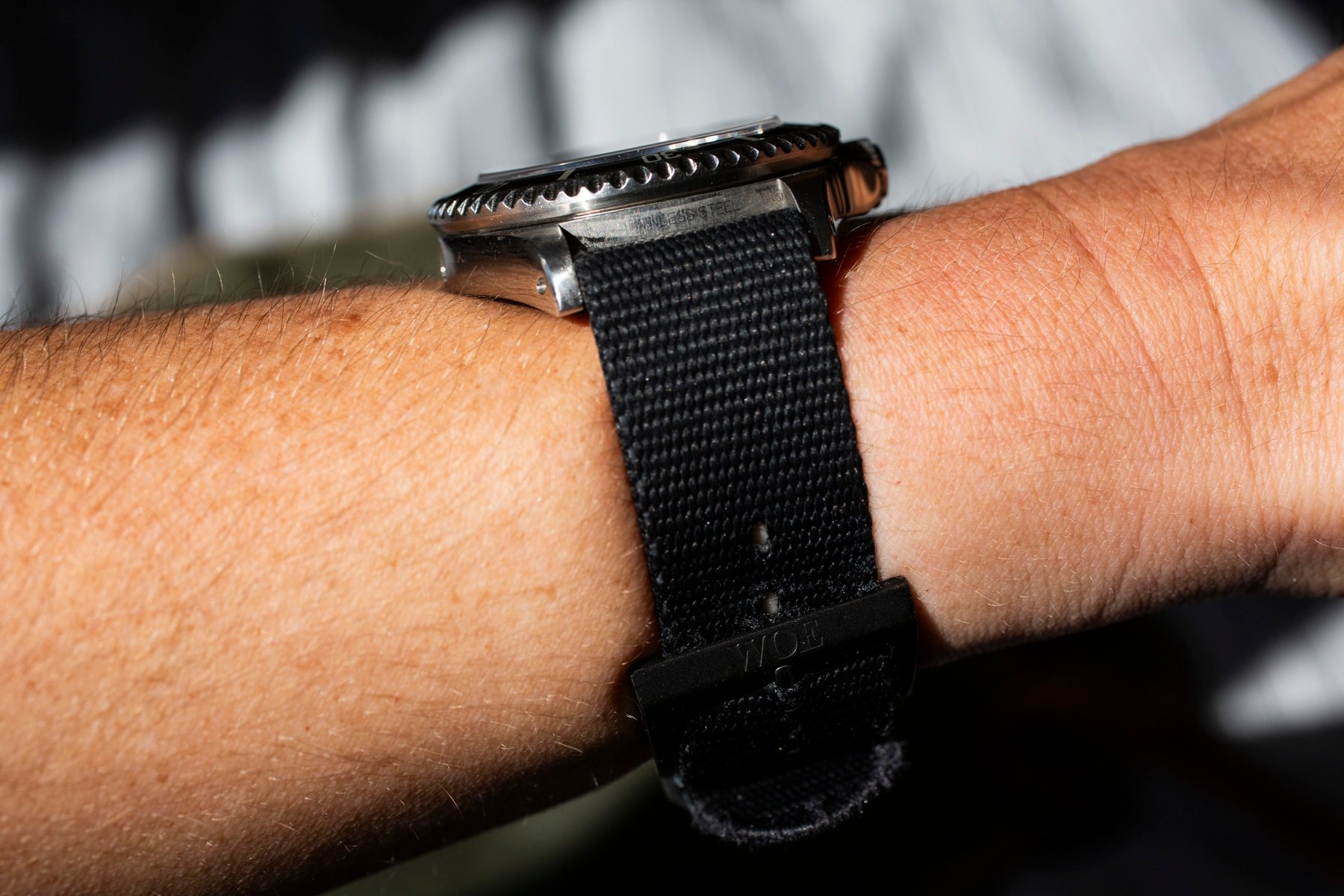
On its factory Oyster bracelet, the 16600 wears exactly as that 1,220-meter water resistance rating suggests it should: serious, cold, over-engineered, built for depths I will never actually dive to. I’ve since put it on a black NATO strap, and the transformation is almost the mirror image of what happened with the 1002. The NATO strips away the last of the watch’s formality. It gets lighter on the wrist, looser, and more worn in. It stops looking like a commercial diver’s tool and starts looking like something you’d throw on with a T-shirt without thinking twice. It’s still the same 40mm case, the same 3135 movement inside, and the same 904L steel (well, perhaps just a little less than on the bracelet), but the point is that it becomes a completely different watch to live with day-to-day.
The bracelet isn’t sacred… it is just familiar
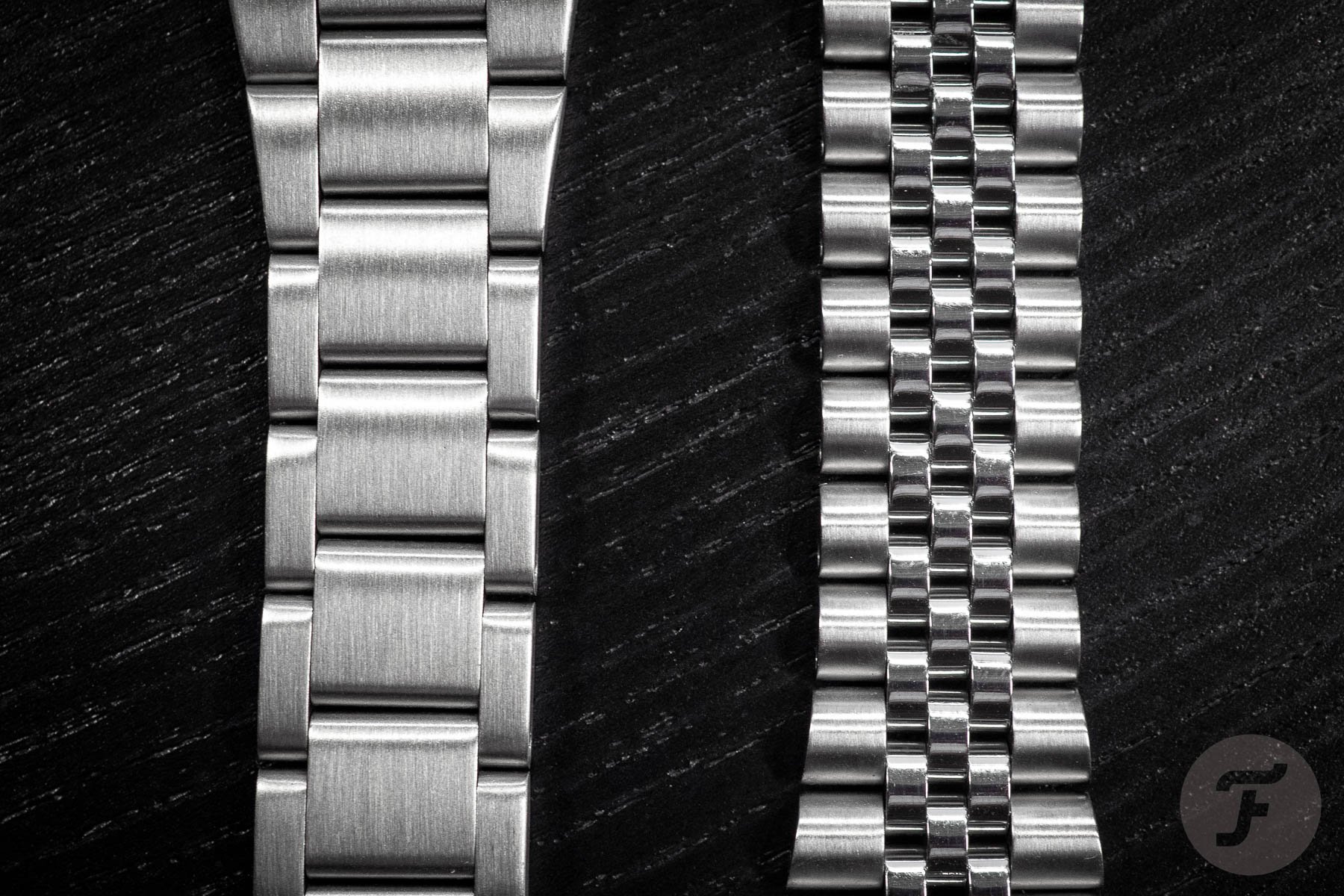
None of this is meant as an argument against Rolex bracelets. The modern Oyster bracelet is genuinely excellent engineering, the Oysterlock clasp, the Glidelock extension on the more modern references, and the way it’s tapered and finished. Even older versions of the Oyster bracelet are fantastic, with their simpler clasps. The Jubilee is arguably even more successful as a piece of design, a five-link elegance that somehow works on watches ranging from a GMT-Master to a Datejust without ever looking out of place. These bracelets earned their reputation. Nobody is going to convince me the 16600 was over-engineered when Rolex built that bracelet.
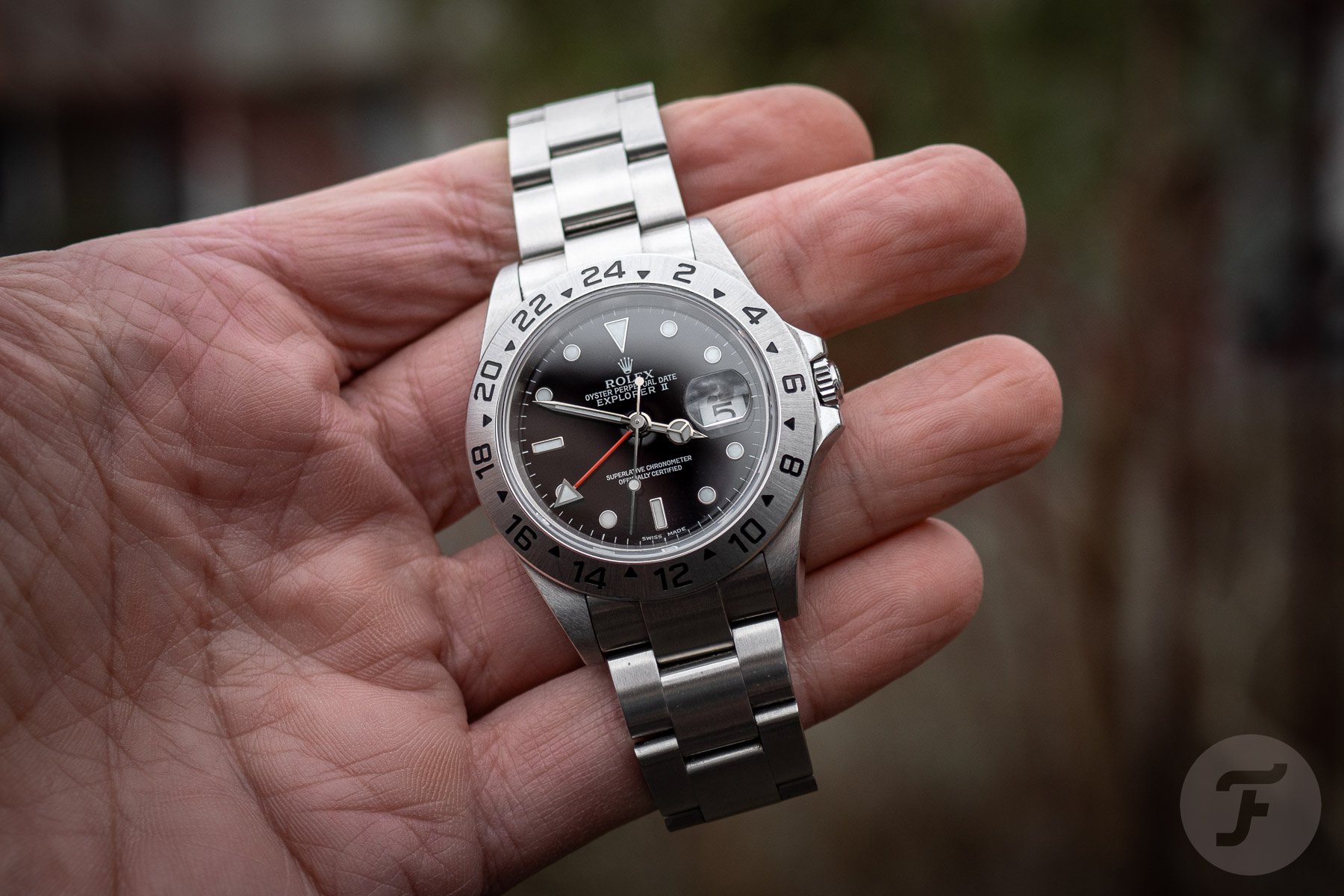
“Excellent” isn’t the same as “the only option,” and I think a lot of us treat it that way anyway, almost unconsciously. Part of it is a simple habit: the watch came on the bracelet, so the watch stays on the bracelet. Part of it is a faint sense that changing it is somehow disrespectful to the design, as if swapping a strap voids some unwritten contract with the brand. And part of it, frankly, is that Rolex has spent decades photographing these watches on bracelets, in every catalog and every ad, until the two became visually inseparable in the collective imagination. That’s a marketing outcome as much as a design truth.
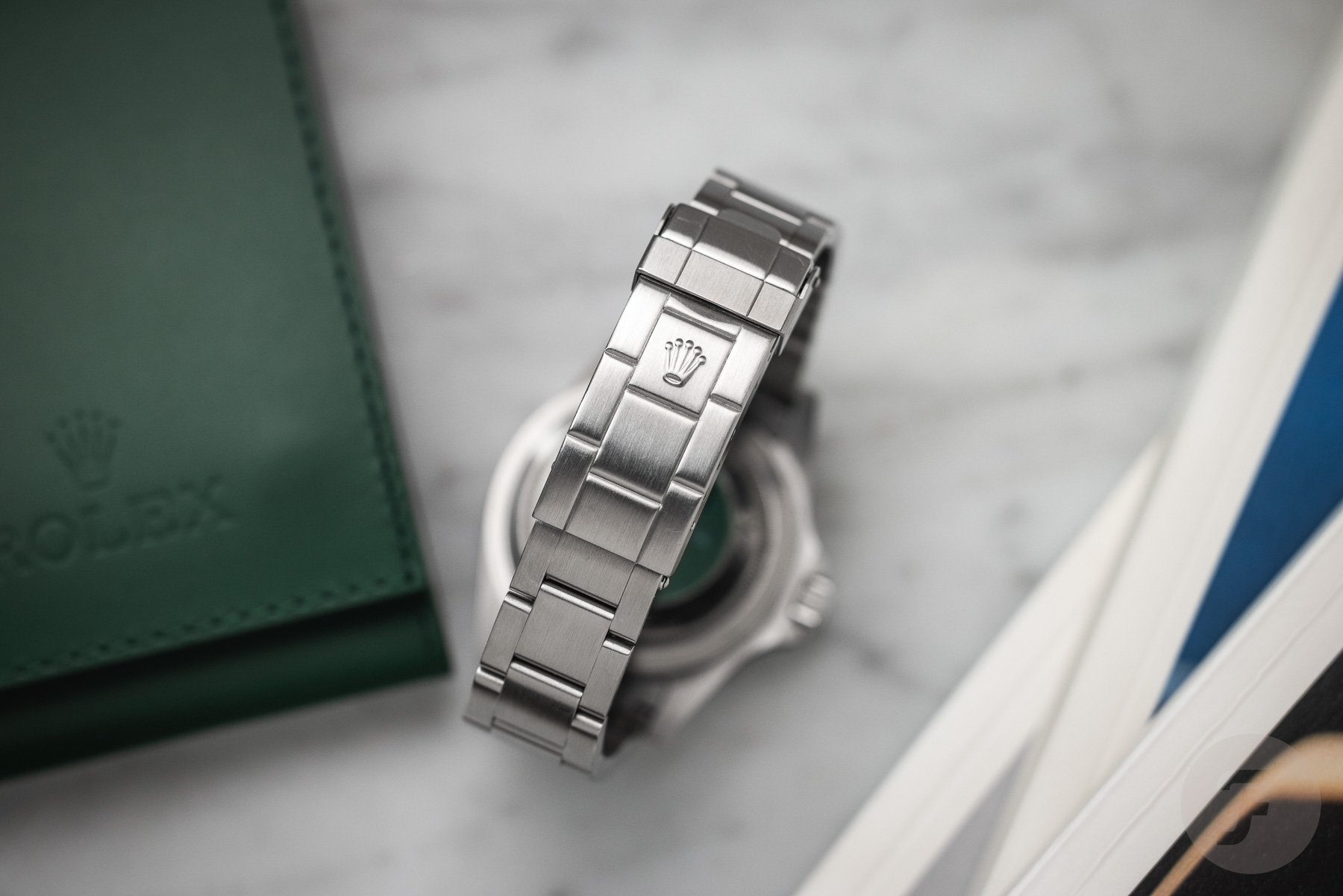
Rolex makes great bracelets
Strip that association away for a moment, and the case for exploring straps and NATOs gets a lot stronger. A steel sports Rolex on a bracelet has one gear: tool watch, robust, a little clinical, endlessly versatile, but always slightly formal in its own understated way. Put the same watch on leather, and it can slide toward a dressier, warmer, or more relaxed look.
Put it on a NATO, and it goes the other direction entirely: sportier, more rugged, more casual, closer to something you’d wear hiking than to something you’d wear in a boardroom. The case and dial stay constant. Everything else about the watch’s personality becomes negotiable.
Why we don’t see more of this
Given how easy the swap is, no tools needed for a NATO, a competent watchmaker, or even a careful owner can manage a leather strap change on most of these references, it’s a little surprising how rarely you see steel sports Rolexes photographed, worn, or discussed off their bracelets. The bracelet is the default option for Rolex wearers, and unless you are an enthusiast, it is unlikely you will see people take their Rolex off the bracelet (I would argue). Scroll through enough watch photography, and you’ll notice the pattern: Submariners on Oyster bracelets, GMT-Masters on Jubilees, Sea-Dwellers on Oyster bracelets, over and over, with straps and NATO straps reserved almost exclusively for the vintage pieces or the dressier references where a bracelet was never really the point.
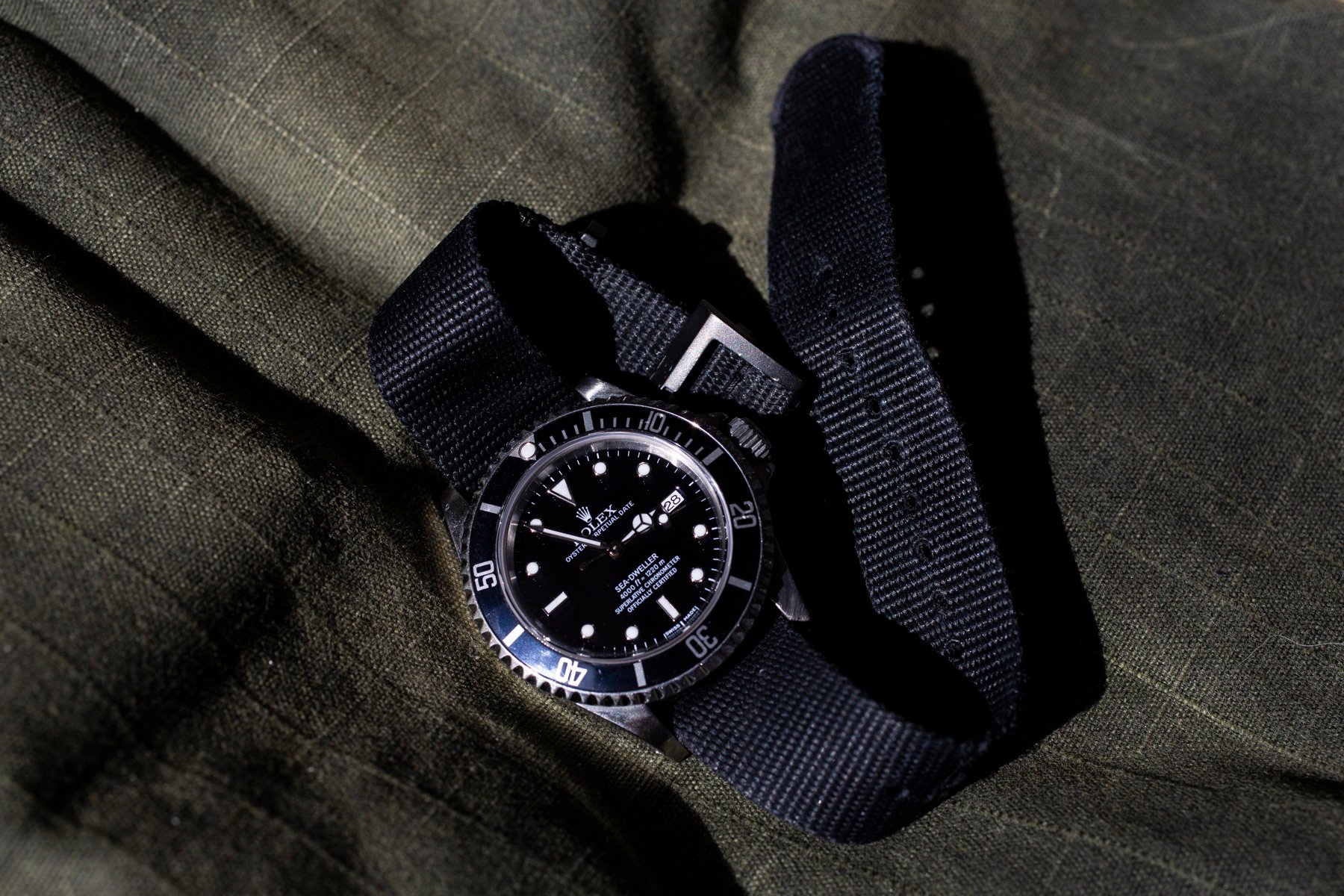
But I’d like to see that balance shift. Not because the bracelet is wrong, but because it’s only one answer to a question that has several good ones. My Sea-Dweller on its NATO and my 1002 on leather aren’t compromises or novelty configurations, they’re the watches finding a different, equally legitimate register. Both pieces already carry family history for me, one from my mother, one from an afternoon with my father. Changing the straps didn’t dilute that connection at all; if anything, it gave each watch a more honest fit with how I actually wear it day to day, rather than how it happened to arrive in the box.
Concluding thoughts
If you’ve got a steel sports Rolex sitting in a drawer because you’ve never quite loved how it wears on a hot day, or because you’ve started to find the bracelet a little too “obviously Rolex” for certain occasions, don’t assume the watch itself is the limiting factor. Try it on leather, try it on a NATO. You might find you’ve been looking at the same watch for years without ever really seeing what else it could be.
Where do you land on this question? Do you wear your Rolex exclusively as it left the factory? Or do you enjoy switching things up with straps? Let me know in the comments!