Shadow Icons: The Underappreciated References — Vacheron Constantin Overseas

There’s a reason icons are icons. Some watches have thoroughly earned that status. Yet an icon can stand so tall that it leaves other worthwhile timepieces in a brand’s lineup in its shadow. In this series, we shine the spotlight on some of the watches that deserve more attention. One of them is the Vacheron Constantin Overseas. While the Overseas name dates back to 1996, the collection has nowhere near the legendary status of Jörg Hysek’s 222 from 1977. Despite having been in production for only seven or eight years, the 222 is one of the iconic integrated-bracelet sports watches that helped define the industry. In recent years, however, the Overseas has increasingly stepped out of its shadow. Perhaps it’s time to reconsider the collection’s value.
For a long time, watch enthusiasts believed that the 222 was another Gérald Genta creation. That myth has since been corrected and is slowly fading, resulting in greater appreciation for Jörg Hysek’s work from his days as a 24-year-old designer. Interestingly, Vacheron Constantin didn’t officially confirm Hysek’s involvement until 2022. With the introduction of the Historiques 222 in yellow gold, the brand mentioned his name in a press release for the first time. It had taken 45 years for Hysek to receive official recognition for his brilliant creation.

The Overseas versus the 222
With the recent return of the 222 in gold and stainless steel, the model has reclaimed the spotlight as Vacheron Constantin’s iconic sports watch. But where does that leave the Overseas? This discussion didn’t begin with the 222’s reintroduction. Watch enthusiasts have long debated the Overseas, comparing it with the Royal Oak, Nautilus, and its older brother.

The 222’s considerably greater cultural impact, despite its shorter production run, is understandable. Gérald Genta’s name was also associated with it for years, which added to its appeal. Furthermore, it was a discontinued classic that enthusiasts wanted to see return. These factors help explain why many have questioned the Overseas’ raison d’être.
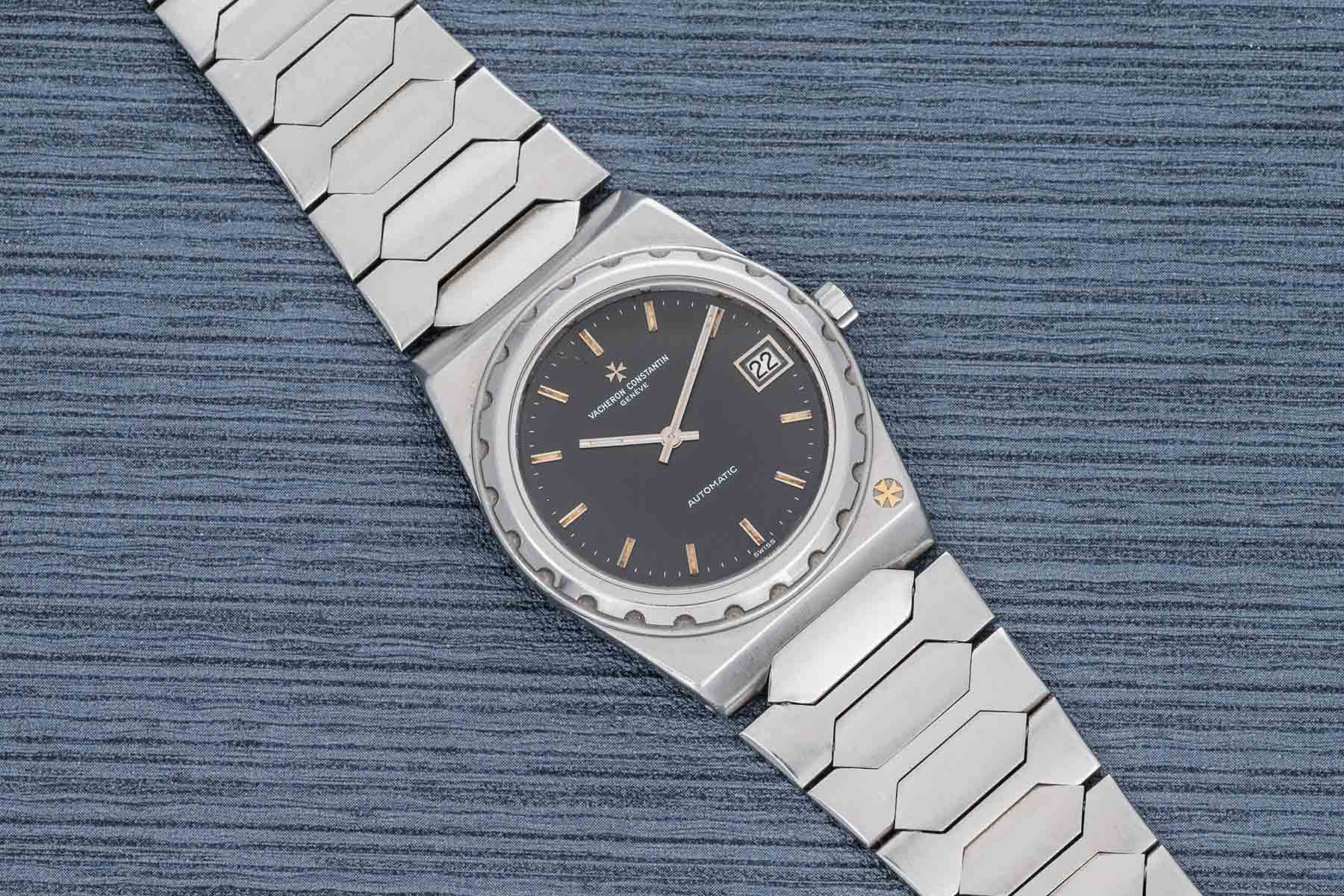
Image: Analog Shift
Why not simply bring back the 222?
In that context, enthusiasts often asked why Vacheron Constantin didn’t simply bring back the 222 and discontinue the Overseas. With the former’s distinctive design and compelling history, wouldn’t that have been the safer option? Having seen both models in the current collection for four years, I can say that the modern Overseas is as relevant as ever. It deserves a place alongside the 222 rather than in its shadow.
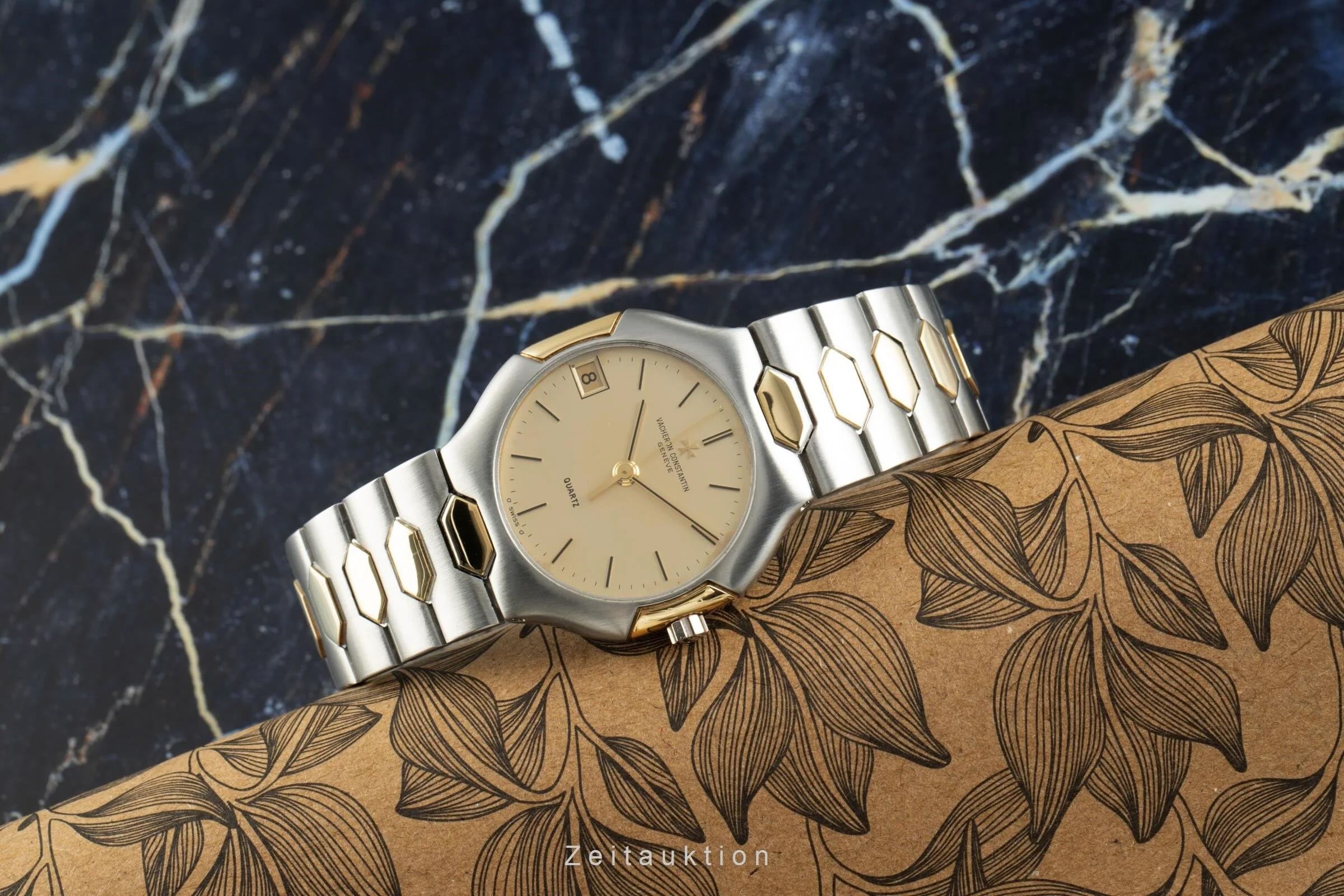
Vacheron Constantin 333 — Image: Zeitauktion
Before discussing the modern Overseas, it’s worth recapping how Vacheron Constantin arrived at this point. After the 222’s discontinuation in 1984, the brand introduced the 333. It featured an octagonal case and a bracelet similar to that of its predecessor. The design also reminds me of the Omega Polaris models from around the same time.
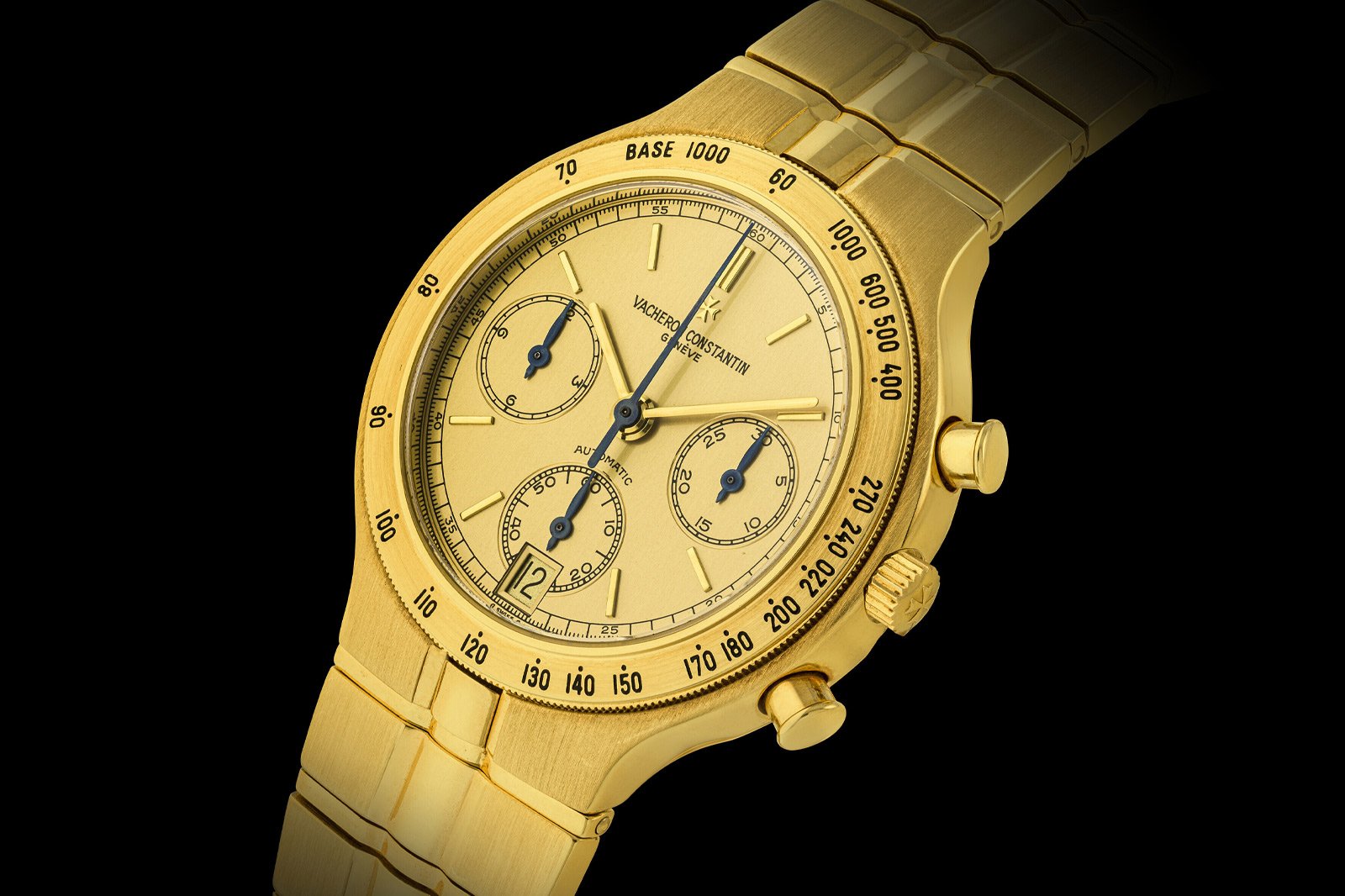
Vacheron Constantin Phidias Chronograph — Image: Christie’s
The 333 proved difficult to sell, and Vacheron discontinued it after just a few years. In 1989, the Phidias series succeeded it, introducing a very different design. Its round cases and newly developed integrated bracelets represented a clean break from the past. However, the Phidias also provided the first hints of what would eventually become the Overseas.

Image: Bulang & Sons
The first-generation Vacheron Constantin Overseas (1996–2004)
When the first-generation Overseas arrived, it combined several design influences. The series featured a tonneau-shaped case and a bezel inspired by the Maltese cross, much like the 222. Its integrated bracelet, however, evolved naturally from the Phidias design. Although that combination might sound unusual on paper, it worked better than expected, despite a few quirks. The Overseas was the work of Vincent Kaufmann, the brand’s head of design, and external watch designer Dino Modol. What stands out most today is how distinctly ’90s the watches look. That period-specific character, combined with details like the curved dial logo and blocky bracelet, still makes the first-generation Overseas a topic of discussion.

Image: Bulang & Sons
I honestly appreciate it as an example of ’90s watchmaking. The 37mm time-and-date Overseas ref. 42042, with its textured dial and curved logo, is a particular favorite. Some of the other models, however, have aged less gracefully.
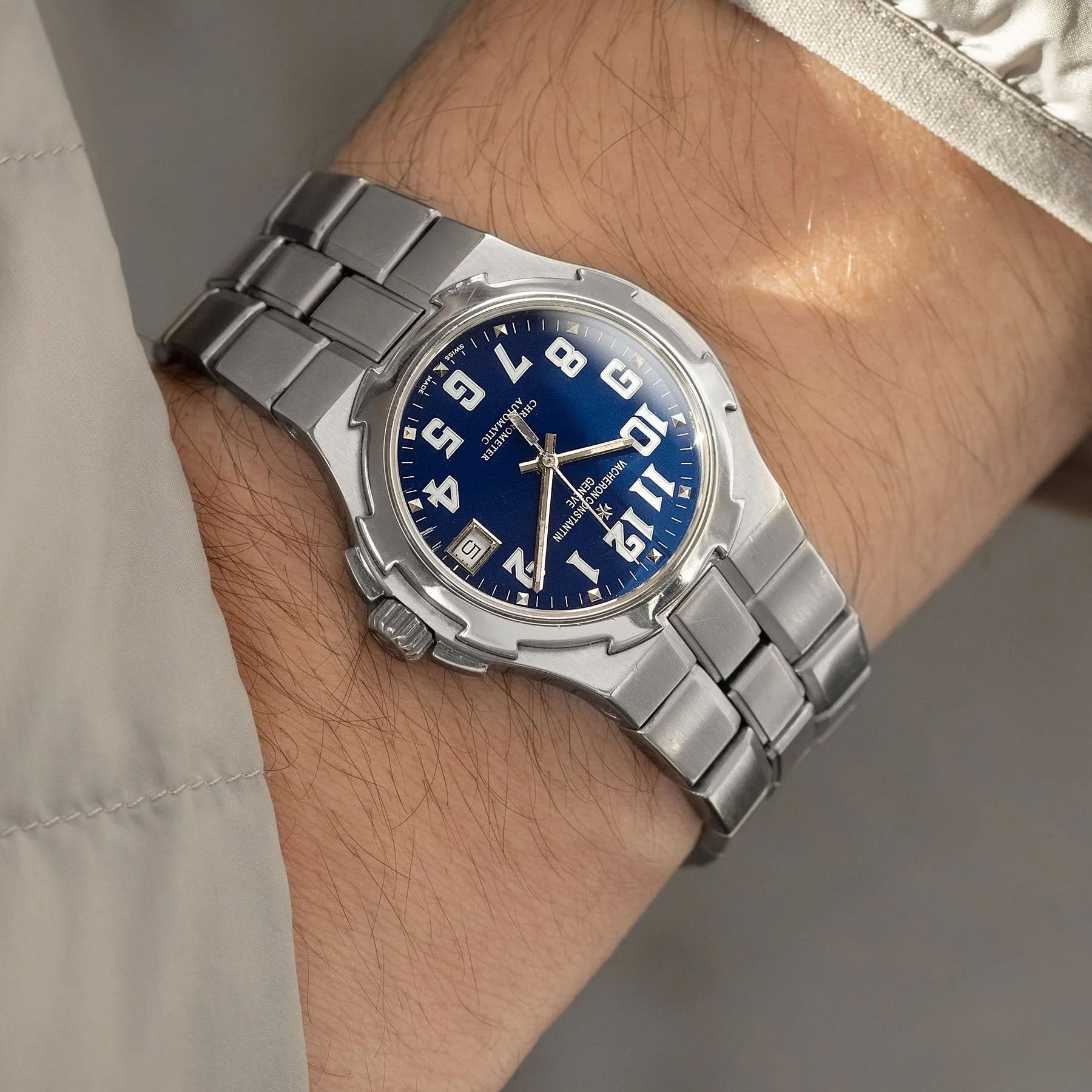
Image: Bulang & Sons
The chronographs are good examples. Their oversized date windows at 12 o’clock and unusual 60-second numerals directly above them look appealing at first glance. Closer inspection, however, reveals several awkward design details. Even stranger are the dial variations with oversized, vintage-style serif numerals. Combining a ’90s sports watch with a dial inspired by the 1920s is just jarring.
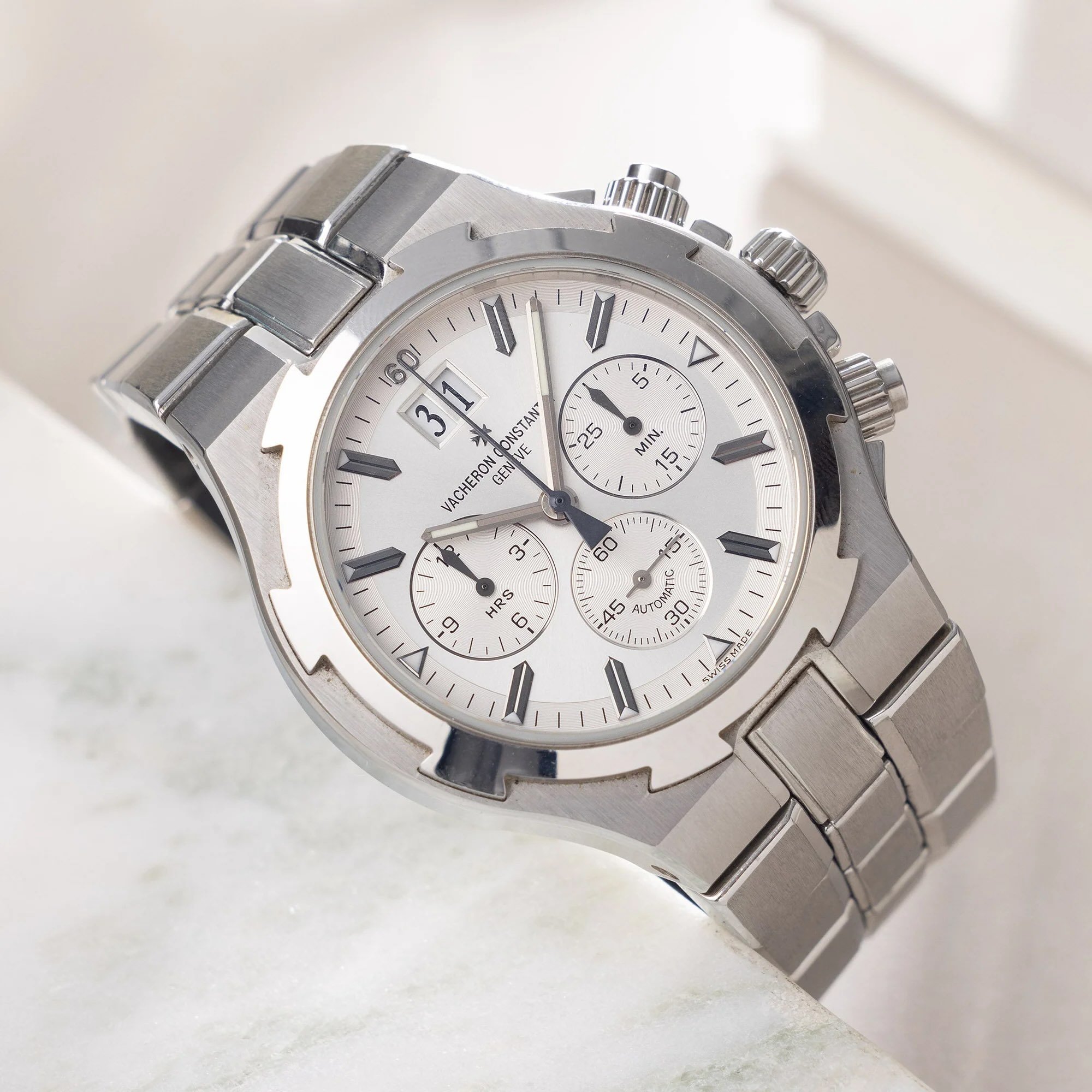
Image: Bulang & Sons
All these factors make the first-generation Overseas an acquired taste. However, renewed interest in ’90s watches has helped some of these early models gain appreciation among collectors.
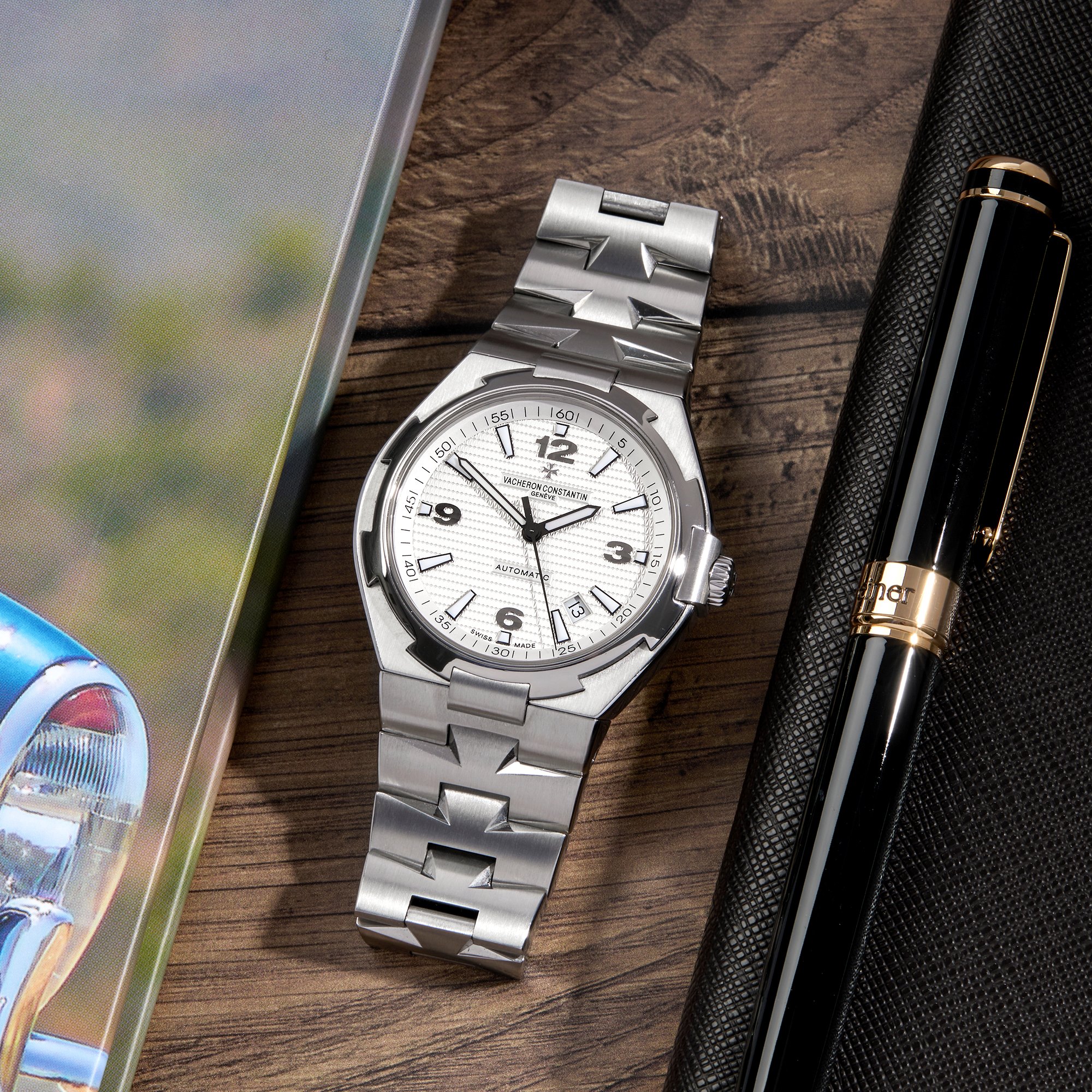
Image: Xupes
The second-generation Vacheron Constantin Overseas (2004–2016)
After eight years, Vacheron Constantin decided to update the Overseas. The new design represented a clear step toward the current generation. The time-and-date and chronograph models grew to 42mm, while the bezel received a slightly sharper half-Maltese-cross motif. The bracelet was also redesigned, with links that referenced the brand’s famous logo. The result was a more modern, sportier watch. Over the years, Vacheron Constantin expanded the lineup with several variations, including a dual-time model and a perpetual-calendar chronograph. The brand also began experimenting with different materials and eventually offered rubber and leather straps for the first time in the Overseas collection.
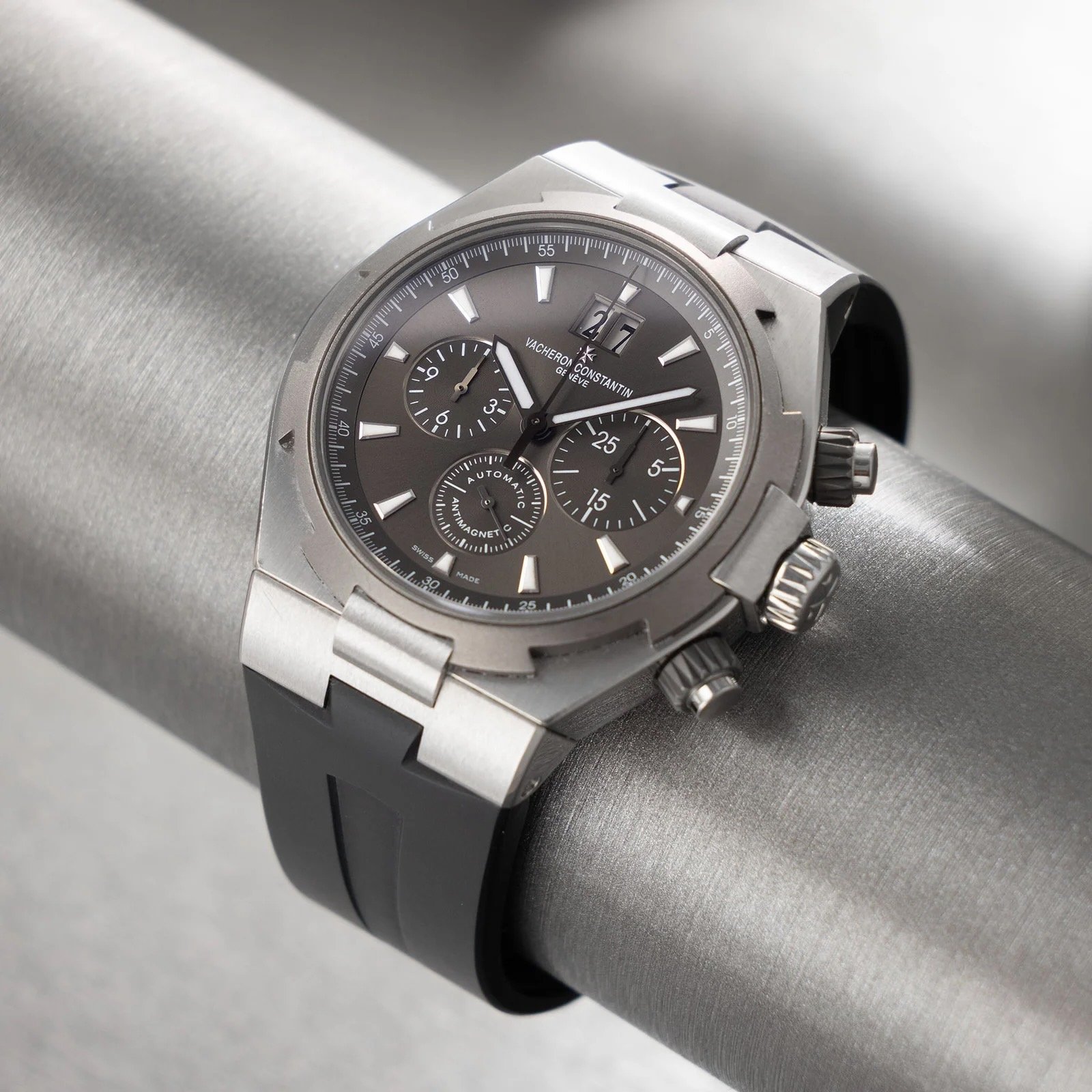
Image: Bulang & Sons
The dials were less successful. The patterned dials of the standard time-and-date models featured questionable markers and numerals at 3, 6, 9, and 12 o’clock. The date also moved from 3 o’clock to 4:30, which did nothing to improve the visual balance, especially as it sat too far toward the dial’s center.
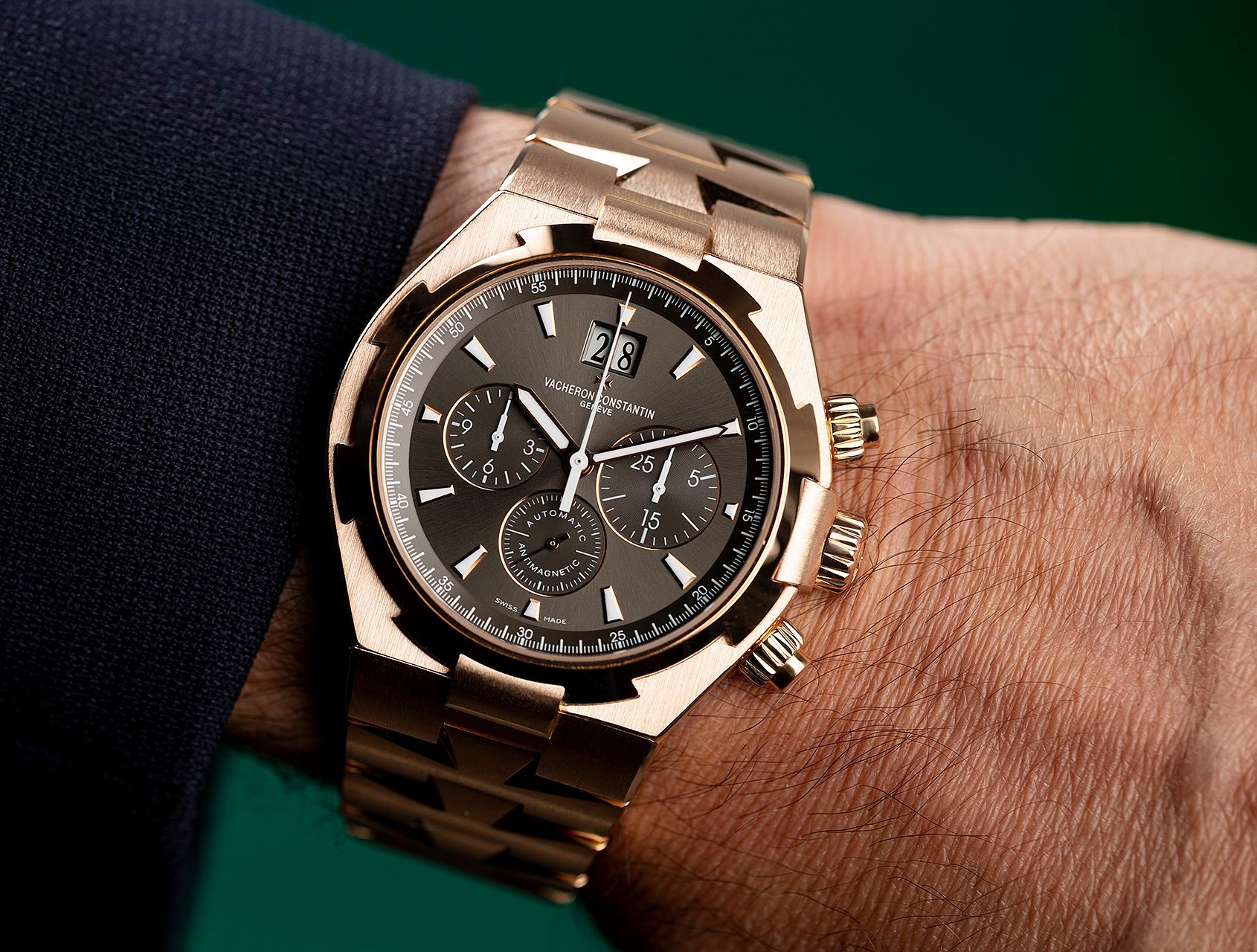
Image: The Watch Club
The complicated Overseas models, however, looked more balanced and cohesive. They were the main reason the second-generation collection achieved greater commercial success. The combination of a modern sports watch and Vacheron Constantin’s rich heritage in high-end watchmaking proved effective.

Image: The Watch Club
The current-generation Vacheron Constantin Overseas (2016–present)
After 12 years, Vacheron Constantin overhauled the Overseas once again. Introduced in 2016, the current generation featured an updated design by the brand’s head of design, Vincent Kaufmann. It builds on the previous generations while adding the refinement needed to create a balanced collection that combines sportiness with elegance.

Image: The Watch Club
The case is better proportioned, and Kaufmann added a ring beneath the notched bezel to emphasize its round shape. The bezel now has six notches instead of eight, and they extend toward the case’s edges, creating softer, more natural lines.

The dial, however, brings the design together. With the angular, prominent bezel and bracelet, the Overseas benefits from a more restrained dial. I can’t help thinking Kaufmann drew inspiration from the 222’s dial when creating this understated look. The time-and-date Overseas 4500V and time-only Overseas 2000V established the design language for the references that followed.
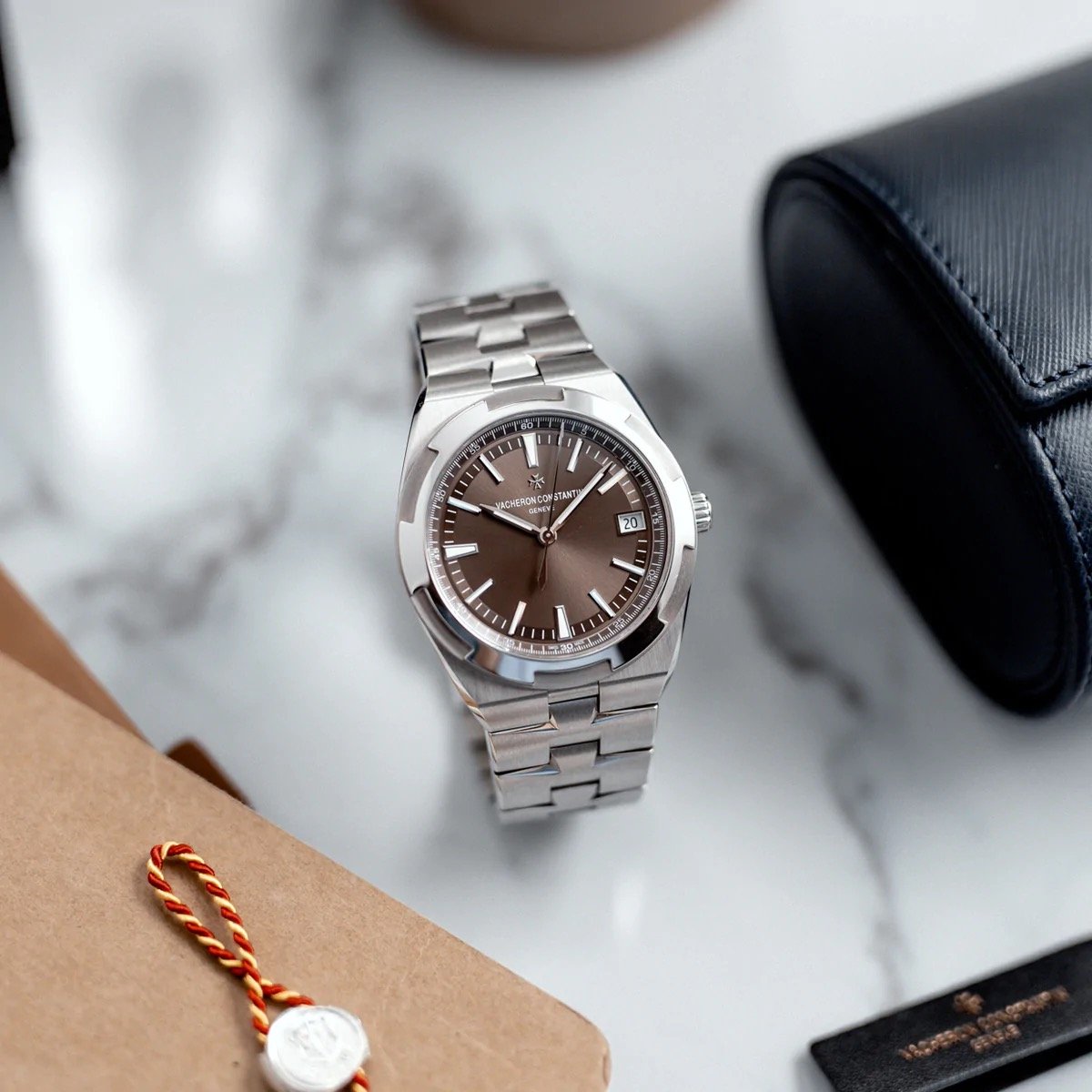
Image: Mr. Watchley
The dial design’s importance
The brown-dial Overseas 4500V that I wrote about a few years ago is a prime example. In that article, I praised this particular version of the time-and-date model and explained what I appreciate about the Overseas design. I recommend reading it if you’d like to learn more. For now, the important point is that this version demonstrates how much the dial contributes to the collection’s success.
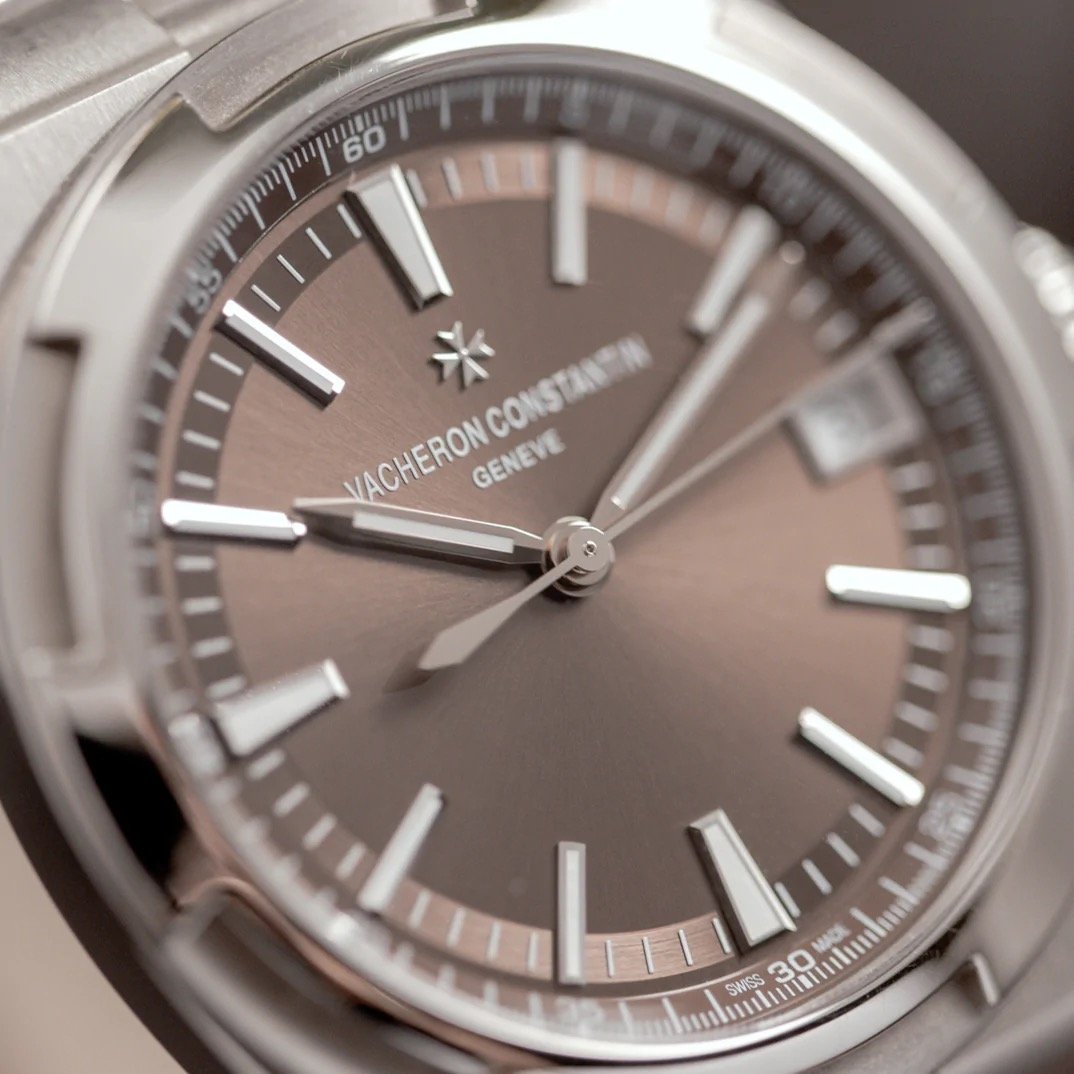
Image: Mr. Watchley
In the brown-dial version, the color transforms the entire watch. As I explained in that article: “The specific brown hue adds an extra layer of class and presence, bringing a sense of sophistication that we do not often see in luxury stainless steel sports watches.” That’s why I argued for the return of this dial variation, which Vacheron only produced from 2016 to 2017.
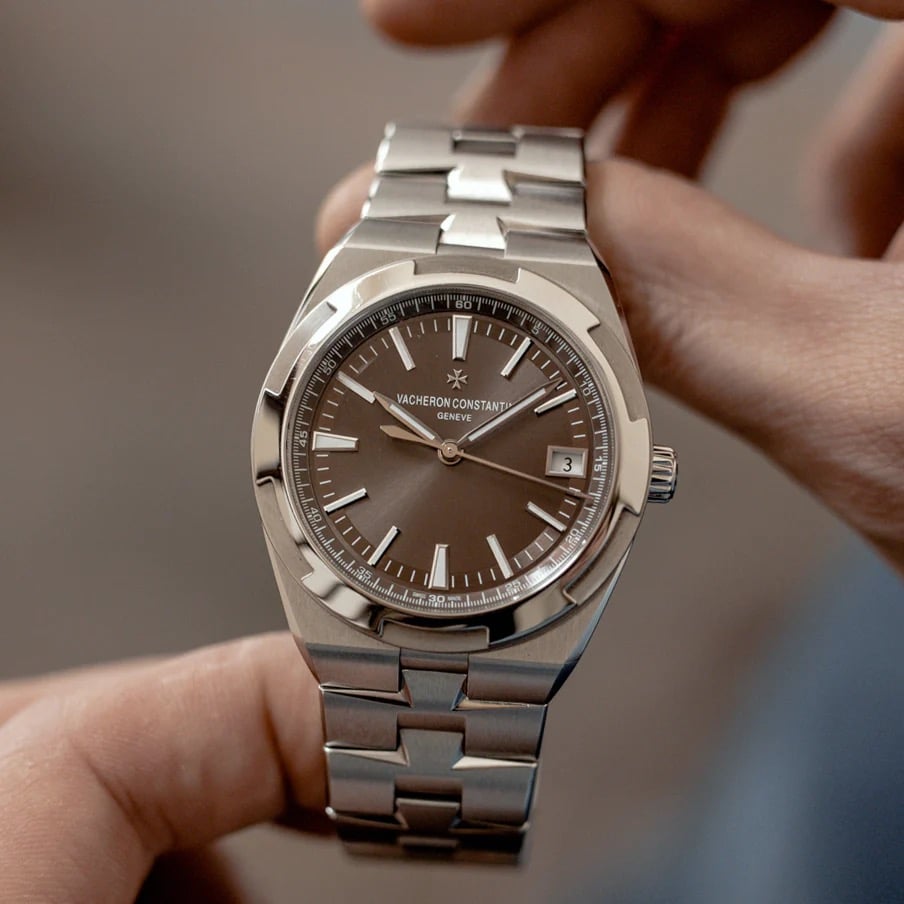
Image: Mr. Watchley
The Overseas collection’s growing relevance
The basic design also reveals something important about the collection’s development. Vacheron Constantin has successfully expanded the lineup with models that demonstrate its versatility. These additions show why the Overseas has become increasingly important to the brand and why its influence is greater than ever. Three models illustrate this particularly well.

Not long after the gold Historiques 222 debuted in 2022, Lex wrote an interesting article arguing that it had rendered the Overseas obsolete. He predicted Vacheron Constantin would follow the gold version with stainless steel and two-tone models, further undermining the Overseas’ relevance. The arrival of the stainless steel 222 last year seemed to support his argument. I was fortunate enough to spend time with it and was thoroughly impressed. Jörg Hysek’s brilliant design, executed in stainless steel and paired with a stylish blue dial, made a powerful impression.

Vacheron Constantin Overseas Self-Winding Ultra-Thin 2500V
Nothing in the Overseas lineup could come close to that — or so it seemed. Then, at Watches and Wonders this year, Vacheron Constantin introduced the platinum Overseas Self-Winding Ultra-Thin, a watch that will undoubtedly feature on many year-end lists. Its perfectly proportioned 39.5 × 7.35mm case combined with a stunning sunburst salmon dial makes it a real looker.
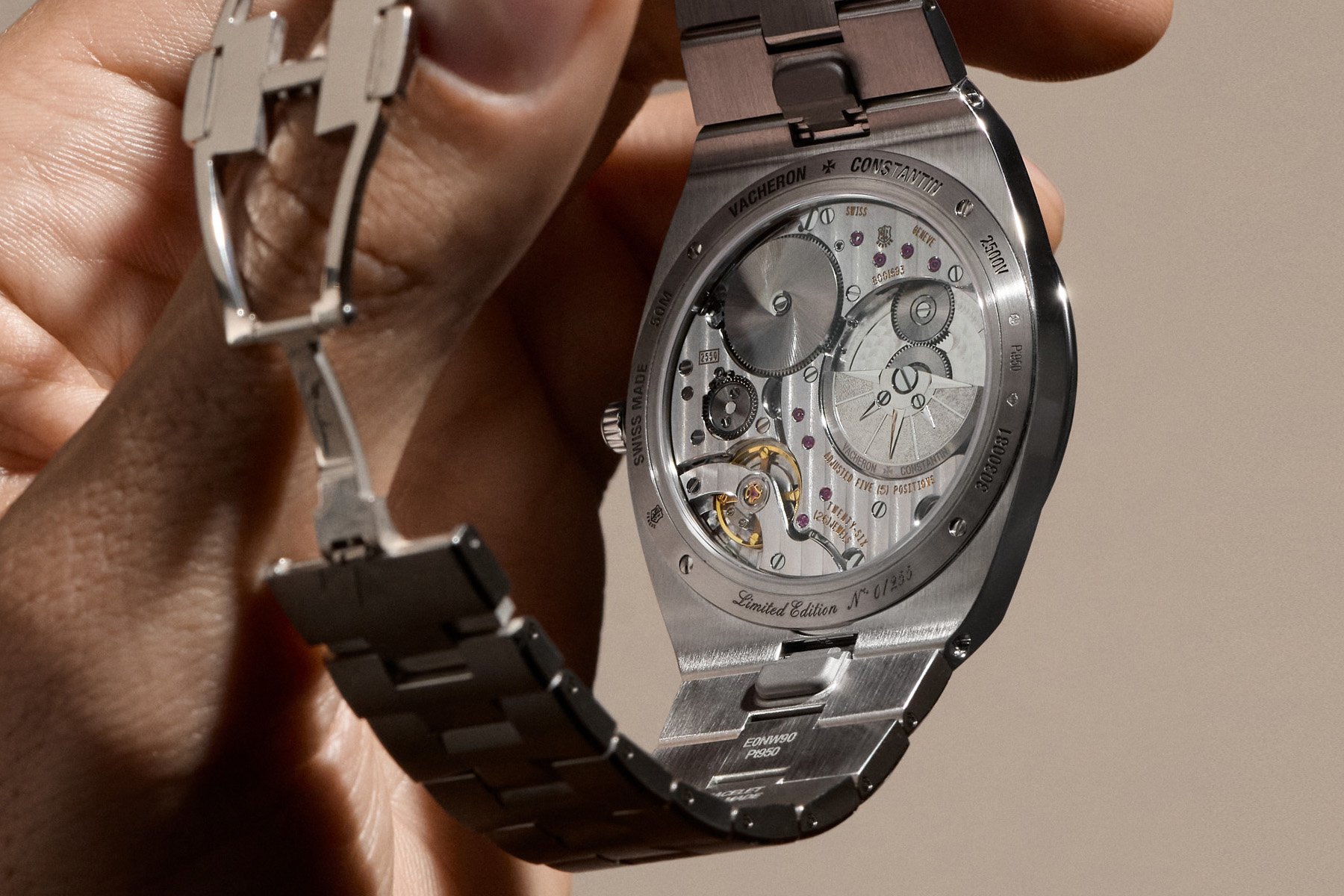
The new ultra-thin twin-barrel micro-rotor caliber 2550 completes the package. It is an impressive watch in every respect. Even Lex changed his tune and requested a more affordable steel version with the same movement. I agree, and that request highlights the appeal of the time-only and time-and-date Overseas models.

Vacheron Constantin Overseas Dual Time Cardinal Points
The argument becomes even stronger when we look beyond those versions. I remember reading comments suggesting that a sportier lineup would benefit the Overseas. That idea was based on the success of the Overseas Everest limited editions from 2021, which sold out quickly and became fan favorites.

Five years later, Vacheron Constantin answered that call with four Overseas Dual Time Cardinal Points models. These lightweight titanium versions of the Overseas Dual Time became another major hit at Watches and Wonders, following the platinum Ultra-Thin. They were among the show’s most talked-about releases and will likely appear on plenty of year-end lists too.
Vacheron Constantin Overseas Perpetual Calendar Ultra-Thin
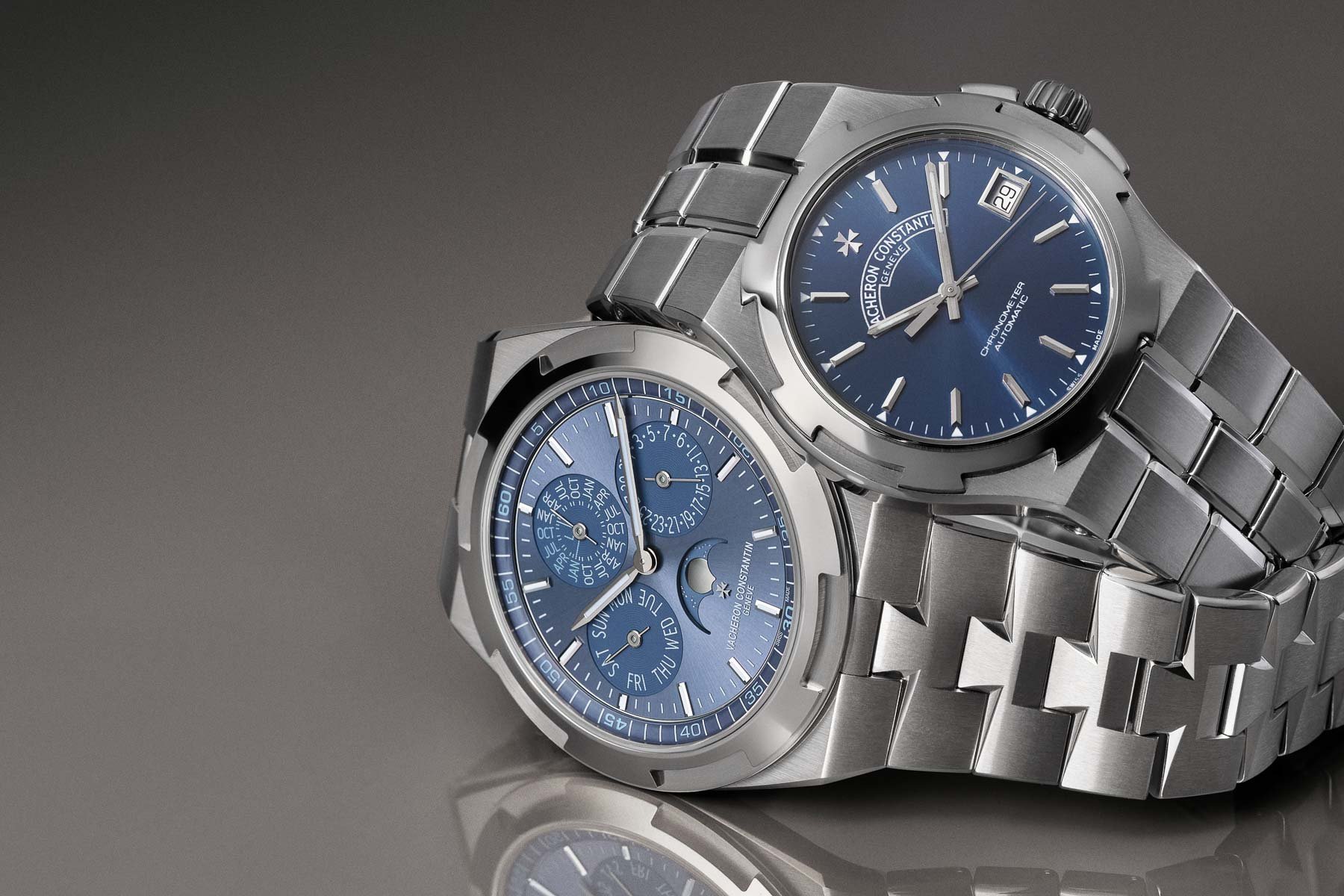
The final example further strengthens my argument. If you asked me to name my favorite slim and sporty perpetual calendar, the Vacheron Constantin Overseas Perpetual Calendar Ultra-Thin would be the first to come to mind. I prefer it to the technically brilliant Royal Oak Perpetual Calendar and Nautilus Perpetual Calendar.
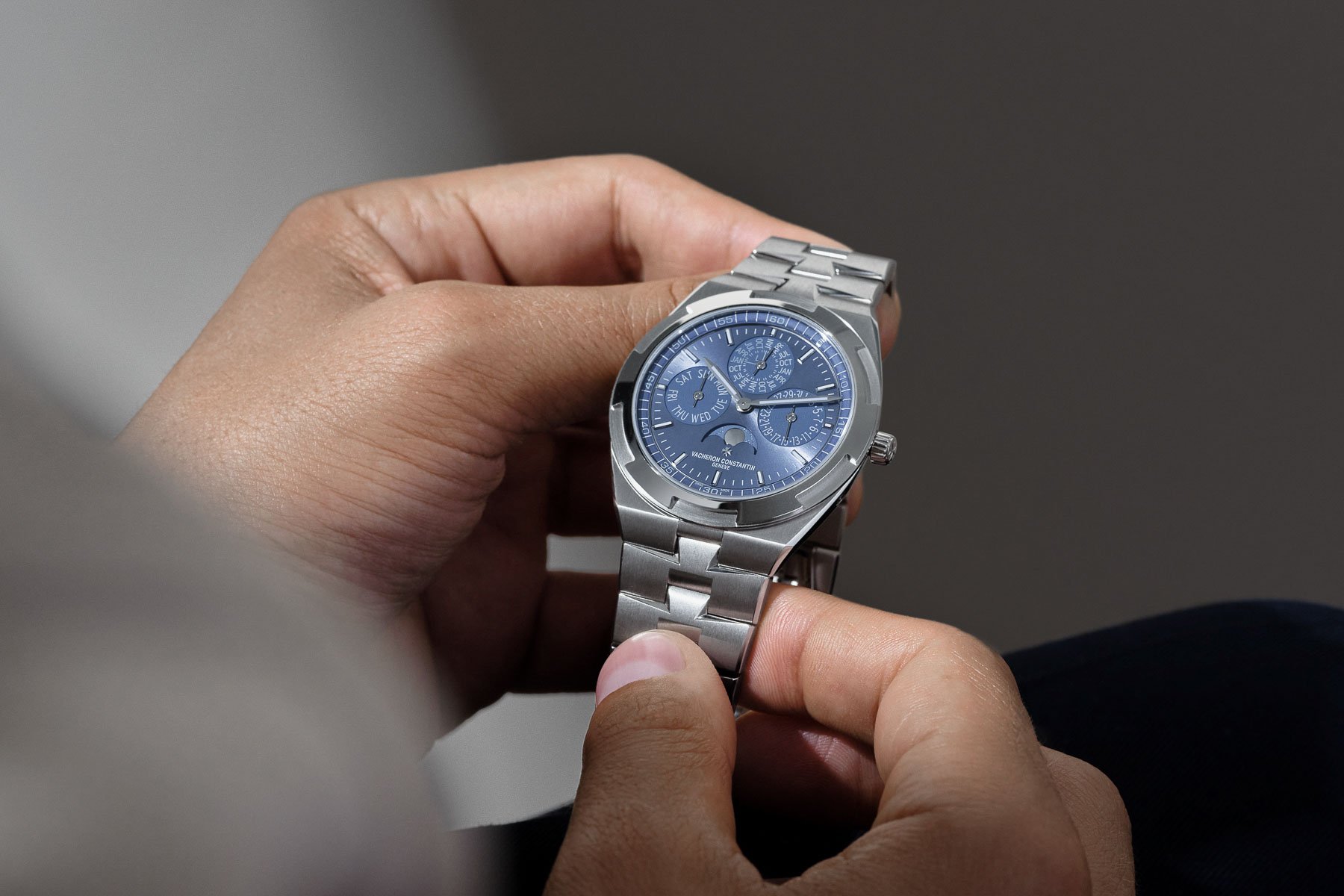
This Overseas has an elegance and sophistication that its competitors lack. The perpetual calendar integrates seamlessly into the design, whereas the Royal Oak and Nautilus feel more utilitarian with the additional complications. The 30th-anniversary model that Ben recently covered is particularly impressive and a masterclass in elegance within this category.

The Overseas steps out of the 222’s shadow
Vincent Kaufmann deserves considerable credit for the current Overseas design. Even in its simplest form, the collection can go toe-to-toe with the 222. Some enthusiasts will always choose Vacheron’s iconic sports watch, and I would hesitate too, given Hysek’s brilliance and the 222’s cultural significance. However, with the platinum Overseas Self-Winding Ultra-Thin 2500V, Vacheron Constantin has demonstrated that the Overseas can stand proudly alongside its older brother.
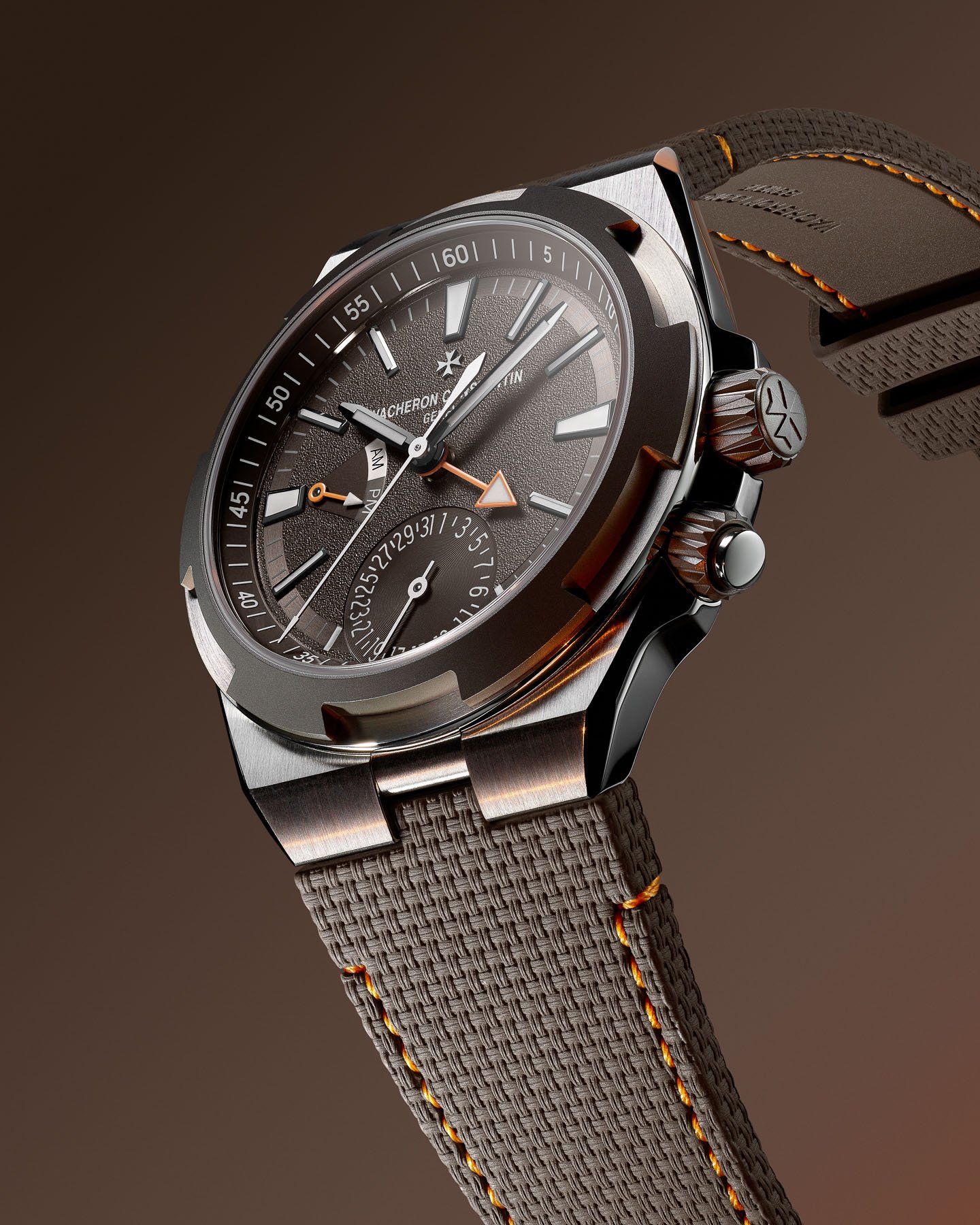
Add the versatility of the Dual Time Cardinal Points and Perpetual Calendar Ultra-Thin, and it’s clear that the Overseas has developed a distinct identity. The 222’s return has not made the Overseas obsolete, contrary to Lex’s earlier argument. If anything, recent releases demonstrate that the collection is in better shape than ever. That brings me to one final question: which Overseas would I choose as my shadow icon?

Image: Mr. Watchley
Among the current models, the platinum Overseas Self-Winding Ultra-Thin 2500V makes the strongest case for the collection. However, sentiment would lead me to put the 2016 brown-dial Overseas Self-Winding alongside it. That watch was among the first in the current generation to demonstrate the collection’s potential. Perhaps my answer isn’t so different from Lex’s request for a steel version of the Overseas Self-Winding Ultra-Thin 2500V. I’d simply add one specific dial color to the wish list…