Hands-On With The Chopard L.U.C 1963 Heritage Chronograph In Prussian Blue

The dial is new, but the watch isn’t, and that doesn’t matter. One look at the Chopard L.U.C 1963 Heritage Chronograph in Prussian Blue is enough to make you drown in the dial’s depth. When you finally come up for air and turn the watch over, you’ll find another source of fascination — the L.U.C 03.07-L chronograph caliber. Its architecture is fascinating, and both COSC chronometer certification and the Poinçon de Genève back its quality. This is a watch you don’t want to pass up handling, so I grabbed it with both hands.
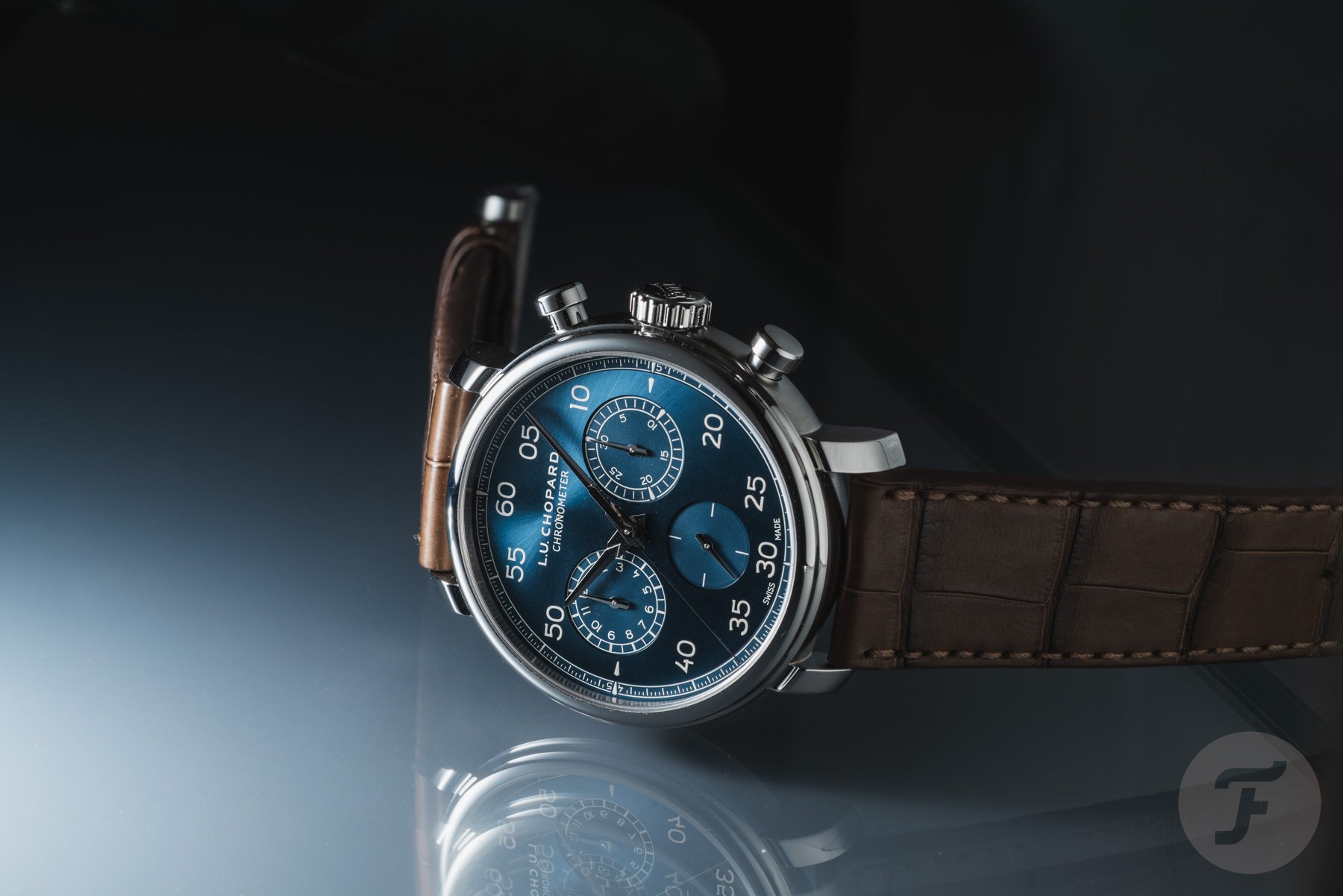
Chopard produced just 25 examples of the L.U.C 1963 Heritage Chronograph. Each features a 42 × 11.48mm case made of Lucent Steel, the brand’s proprietary alloy. As a reminder, Lucent Steel incorporates high-quality industrial steel waste sourced from Swiss watch manufacturers, supplemented by steel from the medical, aerospace, and automotive industries. A dedicated remelting process gives the alloy three notable characteristics. First, it is hypoallergenic and skin-friendly, with properties comparable to surgical steel. Second, its hardness makes it 50% more resistant to abrasion than conventional stainless steel. Finally, its particularly homogeneous crystalline structure gives it distinctive light-reflecting properties reminiscent of white gold. The alloy’s bright finish contrasts beautifully with the deep blue dial.
Hands-on with the Chopard L.U.C 1963 Heritage Chronograph in Prussian Blue
The case has a straightforward, classic shape with a rounded profile. Its bezel, lugs, and case back are polished, while the flanks and surfaces between the lugs feature vertical satin brushing. Traditional pump-style pushers complement the design, as does the large, 8mm notched crown. These components are also Lucent Steel, of course. Chopard fitted the watch with a glare-resistant sapphire crystal to ensure an unobstructed view of the Prussian Blue dial and its familiar chronograph layout. A second crystal in the case back reveals the manually wound movement. Water resistance is 50 meters, which should be sufficient for everyday use, although this is certainly not a watch designed for swimming.
From Prussia to Switzerland
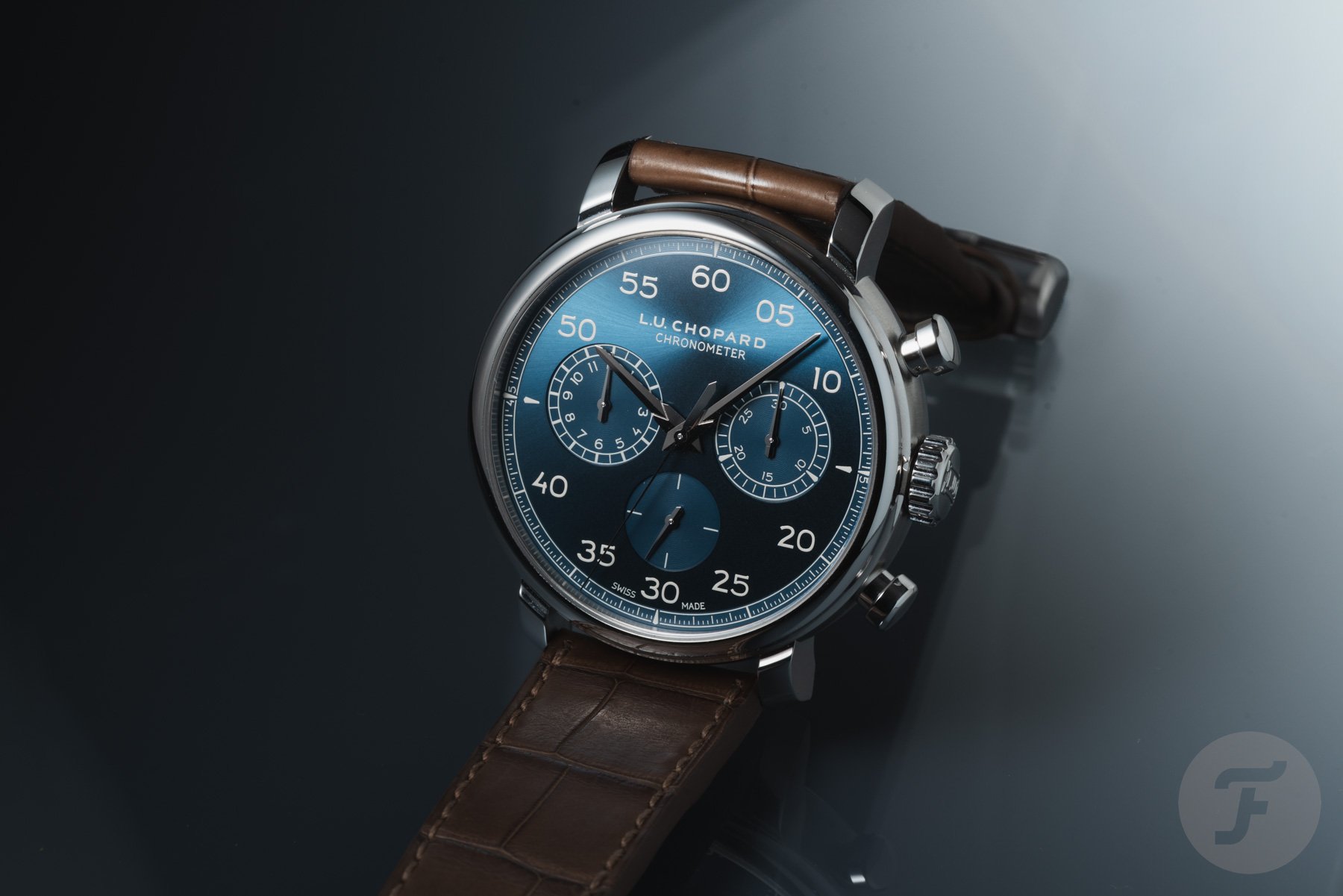
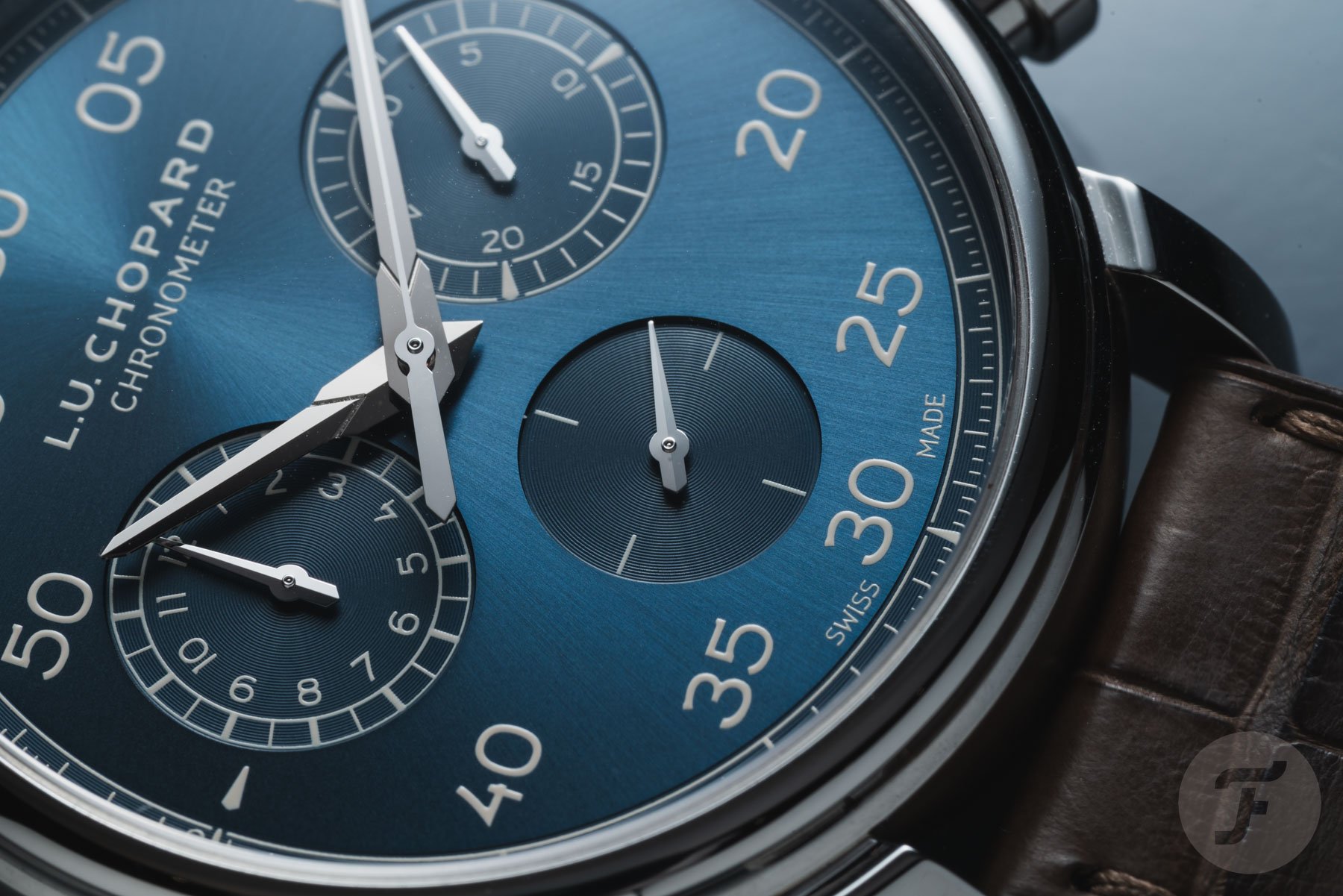
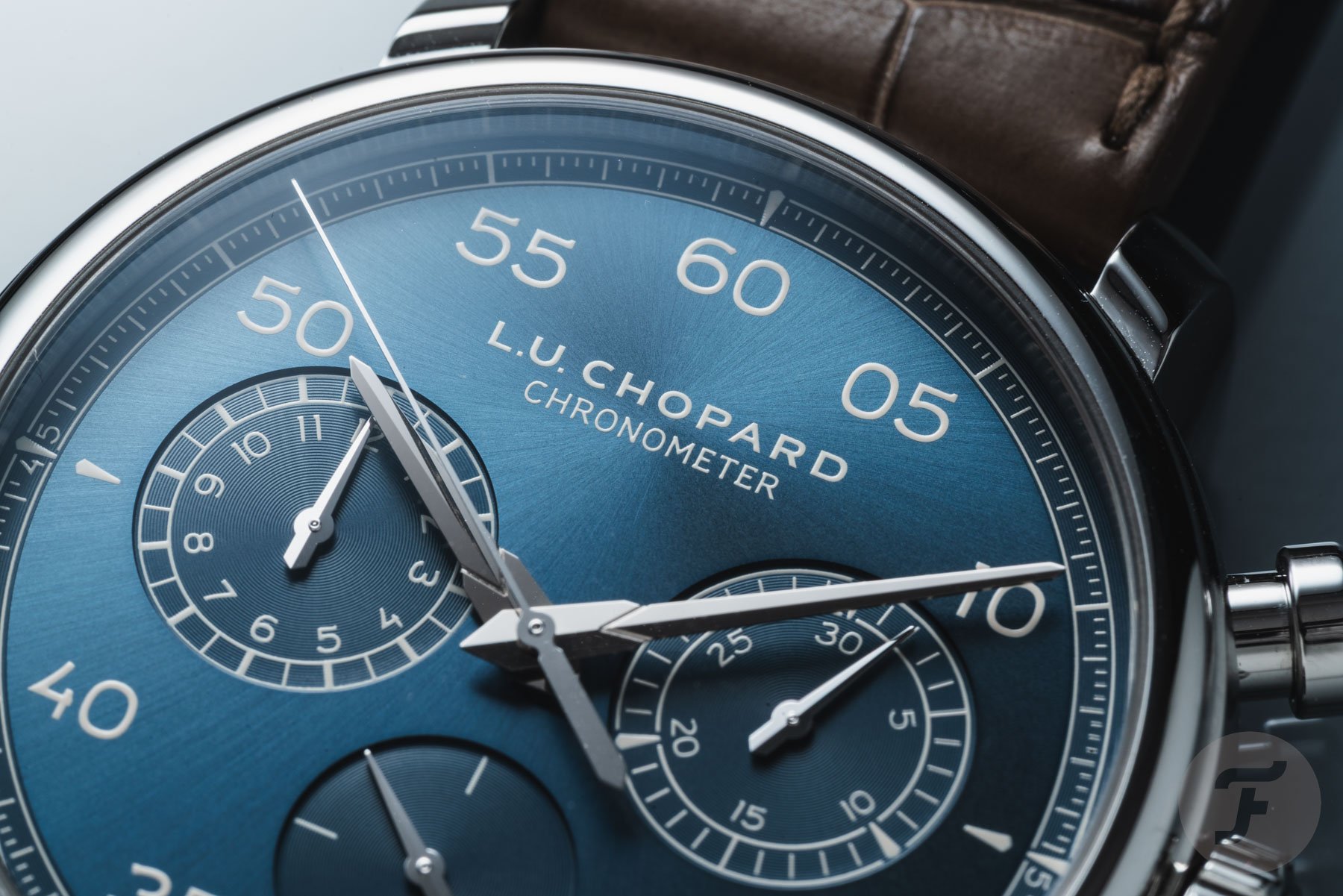
The new Prussian Blue dial is the main attraction. Chopard has used this shade before on the L.U.C XPS, but here, it receives a different treatment. An off-center sunburst finish contrasts with the recessed, concentric-engraved sub-dials. Large, rounded Arabic numerals mark the peripheral chronograph-seconds scale. The 30-minute counter sits between 2 and 3 o’clock, while the 12-hour register occupies the space between 9 and 10. Small seconds appear in their usual position at 6 o’clock. The L.U. Chopard signature sits below 12, accompanied by the word “Chronometer” to indicate the watch’s COSC certification. I could spend a thousand words describing this dial, but its vivid, deep blue shade is something you really need to see.
Interestingly, Prussian Blue has a historical connection to Fleurier, home of Chopard’s high-watchmaking operations in the canton of Neuchâtel. Johann Jacob Diesbach, a colormaker in Berlin, then the capital of Prussia, accidentally discovered the pigment in the early 1700s while trying to make a red dye. Between 1707 and 1857, Neuchâtel was governed by the Kingdom of Prussia, even though it also became a Swiss canton in 1815.
Strong hands
The L.U.C 1963 Heritage Chronograph has plenty of details worth examining, starting with its hands. We’ll get to the movement shortly, but first, take a look at the rhodium-plated white gold dauphine-fusée-type hour and minute hands. They’re large, beautifully detailed, and meticulously finished. The slim, rhodium-plated central chronograph hand follows a similar style, while faceted almost-triangular hands indicate the time on the subsidiary counters. The result is a traditional, legible display that suits the watch’s restrained character.
The dial’s most unusual feature is its use of Arabic numerals for the elapsed seconds rather than the hours. To me, this emphasizes the watch’s focus on accurate timing. The hours are easy enough to locate, but the five-second numerals provide the instant legibility needed when measuring elapsed time. It’s an unconventional choice that gives the dial a pleasingly unusual look.
In-house powerplant
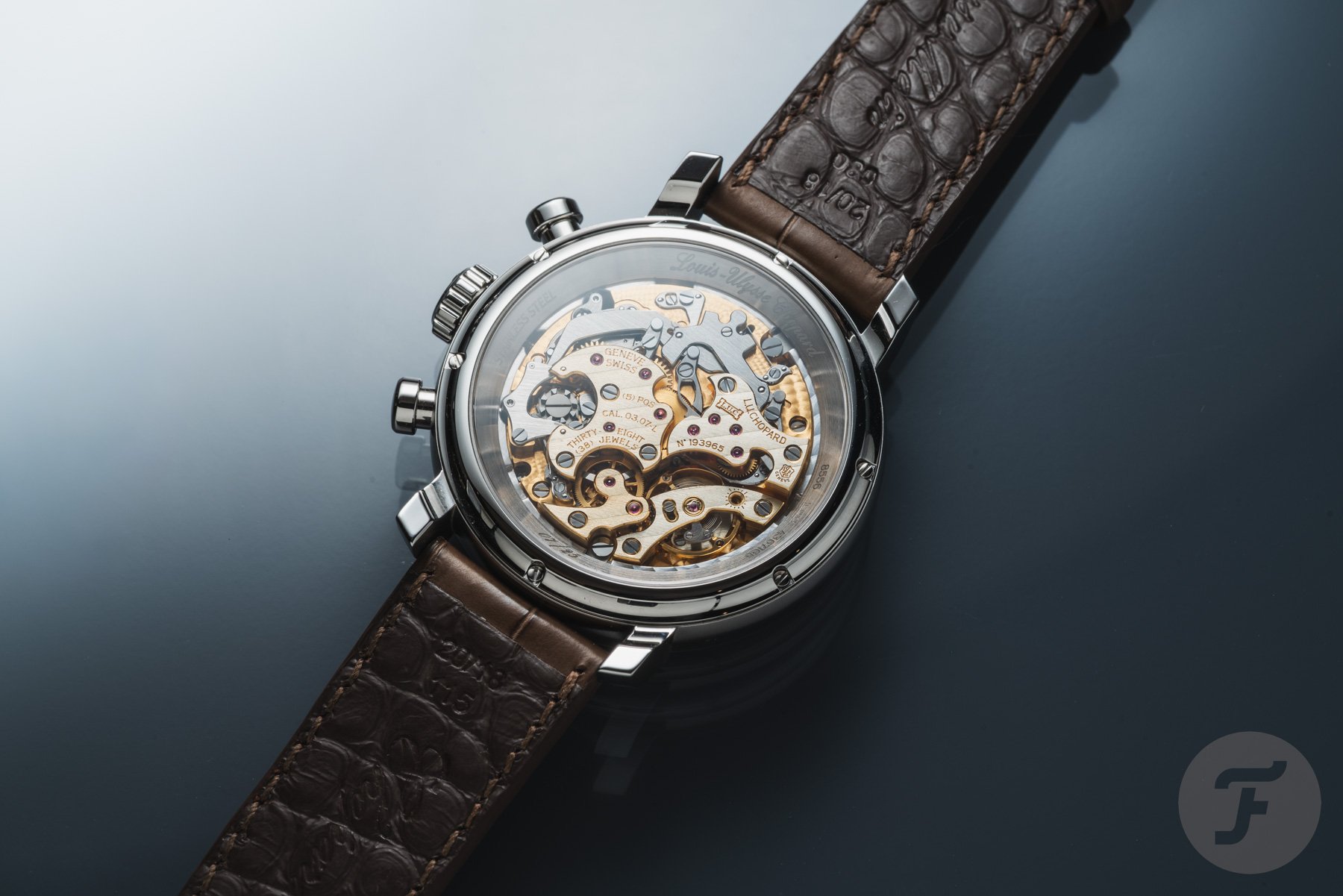
Through the case back’s sapphire window, you can admire the L.U.C 03.07-L caliber. This in-house, 4Hz movement offers a 60-hour power reserve and is an integrated, manually wound chronograph comprising 283 components. It first appeared in the original L.U.C 1963 Chronograph in 2014, marking the 50th anniversary of the Scheufele family’s ownership of Chopard. Its development built on the manufacture’s first in-house chronograph caliber from 2006.


The proven architecture combines a column wheel and vertical clutch with a flyback function. One patented feature is the reset mechanism, which uses three pivoting hammers with elastic arms. This is an interesting technical solution that you can appreciate in practice. The chronograph operates remarkably smoothly, thanks in part to this patented mechanism. You can feel the difference in your finger when pressing the pushers, and it’s a lovely sensation.


The movement’s two-tone appearance is just as impressive. Untreated German silver bridges contrast with a gilded mainplate and gilded, beveled angles. The bridges feature Côtes de Genève, while the mainplate displays perlage and the chronograph components have straight-grained finishes. The construction and finishing contribute to the movement’s Poinçon de Genève certification. Meanwhile, its COSC chronometer certification confirms that this caliber is not merely a beautiful sight but also a precise timekeeper.
Final words on the L.U.C 1963 Heritage Chronograph
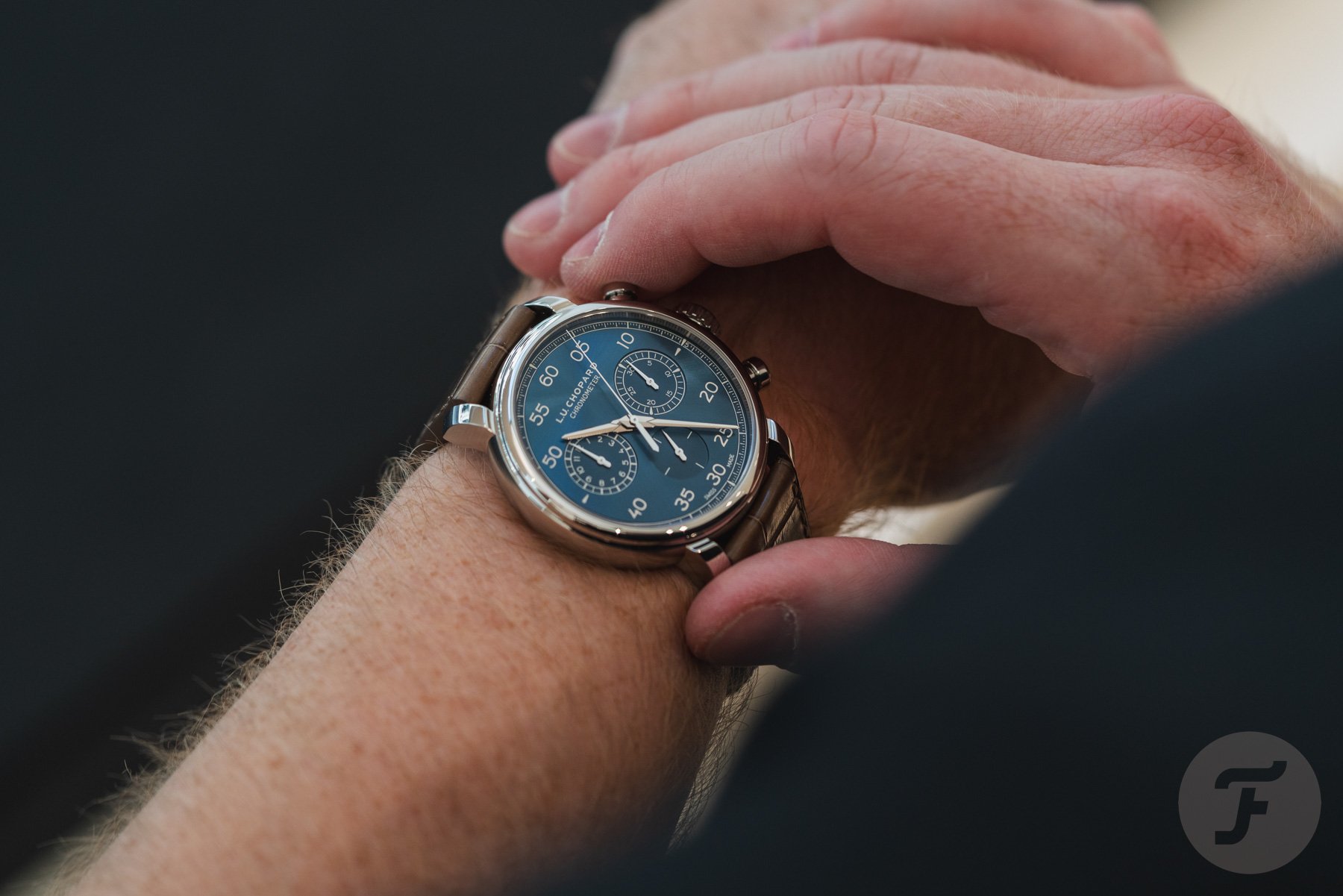
As I mentioned, operating the chronograph offers plenty of horological pleasure, as does winding the watch with its large crown. Nothing beats a manual movement for creating a bond between the wearer and the watch. Wearing it is just as enjoyable as interacting with its mechanics.
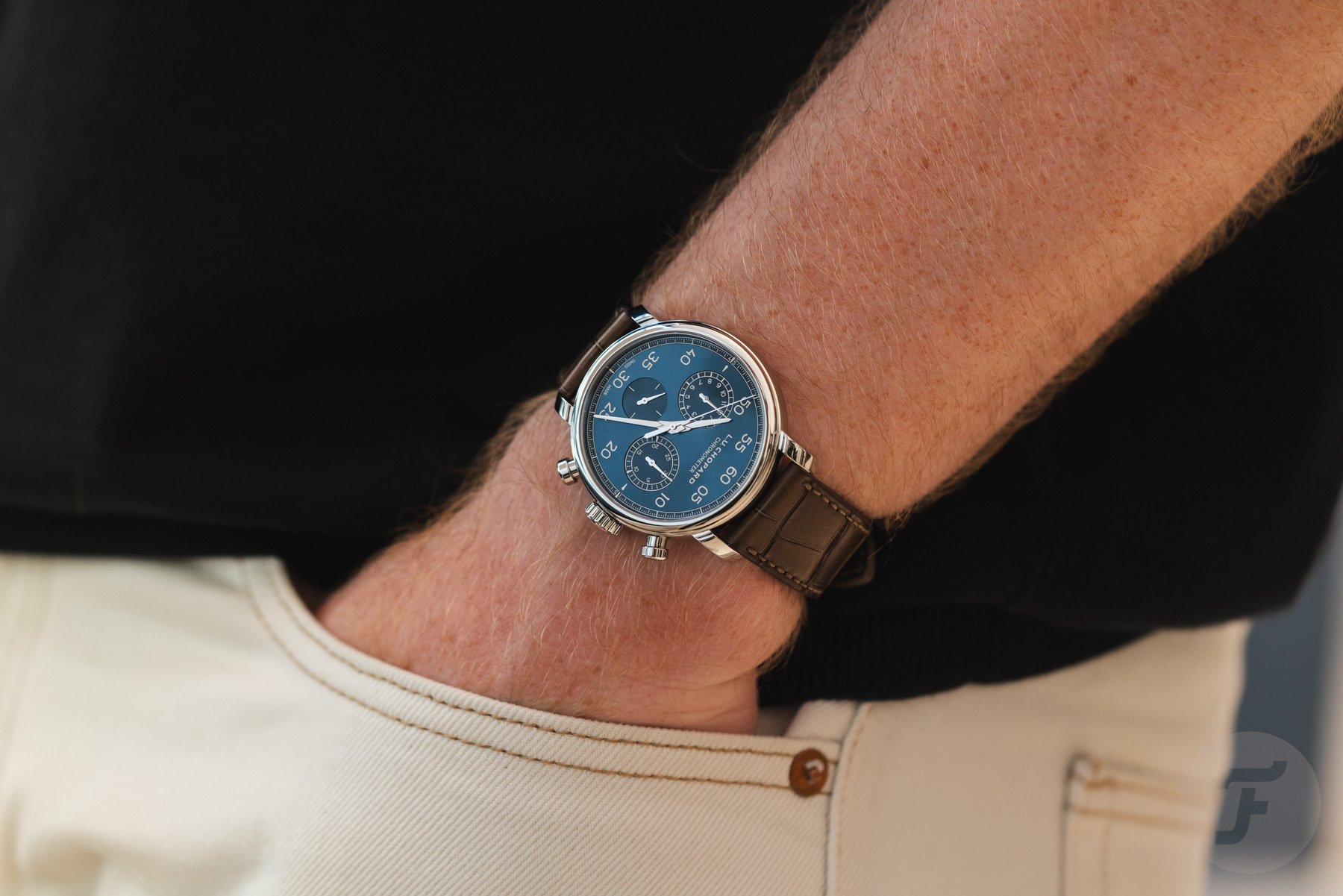
Please don’t tell me that the 42mm case is too big. I agree that it’s substantial, but the watch is quite slim, and there’s plenty of blue dial to enjoy. Its color shifts from bright blue to an almost black, deep-sea shade depending on the light. On my 18cm wrist, it wears just as comfortably as my similarly sized Speedmaster. Would a 40mm L.U.C 1963 Heritage Chronograph look good? I doubt it. A smaller case would compromise the subtle, instrumental look and feel that give this watch its identity.


I also applaud the supple brown alligator leather strap, which comes with a Lucent Steel pin buckle. Some might argue that a €38,000 / US$40,000 / £32,200 watch deserves a folding clasp. However, this is a sober, high-end timing instrument, and the straightforward pin buckle suits its spirit.
As mentioned, the L.U.C 1963 Heritage Chronograph in Prussian Blue is a numbered limited edition of 25 pieces, available exclusively through Chopard boutiques. If you’re fascinated by high-end chronographs, it’s worth visiting one to see this watch in person.
This is a partnership post. Learn more.