A Personal Trip Down Memory Lane With The New Glashütte Original 70s Series

Immediately after I saw the images of the new Glashütte Original 70s series, I was intrigued. With the square case shape and textured dials, these new watches instantly reminded me of a classic Citizen watch my father wore in the 1980s, which I still have at home. As you’ll understand, a connection like that is not a bad one to have. I wanted to learn more about this new series of 70s three-handers, the successors to the brand’s Seventies Panorama Date. At first glance, I like the way the dials have cleaned up and eschewed the oversized date window. But there is a lot more to the story of the new 70s series.
As soon as I opened the marketing materials, I got another pleasant surprise. Glashütte Original uses the wonderful world of analog audio to market the new series. Coming from a family with two audiophiles, I connected with the new 70s series for that reason as well. These watches directly connect to my childhood in multiple ways, which is about as strong a connection as I could have from the get-go. But let’s create some context from Glashütte’s perspective. The new series is part of the brand’s Vintage collection, which includes the Sixties and Seventies model ranges. For this new series, the name has changed from Seventies to 70s, which is a bit of a question mark, especially since the brand still offers the Seventies chronographs.
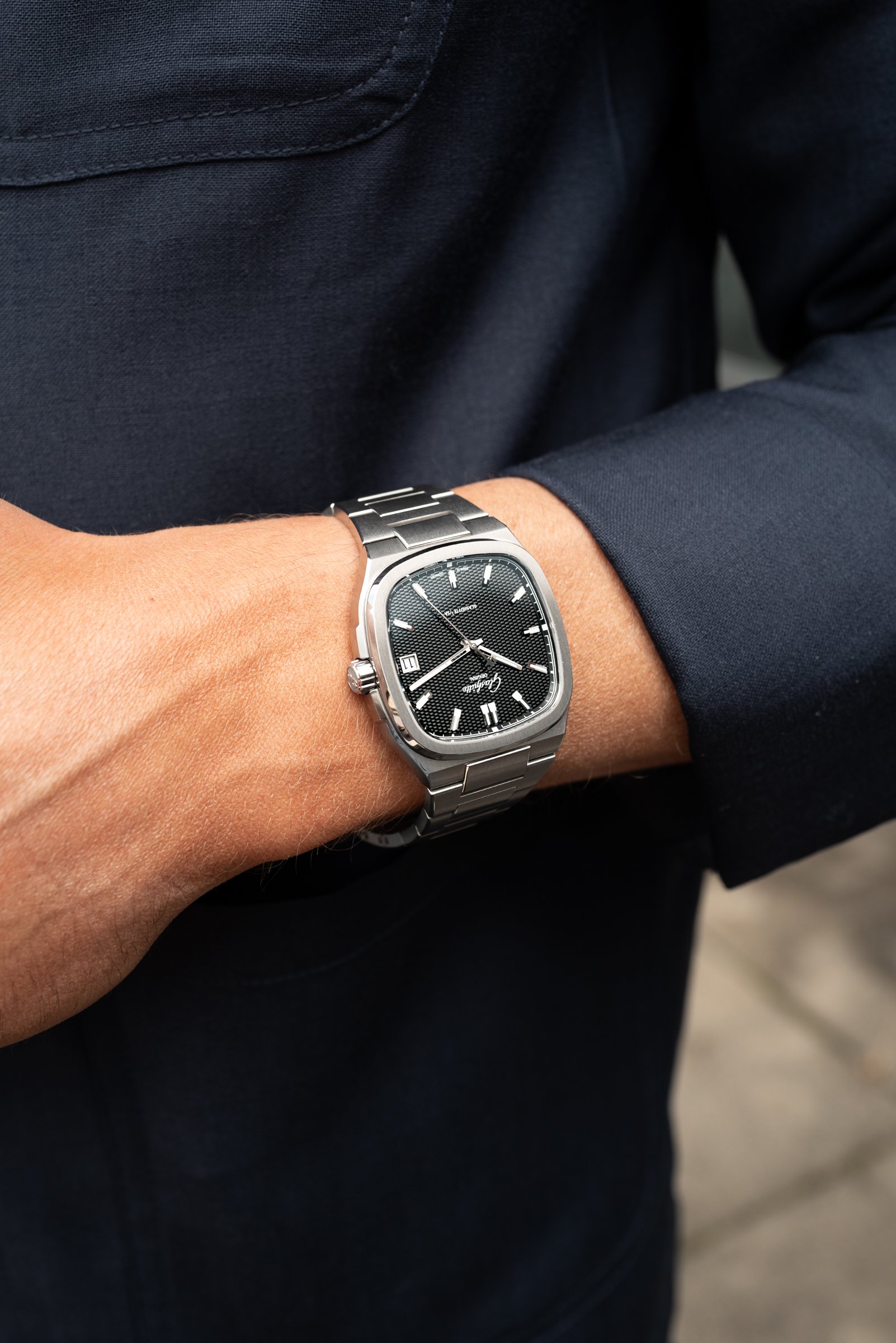
Image: @bowlofsalmon
The details of the new Glashütte Original 70s series
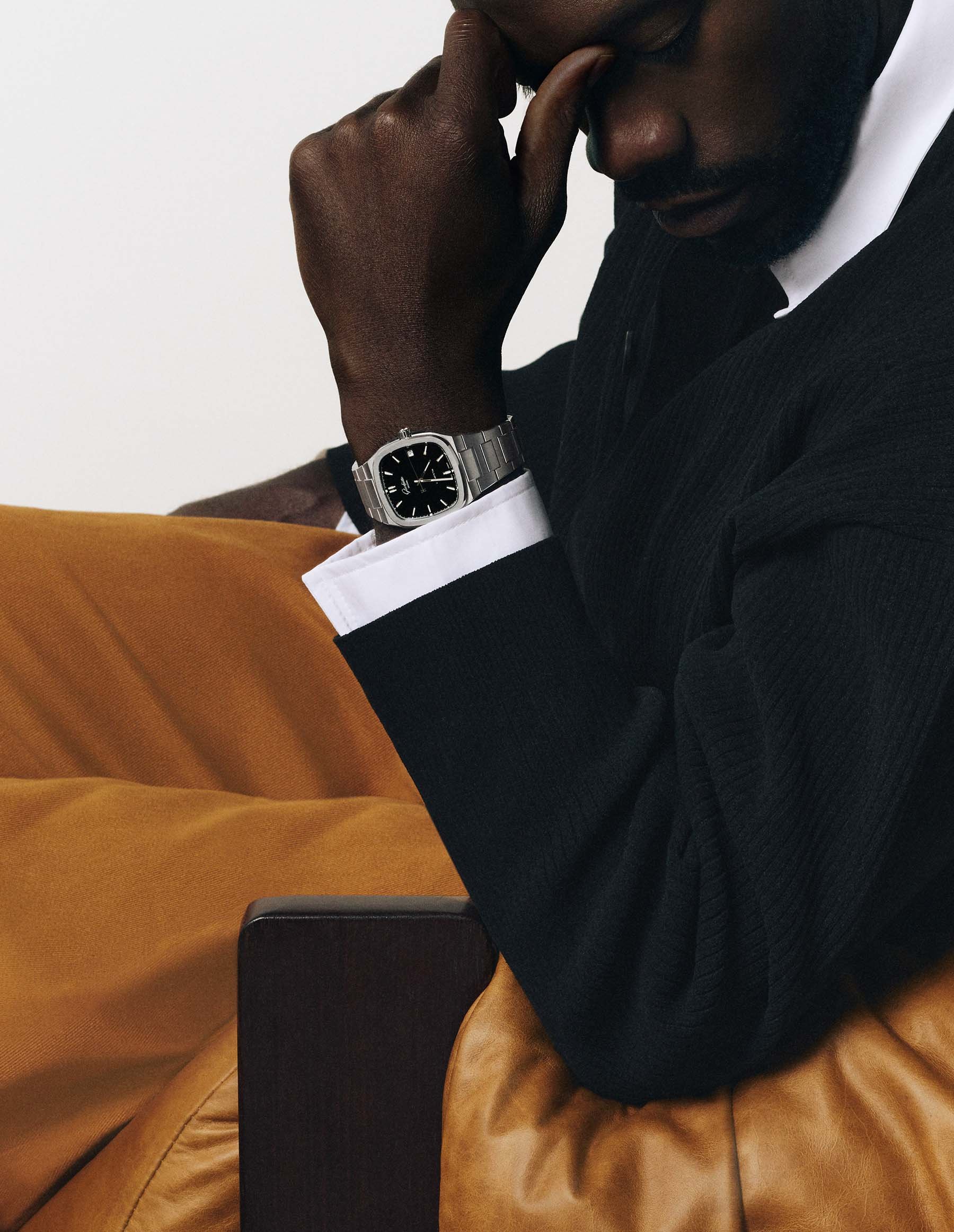
The three new 70s models all have a square 39mm stainless steel case with a 9.6mm thickness and a 43.7mm lug-to-lug. Fittingly, this nicely proportioned case instantly gives off ’70s vibes. The mix of brushed and polished surfaces adds visual impact and accentuates the square bezel’s rounded edges.
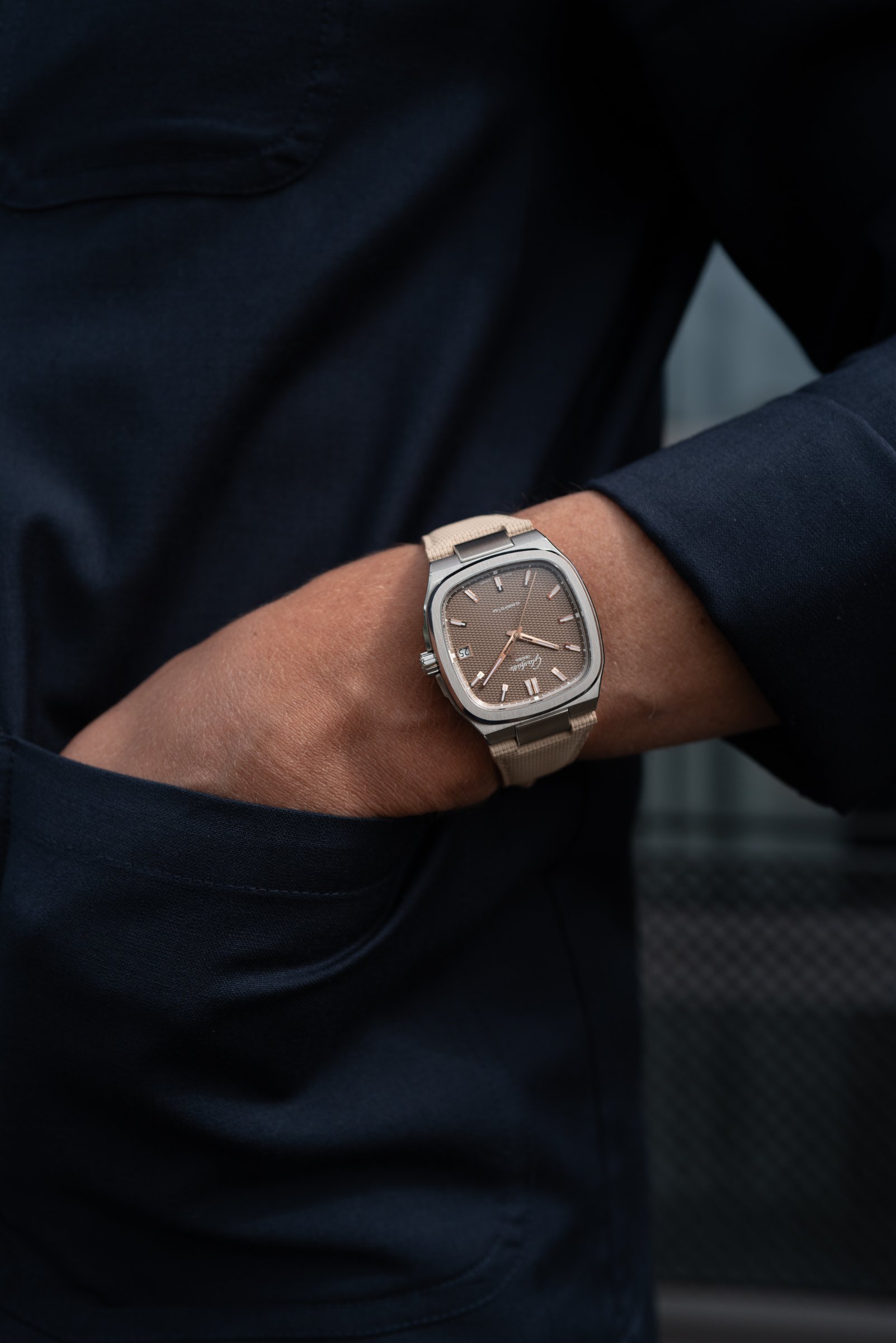
Image: @bowlofsalmon
All three models feature a new dial with a detailed “hexagrid” pattern that adds refinement and reflects the light differently depending on how it hits the surface. The dials also all have a nicely integrated date window at 3 o’clock. It doesn’t grab your attention like the Panorama Date window in several other Seventies models does, and I prefer that. Hovering over the three dials are obelisk-shaped hour and minute hands and a slim seconds hand.
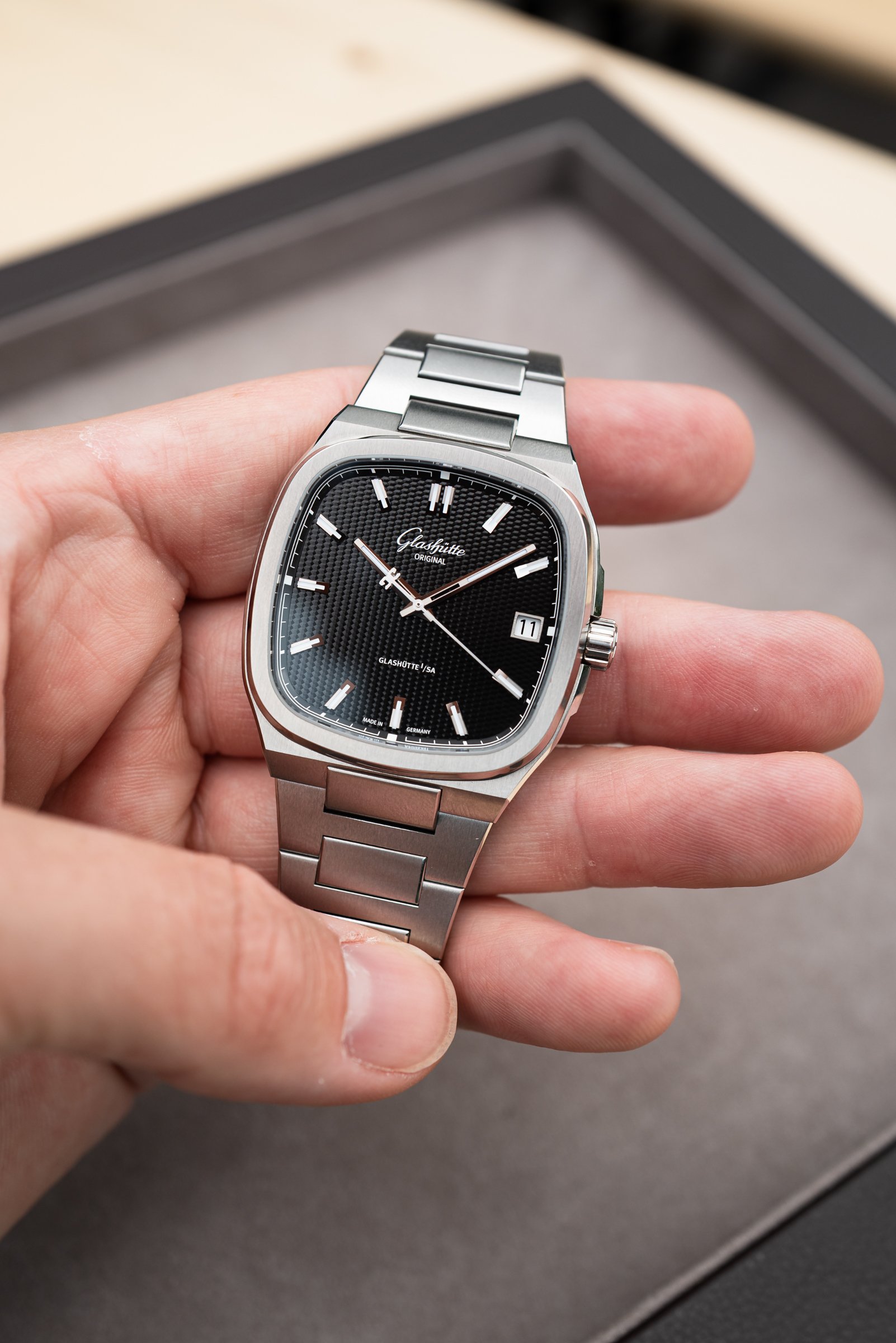
Image: @bowlofsalmon
The three Glashütte Original 70s variants
The first model in this series is the Vinyl Record, which features a silk-matte black dial that evokes the texture of an LP. Contrasting the dial are white gold hour and minute hands and applied white gold indexes. The hour and minute hands and all the hour markers are filled with white Super-LumiNova for low-light legibility. This Vinyl Record model is limited to 500 pieces and comes with both a brushed stainless steel H-link bracelet and a black rubber strap.
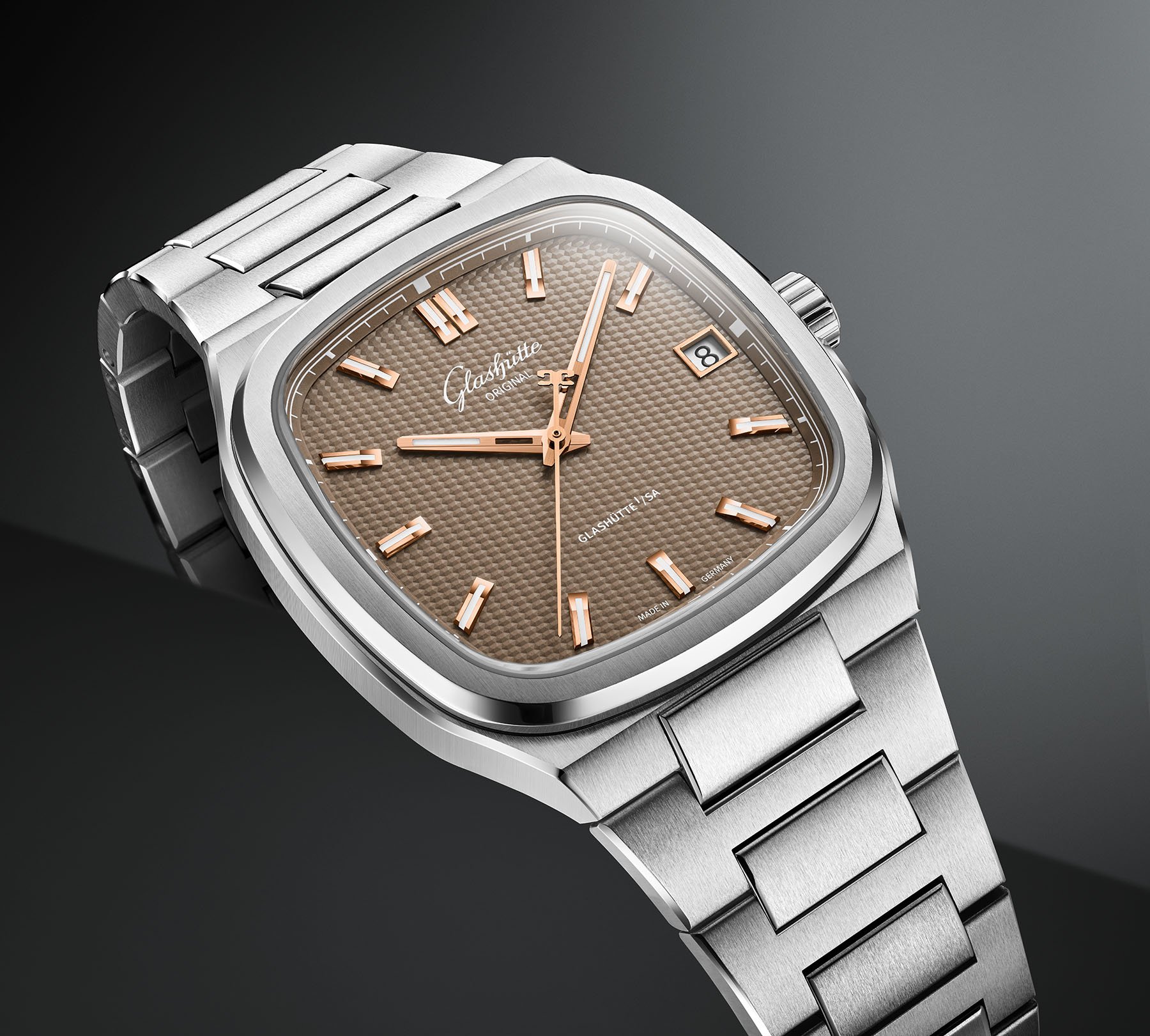
The second is the brown Tweed Amp model, inspired by the brown fabric used on old guitar amplifiers. The soft brown tone is contrasted by the applied solid rose gold markers and hands. It creates a very different, much softer feel than the Vinyl Record. The watch comes on either the stainless steel bracelet or a sand-colored rubber strap lined with calf leather.
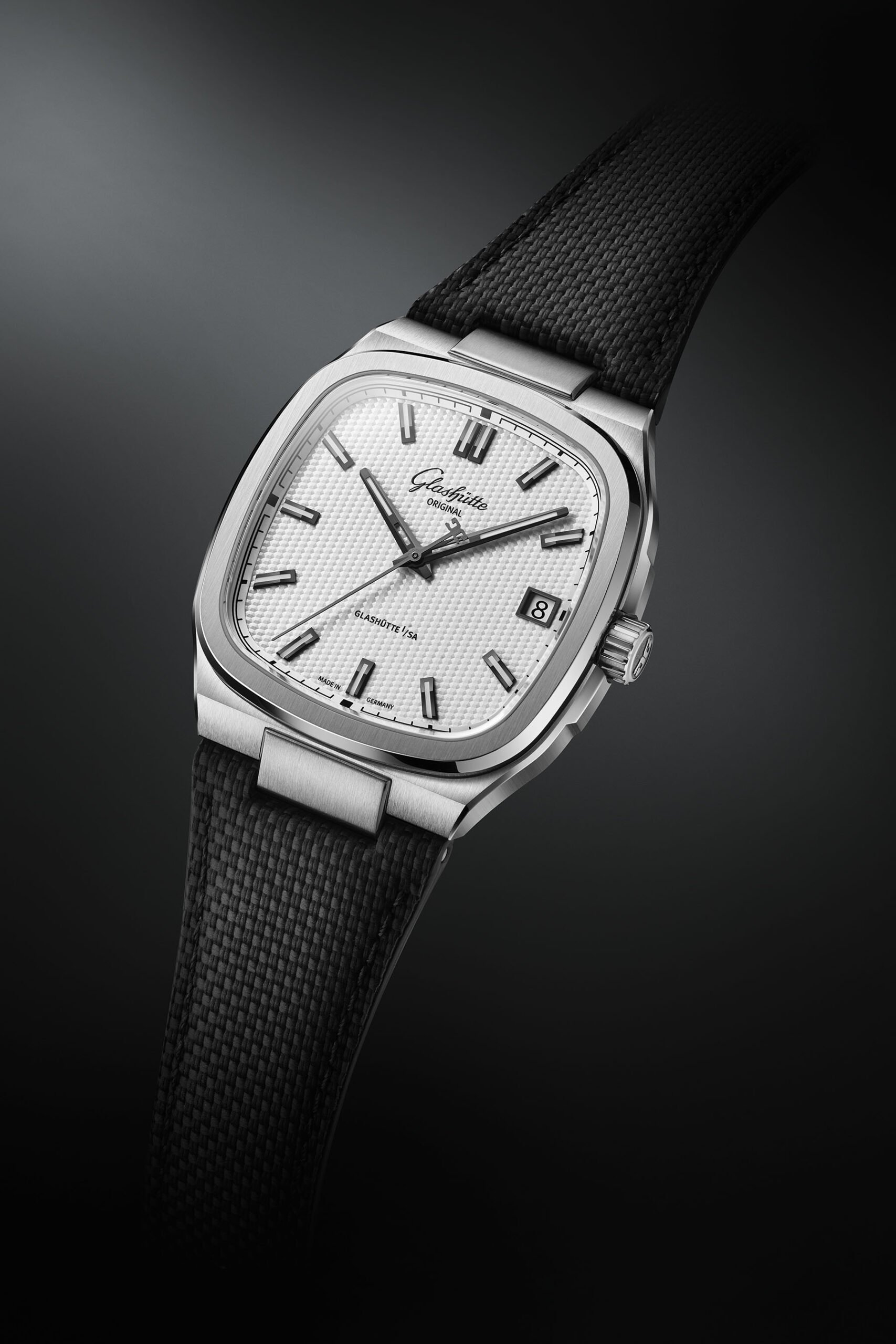
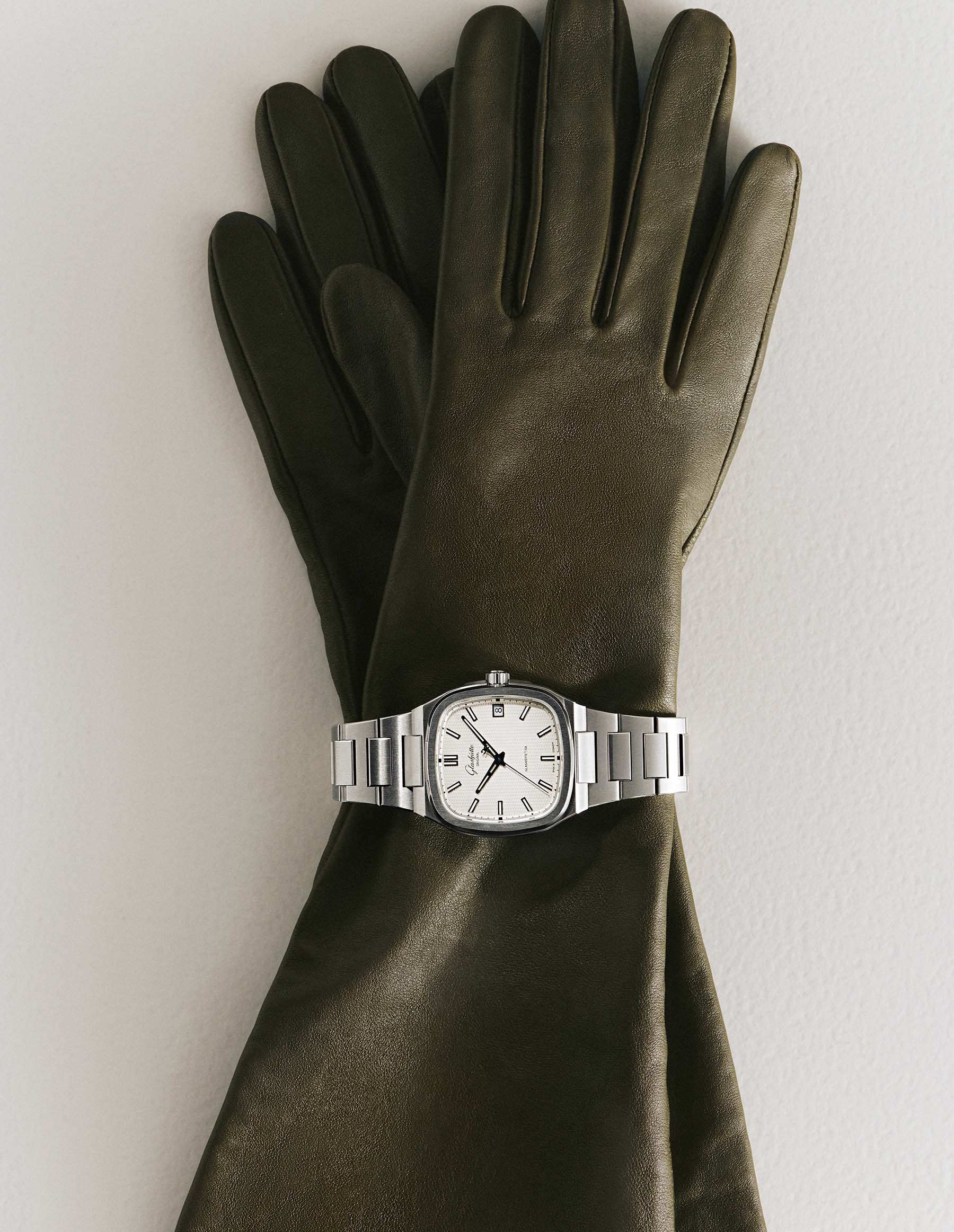
The third and final model is the Stereo Panel, which features a galvanized silver dial with black-coated solid-gold indexes. This one is inspired by the analog hi-fi systems that embodied the best in sound and style in the 1970s. Above the silver dial sit solid gold indexes coated in black to contrast with the backdrop. The hands are also blacked out, as is the date window. As with the other two models, the hour and minute hands and the hour markers have a filling of white Super-LumiNova.
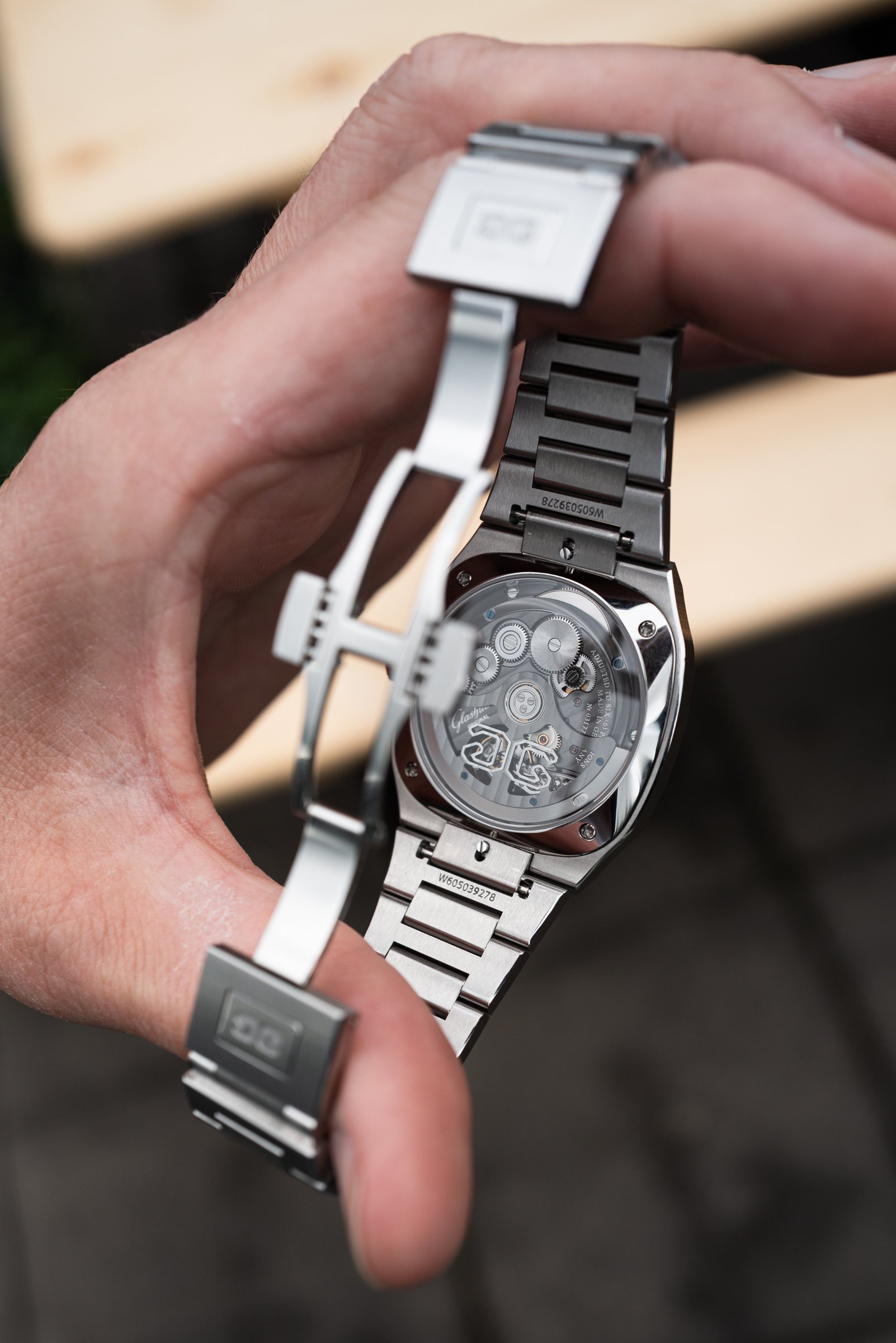
Image: @bowlofsalmon
The in-house Glashütte Original caliber 36-10/1
All three watches contain the same in-house movement, albeit with different finishes. While the black-dial Vinyl Record version features the black-rhodium-plated caliber 36-10, the Tweed Amp and Stereo Panel versions house the “regular” rhodium-plated caliber 36-11. These automatic movements operate at 28,800 vph, have 27 jewels, and offer a 100-hour power reserve.
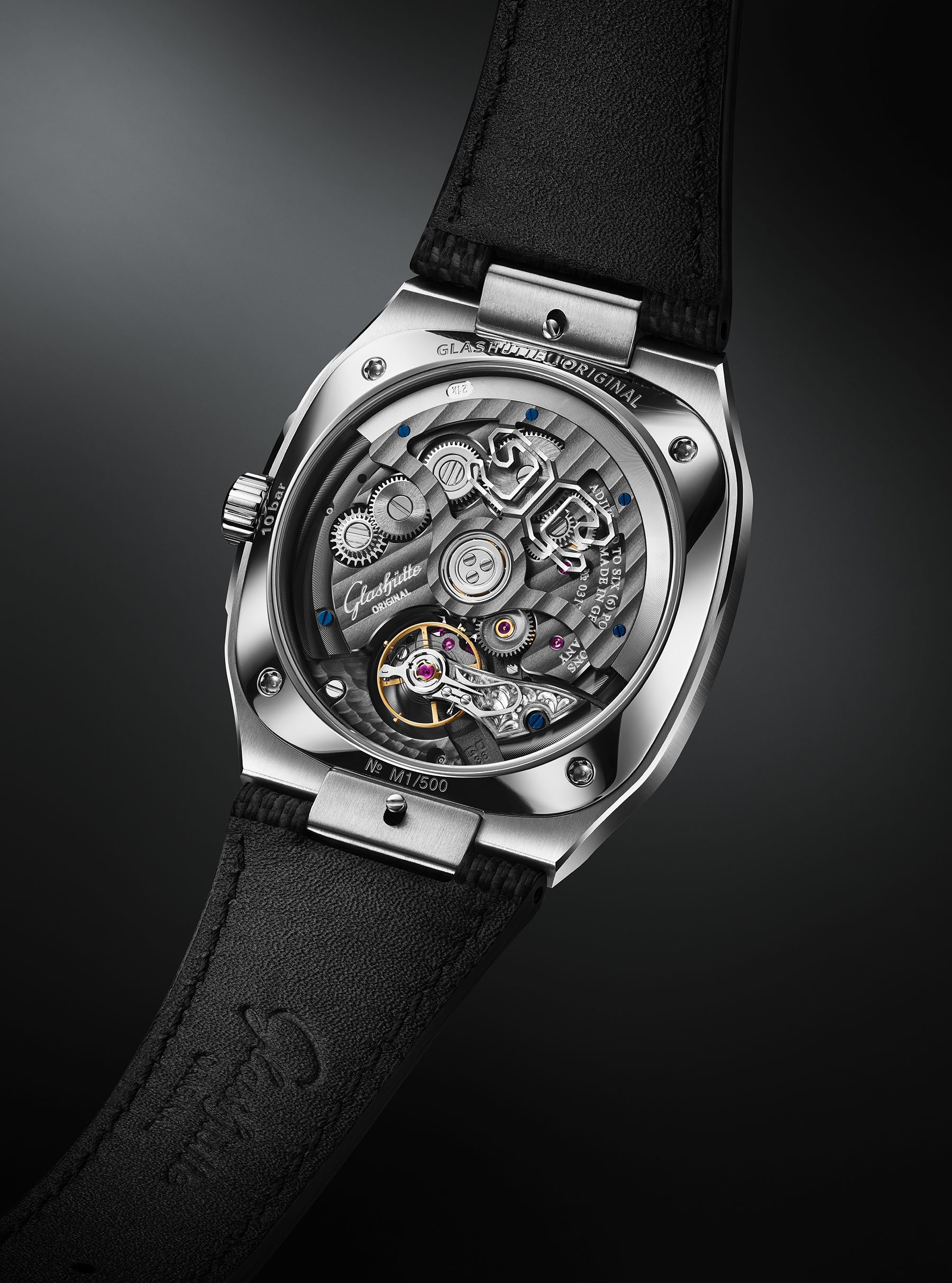
Furthermore, they each have a skeletonized rotor with the signature mirrored-G logo and a 21K gold weight. The calibers also contain a silicon hairspring and a balance with solid-gold adjustment screws. Decoration includes Glashütte ribbing on the three-quarter plate, a hand-engraved balance cock, and blued screws. The components are also nicely finished with beveled, polished edges.
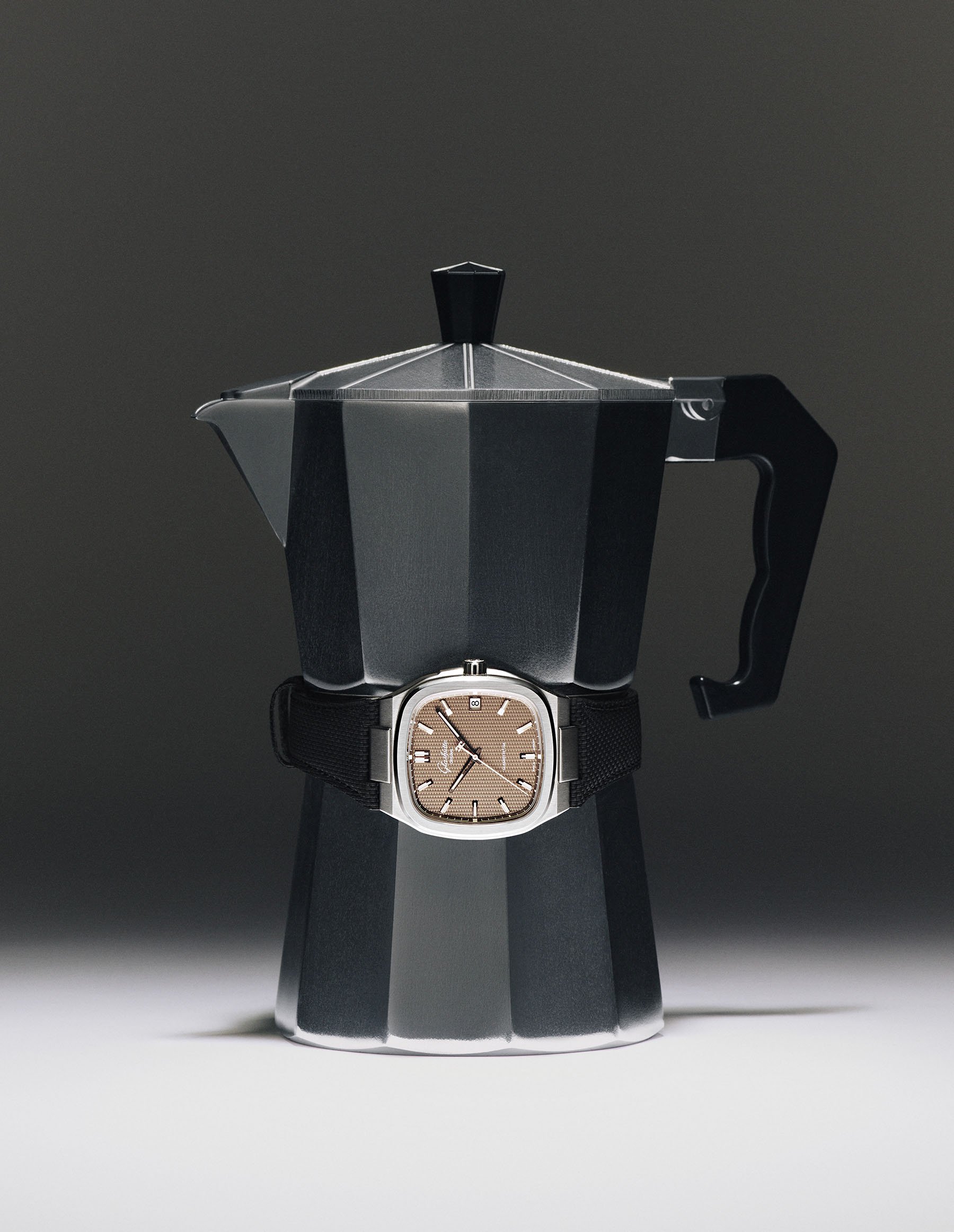
The new quick-release Groove Lock System
One thing I haven’t mentioned yet is the patented Groove Lock System. It consists of an innovative connecting element for the strap and a specially designed clasp. Both can be changed without tools. The proprietary system uses levers, pins, and grooves to connect the strap to the case. You can simply push it into a little groove until it clicks into place. Pulling the lever on the underside releases the strap again. Additionally, you can transfer the connecting element from one strap to the other.
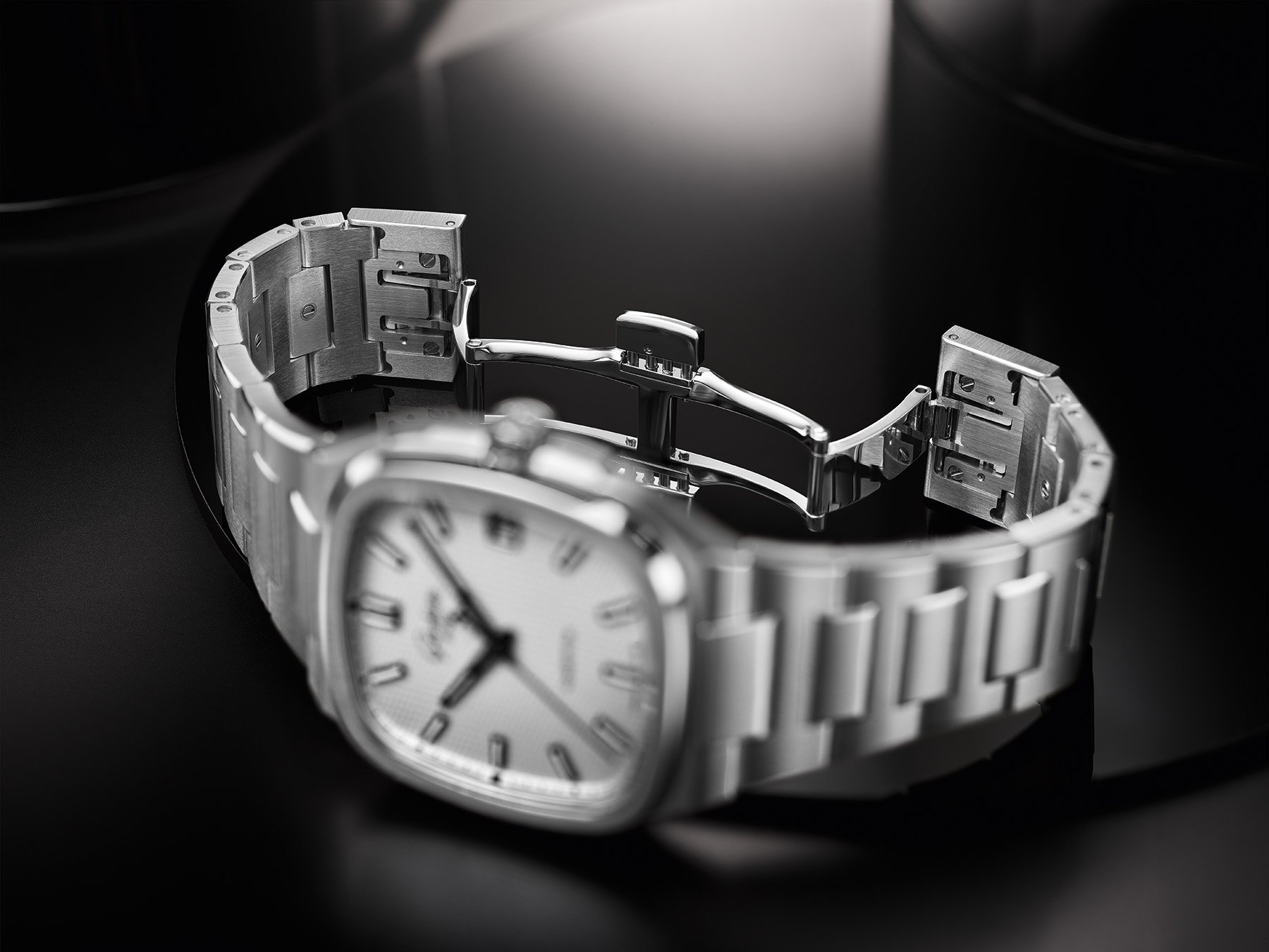
The stainless steel bracelet offers a similar Groove Lock system, but the connecting element is already integrated. This lets you attach the bracelet with a simple click and release it just as easily. Additionally, the butterfly clasp contains a fine-adjustment system. It allows you to adjust the bracelet length by 3mm in either direction. On top of that, the bracelet features screw links for easy sizing. As you can see, Glashütte Original paid attention to all the little details to make this a comfortable series of daily-wear watches.
Thoughts on the new Glashütte Original 70s series
Overall, I am really impressed by these Glashütte Original 70s models. Objectively, it is remarkable how the designers and engineers thought through every detail. But most of all, I connect to the 70s because of the watches’ design and story. As I already explained, the visual connection to a watch my father used to wear is almost uncanny. It instantly made me smile, which is why I immediately opened up to the design.

Not only that, but the brand also chose the world of ’70s analog hi-fi and amplification to come up with names and market the series. Little did the German brand know that both my father and my brother were obsessed with hi-fi, so this new line feels comfortably close to home for me. Having said that, if these two stories hadn’t resulted in three watches that looked the part, I wouldn’t have been as excited about them.
Finding my new favorite series in the Glashütte Original collection
Until now, I have always preferred the different Sixties models in the Glashütte Original Vintage collection. In particular, the Annual Editions of the Sixties models with their special dials have long been favorites of mine. But with the new 70s series, the German brand has surprised me with something far more personal.
As a result, I can’t wait to try out one of the new models to see if it meets my expectations. As I’m sure you understand by now, my hopes are really high for this new series to be fantastic. Weirdly enough, the black-dial version is a limited edition. It seems like that would be the most commercially interesting. It’s certainly the one that most closely resembles my father’s watch.

Instead, the other two versions are the first two models permanently available in this new series. Both the brown-dial Tweed Amp and the silver-dial Stereo Panel cost €13,200 on the strap and €14,500 on the bracelet. The limited edition black-dial Vinyl Record model costs €16,400 and comes with both the stainless steel bracelet and the black strap.

The different models are now available at Glashütte Original boutiques and official retail partners worldwide. With only 500 pieces available for the black-dial version, it will likely sell out quickly. Or maybe that is just my sentimental mind speaking. By now, it is probably clear that Glashütte Original has created a new series that struck a chord with me. I would love to take one of the three models for a spin to find out more. If it’s even half as good as I suspect, this will be an impressive new line of watches and a perfect follow-up to the Seventies.
This is a partnership post. Learn more.