Seeing James Cameron’s Historic Rolex Deepsea Challenge Up Close

I have seen a lot of significant Rolex pieces over the years, from steel Daytonas to military-issued Submariners and GMT-Masters that have literally flown around the globe (thank you, Cliff Tait). Now, I’ve also been lucky enough to see a Deepsea that went to the bottom of the Mariana Trench.
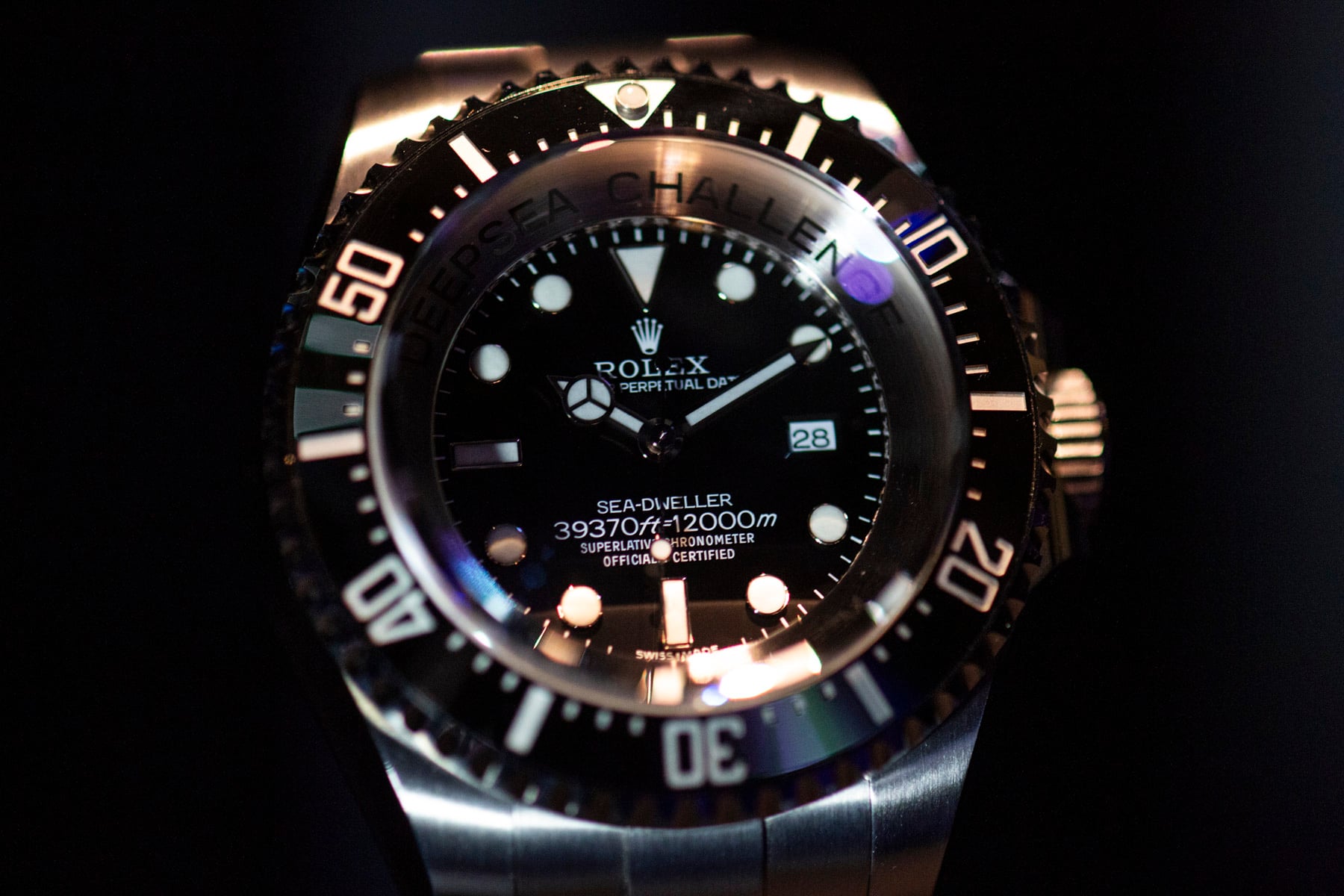
I love museums, and the Australian National Maritime Museum is one of my favorites in this country. This Rolex Deepsea is part of an exhibition at the Museum in Sydney now, and the watch in front of me isn’t a tribute piece or a limited edition inspired by an expedition. No, this is the experimental Deepsea Challenge that Rolex built specifically for James Cameron’s solo dive aboard the Deepsea Challenger submersible on March 26th, 2012. This dive took him 10,908 meters down into the Mariana Trench’s Challenger Deep. Before we go further into the watch, I’d like to thank the Museum for providing Fratello access to photograph this watch. I also heartily encourage readers to visit the Museum if they ever find themselves in Sydney.
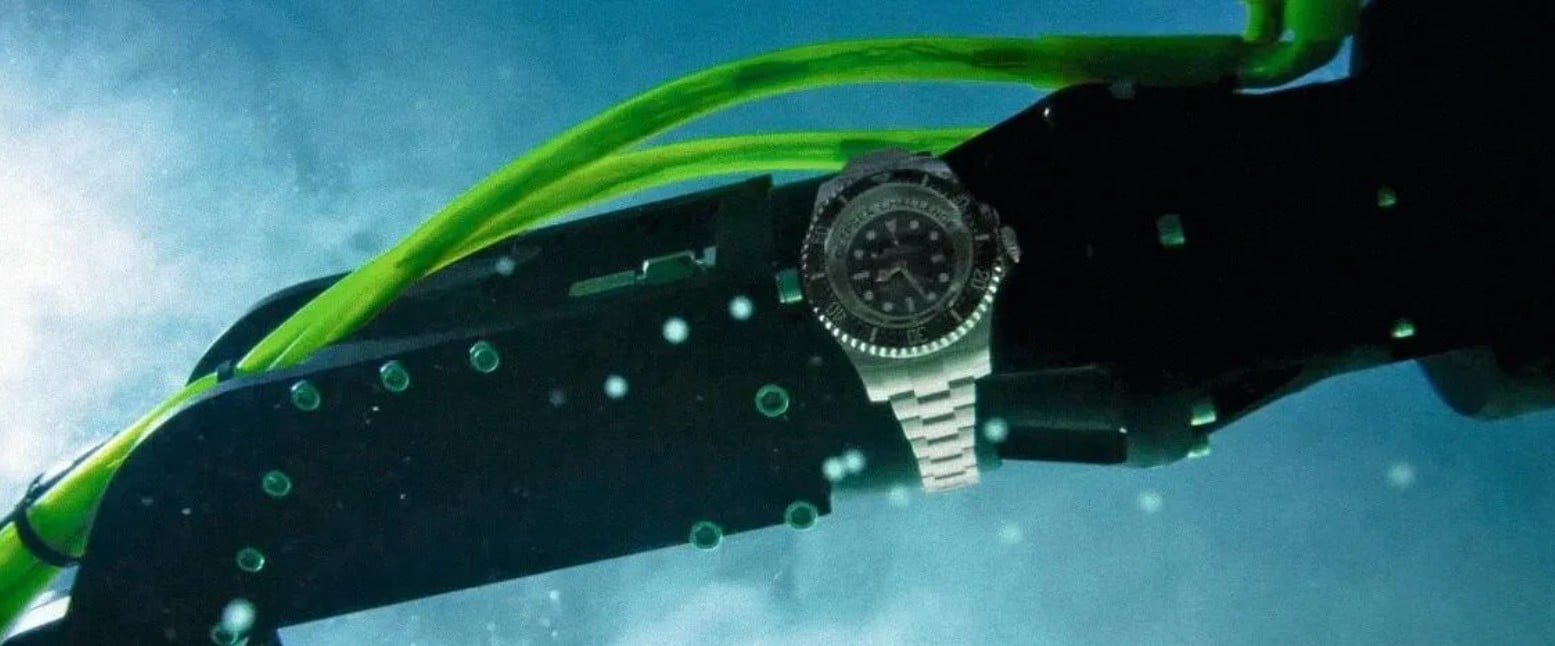
The Rolex Deepsea Challenge in action
The Rolex Deepsea that touched the bottom of the world
The design brief for this watch had nothing to do with wearability. Rolex guaranteed its waterproofness to 12,000 meters, a depth no diver will ever reach while wearing it. That’s because it was never meant to be worn at all. Instead, it was bolted to the exterior manipulator arm of the submersible, riding on the outside of the hull as Cameron dropped through pressure that would turn most engineering into scrap metal within seconds. Indeed, the Rolex Deepsea Challenge was a feat of engineering prowess.
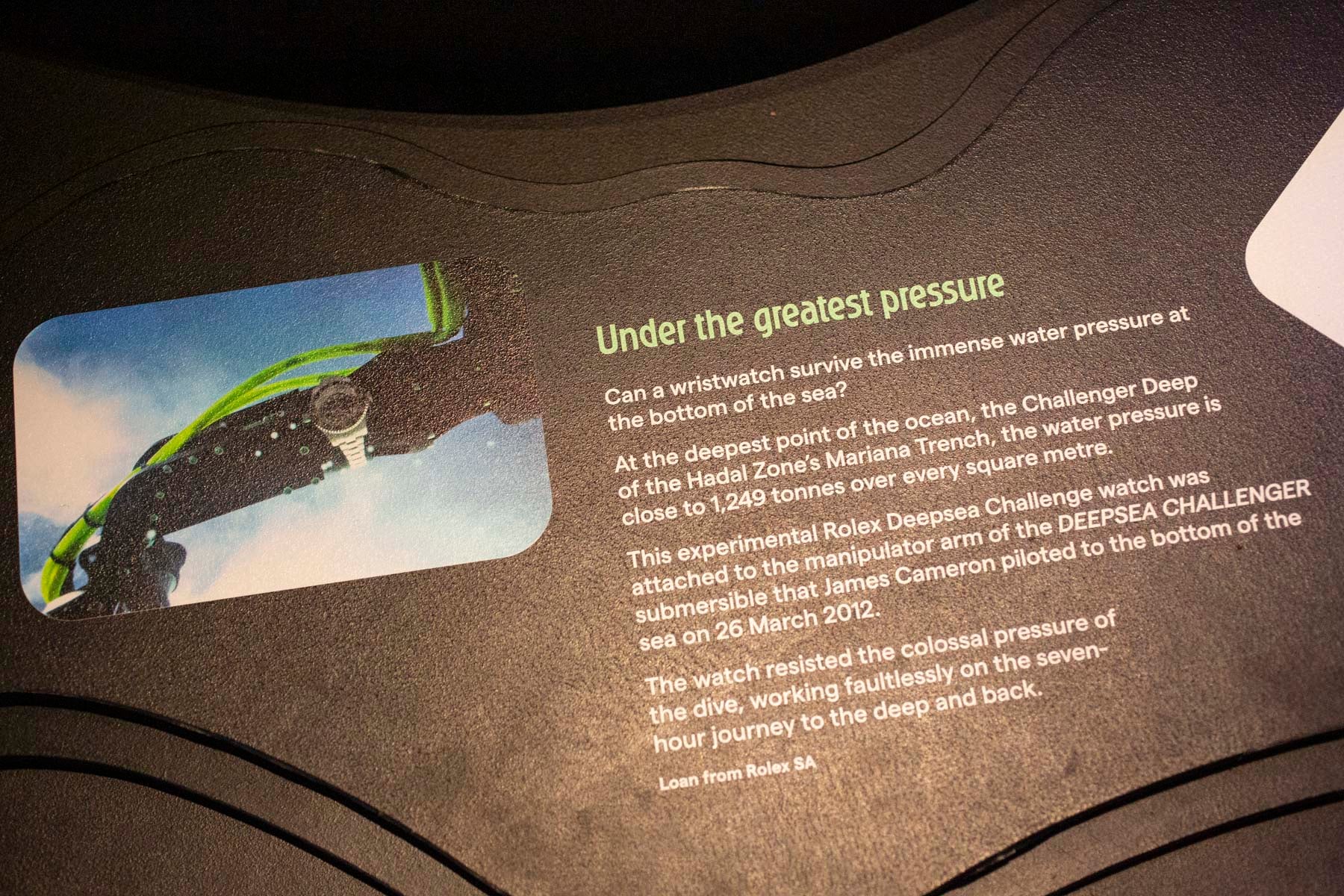
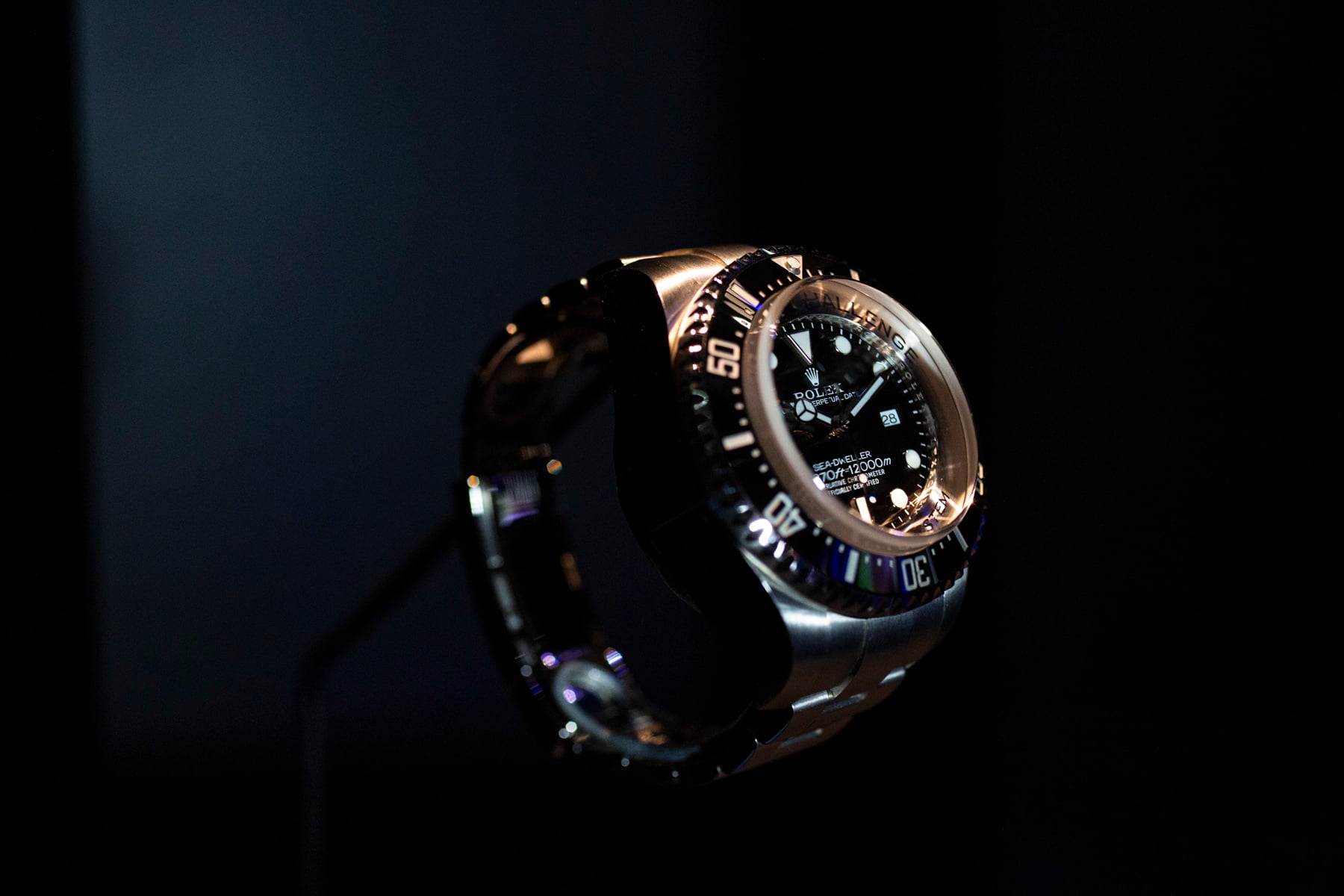
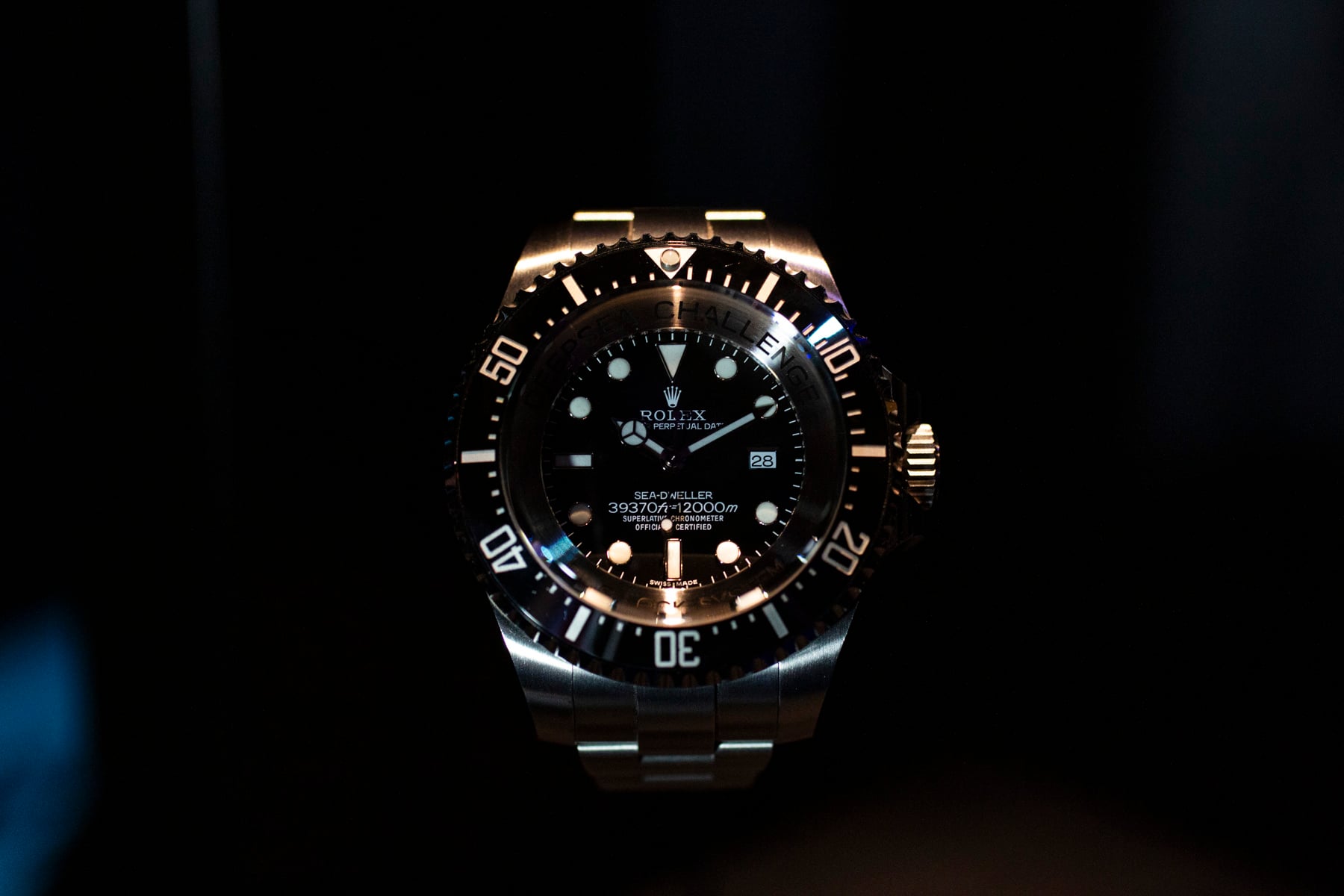
In the cold and dark of the deep, the watch kept time under immense pressure — roughly 1,000 times the pressure we feel at the surface. Only the most specialized equipment survives in such an environment, and Rolex’s Deepsea Challenge did its job. There’s something almost old-fashioned about that as a proof of concept. There’s no digital readout or telemetry here, just hands that stayed accurate at the edge of what’s physically survivable. Up close, it’s evident that Rolex never intended this Deepsea as a consumer piece. The proportions are delightfully wrong for a wristwatch. The crown, the bezel, and the sheer bulk of the case compared to anything you’d wear to dinner all read as a prototype, not a product. And that’s exactly what it is. This timepiece never went into series production. It existed to answer one engineering quest, and once it had, its job was done.
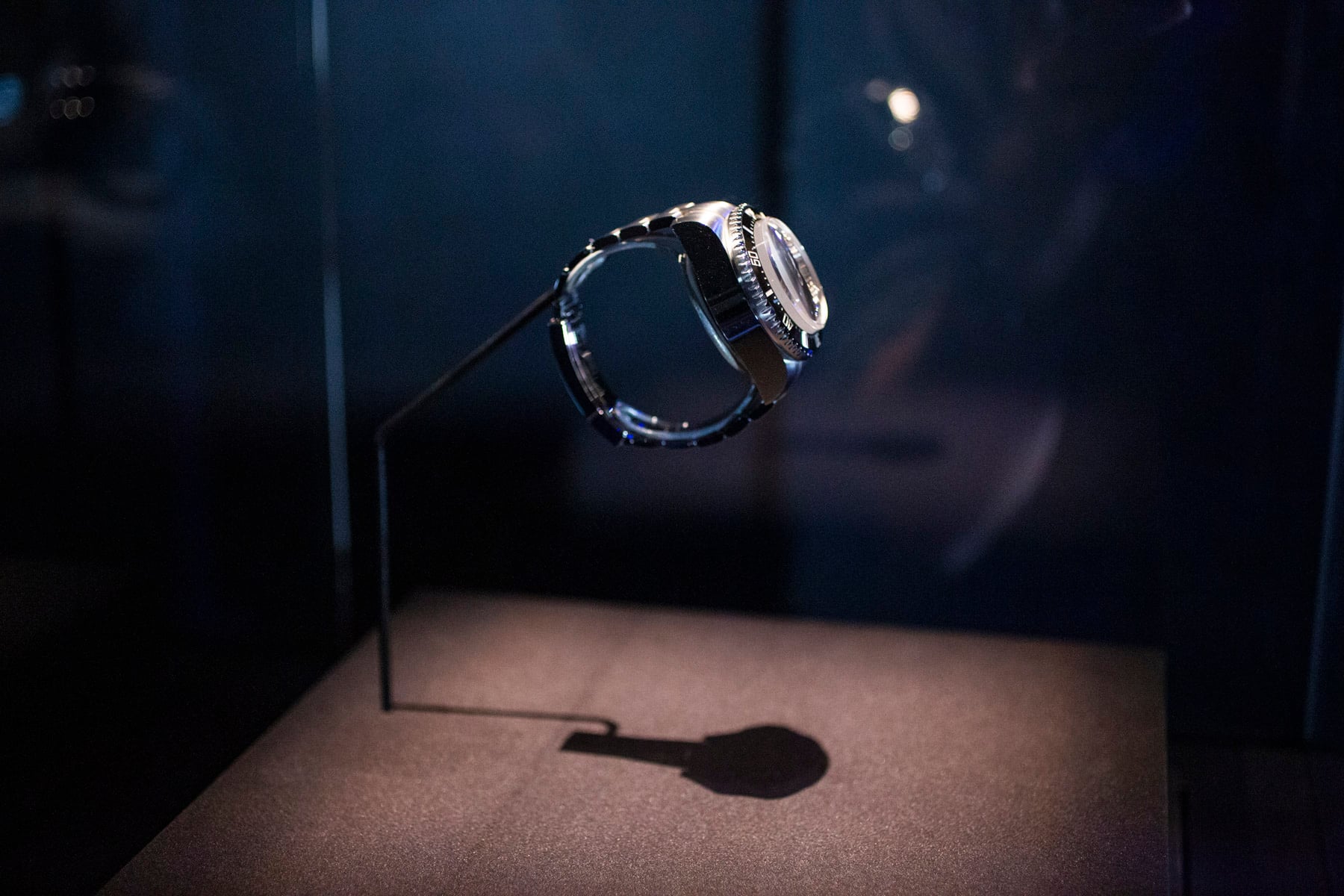
The cube comes off
What made this visit different from just reading about the watch was what the Museum let me do while I was there. This Rolex Deepsea Challenge normally sits inside a thick, transparent protective case, which makes sense for an object of such importance. For this visit, though, the team lifted that case away so I could photograph the watch directly on its stand out in the open. What a rare treat!
Anyone who’s tried shooting a watch through display glass knows why that matters. There’s always glare, reflections from gallery lights, and, inevitably, angles you give up to avoid seeing your camera in the shot. With the cover off, though, the Deepsea Challenge looked how it’s truly meant to look — matte, oversized, and a little alien in its proportions, like a piece of deep-sea hardware that happens to tell the time. It’s not a big thing to ask for, but it’s rarely granted, and for a few minutes, it felt like getting a look behind the rope. People walking past stopped and looked from a distance as the cube was lifted, revealing the watch in all its brutish glory.
The Deepsea Challenge: part of a bigger Rolex story
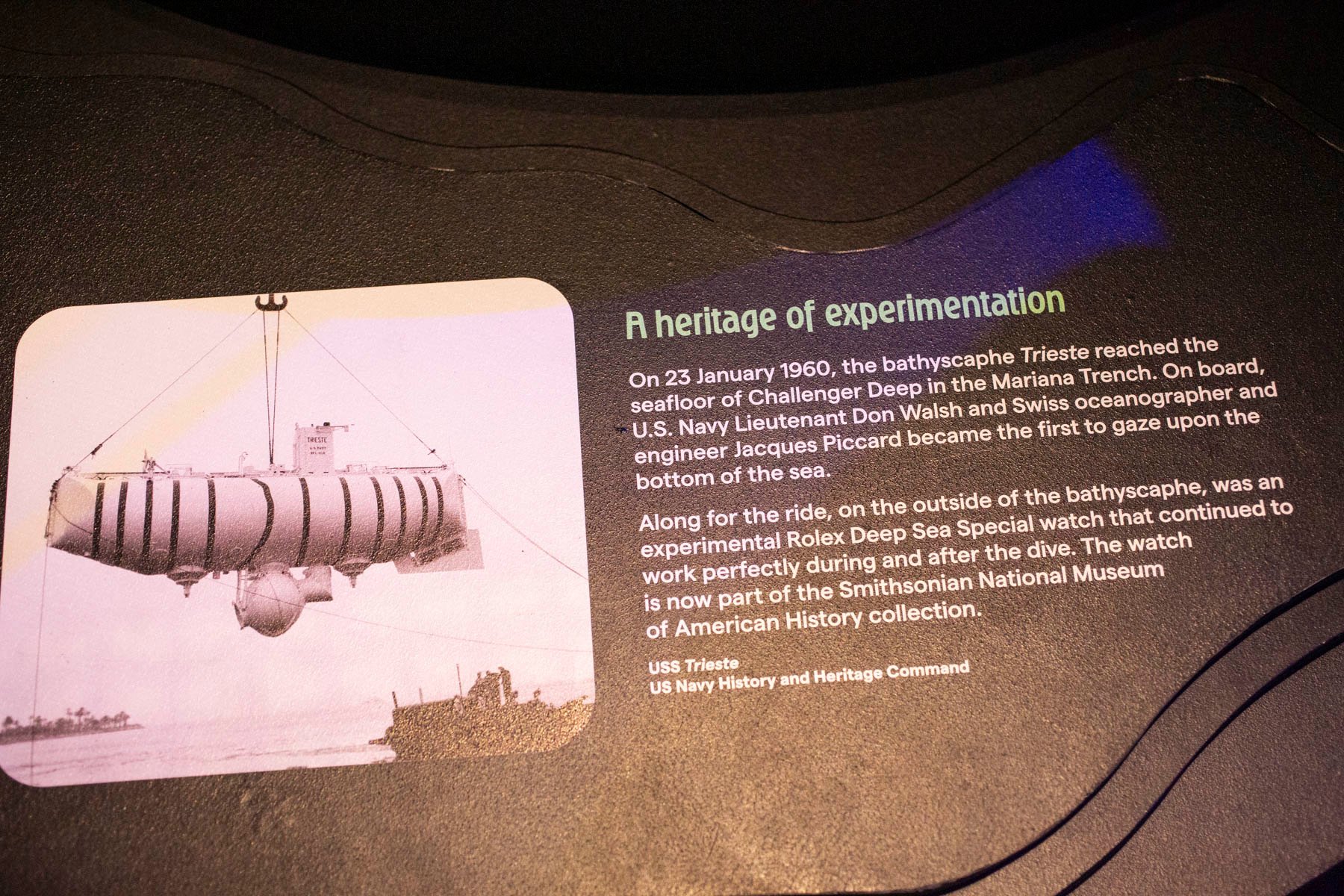
The Rolex Deepsea Challenge isn’t a standalone display. It now sits inside the Museum’s Ultimate Depth: A Journey to the Bottom of the Sea exhibition alongside the Deepsea Challenger submersible itself, back in Sydney for the first time since the expedition. Seeing the two together does something a single object can’t. The sub gives the watch scale. The watch gives the sub a human detail to hold onto, right down to the seal on the crown.
This exhibition walks visitors through five ocean zones, from sunlit surface water down into the pitch-black Hadal zone where the trench sits. The watch shows up at the end of that walk as the proof of the whole descent rather than a decoration on top of it. Museum CEO Daryl Karp called the piece “a marvel of engineering and a testament to the spirit of exploration” when it arrived. At the time, Senior Curator Emily Jateff made a related point, saying the actual watch in the exhibition lets the Museum tell a richer story about what it takes to explore one of the last unmapped parts of the planet. Standing between the sub and the watch, that’s easy to believe. The watch isn’t just sitting next to the submersible for context. It’s the detail that makes the whole expedition feel real rather than merely historical.
Concluding thoughts
If you want to wear a piece of this story rather than merely look at it, Rolex eventually built a production version. The current Deepsea Challenge has a 50mm Oyster case in RLX titanium, around 30% lighter than the original experimental piece, still with the helium escape valve and Ring Lock that made the concept work in the first place. Rated to 11,000 meters, it’s a serious tool watch in its own right. But it’s also, quite openly, descended from what’s sitting in that Sydney display case, and standing in front of the original makes that lineage obvious in a way a spec sheet never quite can.
I’ve photographed plenty of watches through glass. I doubt I’ll get another chance like this one, a few unobstructed minutes with the actual watch that rode outside a submersible to the bottom of the Mariana Trench, no cover, no reflections, just the thing itself. Some watches earn a display case through rarity or price. This one earned it by refusing to stop working when it mattered most.
Once again, I would like to express my thanks to Rolex Australia and the Australian National Maritime Museum for helping make this story happen.