Fratello’s Omega Speedmaster Guide

Are you looking to buy an Omega Speedmaster but don’t know where to start? We’re here to help! Over the past 65+ years, Omega has created many variations of one of the world’s most famous chronographs. The classic 42mm Moonwatch has been in the collection since 1965, and to the novice eye, little has changed since then. But if you look a bit closer, you will find that the Speedmaster evolved quite a bit in the decades that followed.
In this Speedmaster guide, we’ll give you an overview of the most important references of the Speedmaster (Professional) and some of its variations. Although this article isn’t meant as a pricing guide, we will give some hints, of course. If you’re already a knowledgeable Speedmaster collector, this article won’t likely contain any new information for you. But for those who are not, it will provide some basic information on the Speedmaster series.
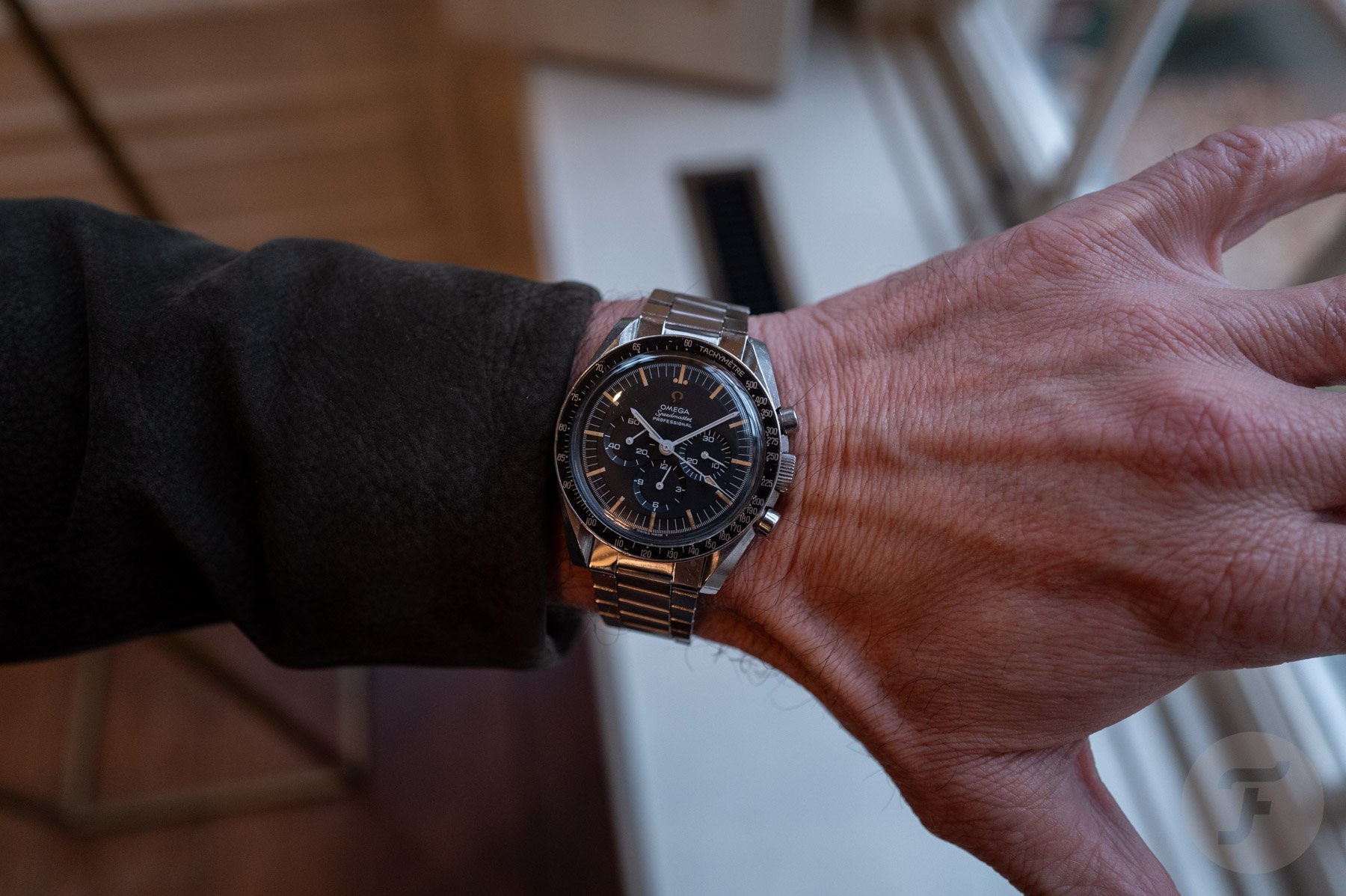
Speedmaster Professional 105.012
Introduction to the Speedmaster buying guide
We first published this article nine years ago and keep it up to date to ensure that the latest versions of the Omega Speedmaster are also covered. Without going into great detail on each of the references mentioned in this article, we will link to articles in which we did. Since we launched the Speedy Tuesday features in 2012, we have reviewed and written about numerous models and references. The longer, more focused articles on the site are a great resource, especially for newcomers to the hobby. You will find an overview of all the Speedmaster watches covered in separate articles here, per reference number.
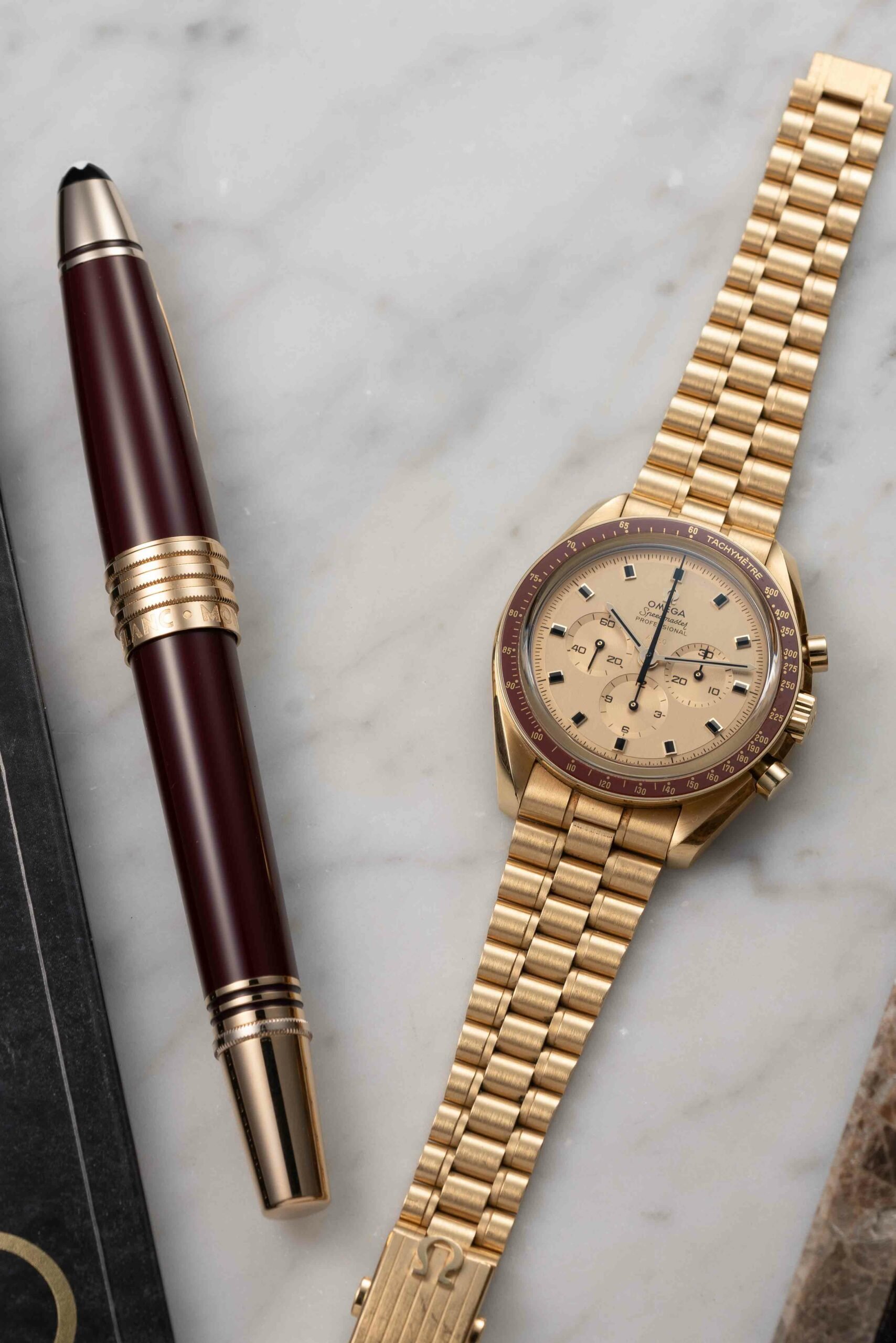
2019 Omega Speedmaster Professional Apollo 11 Moonshine Gold edition
Omega Speedmaster models
One of the questions we often receive is whether we can provide guidance on the various models available. If you are new to Speedmaster watches, it might seem like a bit of a horological wilderness. If you’re looking for the actual Moonwatch model (the reference that went to the Moon), read this article validated by Omega. Alternatively, if you are seeking the current Omega Speedmaster Professional that most closely resembles the original Moonwatch, click here. Sometimes it is so confusing that people wonder if the Speedmaster Reduced is a Moonwatch too (it isn’t).
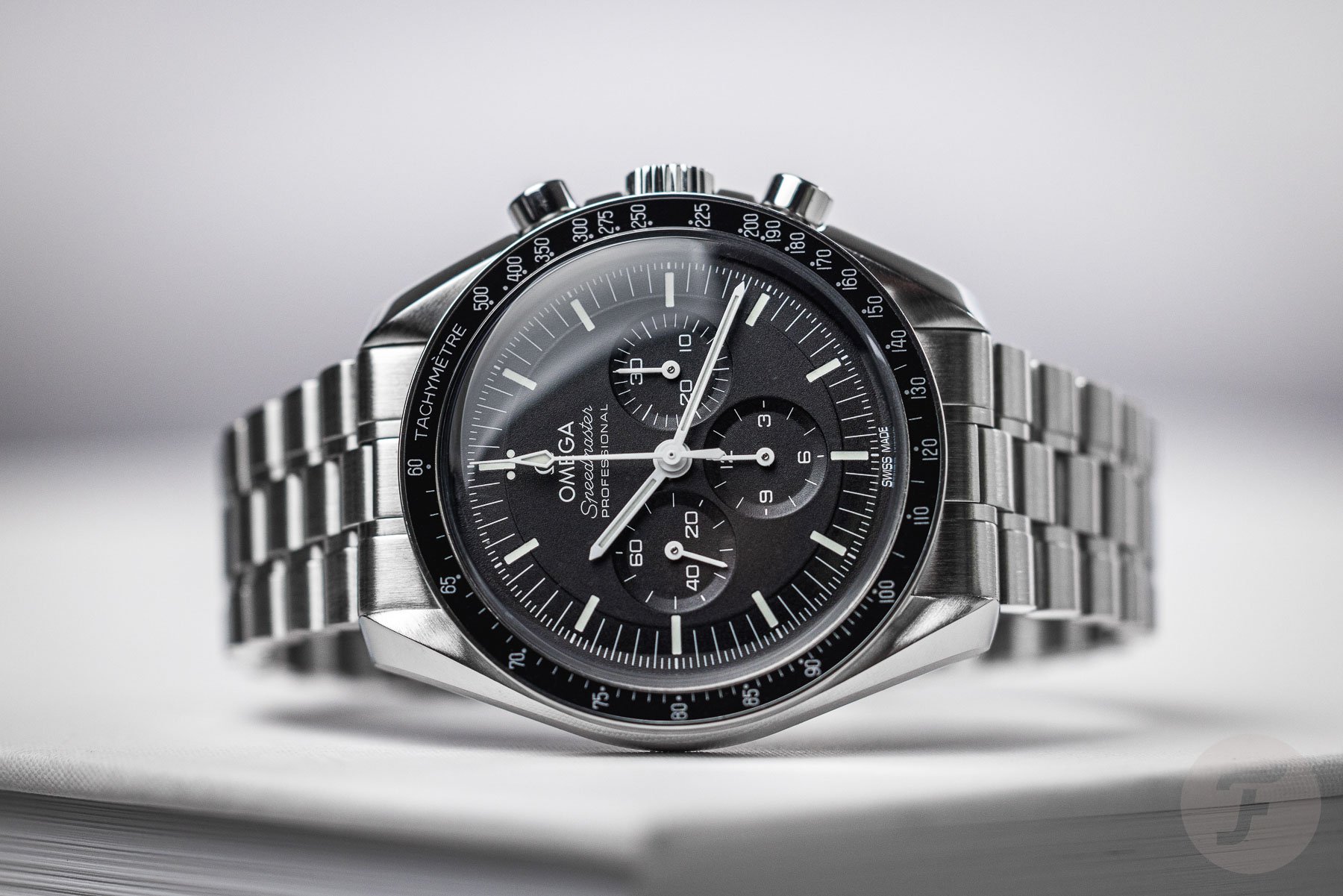
The current Omega Speedmaster Professional Moonwatch
In this Speedmaster buying guide, the focus is on the Speedmaster “Moonwatch” and some of its predecessors. The Speedmaster Mark-series, Racing models, Dark Side of the Moon, X-33 editions, etc., will be covered in a separate series.
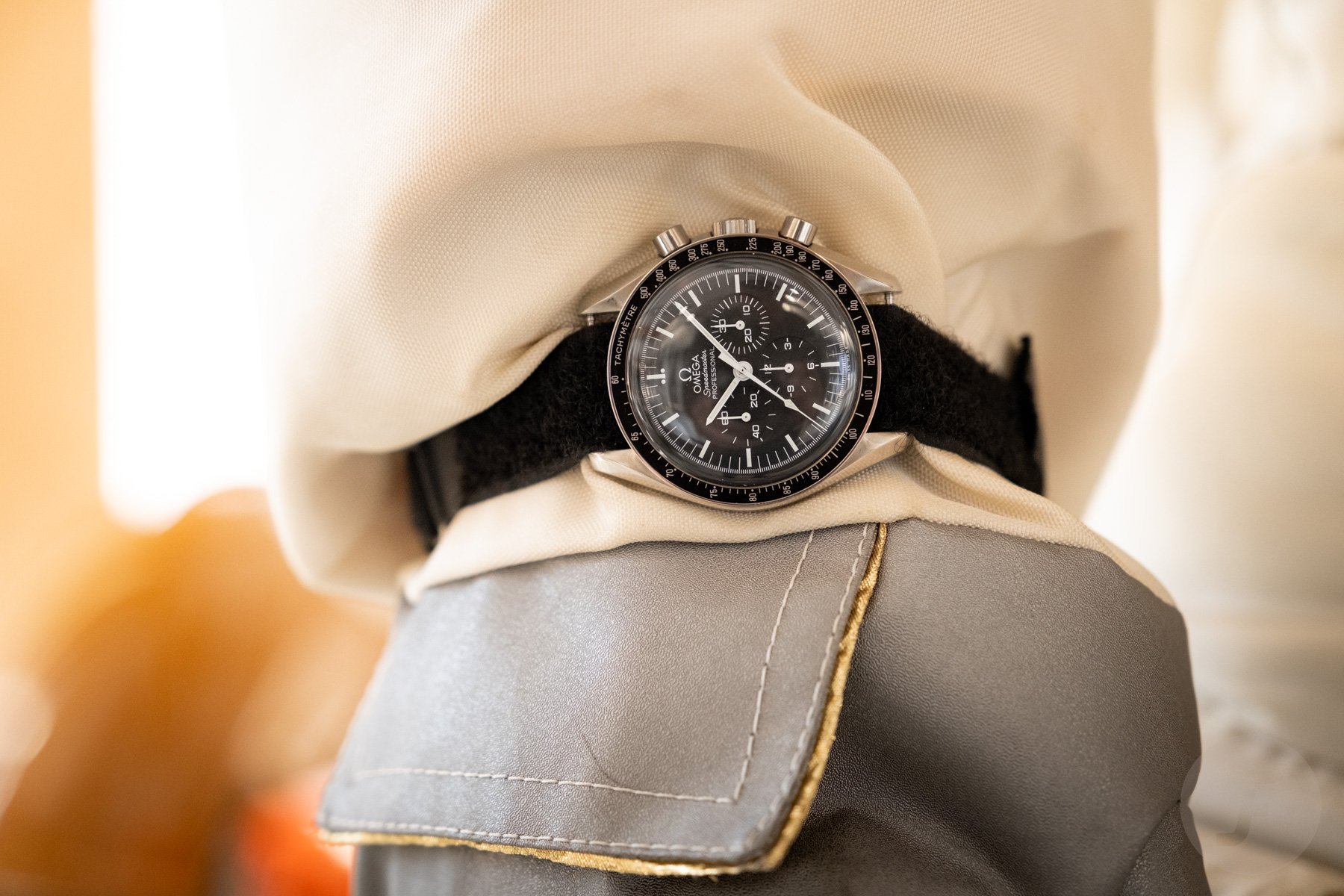
The Speedmaster (Professional) Moonwatch
Not all of the Speedmaster models in this article are “Moonwatch” models. Many of them debuted several years before NASA chose Omega to become the official timepiece for its astronauts on June 1st, 1965. Despite this, we will still use this category for them in this Speedmaster guide. These early models are considered the forerunners of the Moonwatch. Their existence is vital to the history that was to come. And, to be frank, they are too beautiful to ignore.
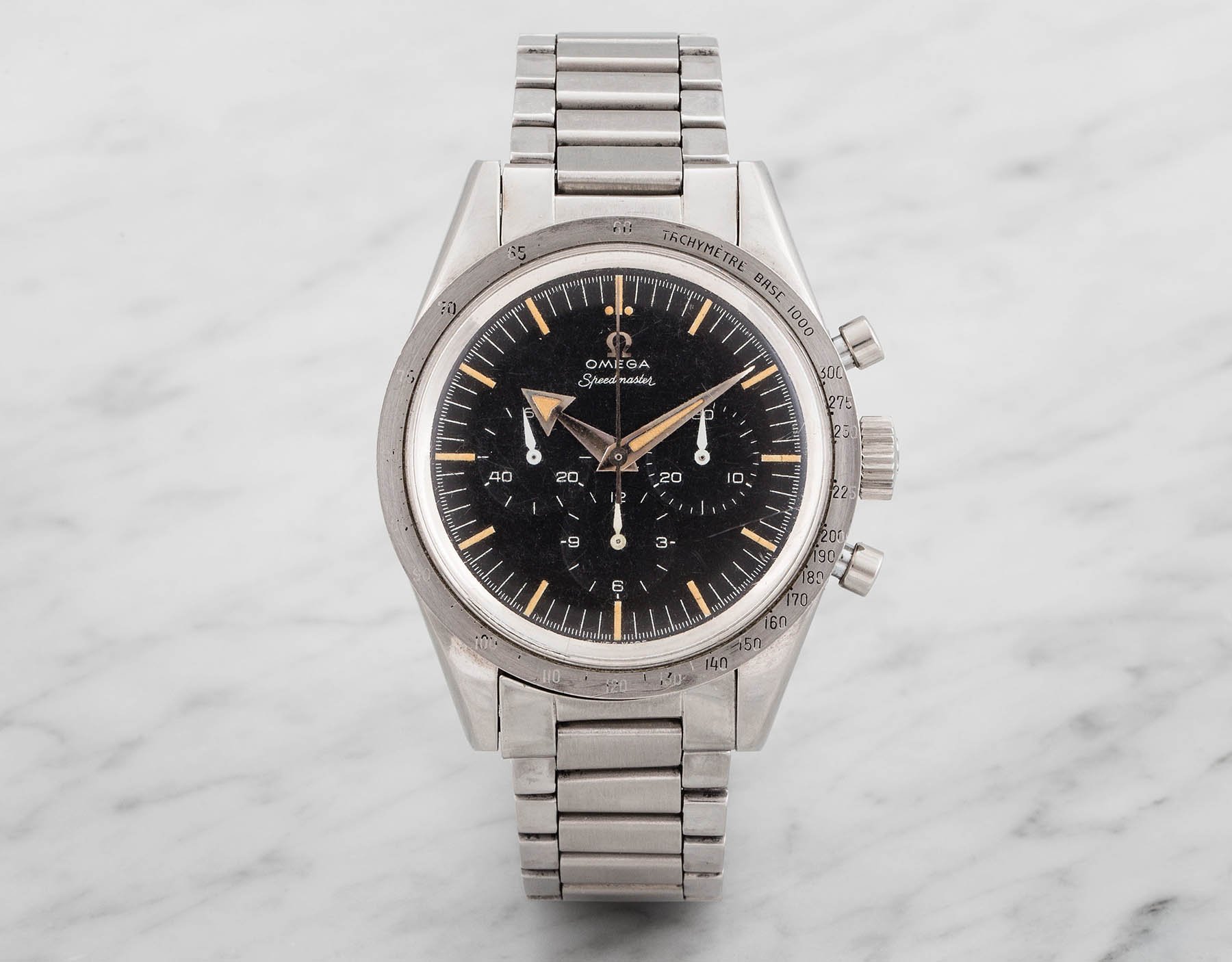
A 1958 Speedmaster CK2915-1 auctioned by Bukowski’s
Speedmaster CK2915
The very first Speedmaster that Omega introduced in 1957 was the reference CK2915. Together with the Seamaster 300 (CK2913) and Railmaster (CK2914), this model was part of a professional trio featuring a black dial and Broad Arrow hands. Initially, Omega designed the Speedmaster as a sports chronograph, using the dashboard clocks of Italian sports cars of that time as inspiration. The watch was advertised with racing cars, but the chronograph function was useful for many other sports as well. The complication was also useful for those who needed to time events and tasks outside of sports. The first Speedmaster has a 38.6mm diameter, a 48mm length, and a 19mm lug spacing. In the first three generations of Speedmasters, the length and lug spacing remain consistent.
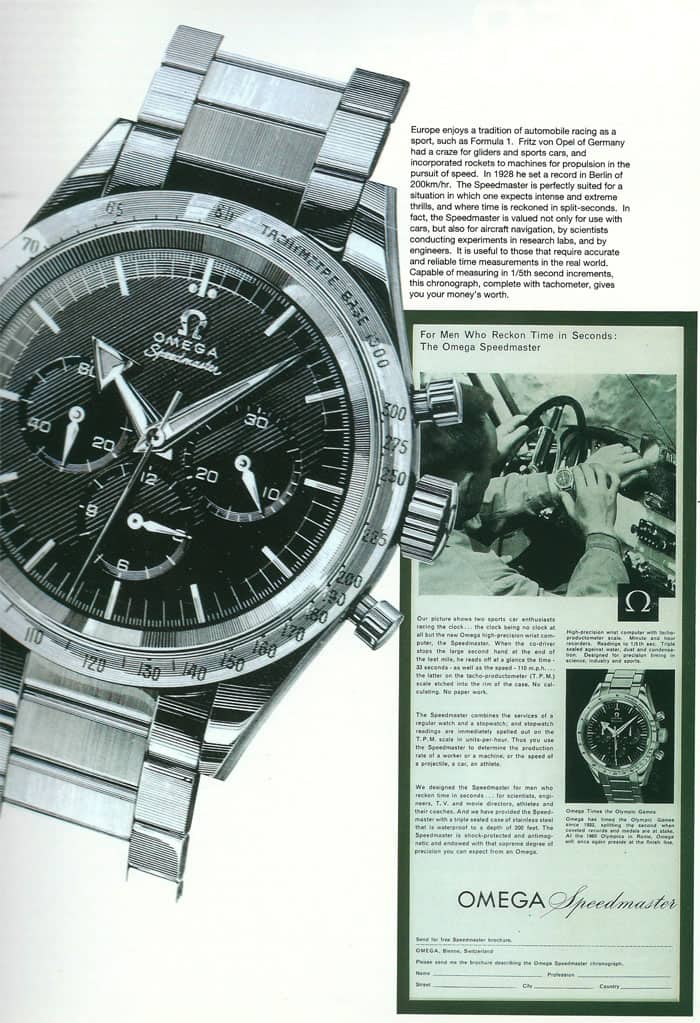
The CK2915 has multiple versions (you will find a -1, -2, or -3 added to the reference number) that could, more or less, be considered small updates. If you are looking for a CK2915, expect to pay a fortune. More importantly, perhaps, try to find an original one that has not been tampered with. There is a significant amount of money involved in these early models, which also attracts individuals with less than honest intentions (newly manufactured cases, movements from other watches, refitted bezels from a later period, and so on). Be very cautious when you find one on offer.
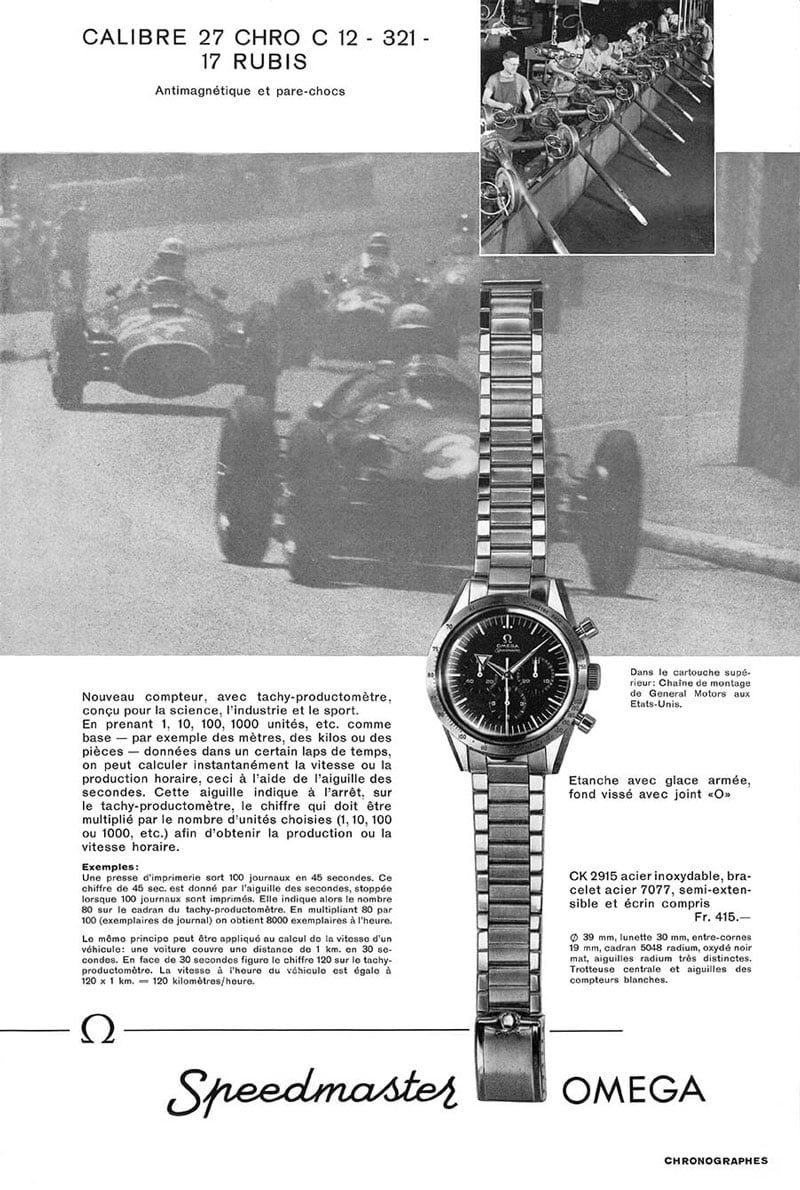
The CK2915 houses Omega’s 321 chronograph caliber with a column wheel. This Lemania movement (based on the caliber 2310) went out of production in 1968 when Omega introduced the Speedmaster Professional 145.022. Then, in 2019, Omega announced the return of the caliber 321. It was first introduced in an all-platinum version of the Moonwatch and then, in January 2020, in a steel “Ed White” case.
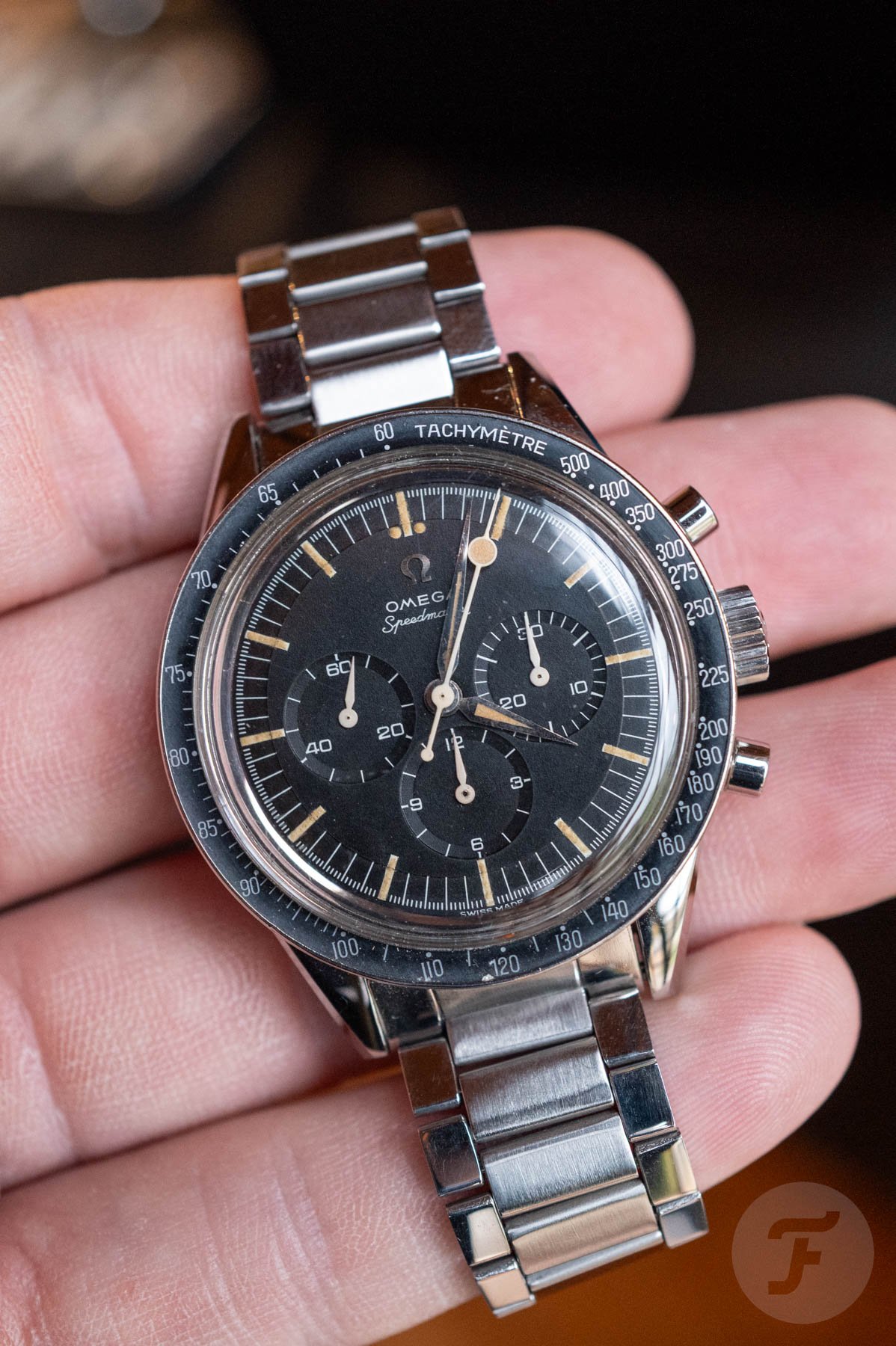
Speedmaster CK2998 “Lollipop”
Speedmaster CK2998 and 105.002
This is often considered the second-best thing when it comes to vintage Speedmasters. This particular reference number already bears a resemblance to the “Moonwatch” with its black bezel insert. The new bezel also caused a 1.1mm increase in size, giving the watch a 39.7mm diameter. The 19mm lug spacing remained, as did the 48mm length. There is considerable variation in the CK2998, and the different styles of hands are the most significant identifier. One of the most sought-after CK2998 models is the one with the “lollipop” chronograph seconds hand.

CK2998 models — Image: NielsZ
The 105.002 needs to be mentioned as well. Except for the reference number, there is no actual difference between the last variation (the CK2998-62) and the 105.002. Omega changed the reference number syntax, which meant eliminating the “CK” identifier and four-digit numbers. The 105.002 was made for a very short period (1962) before its successor (105.003) was introduced. This makes the 105.002 perhaps even more collectible than some of the CK2998 models.
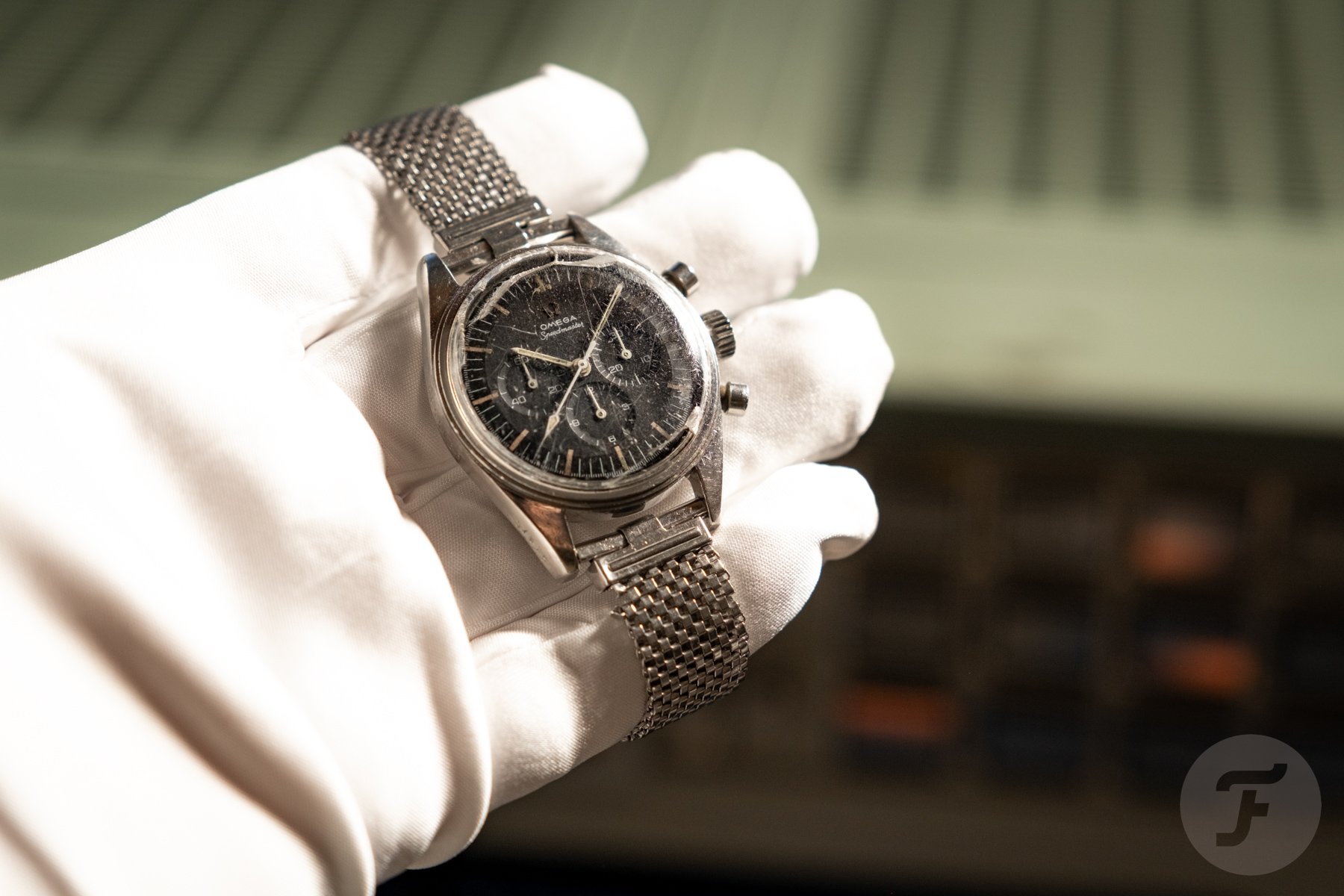
Apollo 17 astronaut Gene Cernan’s Speedmaster 105.003 with caliber 321 (but without the bezel)
Speedmaster 105.003
The 105.003 reference, with its white pencil-style hands, resembles the Speedmaster as we know it today. This Speedmaster is the most affordable pre-Professional model available. The prices of this 105.003 reference have experienced significant fluctuations in the last few years, with both steep increases and declines. Prices start around the €10,000 mark but can increase quickly depending on the watch’s condition. The 105.003 often goes by the nickname “Ed White” because the eponymous astronaut used this watch (two of them, even) during his 1965 spacewalk.
It is interesting to note that all three “straight-lug” Speedmaster generations share the same mid-case and lug-to-lug measurement. The different bezels. However, since the 105.003 also has the bezel with the black aluminum insert, it shares the CK2998/105.002’s 39.7mm diameter, making it wider than the inaugural CK2915.

Ed White was wearing two Speedmaster 105.003 watches during his spacewalk in 1965
The first NASA-qualified watch
As you can read in another article here on Fratello (“How The Speedmaster Became The Moonwatch“), the 105.003 was the watch that NASA used for flight qualification. Although Omega shipped the successors of the 105.003 for use during the astronauts’ Extra-Vehicular Activities, NASA also used the 105.003. These watches were in NASA’s possession, as the organization received some for the qualification procedures, and the watches saw action during Apollo missions.
Omega introduced the Speedmaster 105.003 right after the “transitional” 105.002 in 1964. It remained in production until 1969. In some old catalogs, you will find the 105.003 right next to the 105.012/145.012. In 2020, Omega released the Speedmaster Calibre 321, a watch based on this third-generation Speedmaster. You will find it further down in this article.
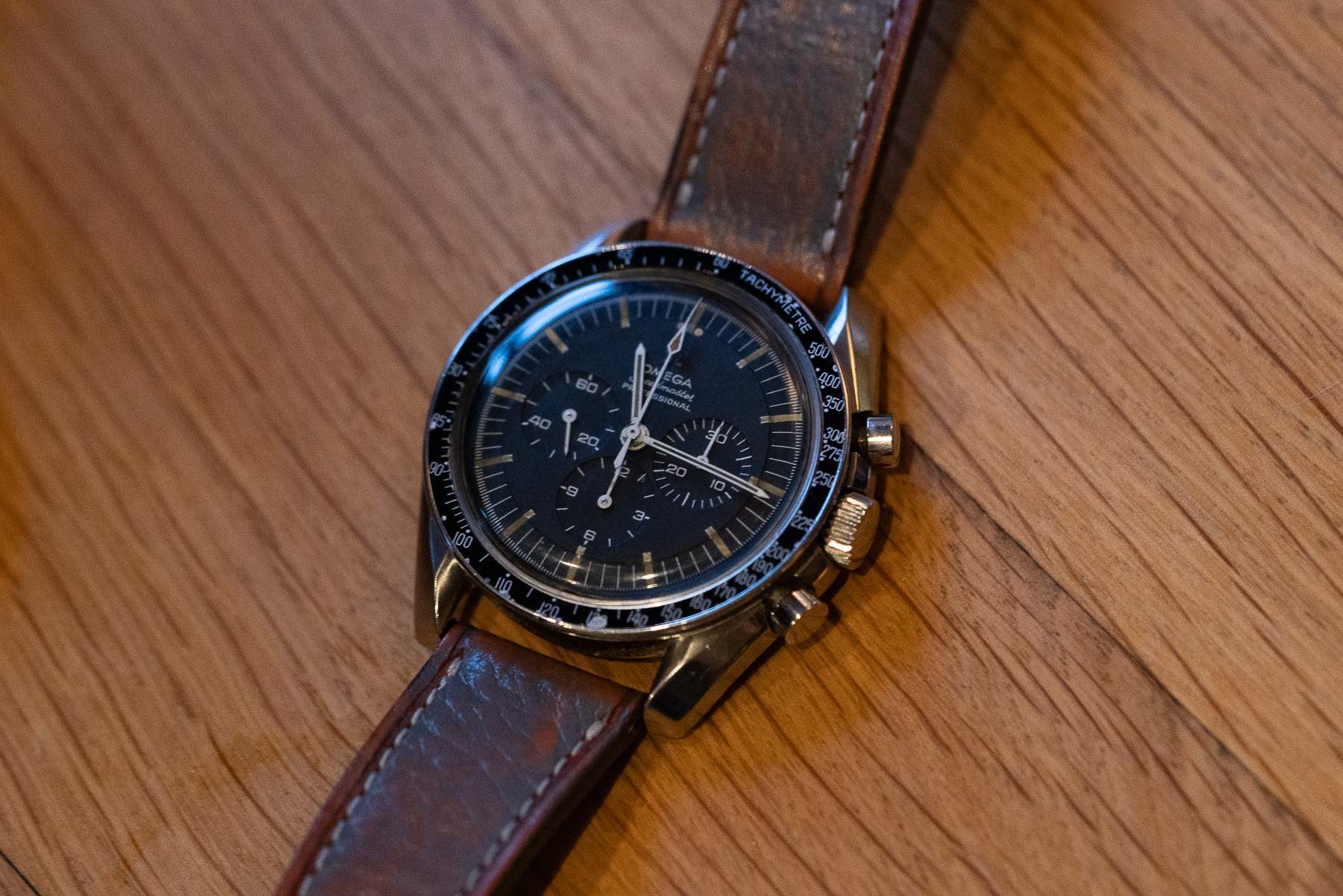
Omega Speedmaster Professional 105.012
Speedmaster Professional 105.012 and 145.012
The Speedmaster 105.003, 105.012, and 145.012 are the references that the Apollo 11 astronauts used. The latter two have an asymmetrical case due to the use of crown/pusher guards. Omega added these guards after NASA commented on the risk of the pushers breaking off due to rough use. The lyre lugs and crown/pusher guards made the new Speedmaster 105.012 larger, giving it the 42mm diameter we know today. While it received an updated 20mm lug spacing, the familiar 48mm length remained. Omega introduced the Speedmaster Professional 105.012 in 1964, and while some might think the “Professional” refers to use by NASA astronauts, it doesn’t.
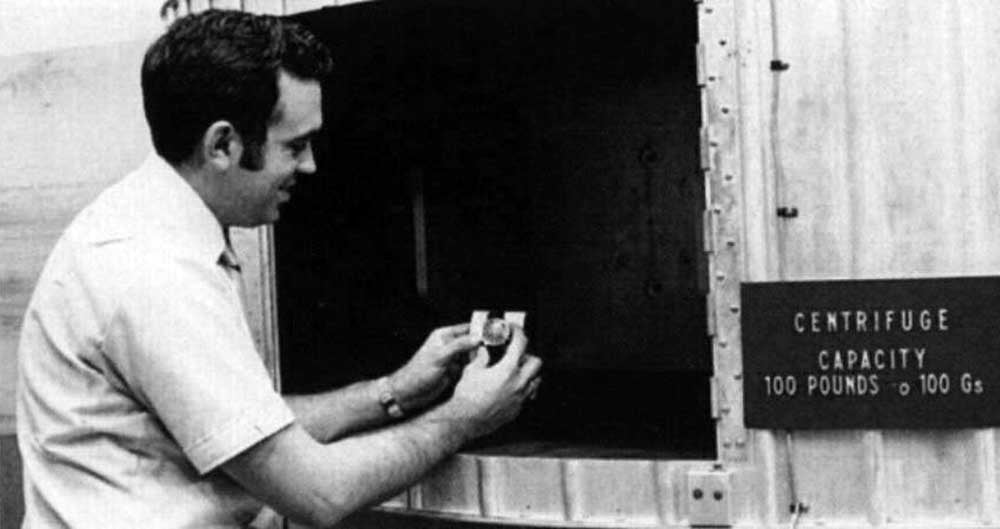
NASA engineer James Ragan was responsible for the procurement and test procedures of the astronaut’s chronographs — Image: NASA
Procuring the Speedmasters for NASA tests
This claim is as thoroughly debunked as the “gossip” that NASA purchased the Speedmasters for astronaut use from a local jeweler. NASA went through a formal procurement process, of course. Anyway, the flight qualification of the 105.003 also led to the flight qualification of the 42mm successors, which had “Professional” on the dials. It is verified that Buzz Aldrin wore a 105.012 when he set foot on the Moon, while Michael Collins wore his 145.012 when waiting in the capsule for Aldrin and Armstrong to get back. As the legend goes, Armstrong didn’t wear his watch but chose to leave it behind in the capsule because the Bulova board clock had broken down.

Aldrin and his Speedmaster Professional 105.012 — Image: NASA
The last 1960s Speedmaster with caliber 321
The difference between the 105.012 and 145.012 is very minimal, primarily referring to the shape of the lugs. Omega also began using different pushers for the 145.012, thereby enhancing the water resistance. There is more variation in the 105.012 references from 1964 to the end of production in 1968, whereas the 145.012 had a short production span (1967–1968) with few changes during this time. You will find the 145.012 with one of two styles for the chronograph seconds hands — one with a teardrop-shaped short end (see below) and another with a flat end (used until 2020).
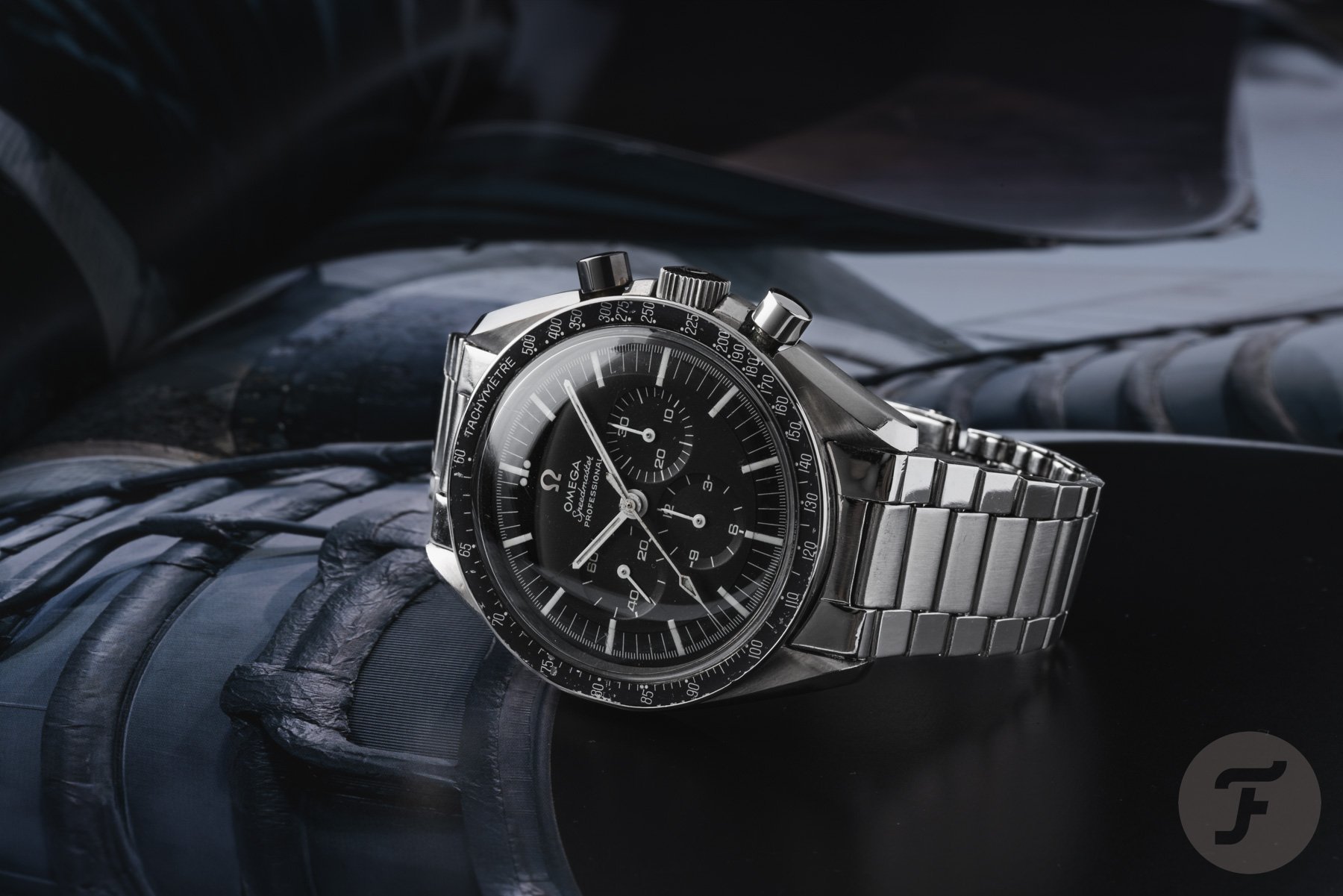
Speedmaster Professional 145.012
The strange thing is, although it is common to accept that the 105.003, 105.012, and 145.012 are the original Moonwatch models, these references are the least expensive caliber-321-powered Speedmaster Professional watches you can buy. The 145.012 is a bit more common and was the last caliber 321 in production (until October 1968). You can find a 145.012 starting well below €8,000 in good condition. The 105.012 is considered more valuable. You will find them with cases made by suppliers HF and CB.
The obvious characteristics to look for are the Dot Over Ninety (DON) bezel, the tritium hands, the bracelets (models 105.012 and 145.012 used a variety of bracelets, with reference 1039 being the most common), and the condition of the dial. You will find dials ranging from super clean (very white printing) to heavily discolored.
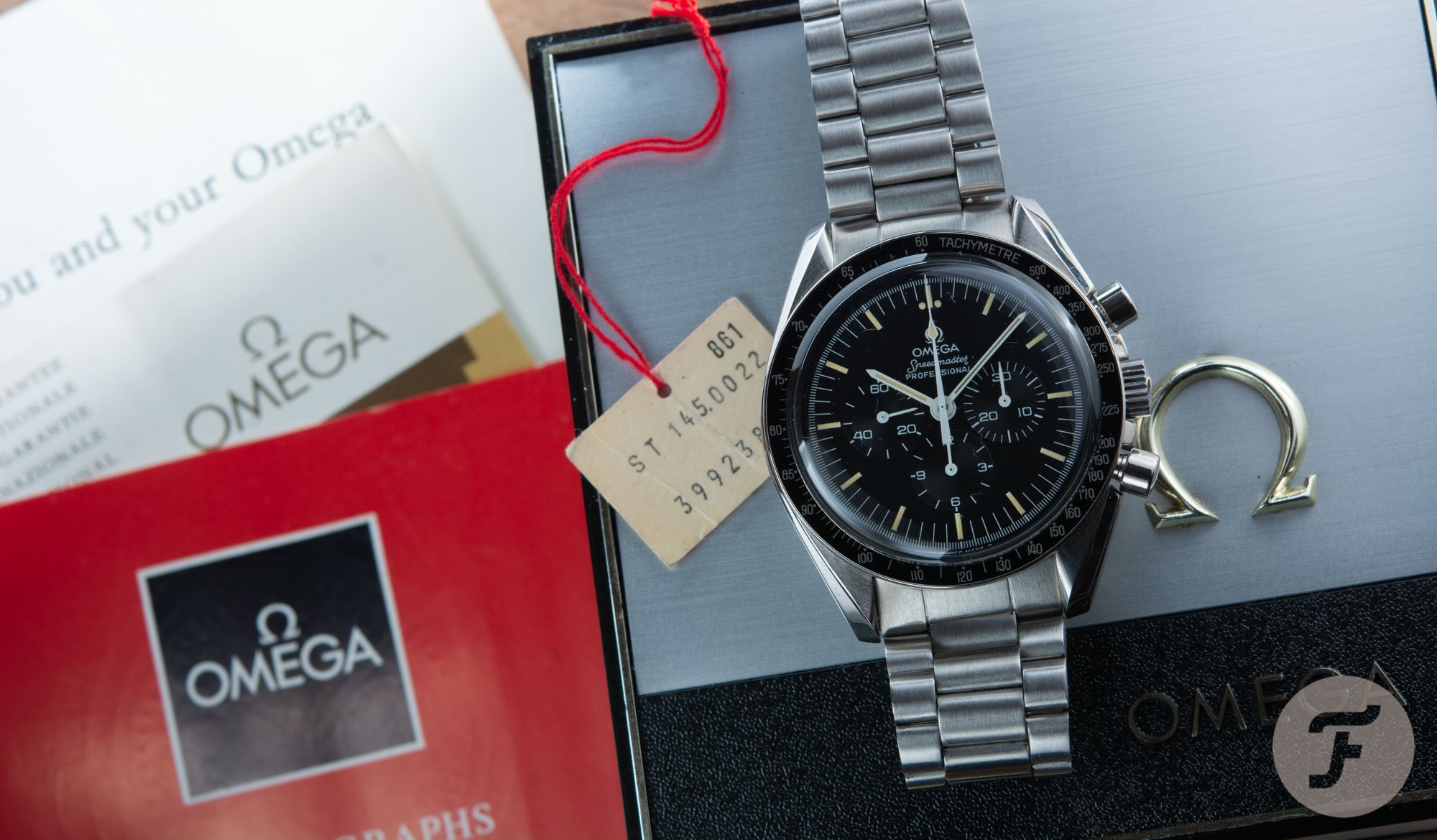
Speedmaster Professional 145.022-76
Speedmaster Professional 145.022
In 1968, Omega decided to update the Speedmaster a bit. The dial would no longer feature the applied Omega logo (although the occasional “transitional” model would pop up, indicating that the brand had likely used parts still on the shelves in Biel). More importantly, the movement changed to the Lemania-based Omega caliber 861. This movement does not have a column wheel but a cam lever instead. Omega’s 861 movement was less expensive to produce but also regarded as more accurate, with its frequency of 21,600 vibrations per hour instead of 18,000. This Speedmaster Professional reference 145.022 remained in Omega’s catalog until around 1983.
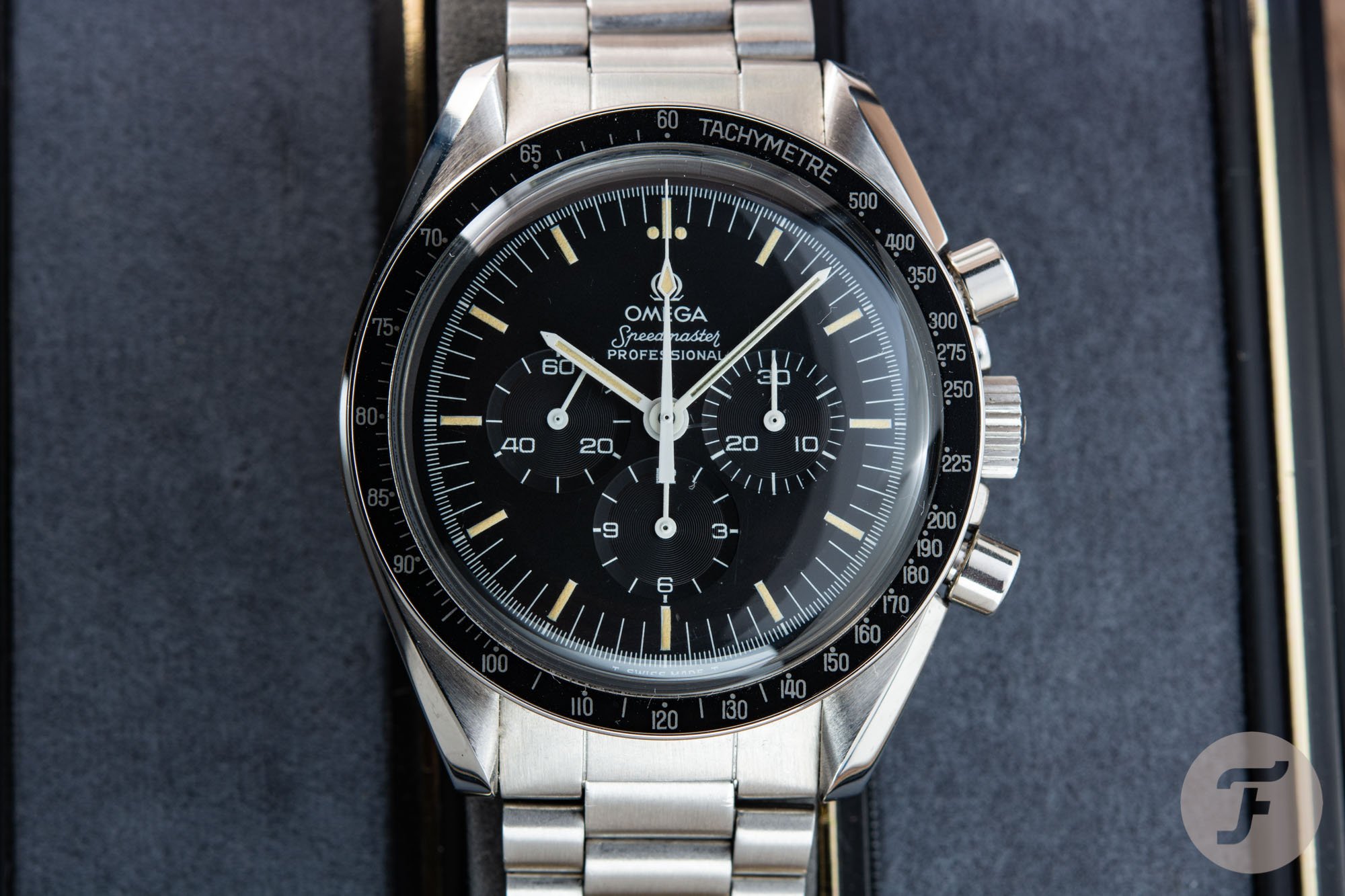
Speedmaster Professional 145.022-76
A second NASA flight qualification
In the early years of the 145.022, the dial featured a “step,” like the previous dials from the 321-powered models. Examples with these dials are a bit more desirable than the late 1970s and 1980s models. Additionally, later 145.022s should be easy to find, complete with their box and paperwork. Omega used the stepped dial in the 145.022-68, 145.022-69, and 145.022-71 references. The 145.022-71 was in production till the end of 1974, and then the 145.022-74 replaced it. Omega submitted the Speedmaster 145.022 for the second official NASA flight qualification in 1978, in preparation for the Space Shuttle program that was set to launch in the 1980s.
You should be able to find a nice 145.022 from the 1970s for around €4,000–5,000 in good condition, perhaps even less if you find a great deal. We published a separate 145.022 buying guide for you to read (click here). There are also a few different case backs for the 145.022, from the similar 145.012 case back to the current case back with the “First Watch Worn on the Moon” engraving. The most desirable ones are those with a horizontal inscription, which also come in two flavors. The most sought-after version has “Apollo XI 1969” engraved below the “First Watch Worn on the Moon” inscription.
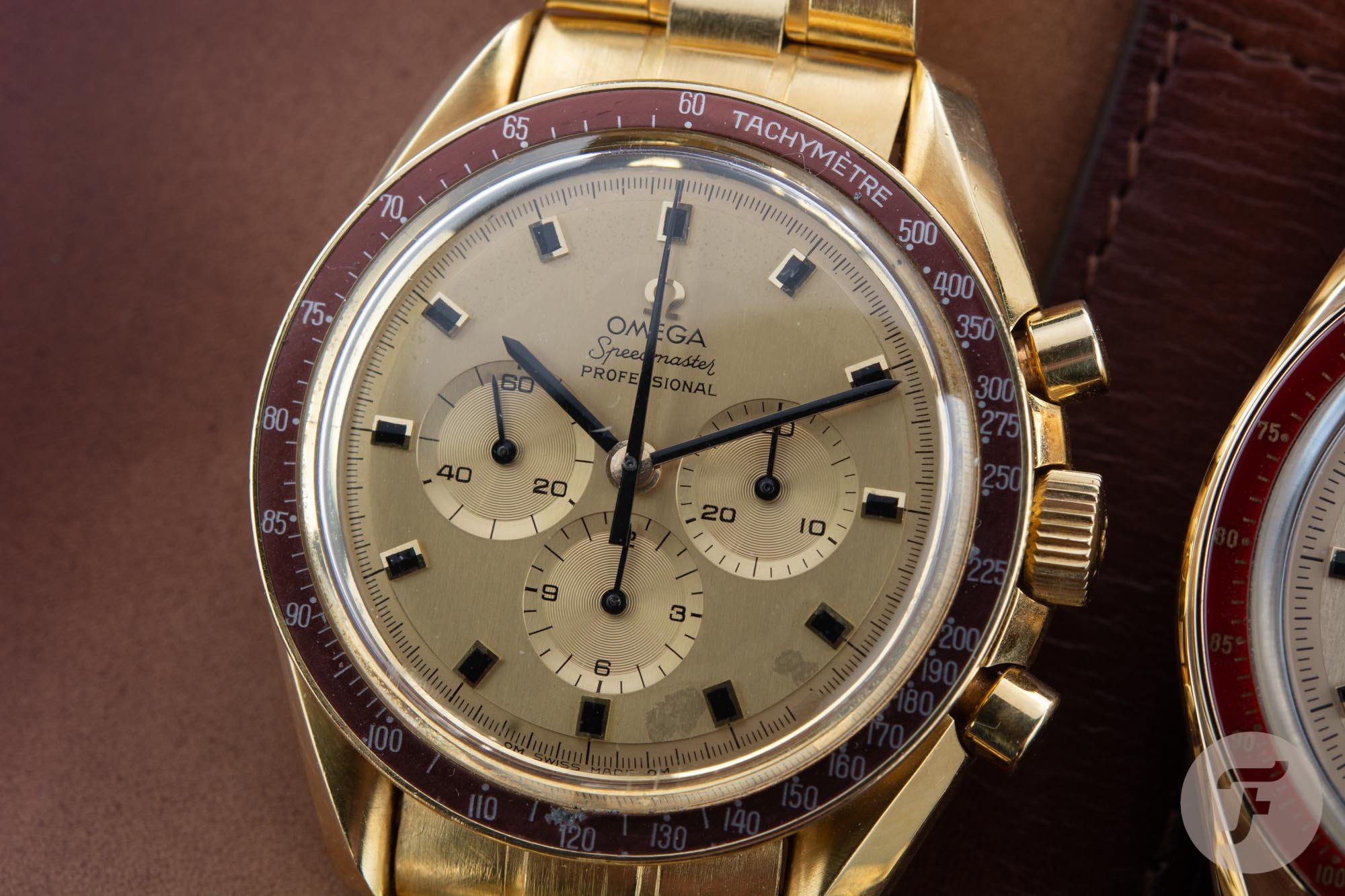
Omega Speedmaster Professional BA145.022-69
The 145.022 was also the basis for a gold model with a burgundy bezel (reference BA145.022-69). Omega made this commemorative edition for US President Richard Nixon, other members of the White House, and Apollo astronauts. We’ve written several Speedy Tuesday articles on these gold Speedmasters, but we also have an overview for you with all gold Speedmaster Moonwatch models. Prices for these start around €45,000, depending on the condition.
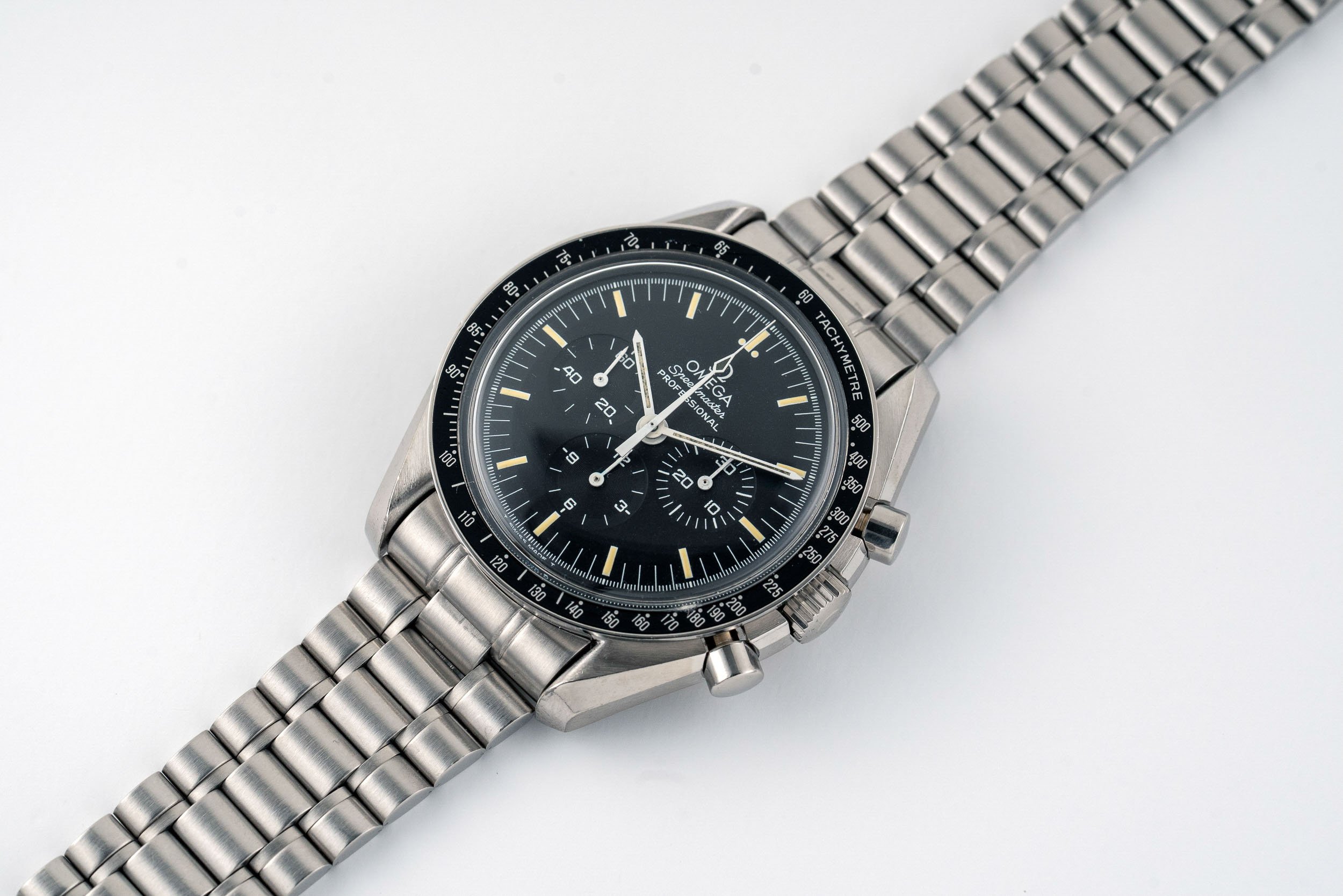
Omega Speedmaster Professional 3590.50
Speedmaster Professional 145.0022 and 3590.50
In 1983, Omega began using the 145.0022 code for the Speedmaster Professional (although 145.0022 had been used as a reference before, it was never engraved on the case back). This continued until the late 1980s when Omega began using the PIC system for its reference numbers. In 1989, the Speedmaster Professional’s reference number became 3590.50.
In the late 1980s, other things, such as the bracelet, also changed. The 3592.50 was the Moonwatch reference with the caliber 863 and a display case back. It wasn’t the first Speedmaster Professional with a rear sapphire crystal, though. That had already debuted in 1980 with the gold Speedmaster Professional 345.0802. The steel version of that watch was the reference 345.0808.
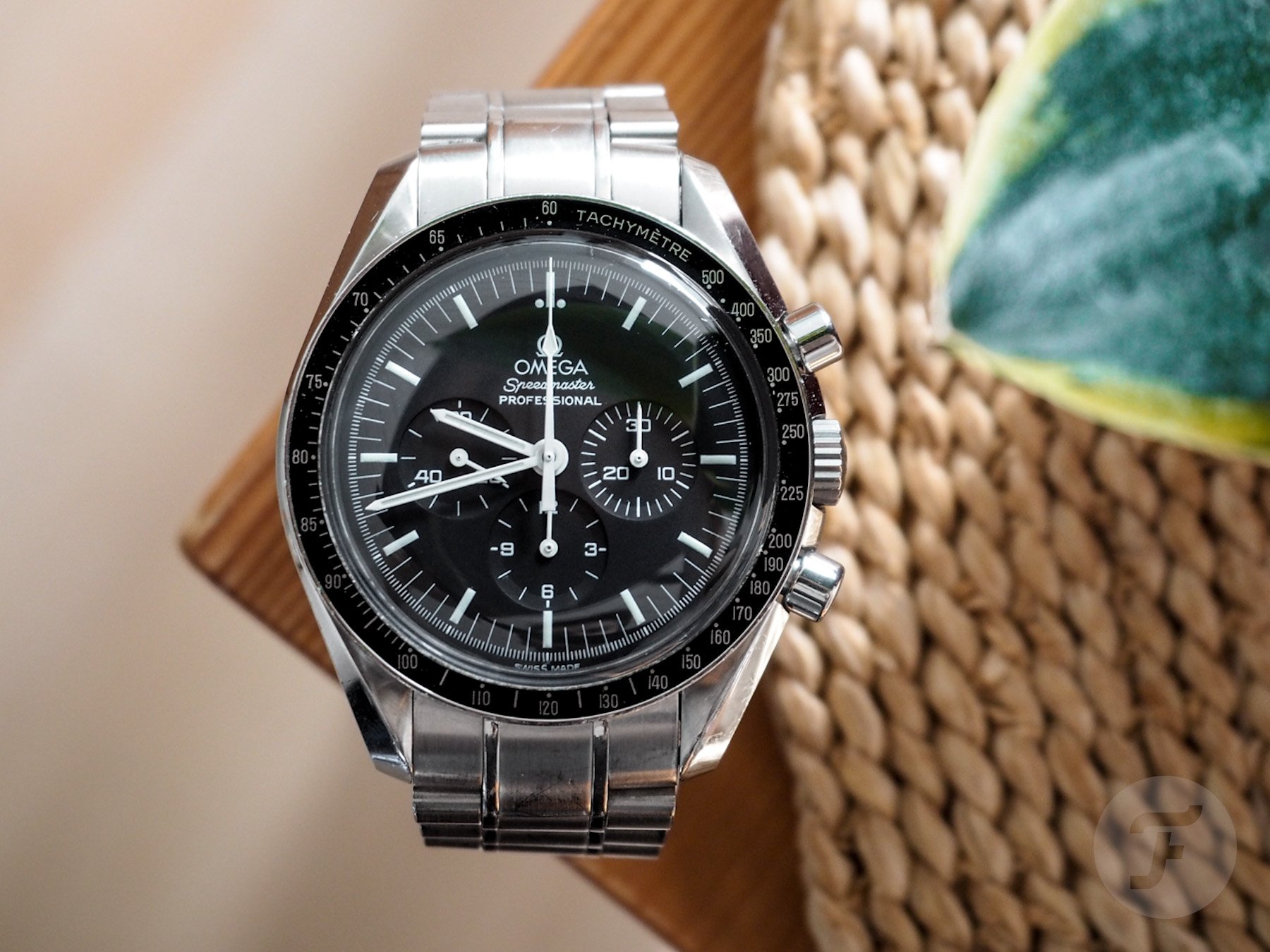
Speedmastert Professional 3570.50
Speedmaster 3570.50 and 311.30.42.30.01.005
In 1997, the movement received an upgrade to Omega’s caliber 1861, which was very similar to the last iteration of the 861 movement. This caliber 1861 had a rhodium plating and 18 jewels (just like the last iteration of the 861). The Speedmaster’s dial and hands received a Luminova treatment instead of tritium. These late 1980s and early 1990s Speedmaster Professional models with tritium often age very nicely, developing a yellowish patina on the markers and hands. You will also find it easier to source one of these watches, complete with its box and papers, in comparison to models from the 1970s or earlier. A watch from the early 1990s might be a great starting point if you’re new to Speedmasters but want a “vintage” model.
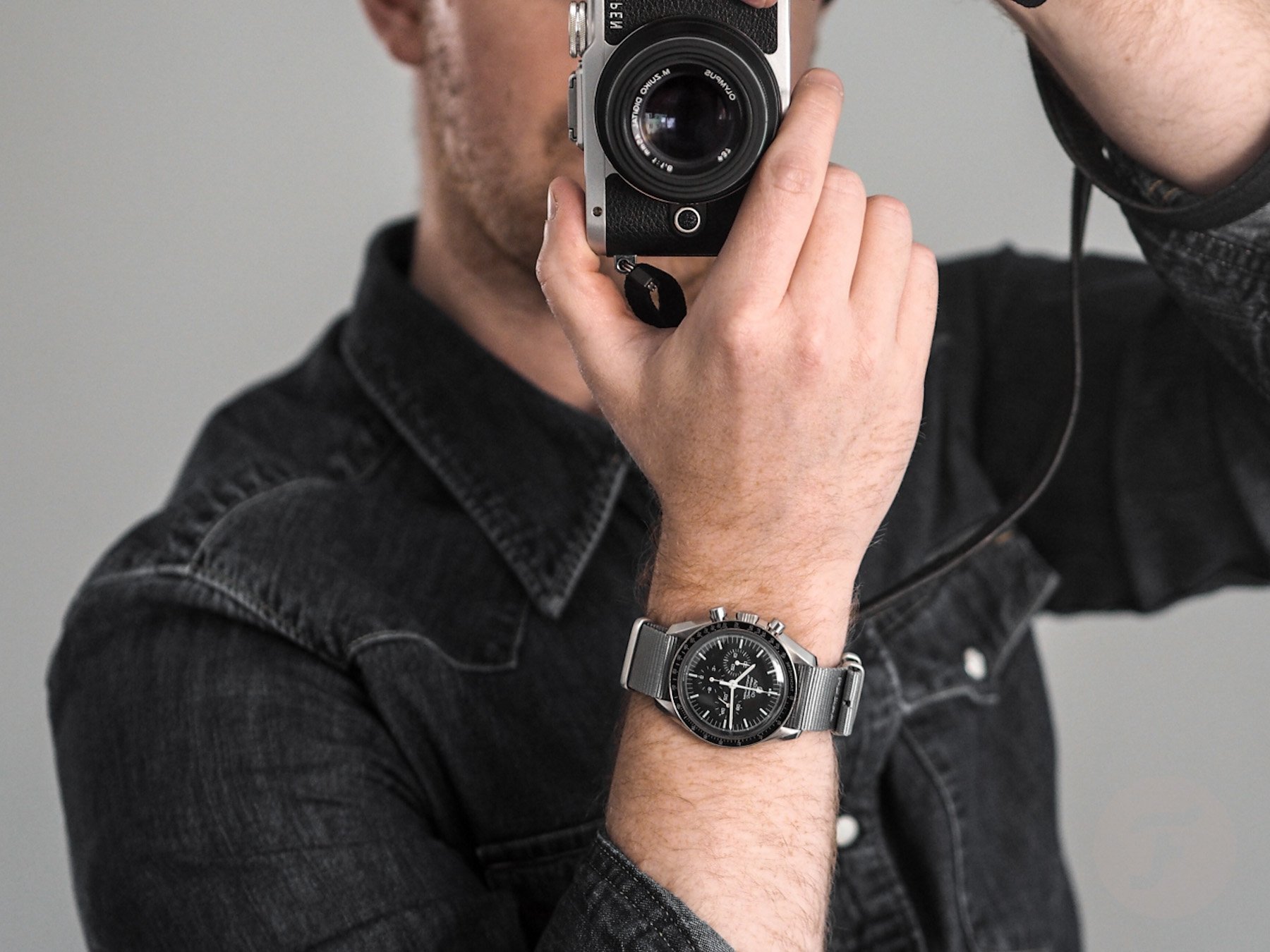
The 1997 update happened with the reference 3570.50 (although the first of these still had tritium markers and hands). Then, in 2014, the Speedmaster received reference number 311.30.42.30.01.005. This watch uses the caliber 1861 and has an updated bracelet design (with screwed links) and a huge presentation box.
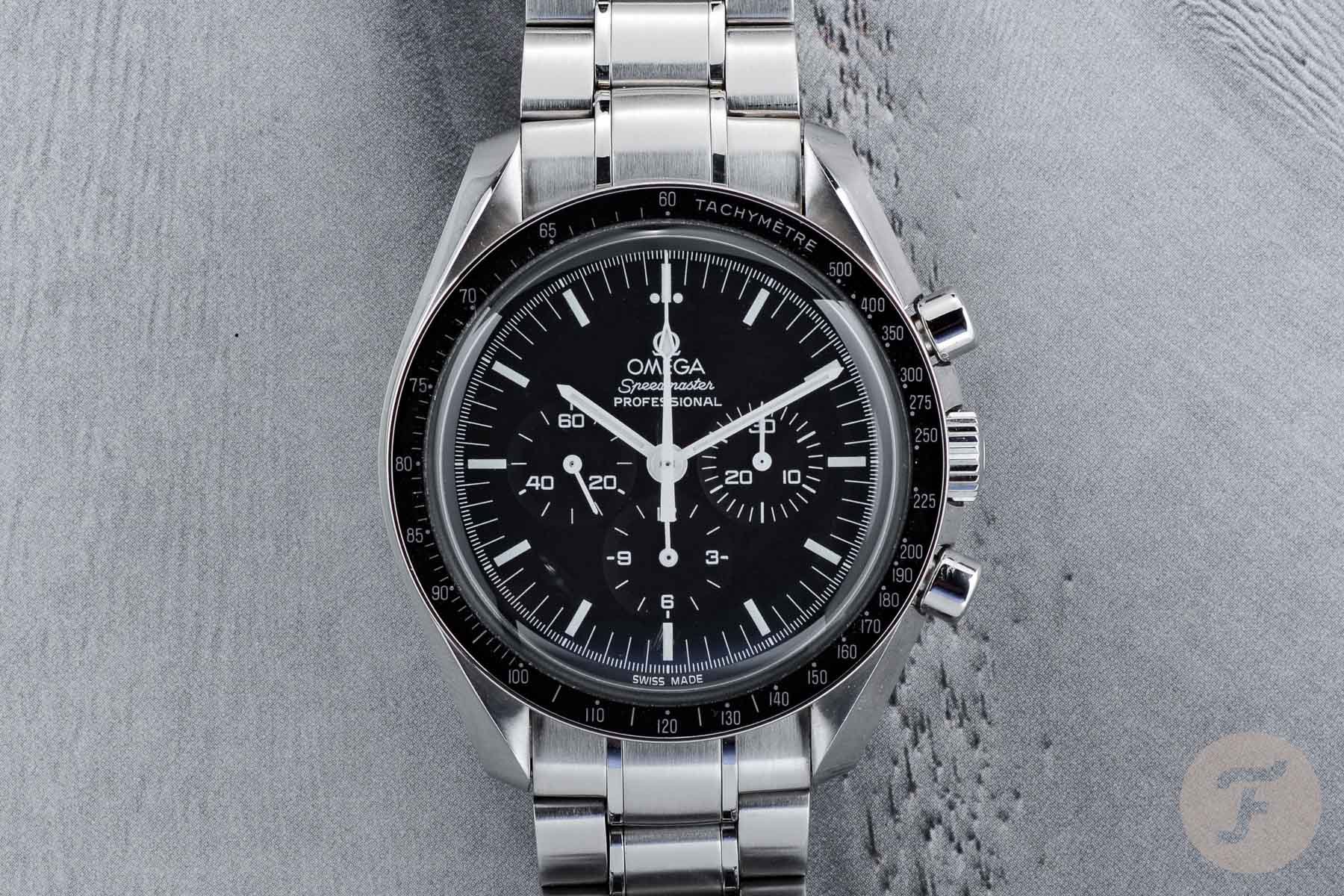
Speedmaster Professional 311.30.42.30.01.005
The 311.30.42.30.01.005 was discontinued in January 2021 and replaced with the Speedmaster Professional Master Chronometer. We’ve noticed a slight increase in pre-owned prices for the discontinued modern Speedmaster Professional Moonwatch models, although the change is minimal.
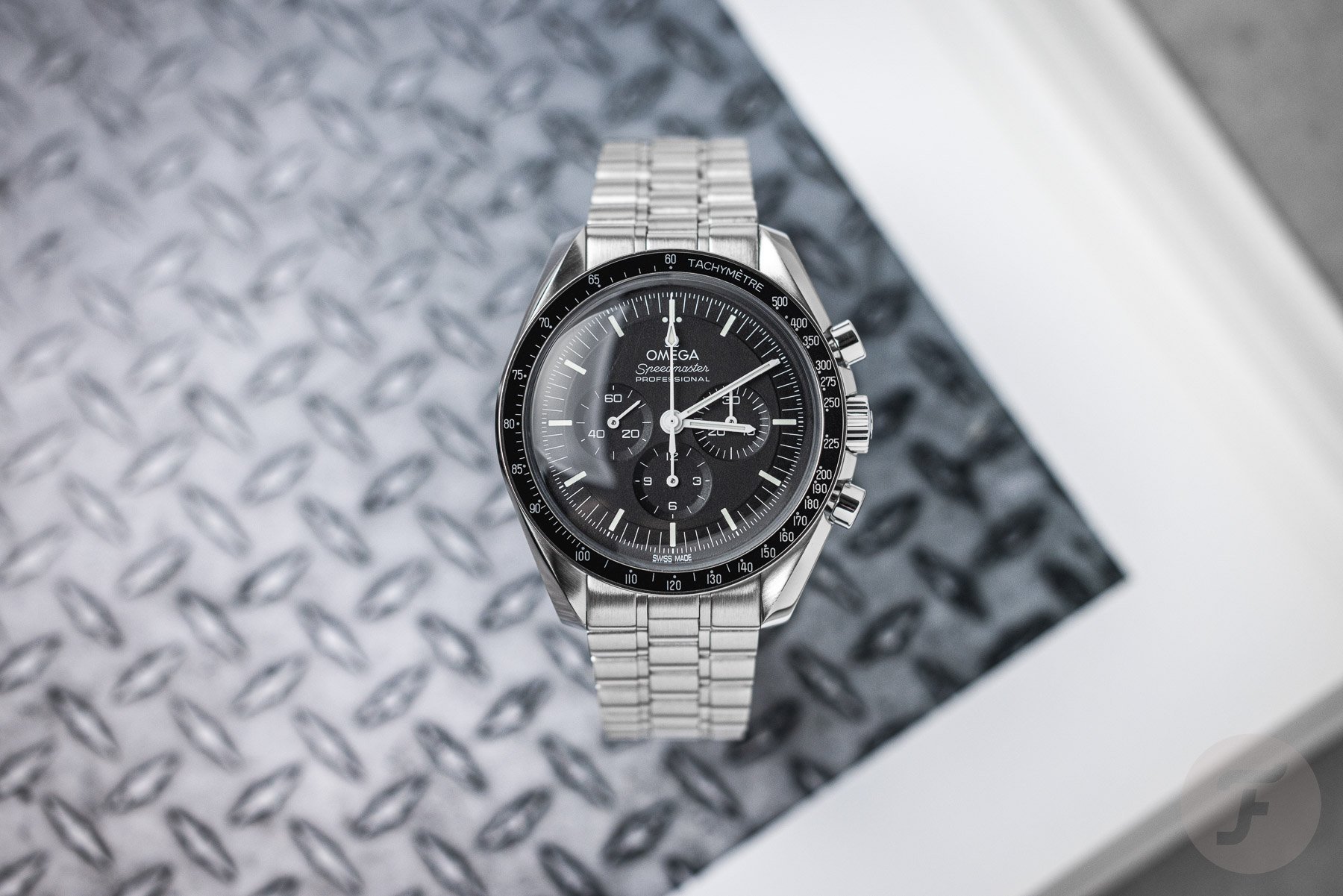
Omega Speedmaster Moonwatch Professional ref. 310.30.42.50.01.001
Speedmaster Professional 310.30.42.50.01.001
On January 5th, the first Speedy Tuesday of 2021, Omega finally introduced the long-awaited successor to the 1861-powered Moonwatch. The new Speedmaster Professional 310.30.42.50.01.001 (with a Hesalite crystal) and 310.30.42.50.01.002 (with sapphire) received quite a few upgrades compared to their predecessors. At the end of 2019, Omega had already announced that the Speedmaster Professional would receive an update with the caliber 3861.
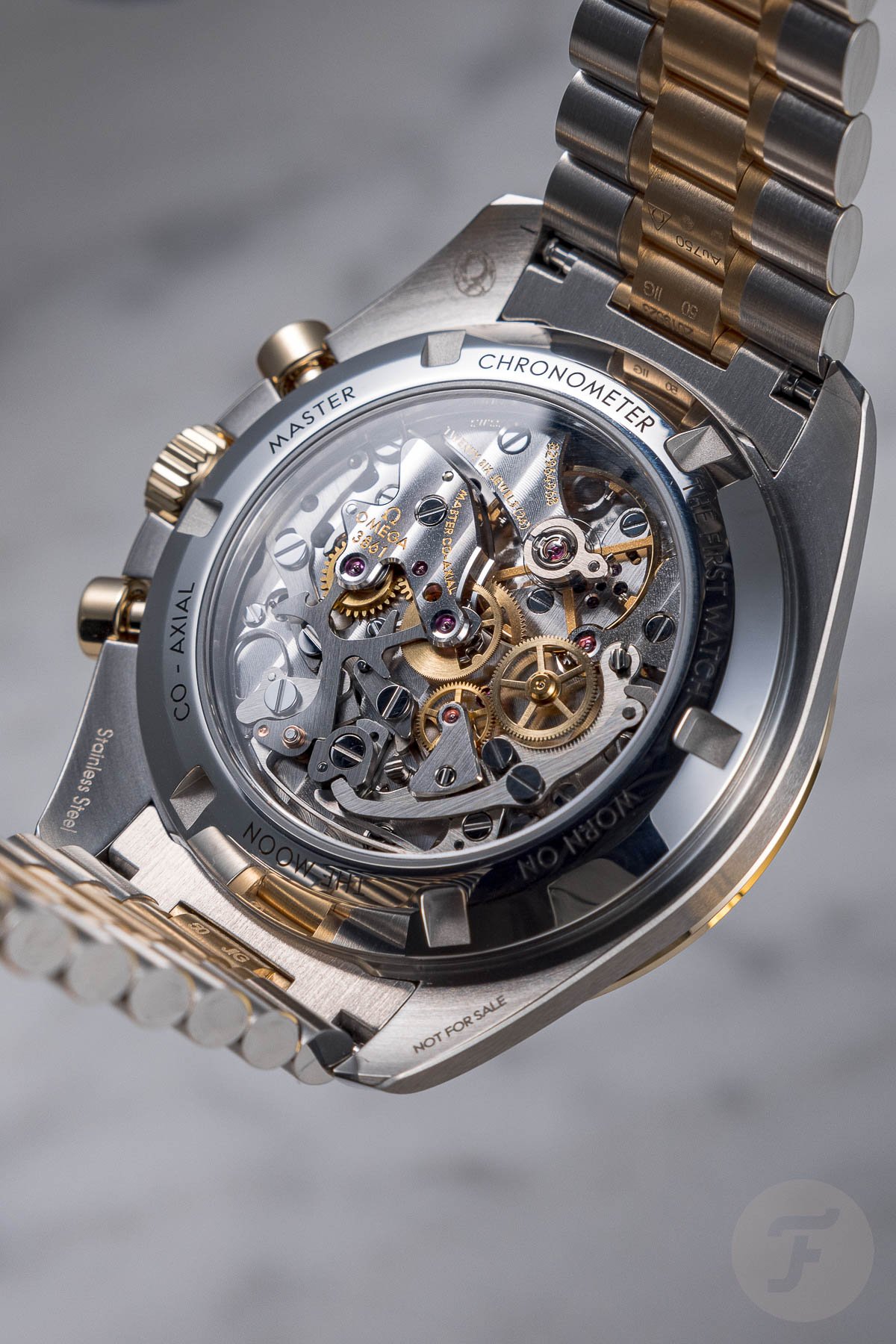
Caliber 3861 in the modern two-tone Speedmaster Professional
Caliber 3861 — A certified Master Chronometer
Back then, the movement was only used for the Apollo 11 limited editions and, later on, in the Silver Snoopy Award 50th Anniversary. Therefore, the 310.30.42.50.01.001 and -002 were the first “standard” stainless steel Omega Speedmaster Professional Moonwatches with a Master Chronometer certification. Omega developed the caliber 3861 based on the caliber 1861 but changed 50% of the components, including, among other things, a Co-Axial escapement.
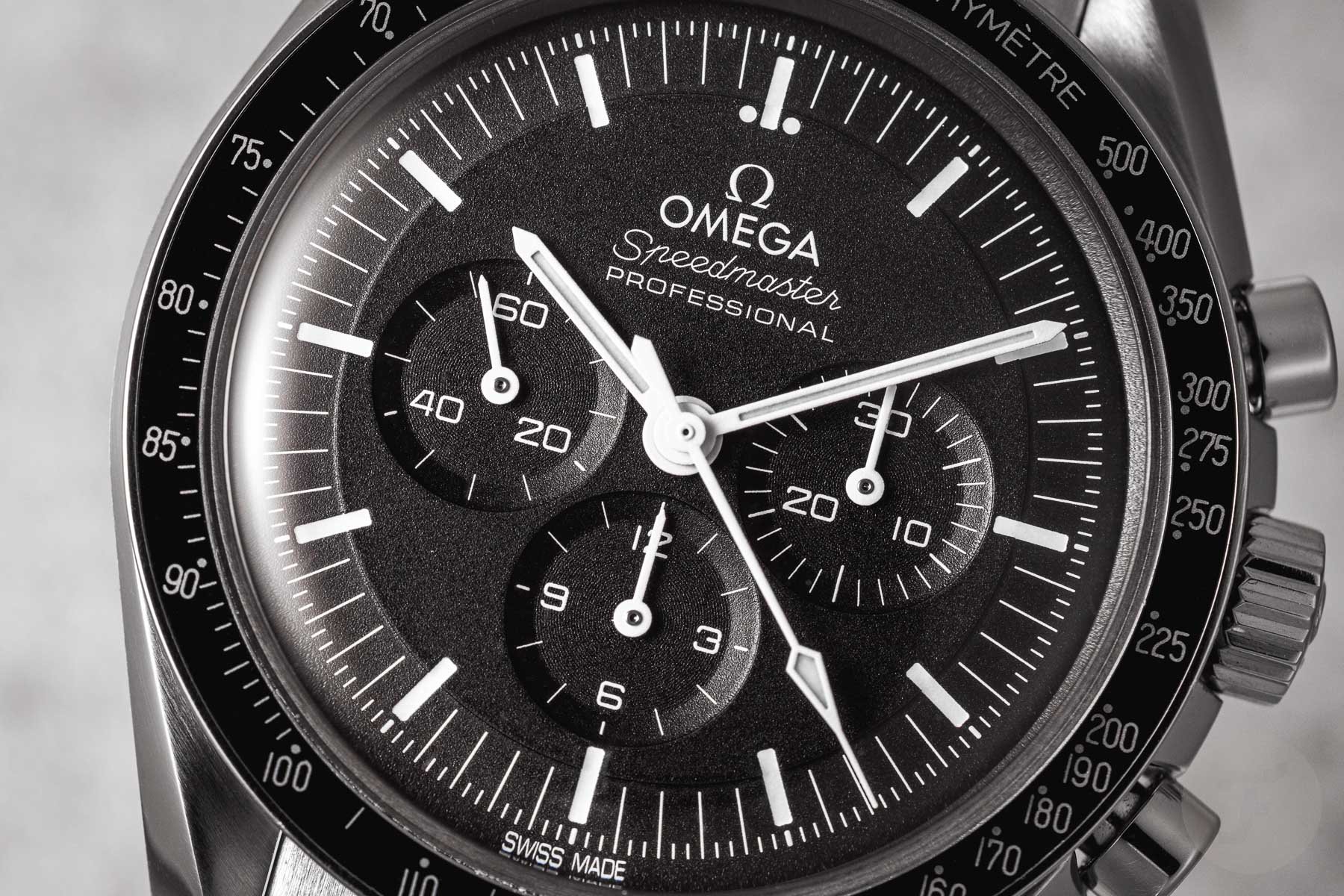
In short, Omega used the Speedmaster Professional 105.012 as a starting point for the current design. It features a stepped dial and a teardrop counterweight on the chronograph seconds hand, as well as an applied logo on the sapphire version. To make a distinction, the Moonwatch with the Hesalite crystal has a printed Omega logo. Another distinction between the sapphire and Hesalite versions is in the bracelet. The bracelet for the latter has a fully brushed finish, while the sapphire variant has polished intermediate links. The 42mm diameter remained, but the case shape changed slightly, making it similar to the 105.012.
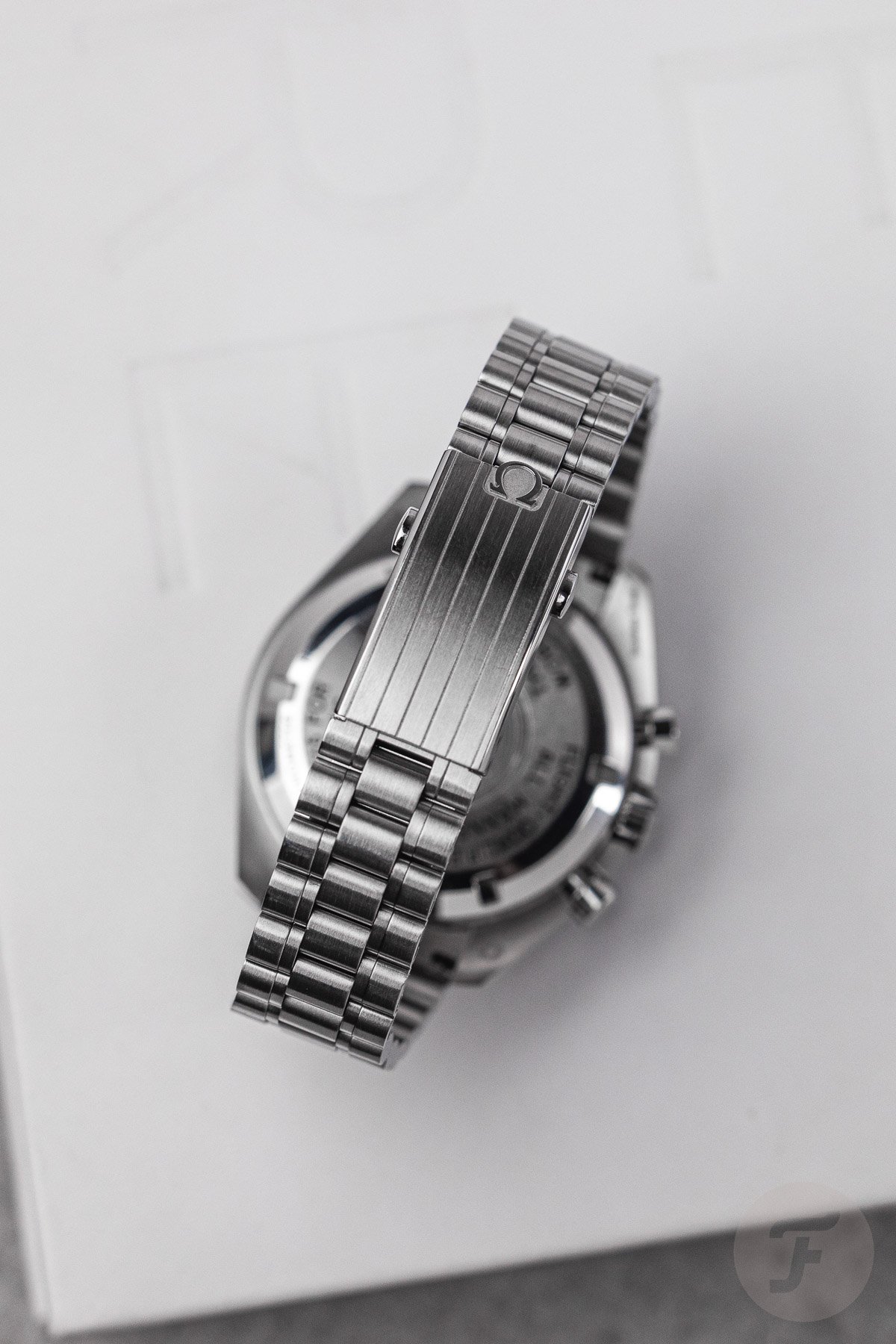
It also features a small notch between the lugs for a better fit with the bracelet’s end links, eliminating rattling. Omega reduced the case length by half a millimeter to 47.5 and kept the 20mm lug spacing.
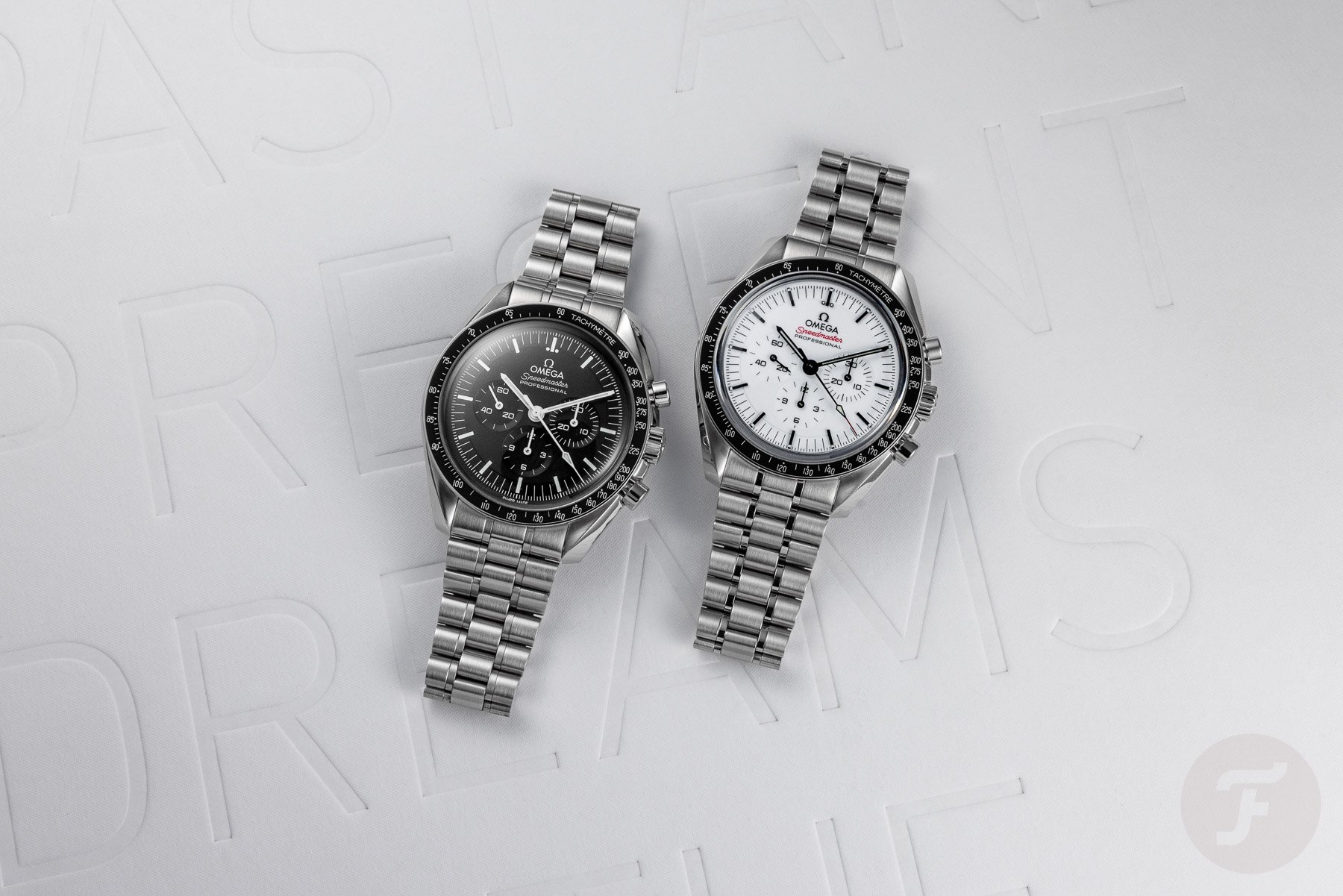
In 2024, the brand also introduced a white-dial Speedmaster Professional, with reference 310.30.42.50.04.001. Specs-wise, this watch is identical to the black-dial version and is also available on a rubber or leather strap. Several variations of the current Moonwatch are available in the Omega catalog (including bicolor and full-gold models), with prices starting at €7,700.
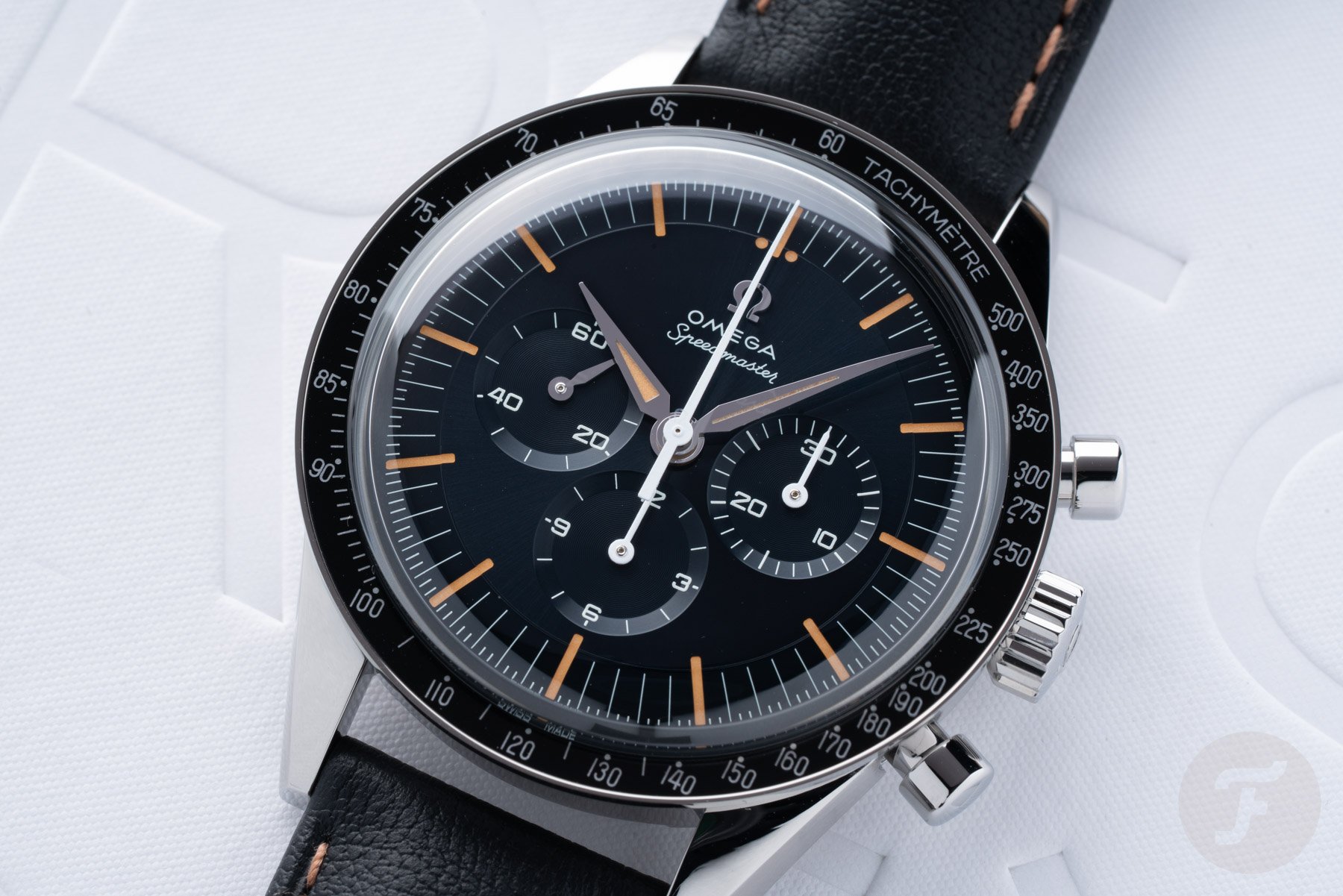
Omega Speedmaster FOiS 310.30.40.50.06.001
Speedmaster First Omega in Space 310.30.40.50.06.001
In 2012, Omega introduced a Speedmaster First Omega in Space in steel (and one in Sedna gold), as well as a series of LEs, all based on the original CK2998. The First Omega in Space from 2012 was a numbered edition and commemorated the Speedmaster worn on the wrist of astronaut Wally Schirra in 1962. This model was in the collection until 2020. In 2024, Omega introduced a regular-production successor to the 2012 First Omega in Space, now with a blue-gray dial.
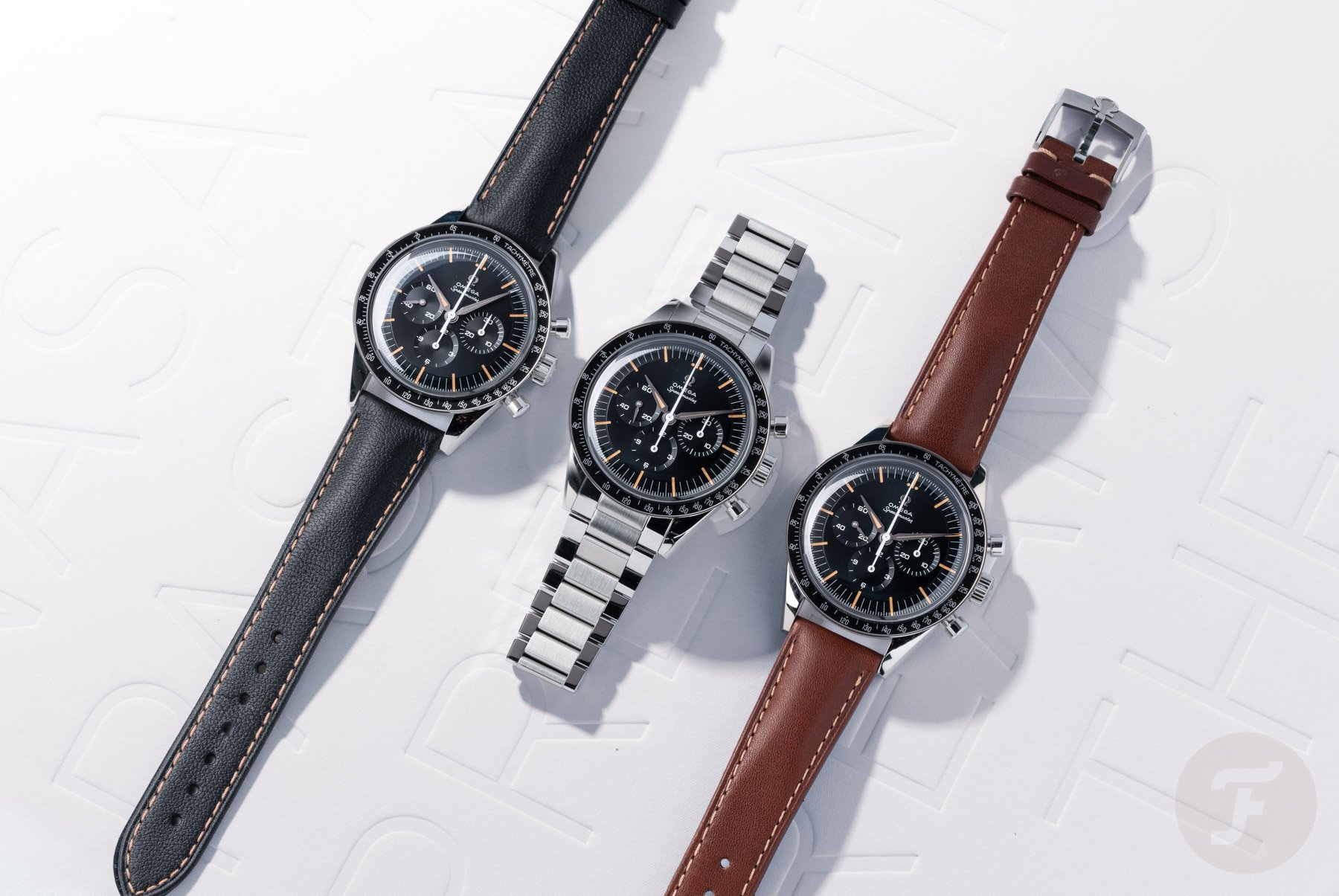
This watch has a 39.7mm diameter and houses Omega’s chronograph caliber 3861. It’s also available on a stainless steel bracelet and a leather strap. It’s the first Moonwatch-adjacent variation with a domed sapphire crystal (instead of a box type), showing a greater resemblance to the Hesalite crystal. Prices for the current FOiS start at €8,300. You can read our in-depth article on this Speedmaster FOiS here.
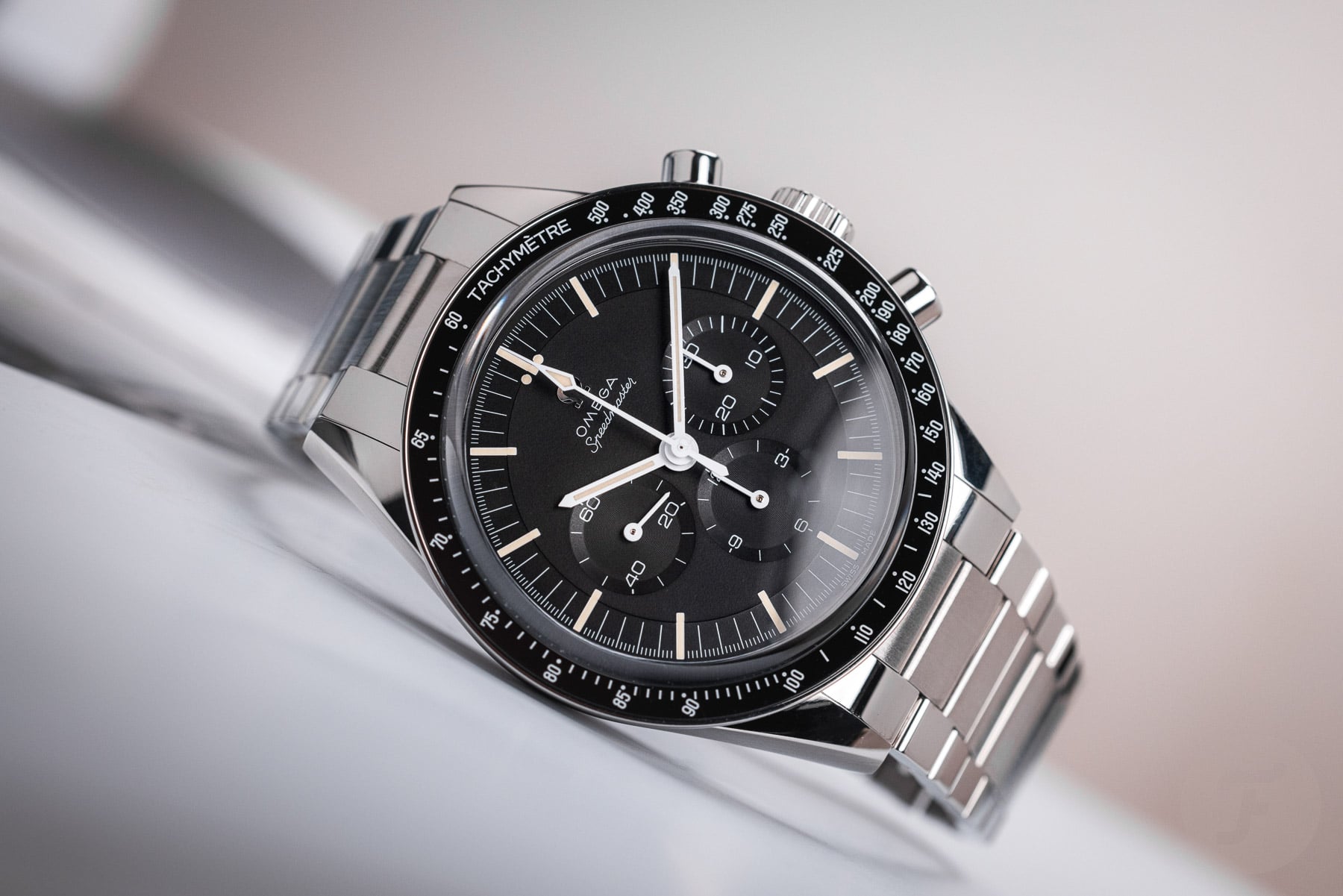
Omega Speedmaster Calibre 321 311.30.40.30.01.001
Speedmaster Calibre 321 311.30.40.30.01.001
The other model considered a “Moonwatch” in the regular collection is the Speedmaster Calibre 321. Based on reference 105.003 from the 1960s, the Speedmaster Calibre 321 features a straight-lug 39.7mm case, a sapphire crystal, and a ceramic bezel. As its name suggests, the movement inside is the classic caliber 321, featuring a column wheel. You can read all about this in the 2020 introduction of the Speedmaster Calibre 321 here.
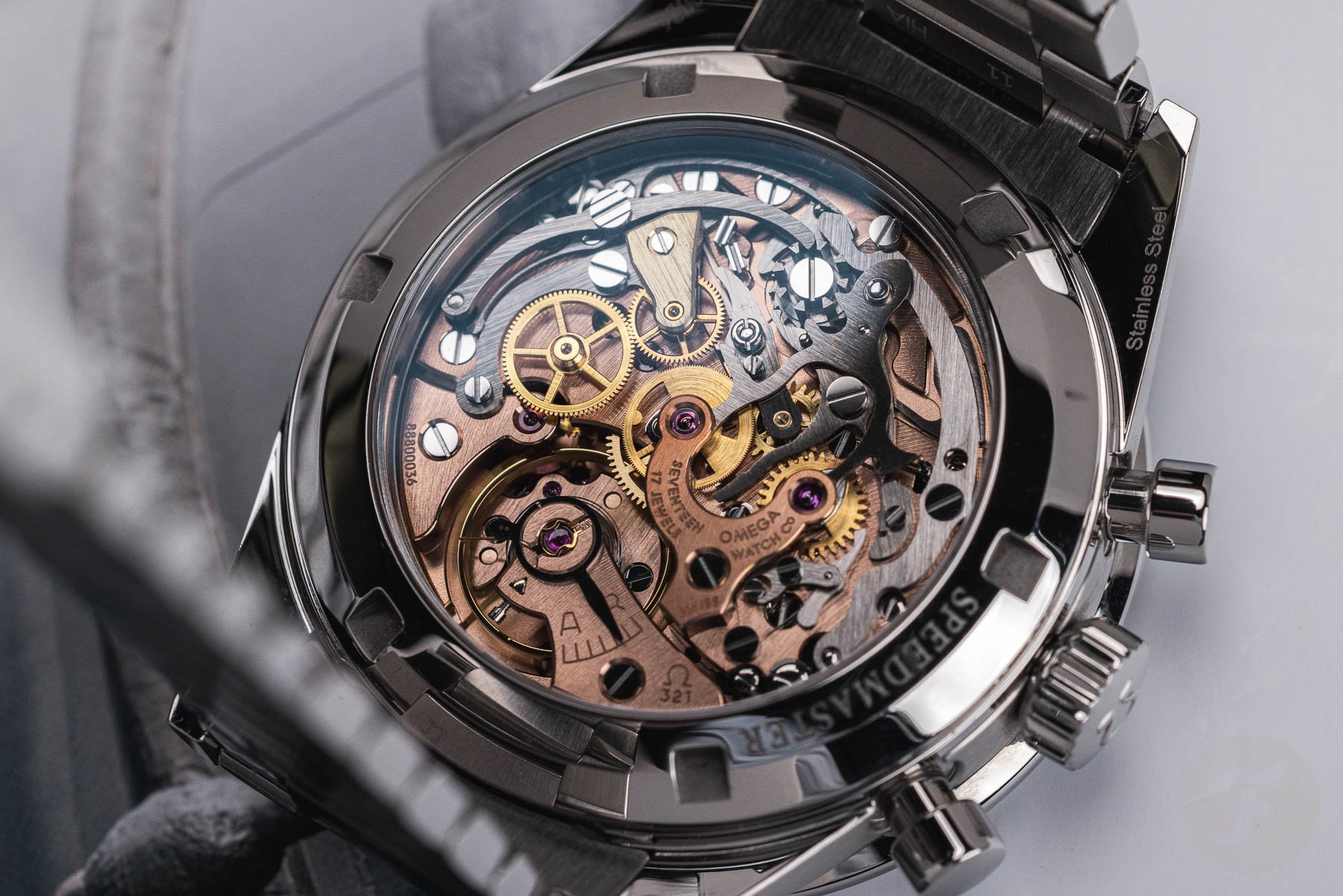
Caliber 321
While this watch is not strictly a limited edition, Omega produces the Speedmaster Calibre 321 in small numbers at a separate workshop within the Biel manufacture. The brand also created a 42mm Speedmaster Professional in platinum with the caliber 321, as well as a “Broad Arrow” variation in white gold for the Speedmaster’s 65th anniversary in 2022.
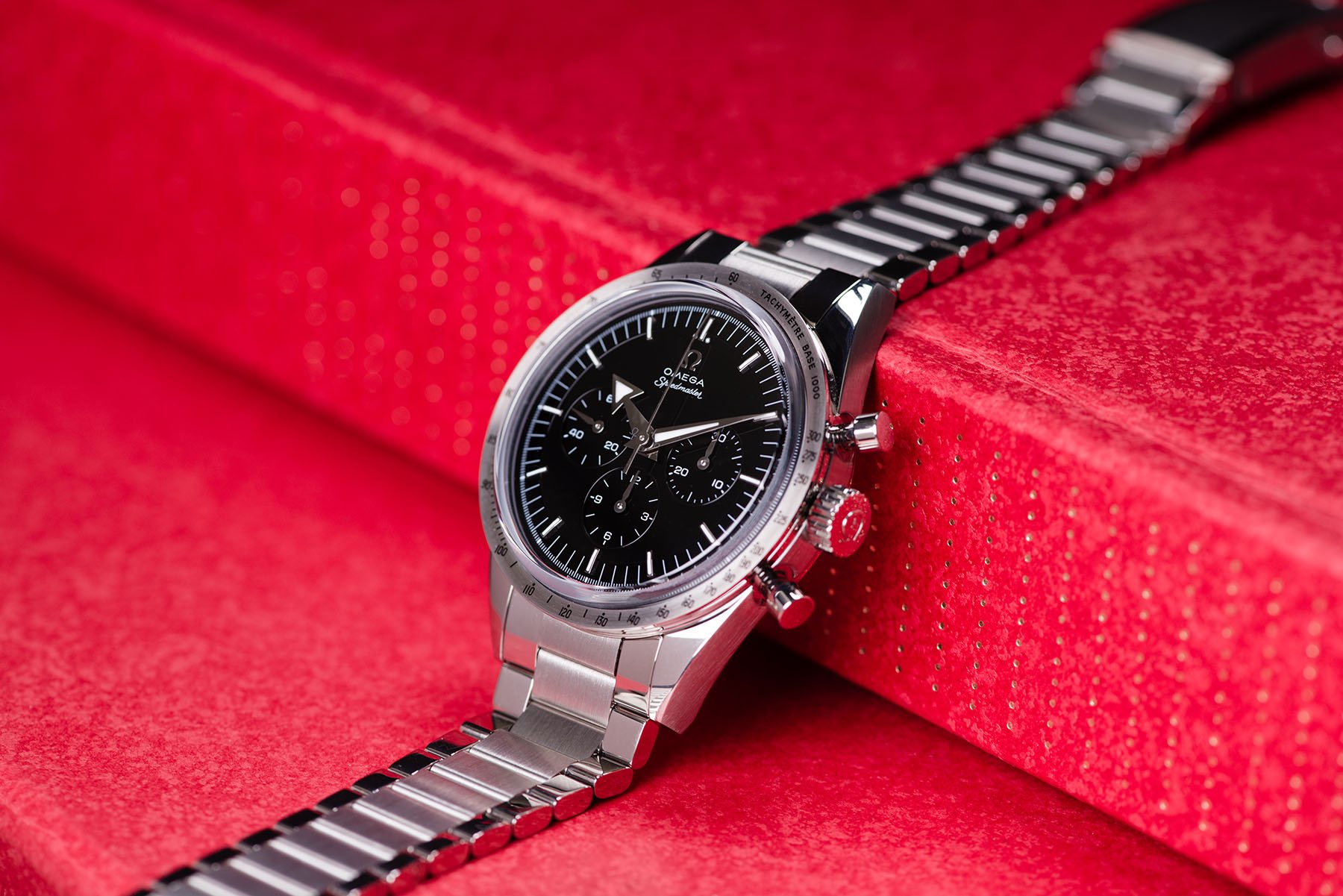
Omega Speedmaster Calibre 321 311.50.39.30.01.001 in Canopus Gold
There are many more Speedmaster models to discover
I only touched upon the most common Omega Speedmaster models in this article, leaving aside many special and limited editions that Omega has introduced. Hopefully, it shows the evolution of the Speedmaster from 1957 to the current Moonwatch model(s). For the novice, there might not be much difference, but once you dive into the subject, there’s a lot to discover. Collectors can go crazy over the tiniest details and variations, making the Omega Speedmaster such an enjoyable watch to collect. Even in the current or modern black-dial Speedmaster Professional, you will find differences in the dials since its introduction in 2021.
*This article was first published on August 5th, 2014, and updated with new information and images on December 15th, 2025.