Do You Know The Difference Between Openworked And Skeletonized Watches? You Should

A watch brand that arguably creates some of the most spectacular watches with skeletonized movements gives these pieces the moniker “Openworked.” However, this term also applies to watches with a cut-away dial, which allows a view of the movement. Not only does my spell checker see “openworked” as a spelling mistake, but watch enthusiasts and brands often use it confusingly. Audemars Piguet, the brand I’m referring to, does exactly that, which doesn’t make things easier. But AP was the inspiration for this article, both for its confusing use of the term “Openworked” and for creating some of the most spectacular openworked — sorry, skeletonized — movements.
I’m unsure about which of the two following skeletonized creations that Audemars Piguet named “Openworked” is my favorite. It might be the new Royal Oak “Jumbo” Extra-Thin Openworked ref. 16204XT.OO.1240XT.01 with the 2.7mm-thick caliber 7124 showing its skeletonized bridges, sharp internal angles, and different types of finishing on the front and the back. Or it could be this year’s Royal Oak Selfwinding Perpetual Calendar Openworked ref. 26685XT.OO.1320XT.01 executed in titanium and Bulk Metallic Glass (BMG).

Audemars Piguet Royal Oak Selfwinding Perpetual Calendar Openworked ref. 26685XT.OO.1320XT.01
The difference between openworked and skeletonized watches
The latest RO QP, which AP introduced recently, features the new caliber 7139. The movement takes center stage on both sides of the watch. On the front, it is framed by a black inner bezel with week numbers and a transparent gray minute track with pink gold hour markers. A clear sapphire dial reveals the movement’s cut-out bridges and wheels, finished in alternating dark and light gray tones. At 3, 6, and 9 o’clock, three sub-dials with smoked sapphire rings display the perpetual calendar indications. These sub-dials are accented with pink gold frames and hands, matching the centrally mounted pink gold hour and minute hands.
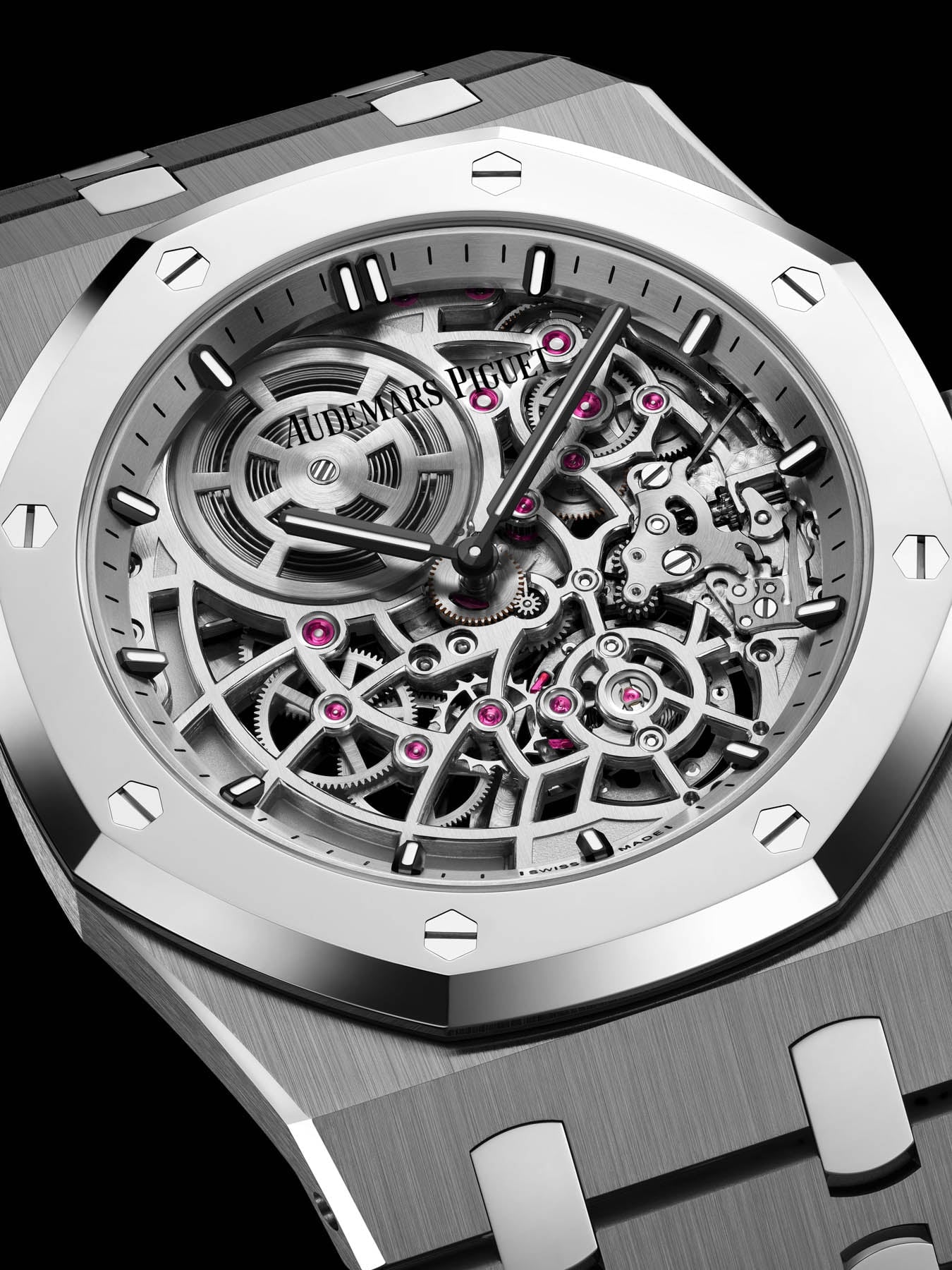
Royal Oak “Jumbo” Extra-Thin Openworked ref. 16204XT.OO.1240XT.01
I will pick my favorite later and start by saying that both the new QP and the time-only RO “Jumbo” Extra-Thin above feature skeletonized movements. According to the Fondation Haute Horlogerie (FHH), this means that the movement has a plate and bridges cut away to expose the wheels, leaving only the parts the watch needs to function. AP is an expert in skeletonizing movements, but it’s neither the only nor the first brand to start cutting away “redundant” material.
AP first explored opening watch movements as early as the 1930s. In the 1970s, a new generation of AP watchmakers lobbied to revive the craft. A new atelier was created to produce skeletonized versions of AP’s caliber 2120, with then-CEO Georges Golay having set a goal of 100 pieces. It took about 150 hours to create each of those, and since the artisanal technique hasn’t changed essentially, creating the latest skeletonized creations also takes plenty of time. But why call them “openworked” rather than “skeletonized” when that can cause so much unnecessary confusion?
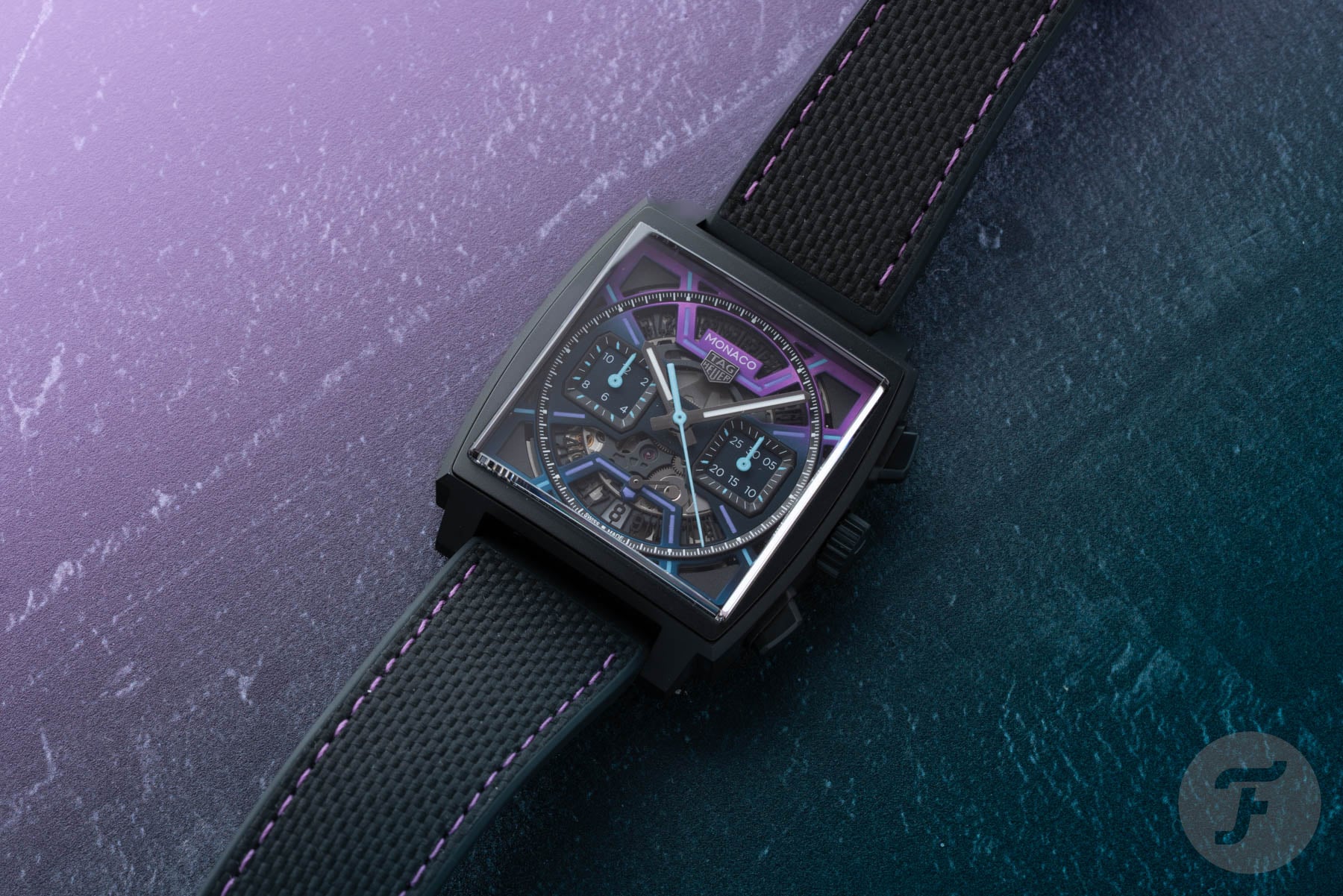
TAG Heuer Monaco Chronograph for the Las Vegas Grand Prix 2026
Skeletonized is always openworked, but openworked isn’t always skeletonized
When a watch doesn’t have a dial, you can call it either an “open-dial” or “openworked” watch. Because something is left out, I prefer the former term. But watch brands often prefer to use “openworked” because it suggests there’s more to the watch than just an absent or transparent dial. There are also openworked dials that offer a partial view of the movement beneath. A classic example is the “hole” at 6 o’clock that reveals a spinning tourbillon. Full transparency is also an option. The limited-edition TAG Heuer Monaco Chronograph for the Las Vegas Grand Prix 2026 is black DLC-coated Grade 2 titanium, and it features an openworked dial with a gradient from violet to deep blue that mimics the night sky of Las Vegas.
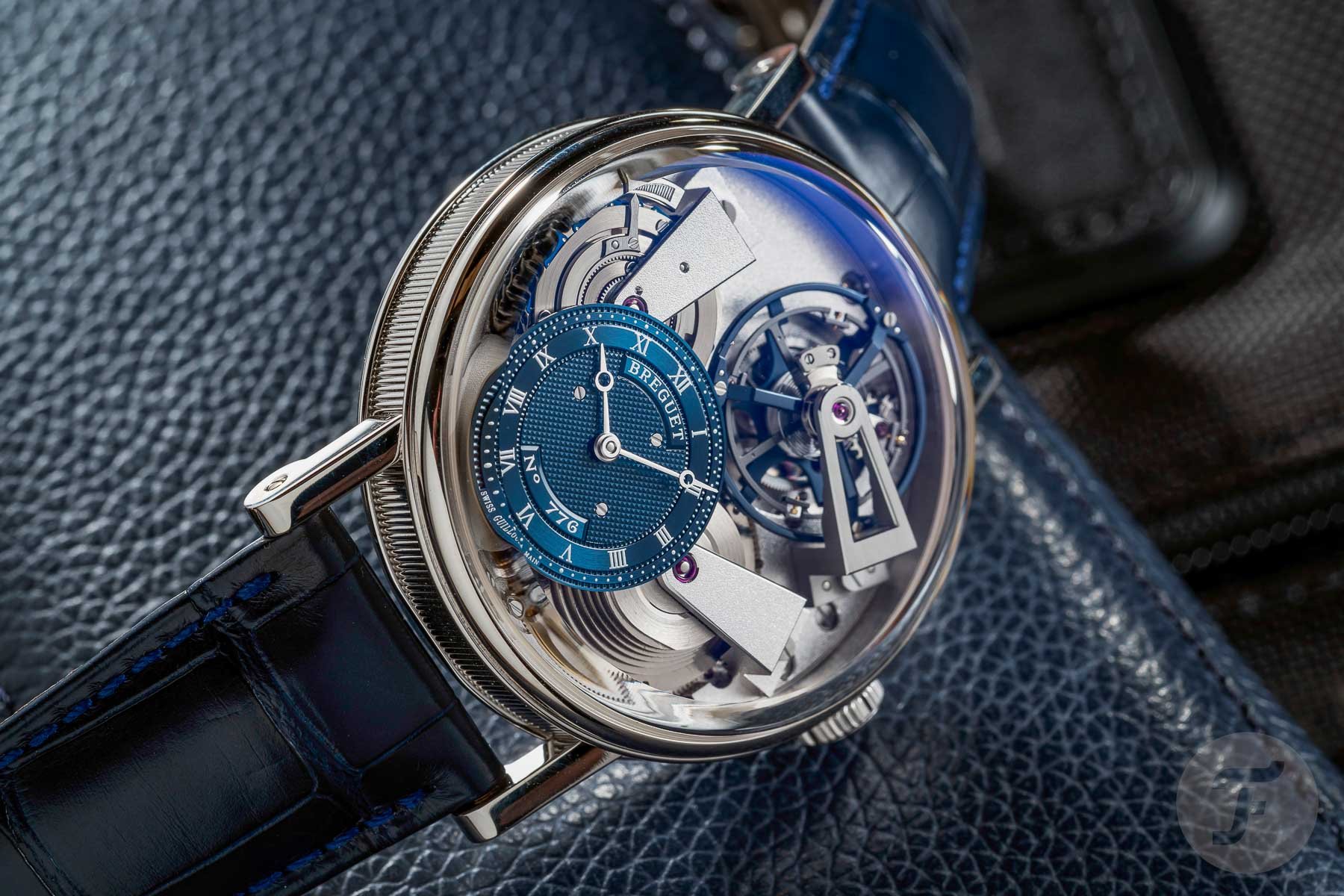
Breguet Tradition Fusée Tourbillon 7047
The ultimate openworked watches come from a centuries-old brand that also has a long history in the art of skeletonization. Breguet’s Tradition collection shows the key components of the movements on the front side. The ultimate expression is the Tradition Fusée Tourbillon 7047, with its chain and fusée on full display under a domed sapphire crystal.
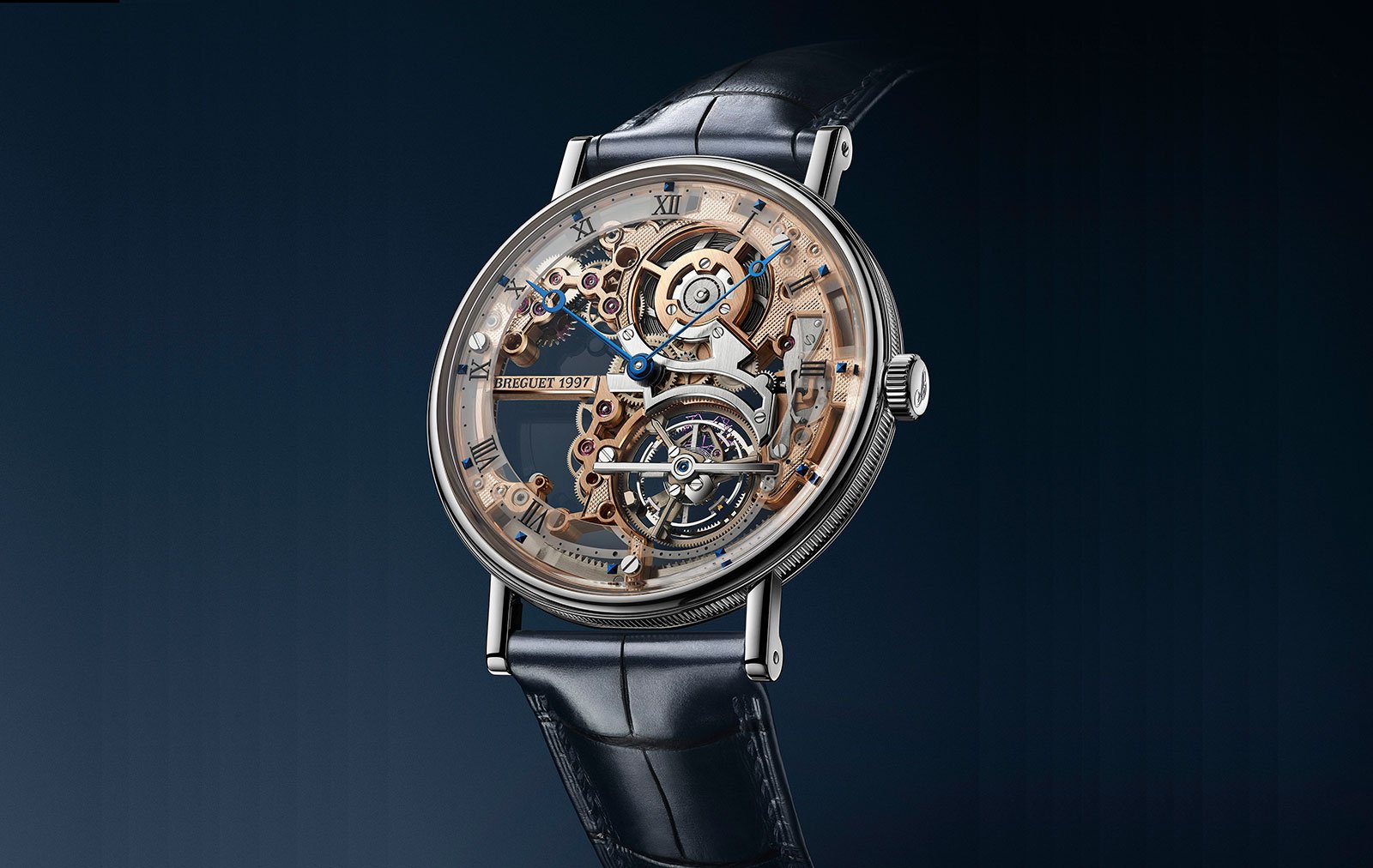
Breguet Classique Tourbillon Extra-Plat Squelette 5395
See through it all
Arguably, Breguet’s most impressive skeletonized creation is the Classique Tourbillon Extra-Plat Squelette 5395. Not only is the watch very slim, but it’s also very transparent. That’s not just because of the rigorous yet delicate skeletonizing but also due to the movement’s peripheral rotor staying out of sight.
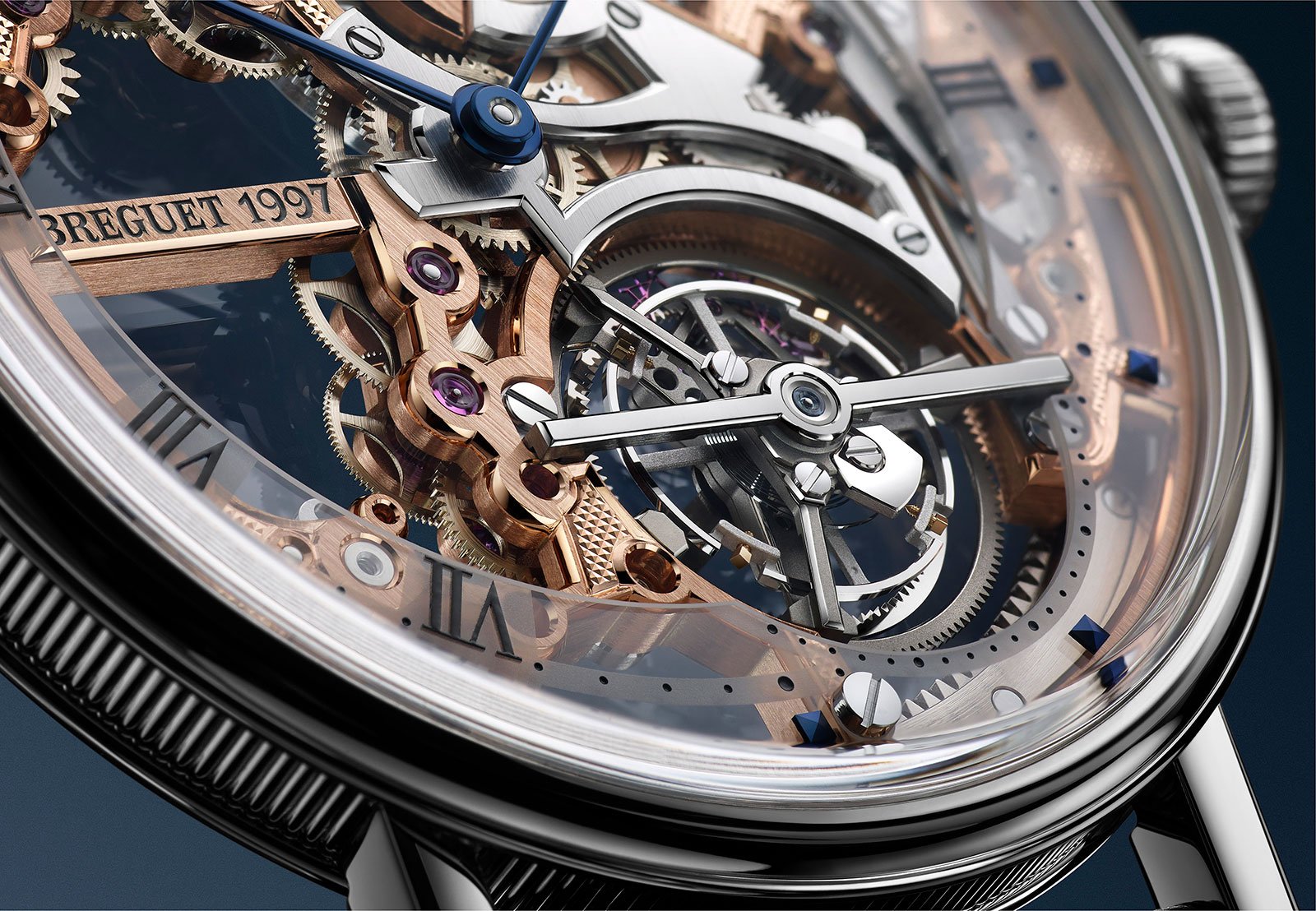
Close-up of the Classique Tourbillon Extra-Plat Squelette 5395
Removing material from the movement allows for a see-through experience. If mechanical watchmaking didn’t have you in its grip already, a delicately skeletonized movement surely will. Traditional skeletonizing starts with a regular movement. It takes an artisan’s steady hand to take out the material that prevents light from shining through. By openworking bridges and wheels with traditional tools, such as piercers, files, and saws, and adding hand-polished, chamfered edges, the result is full transparency.
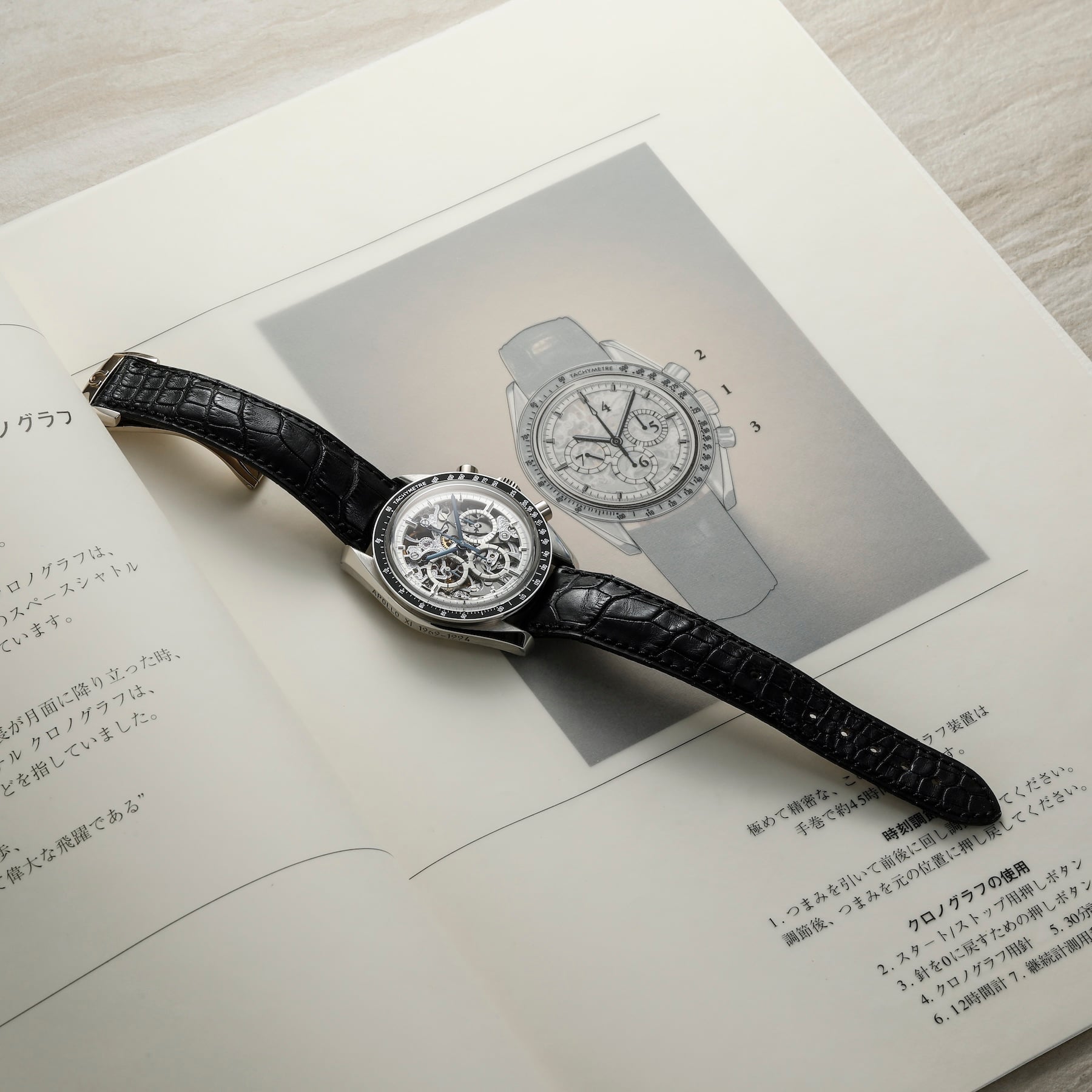
Omega Speedmaster Professional 3097.30
A great example of traditional, artisanal, handmade skeletonization is the Omega Speedmaster Professional 3097.30. Armin Strom hand-skeletonized 50 of these special platinum “Speedies” that commemorated the 25th anniversary of the Moon landing. To honor the expertise of its namesake, watch brand Armin Strom offers skeletonized watches in its current lineup. The Tribute 2 Aurum doesn’t qualify because that’s an openworked watch, but the One Week Skeleton Titanium from the System 78 collection does.


The airy One Week iteration also shows the modern approach to skeletonizing. But before we get into that, let’s look at the Chronoswiss Opus Chronograph Purple Rain, a homage to a watch from around 30 years ago.
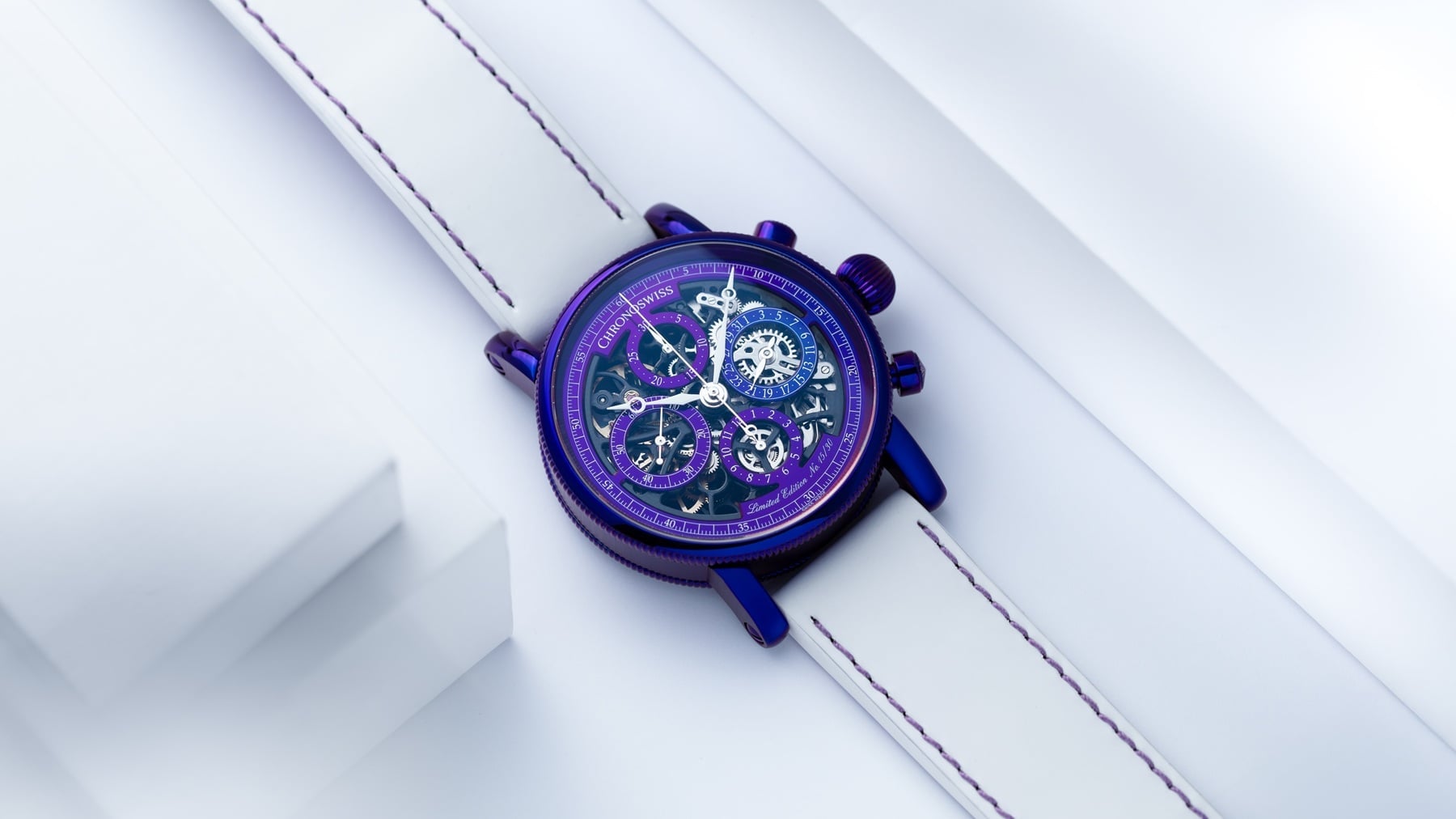
Chronoswiss Opus Chronograph Purple Rain
Watchmaking’s transparent ambassador
In 1995, Chronoswiss founder Gerd Rüdiger Lang presented a watch that earned itself a place in the history books. The Opus CH 7523 was the first serial-production self-winding skeletonized chronograph. It was also significant. The Quartz Crisis remained a vivid memory, and the world of emotional mechanical watches was still in its infancy. The idea of mechanical watches being more than mere functional timepieces was still relatively new. A chronograph with an automatic movement, with all its moving parts and beating “heart” on full display, served as an ambassador for all mechanical watches. It was a window into the complicated and fascinating world of these timepieces. The flamboyant chronograph helped spark renewed interest in artisanal watchmaking, benefiting the industry. The purple Opus Chronograph Purple Rain is a bold, modern homage, which leads us to modern skeletonizing.

Roger Dubuis Excalibur Monotourbillon Titanium
Skeletonizing — it ain’t what it used to be
Modern skeletonized watches can still be seen as exhibitionist poster boys for the whole watchmaking industry. Skeletonizing has evolved alongside technological advances. Removing metal by hand is the old way; creating architectural, designed-from-scratch, very transparent movements is the modern way. Computers and ultra-precise CNC machines are the new tools. Modern technology literally opens the world of watchmaking. Brands like Roger Dubuis and Cartier have watches in their catalogs with base plates skeletonized from the get-go. This process allows greater freedom. The result could be a movement shaped like a star, as seen in the Roger Dubuis Excalibur Monotourbillon Titanium (CHF 147,500). The skeletonized base arrives on the watchmaker’s bench for manual finishing, pre-cut straight out of the machine.
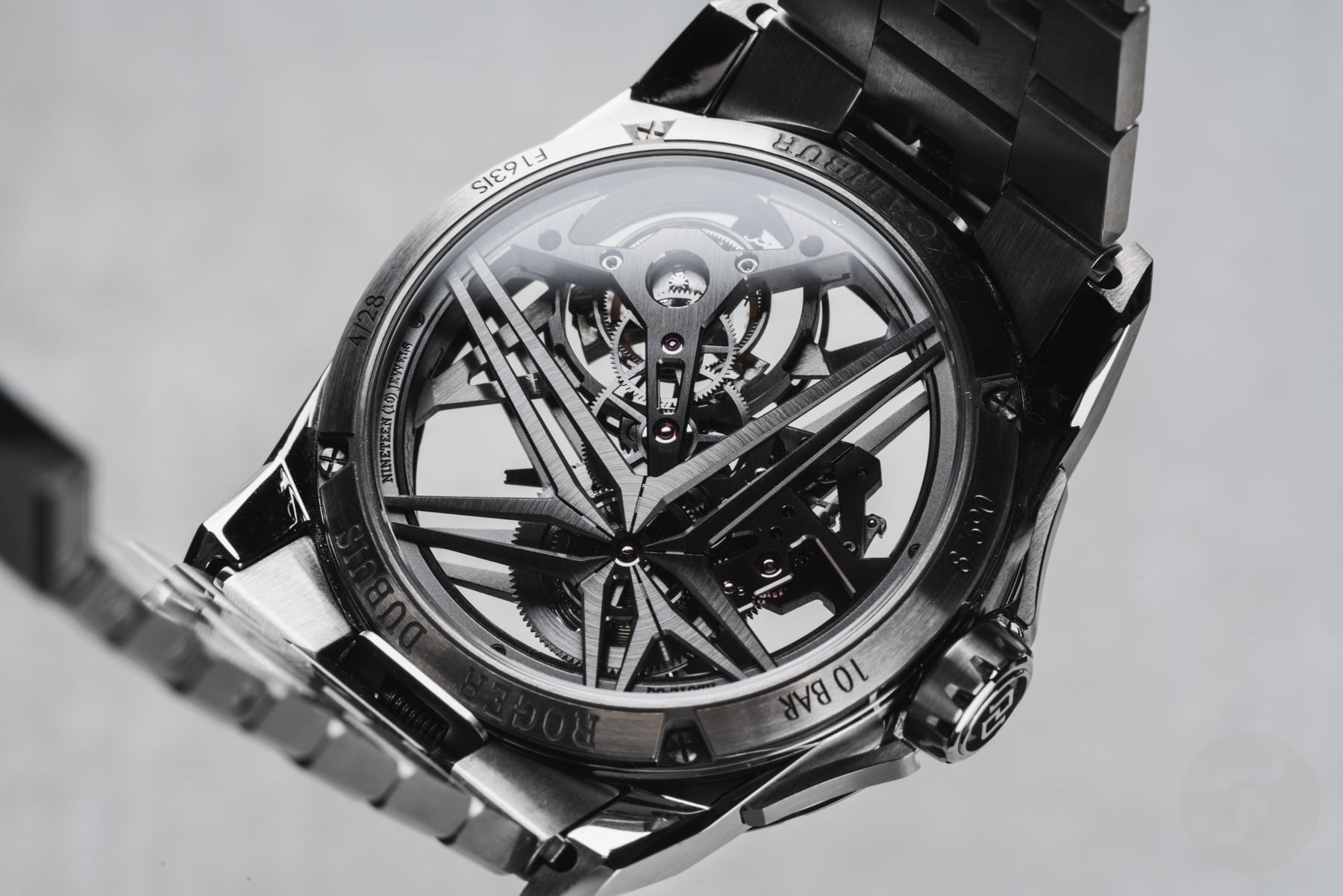
Back of the Roger Dubuis Excalibur Monotourbillon Titanium
With a CNC machine or a laser, the movement will display cleaner, sharper edges than you would see in a traditionally skeletonized movement. Handmade, traditional skeletonized movements often show hand-engraved floral or ornate patterns. Modern ones made with the latest technology and tools feature geometric shapes and straight lines, also sometimes employing materials like titanium.
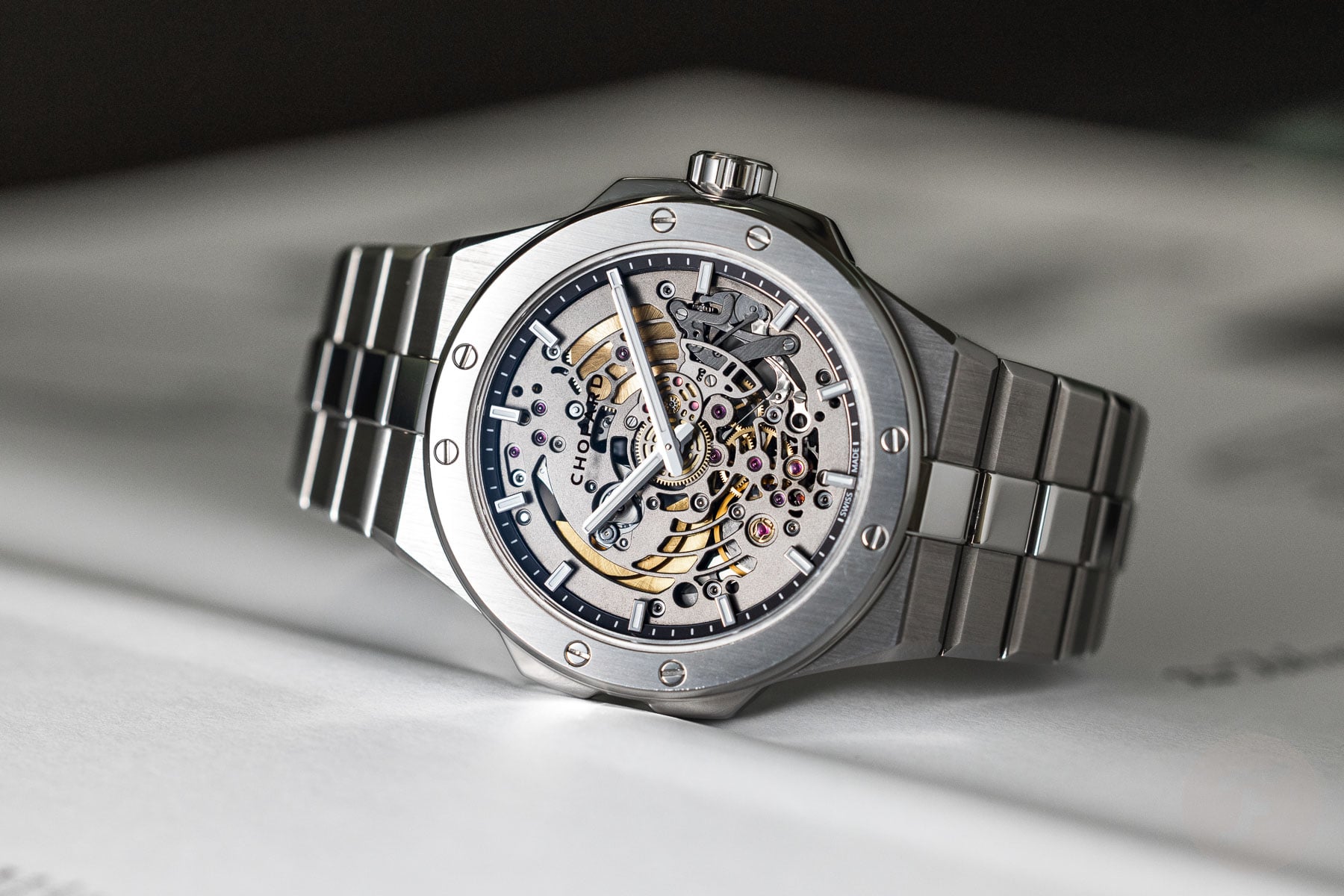
Chopard Alpine Eagle 41 XP TT
The modern skeleton
Straight lines are one example of modern skeletonizing. The Chopard Alpine Eagle 41 XP TT is a lightweight version of the brand’s integrated-bracelet sports watch. The skeletonized version shows the inner workings of the in-house L.U.C 96.17-S caliber on the front and the back. The openworked base plate and bridges ensure you get a clear view of the movement’s mechanics. The look is almost industrial and less artisanal than the aforementioned “Speedy.”
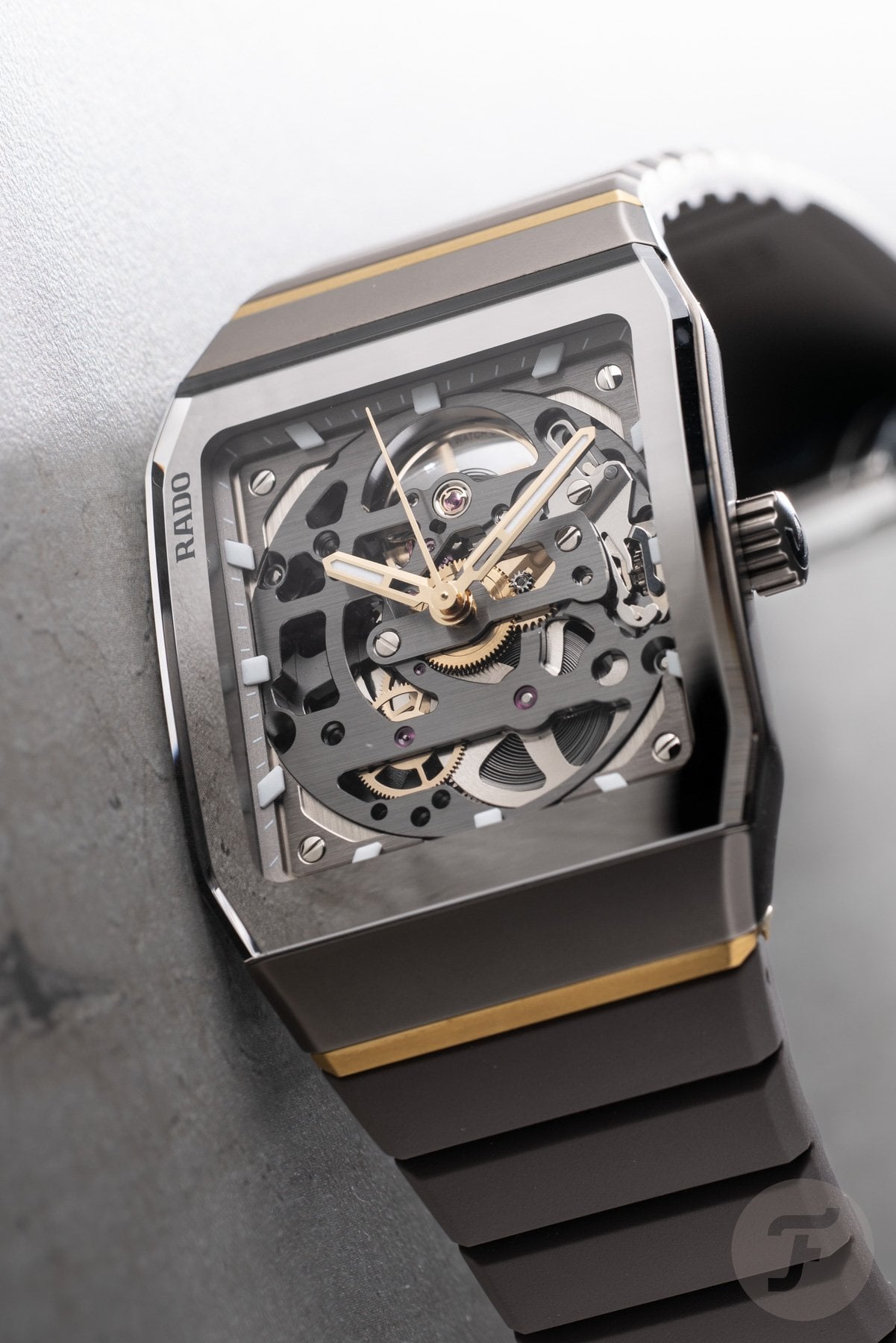
Rado Anatom Automatic Skeleton
While the Chopard Alpine Eagle 41 XP TT costs CHF 22,500, the Rado Anatom Automatic Skeleton shows that modern technology helps bring skeletonized watches within reach of a larger audience. The €4,500 Rado displays the caliber R808, showing gray bridges, brushed anthracite-coated parts, and gold-colored wheels and cogs. The skeletonized and layered construction reveals the hairspring at 12 o’clock. Also on display are the barrel and mainspring occupying the space between 4 and 6 o’clock. If you’re more into round and sporty watches, the €5,550 Norqain Wild One Skeleton 42mm Purple might be the skeletonized timepiece for you.
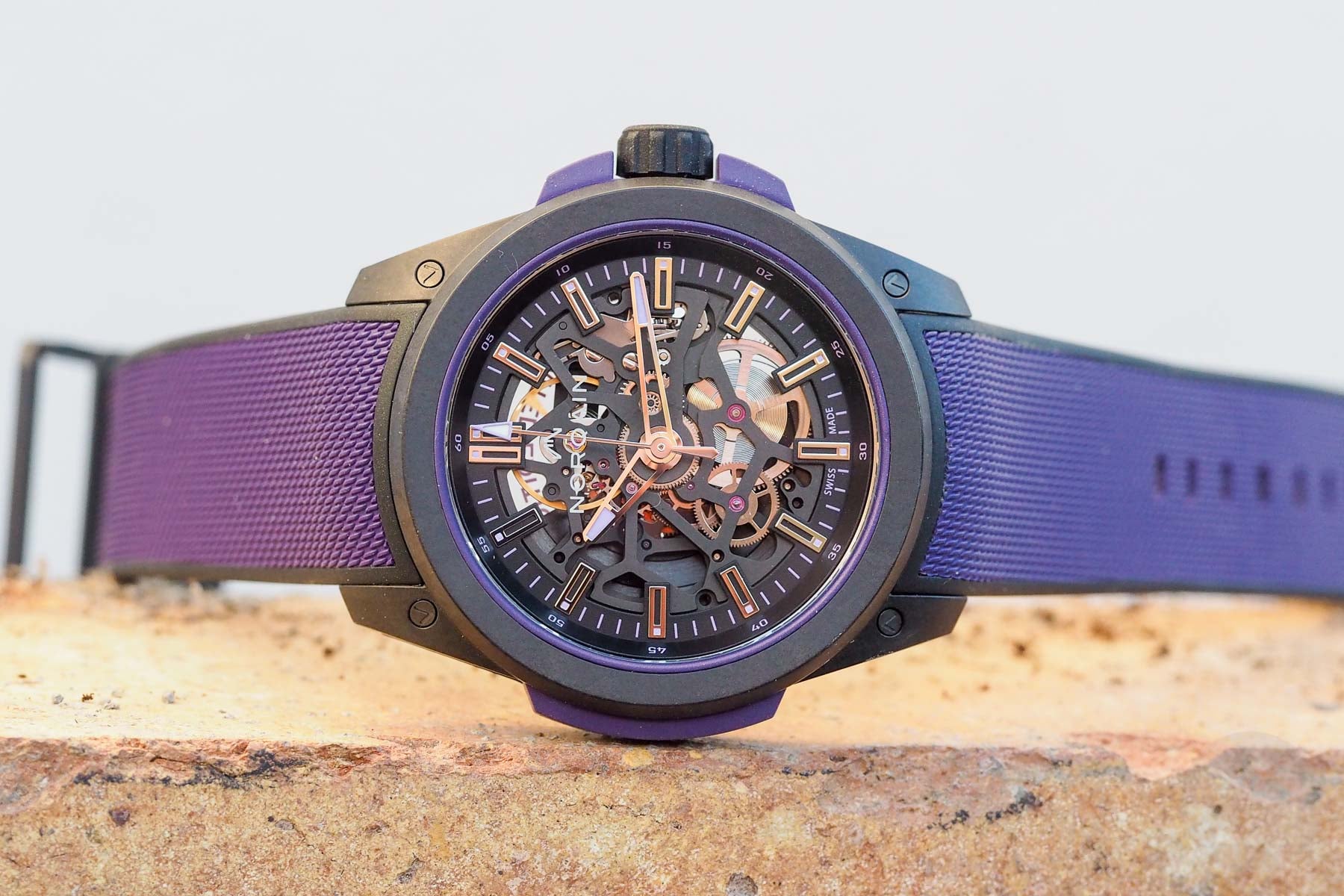
Norqain Wild One Skeleton 42mm Purple
Enjoy the show
Skeletonized watches are not about readability or functionality, but they do have a function. They offer a look into the world of watchmaking by revealing the “secret” at its heart — the miniaturized mechanical interactions that allow us to tell time. But that outcome is not the purpose. The purpose of a skeletonized watch is to keep the watchmaking fire burning. Some say it’s the greatest watchmaking show there is. Enjoy it up close on the wrist or from a little further away as a fan and connoisseur. Just remember: skeletonized is always openworked, but openworked isn’t always skeletonized. Are you reading this, Audemars Piguet?
P.S. The Royal Oak Selfwinding Perpetual Calendar Openworked in titanium and BMG is my favorite skeletonized AP.