The Other Seiko 6105 “Willard” Story

Most people who know the Seiko 6105 know it as the “Captain Willard,” nicknamed for the character Martin Sheen played in Apocalypse Now. That well-told story is worth telling indeed. But there is a second story featuring the same watch, and it has nothing to do with Hollywood. It belongs to a Hawaiian lifeguard and big-wave surfer named Eddie Aikau.
Aikau’s connection to the 6105 lives mostly in old photographs and community memory rather than official brand archives. It is worth being upfront about that. Several surviving photographs appear to show Aikau wearing a Seiko dive watch consistent with the 6105 family (specifically the 6105-8110), but no contemporary factory sales record definitively confirms the precise reference. Nevertheless, the photographic evidence is compelling, and the man behind it is remarkable enough that the watch is almost a footnote to his actual story. Understanding who Aikau was makes it obvious why a simple, durable steel dive watch mattered to him at all.
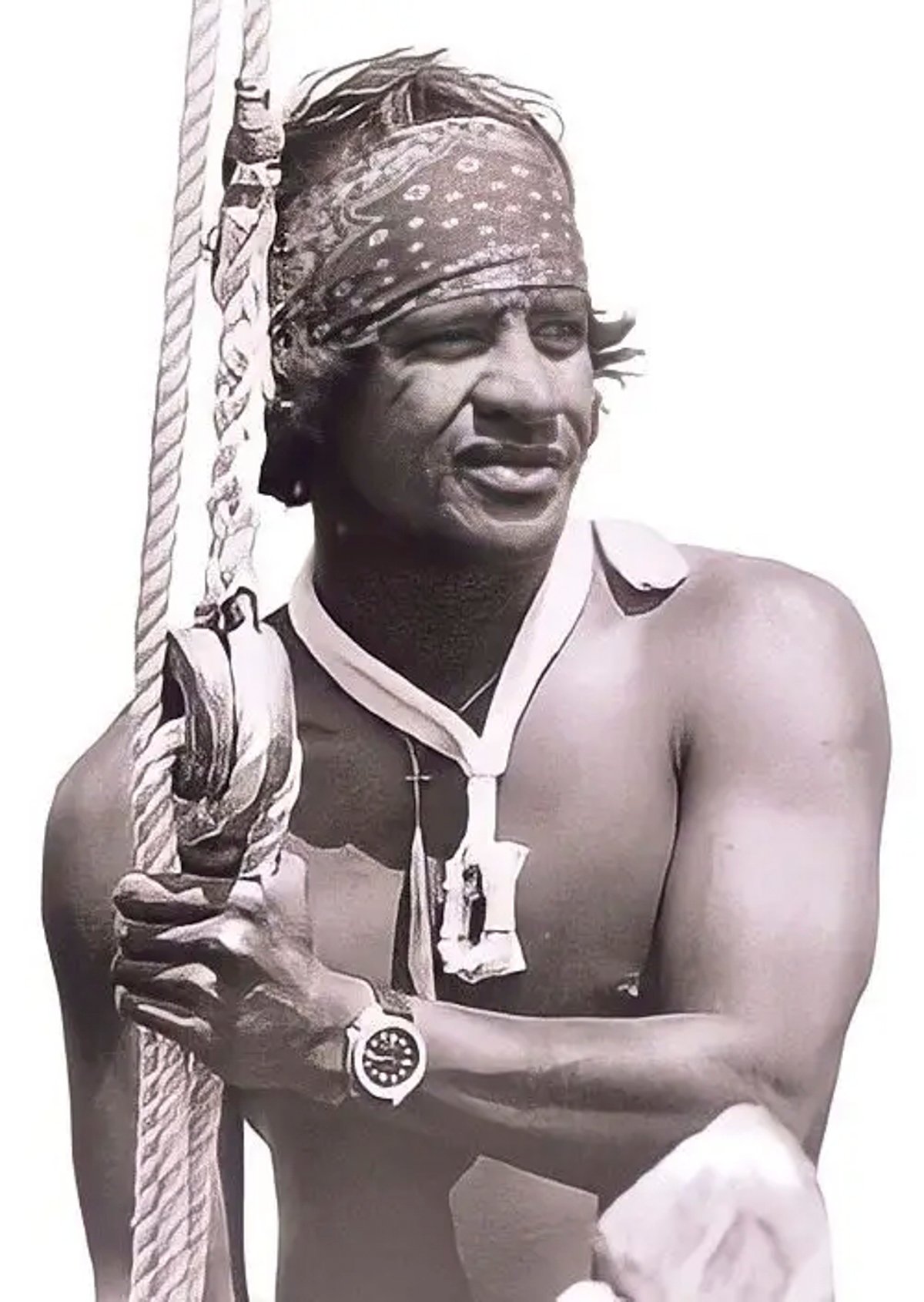
A Seiko dive watch clearly visible on Aikau’s wrist — Image: Wikimedia Commons
Who Eddie Aikau actually was
Aikau grew up surfing the break near Kahului on Maui before his family relocated to Oahu in 1959. Settling in Pauoa Valley, he taught himself to handle some of the world’s most dangerous waves on the North Shore. At age 16, he left school to work the night shift at the Dole pineapple cannery, a physically demanding job that provided the steady paycheck he needed to buy his first custom surfboard.
In 1968, the City and County of Honolulu hired him as the first official full-time lifeguard specifically assigned to cover Waimea Bay, a stretch of coastline notorious for winter swells exceeding 30 feet. Over the years that followed, Aikau famously made more than 500 rescues, and not a single life was lost on his watch at Waimea.
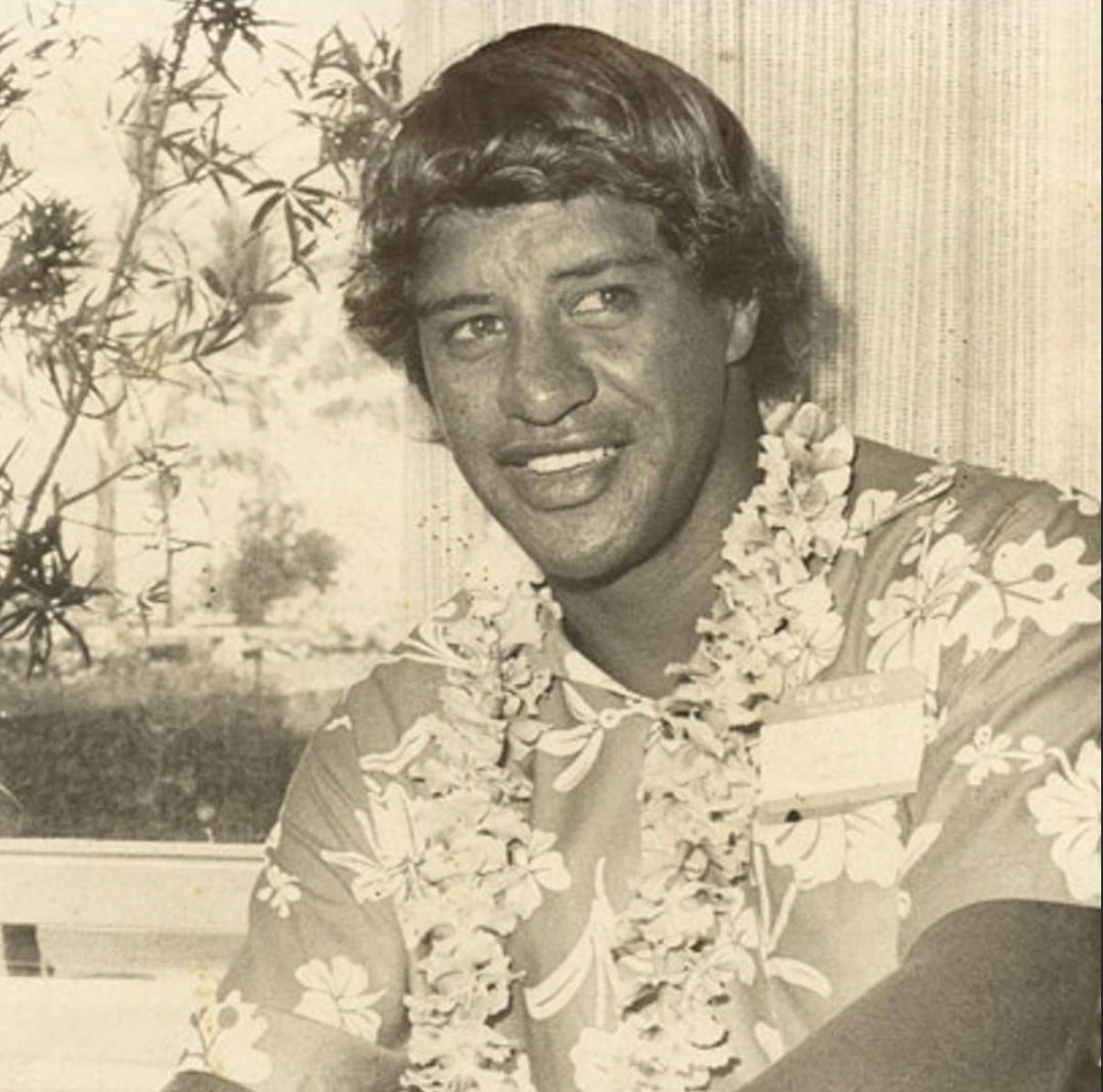
Image: IMDb
An accomplished surfing legend
Aikau earned the title of Hawaii’s Lifeguard of the Year in 1971 and went on to win the prestigious Duke Kahanamoku Invitational Surfing Championship in 1977, cementing his reputation as one of the finest big-wave watermen of his generation.
None of that made him reckless for its own sake. Those who worked alongside him described a waterman who understood the ocean deeply enough to venture where almost nobody else dared, precisely because he respected its danger rather than ignoring it. That combination of skill, calm, and selflessness became the foundation of the phrase “Eddie Would Go,” an expression that outlived him and continues to define courage and judgment in big-wave surfing today.
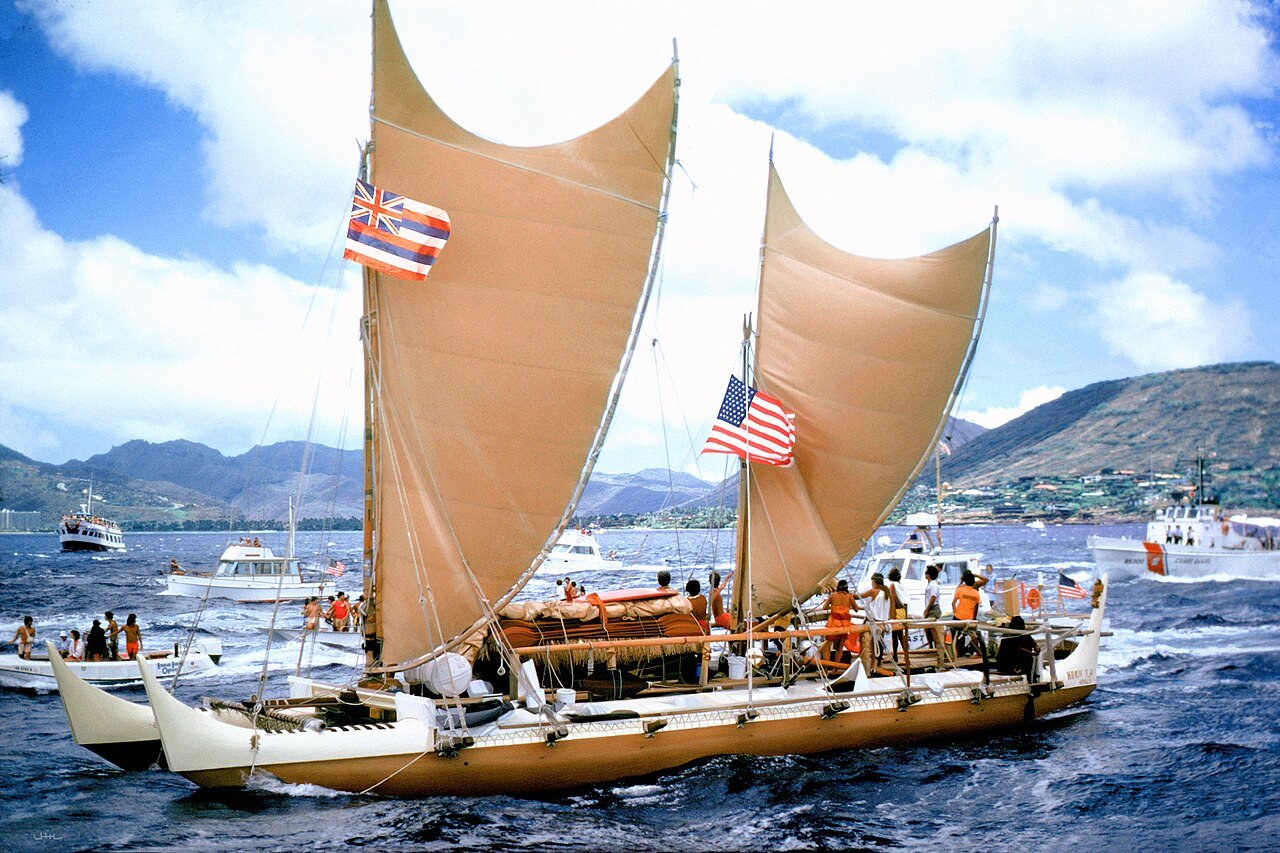
Hōkūleʻa arriving in Honolulu from Tahiti in 1976 — Image: Wikimedia Commons
An ill-fated journey and an untimely end for this surfing legend
In 1978, the Polynesian Voyaging Society was seeking volunteers for a 30-day, 4,000km journey to re-enact the ancient route of Polynesian migration between the Hawaiian and Tahitian island chains. This was no small feat, as the Pacific Ocean is vast and subject to some of the world’s most terrible storms. But this did not dissuade Aikau, who joined the voyage as a crew member. So, on March 17th, 1978, the double-hulled voyaging canoe Hōkūleʻa left the Hawaiian Islands.
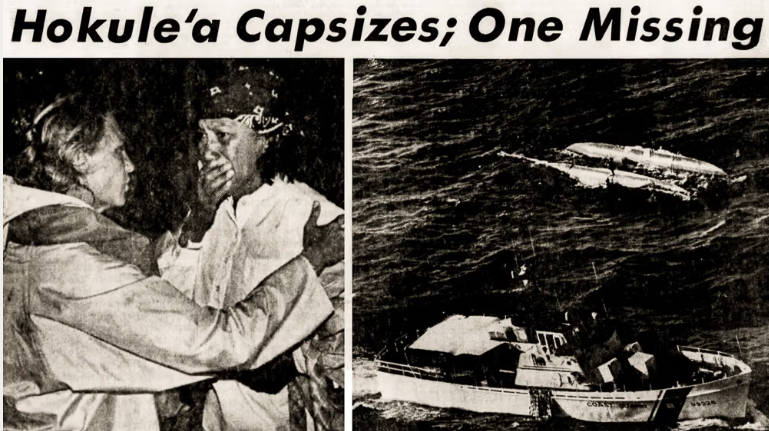
Image: Encyclopedia of Surfing
Unfortunately, a leak in one of its hulls began to cause the ship to sink, and it capsized about 19 km south of the island of Molokaʻi. In an attempt to get help, Aikau paddled toward Lānaʻi on his surfboard, while the rest of the crew stayed on the capsized vessel. He had removed his life jacket, as it was hindering his paddling on the surfboard. The ensuing search for Aikau was the largest air-sea search in Hawaiian history, but his body was never found. The US Coast Guard later rescued the rest of the crew.
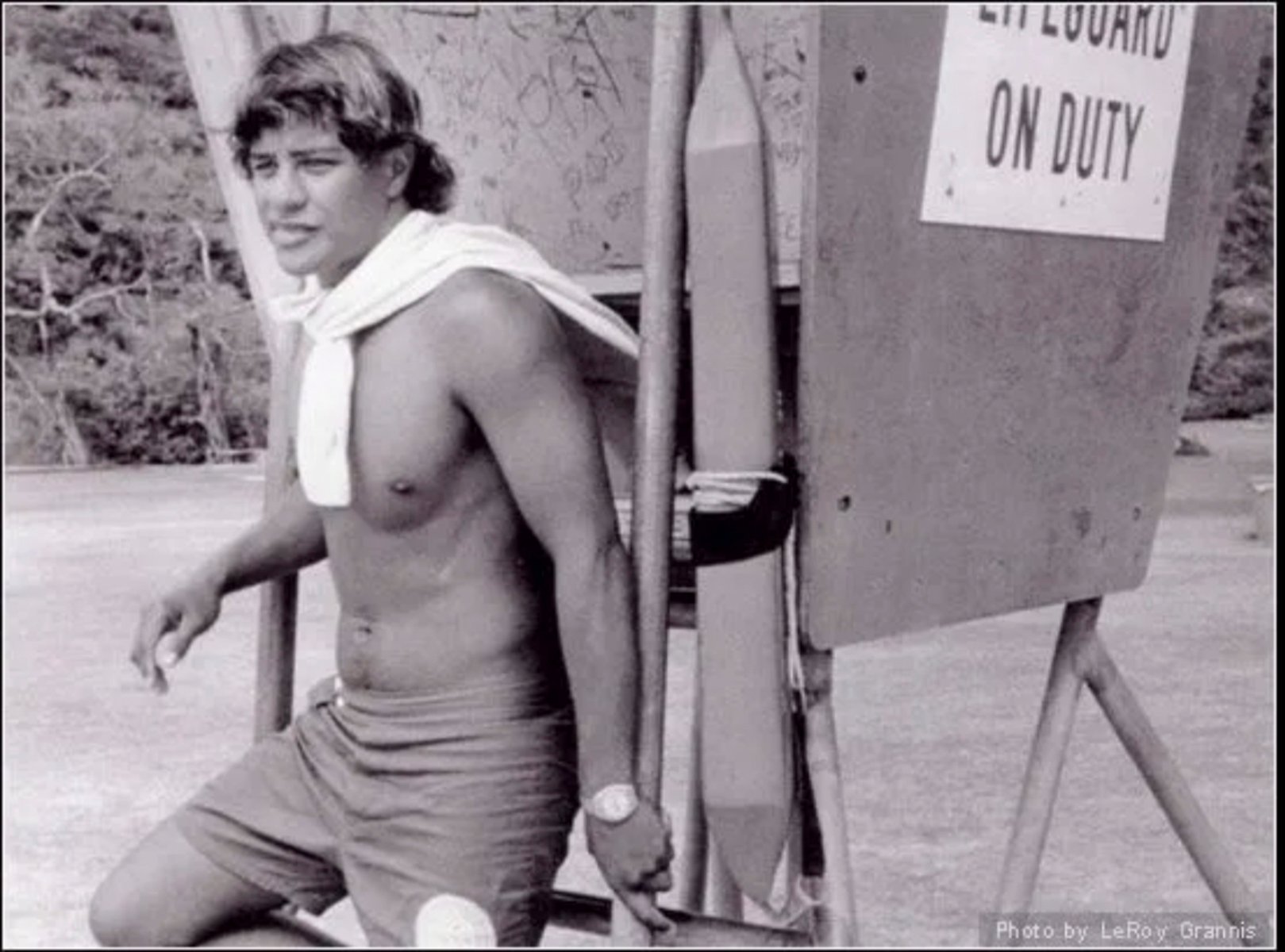
Image: LeRoy Grannis
The watch on his wrist
Watch enthusiasts have since analyzed several archival photographs from the 1970s that show Aikau wearing a robust Seiko cushion-case dive watch consistent with the 6105 family (the same design lineage collectors would later dub the “Willard”). The watch appears in photographs taken around the period leading up to his final 1978 voyage on the Hokuleʻa.
Other photographs capture him wearing a lighter-dial timepiece that no one has been able to identify conclusively. Archival research into period surf magazines reveals that other Hawaiian surfers and lifeguards of the era also favored Seiko divers for their affordable reliability in heavy ocean conditions.
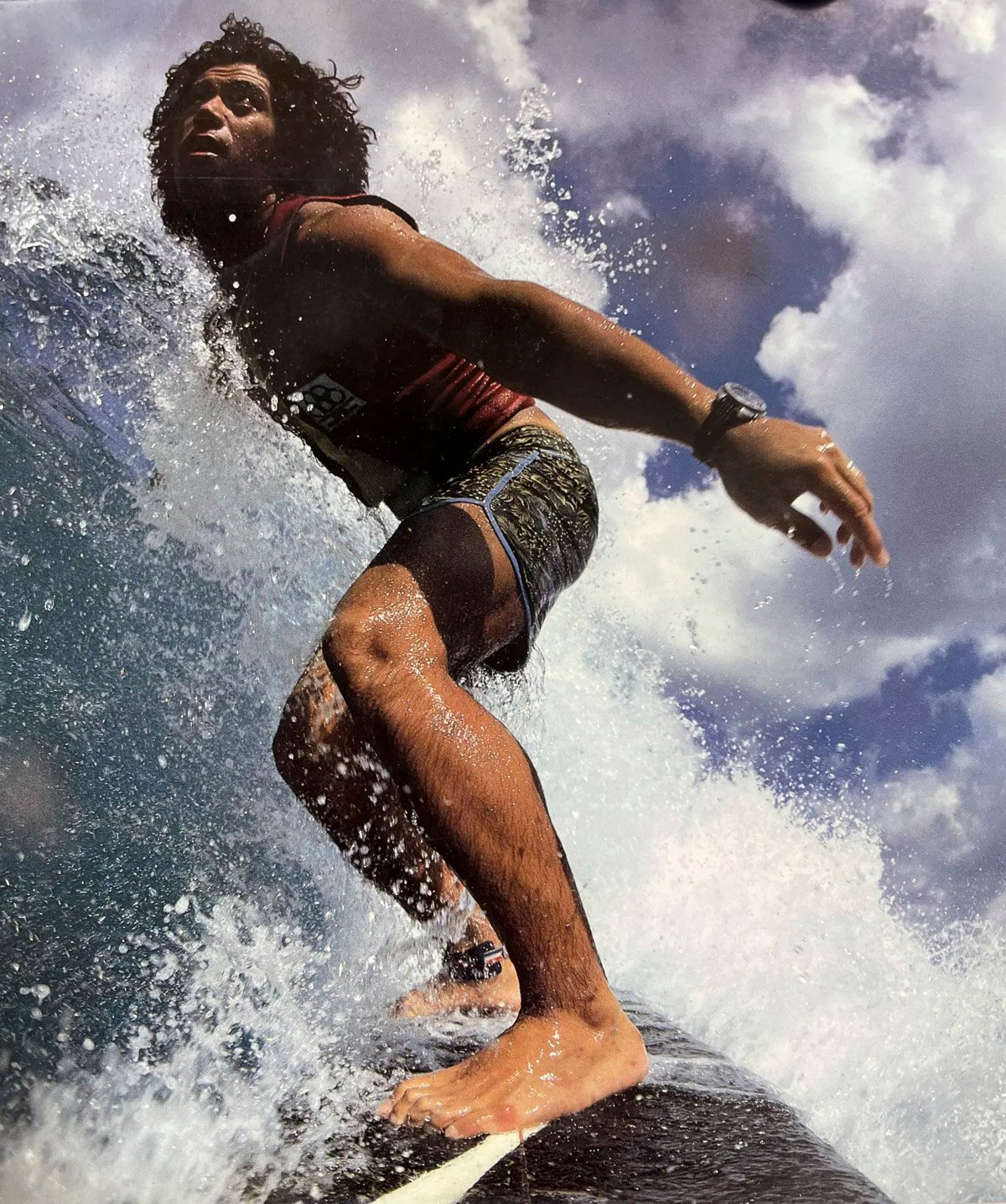
A surfer (name unknown) of the era photographed wearing a cushion-case Seiko dive watch — Image: Surfer Magazine
The Seiko 6105 built for adventurers
Seiko dive watches were commonly seen on surfers of the period. In another photo from a contemporary surf magazine, we can see an unidentified surfer wearing a Seiko dive watch clearly visible on his wrist. Seiko’s line of dive watches offered surfers more affordable but incredibly robust options. This shouldn’t come as much of a surprise, considering that divers, explorers, and adventurers around the world were often photographed wearing Seiko dive watches.
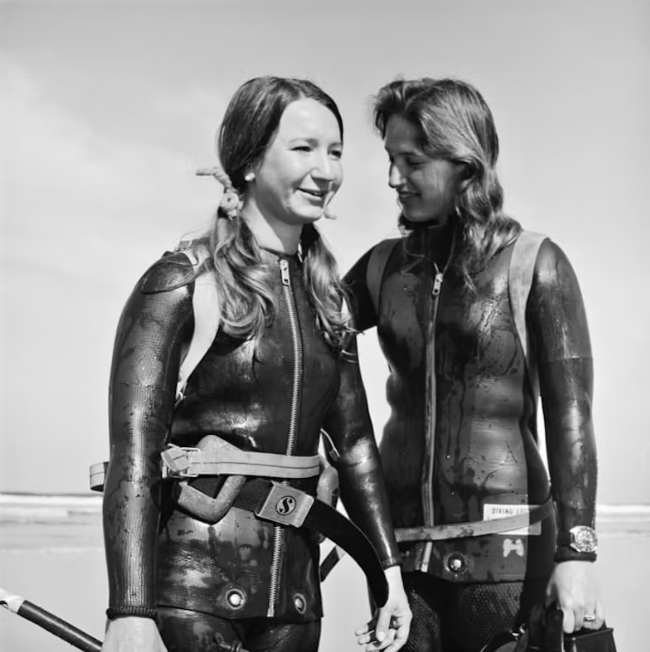
Ann Hartline can be seen wearing a Seiko 6105-8000 — Image: Scripps Institution of Oceanography
In a 2021 article, then-Hodinkee journalist Cole Pennington, who now works with Tudor, noted that archival photos from the Scripps Institution of Oceanography showcased one of the all-female team of Aquanauts in the Tektite II program wearing one of those Seiko dive watches. In 1970, Alina Szmant and Ann Hartline were two members of the program. One archival photo shows Ann Hartline wearing a Seiko 6105-8000 dive watch, the slimmer sibling to the 6105-8010.
Concluding thoughts
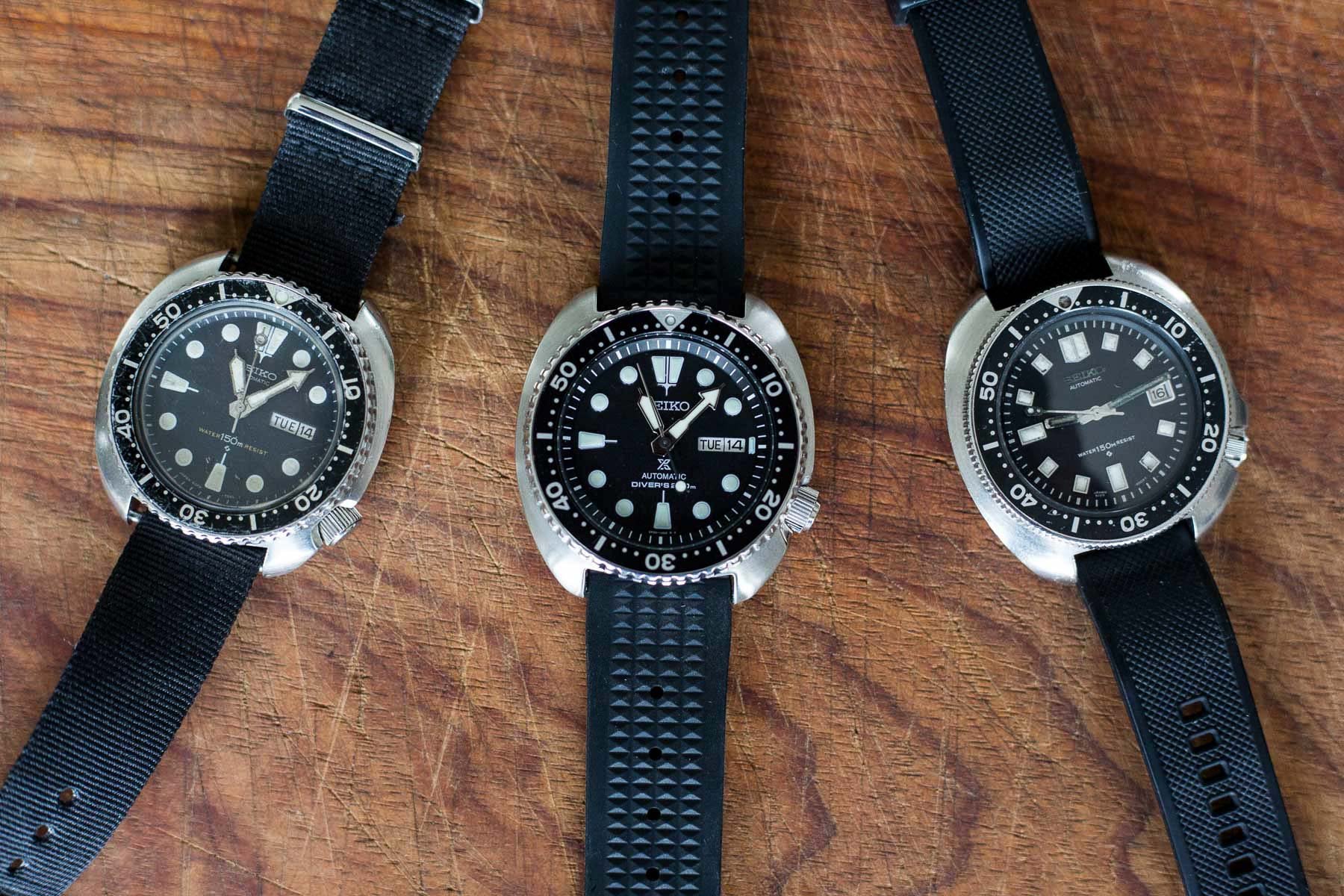
Aikau met a tragic end, but his memory lives on with a foundation in his name. The legacy of the Seiko 6105 dive family also lives on. Thankfully, the spirit of the original continues with releases like the Seiko Turtle SRPE93, and the (now-discontinued) SPB151. However, I do wistfully think about the concept of a true reissue from Seiko, something that would share the approximate price and technical specifications of the Turtle but retain more of the design language of the original 6105. While the limited-edition (and long-sold-out) Seiko SLA033 comes very close to the original aesthetics of the 6105, the cost of entry and limited production make it a little unobtainable for us normal Seiko enthusiasts. And as great as the SPB series is, I feel an even more affordable option would more closely honor the spirit of the original.
Header image: Surfer Today