Back In Black: Hands-On With Two New Seiko Astron GPS Solar Dual-Time Chronograph 2026 Limited Editions

What is rarer, a shooting star or two Seiko Astron GPS Solar Dual-Time Chronograph 2026 Limited Editions? That’s an easy question, right? Well, I hate to break it to you, but maybe not. Shooting stars or meteors aren’t rare at all; roughly 25 million visible meteors enter Earth’s atmosphere every day. Unfortunately, artificial lights obscure up to 80% of the night sky, making it hard to spot their faint streaks of light. Also, a typical shooting star lasts only a fraction of a second, making it easy to miss. If you’re looking for limited-edition Astrons, all you have to do is check Fratello daily, and you won’t miss the drop of watches that are way rarer than a shooting star. Here are two Astrons in black titanium, one with a burgundy crystal-like dial and the other with a green one, both limited to 1,500 pieces worldwide.
Both the burgundy-dial HAB010 and the green-dial HAB009 feature the revised case design that Seiko recently introduced. The 43.4 × 50 × 12.4mm case is crafted from black titanium with a super-hard coating on all four sides. This case looks sharper and more refined than ever. The two-piece octagonal bezel’s design adds visual depth, even in black titanium. That must be thanks to the faceted sides that catch the light and create a dynamic presence.
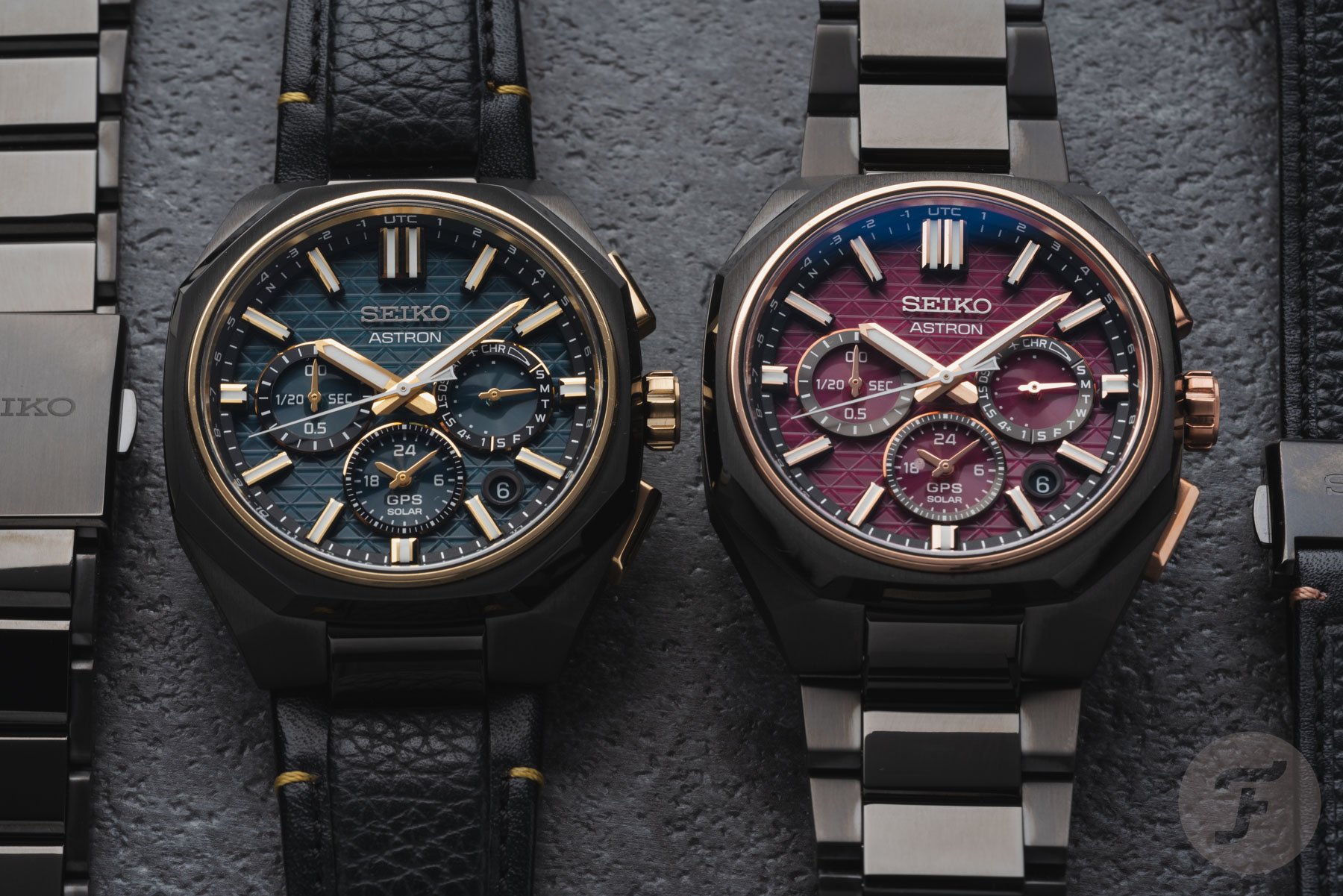
Two Seiko Astron GPS Solar Dual-Time Chronograph 2026 Limited Editions hide crystals within deep-black rock
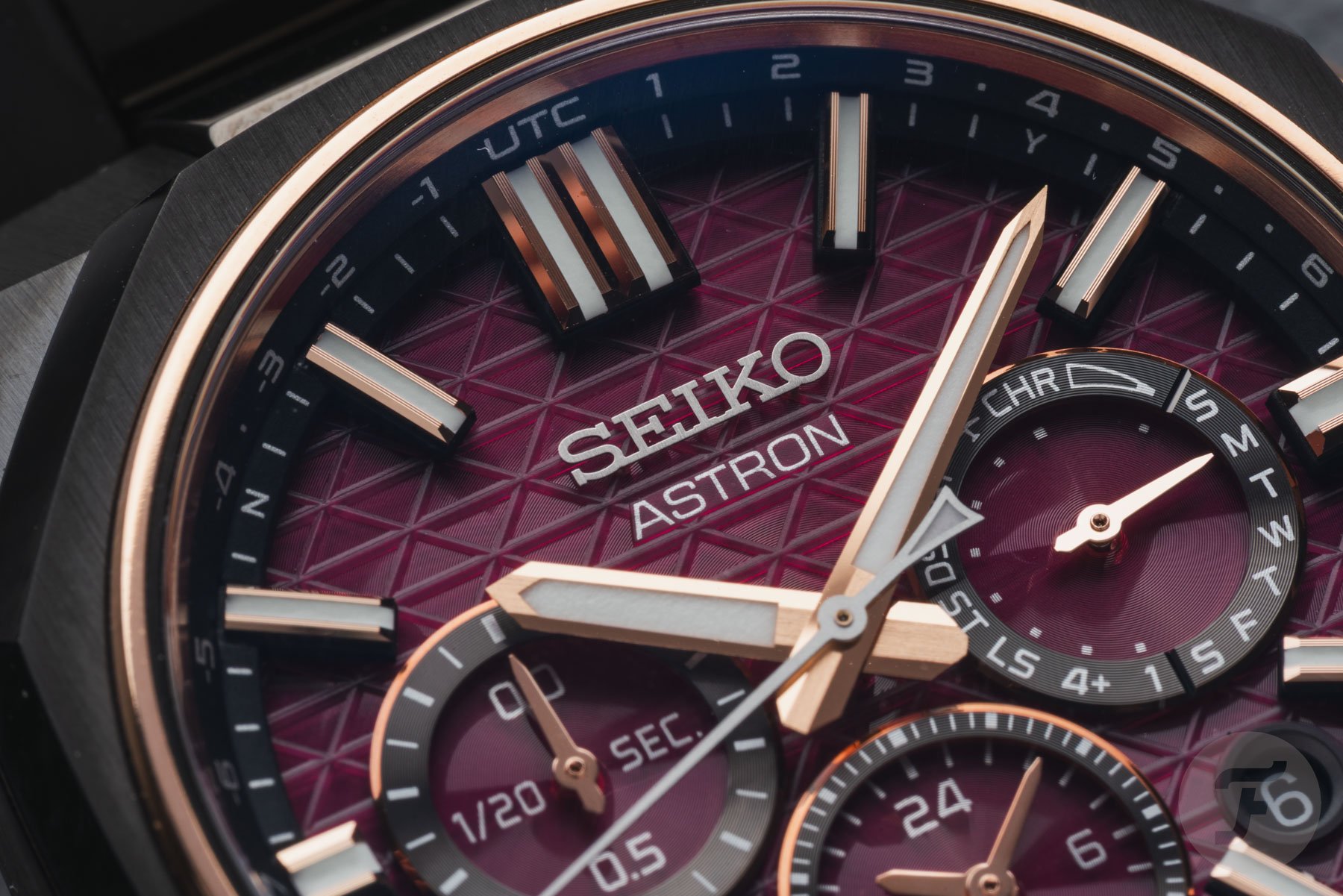
The rock is the case, and the dial is the crystal. The idea behind the two 2026 limited-edition Astrons is fairly straightforward: just imagine the brilliance of a crystal hidden deep within a piece of jet-black rock. Crystal-inspired accents in yellow or pink gold tones, depending on the version, add warmth to the watches’ otherwise dark color scheme. Their dials also feature an angled flange with a minute track, applied steel hour markers, and a UTC-scale rehaut. The hour markers have been redesigned and now feature a more generous application of LumiBrite.
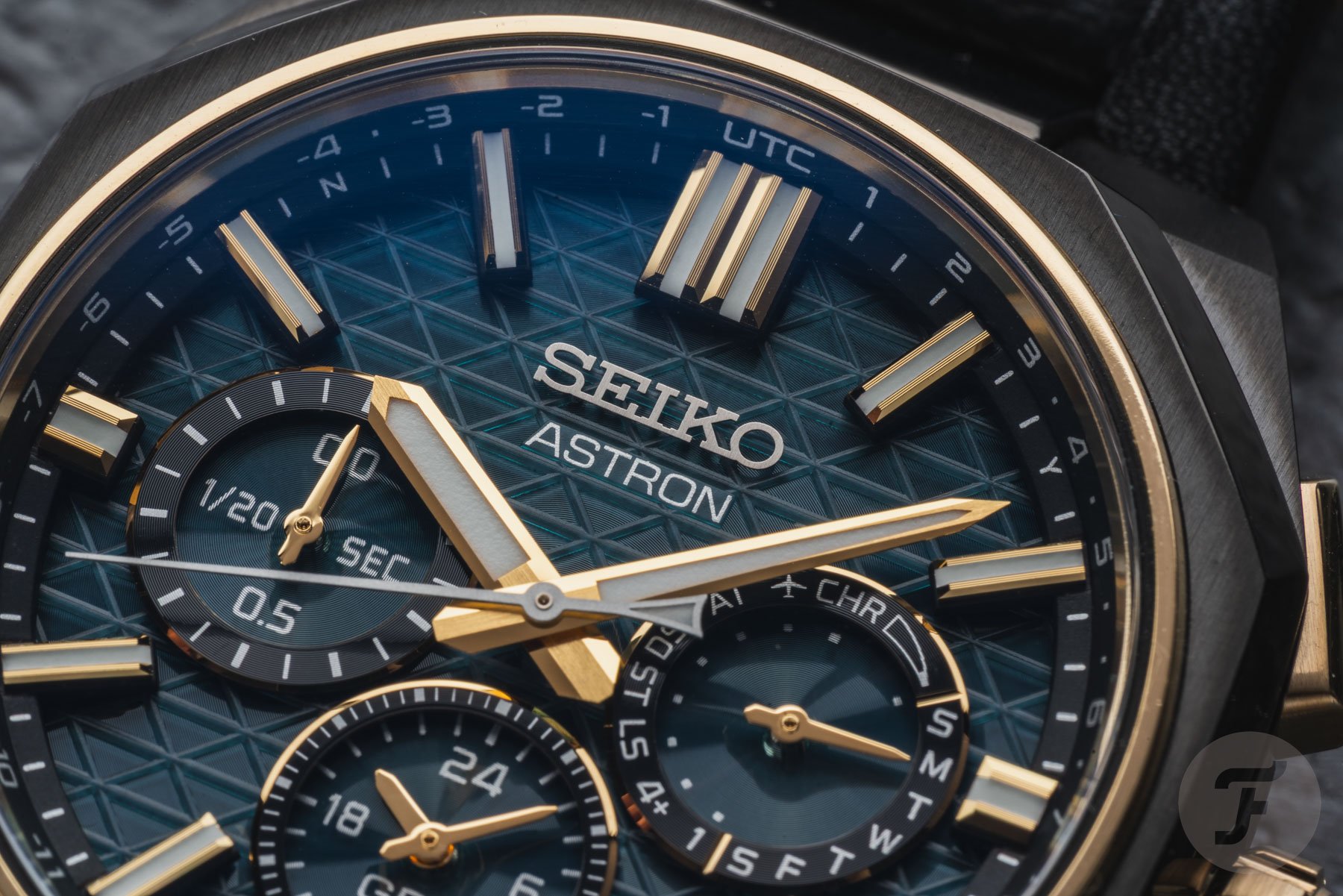
Inside the case, Seiko put the new in-house caliber 5X63, which will replace the outgoing but still-in-use 5X83. One of the perks of this light-powered, satellite-connected movement is the harmonious, easy-to-read 3-6-9 layout instead of the rather unconventional 6-9-12 sub-dial arrangement.
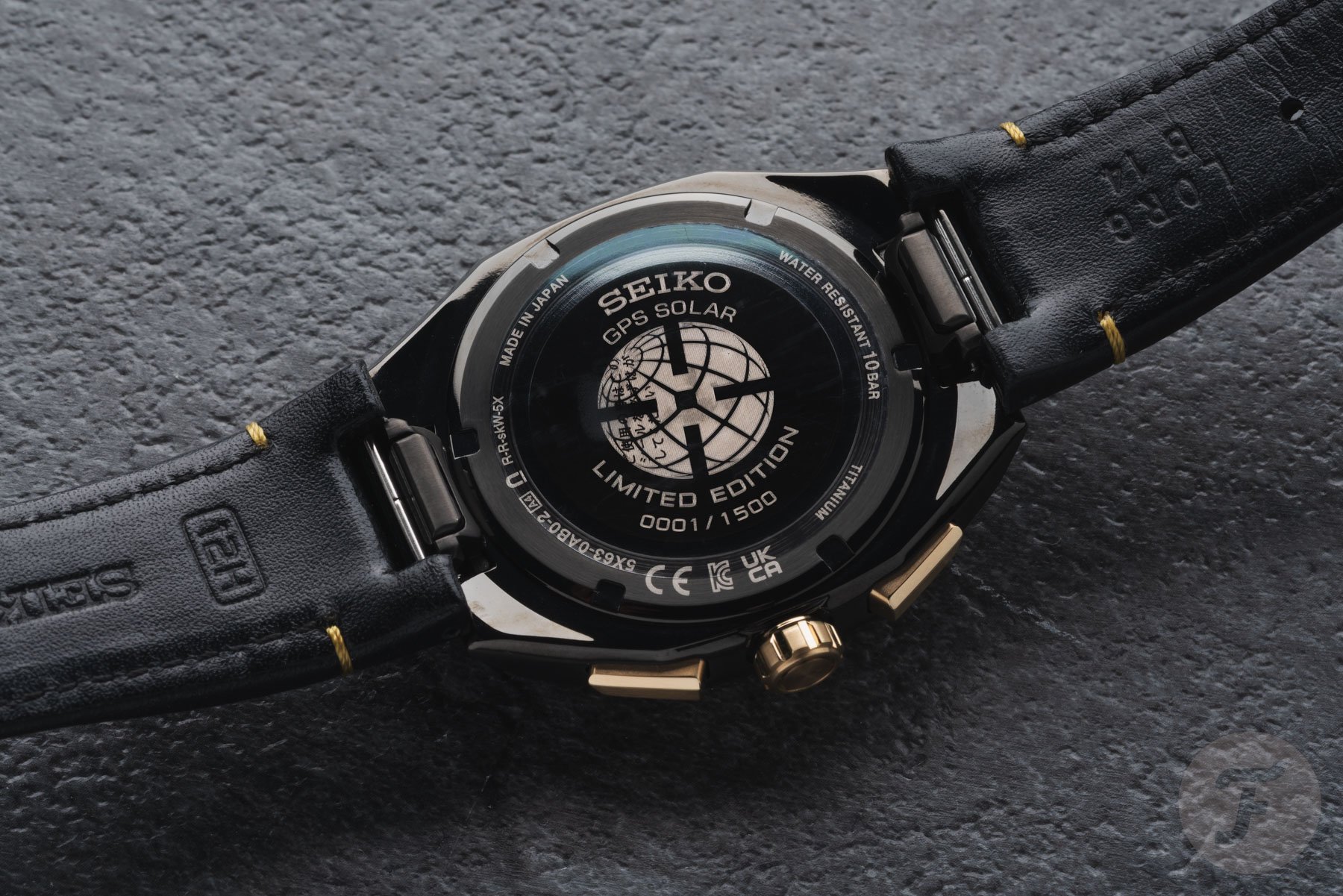
The movement features automatic time adjustment when the wearer travels through different time zones. Additionally, if your jet-black Astron loses signal for automatic time adjustment, it will display that on the dial. Lastly, the movement is accurate to ±15 seconds per month with no signal.
Bracelet and/or strap
Titanium bracelets can be a bit rattly, but Seiko constructed one that isn’t. It feels sturdy yet lightweight, and its mirror-polished center links provide a noticeable contrast with the darker case and outer links. Though a small detail, this gives the large and prominently angular watch a more dressed-up character without turning it into shiny jewelry. A nice touch is the folding clasp with Seiko’s Easy Adjust system, which works really well.
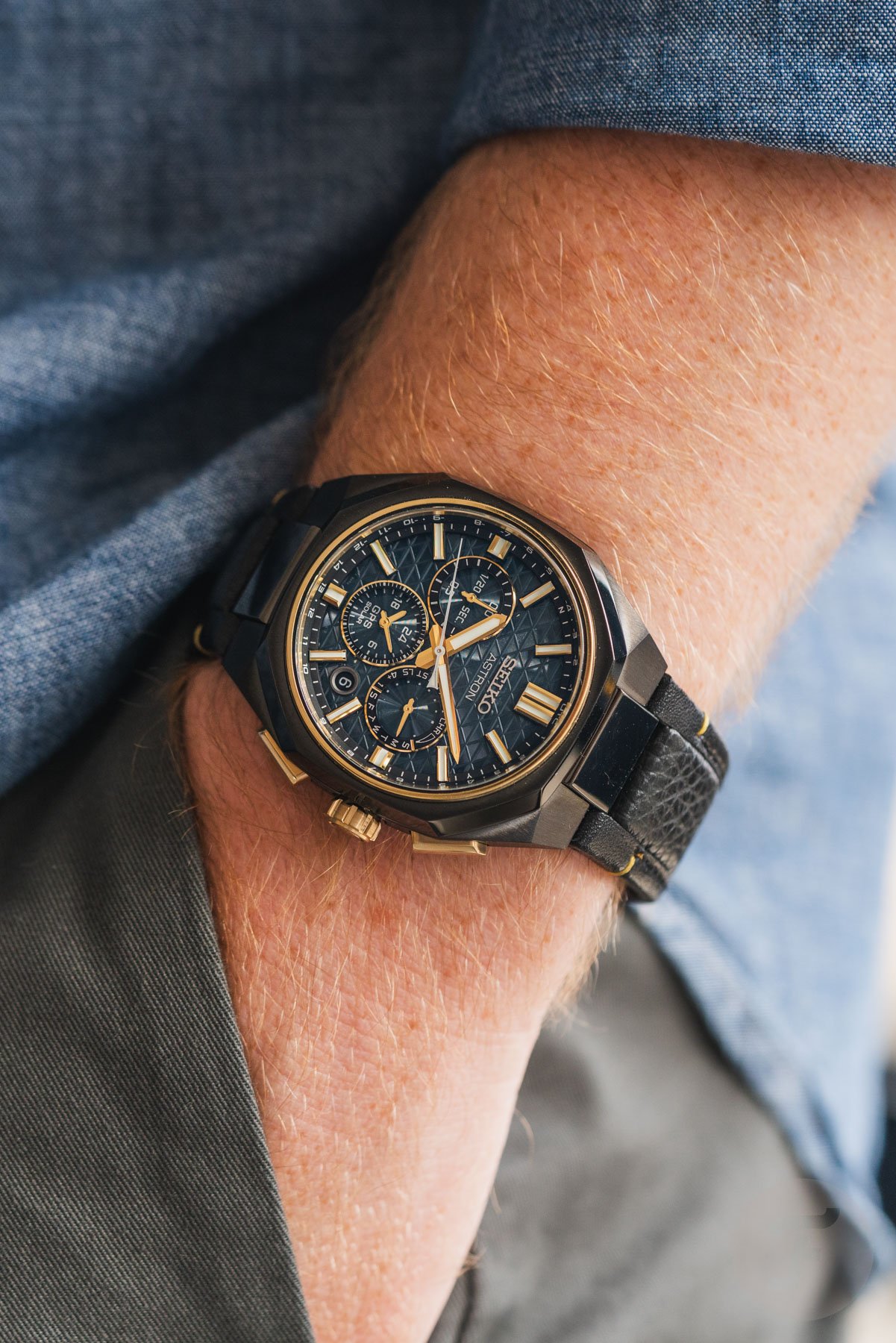
If the bracelet’s aesthetic is too much or you want to mix things up a bit, both watches also come with an extra Leather Working Group-certified leather strap. LWG, of which Seiko is a member, is a non-profit organization dedicated to responsible and sustainable leather production. Thanks to the quick-change system, switching from bracelet to strap requires little more than pressing a button. It is a practical touch that makes sense here; sometimes the watch benefits from a little less shine.
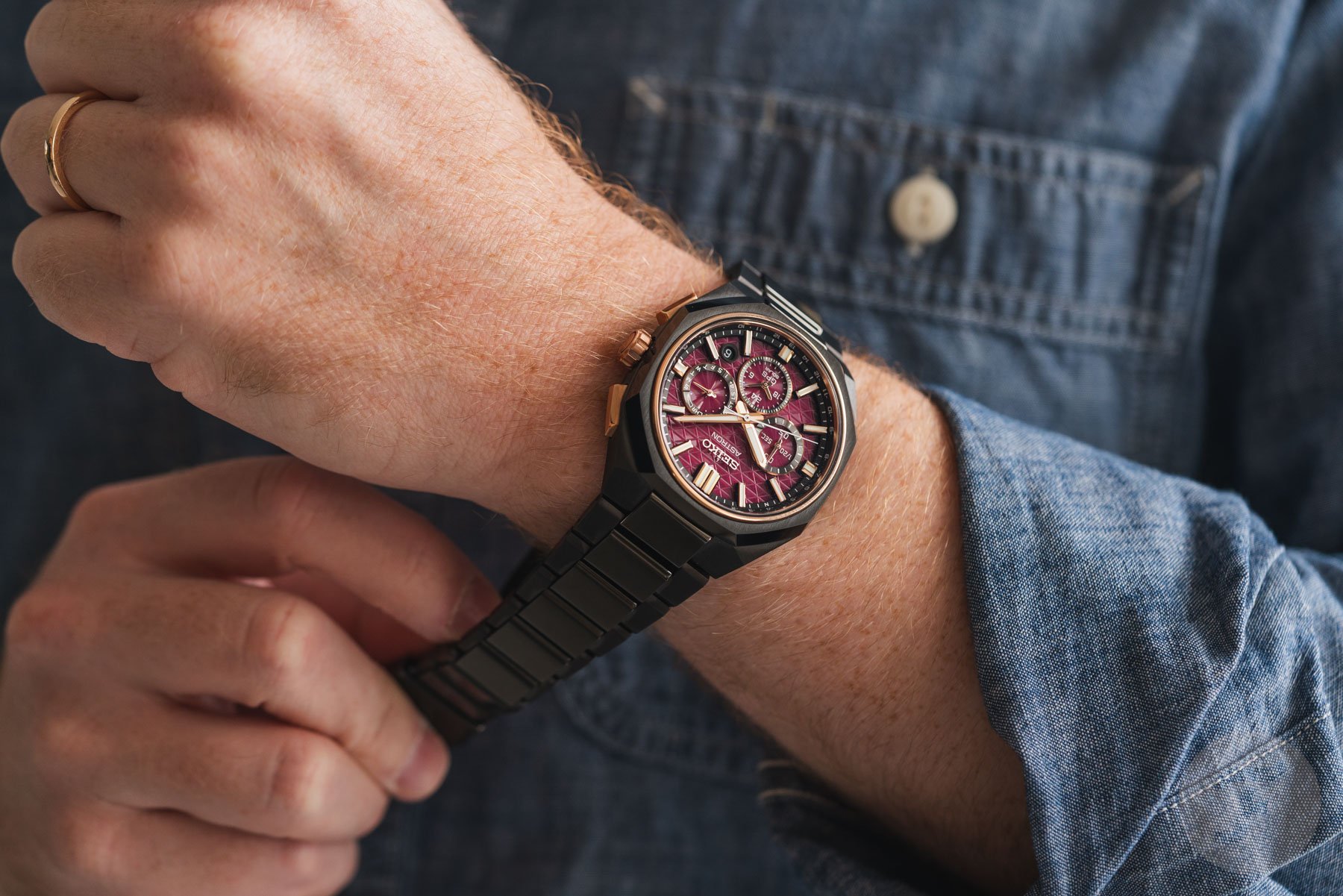
Wearing the jet-black Astrons
Are you surprised when I say that these 43.4 × 50 × 12.4mm Astrons sit really well on the wrist and that their lightweight titanium construction makes them super easy to wear? I’m not, but maybe that’s because I can wear a 47mm first-generation Astron without breaking a sweat. Still, these new Astrons have proportions that work and a well-balanced shape, making them very comfortable even if you’re not blessed/cursed with a monster-size wrist. The intuitive new dial design, with its updated layout and reshuffled display of functions, is another big plus.
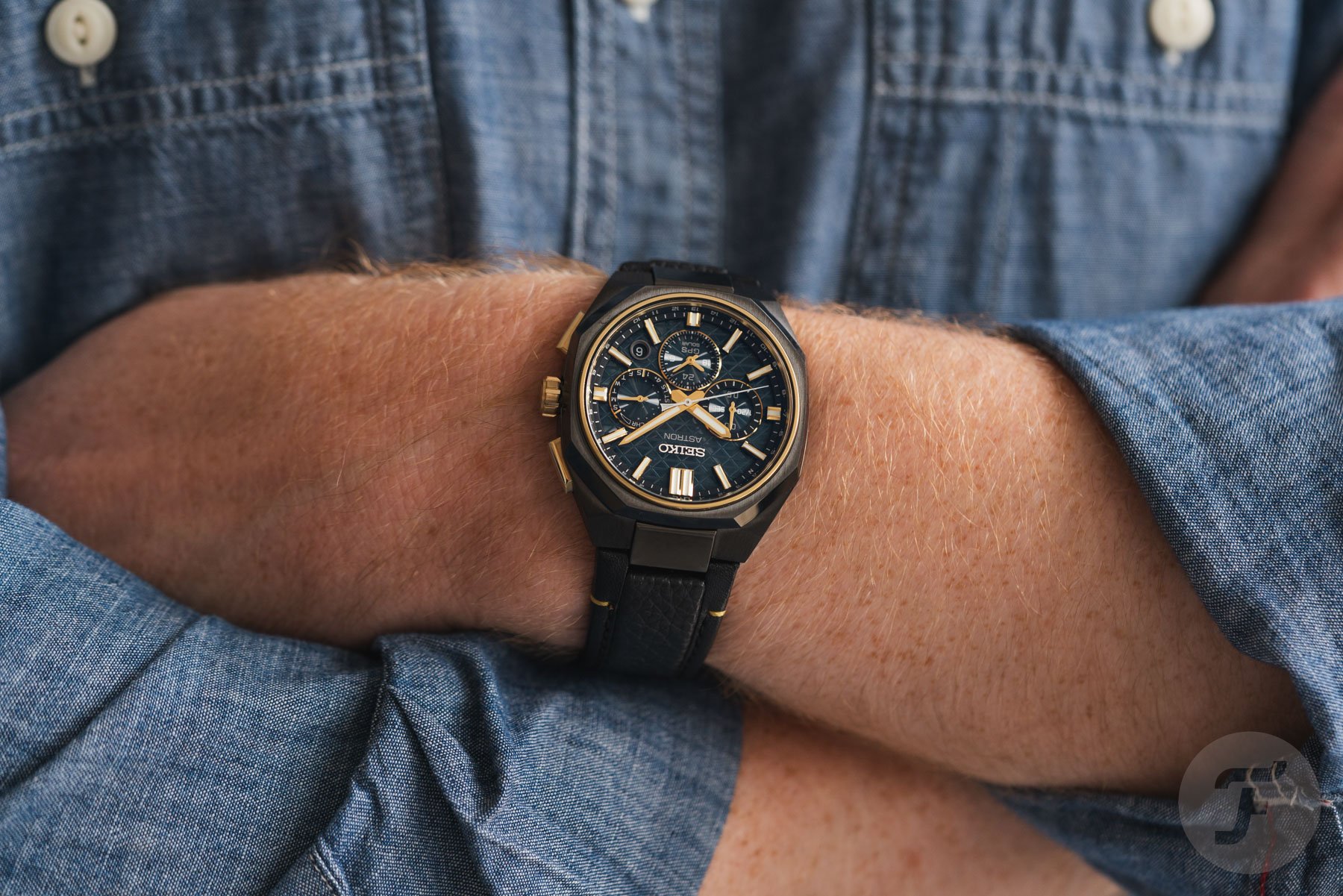
The yellow-gold-colored details pair well with the green dial, but I think I could have done without the crown and pushers in that color. The same goes for the burgundy version and its rose-gold-colored touches, but that’s very personal.


The red-dial Seiko Astron GPS Solar Dual-Time Chronograph 2026 Limited Edition HAB010 and the green-dial HAB009 each cost €3,200. What do you think of them? Please share your opinions in the comments below.