Why I Bought A Third-Generation Omega Seamaster Planet Ocean 600M Over The New Version

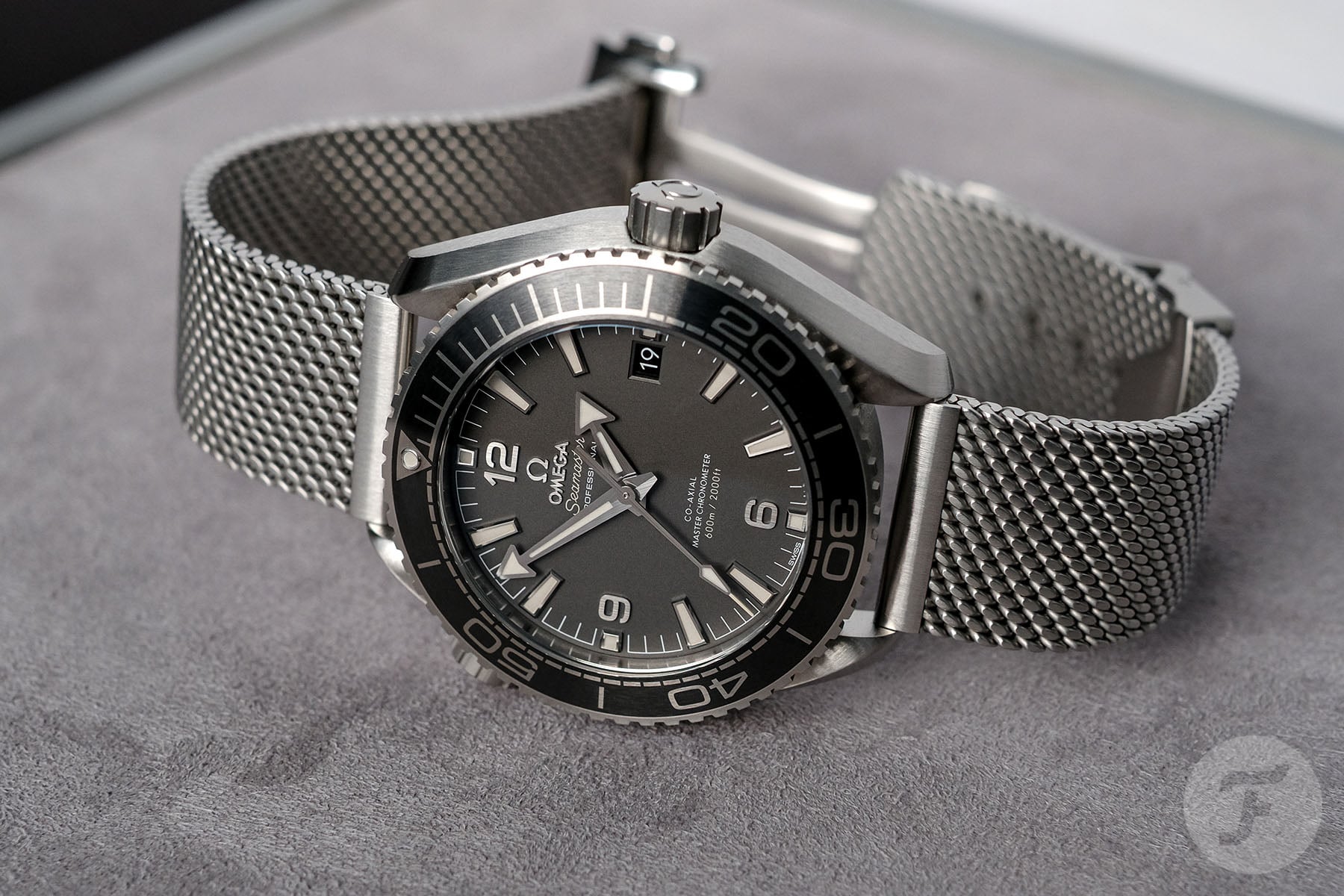
Recently, I bought an Omega Seamaster Planet Ocean 600M with a 43.5mm all-brushed steel case and a sandblasted gunmetal-gray dial. This purchase came after the launch of the fully revamped Planet Ocean. With the fourth generation’s sharper facets, redesigned bracelet with polished center links, slimmer profile, and importantly, no helium escape valve (HEV) at the 10 o’clock position, this should’ve been my ideal watch. However, I stuck with the third generation, with a chunky 16.16mm case thickness and a secondary crown that serves no purpose beyond deep-sea diving bells. So let’s dive into my reasons why.
Late last year, Omega launched the new-look Planet Ocean in stainless steel to much fanfare. Immediately, the response was polarizing. Many previous Planet Ocean detractors praised the refreshed design and more contemporary aesthetics. Conversely, die-hard Planet Ocean fans were outraged that Omega had stripped the collection of its lineage and changed it too much. I found myself sitting in the middle, someone who had admired the Planet Ocean from afar but never got too serious about picking one up. In fact, when the Planet Ocean Ultra Deep came out in 2022, I was hoping Omega would refresh the 600M version to look more similar to it. In a way, we got that with the new fourth-generation Planet Ocean. Yet, for my taste, I feel Omega went too luxe with its design choices.


Omega Seamaster Planet Ocean 600M Gray Boutique Edition
Omega’s Seamaster Planet Ocean has a lineage that spans over 20 years. It’s the deeper-diving big brother of the Seamaster Diver 300M. Thomas did an excellent write-up on the history and specs of the model range, which you can read here. This article focuses on my thoughts on my Planet Ocean timepiece, but I will also touch on the specs. My chosen watch came out in 2024 as one in a trio of boutique-only Planet Ocean models. This was the swansong of the “HEV-era” steel Planet Ocean, you may say. However, these weren’t the final Planet Ocean editions before the revamp. That accolade belongs to the ceramic Worldtimers unveiled in early 2025, the same year as the overhaul later in November. Actually, these Worldtimers are still in the online catalog alongside the “cookies and cream” Planet Ocean GMT and the ludicrously expensive Dark Grey ceramic GMT with a titanium movement.
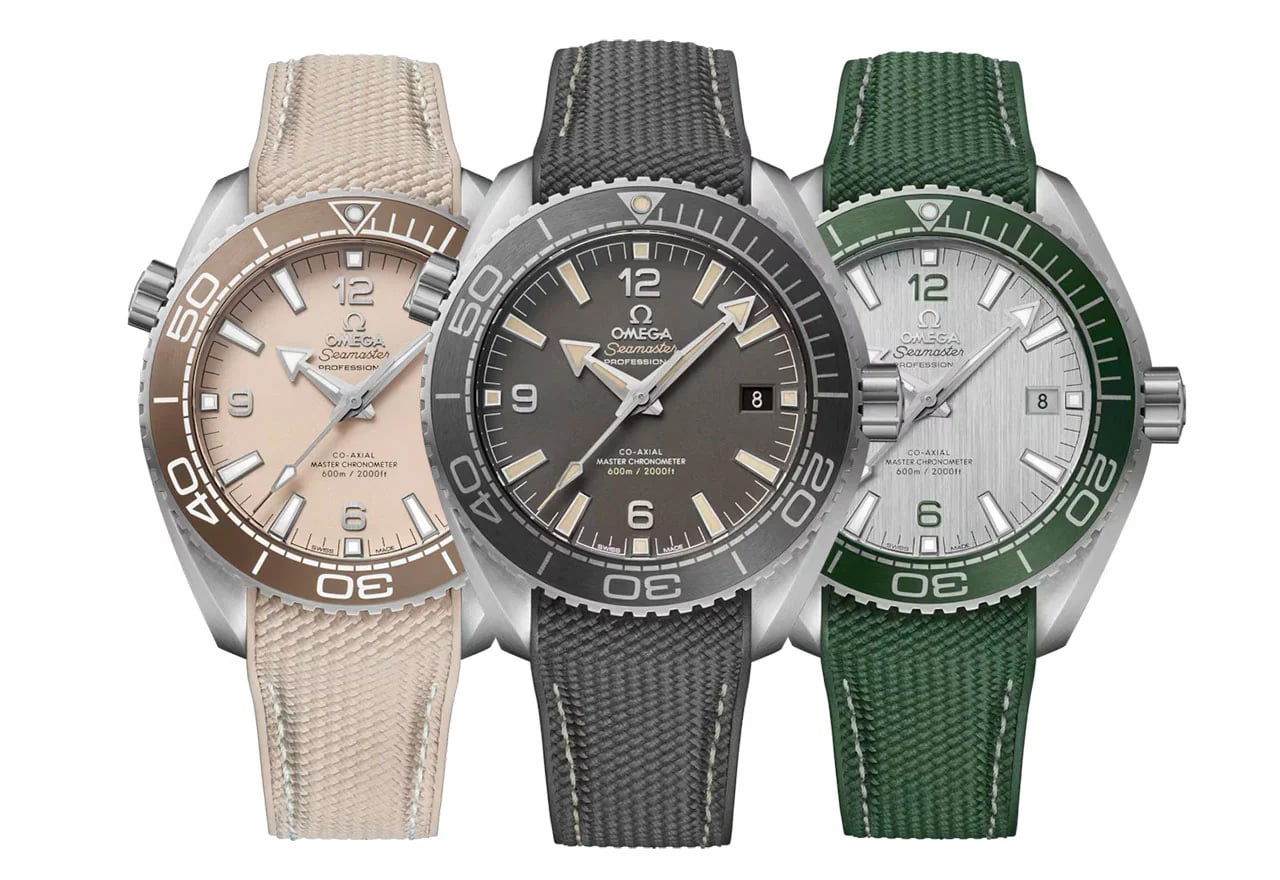
Omega Seamaster Planet Ocean Boutique Editions from 2024
The three time-and-date Boutique Editions share a brushed stainless steel case with a brushed ceramic bezel. Where they differ is the color combinations. The beige version features a sandblasted beige dial and a bronze-colored bezel insert. The one with the green bezel insert features a silvery, vertically lined dial. And mine (ref. 215.32.44.21.01.002) has a matte gray sandblasted dial with light beige accents. The beige-dial version is the only model of the three with a Super-LumiNova dive scale on the silicon nitride ceramic bezel insert. The green and gray variants use a Liquidmetal infill for the bezel numerals and scale with no luminescence. This difference made the beige model slightly more expensive at £7,100, up from £6,700. I do feel it was a slight missed opportunity to not include bezel lume on my gray Planet Ocean, as I find bezel lume useful on my Seamaster 300.
What I love about the Planet Ocean
What I liked most of all was the overall matte surfaces of the gunmetal-gray Planet Ocean. Not only is the case brushed, but the dial is matte as well. This finishing gives the watch a very tool-like aesthetic, which is what I feel defines the Planet Ocean. Furthering that style is the dark gray curved-end rubber strap with a textured pattern and beige stitching. Curiously, this rubber strap was the only option for this range. It didn’t bother me, and even though I like the three-row brushed bracelet for the steel Planet Ocean, it was a bit outdated. The main giveaway is the tabs that protrude from the end links to hold against the lugs to keep it in place. Across Omega’s lineup, many watch bracelets were updated to include an underside lip at the end links, which slot neatly into a recess on the case side.


This element prevents the end links from rotating when affixed and also hides the tab connection. The third-gen Planet Ocean’s bracelet still features side-on tabs that are visible and potentially scratch the underside of the lugs. To me, it was always an inelegant solution, and Omega phased it out within the Seamaster Diver 300M collection in 2018 and the Speedmaster Moonwatch in 2021. This is where the new Planet Ocean scores a big win: the bracelet improves the connection between the end link and the underside lip. However, the polishing of the center links for the new bracelet takes the Planet Ocean into uncharted waters. Until now, the Planet Ocean had always had a completely brushed finish on the bracelet in either steel or titanium. But at least the bracelet connection is far more refined.
Meshing with a new bracelet
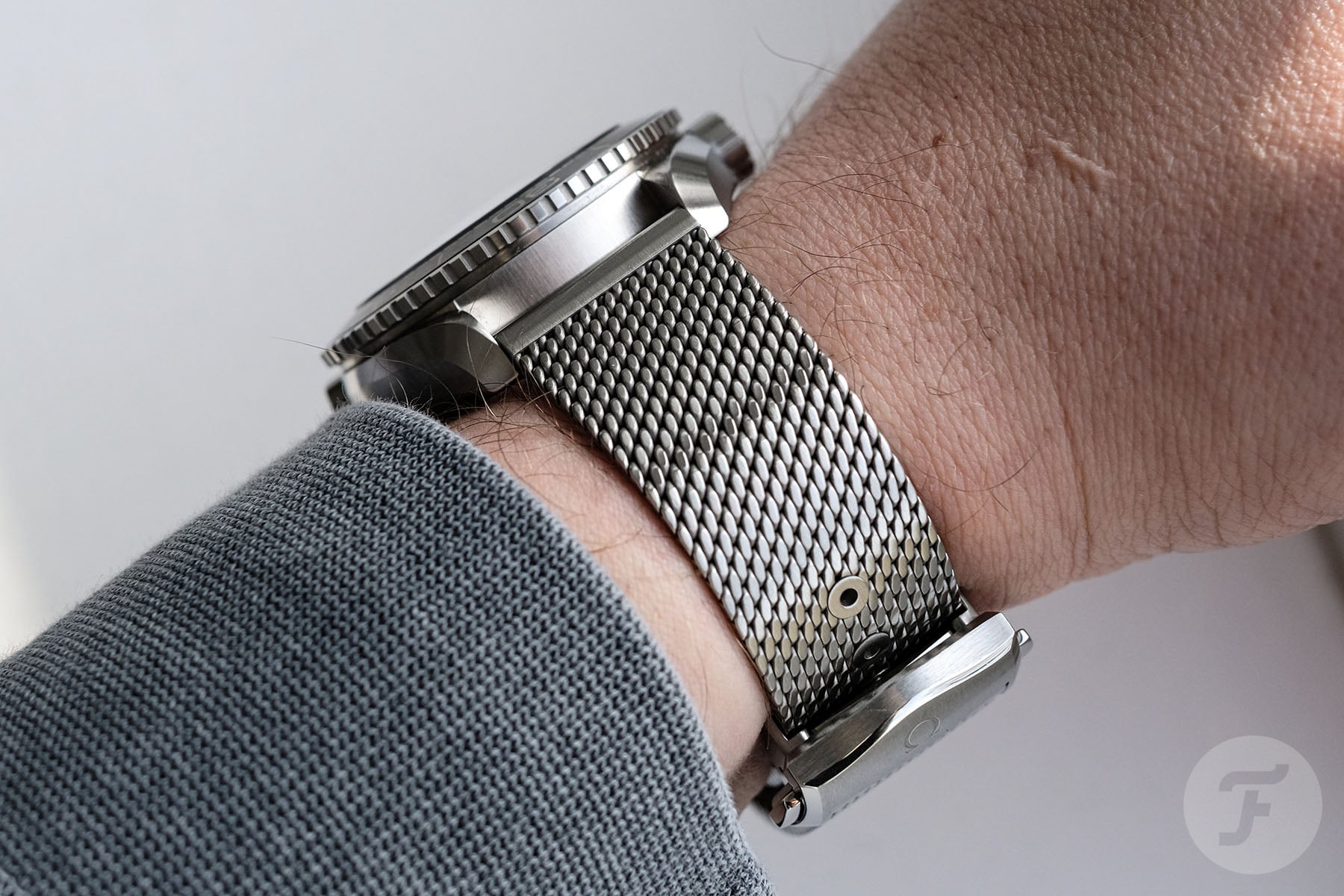
The rubber strap is very nice, especially with the curved ends that hug the case, but I still wanted a steel bracelet for my Planet Ocean. Luckily, I bought the Milanese mesh bracelet from an Omega boutique some years back for my Seamaster 300. This bracelet is the steel version of the titanium mesh bracelet first seen on Daniel Craig’s wrist during the filming of No Time To Die (2021) and later released with the 007-edition Seamaster Diver 300M. To mark the 60th anniversary of the James Bond movie franchise in 2022, Omega launched a special-edition stainless steel Seamaster Diver 300M with a matching mesh bracelet. Omega then added the steel mesh bracelet as a separate two-piece strap accessory, available online and in boutiques. It comes in four widths (19–22mm) and costs €870 / US$900 / £755 in all sizes.
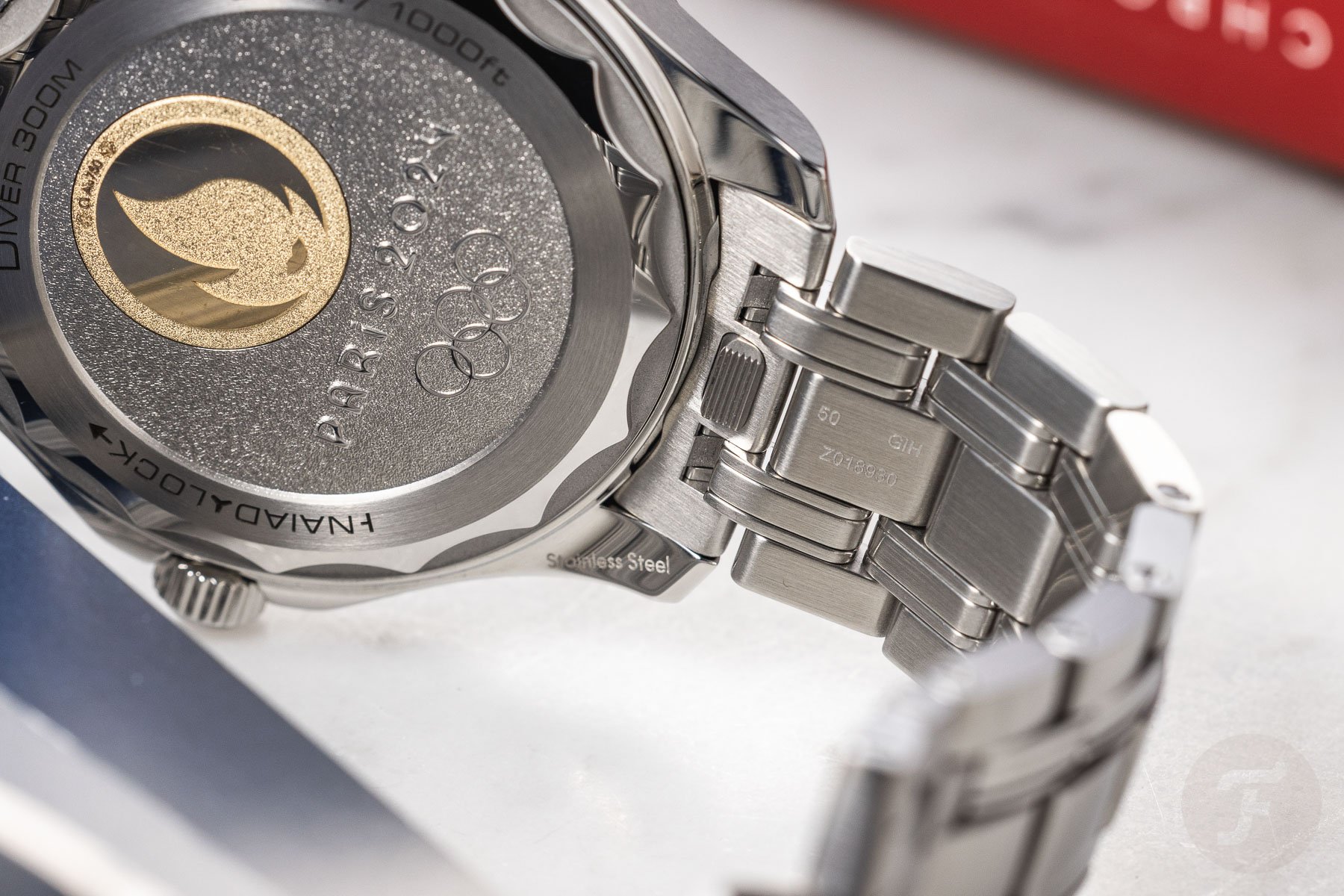
Paris 2024 Seamaster with a quick-release button
Surprisingly, the titanium mesh bracelet is not available as an accessory. This is possibly due to lower production outside the Bond watch and the two-tone titanium and Bronze Gold Seamaster model. Since the latter’s release, any new Omega Seamaster Diver 300M variants have had the mesh bracelet instead of the nine-row bracelet. This shift may signal the phasing out of the classic Seamaster Diver 300M bracelet, launched in 1993 and modernized in 2018. The last update to it was the introduction of a quick-release button for the Paris 2024 Seamaster Diver 300M and 37th America’s Cup edition. Anyway, I found that the 21mm-wide mesh bracelet on my Planet Ocean was a match made in heaven. Despite my initial intention to experiment with other accessories on the Planet Ocean, the mesh has not left the watch since.


Final thoughts
Other details of my timepiece include PVD and vertical brushing on the stainless steel indexes, hands, and numerals, which eliminate reflective surfaces. Along with the antireflective coating on both sides of the front sapphire crystal, the watch offers legibility from many angles. That said, this gunmetal-gray Planet Ocean is not a drab watch. There’s still plenty of interesting features and varying textures to provide depth. Perhaps the only superfluous detail is the metalized seahorse on the case back’s sapphire crystal. But you can indeed still see the caliber 8900 through the transparent display. Also, the Naiad Lock ring ensures the seahorse is the right way up, even when providing maximum torque to screw the back in.
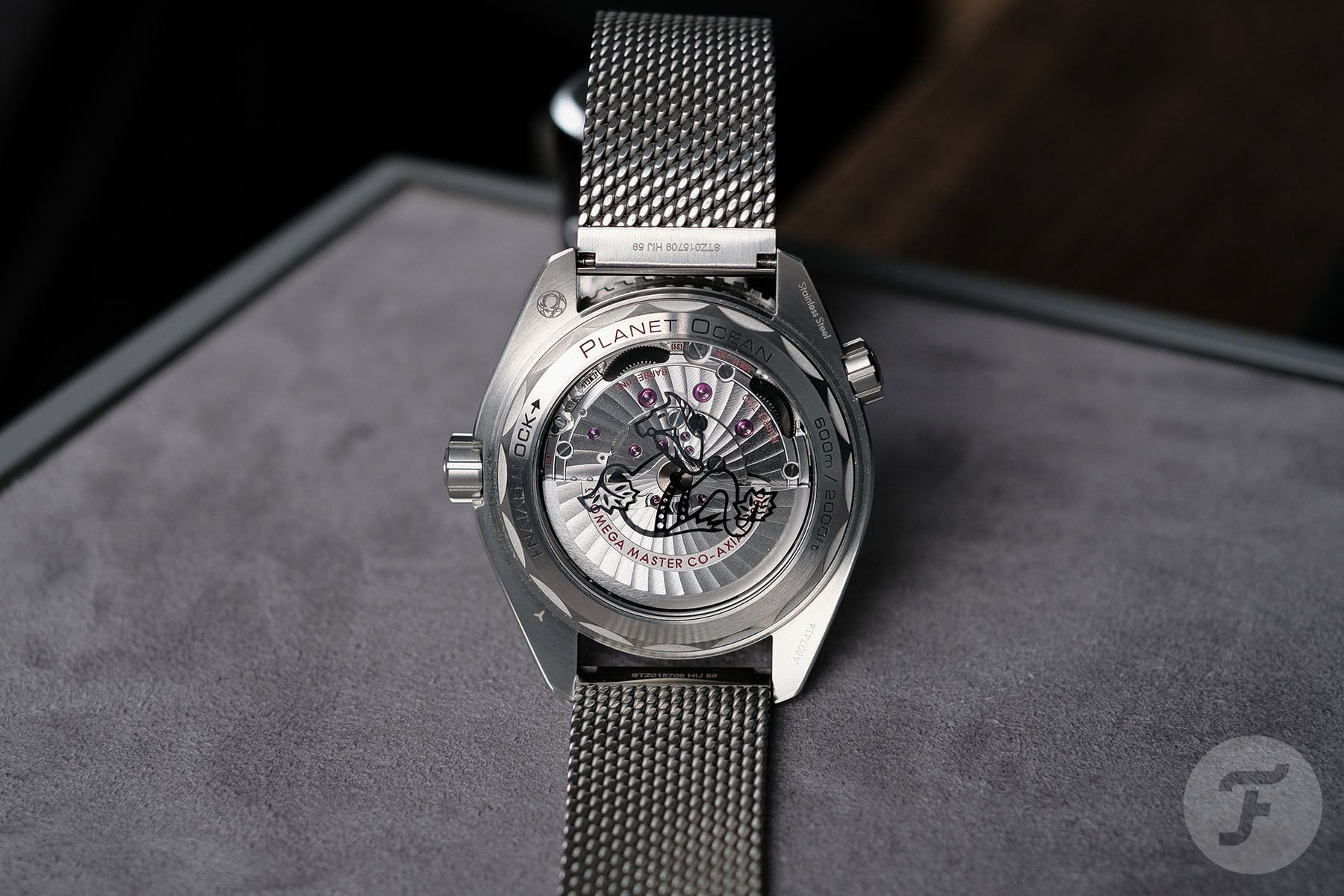
My definition of the Planet Ocean is subjective, but the watch should always maintain the tool style within Omega’s lineup. With the latest fourth generation, that ethos has deviated from the original in 2005, pushing it toward a luxury status symbol. Along with omitting the helium escape valve, the Planet Ocean loses its classic silhouette despite its limited function. With my third-generation Planet Ocean, especially on the mesh bracelet, I can enjoy the end of the HEV era and perhaps the final tool-focused design among Omega’s diving watches. You can learn more about this watch here.