Mathematical Horological Beauty: Hands-On With The Bianchet Tonneau UltraFino Ceramic Skeleton Deep Blue And White

Can beauty be put into numbers? The surprising answer is “yes, it can.” The Fibonacci sequence and the golden ratio have been turning up in discussions about beauty, proportion, and design for centuries. They are said to explain why certain things in nature look pleasing to the eye, from sunflower heads and pinecones to shells and spirals. Artists and architects have also used the golden ratio and the Fibonacci sequence as compositional tools, considering them nature’s secret recipe for beauty. The svelte Bianchet Tonneau UltraFino Ceramic Skeleton Deep Blue and White certainly benefitted from these two principles. The haute horlogerie brand has made the Fibonacci sequence and the golden ratio part of its design vocabulary, using these mathematical relationships to determine the proportions and flowing curves of its cases and other elements, such as the rotor. In blue and white ceramic, the two mathematical principles look very sporty.
Beauty expressed in numbers — that’s what the Fibonacci sequence and the golden ratio are. They are closely related mathematical concepts that frequently appear in nature, art, architecture, and sometimes watchmaking. The golden ratio, represented by the Greek letter phi (φ), is a special mathematical proportion. The Fibonacci sequence is a list of numbers in which each is the sum of the two preceding ones. It is rather straightforward: start with 0 and 1, then add the two previous numbers to get the next one. That gives you 0, 1, 1, 2, 3, 5, 8, 13, 21, and so on. The two concepts are linked through division. Divide successive numbers by their predecessors, and the result gradually gets closer to 1.618, the number known as the golden ratio, or φ. Now let’s take a look at the Bianchet Tonneau UltraFino Ceramic Skeleton Deep Blue and White.
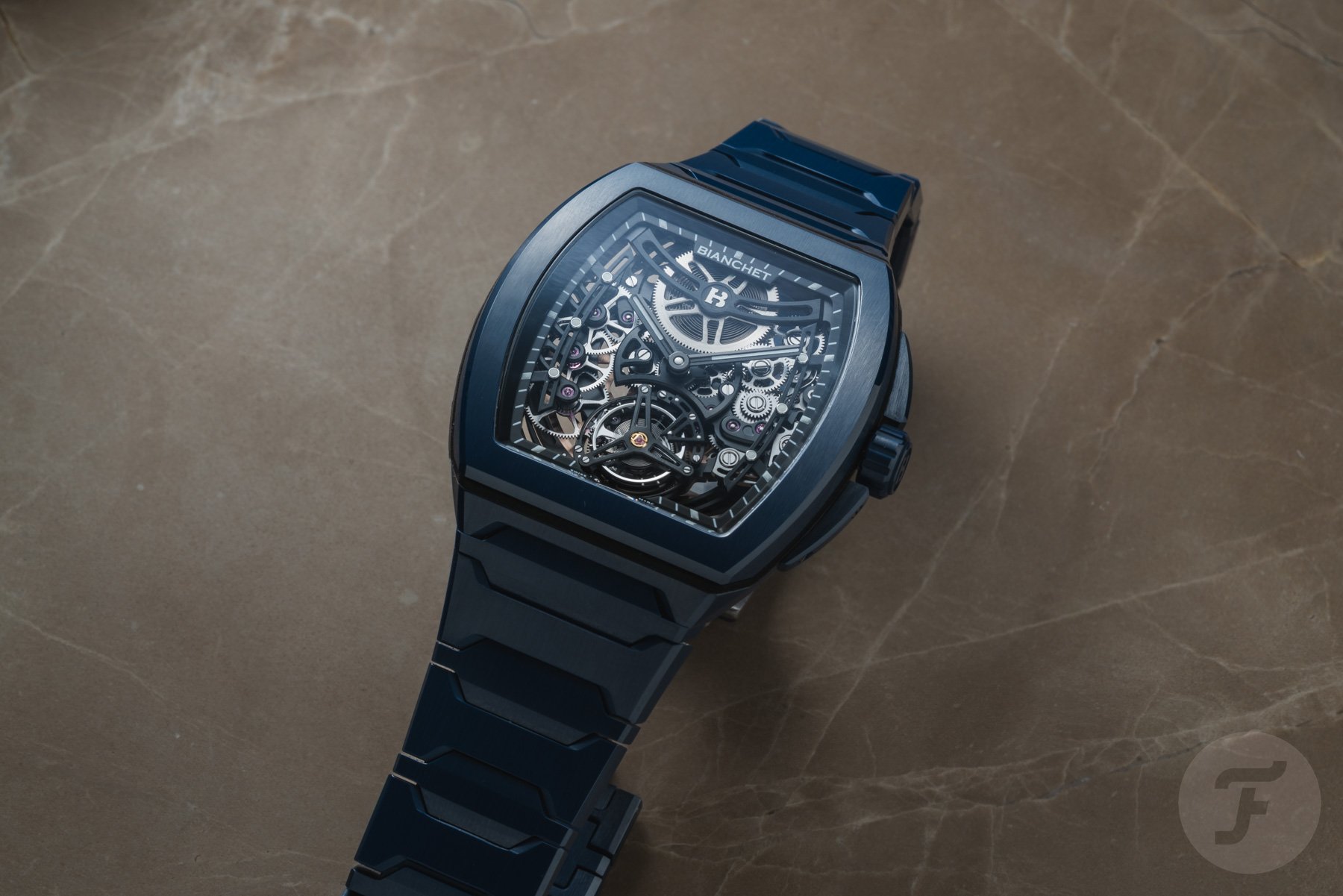
Hands-on with the Bianchet Tonneau UltraFino Ceramic Skeleton Deep Blue and White
Whether you see mathematical perfection or simply a particularly well-proportioned watch is, naturally, in the eye of the beholder. Bianchet used math to create the shape of the Tonneau UltraFino, and whether it comes in titanium, sapphire, or carbon fiber, it is very pleasing to look at. The new blue and white ceramic offerings are no exception. During the recent Geneva Watch Days, I had the chance to go hands-on with both new creations and found that they feel as beautiful on the wrist as they look. Now, for full disclosure, I didn’t do the math, but I will provide the numbers. If any of you mathematical wizards out there want to do it, feel free.
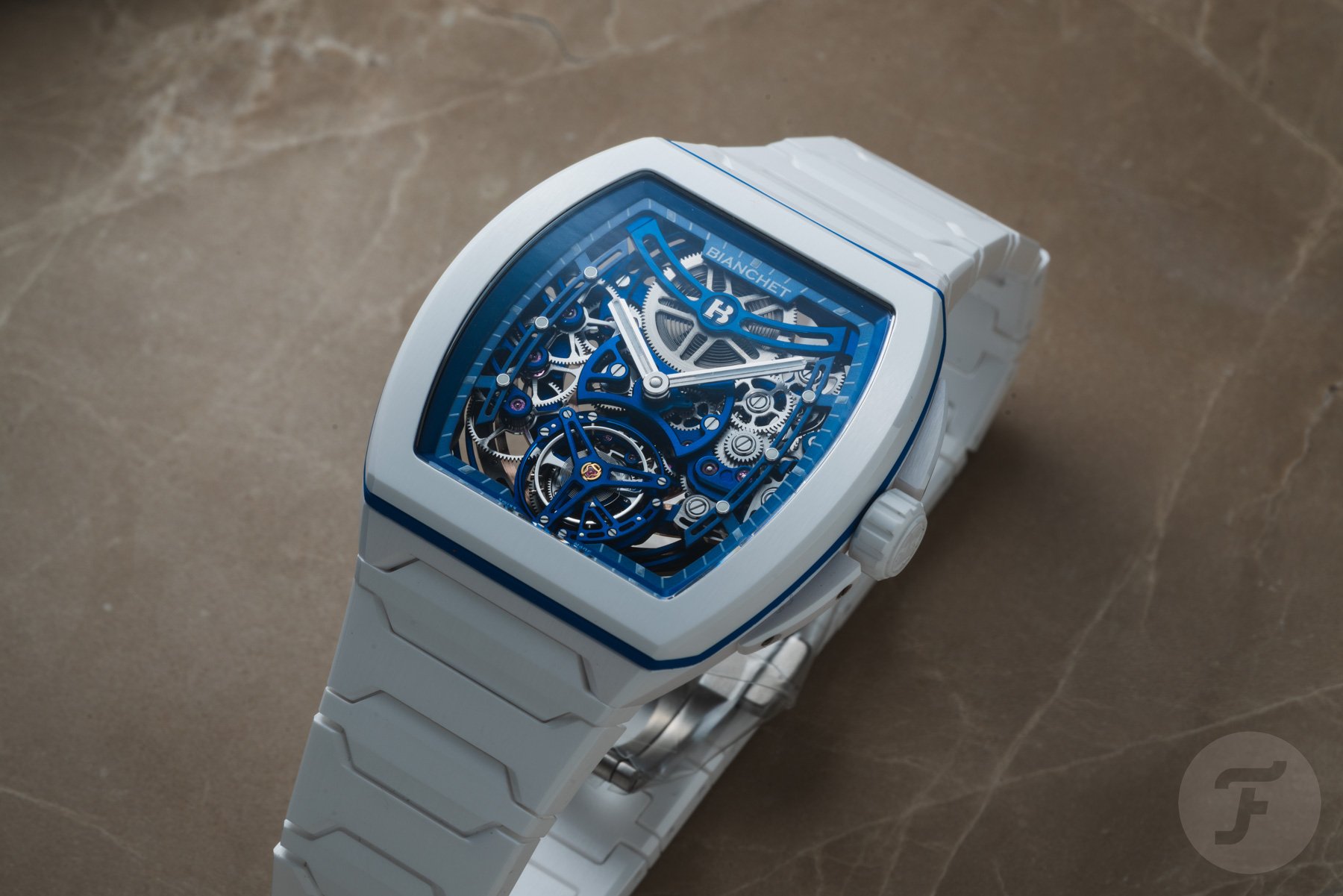
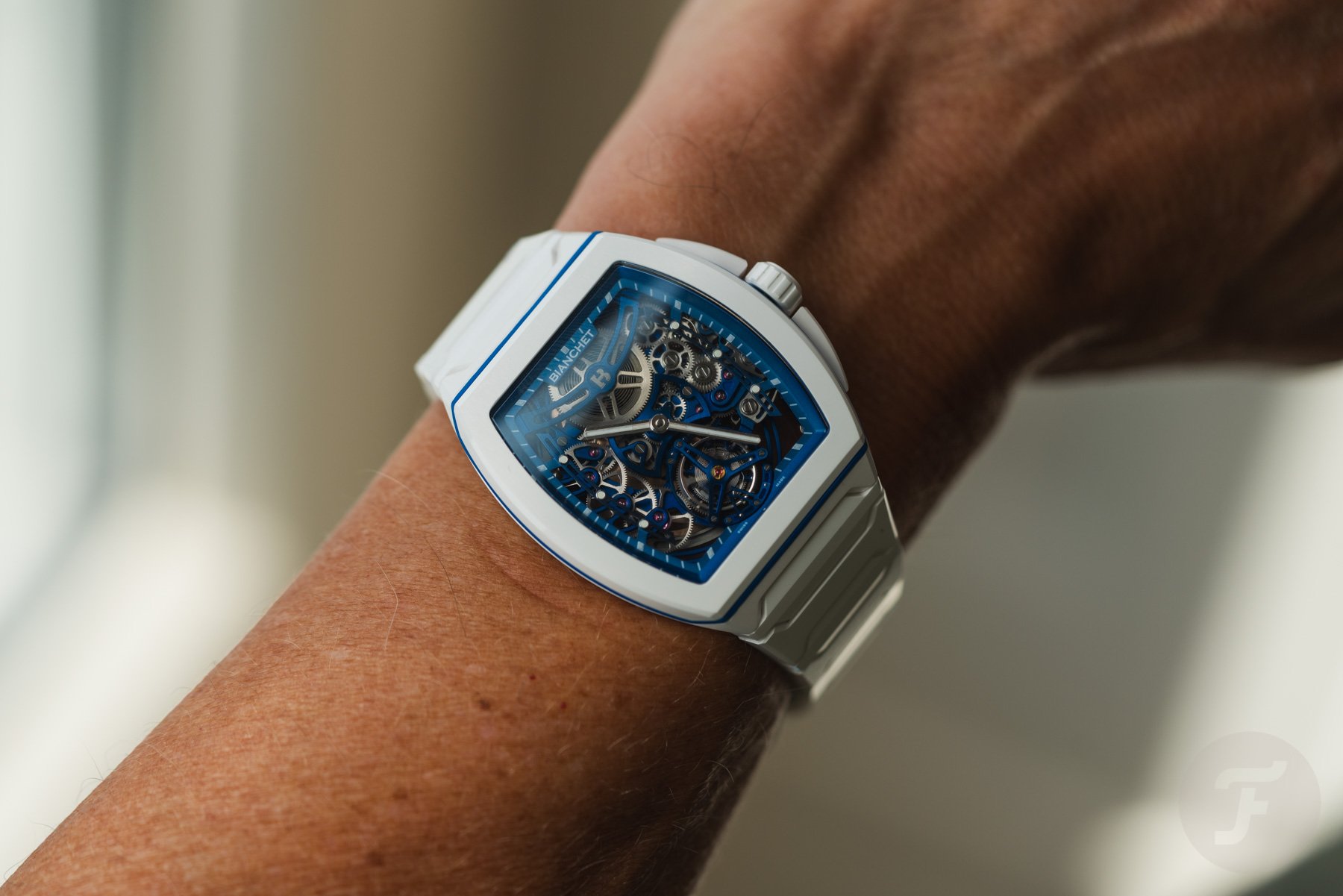
The starting point is the deep blue or white ceramic 40 × 47.5mm tonneau case with an 8.9mm profile. The case is shaped to follow the wrist’s natural contour. Light and fully scratch-resistant, it delivers exceptional comfort and uncompromised performance. Again, I’m not going to do the math, but the proportions, especially the case’s 8.9mm thickness, are understated and impressive.

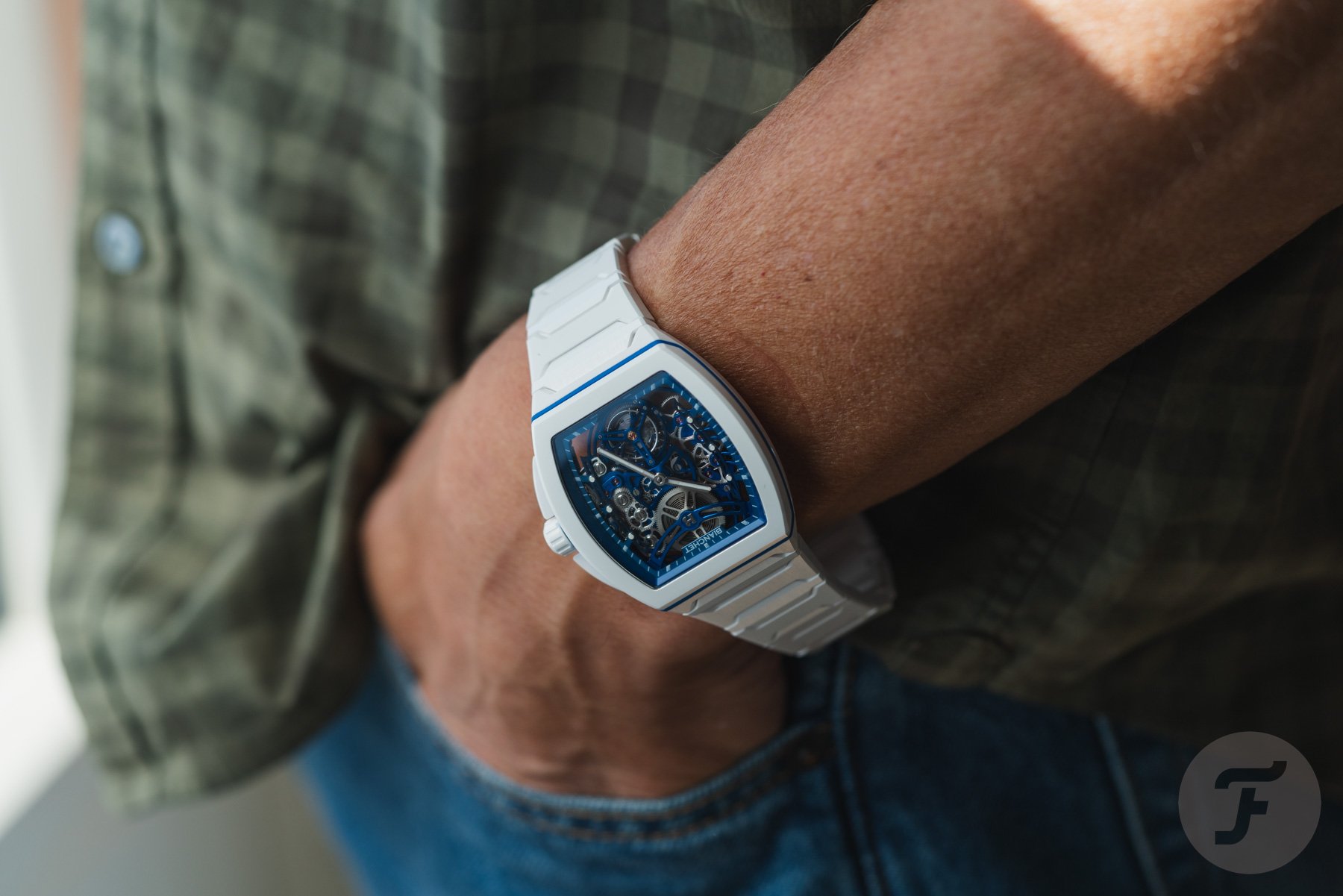
It continues to impress when you put it on the wrist. The ceramic case feels smooth and soft, though it’s very hard, of course, and the organically shaped bracelet in the same material further emphasizes that feeling. As the watch is neither large nor bulky, the sensation of wearing the Tonneau UltraFino Ceramic Skeleton is very personal. That said, it does come in two quite outspoken colorways.
Which color to pick?
Let me put my experience with the blue and the white Tonneau UltraFino Ceramic Skeleton into perspective by painting the scene. The temperatures were tropical, the sky cloudless, and the sun shone brightly, with the lake just meters away. In that summery setting, a marine-blue and cool-white watch fit perfectly. I feel like they were made for situations like this. Will these two watches be out of place in a boardroom? Yes, probably, but in our very informal society, these two ceramic creations will fit in most of the time.
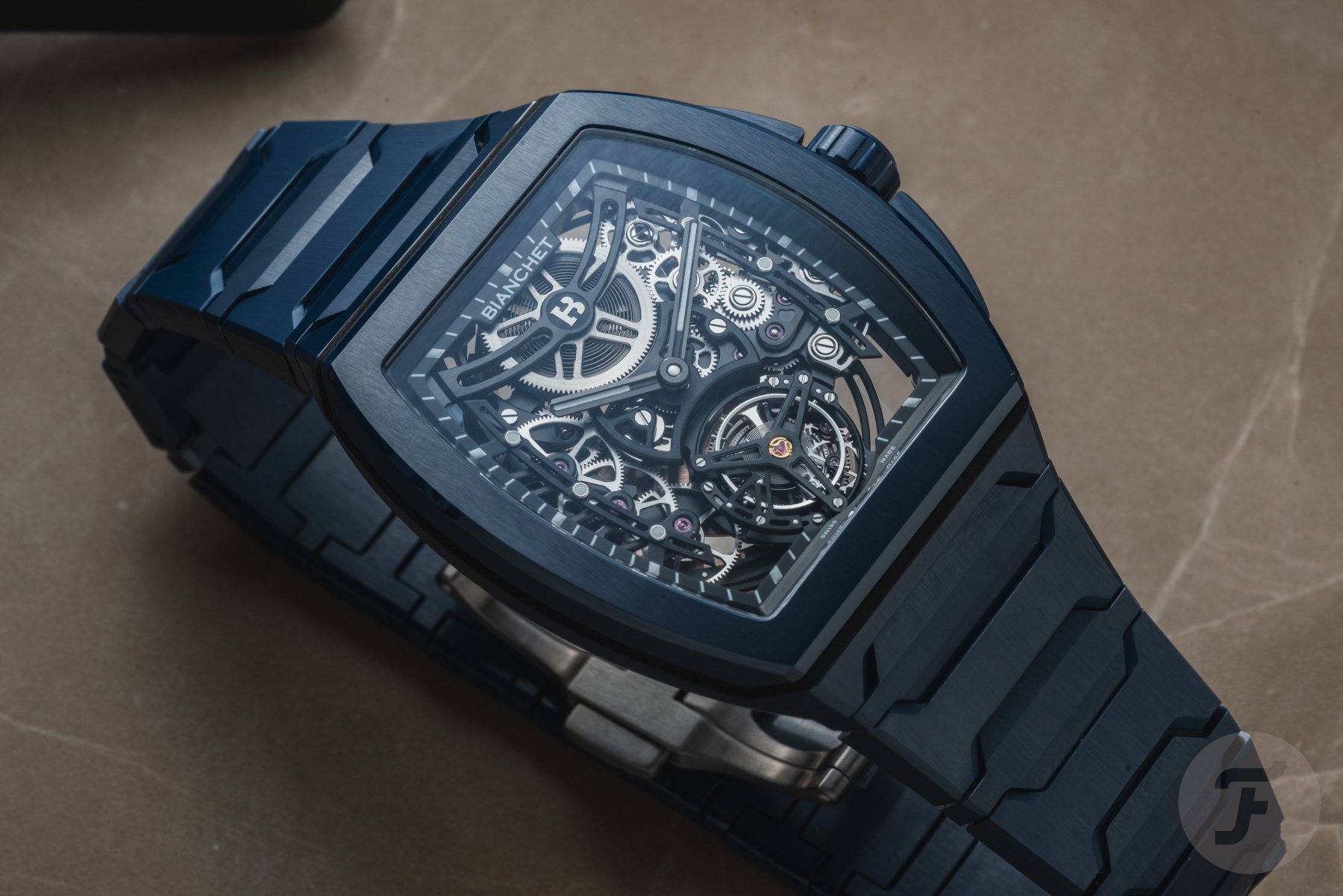
The blue version, with its black-finished movement, may be a bit more versatile than the white one. The latter loudly and proudly flaunts its contrasting blue-finished skeletonized caliber. But when you put a blue rubber strap on the white watch with its blue open face and visible gasket, it tones the whole thing down quite a bit. And if you put the white strap — or bracelet, for that matter — on the blue one, it brightens it up considerably. Don’t worry; I’m not going to tell you the best thing is to buy both versions. That would be irresponsible. After all, we’re talking about watches that cost CHF 72,500 before taxes.
The skeleton inside
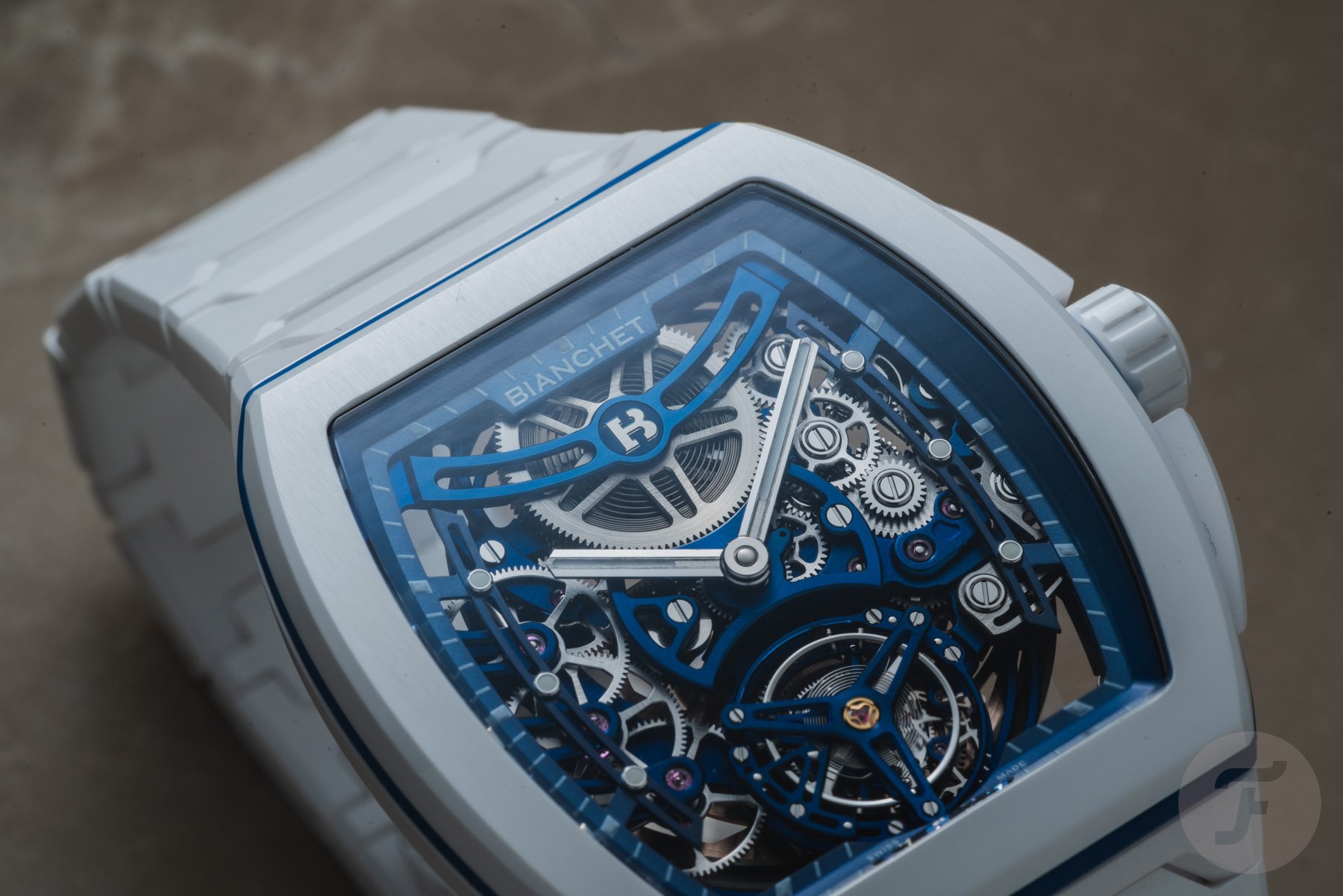
The most exuberant part of the two Tonneau UltraFino Ceramic Skeleton creations is, without a doubt, the ultra-thin UT01 flying-tourbillon caliber with its blue or black Grade 5 titanium bridges and mainplate. This automatic movement features an 18K rose gold central unidirectional-winding rotor with Bianchet’s familiar Fibonacci spiral pattern. The 3.85mm-thick caliber contains 225 components, including 29 jewels. It also beats at 3 Hz (21,600 vibrations per hour) and stores approximately 60 hours of power reserve with a stated tolerance of ±5%.


The star of the show is the 60-second flying tourbillon, held in a Grade 5 titanium cage and paired with a screw balance wheel. The mainplate and bridges are also made of Grade 5 titanium, as is the suspended mainspring barrel. Bianchet uses a custom architecture for winding and time setting. And just so you know, the entire caliber is also manually finished and assembled in Switzerland. Around 30 hours of hand finishing go into the movement.


The combination of a tonneau-shaped movement and case is a sight to behold. It’s also a sign of veritable high horology. A movement that follows the non-round shape of a watch case always is. Another sign these two Bianchet creations belong in the upper echelons of watchmaking becomes visible when looking at the caliber UT01 through a loupe. Every surface has been manually brushed, polished, or beveled until it plays with light. You can genuinely see the 30 hours of work that went into it.
The boat or the watch?
I’m kind of tempted to see the Bianchet Tonneau UltraFino Ceramic Skeleton as the boat you can finally afford. One of these tourbillon timepieces will never be someone’s first watch, but it could be a serious treat, a horological reward, a materialized indulgence. It could, of course, also be the watch you buy because it matches the boat so well. In that case, the white version is probably the one to choose.
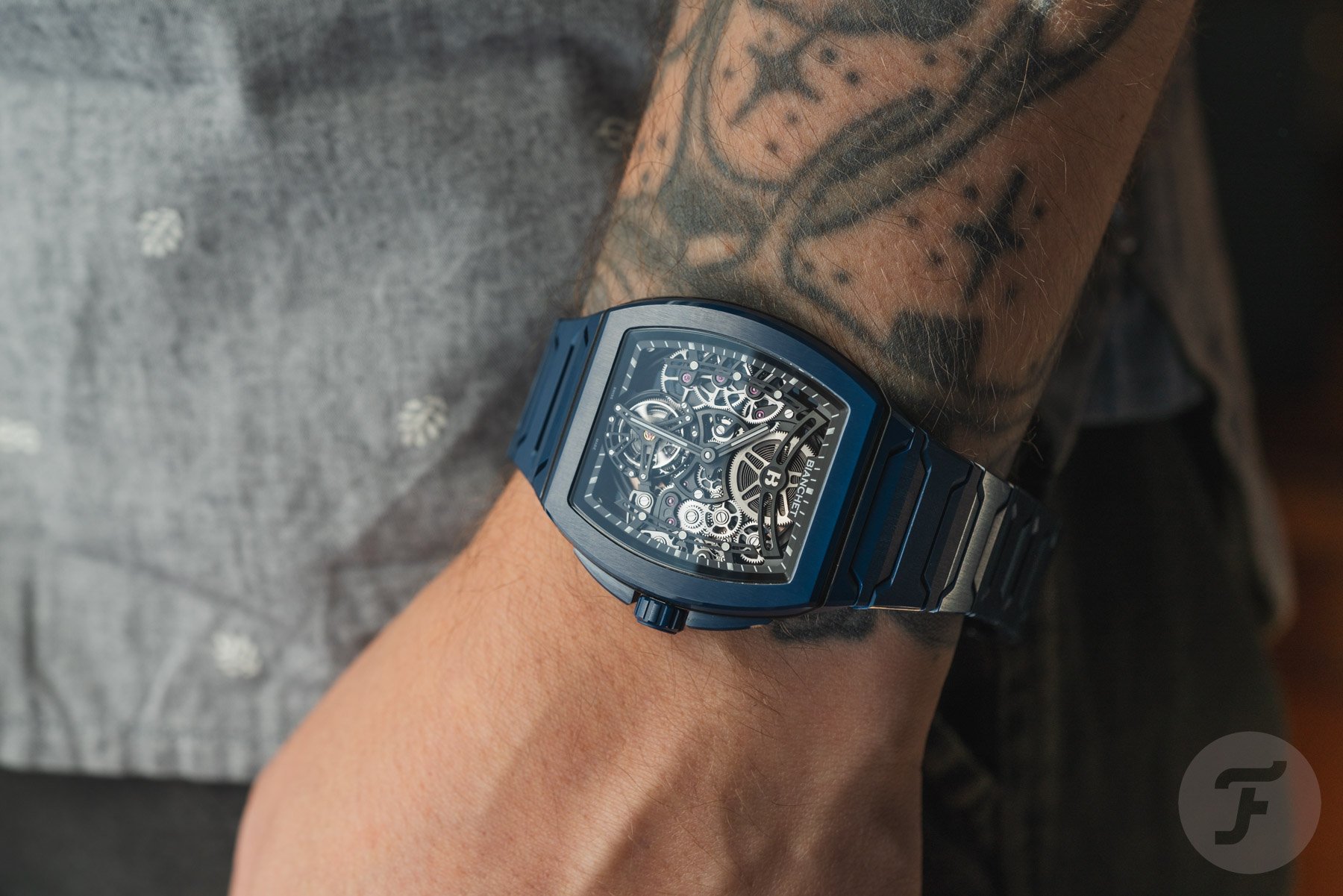
Mine would be the blue one. I think the full-blue ceramic composition with a subtle white stripe/gasket along the case side is more visually balanced. That’s a very personal opinion that I can’t back up with a complicated calculation.
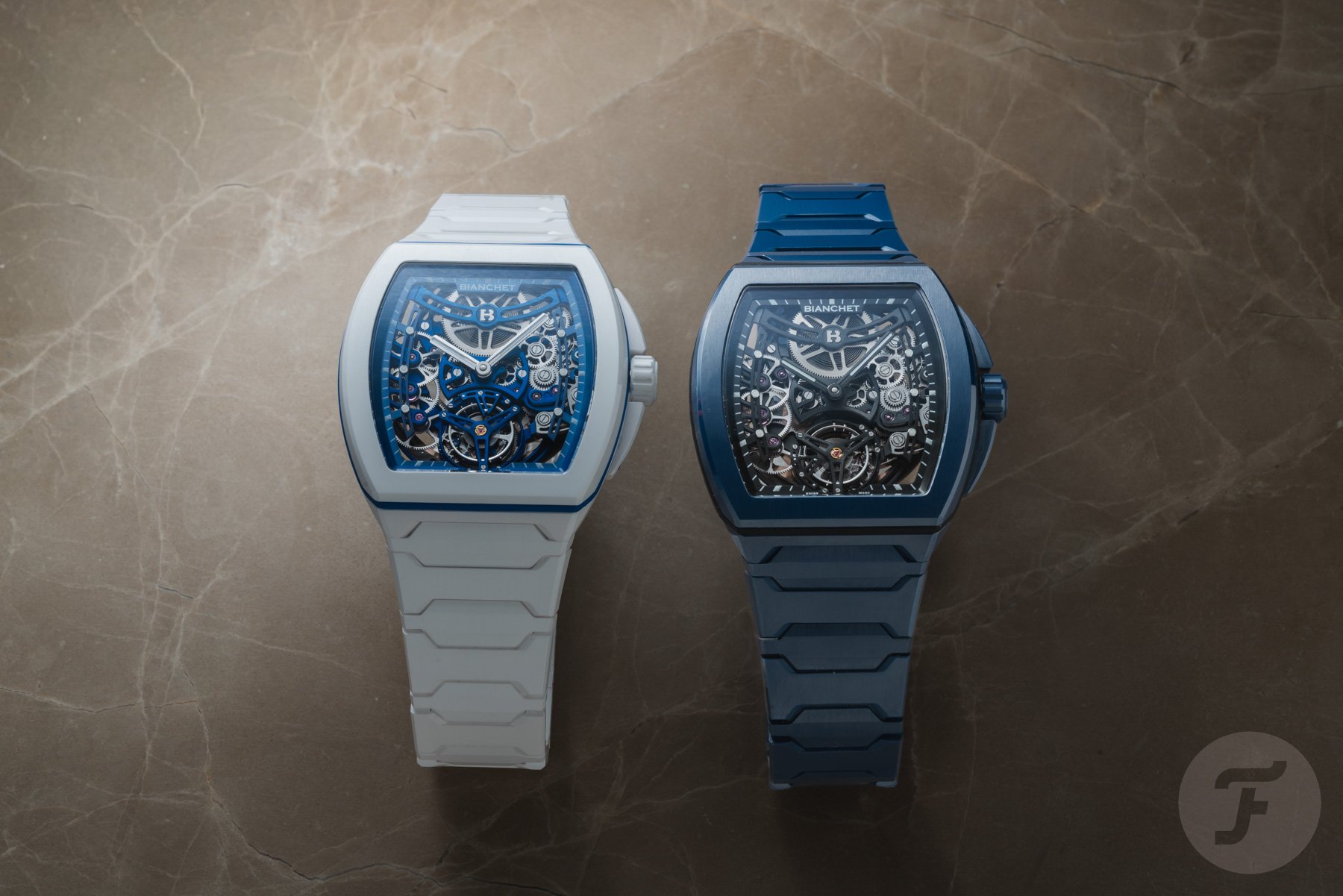
What do you think of the Bianchet Tonneau UltraFino Ceramic Skeleton tourbillon watches? Do you prefer the blue or the white version?
This is a partnership post. Learn more.