Merci Instruments Introduces The Super Collection — Four Watches Inspired By 1970s Architecture And Design

We’ve been impressed by Merci Instruments in the past. The French brand has consistently offered great-looking watches at accessible prices, with a design approach that feels considered without becoming overly complicated. Its latest collection, Super, continues that direction with four new automatic models inspired by the creative freedom of 1970s industrial design and architecture.
Where the brand’s first LMM-01 collection drew on the understated elegance of 1930s watches, and the Beaumarchais introduced a more sculptural silhouette with its octagonal bezel, Super takes a different approach. It looks to a period when architects and designers explored new shapes, materials, and ways of bringing beauty into everyday objects. Merci Instruments translates those ideas into a watch collection that treats the case, dials, and their individual details as parts of one coherent design.
The result is a quartet of watches with a shared case design but four distinct dial executions. Each draws inspiration from a different architectural reference, adding variety to the collection with a shared identity anchored in the case design.
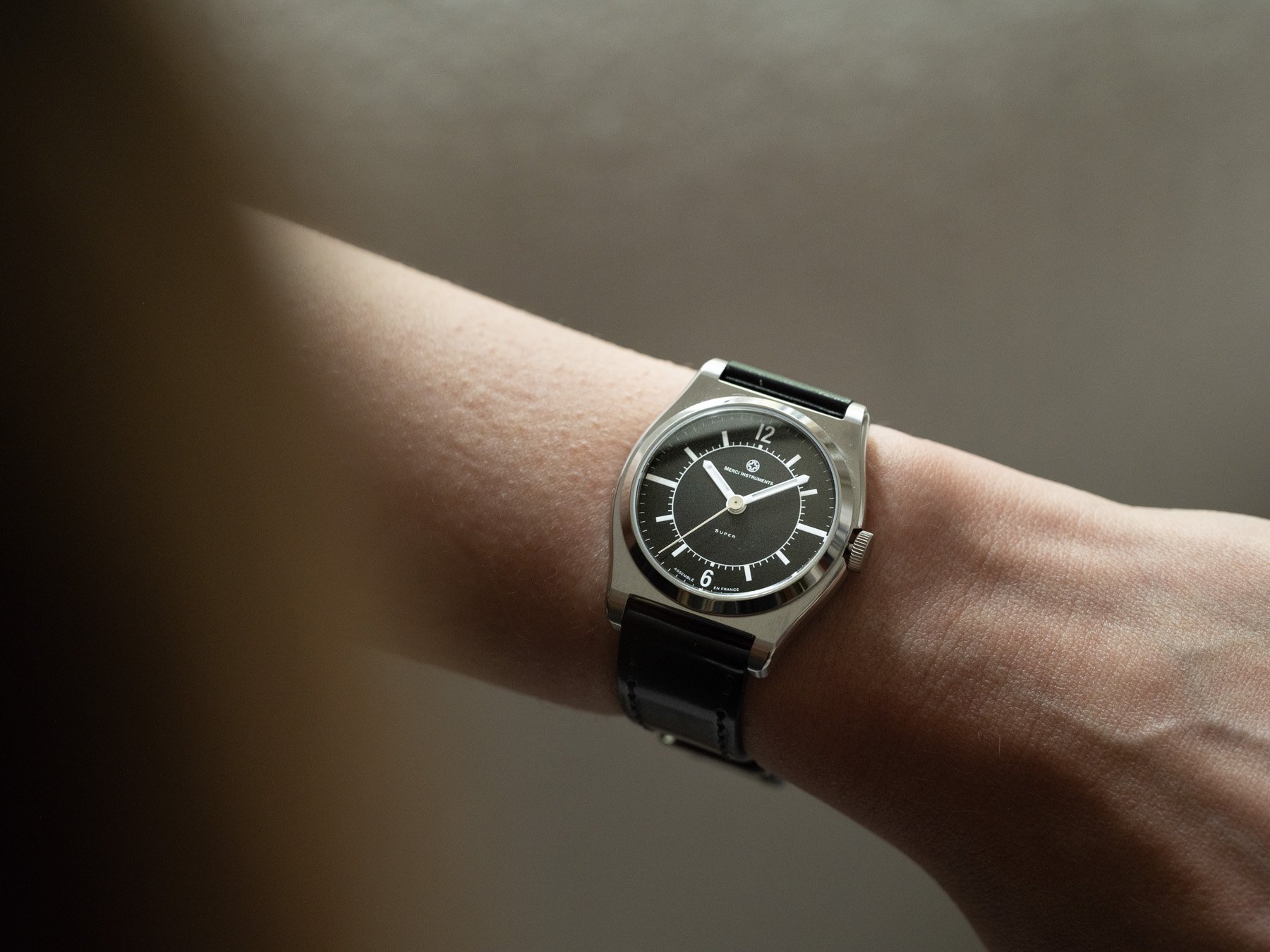
The Merci Instruments Super collection: Architecture on the wrist
All four Super models have a stainless steel case measuring 36mm wide, 42.8mm long, and 9.9mm thick. Its brushed surfaces contrast with polished bevels, while the lugs curve downward to create a flowing silhouette. A slightly inclined, polished bezel frames the dial and continues the interplay between different finishes.
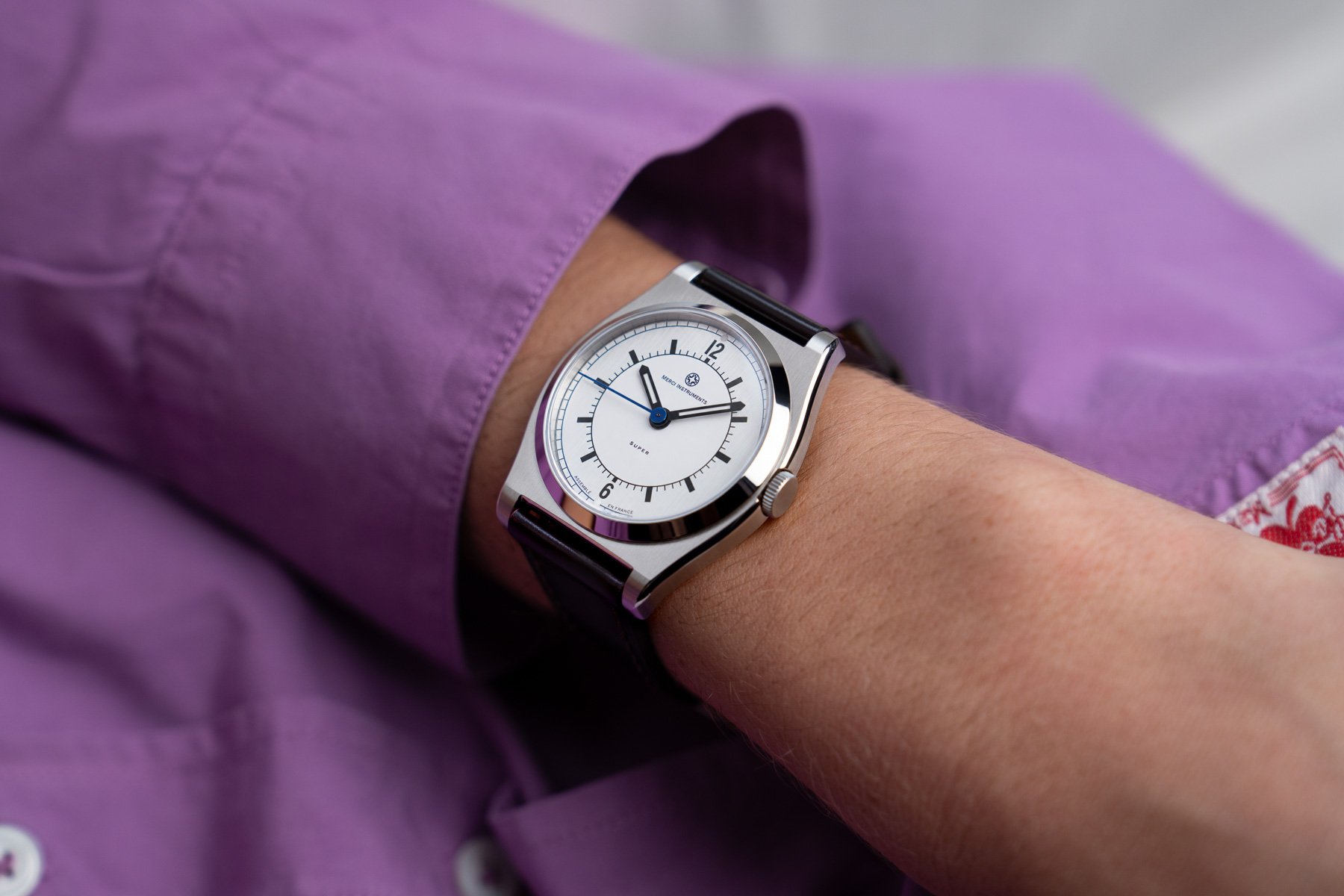
The proportions should make any Super variant a versatile everyday watch. Its relatively compact dimensions also leave enough room for the four dial designs to take center stage. Each model features a sapphire crystal, a screw-in case back, and 5-bar water resistance.
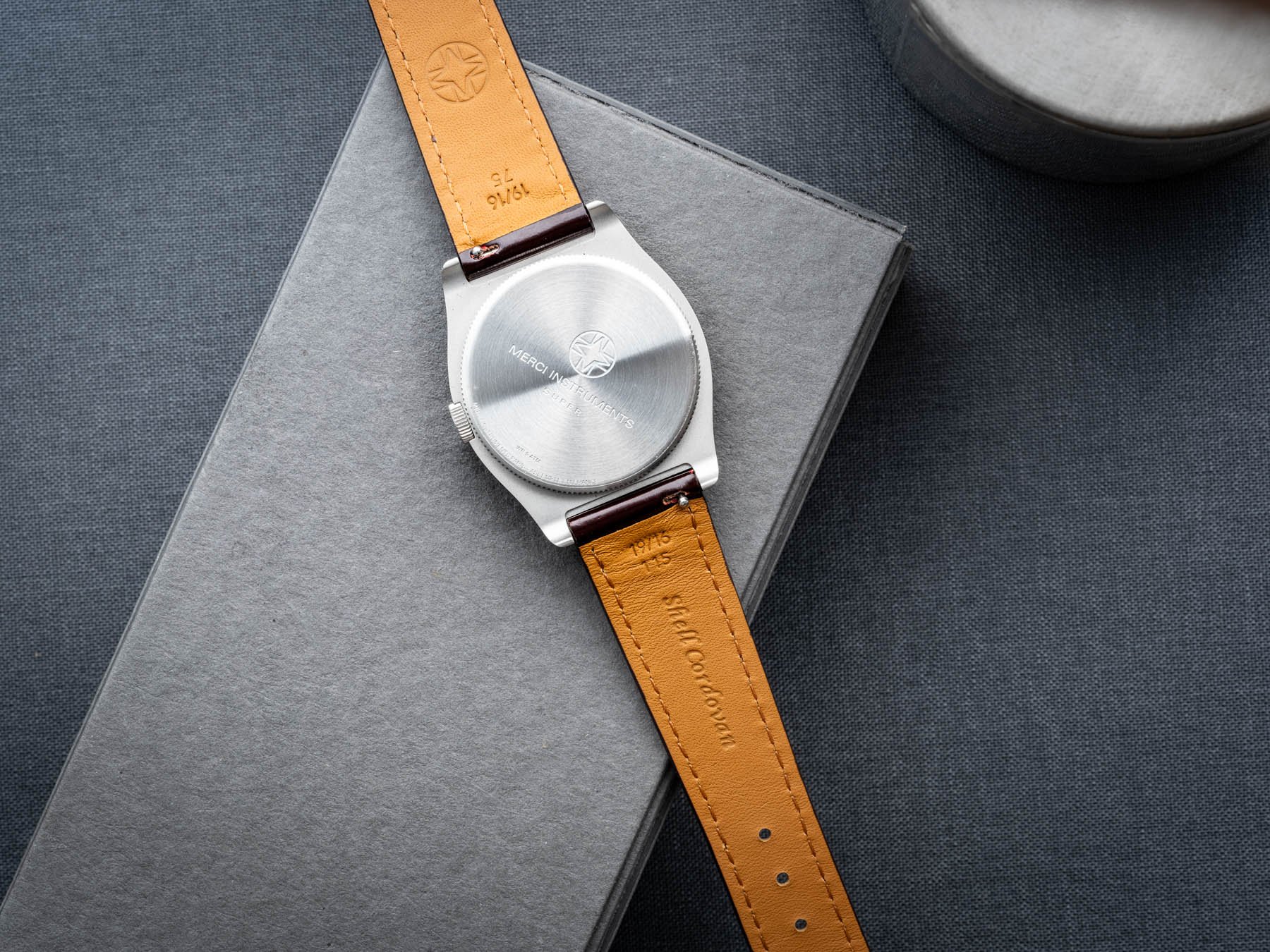
Inside is the automatic Miyota 9039, a no-date movement that offers hours, minutes, and a central seconds hand. It runs at the usual 28,800 vibrations per hour and provides a 42-hour power reserve. Merci Instruments assembles the watches in France and pairs each with a black or brown Cordovan leather strap.
Four architectural references, four dial designs
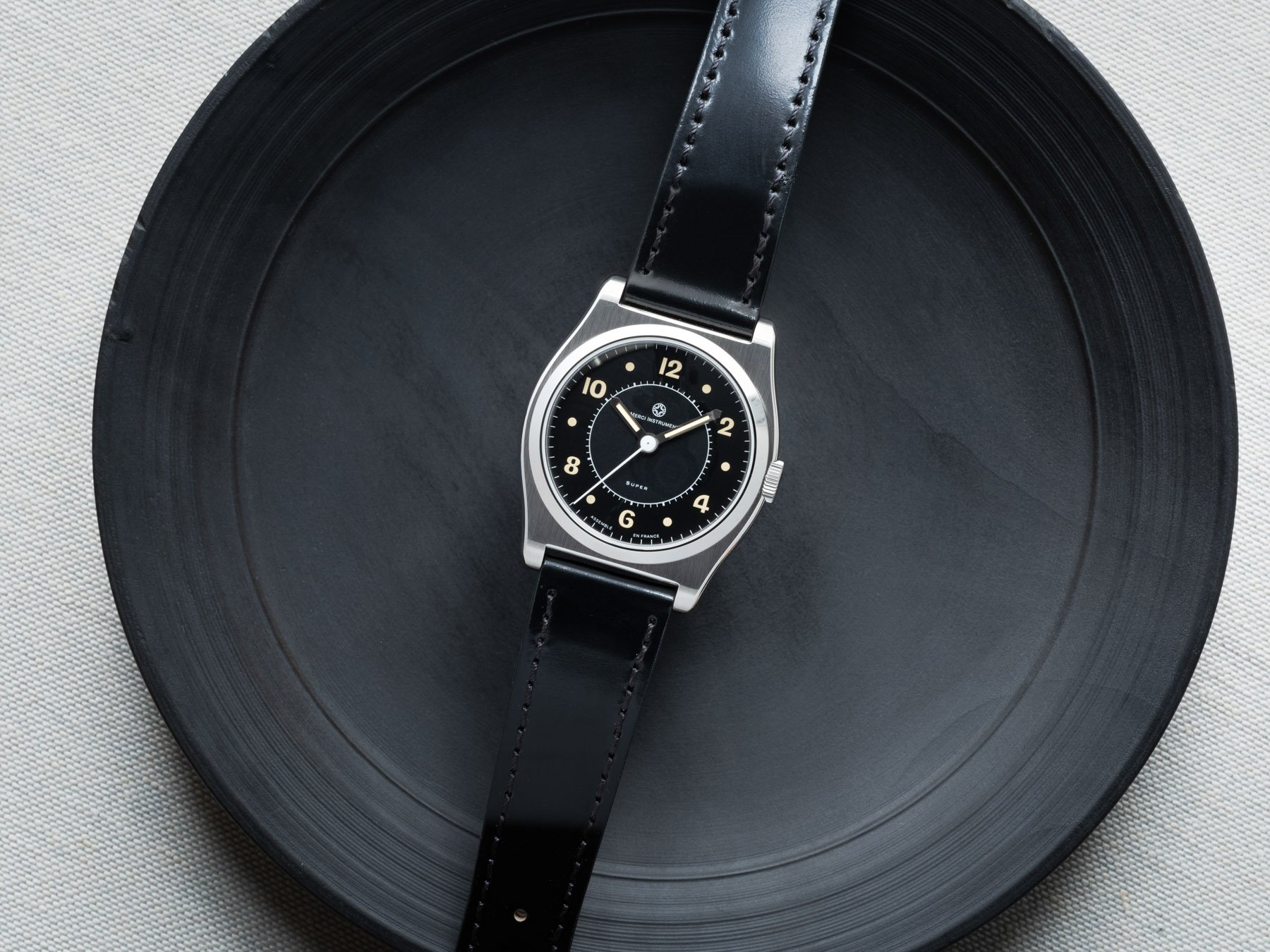
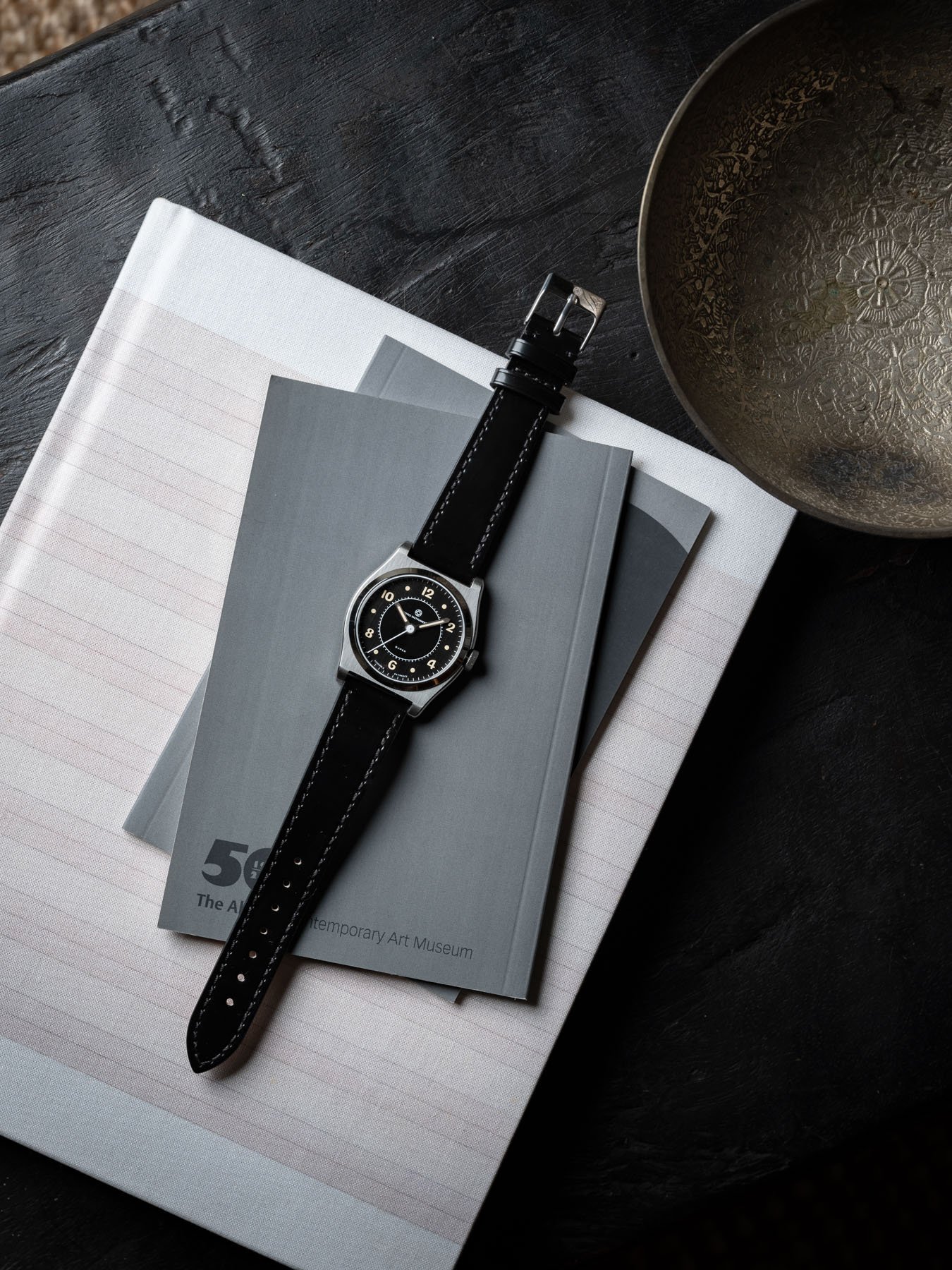
The Plan 19.72, my favorite, takes its inspiration from the Nakagin Capsule Tower in Tokyo, an example of Japanese Metabolist architecture. Its dial features outlined Arabic numerals alongside circular hour markers that taper to fine points. These details reference the tower’s repeating modules and distinctive porthole windows. The silver-tone hands and vintage-colored luminous material complete the look. This version comes on a black Cordovan strap.
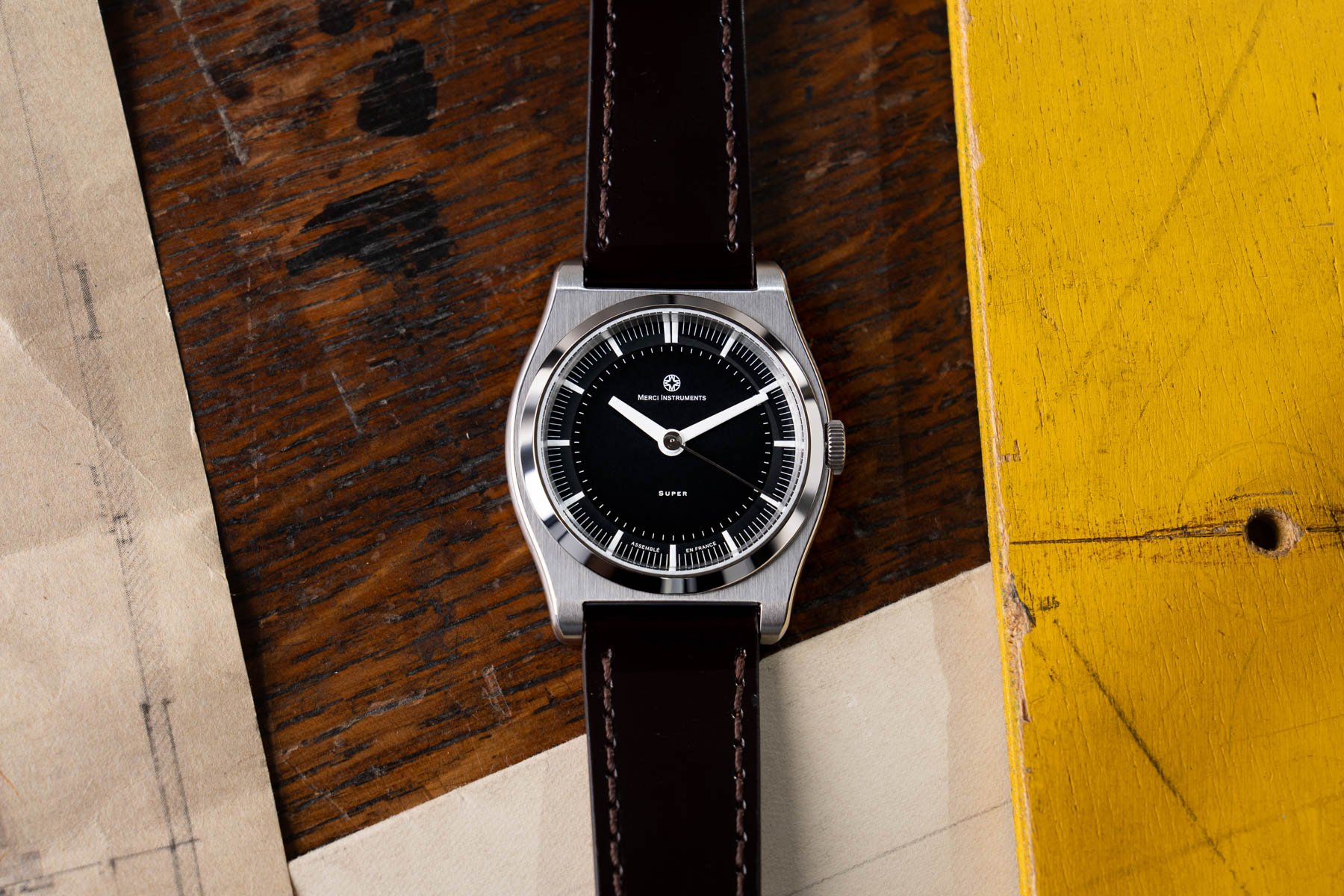
The Plan 19.63 looks to the circular architecture of Paris’s Maison de la Radio. Its black dial features concentric circles, slender hour markers, a minimalist minute scale, and a precise seconds track containing half- and full-second hash marks. Broad white hands provide contrast and emphasize the dial’s graphic character. A dark brown Cordovan strap complements the brushed and polished steel case.
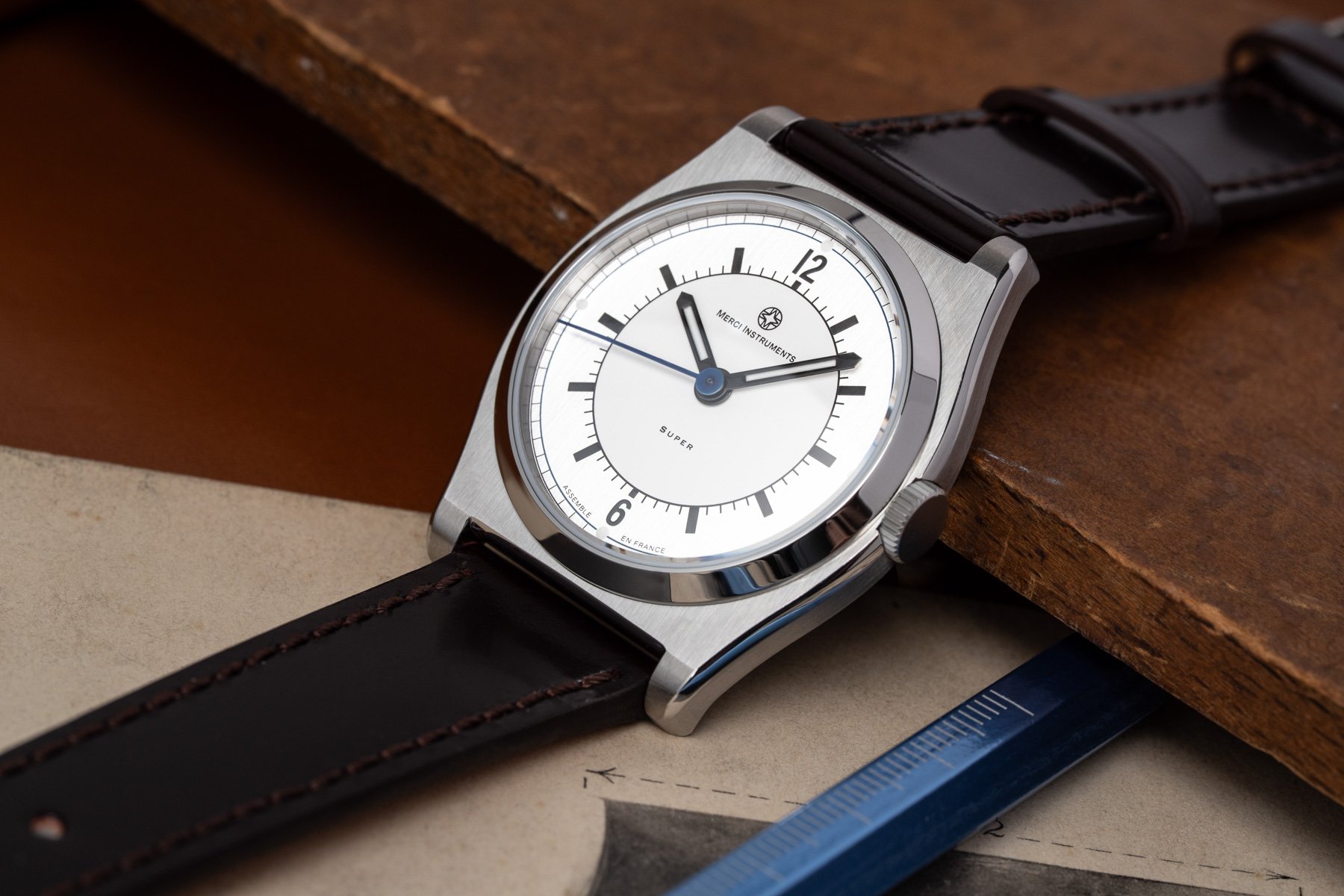
For the Plan 19.74, Merci Instruments turns to Terminal 1 at Paris–Charles de Gaulle Airport. Its light dial combines an opaline center with a finely brushed outer ring. Black markers and the numerals at 12 and 6 o’clock provide definition, while a blue seconds hand and border for the seconds track add small splashes of color. This model also features luminous hands and comes on a dark brown Cordovan strap.
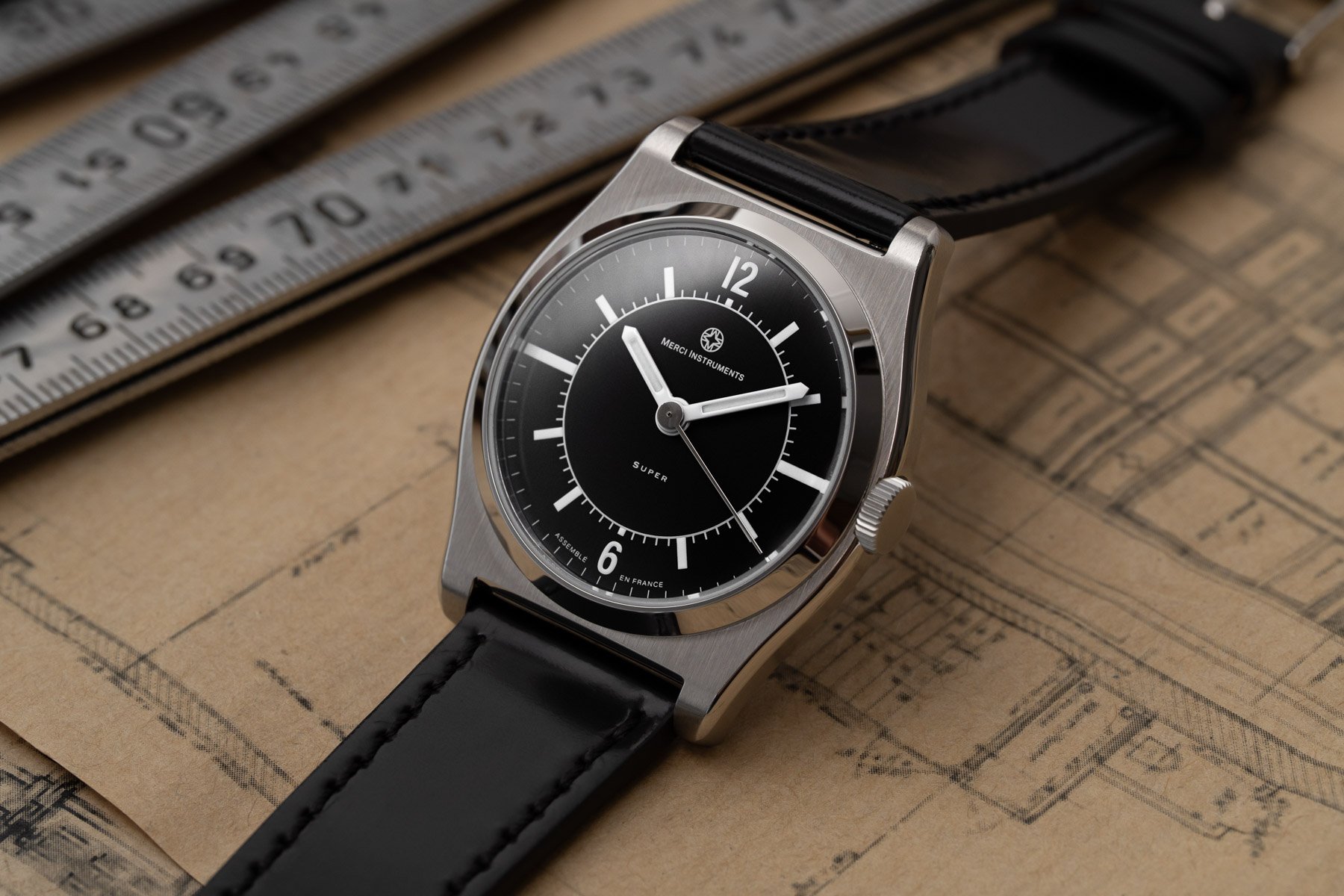
Finally, the Plan 19.70 draws on Oscar Niemeyer’s Cathedral of Brasília. Its black dial uses white baton markers and numerals at 12 and 6 to create a bold, structured display. The black Cordovan strap keeps the overall appearance restrained. Like the Plan 19.74, this version features Super-LumiNova-filled hands.
Pricing and availability
Each of the four Merci Instruments Super models retails for €550. At that price, the Super continues what has made the brand interesting to us. Merci Instruments focuses on proportions, finishes, and thoughtful dial design, keeping things classy and affordable. The four models offer different interpretations of the same idea, with enough variety to give each a different character.
What do you think of the Super collection, and which version do you like best? Let me know in the comments!