They Grow Up So Fast! Meet The Casio Edifice Automatic EFK-200

Fast-track evolution. In just one year, Casio launched its first automatic mechanical watch, the Edifice EFK-100, and rapidly improved it. Now, the third generation of the Casio Edifice automatic is here. The EFK-200, a sporty-chic yet affordable watch with an integrated bracelet/strap, comes in five variations and looks to be a very mature watch. There are four full-steel versions and a black one made of carbon and steel components. The latter of which comes on a stealthy resin strap and weighs just 81 grams. The EFK range is growing (up) incredibly fast, and that’s impressive. But we also have to ask a question: Does a mechanical Casio (still) make sense? Maybe the new Casio Edifice Automatic EFK-200 can provide us with an answer.
Last year, my fellow Fratello Mike wrote that we didn’t see the mechanical Edifice EFK-100 coming, but he was wrong. Ten years before the watch launched, I was on a press visit with Casio, and during a presentation in Tokyo, one of the Casio execs said they would launch a mechanical G-Shock in the near future. Well, as you know, that never happened. But when the first-generation Edifice EFK-100 launched, I wasn’t as surprised as the rest of the Fratelli. What surprised me was the movement inside the watch. Instead of an all-new in-house Casio movement, the brand opted for a Seiko movement. A mechanical G-Shock still hasn’t been announced, and it would surprise me if it were to happen at all. But after the EFK-100, the Miyota-equipped EFK-110 quickly debuted, and now there is the third generation, the Edifice EFK-200.
Meet the third-generation Casio Edifice Automatic EFK-200
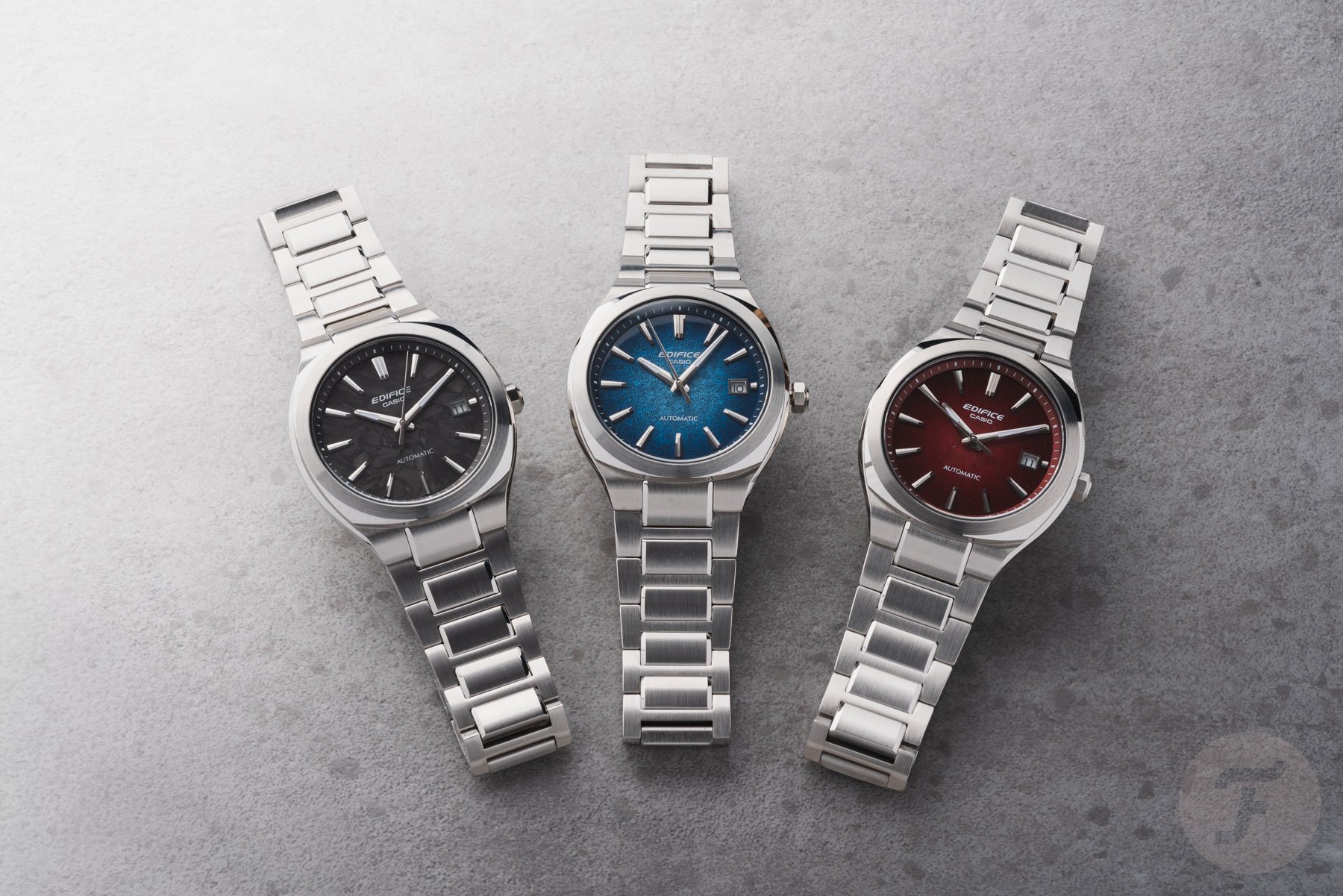
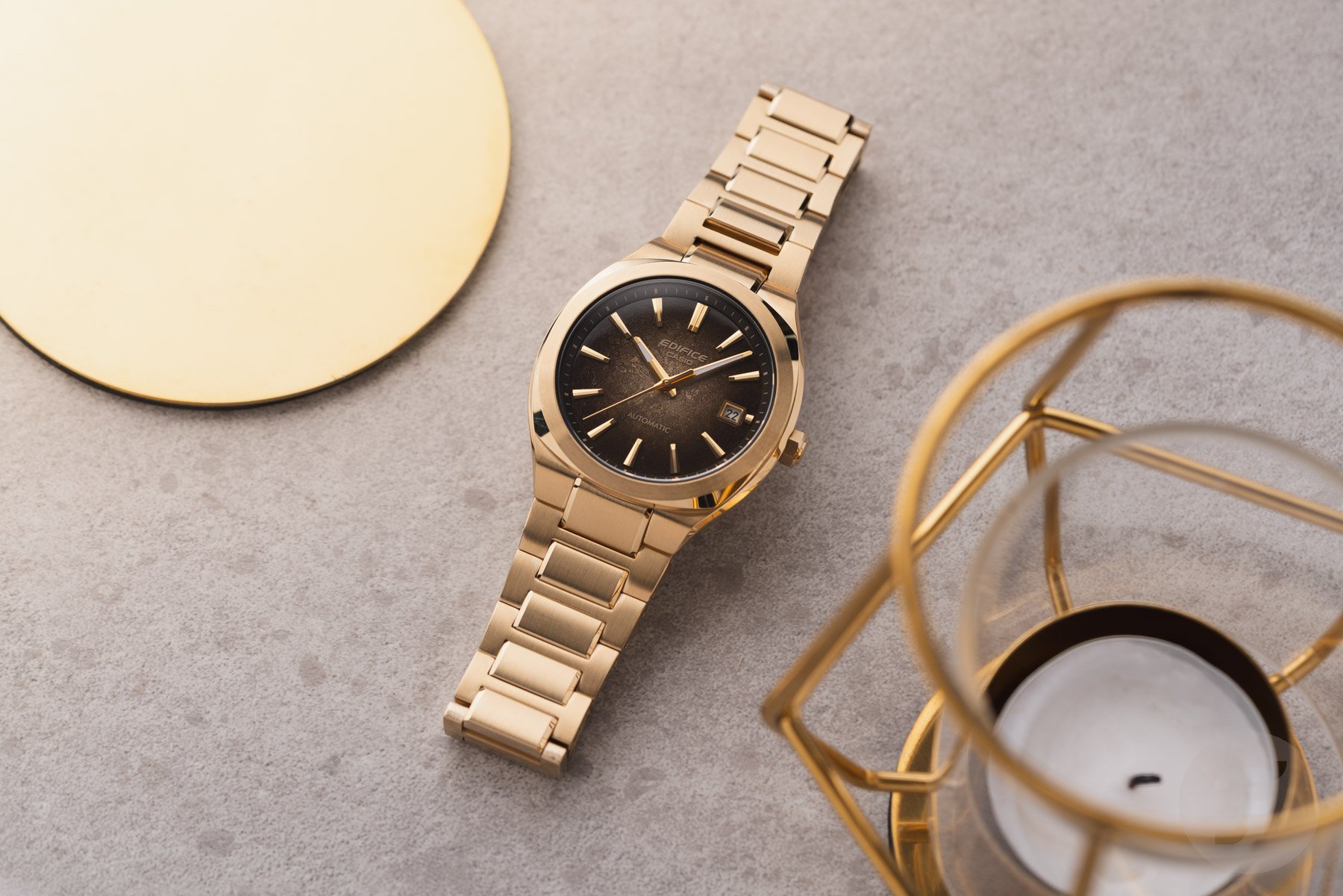
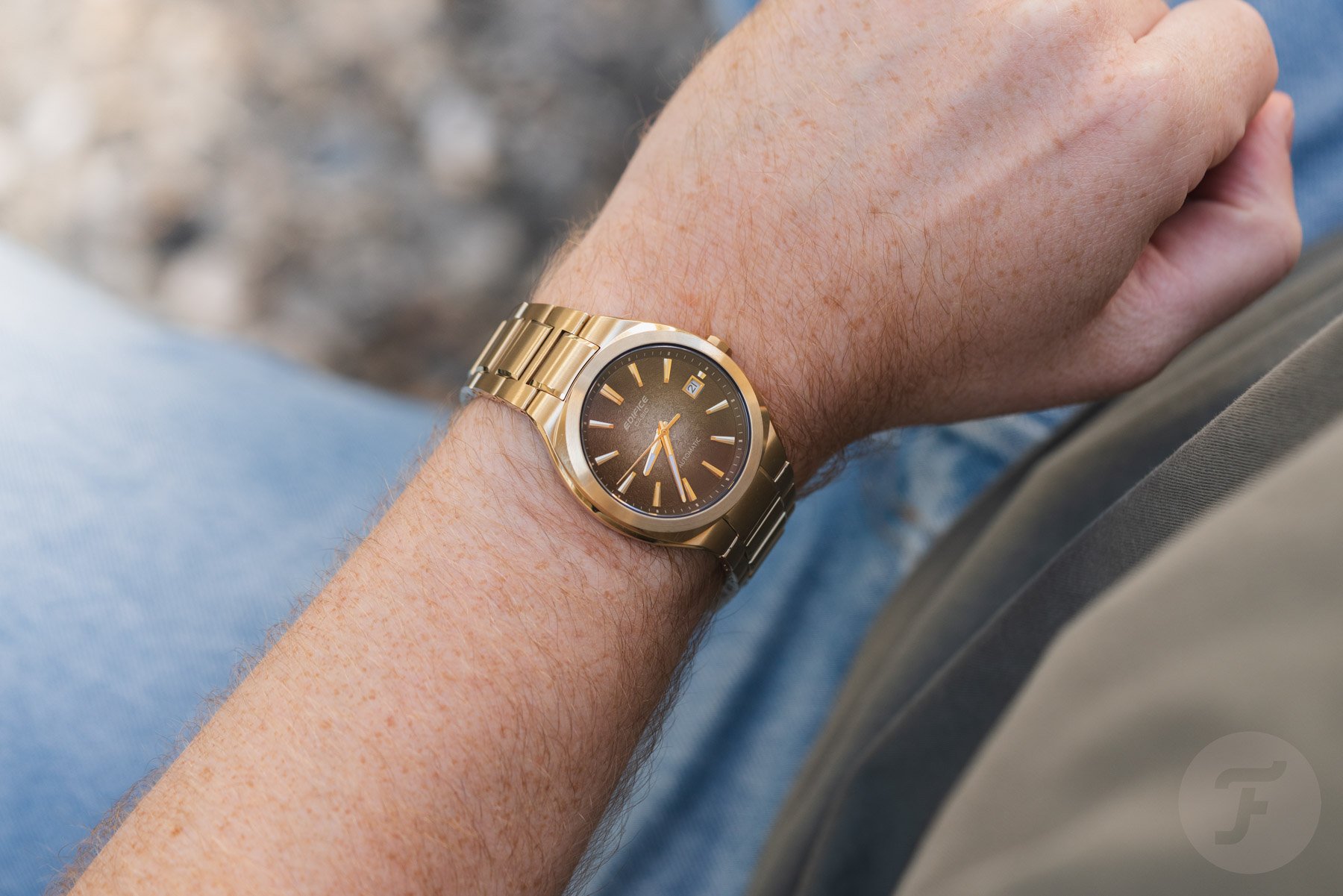
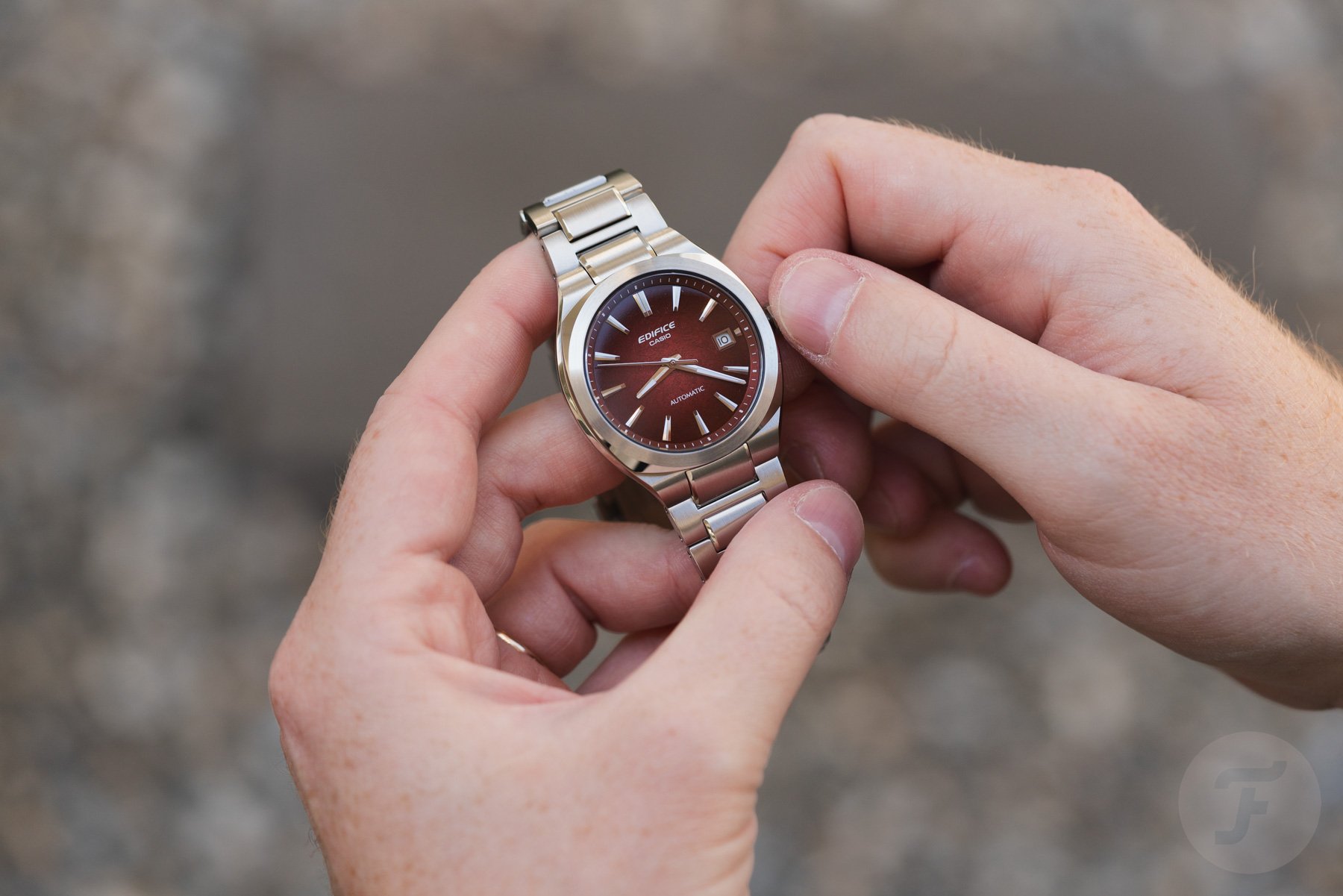
The new EFK-200 comes in no less than five different versions. There’s the full-steel EFK-200CD-1A with a black forged carbon dial, the EFK-200D-2A with a textured blue dial, and the EFK-200D-4A with a textured burgundy dial, all of which cost €299. The gold/brown EFK-200DG-5A is a steel watch with a PVD coating, priced at €369. These versions all feature an integrated H-link bracelet.
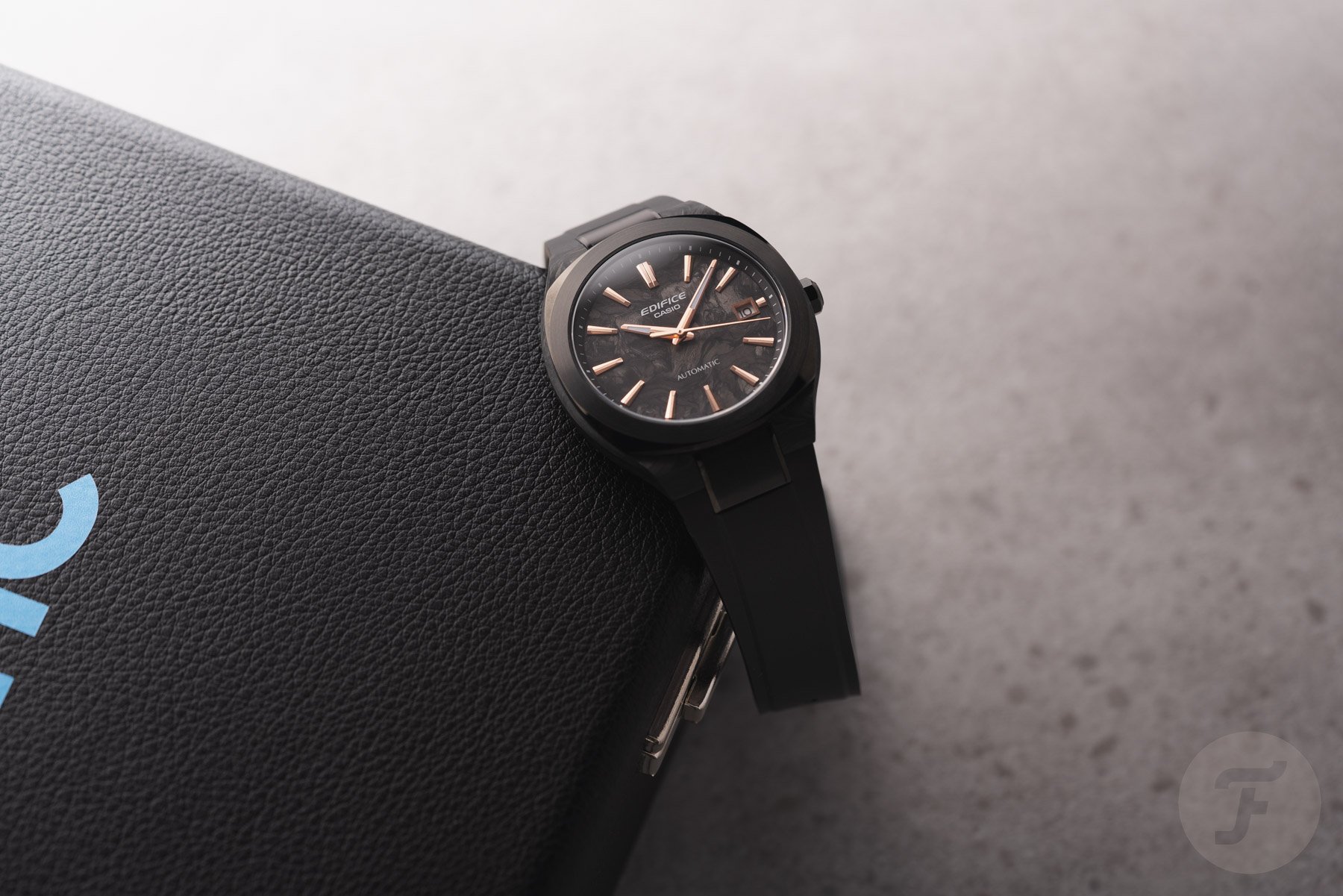
The all-black EFK-200XPB-1A features a partially carbon- and stainless-steel case, a black resin bracelet, and costs €449. This black Edifice Automatic, with its rose gold-colored dial accents and hands, weighs 81 grams, while the other three versions weigh 153 grams.
All models feature a sapphire crystal over the dial, a screw-in display case back, and a water resistance rating of 100 meters. The full-steel models have a 38mm case diameter with a length of 43.6mm, and a thickness of 11.9mm. The composite reference EFK-200XPB-1A is slightly longer at 43.8mm, a bit larger at 38.8mm in diameter, but the thickness of 11.9mm is the same.
Study of evolution
Evolution is normally a slow process. Not at Casio. The EFK-100, the first of its kind, was slightly bigger than the new EFK-200 series. The EFK-100 had a diameter of 39mm, a length of 43.5mm, and a thickness of 12.5mm. As you can see, the evolution is minimal, but it affects the proportions. And as you know, every tenth of a millimeter counts when it comes to watches. In the Spring of 2026, another evolutionary step happened when Casio launched the EFK-110 Series, the second generation of the mechanical Edifice. These watches measure 38mm in diameter, are 11.8mm thick, and have a 43mm lug-to-lug length. As you can see, the EFK-200 has the same diameter but is slightly longer and measures 0.1mm thicker. The new proportions don’t create a world of difference. The case will continue to fit most wrists well enough.
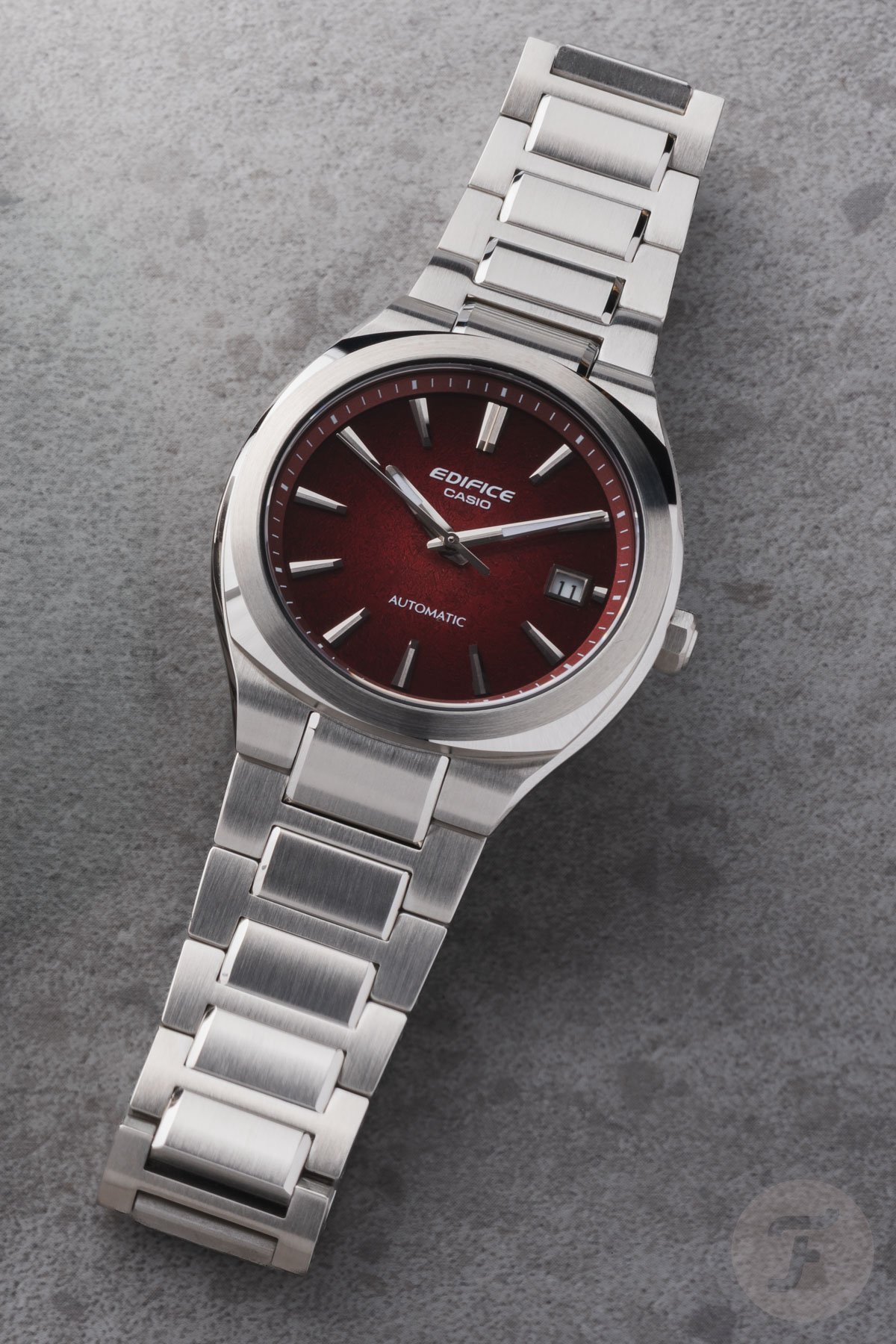
The biggest evolutionary step is how the H-link bracelet (which now has slightly more rounded links than before) connects to the case. Much more seamlessly than before, and therefore much more pleasing to the eye. The rounded H-links are combined with center links with mirror-polished edges to create a refined look.


Inside the case beats the Miyota 8215, which debuted in the EFK-110 and replaced the Seiko NH35 from the EFK-100 series. As a result, the date window moved from 6 to 3 o’clock, providing visual proof of the change from Seiko to Miyota. The unidirectional winding 8215 has a frequency of 21,600 vph and a 41-hour power reserve. The Japan-made caliber is visible through a transparent case back and has an average accuracy of -20/+40 seconds per day. Like the NH35, it also hacks and can be hand-wound.
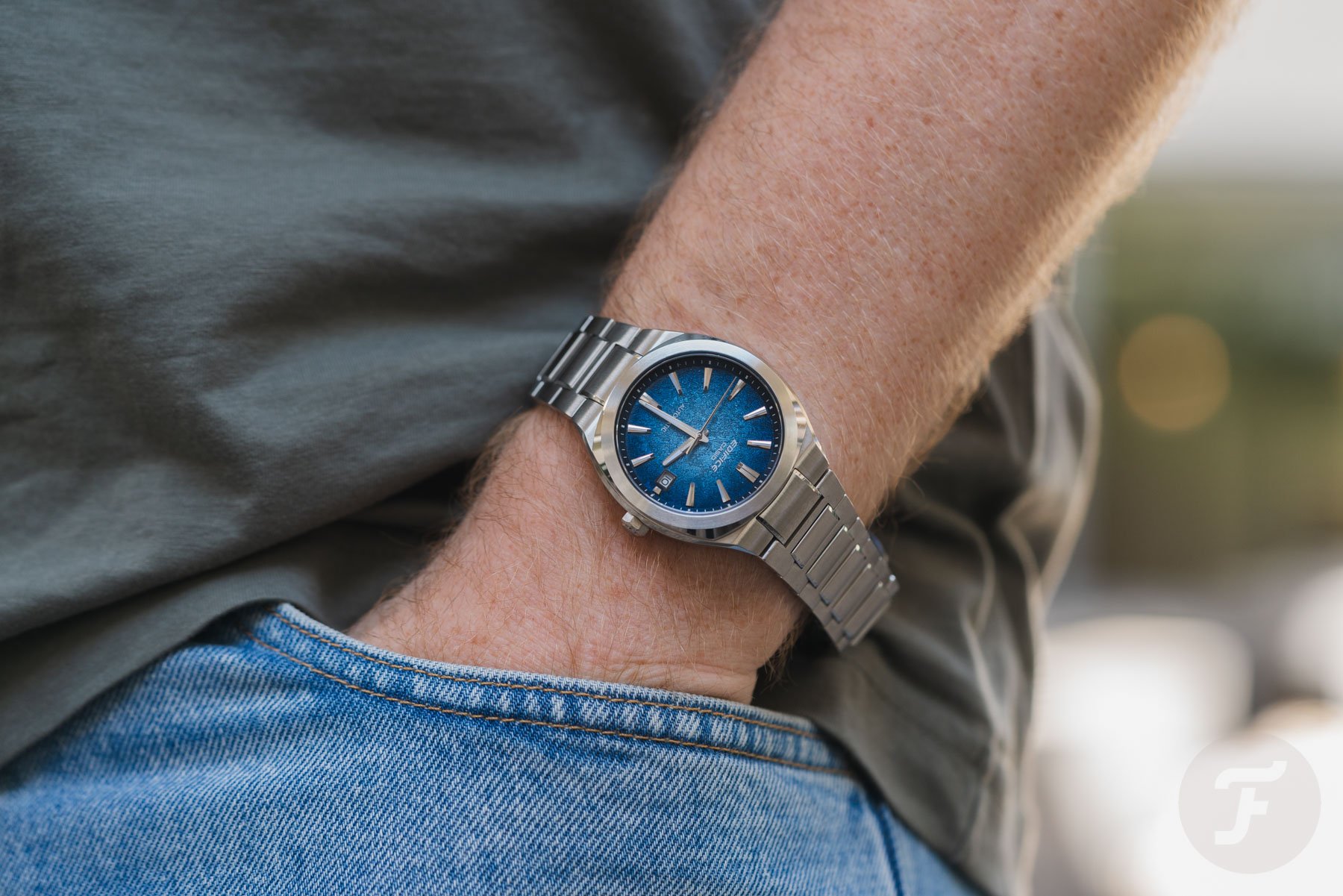
Wearing the different EFK-200 variations
The difference between the EFK-100 and the updated EFK-110 was mostly notable in the size difference. The slightly slimmed-down EFK-110 felt a bit more “retro,” as my colleague Thomas described it. The new EFK-200 differs from the EFK-110 mostly in aesthetic and finishing details. The watch feels tighter and sharper, but also is slightly more rounded. As I wrote before, the case and bracelet are better integrated. On top of that, the bracelet’s slightly less edgy look enhances its overall presence.
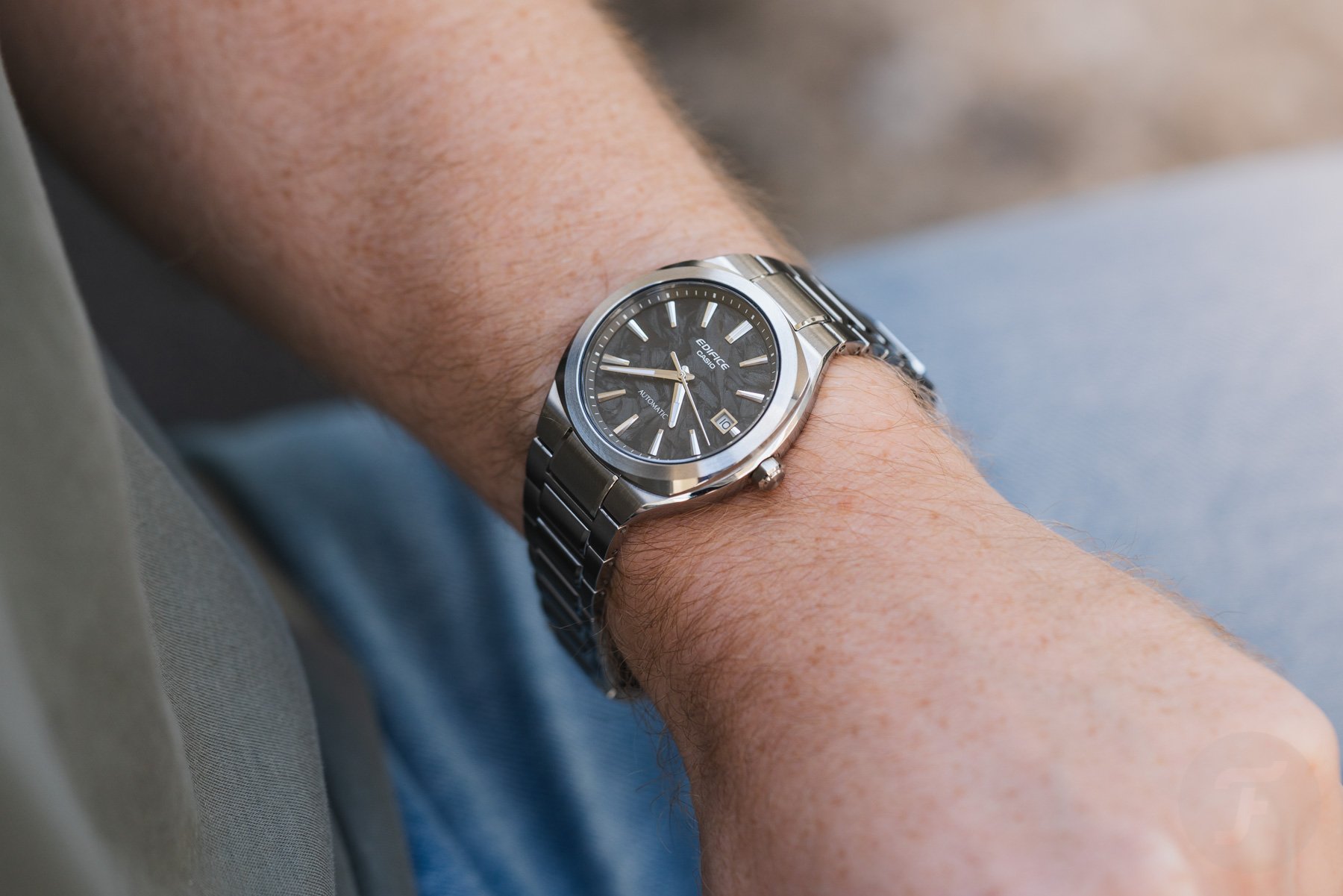
The price has evolved as well. A full-steel EFK-110 with a dial in black forged carbon costs €279, while the same features in an EFK-200 will set you back €20 more. Money well spent, I’d say. The evolutionary timepiece looks a bit more refined and mature than the previous one, although that’s also partly a matter of taste. If you prefer a slightly edgier look, the EFK-110 is the one for you. If you like your watch a bit softer, the EFK-200 is your best bet. In any case, the latest version comes with a better-integrated bracelet and a differently textured dial.
Which one to pick?
Four of the new EFK-200s on offer are direct evolutions of an existing series. The gold-tone option is all-new. €369 buys you a watch that tries to look 100 times more expensive. I’m sure that it can pull off that trick in some cases, but when you’re amongst seasoned watch enthusiasts, the golden-brown EFK-200DG-5A won’t fool anyone. Don’t get me wrong, it looks fancy and all, but it doesn’t truly walk the walk. The other four, however, do. My favorite is the full-steel, €299 EFK-200CD-1A with a black forged carbon dial. The dial matches the image I have of Casio, whereas the colored dials have a more traditional look I associate with more traditional brands. However, that does make them very attractive to those in the market for a mechanical watch with a serious look and a very attractive price.
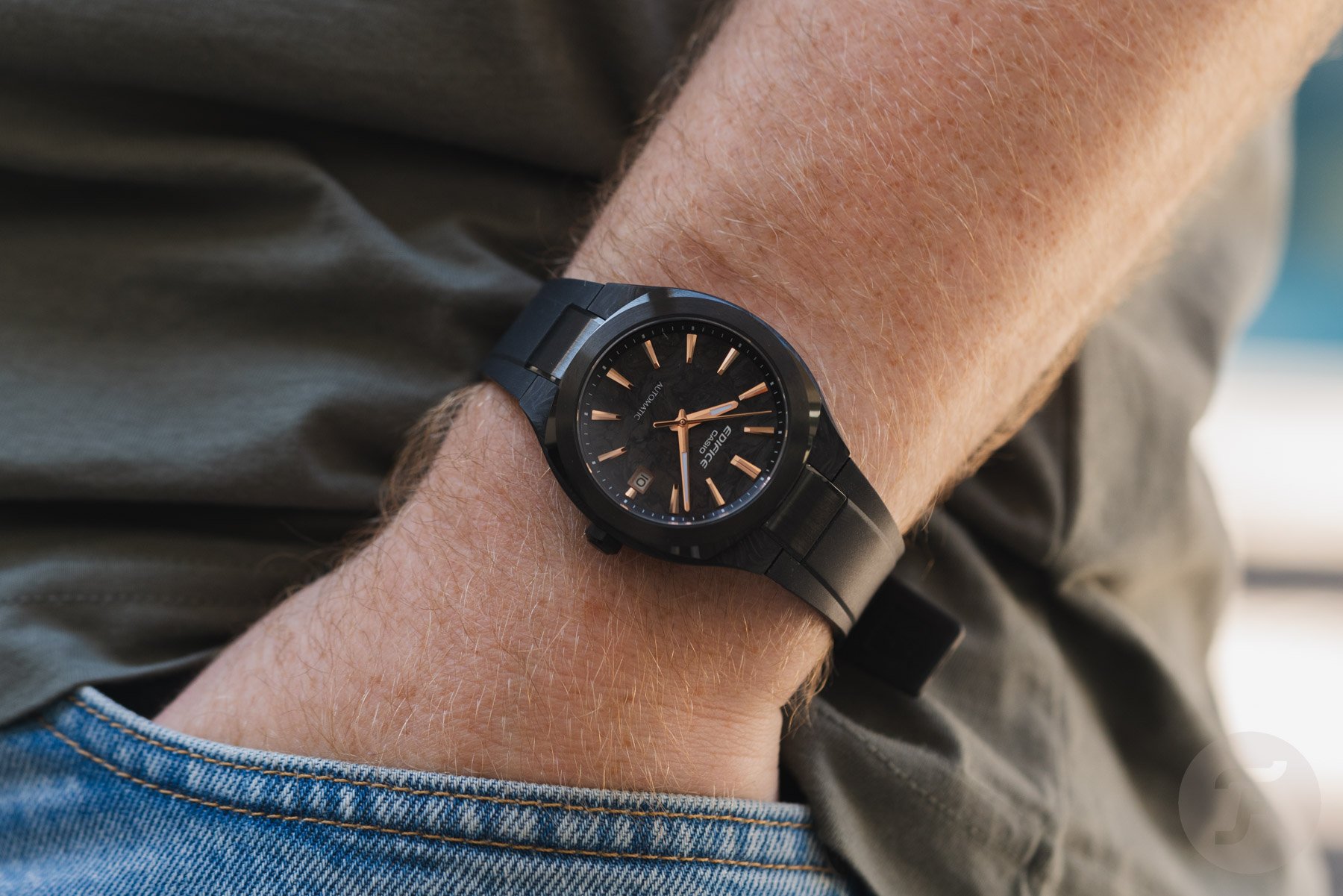
The all-black EFK-200XPB-1A, featuring a partially carbon- and stainless-steel case, forged carbon dial, and a black resin bracelet, is the most expensive of the new batch at €449 and also the sportiest. Still, the rose gold-colored accents add a dressy touch, keeping the watch from looking too sporty; it’s very much a modern Edifice. And just like the initial EFK-100 watches and the second-generation EFK-110 collection, the new solid and serious EFK-200 series offers a good amount of watch fun at a good price. So, does a mechanical Casio make sense? Well, it certainly is an attractive gateway into the world of mechanical timepieces. If you’re looking to snap up one of these peices for yourself, you can do so over at Casio’s website.


What do you think of the new EFK-200? And which one would you pick? Please let me know in the comments section below.
This is a partnership post. Learn more.