The Quiet Case For Neo-Vintage Jaeger-LeCoultre

Neo-vintage Jaeger-LeCoultre is an enthusiast’s delight. The watch that crystallized this for me is a Reverso Classique reference 252.8.86. It is a steel, manually wound example from the mid-2000s that recently crossed the block at auction. On paper, it is an unremarkable watch. No complications, no complications, and a relatively humble (for the brand) view of the Reverso. For me, this is precisely the point. It gets the basics right and nails the brief.
With this in mind, I want to humbly make the case that neo-vintage Jaeger-LeCoultre (like neo-vintage IWC) is a fantastic and fruitful space for the savvy collector and enthusiast. There are multiple references that present intriguing options for us watch nuts. Now, this isn’t to cast shade on modern JLC, which has been on a winning streak lately, but we are lucky to have some fantastic options in the neo-vintage space, too. Let’s explore this.
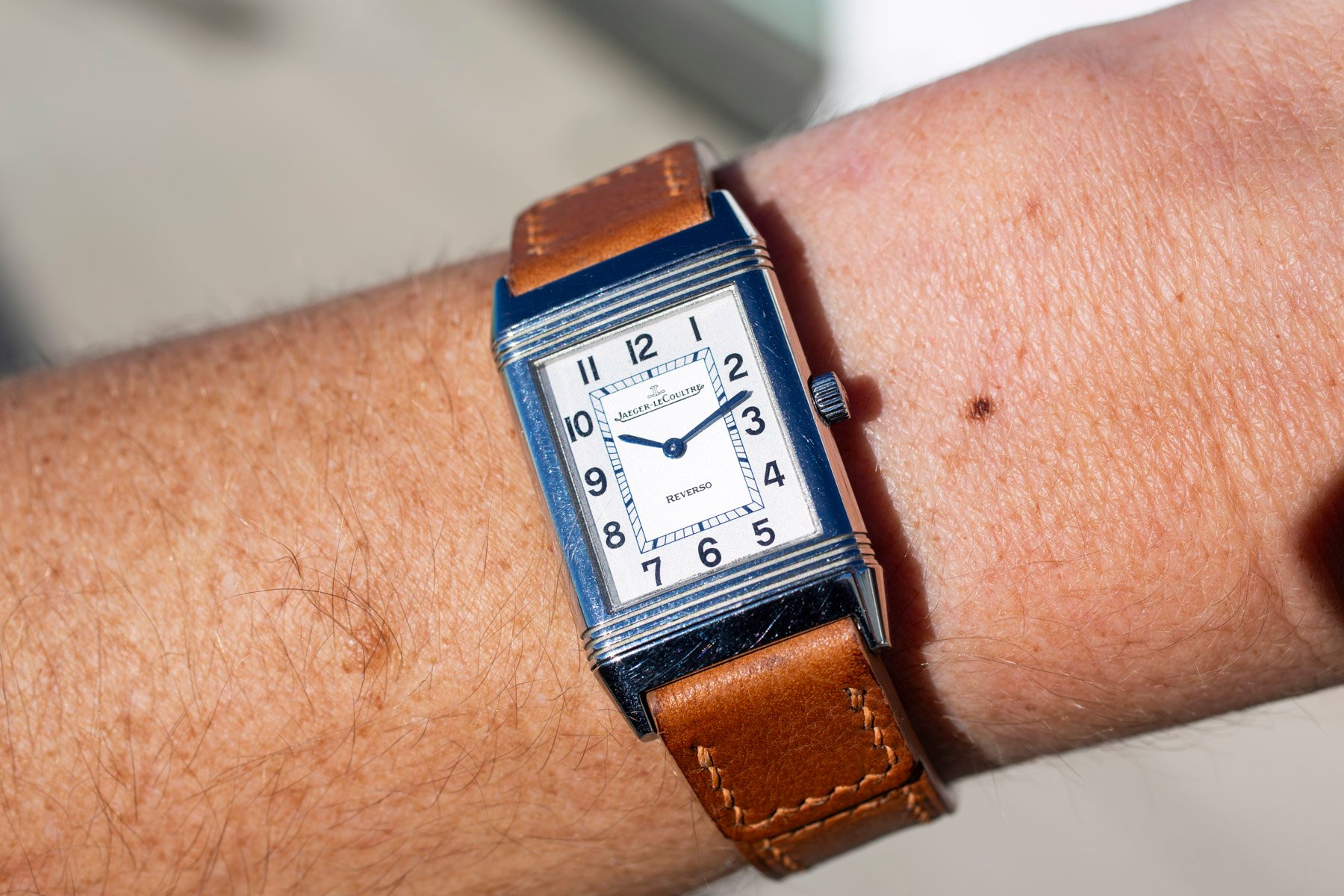
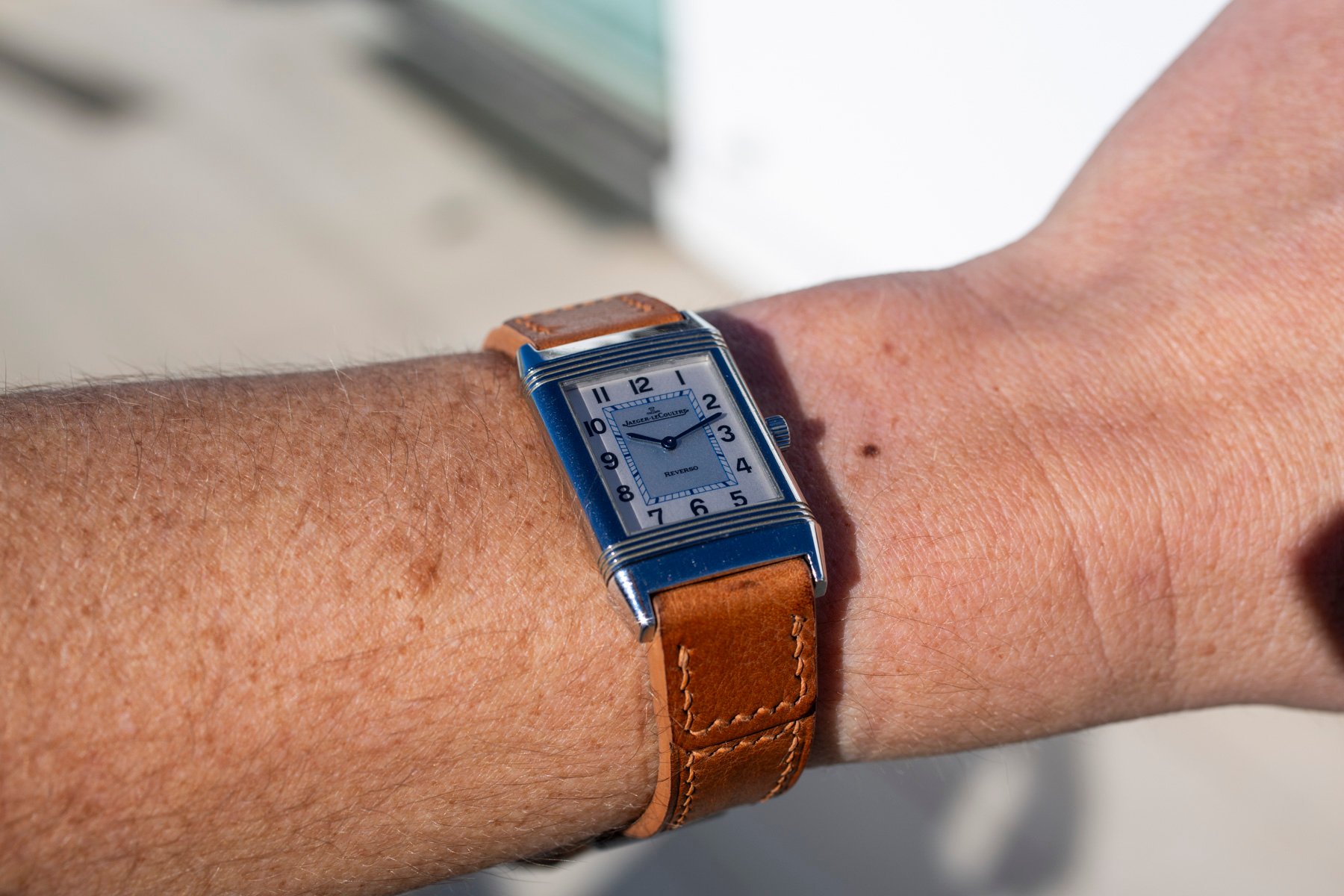
The JLC Reverso Reference 252.8.86
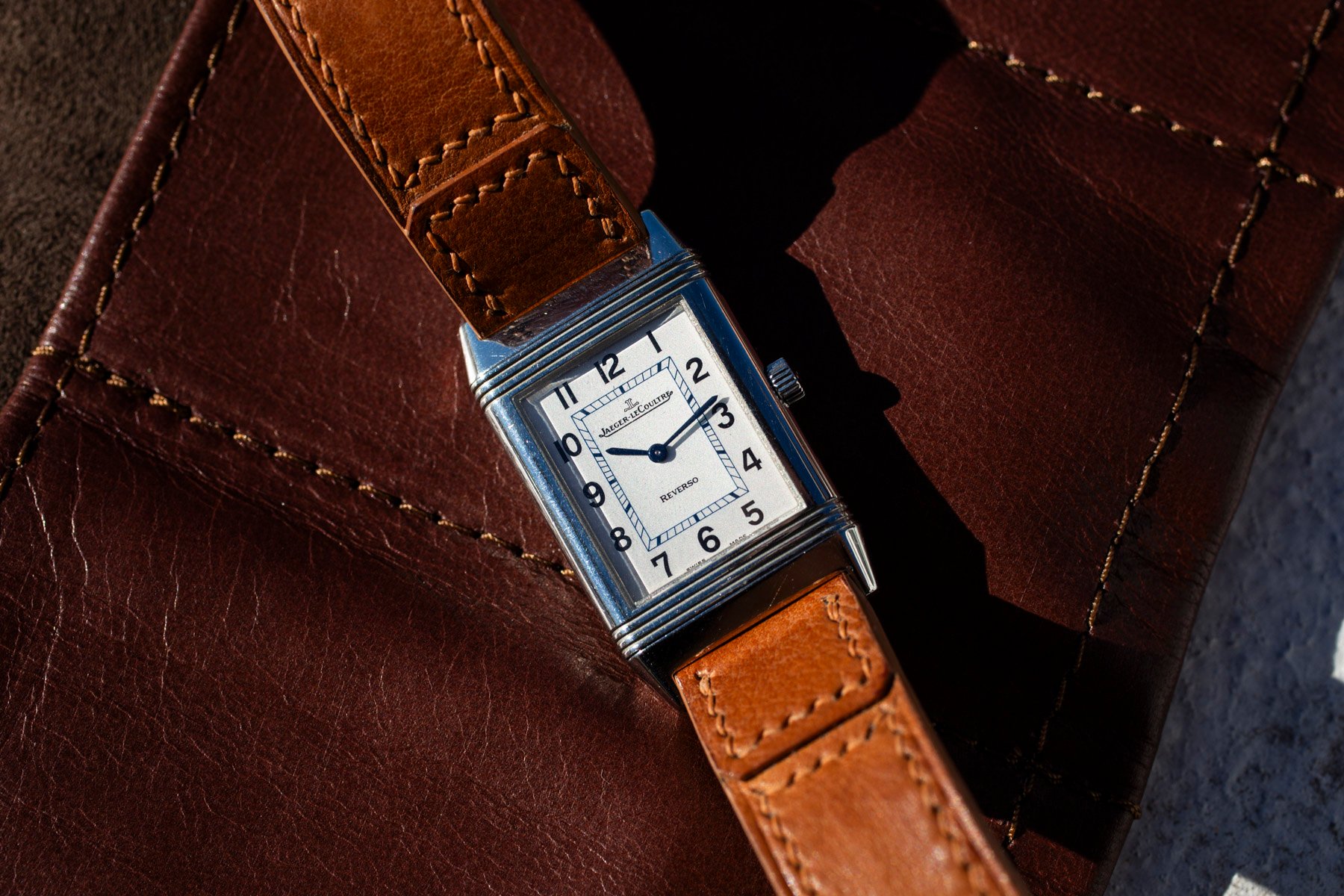
Let’s focus on one of my favorites, a watch that a friend of mine actually owns. The Reverso Classique strips JLC’s signature design back to its 1931 essentials. The steel case is rectangular, measuring 23mm by 38mm, mounted on a sliding carriage. That carriage still pivots with the same satisfying click that once protected polo players’ crystals. That mechanism is nearly a century old. The reference dates to the mid 2000s. The dial is monochromatic silver, with Arabic numerals and blued steel hands. It is simply beautiful to see in the metal.
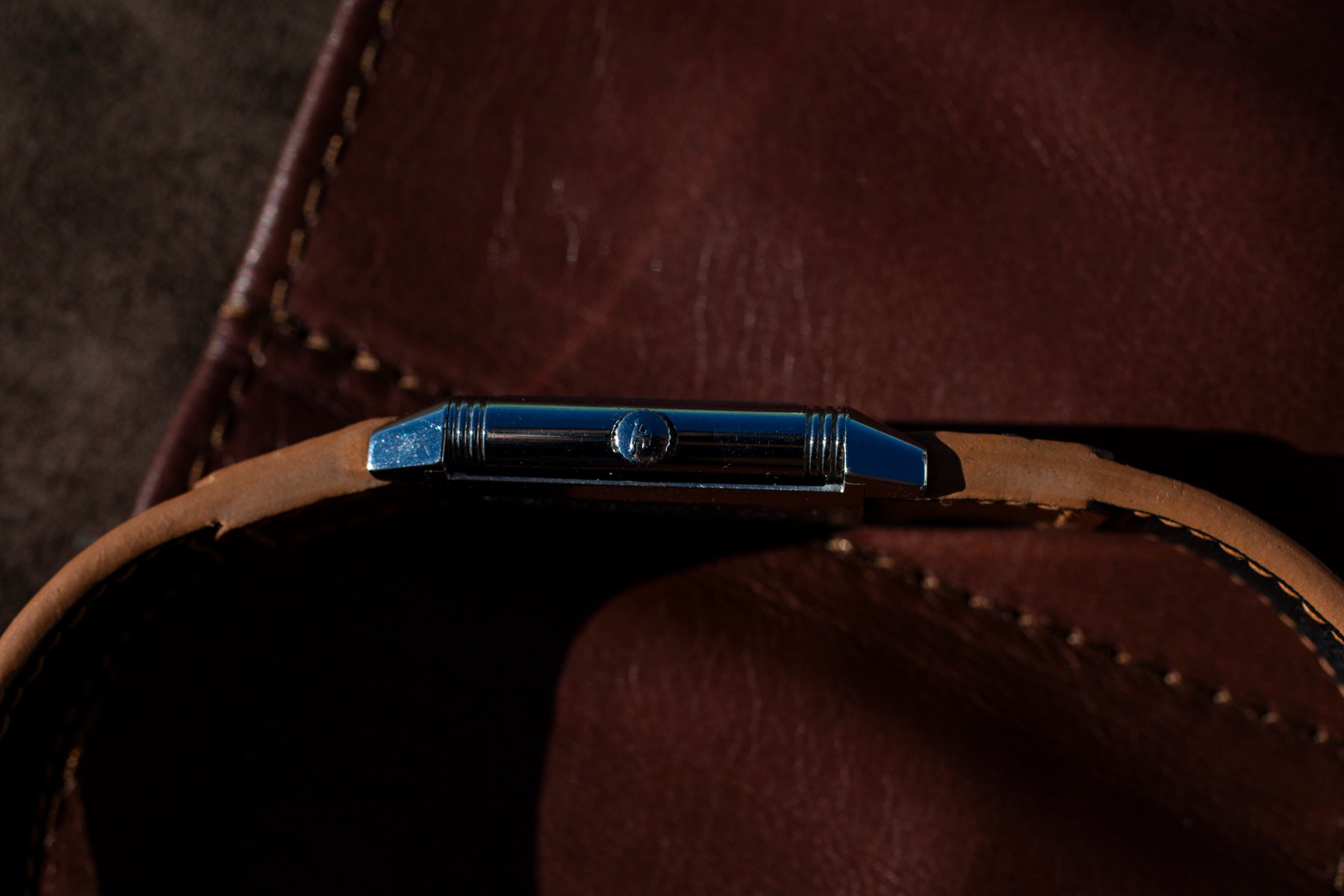
That combination is about as classically JLC as a dial gets. It runs on the manually wound caliber 846/1, a relatively simple yet wonderful mechanical movement. The overall feeling of this reference is both luxurious and humble. I chalk this down to the fact that JLC really focuses on the small details, and this shows, but also because the size of the watch is unisex, and the dial is so simple and legible. It still feels close to the tool watch spirit of the original Reverso.
Why neo-vintage Jaeger-LeCoultre is intriguing
The late 1990s through the 2010s is an unusually interesting stretch for Jaeger-LeCoultre, specifically, for a few converging reasons. First, this is the period when JLC was re-establishing itself as a manufacture in the fullest sense. It designed, produced, and finished its own movements, cases, and components, largely in-house at Le Sentier. That level of vertical integration is rare. Second, it predates the era when every brand called itself a manufacture. Back then, the term still meant something quite specific, and the craze for “in-house” as a marketing term hadn’t quite hit full swing. JLC’s claim to the term within this window is earned in the literal sense.
The third reason, and this matters most for buyers rather than admirers, is that prices are quite reasonable. The secondary market has not yet caught up to what these watches represent. Steel sports watches from Rolex, Patek, and Audemars Piguet have gone through a well-documented reappraisal over the last decade. JLC has, for the most part, sat this out. You can buy a serious manufacture watch from this era for very reasonable prices. These watches are hand-finished, with nicely finished movements. They were designed by people who weren’t thinking about Instagram. Ah, those were the days, folks!
The Master Control line: “Exhibit A”
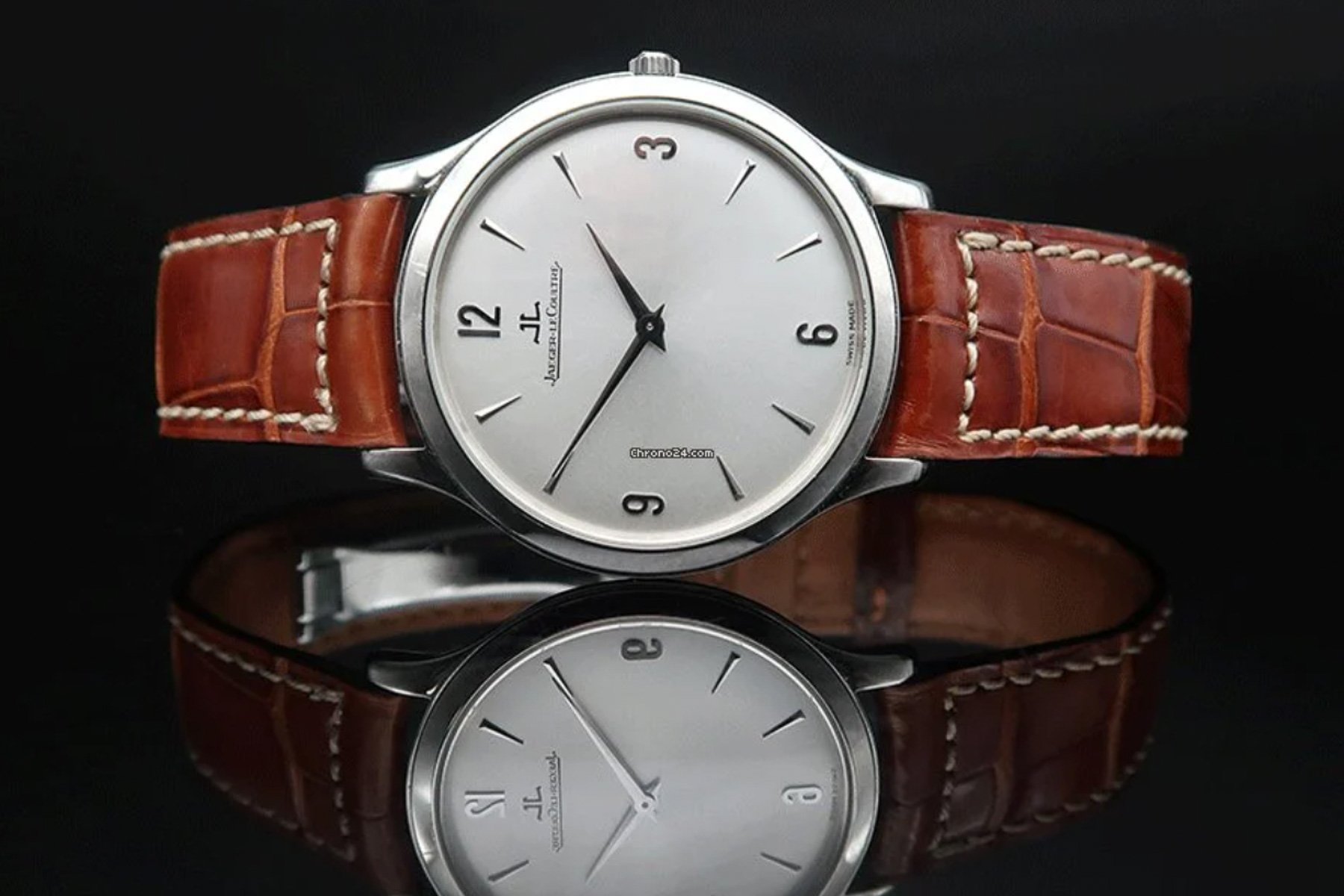
If you want the clearest illustration of this value gap, look at the Jaeger-LeCoultre Master Control collection. They were JLC’s answer to a simple question. What should a serious, understated, everyday automatic look like? The answer was clean dials, clean case lines, and just an elegant and beautiful daily driver. Movements were also subjected to JLC’s own thousand-hour control testing. That testing happened before the watch ever left the manufacture.
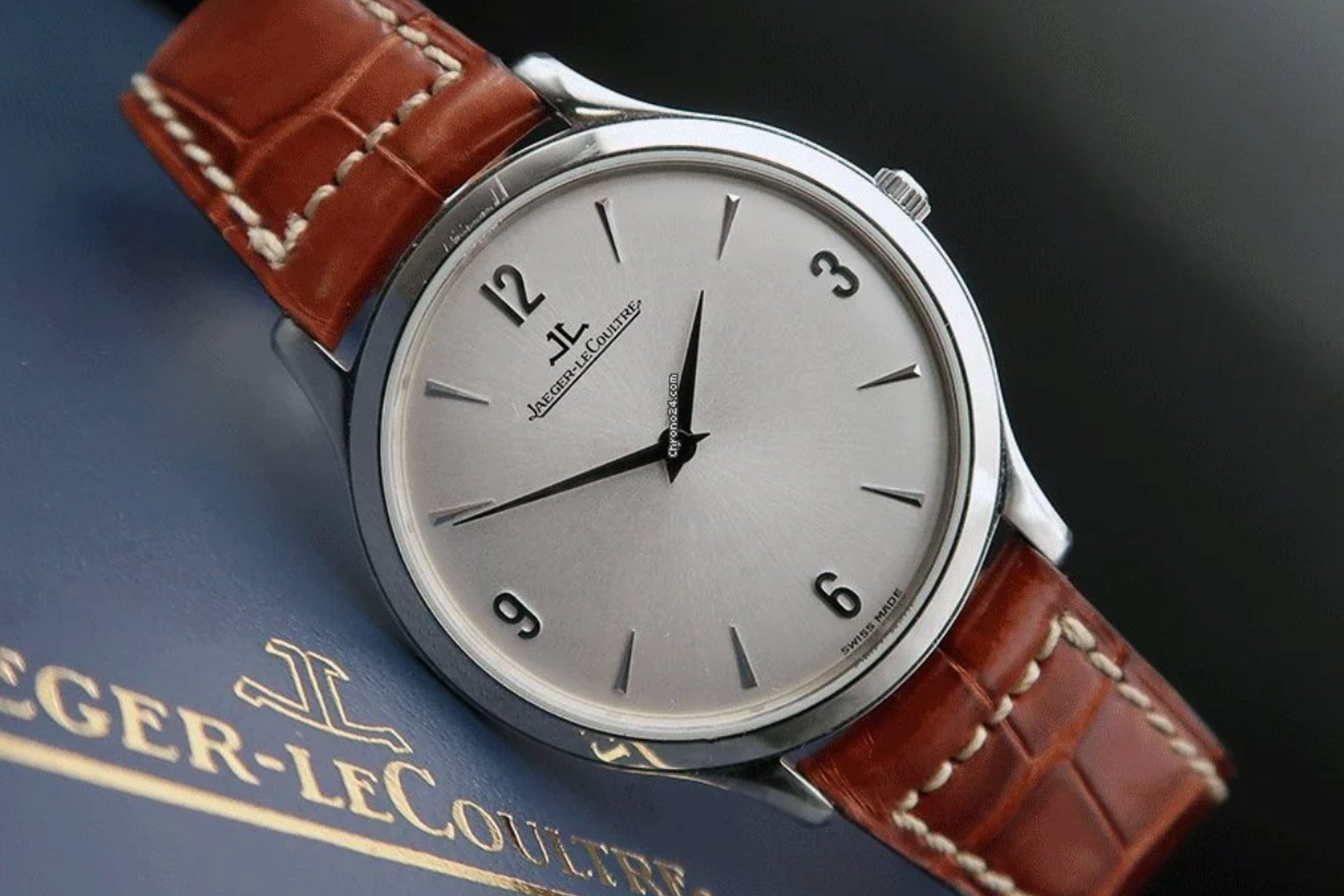
It is a self-imposed standard, well beyond basic chronometer certification. These are watches built to the same philosophy as the brand’s more celebrated complications, just without the complications. On the pre-owned market, clean Master Control examples from this period trade for a fraction of the price of comparable automatics elsewhere. Many of these Master Controls are a case study in simple elegance, good proportions, and excellent quality. I must say that I have often cast a longing gaze at a second-hand Master Control while trawling through online listings.
Jaeger-LeCoultre: The enthusiast’s calculus
None of this is a promise of future value retention, and that isn’t really why I am in the hobby (nor is it the reason many of you are). Nobody should buy a watch, neo-vintage JLC included, purely as a speculative instrument. This era of Reverso and Master Control production has practical considerations, too. Servicing a manual caliber like the 846/1 requires a watchmaker familiar with JLC’s architecture. But when you’re looking to buy a watch, always “buy the seller” and seek out what appeals to you, not just what you think might do well in the future. This is a hobby of the heart, not the head!
As an entry point into genuine, in-house Swiss watchmaking, this window of JLC production is hard to beat. This isn’t an homage to fine watchmaking, or an adjacent brand riding on category association. It’s the real thing. A Reverso Classique like my friend’s 252.8.86 does not shout. It has been right since 1931, because the design is classy, elegant, and pure (in my opinion). Right now, it is also quietly affordable. Well-kept examples are still comfortably available under €5,000. I believe that combination will not last forever.
Concluding thoughts on neo-vintage Jaeger-LeCoultre
You could ask, “Why, Henry, do you not own a JLC already then?” The answer is simple. Lifestyle. I often take my watches swimming, and many Jaeger-LeCoultre models I enjoy don’t have the water resistance to suit this lifestyle. This is why the Rolex Oyster is so good, because it gives you that elegance and the water resistance to match. And so I write this article as a watch enthusiast who does not even own a JLC, whether new, neo-vintage, or straight up vintage. This has to change, as I greatly enjoy the brand’s history. The prices of modern JLC watches, even though they represent real investments by the brand in its watchmaking and enhancements to existing product lines, are simply beyond my current means.
Thankfully, we need only cast our eyes back a decade or two to find JLC watches that are much more attainable and with designs and proportions that are wonderful to behold. Proportions are an important factor to consider because, in my humble opinion, the best Reverso’s are the ones that are generally smaller in overall dimensions and truer to the original. But what do you think, Fratelli? Would you consider getting a neo-vintage JLC for your collection? And if so, what would you get? I look forward to reading your comments.