Could Quartz Save The Swiss Watch Industry?

In case you haven’t noticed, the entry point to owning a mechanical watch has become significantly more expensive. The days when you could buy a nice mechanical Hamilton, for instance, or a microbrand watch that would even include a sapphire crystal for around €400 seem gone forever. The entry-level Hamilton Khaki Field Mechanical 38 will set you back €625. Six years ago, that watch retailed for €495. That’s a dramatic price jump with real budgetary effects. It’s rather discouraging for aspiring watch enthusiasts with limited spending power. But it must also be discouraging for brands in that price segment to see that interest in their (once-affordable) mechanical timepieces is waning. Could watches outfitted with quartz movements, the battery-powered arch-nemeses of Swiss watch brands in the 1970s and ’80s, be the savior this time? Could quartz save the Swiss watch industry?
At what point does an affordable mechanical watch stop being “affordable”? That’s the million-dollar question. Paying for the emotion of wheels and springs has its limits, especially when you’re on a strict budget. A watch is more than its movement. Yes, that’s the heart of the watch, but specs like sapphire glass, power reserve, and water resistance also matter. So do harder-to-grasp emotional elements, like storytelling and soul. Simply including mechanical movements no longer suffices for watches that fall short on specs and lack certain emotional components while costing much more than quartz watches that tick those boxes. Sales of entry-level mechanical watches are under pressure. Most likely, that’s because they don’t justify the premium over quartz watches.

Tissot PRC100 Solar 34mm
Could quartz save the Swiss watch industry? Mind the gap
Brands at the top of the Swiss watch industry are doing much better than those in the lower-middle range. While that’s not a new phenomenon, the gap between them is widening. In terms of units made and shipped, the market is also getting smaller. Swiss watch exports have fallen by roughly half since 2011, to around 14.6 million units. Smartwatches and inexpensive quartz watches have made life increasingly difficult for traditional brands offering lower-end mechanical watches. Interestingly, export value remains remarkably high, reaching approximately CHF 25.6 billion last year. Here, the gap between high- and low-end becomes most visible. Although fewer watches are being sold, those watches are becoming considerably more expensive.
Now, brands like Rolex, Patek Philippe, and Audemars Piguet were already in the upper echelons. We must focus on the brands that slowly but steadily crept into previously foreign price segments. This shift toward higher prices, or premiumization, isn’t a surefire strategy for success, especially if the product and its perception stay more or less the same while prices rise to unrecognizable levels.
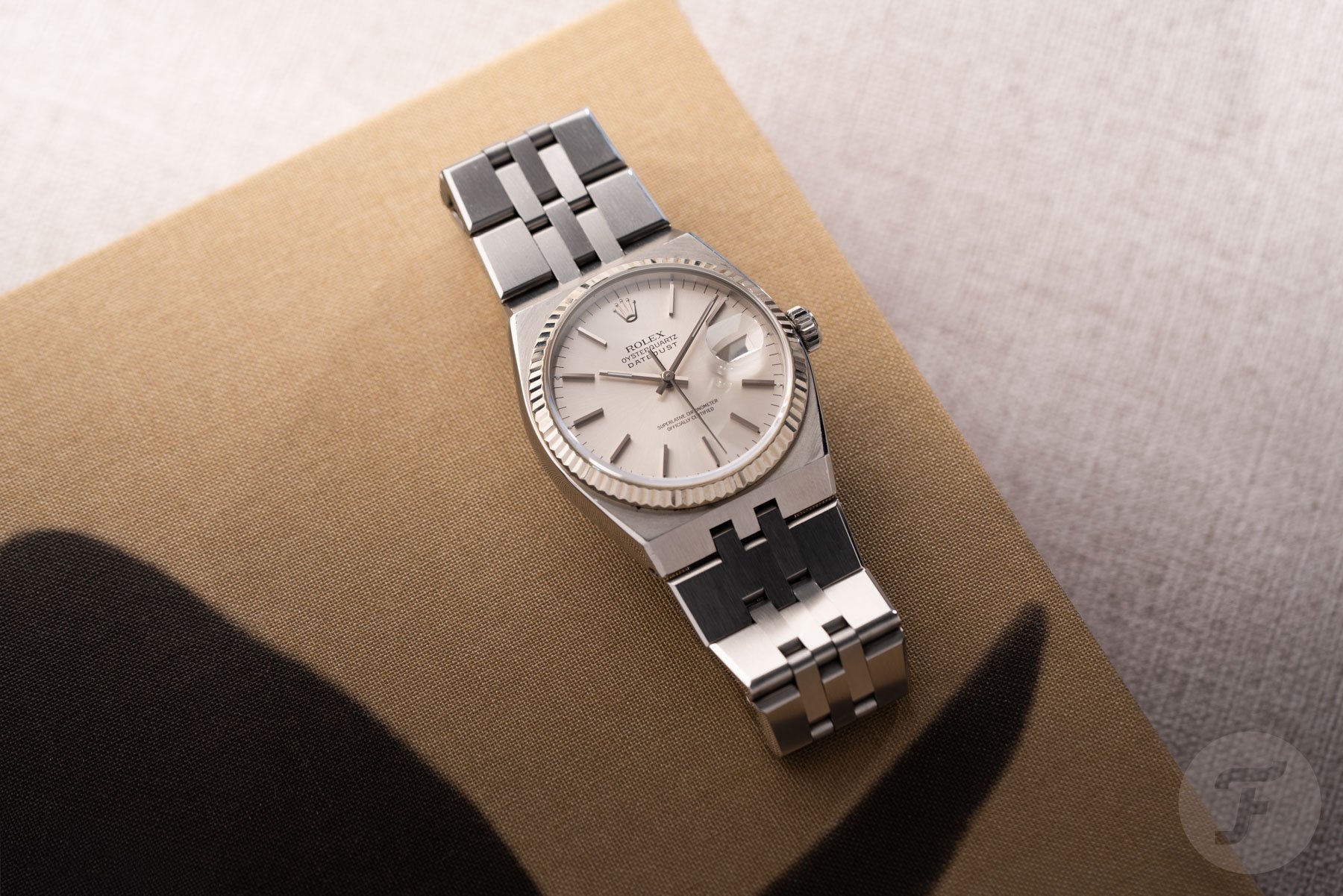
The vintage Rolex Oysterquartz Datejust ref. 17000 offers plenty of battery-powered emotion
The elephant in the room
I vividly remember when TAG Heuer had an Intel logo on the side of its 2015 Baselworld booth. Smartwatches had the Swiss watch industry scared out of its mind. It felt like the Quartz Crisis 2.0. But the crisis never really happened, and after other brands entered the premium-smartwatch market, they gradually let it go because those new electronic wristwatches didn’t really threaten them. Now the threat is more present. Unit-wise, Apple and Garmin devices outsell the entire Swiss watch industry by a considerable margin. Now, you can’t compare a smartwatch to a Rolex for plenty of reasons. But you can compare it to an entry-level mechanical watch because it is not a status symbol, it doesn’t hold its value, and it’s not much of an expression of traditional craftsmanship and heritage.
Without a justification for paying extra, mechanical watches will fall into the same category as smartwatches — products with a function but no distinct, original story to tell. And when you know that, for instance, Dutch households have less extra money to spend in 2026 than previously forecast, with average purchasing power expected to rise by 0.9% instead of 1.3%, paying extra for intangible or unquantifiable things like emotion requires serious consideration.
The choice between a clever product like a smartwatch and an archaic instrument that tells the time and nothing else, both literally and figuratively, increasingly falls in favor of the electronic device.
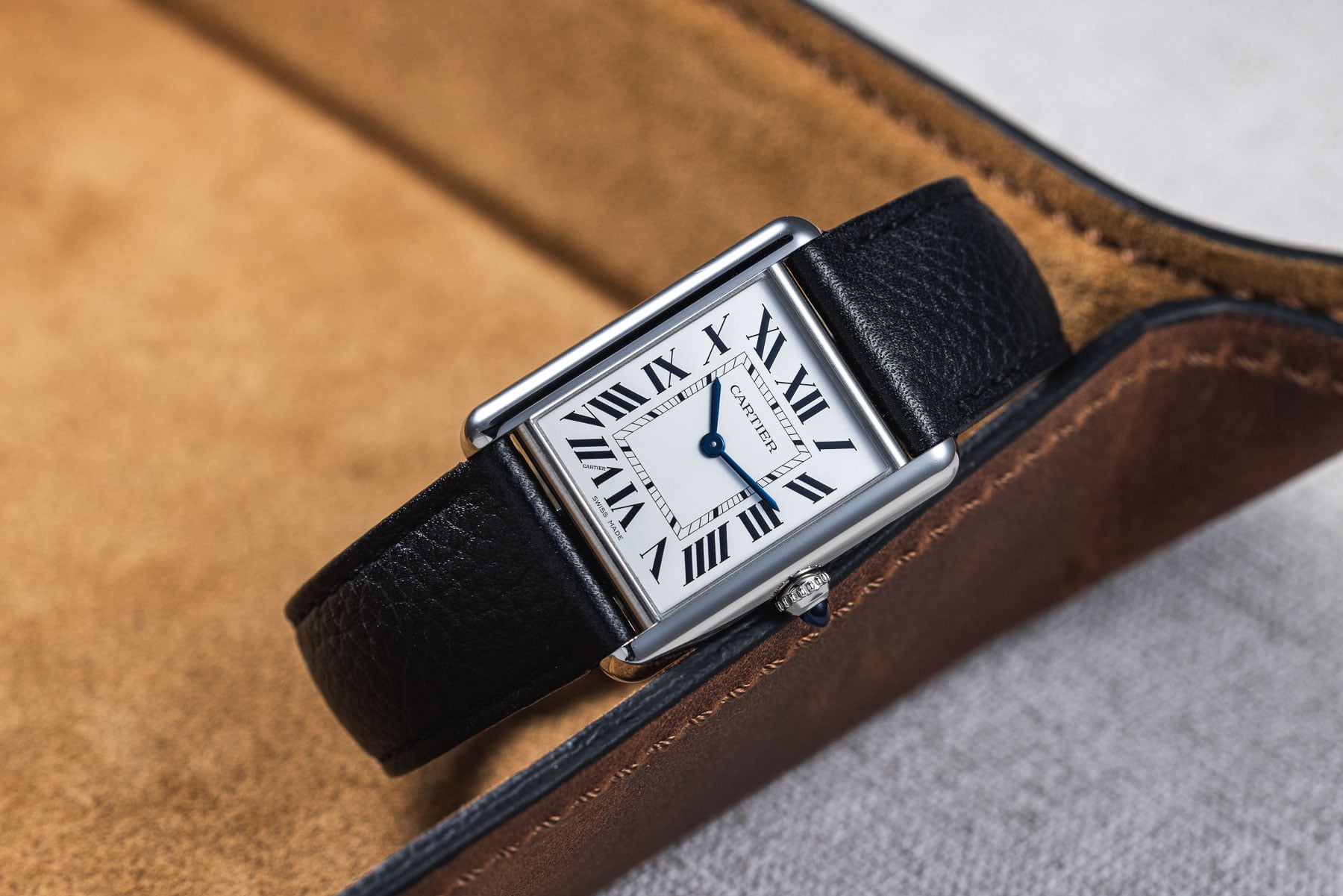
Cartier Tank Must SolarBeat
More than purchase price
One important consideration is that servicing a mechanical watch can now cost more than the watch itself. Is the answer to that problem the Swatch Sistem51? Well, its construction makes long-term maintenance challenging. At the same time, the Sistem51 movement is hardly a romantic expression of mechanical watchmaking, especially considering that you can get a free battery for your quartz Swatch whenever it runs out of steam.
Another important issue with mechanical watches is depreciation. Entry-level mechanical watches often lose a substantial percentage of their value as soon as they leave the shop. The tighter your budget, the more important the original purchase price becomes. It also encourages a more critical look at what you actually get for your money. A mechanical movement may have a certain appeal, but does that appeal justify the premium if the watch is expensive to maintain and hard to resell?

TAG Heuer Aquaracer Professional 200 with a TH50‑00 Solargraph movement
Quartz starts to make sense
Considering all this, spending a bit less on a luxury-looking watch with a quartz movement starts to look rather sensible. Sure, a battery-powered watch lacks the romance of a mechanical one, but it offers reliable timekeeping, lower maintenance costs, and fewer financial surprises. For someone looking for a dependable everyday watch rather than a mechanical object to admire through a display back, quartz is the sensible choice. The times they are a-changin’, including the economics. With ever-rising retail prices for mechanical watches and disproportionately expensive servicing, the lower end of the mechanical market risks becoming a harder sell. Quartz watches that closely resemble their mechanical counterparts are increasingly rational alternatives.
Quartz watches with up-to-date solar-powered movements can even have interesting stories. They show that quartz is not merely an interesting alternative in the sub-€1,000 segment but also an appealing proposition in higher price brackets. A TAG Heuer Aquaracer Professional 200 with a TH50‑00 Solargraph movement offers a hassle-free movement, a premium look, and a famous logo on the dial for €3,050. The Aquaracer Professional 300 Date costs €4,550. That €1,500 premium buys you a 2mm-larger case, a 100m increase in water resistance, and an automatic Sellita movement behind an all-steel case back.

TAG Heuer Aquaracer Professional 300 Date
Quartz opens different opportunities
Quartz watches have much to offer to consumers and the watch industry itself. By producing quartz watches, entry-level Swiss watch brands in particular can keep prices in check without sacrificing everything that makes a Swiss luxury watch appealing. Quartz movements from ETA and Ronda, which are cheaper to manufacture, assemble, and source, leave brands more room to position retail prices while maintaining profit margins. They also (re)open the door to those who want a decent Swiss watch but have little interest in spending an extra several hundred euros/dollars/pounds just to have mechanical parts inside it.
There are even design advantages. Quartz movements are typically much thinner than entry-level mechanical ones, making it easier to create small, elegant dress watches, which are “all the rage” now, as well as sporty chronographs without resorting to chunky cases. When brands need to work on a tight budget, just like many potential buyers, having a bit of extra design freedom comes in handy and broadens perspectives.
From lower manufacturing costs to the same confidence-inspiring logo on the dial, comparable, familiar designs at lower retail prices, and even improved aesthetics thanks to thinner movements, quartz offers a lot. If you’re looking for a reliable daily beater rather than a hobby, quartz makes a compelling argument on many fronts.
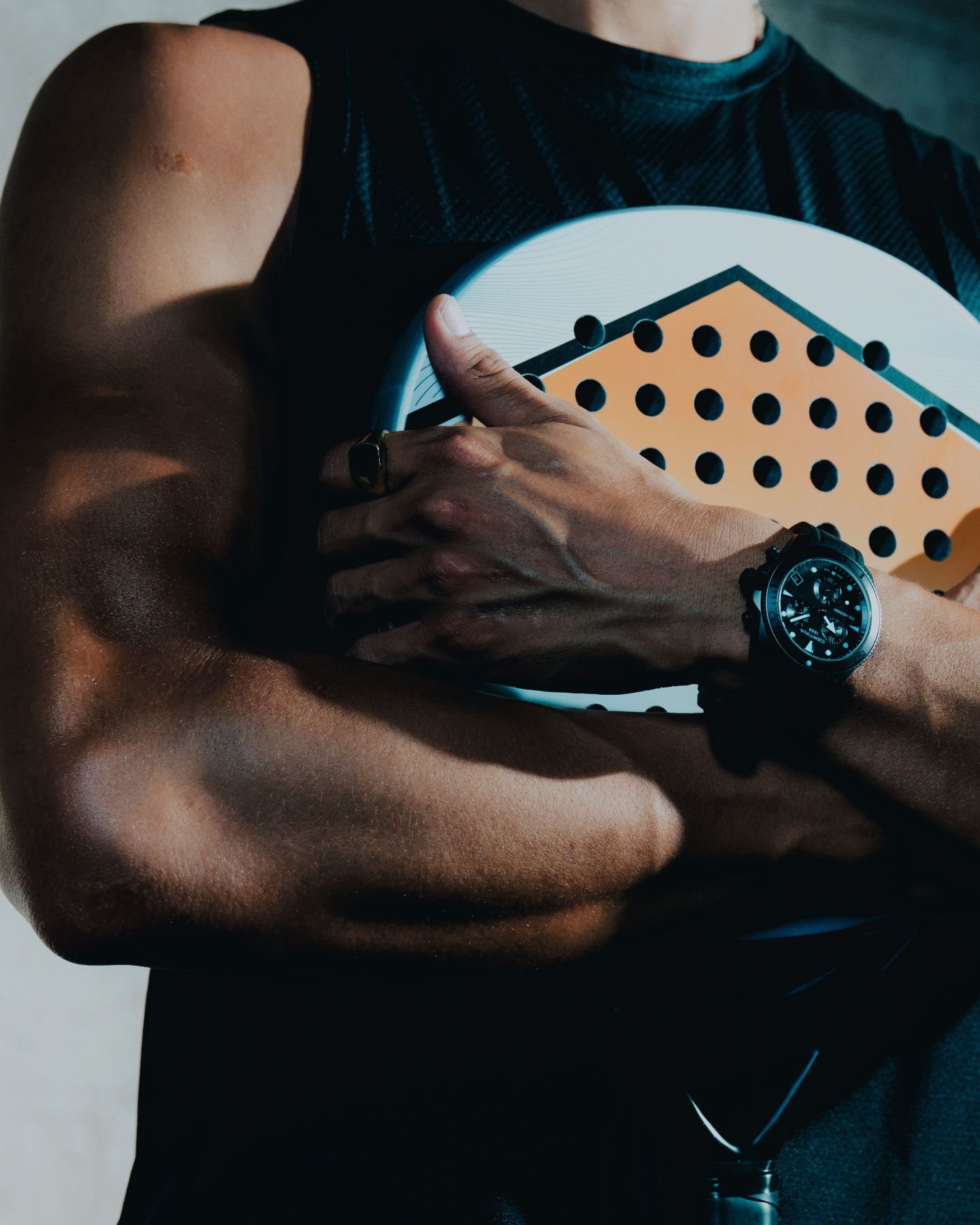
Certina DS Action Chrono
Quartz to the rescue!
Quartz allows brands to combine practical engineering with the appeal of the Swiss Made label. That designation is subject to specific legal requirements concerning the movement, manufacture, and Swiss value contribution. When a Swiss brand meets those requirements, quartz becomes an ambassador for Swiss watchmaking. It can still feel luxurious, but it will be sensible luxury, not just exclusivity due to a high price. Luxury can thrive on exclusivity, but exclusivity alone won’t save brands that want to survive in a challenging, changing market by simply raising their prices. There must be a correlation between price, product, and perception. And I think quartz can provide that. Quartz watches can strike a perfect balance.
What do you think? I once wrote that “quartz” is no longer a dirty word. Now I’m starting to believe quartz might be the key to keeping people interested in and buying luxury watches. Do you agree? And do you also think quartz can help traditional brands reinvent themselves and stay relevant to an audience they’re starting to lose? Please share your thoughts in the comments section below.