The Rolex Datejust With Green Ombré Lacquer Dials Proves Once More Why The 36mm Form Reigns Supreme

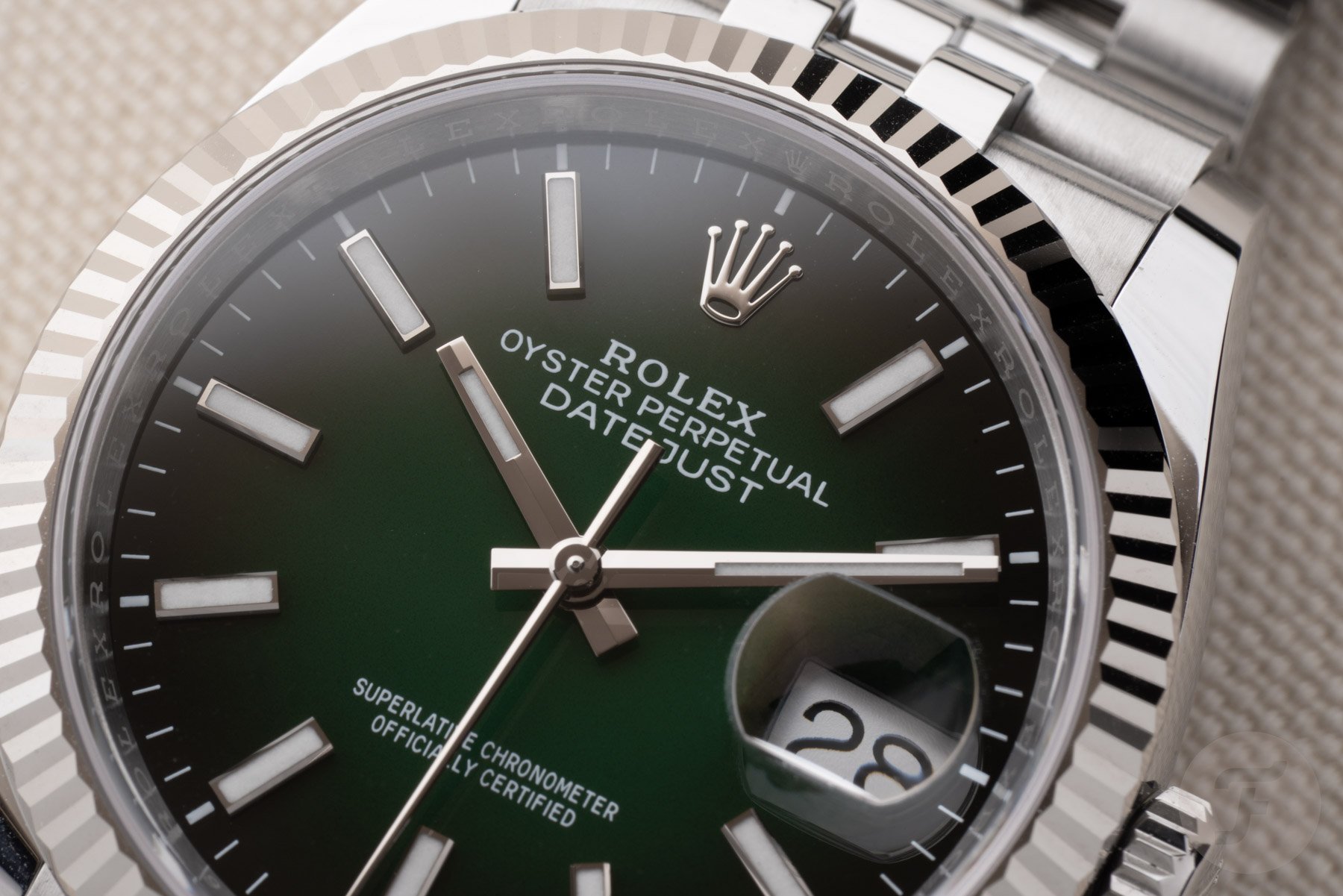
One of the Rolex novelties at Watches and Wonders 2026 was the Oyster Perpetual Datejust 41 with a green ombré lacquer dial (ref. 126334). Essentially, it is a new dial variant for the largest Datejusts in The Crown’s collection. However, it’s not just a new color but also part of a series of watches marking 100 years of the Oyster case. On top of that, the beautiful dial, unlike earlier executions, now features a fully lacquered base with a gradient created by applying black lacquer in concentric layers toward the edges. Despite this green dial’s introduction in the 41mm Datejust, we quickly learned it would also be available for the 36mm models. I recently had a chance to try out all the configurations and find the best option. Though the result will not shock anyone, the reasons became more apparent than ever.
Last week, we had a chance to see all of Rolex’s Watches and Wonders 2026 novelties at the brand’s office in Brussels. This meeting gave us even more time to spend with each watch than we’d had in Geneva. As a result, we could get a far better idea of what the different watches are all about. Among them was the full range of Datejust models with new green ombré lacquer dials. That includes the 36mm and 41mm versions with both smooth and fluted bezels on either an Oyster or Jubilee bracelet. First and foremost, I was in awe of the new dials. The beautiful richness of the green hue and the incredible depth that the ombré effect gives these dials are rather stunning.
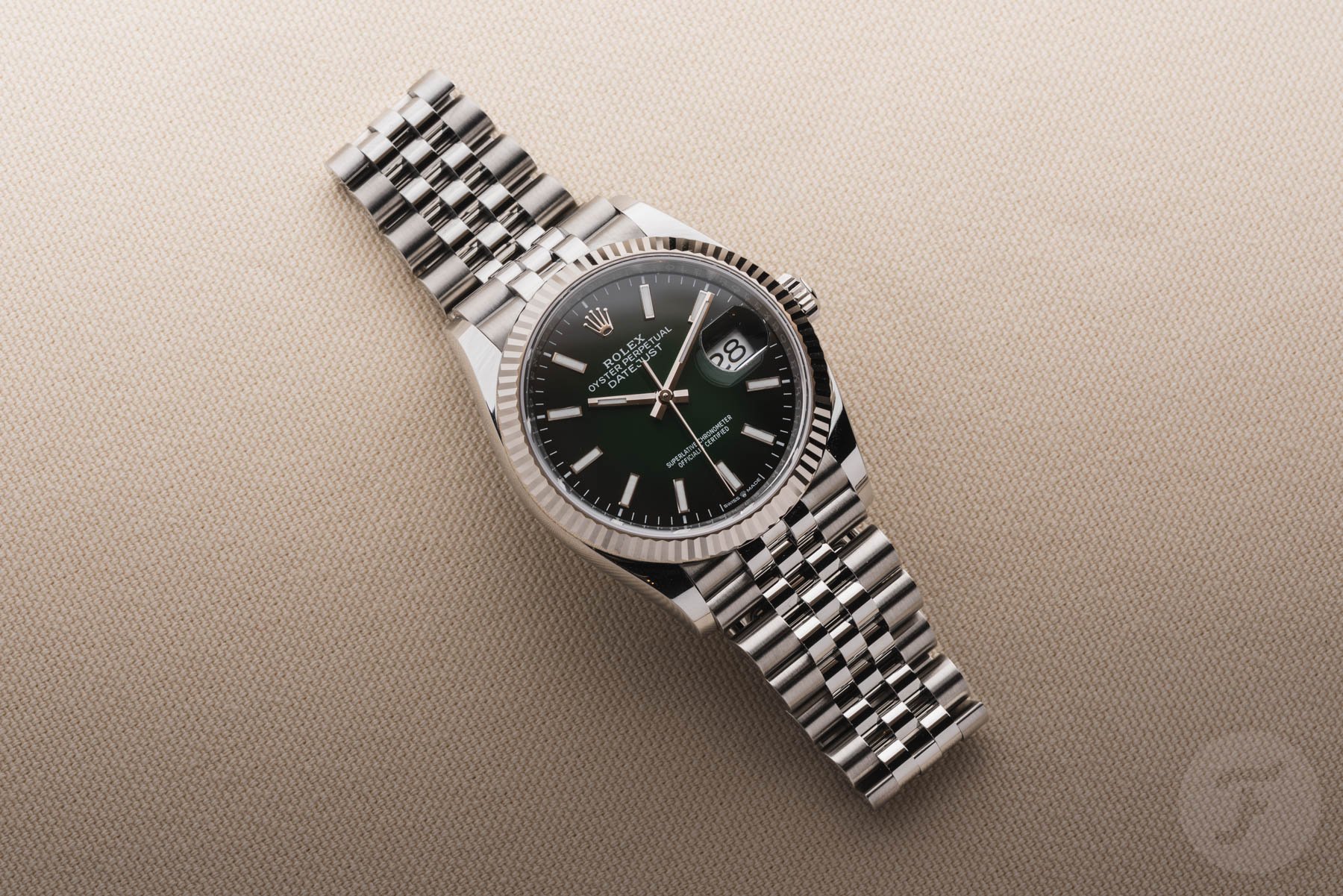
An overview of the new Rolex Datejust with green ombré lacquer dials
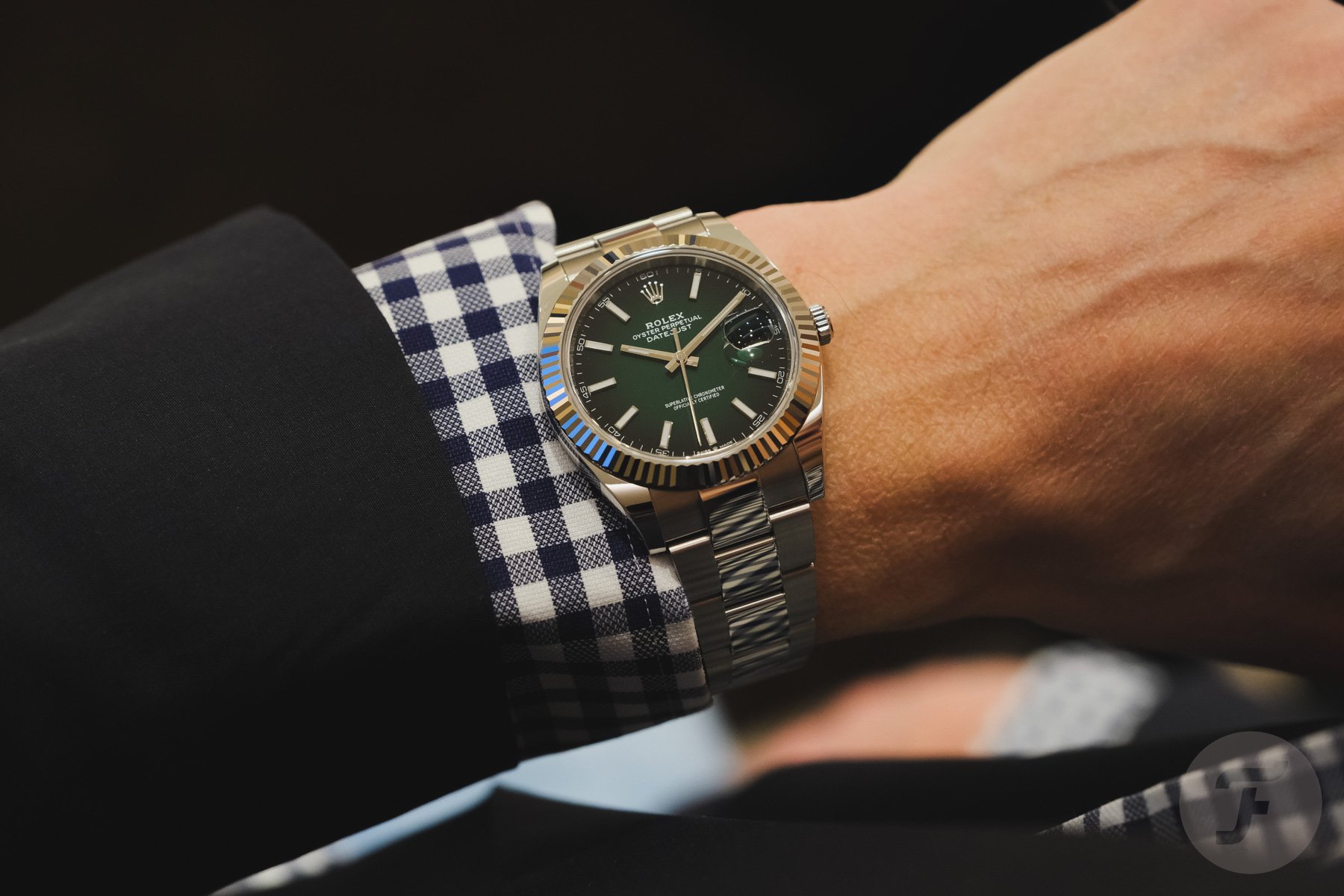
As mentioned, initially, The Crown presented this new Datejust as a 41mm model with a fluted bezel on an Oyster bracelet. While I hardly consider myself a purist when it comes to watches, it’s hard not to prefer a 36mm Datejust with a fluted bezel on a Jubilee bracelet. It’s the traditional look that makes a Datejust the classic that I love so much. It’s not a matter of being able to wear the larger model; rather, it’s a matter of historical context and visual proportions that have always made the 36mm option my favorite. But I’m always open to being proven wrong, especially when a dial is as nice as the new green ombré lacquer one.
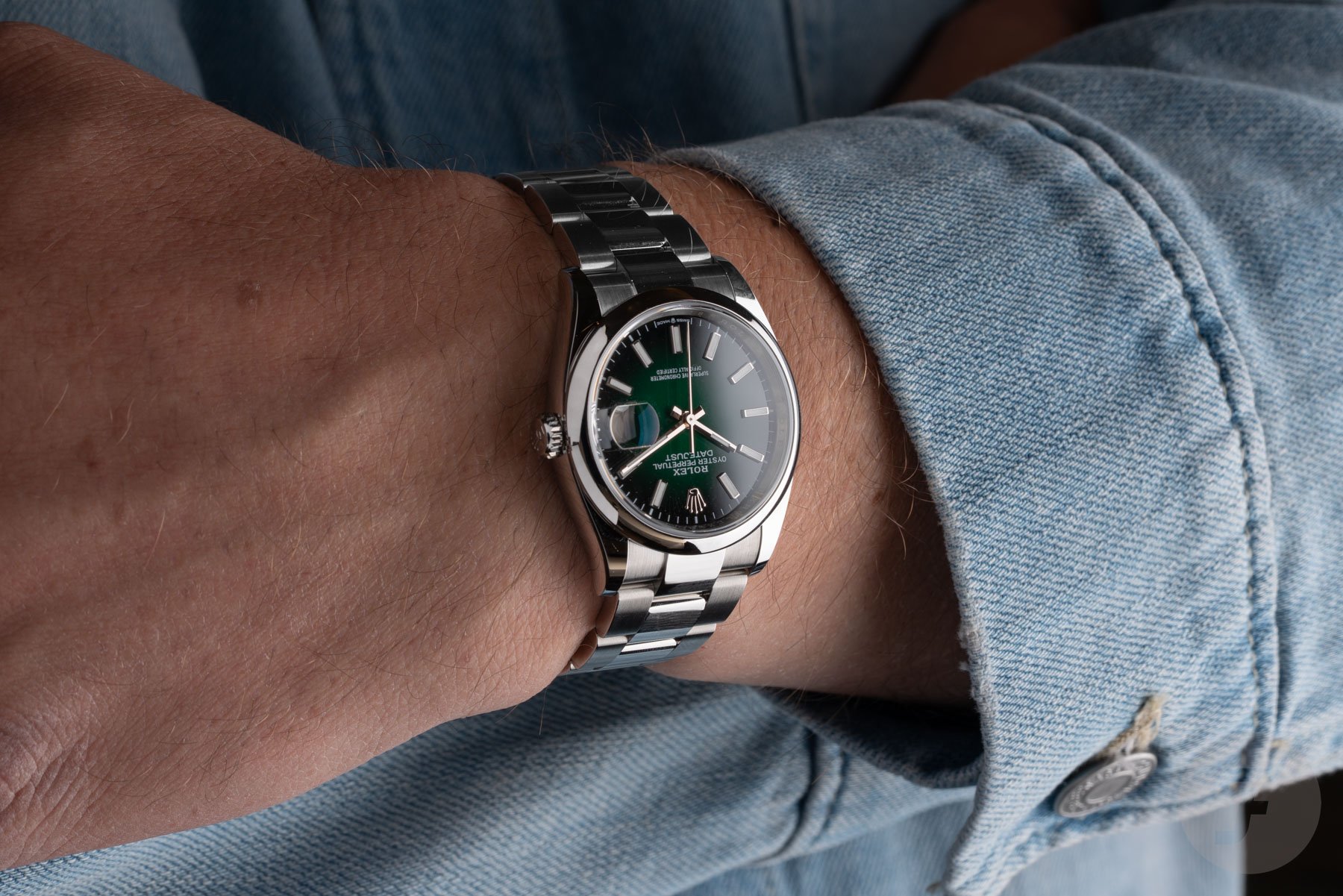
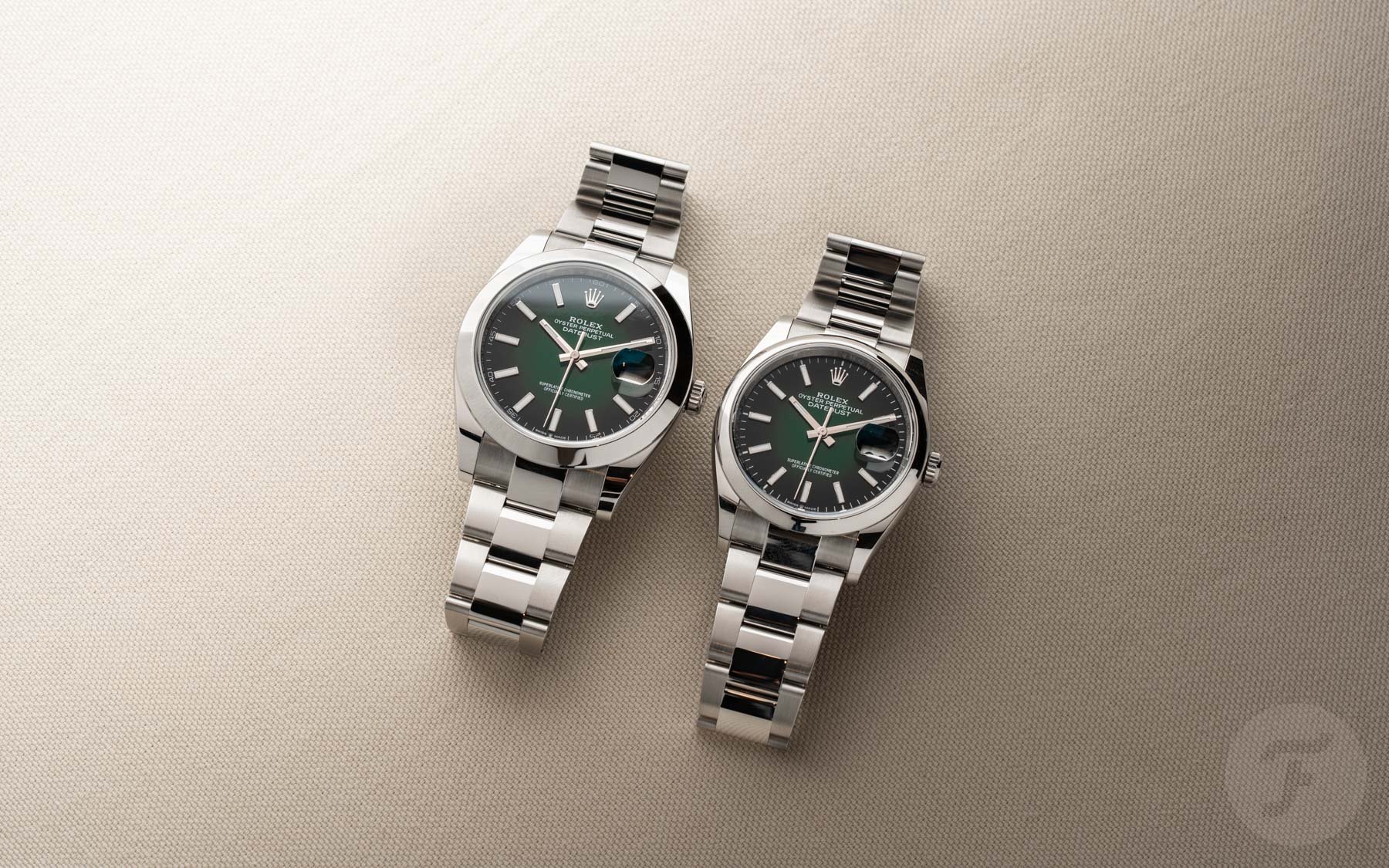
So when Rolex invited us to Brussels to go hands-on with the 2026 novelties, I was eager to try the different Datejust configurations with the new green dials. Let’s go over them quickly. First, there is the 36mm steel version with a smooth bezel (ref. 126200), which costs €7,950 on an Oyster bracelet and €8,200 on a Jubilee bracelet. The next option is the 36mm steel model with a white gold fluted bezel (ref. 126234). This retails for €9,700 on an Oyster bracelet and €9,950 on a Jubilee bracelet.
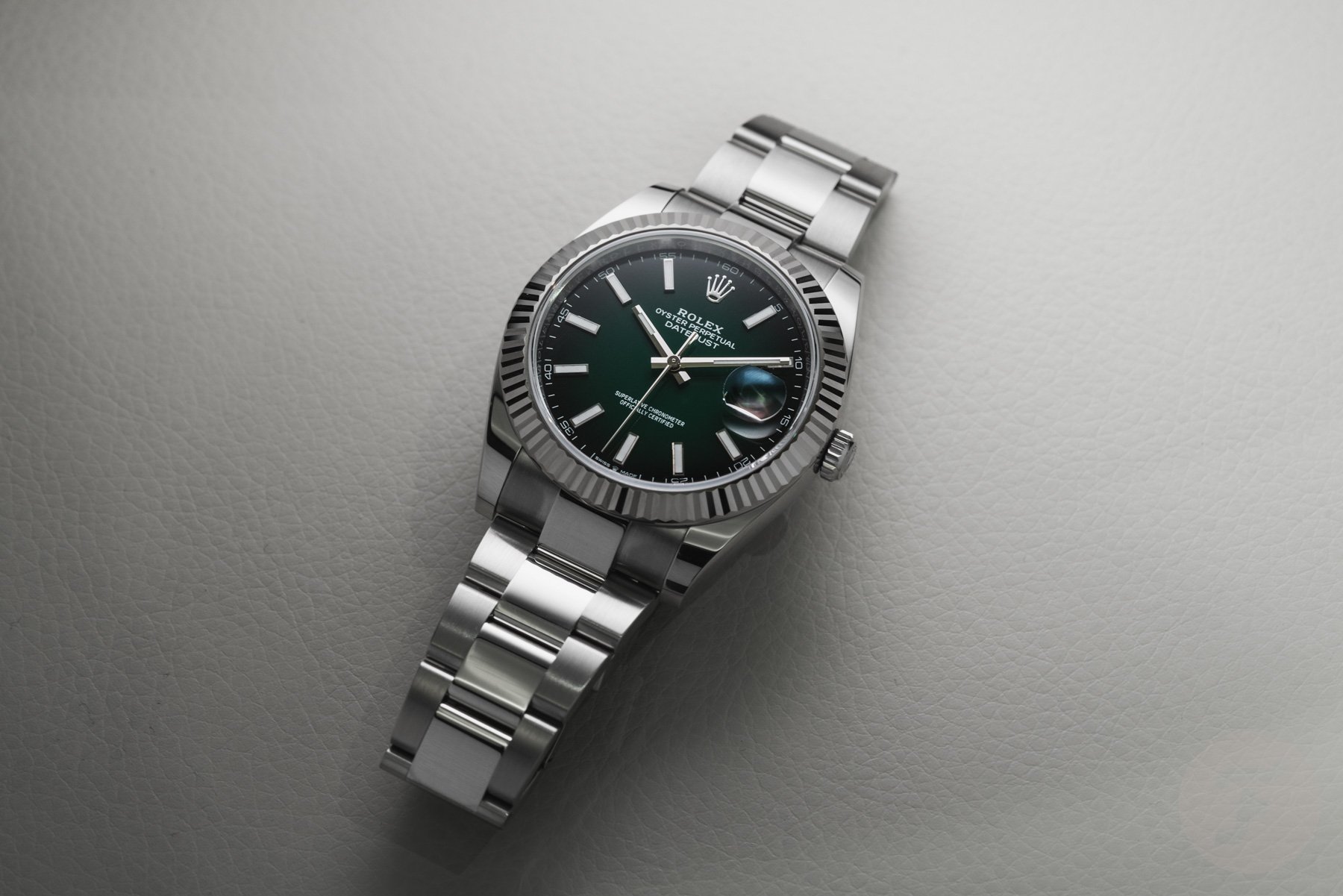
For the 41mm Datejust, the breakdown is similar. With a smooth bezel (ref. 126300), it costs €8,750 on an Oyster bracelet and €9,000 on a Jubilee bracelet. Lastly, there is the 41mm Datejust with a fluted bezel (ref. 126334), coming in at €11,450 on an Oyster bracelet and €11,700 on a Jubilee bracelet. Summing them up gives you a good overview of the options with the (Dutch) price differences.
Specs of the different Rolex Datejusts with green ombré lacquer dials
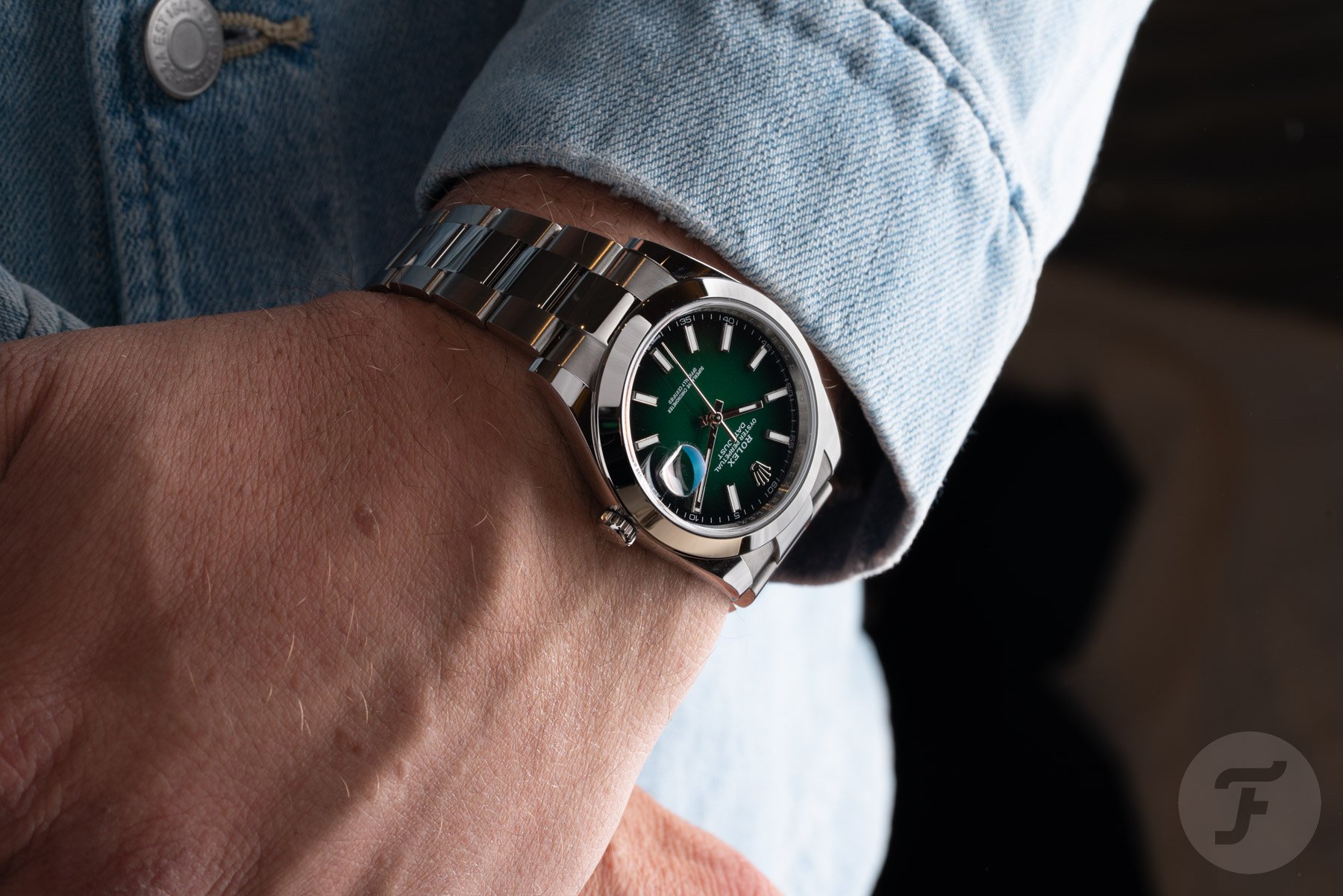
It’s also good to look at the details of the differently sized versions. The smaller model has a 36mm case with a 43.3mm lug-to-lug and an 11.6mm profile, while the larger version has a 41 × 47.5 × 11.6mm case. As we will see, though, the dimensions aren’t the only notable differences. In fact, the design and the visual proportions of the watches make them feel inherently distinct.
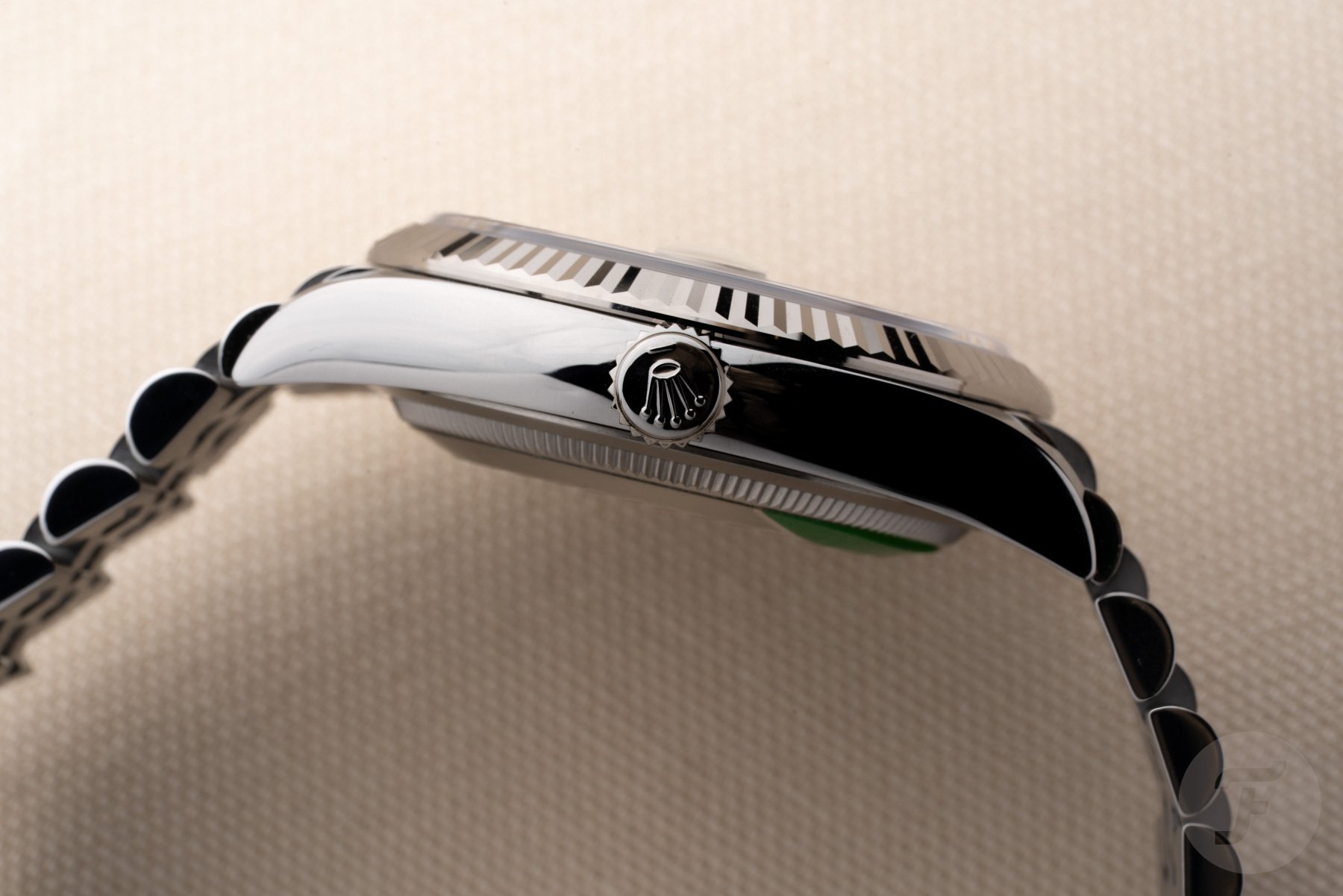
Both Datejust sizes are powered by the in-house Rolex caliber 3235. This 31-jewel automatic movement operates at 28,800 vph and provides a 70-hour power reserve. Furthermore, it features Rolex’s Chronergy escapement and Parachrom hairspring, and it’s regulated to ±2 seconds per day after casing. The caliber displays central hours, minutes, and seconds. On top of that, it comes with the signature instantaneously changing and quick-set date complication.
A frame of reference
Before we got to wear the different Datejusts, we also tried the new 100th-anniversary Oyster Perpetuals. I hadn’t spent any time with them yet, so that was a first for me. The Oyster Perpetuals with the Jubilee-motif dial pleasantly surprised me. I love how they hint back at the anniversary models from 1985. On top of that, the colorful execution made me smile the moment I put the 36mm version on my wrist.
I also tried the 41mm Jubilee-dial OP model and found the smaller one more charming. But it took me multiple takes to determine that, as the 41mm also sits well on my 18.5cm wrist. In the end, size and personal preference are the only differences. The dials of both models don’t differ in any other way, and I simply prefer the charm of the smaller one on my wrist. With the Datejust, though, different rules apply when judging the sizes.
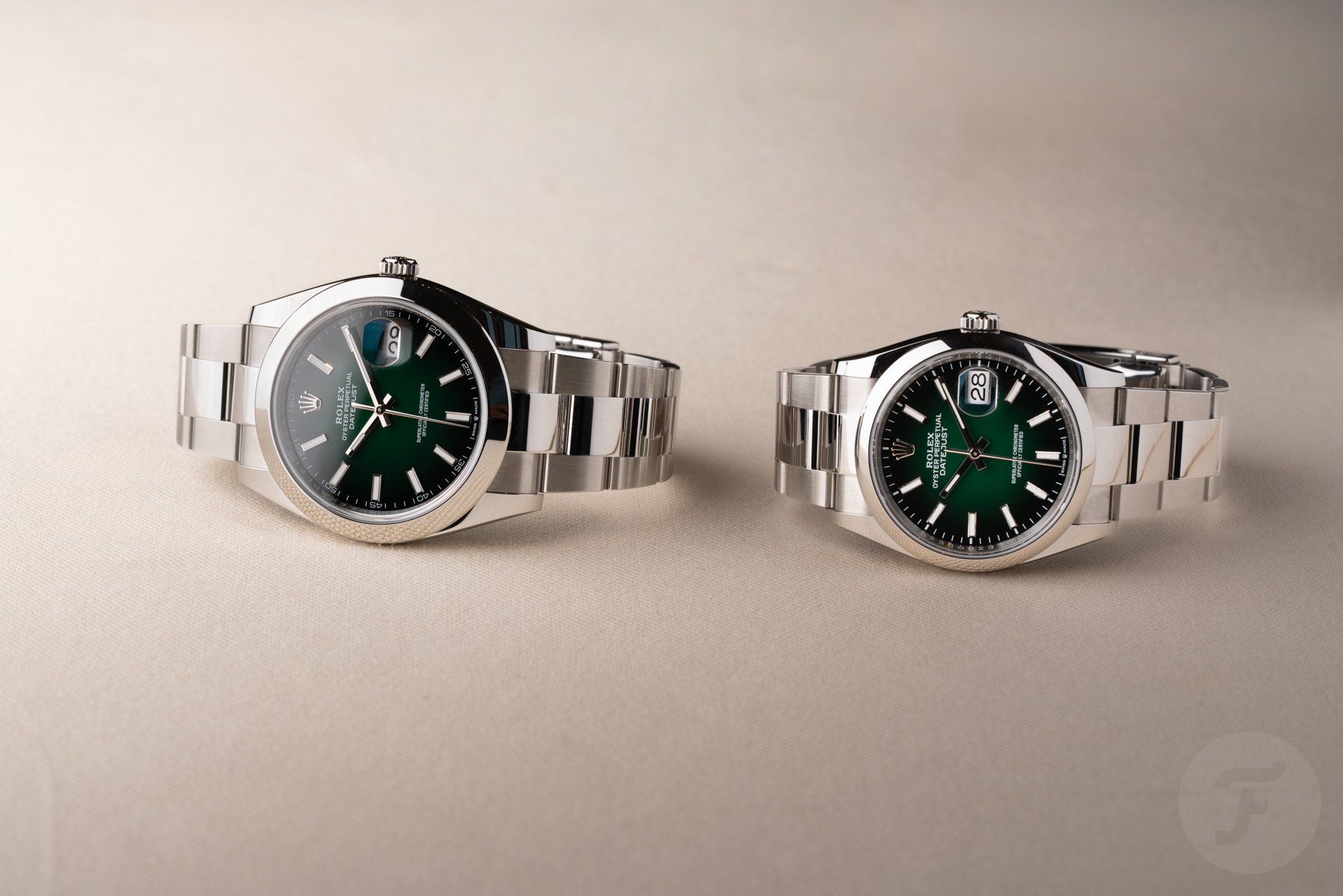
Very different proportions
A couple of things stood out when comparing the 36mm and 41mm Datejusts. In particular, the versions with the white gold fluted bezel made it abundantly clear that the proportions are off on the larger model. The fluted bezel looks too wide, so the proportions seem to lose their natural balance. Especially if you put the 36mm model on your wrist afterward, it feels completely different. This instantly confirms that the visual balance between the case, bezel, and dial is spot on, translating to a watch that just feels perfect.
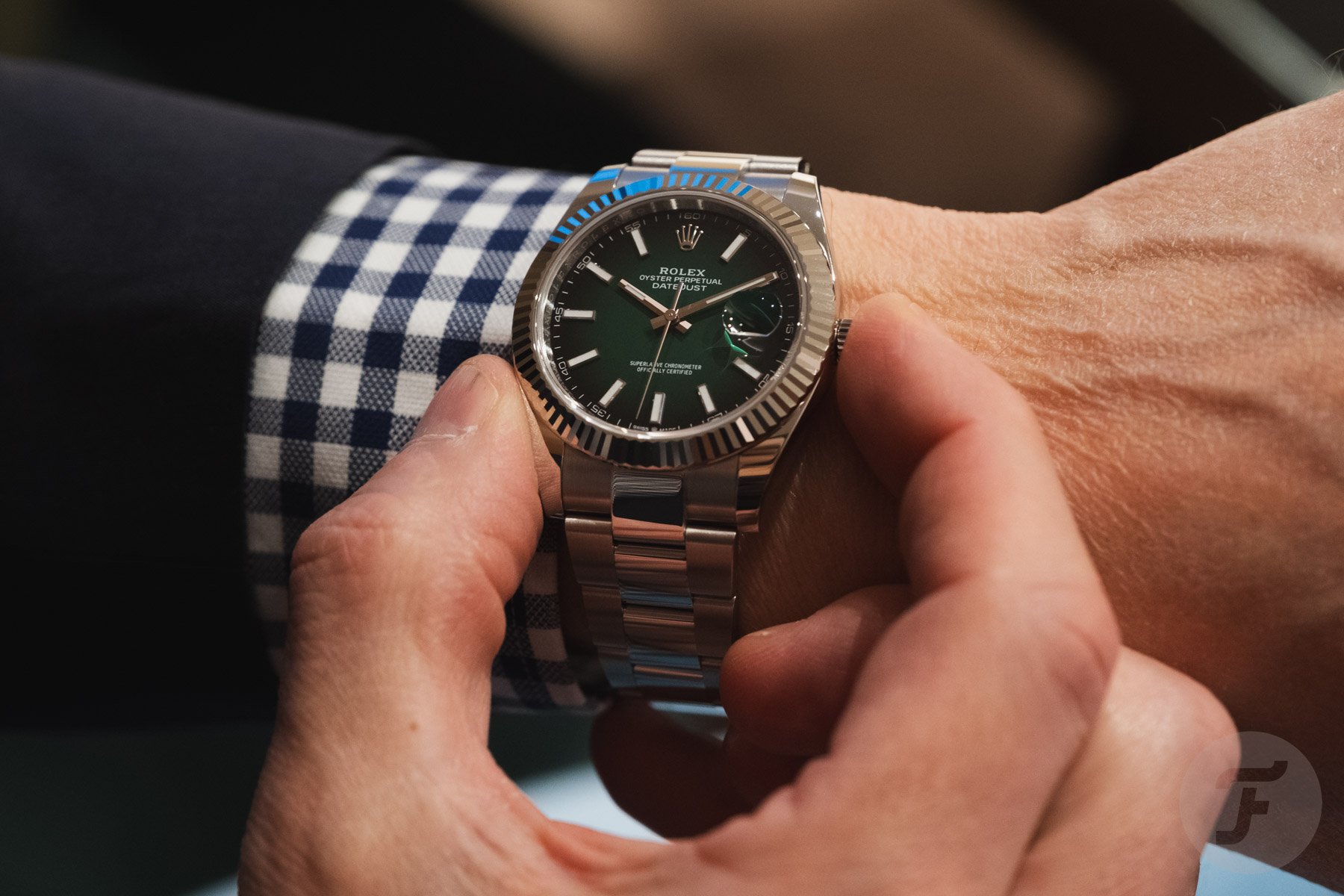
But there is more to it than just visual proportions. The Rolex designers also added numerals to the minute track on the larger dials with baton indexes to visually compensate for the larger size. While subtle, this addition brings a modern tool-watch-esque detail to the classic Datejust, and I don’t necessarily like it. Granted, the design varies across dial executions in the current collection. But for comparison’s sake, the green ombré lacquer dials are great examples of why the 36mm Datejust is the one to choose.
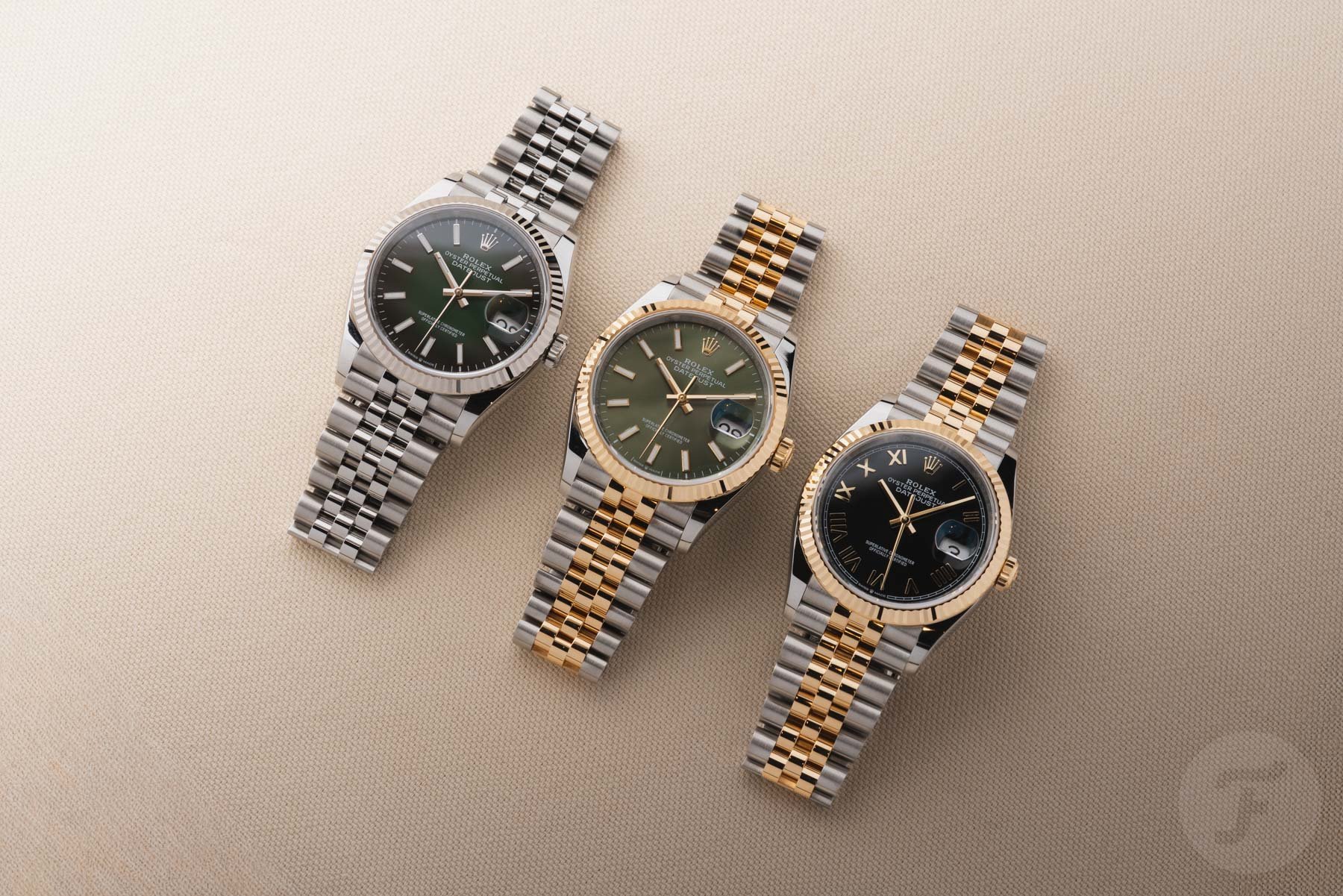
Final thoughts on the new Rolex Datejust series with green ombré lacquer dials
I could make the conclusion of this article about what feels off with the 41mm Datejust, but I’d much rather emphasize the brilliance of the 36mm Datejust and the absolutely stunning new green ombré lacquer dials. First, I loved wearing the different models with these new dials. Every variation confirmed that the color and depth are something truly special. We had a chance to compare them to a series of regular new dials, and we all agreed that, while all the new dials all look nice, the green ombré lacquer ones have that special something that sets them apart.
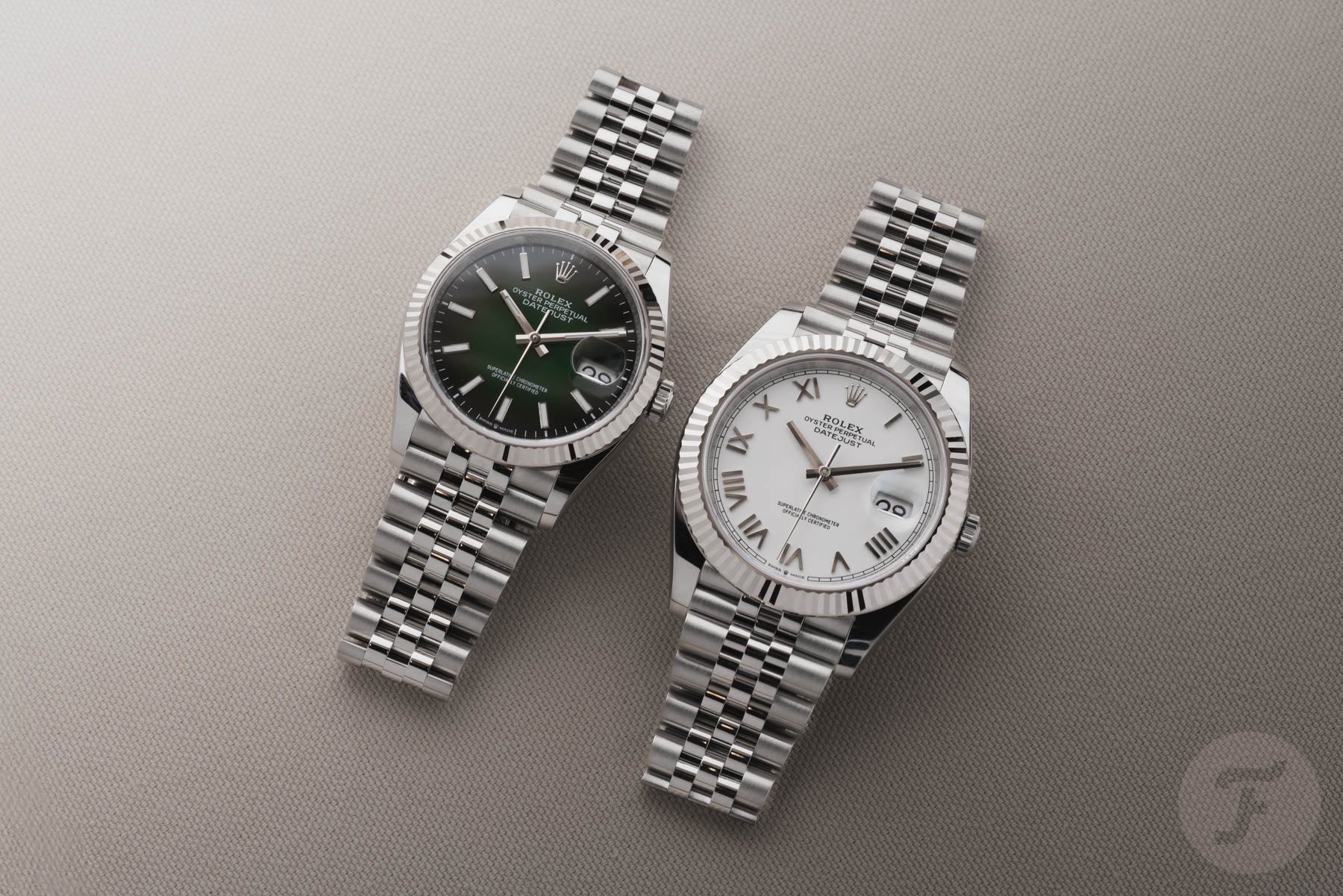
On top of that, the 36mm Datejust proved to be the one that we all favored. In a world of horology that is constantly moving forward, it’s great to see that some things stay the same. Rolex has done a stellar job of keeping the 36mm Datejust simply perfect. While my first love is still the classic look with a fluted bezel and a Jubilee bracelet, I also walked away from the meeting impressed with the 36mm version with the smooth bezel. Though it visually resembles the Oyster Perpetual, the new green ombré lacquer dial adds incredible depth, making it pop.
The magic of the new ombré green lacquer dials
Rolex did a great job with these new dials — so much so that I found it hard to take the 36mm Datejust with a fluted bezel on a Jubilee bracelet off my wrist. On the drive back, we talked about all the new introductions for a long time, but we kept coming back to the new green-dial 36mm Datejust. I can say that it’s easily the Datejust I would pick from the current lineup. I’d even go so far as to say that it finds a spot among my five favorite currently available Rolex models. That’s pretty impressive for what is seemingly just a simple new dial variation.