Hands-On With The Unusual Chopard L.U.C 1963 Heritage Regulator

You don’t see watches like this too often, so if you have to look twice to understand what’s going on, that’s perfectly understandable. I had to look twice at the unusual Chopard L.U.C 1963 Heritage Regulator to realize I was dealing with something you don’t see every day. A standard regulator watch shows the hours, minutes, and seconds on separate displays. Typically, the minute hand is the largest and sits in the center, while the hour and second hands turn in smaller sub-dials. This L.U.C creation takes the regulator concept a few steps further. Let’s take a second look together.
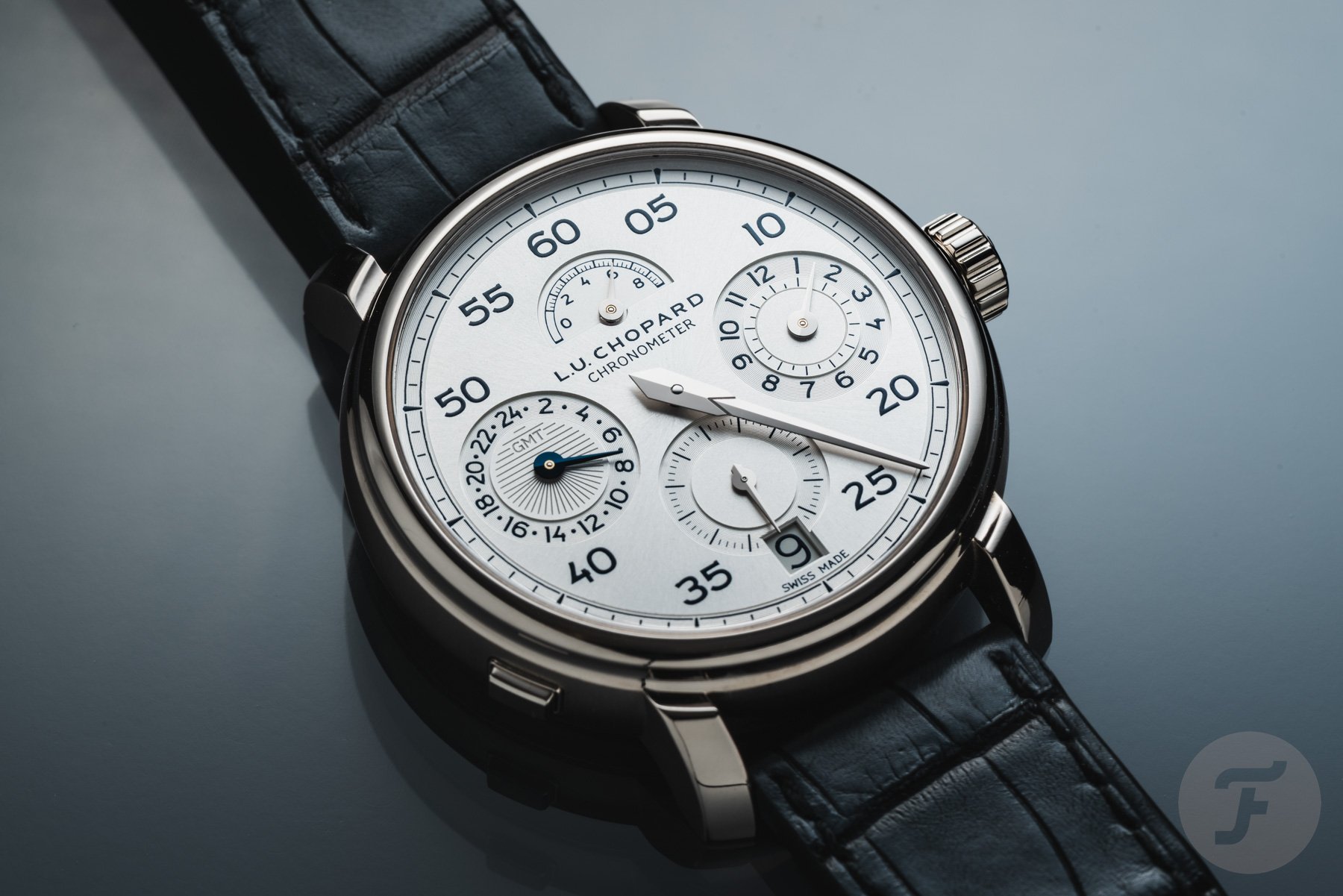
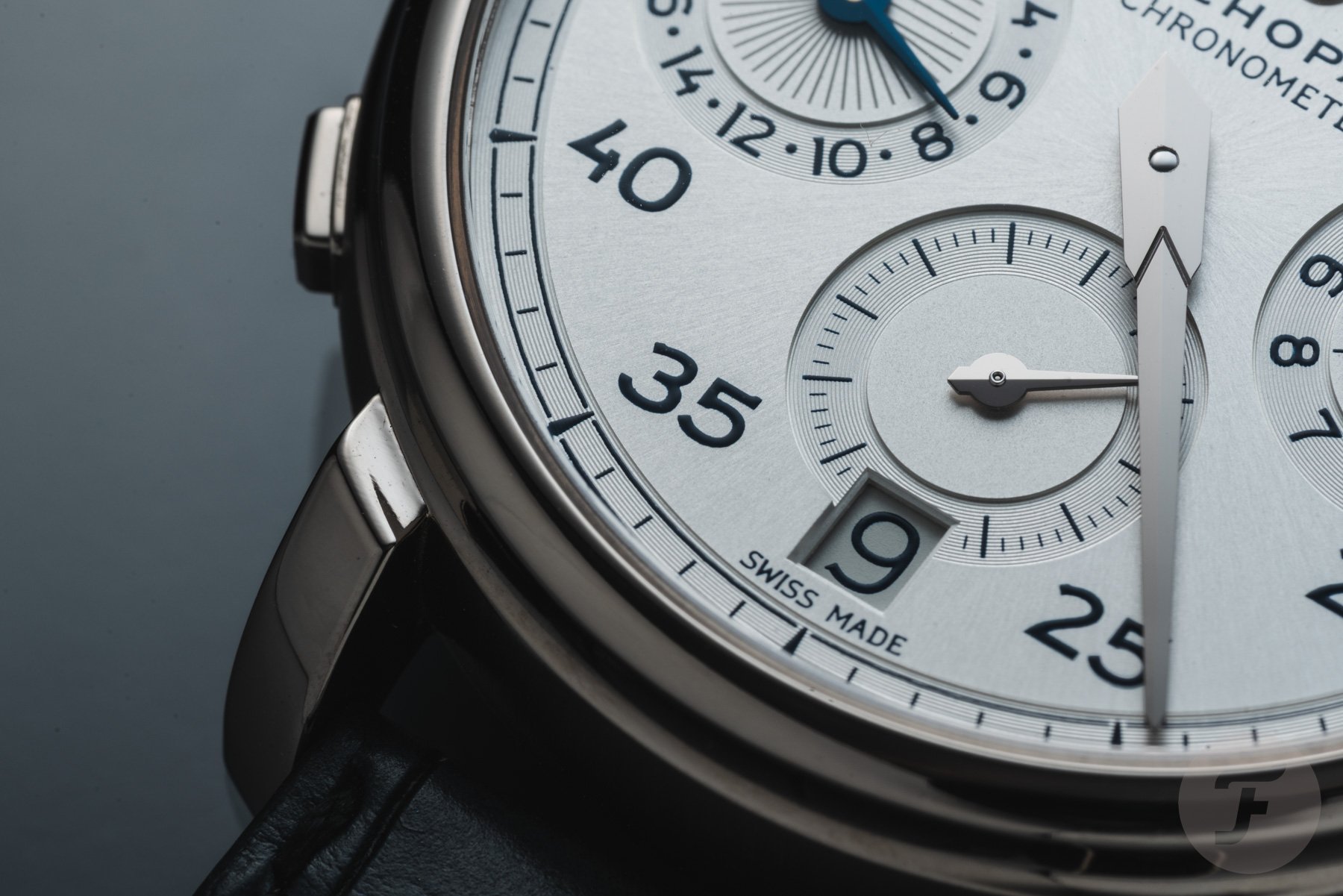
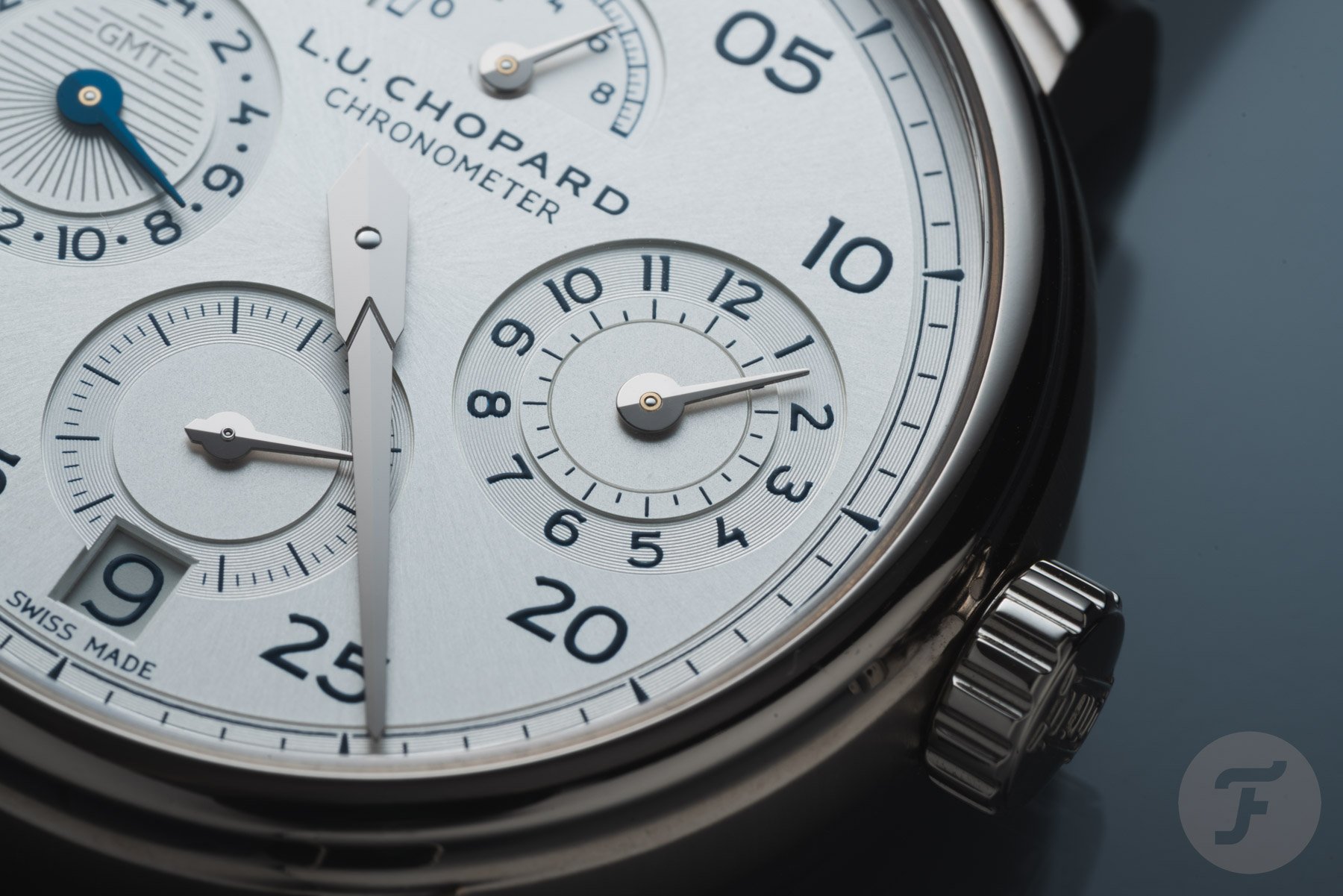
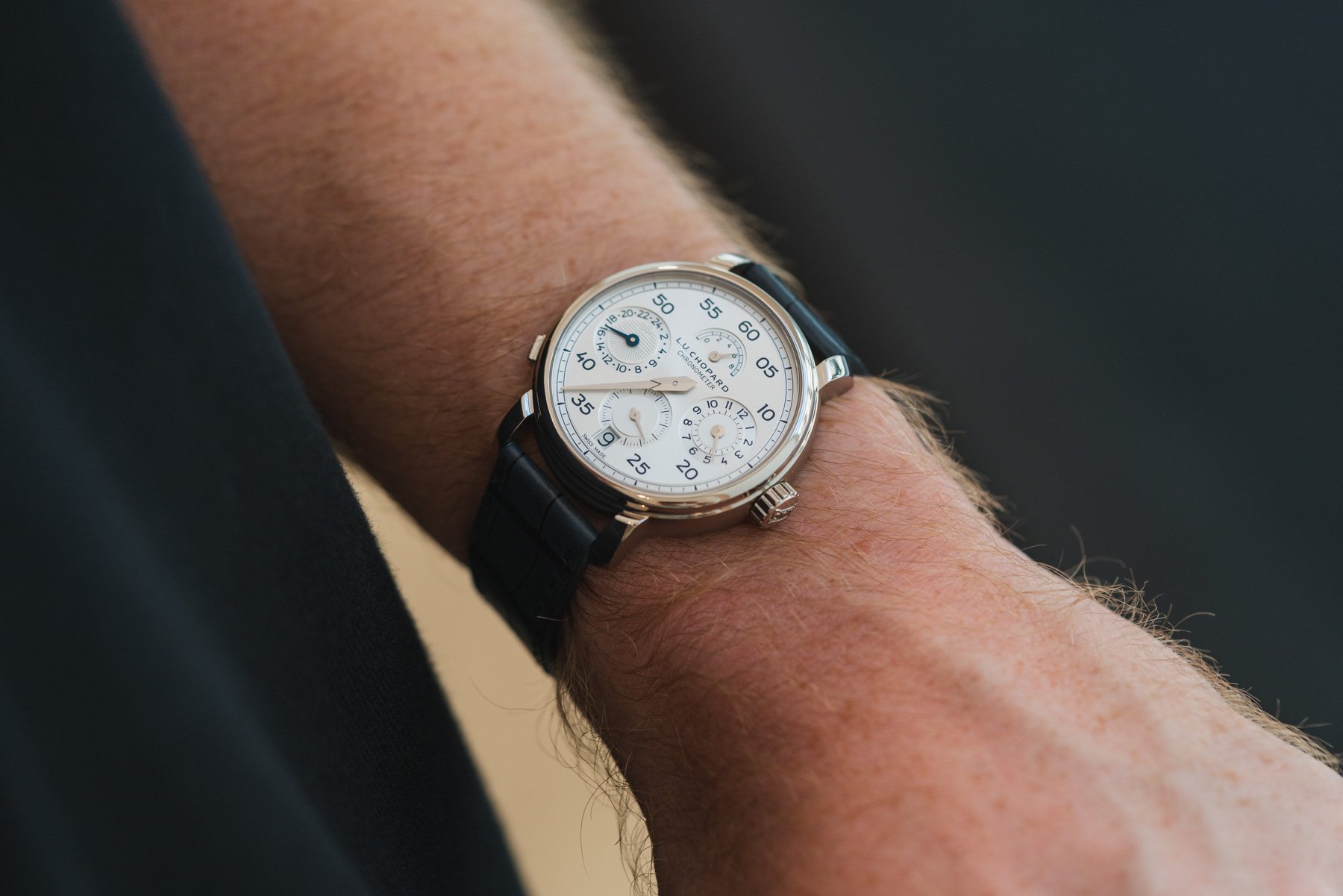
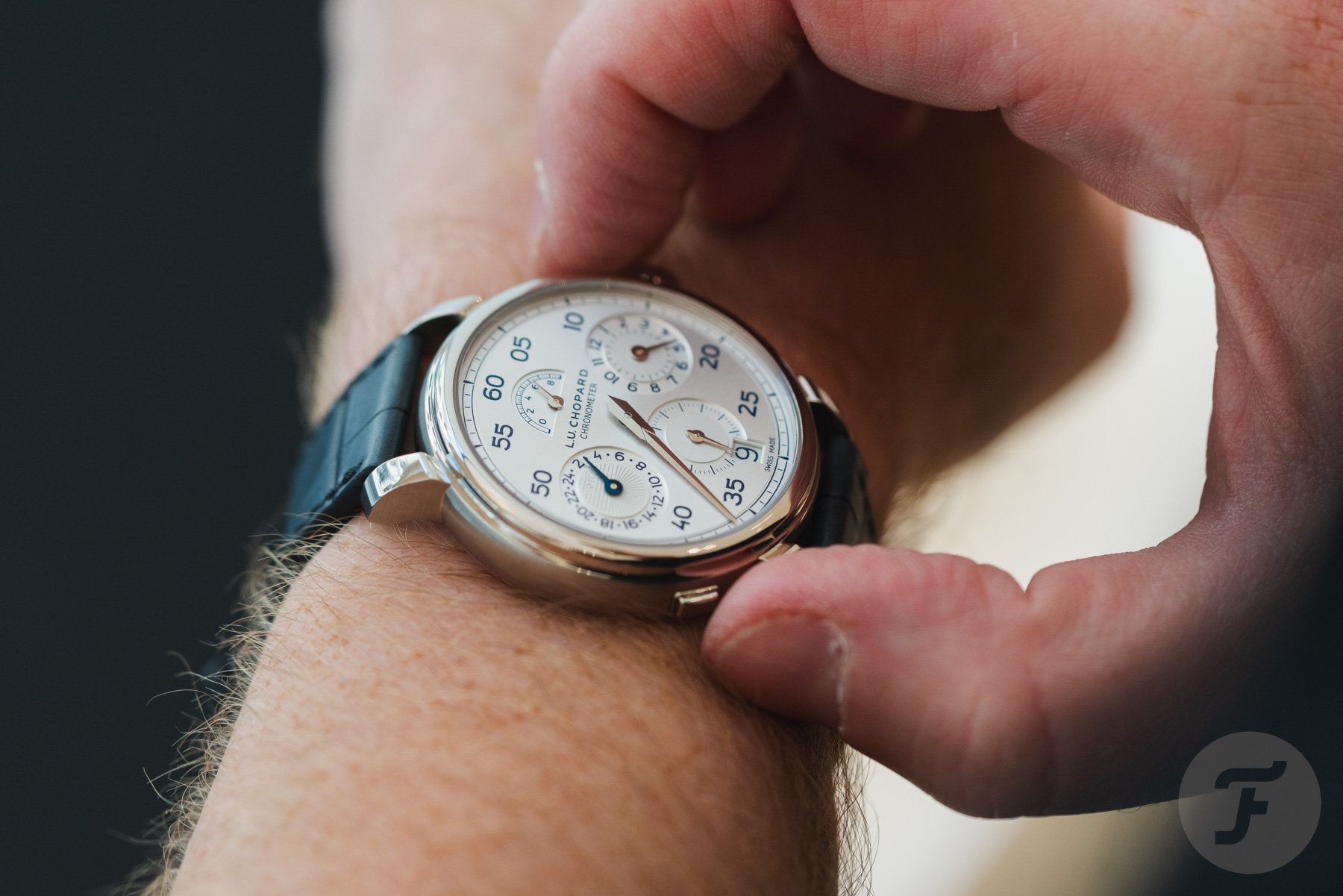
There are five hands and a digital date indicator on the dial of the unusual Chopard L.U.C 1963 Heritage Regulator. The minute hand turns in the center, while the main hours and seconds are displayed at 3 and 6 o’clock, respectively. That second sub-dial also incorporates a date aperture, but there’s more. A 24-hour GMT counter sits at 9 o’clock, and an arched indicator at 12 o’clock displays the power reserve. Now that we’ve determined what’s what, we can ask ourselves, “Why? Why create a watch that could cause quite a bit of confusion when trying to read it?” I think there are two possible answers.
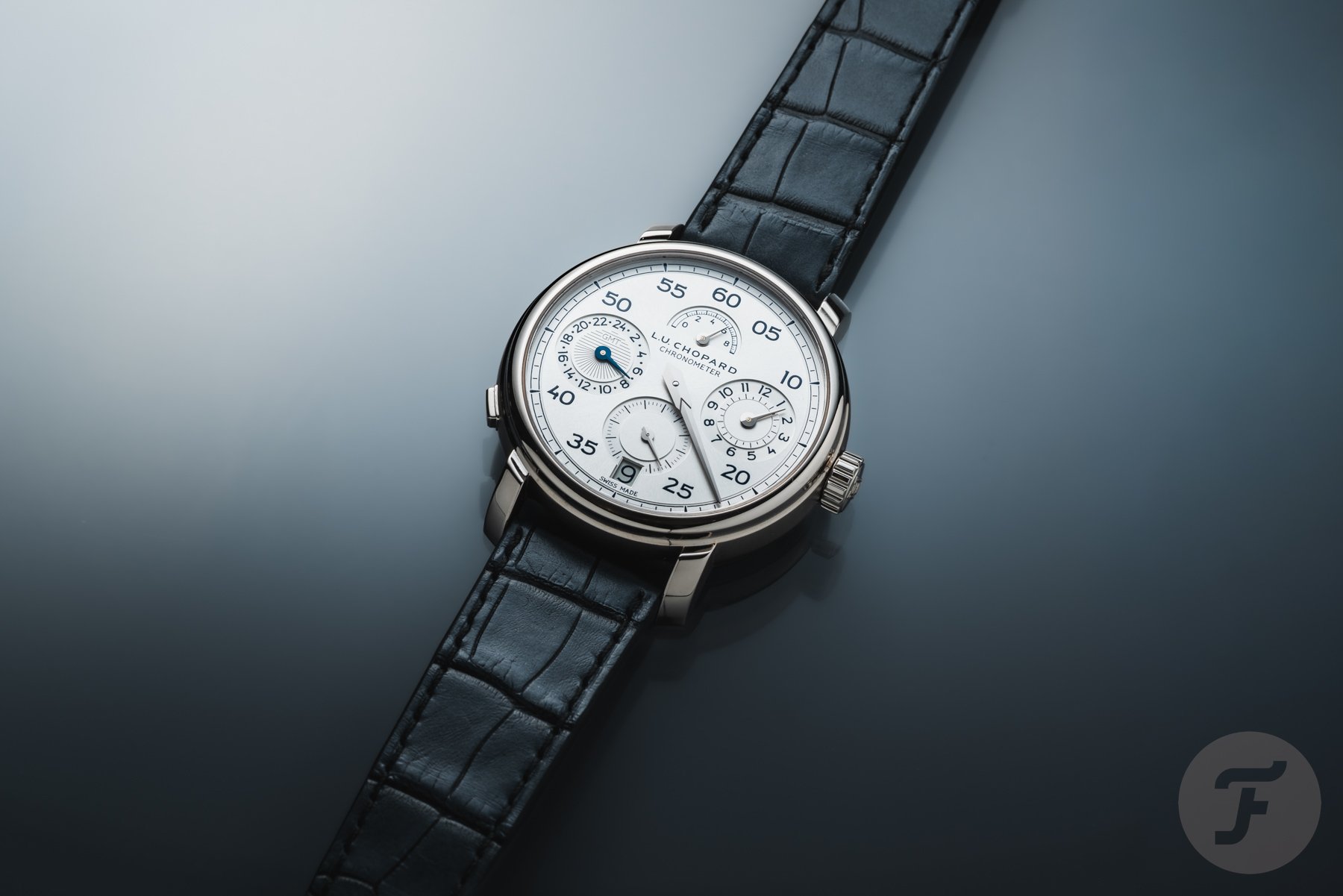
The unusual Chopard L.U.C 1963 Heritage Regulator: Why did Chopard make this watch?
The first answer is that Chopard created the L.U.C 1963 Heritage Regulator because the brand could. Haute horlogerie is like art in this way. Watchmakers create complicated watches because they can, and it’s their purpose in life. Some people have to paint; others have to create complicated timepieces.
The second answer is both historical and practical. We have to go back to the early 18th century to see the birth of the regulator. Around 1715, British clockmaker George Graham developed one of the first highly accurate pendulum clocks. In conventional timepieces, the central hands overlap several times a day. Consequently, they can be partially obscured precisely when accurate timekeeping is most important. Graham’s solution was to pair a deadbeat-seconds mechanism with an unconventional layout, displaying hours and seconds on separate sub-dials and the minute hand in the center. This made it possible to always read the time clearly and accurately to the second.
One clock to regulate them all
Clocks with this layout became known as regulators (or régulateurs) because they served as reference timekeepers for setting and calibrating other clocks and watches. Regulators became a familiar sight in watchmaking workshops, observatories, and laboratories. Watchmakers relied on the regulator as a kind of master clock. For instance, after building or repairing a pocket watch, they would compare its timekeeping to the regulator to check the accuracy of their work and make any necessary adjustments.
In the 19th century, the regulator also gained an important role beyond the watchmaker’s workshop. With the Industrial Revolution and the rapid expansion of the railway network, accurate synchronization became increasingly important for safely operating trains and preventing collisions. Therefore, railway stations installed large regulator clocks that drivers and conductors used to synchronize their pocket watches before departure. The regulator evolved into an indispensable instrument for precision timekeeping, serving science and watchmaking as well as everyday railway operations.
The 21st-century L.U.C 1963 Heritage Regulator
Now that you know the “why” behind the regulator, let’s take a closer look at the 21st-century L.U.C 1963 Heritage Regulator. This watch is a 25-piece limited edition featuring a 40 × 10.3mm case. Chopard uses 18K ethical white gold for this, applying satin brushing to the case band and a high polish to the bezel and case back. The pusher at 8 o’clock controls the GMT hand in the sub-dial at 9.
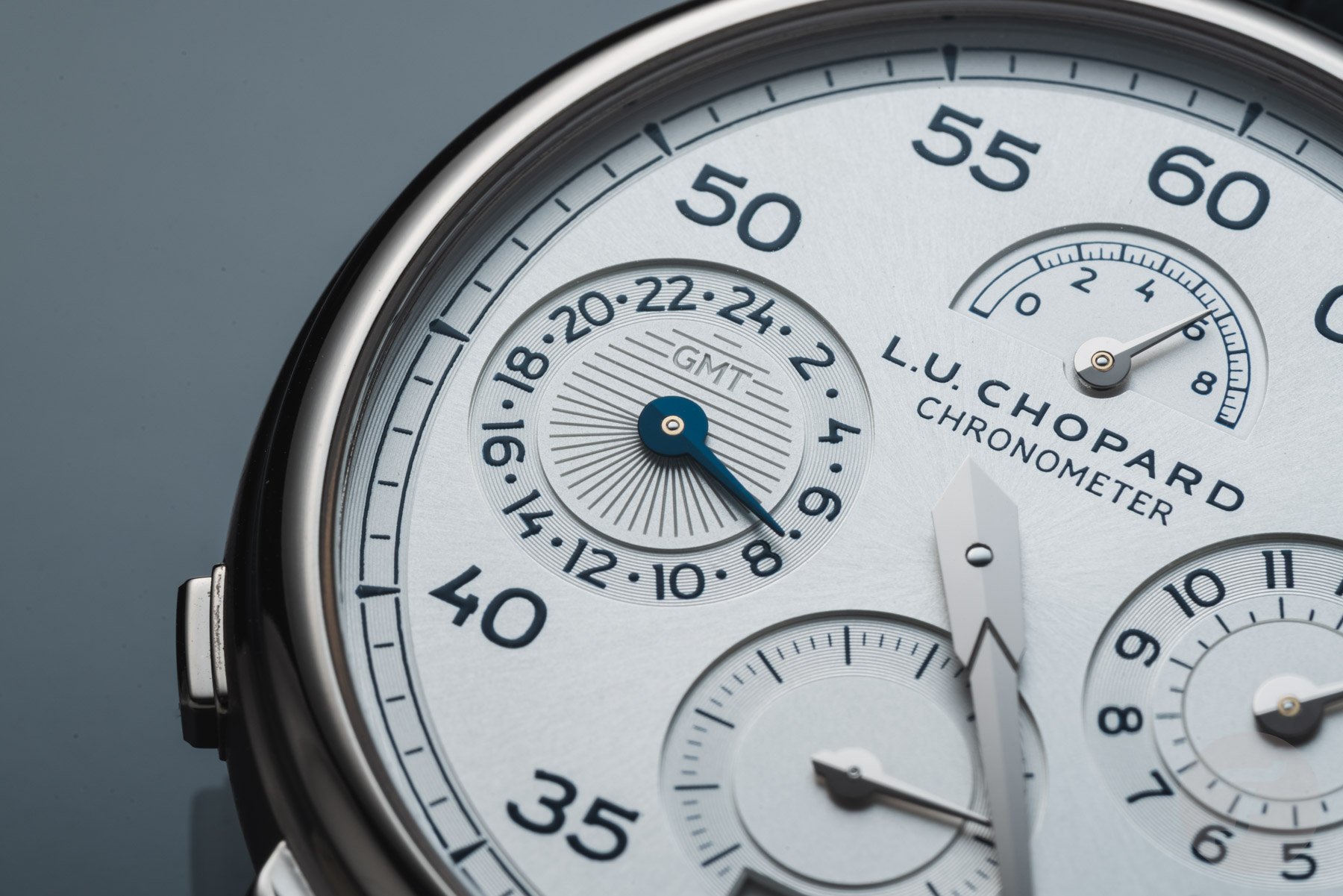
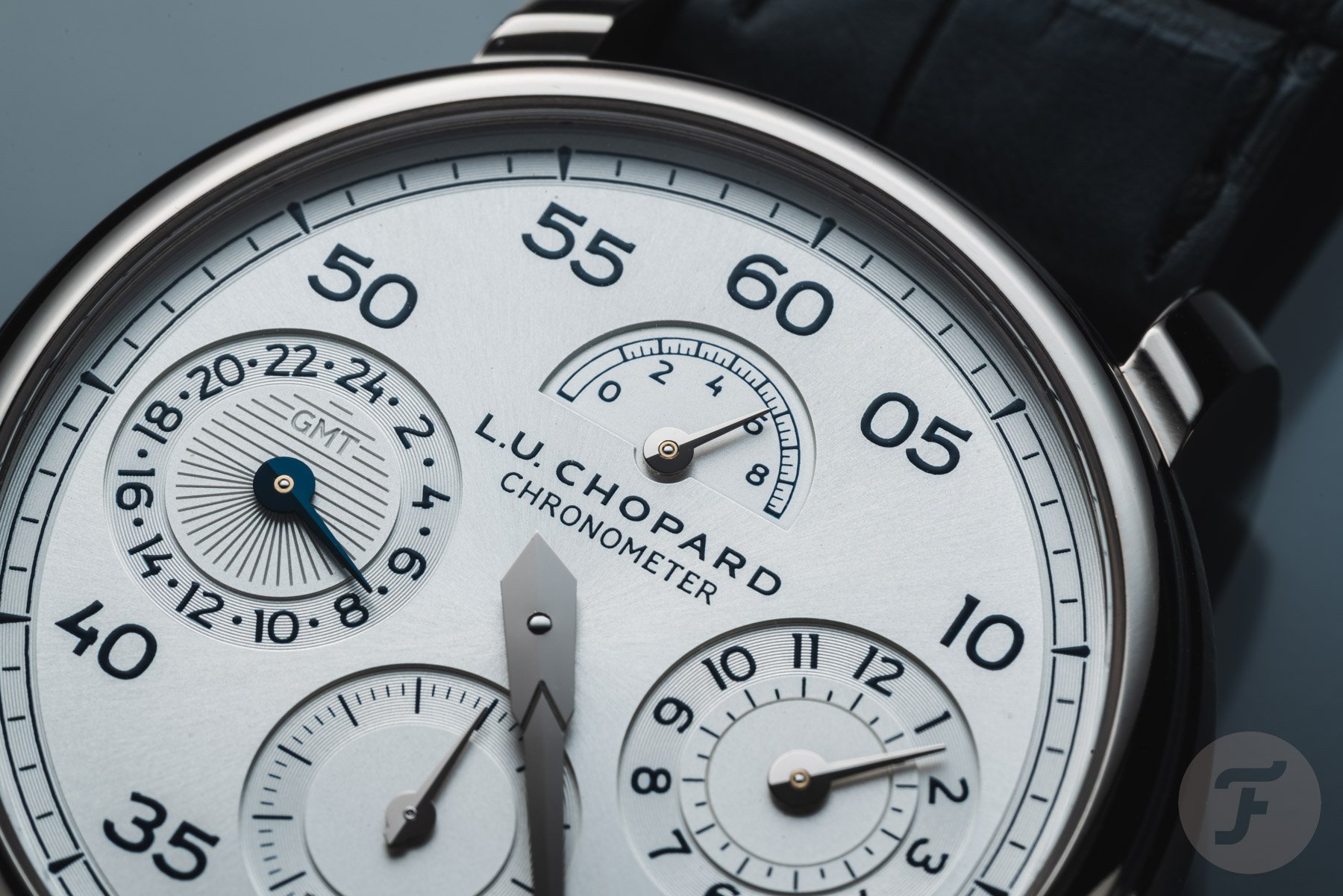
As you would expect from an L.U.C creation, the hands are special. The minute hand is a large, stepped white gold variant of a classic dauphine hand, and the others are shaped or colored slightly differently because they indicate different things. Legibility is the foundation of every regulator; therefore, the silvery, sunburst-brushed dial features contrasting blue transfers, and the three sub-dials for the hours, seconds, GMT, and power reserve are recessed. Despite its many displays, the dial is clear and symmetrical, making it easy to navigate.
While functionality is the foundation, the L.U.C 1963 Heritage Regulator is also a haute horlogerie creation with plenty of refined details to show. When looking closely at the 24-hour GMT indicator, for instance, you will notice sunrays in the lower half and horizontal lines in the upper half. It’s a subtle way to distinguish day from night.
Complexity on the inside
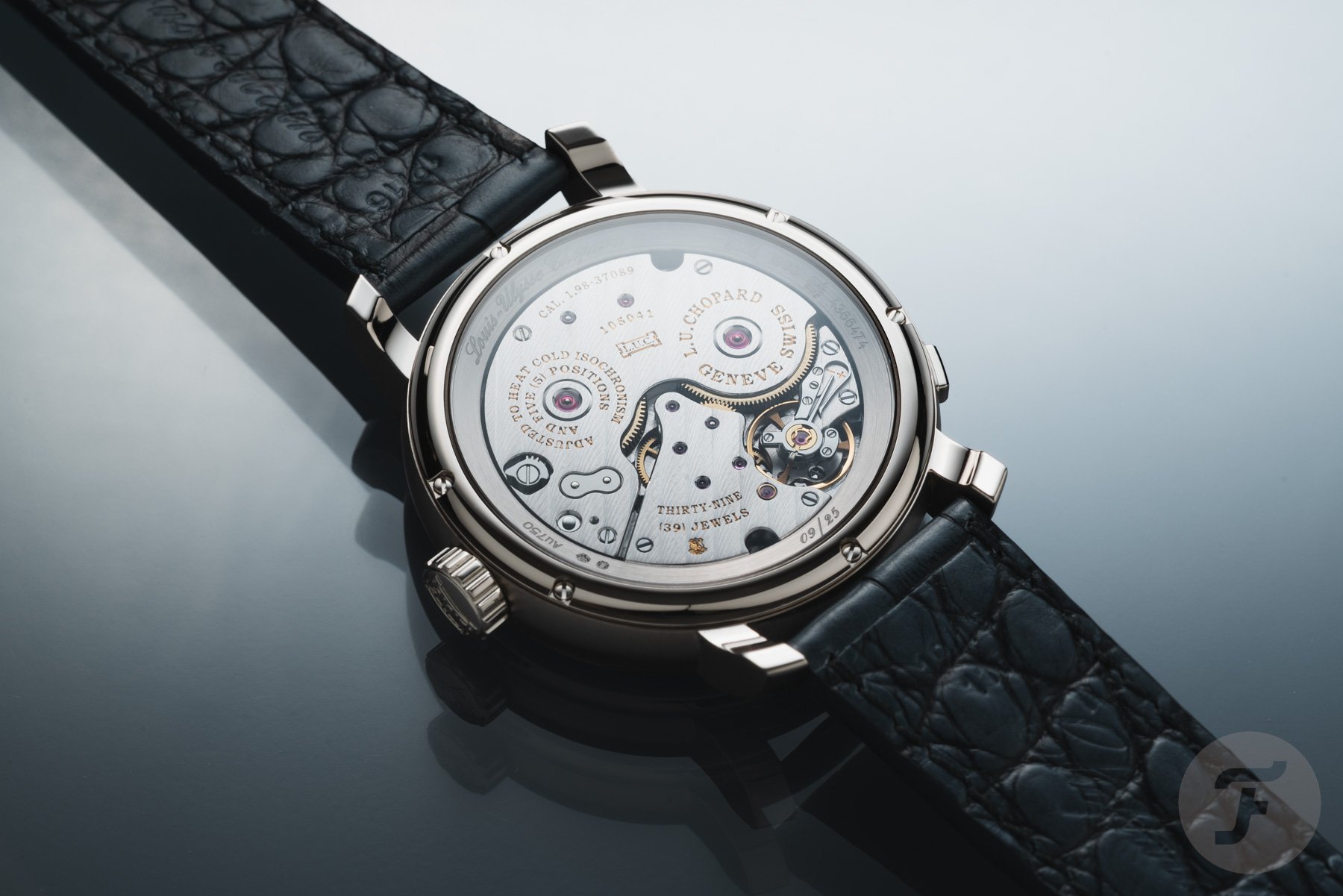
Just like the outside, the inside of a L.U.C watch is always exceptional. Within the Poinçon de Genève-bearing L.U.C 1963 Heritage Regulator beats the in-house L.U.C 98.02-L. This manual-winding, COSC-certified chronometer movement boasts Chopard’s four-barrel Quattro technology, resulting in a nine-day power reserve. The movement might be just 4.9 mm thick, but it is a veritable powerhouse.
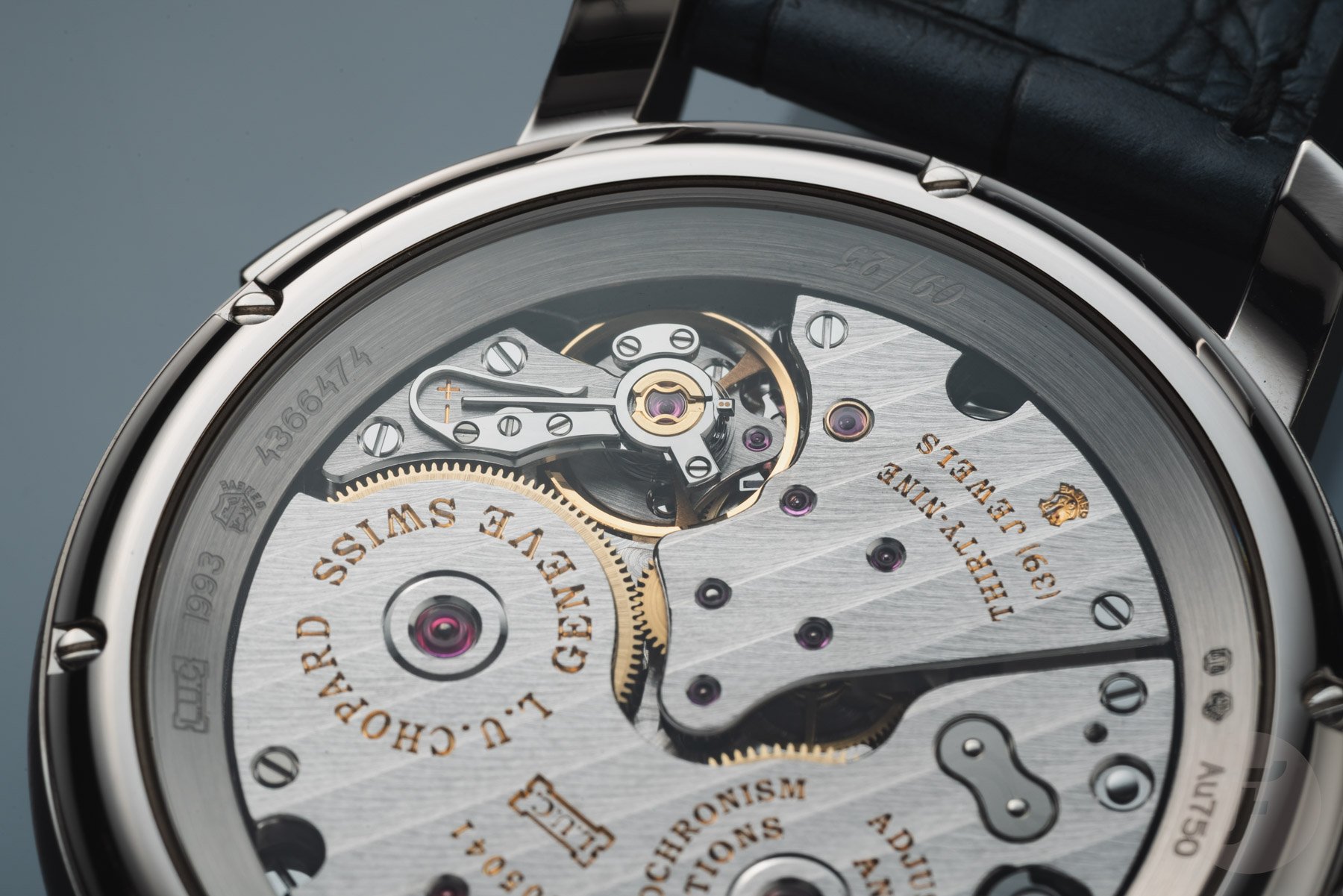
Through the case back’s sapphire display, you can take a long, admiring look at the 39-jewel movement’s refined finishes. After all, a movement doesn’t earn the Poinçon de Genève just for being made in the canton of Geneva. If you like strong, big bridges in a movement, this caliber is for you. If not, you should know that four barrels need firm bridges to stabilize them, so they’re there for good reason.
Wearing the L.U.C 1963 Heritage Regulator
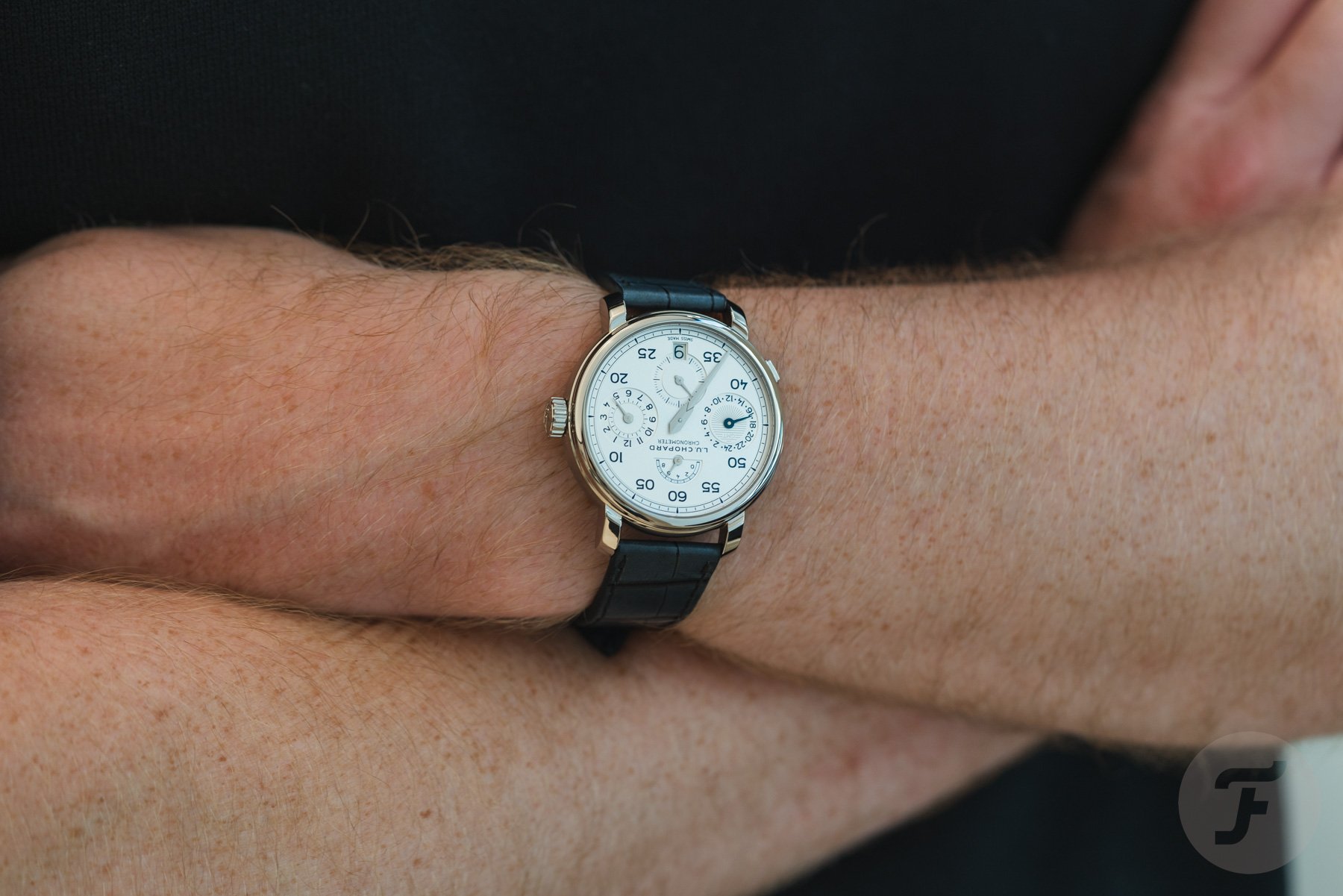
This new L.U.C Regulator comes in roughly a decade after the first. That watch had a 43mm case diameter and a slightly thinner 9.78mm profile. Another difference is the movement’s power reserve, which has increased from eight to nine days. Although the new version is slightly thicker than the 2015 watch, its reduced diameter is crucial to making it more harmonious and easier to wear. This watch is lovely on the wrist, and the new proportions don’t get in the way of it slipping under a cuff if you want it to. Thanks to the white gold case, it feels nice and weighty, but it also looks focused, so to speak. The dial’s light color, recessed sub-dials, and large minute hand make it clear and crisp.


With its gray alligator leather strap and a simple yet elegant 18K white gold pin buckle, the L.U.C 1963 Heritage Regulator also looks contemporary and sophisticated. Gray and silver tones with a spark of blue work well with almost everything, making this watch versatile. Overall, this L.U.C creation looks neither too traditional nor too modern. The regulator-style dial must put it in a separate category. I could write “timeless,” and that would address the watch’s appearance. But it would also be a gentle stab at its regulator-style dial, which requires a bit of time to get used to. You need to put in some effort to read the time properly. If you don’t, you just see five hands, and the L.U.C. 1963 Heritage Regulator literally becomes a timeless watch.
Final numbers
The L.U.C 1963 Heritage Regulator is a limited edition of 25 pieces. It’s only available at Chopard boutiques and retails for €49,800 / US$52,400 / £42,300. What do you think of the watch? Is a regulator-style watch on your wish list, or do you already own one? And if you answered part one of that question with “yes” and part two with “no,” would you consider the exclusive L.U.C 1963 Heritage Regulator? Please share your thoughts in the comments section below.