Weirdos Or Class Acts? Introducing The Ulysse Nardin Freak One Blue Enamel And Guilloché

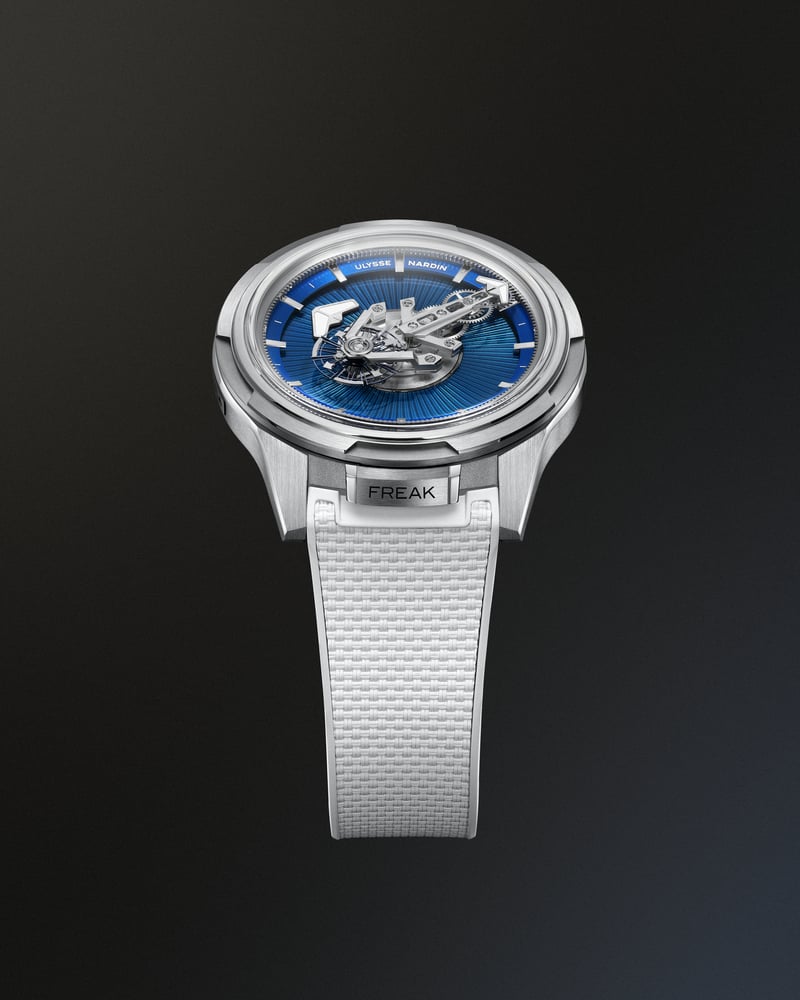
Since the watch shocked the world when it first appeared in 2001 and still looks as unconventional and futuristic as ever, the question is fair: are the two new Ulysse Nardin Freak One Blue Enamel and Guilloche watches weirdos or class acts? Well, since one features a guilloché disc with a sunray pattern coated in vibrant blue enamel and the other has a sand-colored handmade guilloché disc with a maille (diamond) pattern, I think the correct answer is the “class acts.” Still, we’d better take a closer look to be sure.
Twenty-five years ago, a bizarre, unexpected watch emerged from the Ulysse Nardin atelier in Le Locle and shook the foundations of watchmaking. The world was barely ready for an alien-like mechanical watch without hands, a crown, or a dial that told time. The men responsible for this abnormality’s creation were Ulysse Nardin’s visionary former CEO Rolf Schnyder and genius watchmaker Dr. Ludwig Oechslin. The Freak’s movement took center stage in a whole new way and blazed a trail for wild creations from experimental high-end watchmaking brands like MB&F, Urwerk, and HYT. The new Ulysse Nardin Freak One Blue Enamel and Freak One Guilloché keep the shocking concept alive, decorating it with traditional techniques for an eclectic look.
The Ulysse Nardin Freak One Blue Enamel and Guilloché: How do you tell time with them?
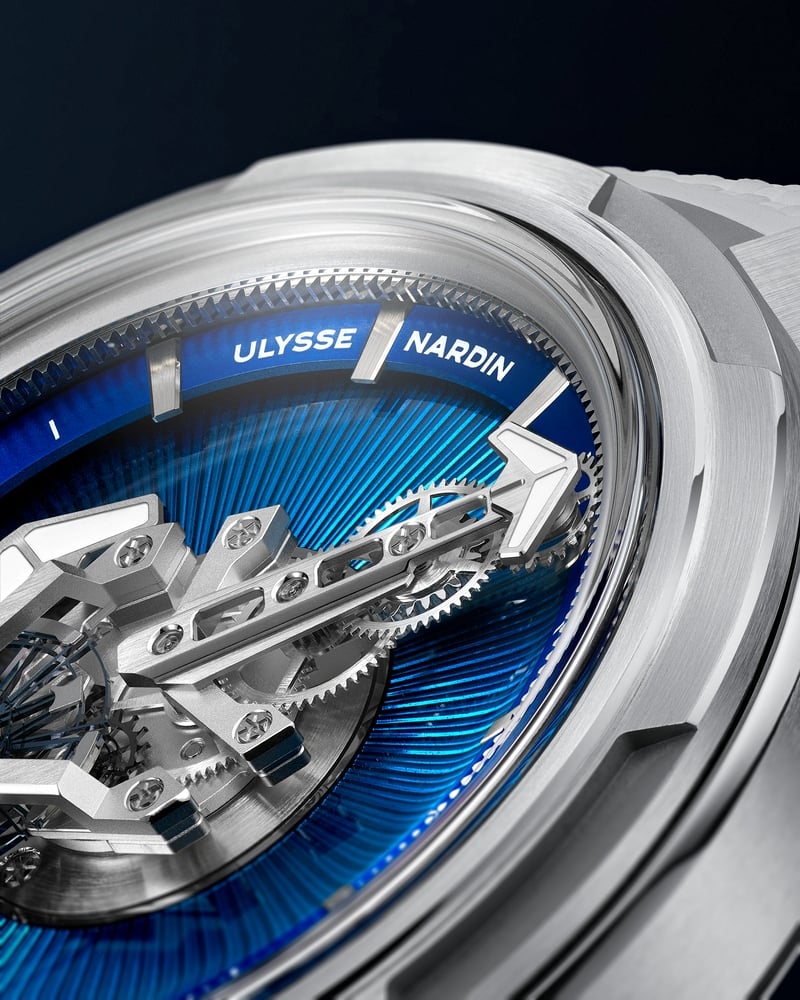
Maybe it’s not such a bad idea to explain the Freak’s time display. After all, some readers may have never seen one before. So, how does the Freak show the time? Well, you’ll notice that there are no conventional hands. Instead, the central bridge acts as the minute hand, completing one full rotation every 60 minutes. The hours are indicated by a separate marker mounted on the rotating lower disc. Linked to the barrel, this makes one revolution every 12 hours. It is a wonderfully unconventional solution that turns the movement itself into the display.
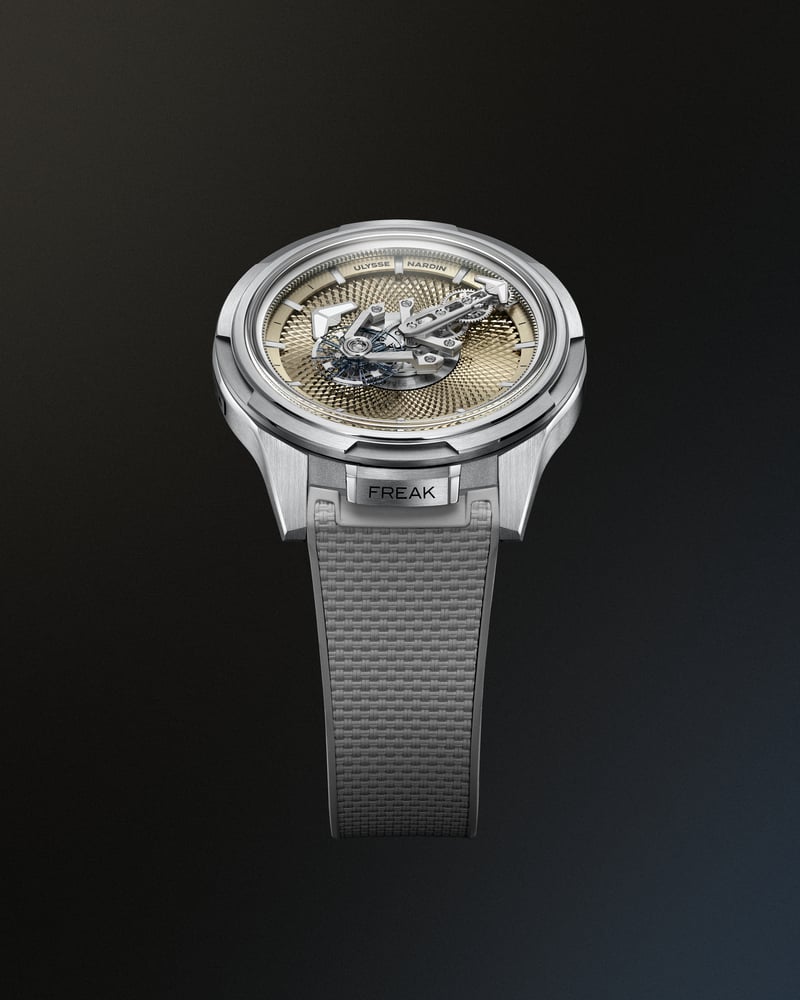
If you want to know more about how it all works, the bridge holds the hour wheel’s arbor in place. And that arbor is mounted on the barrel and fixed against a rack running around the inside of the case. It is one of those constructions that make the Freak look less like a watch and more like a small mechanical ballet. To set the time, first unlock the tab at 6 o’clock between the case lugs, then turn the bezel right or left — no crown needed.
The first use of silicon
From the beginning, the Freak was about more than simply eschewing the hands and crown. Dr. Ludwig Oechslin also equipped the watch’s movement with a dual direct escapement. Abraham-Louis Breguet invented the natural escapement, but Oechslin revived that principle when working as a clockmaker and adapted it for the Freak. Silicon made the construction possible. In fact, the Freak was the first watch to use silicon for a movement component.
Oechslin had good reasons for choosing silicon. It is a light, non-magnetic, corrosion-resistant, and naturally low-friction material, meaning the escapement requires very little lubrication. Those properties have since made silicon almost routine in high-end mechanical watchmaking, but in the original Freak, it was still decidedly unusual.
The current manufacture caliber UN-240, found inside the new Freak One Blue Enamel and Freak One Guilloché creations, continues that silicon tradition. Its oversized oscillator and balance spring are made of silicon, while the escapement wheel and anchor use DiamonSil, an evolution of silicon patented by Ulysse Nardin in 2009. The material combines silicon with a synthetic diamond surface treatment produced using a plasma process. It sounds suitably exotic, although in practice, it is simply another example of Ulysse Nardin using materials to solve very old mechanical problems.
Winding your Freak
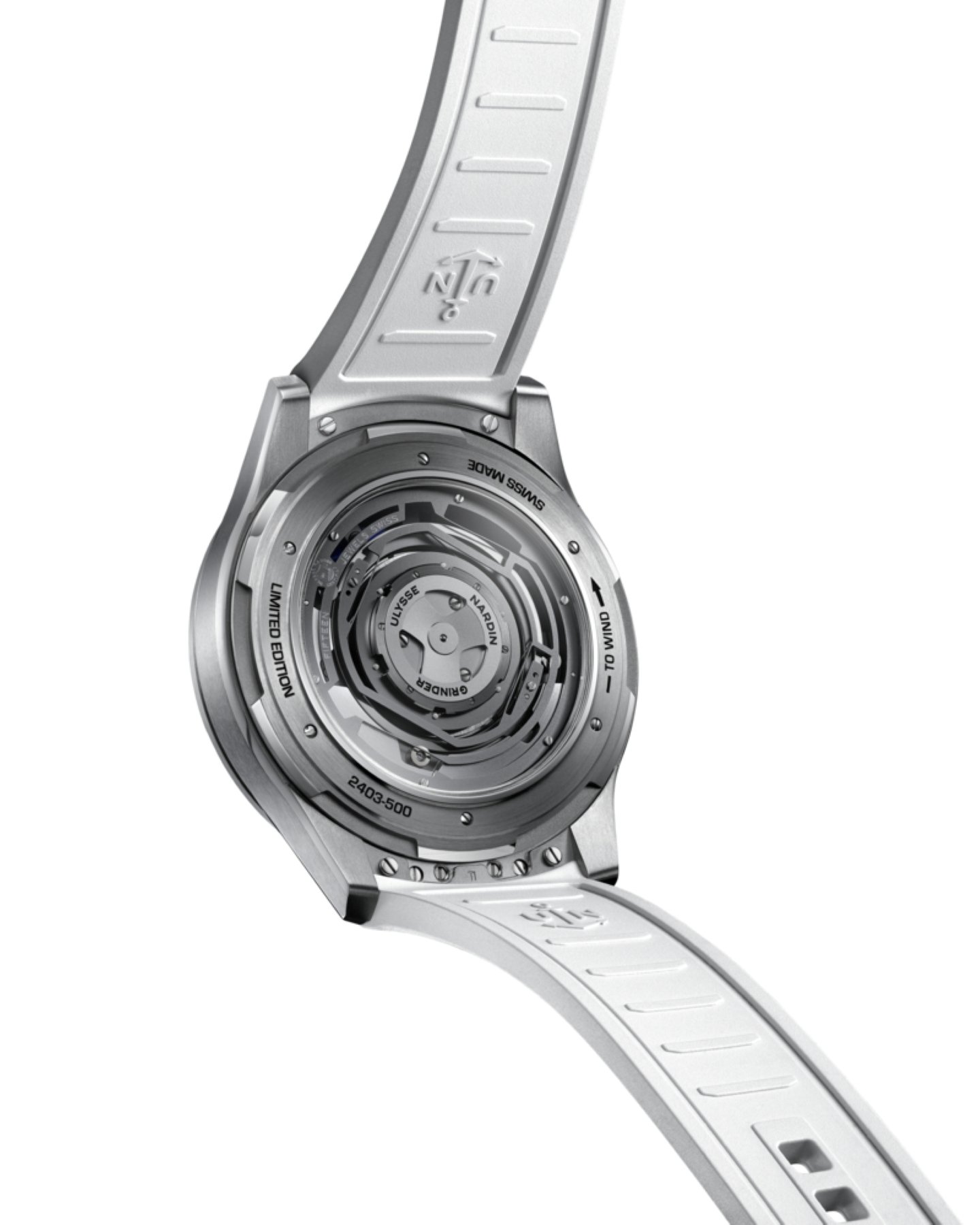
The UN-240 also features the brand’s Grinder automatic winding system. A central rotor runs on a single ball bearing, with three smaller bearings underneath, all connected to a four-armed frame. This design allows it to generate twice the torque of a conventional winding system. In other words, even the rotor’s smallest movements can become useful energy for the barrel.
And then there is the part that makes the Freak particularly entertaining. You can still wind it yourself, but instead of reaching for a non-existent crown, you turn the case back to replenish the mainspring’s 90-hour power reserve. No, it’s not the quickest way to wind a watch, but with a Freak, convenience was never the point. The mechanism is part of the experience.
Differences between Freaks
The new Freak One Blue Enamel and Guilloché have much in common with the Freak One Navy Blue. That 2024 release, however, is distinctly contemporary with its black DLC-coated titanium case topped with a Carbonium bezel. The latest versions also have a titanium case with the same 44mm diameter, 13.5mm thickness, and 51.5mm lug-to-lug length. This time, though, it has brushed and sandblasted surfaces and polished bevels, making the watches look a bit more conventional. The biggest difference is how the hour discs look.
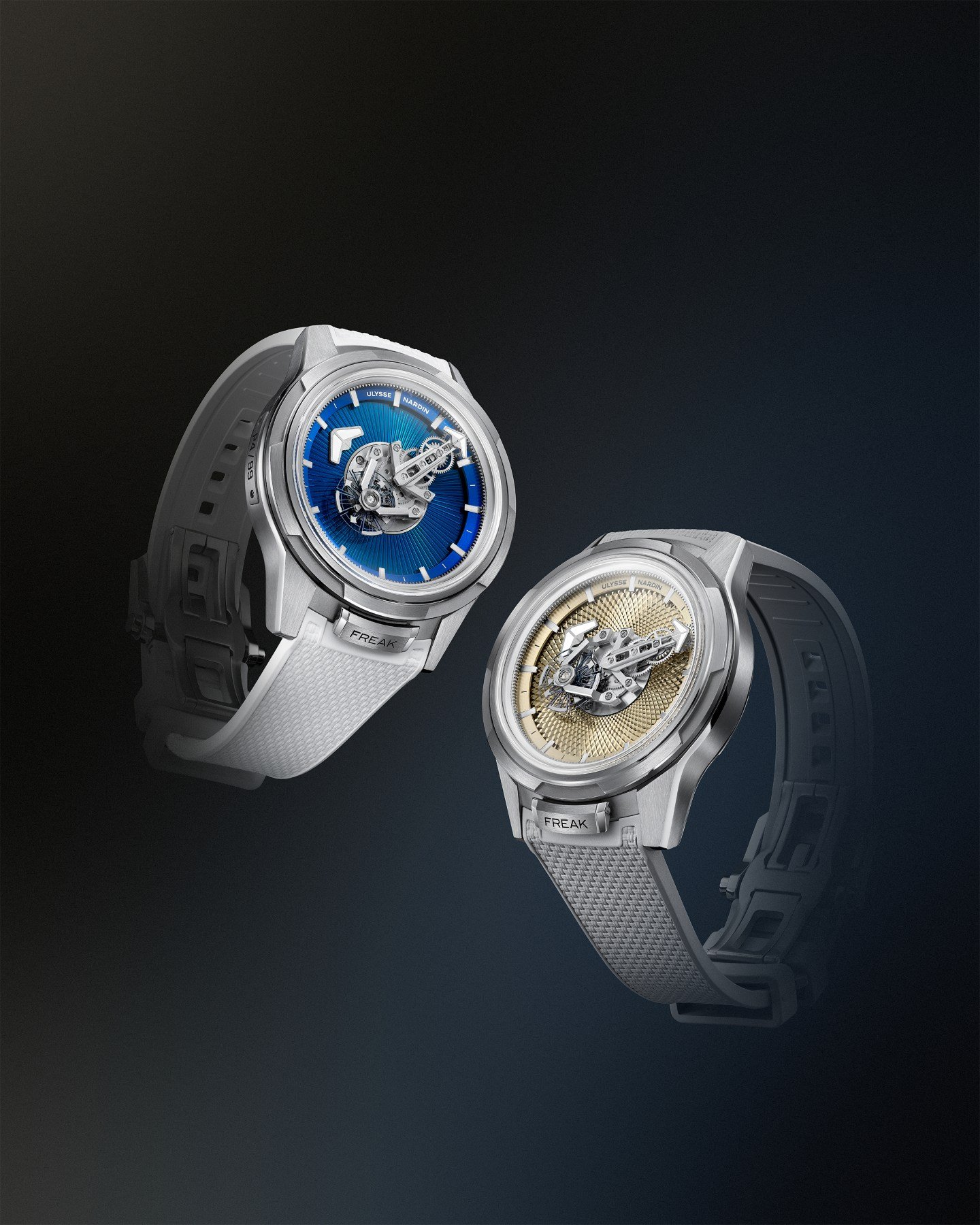
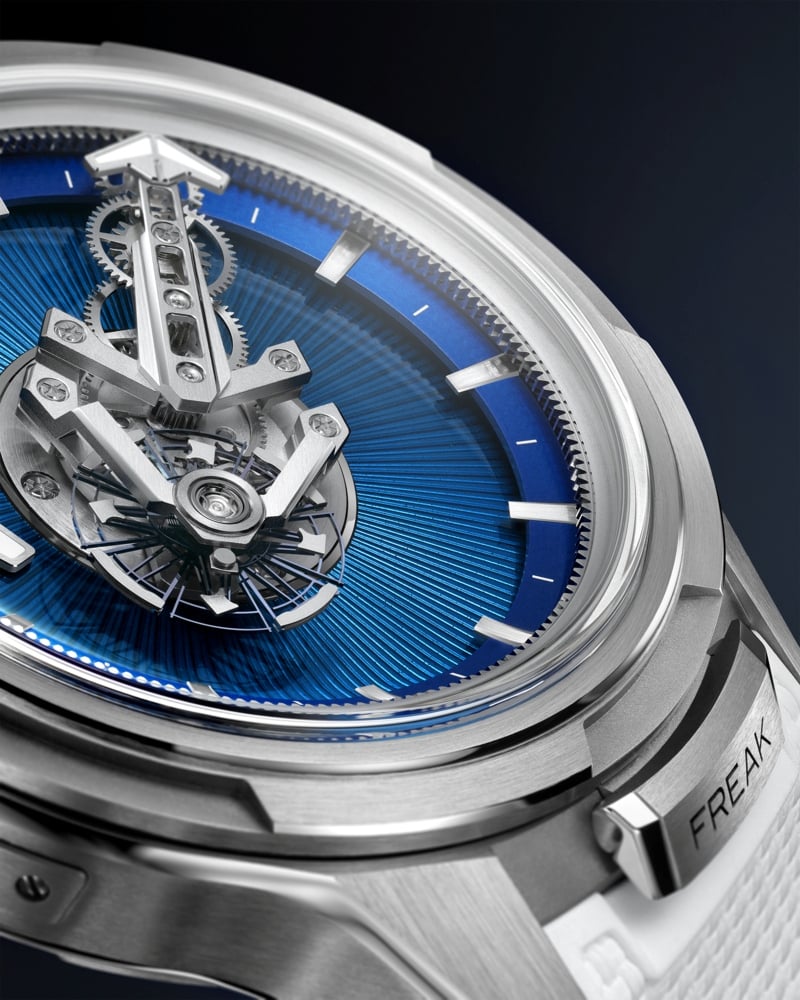
The Blue Enamel version features a guilloché fliqué gold hour disc covered with blue enamel, by Donzé Cadrans. Guilloché flinqué is a finishing technique that combines intricate geometric metal engraving with a layer of enamel — blue enamel in this case. The radial pattern is dynamic, and combined with the marine-blue color, it has strong nautical vibes. Maybe that’s on purpose, since the production of marine chronometers is rooted in Ulysse Nardin’s mid-19th-century origins.
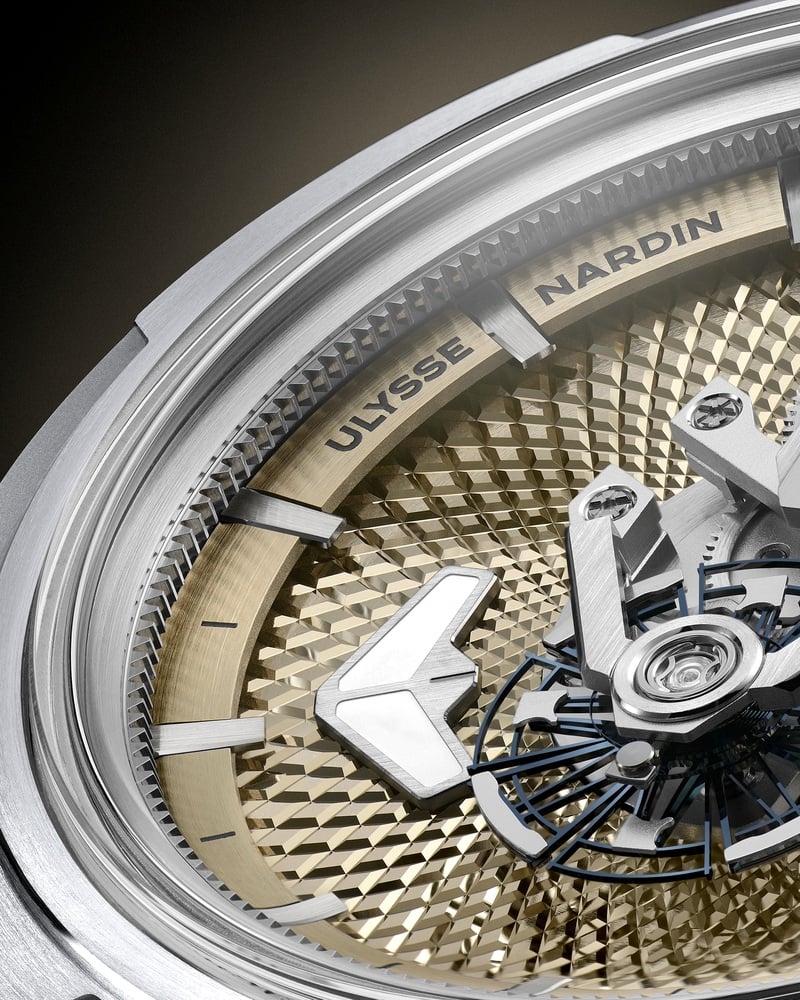
The Freak One Guilloché, with its sand-colored CVD-treated guilloché hour disc, is more “understated.” Still, using that word seems oddly out of place when describing a Freak. I think it’s safe to say that both new versions of the Freak One are class acts. And, yes, they’re a bit weird; there’s no denying that.
Both the Freak One Blue Enamel and the Freak One Guilloché are limited to 99 pieces. The Blue Enamel version retails for €81,700 / US$89,800 / £67,760 / CHF 73,000, and the Guilloché variant costs €72,700 / US$80,000 / £60,330 / CHF 65,000.
This is a partnership post. Learn more.