A Watch Lover’s Pilgrimage to Vienna’s Uhrenmuseum

There’s a kind of quiet that settles over you in a room full of stopped clocks. It’s not exactly silence, somewhere a pendulum is still swinging, a bell is winding up to strike, but a hush that makes you lower your voice without meaning to, as if you’re afraid you might disturb the silence and wake something. That’s the feeling that greets you the moment you climb the staircase at Vienna’s Uhrenmuseum.
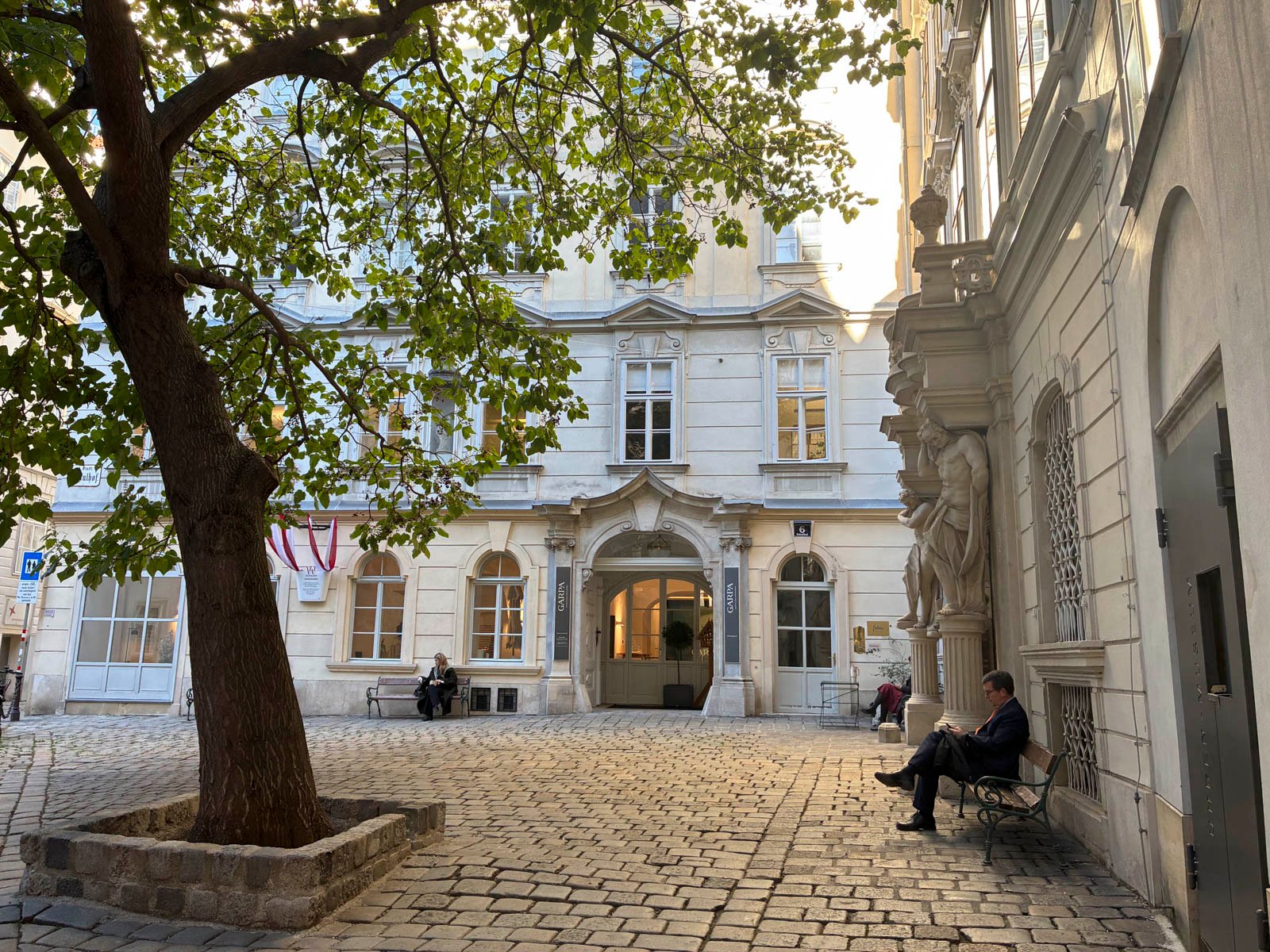
The museum is tucked into a quiet corner just behind the Am Hof square, a five-minute stroll from the tourist crush of Stephansplatz. I’ll admit I almost walked right past it. The entrance sits on Schulhof 2, in a townhouse so unassuming you’d take it for an apartment building, if not for the small sign by the door. Behind that door is Austria’s largest clock collection, and one of the most important in the world. There are some 7,000 objects in the museum’s holdings, with more than 700 on rotating display across three floors of the Palais Obizzi, a baroque building whose own history stretches back to the late 17th century.
A collector’s obsession, preserved
Every great specialist collection has an origin story, and the Uhrenmuseum’s is a good one. The core of it belonged to Rudolf Kaftan, a schoolteacher and passionate horological obsessive who amassed thousands of timepieces and clockwork mechanisms in the early 20th century. When the building housing his collection was slated for demolition in 1917, the City of Vienna stepped in, bought the collection outright, and installed Kaftan as the museum’s first director, complete with a service apartment on site. As you might imagine, there’s no better way to live than upstairs from your life’s work. The museum opened its doors in 1921, and it’s been quietly ticking along in the same corner of the Innere Stadt ever since.
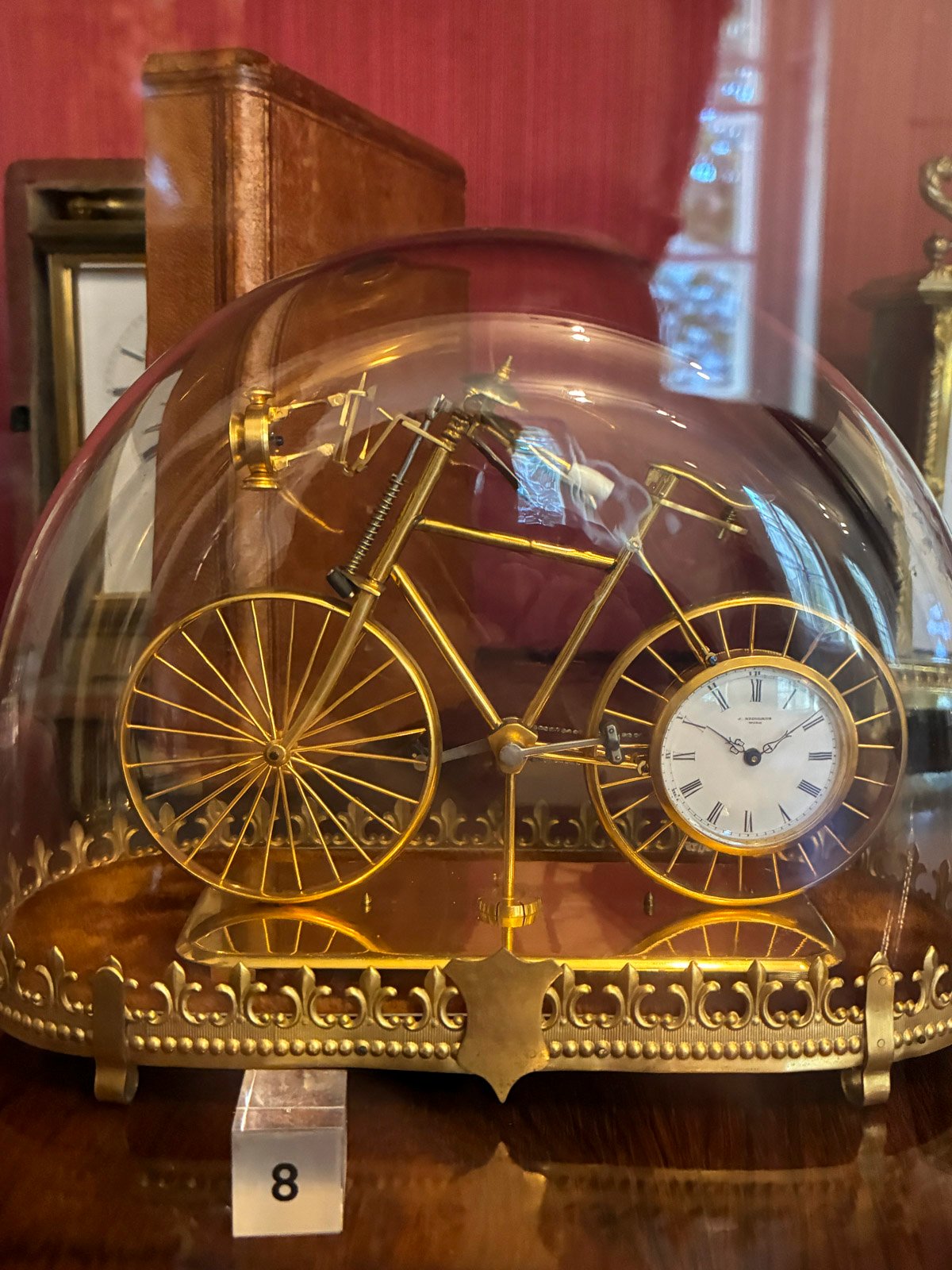
The other cornerstone of the collection is more unexpected: the pocket watch collection of Marie von Ebner-Eschenbach, one of Austria’s most celebrated 19th-century writers. It’s a reminder that watch collecting has never belonged solely to horologists and industrialists. A fact any of us who’ve caught the bug ourselves should take some comfort in.
Walking through six centuries
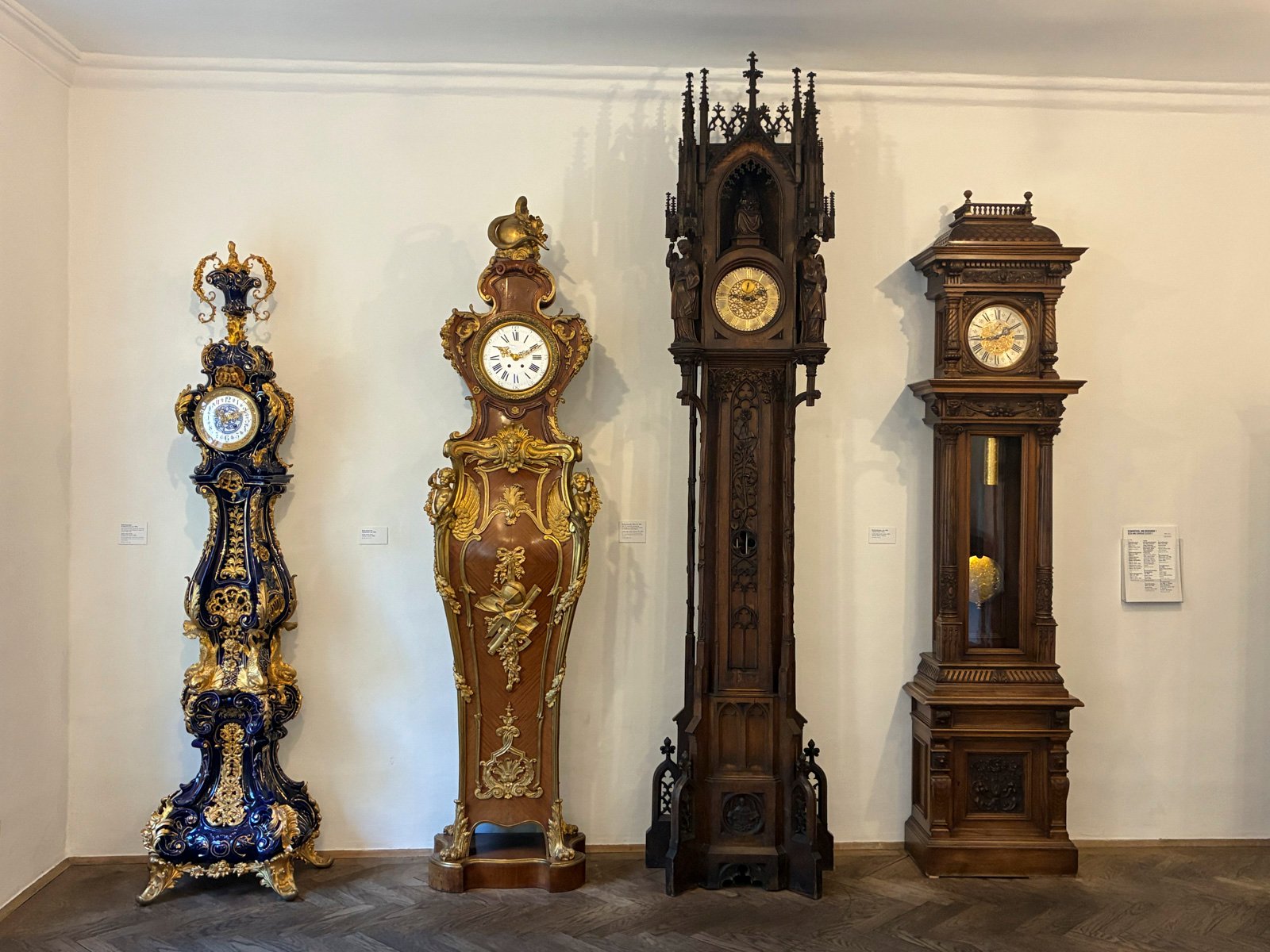
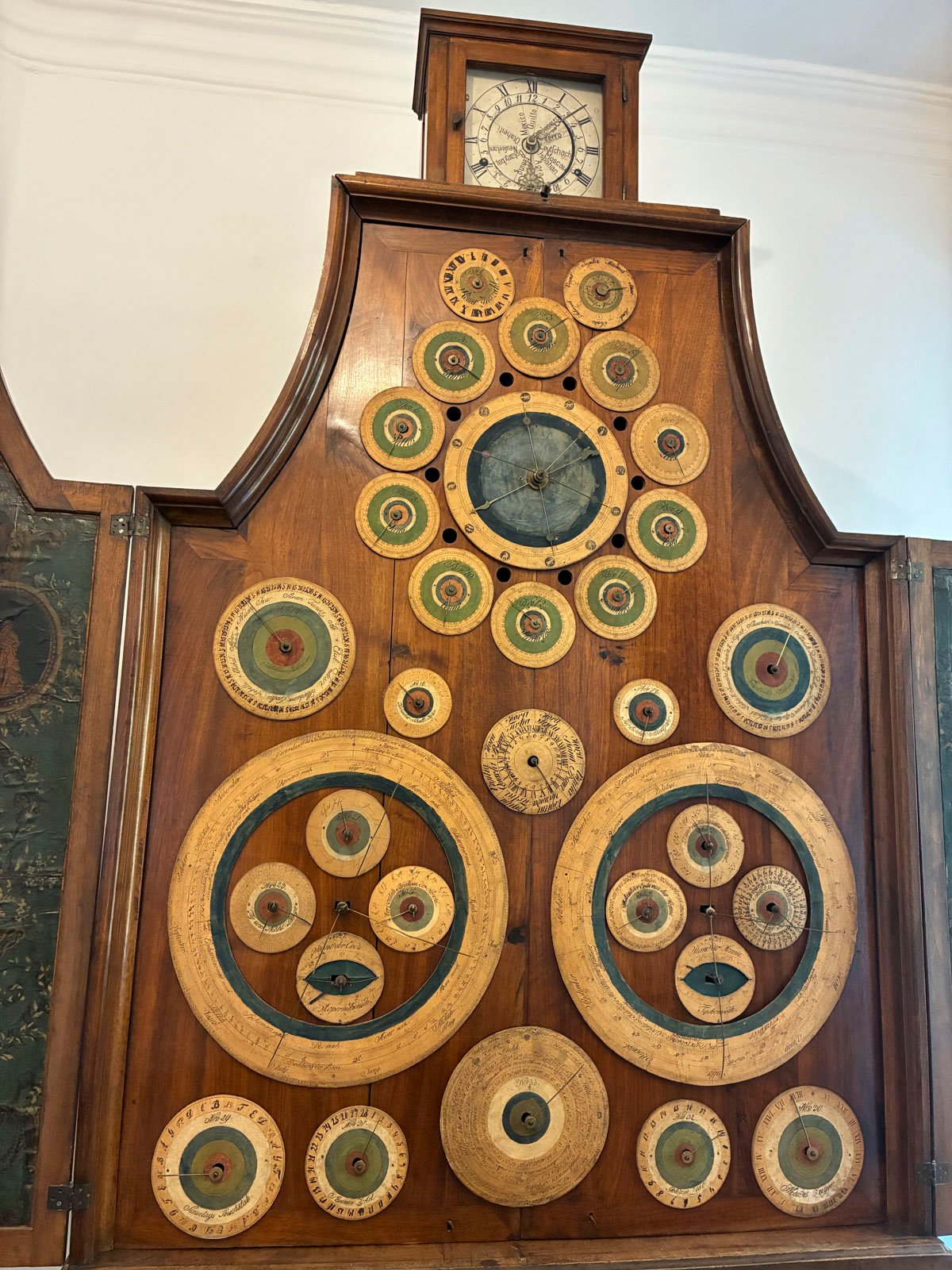
What struck me most, moving room to room, was how the collection functions less like a technical archive and more like a social history of Central Europe. One told entirely through timekeeping. The oldest pieces date to the 15th century. They consist of hulking iron mechanisms that look more like instruments of siege warfare than anything you’d want on your wrist. From there, the story moves through Gothic tower clocks, Renaissance table clocks, and into the specifically Viennese charm of the Biedermeier period, represented by the museum’s celebrated “Laterndluhren” (lantern clocks). Delicate and lamp-like, they became a signature of Vienna’s own clockmaking tradition in the early 19th century.


The showstopper, quite literally, is the 17th-century tower clock mechanism from St. Stephen’s Cathedral, a multi-ton assembly of iron gears and weights that once kept time for the entire city from high above the Stephansdom. Standing next to it, you get a visceral sense of what it once took, in labor, in iron, in engineering ambition, simply to know what hour it was. It’s a useful corrective for anyone who’s ever complained about setting a GMT function.
Not just clocks, but watches too!
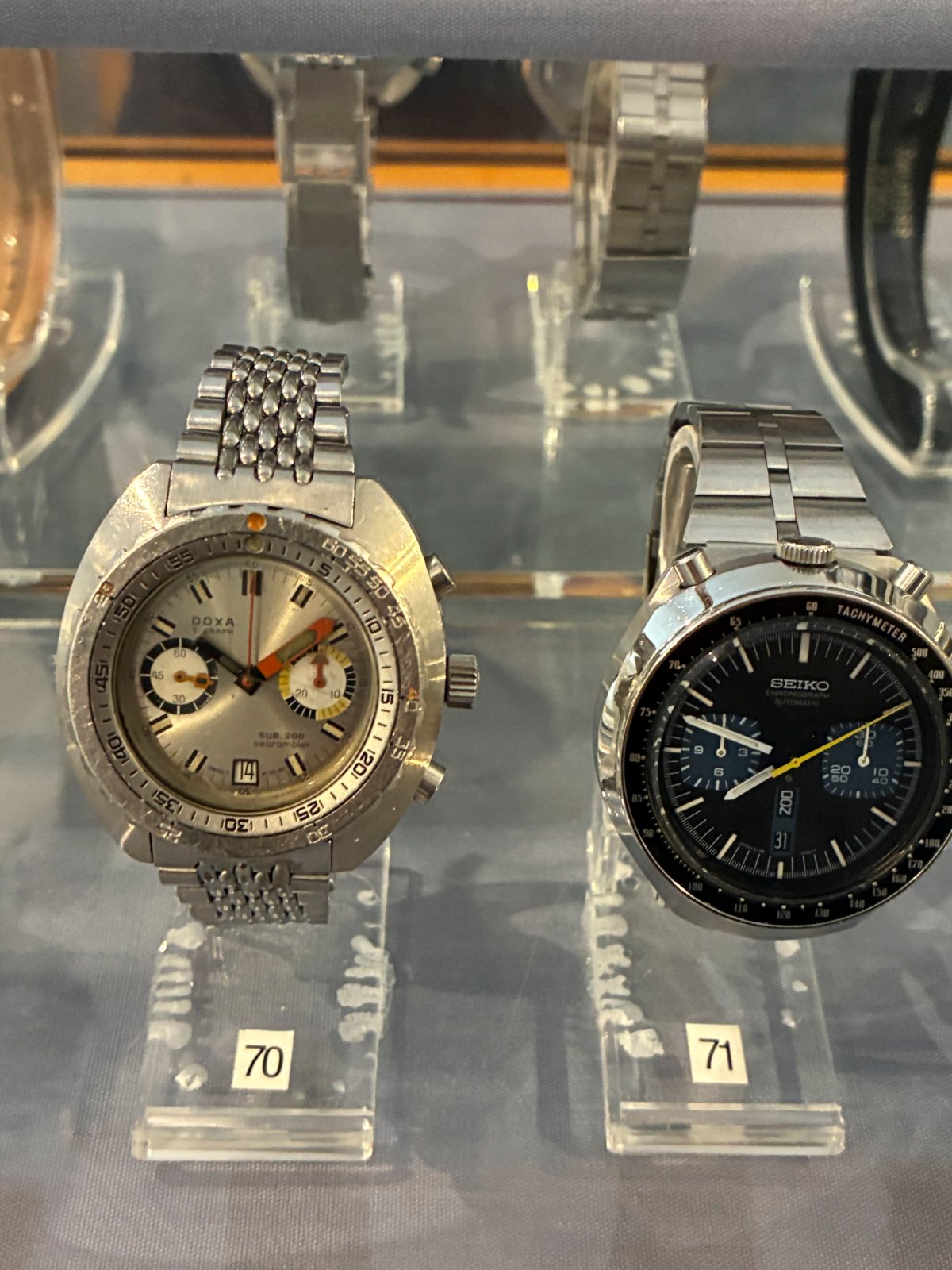
Just as compelling, if less monumental, is an astronomical clock built by the monk David a Sancto Cajetano. It’s a single mechanism capable of displaying the time in multiple locations at once alongside planetary orbits, solar eclipses, and lunar eclipses. The museum also has a collection of wristwatches from all eras.


Seeing something like that under one roof, alongside mass-produced pocket watches and hand-wound Biedermeier lanterns, is what makes this museum worth the detour. It doesn’t separate the sublime from the everyday. Both get equal shelf space, because both are, in their own way, expressions of the same human stubbornness about tracking time.
Not just a display case
To its credit, the Wien Museum, which runs the Uhrenmuseum, has resisted turning the place into a static reliquary. For visitors who want a more active way through the collection, there’s an AR-powered escape game running across all three floors, twelve interactive stations built around the fictional mystery of a lost pocket watch, playable in small groups with tablets provided at the entrance. It’s aimed squarely at families and casual visitors rather than obsessives like us, but it’s a smart way to get a wider audience to actually look closely at 400-year-old clockwork rather than glazing over it.


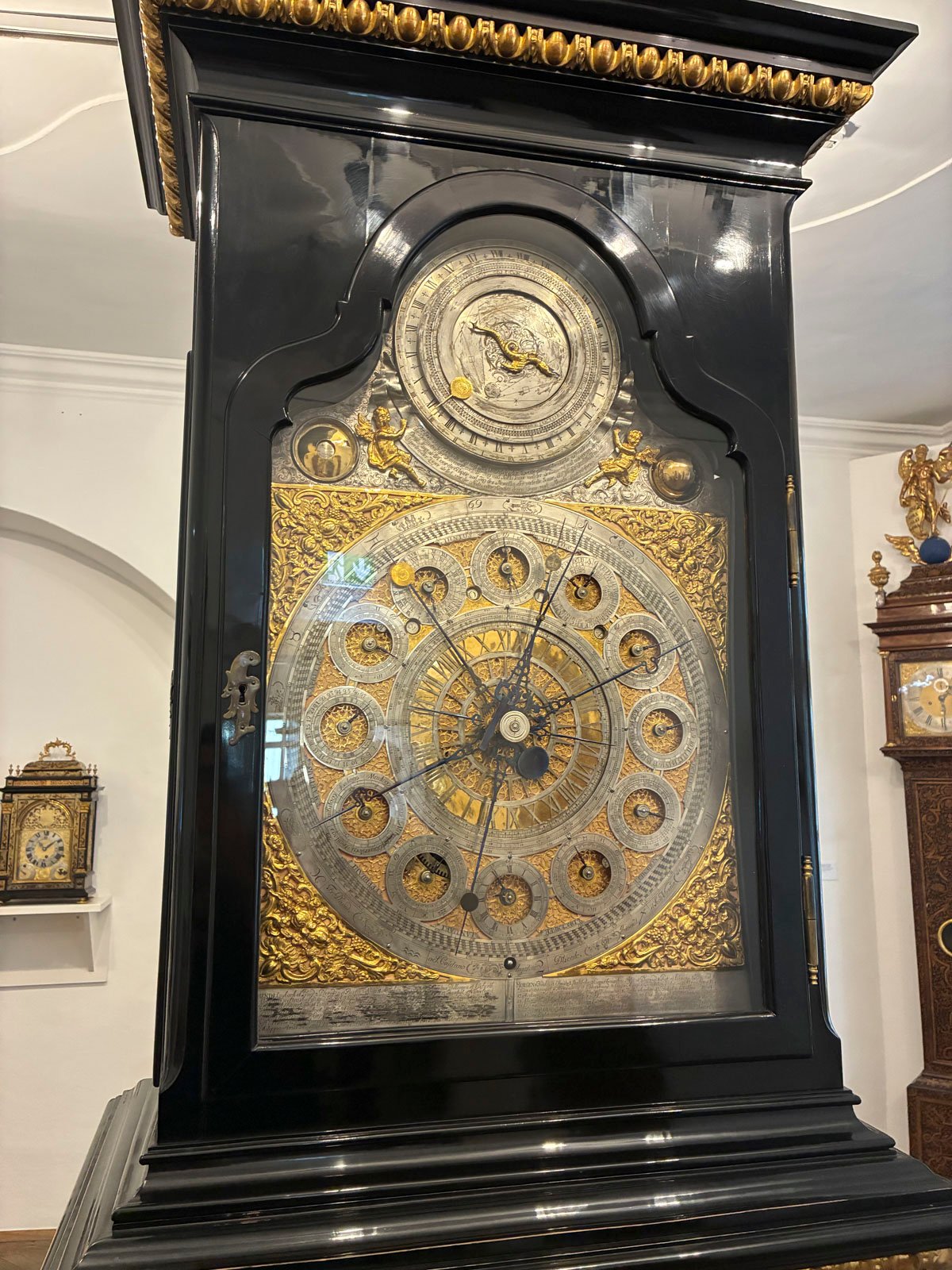
A word of advice, gleaned from other visitors and confirmed on the ground: try to time your visit for the top of the hour. With this many mechanical clocks in close proximity, striking mechanisms and chimes overlap into something between a concert and a small mechanical riot, cuckoos, flute clocks, and cathedral-scale bells all competing for the same sixty seconds. It’s chaotic, a little absurd, and exactly the kind of thing that reminds you why mechanical timekeeping earns its devotion in the first place.
Concluding thoughts: And how to get there
The Uhrenmuseum is compact. You can move through it in under an hour if you’re pressed. Though collectors will want to linger closer to two. Admission is €8 for standard entry and €6 for reduced-tariff entry, with free entry on the first Sunday of every month. Note that the museum keeps a tighter schedule than many institutions in Vienna. It’s open Friday through Sunday, 10:00 to 17:00, and closed on January 1, May 1, and December 25. So it’s worth checking before you build it into an itinerary.


The exhibition rooms are accessible only via a spiral staircase, so it’s not a stop for anyone with mobility concerns. But for the rest of us, it remains one of the most rewarding hours in Vienna for anyone who has ever obsessed over a movement, a dial, or the simple, stubborn mechanics of keeping time. The Uhrenmuseum is located at Schulhof 2, 1010 Vienna.
Have you ever visited a horological museum worth checking out? Leave your experiences and recommendations in the comments below.