Get It On And Bang A Gong With The New Piaget Polo Minute Repeater

Let’s put the volume that the new Piaget Polo Minute Repeater produces into perspective. Most traditional repeater watches don’t exceed 60 decibels (dB). They make a sound you can compare to a whispered conversation. Now, normal conversation averages around 60–65 dB, so when a minute repeater chimes at 64, you will hear it without holding the watch close to your ear. What’s impressive is that the sound-producing movement, the in-house caliber 1290P, is a mere 4.8mm-slim machine inside a 9.3mm-thin case. But I think we’ve heard this caliber before…
The Piaget Polo Minute Repeater (ref. G0A51038) is new, but the movement inside it isn’t. The in-house ultra-thin automatic caliber 1290P debuted in 2013 in the 9.4mm-thick Emperador Coussin Ultra-Thin Minute Repeater. When it debuted, Piaget claimed it was the thinnest watch in its category (self-winding minute repeater) in the world. The new time-chiming Polo is a tenth of a millimeter thinner, but it’s not the record holder. That honor goes to the 8.25mm-thick Jaeger-LeCoultre Master Hybris Mechanica Ultra Thin Minute Repeater Tourbillon. Still, a new svelte minute repeater elegantly exposing the inner workings of its 430 highly miniaturized components through the dial is always worth a look.
An eternally refreshing sound in a new shape: Introducing the Piaget Polo Minute Repeater
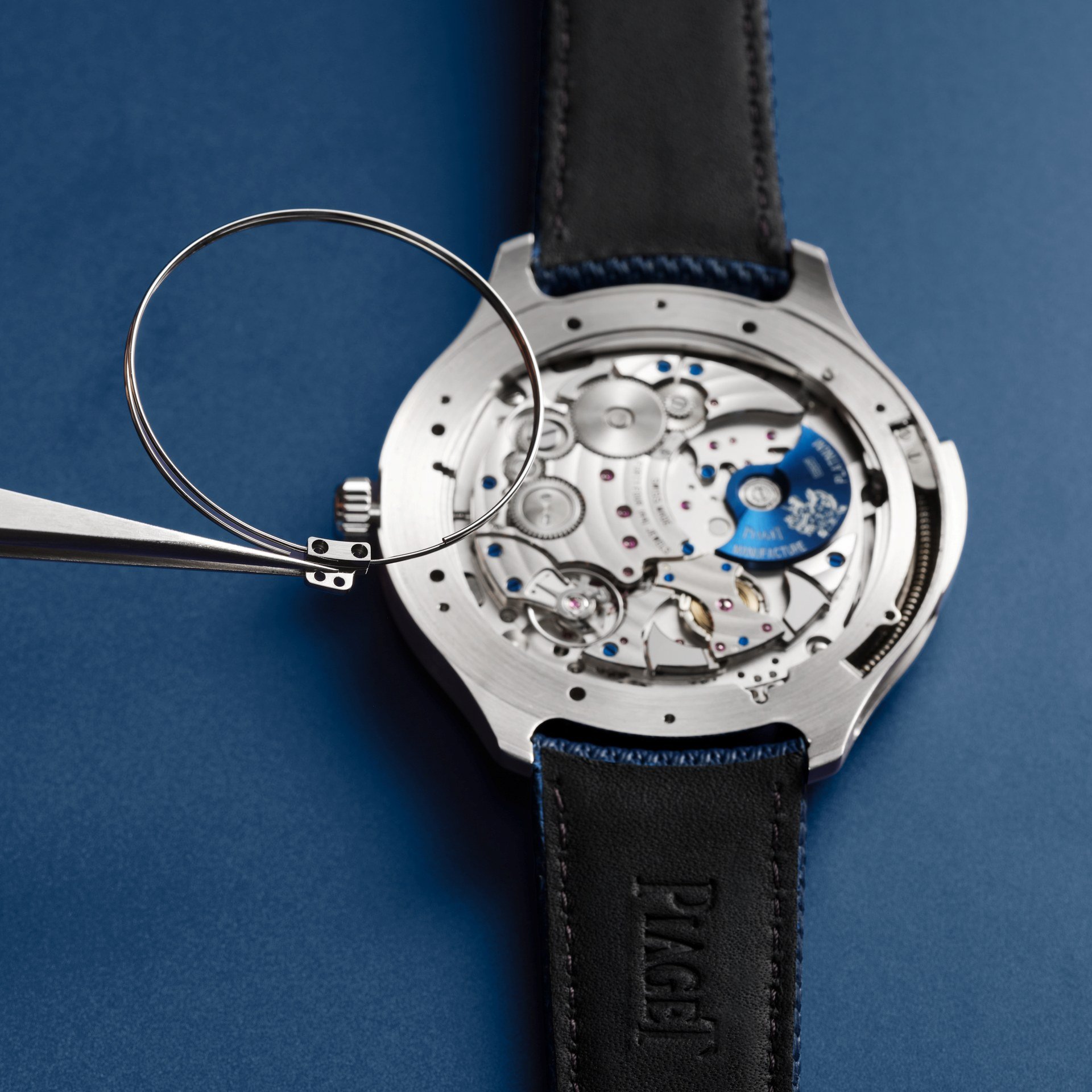
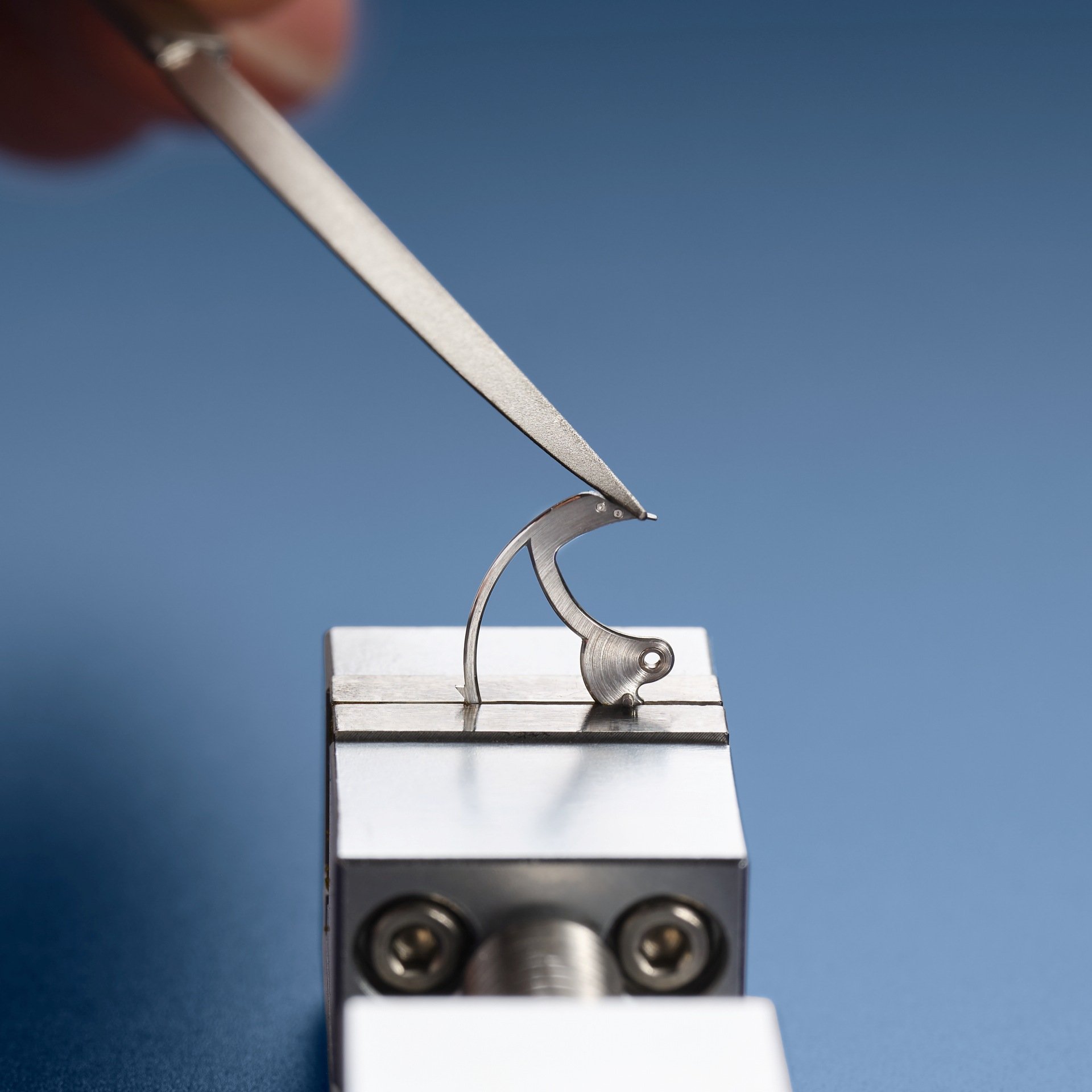
Piaget’s self-winding minute repeater caliber 1290P features a micro-rotor to keep the thickness down. But there’s more. It contains several 0.12mm-thin gears, which are just four hundredths of a millimeter thicker than a human hair. Working with components this size leaves no margin for error in manufacturing components or assembling the watch. This aspect will always be impressive, no matter how old the movement is. Thirteen years ago, a 430-part, 4.8mm-thick micro-rotor caliber was fascinating, and it still is today, especially since part of the movement, made in the brand’s La Côte-aux-Fées atelier, is exposed.
And that is probably the first thing you notice. The Polo Minute Repeater does not go all the way down the skeletonization route, though. Instead, sections of the blue-colored gold dial have been opened, revealing parts of the movement beneath. This approach leaves the Polo’s familiar dial design largely intact, keeping the watch recognizable.
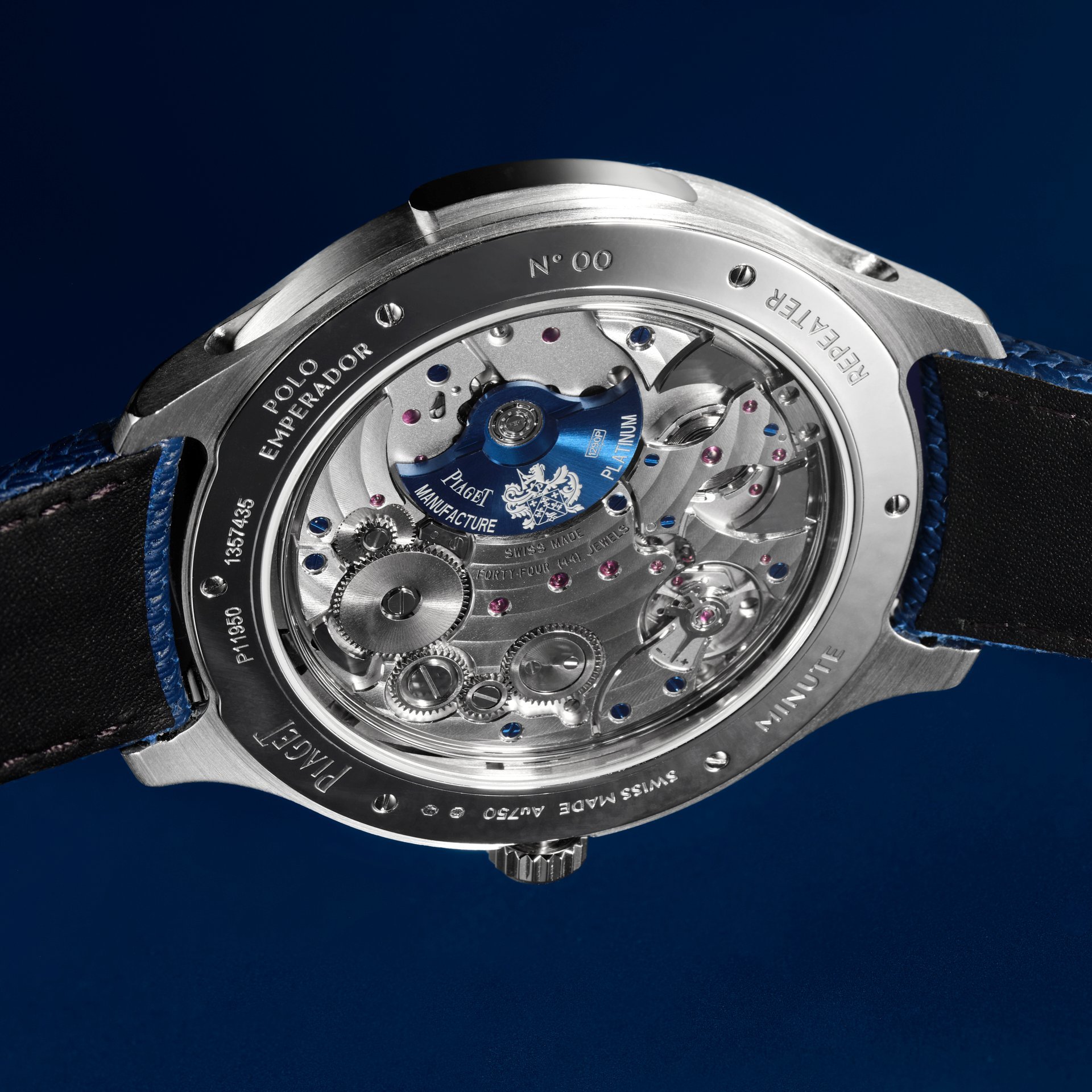
The in-house Piaget caliber 1290P inside features a plethora of labor-intensive finishes. The bridges are beveled by hand, the mainplate carries a guilloché pattern, and the minute repeater’s hammers are polished to a mirror finish. The movement is automatically wound by a platinum micro-rotor. And because Piaget gave it a blue PVD coating, it blends in with the watch’s dominant color, radiant blue.
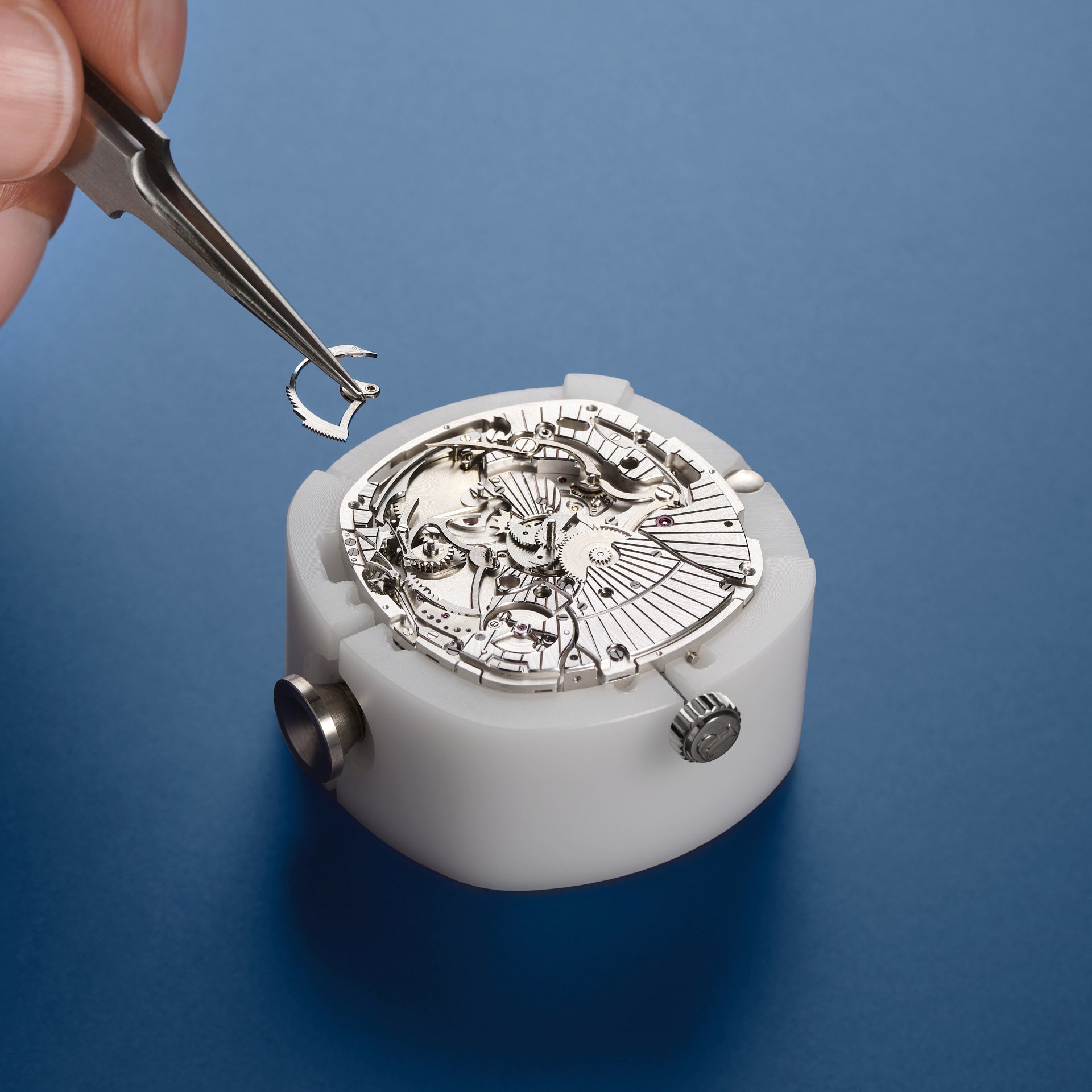
A memorable kind of blue
The dial of the Polo Minute Repeater is another fine piece of artisanal work. It is made of gold and features hand-applied guilloché, producing a sunray pattern. Around it sits an opaline outer track. Then, there is the gold fillet that runs across the dial, changing shape from straight to domed as it travels around the surface. At 4 o’clock, things get particularly interesting. A smoked blue sapphire ring signed “La Côte-aux-Fées” reveals the governor wheel beneath it. This is the regulator for the minute repeater, so you can see the component that controls the chimes’ speed in action. Piaget says the dial took more than 150 hours to develop, followed by another 50 hours of hand finishing for all the pieces. It looks like that.
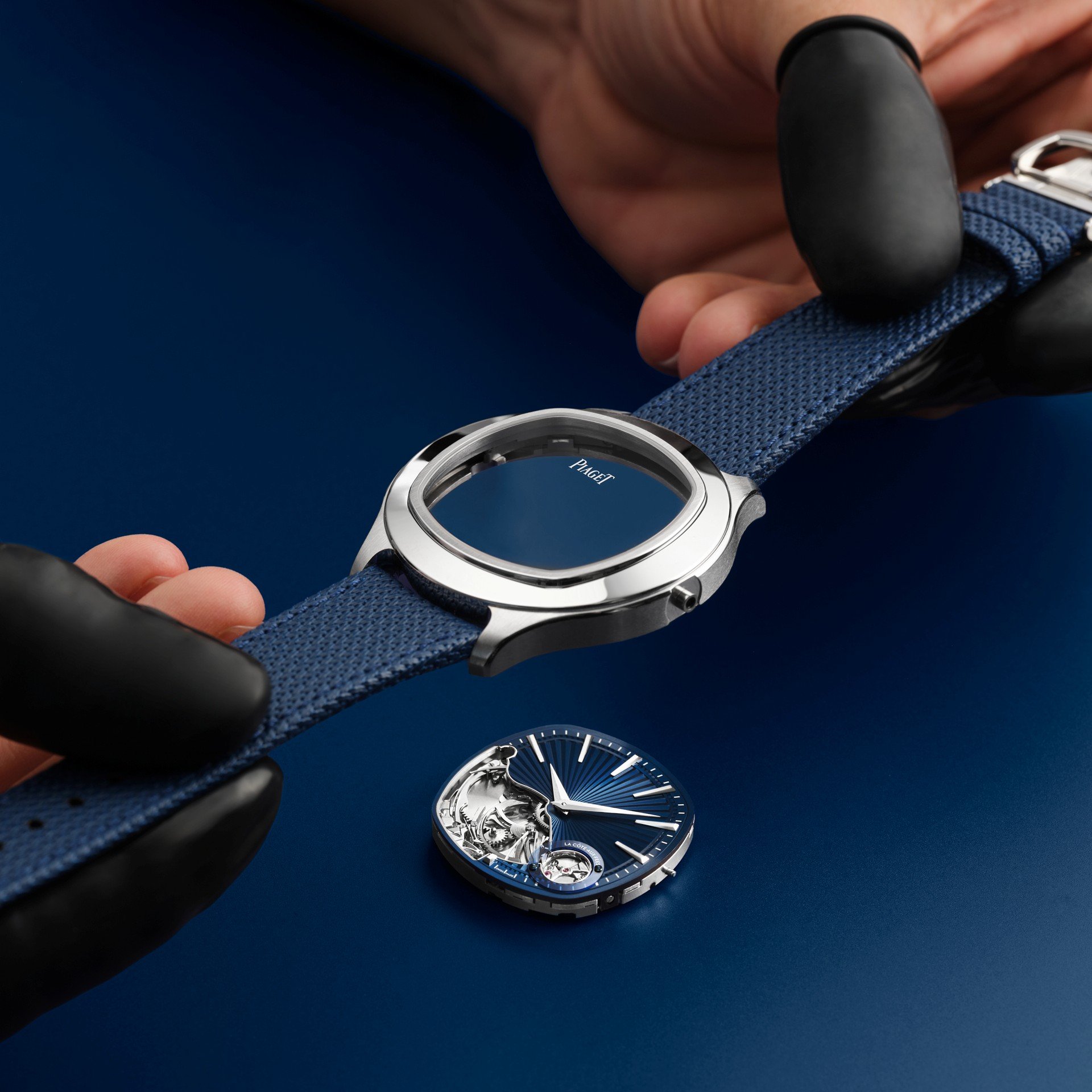
Let’s hear it
The Polo Minute Repeater has a white gold 48mm case with a 9.3mm profile and a 3atm water resistance rating. Those dimensions lead to, let’s say, interesting proportions. It won’t fit just any wrist, but since every watch requires an abundance of handwork, Piaget will make just five individually numbered Polo Minute Repeaters this year.
The Polo has a unique combination of shapes. A round bezel sits on top of a round case, but because of the cushion-shaped dial opening, the watch’s overall look is fluid, dynamic, and distinct. On the left side of the case sits the slide that operates the chiming mechanism, subtly blending into the case’s flowing lines. Once you pull it down, you will hear the caliber 1290P strike the hours in G♯ and the minutes in A♯, both in the fifth octave. If you want to check how G♯ sounds, just play Sergei Rachmaninoff’s Prelude in G♯ minor, Op. 32, No. 12.
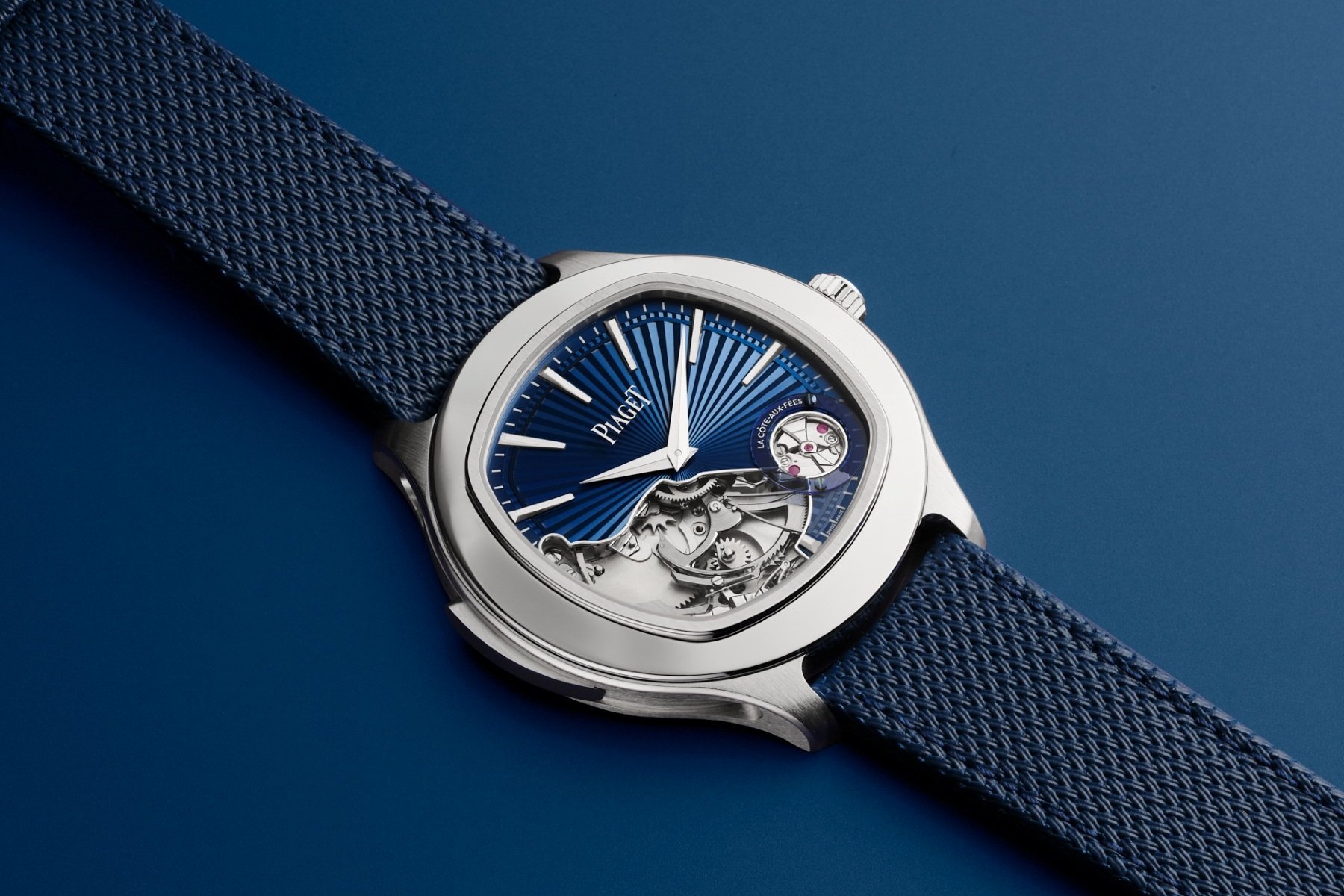
You want more than just sound?
In the rare case you get to wear the Polo Minute Repeater, you will have to decide something first: will you wear it on the blue mesh-textured, embossed calfskin strap with a folding clasp or the additional alligator leather strap? The calfskin offers a more casual look, while the alligator adds a dressier touch. Even dressier still is the new High Jewelry version of the Polo Minute Repeater (ref. G0A51017). It’s a very sparkly watch featuring a bezel set with baguette-cut blue sapphires, while the case, lugs, and crown combine baguette-cut and brilliant-cut diamonds. The dial is fully openworked, so there is considerably less between your eyes and the movement.


While the Polo debuted as a “sports watch,” over the years, it also became a platform for showcasing Piaget’s ultra-thin, complicated movements. The Polo Flying Tourbillon Moonphase and Polo Perpetual Calendar Ultra-Thin are good examples. The new Polo Minute Repeater is too, and it also bucks the trend of shrinking case diameters. It is large, thin, complicated, and rather extravagant. That said, fitting the thin yet large-caliber 1290P into a 38mm case is physically impossible, as the case flanks would be too thin. And creating a completely new minute-repeater movement that would comfortably fit such a case is a considerable investment. Sorry, but you’ll just have to get used to wearing a 48 × 9.3mm watch. I’m sure the future owners of the Piaget Polo Minute Repeater won’t have a problem with that at all.
This is a preferred-position post. Learn more.