Five Rolex References That Identify You As An Enthusiast

Anyone can point at a modern Submariner and know it’s a Rolex. Recognizing that the watch takes no real knowledge of the brand, Rolex has spent decades making sure of that. But there’s a different, quieter tier of Rolex ownership that has nothing to do with what’s easiest to identify from across the room. It’s the references that only make sense once you’ve spent real time reading about the brand, handling different examples, and figuring out what you actually like rather than what you’re told to like. These are watches that don’t shout. They reward the kind of person who has already moved beyond the more obvious references.
Here are five Rolex watches that, in my experience, separate the enthusiast from the person who “just wanted a Rolex.” And because five never quite feels like enough, there’s a bonus watch at the end for anyone who wants to go one step further.
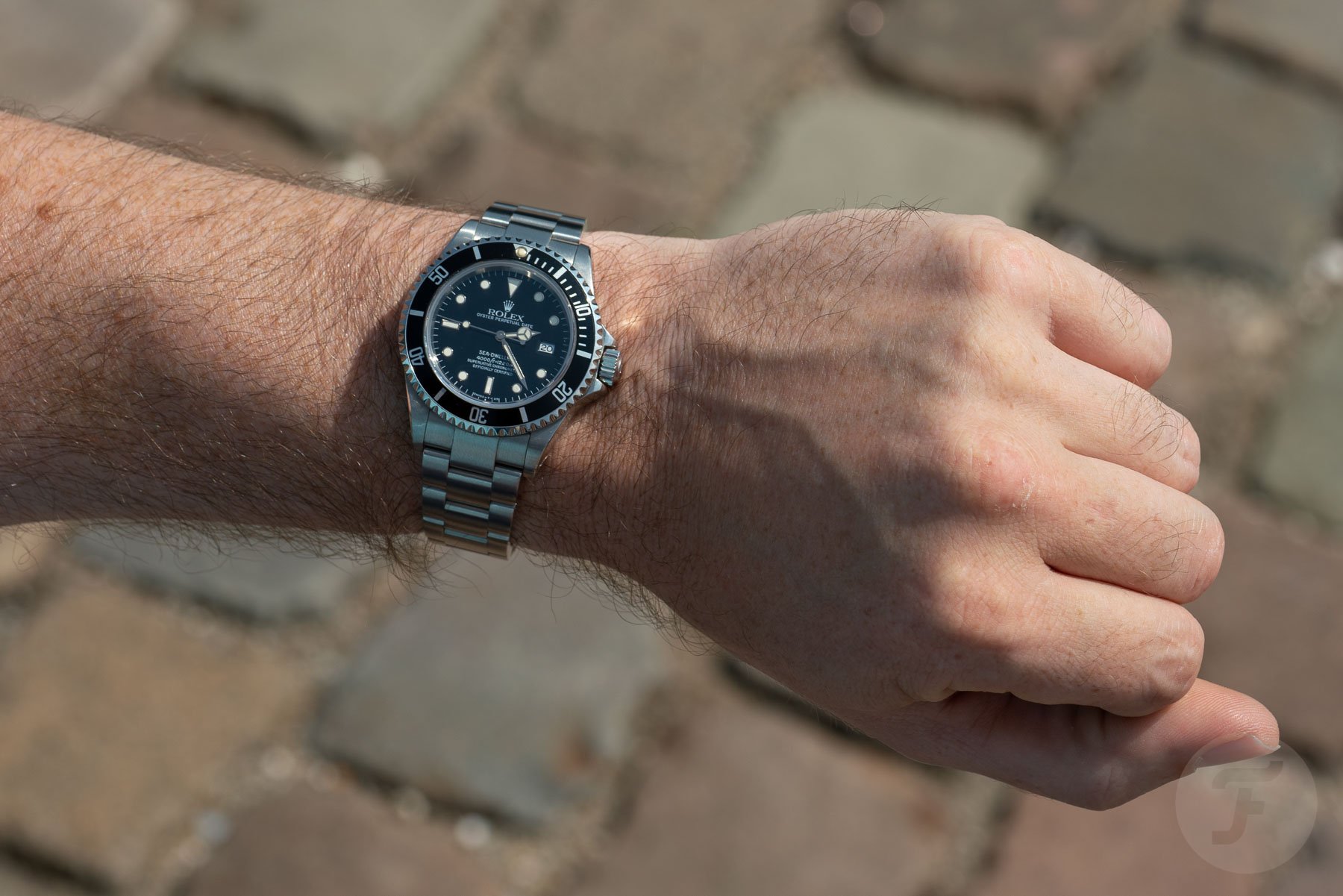
Rolex Sea-Dweller ref. 16600, the “super sub”
I own one of these, so I’ll declare that bias upfront. The 16600 is a neo-vintage Sea-Dweller from the late 1980s through the mid-2000s, and it’s arguably the last Sea-Dweller with an unmistakably old-school character before Rolex moved the line to a ceramic bezel in 2008. That aluminum bezel insert is the whole point for me; it ages, it can develop a faint patina, and it doesn’t have that flawless, faintly synthetic look that ceramic gives modern Rolex sports watches. It’s also notably not a Submariner and doesn’t wear at all like one.
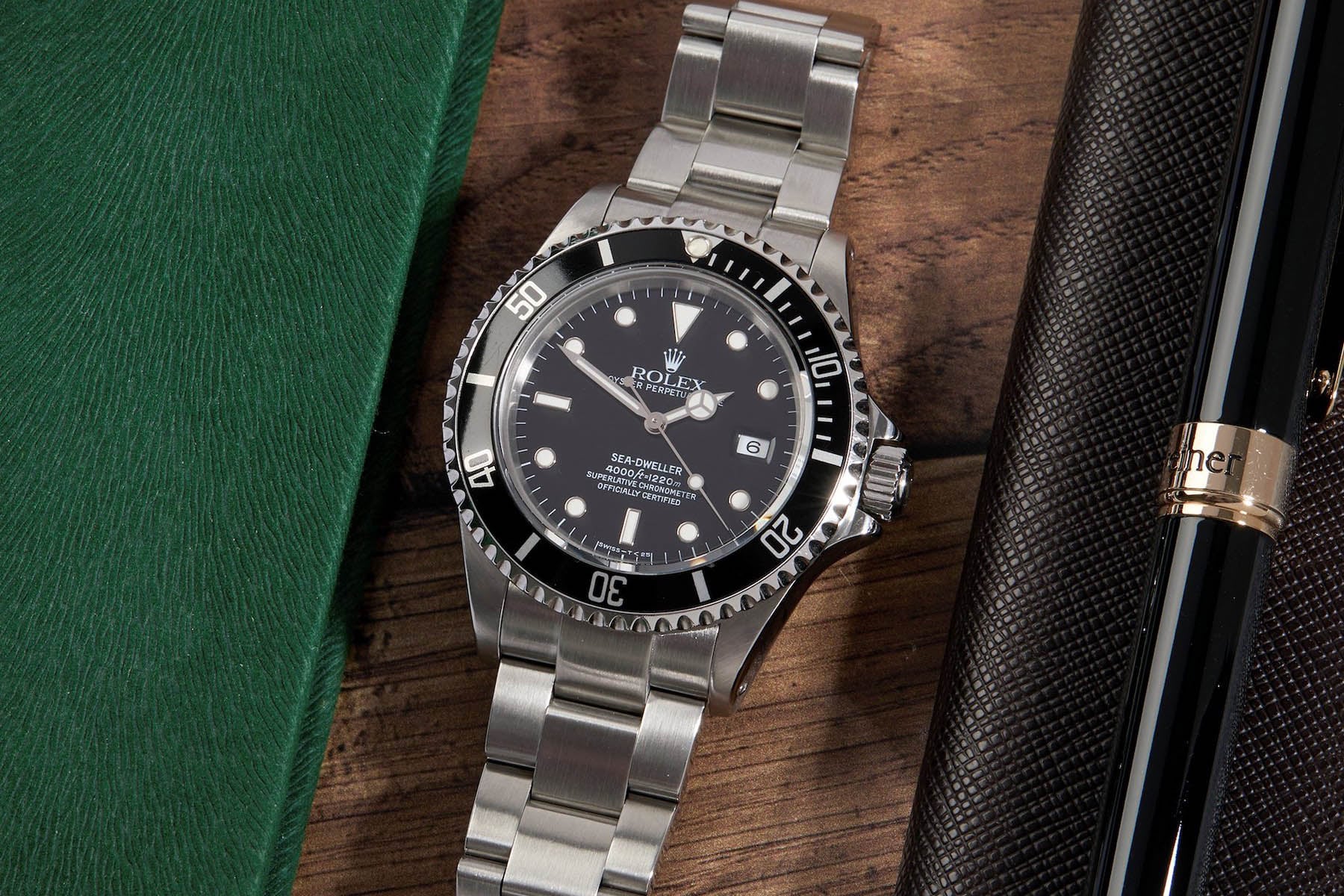
The Sea-Dweller drops the Cyclops date magnifier that divides so many Submariner and GMT-Master owners, giving the dial a cleaner, more purposeful look. Combined with a case built to withstand pressures no Submariner will ever see, the 16600 is a genuinely serious tool watch that still manages to read as understated next to its flashier, ceramic-bezeled successors. Enthusiasts gravitate to it because it does more and shows off less.
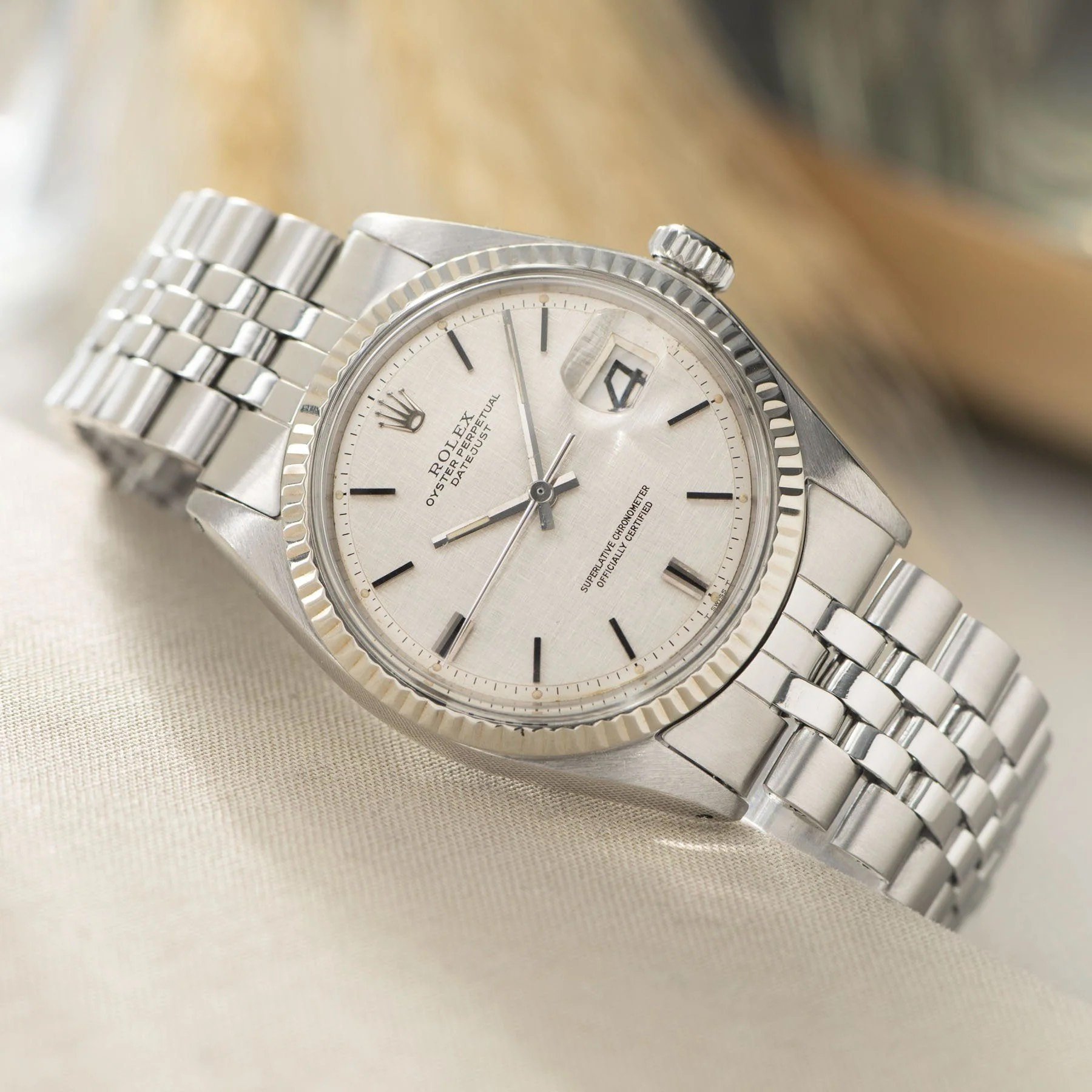
Image: Bulang & Sons
A mid-century Rolex Datejust, like the ref. 1601
The Datejust gets treated as Rolex’s default watch, which does it a disservice, because the vintage examples are where the model’s actual design language lives. The ref. 1601 was produced from around 1960 into the late 1970s, a long enough run that early and late examples can look meaningfully different from one another. Early 1601s came with the famous “pie-pan” dial, a stepped, faceted dial surface that catches light in a way flat modern dials simply don’t, along with an acrylic crystal that develops its own soft patina over decades.
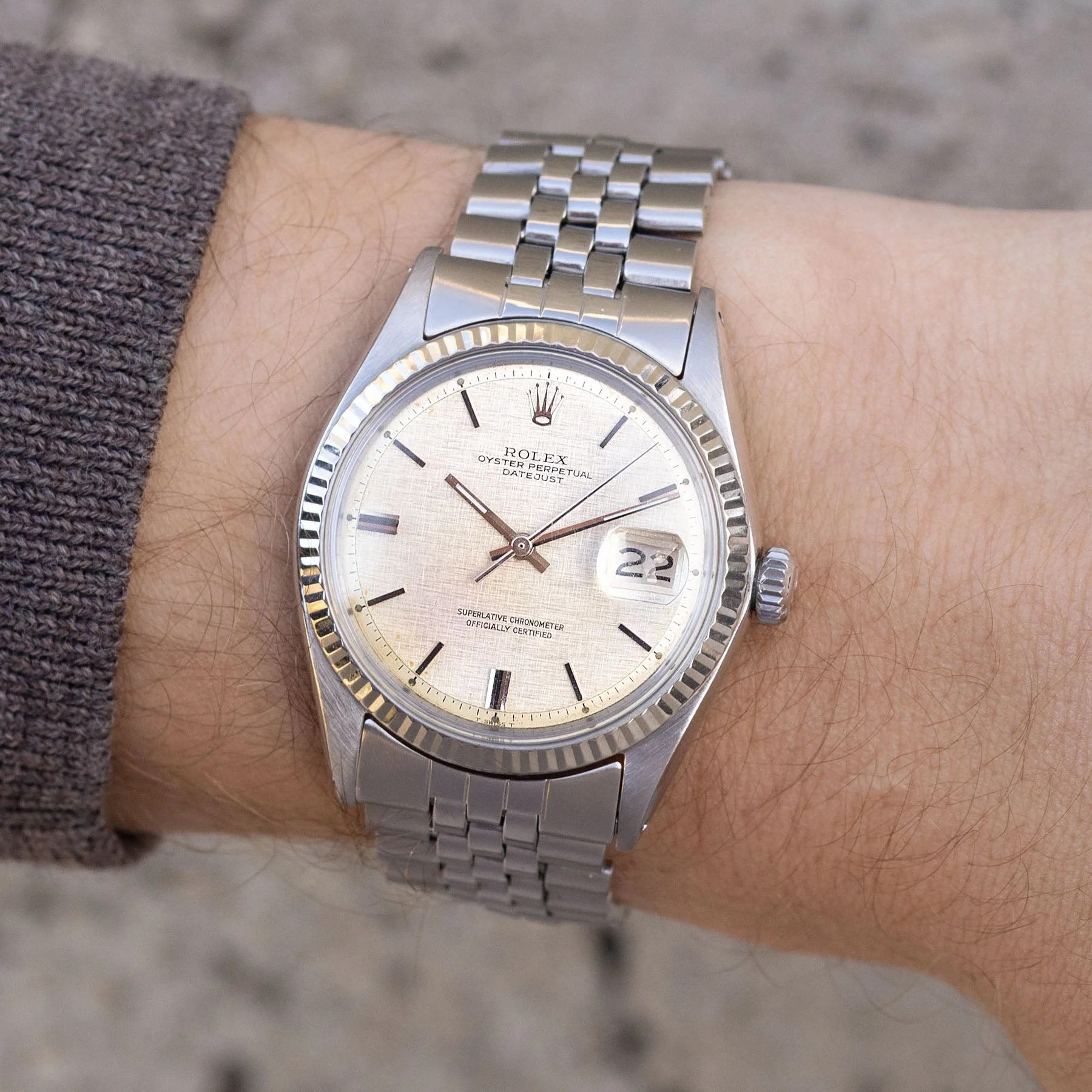
It’s a 36mm watch, non-quickset (you set the date by cycling the hour hand through midnight, one full day at a time), and it runs a succession of manual-feeling automatic calibers, from the 1560 through the 1570/1575 family. None of that sounds thrilling on paper, and that’s exactly why the 1601 is an enthusiast’s watch rather than a beginner’s trophy: you have to already care about vintage dial texture and old-caliber mechanics to see the appeal. Someone shopping only by size and shine will likely walk right past it.
Rolex Explorer II ref. 16570
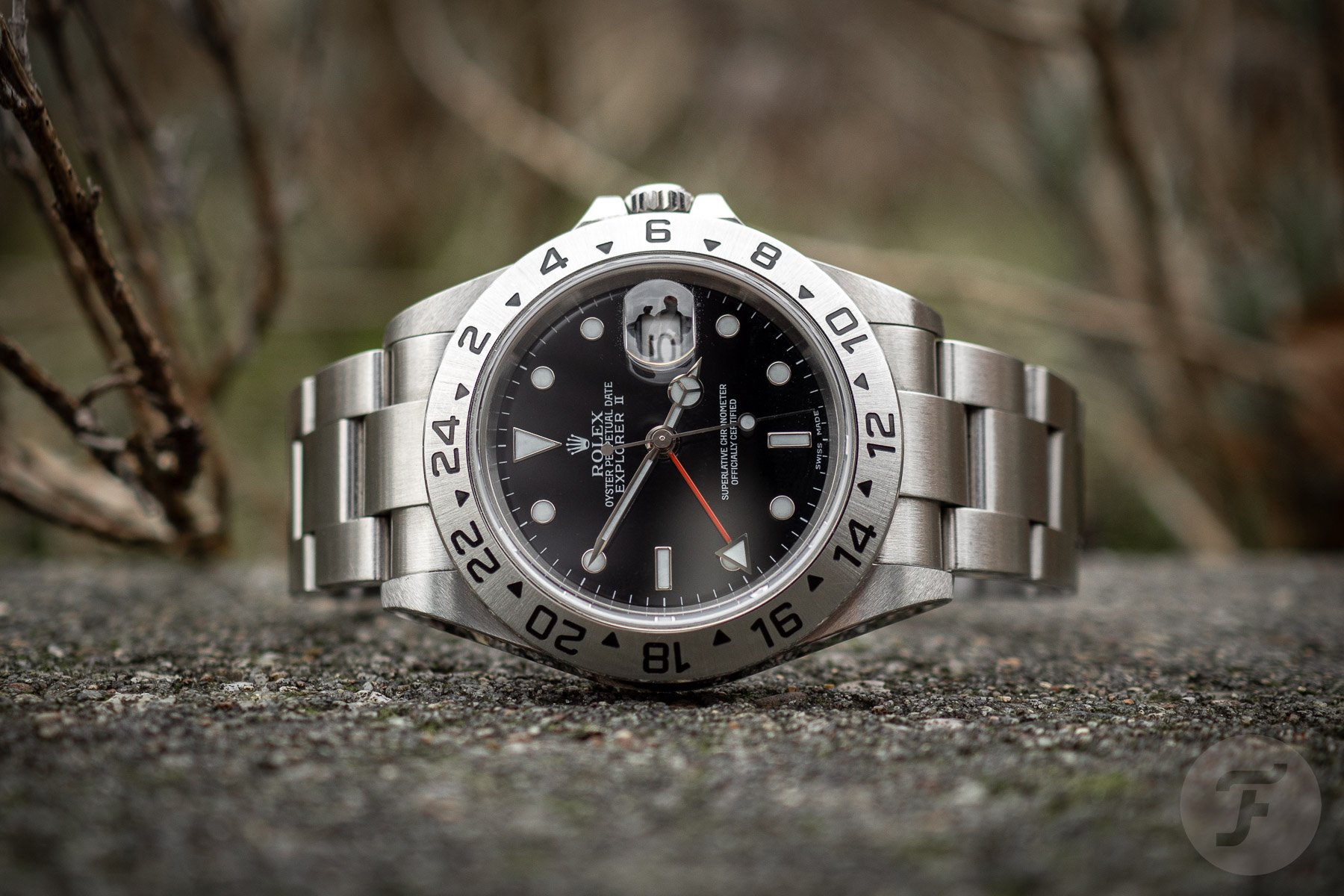
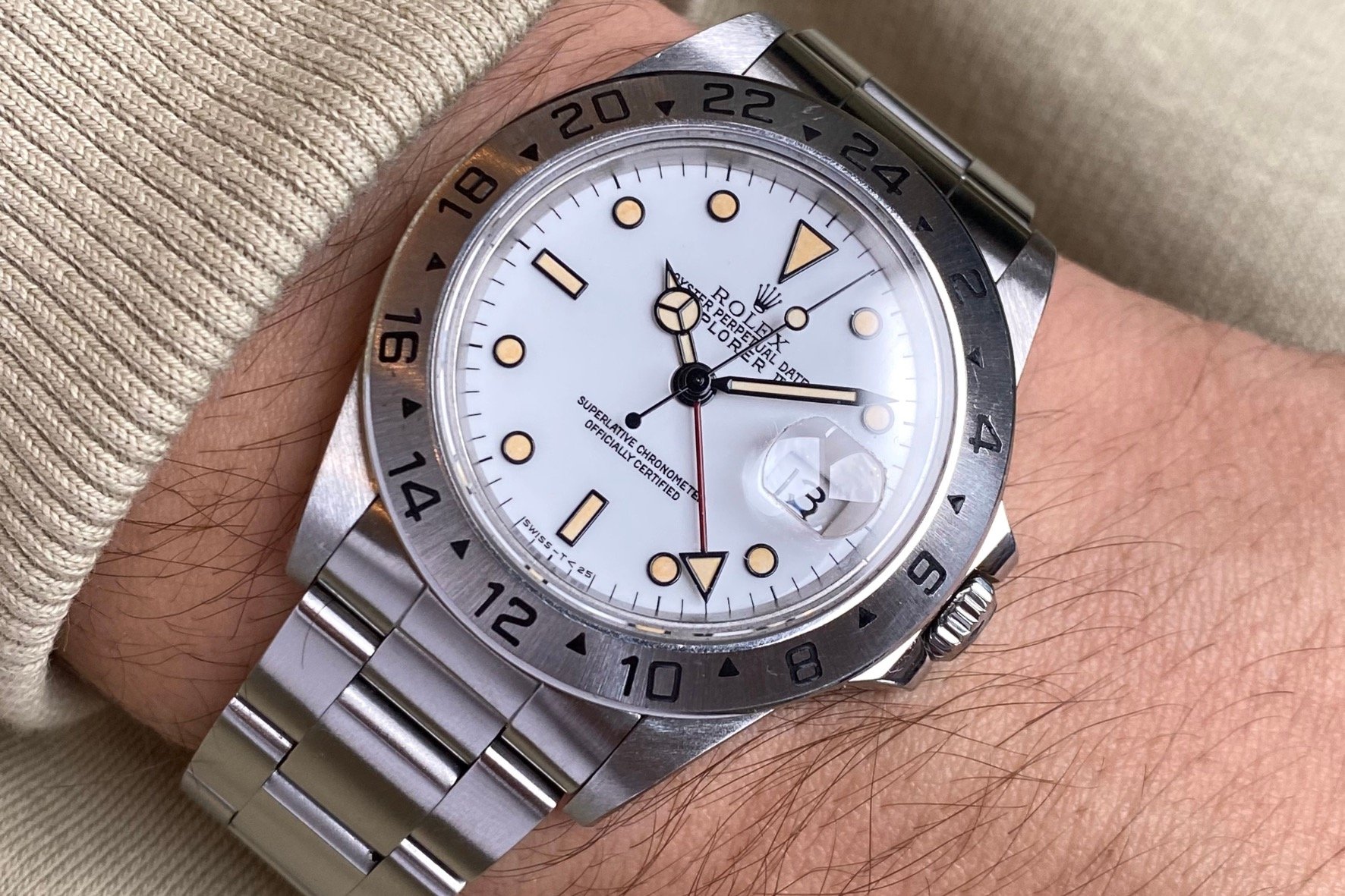
The 16570 ran from 1989 to 2011, longer than almost any other Rolex sports reference, and it’s the last Explorer II built at 40mm before the model ballooned to 42mm with the 216570 in 2011. That size, combined with a genuinely thin 12.2mm case, is what enthusiasts point to first; it’s a five-digit-era Rolex that wears close to the wrist rather than sitting on top of it. But the deeper appeal is in its quirks. Depending on when a given 16570 was made, you’ll find drilled or solid lug holes, folded or solid bracelet end links, tritium lume that’s yellowed into a warm vintage glow or crisp modern Super-LumiNova.
Chicchi di mais — Image: Bulang & Sons
And either the earlier Caliber 3185 or the later 3186 with its Parachrom hairspring. It also comes in two genuinely distinct dial personalities: the stark white “Polar” dial with black-outlined markers, or the black dial that never got a nickname but arguably wears better day-to-day. Knowing which variant you’re looking at, and having a preference, is a small tell that you’ve actually done the reading.
Rolex Datejust Turn-O-Graph 116264 -Picture courtesy of Bob s Watches
Rolex Turn-O-Graph, ref. 116264
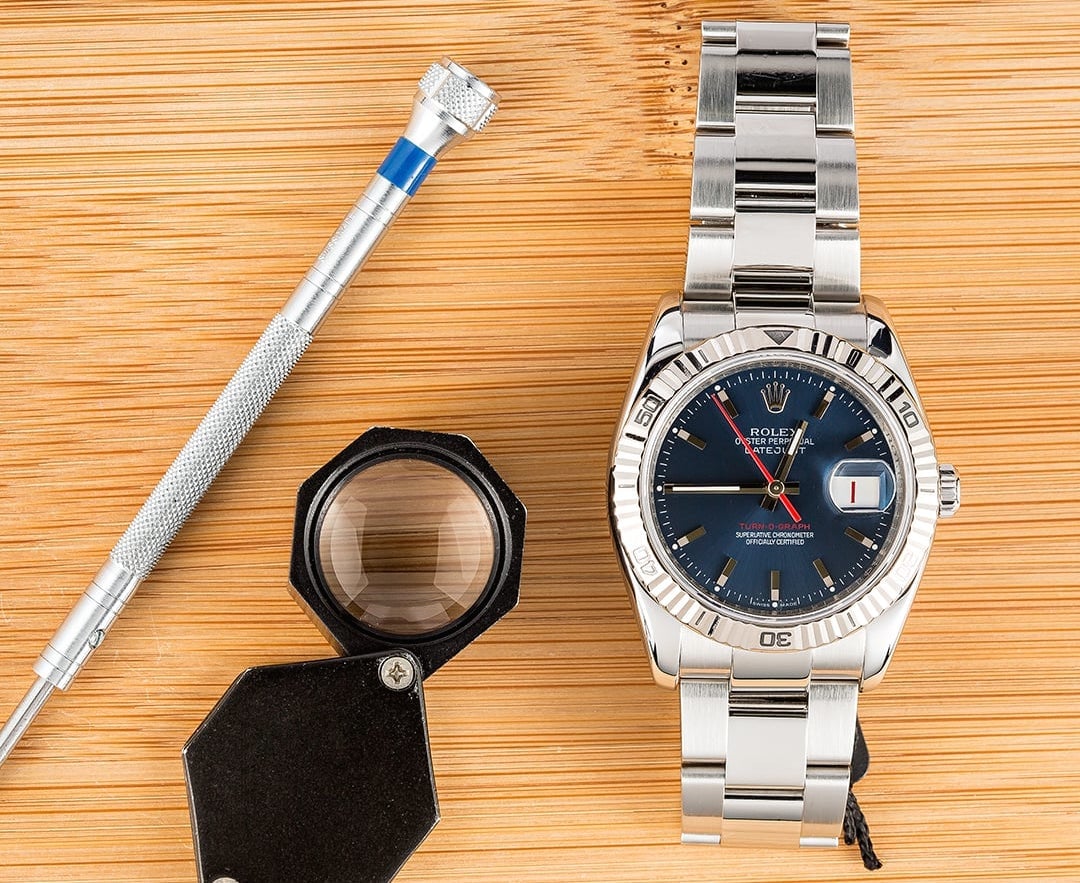
The Turn-O-Graph is the watch most Rolex owners have never heard of. Despite this, it’s the reference that introduced the rotating bezel to the brand back in 1953, under reference 6202, before the Submariner, before the GMT-Master. It picked up the nickname “Thunderbird” after the U.S. Air Force’s precision flying squadron adopted it, and then largely faded from view for decades.
Picture: Bob’s Watches
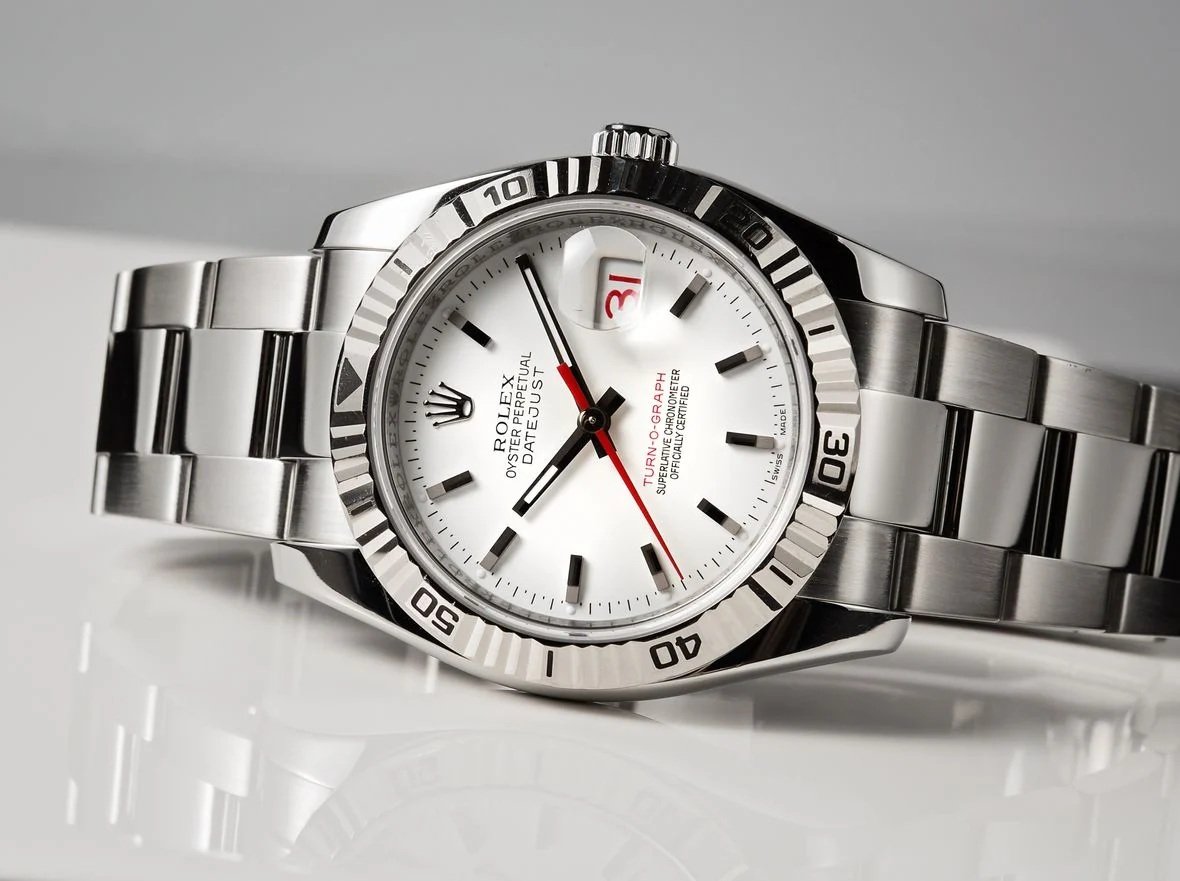
The modern ref. 116264, released in 2004 for the model’s 50th anniversary, revives it as a 36mm steel Datejust with a white-gold fluted bezel that still carries the original 60-minute timing scale, just dressed up. What makes it unmistakable, though, is the red detailing: a red seconds hand, a red-and-black roulette date wheel, and “TURN-O-GRAPH” printed in red above six o’clock. It’s a genuinely odd little watch, sportier than a standard Datejust, dressier than a tool watch, tied to a piece of aviation history most people have never connected to Rolex. That combination of obscurity and specificity is catnip for a real enthusiast.
Rolex Milgauss ref. 1019 — Image: Bob’s Watches
Rolex Milgauss, any reference (especially the ref. 1019)
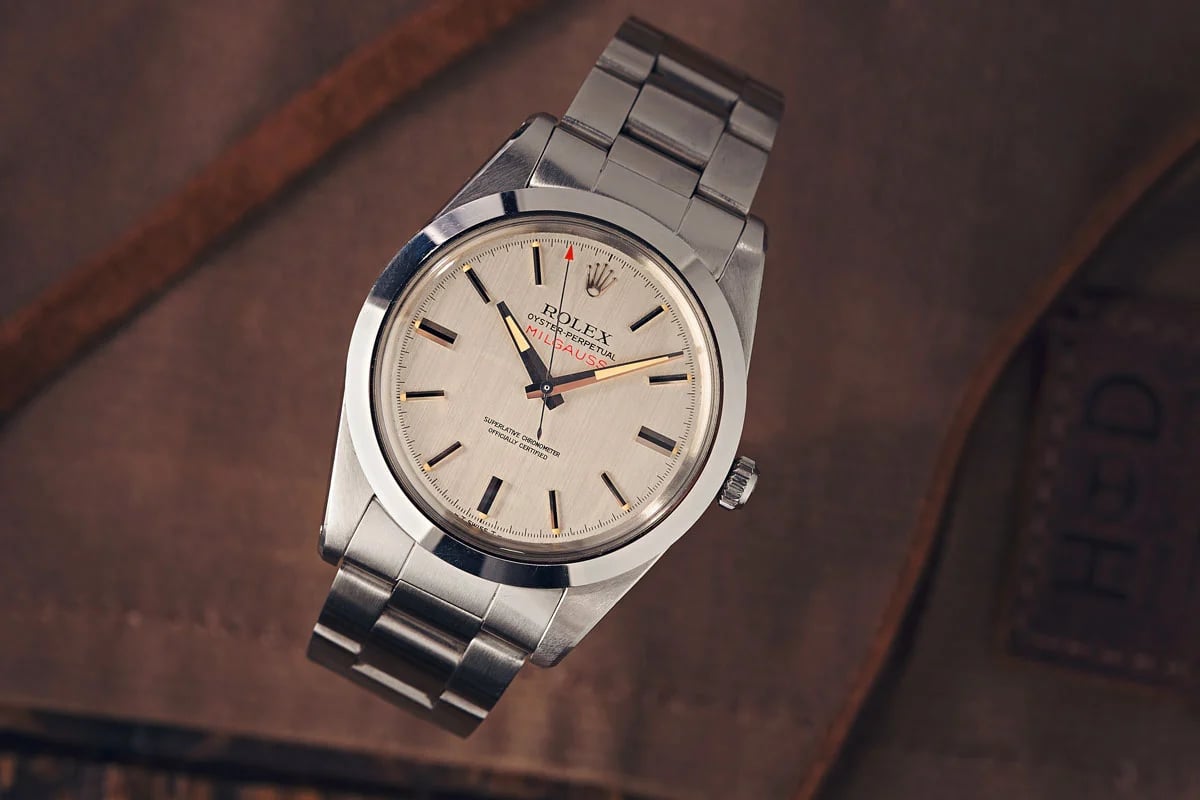
The Milgauss is the most underrated sports Rolex, full stop. It was engineered for scientists working around strong electromagnetic fields, CERN researchers among them, and could resist up to 1,000 gauss of magnetism, hence the name. The original 1950s ref. 6541 is the one most people picture, with its honeycomb dial and orange lightning-bolt seconds hand, a design DNA that Rolex revived on the modern 116400 in 2007. The ref. 1019, produced from the 1960s until the line was discontinued in 1988, is the quieter, more austere version: a smooth bezel in place of the earlier rotating one, a plain black or silver dial with no honeycomb texture, and a straight seconds hand with just a small red arrowhead at the tip rather than a full lightning bolt.
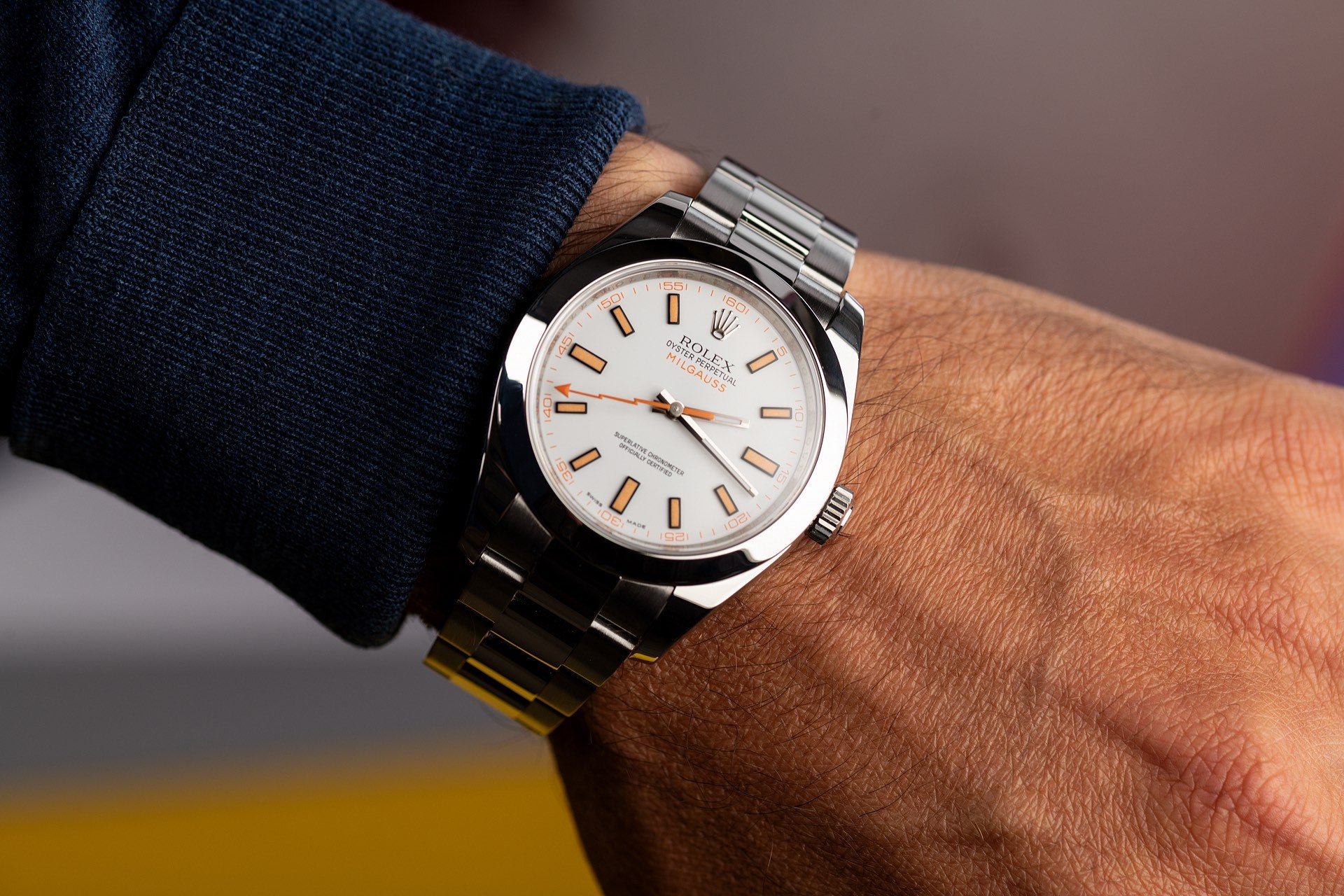
Image: The Watch Club
It’s a genuinely restrained watch by Milgauss standards, and that restraint is exactly why it’s so desirable, and, at anywhere from roughly $23,000 to well over $80,000 depending on condition and dial, exactly why it’s not an easy or casual purchase. Loving the 1019 specifically, rather than just any Milgauss, tells you someone has thought carefully about which version of “unusual” they actually want.
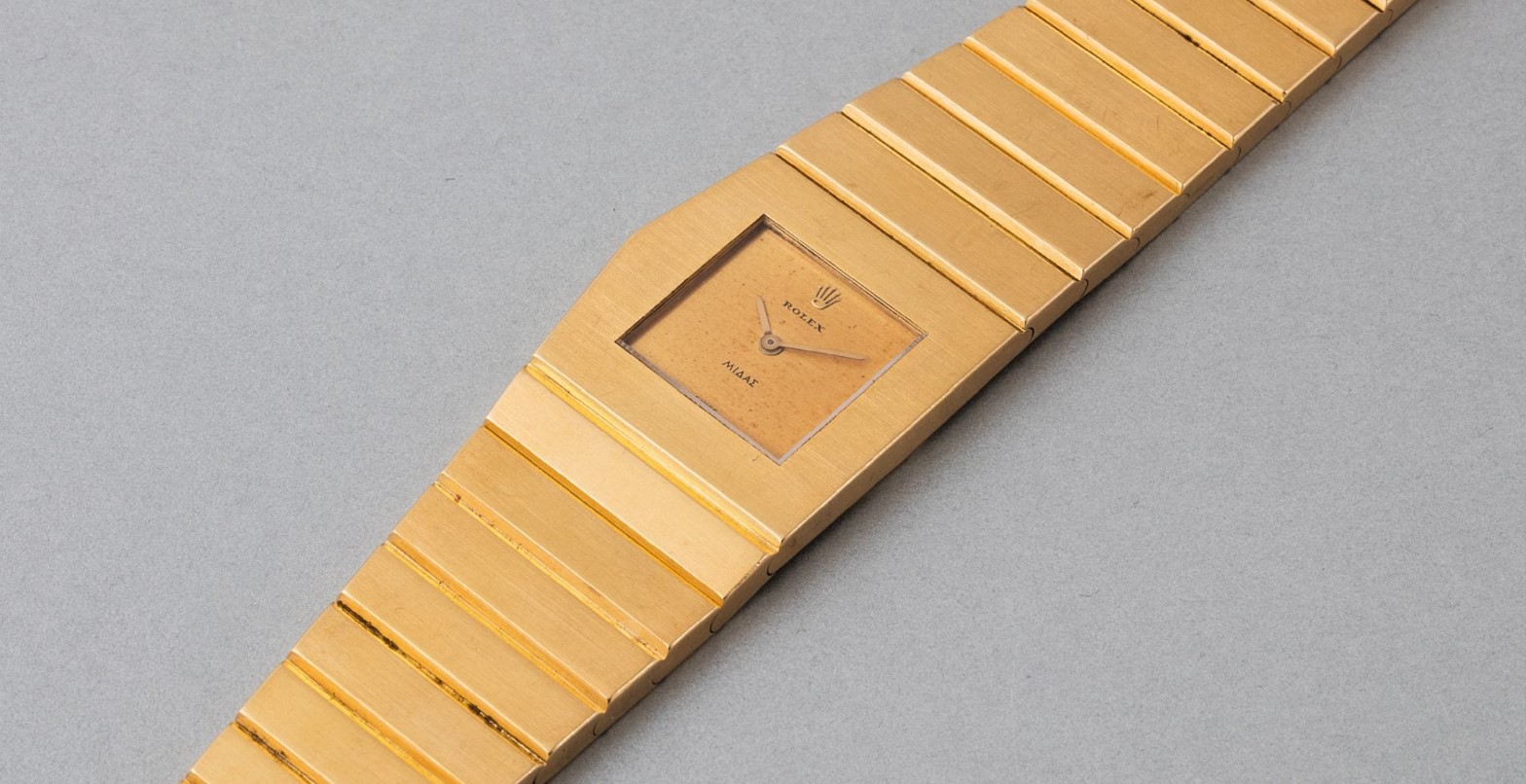
Rolex Midas reference 9630. Image credit: Phillips
Bonus: Rolex King Midas
If someone can identify a King Midas at a glance, they know Rolex history at a level most owners never reach. Designed by a young Gérald Genta years before he created the Audemars Piguet Royal Oak or the Patek Philippe Nautilus, the King Midas first appeared in the early 1960s as a solid-gold, asymmetrical watch inspired by the Parthenon, with an integrated bracelet and a case so heavy it was, at the time, the heaviest gold watch Rolex had ever made.
Its most famous quirk is the crown, mounted on the left side of the case rather than the right, a deliberate reference to the myth of King Midas and his golden left-handed touch. The dial is almost aggressively plain, just hands, a coronet, and the model name spelled out in Greek lettering, which only makes the case louder by comparison. It looks nothing like a Submariner, a Datejust, or anything else carrying the Rolex name, and that’s the point. Elvis Presley and John Wayne both owned one; so, fittingly, did the villain in a Bond film. Knowing the King Midas exists, let alone wanting one, puts you well outside the world of “Rolex means Submariner.”
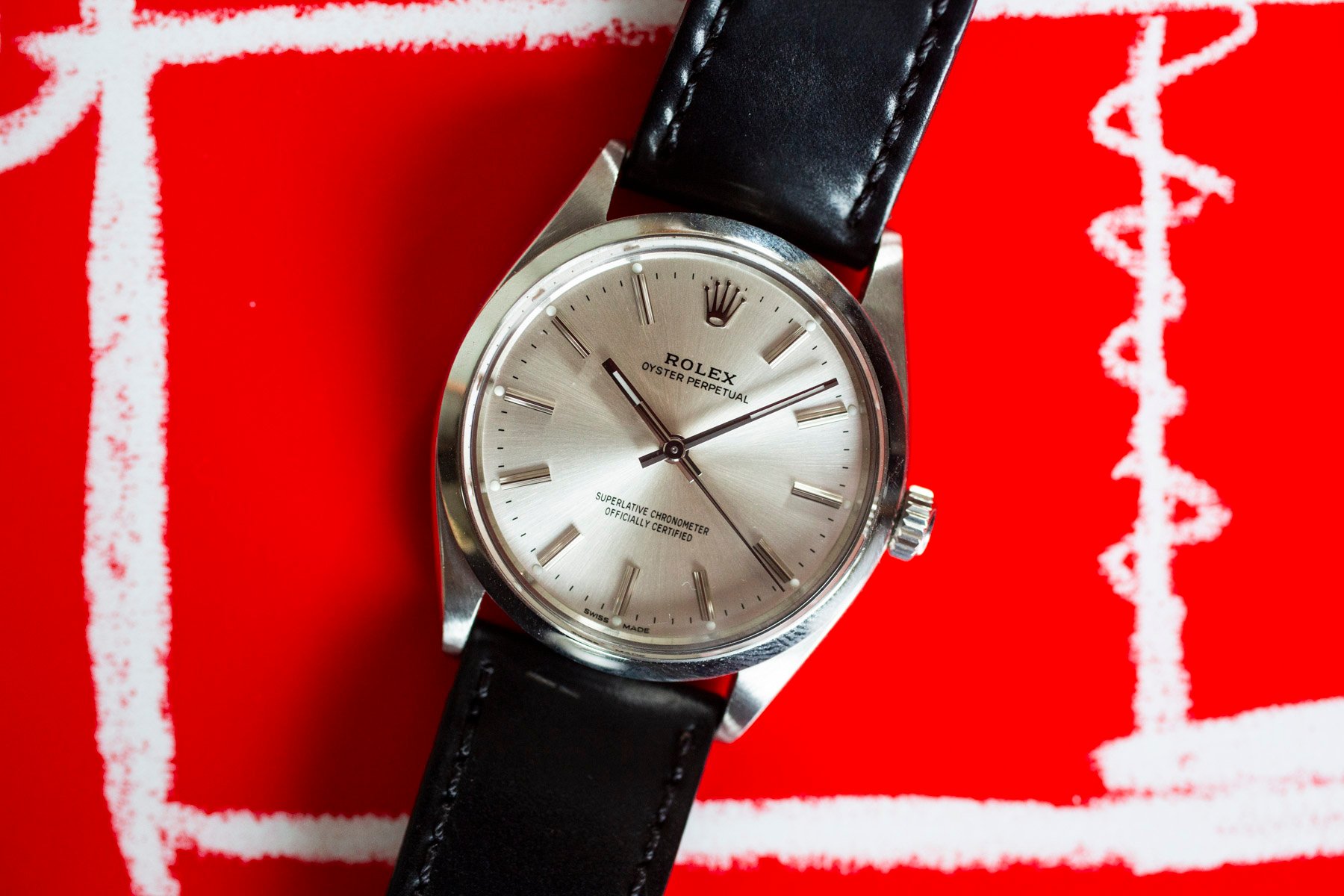
The enthusiast journey
None of these watches, the five or the bonus sixth, is hard to find because they’re secret. They’re just easy to miss if your relationship with Rolex begins and ends with the current catalog. Each one requires knowing something the brand doesn’t advertise loudly, a discontinued bezel material, a nickname earned by a military flying squad, a scientist’s magnetic-field spec, a Genta design experiment Rolex barely talks about anymore.
That’s really what separates an enthusiast’s collection from anyone else’s: not rarity for its own sake, but a genuine curiosity about the parts of the story Rolex itself isn’t in a hurry to retell.
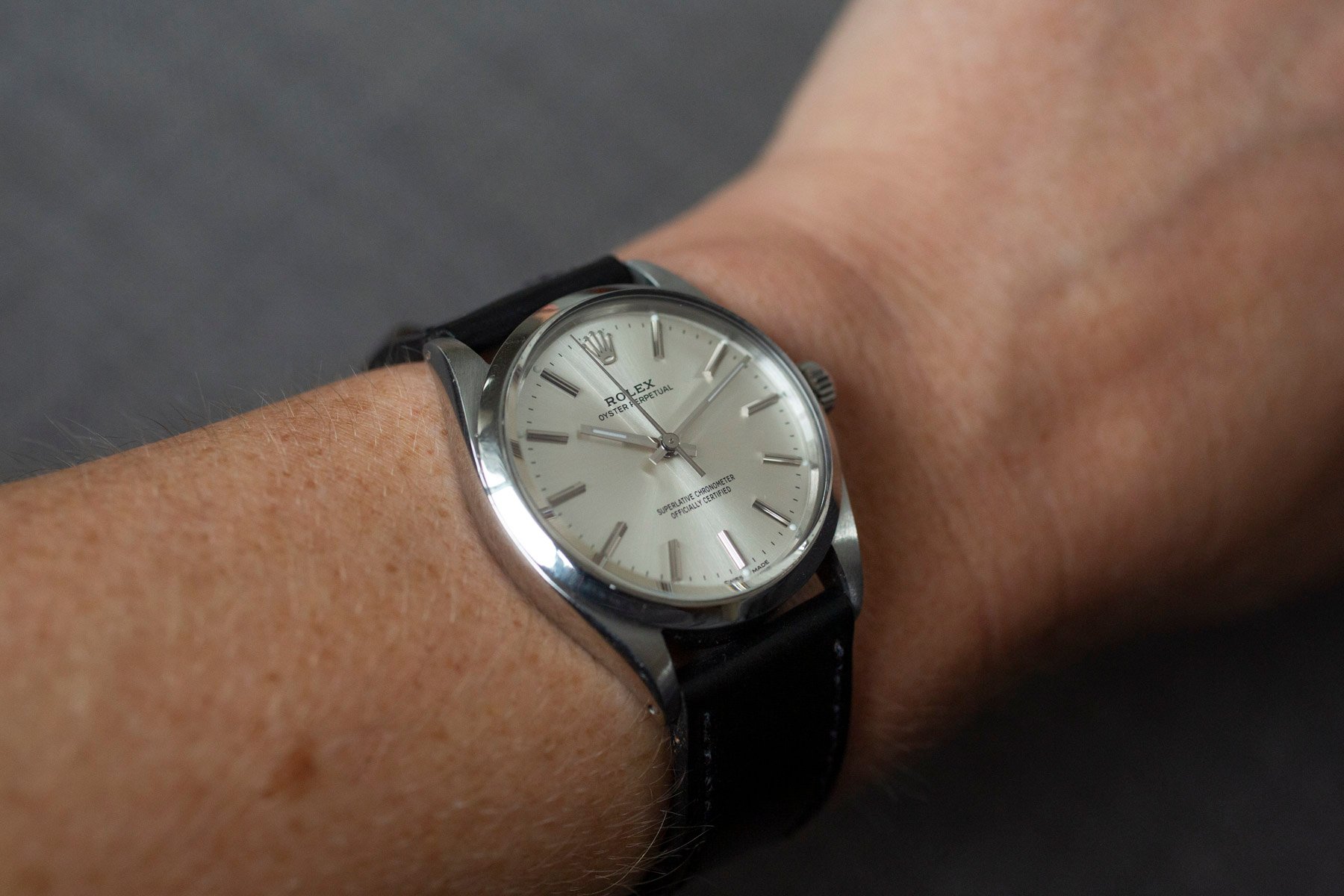
Concluding thoughts
And yet, if I’m being honest, none of that complexity is strictly necessary. If you strip away the reference numbers, the bezel materials, and the collector trivia, the truest expression of what Rolex is still comes down to something much simpler: a 34mm vintage Oyster. I own one myself, a ref. 1002 from the 1960s, and it remains the most quietly satisfying watch I own precisely because it asks nothing of you. No bezel to decode, no dial variant to research, no rarity to chase.
Just a clean case, a simple movement, and the Oyster and Perpetual concepts that built the entire brand in the first place. It’s humble in a way none of the six watches above are, and it’s exactly that humility that makes it beautiful. If all the reference-hunting above starts to feel like a lot, a plain 34mm Oyster is where you land when you remember what actually made Rolex worth caring about to begin with, not the trivia, but the watch itself, timeless and unbothered by any of it.
What do you think of my picks? Are there any others that come to mind as enthusiast references? Let me know in the comments below.