Ready For A Treat? Hands-On With The Lebois & Co Heritage Atelier Small Seconds

Lebois & Co doesn’t need an introduction here on Fratello. We’ve been covering the brand since its (re)introduction in 2014. Last year, Lebois & Co introduced the Heritage Small Seconds collection, inspired by the original models from the 1940s and 1950s. Today, we see two new variations featuring special dials made by Swiss dial specialist GT Cadrans. That might not ring a bell directly, but the company also made some dials for Czapek & Cie, for example.
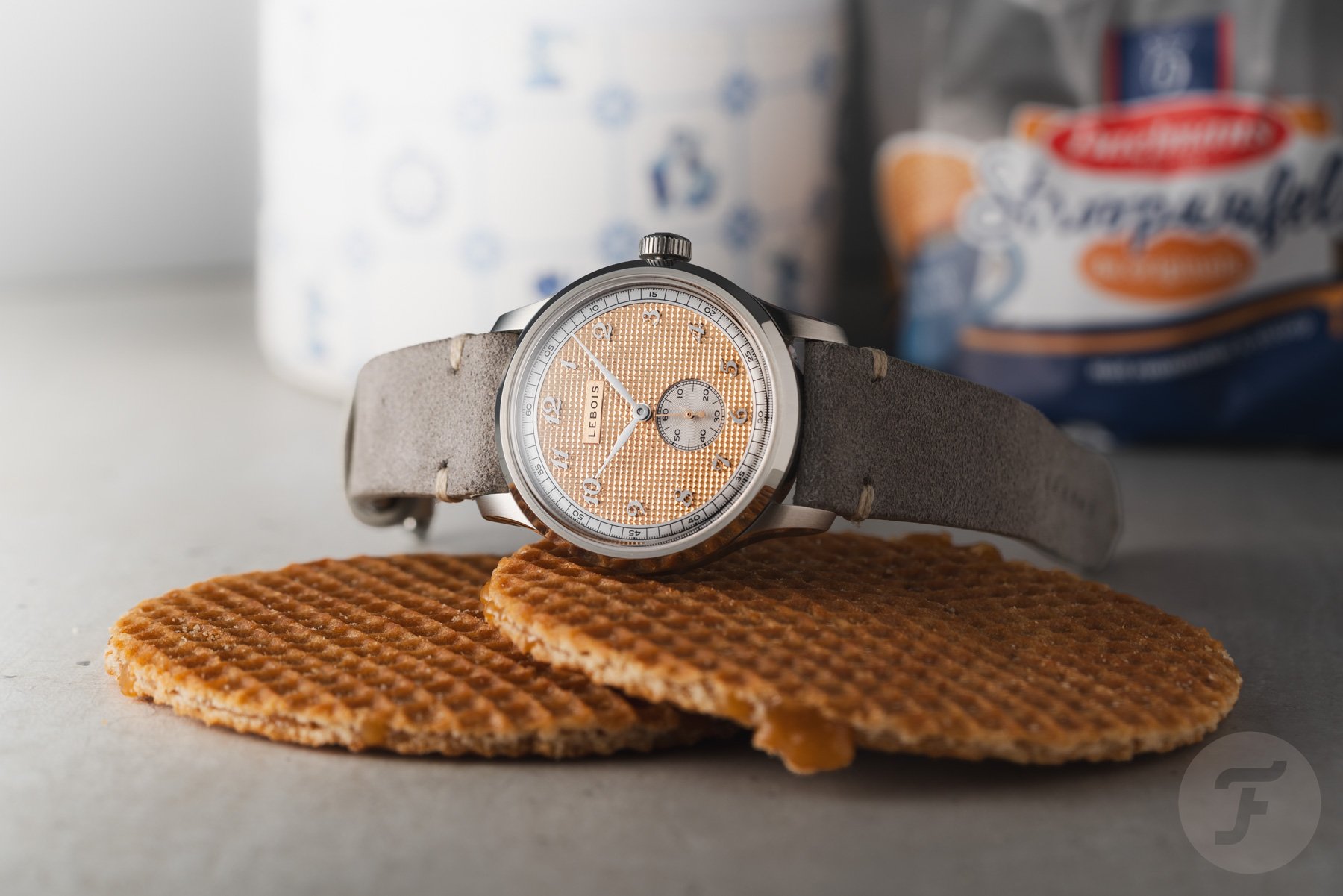
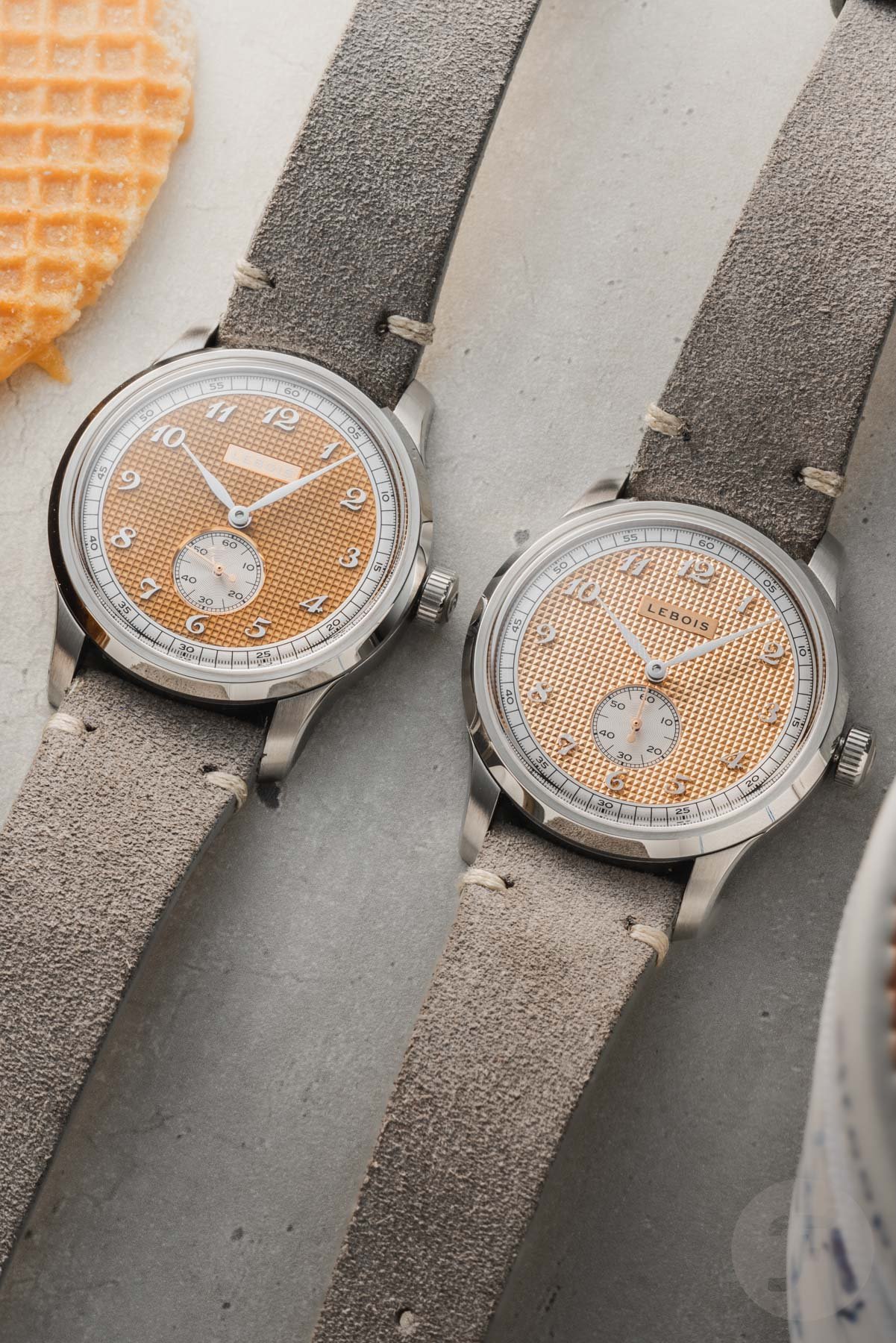
Lebois & Co Heritage Atelier Small Seconds Clous de Paris and Stroopwafel
For Lebois & Co’s Heritage Atelier Small Seconds watches, GT Cadrans created two new dials, one for the Clous de Paris model and another for their Dutch-treat-inspired Stroopwafel dial. Clous de Paris is a motif found on several watches, including the famous Royal Oak “Jumbo” from Audemars Piguet. And the Stroopwafel pattern, well, that’s quite new and refers to one of the Netherlands’ most familiar cultural icons.
Gouda’s second treat
Anyone who has set foot on Dutch soil, even at Schiphol Airport, has probably encountered this classic Dutch treat. A stroopwafel is made of two thin, crispy waffle cookies baked with sweet dough and sandwiched together with a gooey, sticky caramel-like syrup (or stroop) made from sugar, butter, and cinnamon. It originates in the city of Gouda, famous (outside the Netherlands) for its cheese. Insider’s tip: the best way to eat a stroopwafel is to leave it on top of a hot cup of tea for a while so the filling gets a bit softer.
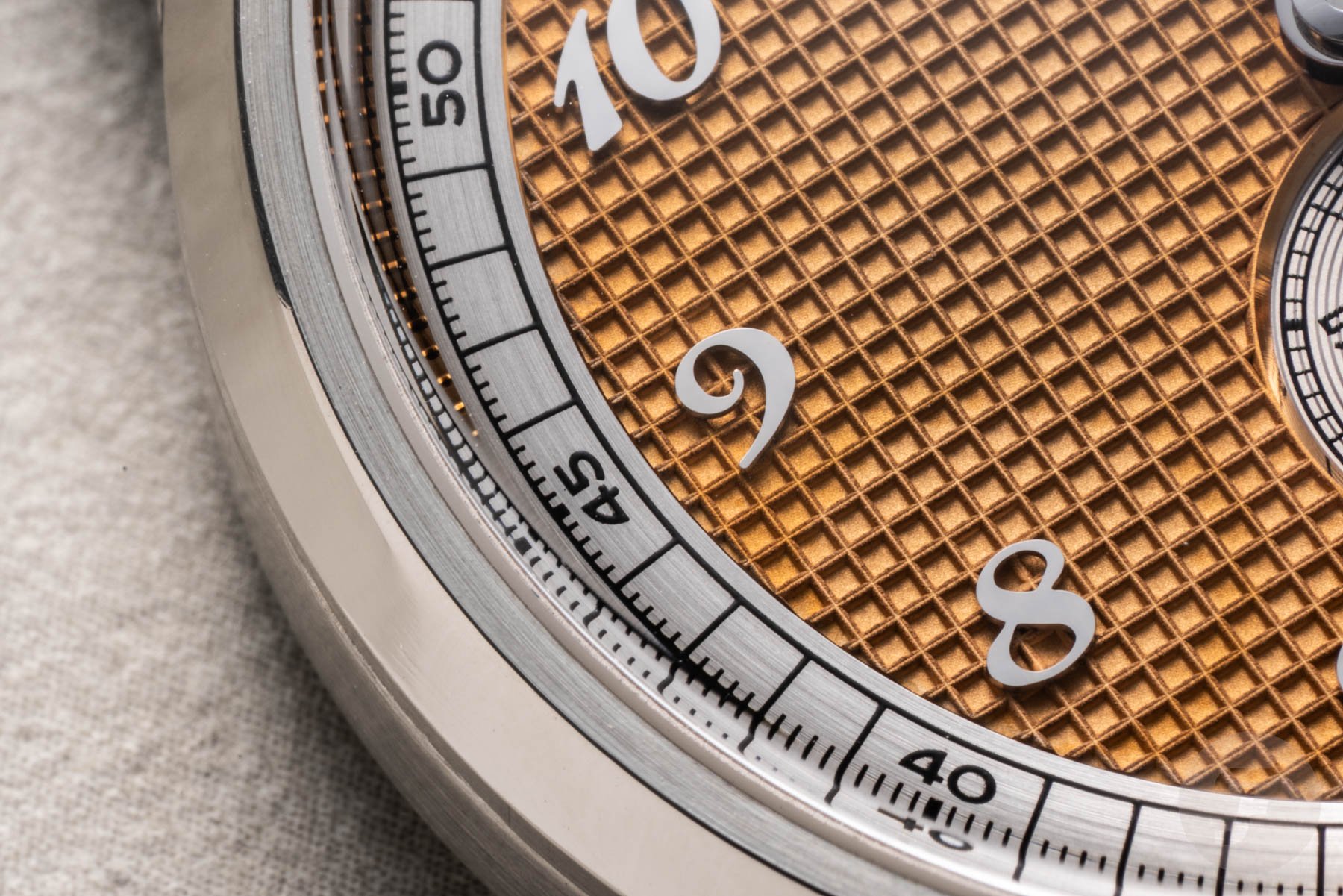
Stroopwafel
Diamond cutting and laser-engraving techniques
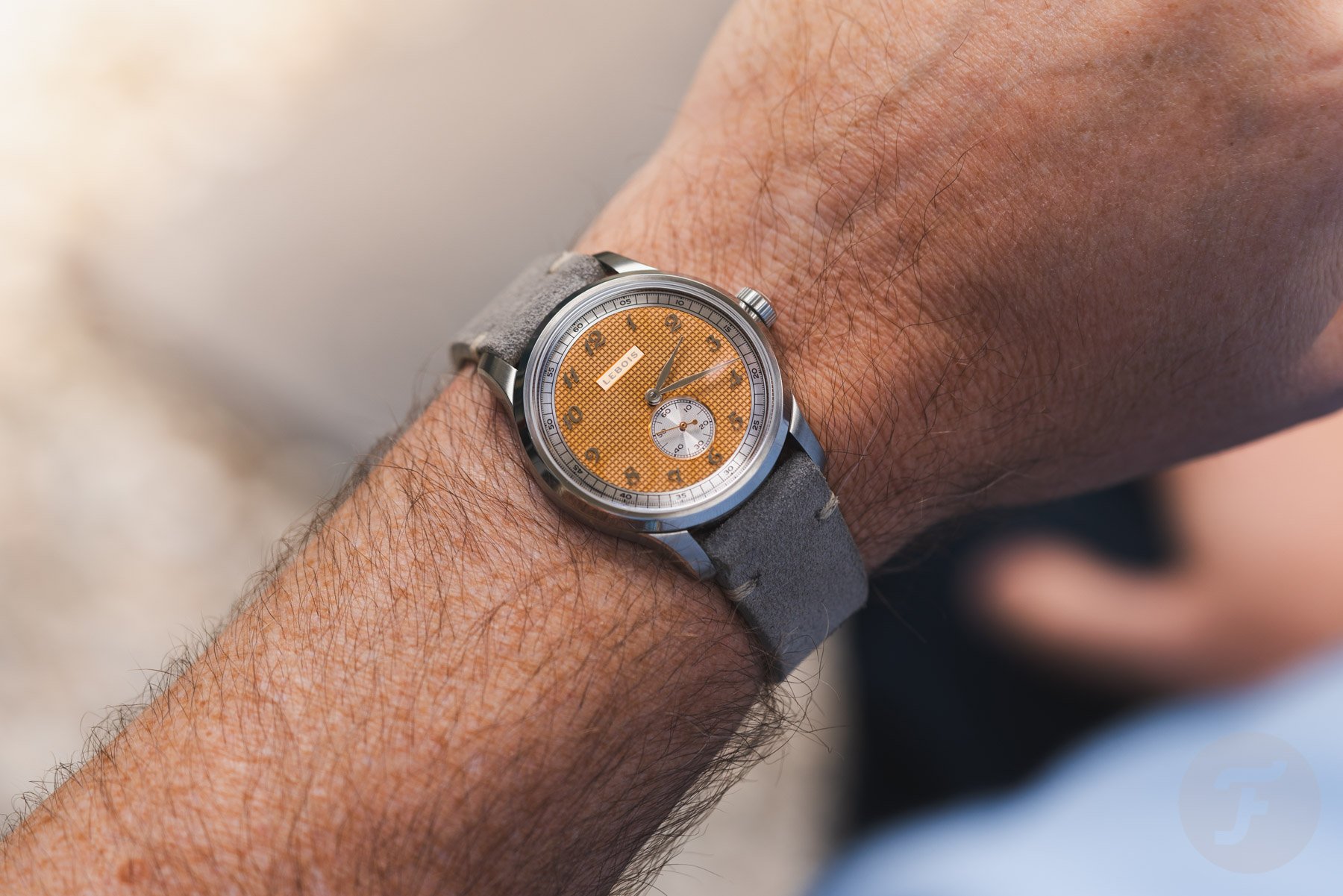
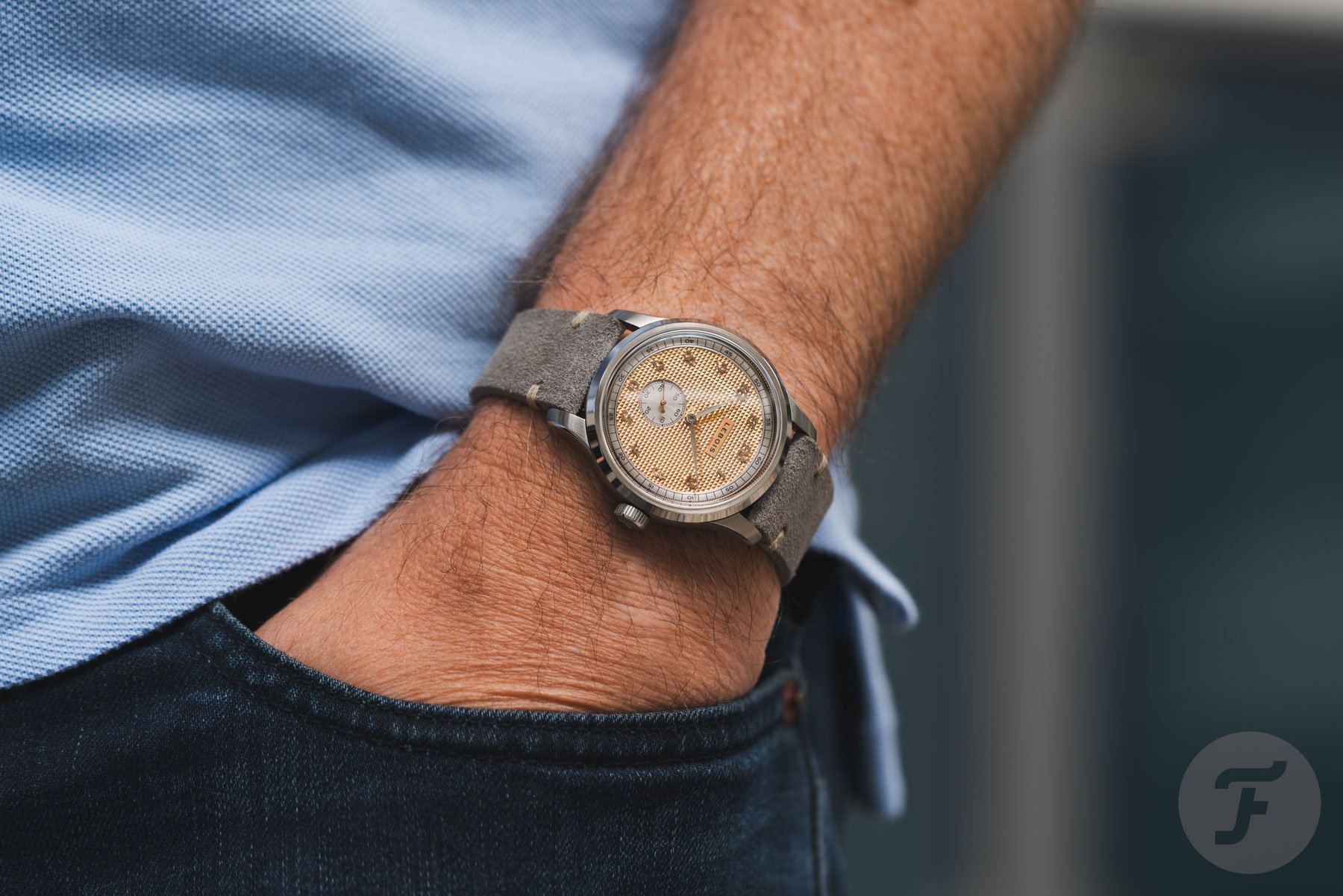
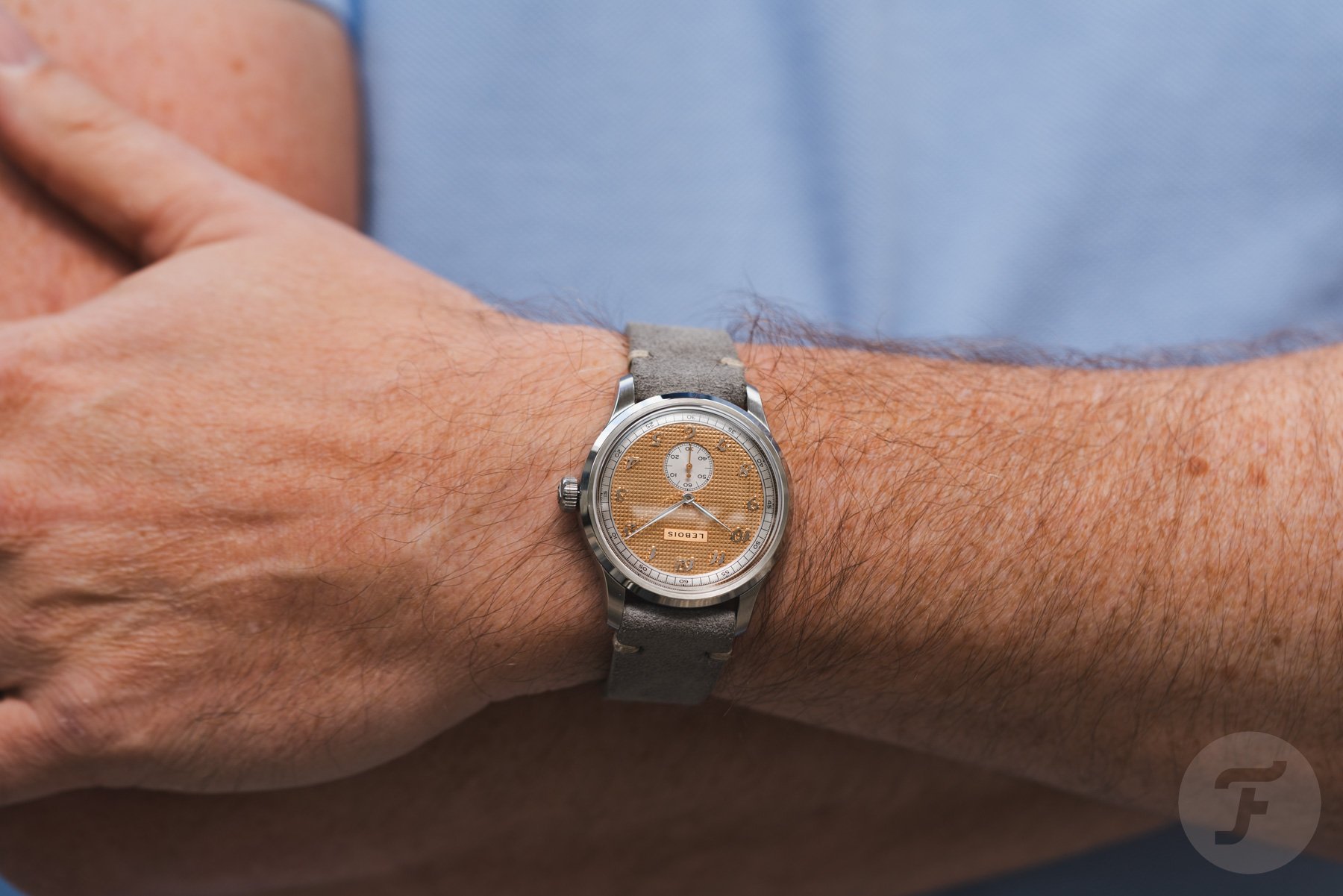
Anyway, let’s not drift off too much here. The new Lebois & Co Heritage Atelier Small Seconds models come in two flavors (no pun intended). One features the more traditional Clous de Paris in a warm rose gold tone, and the Stroopwafel has a (darker) caramel tone. The Clous de Paris dial is produced using diamond-cutting technology, while the Stroopwafel dial has a laser-engraved pattern. Both colors are achieved through a galvanic treatment with a 24K gold solution. The dials might look similar at first glance, but if you zoom in, you’ll find differences in color and pattern. These dials are produced in Lonay, Switzerland, where the aforementioned GT Cadrans is located.
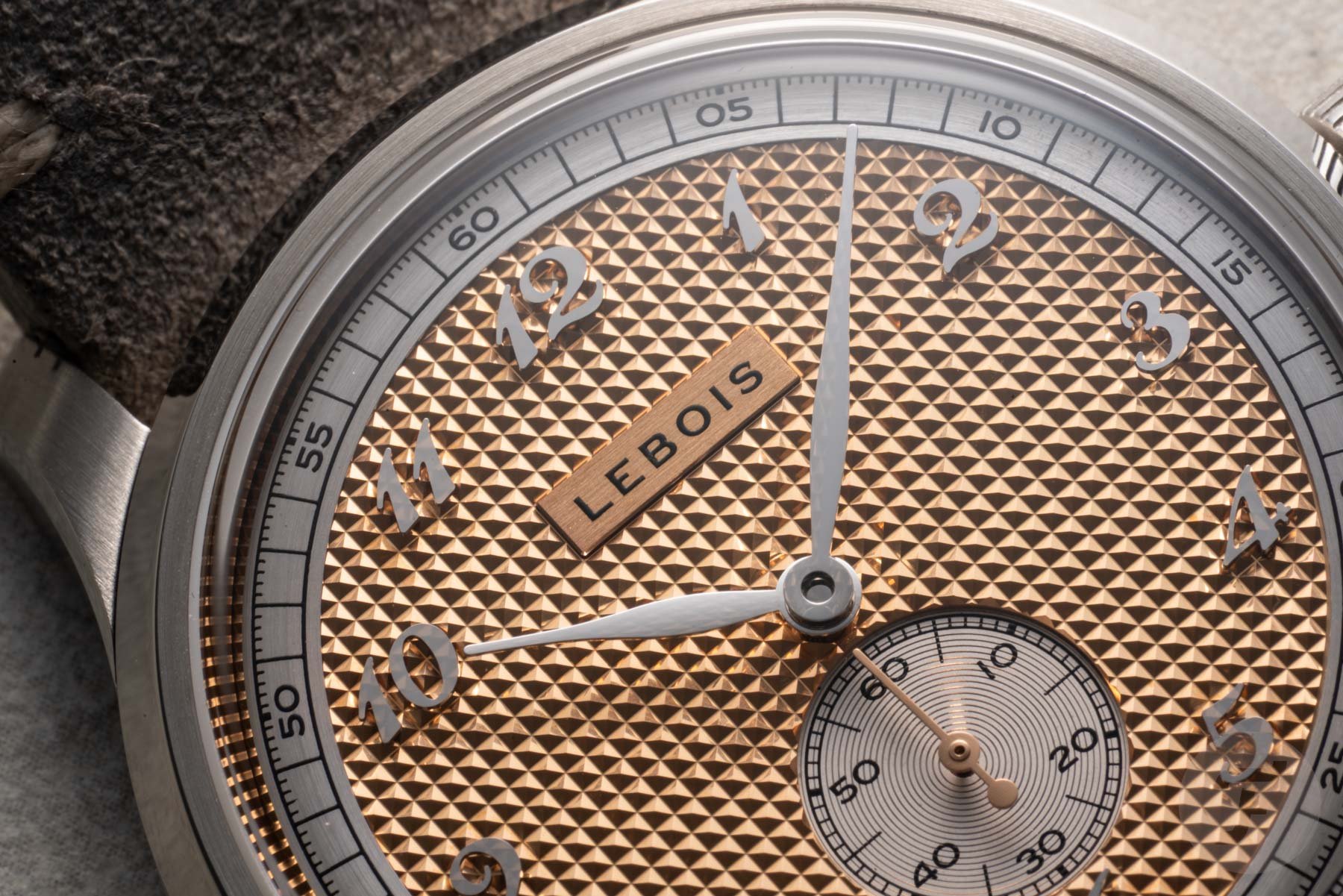
Clous de Paris
In addition to the motif, the dials feature an elegant silver-colored minute track with a brushed finish. To maintain an elegant look, Lebois & Co used applied Breguet numerals as hour markers. A pair of leaf-shaped hands indicate the hours and minutes. Just above the 6 o’clock hour marker, you will find a silver sub-dial with its concentric-grained pattern.
Inside, we find the LC-350 caliber. It’s essentially the same Sellita SW300-based movement used in the other Heritage Atelier Small Seconds timepieces introduced last year. The LC-350 movement is a COSC-certified chronometer with a 4Hz (28,800vph) frequency and a 56-hour power reserve. The owner can admire the LC-350 through the sapphire display in the case back.
On the wrist
Specifications are one thing, but wearing and experiencing a watch can be something totally different. I have fairly large (18cm) wrists, and the 37.8mm round case looks and wears perfectly fine with its 45.5mm lug-to-lug span. It’s a well-proportioned case, with a 10.5mm profile (8.5mm without the double-domed sapphire crystal). The light dial colors also help, making the watch appear larger than it would have had the dials been darker. It’s perfect for a nice, dressy steel watch!
Some afterthoughts
I am especially fond of the dial motifs, of course, and have a slight preference for the Stroopwafel variation. That’s not only because it’s deeply rooted in the (admittedly limited) Dutch food culture but also because it looks less metallic than the Clous de Paris version. The applied Breguet numerals enhance the metallic look of the Clous de Paris even more, in my opinion. There’s nothing wrong with that; I simply prefer the caramel-colored Stroopwafel dial.
Both watches come with a gray suede strap and a steel Lebois & Co-signed buckle. I am not sure I would have put a vintage-stitched strap on a watch like this, but you can easily dress it up or down.
Pricing and availability
The model with the diamond-cut Clous de Paris pattern (reference 641.548) and the one with a laser-engraved Stroopwafel texture (reference 641.550) share a retail price of €5,500 (including VAT). These two watches aren’t limited editions; they are produced based on the capacity of the artisans at GT Cadrans. Orders for the inaugural production run can be placed for 14 days, starting July 27th. The expected delivery for this inaugural production run is scheduled for early 2027. You can find more information here.