Hands-On: The New Louis Vuitton Monterey In Green And Black Ceramic

Names of Swiss watch brands and models can be tricky to pronounce, especially the French ones. Does the name Jay-Jay Le Coot ring a bell? I will let you figure it out and bring up another name. It’s now an official name, but it stems from the trouble some had in pronouncing the original. In 1988, Louis Vuitton launched the Montre LV I and LV II. The watches stood out with their lugless, pebble-shaped gold or ceramic cases, each with a crown at 12 o’clock. The Monterey name came about through a mispronunciation of montre, the French word for “watch.” The name stuck, and last year, the Monterey returned as a limited edition, swapping the original concept for a smooth yellow gold case and a mechanical movement. Now, the new Louis Vuitton Monterey joins the regular collection in two new versions, dressed in glossy black and green ceramic.
Gae Aulenti (1927–2012), a renowned Italian architect and industrial designer who, among other things, converted the historic Gare d’Orsay railway station into the Musée d’Orsay, designed the Montre LV I and LV II. She conceived a sculptural, pebble-shaped, lugless watch with a crown at 12, very much reminiscent of pocket watches. It came in two versions: the gold 40mm LV I was a complex, function-packed travel watch, while the smaller, less complicated 37mm LV II featured innovative black or green ceramic cases. The latter was quite something because it launched in an age when ceramic watches weren’t common at all. But thanks to an alliance with IWC for its quartz movements, Louis Vuitton also had access to the brand’s cutting-edge ceramic-case technology, which debuted in 1986 on the Da Vinci QP.
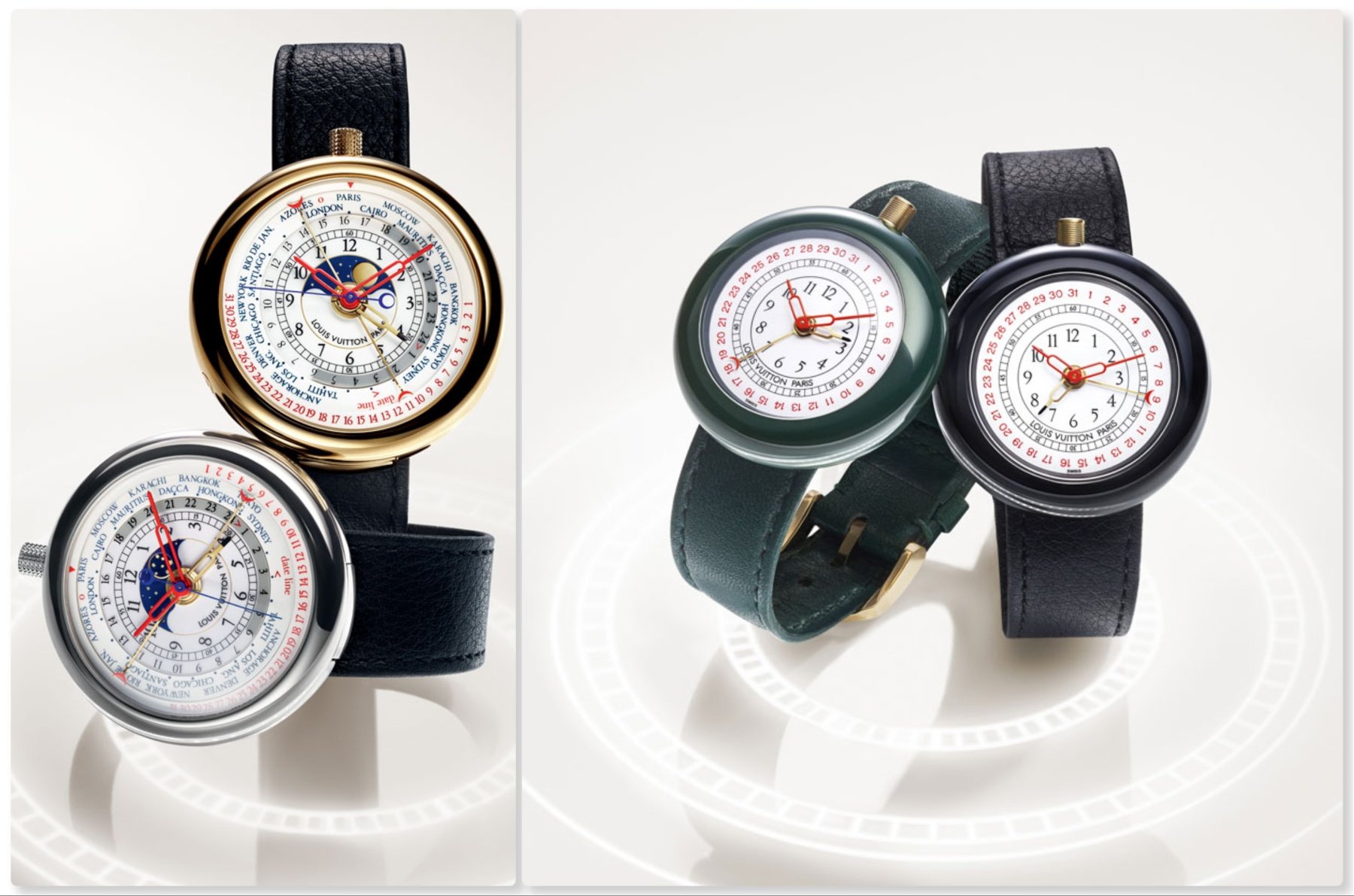
LV I (left) and LV II
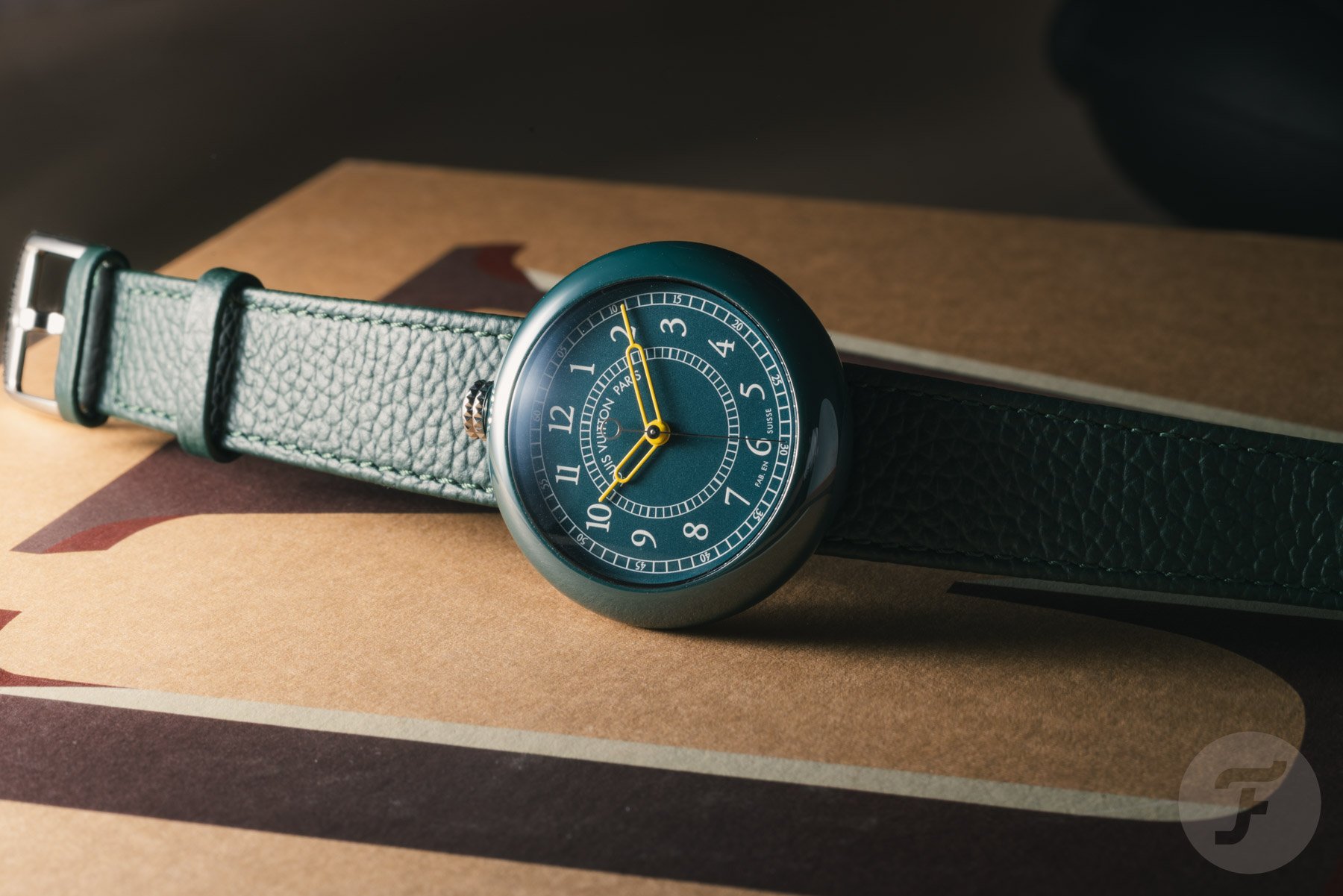
The new Louis Vuitton Monterey comes in shiny green and black ceramic
In today’s watch world, LVMH and Richemont working together on a watch is impossible to imagine. But times were very different in the 1980s. And now the ’80s are back with the new Louis Vuitton Monterey (€23,000). Just like the LV II watches, the new creations each have a 37mm case. They now have an 11mm profile, though. This 2mm increase from the original is due to them having an automatic, in-house LFT MA01.02 movement instead of a quartz one.
The movement was developed and assembled by La Fabrique du Temps Louis Vuitton. It features a central 18K rose gold rotor, runs at 4 Hz, and stores a 45-hour power reserve. You won’t be able to see the sandblasted bridges with micro-sandblasted edges, perlage on the mainplate, polished bevels, and colorless jewels, though. A steel case back prevents that. That’s not a big problem, though, because these watches aren’t about the movement inside; they’re all about the exterior looks.
From a block of ceramic
Still, focusing on the exterior doesn’t mean you’re dealing with a technically shallow watch. Consider the production process of the characteristic pebble-shaped case, for example. The glossy ceramic accentuates its curvaceous, sculptural profile better than any other material. And it’s made in a very specific way. Most ceramic cases are made with molds. LV chose a different method. The Monterey’s case is crafted from ceramic powder, zirconium oxide, and pigments, compressed into a solid block, and then cut on a three-axis machine to create the pebble shape. Next, the case is baked in an oven at 1,000°C to achieve the desired color. After cooling down, the case is ground manually before the final hand-polishing stage.
Green or white
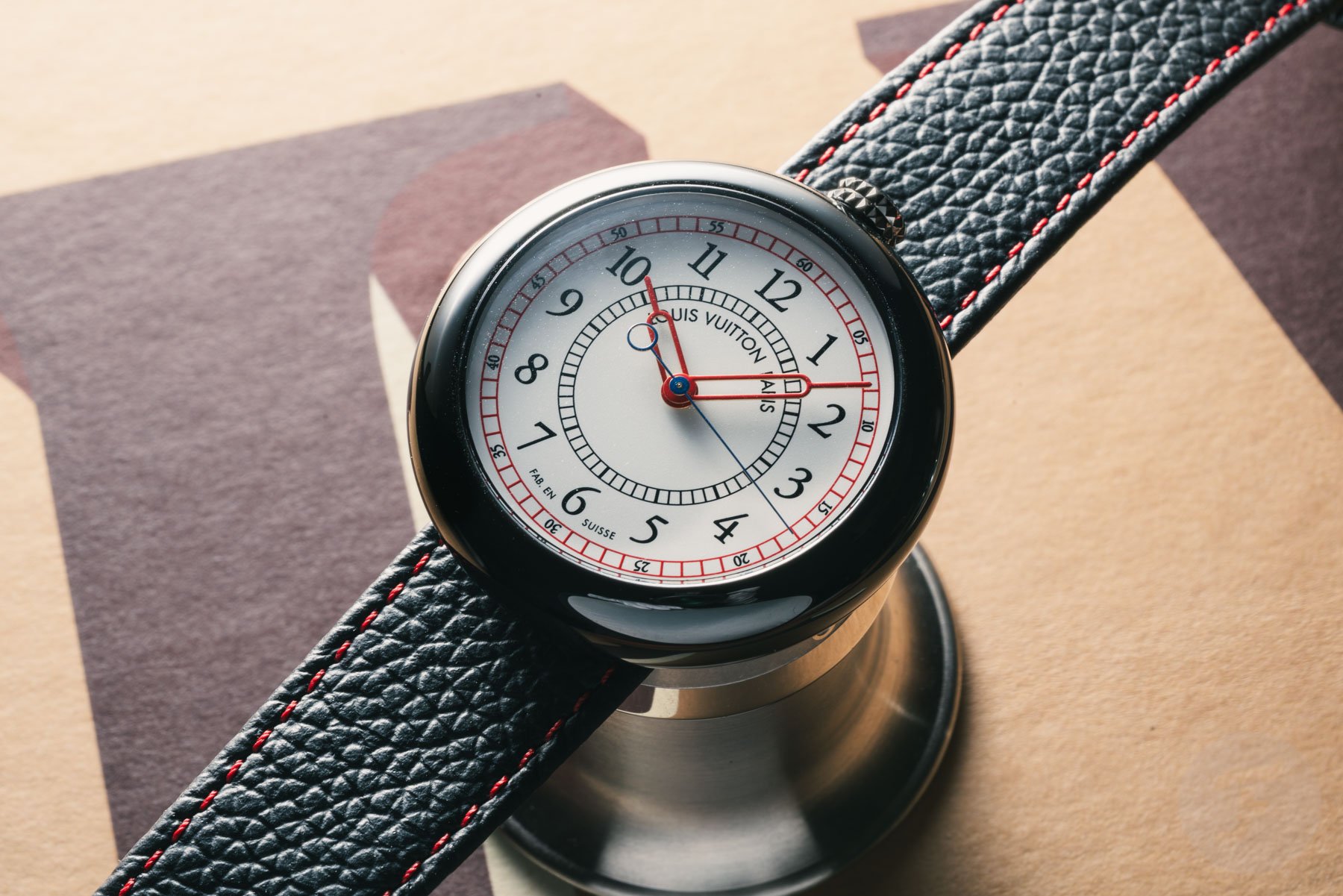
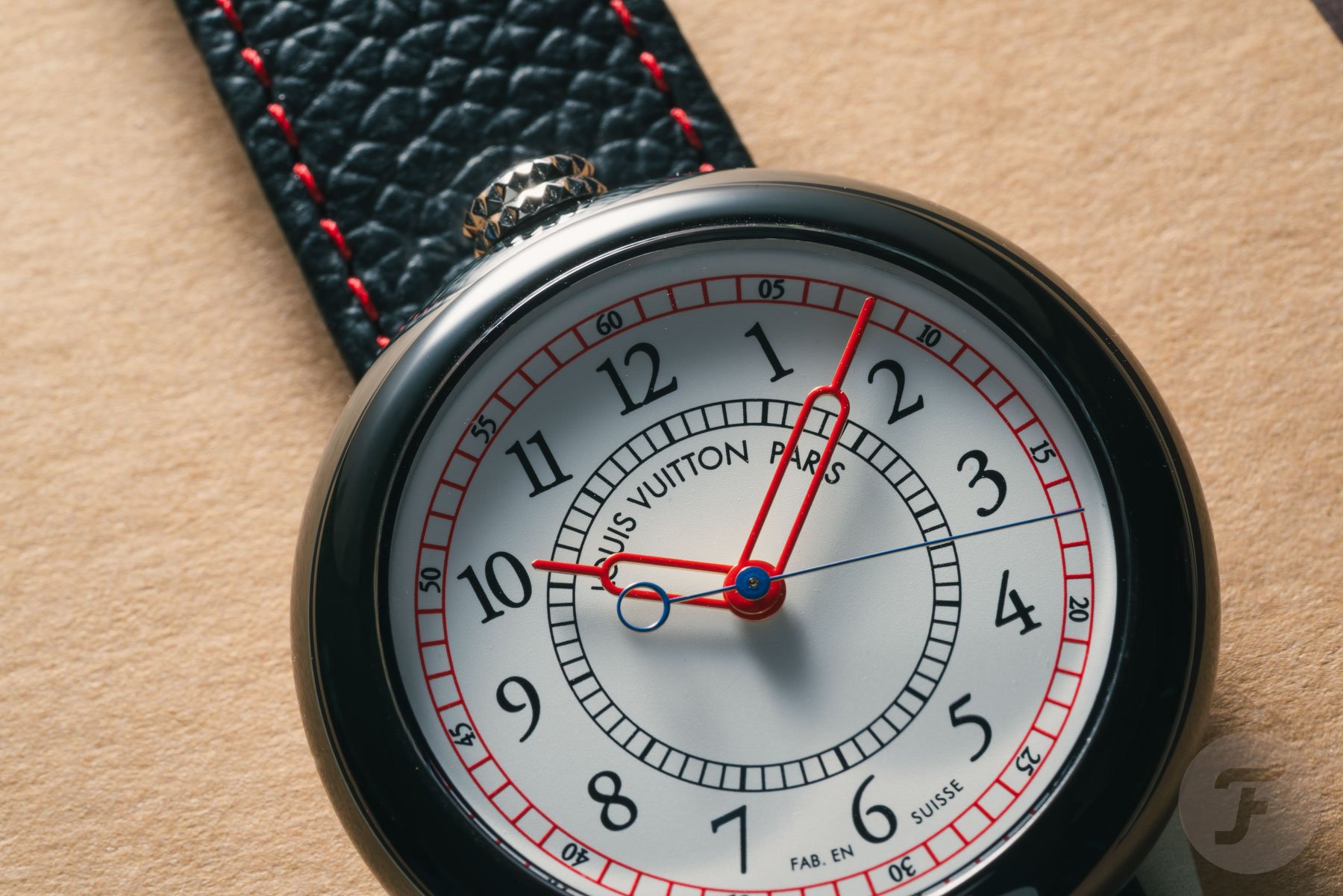
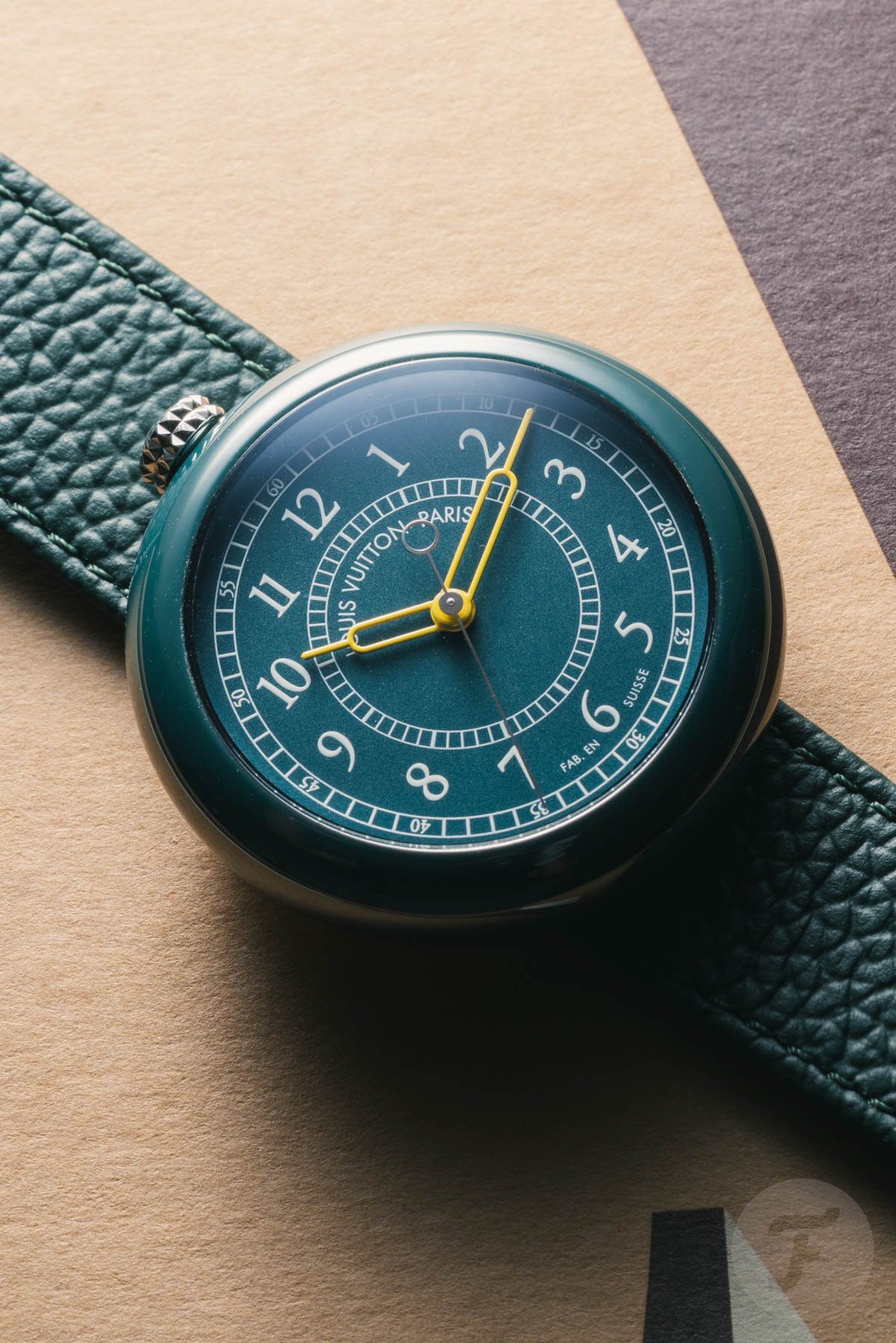
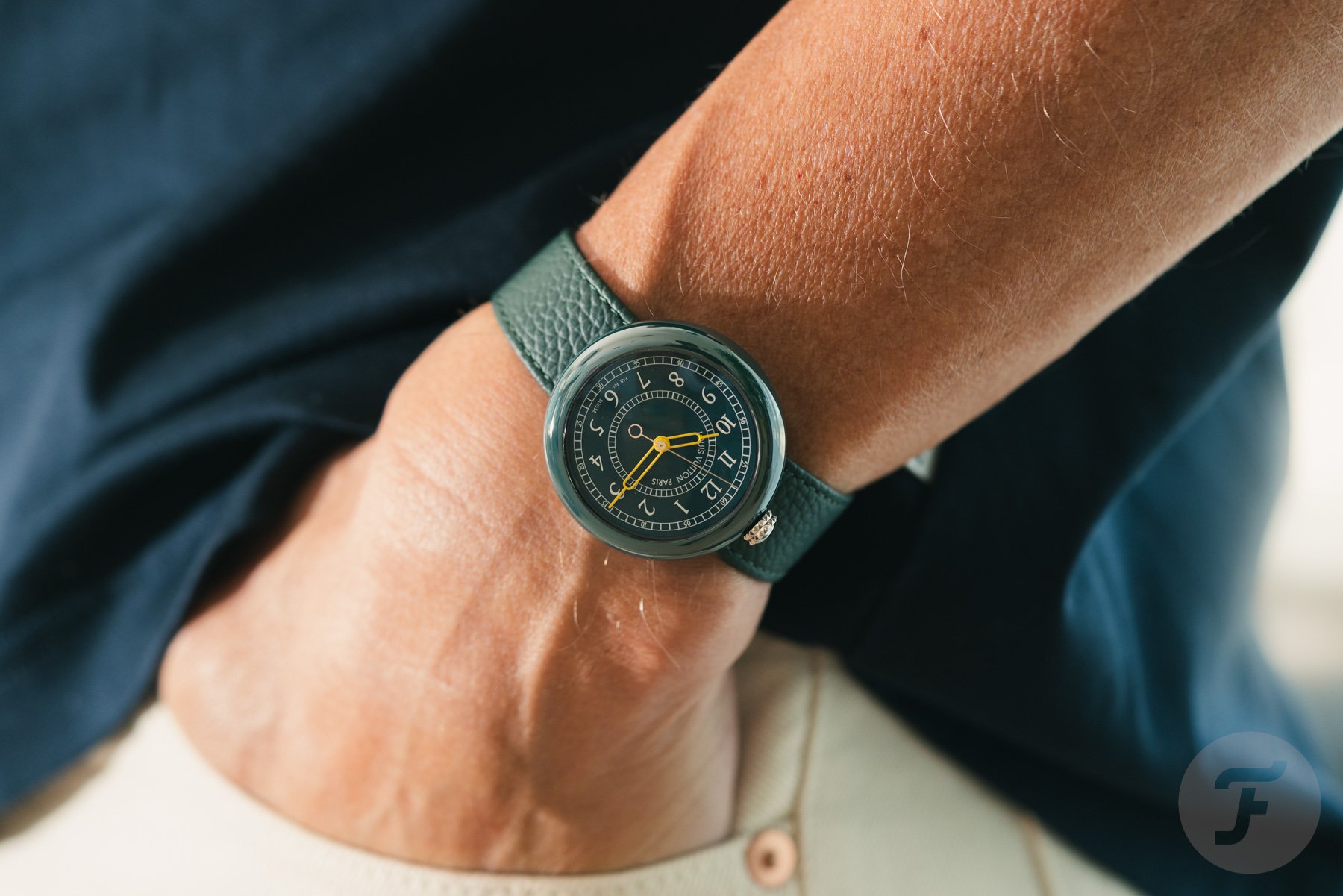
The new Monterey comes in two color combinations — green ceramic with a matching dial or black ceramic paired with white. Both dials feature lacquered surfaces finished with a matte varnish. Louis Vuitton has also simplified the display in comparison with the 1980s watches. The quartz LV II’s alarm and date functions were sacrificed in favor of a straightforward time-only layout. The double railway tracks remain, as do the openworked, lacquered syringe-style hands. These hands are yellow for the green version and red for the black one. A needle-thin blue seconds hand complete with a circular openworked counterweight adds a small but noticeable splash of color to the latter as well.
The Louis Vuitton Monterey on the wrist
Wearing the Monterey is quite the experience. Knowing the 37 × 11mm dimensions, you might think the watch “blends in” with the wrist. Well, it doesn’t. Due to its lugless case, the Monterey sits very prominently.
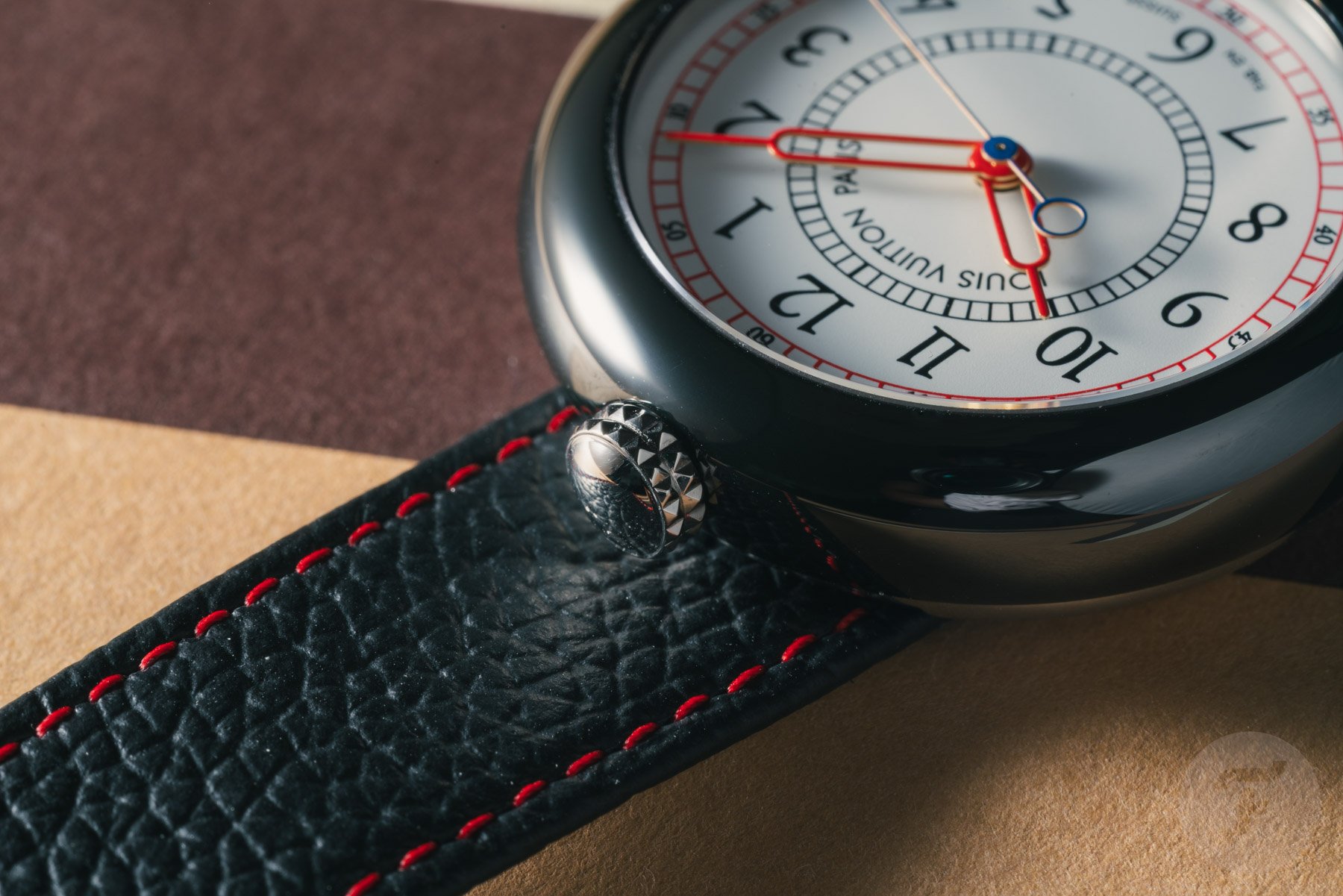
Like the original LVI and LVII, the updated creations feature Aulenti’s clever design with a strap that threads through the case rather than attaching to it. It keeps the lugless pebble design smooth and flowing, but it does mean the watch sits high on the wrist and becomes a bit top-heavy.


Thanks to the lightweight ceramic and 37mm diameter, that isn’t really a problem. It just takes a little time to get used to because the construction is very different from that of a traditional watch.
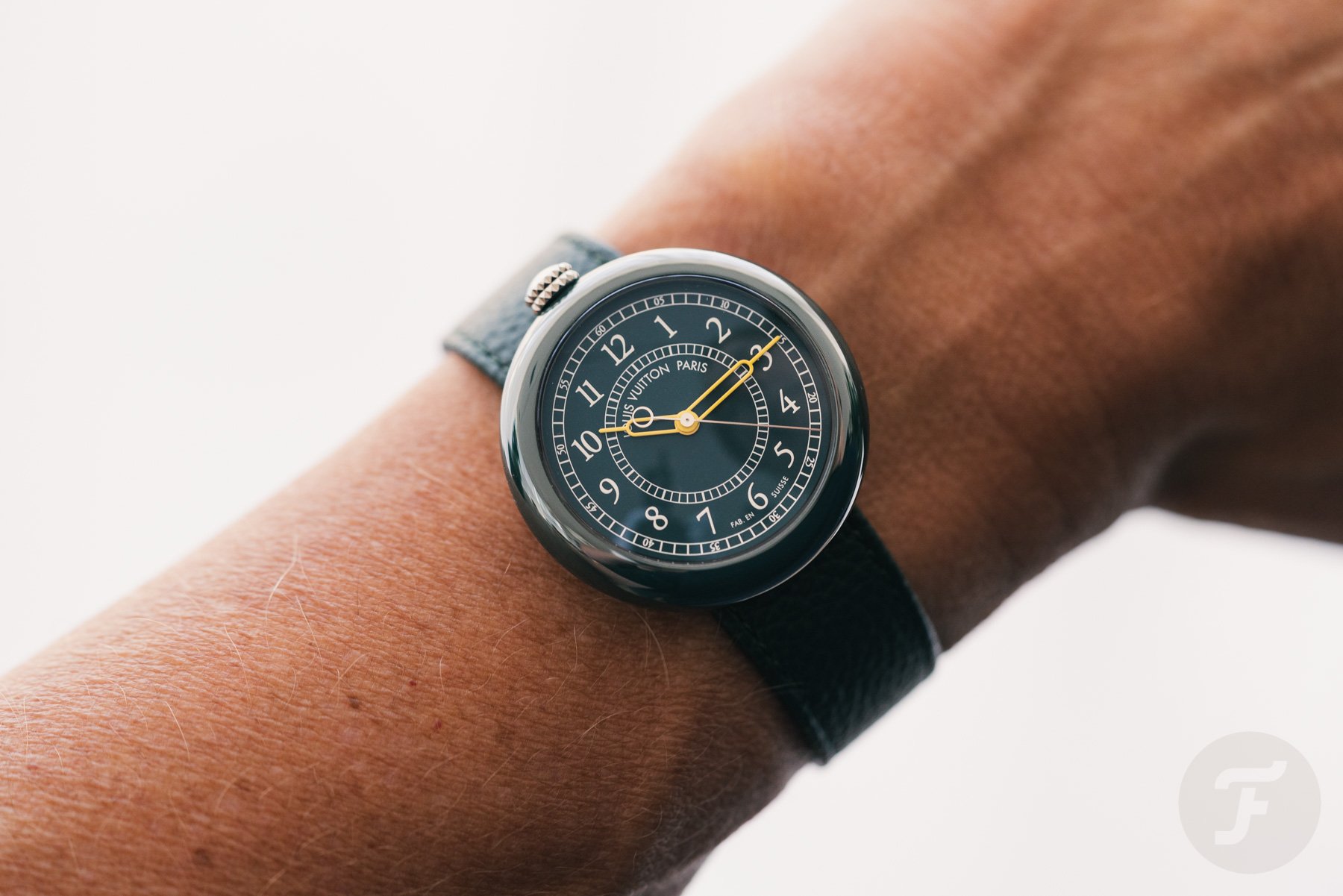
I like it on the wrist, especially the black version with the white dial and the red minute track. It’s different in a good way, and the dial, with the openworked and red-lacquered hour and minute hands and long, slim, blue-lacquered seconds hand, is comfortingly instrumental. It made me think of a manometer — then wonder why I like a dial that reminds me of an instrument I have absolutely no affinity with… Anyway, I prefer the black-cased Monterey over the green one because of the manometer vibes.
What comes first?
The Monterey is not a traditional watch, and you don’t wear it that way. Yes, the dial has a cool, neo-instrumental look, and the use of ceramic is technically interesting, but the watch is, first and foremost, a jewel-like creation. Wearing the Monterey is a conscious decision. This is a watch you wear with matching attire. The question is: will the watch determine the rest of the outfit or vice versa?
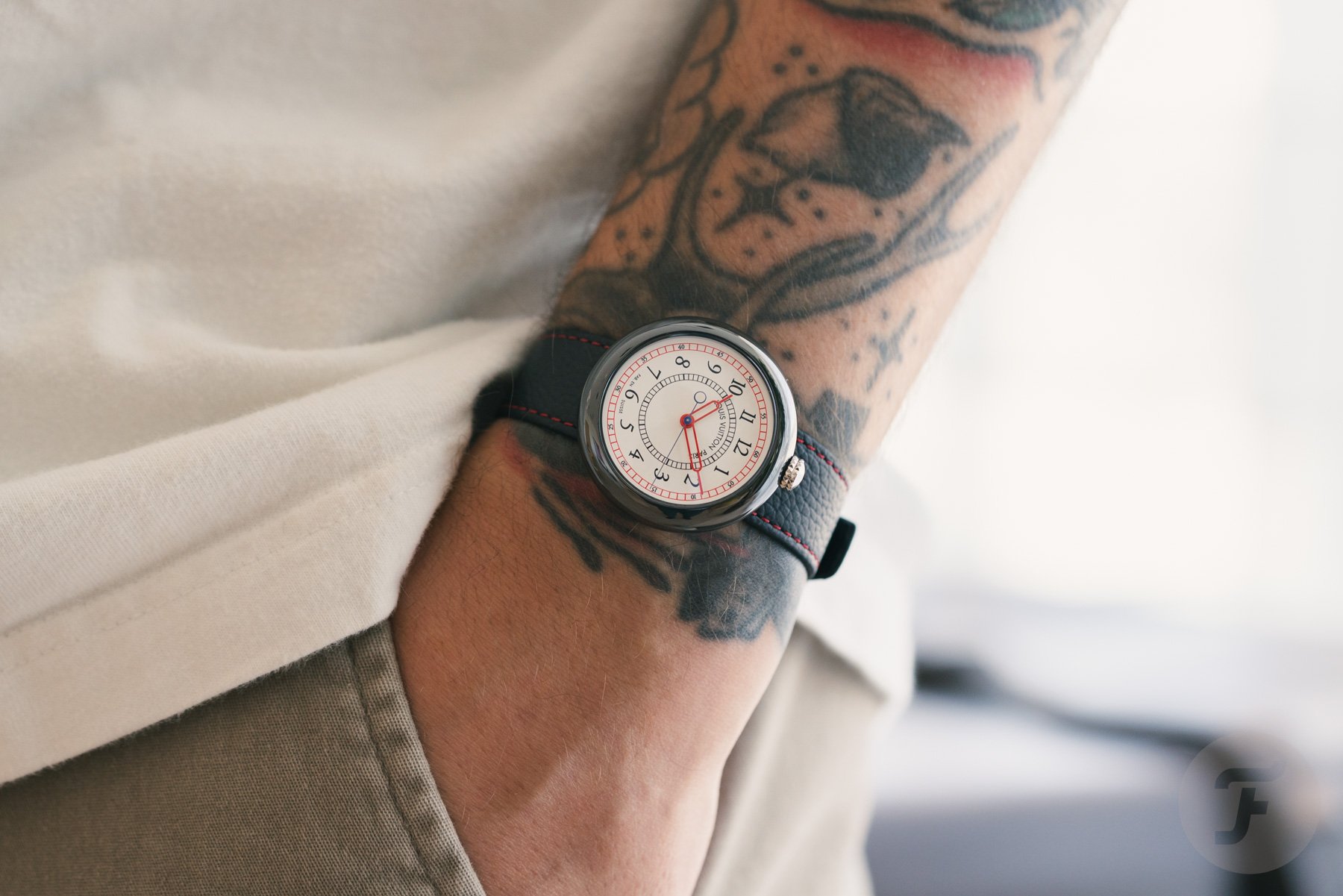
If you have an answer, please tell me in the comments section below. I’d also like to know your general thoughts on the new Louis Vuitton Monterey.
This is a partnership post. Learn more.